Mosque · Namangan
Ota Valikhon Tora Mosque
Beneath a 14-metre dome
Mausoleum · Uychi District
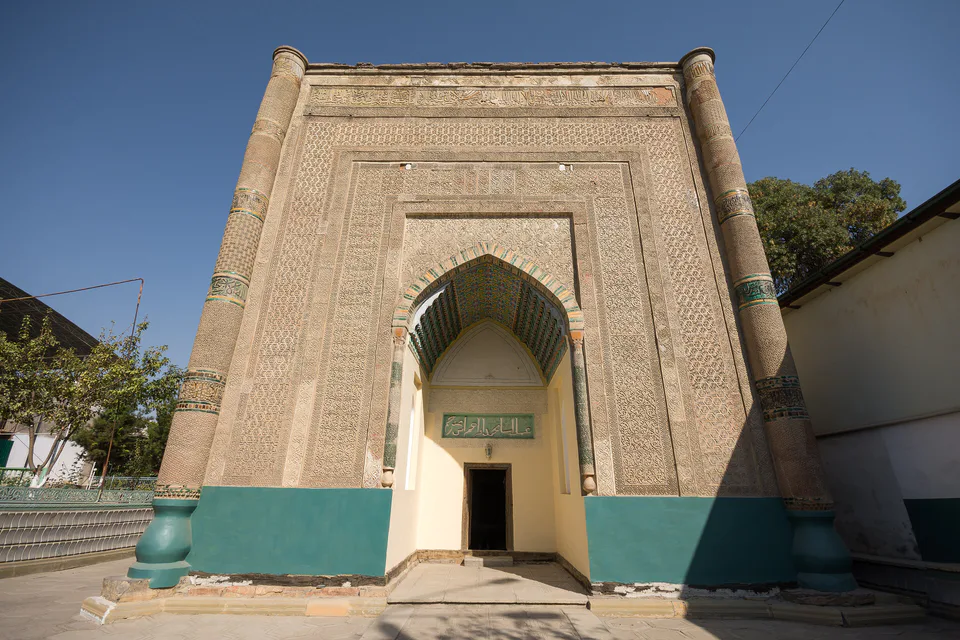
An 18th-century mausoleum in Fayziobod village, built in 1725–1750 over the grave of Abdurahmon Khoji, who taught children to read and treated the sick.
The mausoleum was built in 1725–1750 over the grave of Abdurahmon Khoji, a native of Tashkent who settled in the village of Fayziobod. One of the few literate people in the area, he taught children to read and write, practised medicine and knew his healing herbs. Legend says he earned the name Devona Buva — 'holy-fool grandfather' — because he arrived in rags: when his travelling companion, a dervish, fell into a full canal and was soaked, Abdurahmon gave him his own clothes and put on the dervish's tatters. In Soviet times the collective-farm chairman hid the mausoleum behind office buildings, which is why it survived so well. The square building, 18.8 metres a side, is enclosed by a thick wall and comprises a pilgrims' hall, a tomb chamber and a portal; its dome rests on a star-shaped base, and the interior is decorated with carved ganch.
Mosque · Namangan
Beneath a 14-metre dome
Mausoleum · Namangan
Mausoleum and mosque of Khoja Amin
Madrasa · Namangan
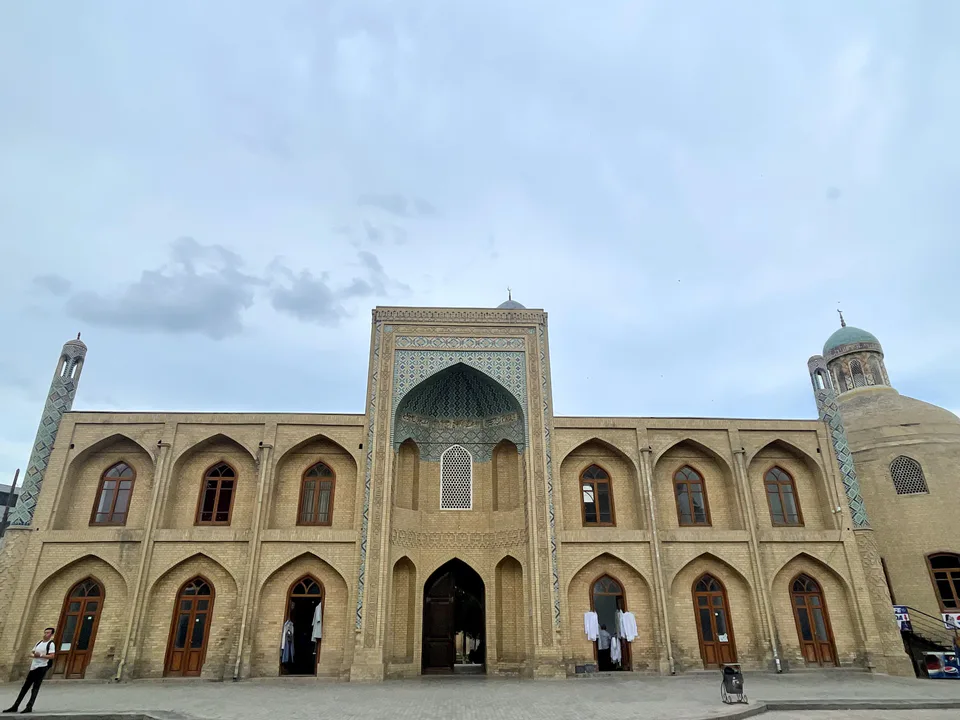
Namangan's tiled jewel
Pilgrimage site · Namangan
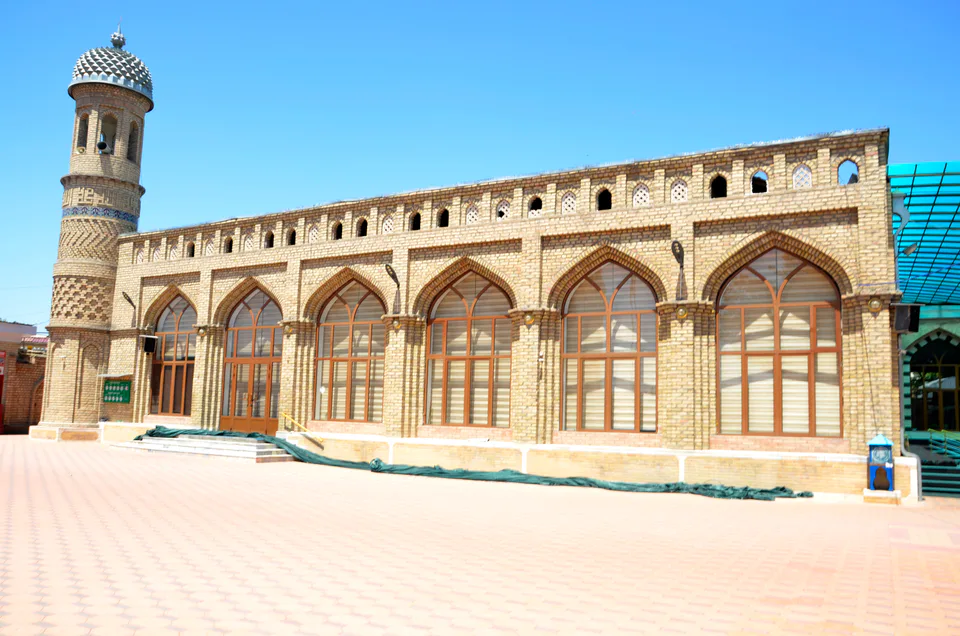
Shrine of Mashrab's teacher
Park & garden · Namangan
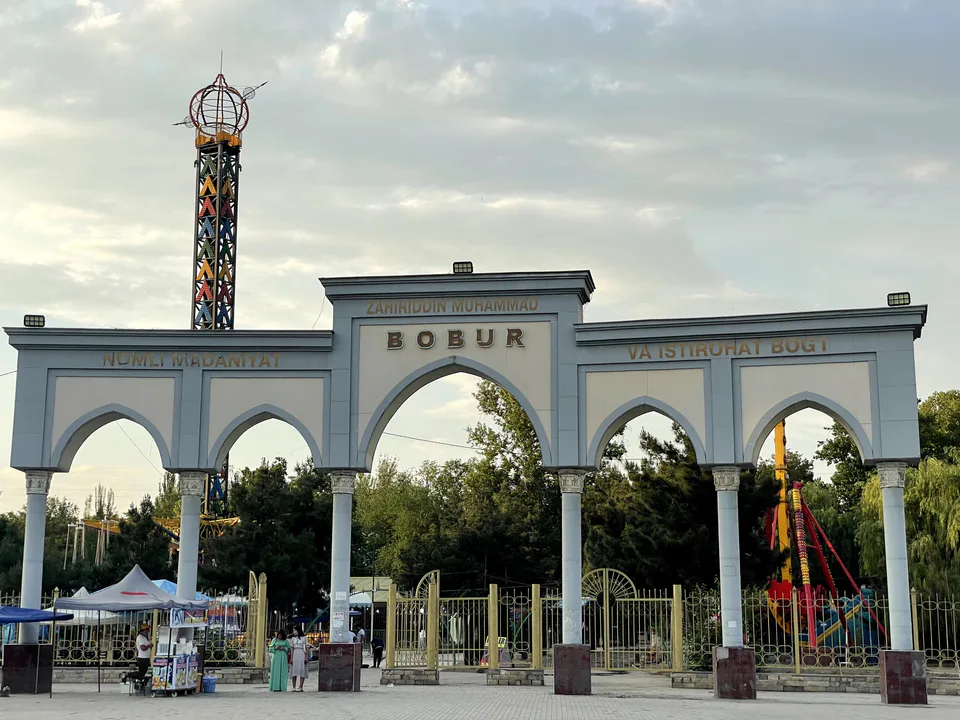
A city garden beneath centuries-old plane trees
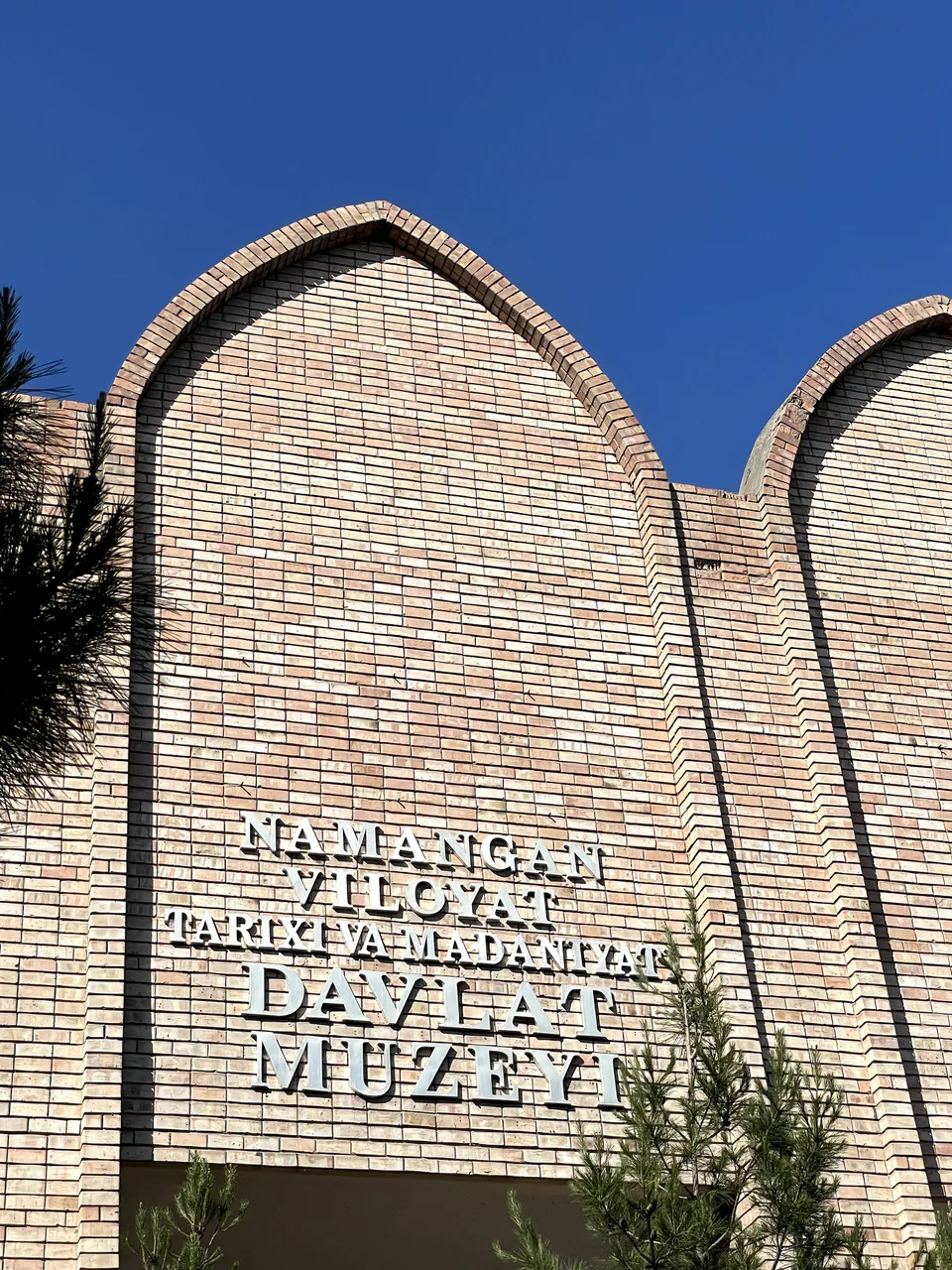
Museum · Namangan
A local-history treasure house since 1918
Mausoleum · Namangan
A tomb whose walls are covered in verse
Mosque · Namangan
A 'painted' mosque rebuilt after a fire