Dish · Nationwide
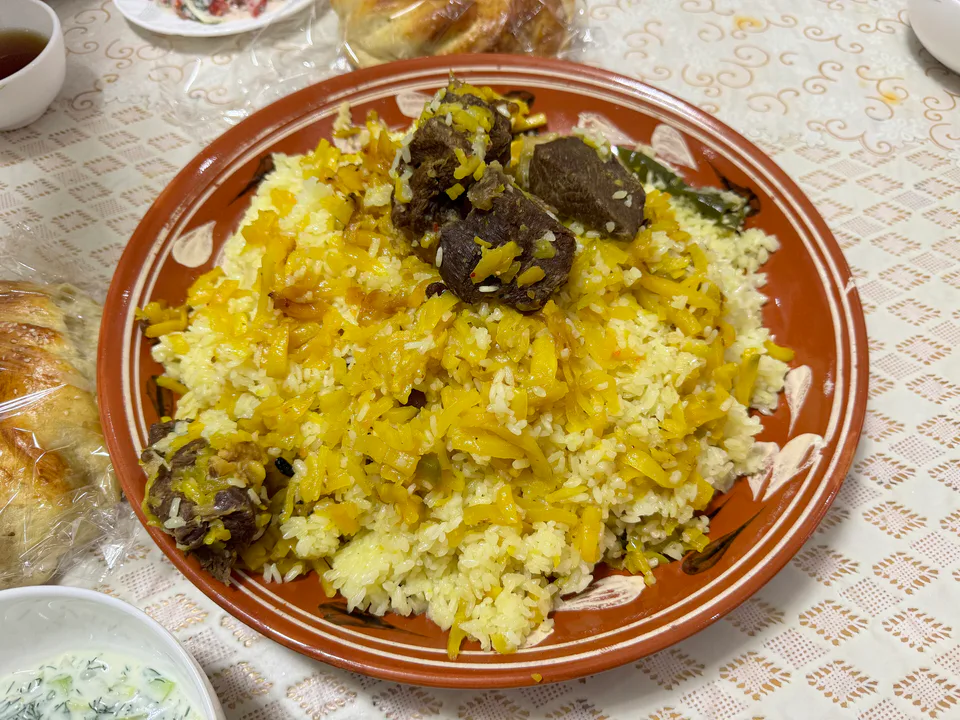
Plov (osh)
The centrepiece of any Uzbek meal: meat, onions and yellow carrots are cooked into a rich base in a kazan, then rice is steamed on top. UNESCO-listed since 2016.
Culture
Plov and tandoor bread, Rishtan ceramics and Margilan ikat silk, weddings and festivals — every region has its own flavours and crafts.
01 · 36 dishes
From plov to samsa and sumalak: what to taste, where and how.
Dish · Nationwide
The centrepiece of any Uzbek meal: meat, onions and yellow carrots are cooked into a rich base in a kazan, then rice is steamed on top. UNESCO-listed since 2016.
Dish · Tashkent (city), Tashkent Region
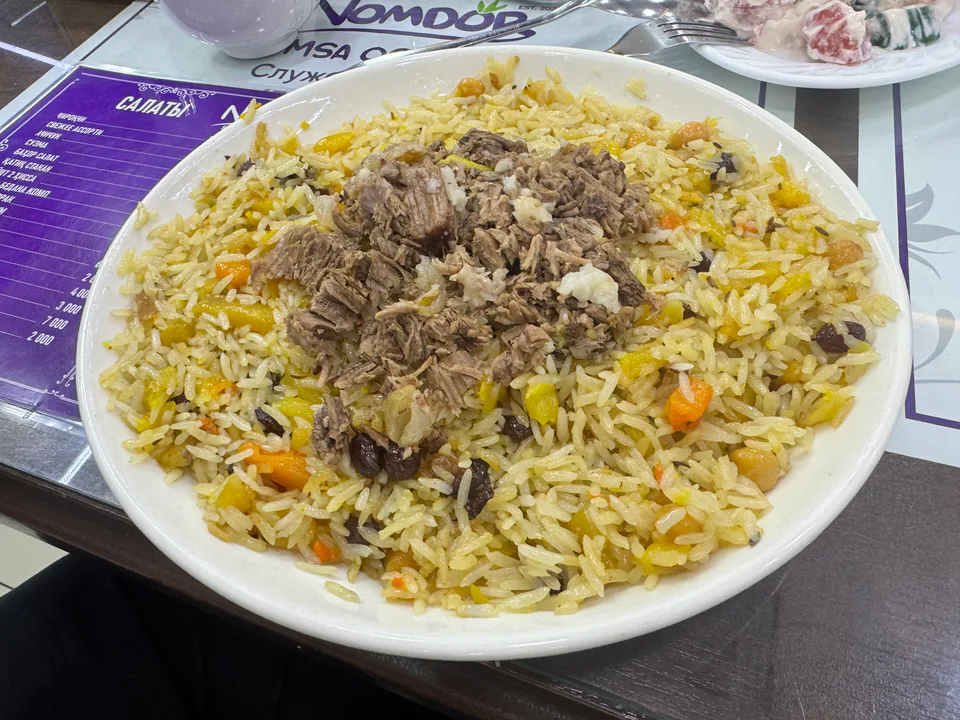
The capital’s style of plov: everything is fried first and the rice is mixed into the base; wedding plov adds kazy sausage, chickpeas, raisins and sometimes quail eggs.
Dish · Samarkand
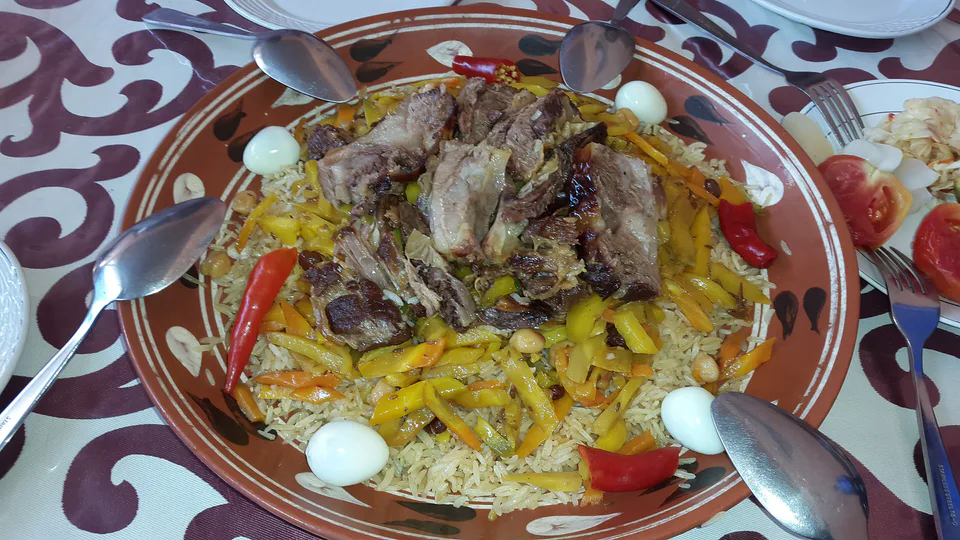
A layered plov in which nothing is stirred: the rice stays pale, and the carrots and meat are served on top of it.
Dish · Bukhara
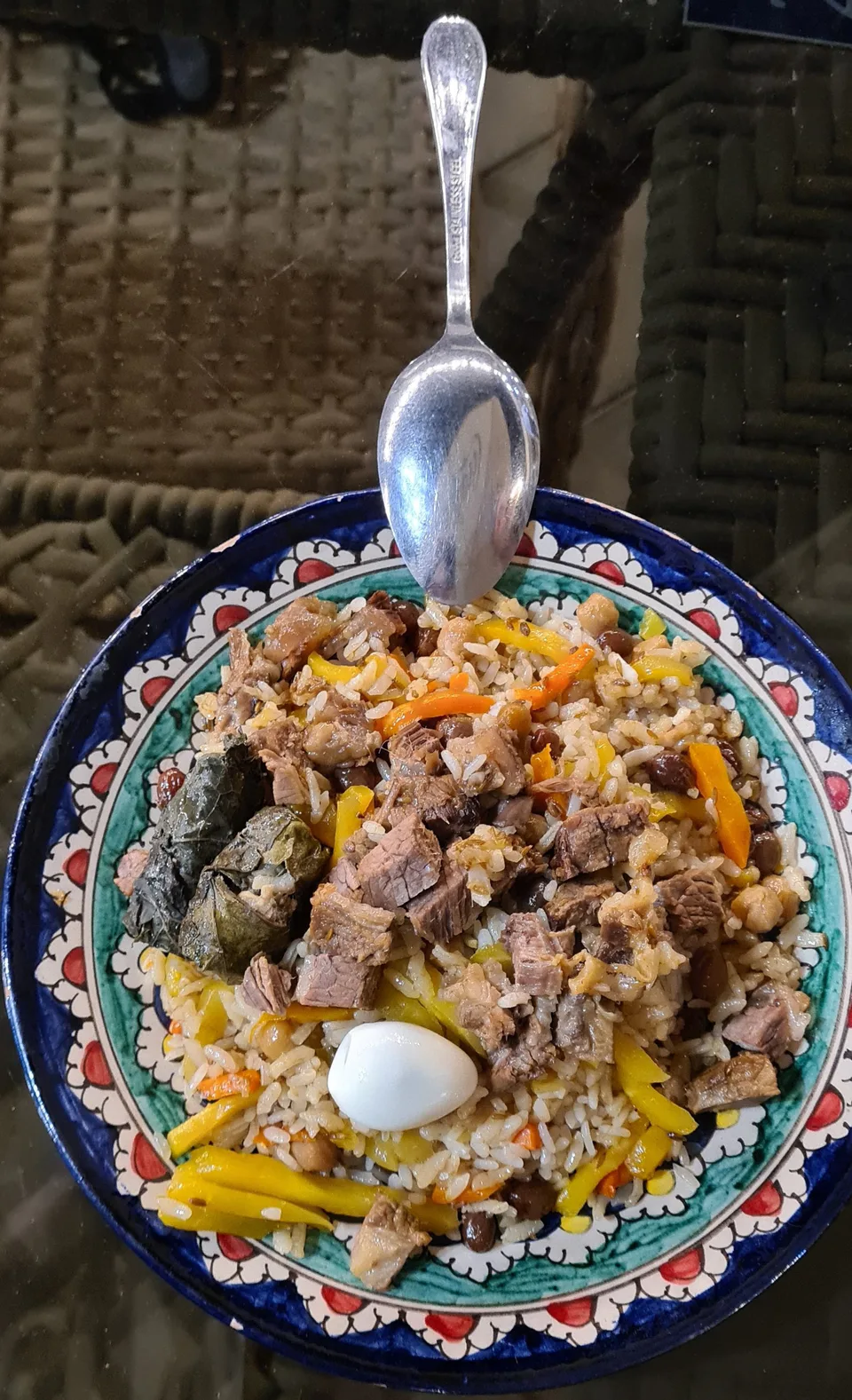
Bukhara’s own plovs: oshi sofi, made with separately boiled and drained rice, and plov cooked with mung beans.
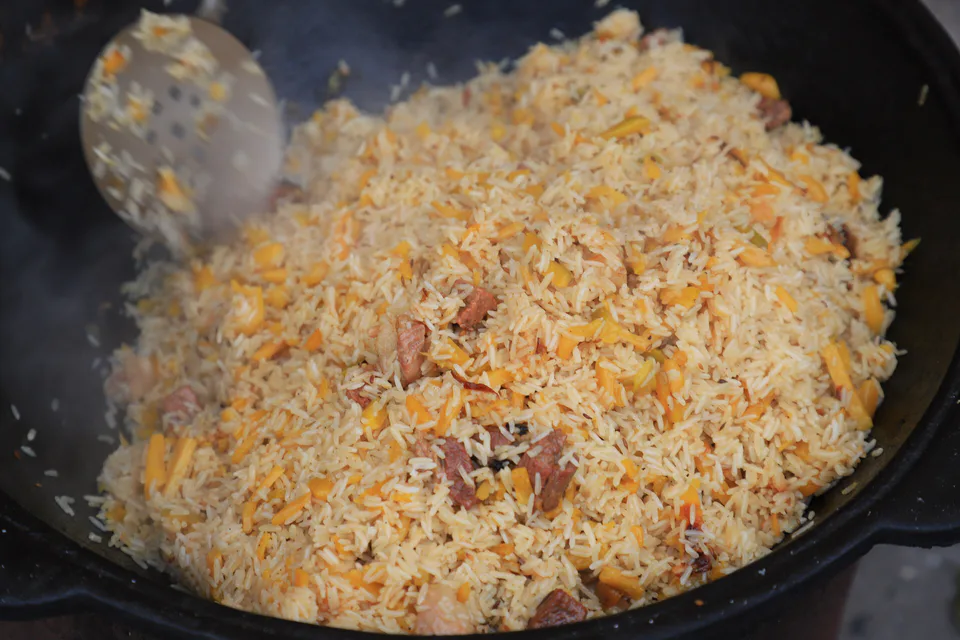
Dish · Fergana, Andijan +1
The dark plov of the Fergana Valley: a bone, meat, onions and carrots are fried long and hard until the zirvak turns deep brown.
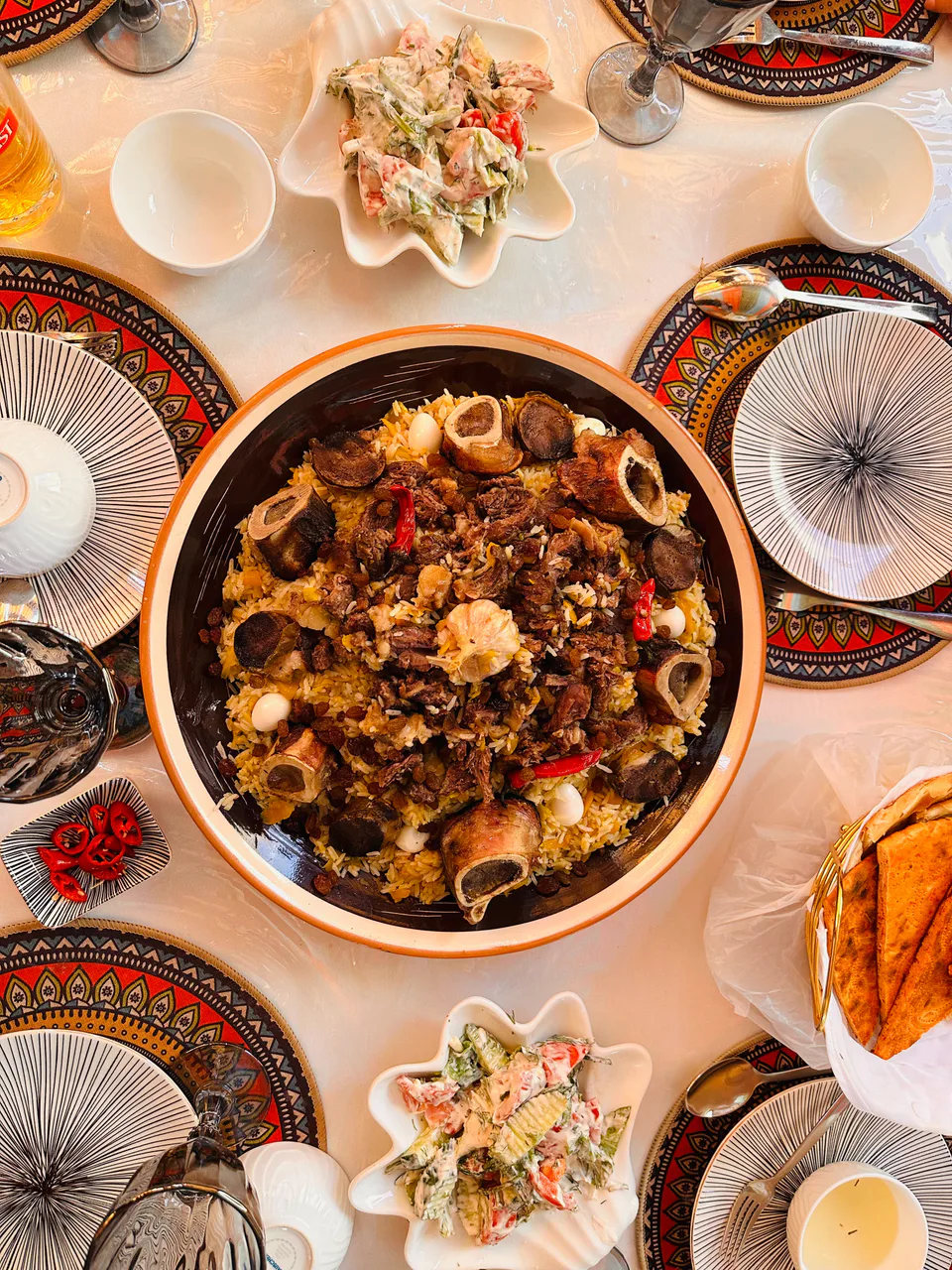
Dish · Khorezm
Khorezm’s plov tradition, including suzma palov, in which the rice is boiled separately and drained before it meets the zirvak.
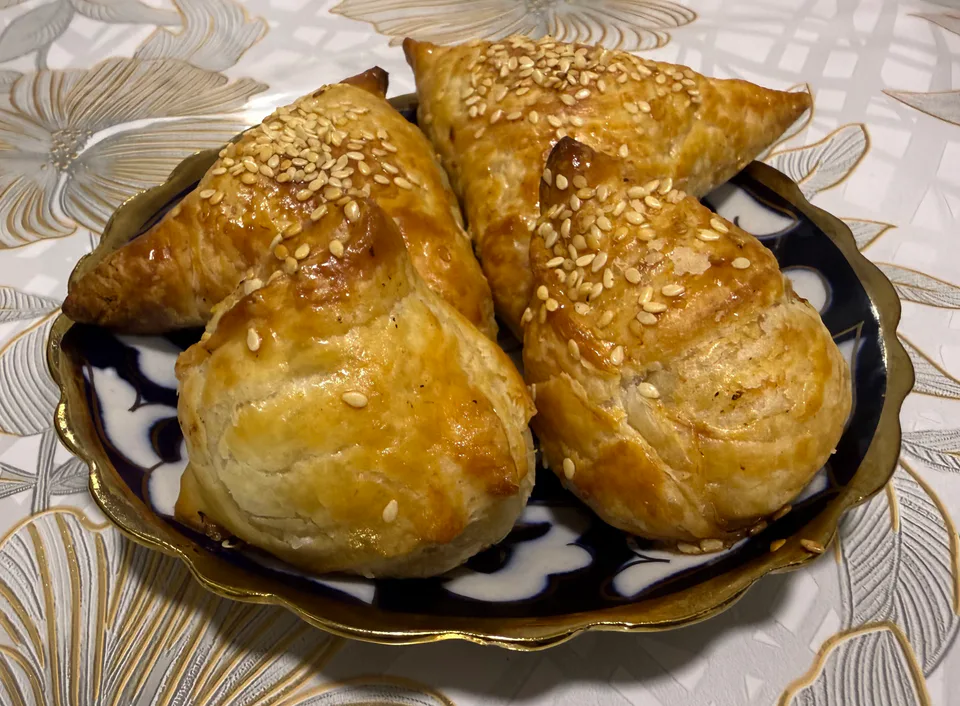
Dish · Nationwide
Flaky pastries baked on the inner wall of a tandoor, filled with hand-chopped lamb, tail fat and onion — or wild greens in spring and pumpkin in autumn.
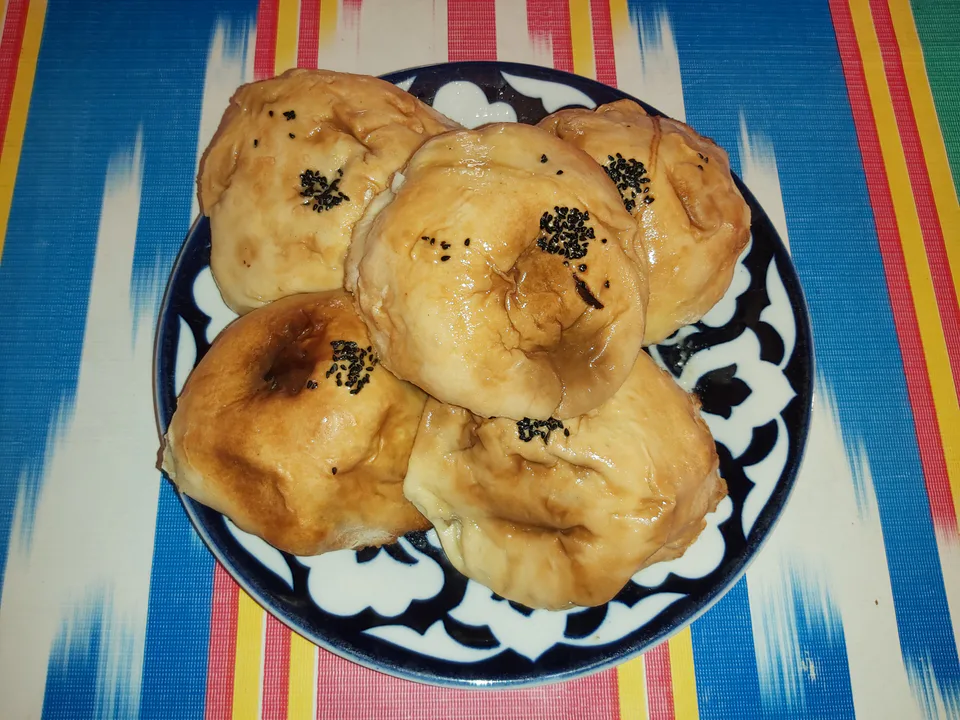
Dish · Jizzakh
Jizzakh’s culinary calling card: a large dome-shaped samsa made from three layers of dough, packed with lamb and tail fat and dipped in sunflower oil.
Dish · Nationwide
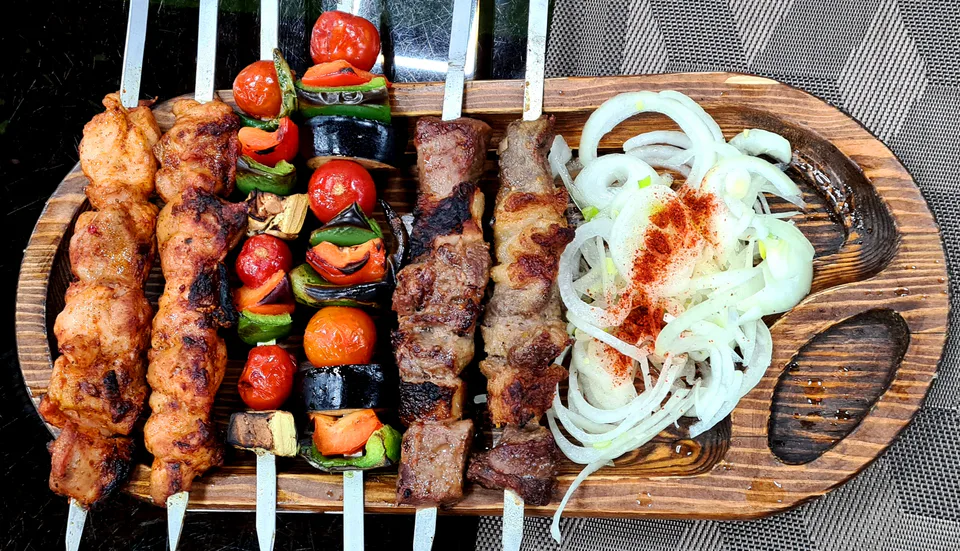
Skewered meat grilled over embers — lamb, beef, meat with tail fat, liver, minced qiyma (lula) kabob — served with onion, vinegar and hot bread.
Dish · Bukhara
The famous minced-meat kebab of Gijduvan in Bukhara Region: the meat is minced twice, frozen, chopped and pressed onto skewers.
Dish · Kashkadarya, Surkhandarya +1
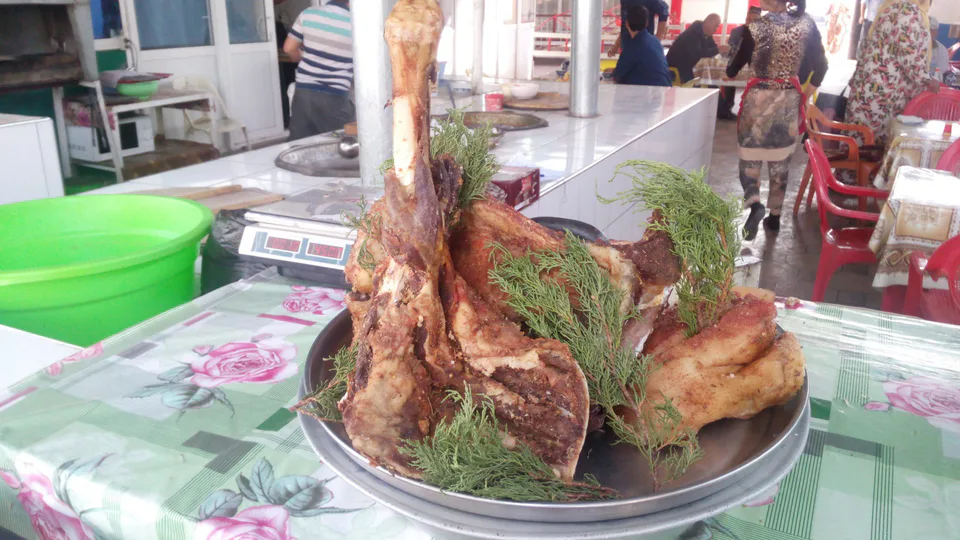
The pride of Kashkadarya, Surkhandarya and Jizzakh: lamb slow-cooked for hours in a sealed tandoor with juniper branches.
Dish · Nationwide
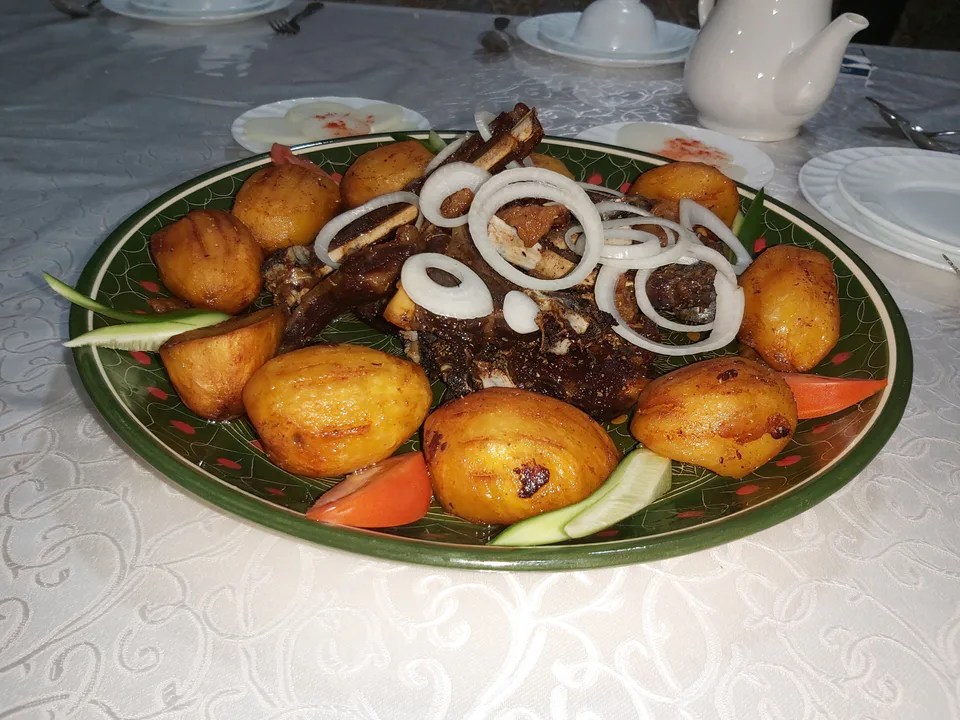
Lamb and potatoes fried and then braised in a kazan: a simple, hearty dish of teahouses and outdoor feasts.
Dish · Nationwide
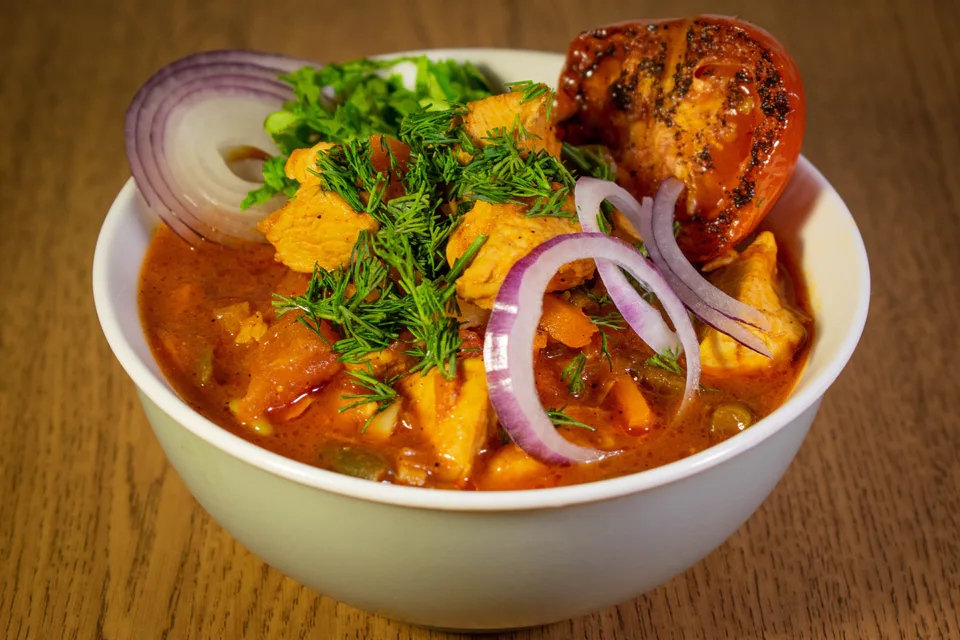
Long hand-pulled noodles topped with a sauté of meat and vegetables — a Uyghur dish that has become an everyday staple in Uzbekistan.
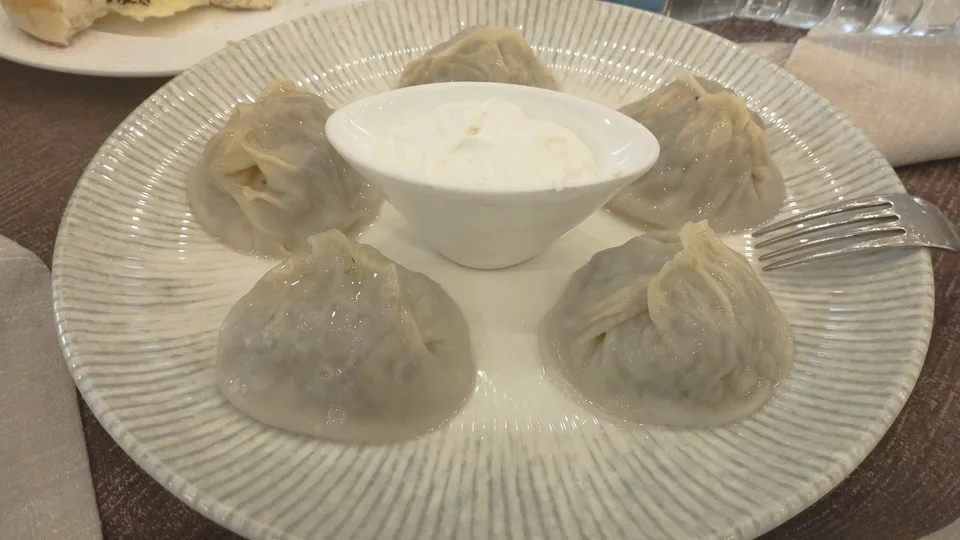
Dish · Nationwide
Large dumplings steamed in a tiered qasqon, filled with knife-chopped lamb, plenty of onion and tail fat — or pumpkin in autumn.
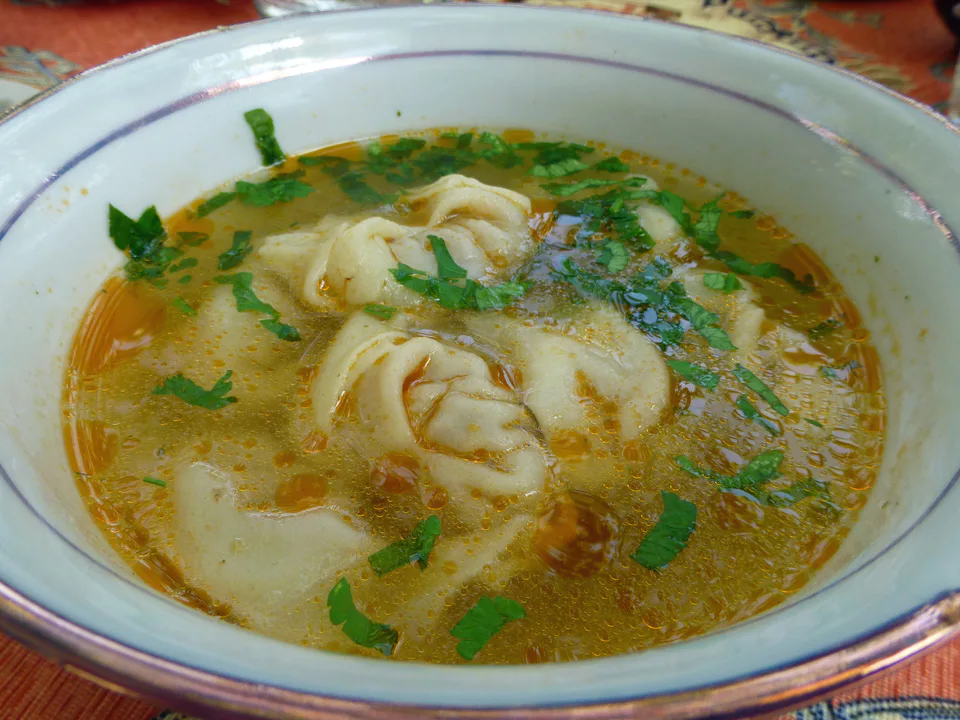
Dish · Nationwide
Small boiled Uzbek dumplings, served in broth, with yoghurt or fried until crisp.
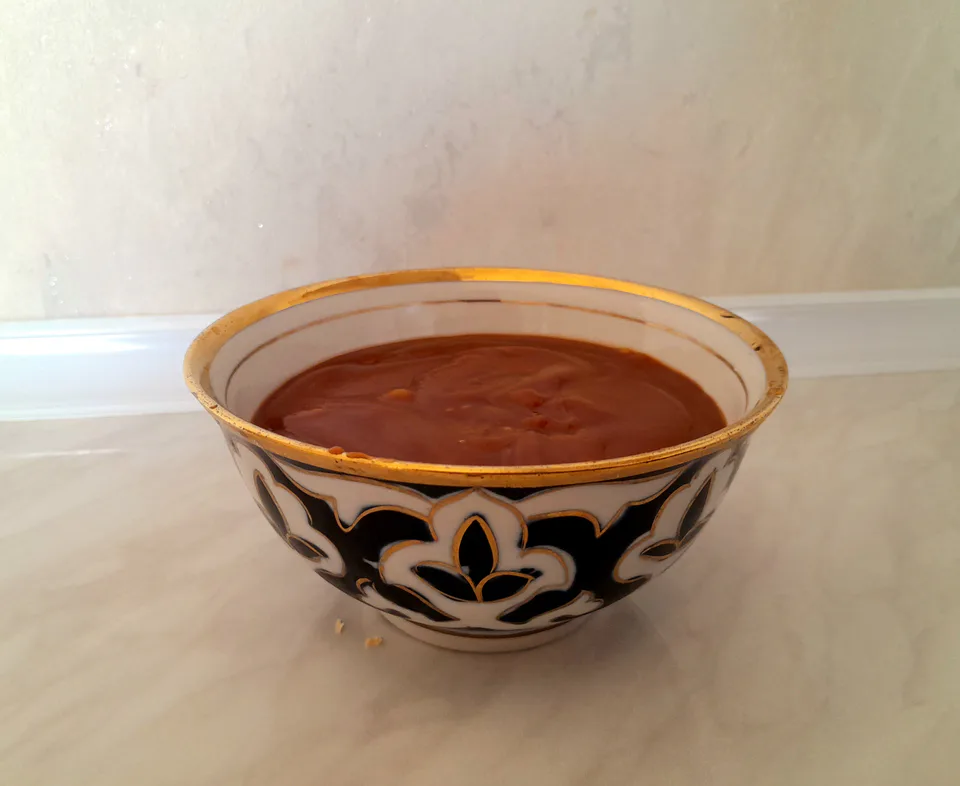
Dish · Nationwide
A thick, sweet paste of sprouted-wheat juice and flour stirred all night in a kazan — the defining taste of Navruz, made without any sugar.
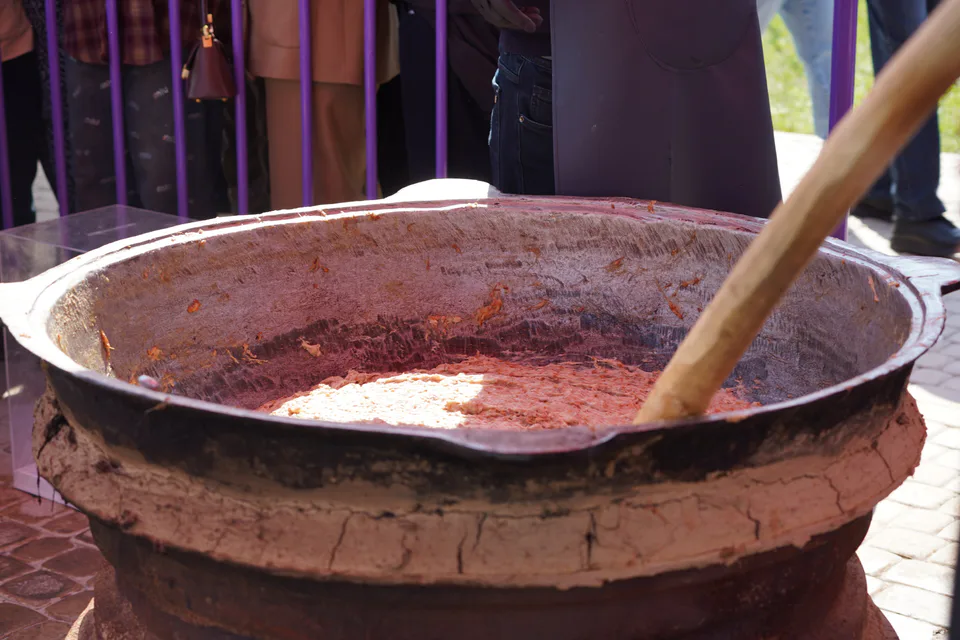
Dish · Nationwide
A thick porridge of wheat and meat stirred for hours — a hearty dish of early spring and cold days.
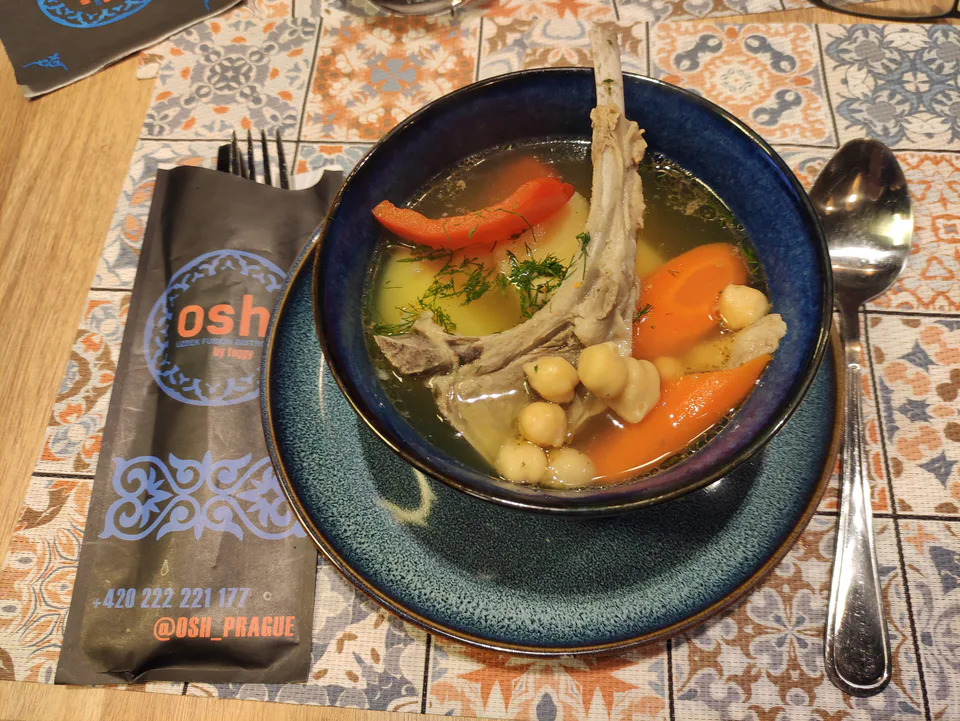
Dish · Nationwide
A clear, fragrant lamb soup made either boiled (qaynatma) or fried first (qovurma) — the main hot dish at lunch and on winter days.
Dish · Nationwide
A thick soup of home-cut noodles, meat and vegetables; each region has its own dough and way of serving it, often with yoghurt.
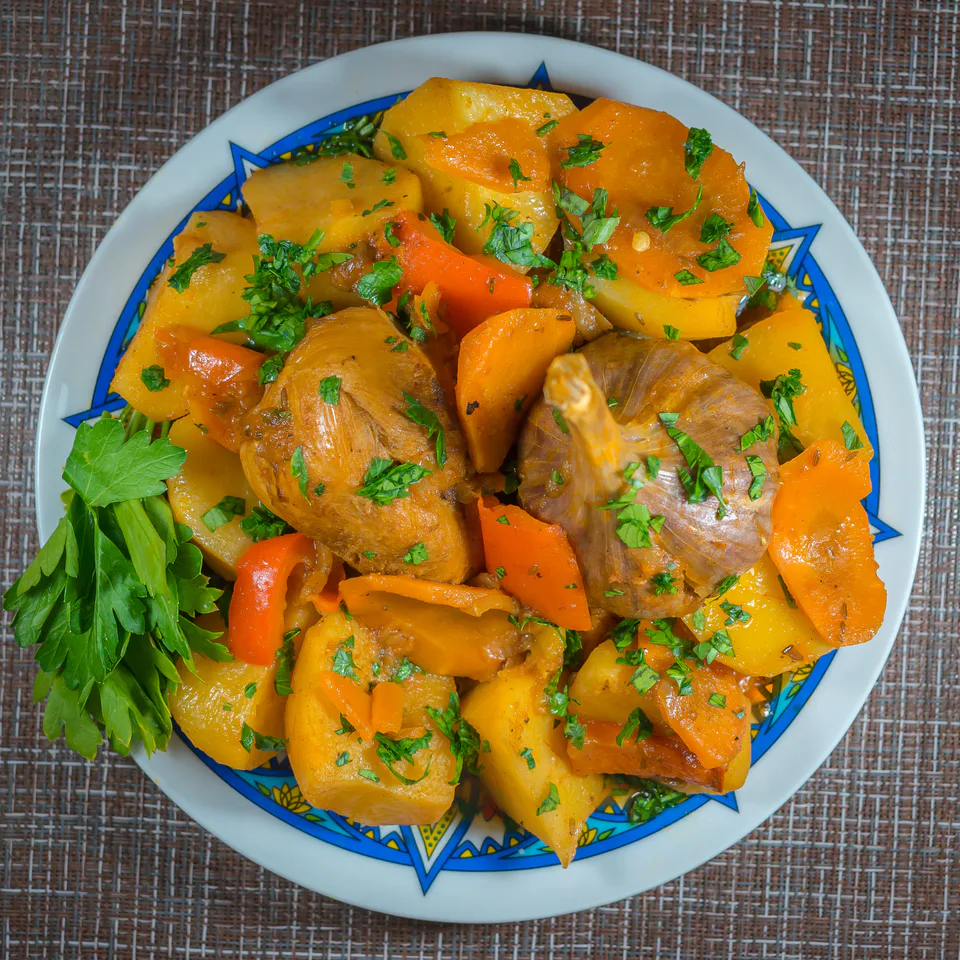
Dish · Nationwide
Meat and seasonal vegetables layered in a kazan and braised for hours in their own steam.
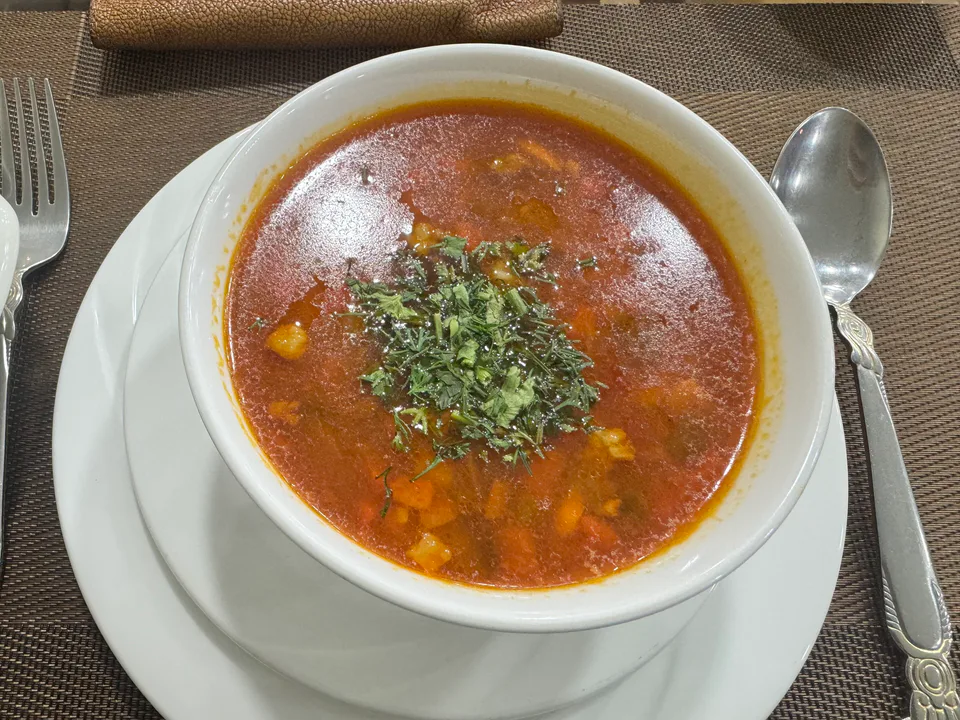
Dish · Nationwide
A rice soup made on the same principle as plov, with the meat fried first — often called ‘liquid plov’; served with yoghurt and herbs.
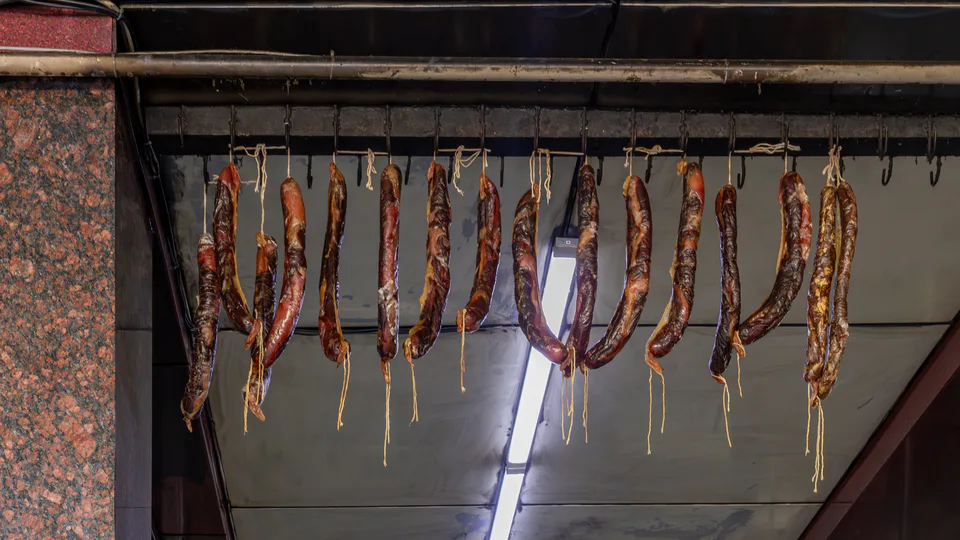
Dish · Nationwide
A sausage of horse-rib meat and fat in a natural casing — the crowning touch of wedding plov and the constant companion of norin.
Dish · Nationwide
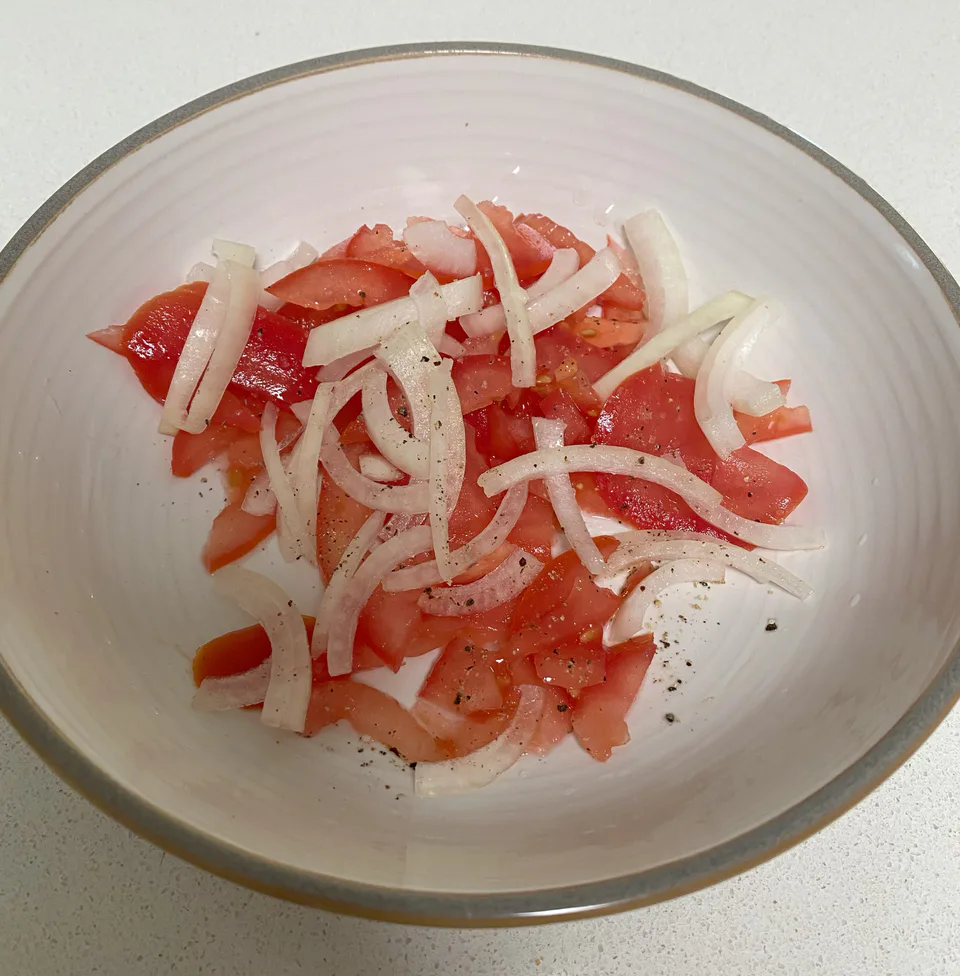
A salad of thinly sliced tomato, onion and hot pepper — plov’s constant companion.
Dish · Nationwide
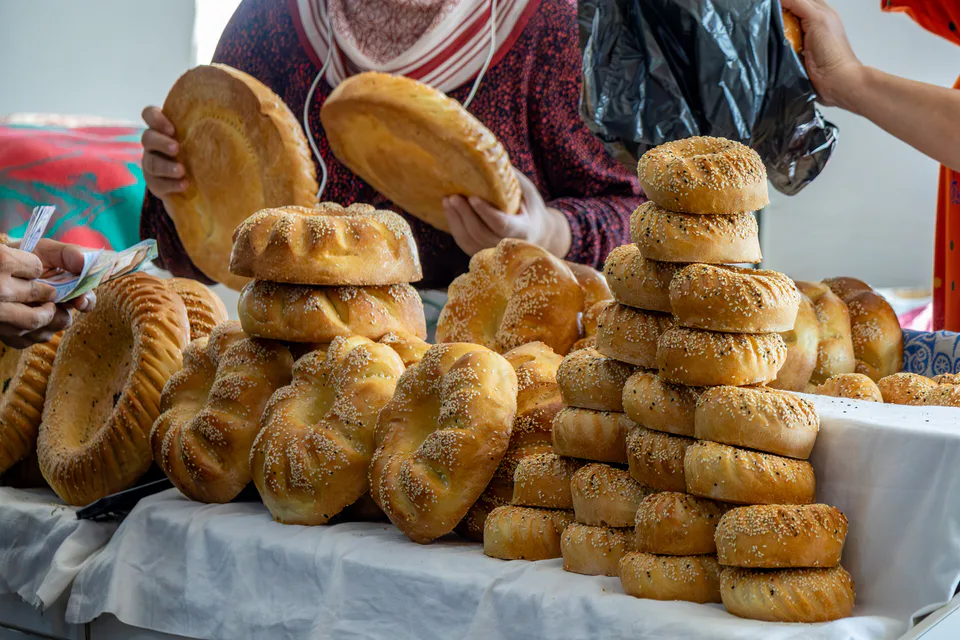
Round tandoor bread heads every Uzbek table: obi non, gijda, patir, shirmoy — and each region’s own loaves.
Dish · Samarkand
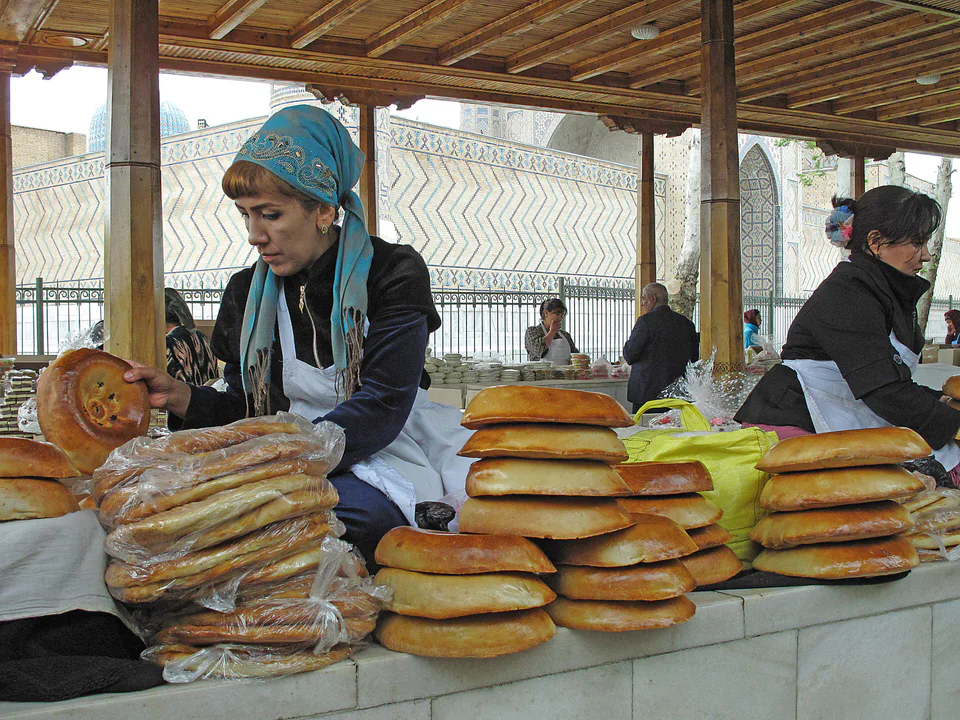
A tandoor loaf with a thin stamped centre, a thick rim and a glossy crust — Samarkand’s best-known taste and the souvenir everyone takes home.
Dish · Tashkent (city), Fergana
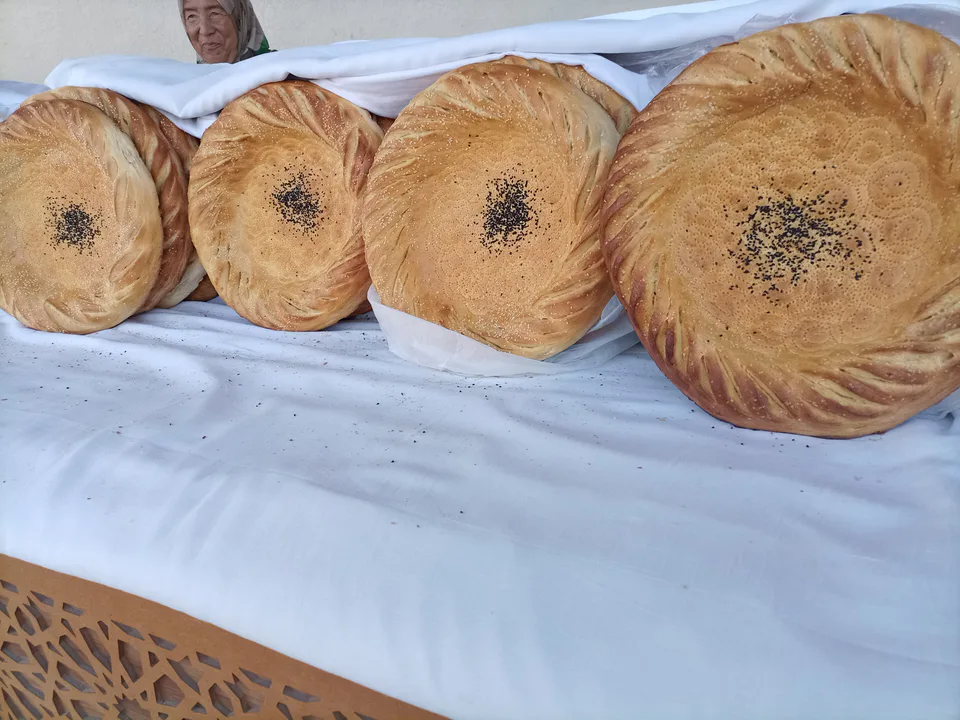
A rich, layered tandoor bread made with butter, cracklings or onion; Tashkent and the Fergana Valley bake dozens of kinds.
Dish · Nationwide
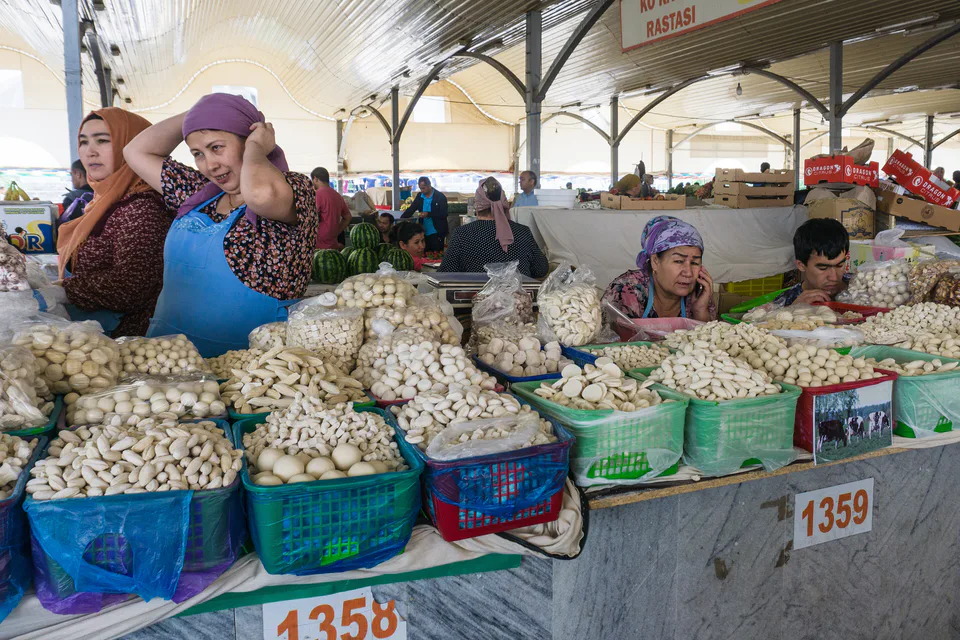
Salty balls of strained yoghurt, sometimes peppered and dried in the sun — the cheapest and punchiest snack in any bazaar.
Dish · Khorezm, Karakalpakstan
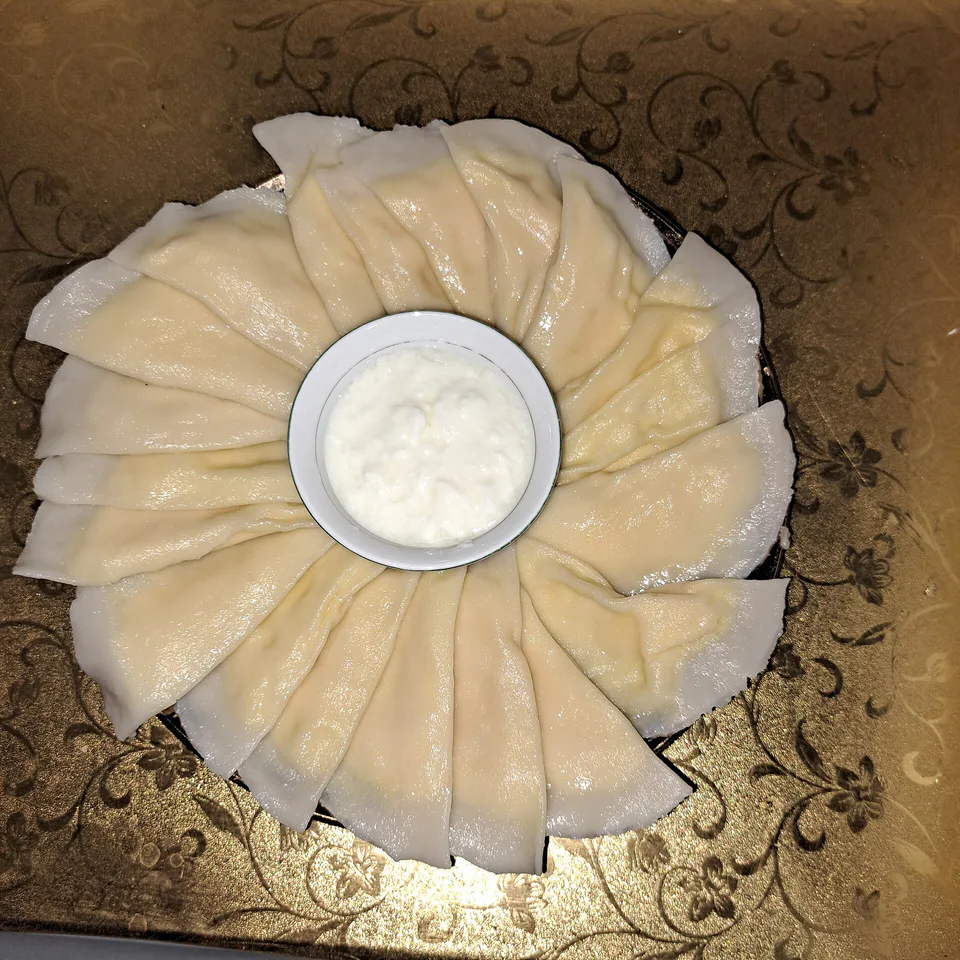
Khorezm’s signature dish: delicate boiled dumplings filled with raw egg mixed with milk or butter.
Dish · Khorezm
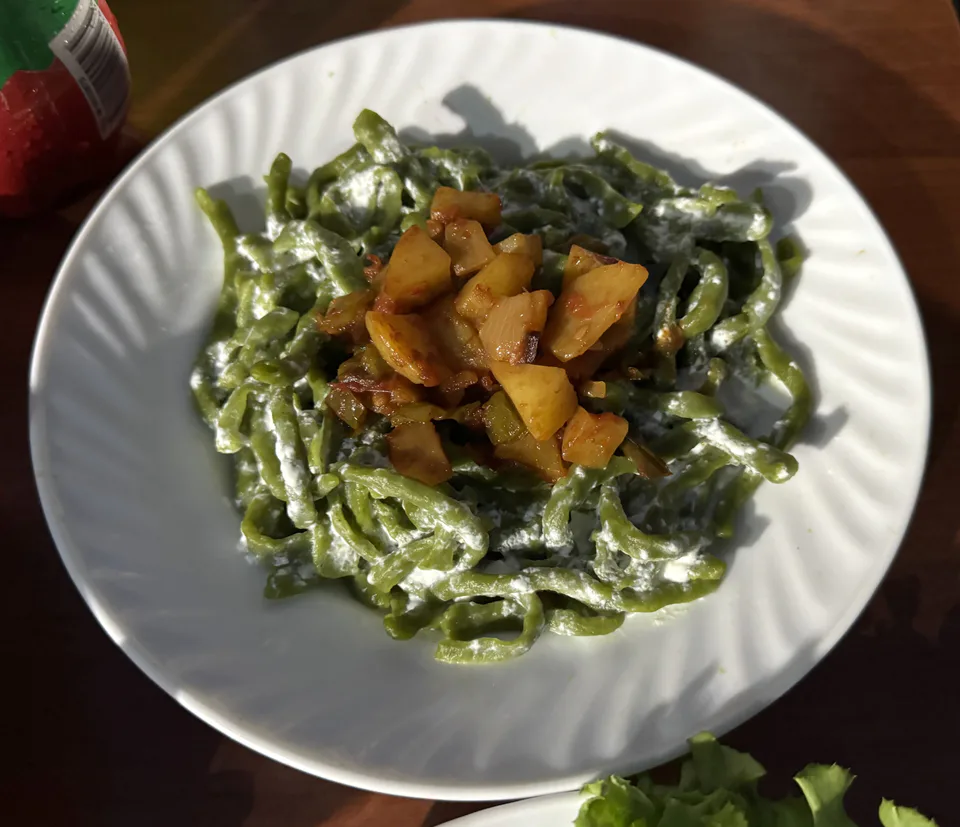
Known as ‘Khorezm’ or ‘green’ lagman: dill-flavoured noodles (shivit means dill) served with a meat sauce and suzma; sources trace the dish to Khiva.
Dish · Karakalpakstan
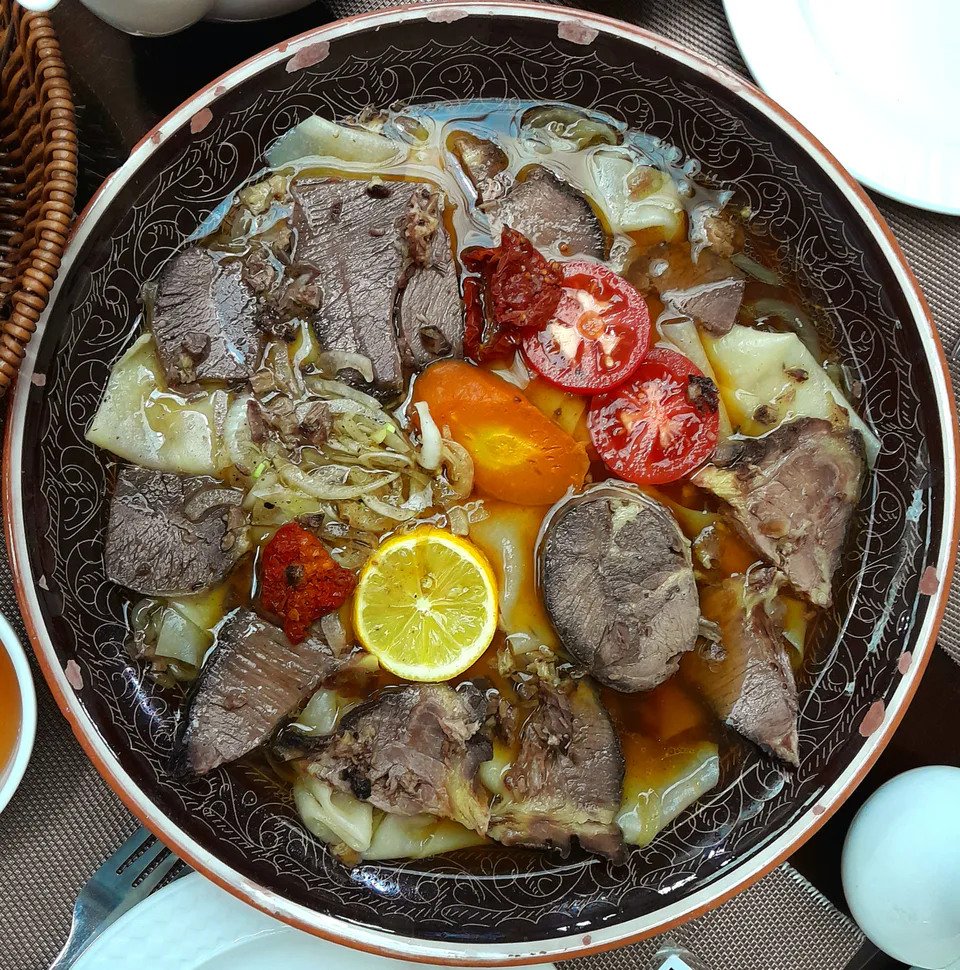
The Karakalpaks’ festive dish: boiled meat and sorghum-flour dumplings are finely chopped, mixed and served on a shared platter with broth.
Dish · Karakalpakstan, Khorezm
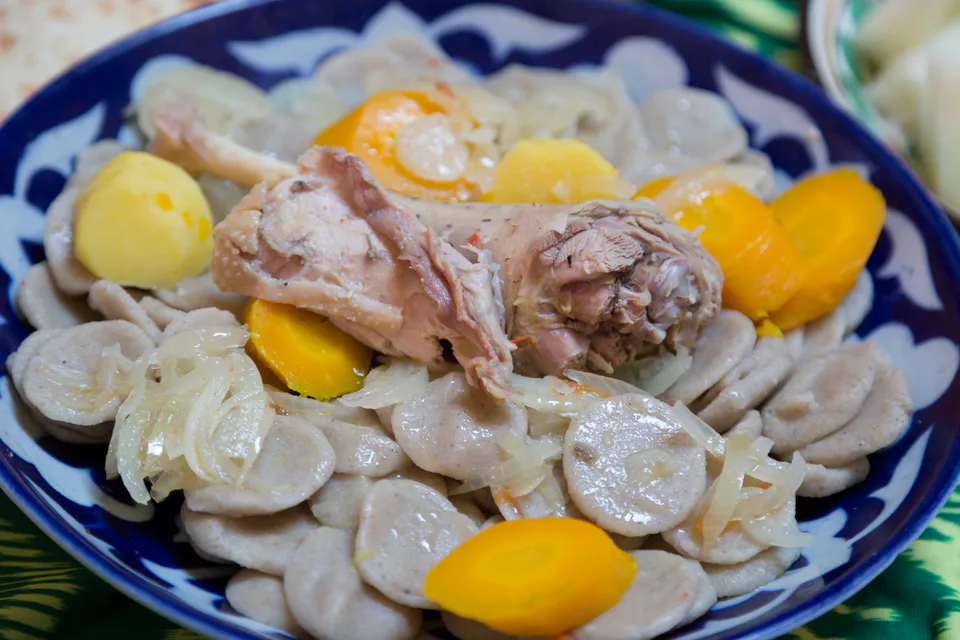
An old dish of Karakalpak and Khorezm cooking: coin-shaped sorghum-flour dumplings simmered in meat broth.
Dish · Samarkand
A thick stew of lamb and soaked chickpeas cooked in a kazan, best known in the Samarkand region.
Dish · Nationwide
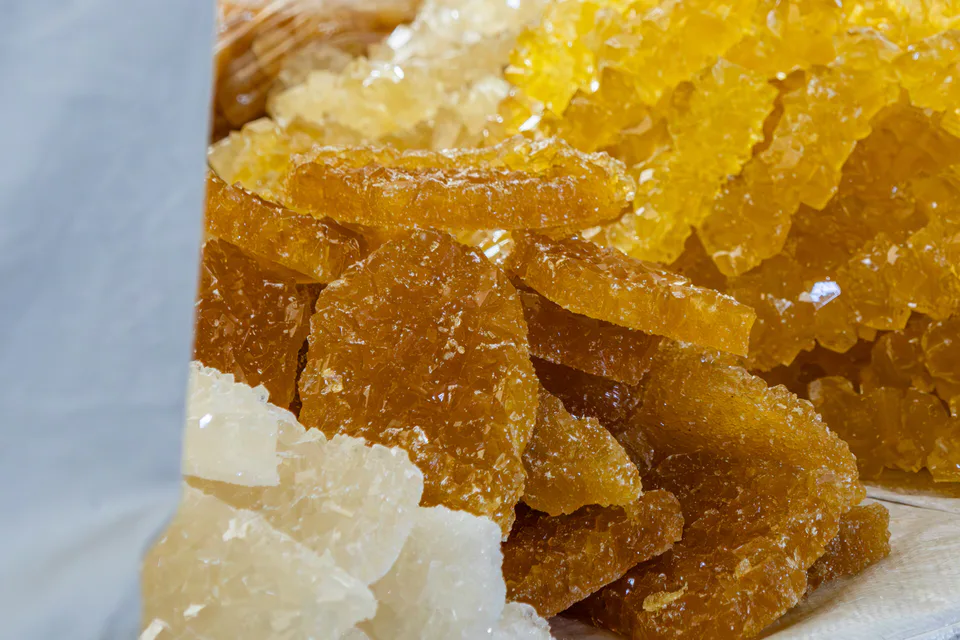
Uzbek sweets for the tea table: novvot crystals grown on threads, flour-dusted parvarda, snow-white nisholda and dozens of kinds of halva.
Dish · Nationwide
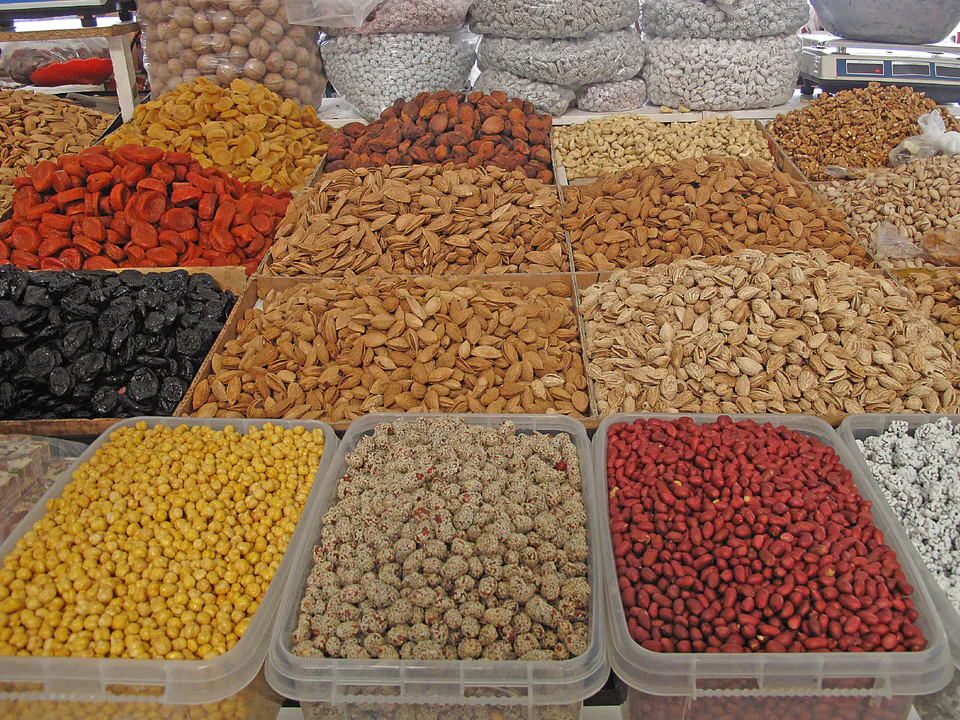
Raisins, dried apricots, dried melon, almonds and pistachios cured by the Uzbek sun — the most colourful aisles of any bazaar and the easiest souvenir.
Dish · Nationwide
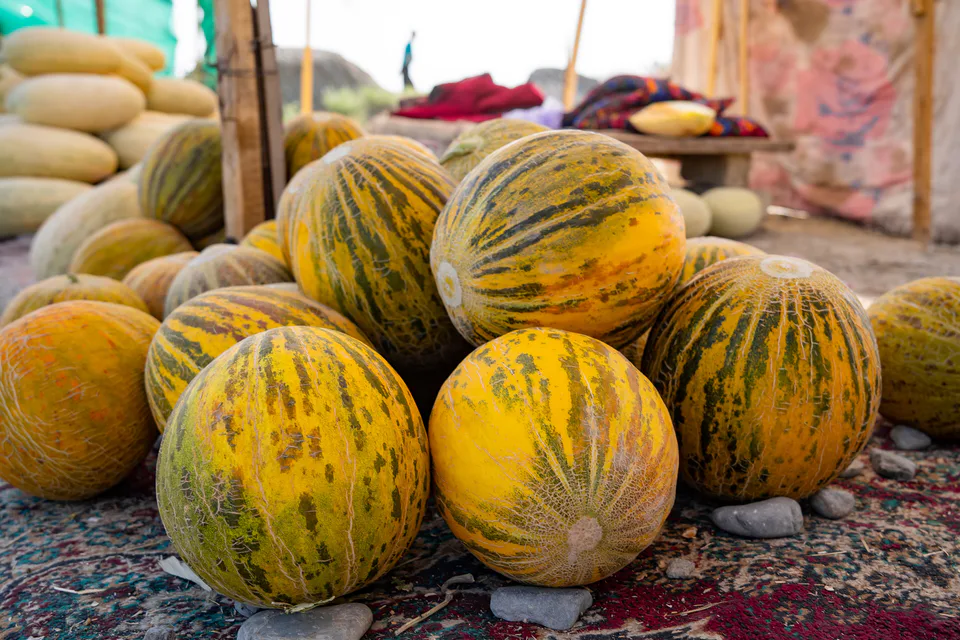
Folk breeding has produced more than 150 varieties of melon, the taste of the Uzbek summer — from early handalak to winter-keeping zard types.
Dish · Tashkent (city), Tashkent Region
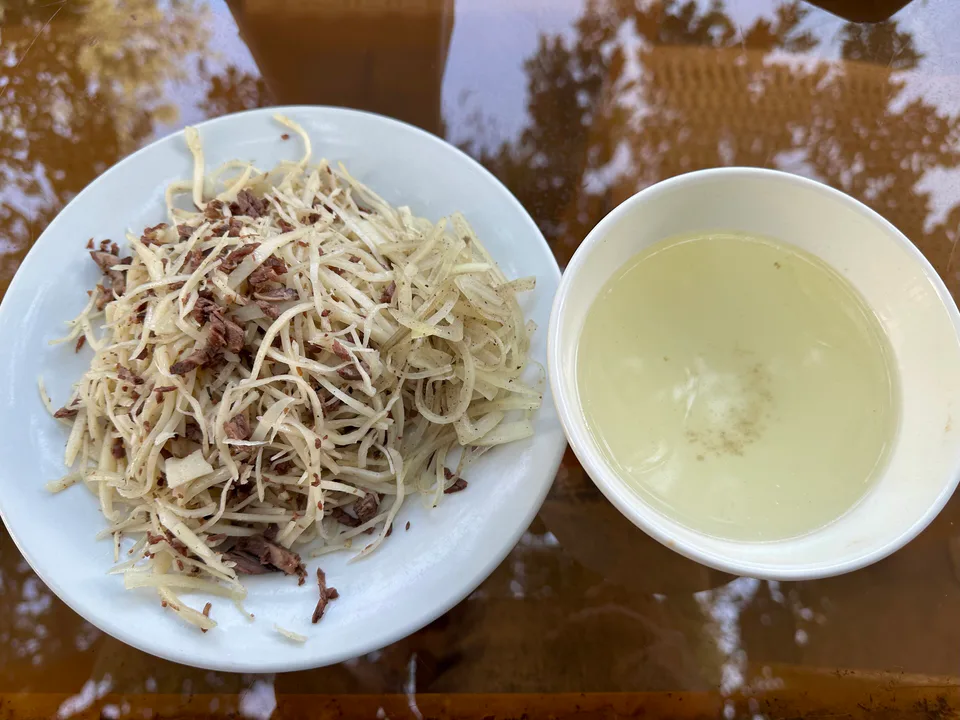
A Tashkent speciality of horse meat and thin noodles cut into fine shreds, served cold with kazy or in hot broth.
02 · 21 crafts
Ceramics, ikat silk, gold embroidery and woodcarving — the workshops and their schools.
Craft · Fergana
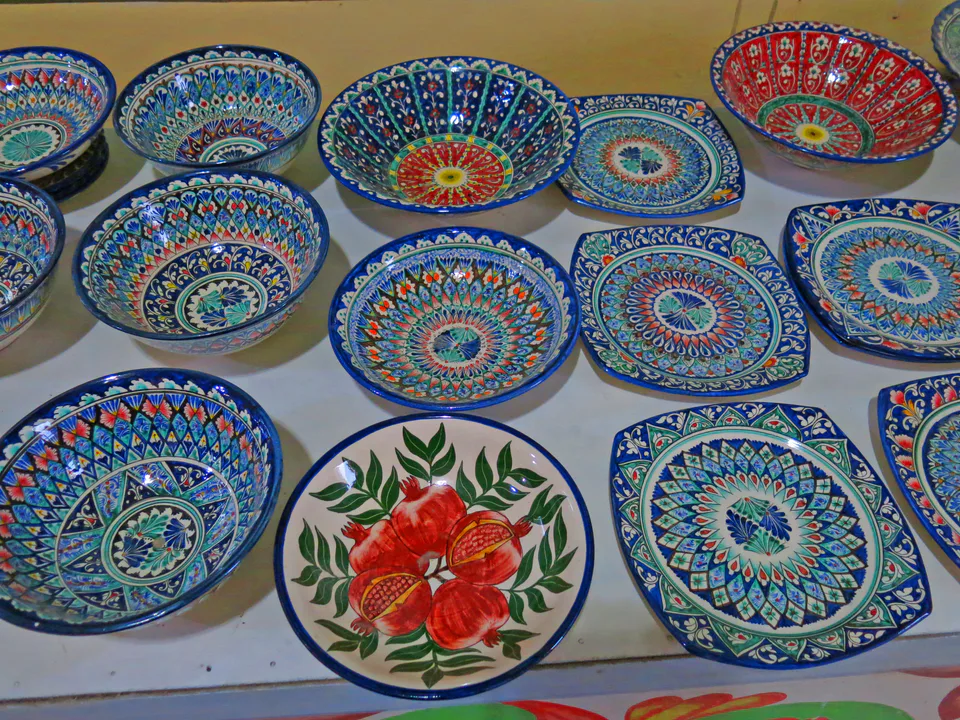
The blue and turquoise pottery of Rishtan in the Fergana Valley, famed for its ishkor glaze made from plant ash and its local red clay.
Craft · Bukhara
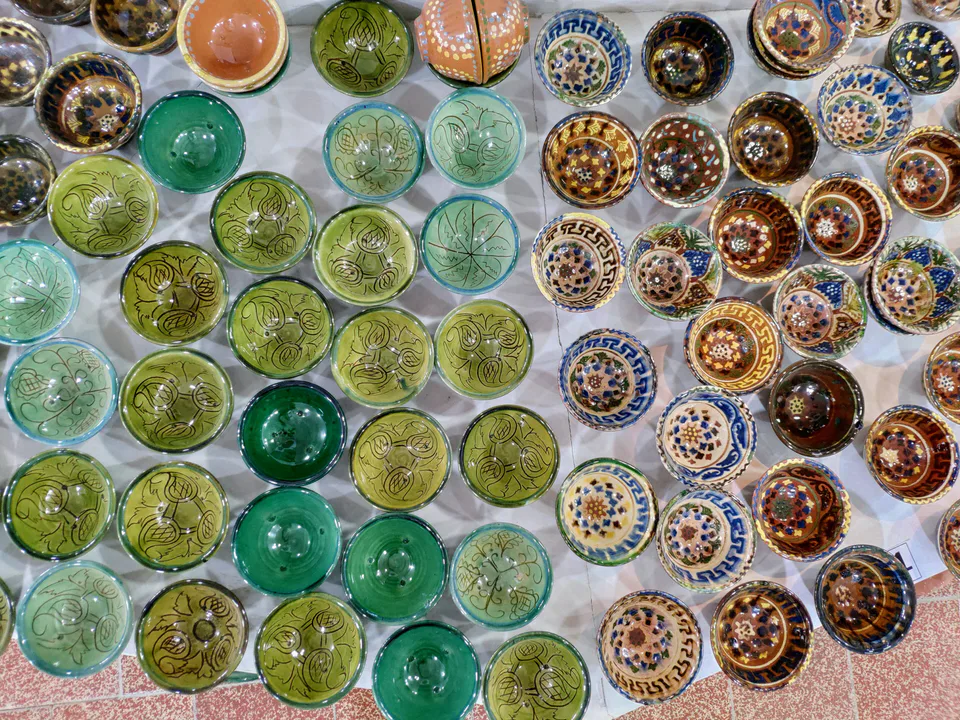
Pottery from Gijduvan near Bukhara, glazed in browns, yellows and greens — the best-known centre of the Bukhara–Samarkand school.
Craft · Fergana
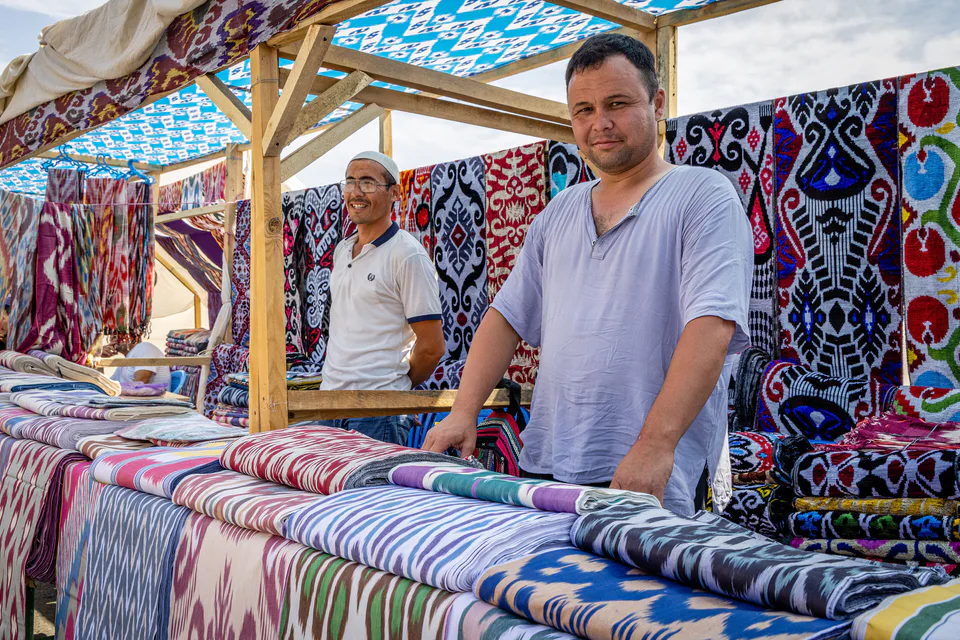
Margilan’s ikat silks: pure-silk atlas and half-silk adras. UNESCO recognises the town’s work to safeguard them as a model practice.
Craft · Bukhara
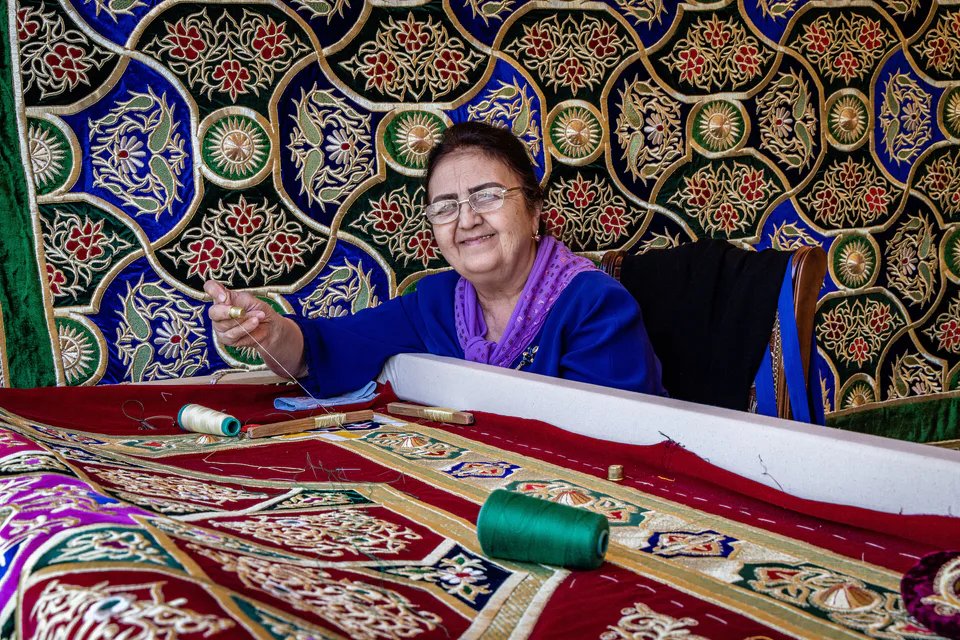
Embroidery in gold and silver thread on velvet and silk — the art of the Bukhara emirs’ court and still the city’s most precious craft.
Craft · Khorezm
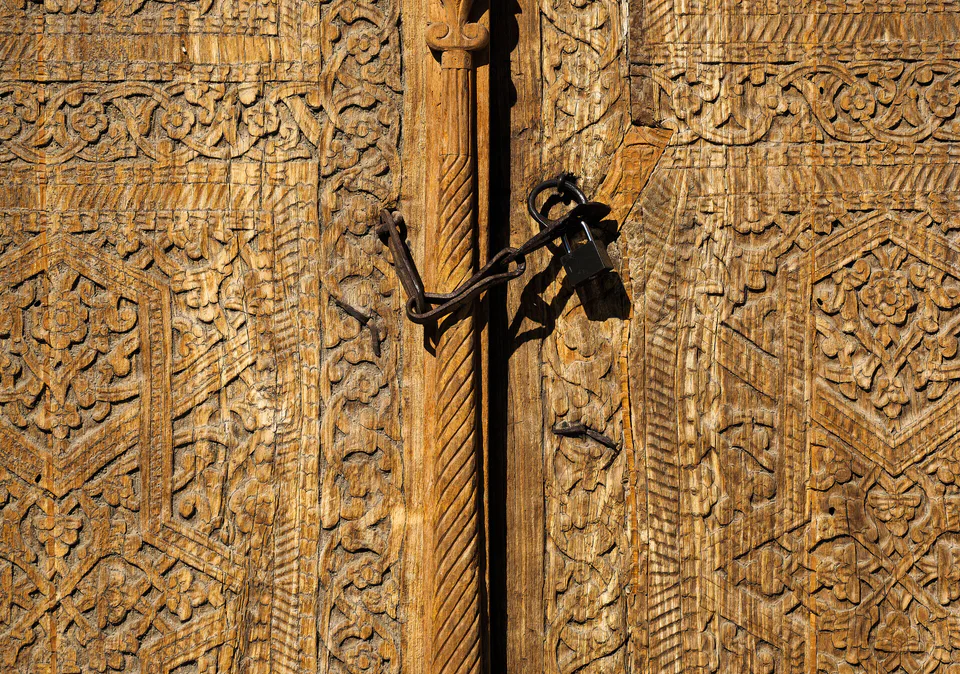
The carved doors and columns of Itchan Kala: Khiva’s carvers never paint the wood, finishing it only with natural oil; the Juma Mosque alone has more than 200 columns.
Craft · Namangan
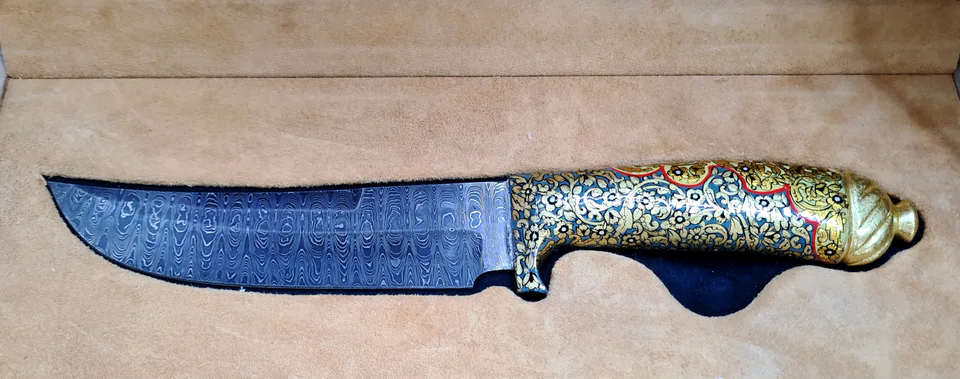
Hand-forged knives from Chust in Namangan Region: a blade with a slightly upturned tip, the maker’s stamped ‘signature’ and a decorated sheath.
Craft · Namangan
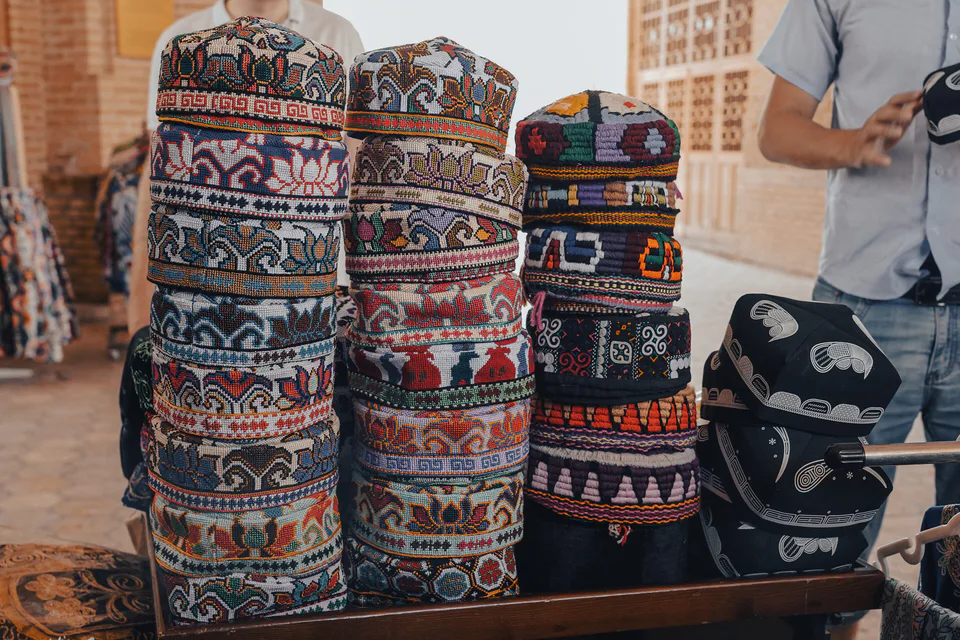
The four-sided Chust skullcap, with white pepper-pod motifs on dark green, is the best-known emblem of Uzbek dress — and every oasis has its own doppi.
Craft · Samarkand
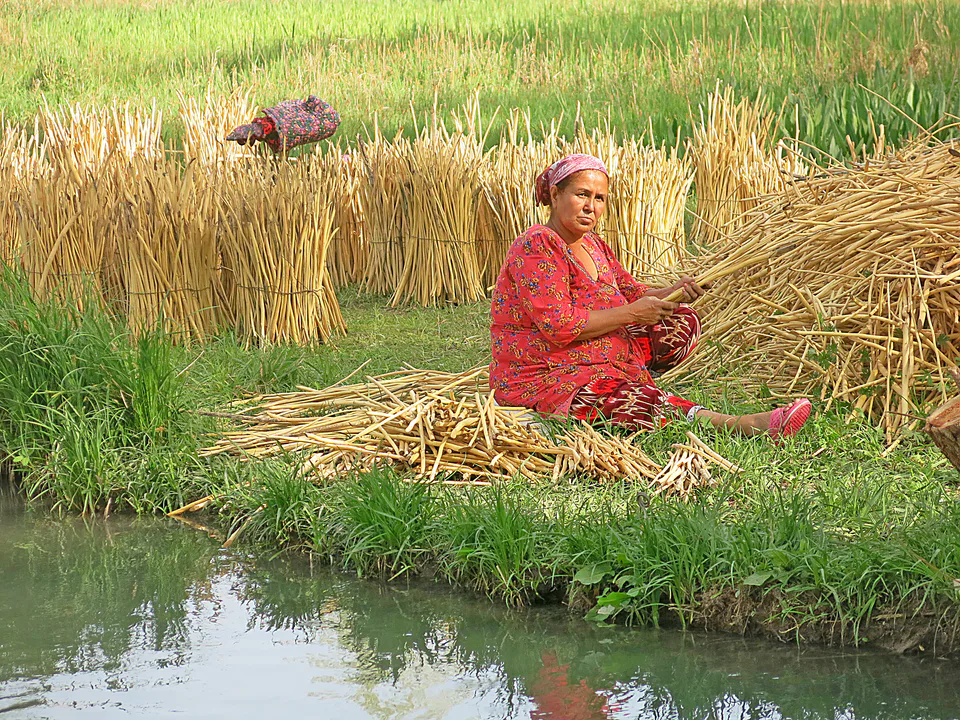
Paper made from mulberry bark — the finest writing material of the 9th–10th-century Islamic world, revived at Konigil at the end of the 20th century.
Craft · Bukhara
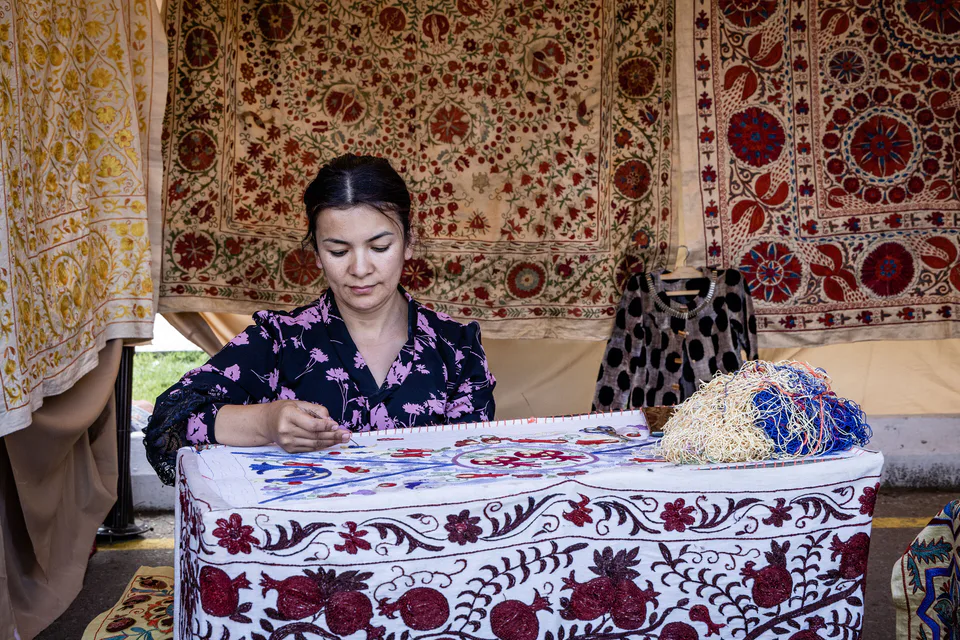
Large hand-embroidered hangings called suzani; the Bukhara school is known for fine designs covering almost the whole cloth in reds and greens on a pale ground.
Craft · Navoiy
Embroideries from Nurata in Navoiy Region: realistic sprays of carnations, irises, cotton flowers and cherries on a pale ground around a central eight-pointed star.
Craft · Samarkand
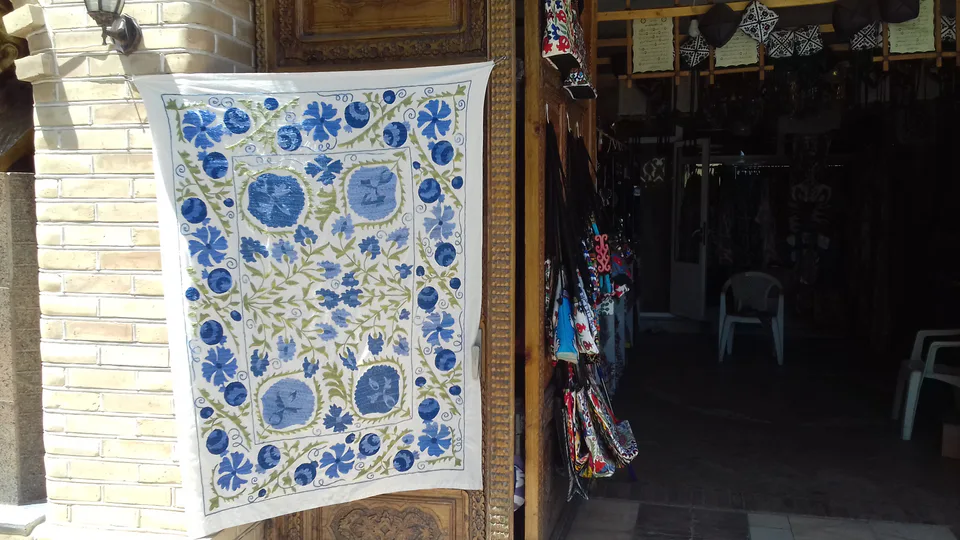
Big red-and-black circles and rosettes on white define the Samarkand school; Urgut is a living embroidery centre and a favourite bazaar for suzani hunters.
Craft · Kashkadarya
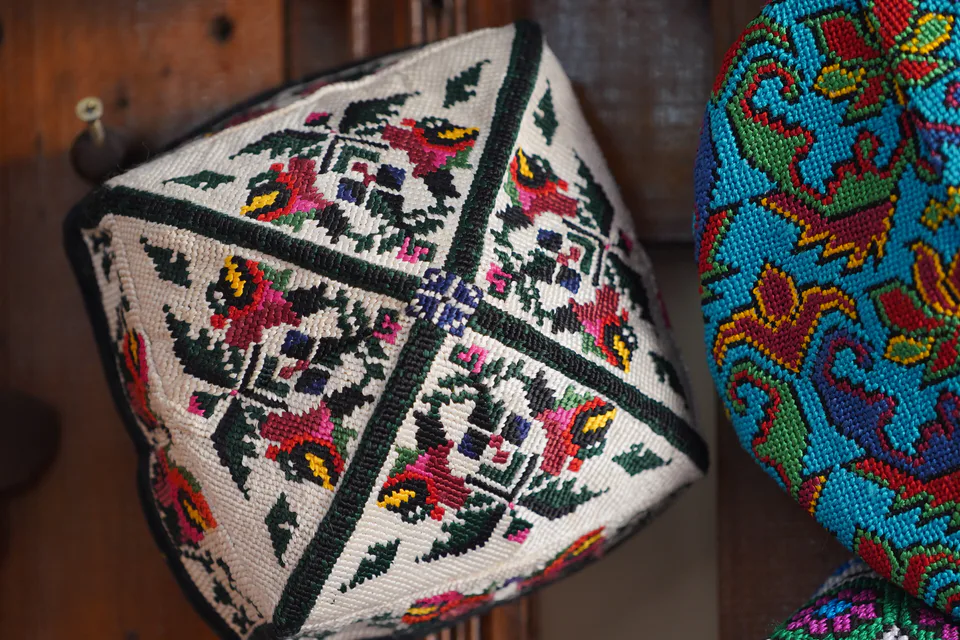
Kashkadarya’s embroidery centre: densely worked suzanis on coloured cloth and cross-stitched iroqi skullcaps, the best of them made in Shahrisabz and Kitab.
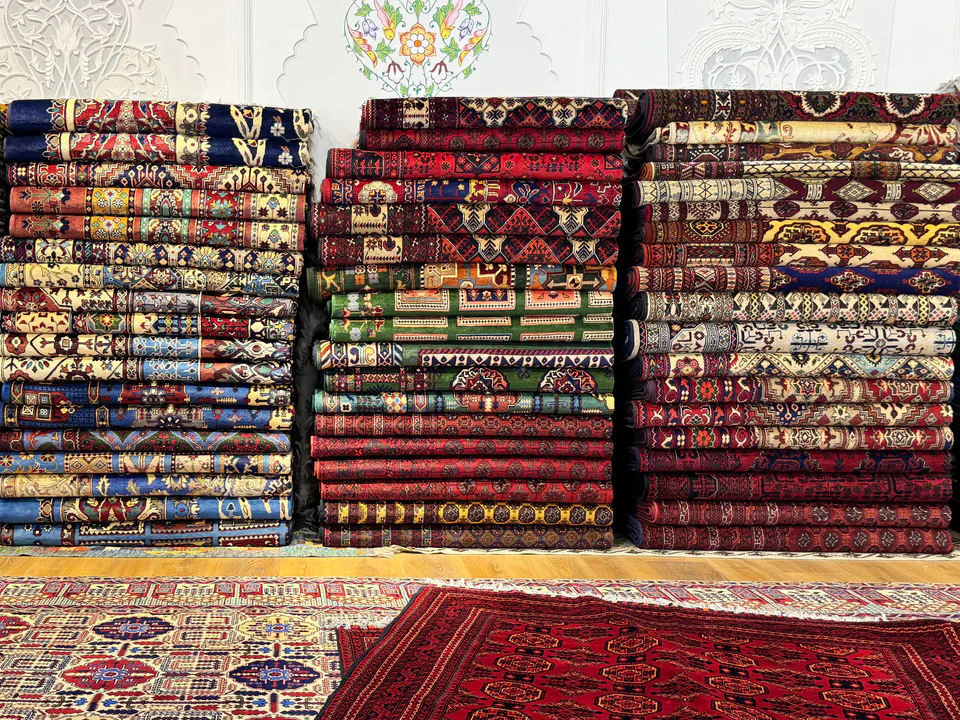
Craft · Nationwide
Hand-knotted pile carpets and flat-woven palos in wool and silk — an ancient craft still alive in the workshops of Baysun, Samarkand, Bukhara and Khiva.
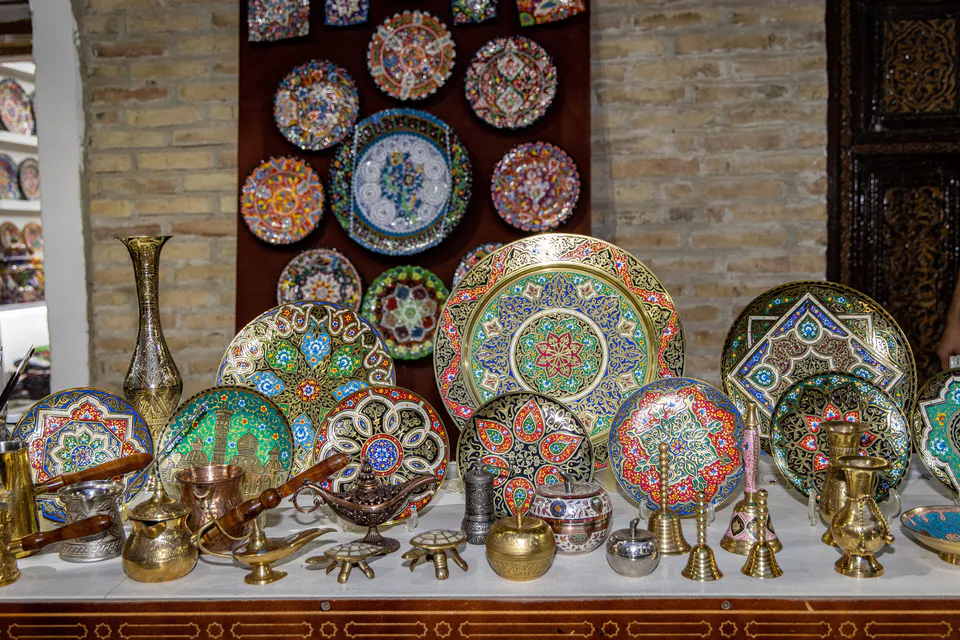
Craft · Nationwide
The art of engraving copper and brass: by the 19th century Bukhara, Samarkand, Khiva, Kokand, Karshi, Shahrisabz and Tashkent each had their own school.
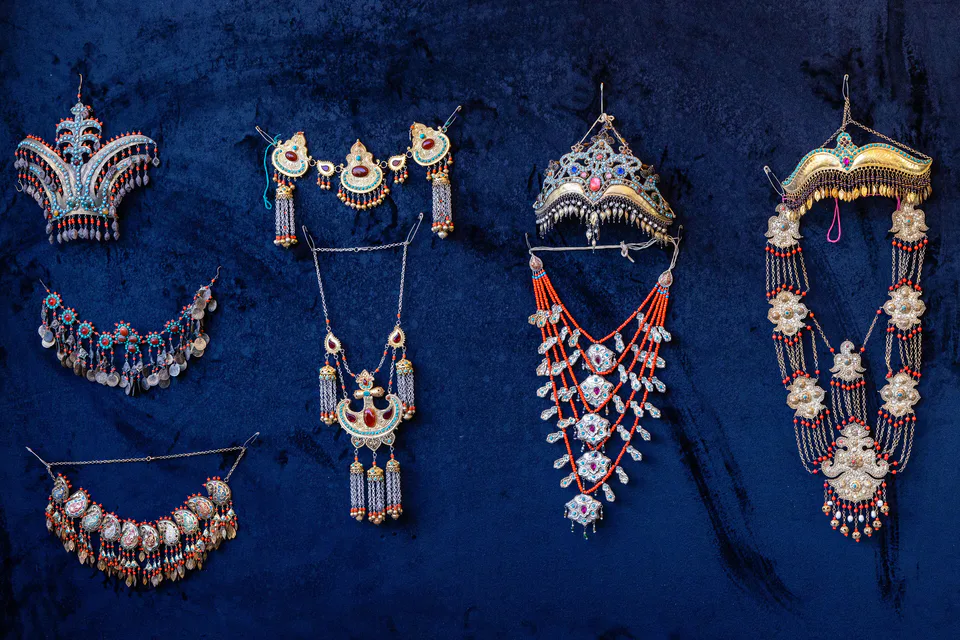
Craft · Nationwide
The craft of gold and silver jewellery — tillaqosh diadems, earrings, bracelets and tumar amulets; the old centres are Karshi, Kokand, Samarkand, Bukhara and Khiva.
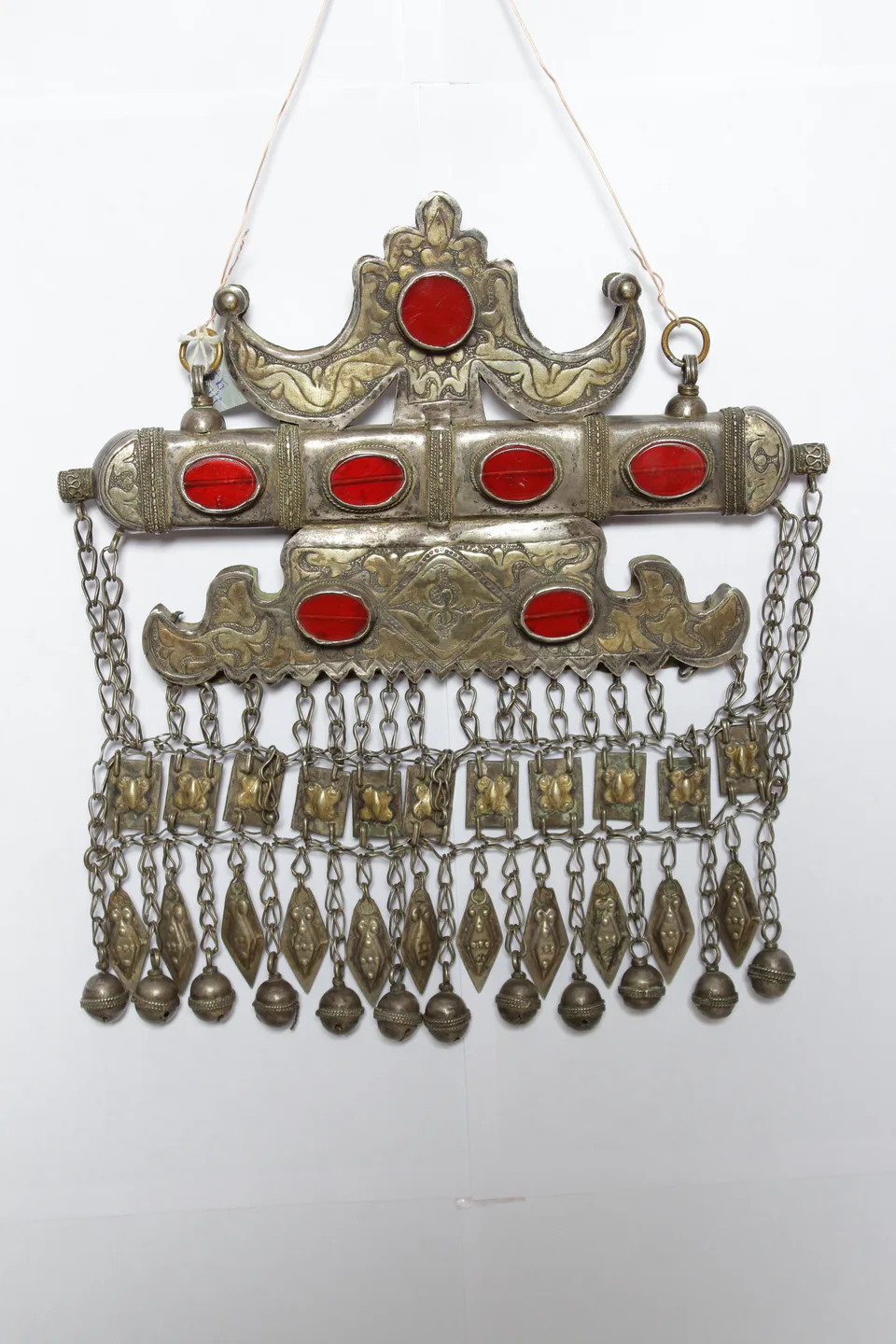
Craft · Karakalpakstan
The heavy silver jewellery of Karakalpak women: the bride’s breast ornament, nose-ring, moon-shaped brooches and tumar amulets against the evil eye.
Craft · Nationwide
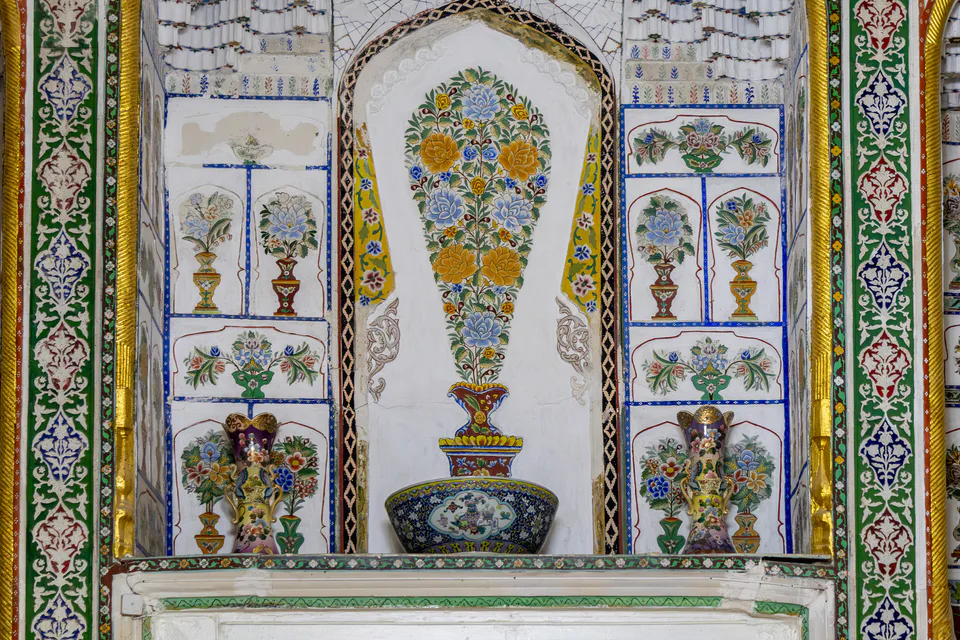
Carving in ganch, a mix of gypsum and clay — from the interiors of palaces and mosques to today’s wedding halls.
Craft · Nationwide
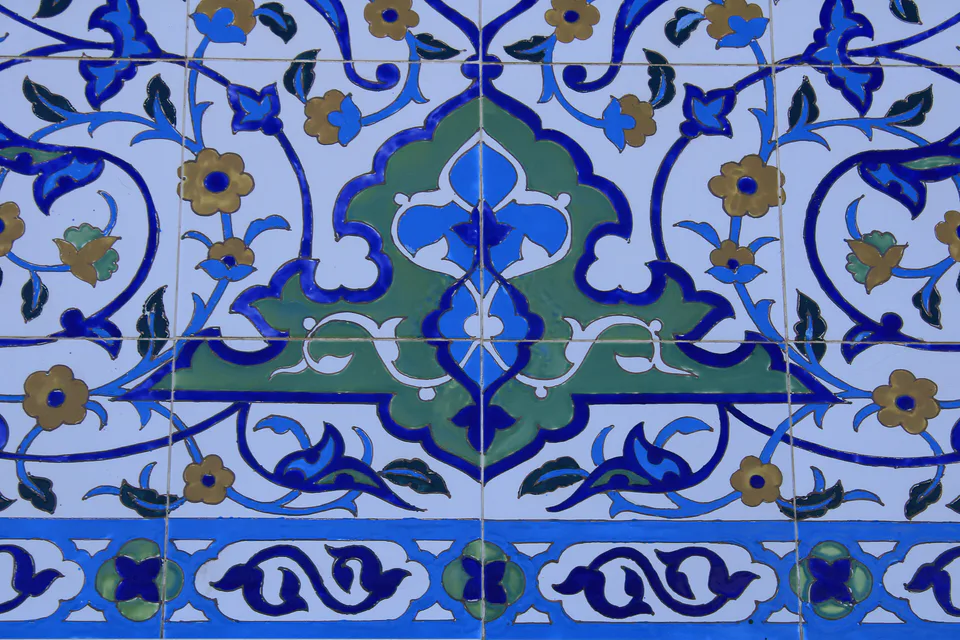
Glazed ceramic tiles, koshin, that sheathed the domes and portals of Timurid Samarkand and Bukhara, and later of Khiva.
Craft · Nationwide
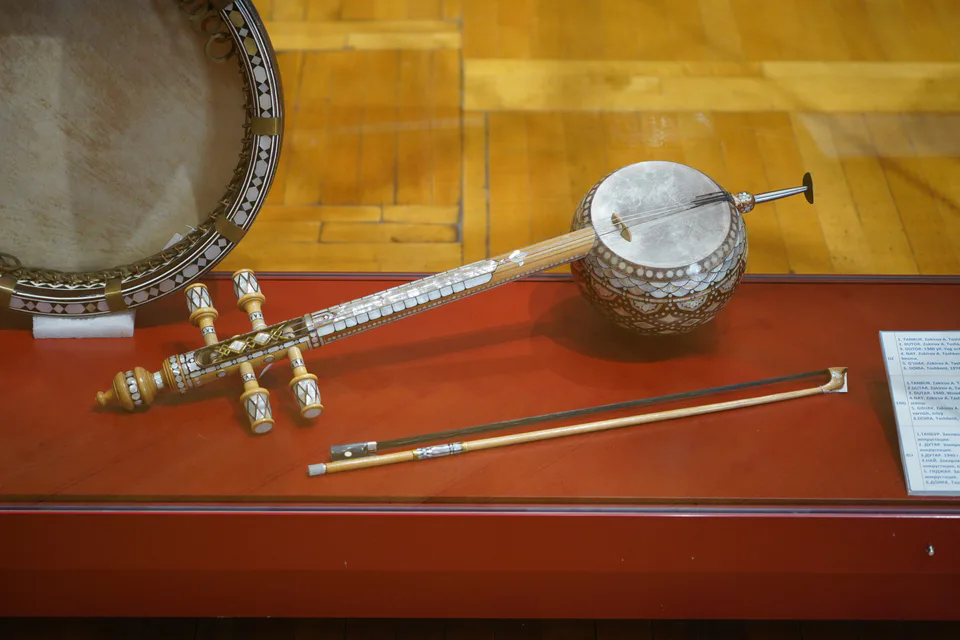
Rubabs, dutars and tanburs carved from mulberry wood, bowed g‘ijjaks and kobyz — a craft that combines joinery, carving and inlay.
Craft · Karakalpakstan
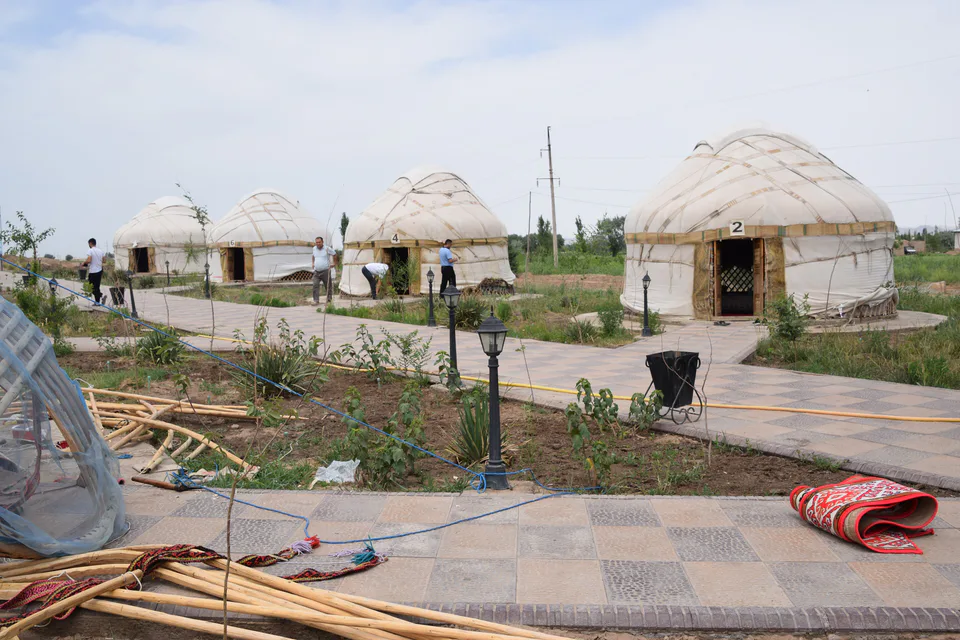
A portable home of wooden lattice and felt that goes up in a few hours: the skills of building Karakalpak yurts joined UNESCO’s list in 2025.
Craft · Nationwide
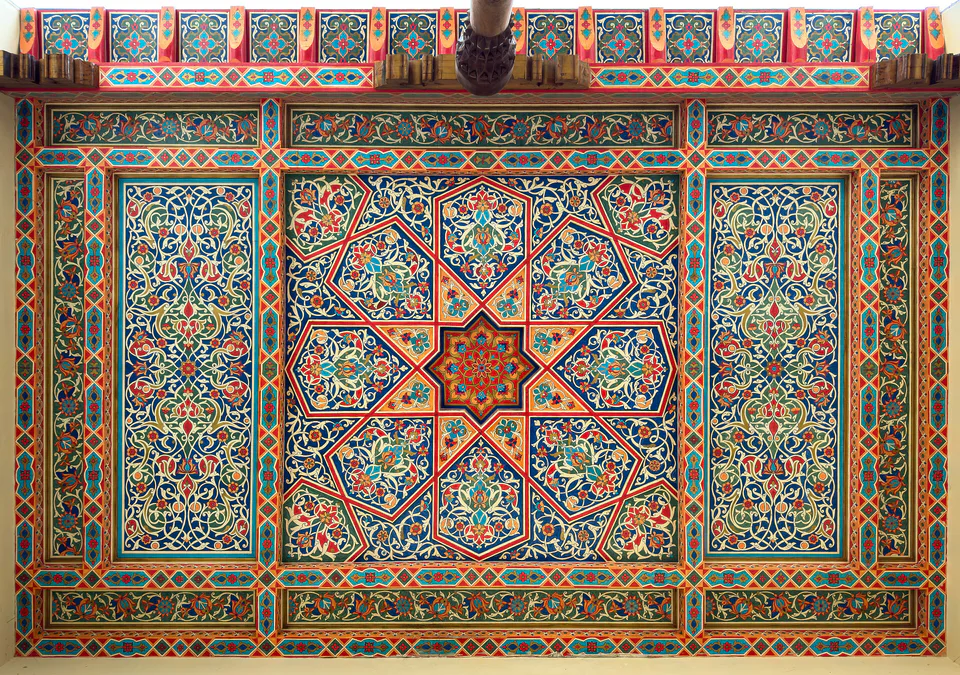
The arts of pattern design, gilded manuscript illumination and miniature painting; miniature (2020) and illumination (2023) are on UNESCO’s lists.
03 · 18 traditions
Mahalla life, hospitality, weddings and rites — the old rules of everyday life.
Tradition · Nationwide
‘A guest ranks above your father’: the seat of honour, a dastarkhan that is never left bare, and table manners from breaking the bread to the closing blessing.
Tradition · Nationwide
Green tea ‘returned’ to the pot, a bowl filled only halfway, and the choyxona at the heart of every mahalla: the Uzbek day begins and ends with tea.
Tradition · Nationwide
From matchmaking to the bride’s bow: an Uzbek wedding is not a one-day party but a chain of rites that unites two families.
Tradition · Nationwide
The rite in which a first-born baby is laid in its cradle for the first time; the cradle and gifts arrive from the mother’s family to the sound of karnay and surnay.
Tradition · Nationwide
‘A little town within the town’: the neighbourhood community gathered around its guzar, teahouse, mosque and elder — the basic unit of Uzbek life.
Tradition · Nationwide
Unpaid communal work by neighbours: once used to dig canals and raise houses, today a clean-up of the mahalla before holidays.
Tradition · Nationwide
The spring-equinox festival: hashar clean-ups and new clothes, sumalak stirred all night, ko‘k somsa, the ‘Boychechak’ song, kurash and kupkari.
Tradition · Bukhara
‘Six maqoms’ — a classical suite of instrumental and vocal music that took shape in Bukhara; joint UNESCO heritage of Uzbekistan and Tajikistan since 2008.
Tradition · Surkhandarya, Kashkadarya +2
Epic poems sung from memory to the dombra, kobyz or dutar — the performers of Alpamysh and Go‘ro‘g‘li; UNESCO-listed since 2021.
Tradition · Khorezm
Khorezm’s fiery folk melody and dance, evoking the sounds of nature, love and joy; UNESCO-listed since 2019.
Tradition · Fergana, Andijan +3
A battle of wits born in the Fergana Valley and Tashkent: two or more askiyachi duel in wordplay on a set theme.
Tradition · Fergana, Andijan +1
The Fergana Valley’s ‘great song’: two to five unaccompanied singers, each holding a tray, sing in a soaring high register; UNESCO-listed since 2009.
Tradition · Nationwide
Uzbekistan’s national wrestling: fought standing only, the aim is to throw the opponent onto his back; an international sport since 1998.
Tradition · Nationwide
A horseback contest in which hundreds of riders battle for a goat carcass — in spring and autumn, above all at Navruz; its oldest forms survive in Baysun.
Tradition · Nationwide
Atlas and adras dresses, the chapan robe and sash, the doppi skullcap: rarely worn day to day, but Uzbek dress fills the streets at weddings, Eid and Navruz.
Tradition · Nationwide
The month of fasting: the pre-dawn saharlik and the evening iftar shared with neighbours and friends, with nisholda on the table; iftar traditions joined UNESCO’s list in 2023.
Tradition · Nationwide
Tales of the quick-witted, justice-loving folk hero Khoja Nasreddin; the tradition of telling them has been shared UNESCO heritage of seven countries since 2022.
Tradition · Surkhandarya
Baysun in the Surkhandarya mountains, where rituals keep traces of shamanism, Zoroastrianism, Buddhism and Islam; a UNESCO Masterpiece since 2001.
04 · 10 festivals
Navruz, Eid and folk fairs — when they happen and how to join in.
Festival · 1 January
1 January is a public holiday: Christmas trees, holiday fairs and fireworks in the cities, family feasts at home.
Festival · 14 January
14 January marks the founding of Uzbekistan’s Armed Forces: a working day, but one on which soldiers and ‘defenders of the motherland’ are honoured nationwide.
Festival · 8 March
8 March is a spring holiday honouring mothers, sisters and all women — flowers, gifts and concerts; a public holiday.
Festival · 21 March
21 March, the spring equinox and the nation’s favourite festival: a public holiday, with fairs and sumalak lasting several days.
Festival · 9 May
9 May remembers those who died in the Second World War and honours living veterans; until 1999 it was called Victory Day.
Festival · 1 September
1 September is Uzbekistan’s main national holiday, marking the declaration of independence on 31 August 1991 — concerts and fireworks.
Festival · 1 October
1 October honours teachers: a public holiday since 1997, with celebrations in schools and universities, flowers and greetings.
Festival · 8 December
8 December marks the adoption of Uzbekistan’s Constitution in 1992 and remains a public holiday after the new 2023 edition.
Festival · Nationwide
The end of the fast, on the first day of Shawwal: festive prayers, family visits and a table of sweets; the date moves every year.
Festival · Nationwide
The Feast of Sacrifice on 10 Dhu al-Hijjah: festive prayers, sharing the sacrificial meat and hospitality; the date moves every year.