Craft · Fergana
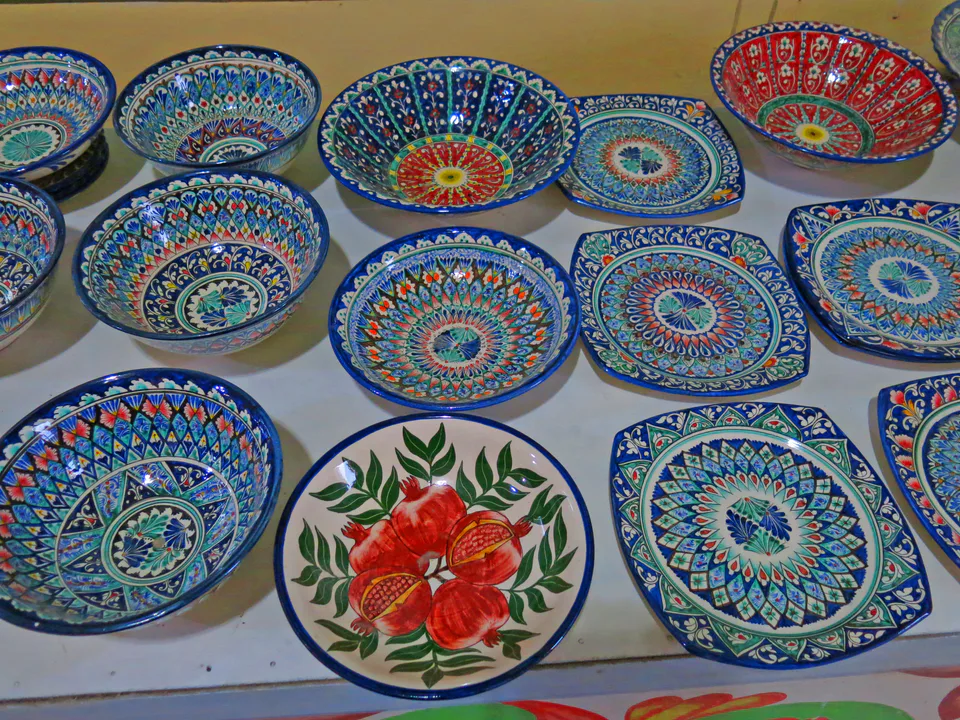
Rishtan ceramics
The blue and turquoise pottery of Rishtan in the Fergana Valley, famed for its ishkor glaze made from plant ash and its local red clay.
Craft · Nationwide
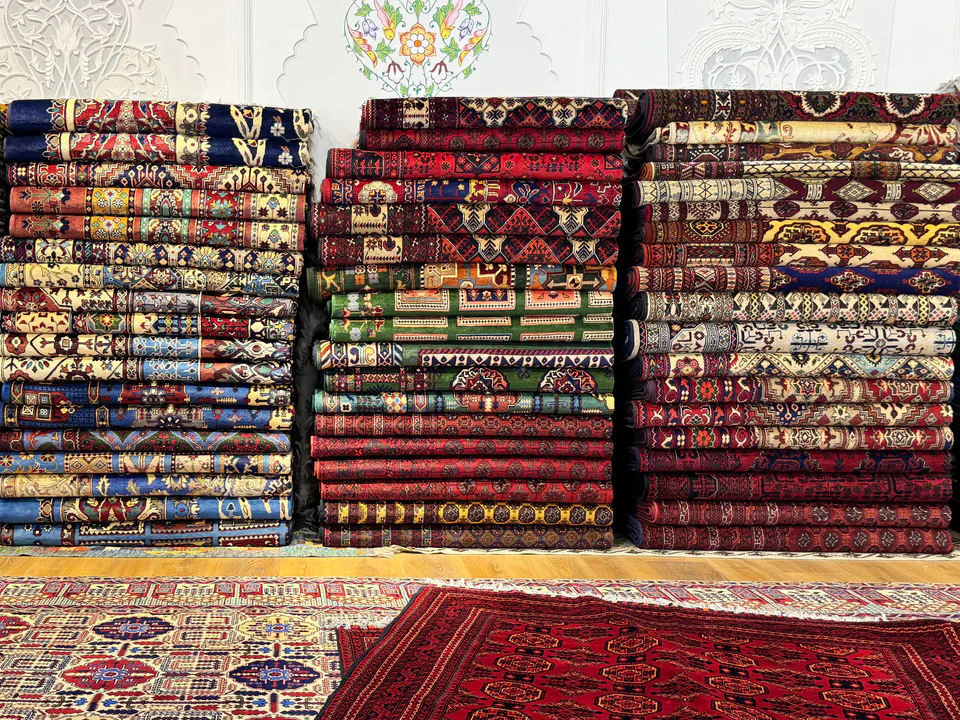
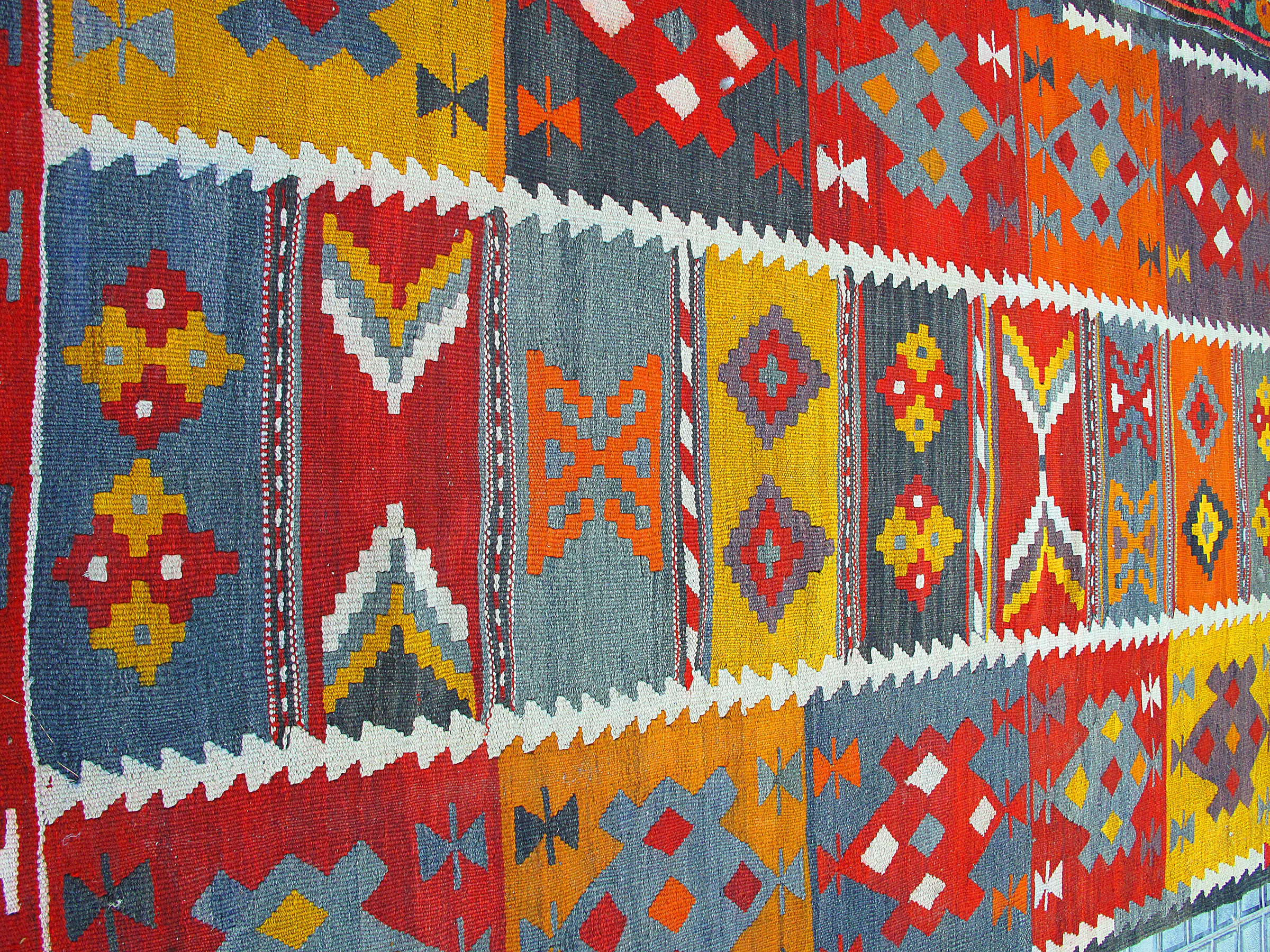
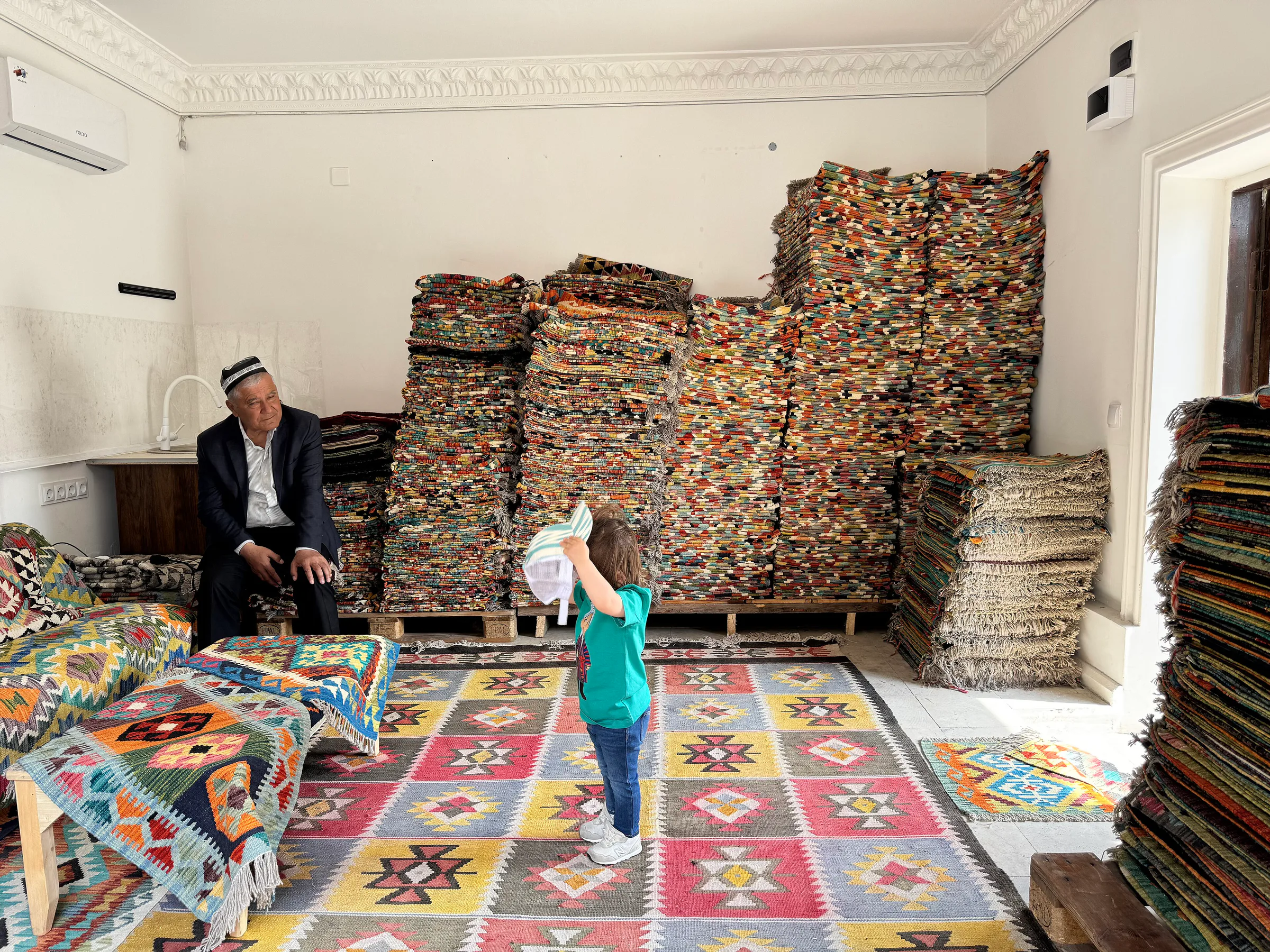
Hand-knotted pile carpets and flat-woven palos in wool and silk — an ancient craft still alive in the workshops of Baysun, Samarkand, Bukhara and Khiva.
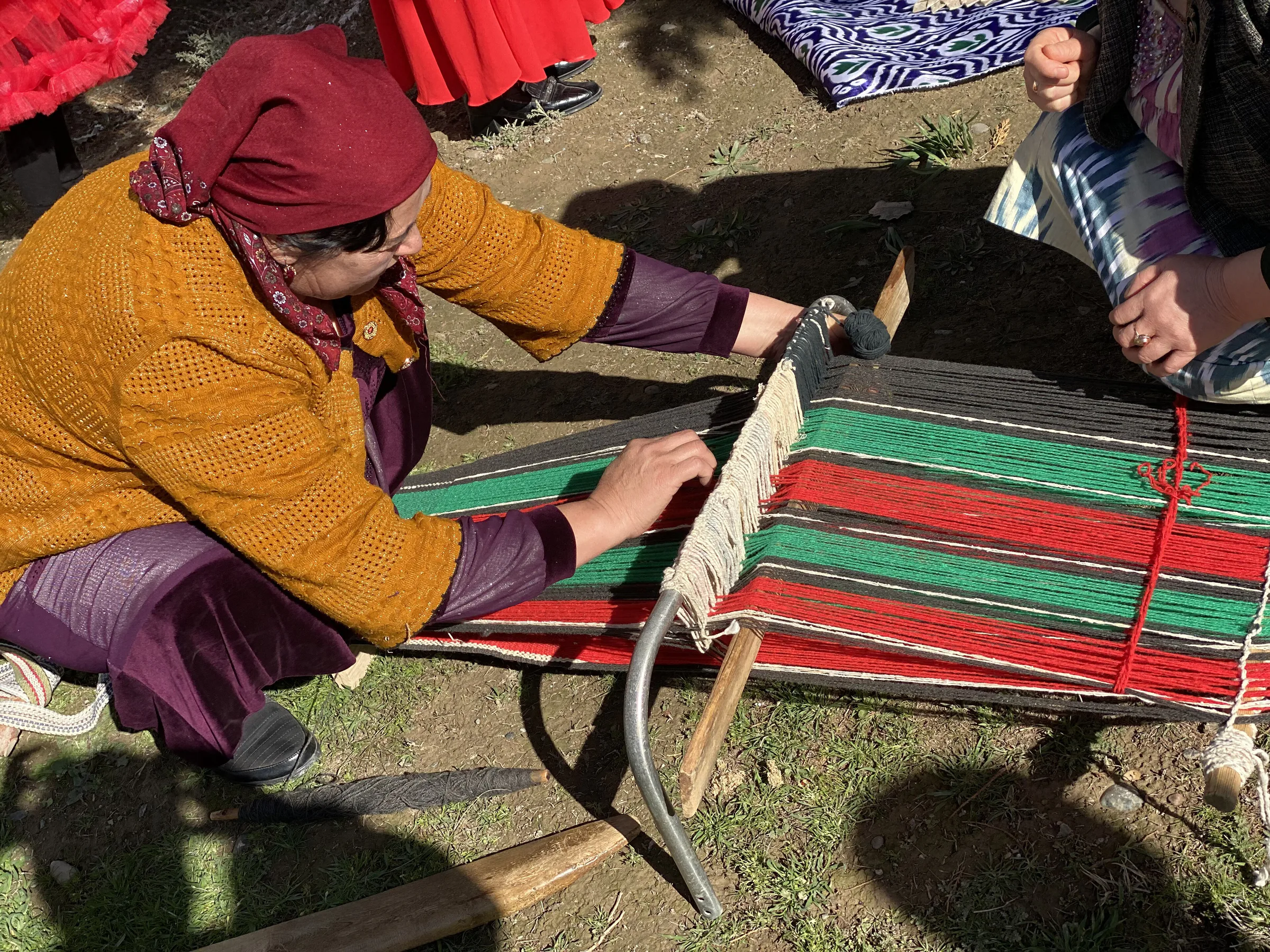
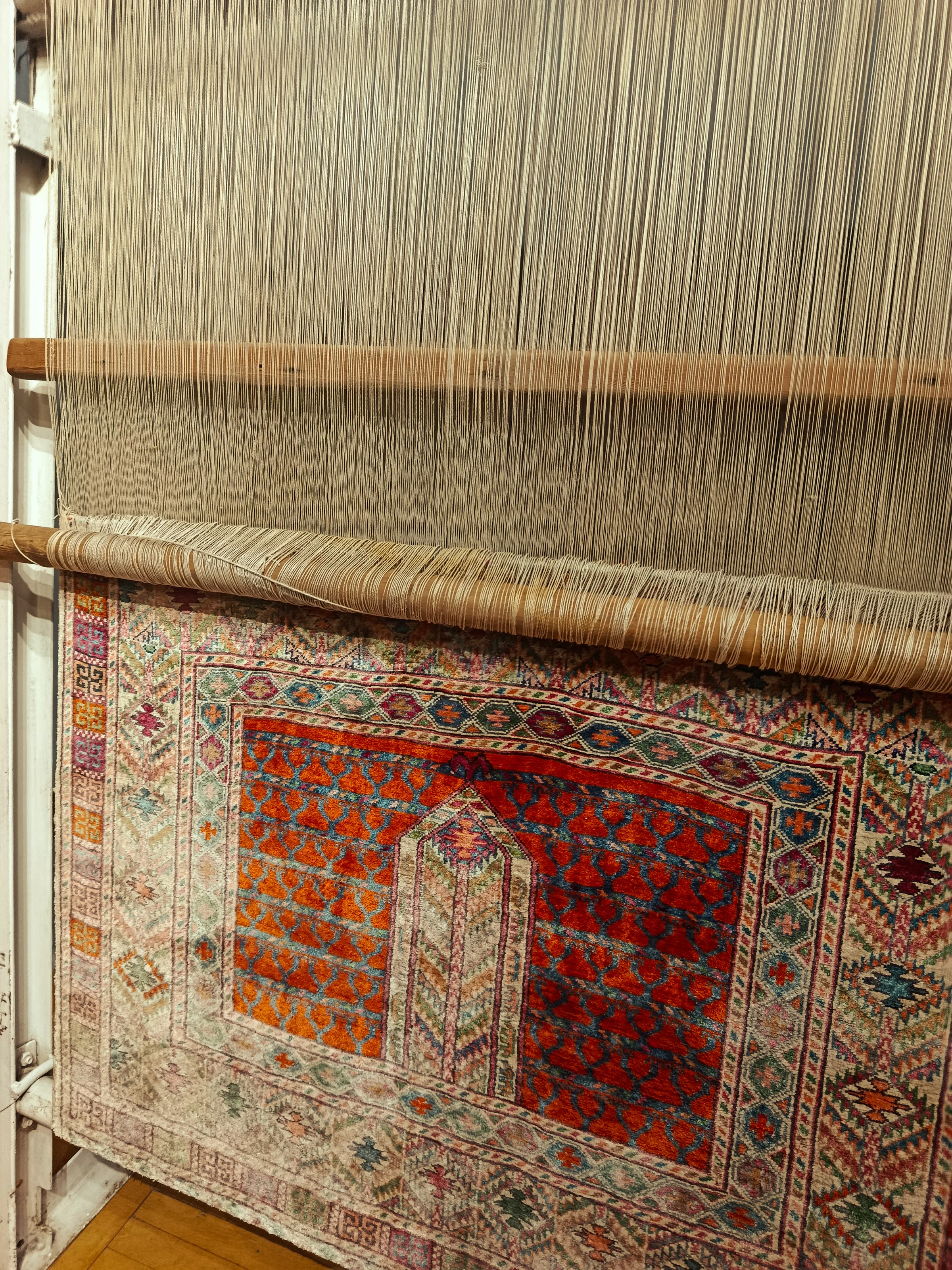
Carpet weaving is one of Uzbekistan’s oldest crafts: the earliest carpet fragments from the region are dated to around the 2nd century BC. Carpets are woven on horizontal or vertical looms from wool, silk, hemp or cotton. Uzbeks distinguish the pile gilam from the flat-woven palos; designs are geometric or floral (islimi), built from a central field and borders. The patterns were never mere decoration — they were believed to bring prosperity, ensure the family line and ward off the evil eye.
In 2022 sericulture and traditional silk production, silk carpets included, were inscribed on UNESCO’s intangible heritage list.
Some of the most traditional Uzbek carpets today come from Surkhandarya, especially Baysun district. In Samarkand, the silk carpet workshop on Hujum Street employs more than 400 women, and visitors can follow every stage — reeling silk from cocoons, dyeing with madder, walnut husk, onion skin and pomegranate peel, and knotting on the loom. Bukhara and Khiva also have carpet workshops, and the Arda Khiva complex has scheduled the international ‘Radiance of Carpets’ exhibition for 17–18 October 2026.
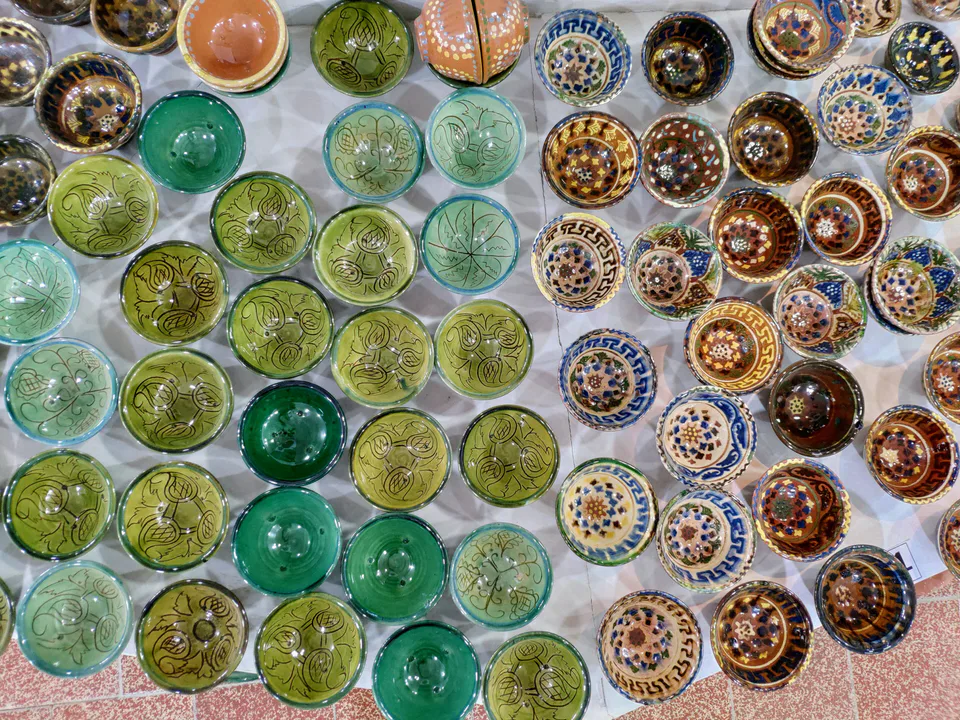
Craft · Fergana
The blue and turquoise pottery of Rishtan in the Fergana Valley, famed for its ishkor glaze made from plant ash and its local red clay.
Craft · Bukhara
Pottery from Gijduvan near Bukhara, glazed in browns, yellows and greens — the best-known centre of the Bukhara–Samarkand school.
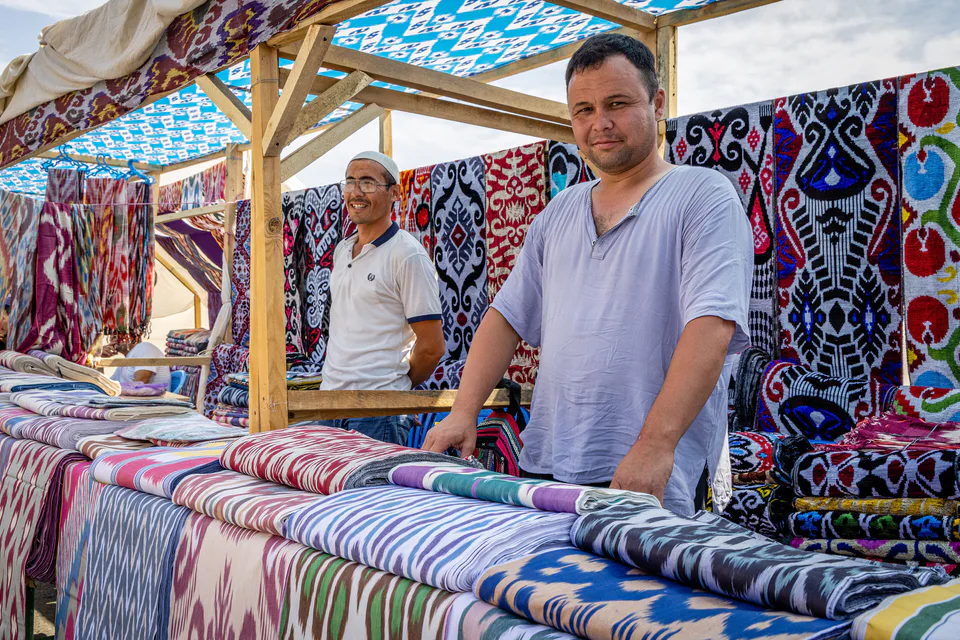
Craft · Fergana
Margilan’s ikat silks: pure-silk atlas and half-silk adras. UNESCO recognises the town’s work to safeguard them as a model practice.
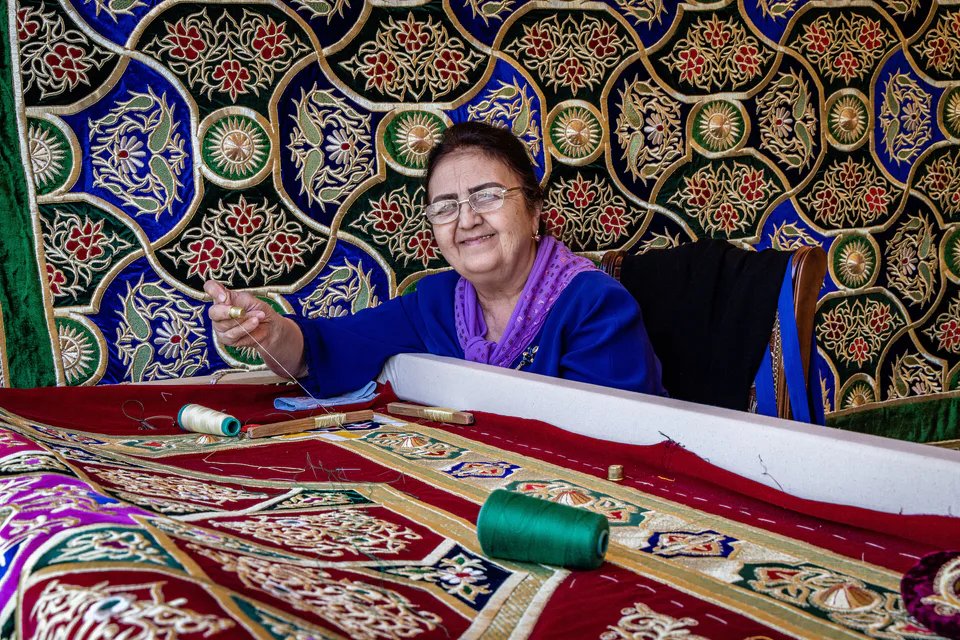
Craft · Bukhara
Embroidery in gold and silver thread on velvet and silk — the art of the Bukhara emirs’ court and still the city’s most precious craft.
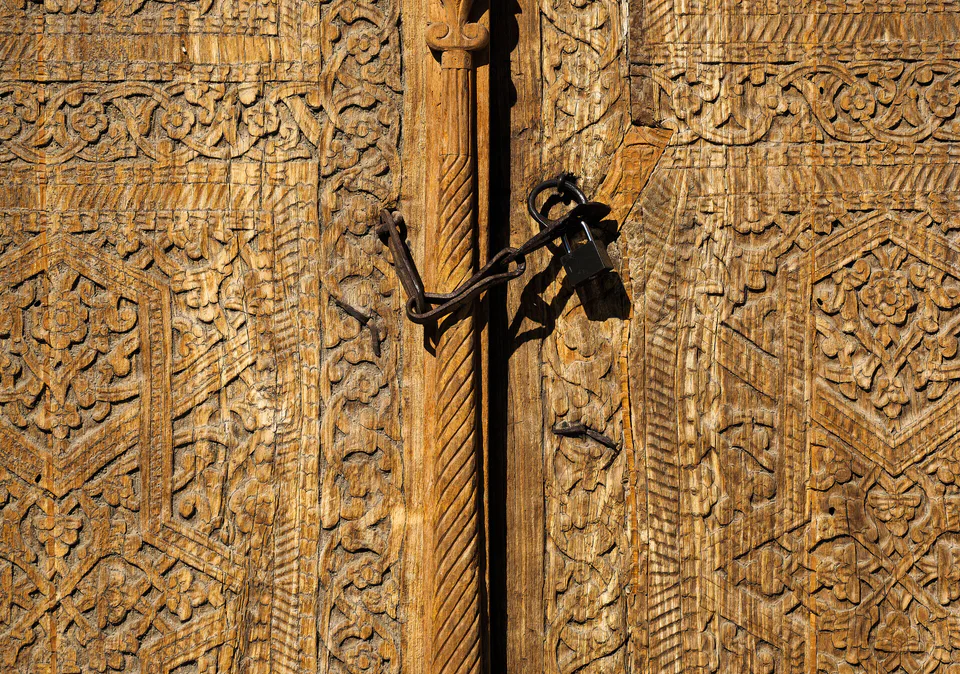
Craft · Khorezm
The carved doors and columns of Itchan Kala: Khiva’s carvers never paint the wood, finishing it only with natural oil; the Juma Mosque alone has more than 200 columns.
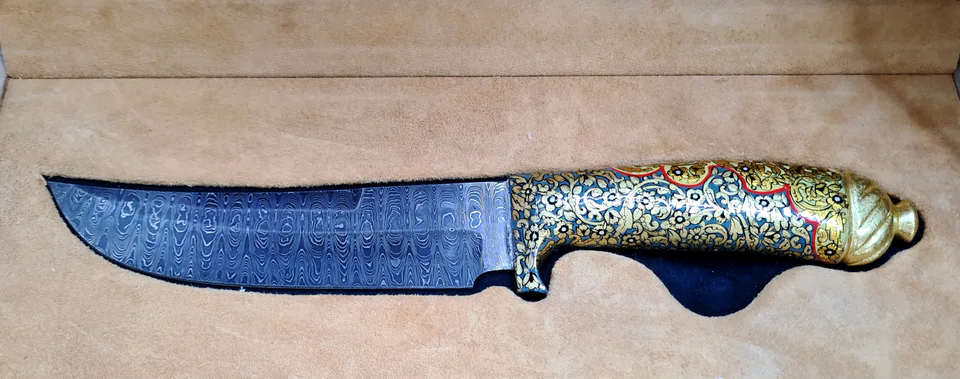
Craft · Namangan
Hand-forged knives from Chust in Namangan Region: a blade with a slightly upturned tip, the maker’s stamped ‘signature’ and a decorated sheath.
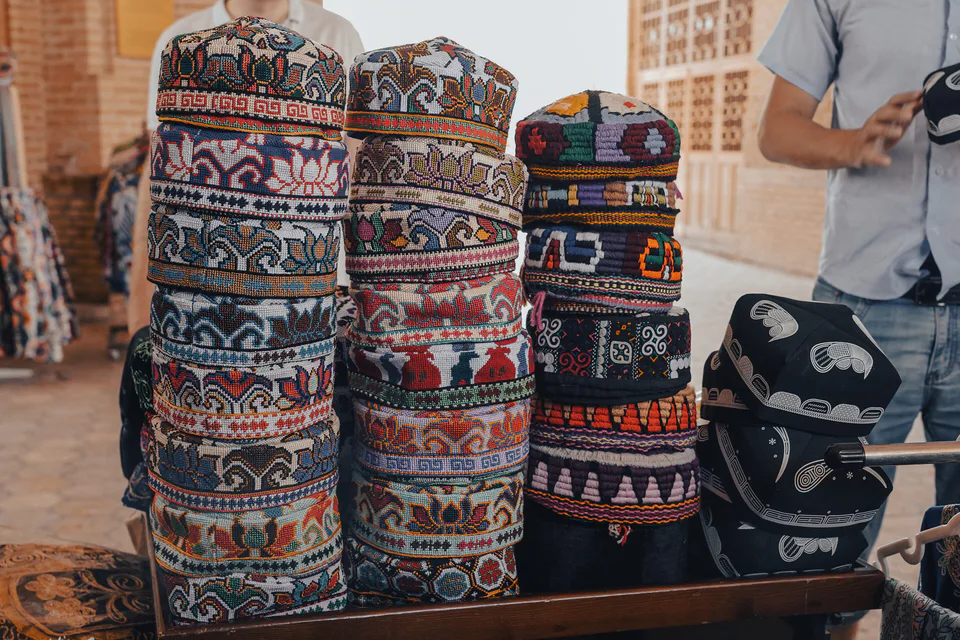
Craft · Namangan
The four-sided Chust skullcap, with white pepper-pod motifs on dark green, is the best-known emblem of Uzbek dress — and every oasis has its own doppi.
Craft · Samarkand
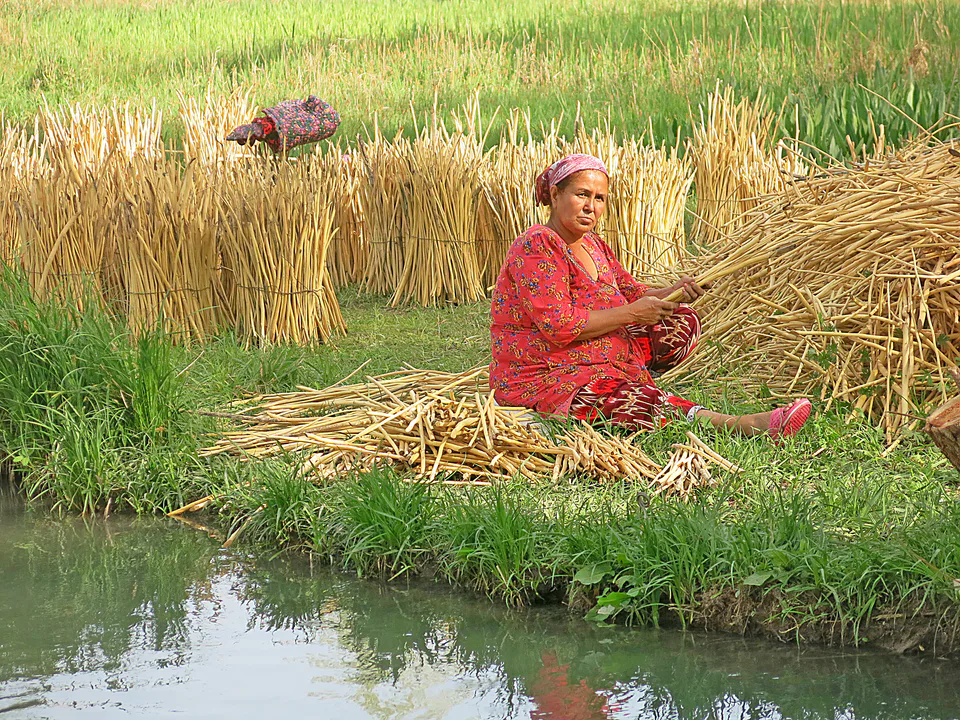
Paper made from mulberry bark — the finest writing material of the 9th–10th-century Islamic world, revived at Konigil at the end of the 20th century.
Craft · Bukhara
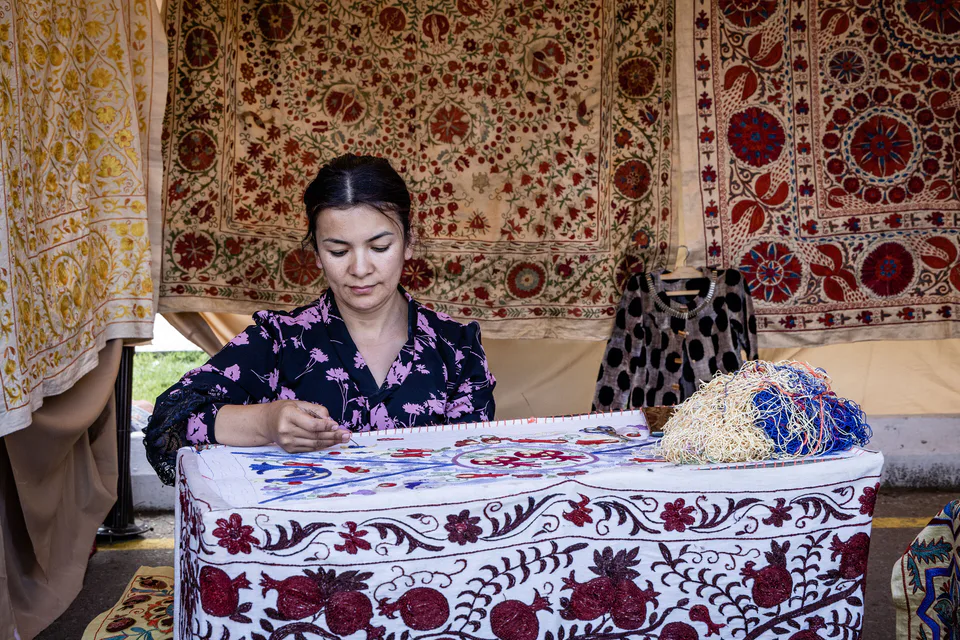
Large hand-embroidered hangings called suzani; the Bukhara school is known for fine designs covering almost the whole cloth in reds and greens on a pale ground.
Craft · Navoiy
Embroideries from Nurata in Navoiy Region: realistic sprays of carnations, irises, cotton flowers and cherries on a pale ground around a central eight-pointed star.