Craft · Samarkand
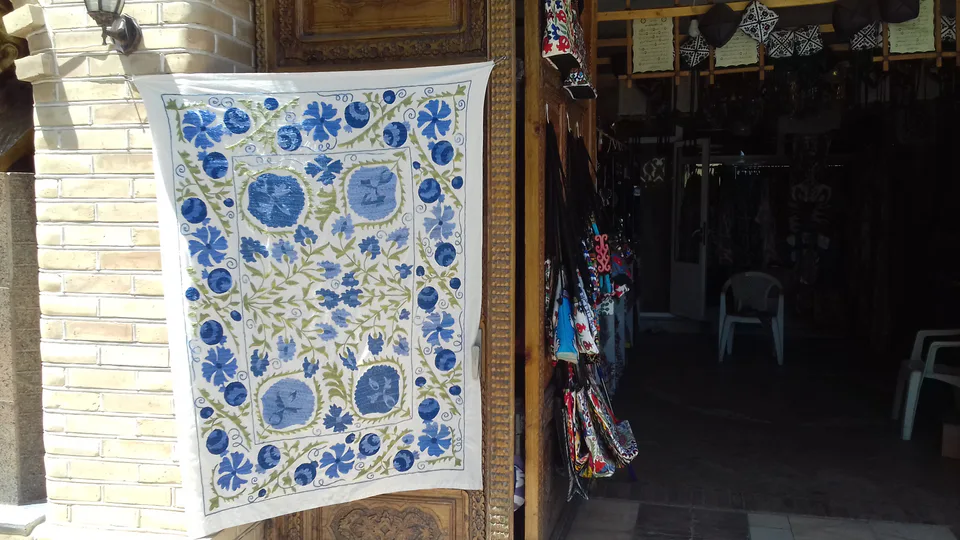
Samarkand and Urgut suzani
Big red-and-black circles and rosettes on white define the Samarkand school; Urgut is a living embroidery centre and a favourite bazaar for suzani hunters.
Craft · Samarkand
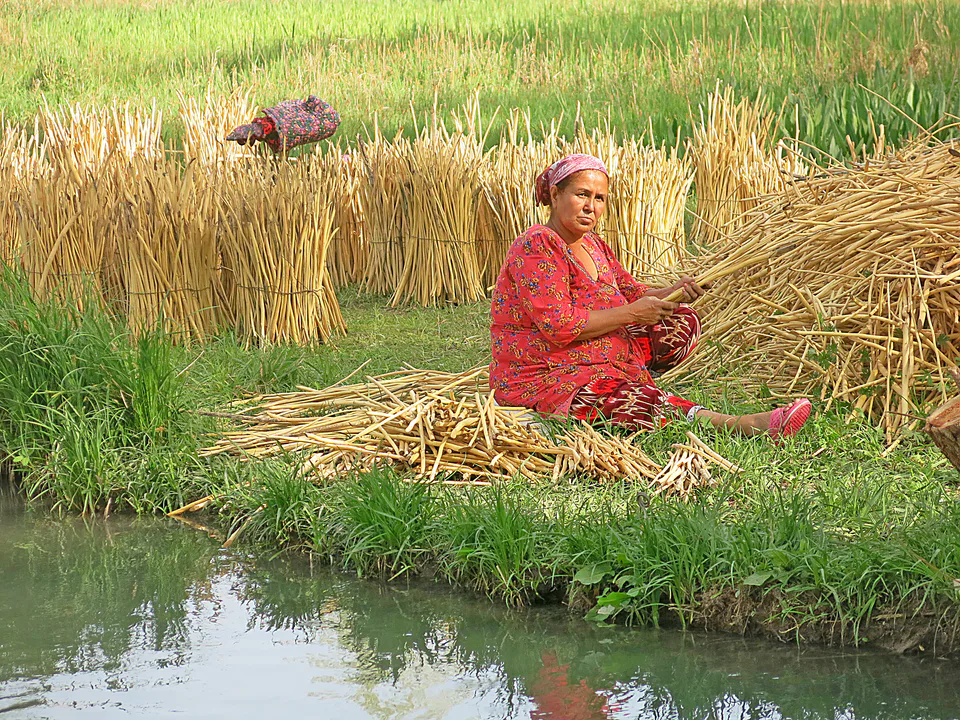
Paper made from mulberry bark — the finest writing material of the 9th–10th-century Islamic world, revived at Konigil at the end of the 20th century.
In the 9th and 10th centuries Samarkand paper ranked among the finest writing materials in the Islamic world. Al-Tha‘alibi, a contemporary of Avicenna, wrote that it had displaced Egyptian papyrus and parchment, being ‘very beautiful, delicate and most convenient to write on’. Legend long held that the secret came with Chinese papermakers captured at the Battle of Talas in 751, but archaeological finds show paper was known here earlier. Babur noted in his memoirs that the world’s best paper was made in mills turned by the waters of Konigil.
In the 19th century factory paper drove out the handmade product and the old technique was forgotten.
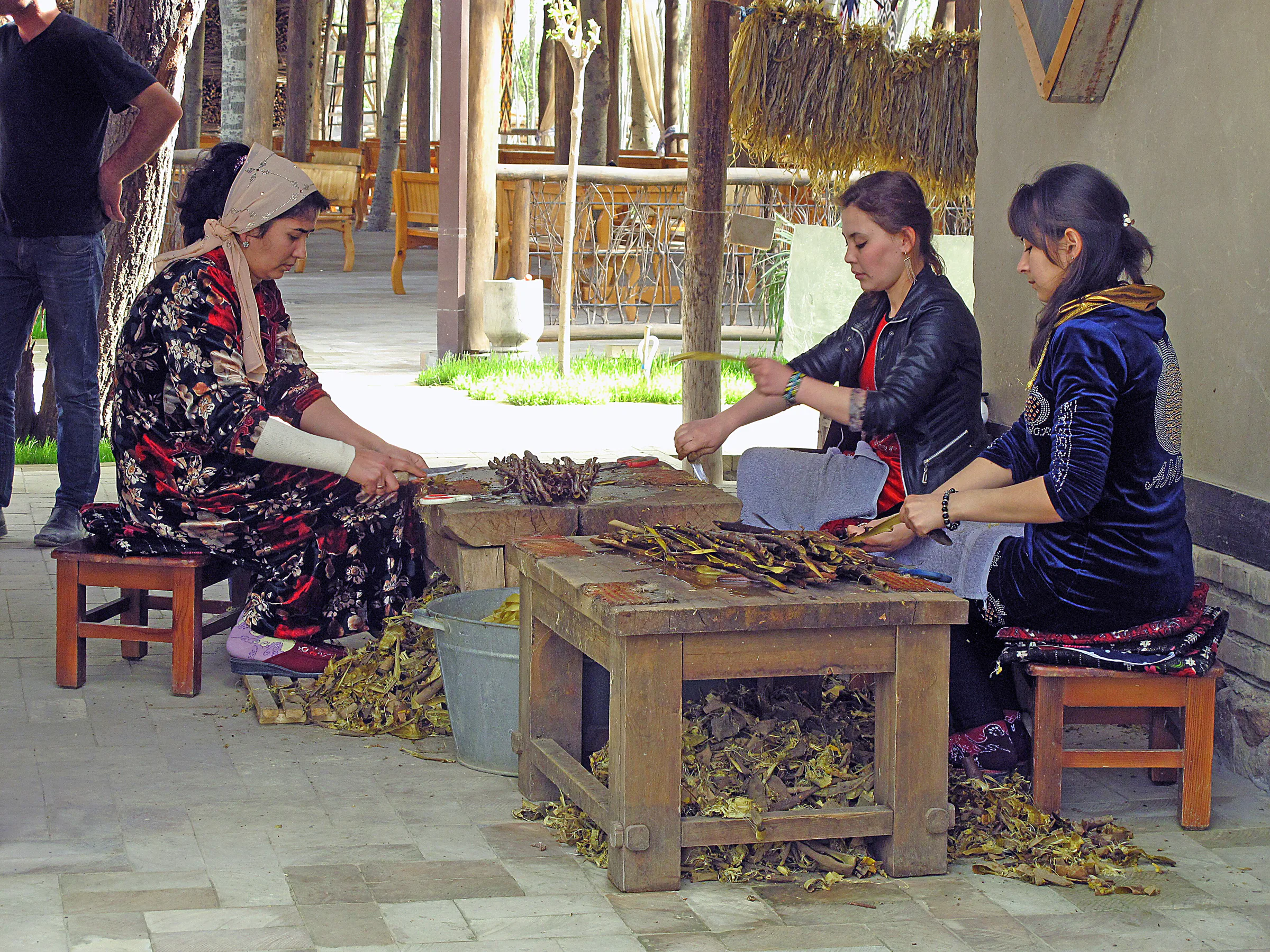
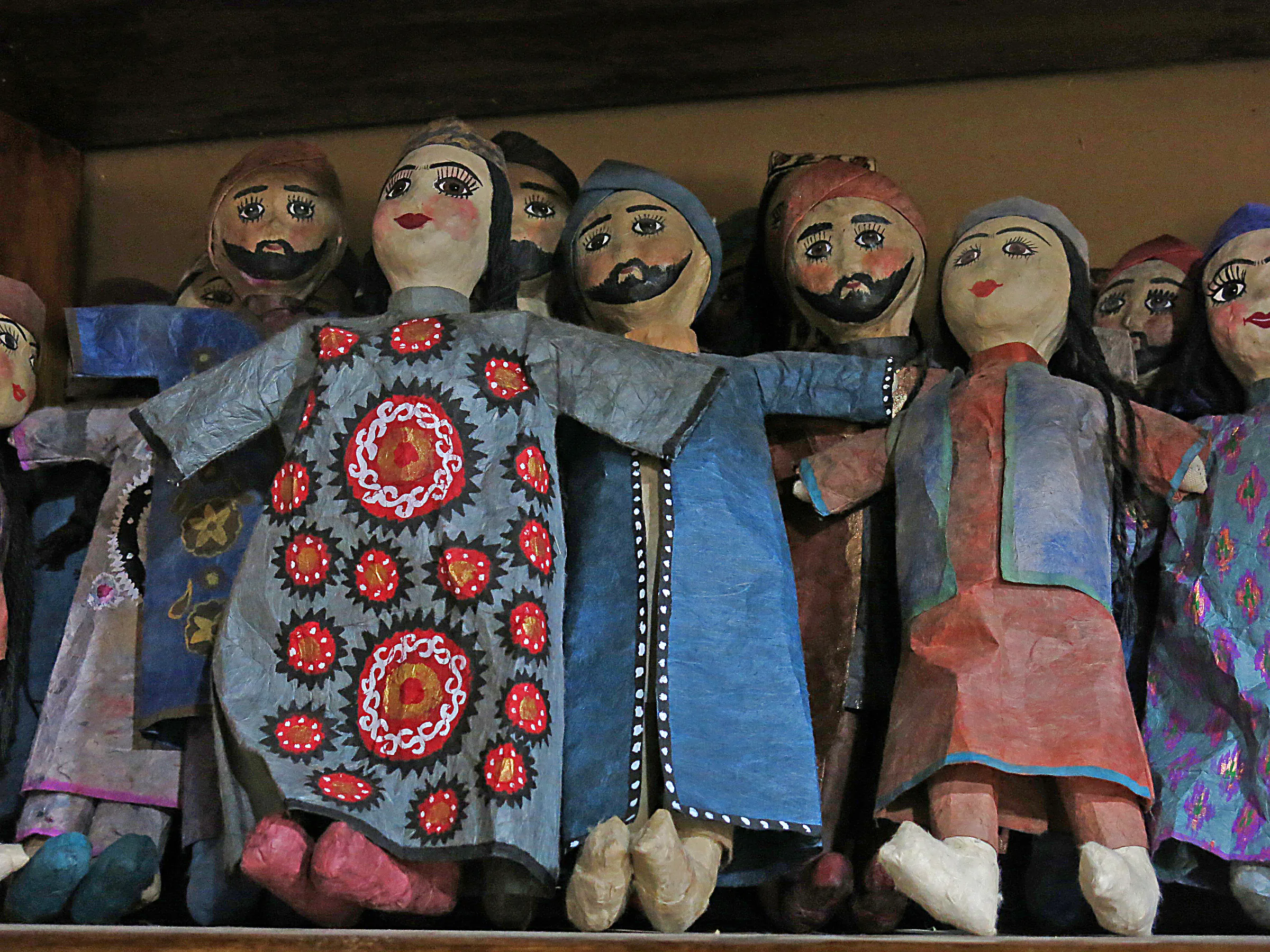
In the late 1990s the brothers Zarif and Islom Mukhtarov set up a workshop in Konigil, on Samarkand’s outskirts beside the Siyob canal, and after years of experiments brought the craft back. At the Meros workshop the bark of young mulberry shoots is boiled, its inner fibre pounded by water-driven hammers, scooped onto a sieve, dried and burnished. Unbleached, the paper has a warm cream tone and lasts exceptionally well. Visitors can watch every stage, make a sheet themselves and buy notebooks, masks and dolls made from it.
Craft · Samarkand
Big red-and-black circles and rosettes on white define the Samarkand school; Urgut is a living embroidery centre and a favourite bazaar for suzani hunters.
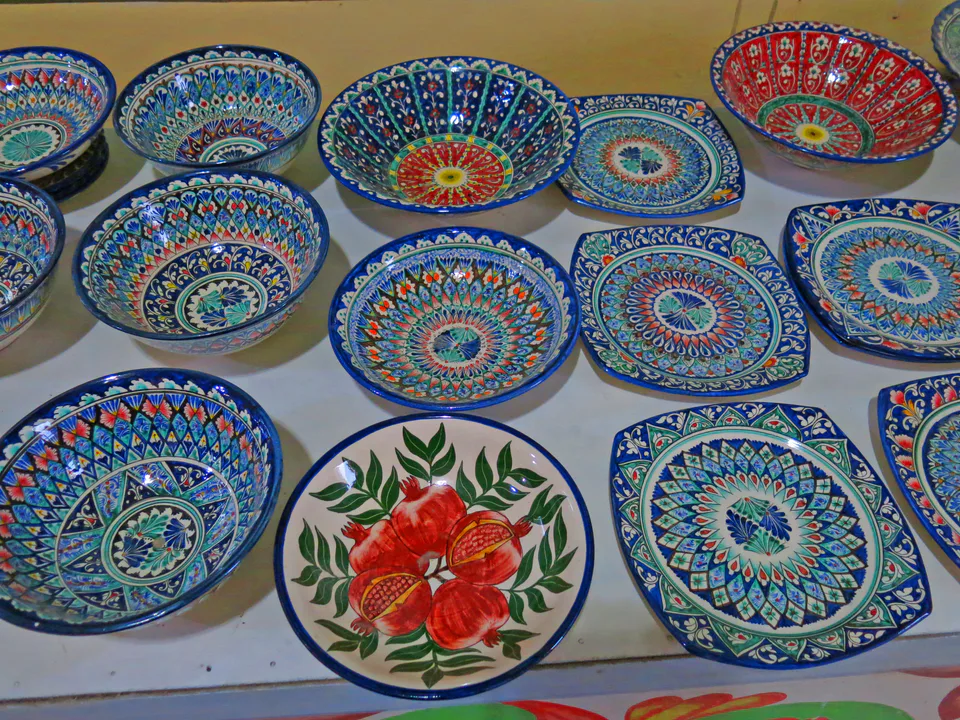
Craft · Fergana
The blue and turquoise pottery of Rishtan in the Fergana Valley, famed for its ishkor glaze made from plant ash and its local red clay.
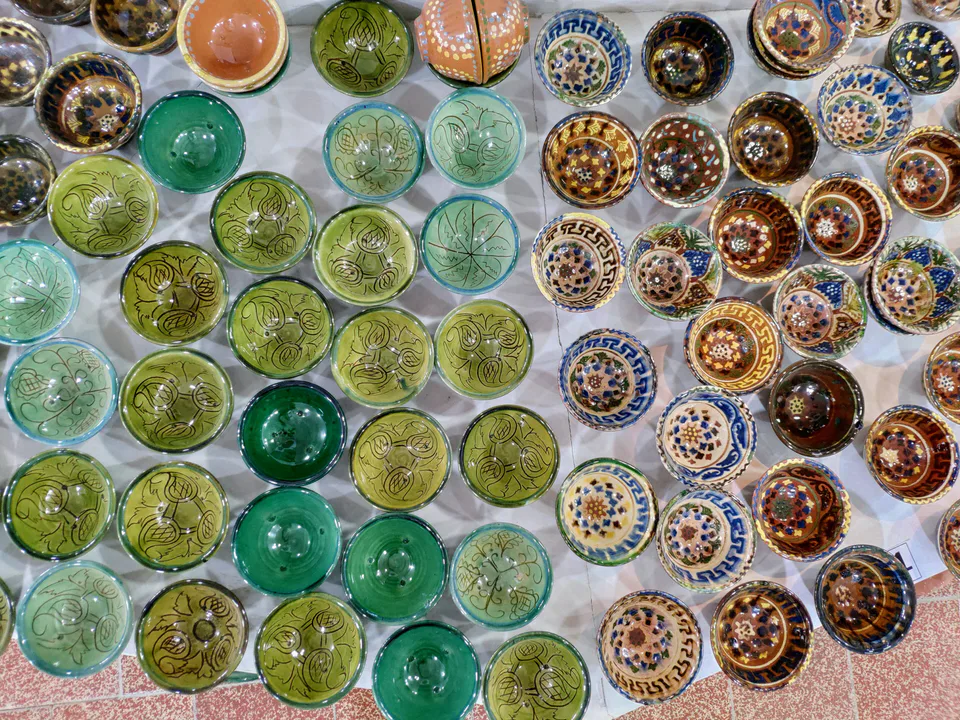
Craft · Bukhara
Pottery from Gijduvan near Bukhara, glazed in browns, yellows and greens — the best-known centre of the Bukhara–Samarkand school.
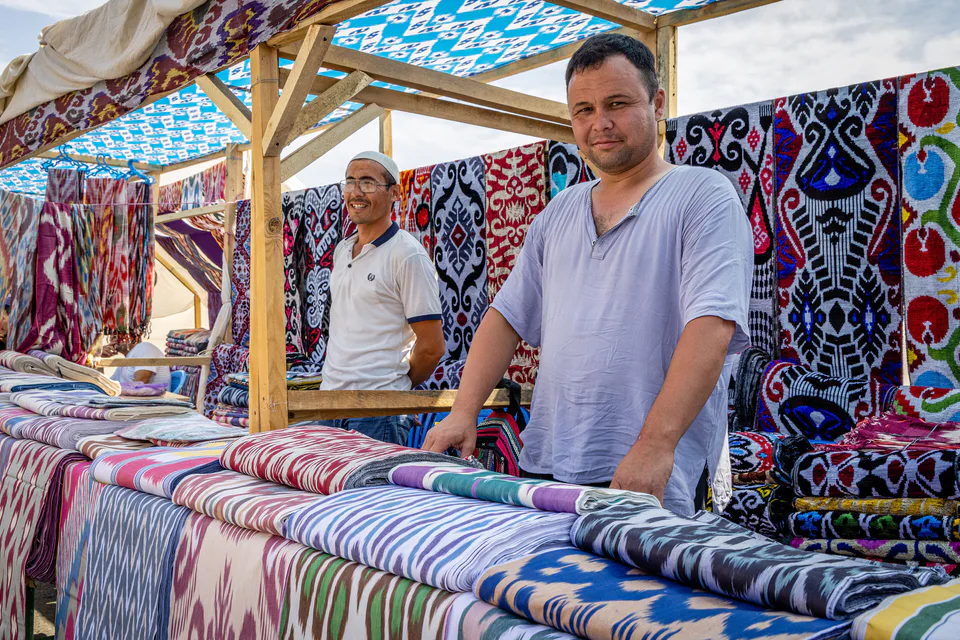
Craft · Fergana
Margilan’s ikat silks: pure-silk atlas and half-silk adras. UNESCO recognises the town’s work to safeguard them as a model practice.
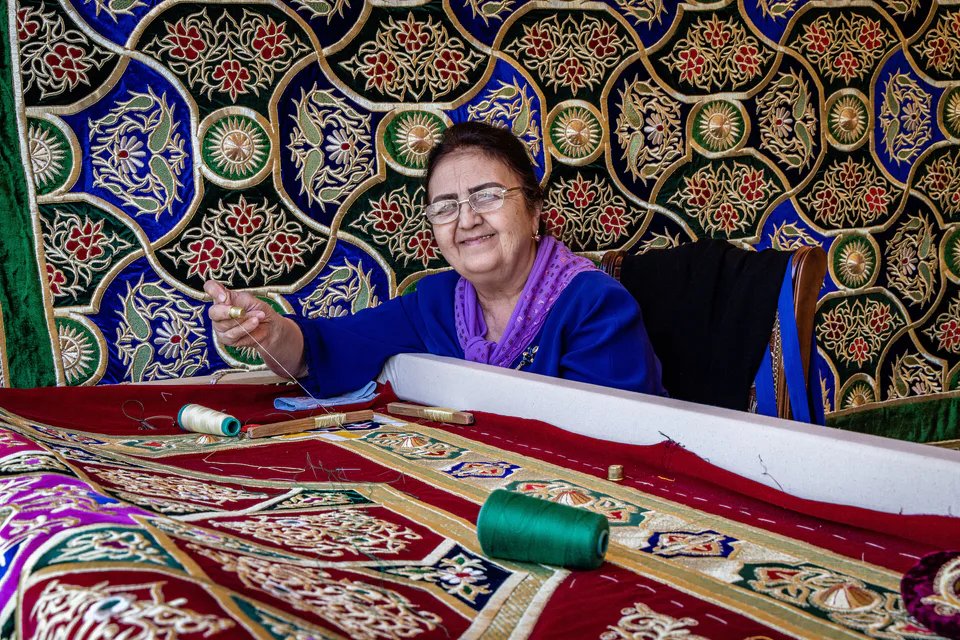
Craft · Bukhara
Embroidery in gold and silver thread on velvet and silk — the art of the Bukhara emirs’ court and still the city’s most precious craft.
Craft · Khorezm
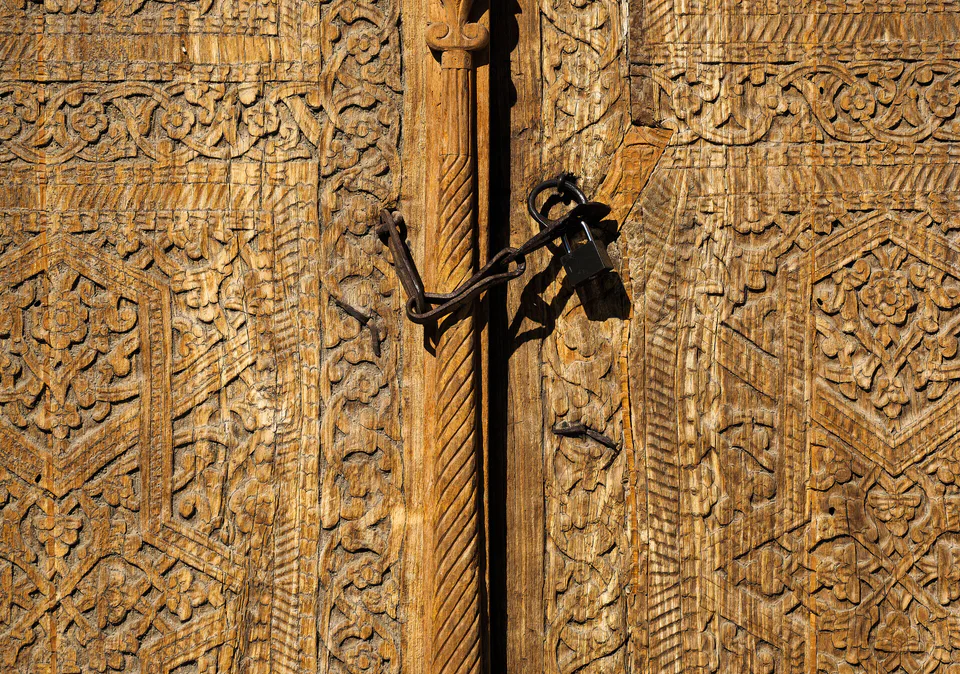
The carved doors and columns of Itchan Kala: Khiva’s carvers never paint the wood, finishing it only with natural oil; the Juma Mosque alone has more than 200 columns.
Craft · Namangan
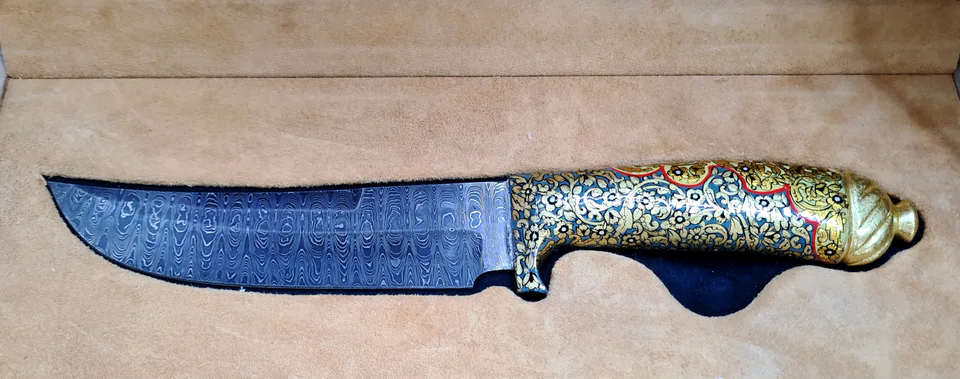
Hand-forged knives from Chust in Namangan Region: a blade with a slightly upturned tip, the maker’s stamped ‘signature’ and a decorated sheath.
Craft · Namangan
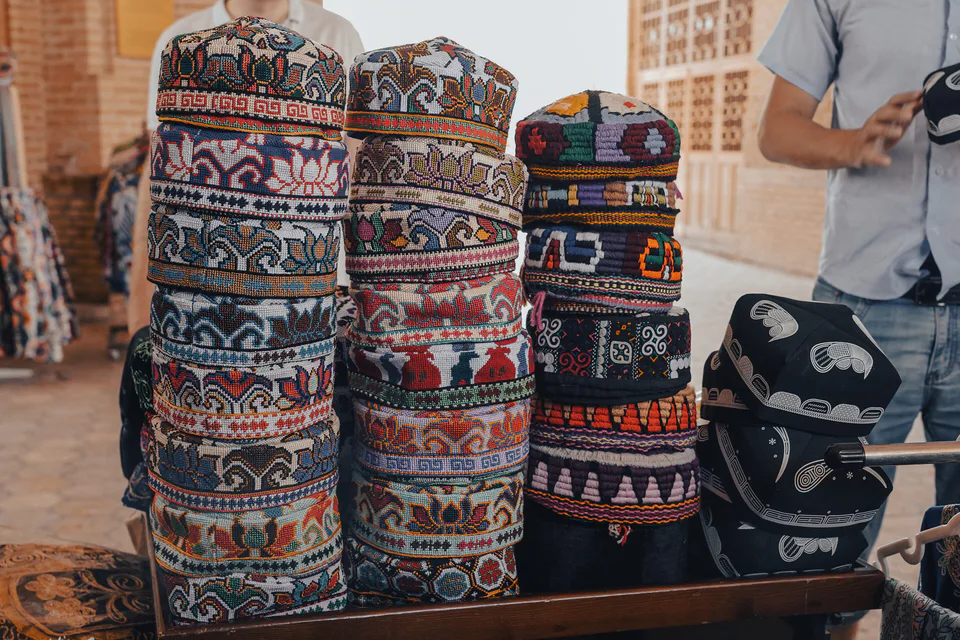
The four-sided Chust skullcap, with white pepper-pod motifs on dark green, is the best-known emblem of Uzbek dress — and every oasis has its own doppi.
Craft · Bukhara
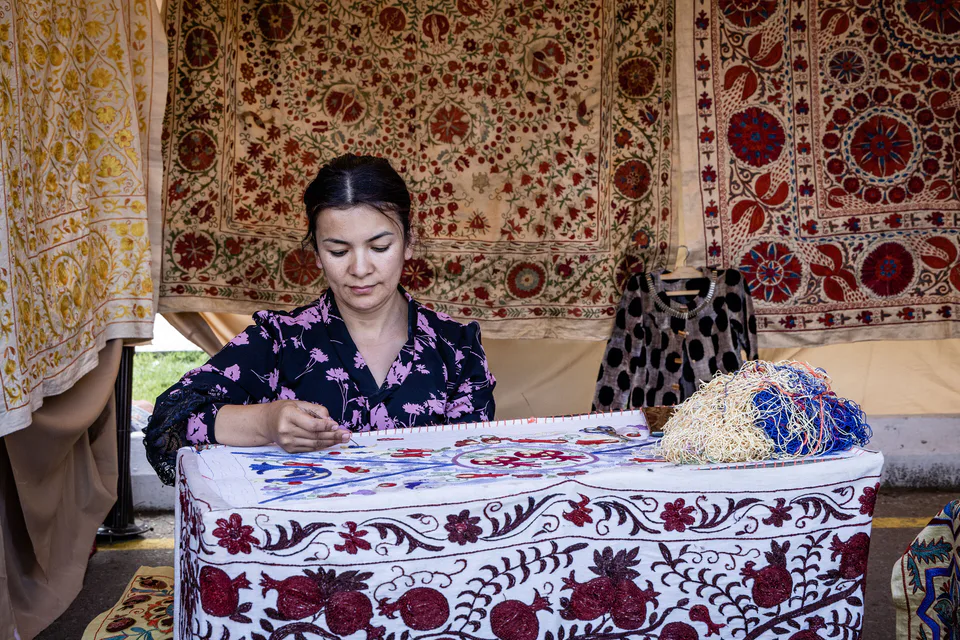
Large hand-embroidered hangings called suzani; the Bukhara school is known for fine designs covering almost the whole cloth in reds and greens on a pale ground.
Craft · Navoiy
Embroideries from Nurata in Navoiy Region: realistic sprays of carnations, irises, cotton flowers and cherries on a pale ground around a central eight-pointed star.