Craft · Bukhara
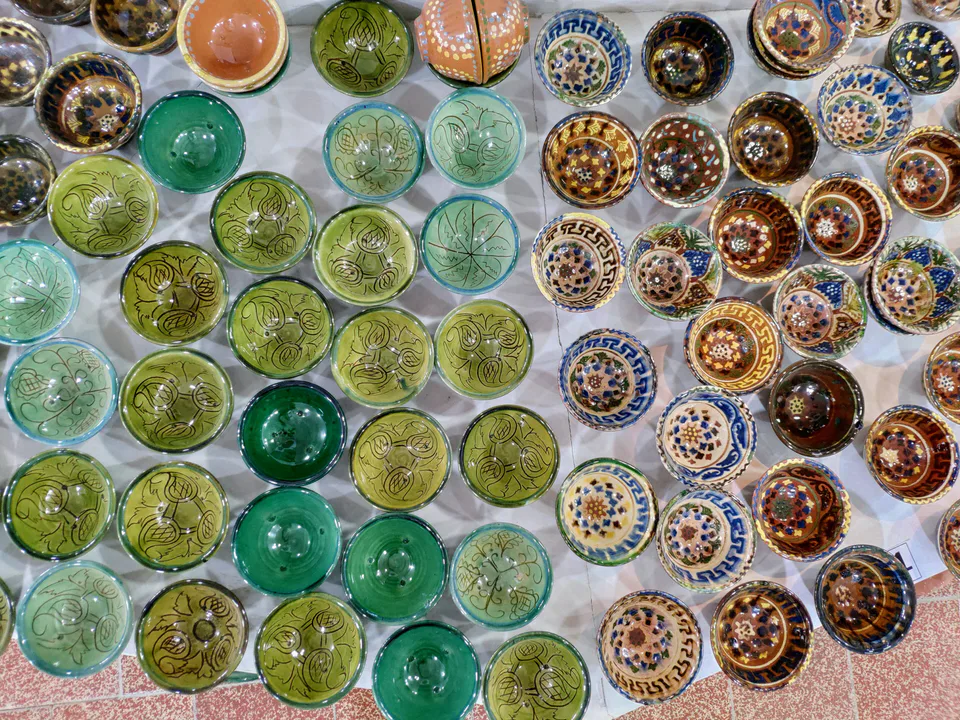
Gijduvan ceramics
Pottery from Gijduvan near Bukhara, glazed in browns, yellows and greens — the best-known centre of the Bukhara–Samarkand school.
Craft · Bukhara
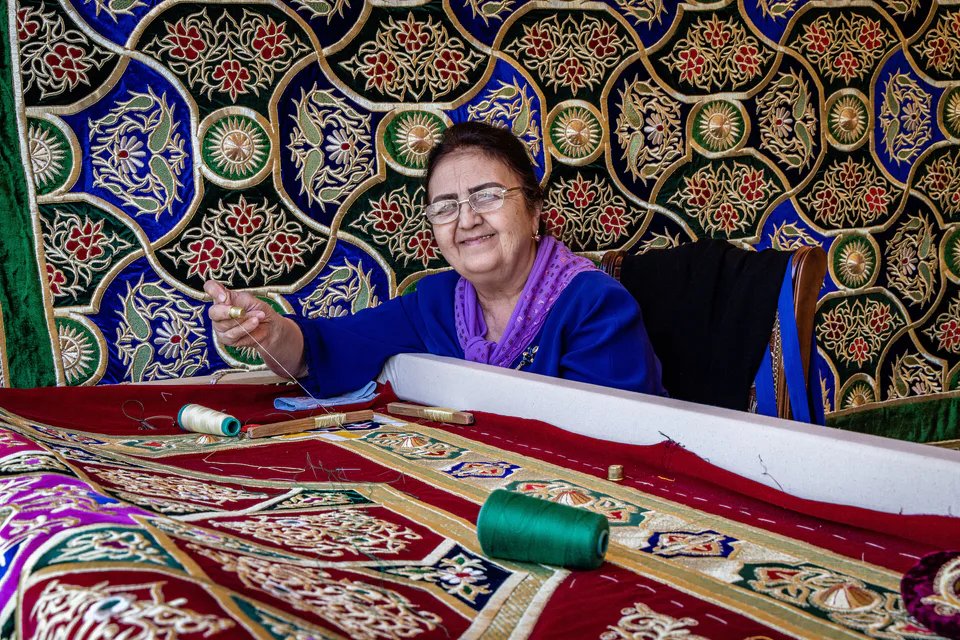
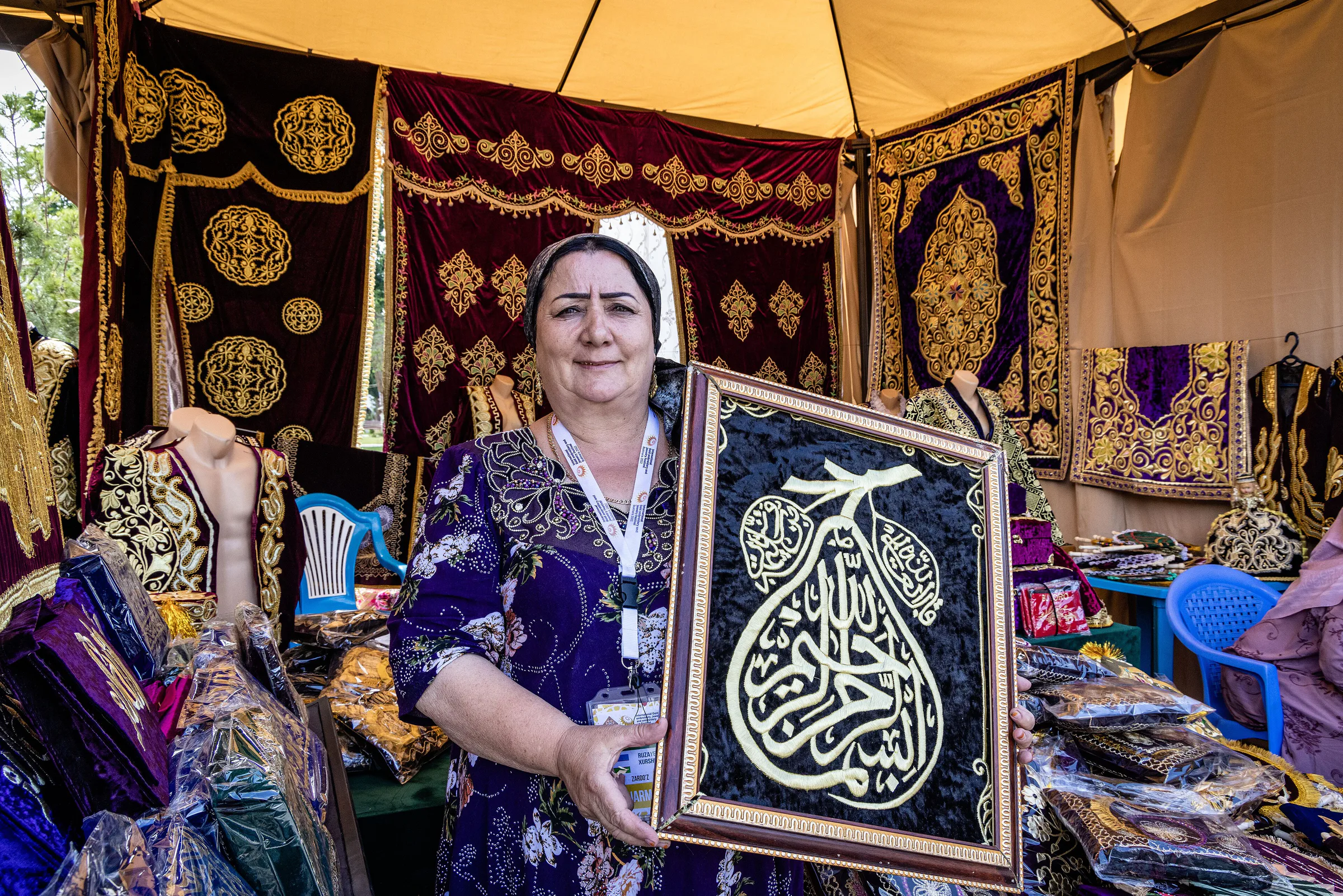
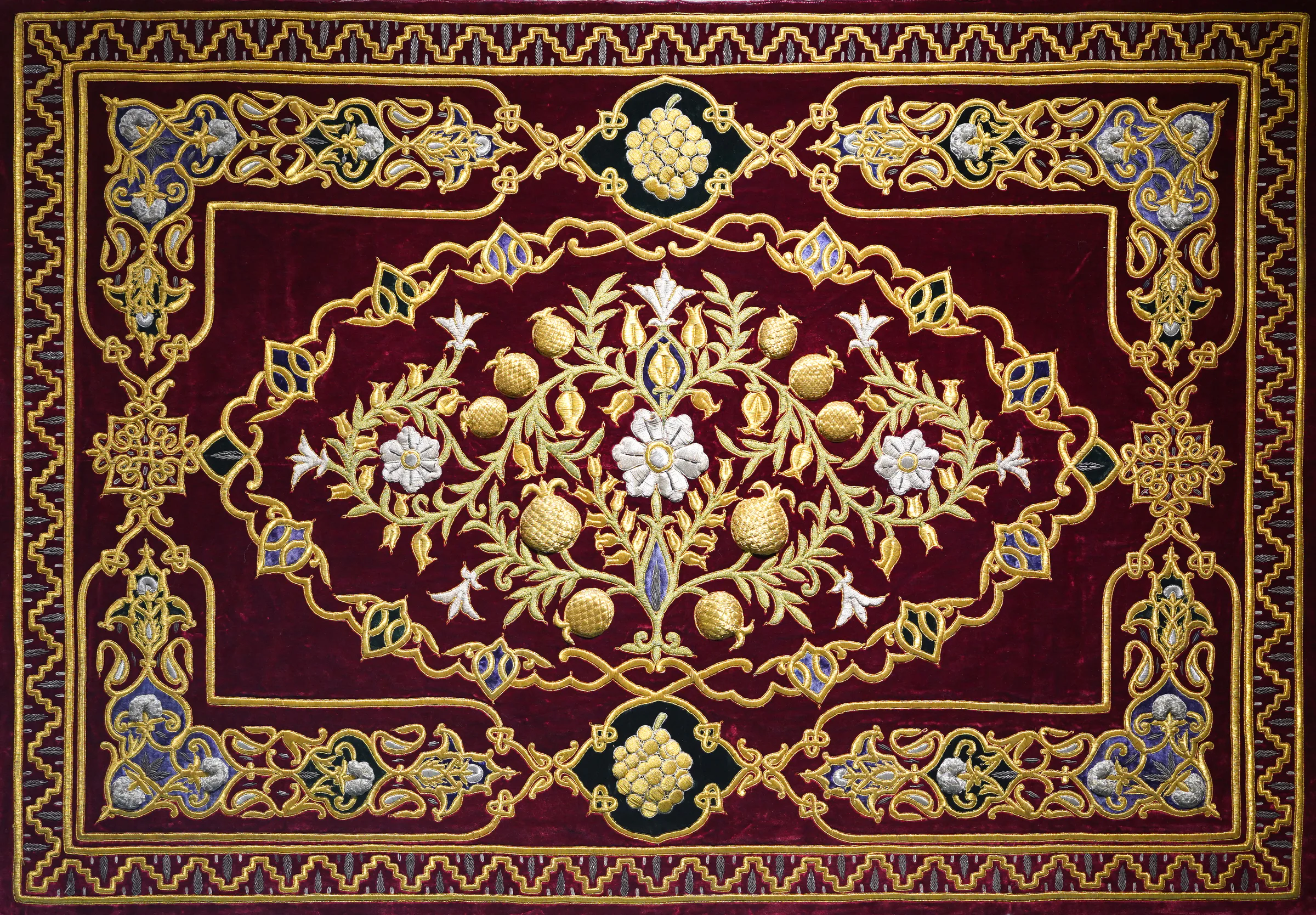
Embroidery in gold and silver thread on velvet and silk — the art of the Bukhara emirs’ court and still the city’s most precious craft.
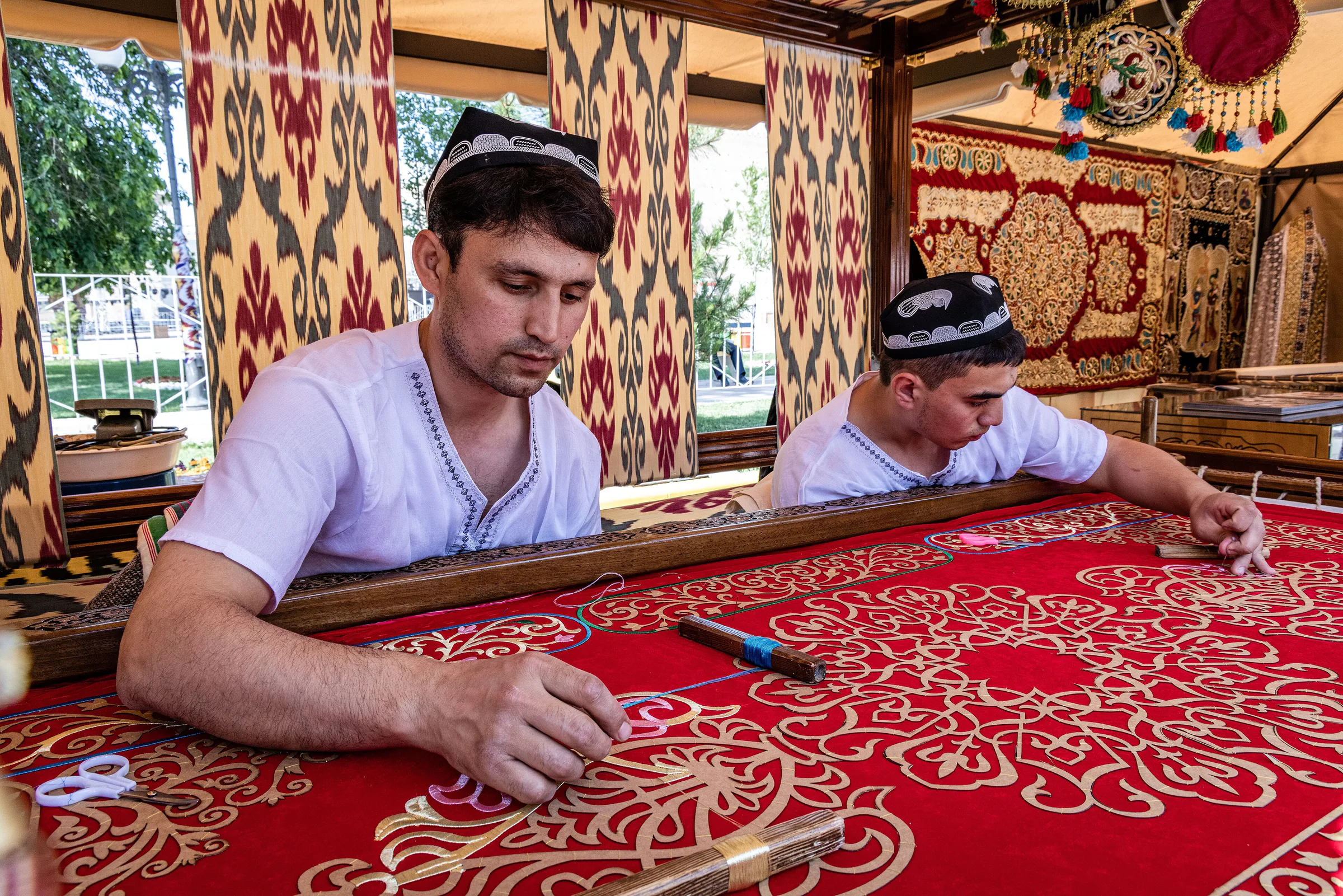
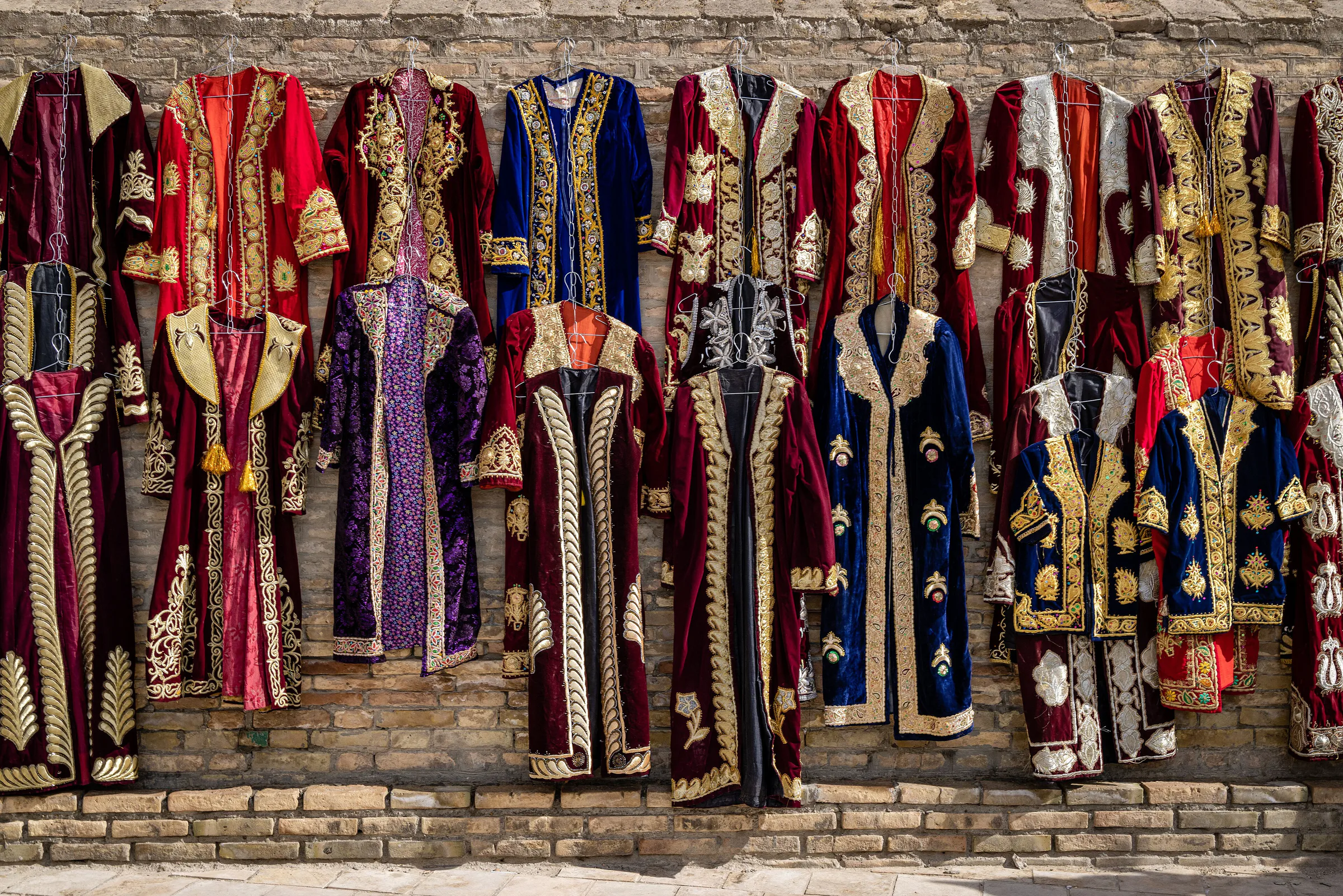
Zardozi is embroidery on velvet, silk, broadcloth or leather with metal-wrapped thread coated in gold or silver. The craftsman stretches the fabric on a frame and stitches gold thread over a paper stencil laid on the cloth. The craft was known across Central Asia, but it peaked in the Emirate of Bukhara: by the late 19th century workshops at the emir’s court employed male embroiderers who covered velvet and silk robes, skullcaps, belts and palace furnishings in gold.
Some pieces made for the emir used silk thread wrapped in real gold and silver; the survivors are now museum treasures.
Contemporary masters carry the tradition on, and their work appears at international craft exhibitions. In even-numbered years Bukhara hosts a Festival of Gold Embroidery and Jewellery (the first was in May 2022; the 2026 edition was scheduled for 15–17 May), alternating with the Silk and Spices festival in odd years. See the emirs’ robes in the applied-arts museum at the Sitorai Mohi-Xosa palace, and buy zardozi skullcaps and purses in the shops around the trading domes.
Craft · Bukhara
Pottery from Gijduvan near Bukhara, glazed in browns, yellows and greens — the best-known centre of the Bukhara–Samarkand school.
Craft · Bukhara
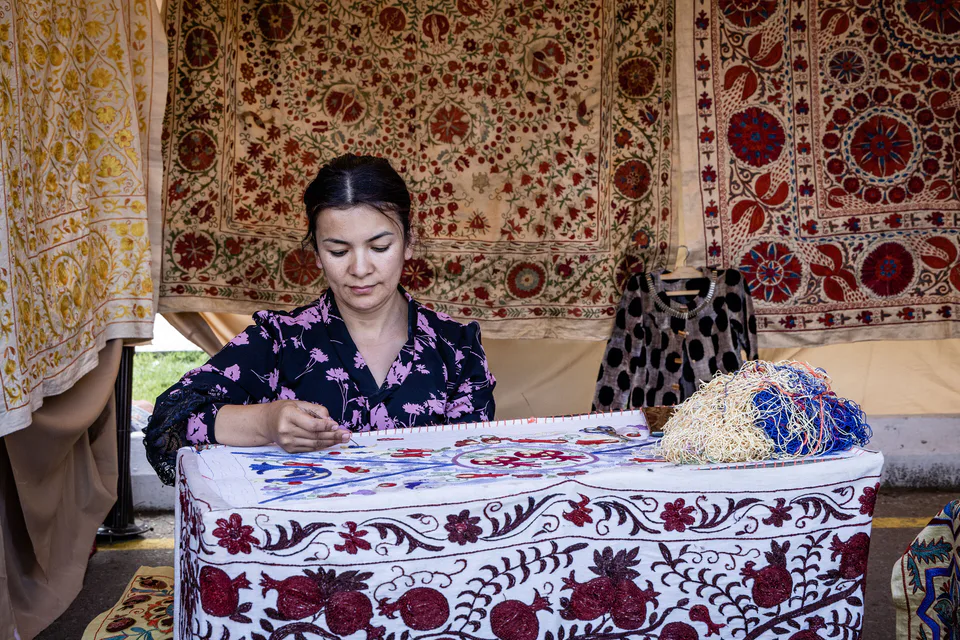
Large hand-embroidered hangings called suzani; the Bukhara school is known for fine designs covering almost the whole cloth in reds and greens on a pale ground.
Craft · Fergana
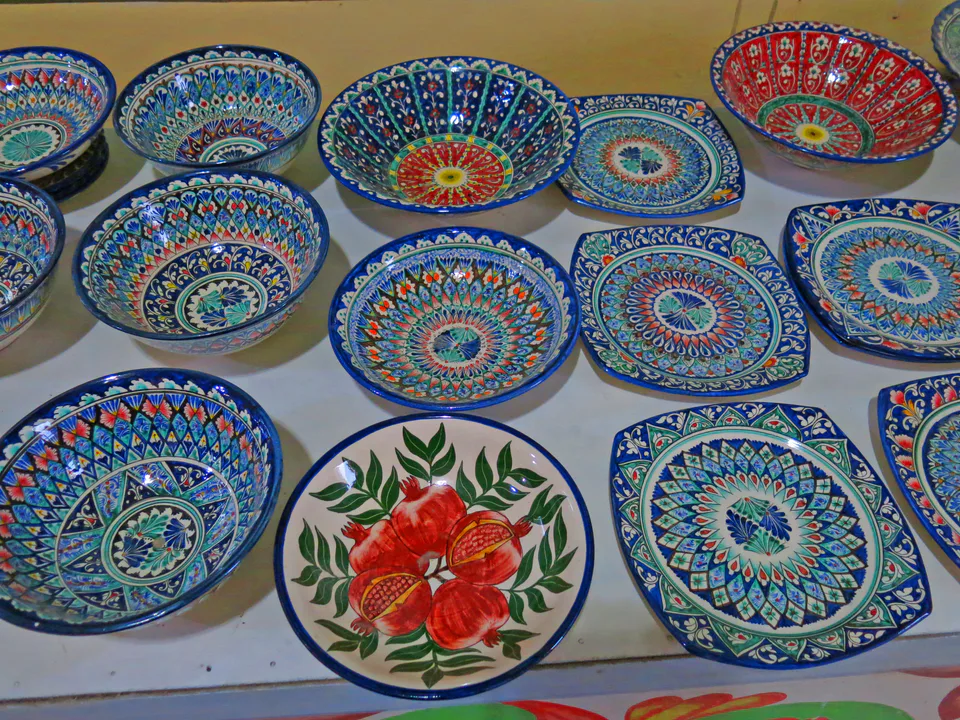
The blue and turquoise pottery of Rishtan in the Fergana Valley, famed for its ishkor glaze made from plant ash and its local red clay.
Craft · Fergana
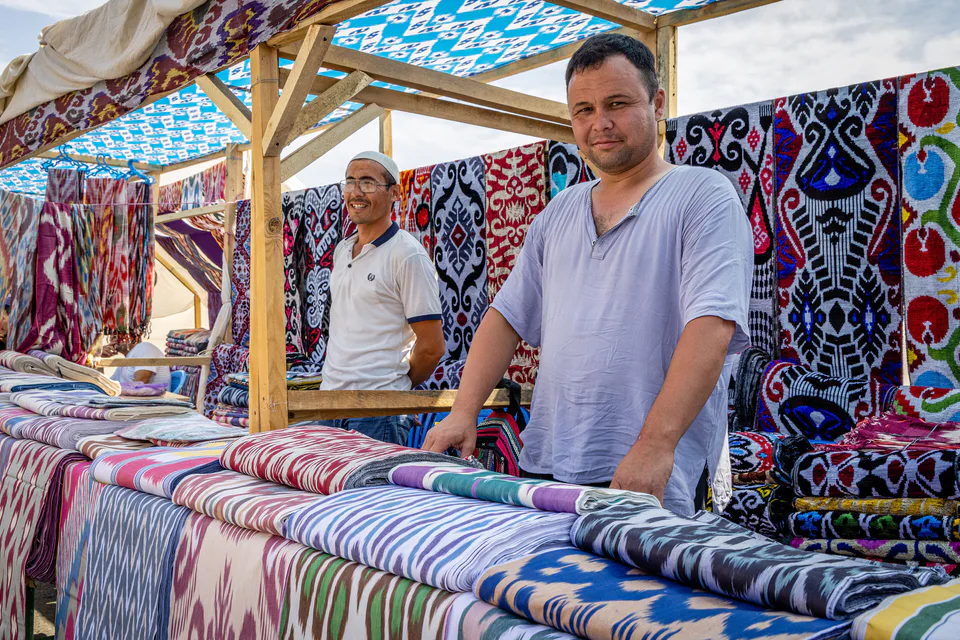
Margilan’s ikat silks: pure-silk atlas and half-silk adras. UNESCO recognises the town’s work to safeguard them as a model practice.
Craft · Khorezm
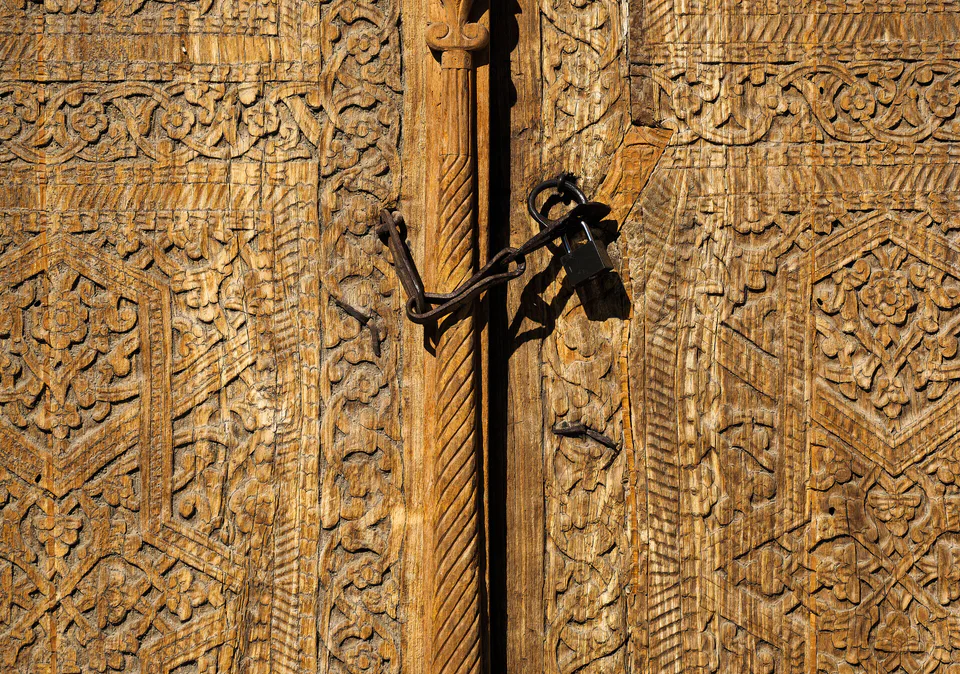
The carved doors and columns of Itchan Kala: Khiva’s carvers never paint the wood, finishing it only with natural oil; the Juma Mosque alone has more than 200 columns.
Craft · Namangan
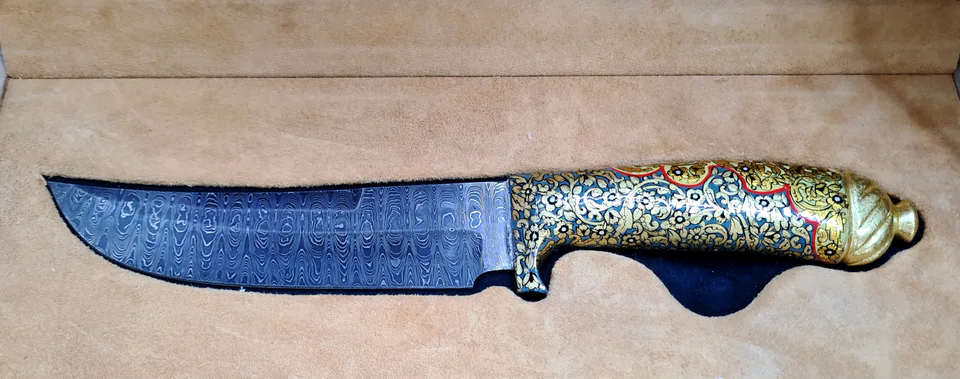
Hand-forged knives from Chust in Namangan Region: a blade with a slightly upturned tip, the maker’s stamped ‘signature’ and a decorated sheath.
Craft · Namangan
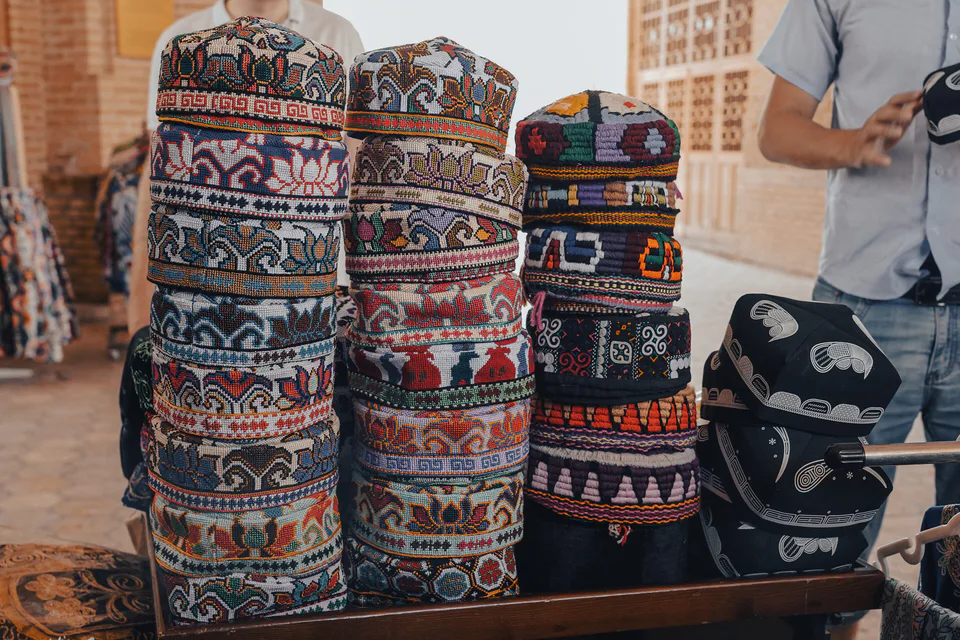
The four-sided Chust skullcap, with white pepper-pod motifs on dark green, is the best-known emblem of Uzbek dress — and every oasis has its own doppi.
Craft · Samarkand
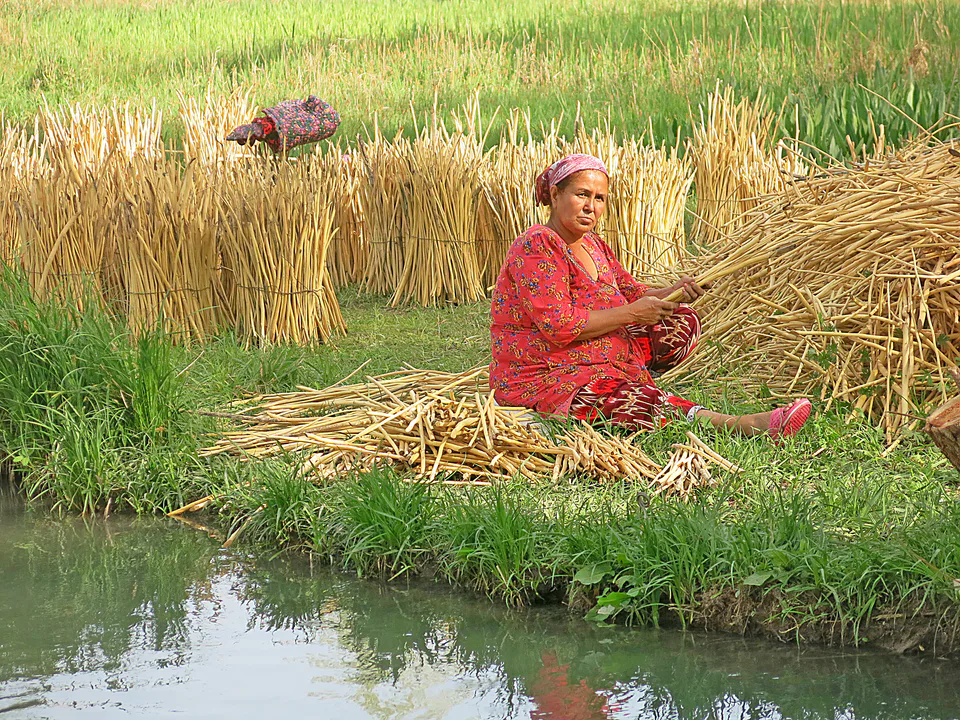
Paper made from mulberry bark — the finest writing material of the 9th–10th-century Islamic world, revived at Konigil at the end of the 20th century.
Craft · Navoiy
Embroideries from Nurata in Navoiy Region: realistic sprays of carnations, irises, cotton flowers and cherries on a pale ground around a central eight-pointed star.
Craft · Samarkand
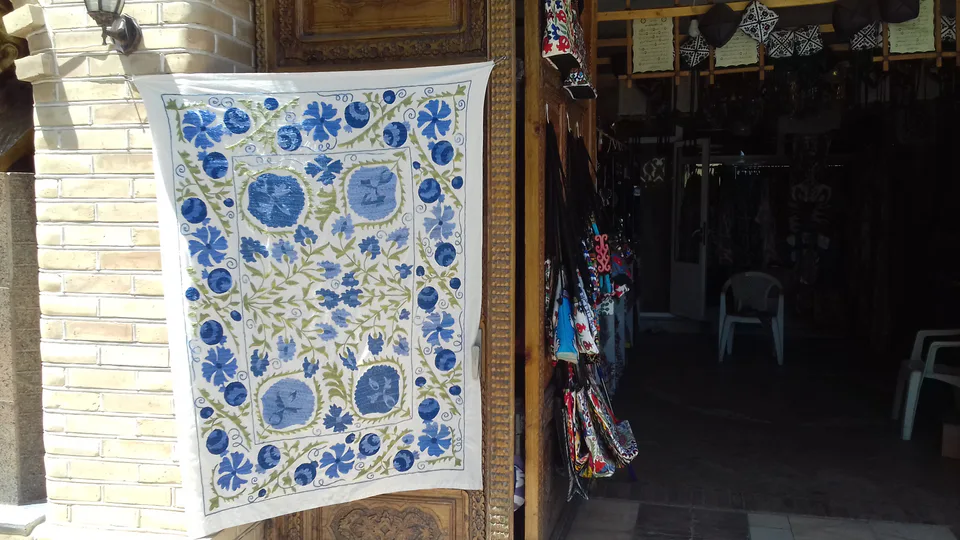
Big red-and-black circles and rosettes on white define the Samarkand school; Urgut is a living embroidery centre and a favourite bazaar for suzani hunters.