Craft · Samarkand
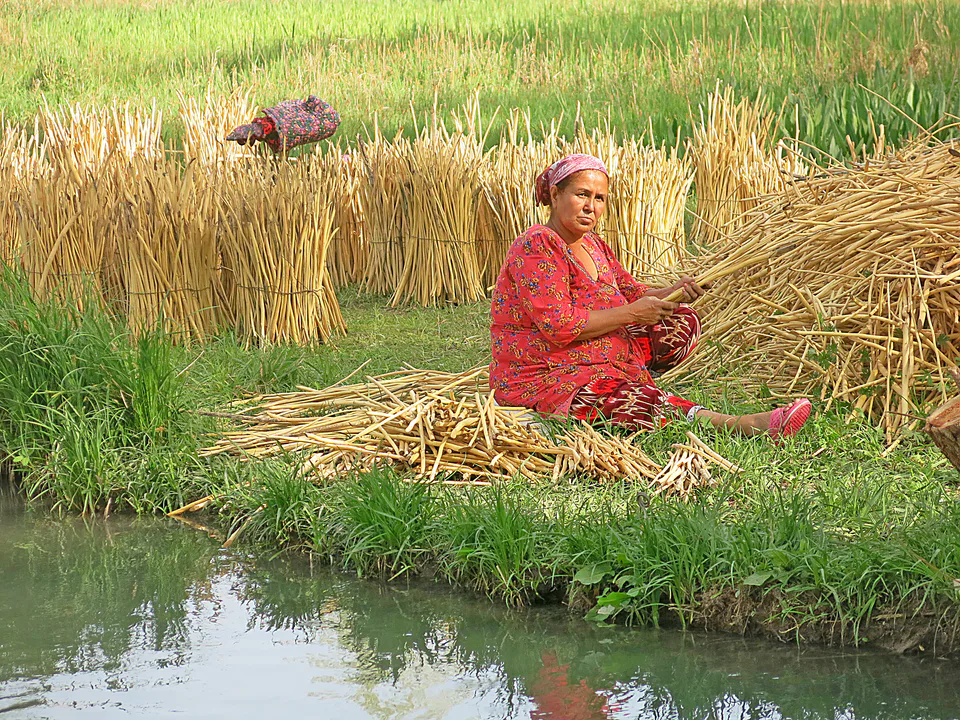
Samarkand paper
Paper made from mulberry bark — the finest writing material of the 9th–10th-century Islamic world, revived at Konigil at the end of the 20th century.
Craft · Samarkand
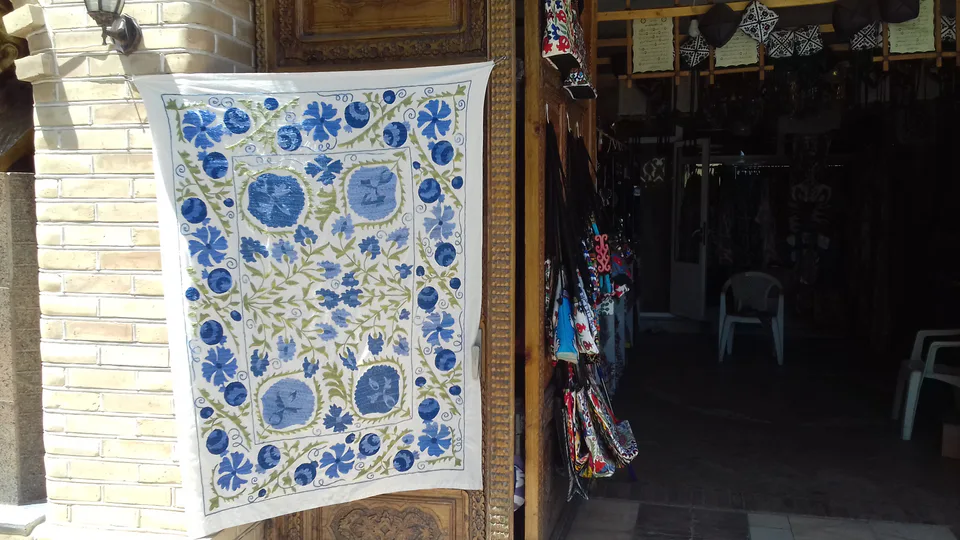
Big red-and-black circles and rosettes on white define the Samarkand school; Urgut is a living embroidery centre and a favourite bazaar for suzani hunters.
Samarkand embroidery is recognisable by its clean, large-scale compositions: big circles and rosettes framed by hoops of serrated leaves. The palette is restrained, usually red and black on a white ground — a combination that took hold in the late 19th century, replacing earlier raspberry and green tones. Tashkent, Jizzakh and Baysun embroidery is close to the Samarkand style.
Since independence the Samarkand suzani has enjoyed a revival, and local embroiderers’ work now travels to exhibitions abroad.
Urgut district in Samarkand Region is one of the liveliest embroidery centres. It makes round, quilted piltado‘zi skullcaps with simple patterns, flowers turned towards the centre and ribbed stitching, and the Urgut bazaar is a favourite hunting ground for old and new suzanis. In April 2026 Samarkand hosted the 4th International Embroidery Festival, with more than 110 artisans from Uzbekistan and neighbouring countries.
Craft · Samarkand
Paper made from mulberry bark — the finest writing material of the 9th–10th-century Islamic world, revived at Konigil at the end of the 20th century.
Craft · Fergana
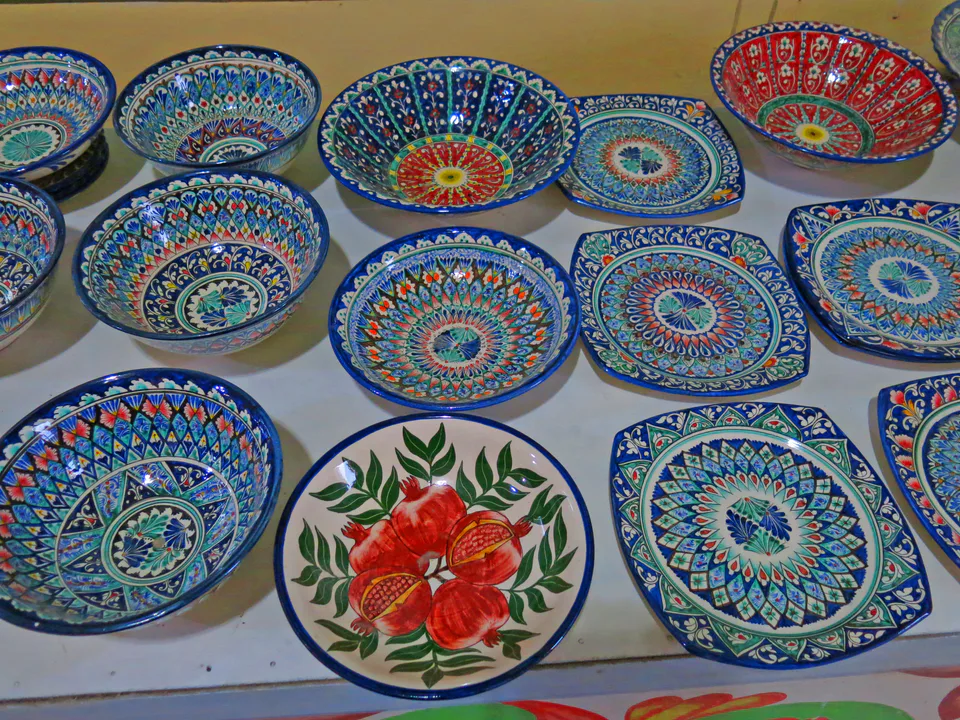
The blue and turquoise pottery of Rishtan in the Fergana Valley, famed for its ishkor glaze made from plant ash and its local red clay.
Craft · Bukhara
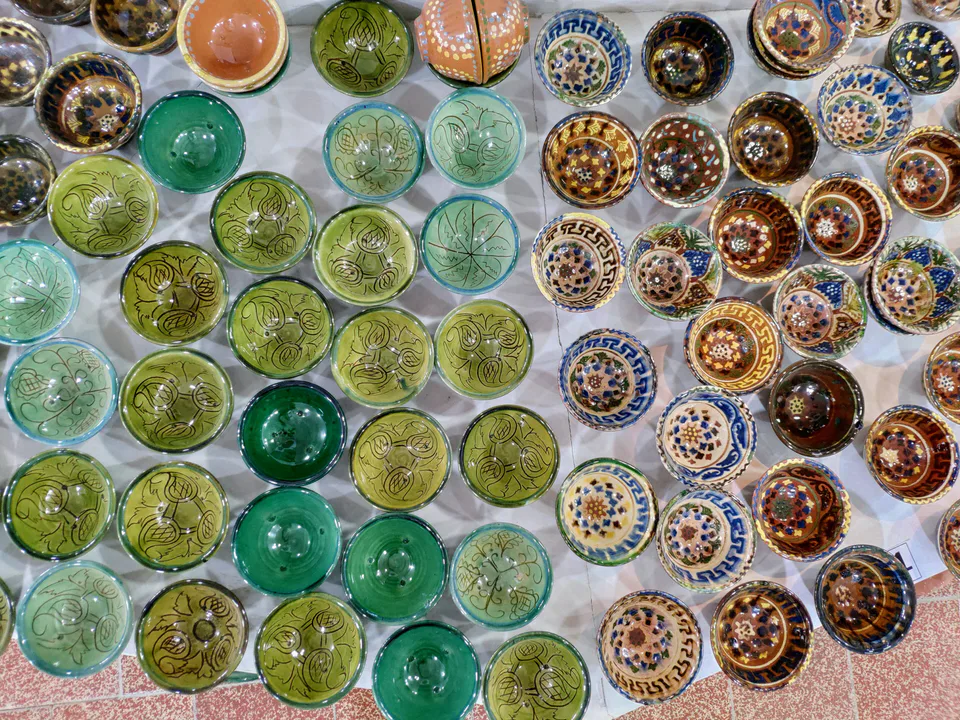
Pottery from Gijduvan near Bukhara, glazed in browns, yellows and greens — the best-known centre of the Bukhara–Samarkand school.
Craft · Fergana
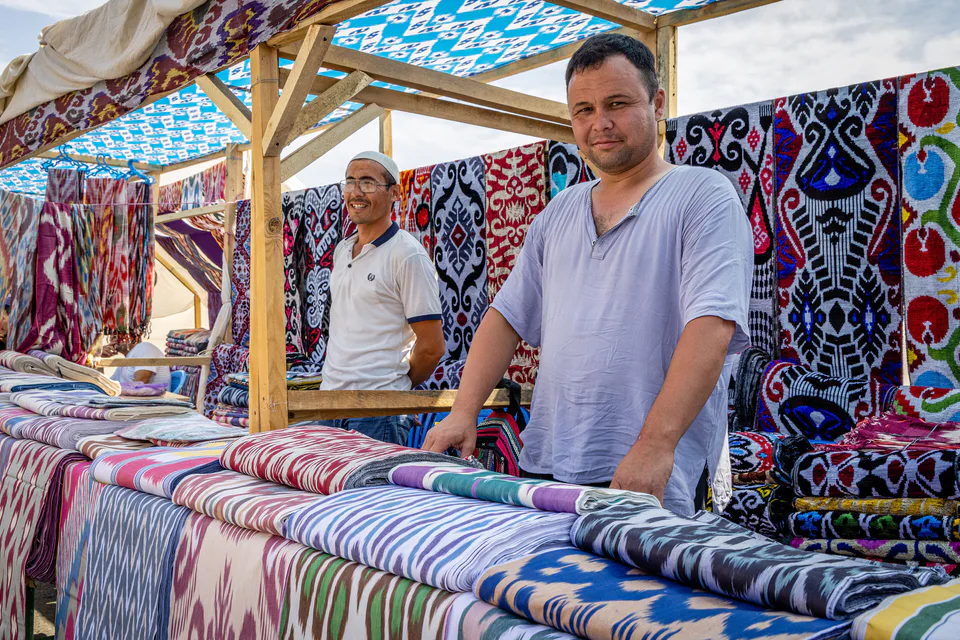
Margilan’s ikat silks: pure-silk atlas and half-silk adras. UNESCO recognises the town’s work to safeguard them as a model practice.
Craft · Bukhara
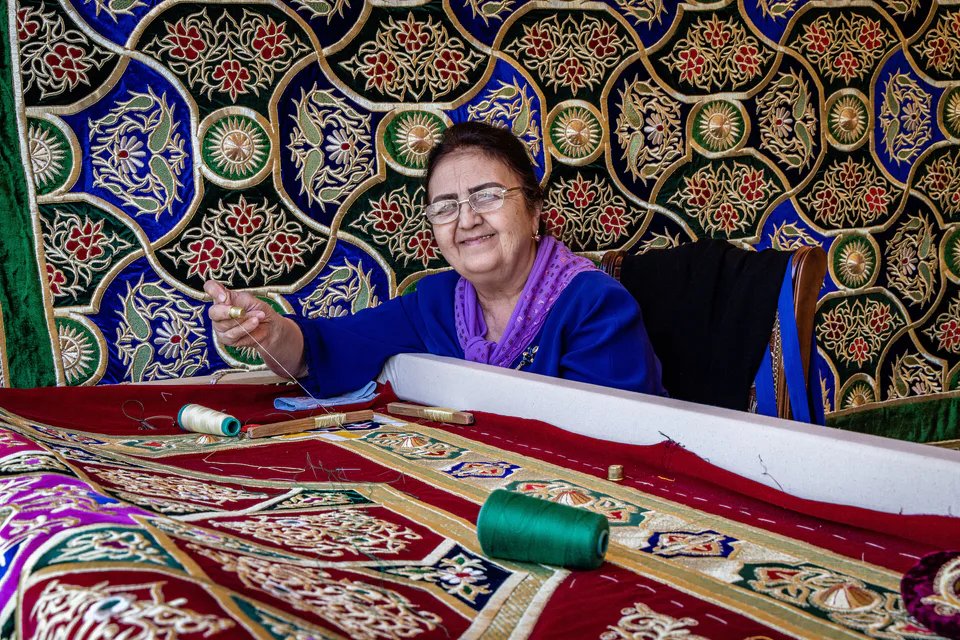
Embroidery in gold and silver thread on velvet and silk — the art of the Bukhara emirs’ court and still the city’s most precious craft.
Craft · Khorezm
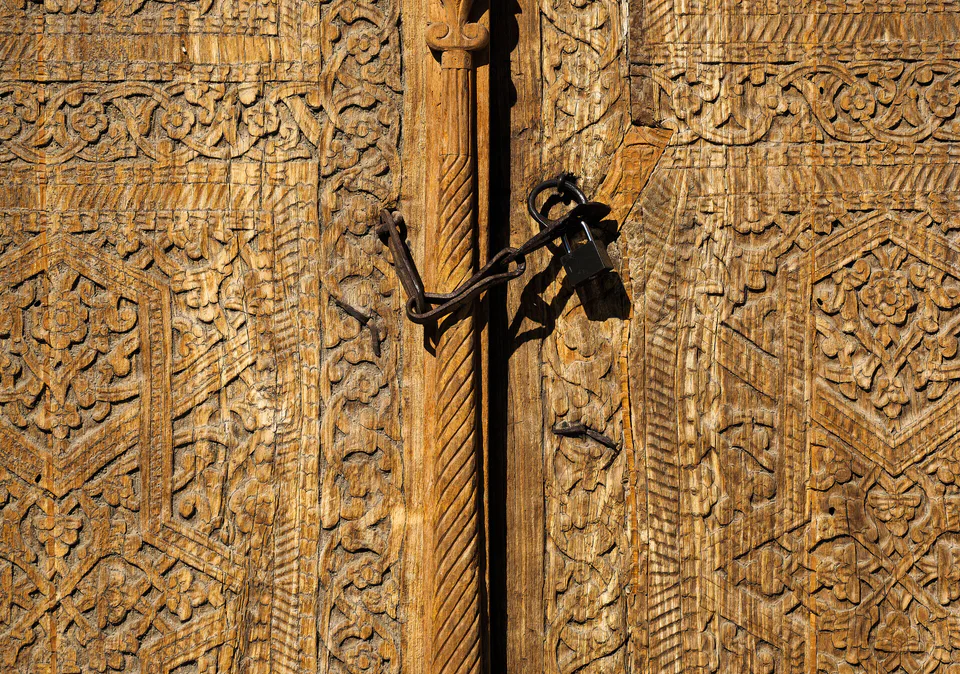
The carved doors and columns of Itchan Kala: Khiva’s carvers never paint the wood, finishing it only with natural oil; the Juma Mosque alone has more than 200 columns.
Craft · Namangan
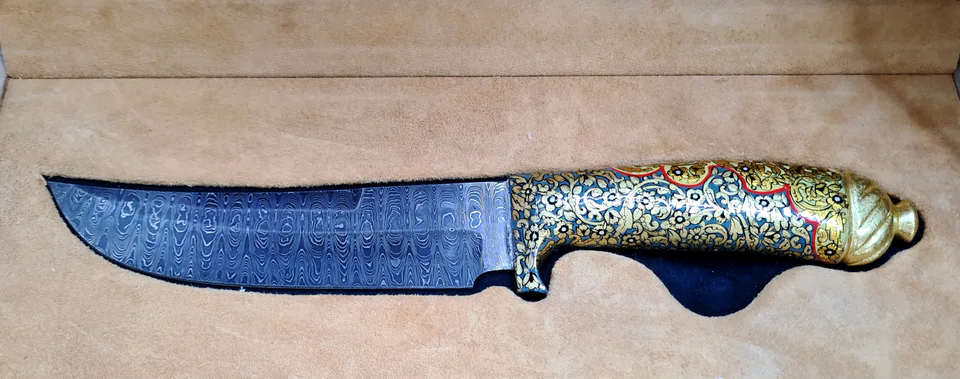
Hand-forged knives from Chust in Namangan Region: a blade with a slightly upturned tip, the maker’s stamped ‘signature’ and a decorated sheath.
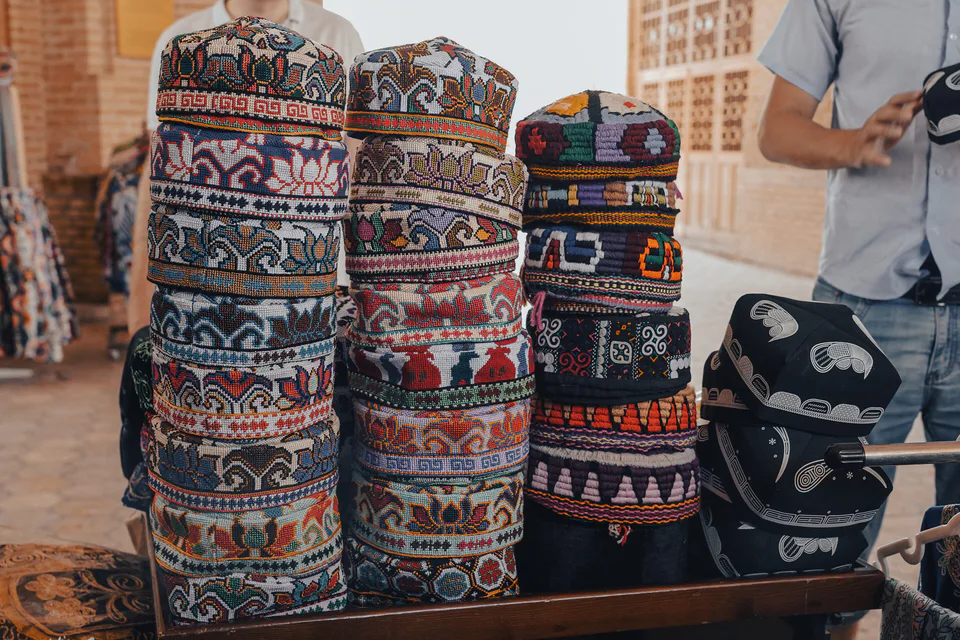
Craft · Namangan
The four-sided Chust skullcap, with white pepper-pod motifs on dark green, is the best-known emblem of Uzbek dress — and every oasis has its own doppi.
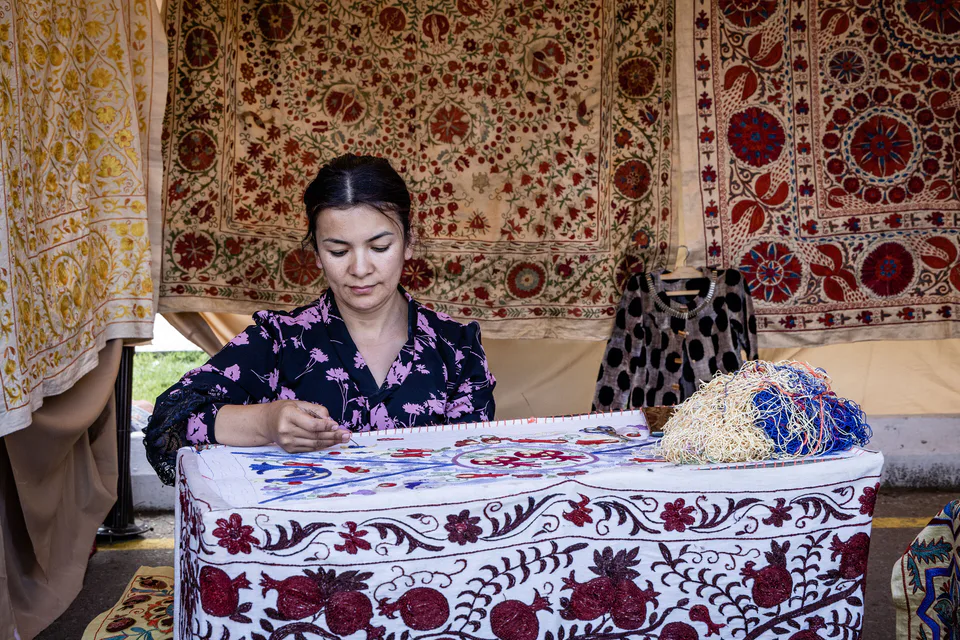
Craft · Bukhara
Large hand-embroidered hangings called suzani; the Bukhara school is known for fine designs covering almost the whole cloth in reds and greens on a pale ground.
Craft · Navoiy
Embroideries from Nurata in Navoiy Region: realistic sprays of carnations, irises, cotton flowers and cherries on a pale ground around a central eight-pointed star.