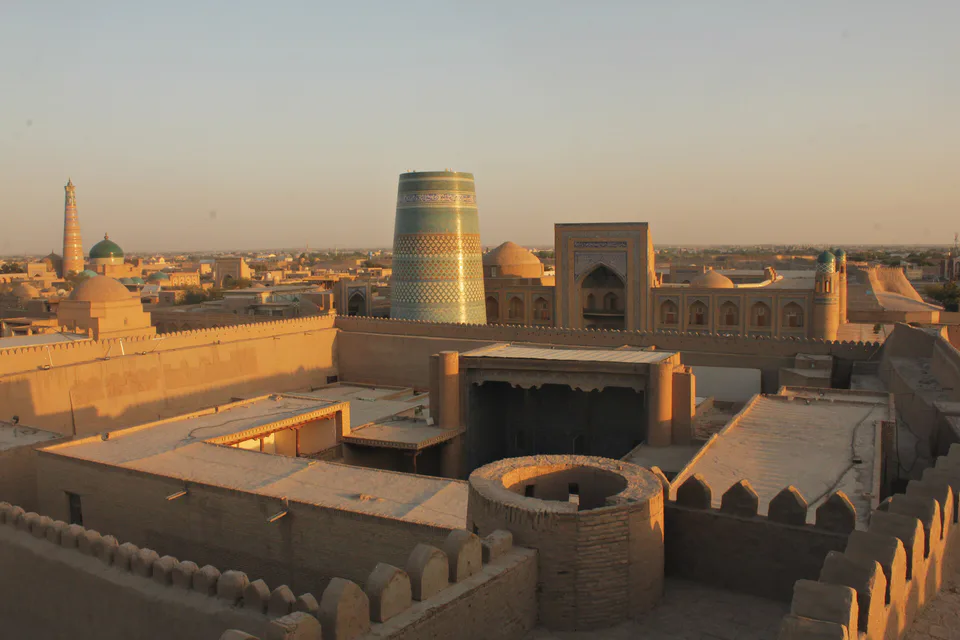
Ensemble · Khiva
Itchan Kala
A walled museum-city where people still live
An ancient oasis between two deserts — and Khiva
An ancient oasis on the lower Amu Darya: Khiva’s UNESCO-listed Itchan Kala, the birthplace of al-Khwarizmi and al-Biruni, the land of lazgi dance and dill-green noodles — and one of Uzbekistan’s most crowded regions.
Xorazm Region lies in northwestern Uzbekistan on the lower Amu Darya, bordered by Turkmenistan to the south and west, the Republic of Karakalpakstan to the north and northeast, and Bukhara Region to the southeast. At around 6,000 km² it is one of the smallest regions in the country, yet its population passed 2.07 million at the start of 2026, making it one of the most densely settled.
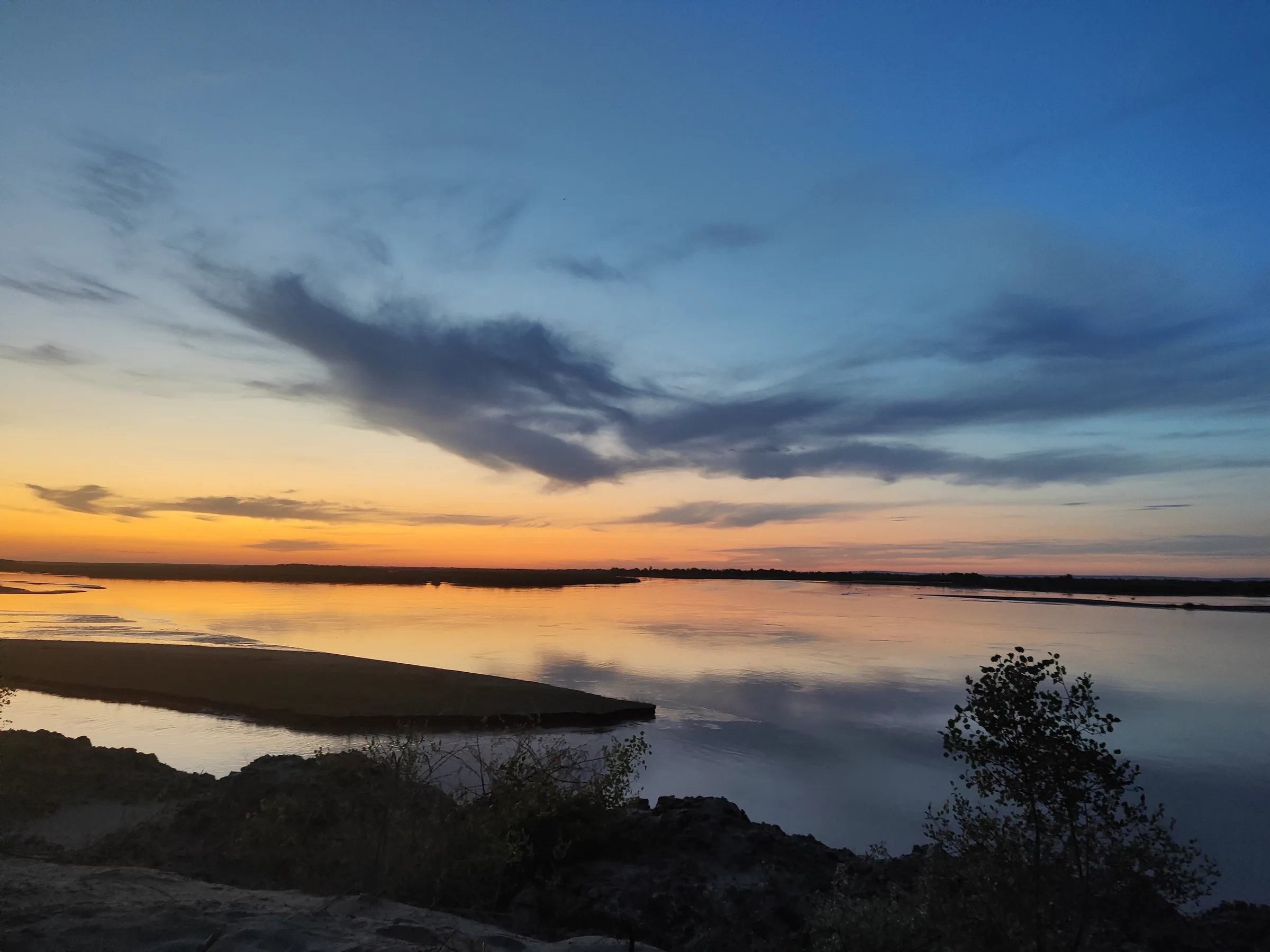
The region is an irrigated oasis wedged between the Karakum Desert to the southwest and the Kyzylkum to the east, and life here has always depended on the Amu Darya and its canals — the Palvanyap, Shovot, Toshsoka and others. The climate is sharply continental: hot, dry summers and winters noticeably colder than in southern Uzbekistan. Only 80–100 mm of rain falls a year; January averages around −5 °C and July close to +30 °C.
The name Khwarazm appears in the Avesta, the Zoroastrian scripture. One of Central Asia’s earliest states took shape here in the mid-1st millennium BCE, later became part of the Achaemenid empire and regained independence in the 4th century BCE. In the first centuries CE Khorezmian kings ruled from Toprak Kala and Kath (modern Beruniy), and in 995–1017 the Ma’munid court at Gurganj hosted a circle of scholars that included al-Biruni and Ibn Sina.
Around 1200 the Khorezmshahs built the mightiest empire in Central Asia, only to fall to the Mongols in 1220–1221; Jalal ad-Din Mingburnu remains the symbol of resistance. The Khanate of Khiva emerged in the 16th century, with Khiva as its capital from the early 17th. It became a Russian protectorate in 1873, and the Khorezm People’s Soviet Republic existed from 1920 to 1924. The present region was created on 15 January 1938.
Khorezm is the homeland of the mathematician Muhammad al-Khwarizmi, the polymath al-Biruni, the Sufi master Najm al-Din Kubra, the historian-khan Abulgozi Bahodir Khan and the poets Ogahiy and Feruz.
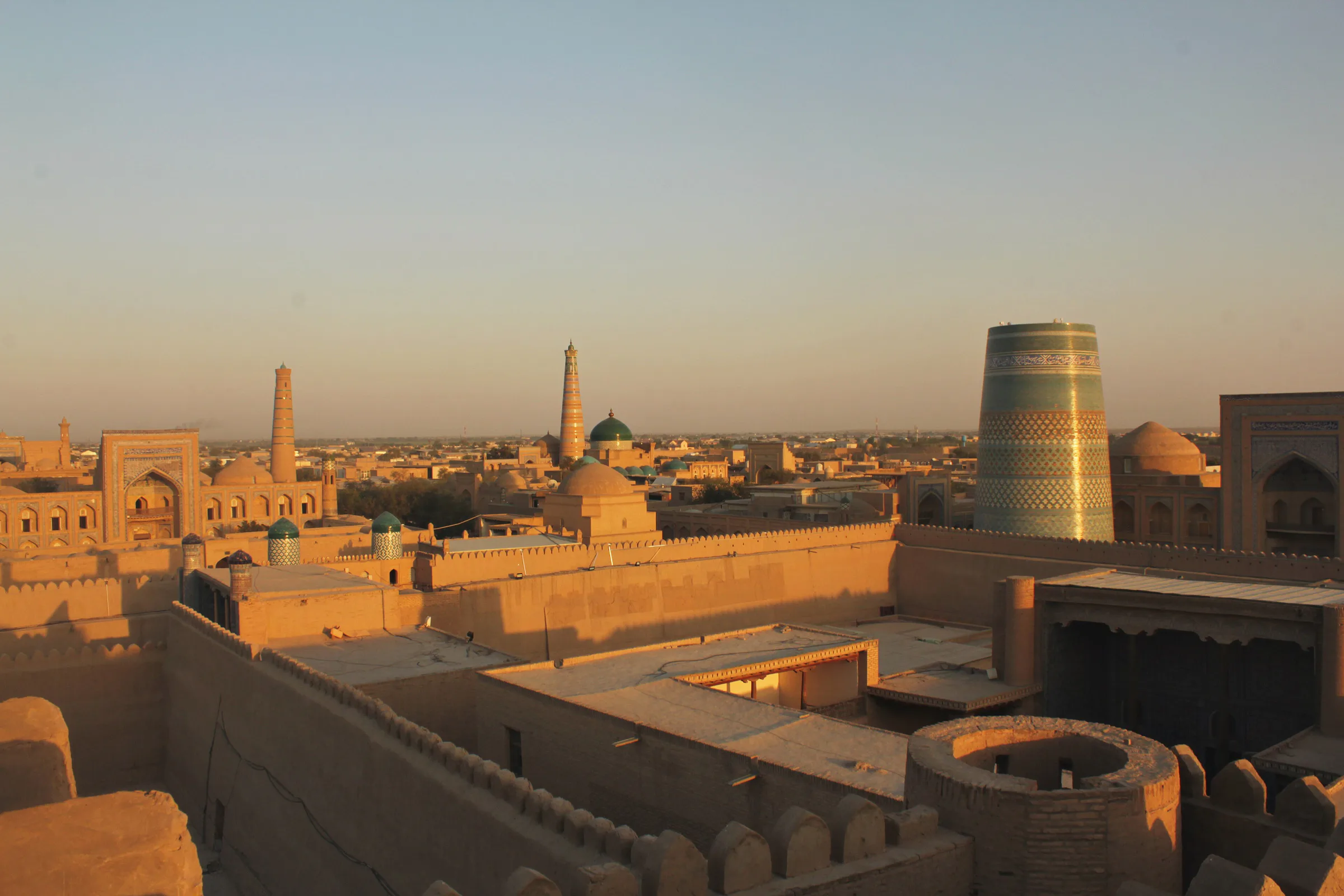
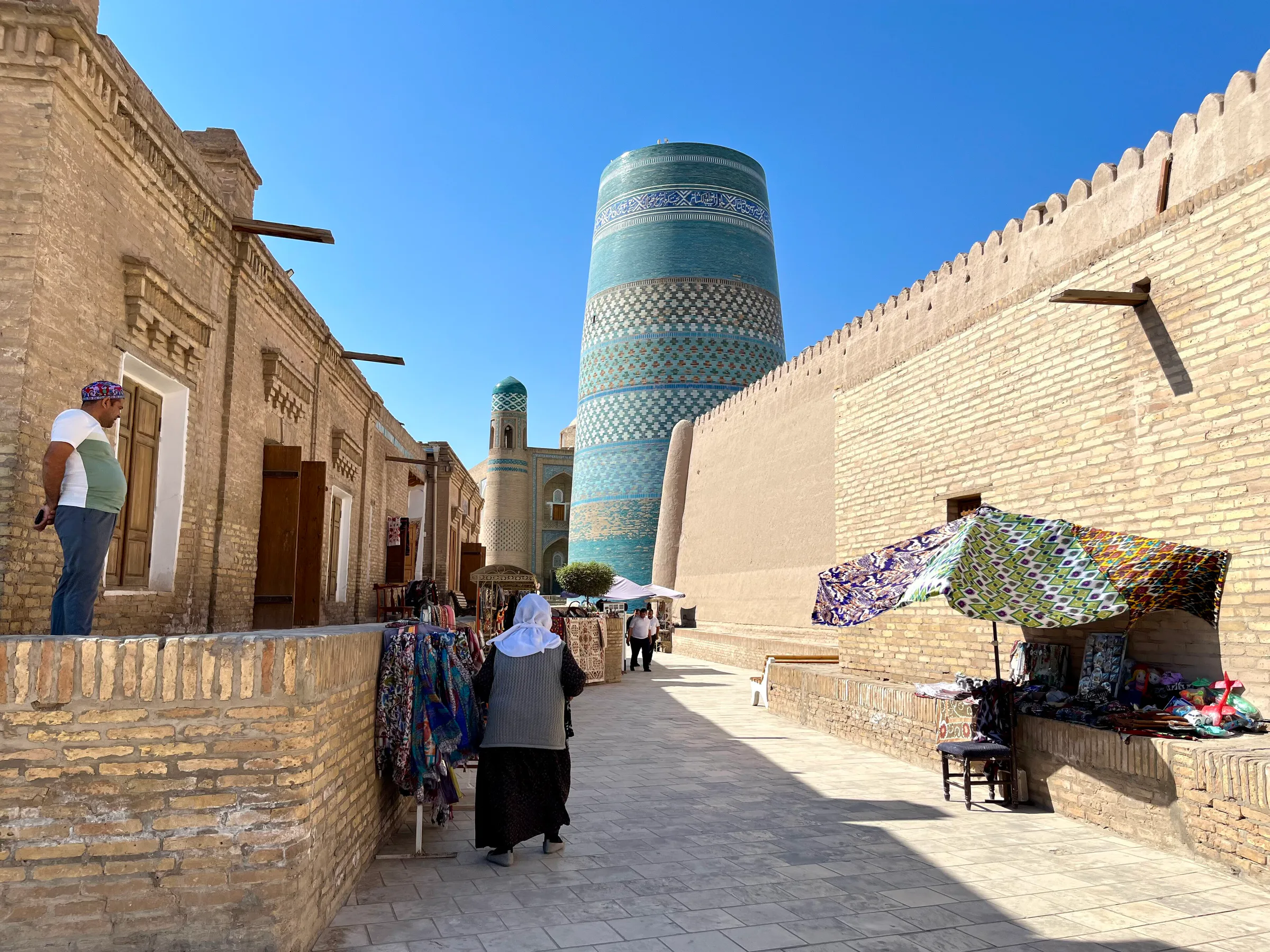
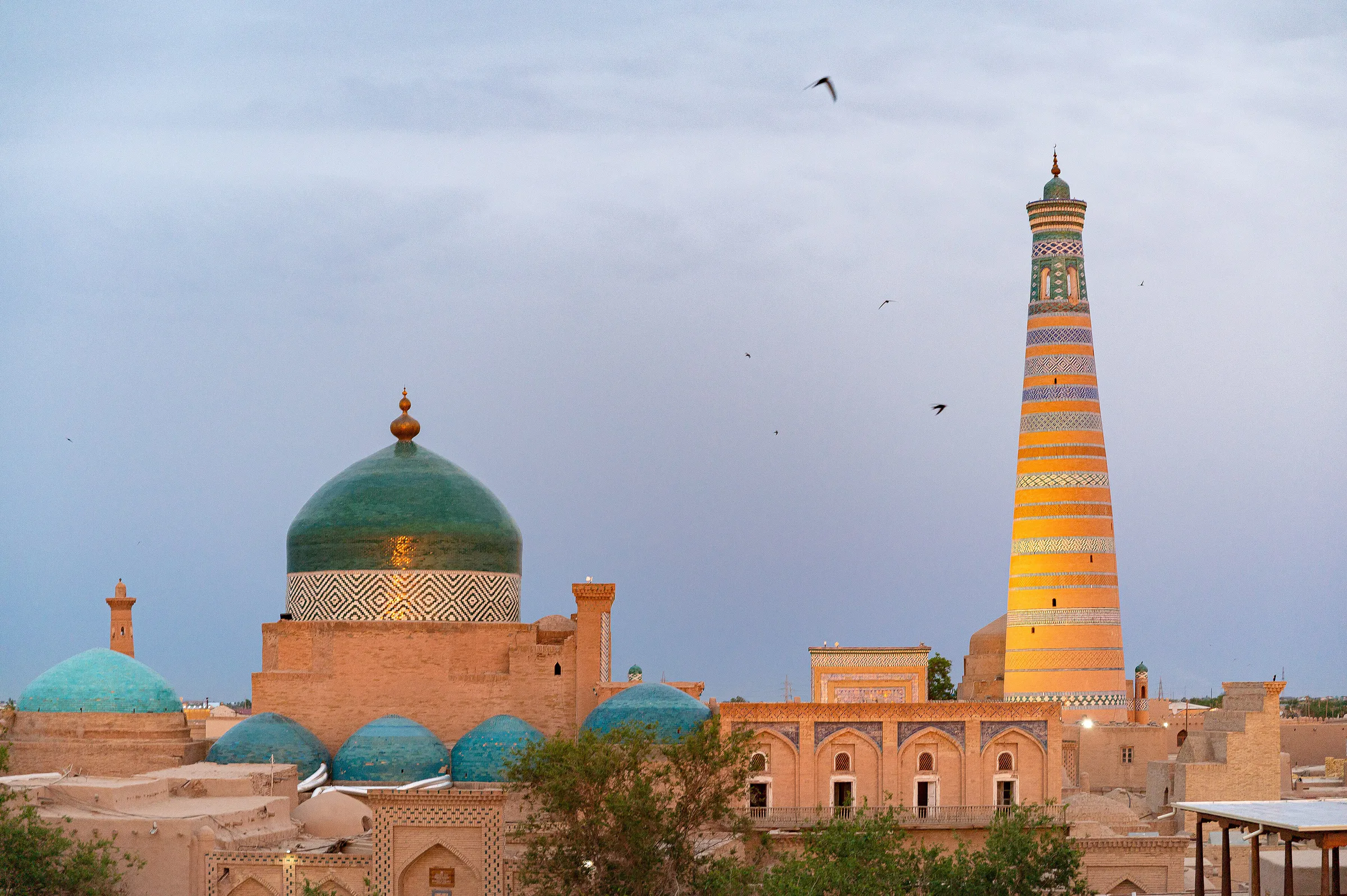
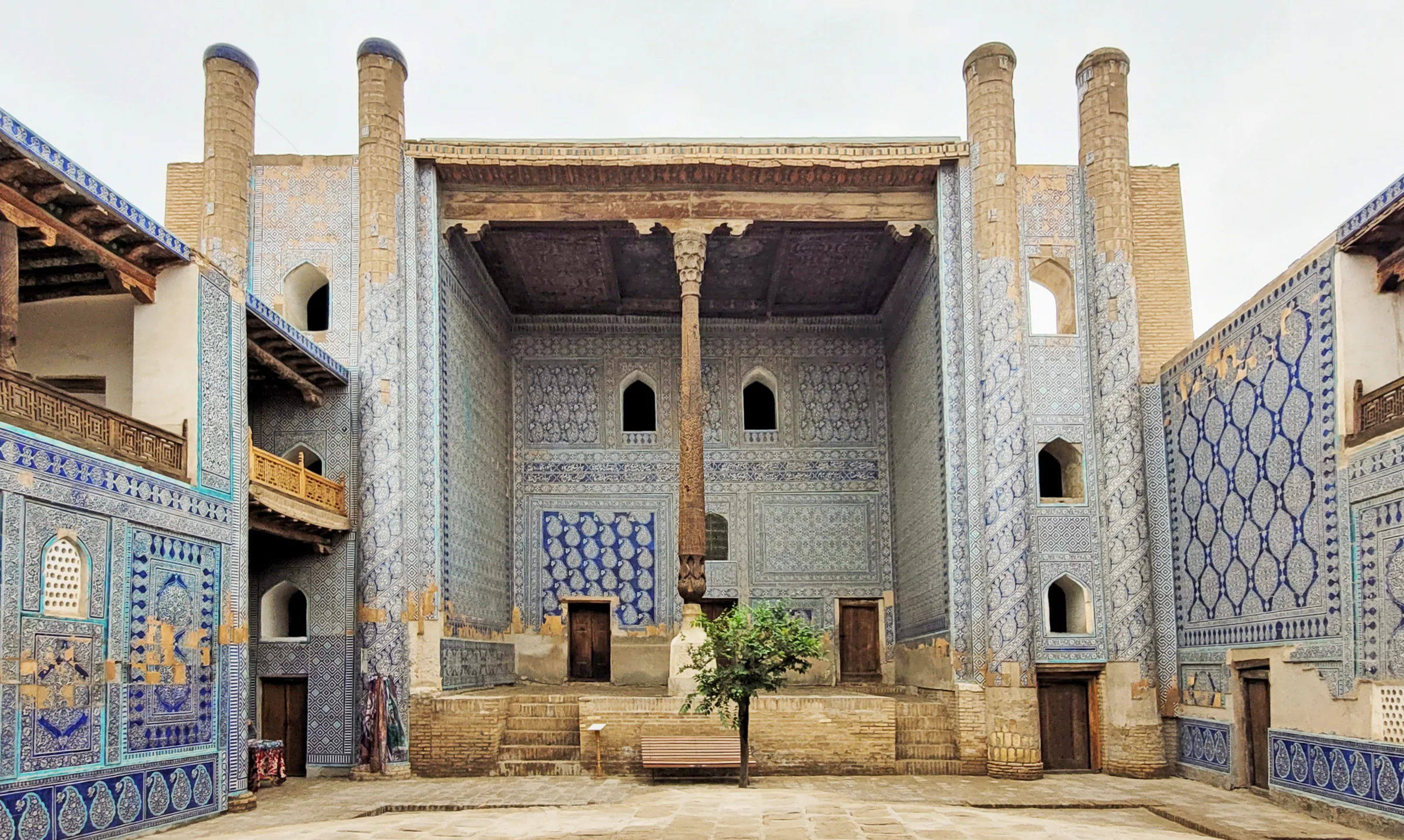
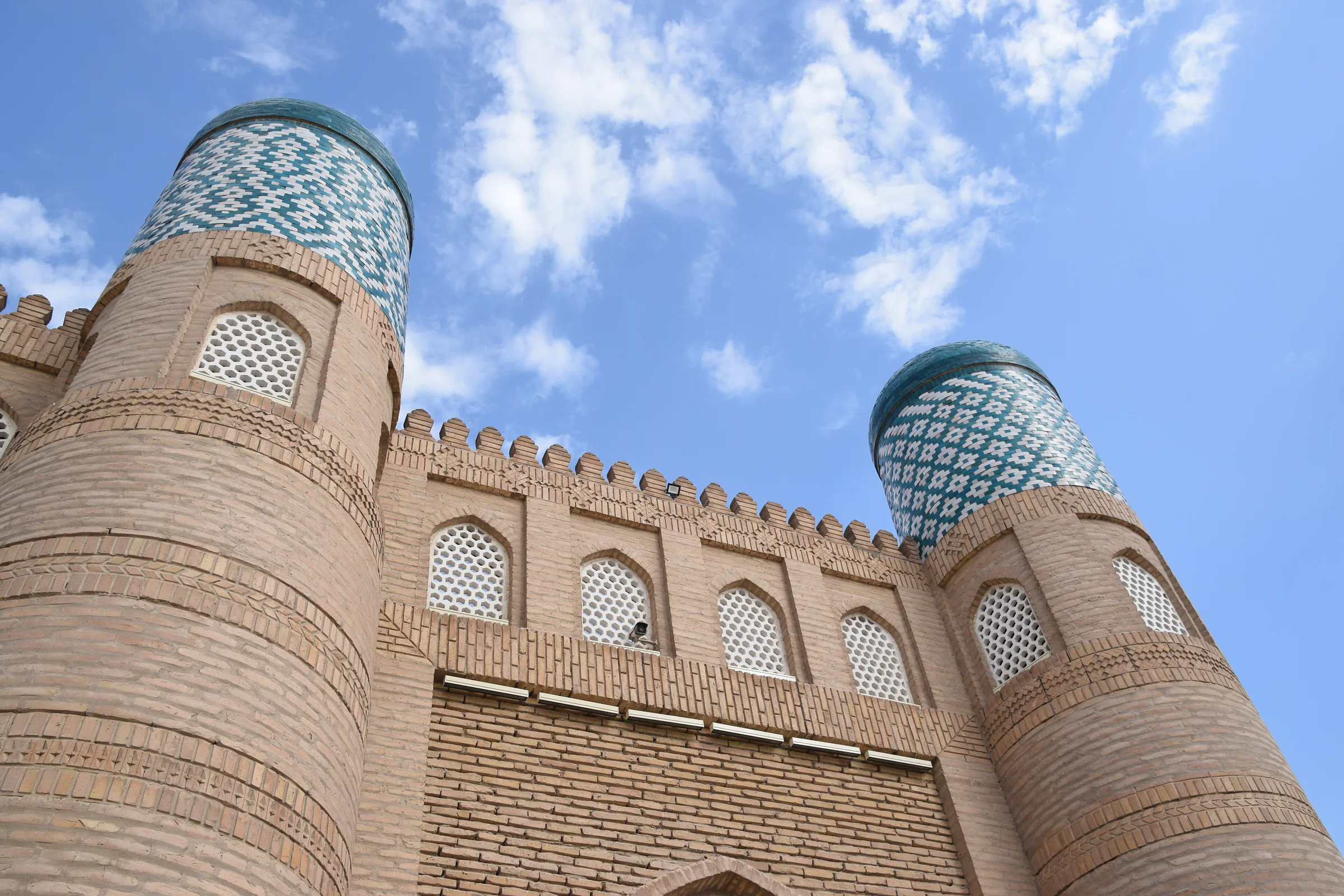
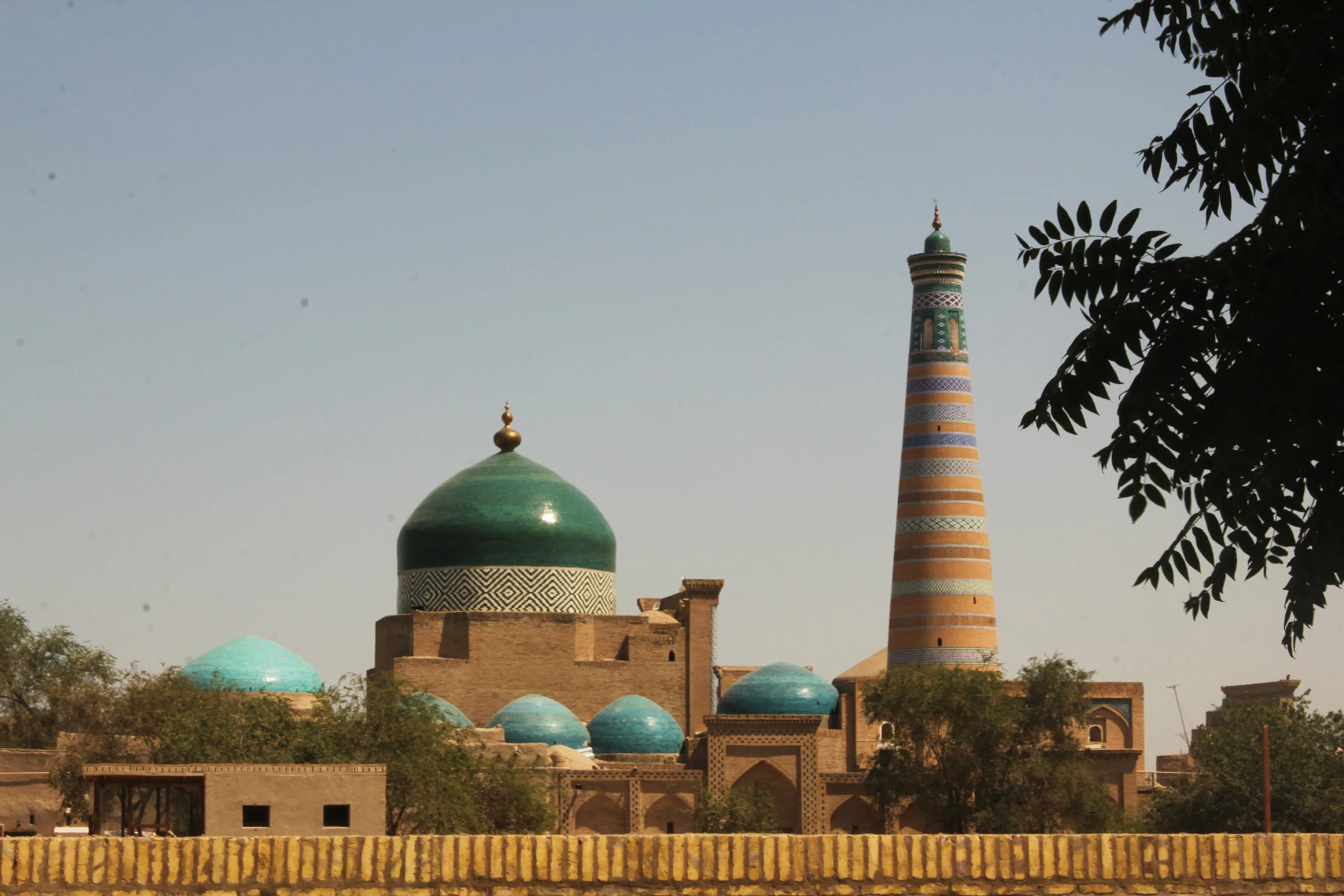
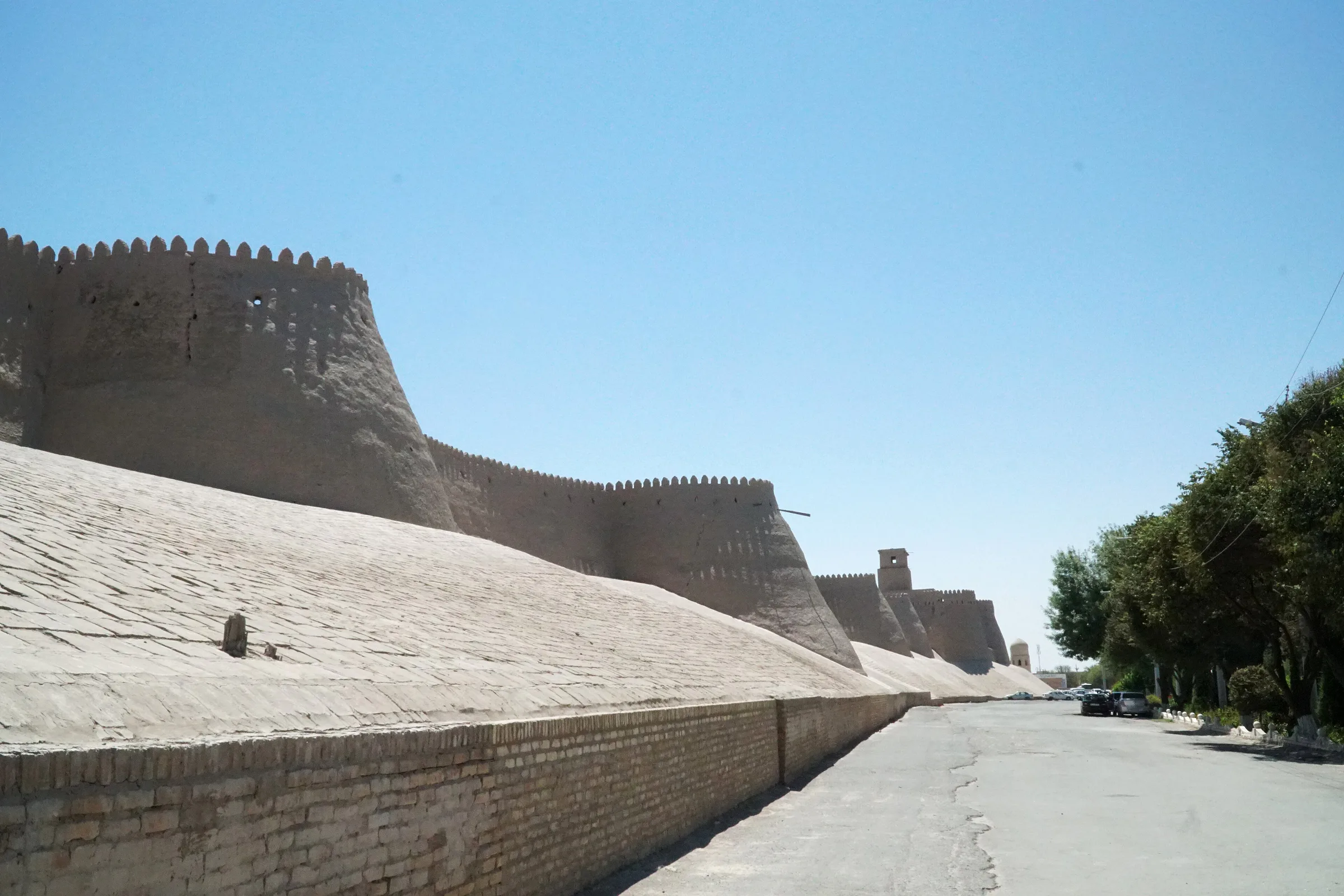
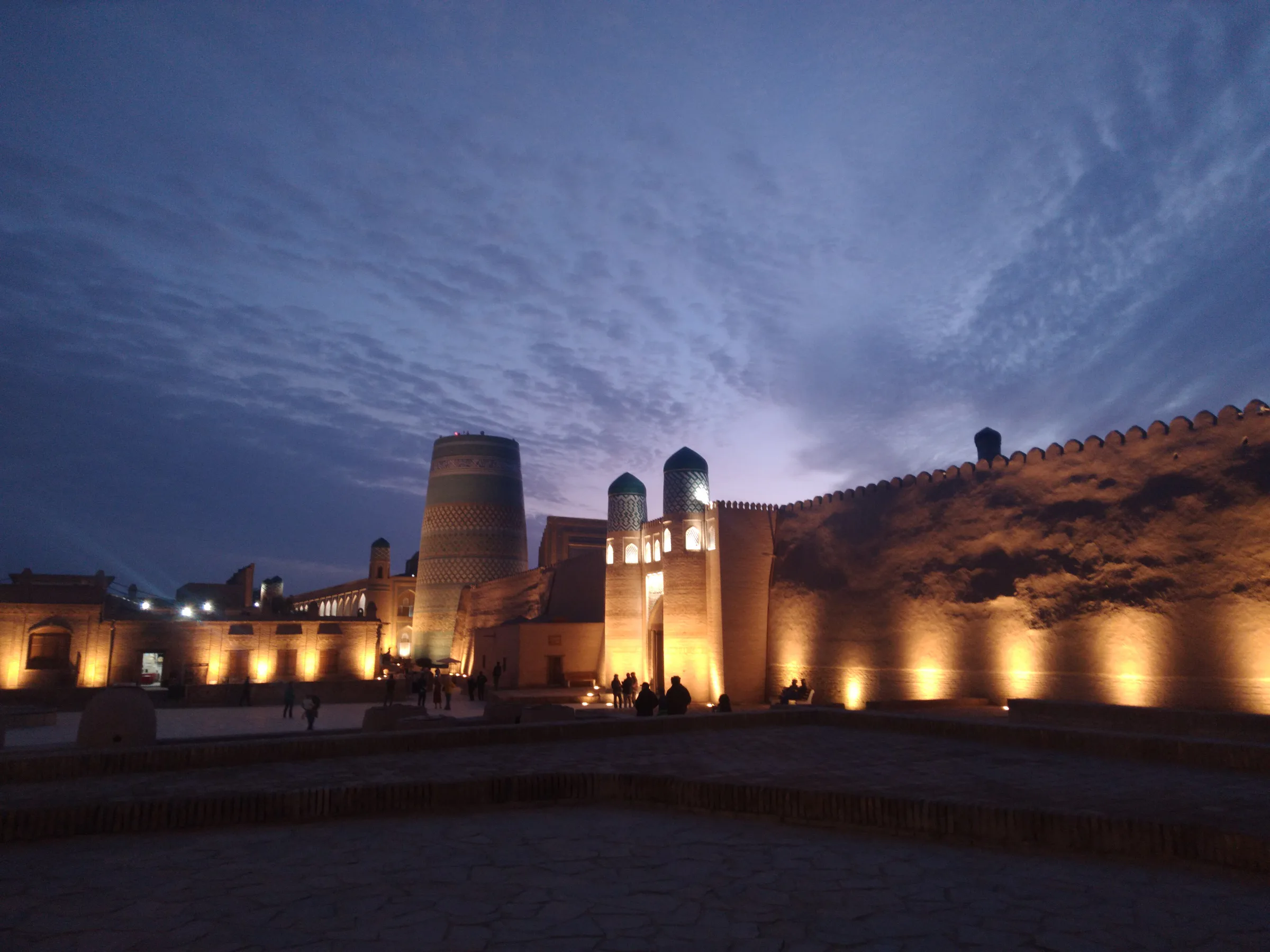
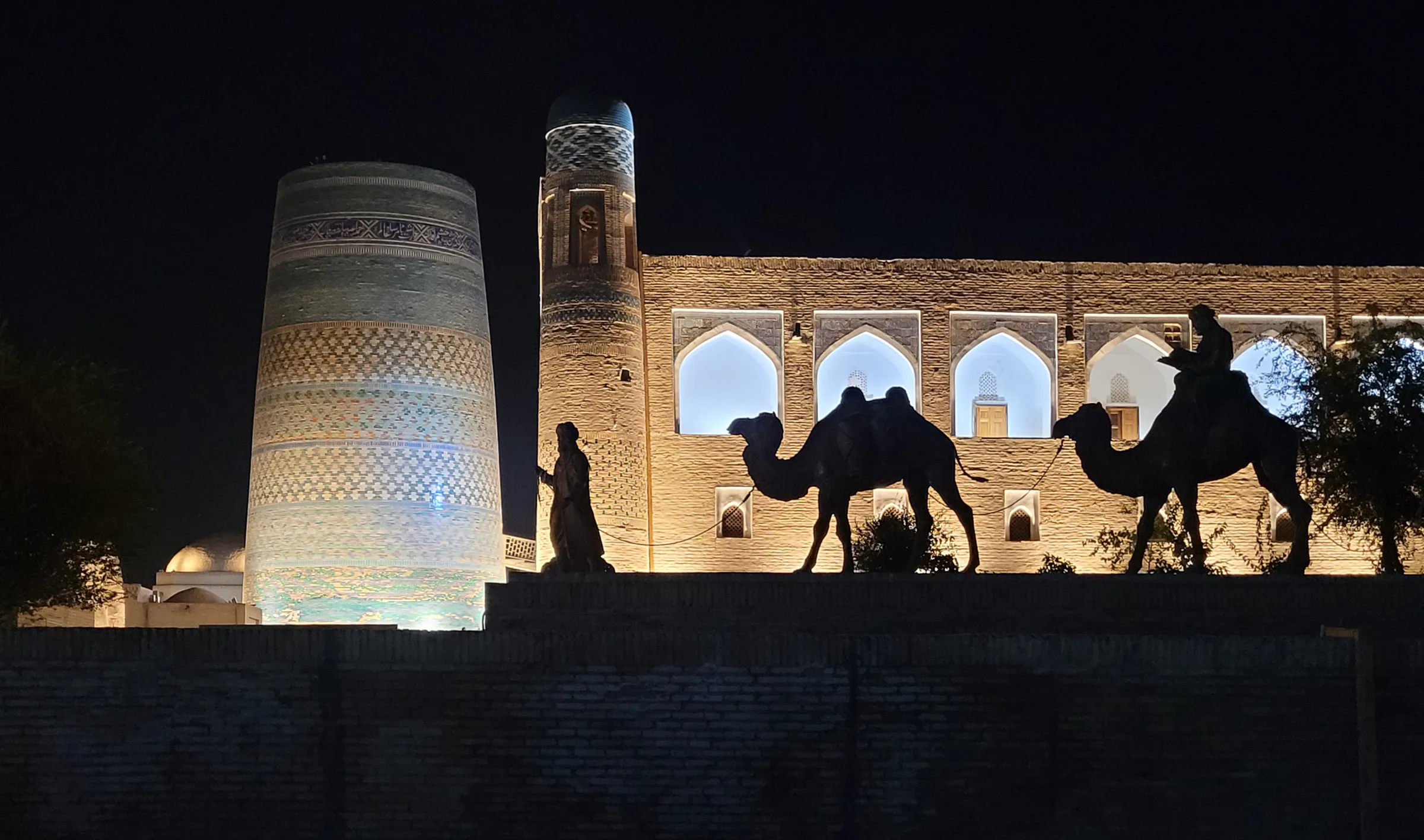
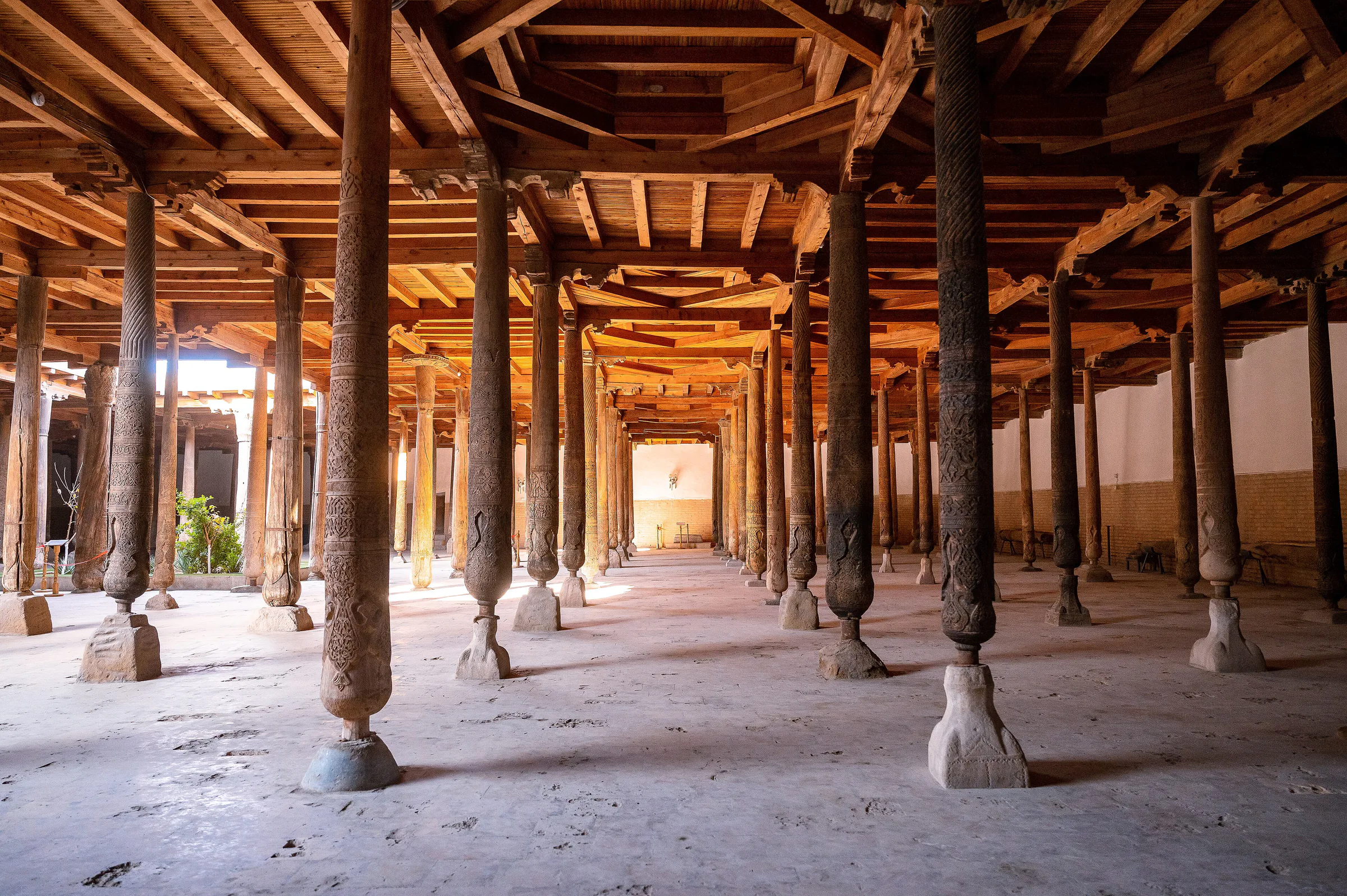
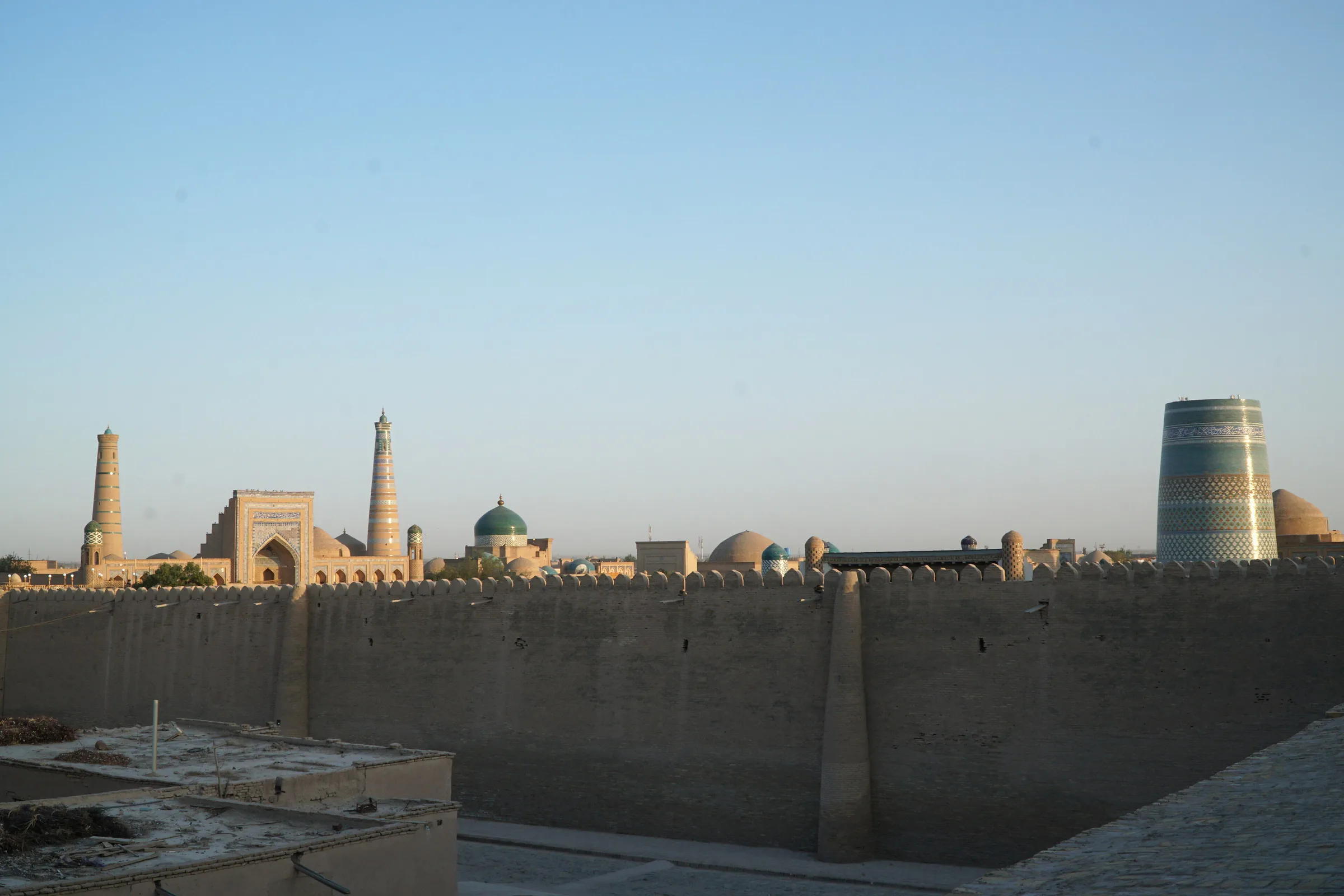
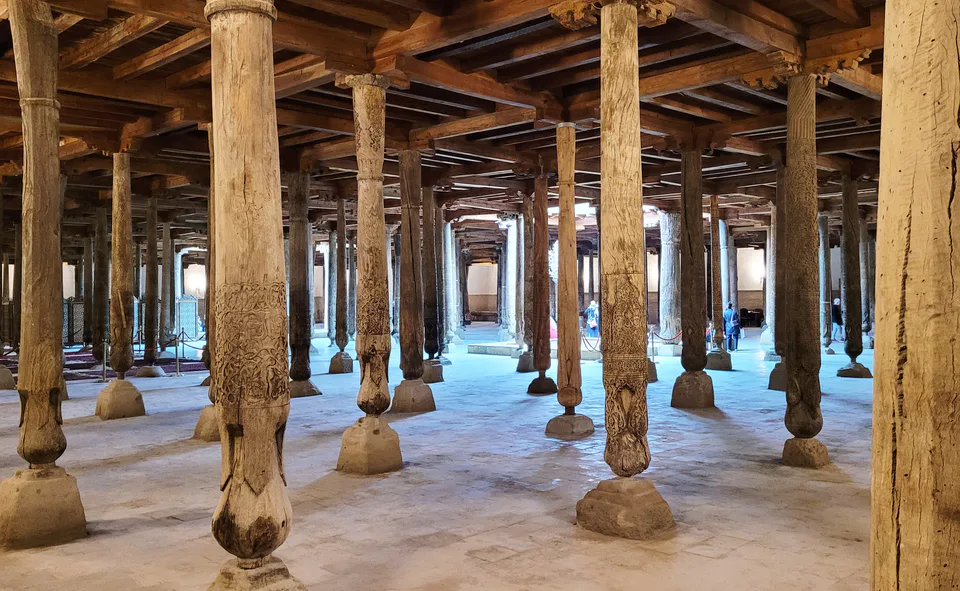
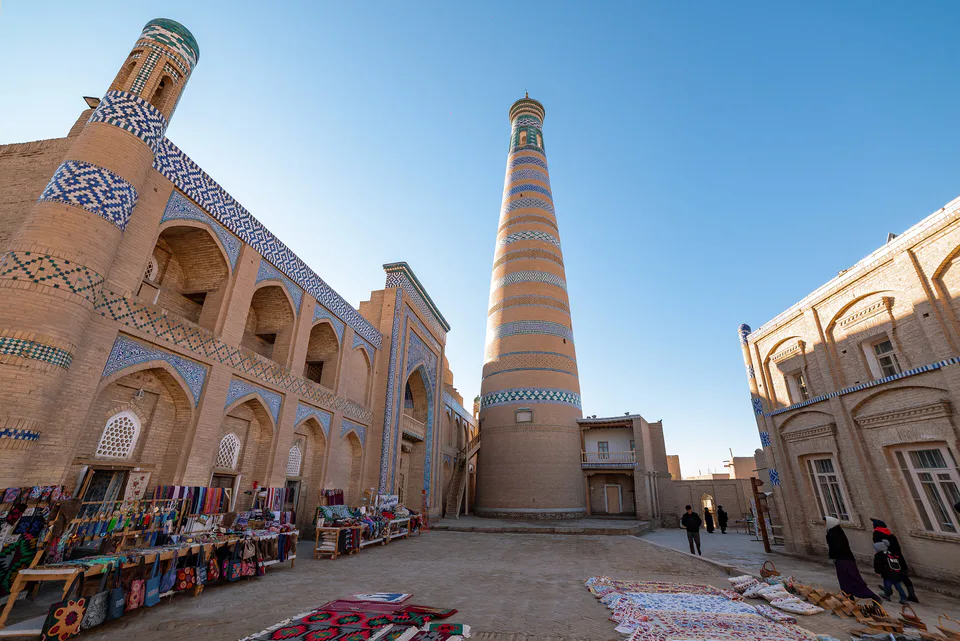
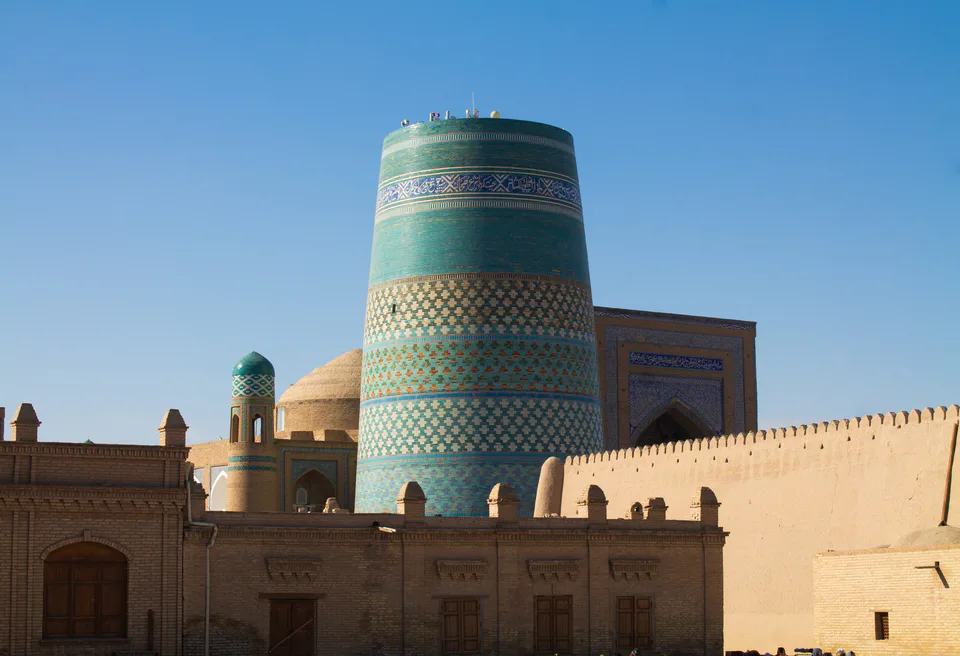
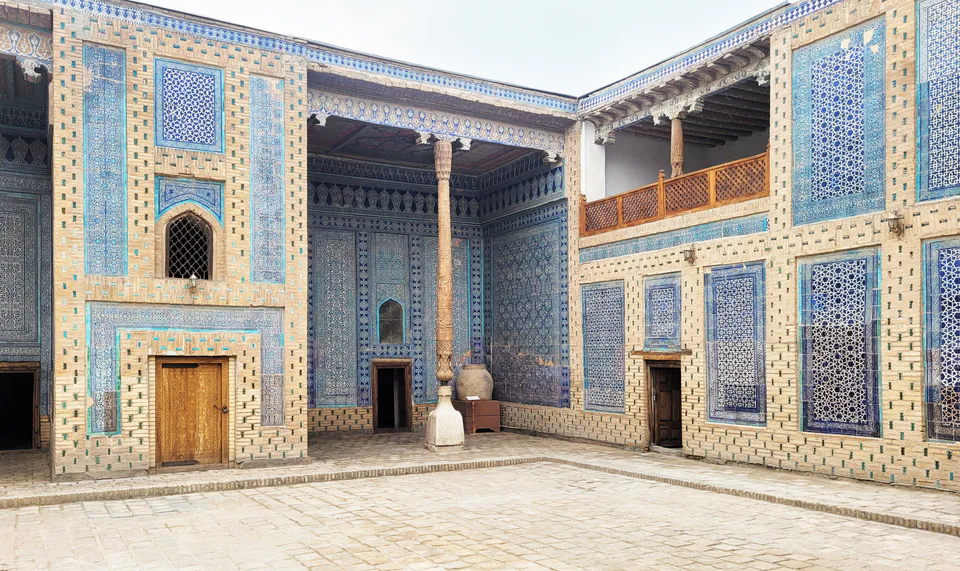
The crown jewel is Itchan Kala in Khiva, the walled inner town inscribed on the UNESCO World Heritage List in 1990. Its 26 hectares hold Kalta Minor, the Konya Ark, the Juma Mosque with its two hundred wooden pillars, Toshhovli Palace, the Pahlavon Mahmud Mausoleum, the Islam Khodja Minaret and dozens of madrasas, while the outer town of Dishan Kala has the Nurullabay Palace and the Kosh Gate.
Beyond Khiva, look for the Sheikh Mukhtar Vali shrine in Yangiariq District, the ancient walls of Hazorasp, the Ulli Hovli fortified compound near Urgench, and the al-Khwarizmi complex and Contemporary Art Museum of Uzbekistan in the regional capital. The desert castles of Ellikqala in Karakalpakstan — Toprak Kala and Ayaz Kala — are about an hour away.
Khorezmian woodcarving — the patterned pillars and doors of Khiva’s mosques and palaces — is famous nationwide, and blue-and-white majolica, carpet weaving, embroidery and pottery live on in the workshops of Itchan Kala; tall black sheepskin hats (chugirma) are a regional emblem. Khorezm’s lazgi dance was added to UNESCO’s Representative List of Intangible Cultural Heritage in 2019, and the local dialect stands apart from other Uzbek varieties for its Oghuz features.
The cuisine is distinctive: shivit oshi, noodles coloured green with dill; tukhum barak, dumplings filled with egg; fried fish; and Khorezm-style plov. The region is also known for its gurvak melons.
Urgench International Airport has flights to Tashkent and abroad and lies about 30 km from Khiva. Trains from Tashkent, Samarkand and Bukhara run to Urgench and Khiva stations, and the road from Bukhara across the Kyzylkum is roughly 450 km. A trolleybus has linked Urgench and Khiva since 1997, alongside taxis and minibuses. Distances within the region are short: Hazorasp is an hour from Khiva, the Ellikqala fortresses an hour and a half to two.
Ensemble · Khiva
A walled museum-city where people still live
Minaret · Khiva
The highest point in Khiva
Mosque · Khiva
A forest of thousand-year-old pillars
Minaret · Khiva
The unfinished minaret that became Khiva’s emblem
Fortress · Khiva
The khans’ fortress within the fortress
Mausoleum · Khiva
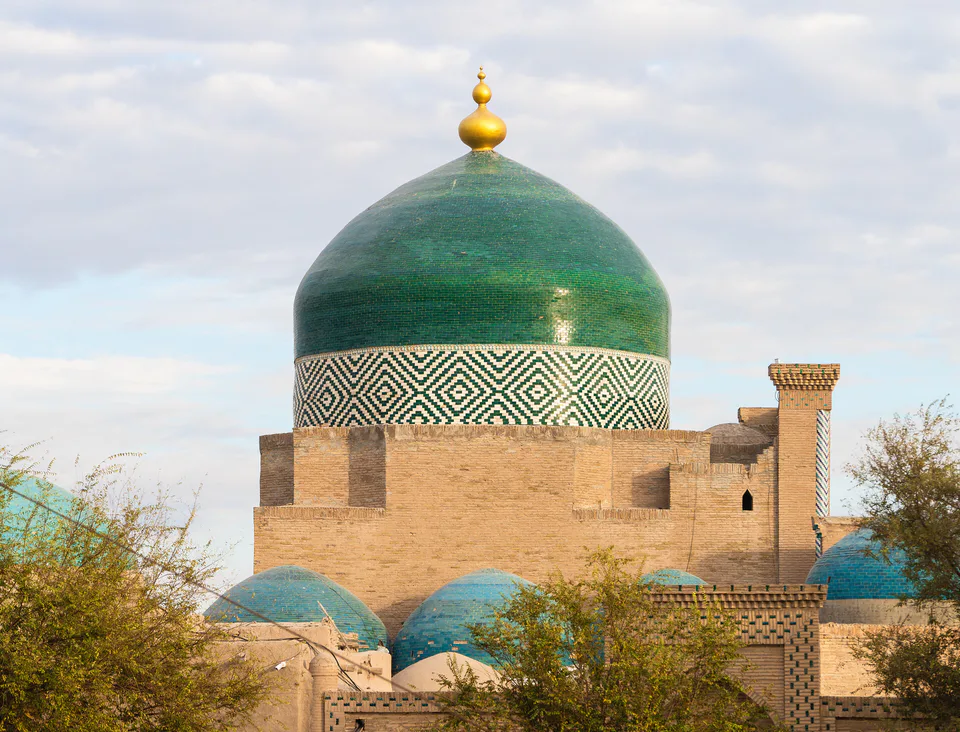
Poet, wrestler and patron saint of Khiva
Ensemble · Khiva
Allakuli Khan’s palace of tiles
Madrasa · Khiva
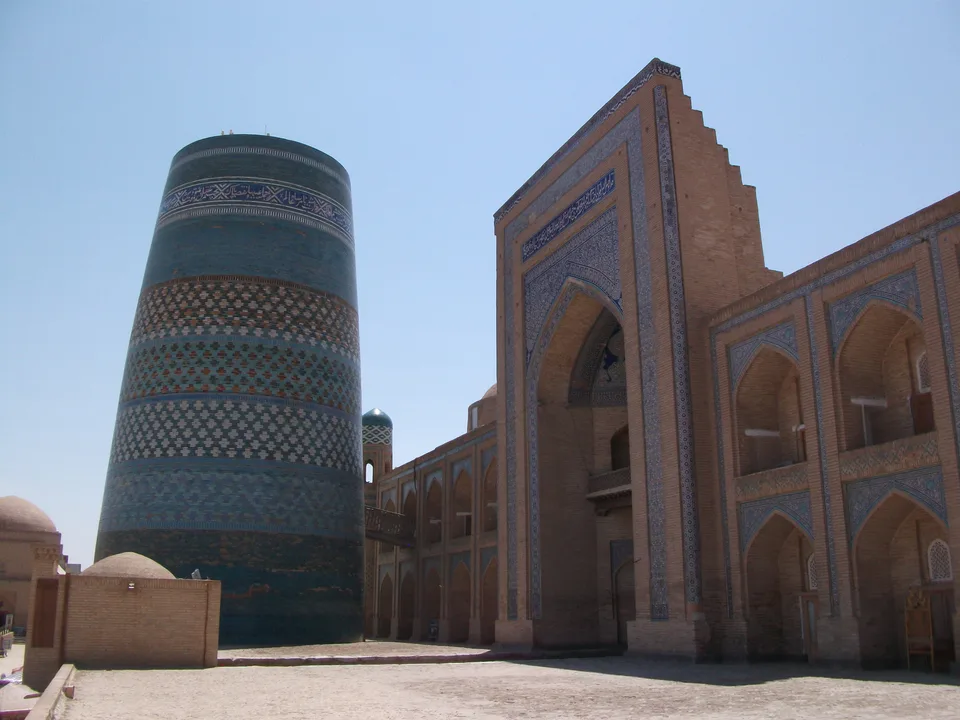
Khiva’s largest madrasa
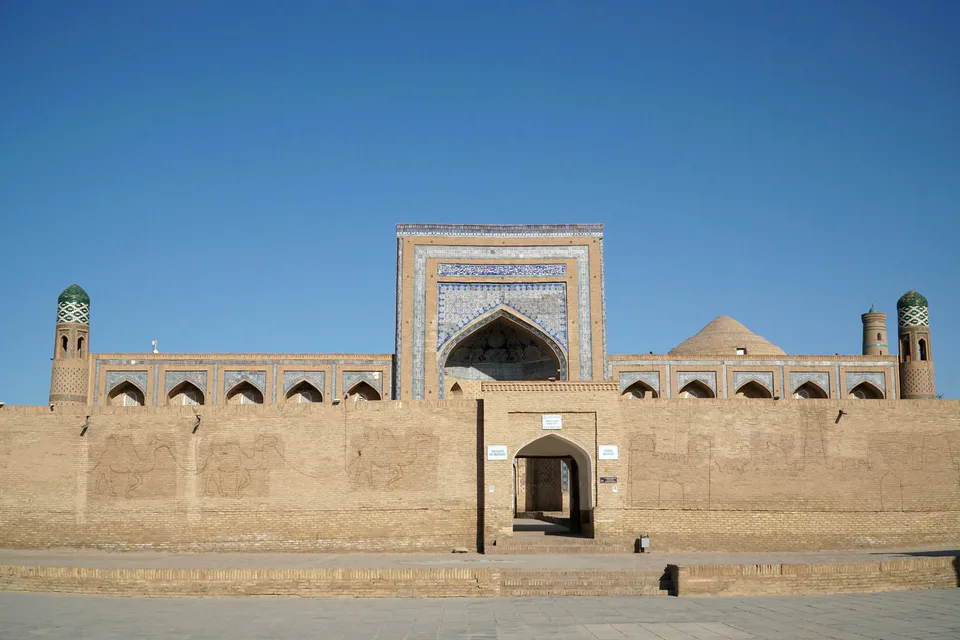
Madrasa · Khiva
The madrasa of Feruz, the poet-khan
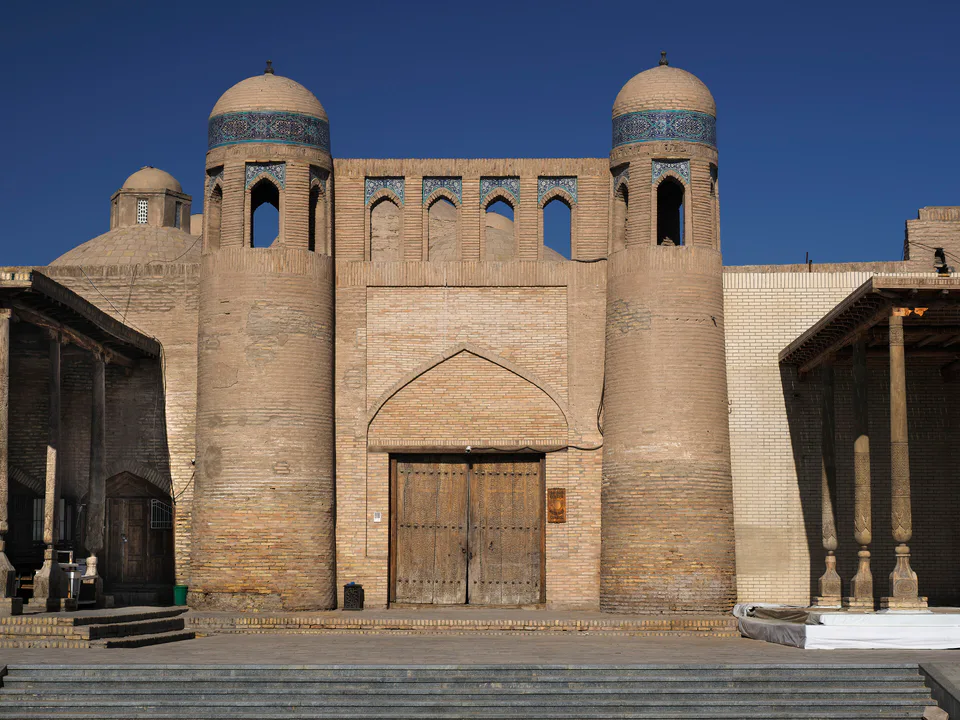
Bazaar · Khiva
The commercial heart of old Khiva
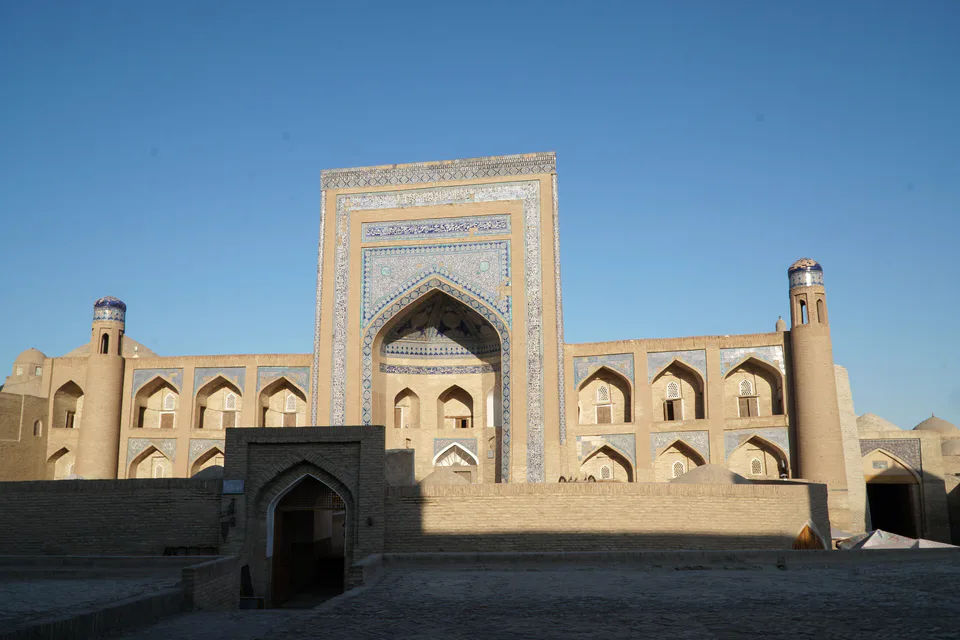
Madrasa · Khiva
The madrasa that held Khiva’s library
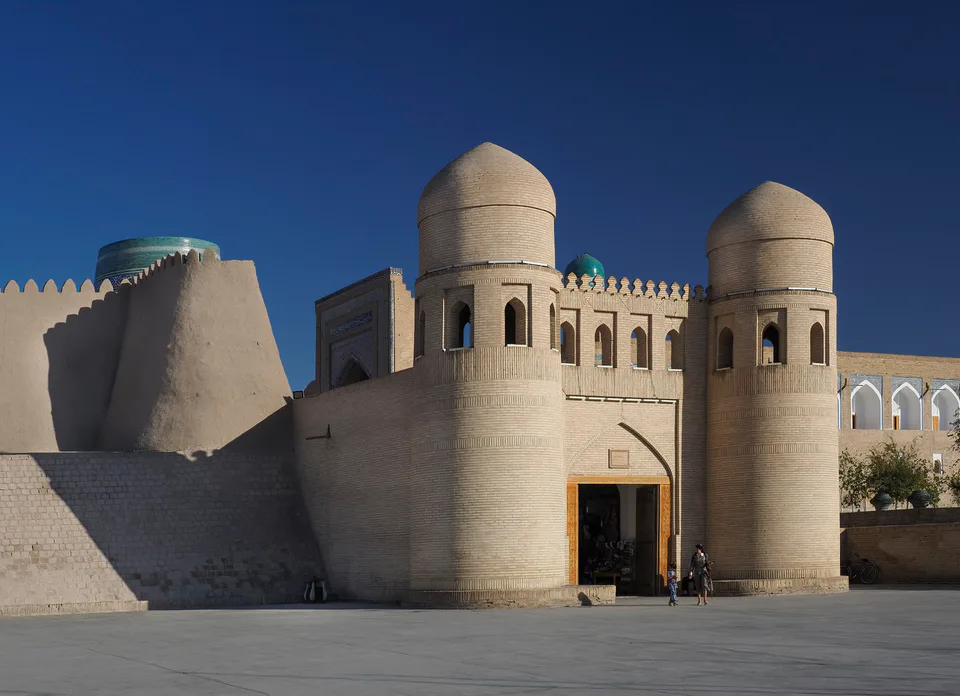
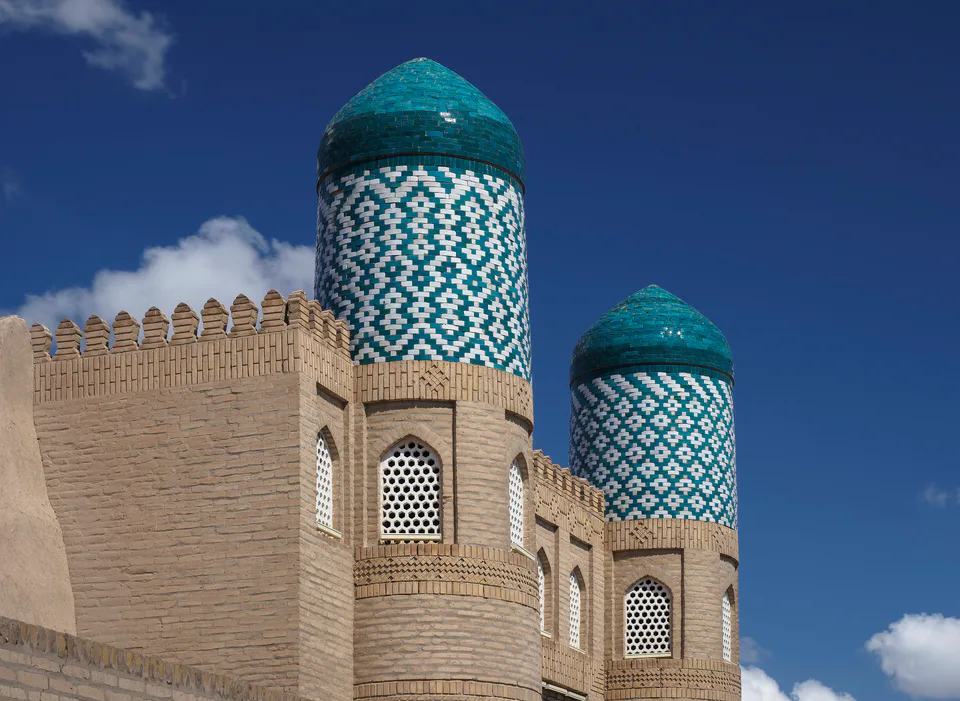
Fortress · Khiva
The main gate of Itchan Kala
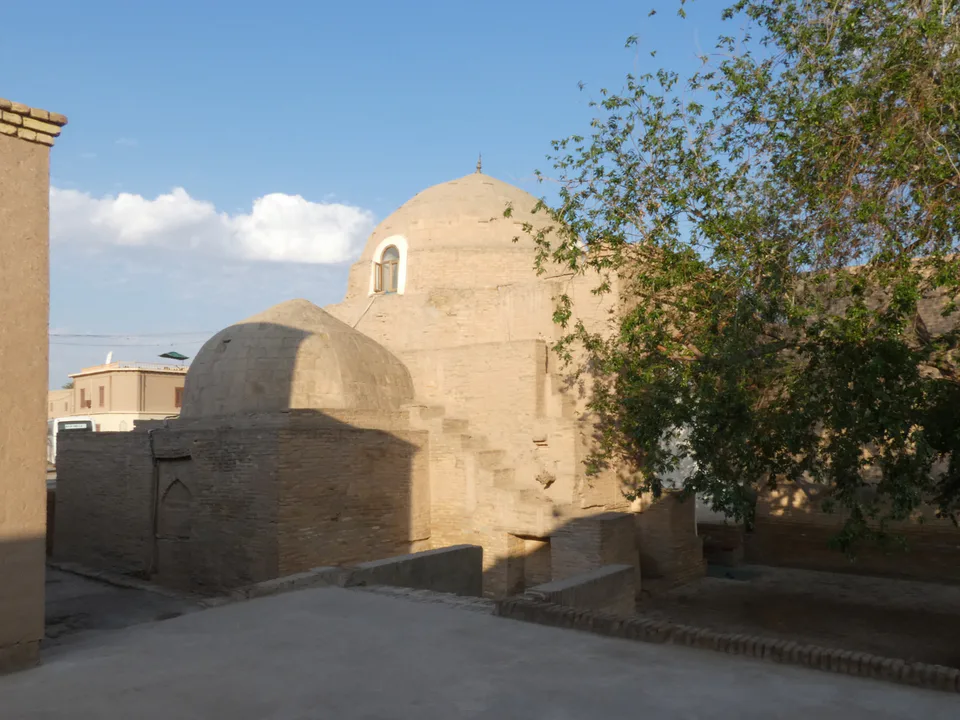
Mausoleum · Khiva
One of the oldest buildings in Itchan Kala
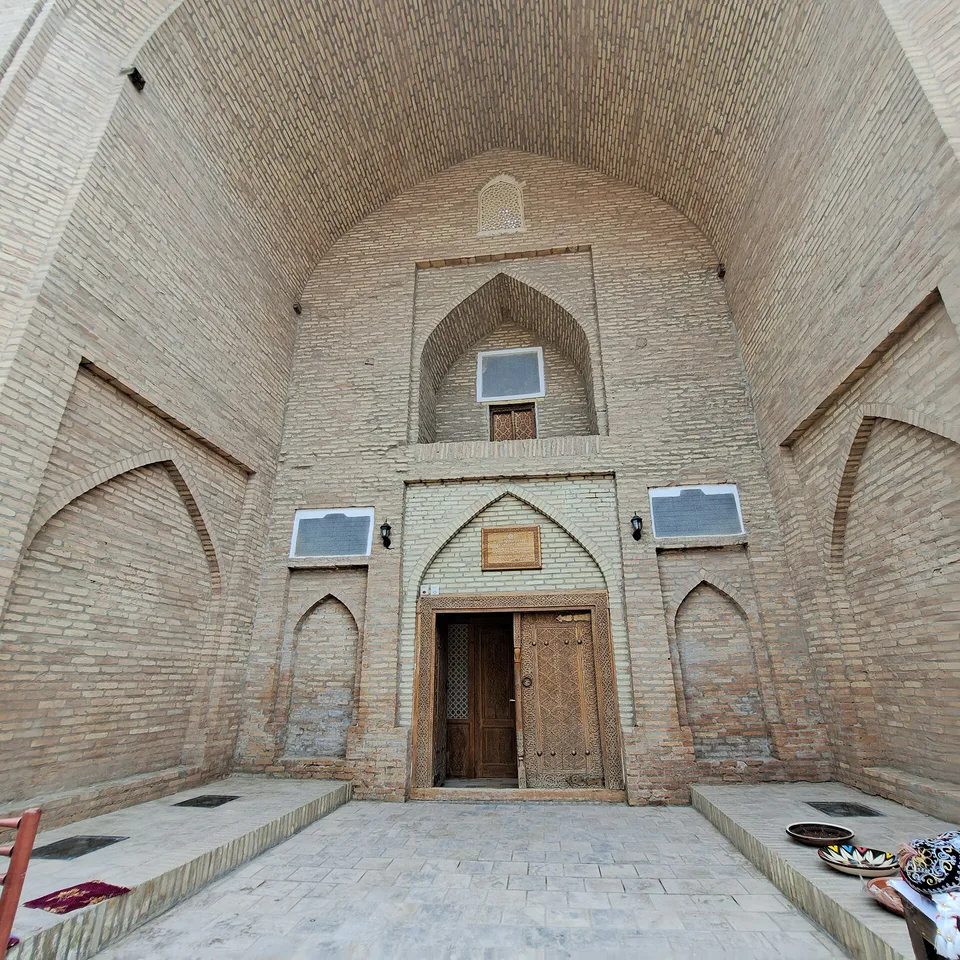
Madrasa · Khiva
The “abode of scholars” where Magtymguly and Ajiniyaz studied
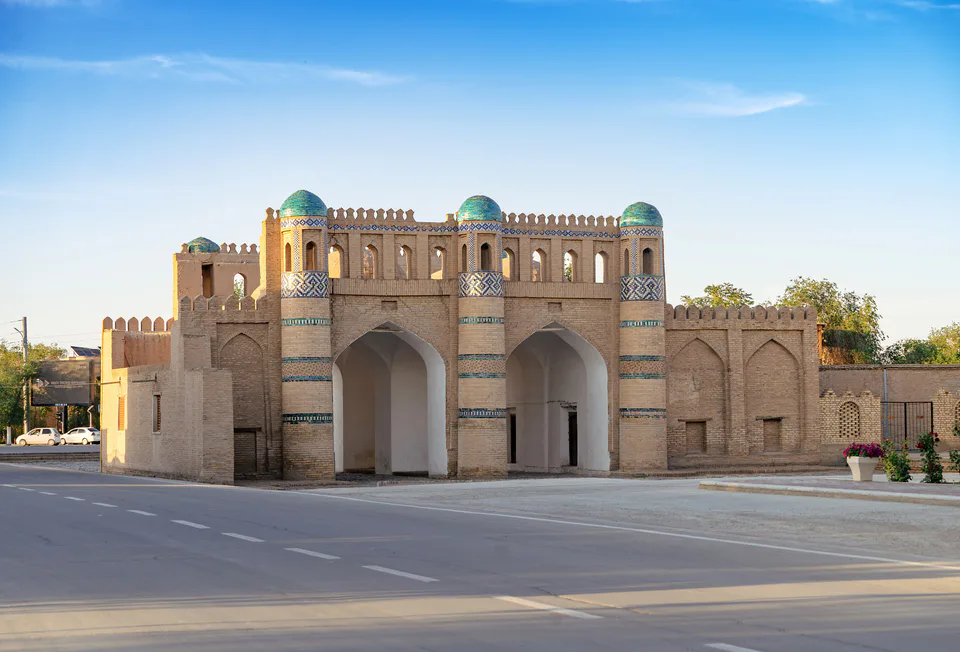
Fortress · Khiva
Khiva’s outer town and its gates
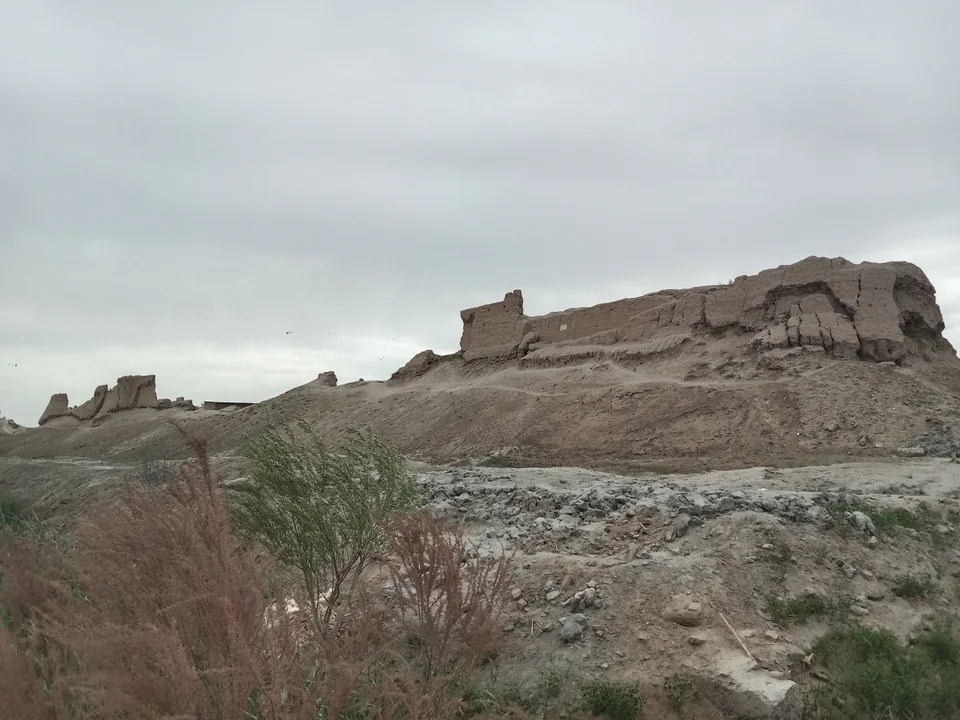
Fortress · Hazorasp District
The ancient walls of the “town of a thousand horses”
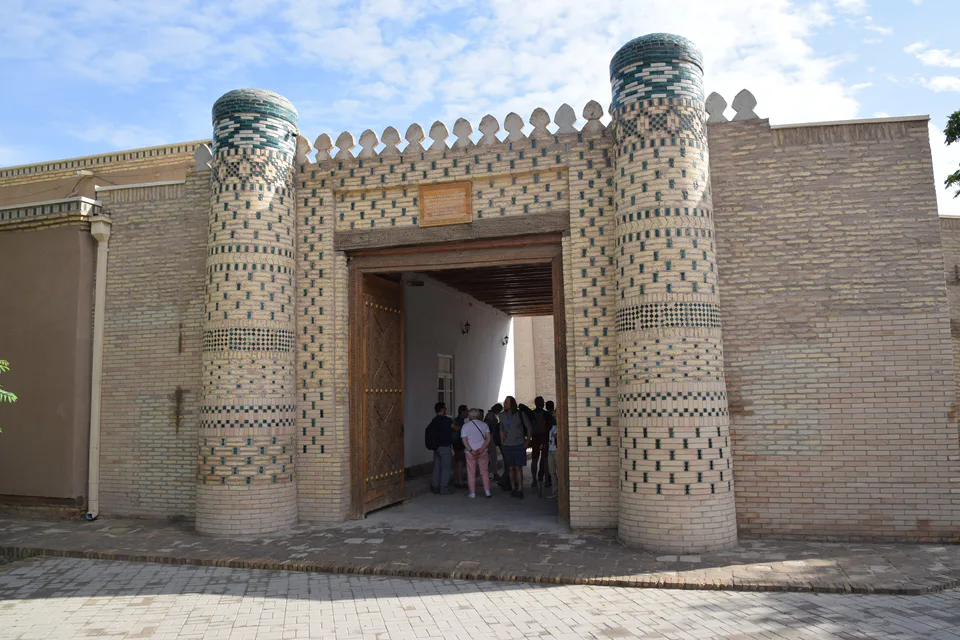
Ensemble · Khiva
The last khan’s palace, where East met Europe
Pilgrimage site · Yangiariq District
One of Khorezm’s great shrines
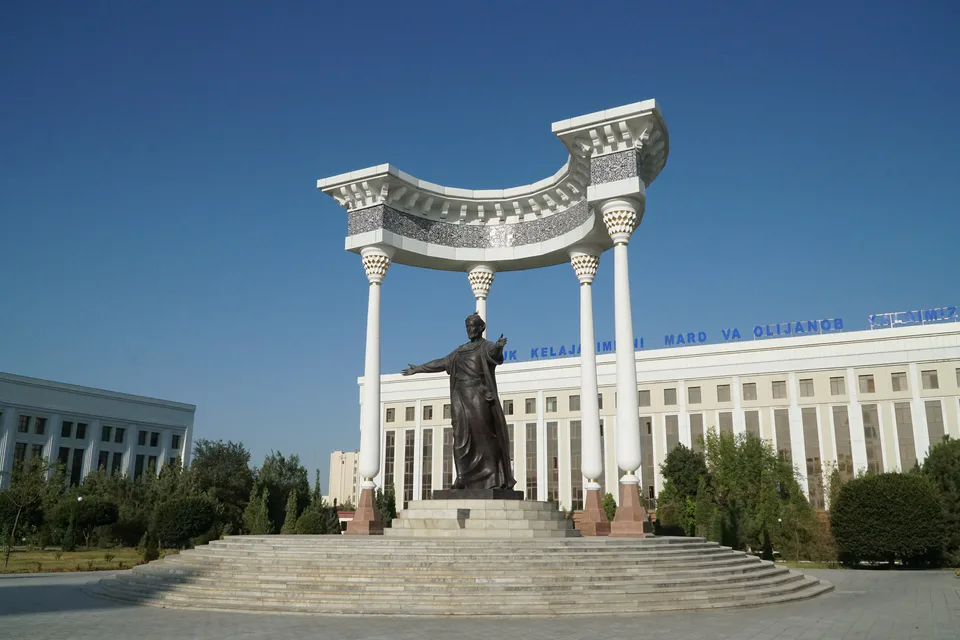
Modern · Urgench
Regional capital and gateway to Khiva
Khorezm Region
Airport, railway station and bus stations — addresses, timetables and the live board.
All transportKhorezm Region
Road distance, the fastest train and whether there is a direct flight.
All distances| City | Road, km | By car | By train | Flight | Bus |
|---|---|---|---|---|---|
| Urgench Khorezm Region |
43 | 30 min | 20 min Jaloliddin Manguberdi 751М |
— | 2 routes |
| Nukus Republic of Karakalpakstan |
200 | 2 h 26 min | — | — | — |
| Bukhara Bukhara Region |
457 | 5 h 32 min | 3 h 28 min Jaloliddin Manguberdi 751М |
1 flight | — |
| Navoi Navoiy Region |
537 | 7 h 4 min | 7 h 22 min 126Ф |
— | — |
| Karshi Kashkadarya Region |
630 | 7 h 43 min | — | — | — |
| Samarkand Samarkand Region |
688 | 9 h 21 min | 5 h 31 min Jaloliddin Manguberdi 751М |
— | — |
| Shahrisabz Kashkadarya Region |
755 | 9 h 11 min | — | — | — |
| Tashkent Tashkent (city) |
1,013 | 14 h 11 min | 8 h 12 min Jaloliddin Manguberdi 751М |
10 flights | 1 route |
Weather: MET Norway
Xorazm Region
Checked hotels and places to eat — with addresses, phone numbers, opening hours and price levels.
A three-star hotel with a pool and spa
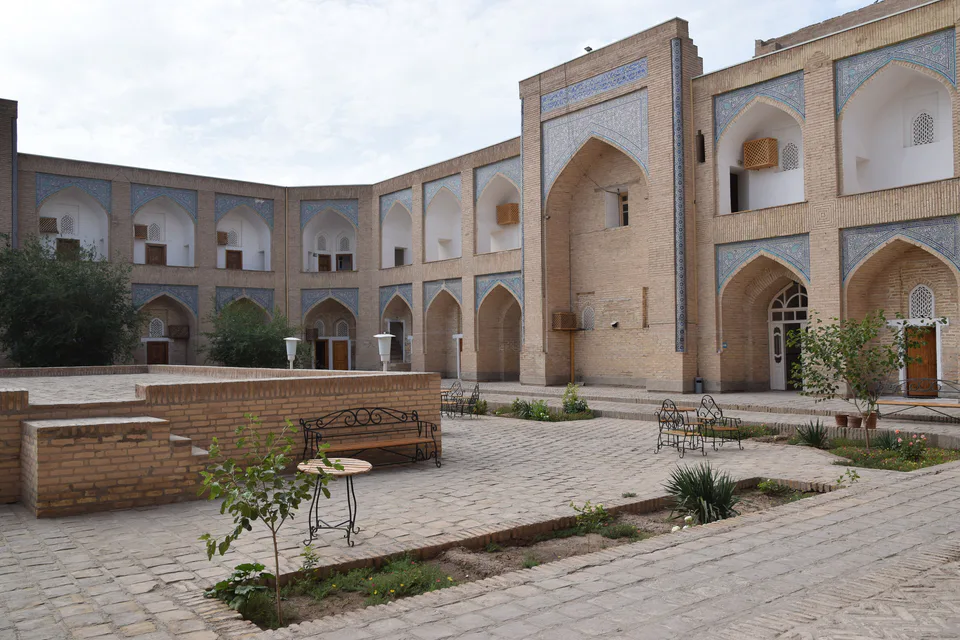
A hotel inside the Muhammad Amin Khan Madrasah
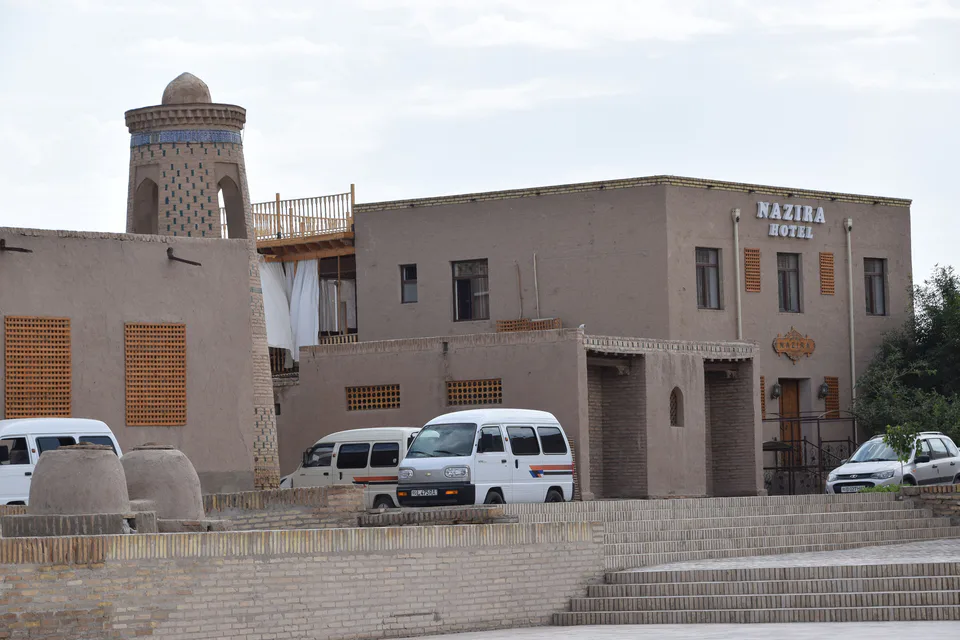
A family boutique hotel in Khorezm style
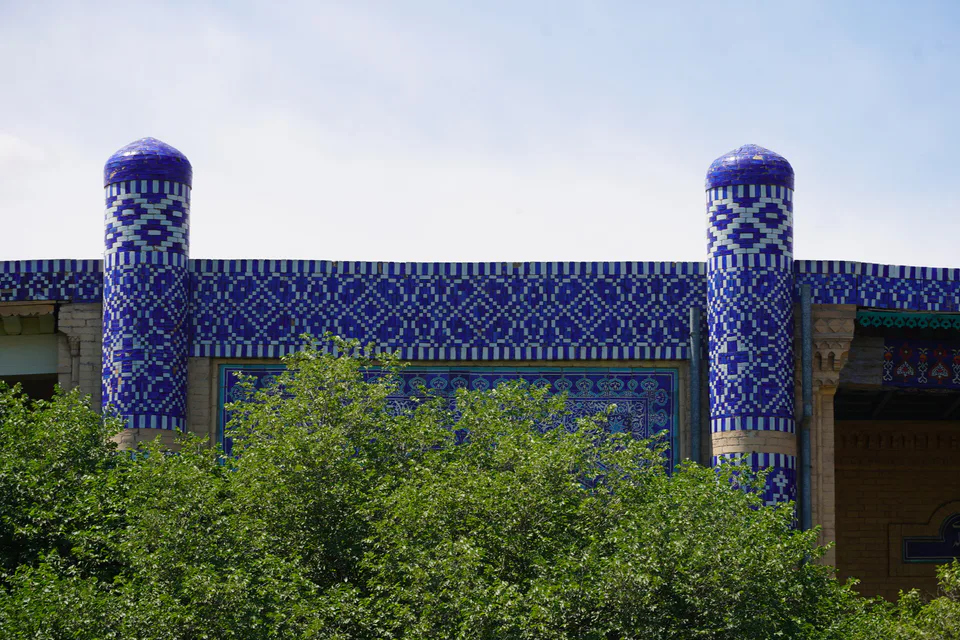
An edge-of-town hotel with an orchard and pool
A large hotel with a pool and spa
A large hotel in central Urgench
A new hotel in central Urgench
A business hotel with a pool in central Urgench
A budget hotel in Urgench
A modern hotel north of Itchan Kala
A garden-and-pool hotel by the city walls
A new boutique hotel by the Islam Khoja Minaret
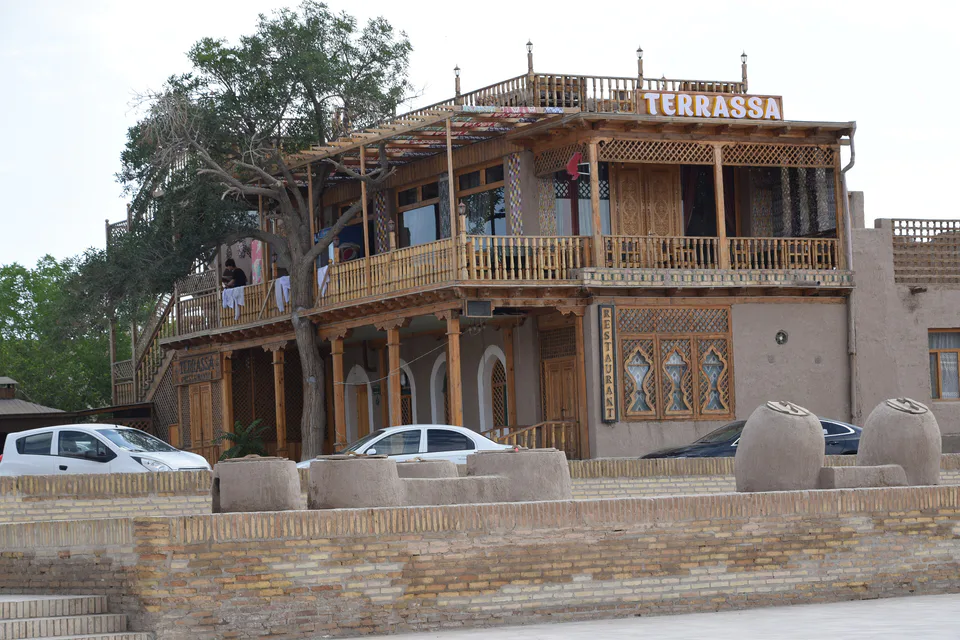
A rooftop terrace restaurant above Itchan Kala
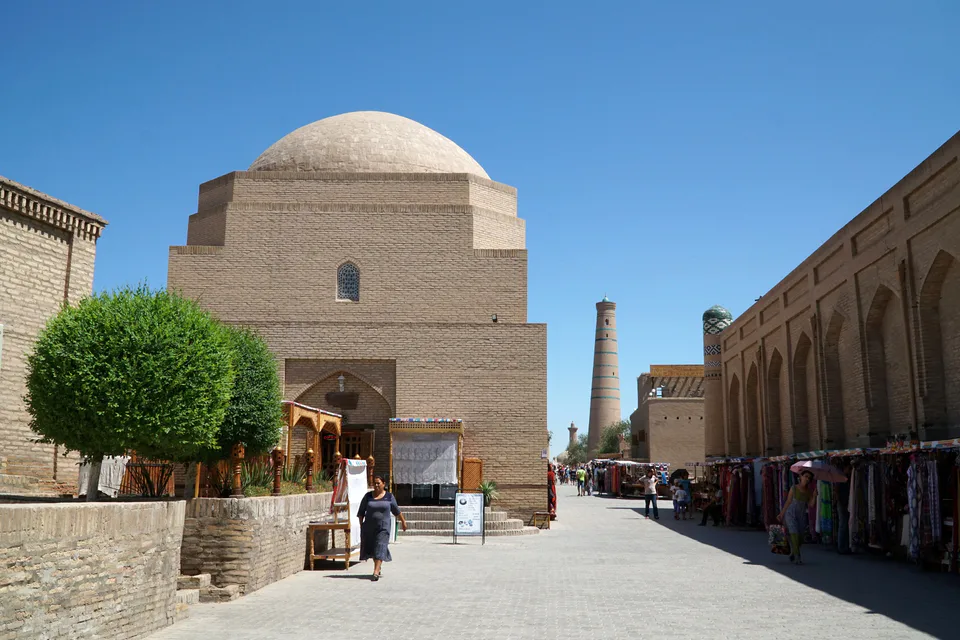
A teahouse with a view by Kalta Minor
The Urgench branch of a national fast-food chain
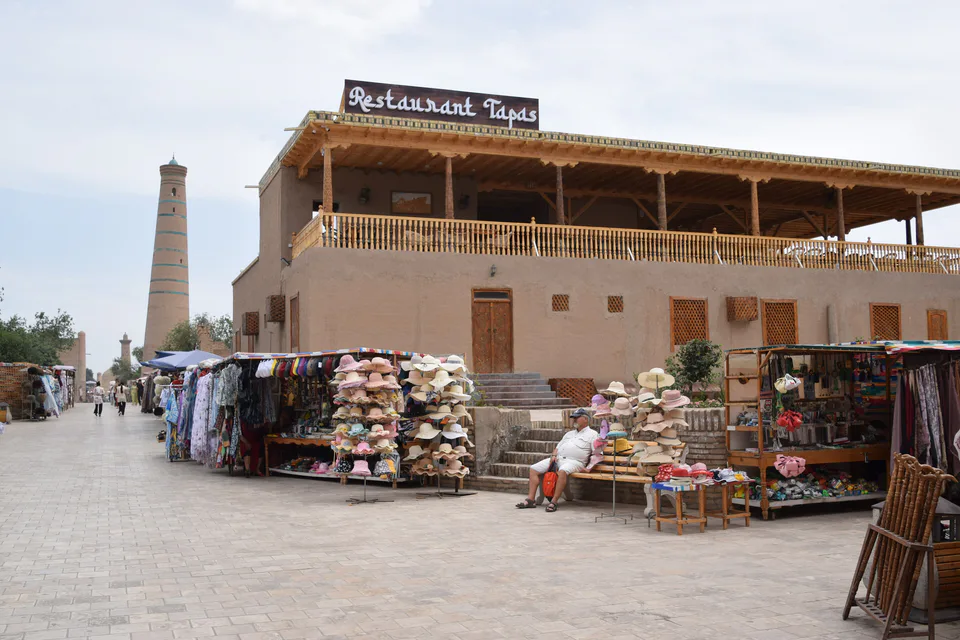
A terrace restaurant near Kalta Minor
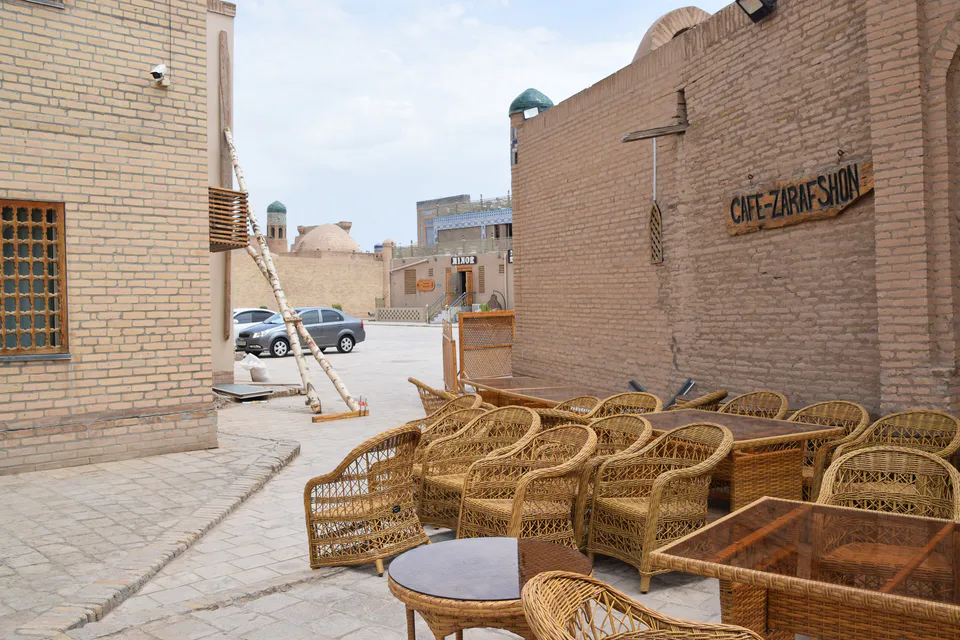
A restaurant by the Islam Khoja Minaret
A courtyard restaurant with topchans near Ota Darvoza
A restaurant set in a leafy garden
A terrace restaurant with live music
A plov centre serving Khorezm and Samarkand styles
Cheap round-the-clock fast food
A contemporary restaurant east of the old town
A local favourite for Uzbek cooking
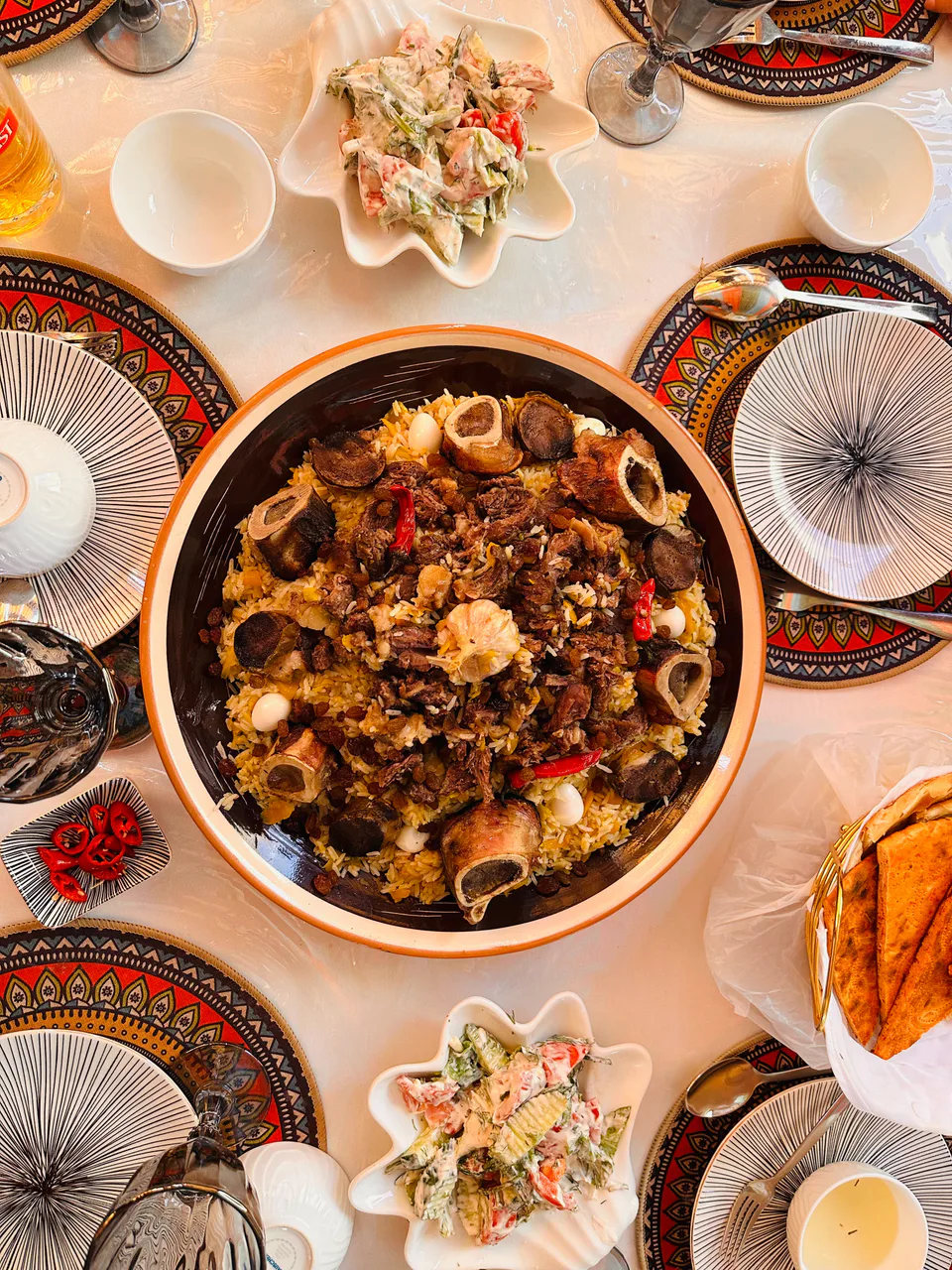
Dish · Khorezm
Khorezm’s plov tradition, including suzma palov, in which the rice is boiled separately and drained before it meets the zirvak.
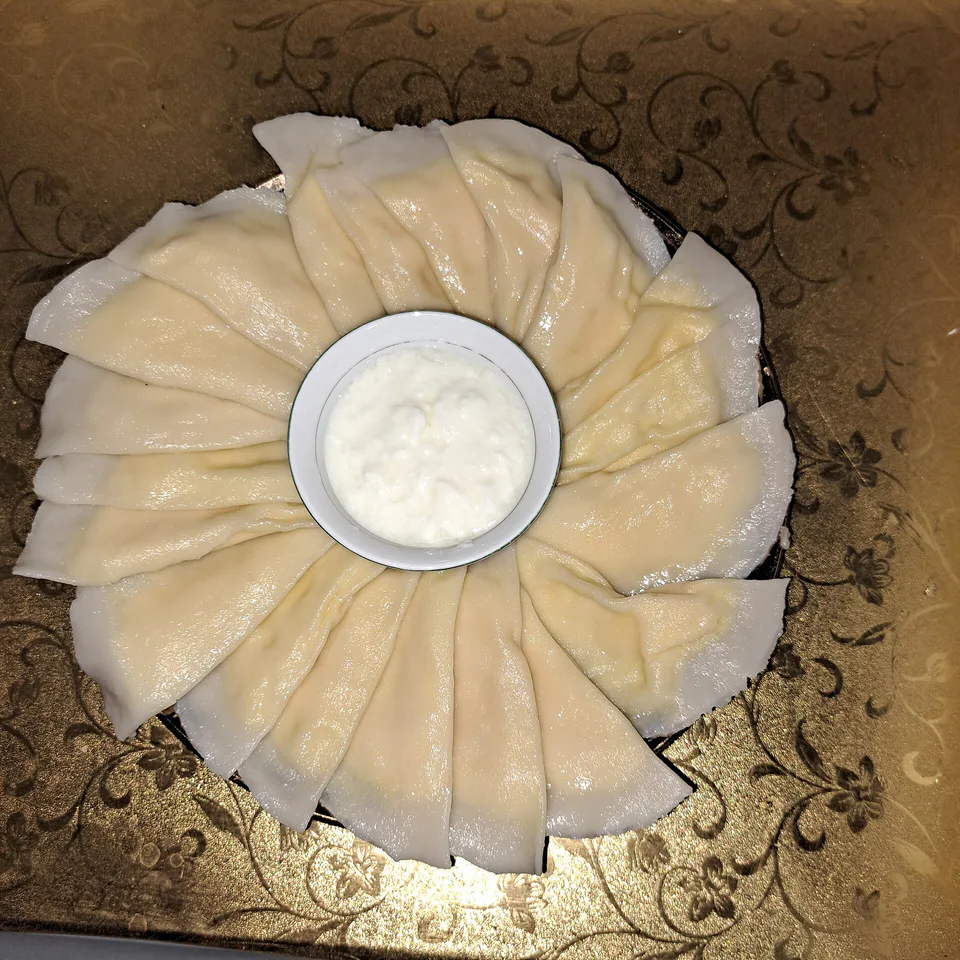
Dish · Khorezm, Karakalpakstan
Khorezm’s signature dish: delicate boiled dumplings filled with raw egg mixed with milk or butter.
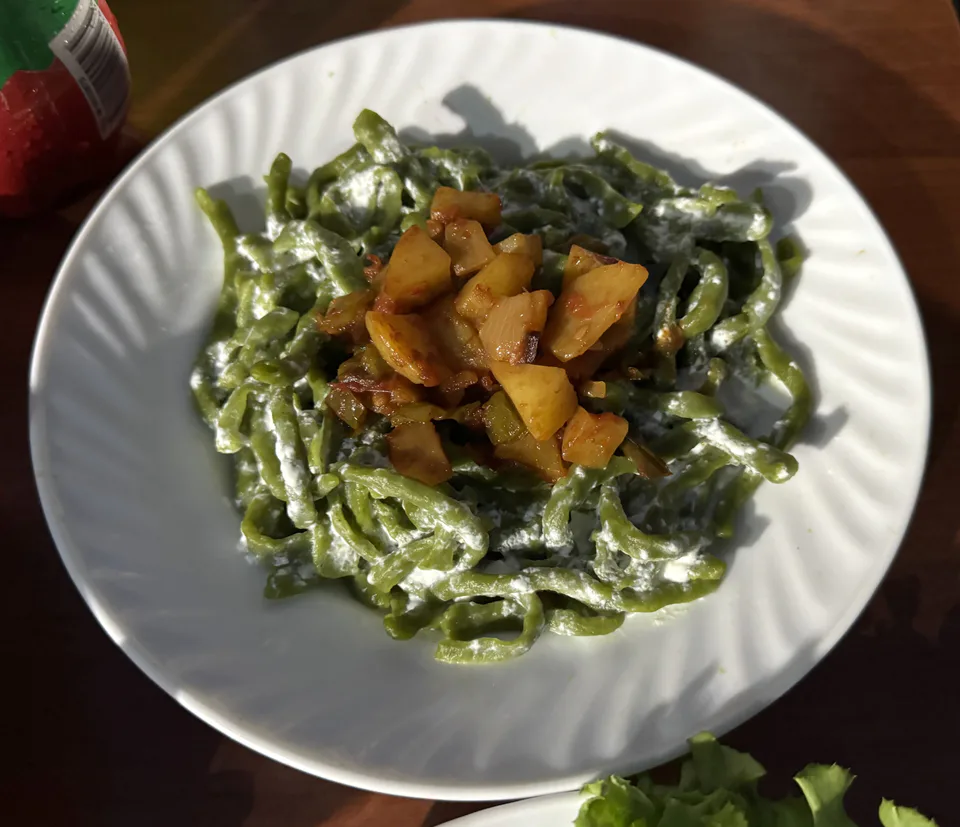
Dish · Khorezm
Known as ‘Khorezm’ or ‘green’ lagman: dill-flavoured noodles (shivit means dill) served with a meat sauce and suzma; sources trace the dish to Khiva.
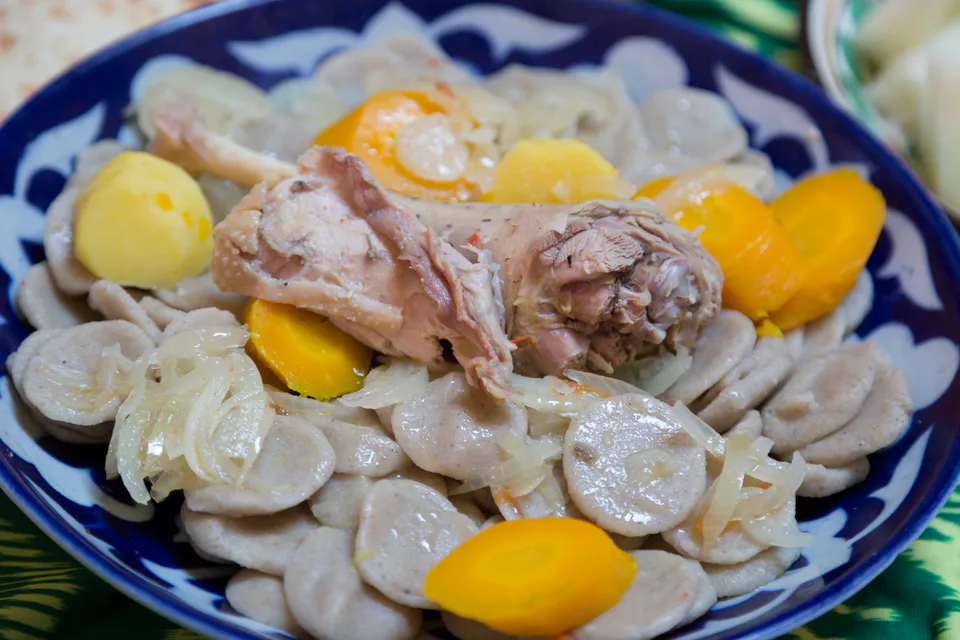
Dish · Karakalpakstan, Khorezm
An old dish of Karakalpak and Khorezm cooking: coin-shaped sorghum-flour dumplings simmered in meat broth.
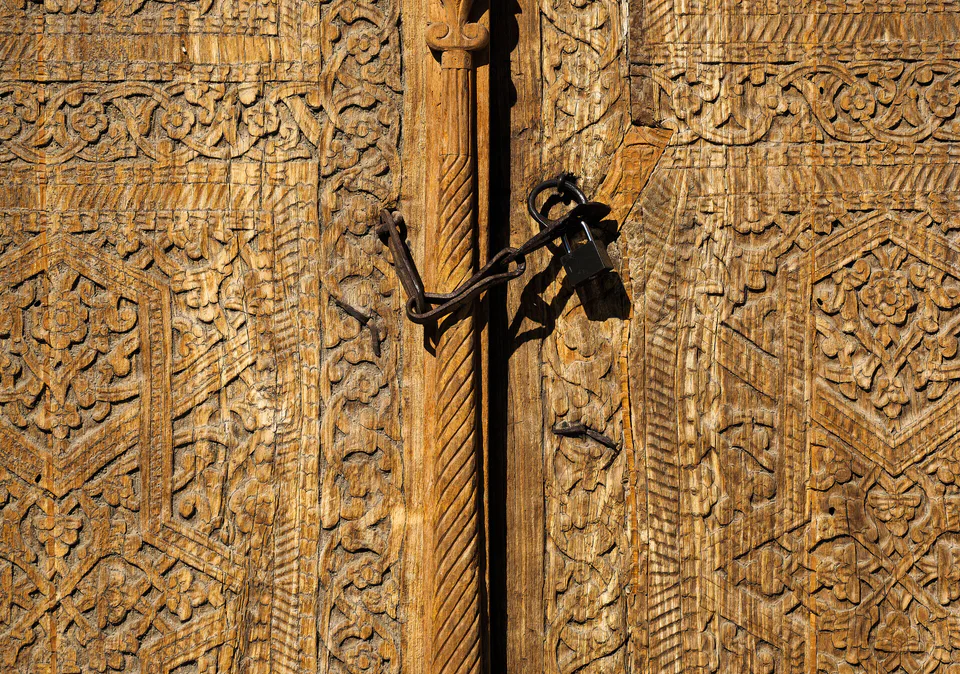
Craft · Khorezm
The carved doors and columns of Itchan Kala: Khiva’s carvers never paint the wood, finishing it only with natural oil; the Juma Mosque alone has more than 200 columns.
Tradition · Surkhandarya, Kashkadarya +2
Epic poems sung from memory to the dombra, kobyz or dutar — the performers of Alpamysh and Go‘ro‘g‘li; UNESCO-listed since 2021.
Tradition · Khorezm
Khorezm’s fiery folk melody and dance, evoking the sounds of nature, love and joy; UNESCO-listed since 2019.
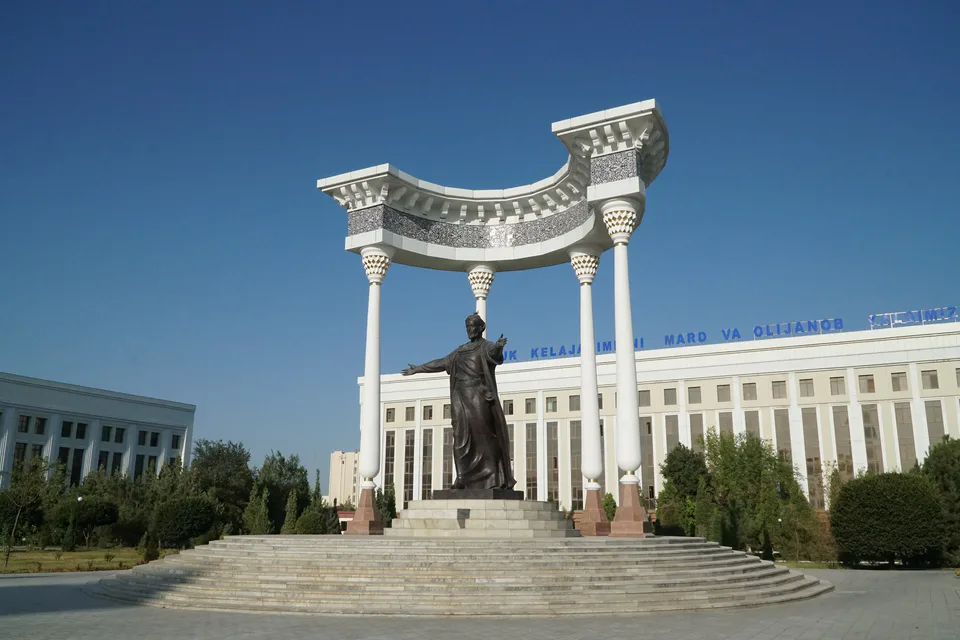
783–850
Mathematician, astronomer, geographer
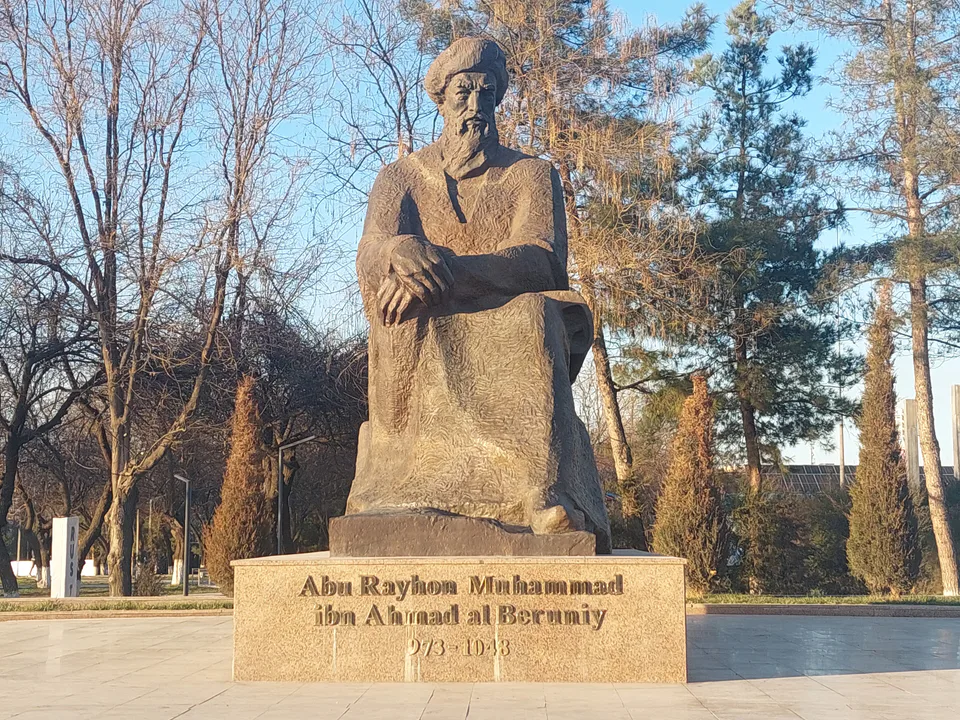
973–1048
Polymath: astronomer, mathematician, historian, geographer
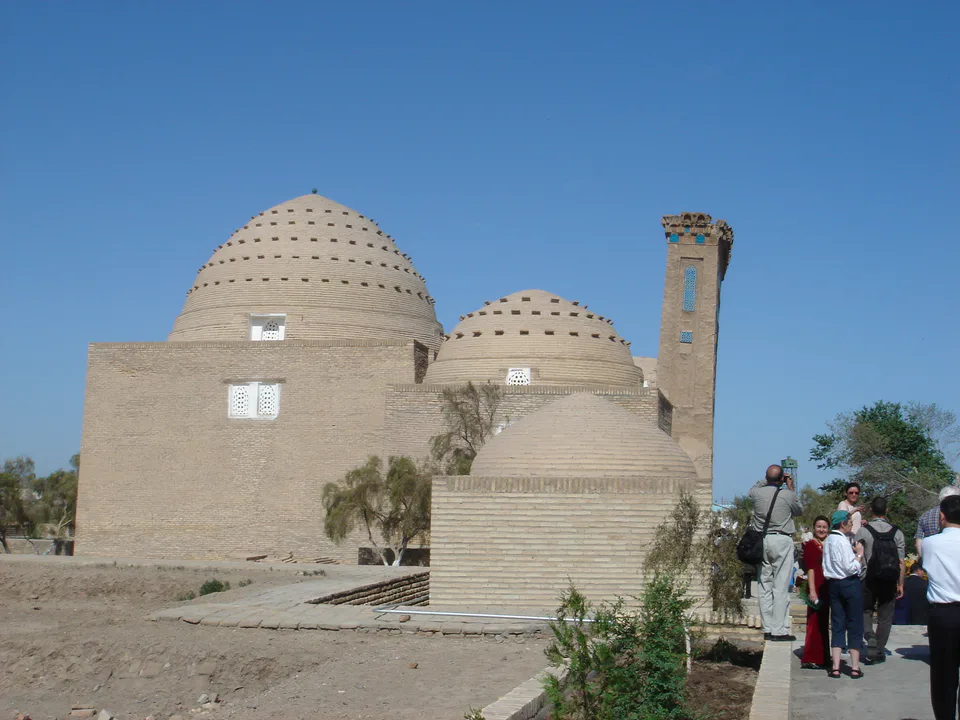
1145–1221
Sufi master, founder of the Kubrawiya order
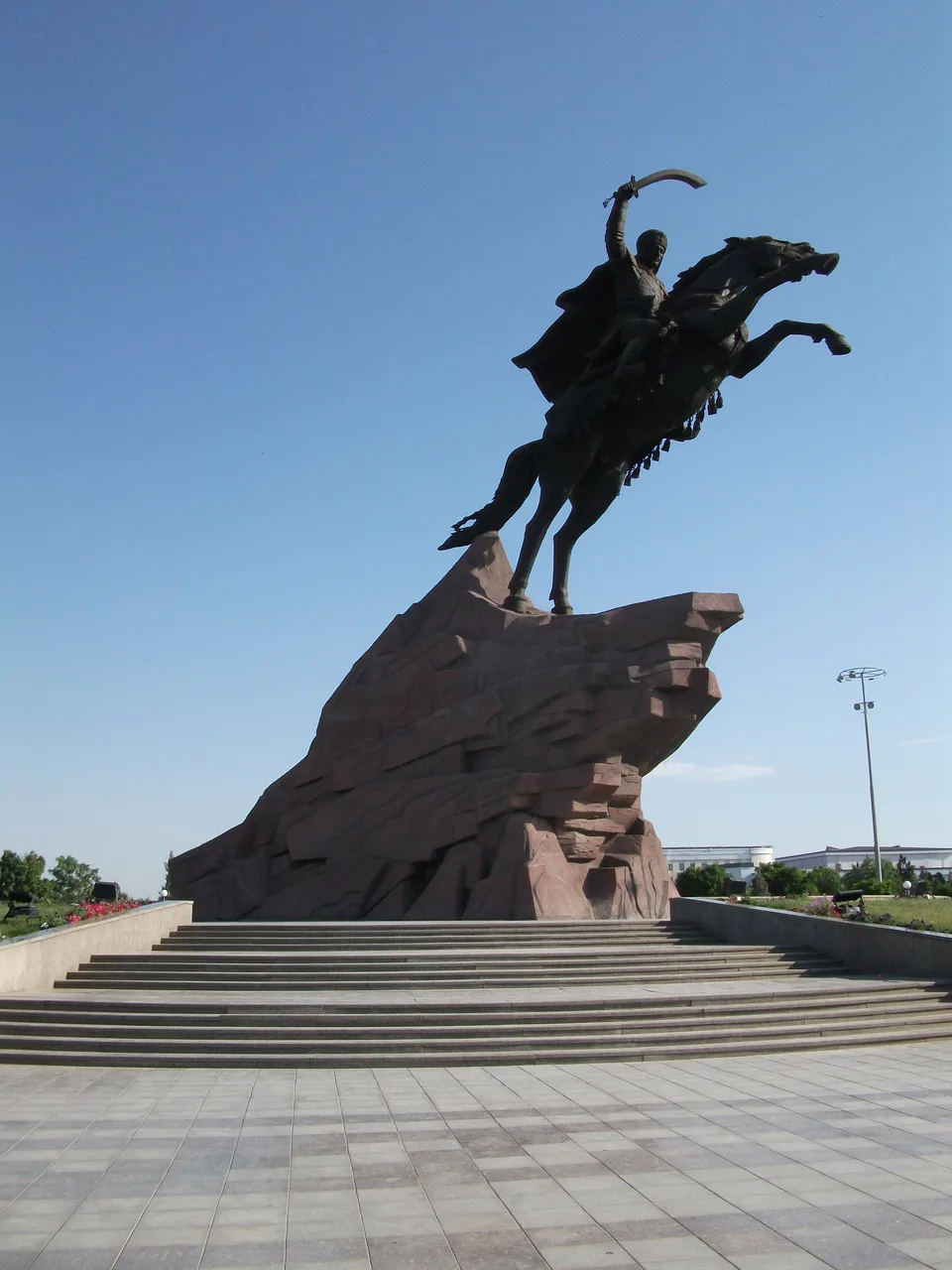
1199–1231
Last Khwarazmshah, military commander
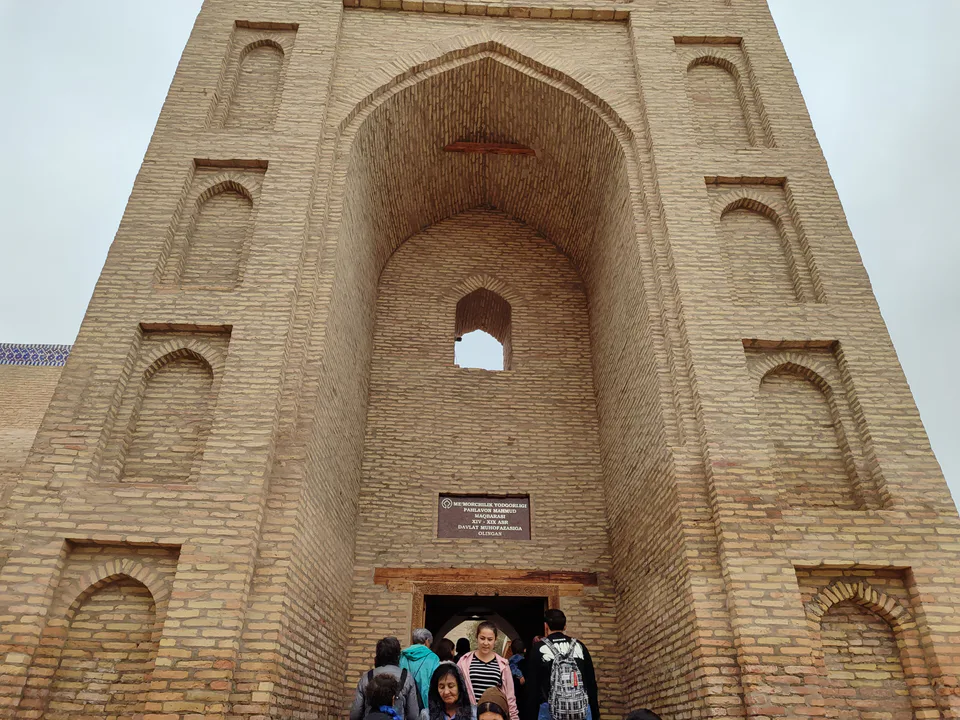
1247–1326
Poet, wrestler, Sufi, patron saint of Khiva
1603–1663
Khan of Khiva, historian
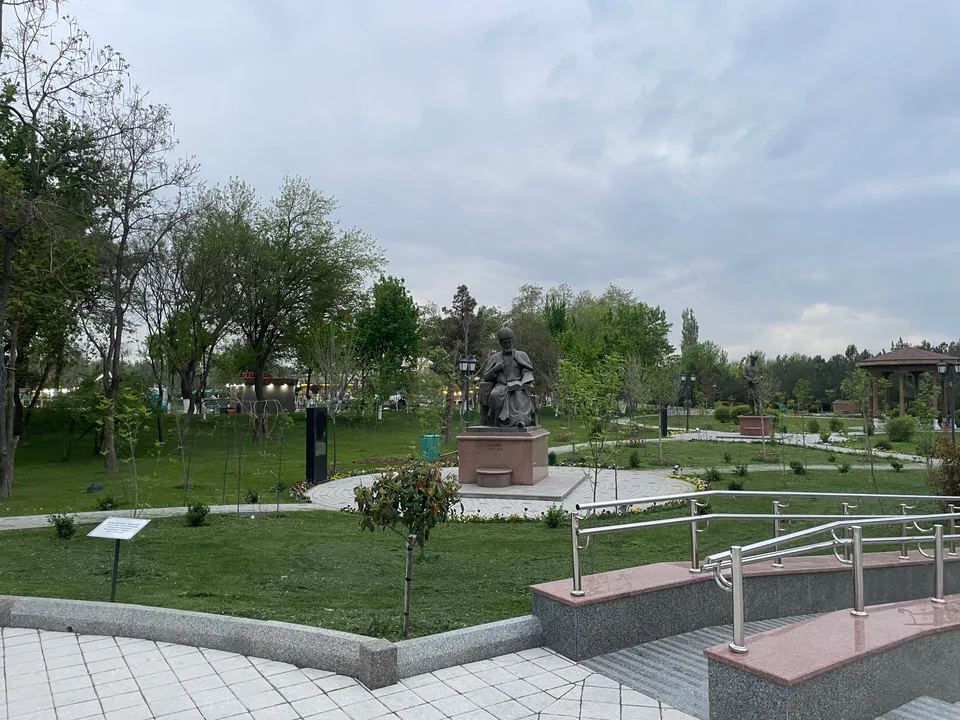
1809–1874
Poet, historian, translator
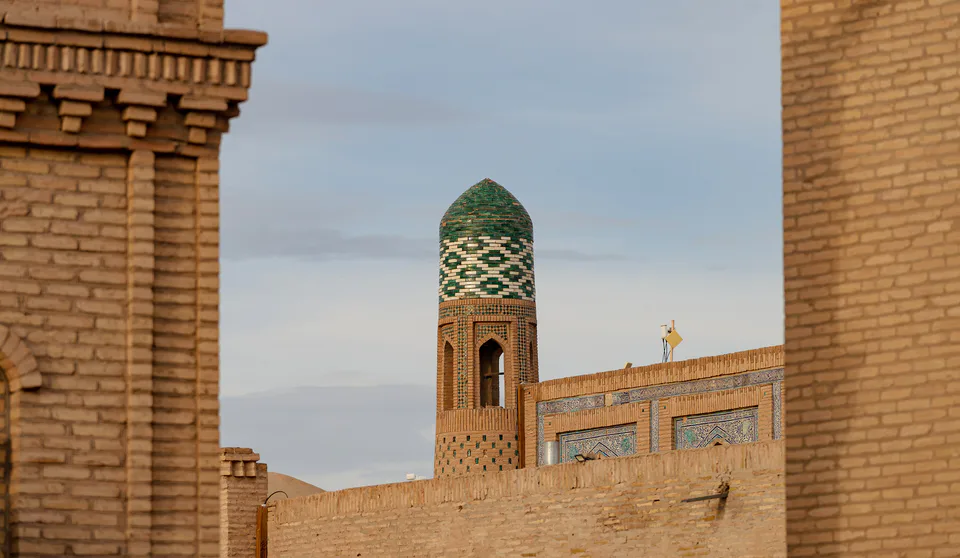
1845–1910
Khan of Khiva, poet, composer, patron of culture
8days
Classic
Tashkent (city)SamarkandBukharaKhorezm
14days
Grand tour
Tashkent (city)FerganaSamarkandKashkadaryaNavoiyBukharaKhorezmKarakalpakstan
4days
Expedition
KarakalpakstanKhorezm
Xorazm Region
Khokimiyat, public service centre and other offices: addresses, phones, hours.
All offices (49)Khokimiyat
29 Al-Khwarizmi St, Urgench
Read morePublic Service Centre
9/1 Khonqa St, Urgench
Read moreKhorezm regional comprehensive service centre · Urgench
106 Al-Khorazmiy Avenue, Urgench
+998 62 228 82 01Khorezm banking services office · Urgench
2 A. Qodiriy Street, Urgench 220100
+998 55 503 78 78Khorezm banking services centre · Urgench
104A Xonqa Street, Urgench 220100
+998 62 225 84 50Xorazm Region
Codes 220100–221209. The main code of each city and district:
All postcodes (78)Xorazm Region
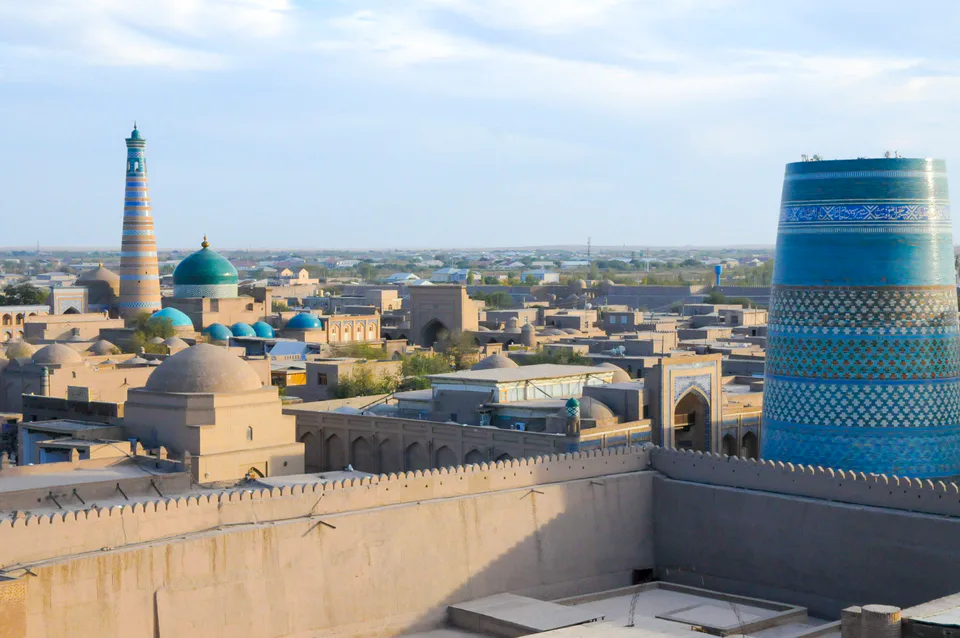
city · Khorezm’s last capital
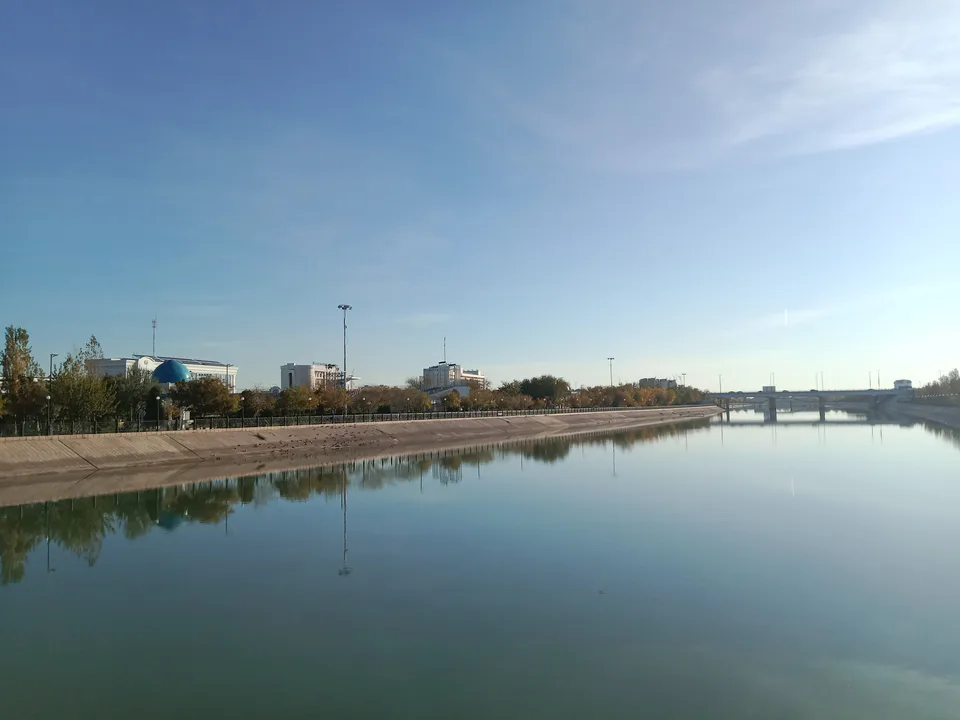
city · Regional capital and gateway to Khiva
district · A land of gardens and lakes
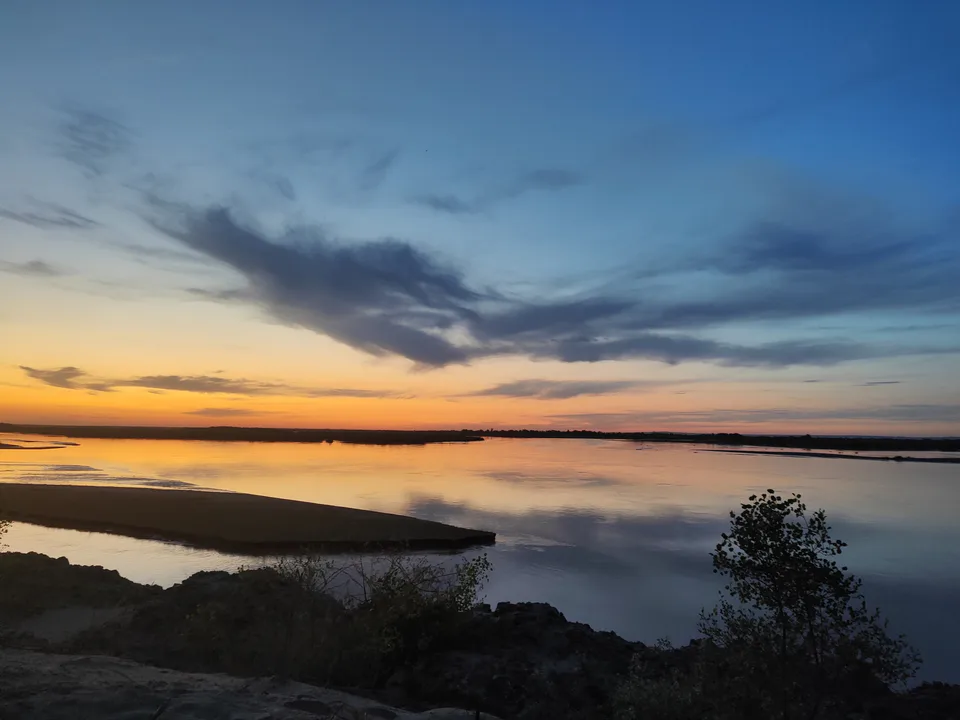
district · A northern district on the Amu Darya
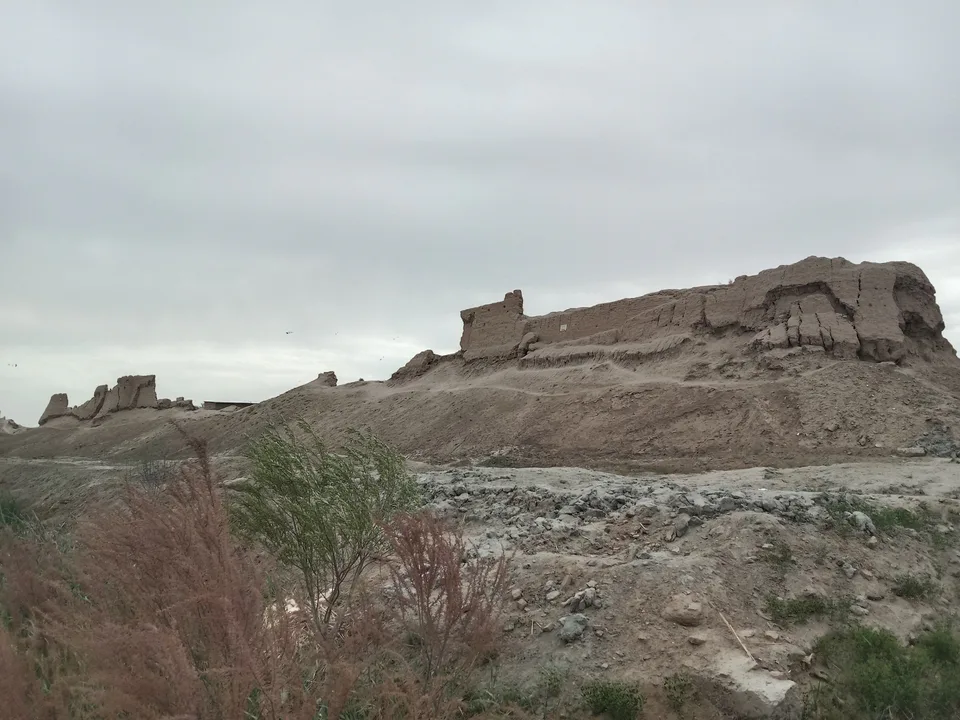
district · The “thousand horses” fortress and Khorezm’s eastern gate
district · The villages around ancient Khiva
district · The western district of the “twin bridges”
district · On Anusha Khan’s canal
district · Khorezm’s youngest and wildest district
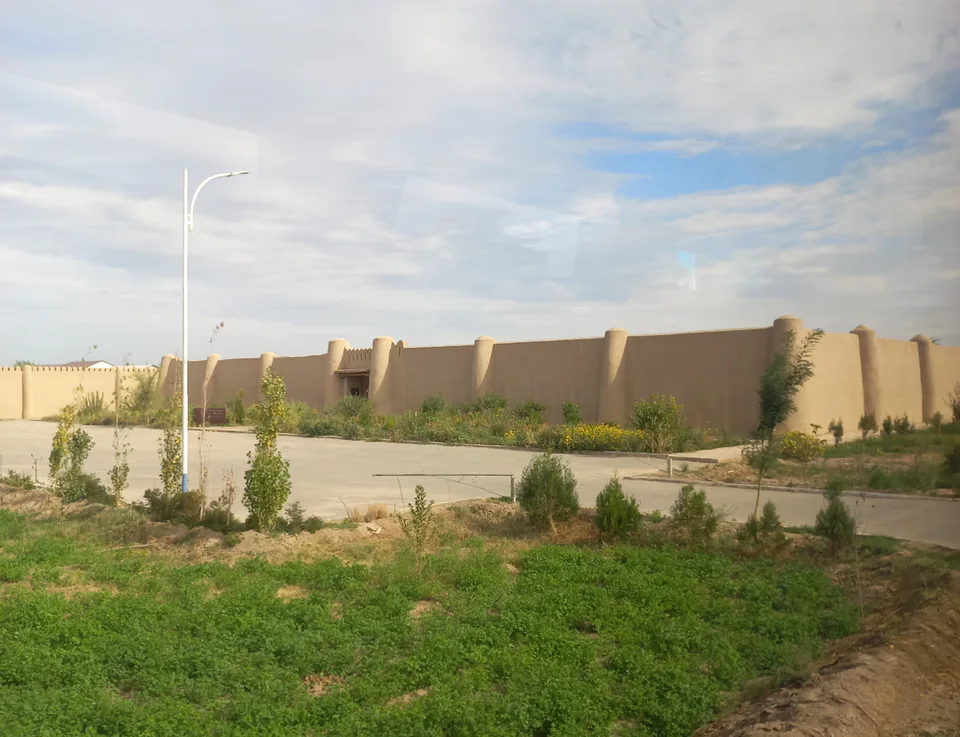
district · The villages around the regional capital
district · In the ancient Amu Darya delta
district · Home of the Sheikh Mukhtar Vali shrine
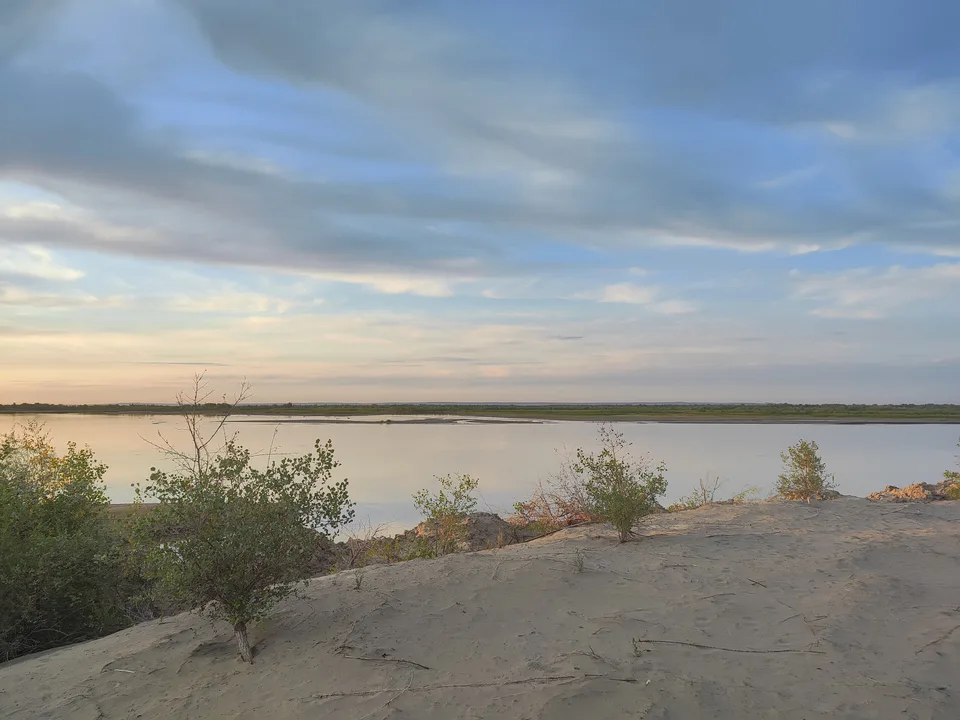
district · A small district on the Amu Darya