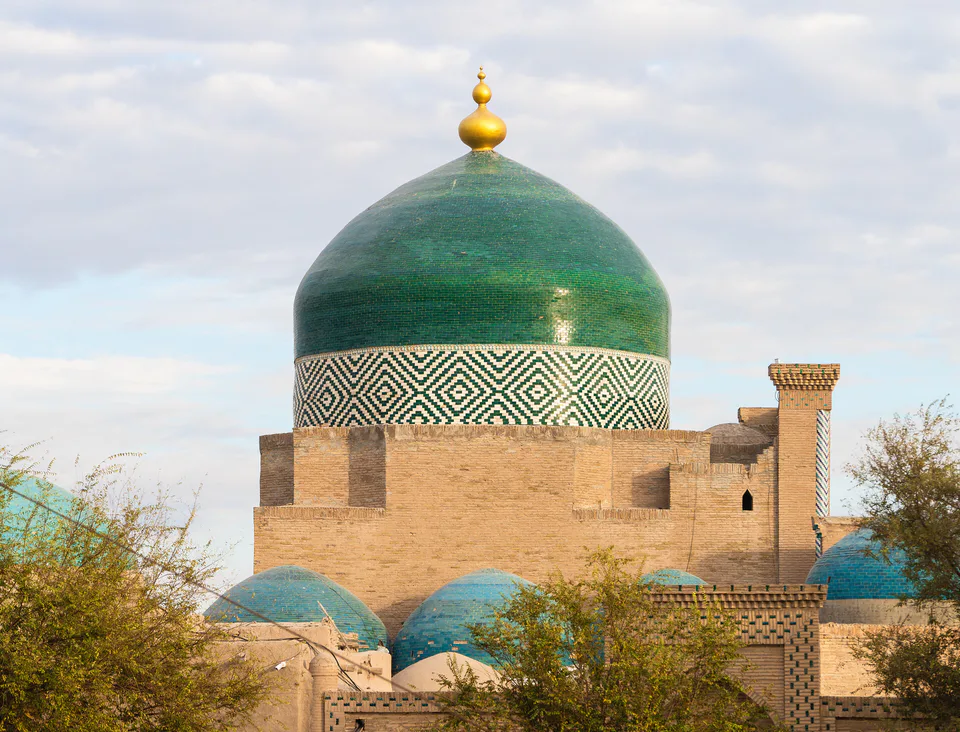
Mausoleum · Khiva
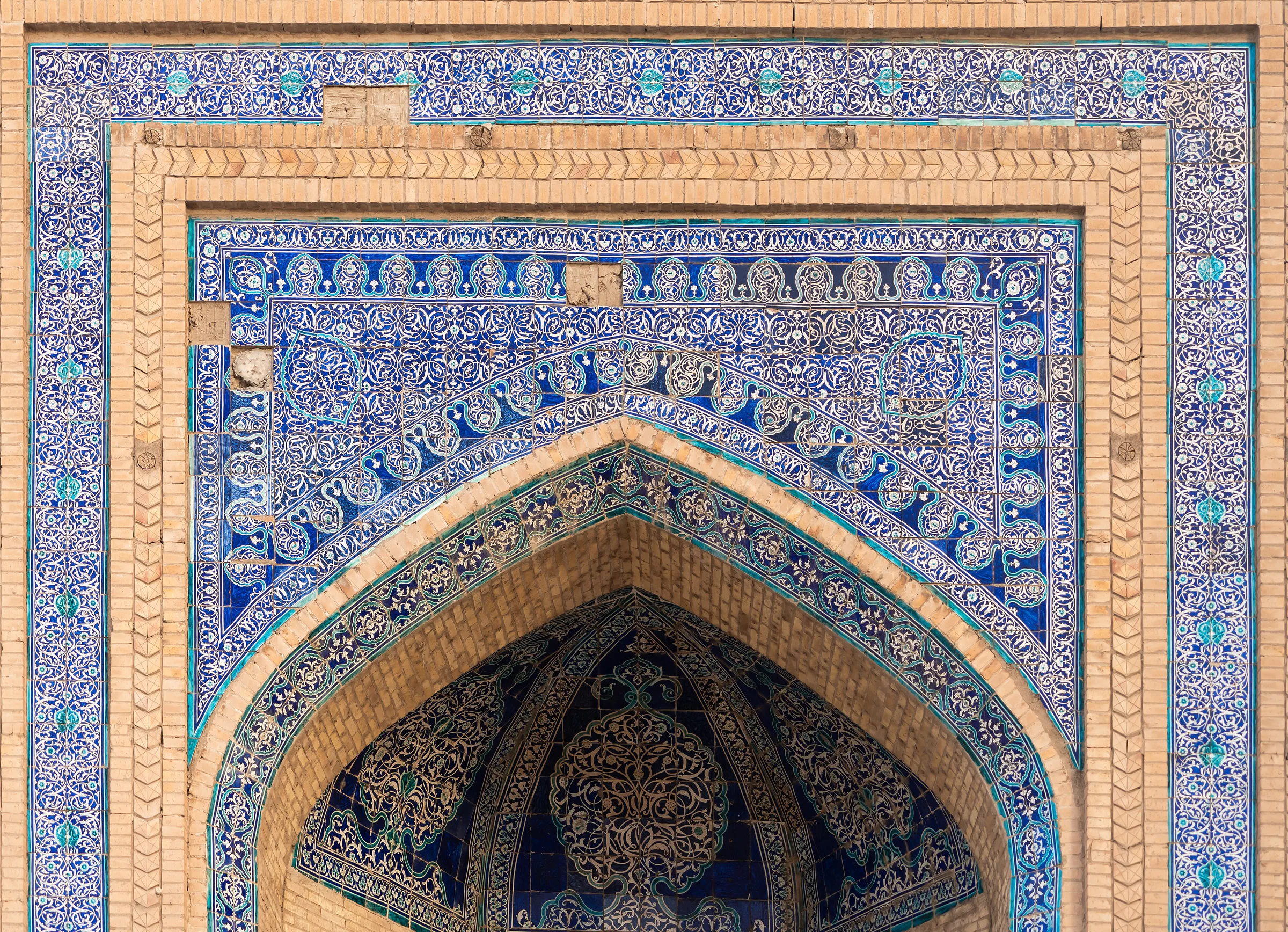
Pahlavon Mahmud Mausoleum
Poet, wrestler and patron saint of Khiva
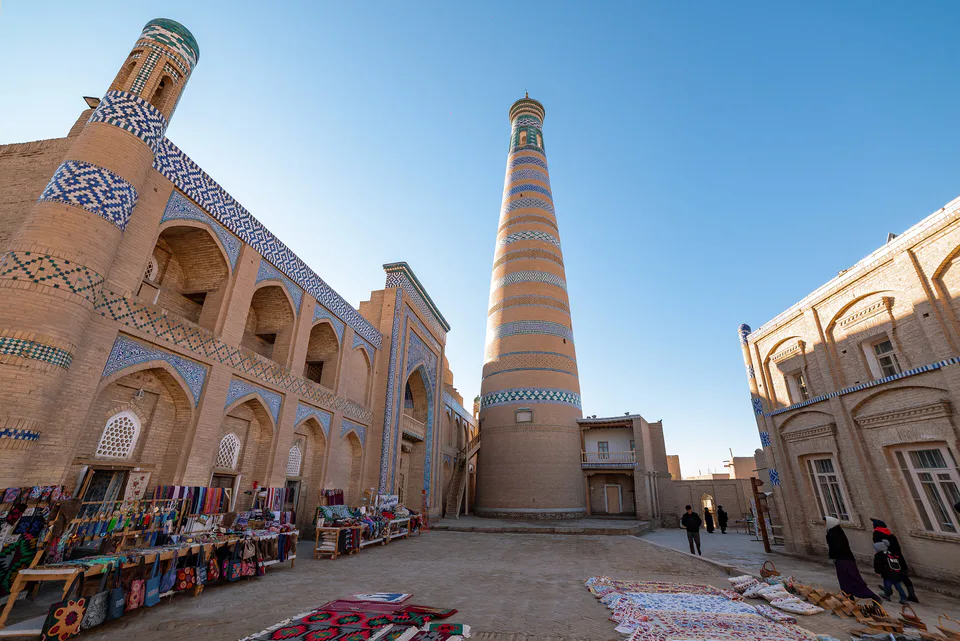
Minaret · Khiva
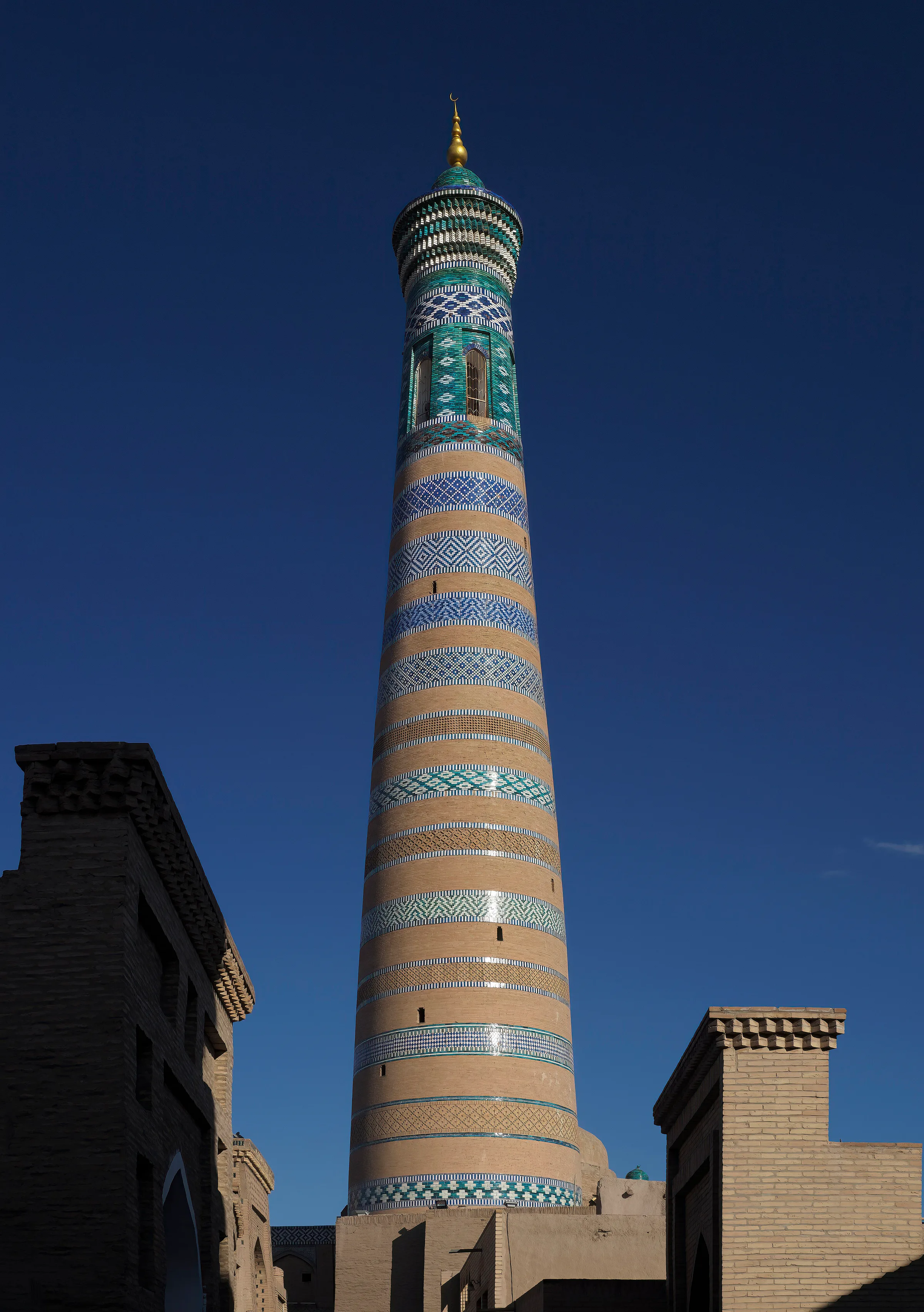
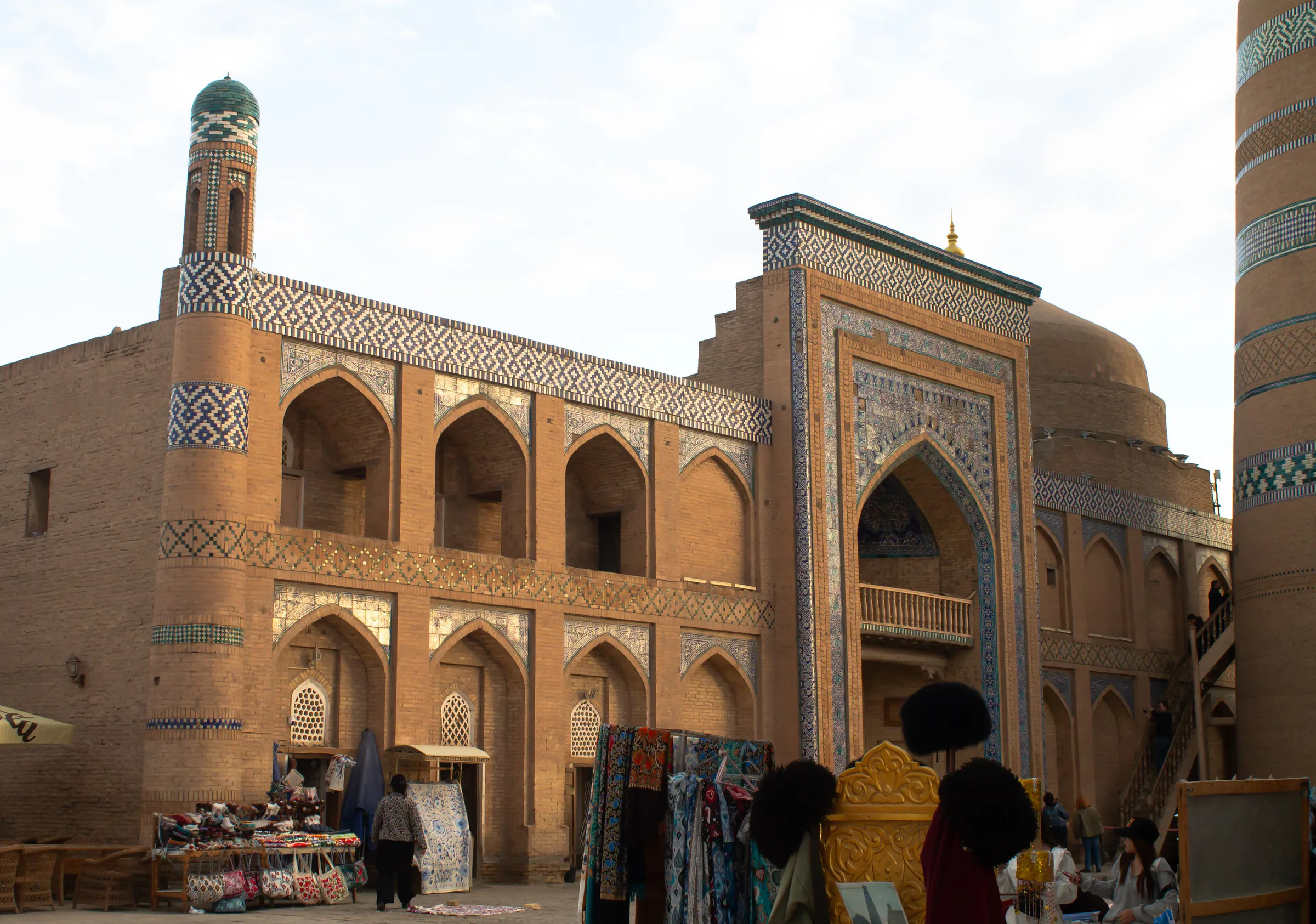
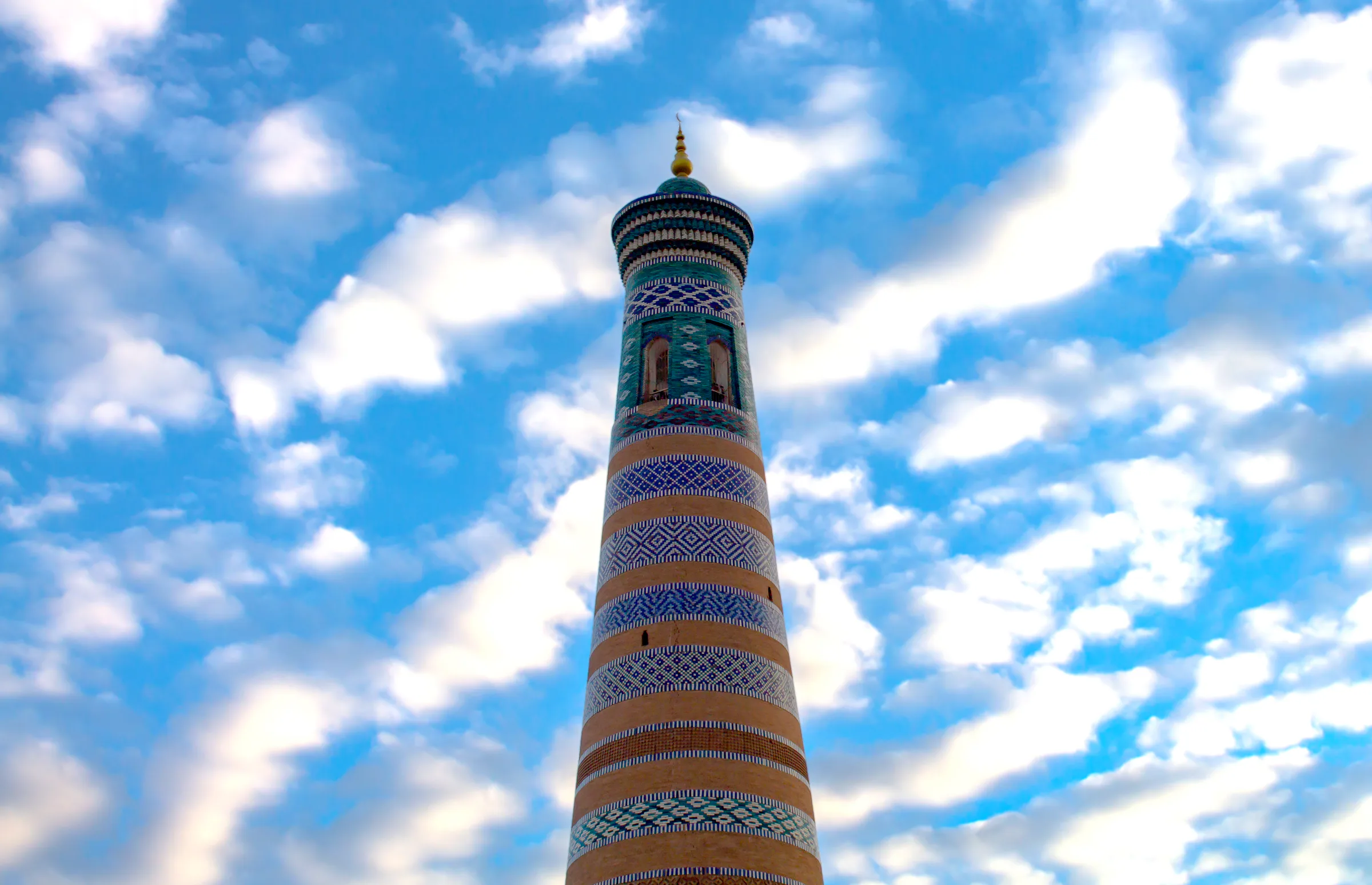
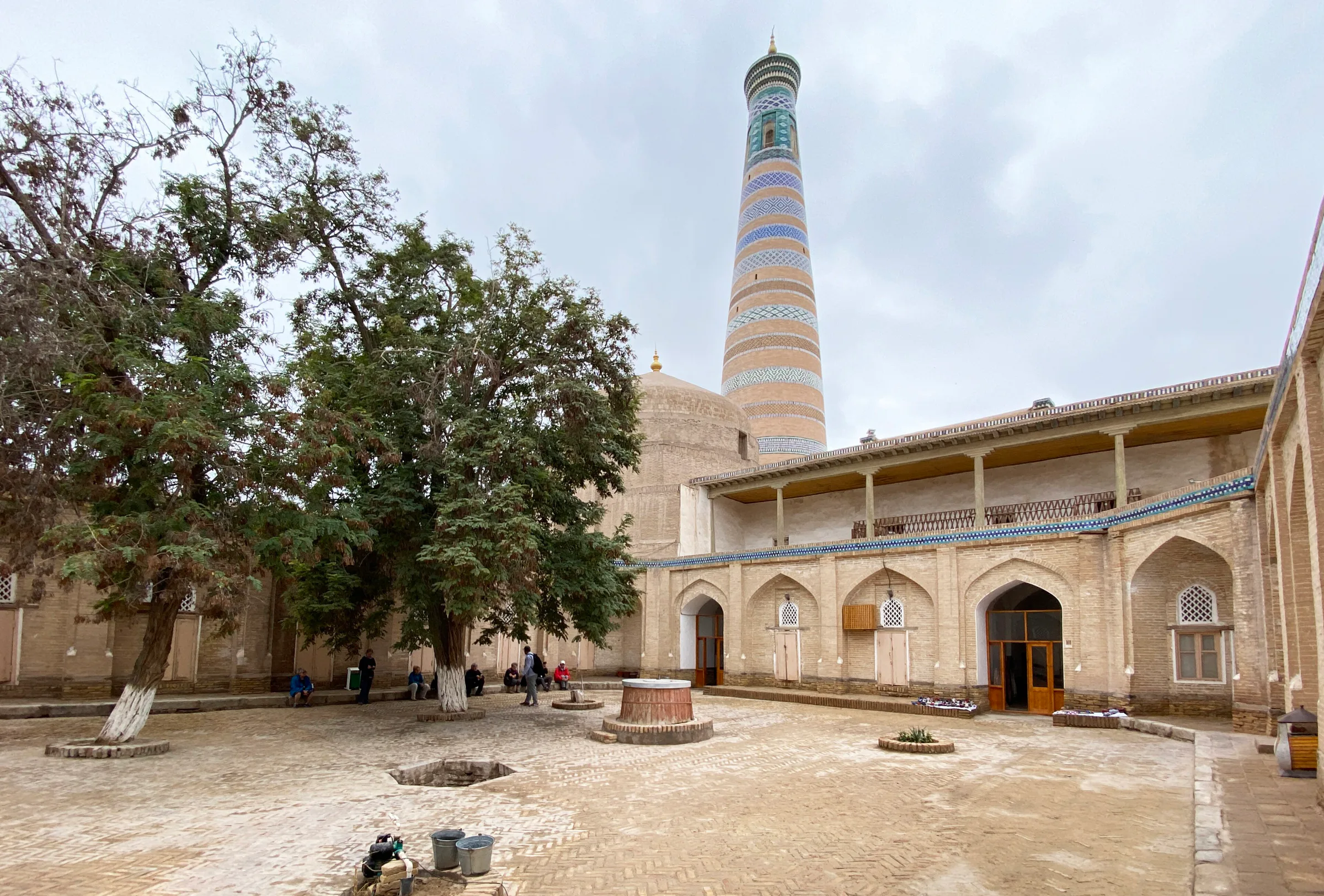
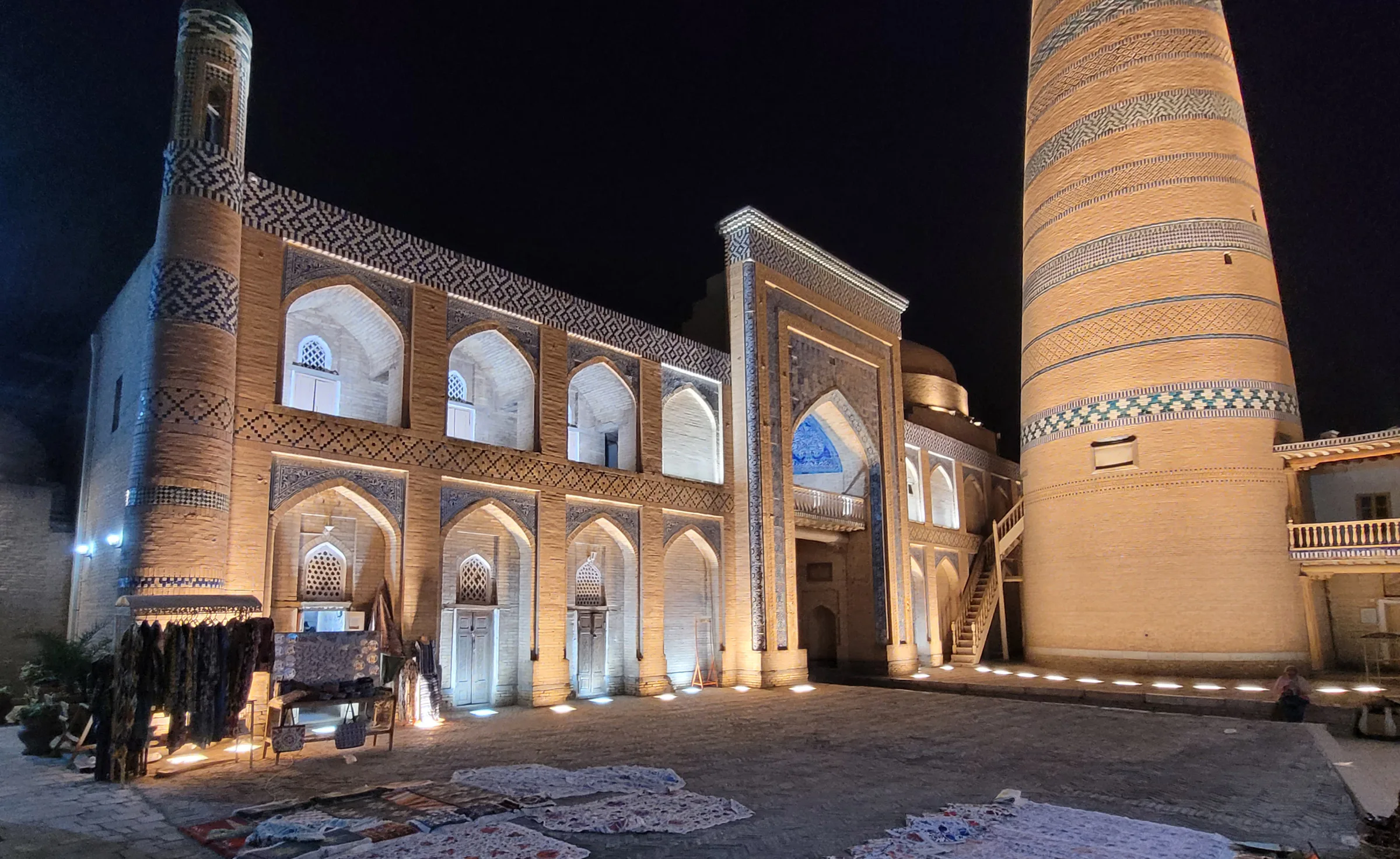
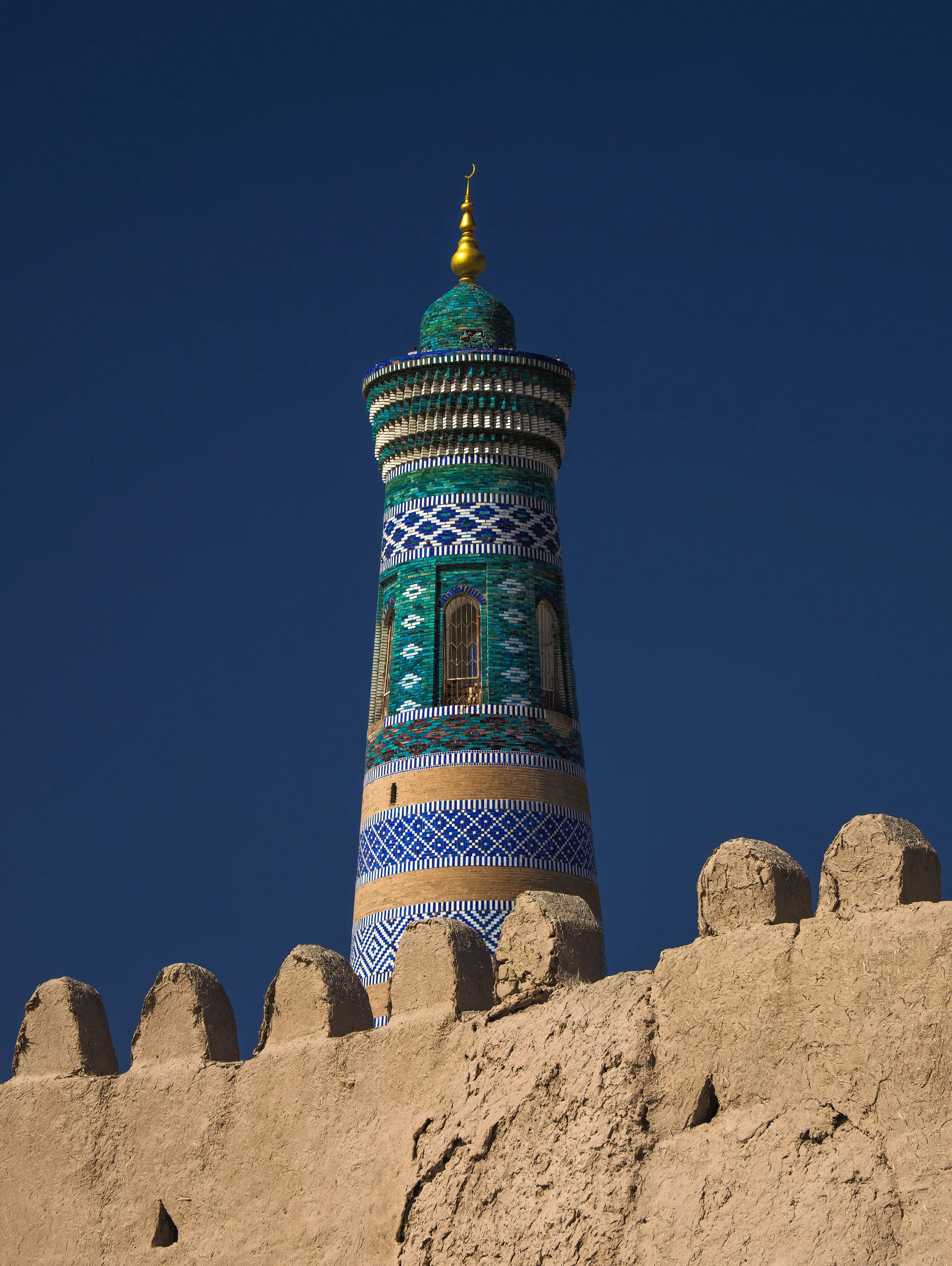
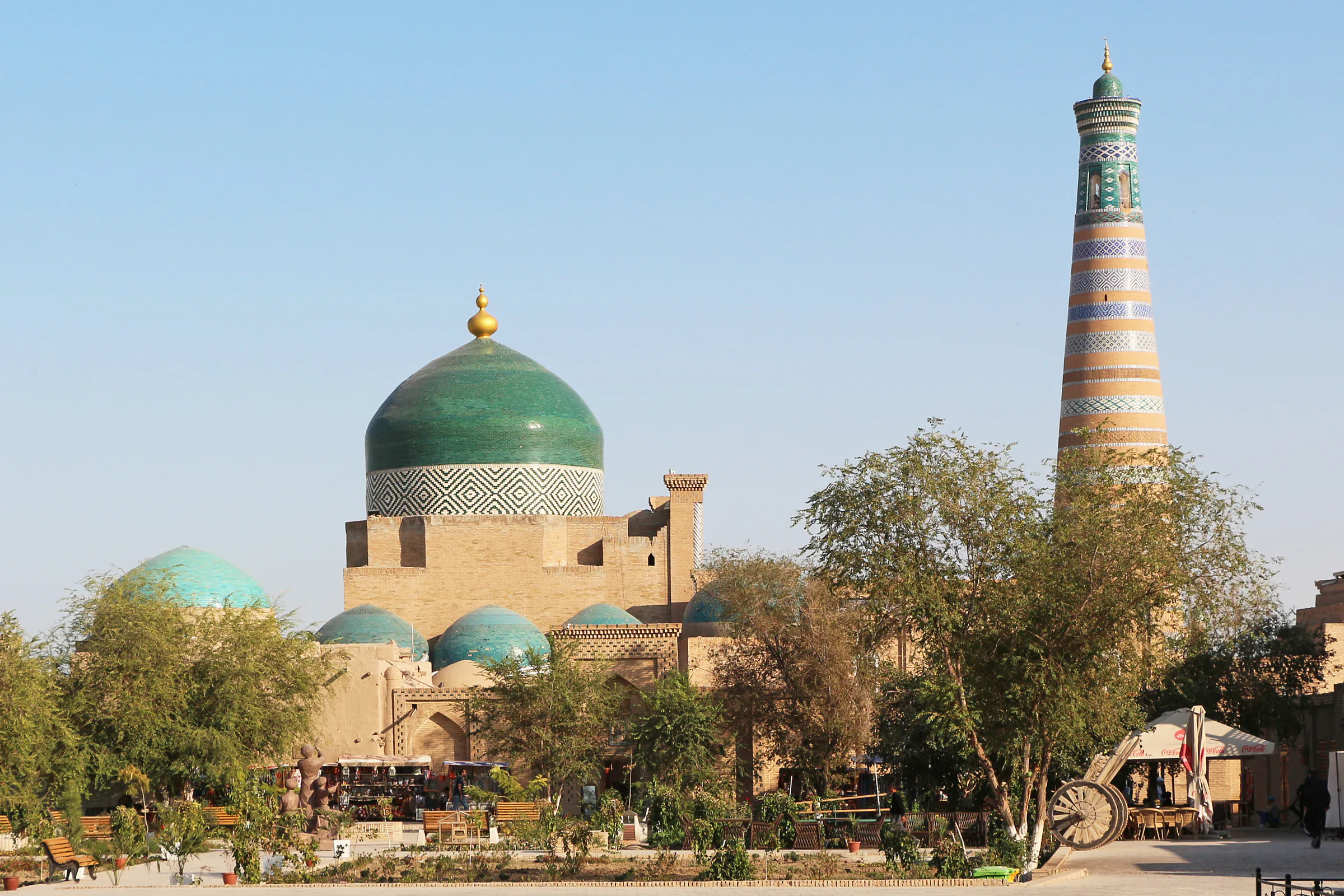
A complex built in 1908–1910 by the reforming vizier Islam Khodja: a 56.6-metre minaret visible from anywhere in town and a compact madrasa that now houses the Museum of Khorezm Applied Art.
Islam Khodja was father-in-law and grand vizier to Isfandiyar Khan of Khiva. Having travelled to Russia and Europe, he pushed for modernisation at home: he was behind Khiva’s hospital, post and telegraph office, the Kosh Gate, Isfandiyar Khan’s reception hall in the Nurullabay Palace and new iron bridges in Khorezm. His reforms angered conservative clergy and rivals at court, and he was assassinated in 1913.
Work on the madrasa and minaret began in 1908 and finished in 1910 under the noted master builder Khudoybergan Haji, with ornament by Eshmuhammad Khudoyberdiyev and Bolta Voisov. Islam Khodja endowed the school with extensive lands from his own estate.
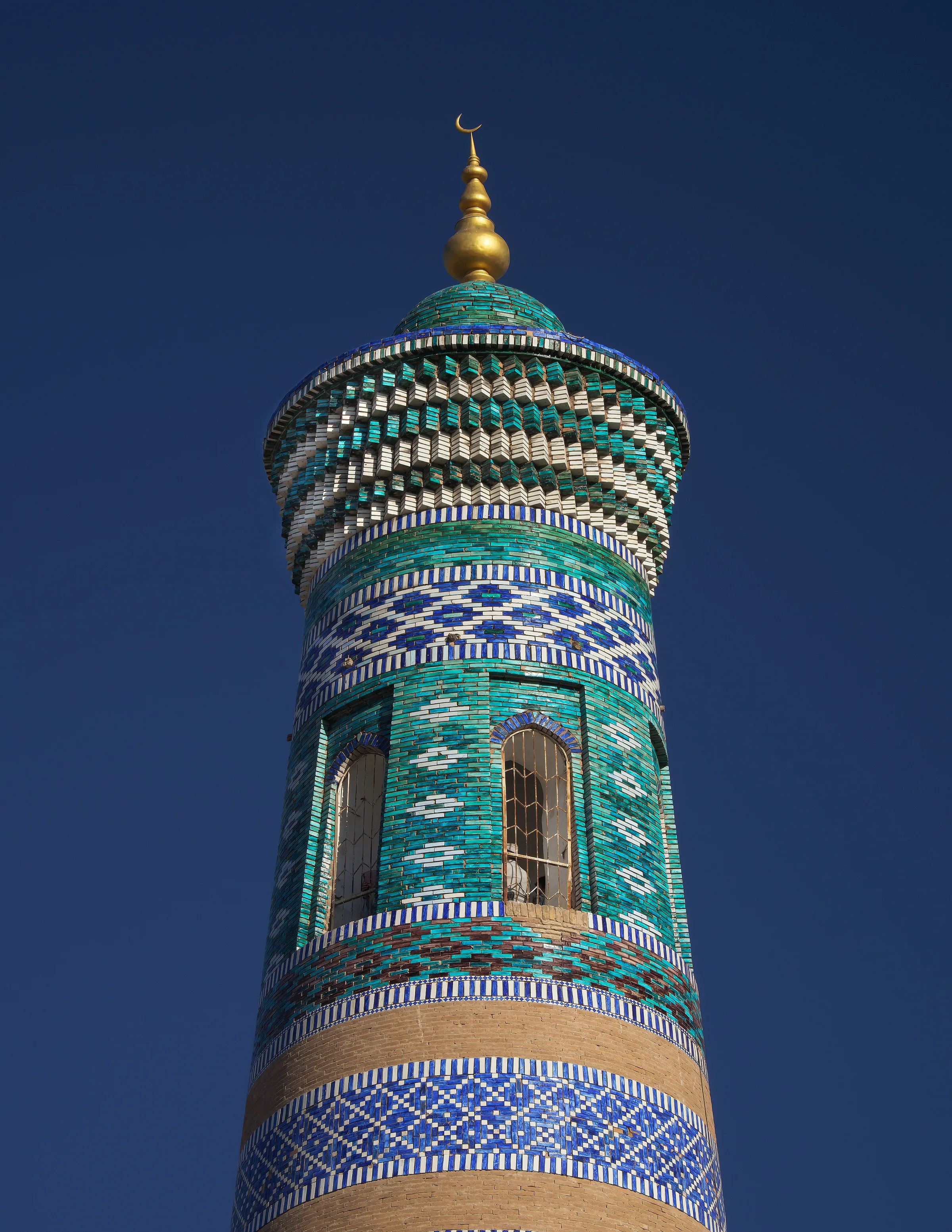
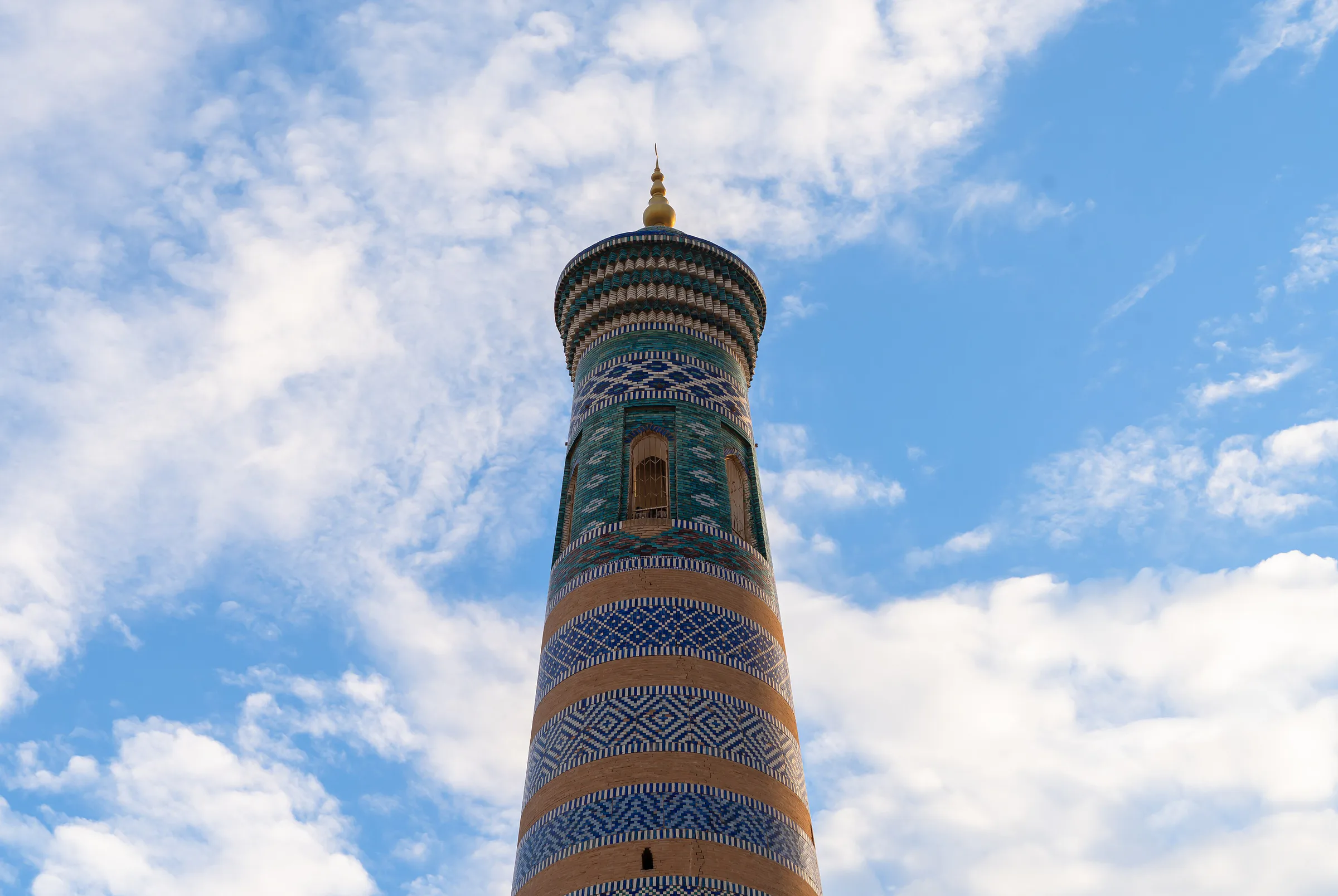
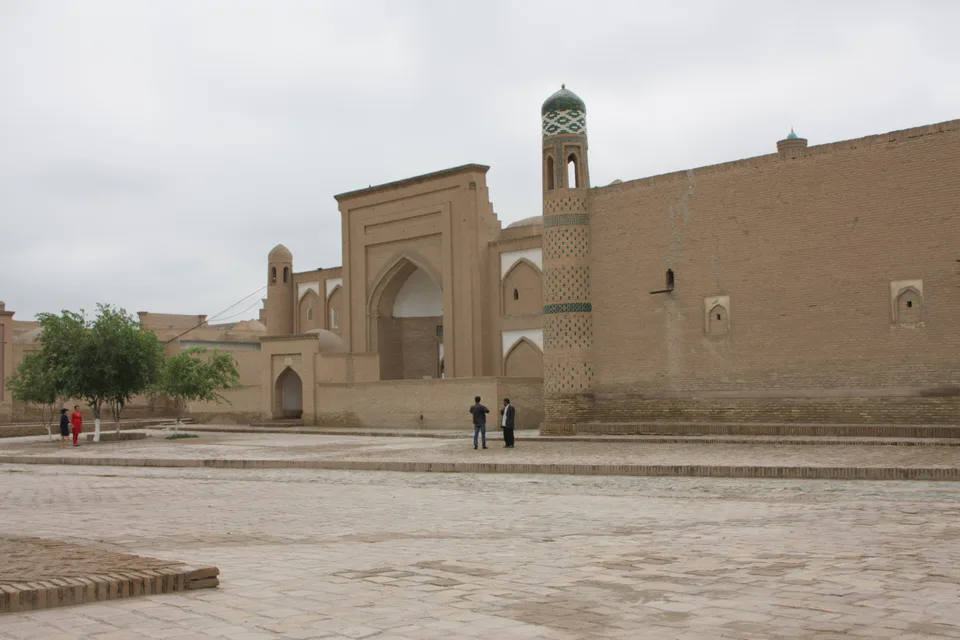
Most sources give the minaret’s height as 56.6 metres, with a base 9.5 metres across, making it the tallest structure in Khiva. The shaft tapers gently and is ringed with alternating bands of blue, turquoise and white glaze, so from a distance it looks striped. A brick spiral staircase climbs to the lantern gallery perched on a muqarnas cornice.
It served as a watchtower as well as a place for the call to prayer, and the khan’s decrees were read out on the square nearby. Today it is the highest viewpoint in Itchan Kala, looking out over the roofs and domes of Khiva, Dishan Kala and the edge of the Karakum Desert.
The madrasa is small — about 42.8 by 32.5 metres, with 42 cells. A domed mosque beside the entrance has a mihrab decorated with majolica and carved plaster, and an upper-floor iwan on wooden columns faces the courtyard. It now holds the Museum of Khorezm Applied Art: woodcarving, metalwork, carpets, stones with early Arabic inscriptions, storage jars, household objects and coins.
The Islam Khodja complex is one of the last major religious buildings in Khiva, raised under the Russian protectorate only a few years before the khanate ended. Yet the builders stayed true to Khivan tradition: the minaret’s form and tiled bands continue a local school centuries in the making.
Mausoleum · Khiva
Poet, wrestler and patron saint of Khiva
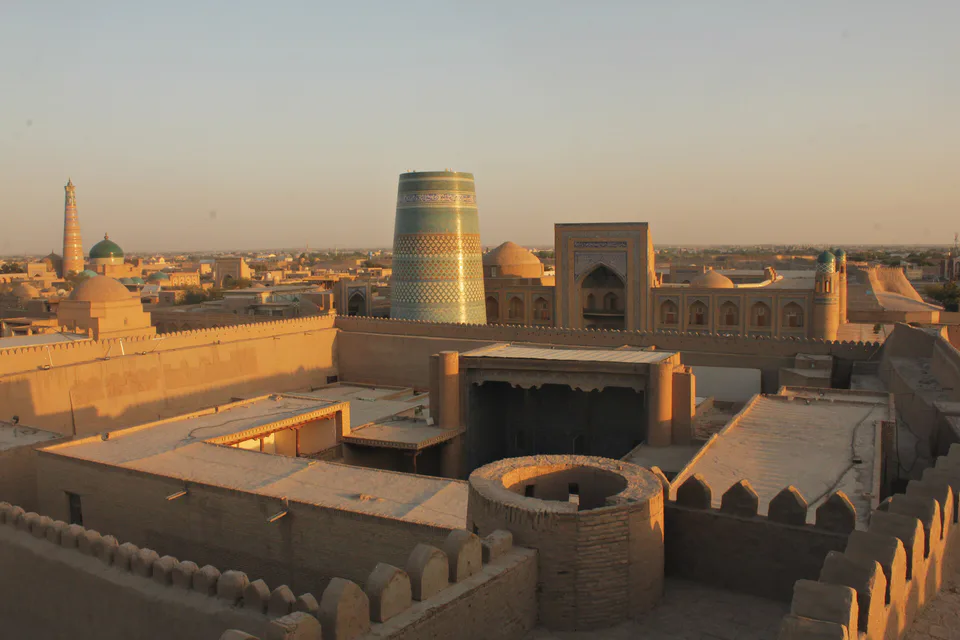
Ensemble · Khiva
A walled museum-city where people still live
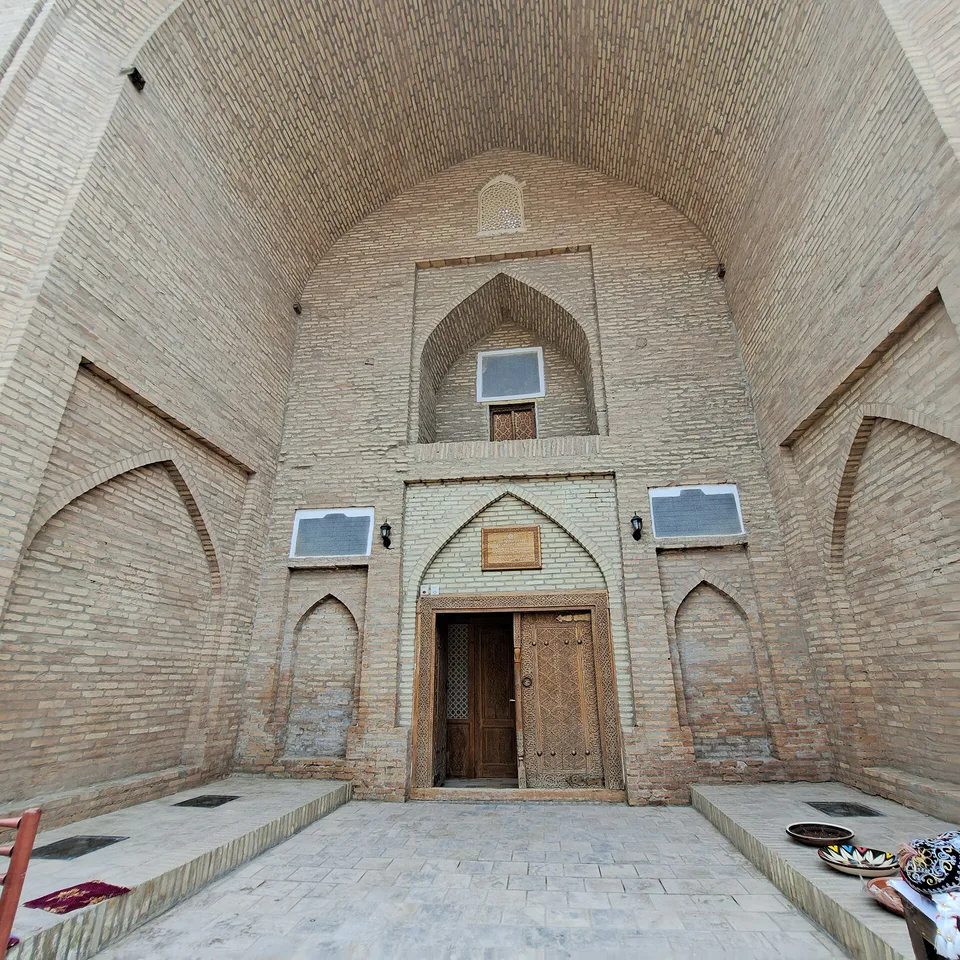
Madrasa · Khiva
The “abode of scholars” where Magtymguly and Ajiniyaz studied
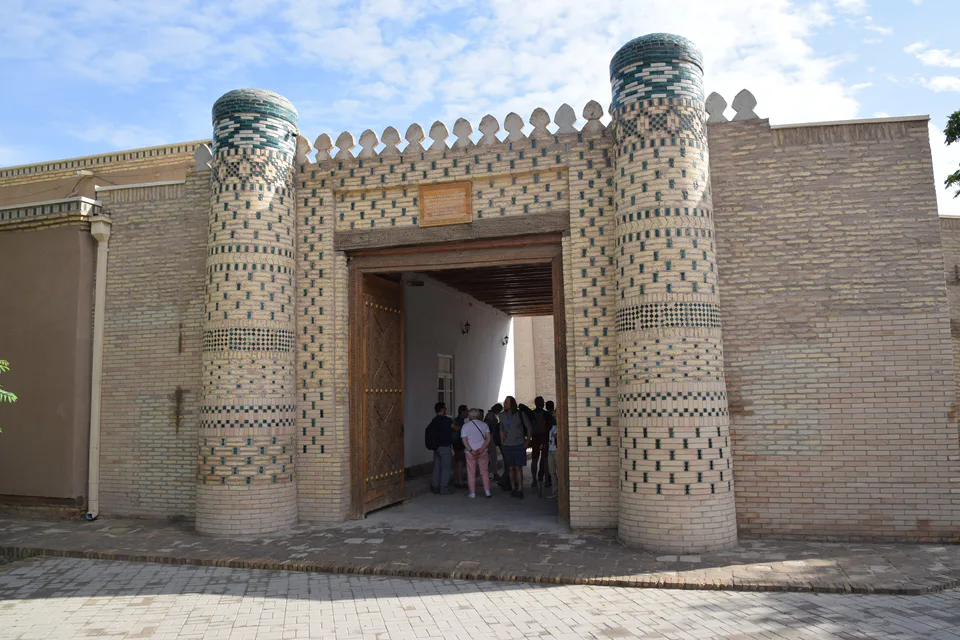
Ensemble · Khiva
The last khan’s palace, where East met Europe
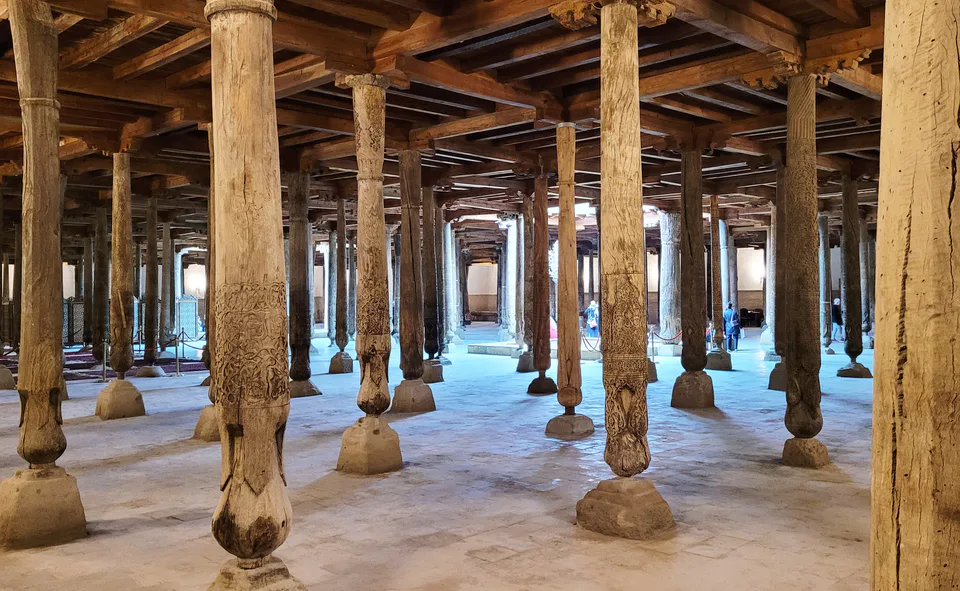
Mosque · Khiva
A forest of thousand-year-old pillars
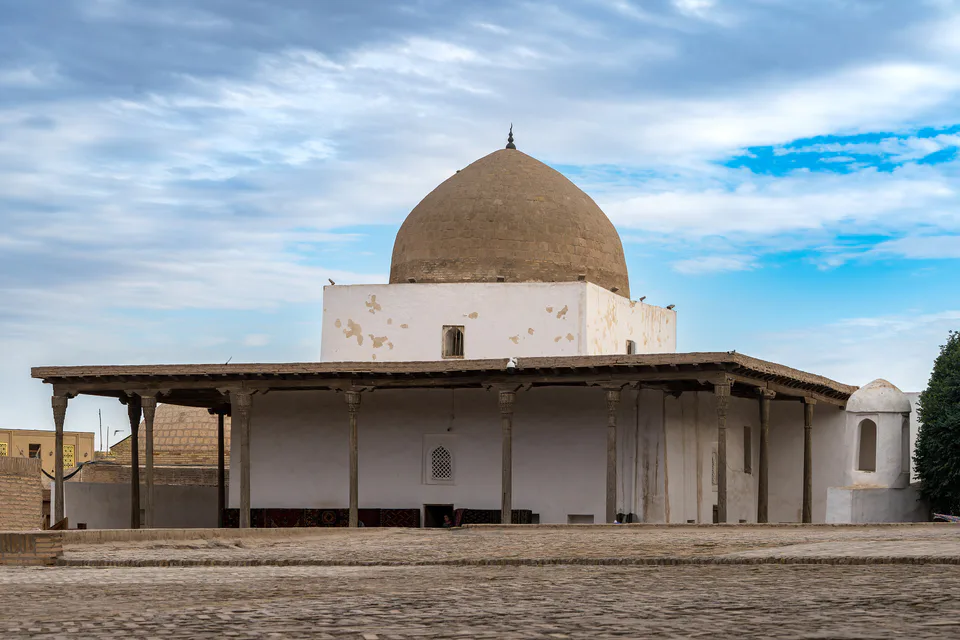
Mosque · Khiva
The White Mosque with carved doors
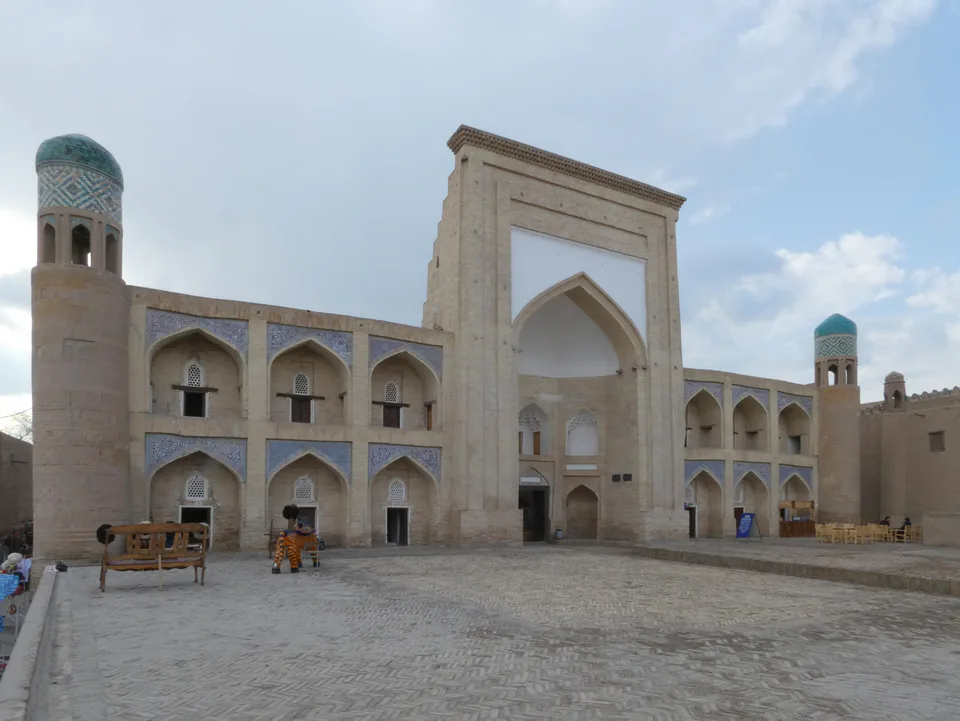
Madrasa · Khiva
Khiva’s first two-storey madrasa
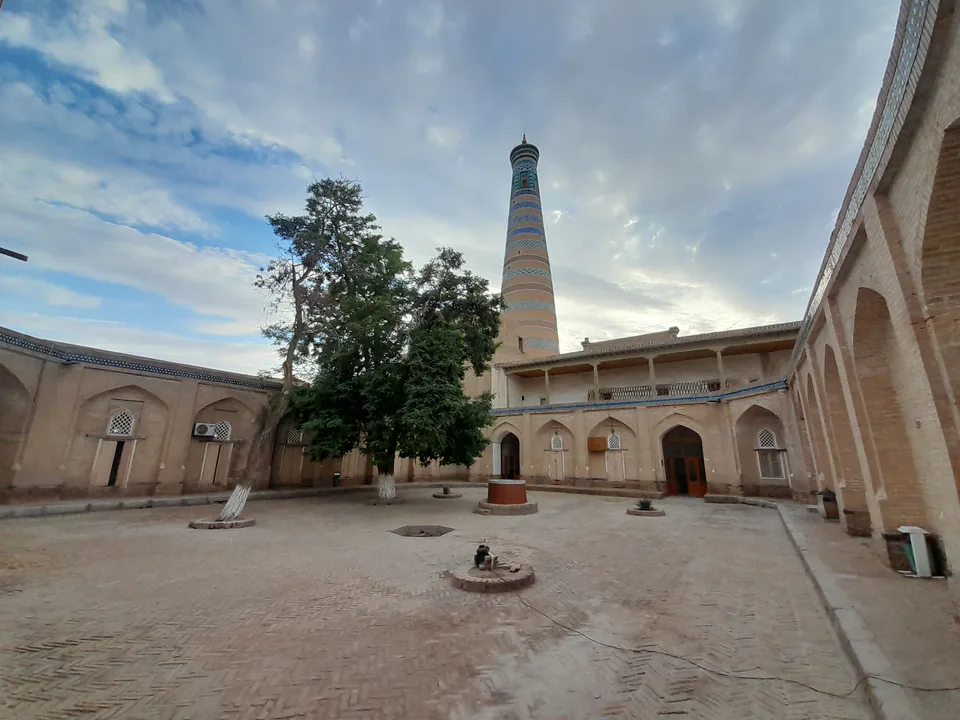
Madrasa · Khiva
Home of the Museum of Khorezm Music
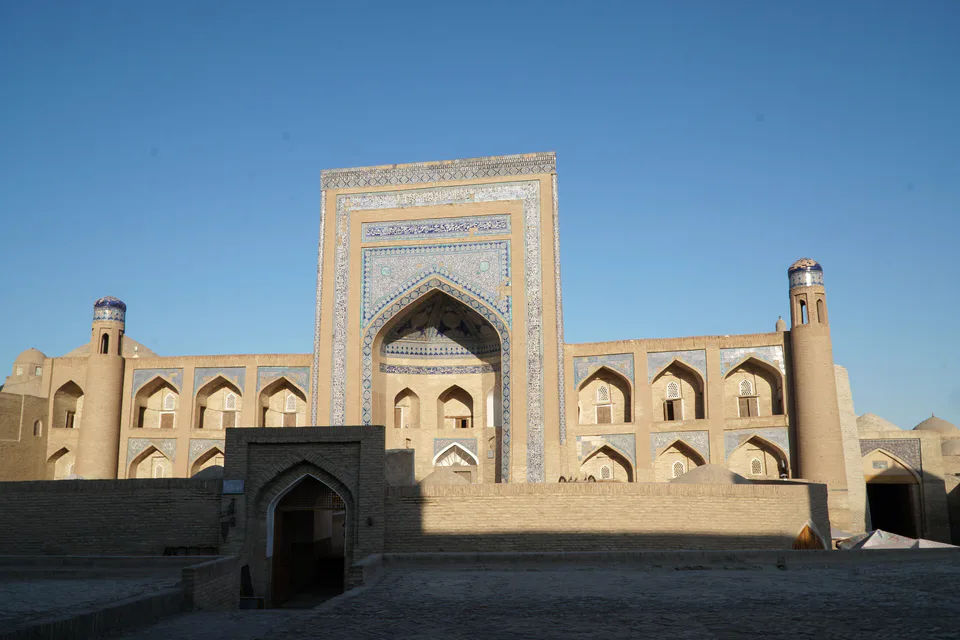
Madrasa · Khiva
The madrasa that held Khiva’s library
Madrasa · Khiva
The first madrasa after the capital moved to Khiva