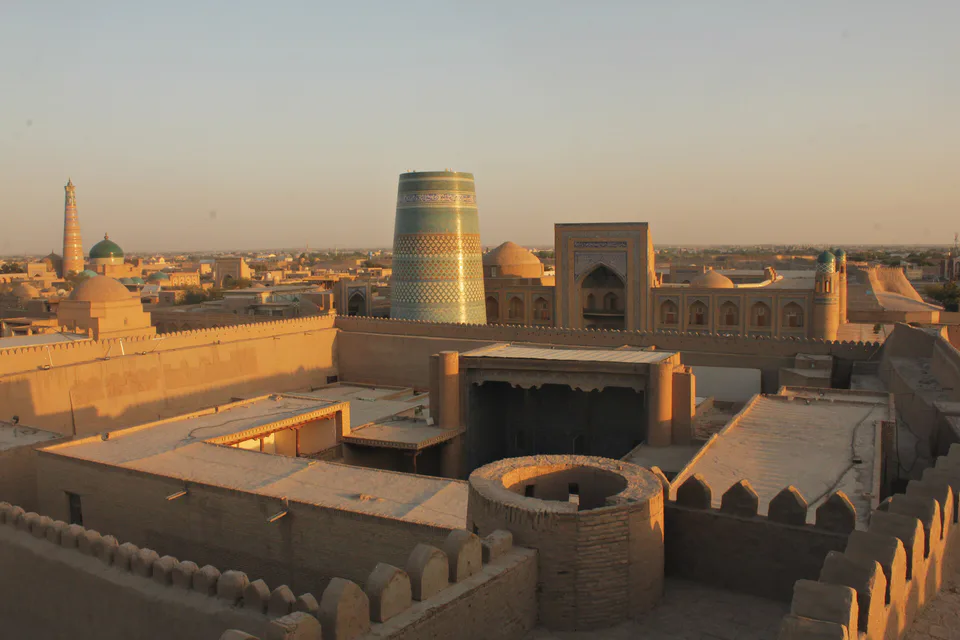
Ensemble · Khiva
Itchan Kala
A walled museum-city where people still live
Mosque · Khiva
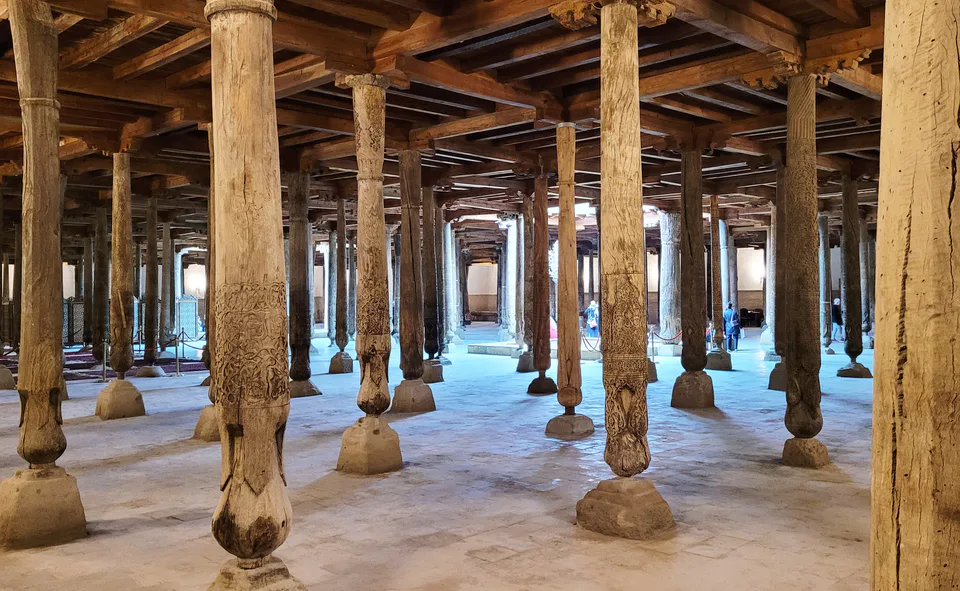
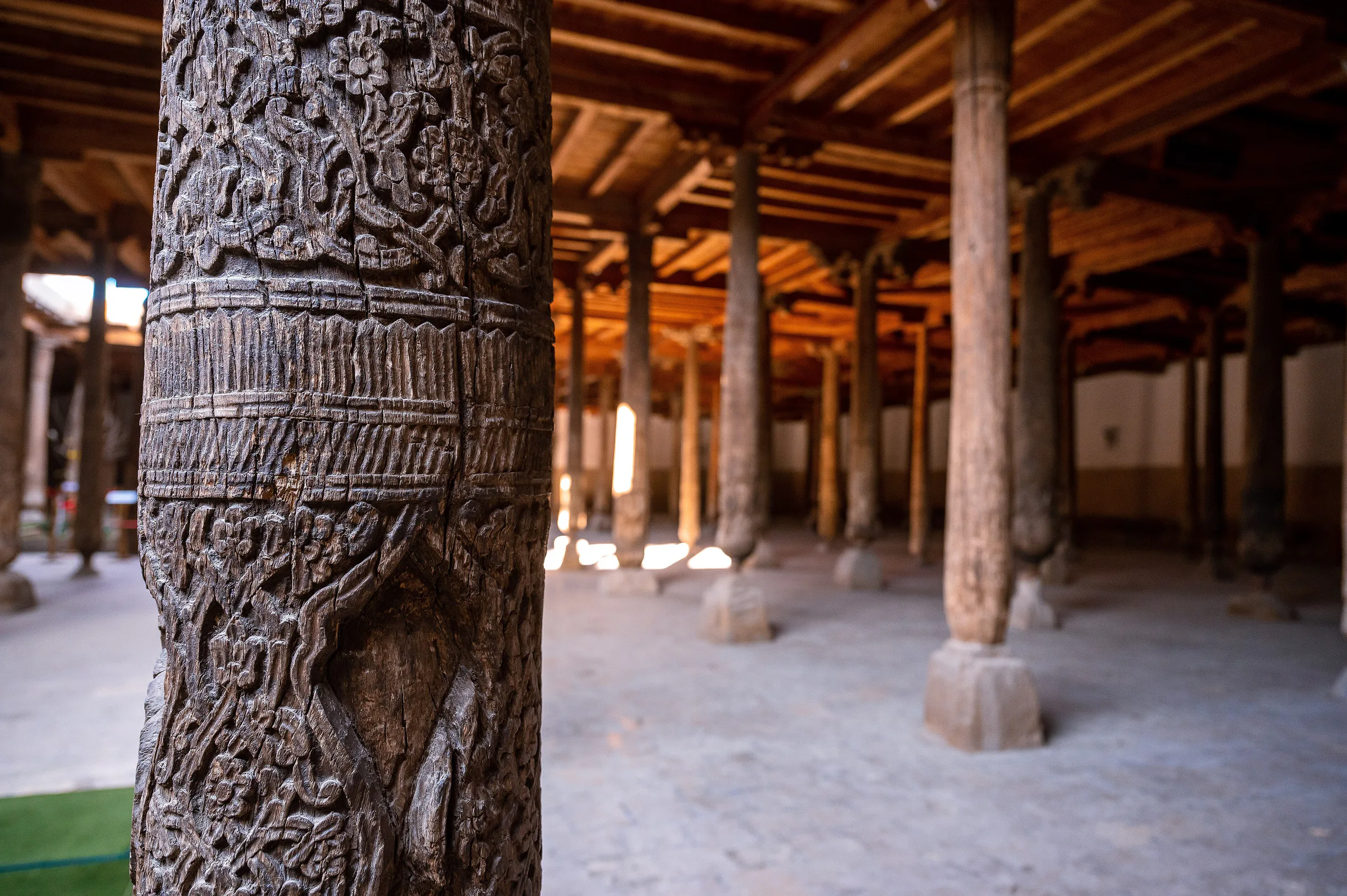
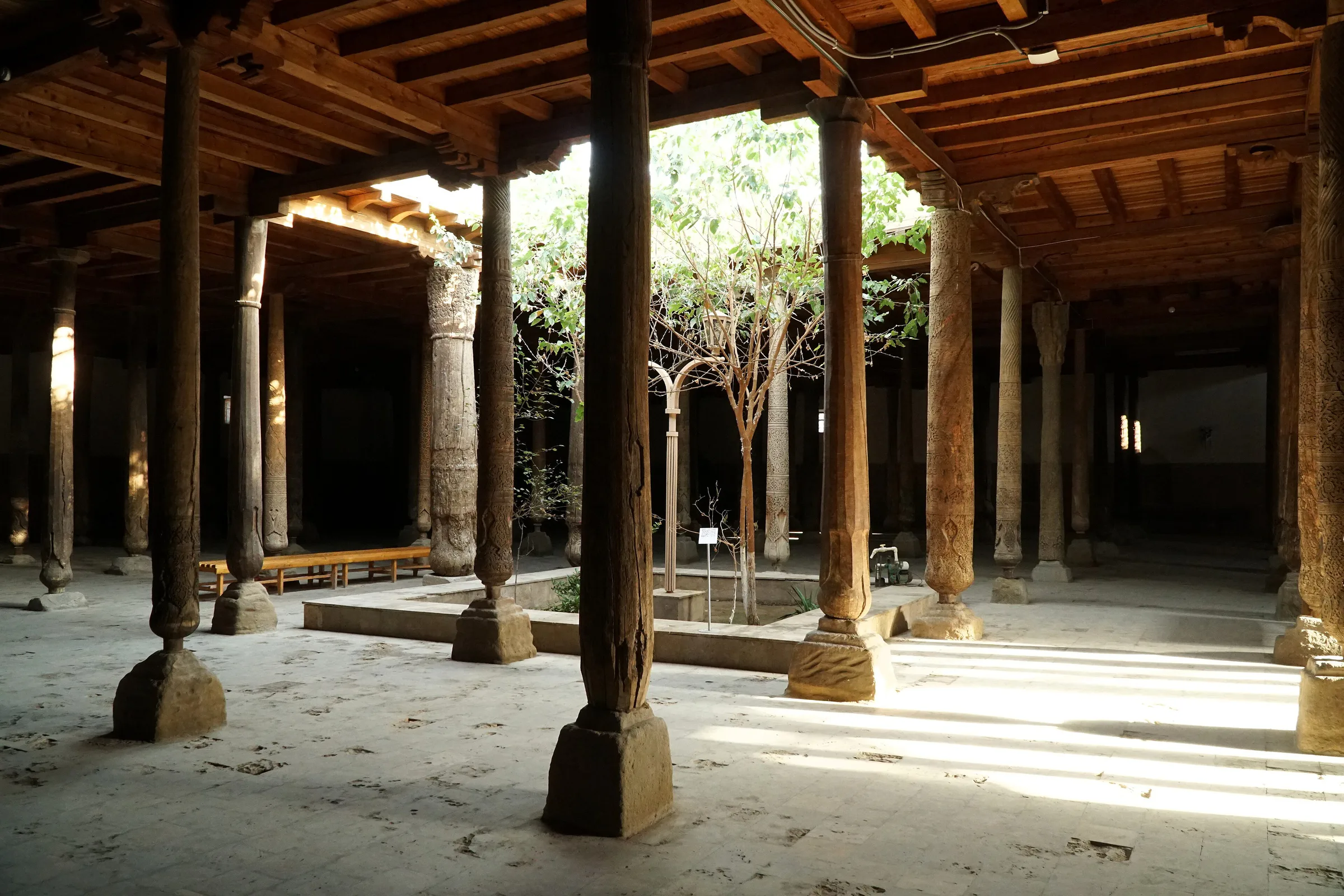
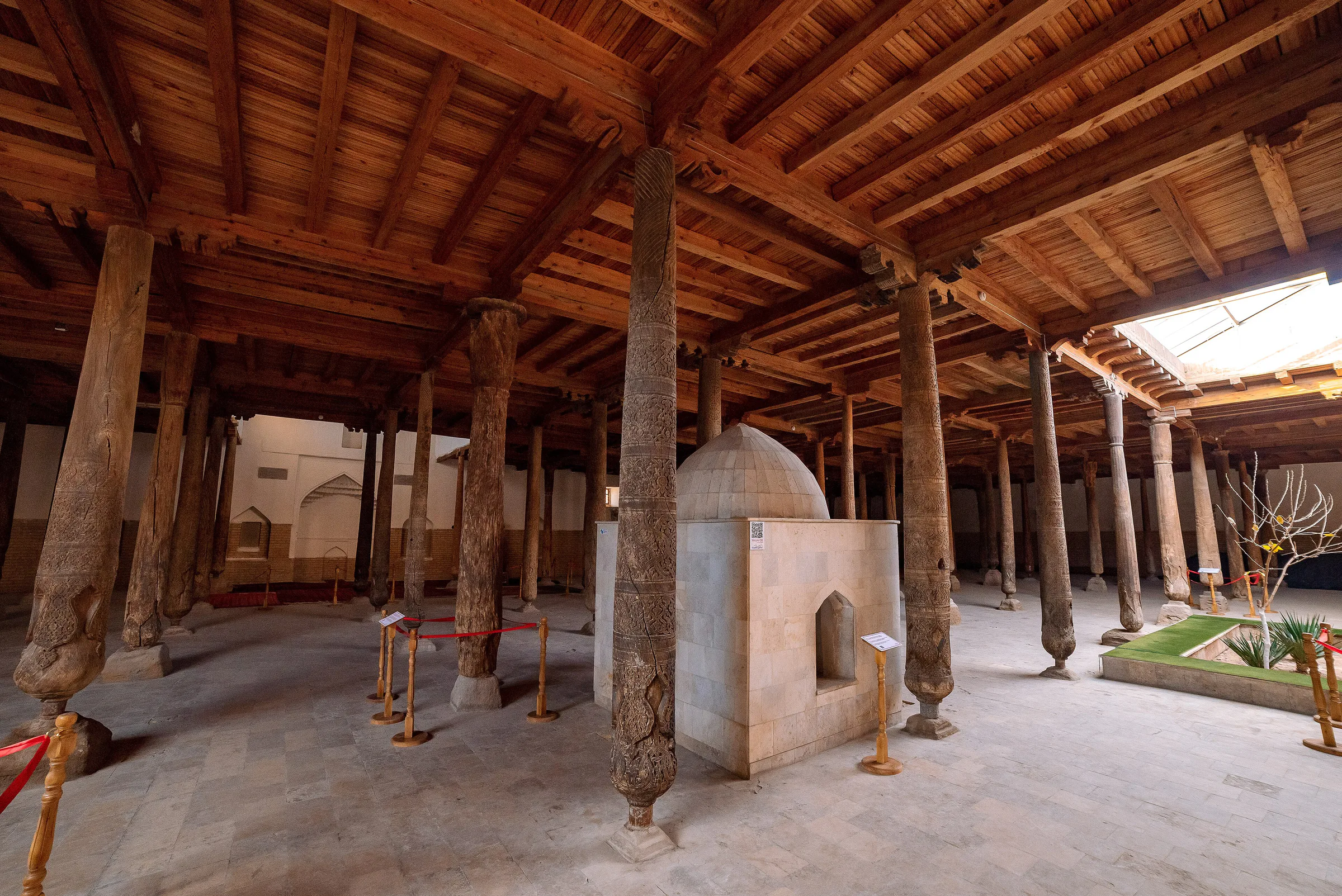
A vast mosque with no portal, dome or courtyard: its flat roof rests on more than 200 carved wooden columns, the oldest dating from the 10th–12th centuries. The present building was rebuilt in 1788–1789.
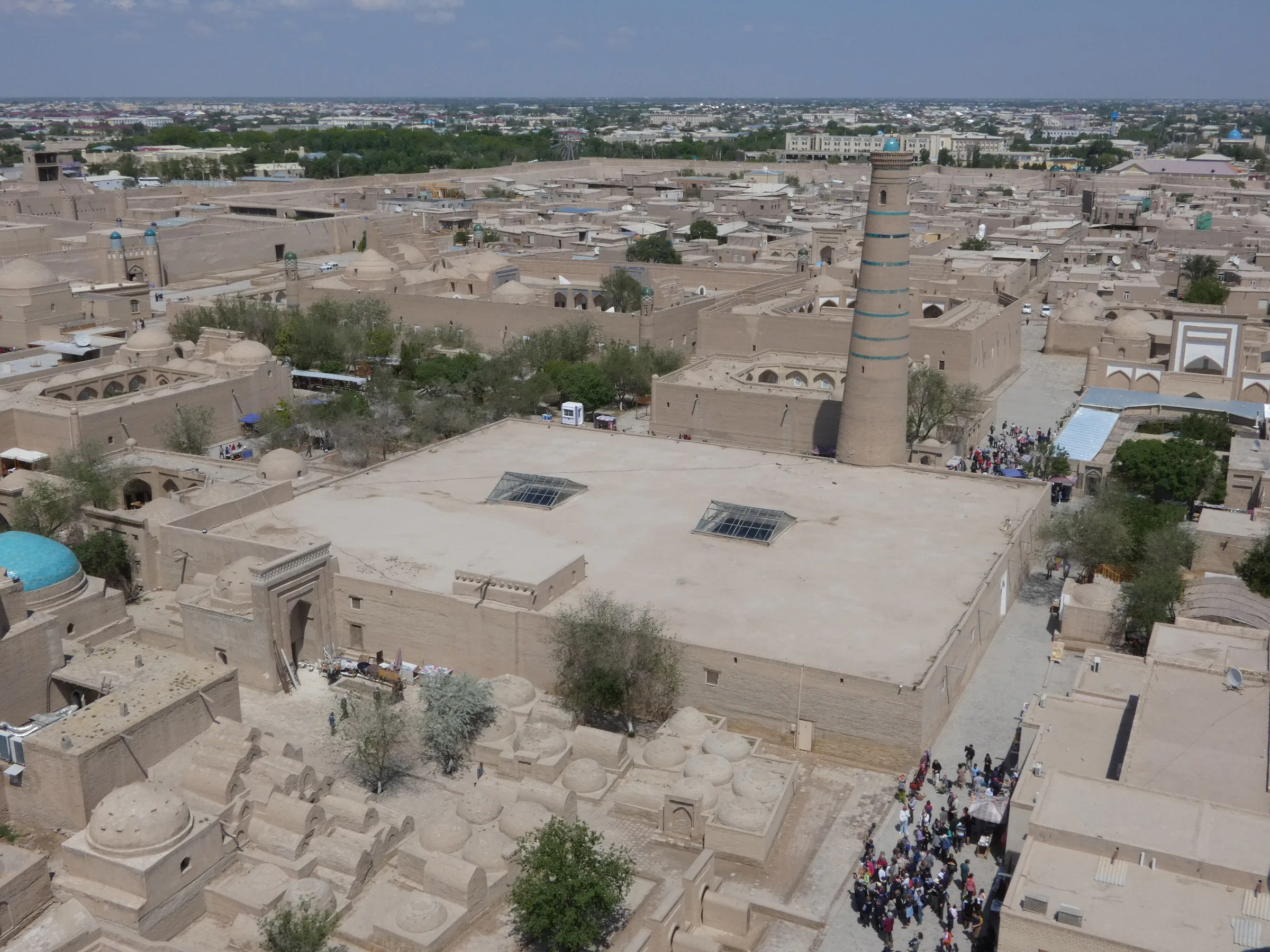
Khiva’s Friday mosque stands at the very centre of Itchan Kala, on the main street linking the west and east gates. The 10th-century Arab geographer al-Muqaddasi mentions a congregational mosque in Khiva, so its history is usually traced back more than a thousand years. According to the court historian Munis, it was rebuilt at the end of the 18th century with funds from the vizier Abdurahman Mehtar; the present structure dates from 1788–1789.
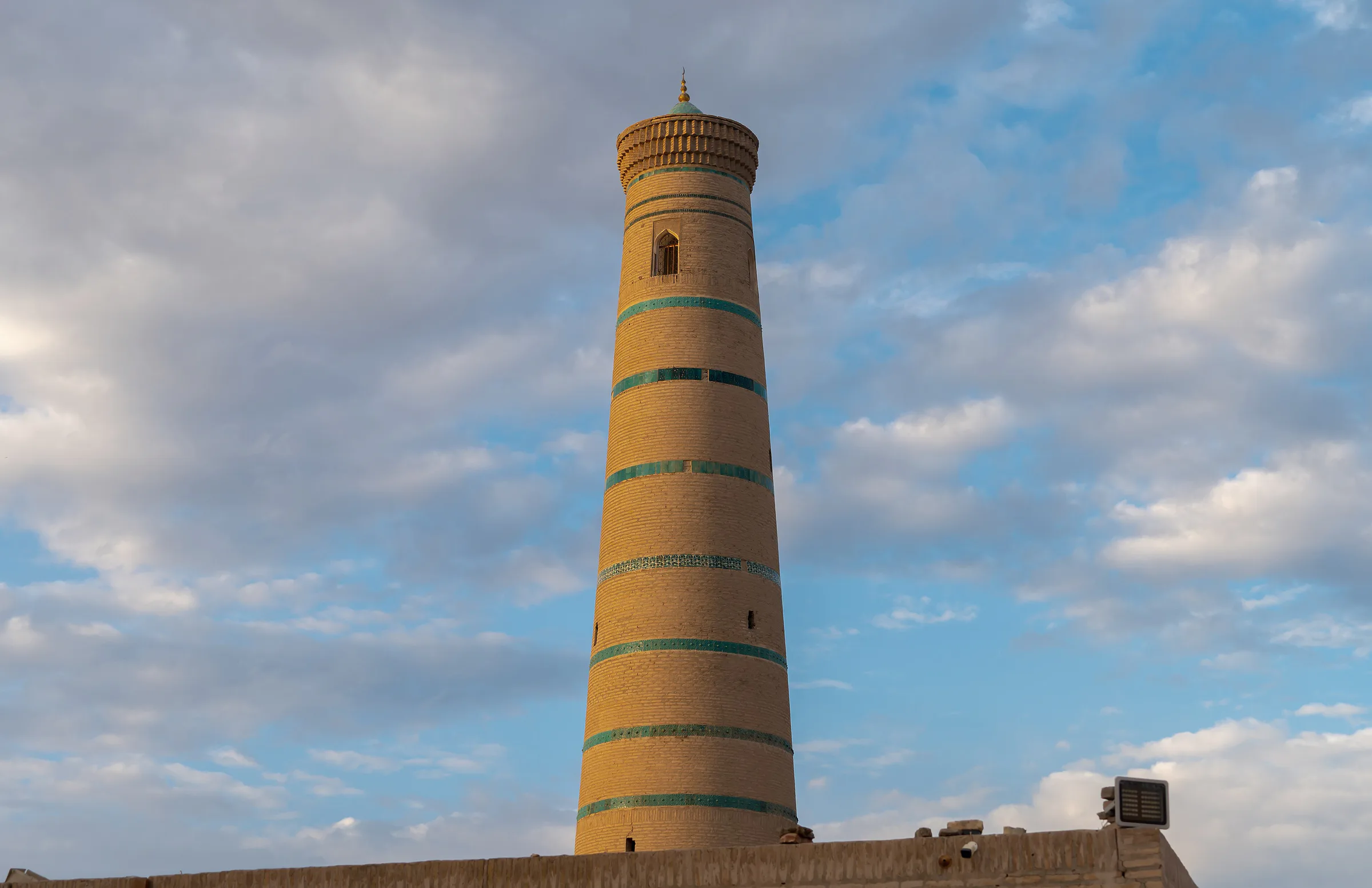
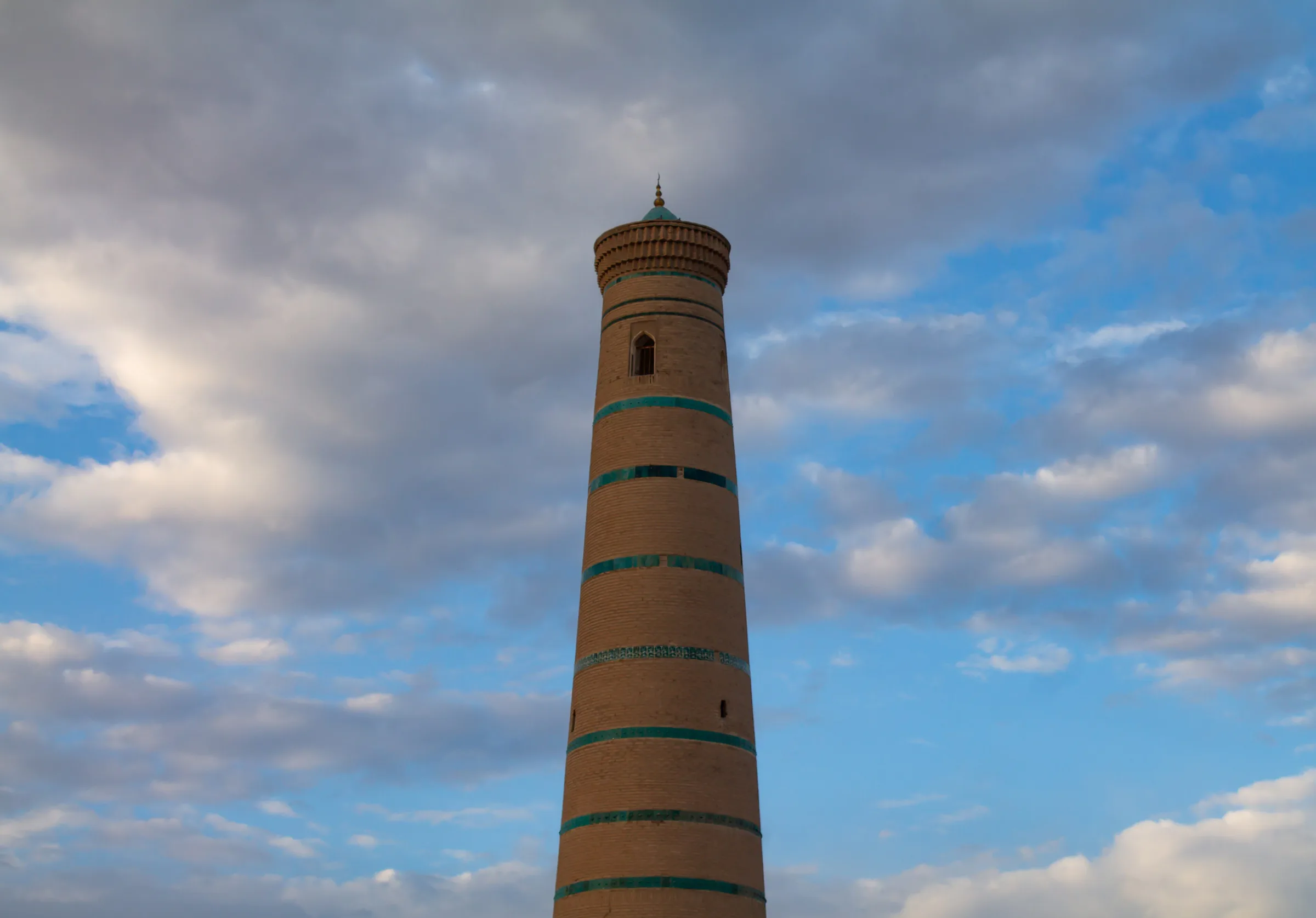
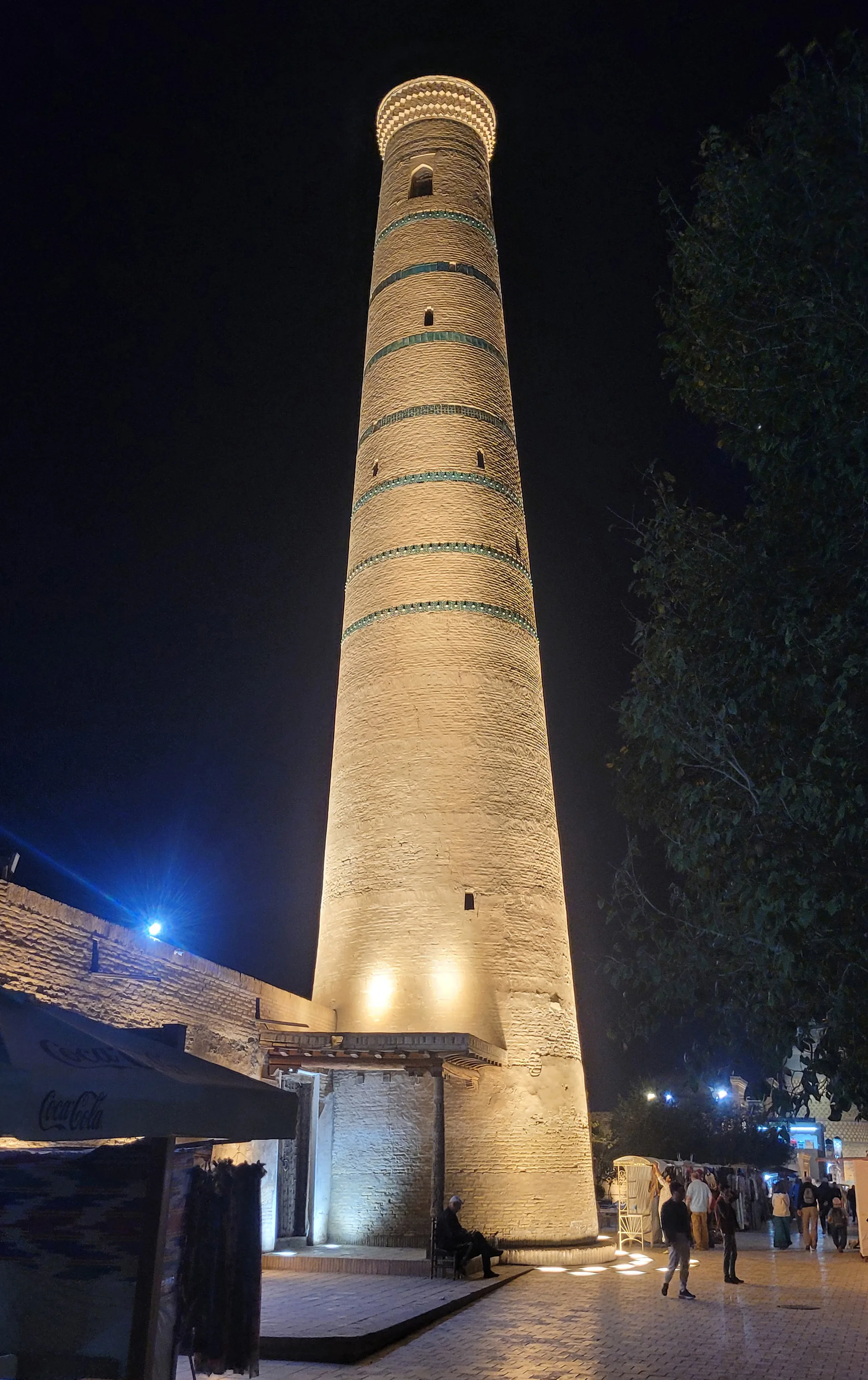
A tall minaret rises at the mosque’s northeast corner, next to the Qozi Kalon Madrasa.
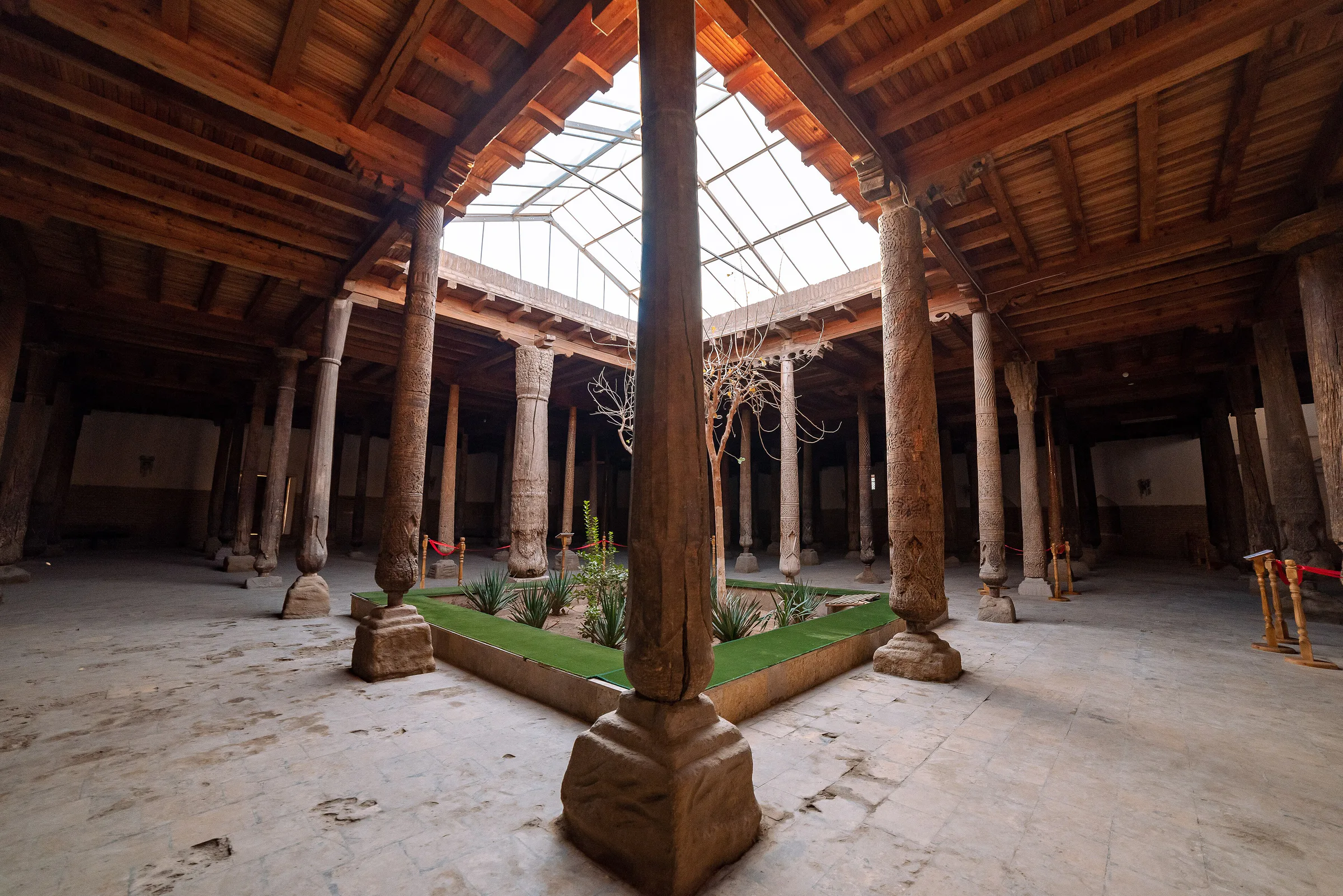
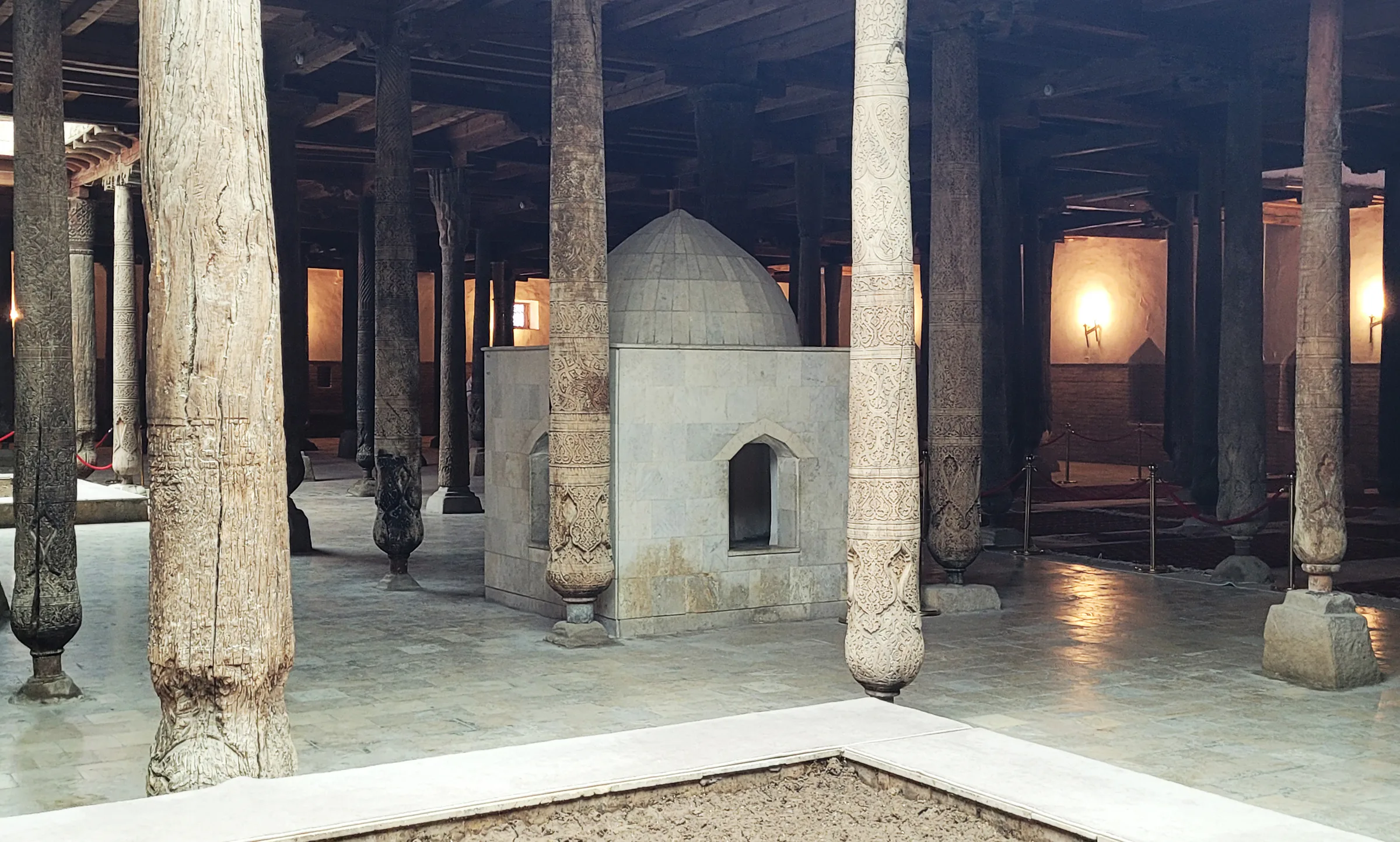
The Juma Mosque is an unusual type for Central Asia: it has no portal, no dome and no inner courtyard. A single hall of about 55 by 46 metres is covered by a flat timber roof on 212–213 wooden columns — the sources disagree on the exact number. Light falls through two openings in the roof, and the cool half-light of the hall was designed for Khorezm’s scorching summers.
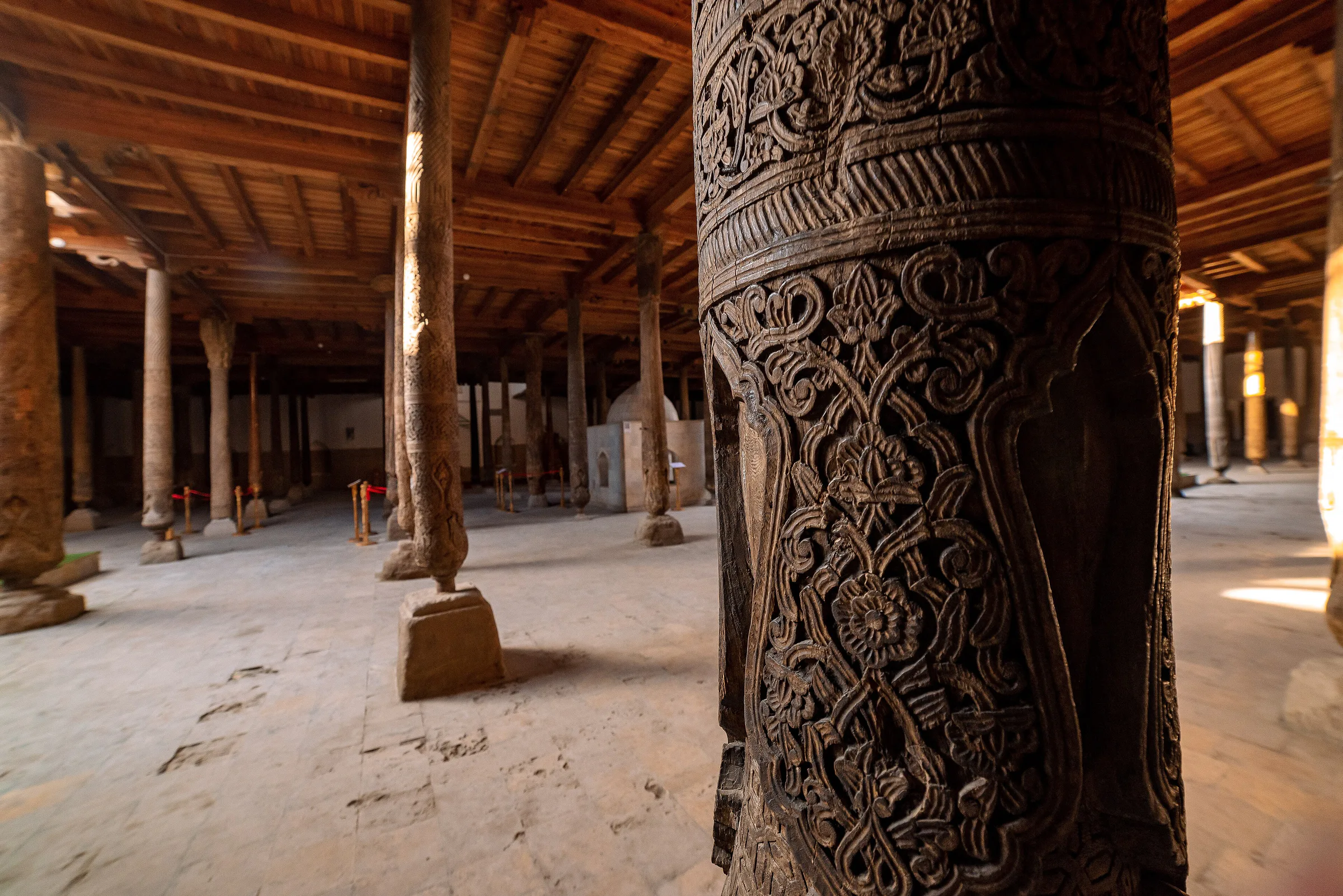
No two columns are alike: they were carved at different times, each with its own ornament. The oldest date from the 10th–12th centuries, some bearing Kufic inscriptions, and several scholars believe they were brought from Kath, Khorezm’s ancient capital. Columns with Khivan-style floral carving belong to the 18th–19th centuries. The carved doors date from 1316, 1517, 1788 and 1789.
The mosque can be entered from three sides. Take your time among the columns, comparing their bases, shafts and capitals: some are slender and plain, others thick and covered in floral carving, a few still bearing old inscriptions. UNESCO singles out the hypostyle hall as a design adapted to Central Asia’s harsh climate.
The columns stand on stone bases that keep the wood from soaking up ground moisture and let the structure flex slightly during earthquakes. The south wall has niches with muqarnas decoration, and a marble plaque nearby lists the mosque’s endowed properties.
The minaret offers sweeping views over the rooftops of Itchan Kala, though its stairway is narrow and steep.
Ensemble · Khiva
A walled museum-city where people still live
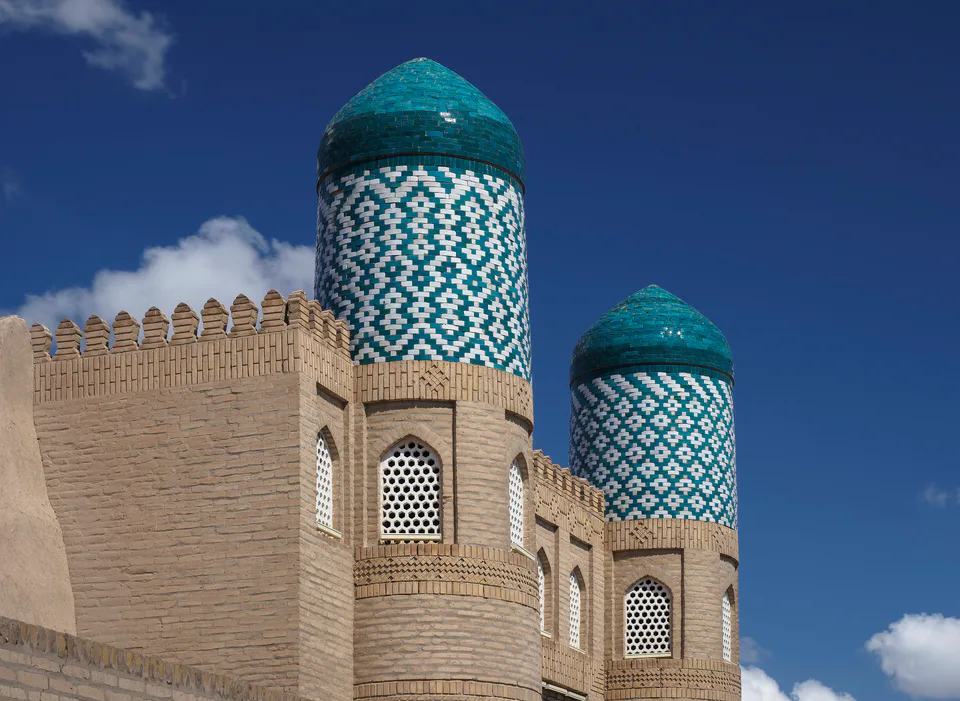
Fortress · Khiva
The khans’ fortress within the fortress
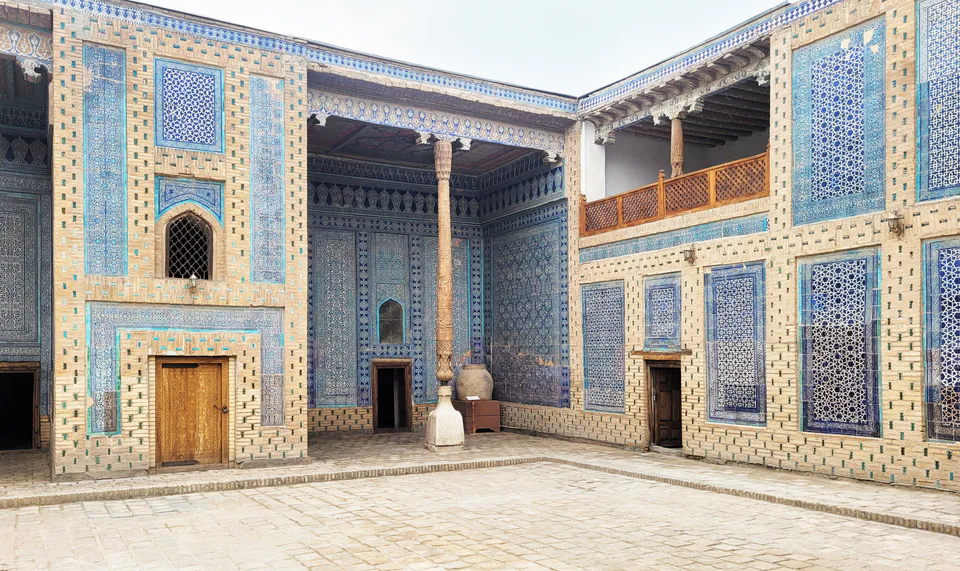
Ensemble · Khiva
Allakuli Khan’s palace of tiles
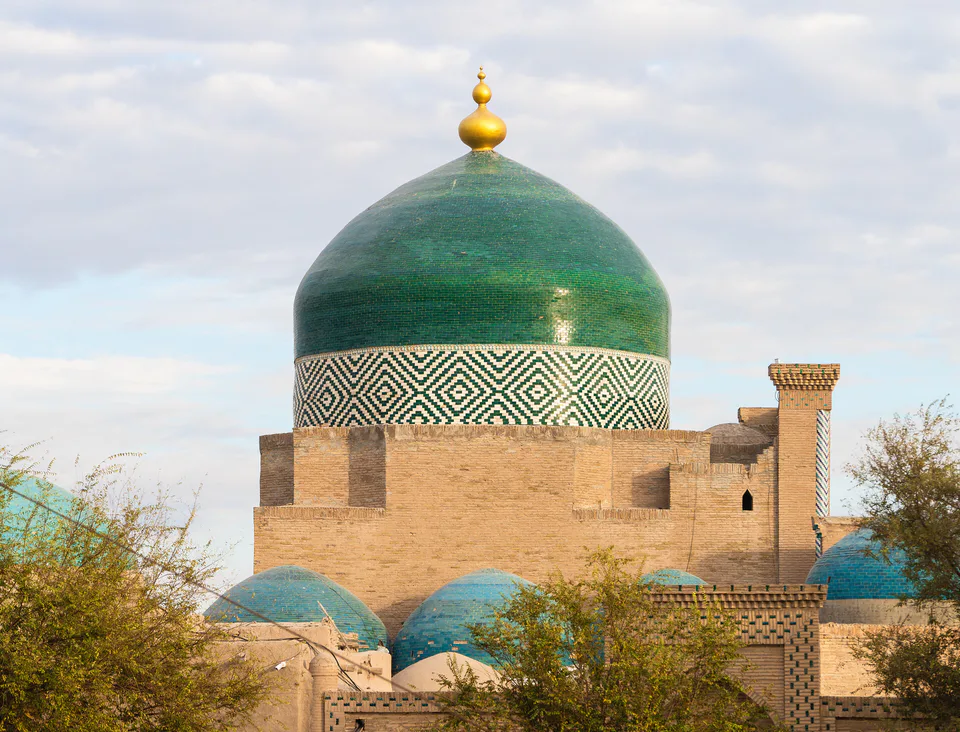
Mausoleum · Khiva
Poet, wrestler and patron saint of Khiva
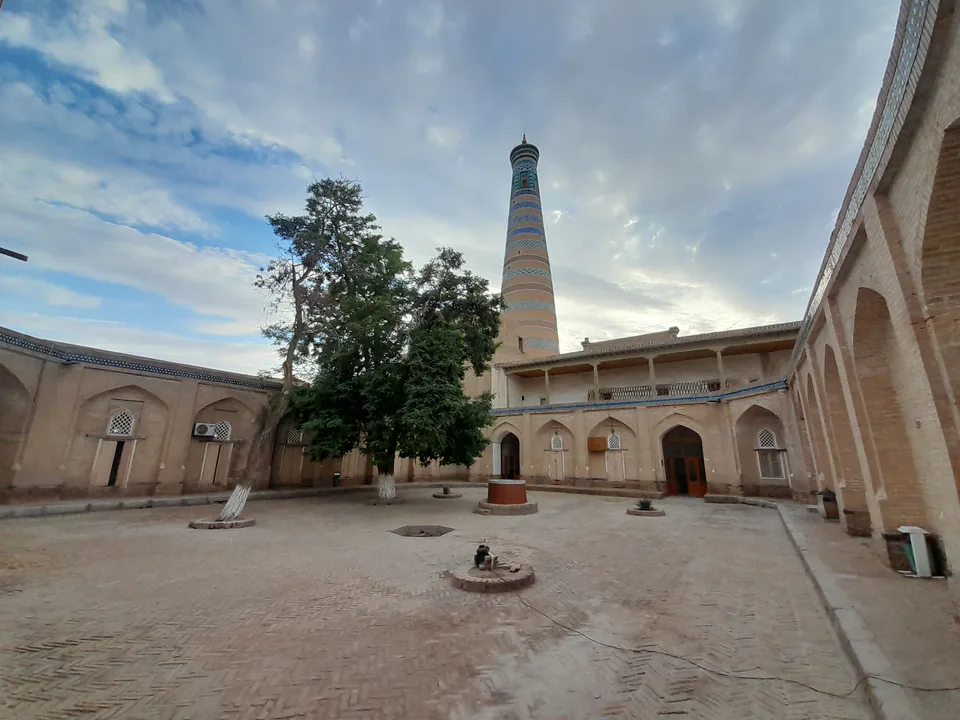
Madrasa · Khiva
Home of the Museum of Khorezm Music
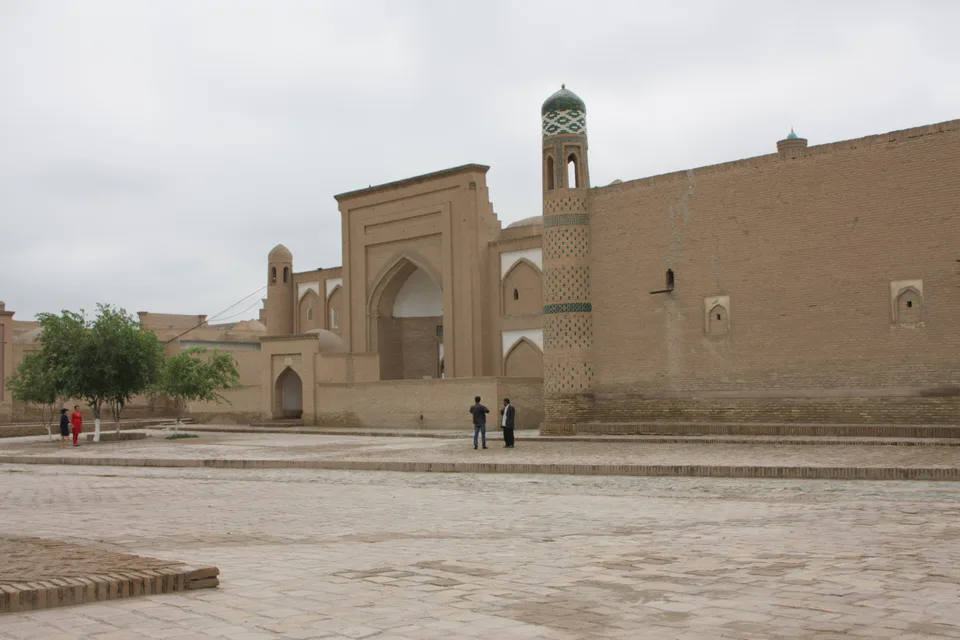
Madrasa · Khiva
The first madrasa after the capital moved to Khiva
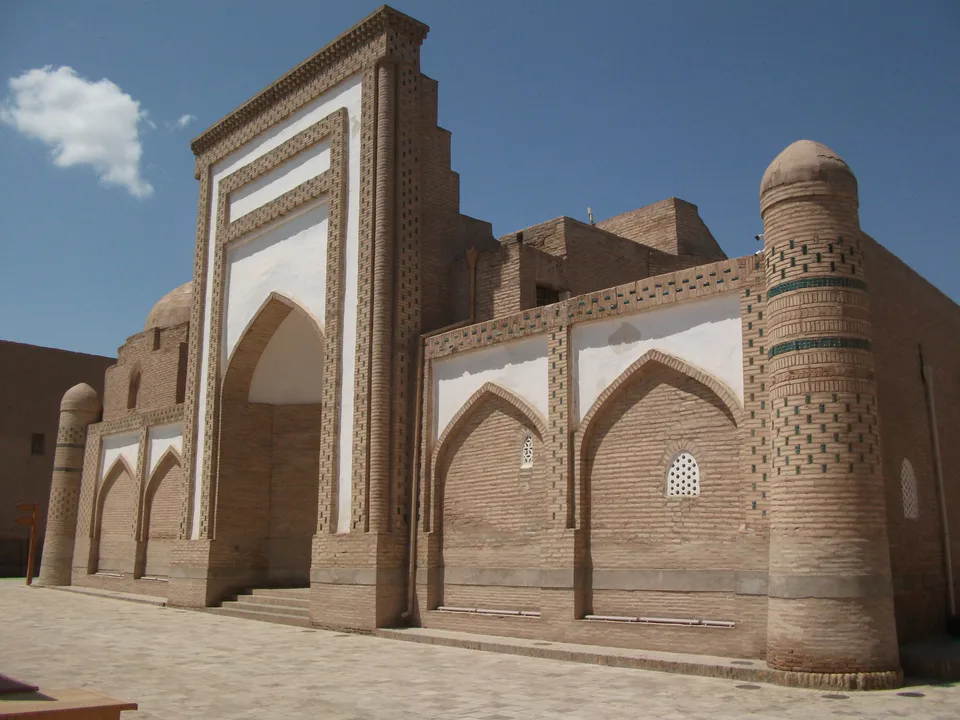
Madrasa · Khiva
Built by the founder of the Qongirat dynasty
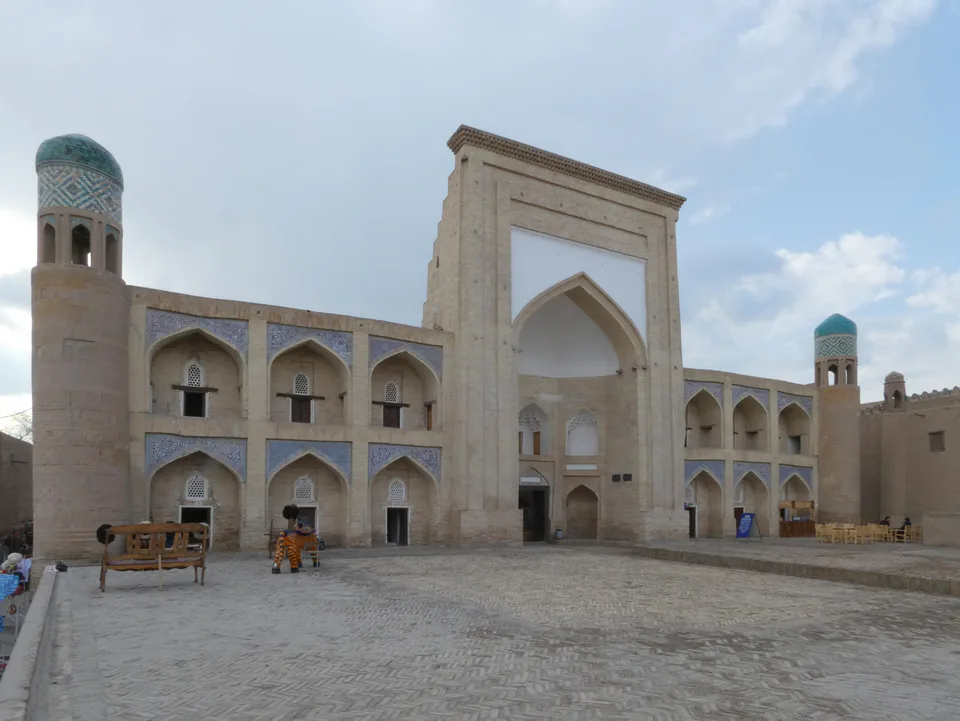
Madrasa · Khiva
Khiva’s first two-storey madrasa
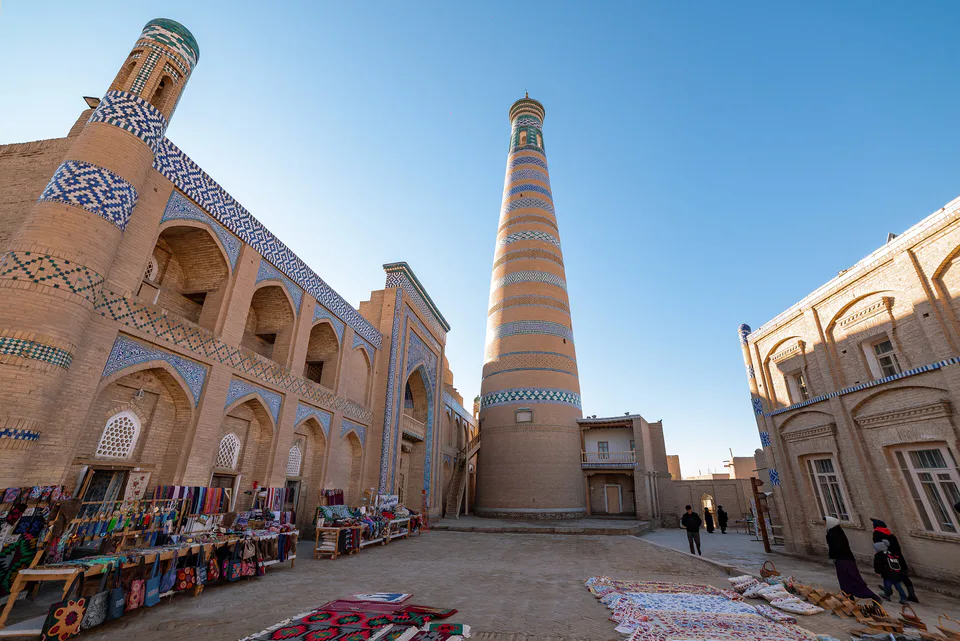
Minaret · Khiva
The highest point in Khiva
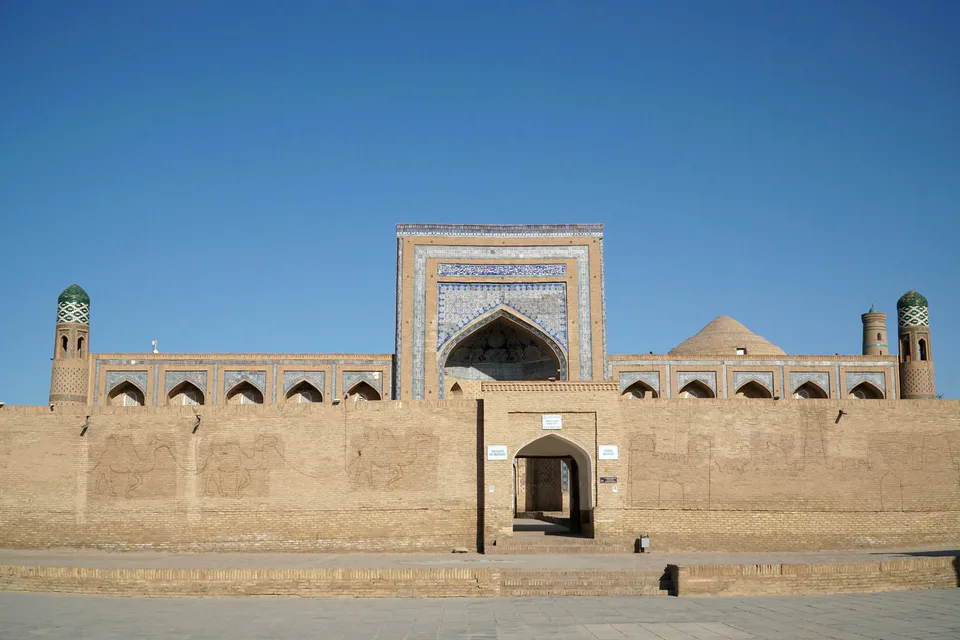
Madrasa · Khiva
The madrasa of Feruz, the poet-khan