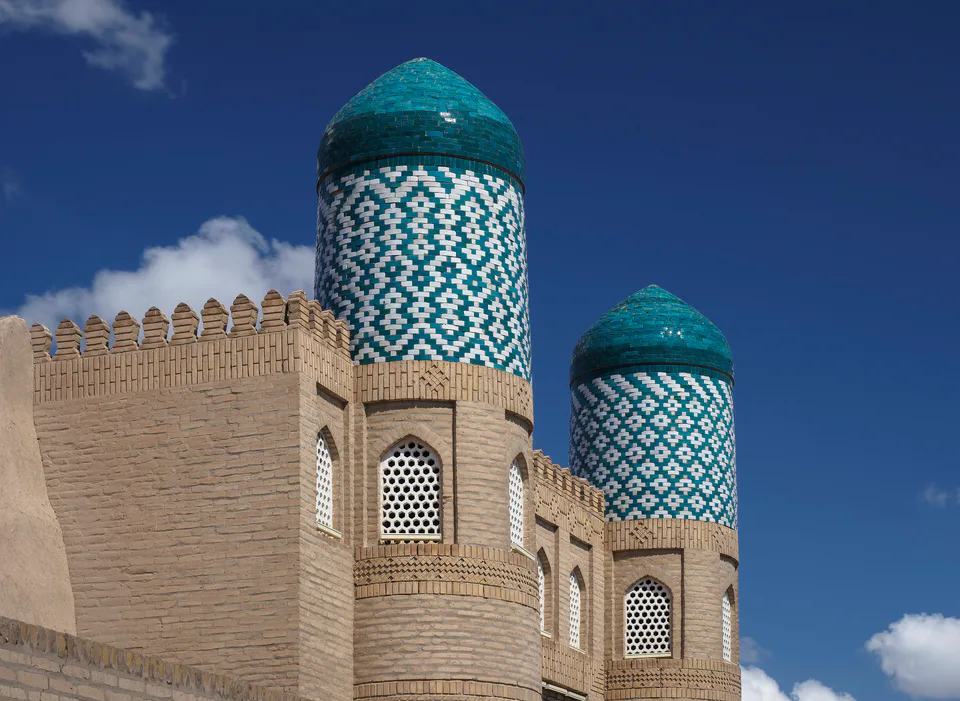
Fortress · Khiva
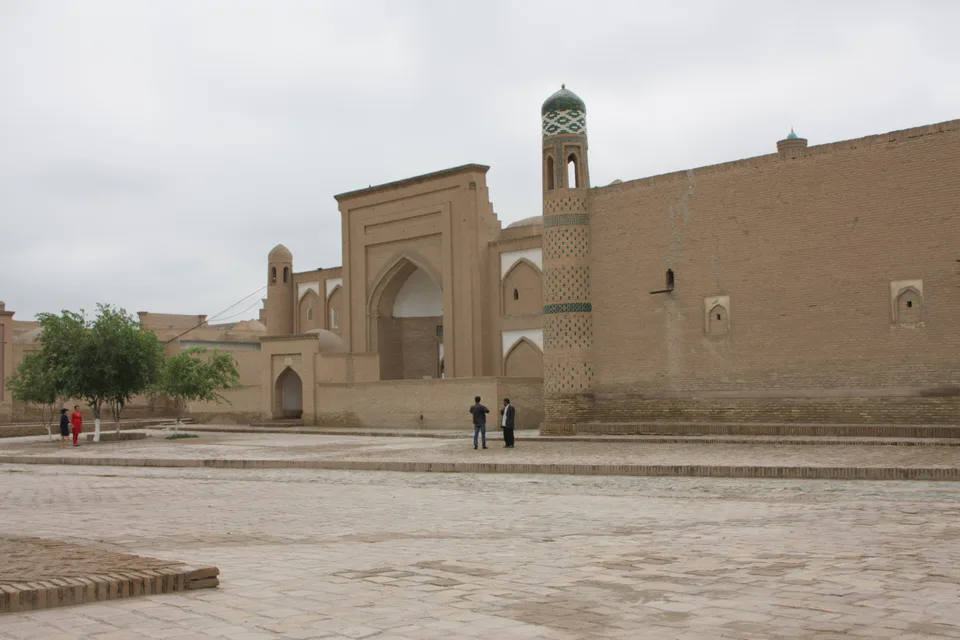
Konya Ark
The khans’ fortress within the fortress
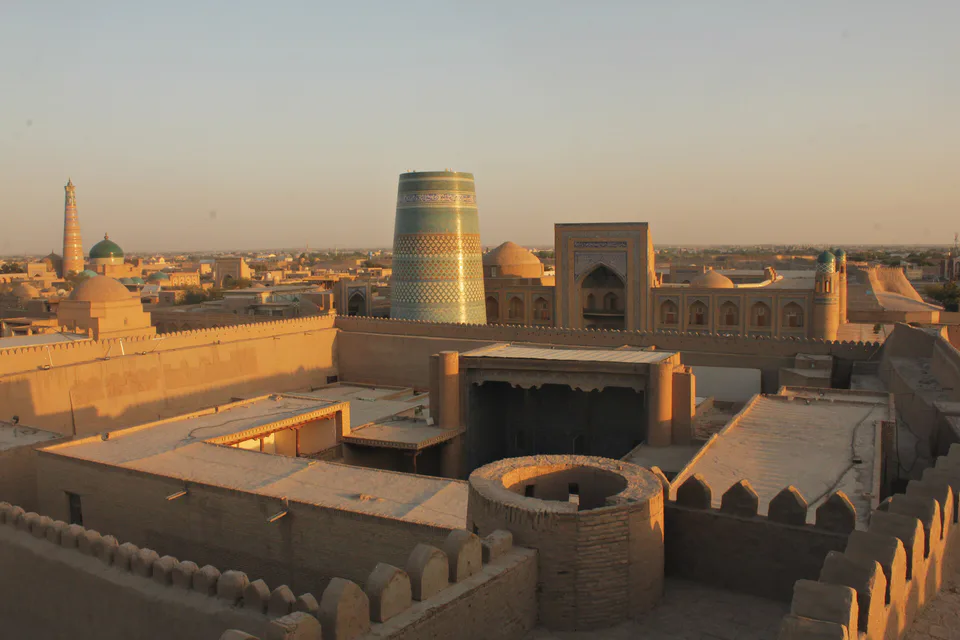
Ensemble · Khiva
The walled inner town of Khiva, a UNESCO World Heritage Site since 1990. Its 26 hectares hold more than 50 monuments and some 250 old houses — madrasas, mosques, palaces and minarets a few steps apart.
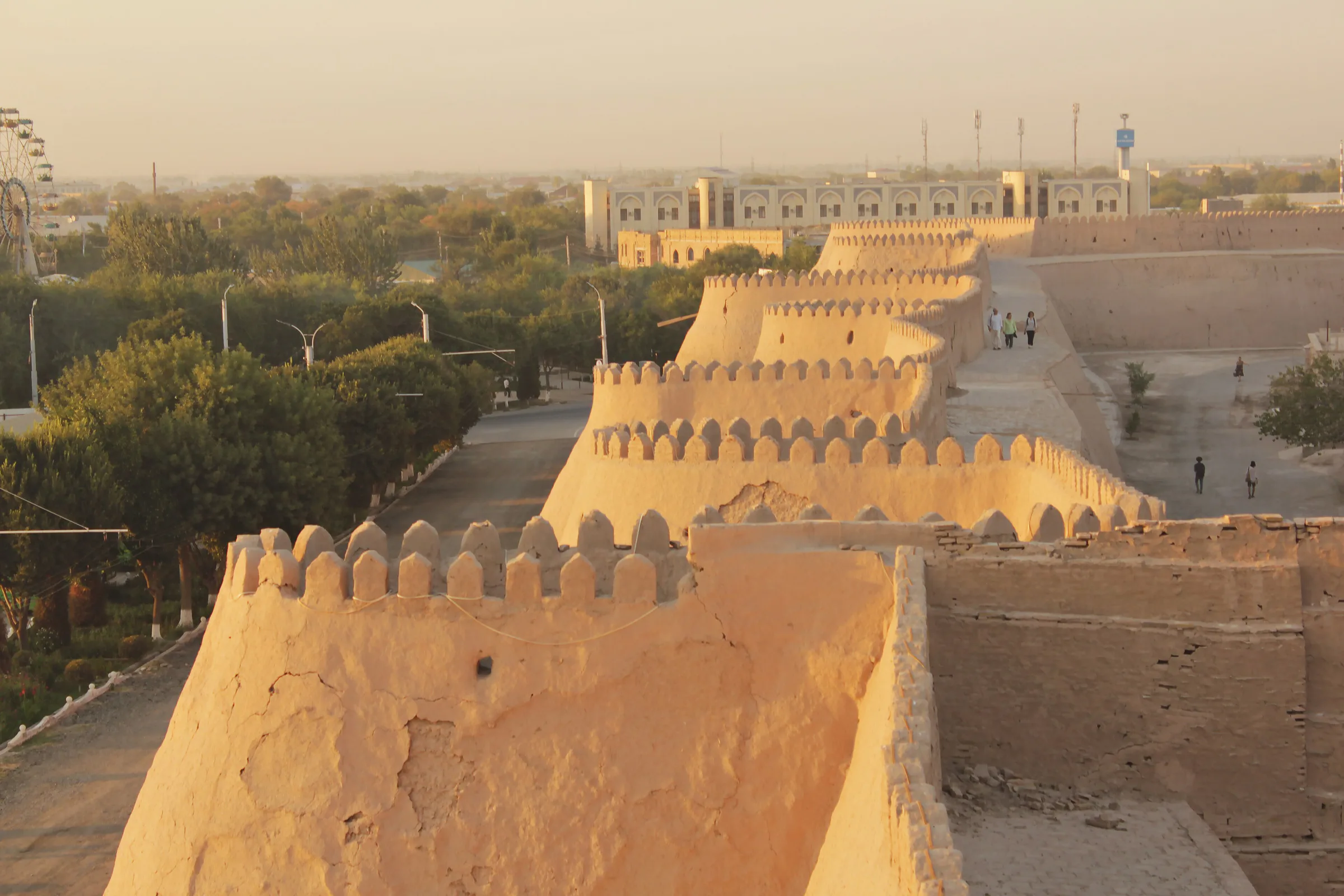
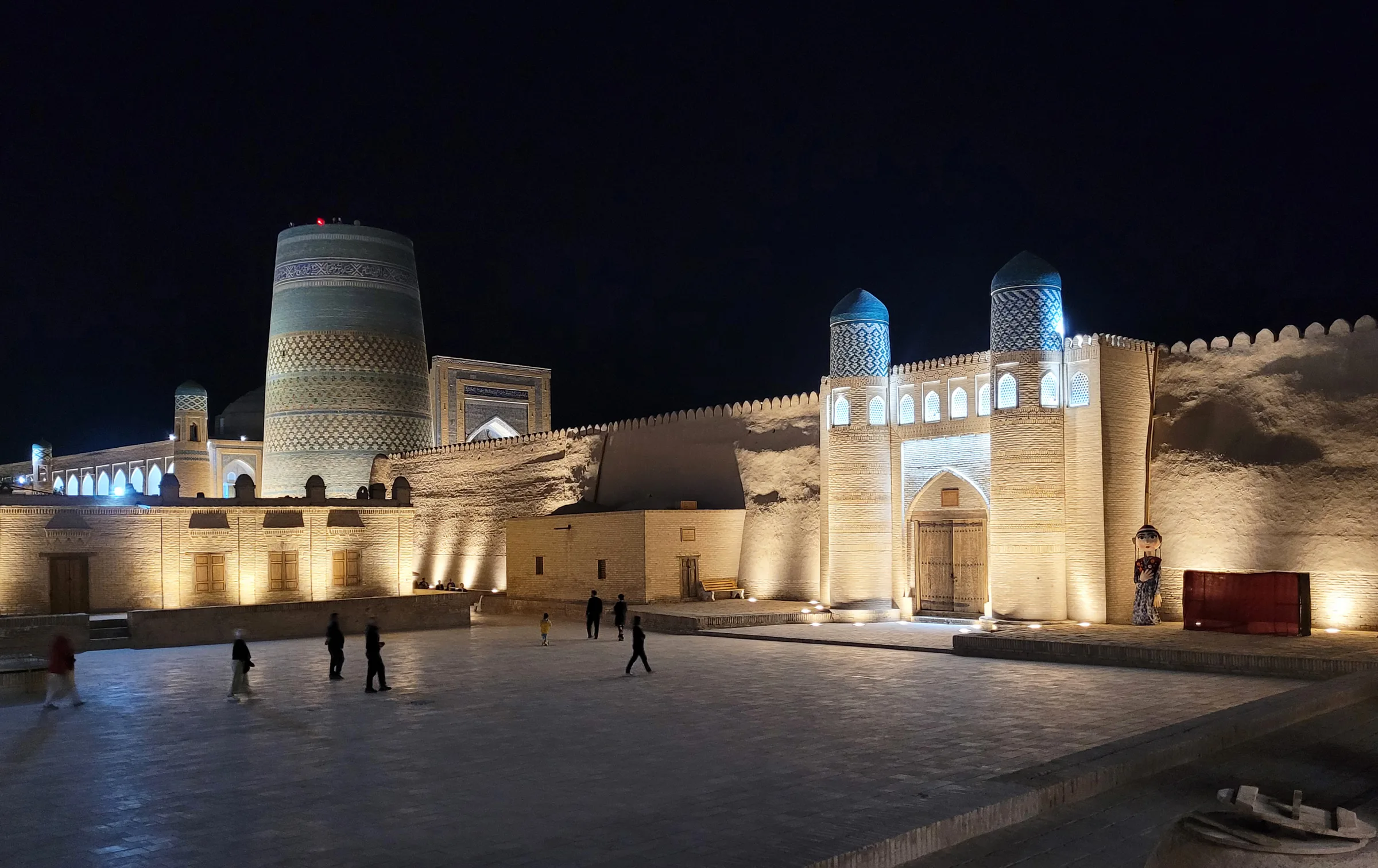
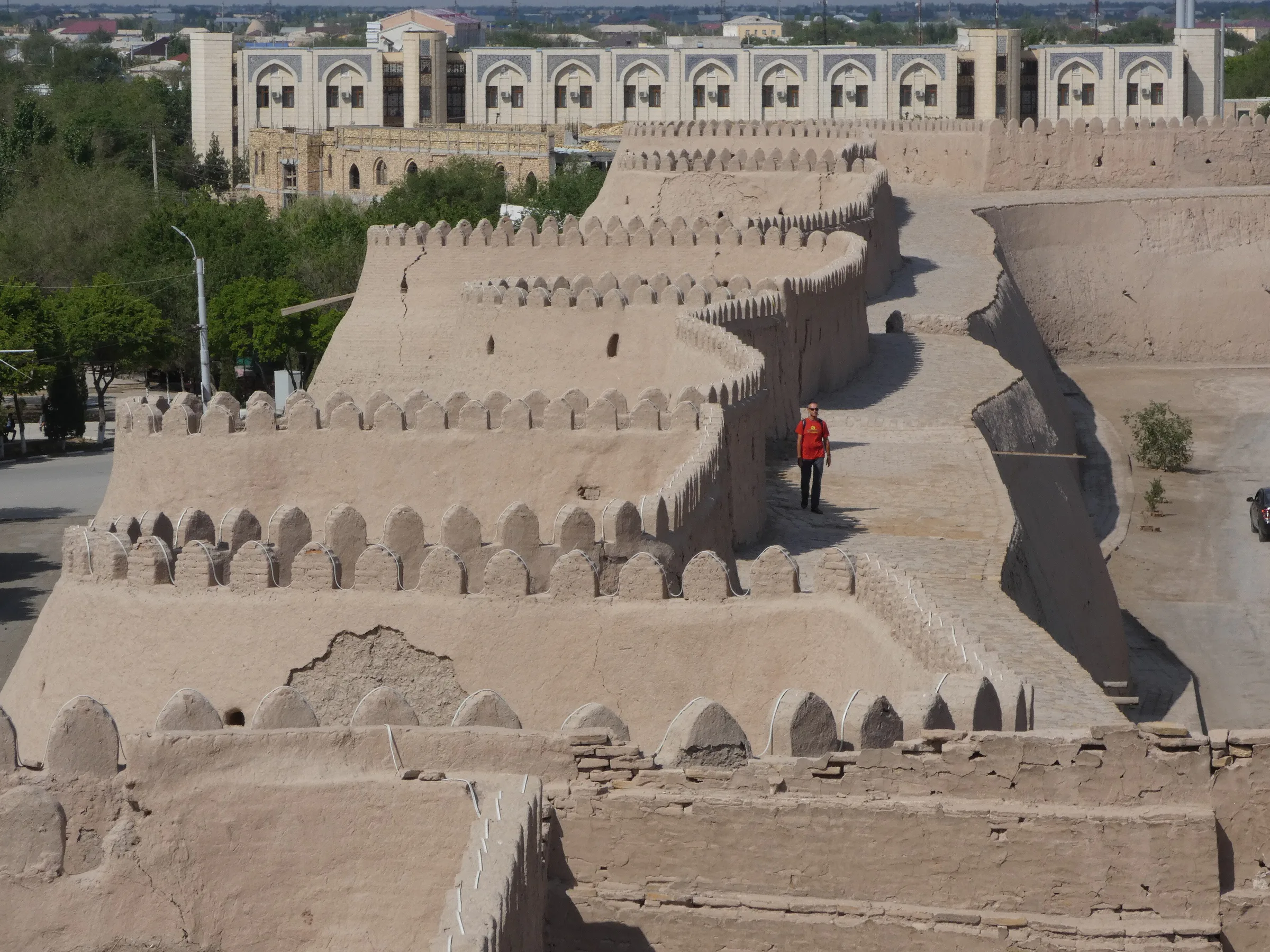
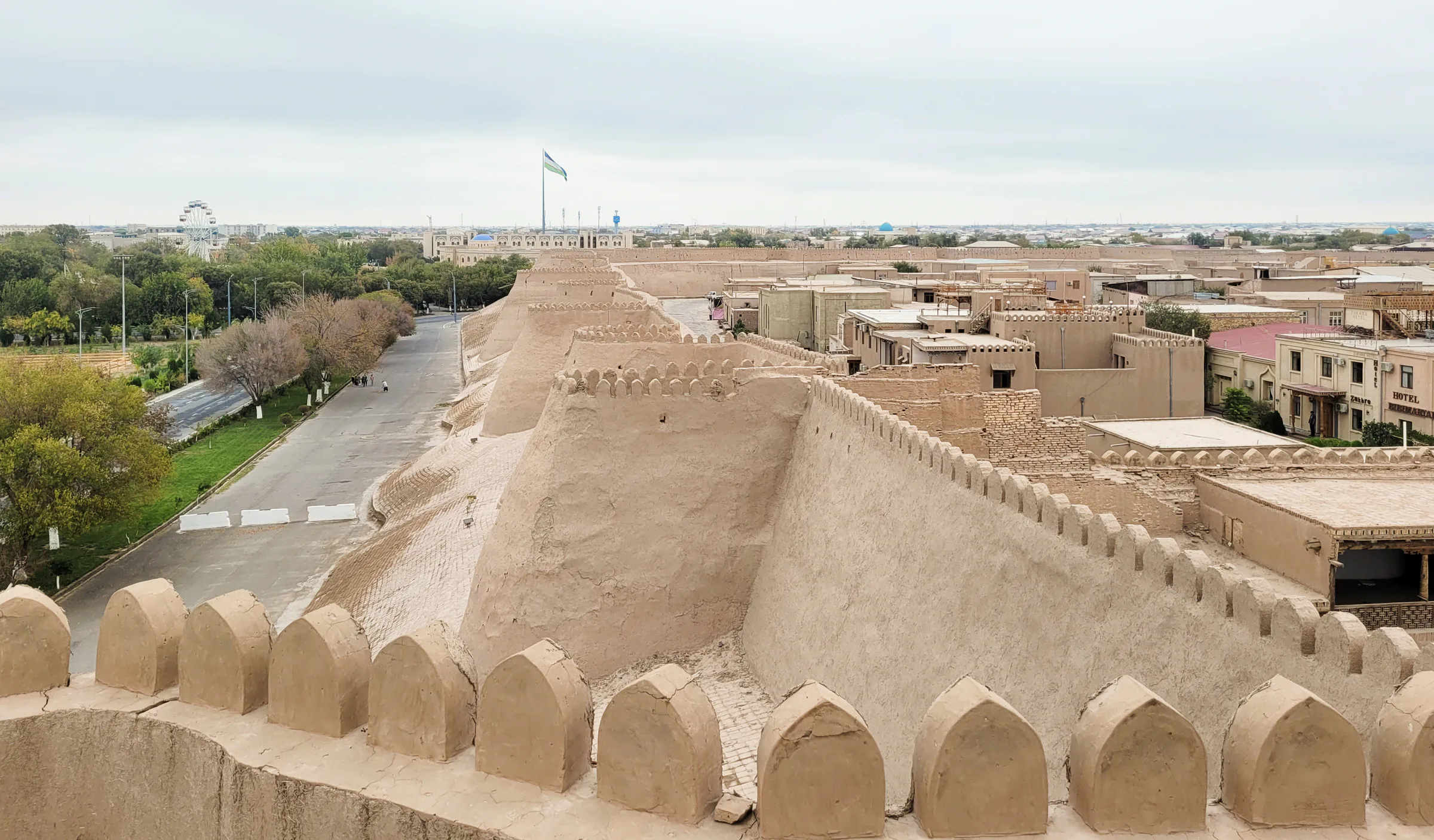
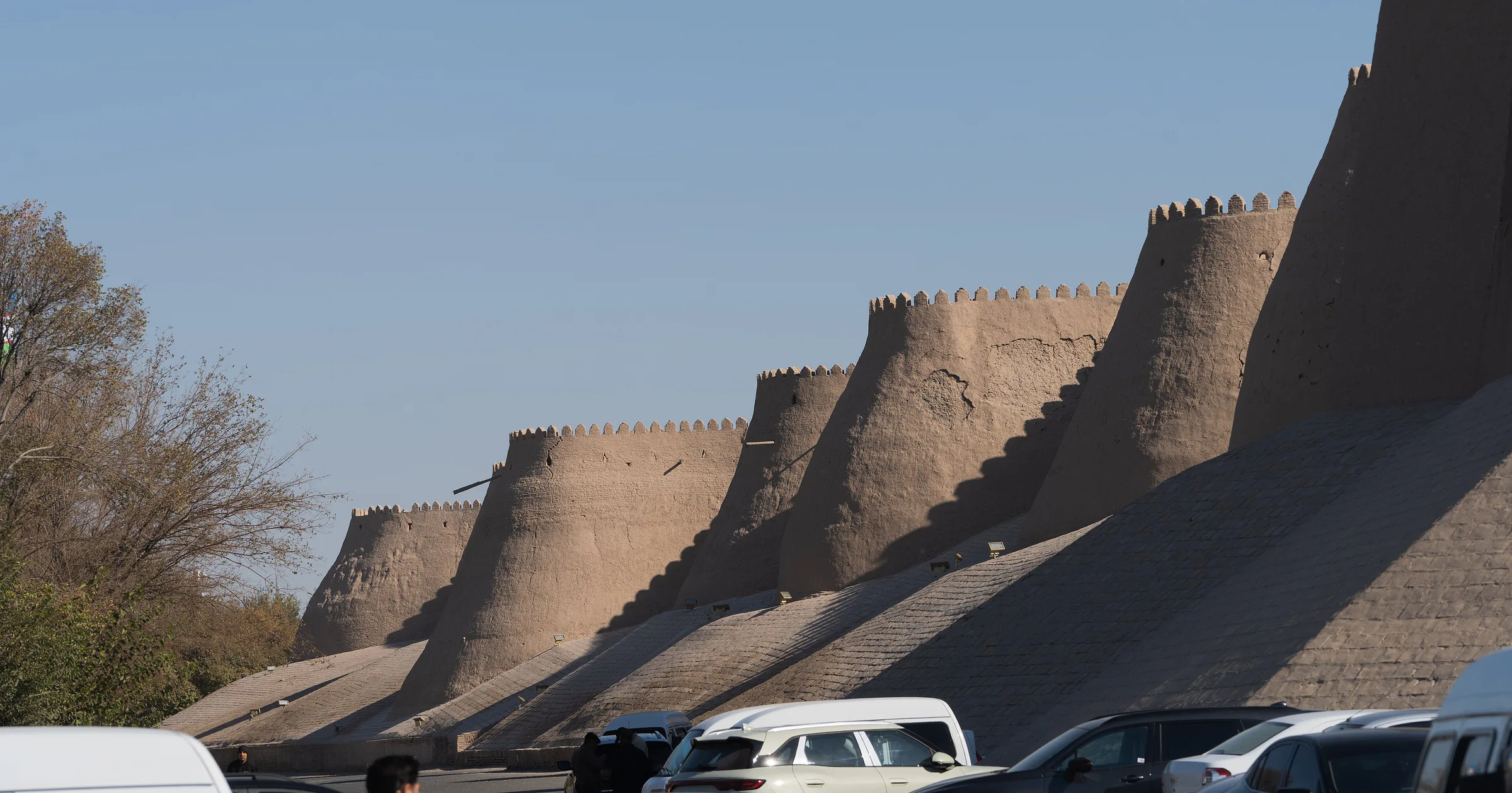
Itchan Kala (“inner fortress”) is the historic core of Khiva: a rectangle of roughly 650 by 400 metres, stretched north to south and enclosed by walls of mud brick and rammed clay. The walls rise 8–10 metres and are 5–6 metres thick at the base, with rounded towers bulging out about every 30 metres. Four gates lead in — the Ota Gate to the west, the Bogcha Gate to the north, the Polvon Gate to the east and the Tosh Gate to the south.
Around it lies the outer town, Dishan Kala, walled by Allakuli Khan in 1842. Khiva is therefore one of the few places where the classic Central Asian layout of a fortified inner city (shahristan) and suburbs (rabad) can still be read on the ground.
Archaeologists date settlement here back some 2,500 years, and the city officially celebrated its 2,500th anniversary in 1997. Legend has it that Khiva grew up around the Kheivak well, dug by Shem, son of Noah; the well is still pointed out in the northwest of the old town. Arab geographers of the 10th century mention Khiva as a small town on the caravan route.
When the Amu Darya shifted its course at the end of the 16th century, the old Khorezmian capital of Gurganj (Konye-Urgench) was left without water, and from the early 17th century Khiva served as capital of the Khanate of Khiva. Nadir Shah’s army sacked it in 1740. Most of what you see today dates from the late 18th to the early 20th century, under the Qongirat dynasty. The khanate became a Russian protectorate in 1873, and in 1920–1924 Khiva was capital of the Khorezm People’s Soviet Republic.
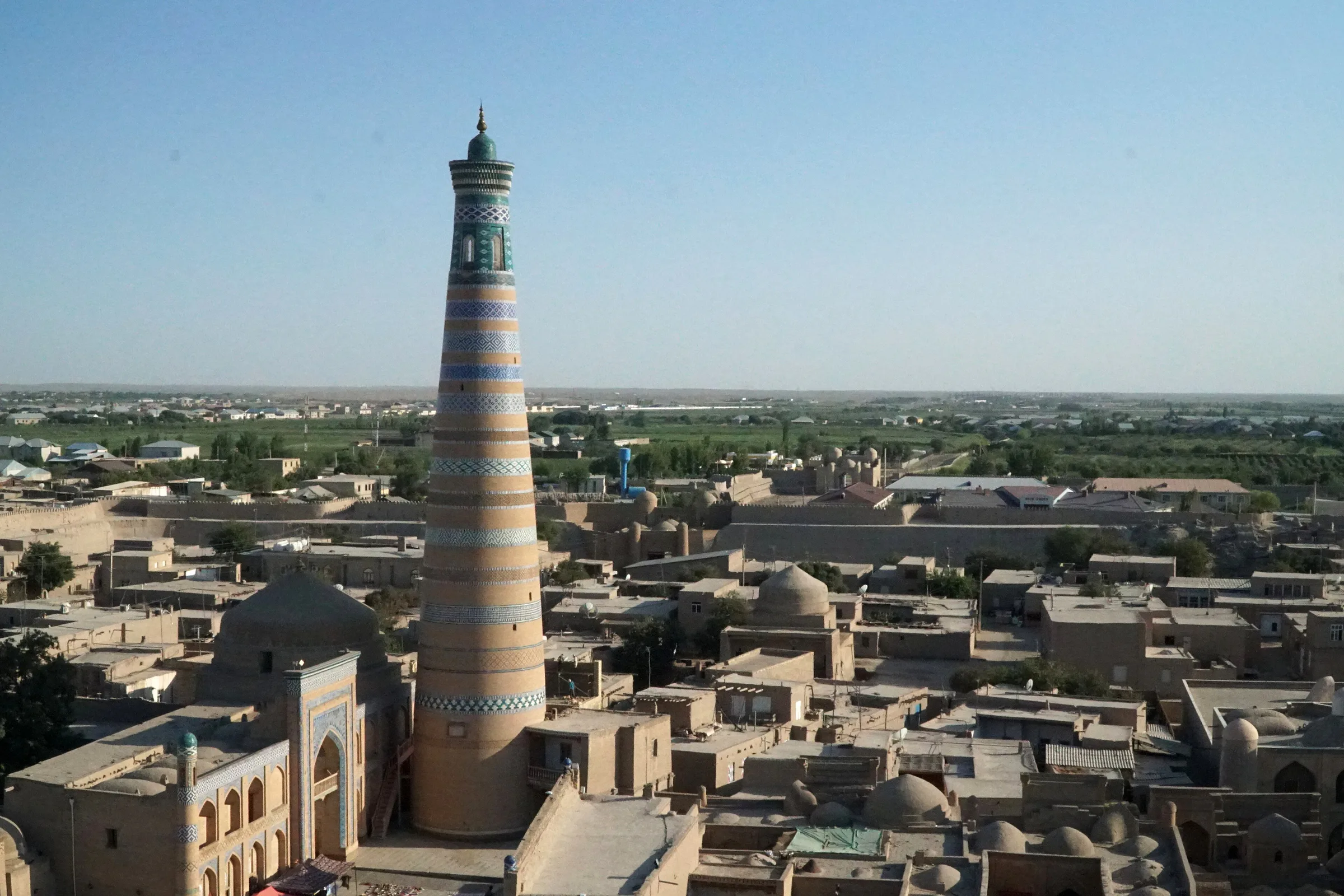
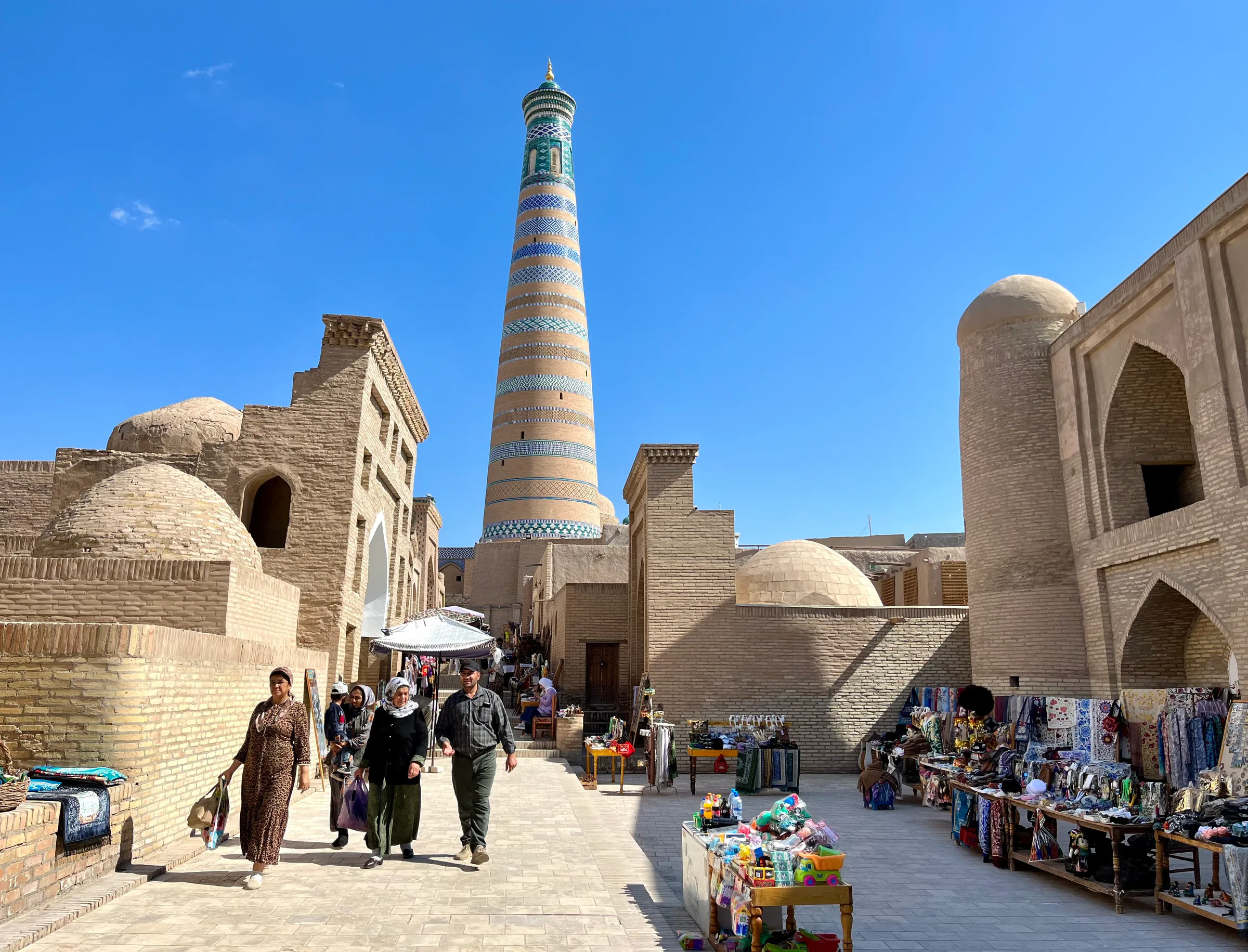
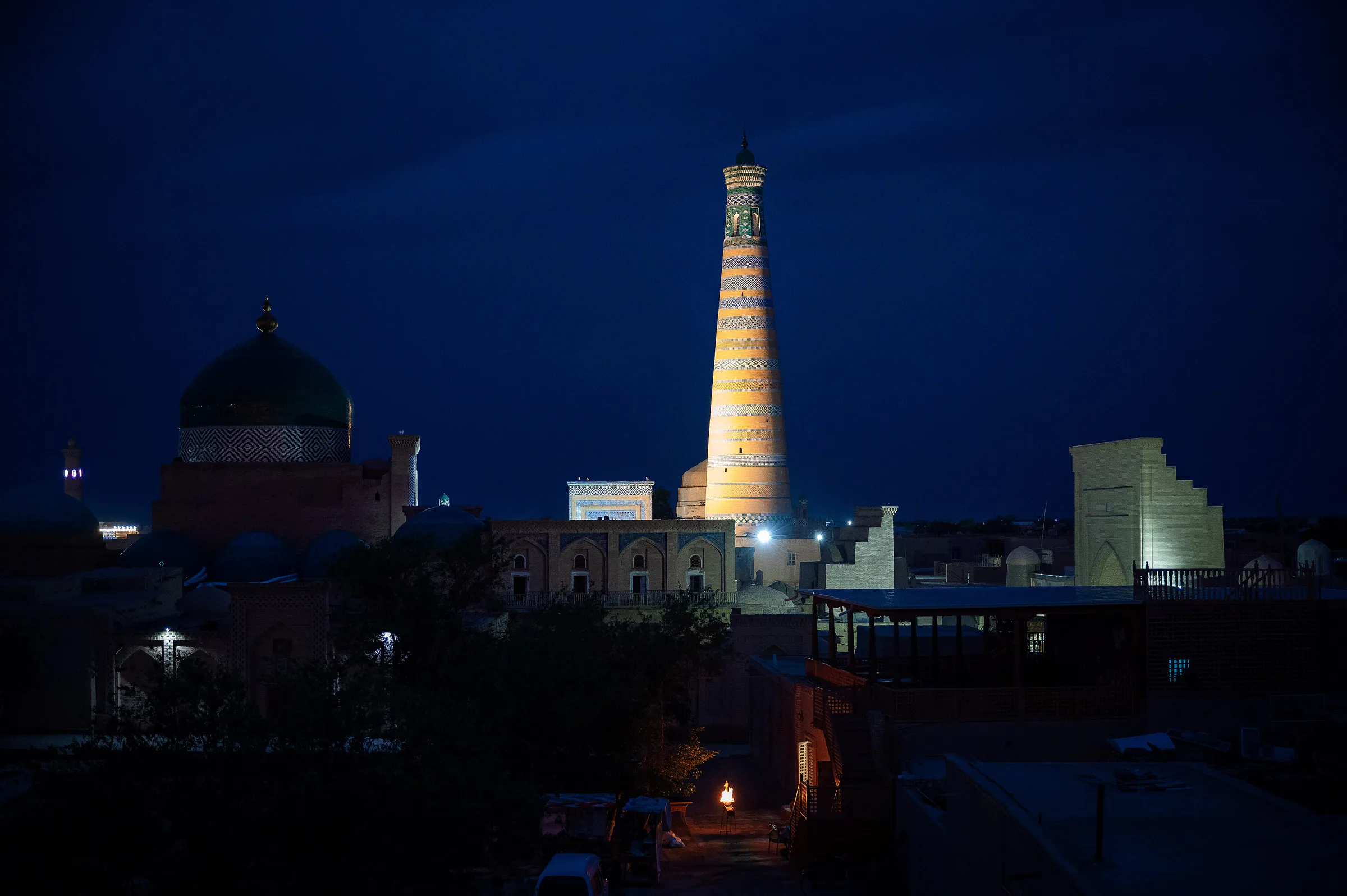
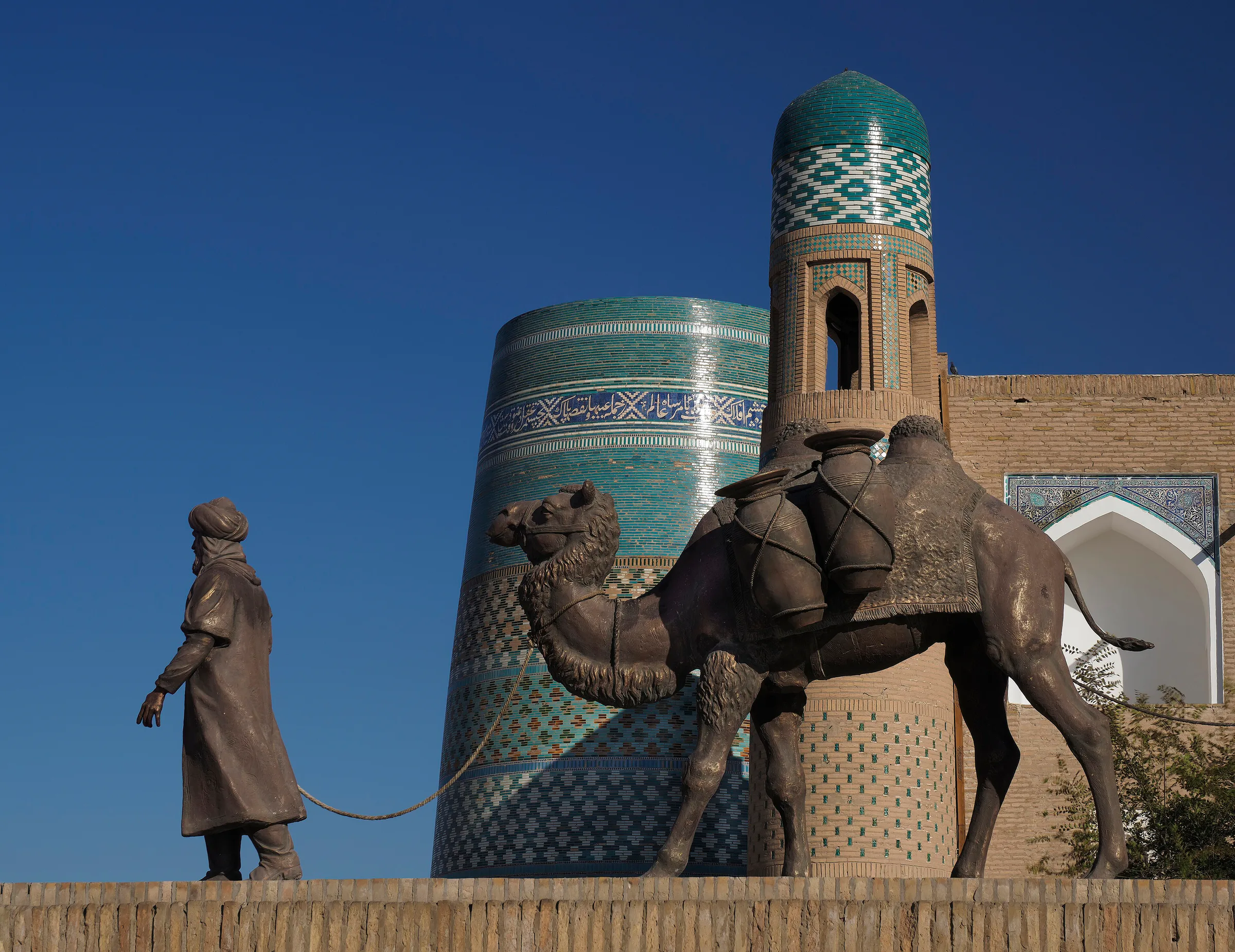
Step through the Ota Gate and the khans’ citadel, Konya Ark, is on your left, with the Muhammad Amin Khan Madrasa and the tile-clad Kalta Minor minaret on your right. The main street runs east past the Juma Mosque and its forest of more than 200 wooden columns, Allakuli Khan’s Toshhovli Palace, madrasa and caravanserai, to the Polvon Gate. To the south rise the Islam Khodja Minaret, the tallest structure in Khiva, and the shrine of Pahlavon Mahmud, the city’s patron saint.
As UNESCO notes, few very old buildings survive, but Itchan Kala is a coherent and well-preserved example of Central Asian Islamic architecture. It was the first site in Uzbekistan to join the World Heritage List.
Itchan Kala is no museum under glass: families still live inside the walls, and woodcarvers, carpet weavers and potters work in its courtyards. Khivan architecture is easy to spot — white-and-blue majolica, delicately carved wooden pillars and doors, and twin corner turrets (guldasta) framing the portals. Many madrasas and palaces now house displays on Khorezm’s history, crafts, music and nature.
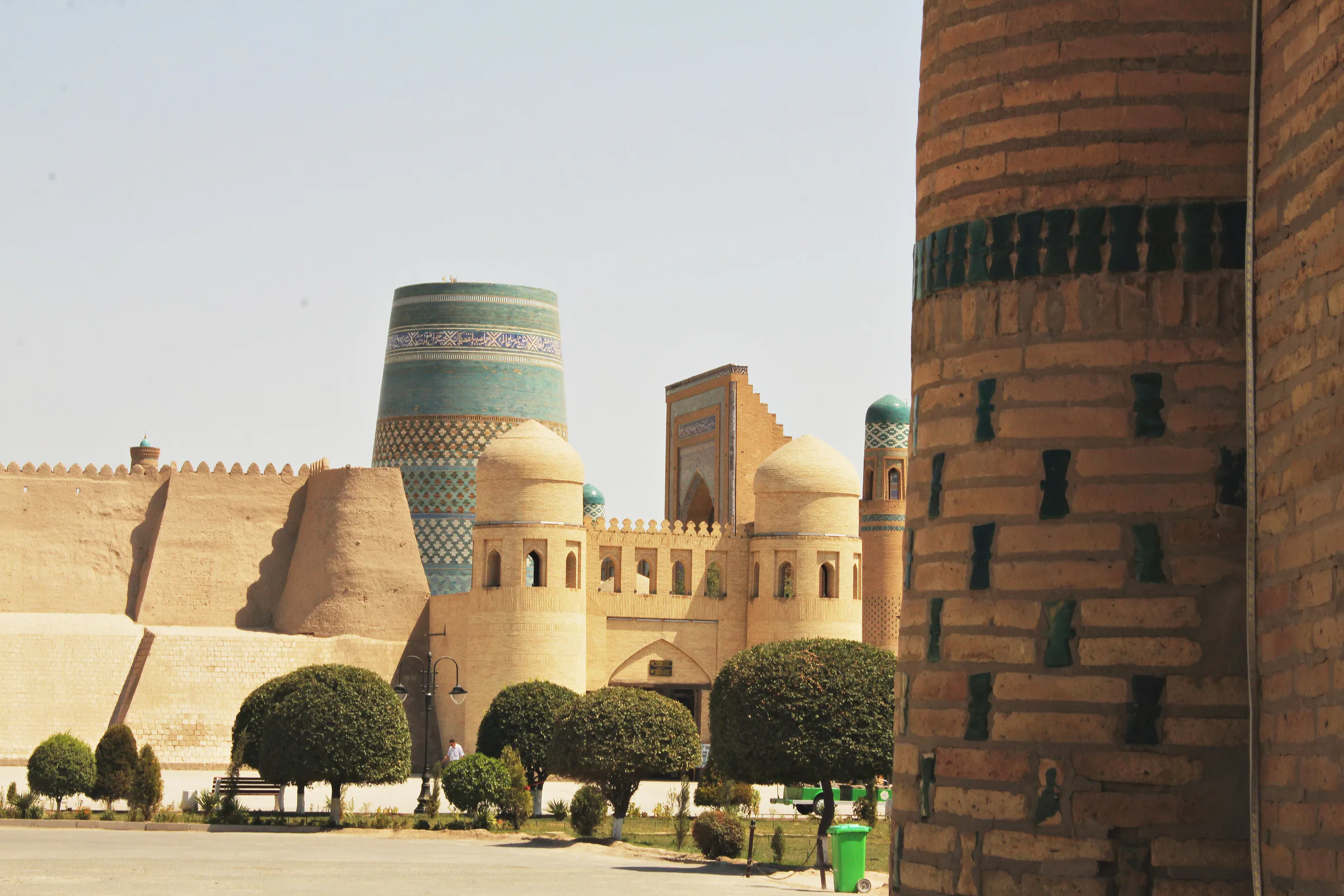
Fortress · Khiva
The khans’ fortress within the fortress
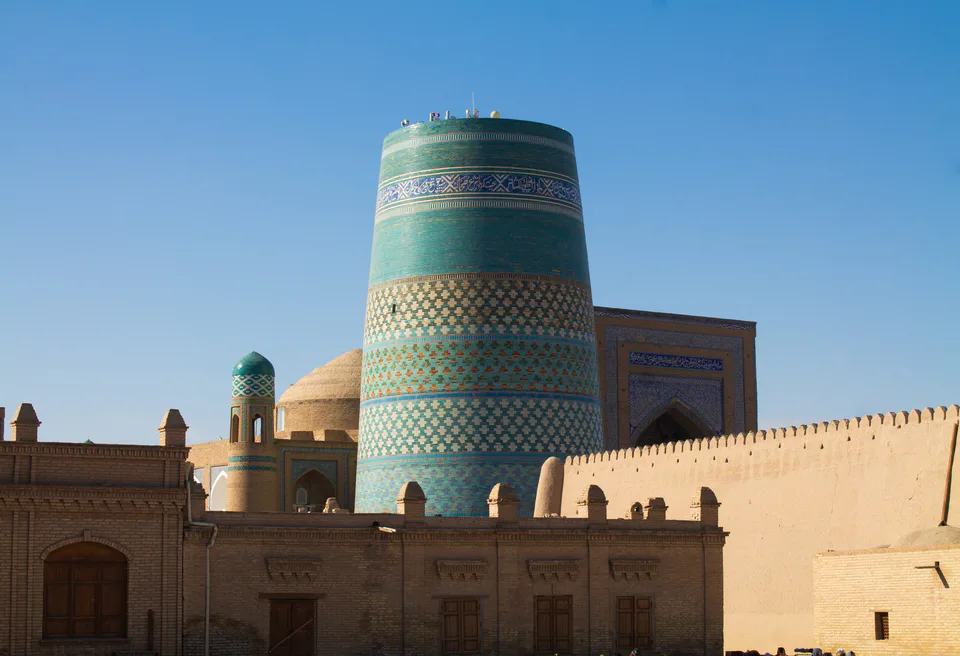
Minaret · Khiva
The unfinished minaret that became Khiva’s emblem
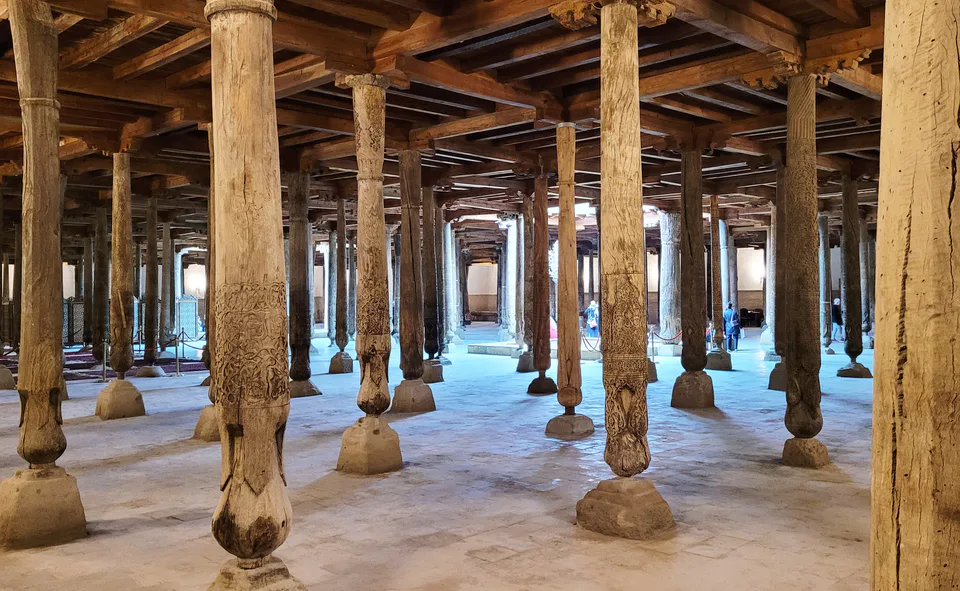
Mosque · Khiva
A forest of thousand-year-old pillars
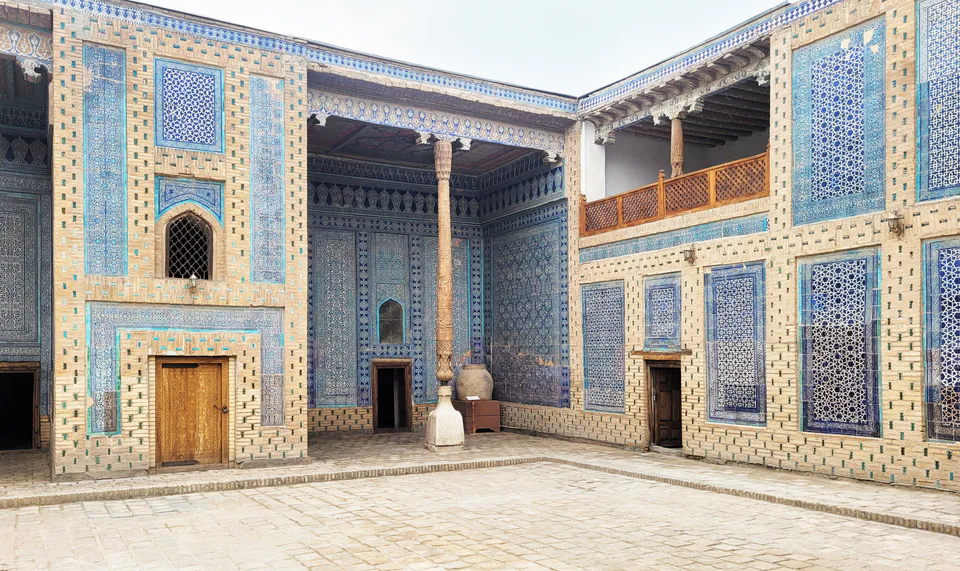
Ensemble · Khiva
Allakuli Khan’s palace of tiles
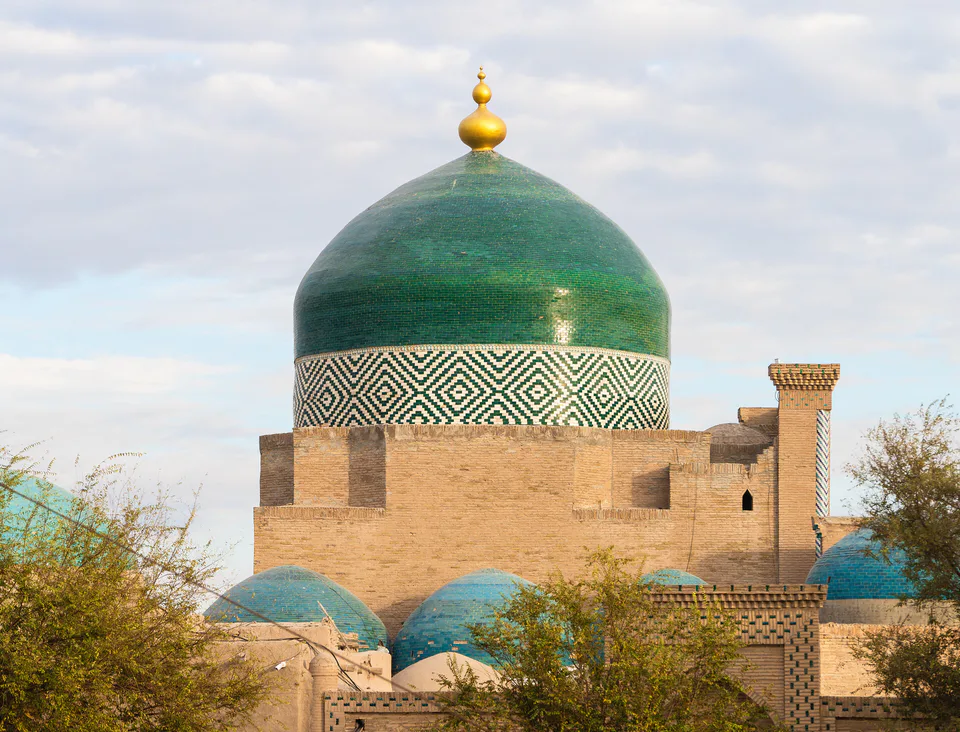
Mausoleum · Khiva
Poet, wrestler and patron saint of Khiva
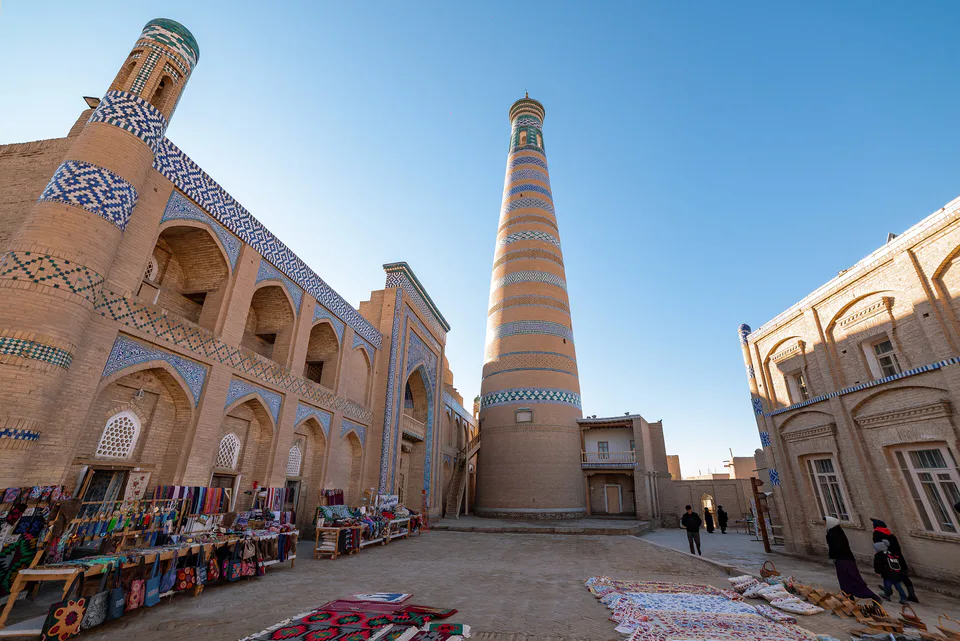
Minaret · Khiva
The highest point in Khiva
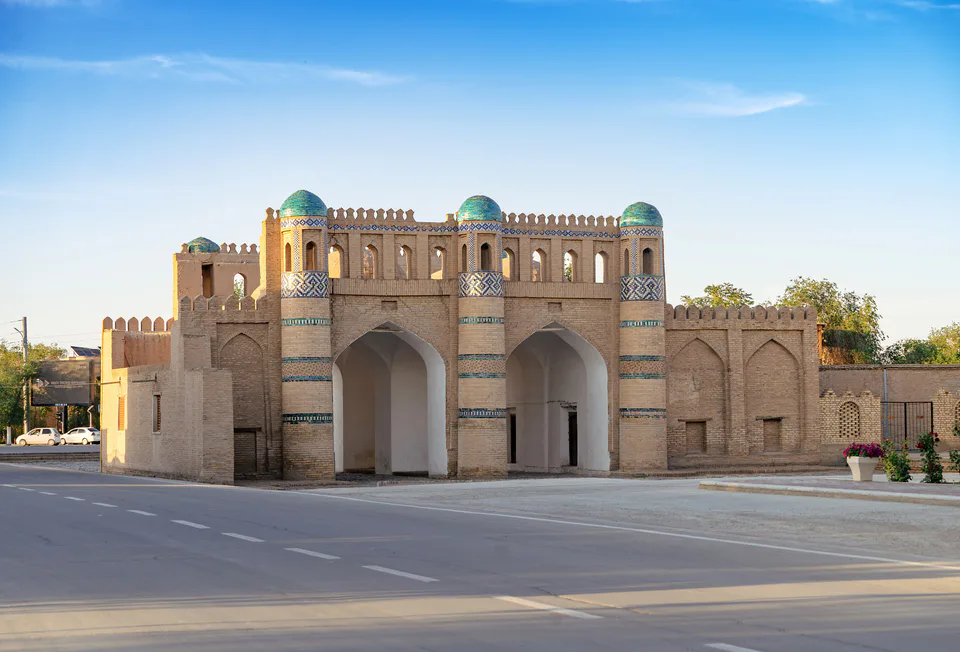
Fortress · Khiva
Khiva’s outer town and its gates
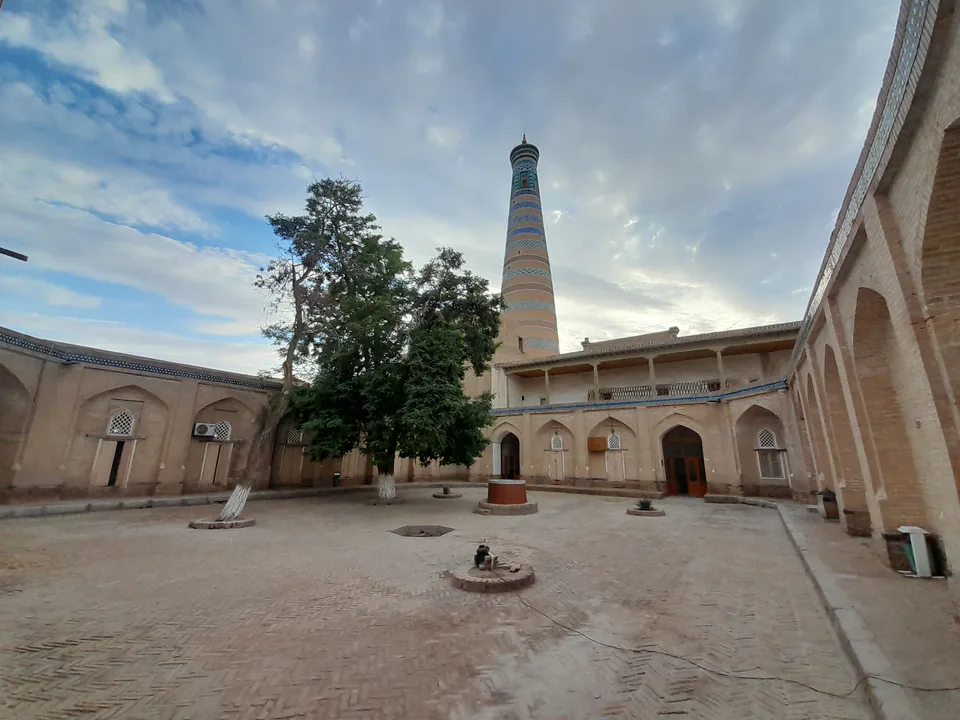
Madrasa · Khiva
Home of the Museum of Khorezm Music
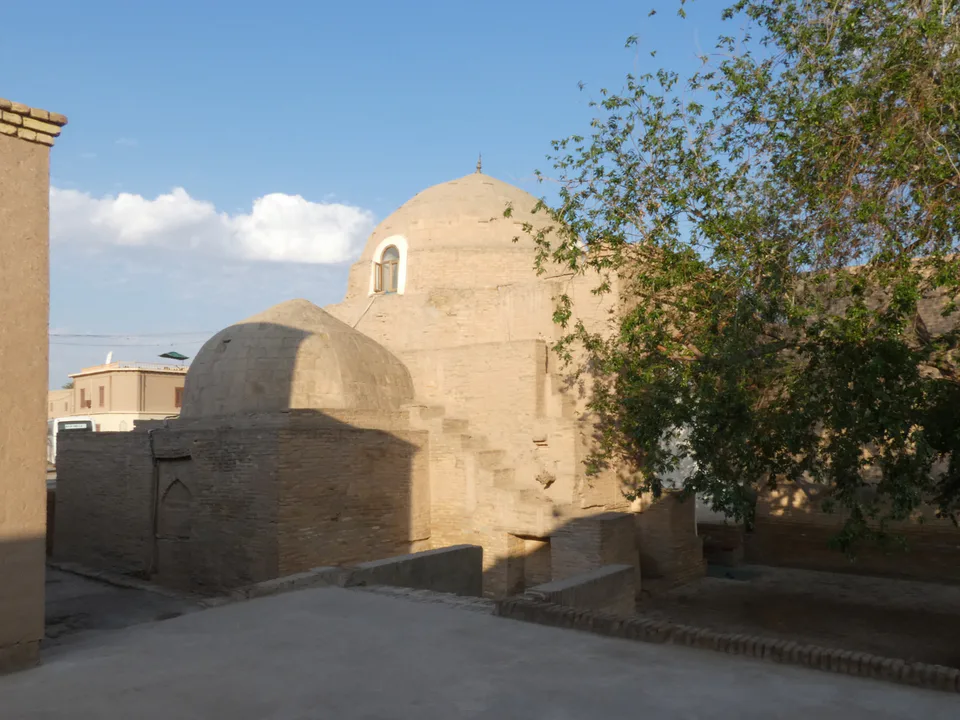
Mausoleum · Khiva
One of the oldest buildings in Itchan Kala
Madrasa · Khiva
The first madrasa after the capital moved to Khiva