Madrasa · Khiva
Muhammad Amin Khan Madrasa
Khiva’s largest madrasa
Minaret · Khiva
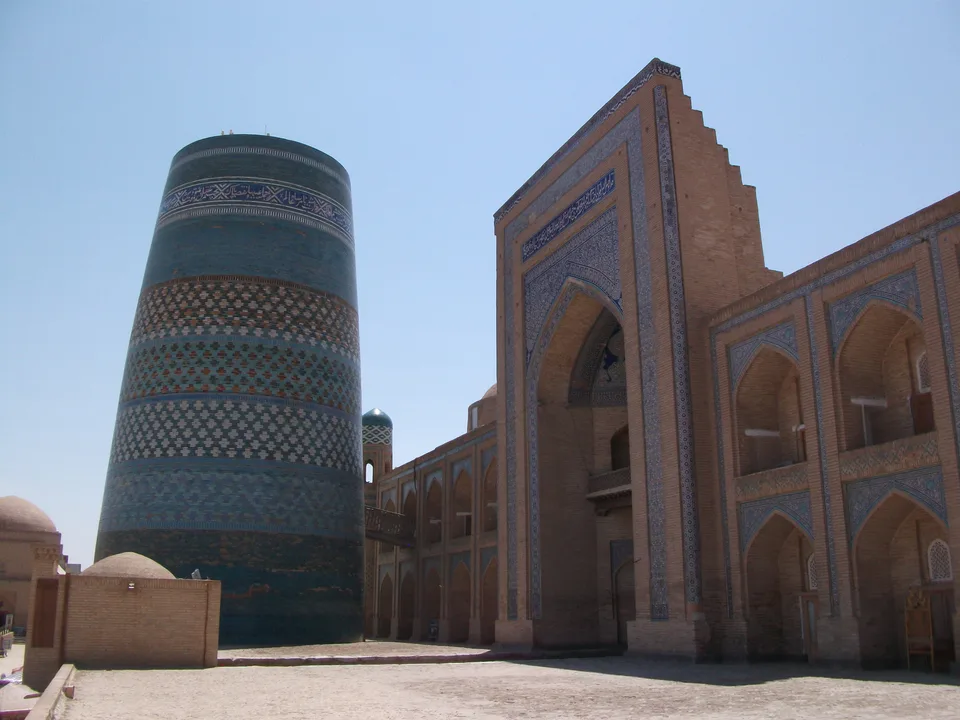
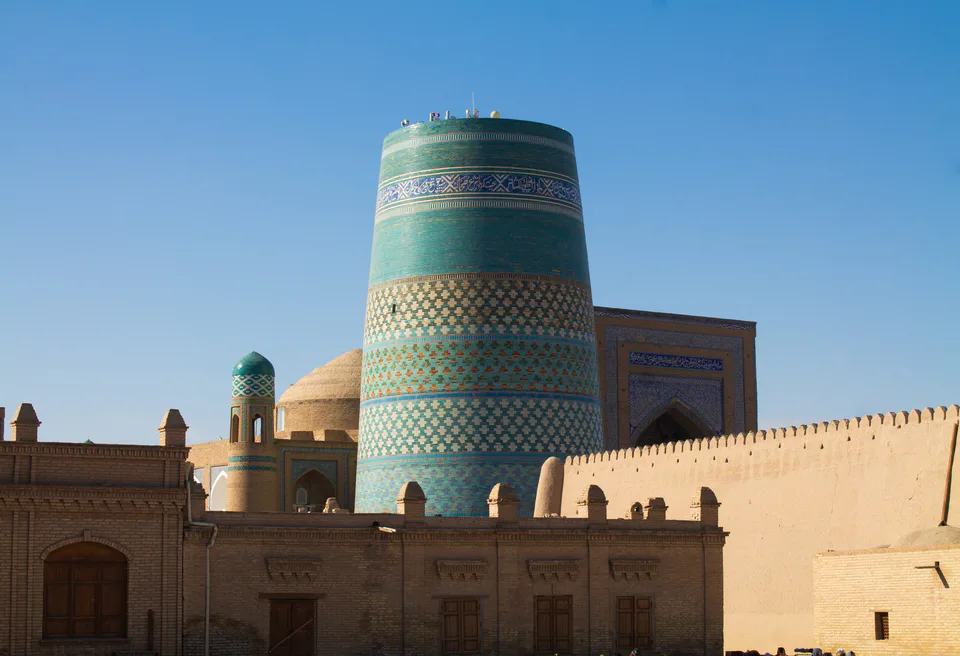
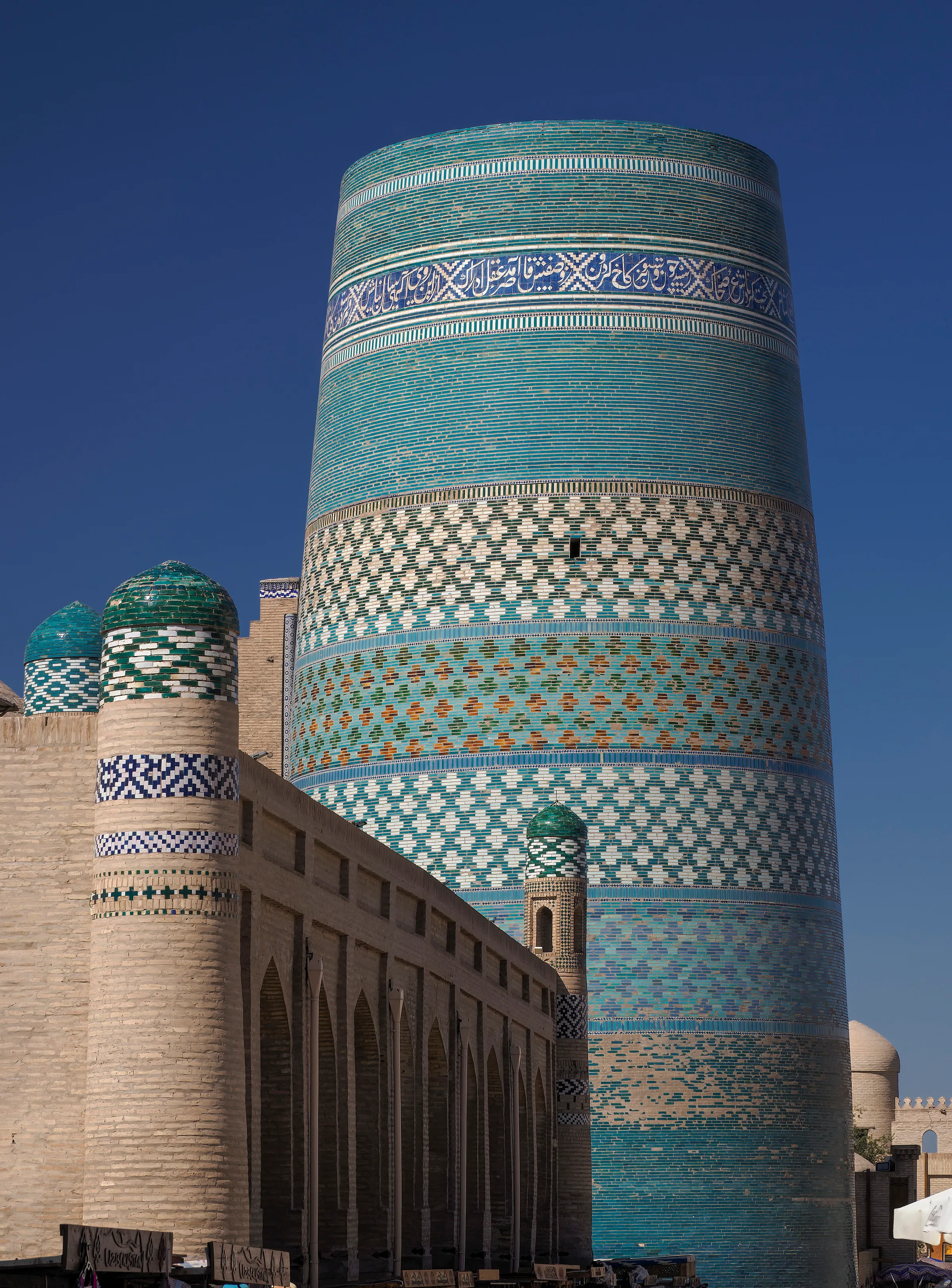
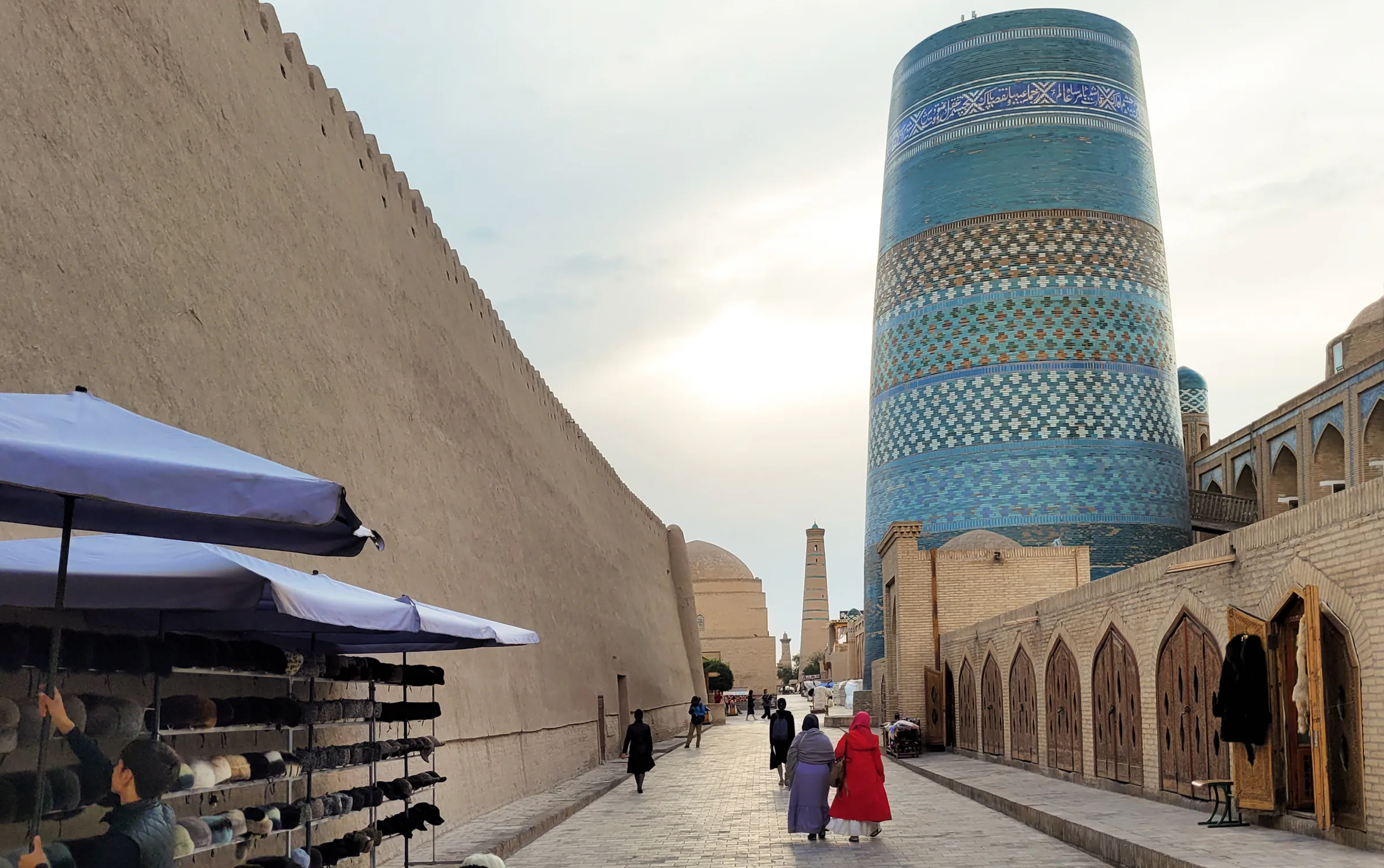
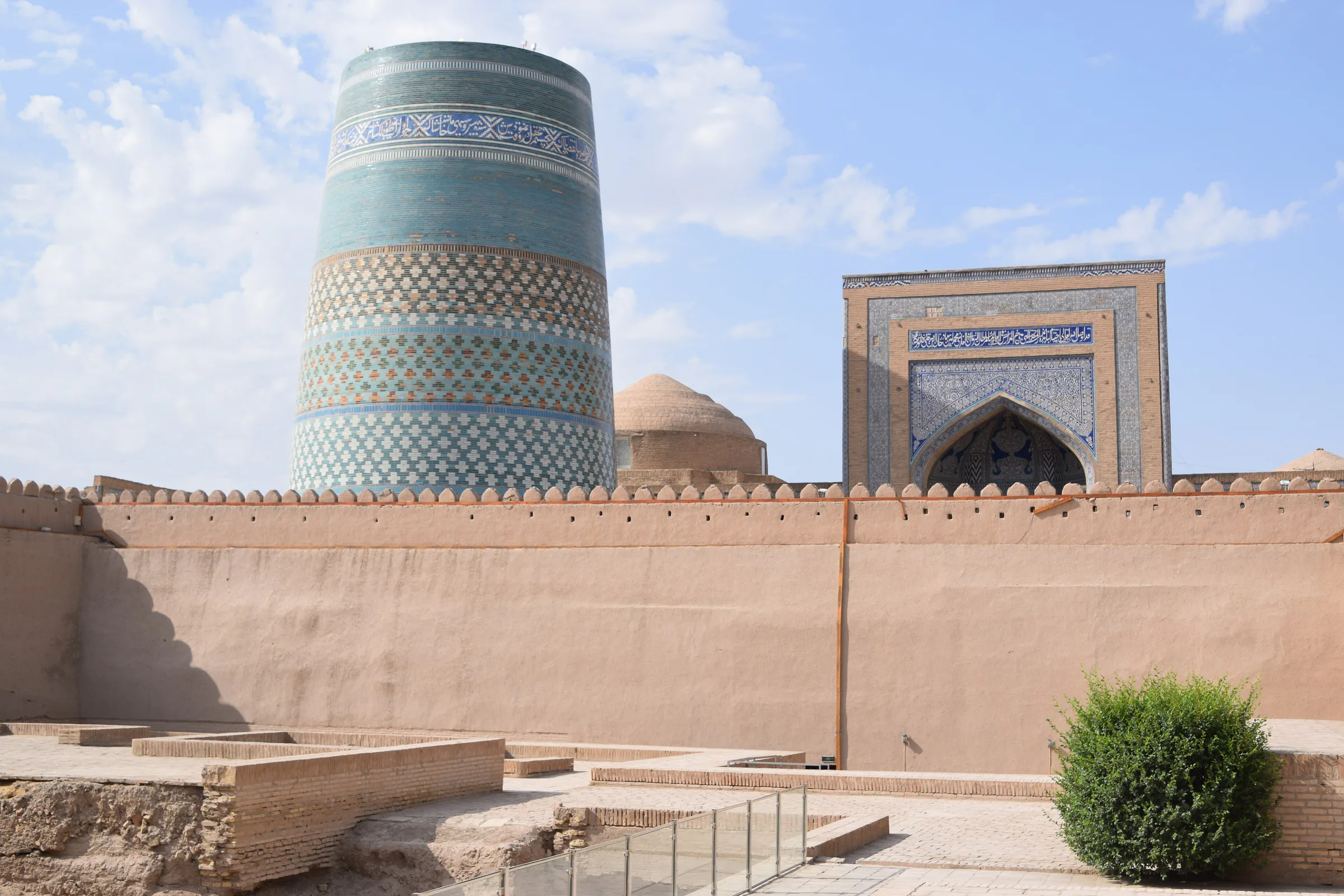
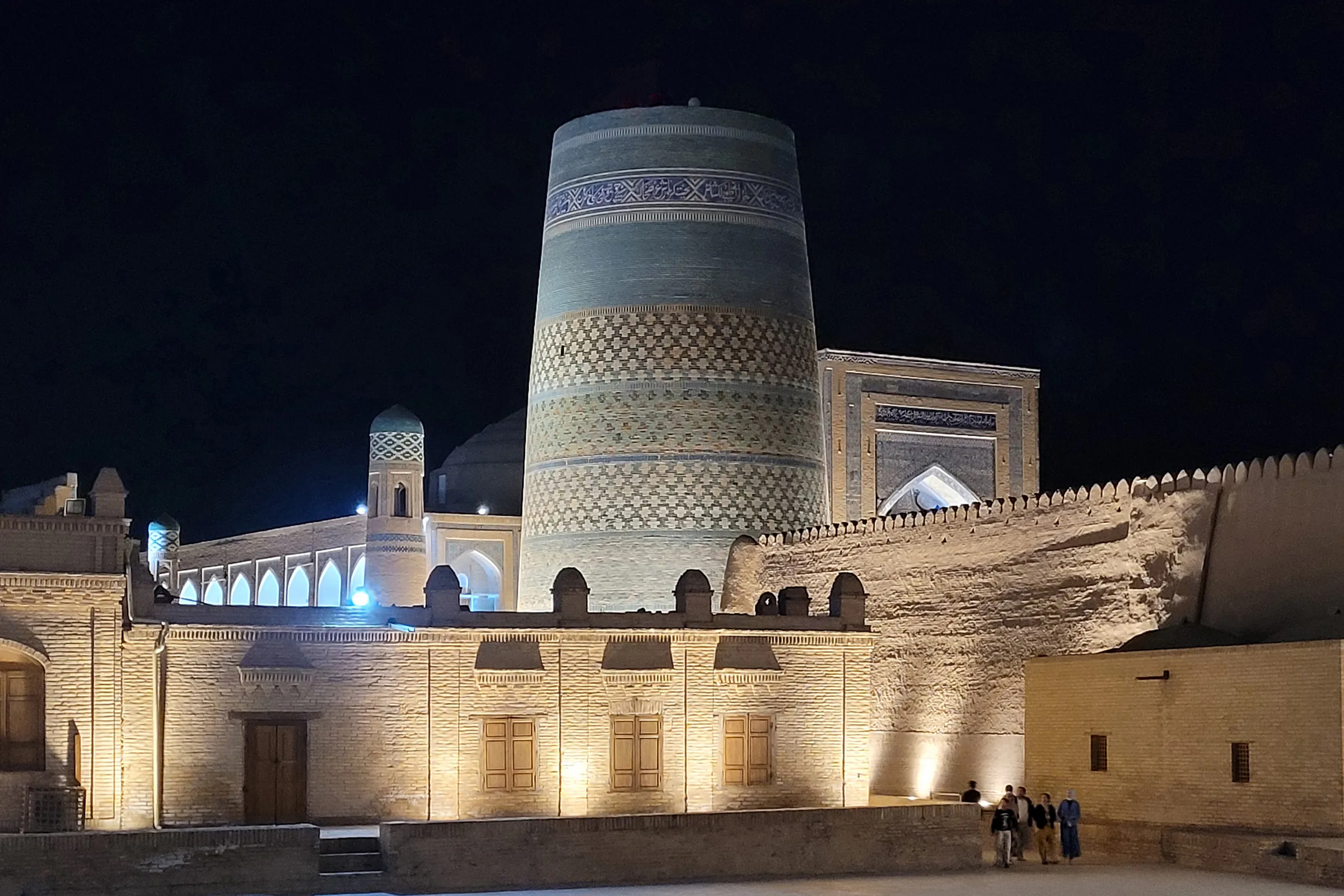
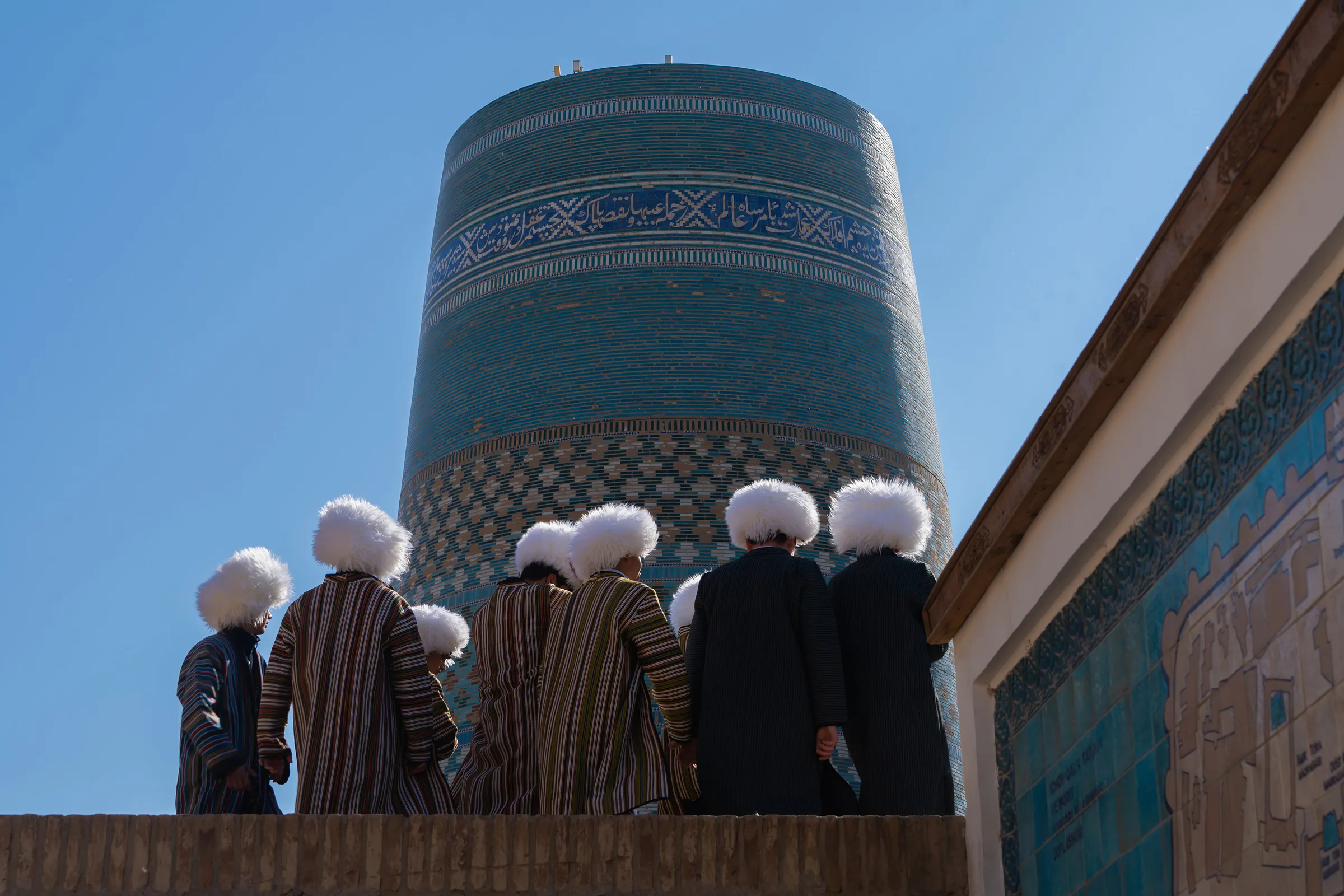
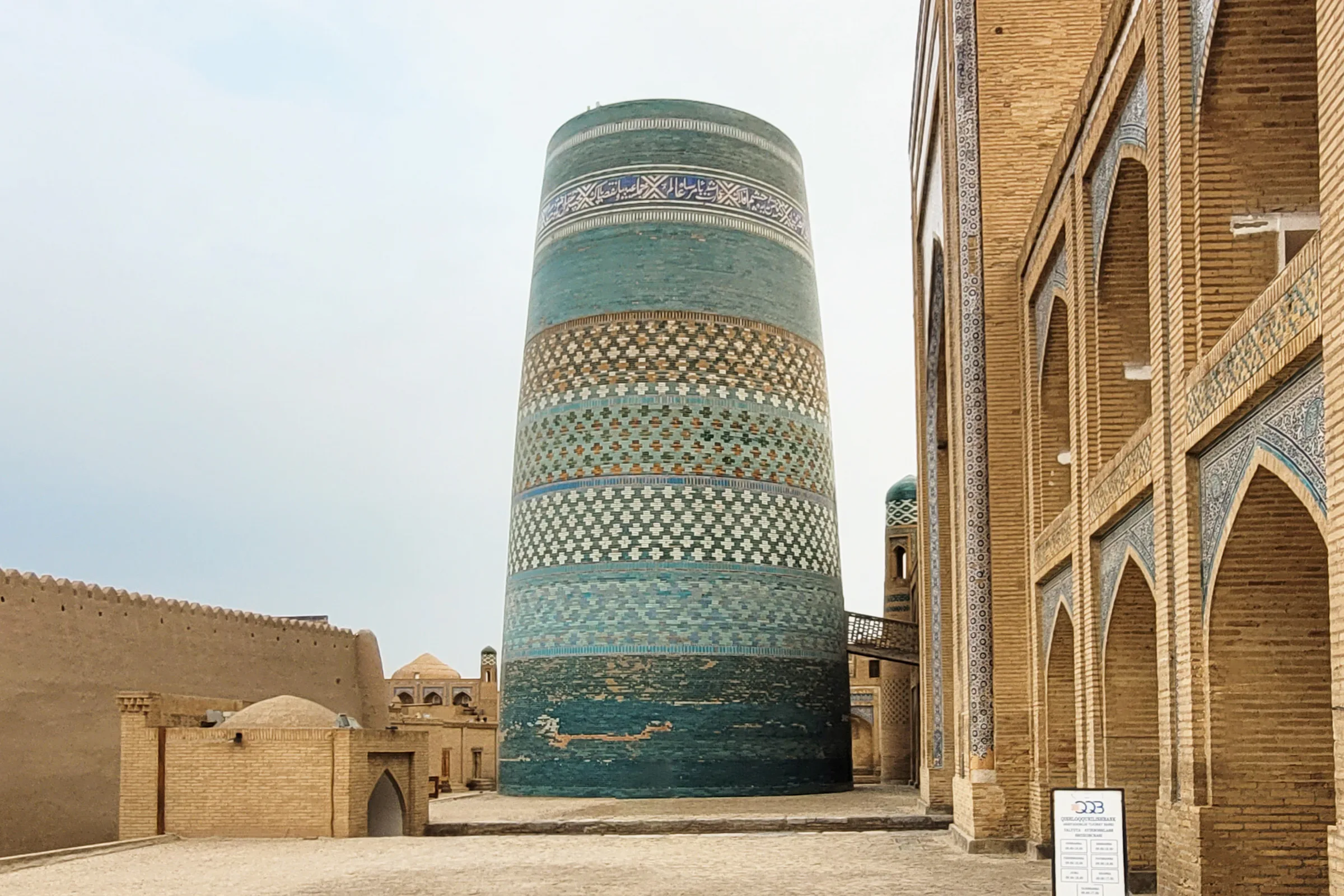
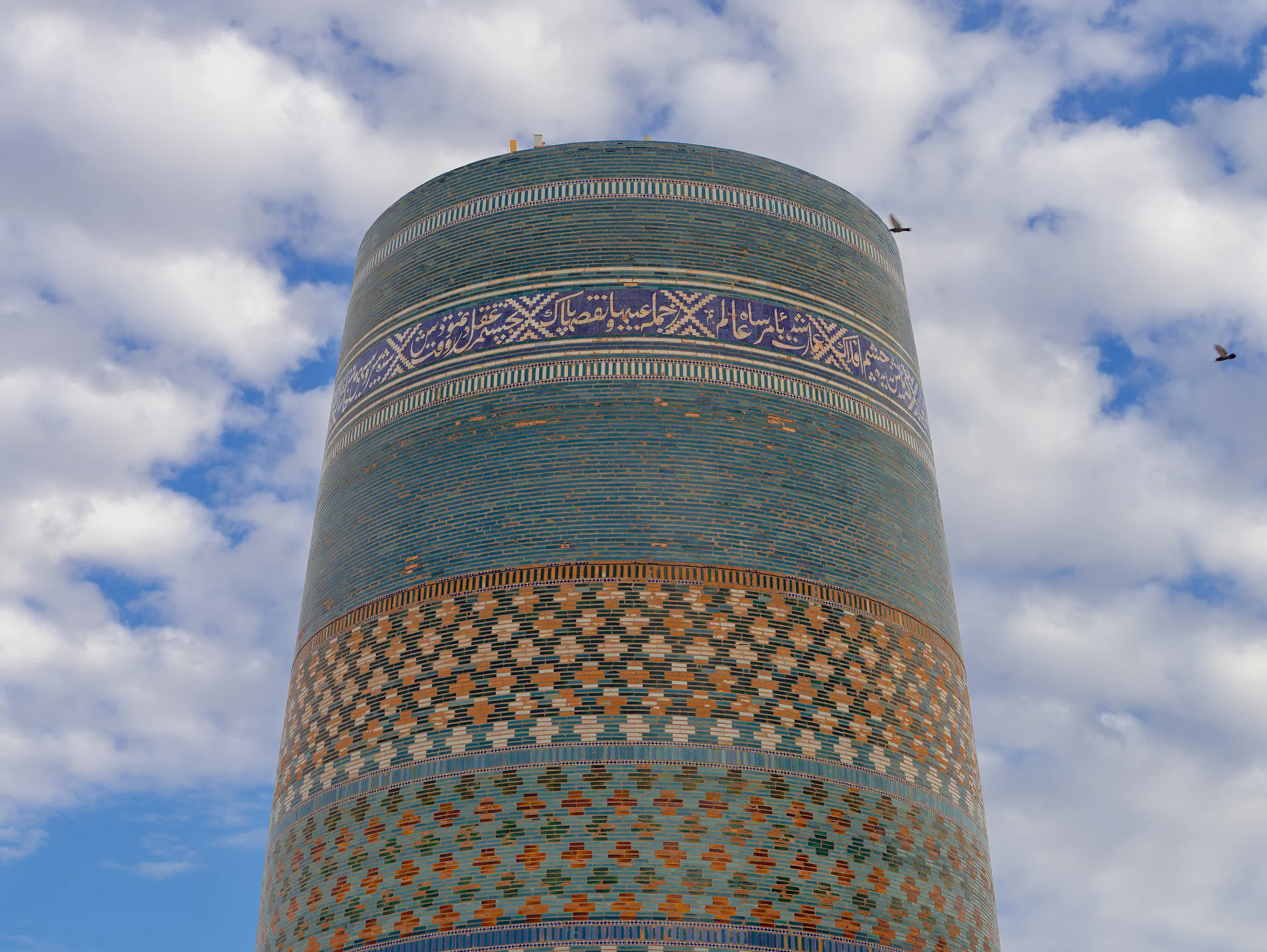
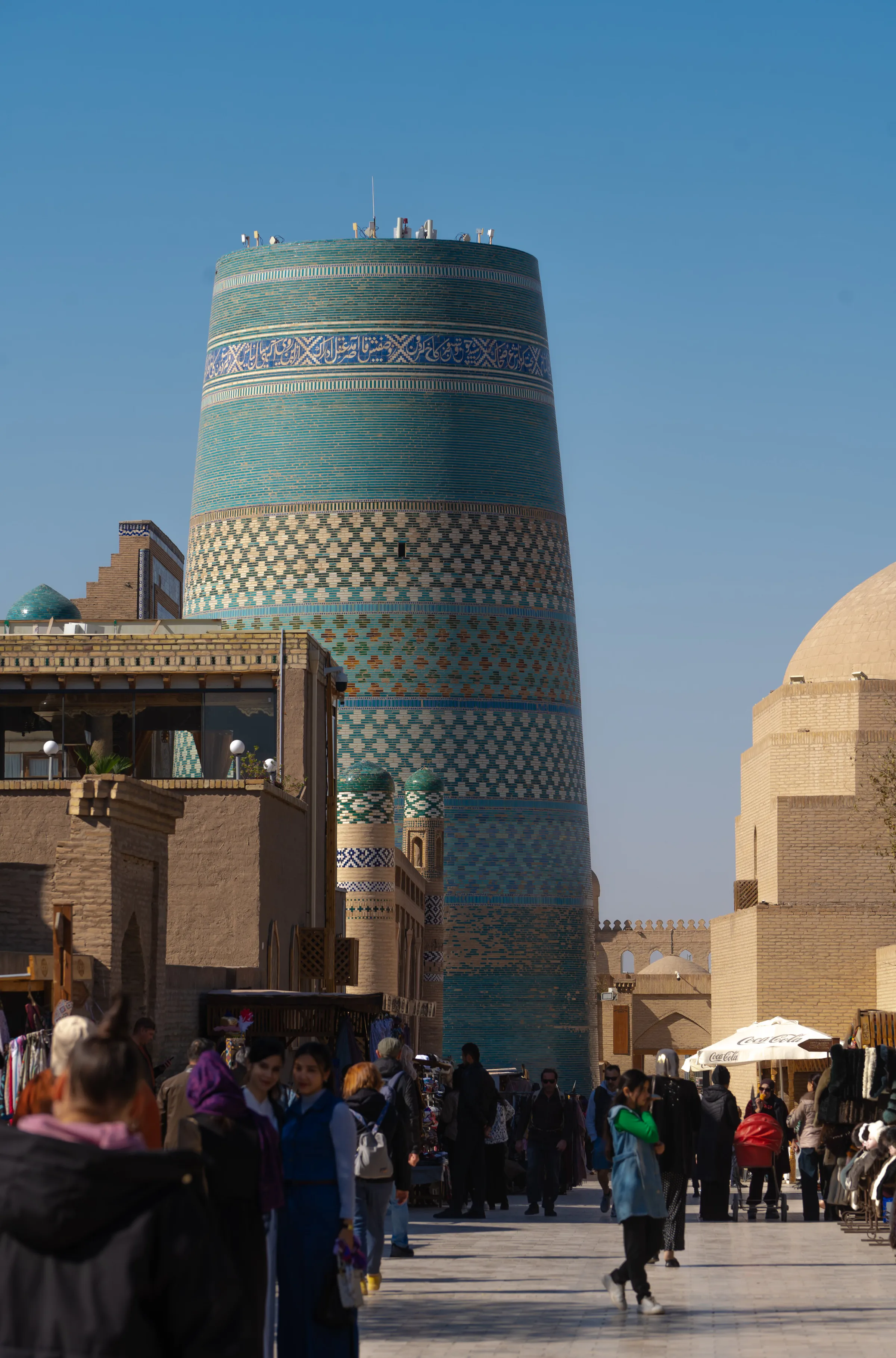
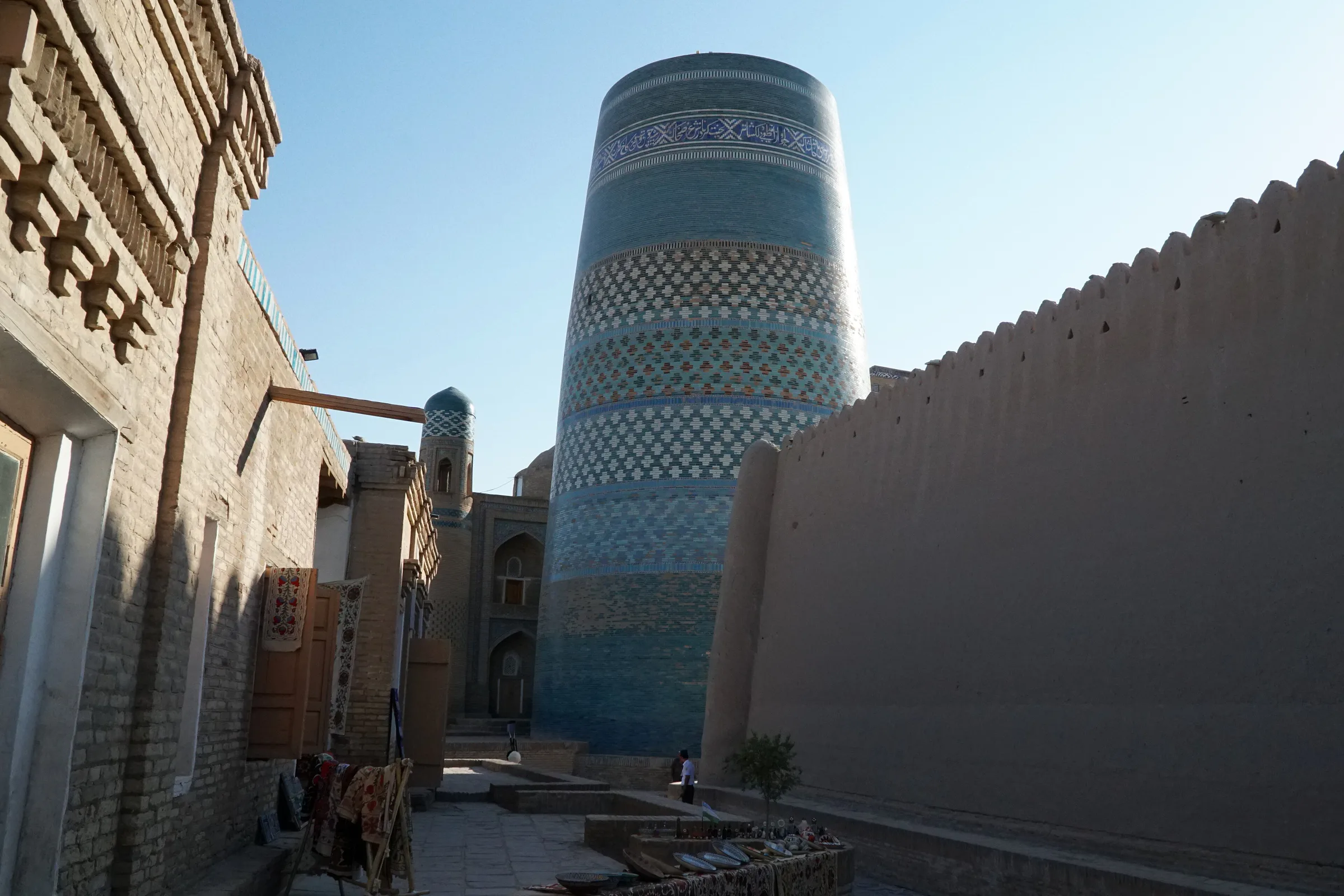
Begun by Muhammad Amin Khan in 1852 to be the tallest minaret in Central Asia, it stopped at 29 metres. Wrapped entirely in glazed tiles, it is the most photographed monument in Khiva.
Kalta Minor — literally “the short minaret” — stands in the western part of Itchan Kala, a few steps from the Ota Gate. Muhammad Amin Khan commissioned it together with his madrasa. Work began in 1852, and the khan meant it to outstrip every minaret in the Muslim world: sources put the planned height at 70–80 metres, and some writers give even higher figures.
In 1855 the khan was killed fighting the Turkmen near Sarakhs, and construction stopped for good. The Khivan historian and poet Ogahiy recorded the episode. The tower was left at 29 metres — and its stubby, unfinished look is precisely what made it famous.
The base measures 14.2 metres across, and the shaft tapers sharply, a device the builders intended to keep a very tall tower stable. Kalta Minor is the only minaret clad from top to bottom in glazed brick and majolica: bands of dark green, blue, white and turquoise alternate with geometric patterns. One band carries verses in nastaliq script by Ogahiy, likening the minaret to a tree of paradise and a pillar holding up the dome of heaven.
Parts of the inscription fell away in Soviet times. For Khiva’s 2,500th anniversary in 1996–1997 the minaret was thoroughly restored, its patterns renewed and the texts recreated from Ogahiy’s manuscripts.
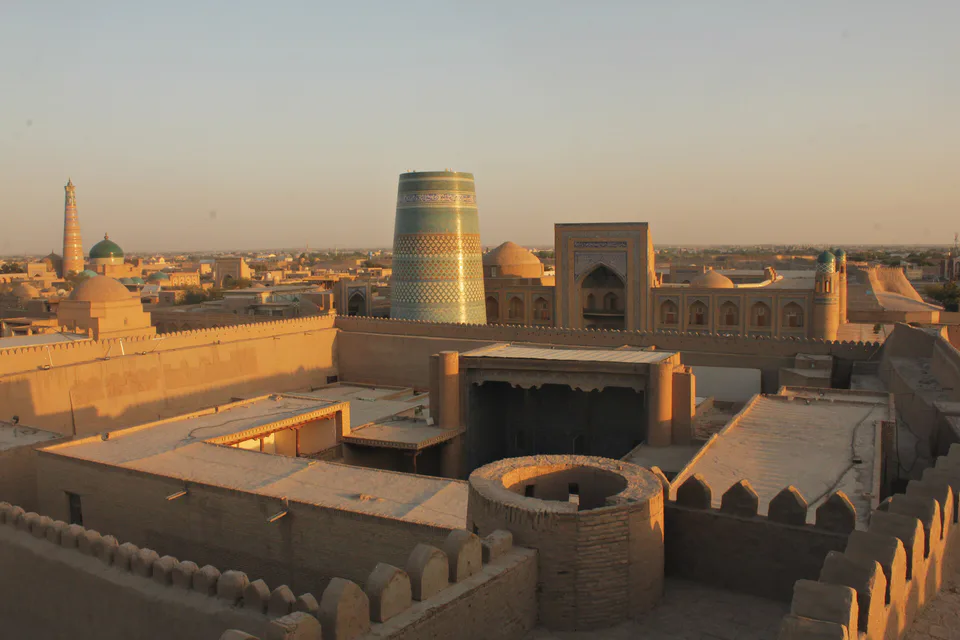
The little square in front of the minaret is where most walks through Itchan Kala begin, with the Ota Gate of 1828–1829 to the west, the Konya Ark to the north and the Muhammad Rahim Khan II Madrasa to the east. Because of its turquoise and blue tiles it is sometimes called the Blue Minaret, and its colour shifts through the day, from pale green at noon to deep blue towards evening.
Legend has it that the Emir of Bukhara invited the Khivan master builder to raise an even taller minaret in Bukhara; the furious khan resolved to execute him, the architect fled, and the tower was never completed. The chronicles, more prosaically, blame the khan’s death.
Kalta Minor is not freestanding in spirit: it adjoins the forecourt of the Muhammad Amin Khan Madrasa and is often treated as part of it. The madrasa itself now houses a hotel.
Madrasa · Khiva
Khiva’s largest madrasa
Ensemble · Khiva
A walled museum-city where people still live
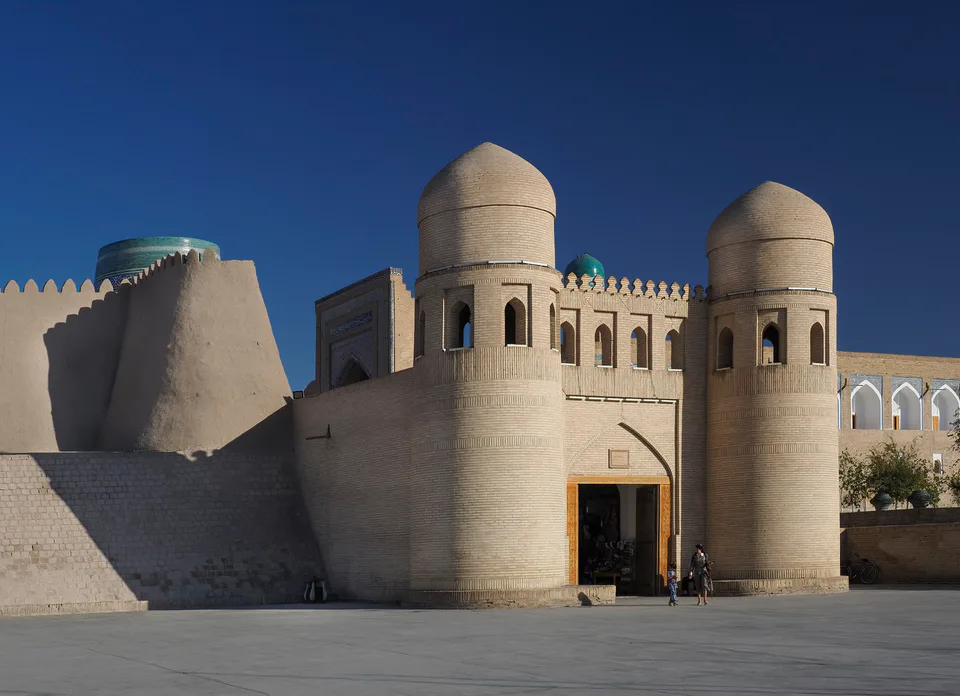
Fortress · Khiva
The main gate of Itchan Kala
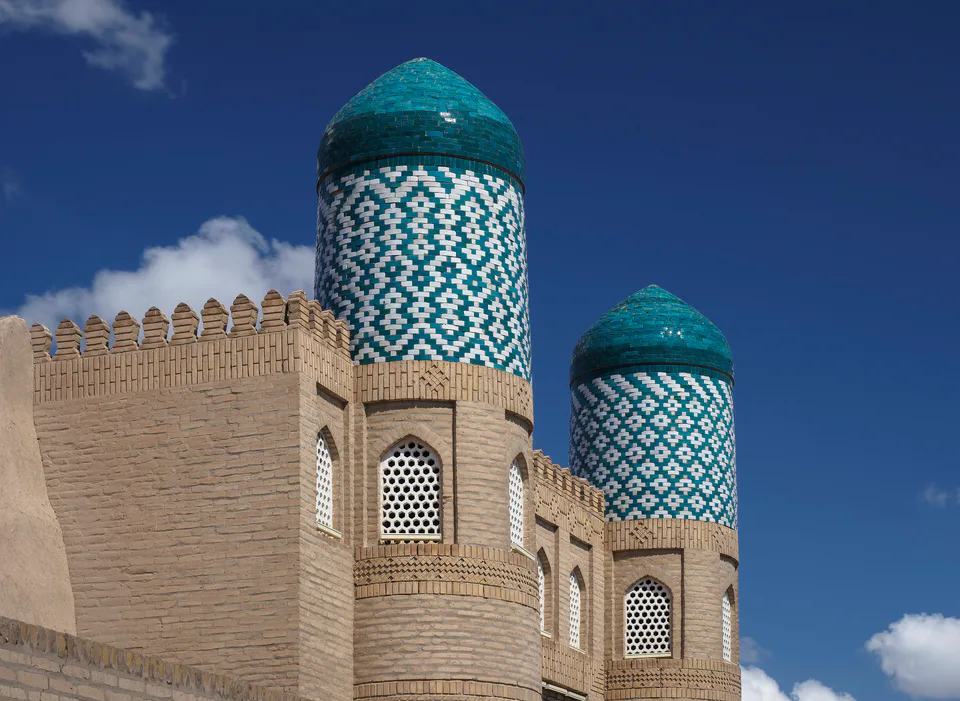
Fortress · Khiva
The khans’ fortress within the fortress
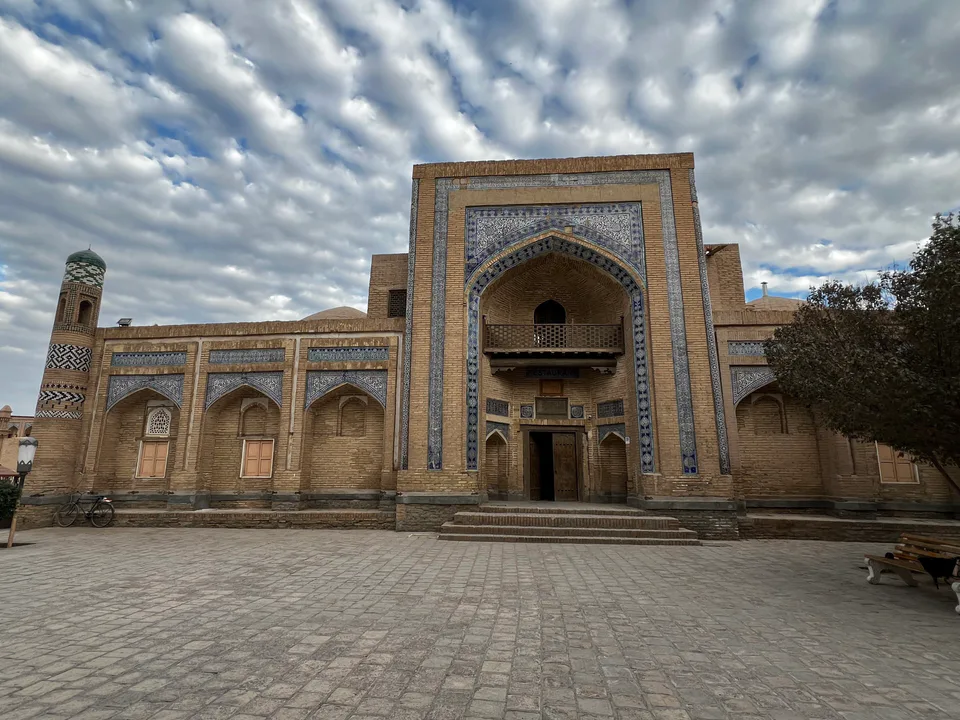
Madrasa · Khiva
A courtier’s compact madrasa
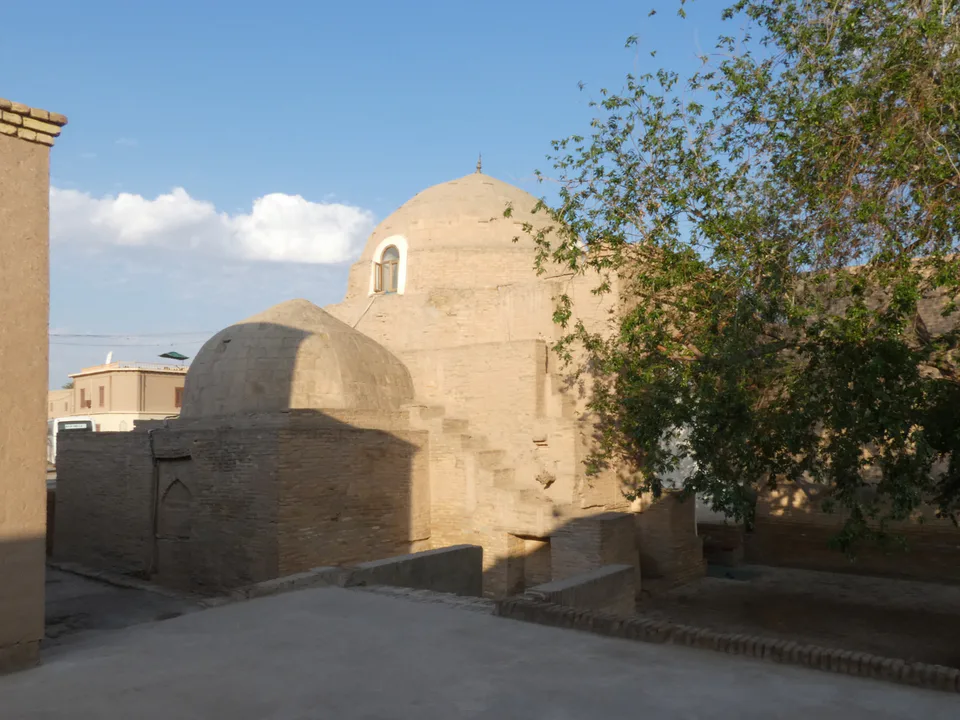
Mausoleum · Khiva
One of the oldest buildings in Itchan Kala
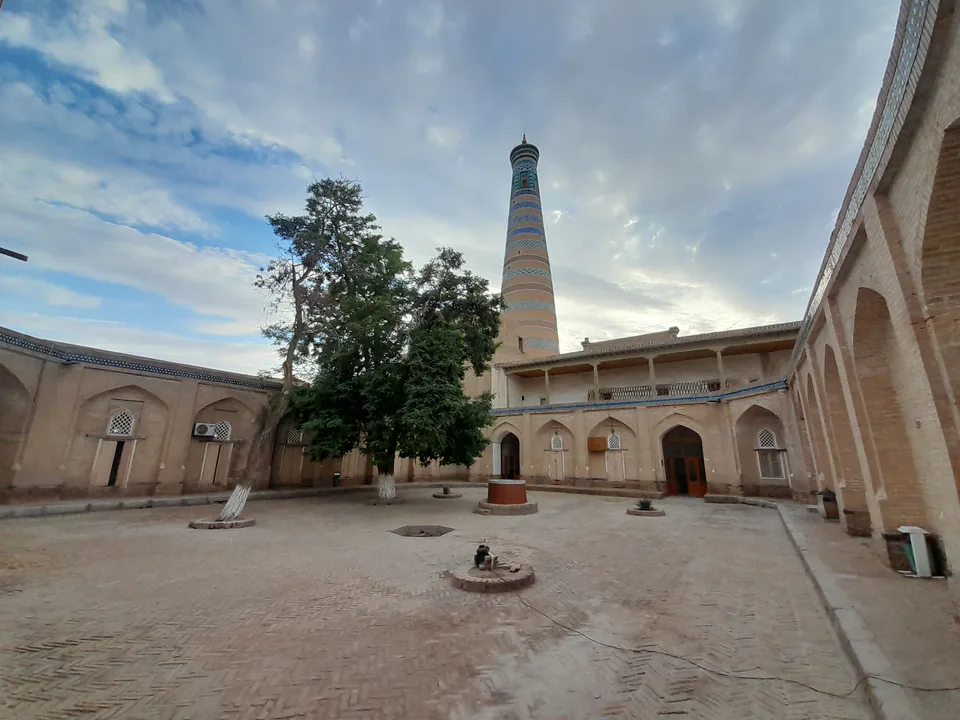
Madrasa · Khiva
Home of the Museum of Khorezm Music
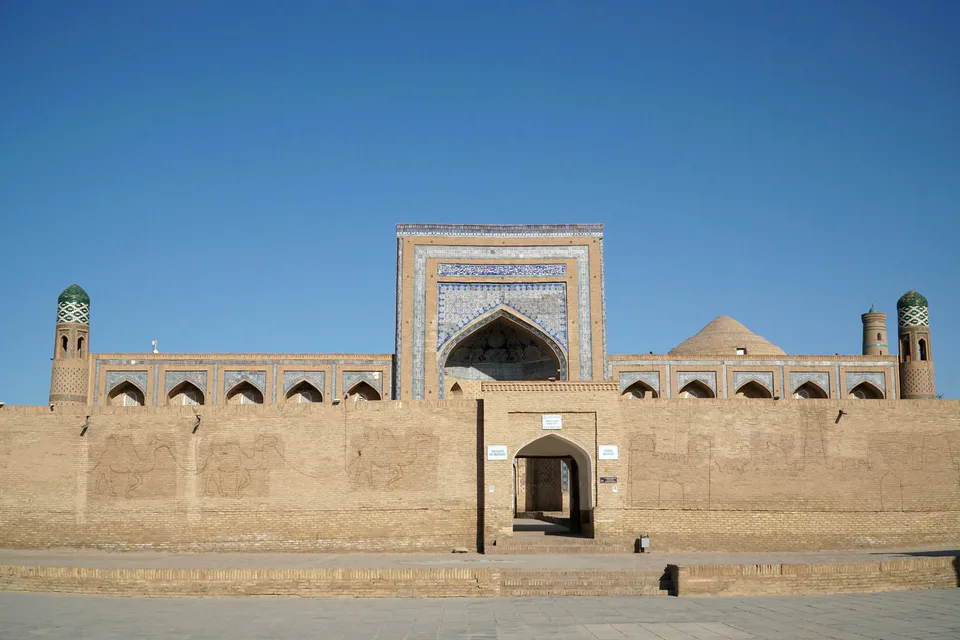
Madrasa · Khiva
The madrasa of Feruz, the poet-khan
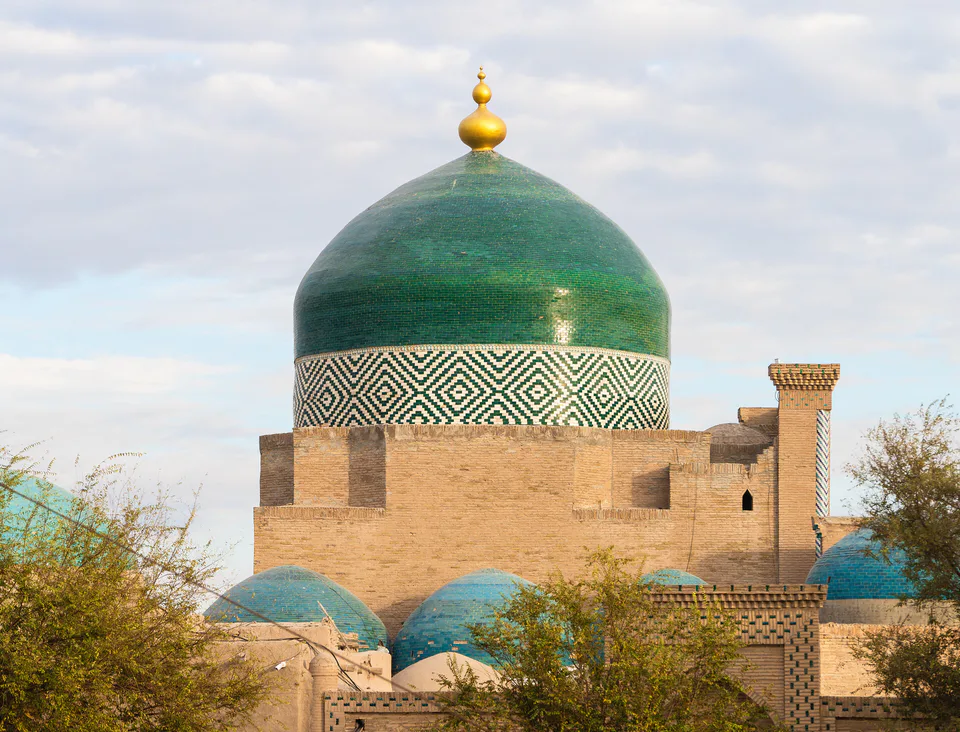
Mausoleum · Khiva
Poet, wrestler and patron saint of Khiva
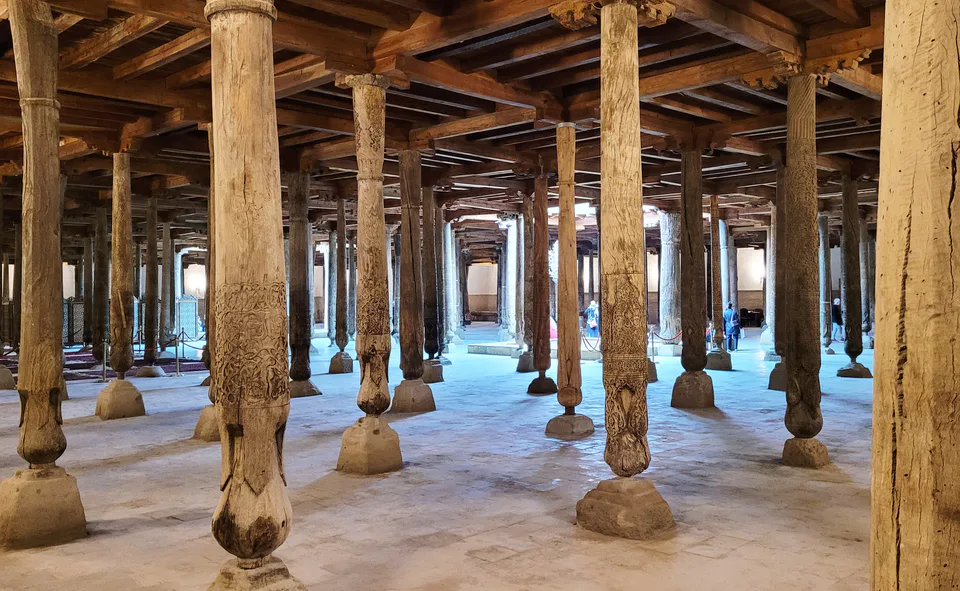
Mosque · Khiva
A forest of thousand-year-old pillars