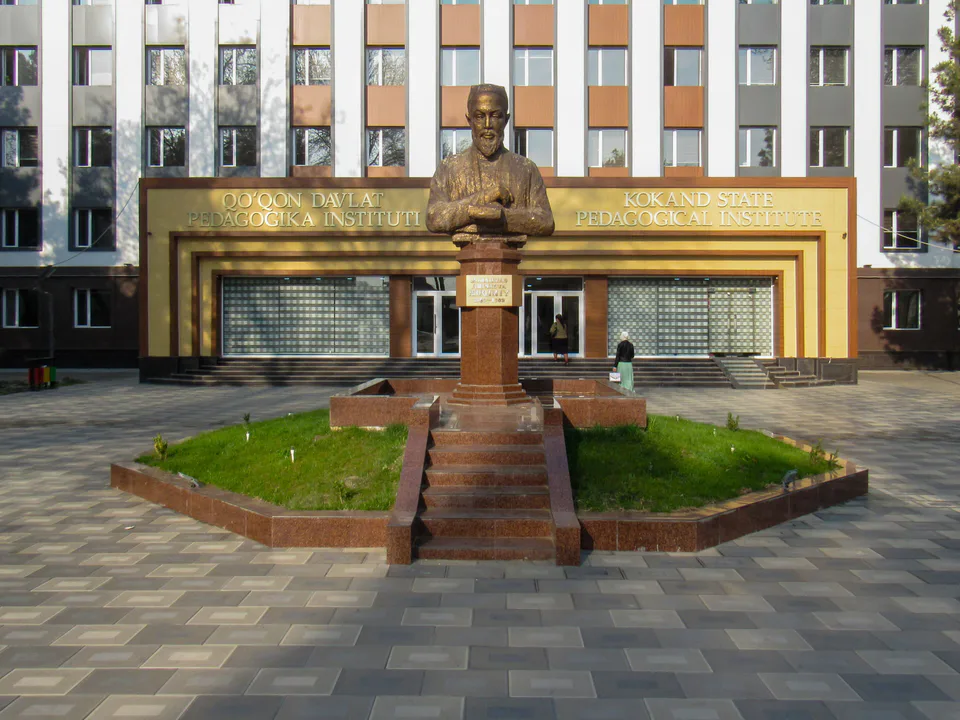
The leading poet of 19th-century Khorezm, court historian and translator. Lines of his verse adorn the portals of Khiva's monuments, and he rendered many classics of Eastern literature into Uzbek.
Muhammad Rizo, son of Erniyozbek, known as Ogahiy, was born on 17 December 1809 in the village of Qiyot near Khiva into the family of a mirab, an official in charge of irrigation water. He lost his father at three and was raised by his uncle, the celebrated poet and historian Shermuhammad Munis. Educated in Khiva's madrasas, he mastered Arabic, Persian and Turkish. When Munis died in 1829, Allakuli Khan appointed Ogahiy mirab in his place. A fall from a horse in 1845 left a leg paralysed; he resigned in 1857 and lived in poverty and ill health for the rest of his life. He was tutor to the young prince who became Muhammad Rahim Khan II, the poet Feruz. Ogahiy died on 14 December 1874.
His work
Ogahiy collected his lyrics in the divan “Ta'viz ul-oshiqin” (The Lovers' Talisman), whose ghazals dwell on love, friendship, justice and contempt for hypocrisy. As court historian he continued the chronicle “Firdavs ul-iqbol” begun by Munis and wrote “Riyoz ud-davla”, “Zubdat ut-tavorikh”, “Jomi' ul-voqeoti sultoniy”, “Gulshani davlat” and “Shohid ul-iqbol”, the main sources for 19th-century Khorezm. He was also a major translator, rendering into Uzbek works by Nizami, Saadi, Jami, Hilali and others.
His traces in Khiva
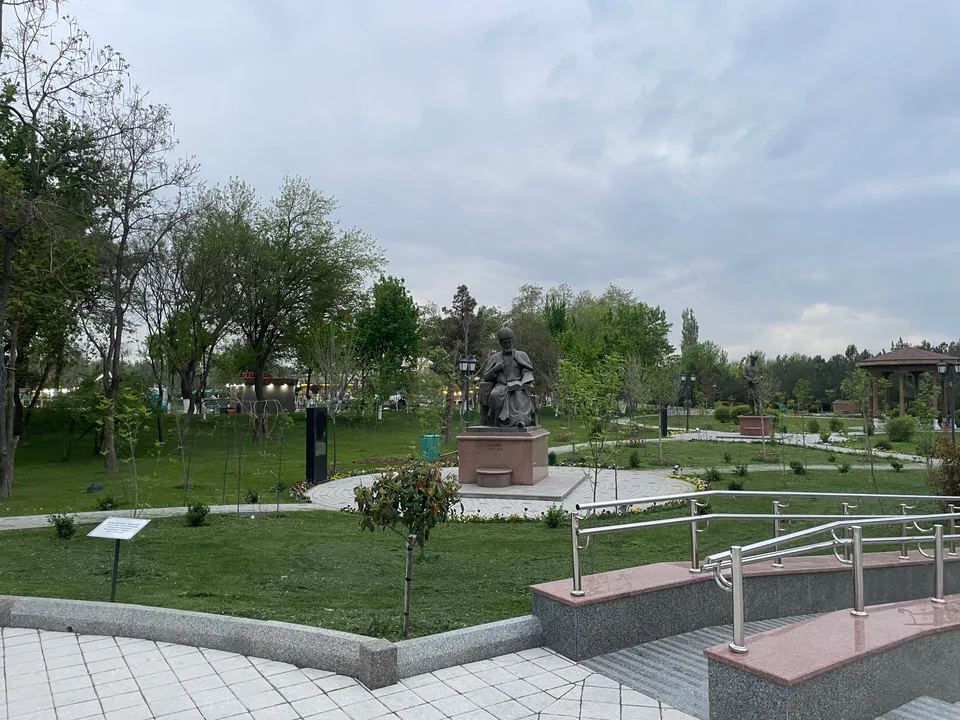
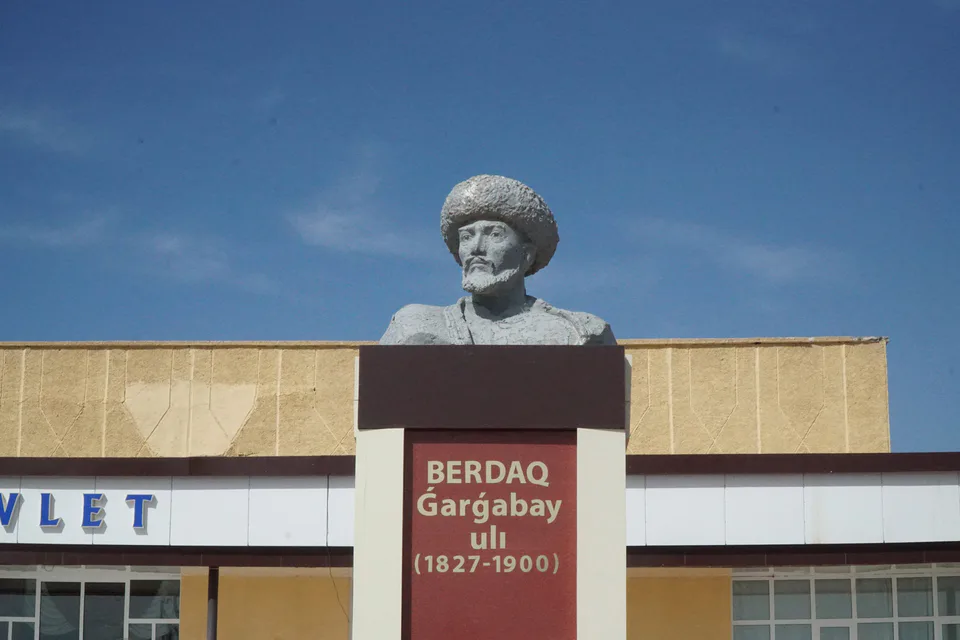
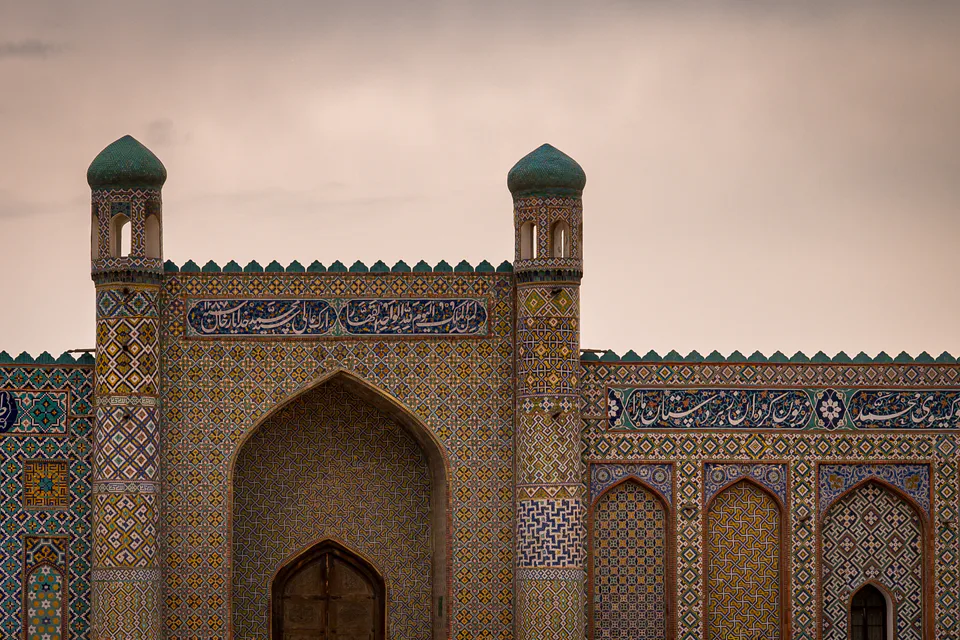
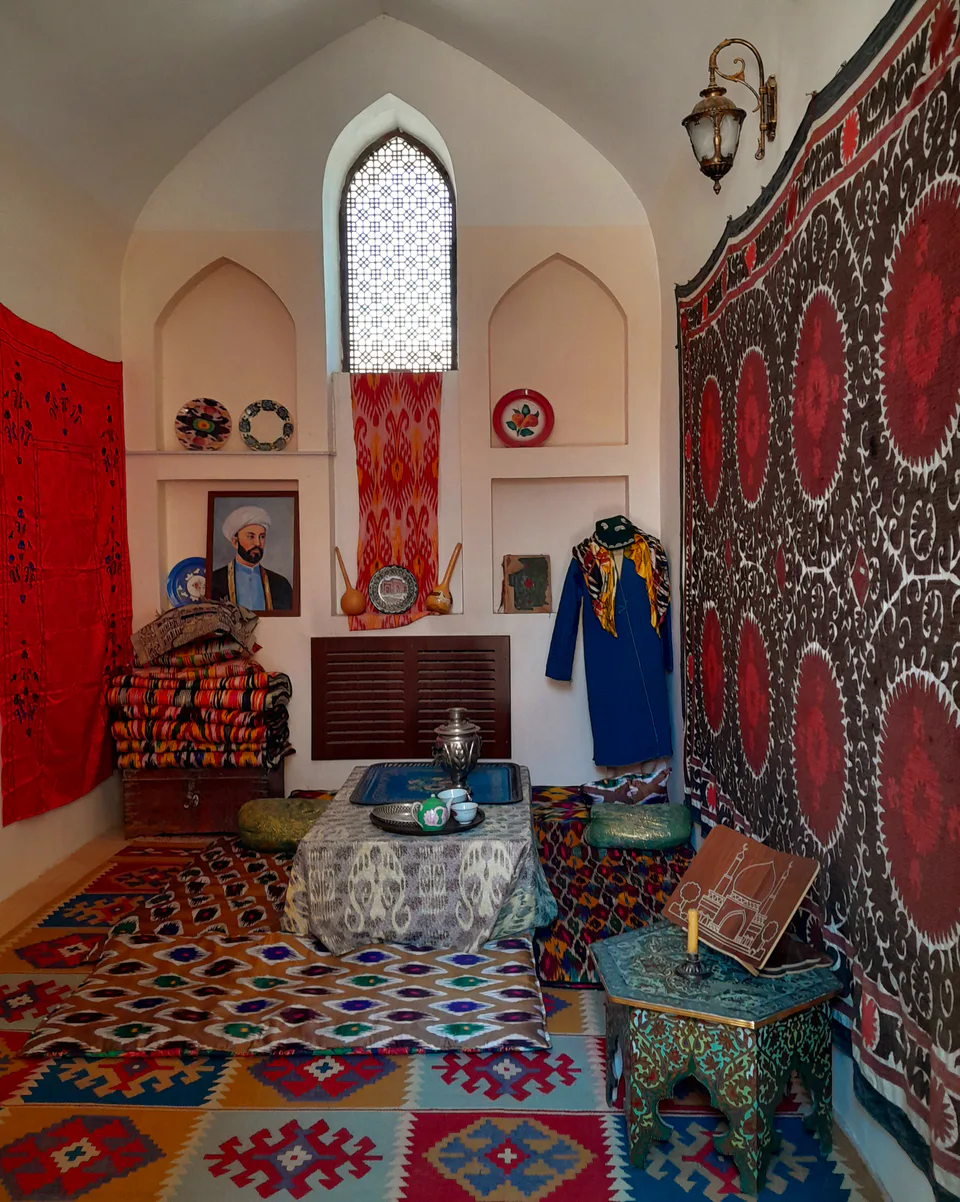
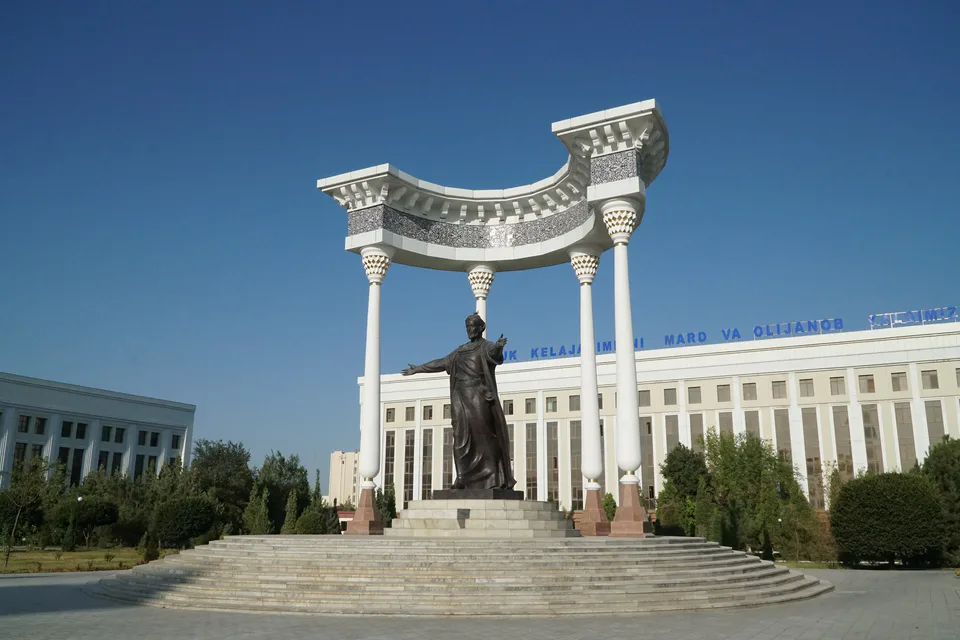
Lines by Ogahiy still decorate the portals and walls of monuments in Khorezm, above all in Khiva. The Khorezm regional theatre of musical drama and comedy and a city park bear his name. In his native Qiyot an Ogahiy garden and house-museum have been created, and since 2019 a creative school named after him has operated there, fronted by his statue — a literary detour easily combined with a visit to Itchan Kala.
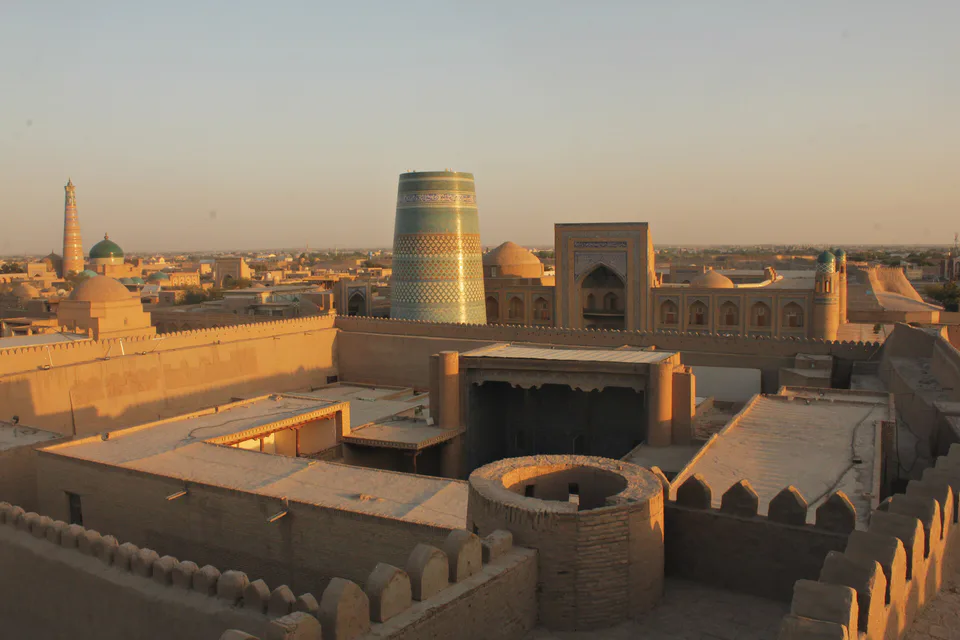
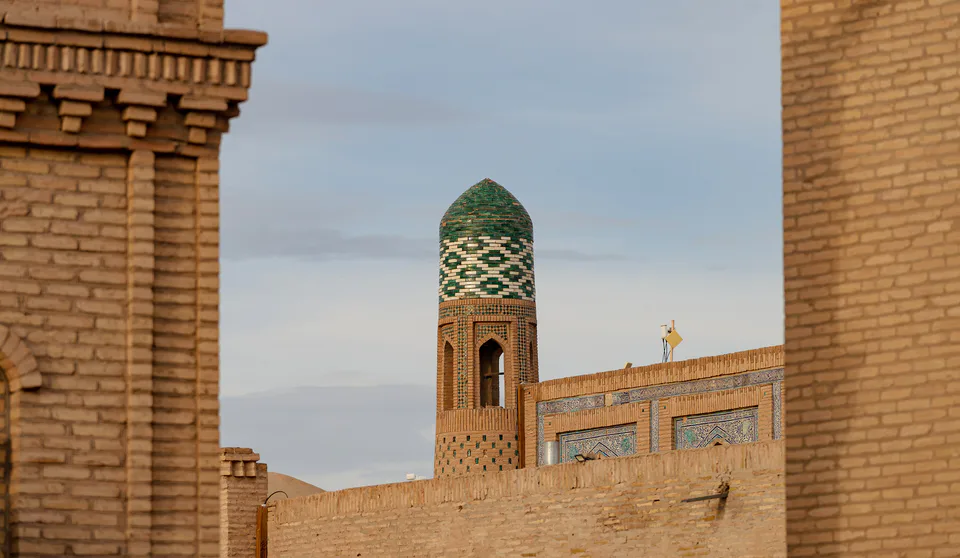
In 1804 Eltuzar of the Qungrat tribe took the title of khan, founding Khiva's last dynasty. The 19th century was Itchan Kala's great building age: under Allakuli Khan came the Tash Hauli palace (1830–1838) and his madrasa and caravanserai, and in 1842 the outer town, Dishan Kala, was walled. The Kalta Minor beside the Muhammad Amin Khan Madrasa (1851–1855) was left unfinished when the khan was killed. The madrasa of Muhammad Rahim Khan II followed in 1871 and, in 1908–1910, the Islam Khoja madrasa and Khiva's tallest minaret. Itchan Kala is thus largely 18th–19th-century architecture; it joined the UNESCO list in 1990.
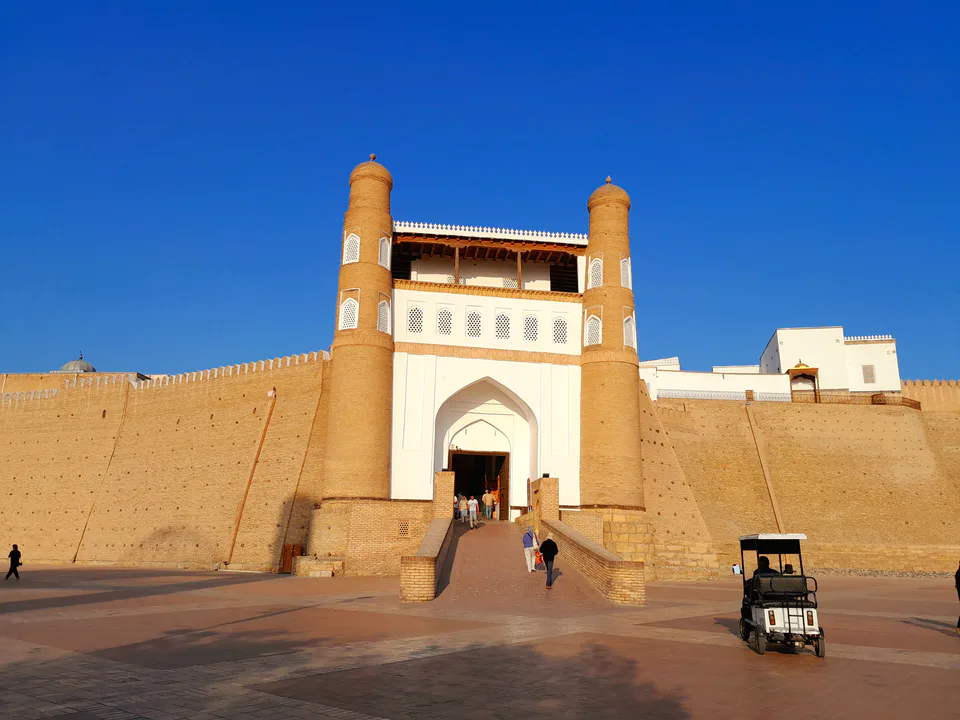
In the 19th century the British and Russian empires competed for influence in Central Asia, a rivalry known as the Great Game. In December 1838 the British officer Charles Stoddart arrived in Bukhara to negotiate with Emir Nasrullah, but was arrested and held for years in the city's prison. Arthur Conolly, who came in 1841 to secure his release, was imprisoned too. In June 1842 both were executed as spies in the square before the Ark. The missionary Joseph Wolff, who travelled to Bukhara to learn their fate, published an account in 1845 that made the story famous in Europe. Bukhara's Zindan museum shows the pit in which prisoners were kept.
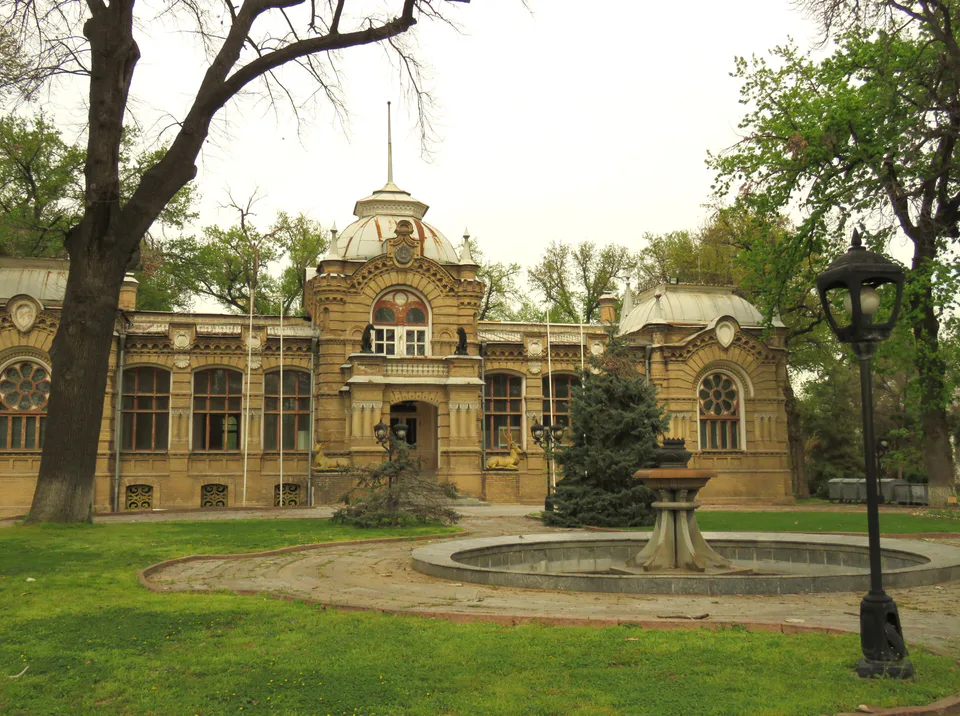
From 9 May to 17 June 1865 General Mikhail Chernyayev's troops besieged Tashkent, then part of the Khanate of Kokand. Alimqul, Kokand's de facto ruler, was killed leading the defence, and the city passed to the Russian Empire. In 1866, at war with the Emirate of Bukhara, Russian forces took Khujand, Ura-Tyube and Jizzakh. In 1867 the Governorate-General of Turkestan was created with its seat in Tashkent, headed first by General Konstantin von Kaufman. A new European-style Russian town grew up beside the old city, and Tashkent became the region's administrative centre.
Samarkand falls and Bukhara becomes a protectorate
In May 1868 Kaufman's troops defeated the army of Emir Muzaffar of Bukhara on the Chupan-Ata heights and entered Samarkand. In June, while the main force crushed the emir again at Zirabulak, the small garrison left in Samarkand's citadel was besieged by townspeople and the forces of the Shakhrisabz begs; among the defenders was the painter Vasily Vereshchagin. Under the peace signed at the end of June, Samarkand and Kattakurgan passed to Russia as the Zeravshan District, and the Emirate of Bukhara became a Russian protectorate. Vereshchagin's Turkestan series, including scenes of the siege, hangs in Moscow's Tretyakov Gallery.
In spring 1873 several Russian columns under the overall command of General Kaufman crossed the deserts from different directions into Khorezm, and at the end of May Khiva surrendered without a fight. Under the Treaty of Gandimian, signed in August, Muhammad Rahim Khan II kept his throne but lost the right to conduct foreign policy without Russian consent; the slave trade and slavery were abolished and a heavy indemnity imposed. The right bank of the Amu Darya, most of today's Karakalpakstan, passed to Russia as the Amu Darya Department, administered from the fort of Petro-Alexandrovsk, now Turtkul. Khiva survived as a protectorate until 1920.