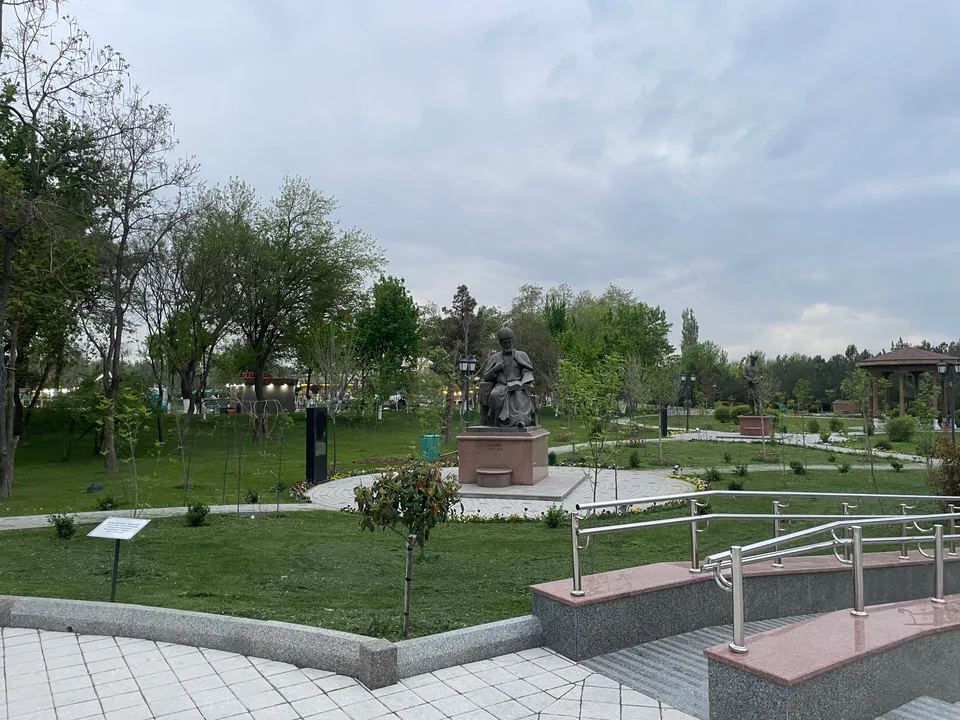
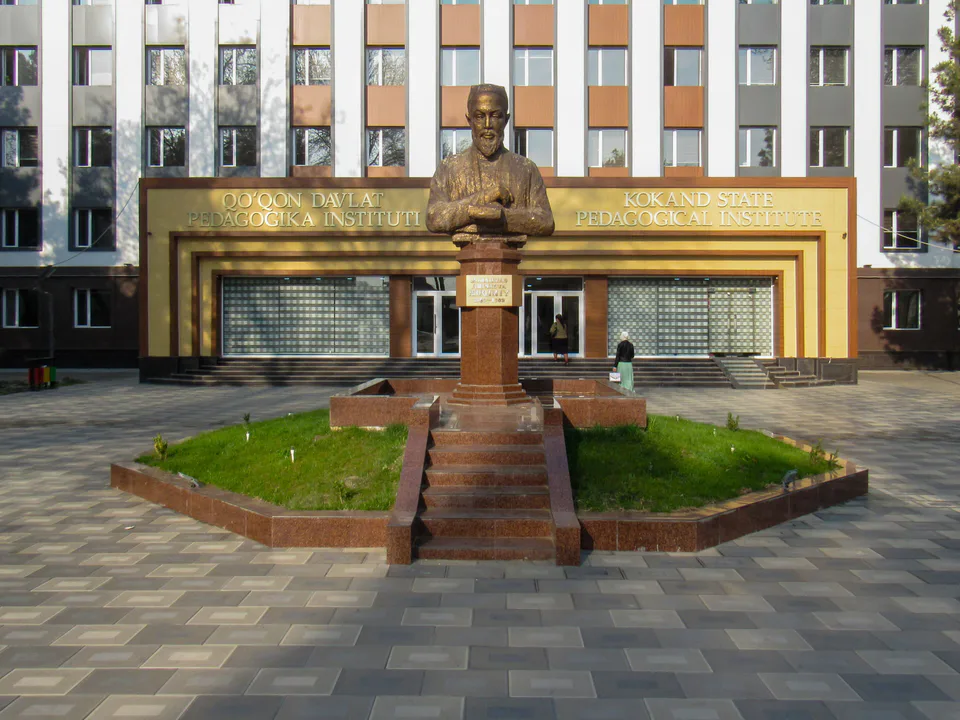
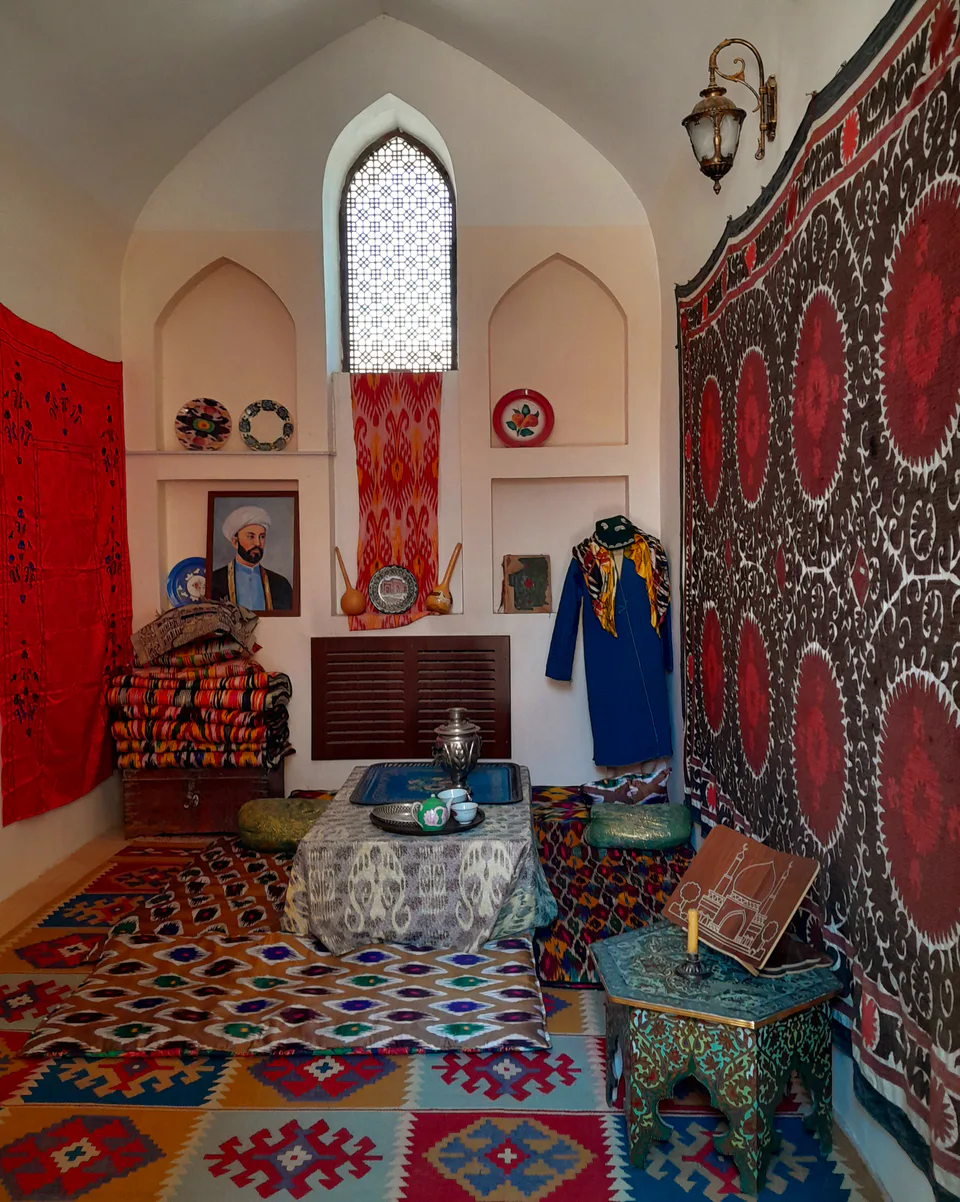
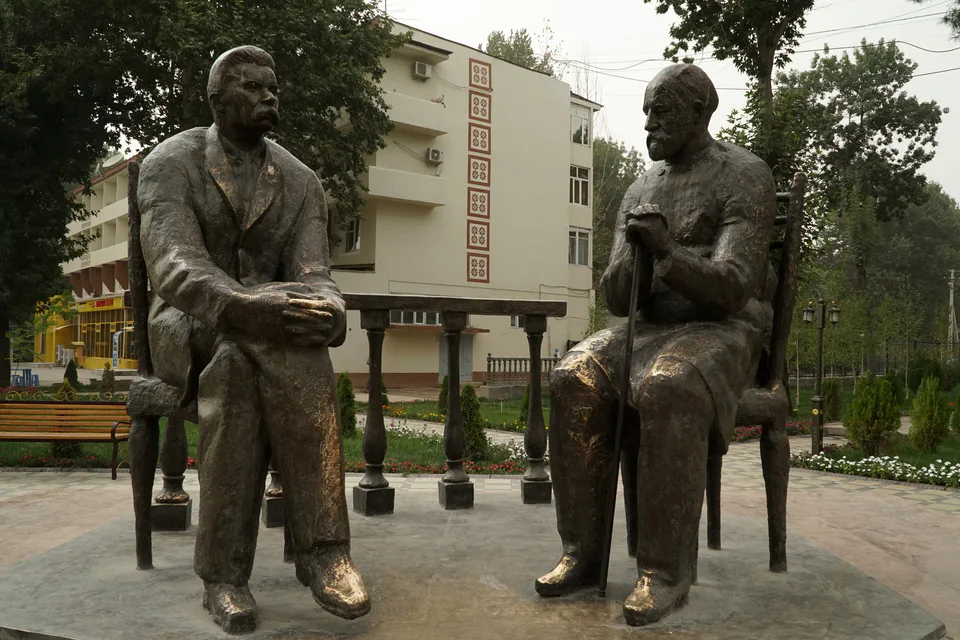
A late 19th-century poet from Kokand and one of the first Uzbek journalists. In Tashkent he championed education and science; he later left his homeland and died in Yarkand, in Chinese Turkestan.
Zokirjon Kholmuhammad o'g'li, who took the pen name Furqat (“separation”), was born in Kokand in 1858 or 1859 into a small trader's family. After the neighbourhood school he learned calligraphy and Arabic; by one account he knew Attar's “Conference of the Birds” by heart at eight. In 1873–1876 he studied at a madrasa, immersing himself in Navoi and the Persian poets. In 1876 he worked in his uncle's shop in New Margilan (today's Fergana), then wrote in Kokand among Muqimiy, Zavqiy and other poets. In 1889 he moved to Tashkent and lived in the Kukeldash madrasa — his most productive years.
Advocate of enlightenment
In Tashkent Furqat published poems and articles in the Turkestan native-language newspaper, becoming one of the first journalists among Uzbek poets. In verses such as “The Virtue of Knowledge”, “The Gymnasium” and poems on a musical evening and an exhibition, he urged people to attend new schools, master science and technology and reach world culture through the Russian language. Scholars note that, written under colonial rule, some of these poems also praise imperial culture. His lyrical ghazals, such as “Release your prey, hunter”, became folk songs.
Years of separation and remembrance
In 1891 Furqat left Tashkent and travelled via Merv, Ashgabat, Baku and Batumi to Istanbul; some accounts say he was pressed to leave his homeland. He then made the pilgrimage, travelled through India from Bombay, visited Kashmir and Kashgar, and settled in Yarkand in Chinese Turkestan, where he died in 1909. His verse letters, full of longing for home, are the record of those years. Furqat district in Fergana Region and many villages, schools, streets and parks bear his name.
From 9 May to 17 June 1865 General Mikhail Chernyayev's troops besieged Tashkent, then part of the Khanate of Kokand. Alimqul, Kokand's de facto ruler, was killed leading the defence, and the city passed to the Russian Empire. In 1866, at war with the Emirate of Bukhara, Russian forces took Khujand, Ura-Tyube and Jizzakh. In 1867 the Governorate-General of Turkestan was created with its seat in Tashkent, headed first by General Konstantin von Kaufman. A new European-style Russian town grew up beside the old city, and Tashkent became the region's administrative centre.
Samarkand falls and Bukhara becomes a protectorate
In May 1868 Kaufman's troops defeated the army of Emir Muzaffar of Bukhara on the Chupan-Ata heights and entered Samarkand. In June, while the main force crushed the emir again at Zirabulak, the small garrison left in Samarkand's citadel was besieged by townspeople and the forces of the Shakhrisabz begs; among the defenders was the painter Vasily Vereshchagin. Under the peace signed at the end of June, Samarkand and Kattakurgan passed to Russia as the Zeravshan District, and the Emirate of Bukhara became a Russian protectorate. Vereshchagin's Turkestan series, including scenes of the siege, hangs in Moscow's Tretyakov Gallery.
In spring 1873 several Russian columns under the overall command of General Kaufman crossed the deserts from different directions into Khorezm, and at the end of May Khiva surrendered without a fight. Under the Treaty of Gandimian, signed in August, Muhammad Rahim Khan II kept his throne but lost the right to conduct foreign policy without Russian consent; the slave trade and slavery were abolished and a heavy indemnity imposed. The right bank of the Amu Darya, most of today's Karakalpakstan, passed to Russia as the Amu Darya Department, administered from the fort of Petro-Alexandrovsk, now Turtkul. Khiva survived as a protectorate until 1920.
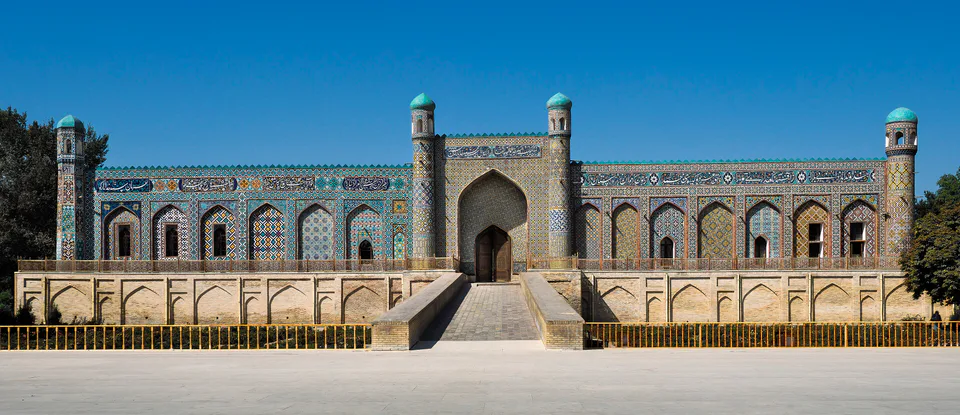
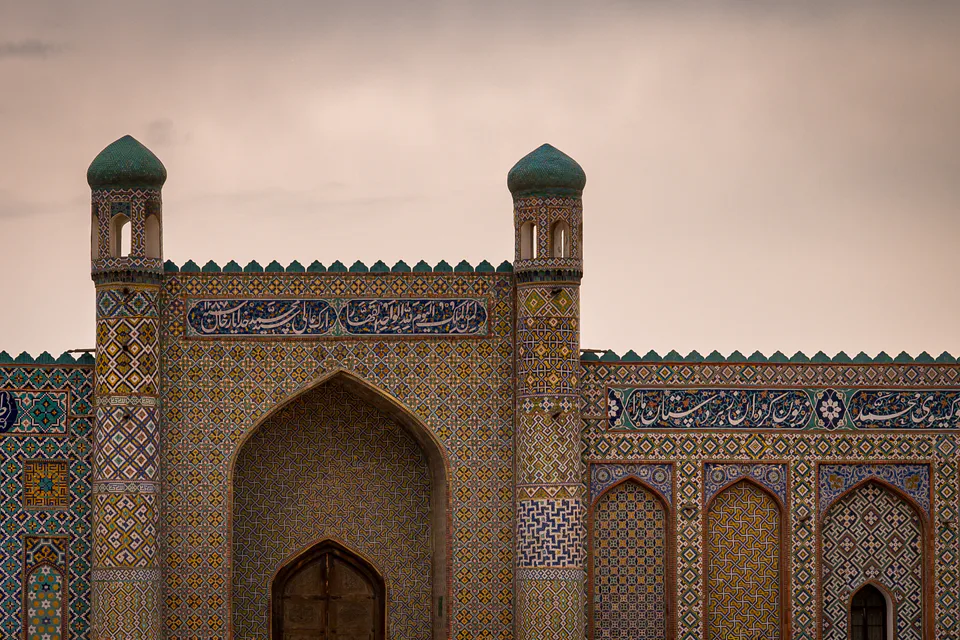
In 1873 a broad revolt against Khudayar Khan's heavy taxes swept the Fergana Valley, led by a pretender known as Pulat Khan. In 1875 Khudayar was overthrown and fled to Russian territory, and the rising turned against Russia. Troops under General Kaufman and Mikhail Skobelev occupied the valley, and in February 1876 an imperial decree abolished the khanate, replacing it with Fergana Oblast. A new administrative centre, New Margelan, was built — later renamed Skobelev and, from 1924, Fergana. Khudayar Khan's palace in Kokand now houses the regional museum.
Built eastward from the Caspian shore under General Mikhail Annenkov, the Trans-Caspian Railway reached Samarkand via Bukhara (Kagan) in 1888. Trains first crossed the Amu Darya on a wooden bridge; a permanent one was completed only in 1901. In 1898 the line was extended to Tashkent and Andijan, and the opening of the Tashkent–Orenburg railway in 1906 linked Central Asia directly with central Russia. The railway boosted cotton exports dramatically, and new settlements grew around stations such as Kagan and Khavast and in the Russian quarters of towns like Jizzakh. The old station buildings of Kagan and Samarkand recall the era.
On the night of 29 May 1898 some 1,500 armed men led by the Naqshbandi sheikh Muhammad Ali Madali, known as Dukchi Ishan, attacked the Russian army camp at Andijan. The rising fed on resentment of colonial rule, taxation and land policy, as well as on religious appeals. The troops quickly recovered and beat off the attack, and within days the revolt was crushed. Dukchi Ishan and other leaders were executed, many participants exiled and their villages punished. The episode pushed the authorities to tighten control over Muslim institutions in Turkestan.