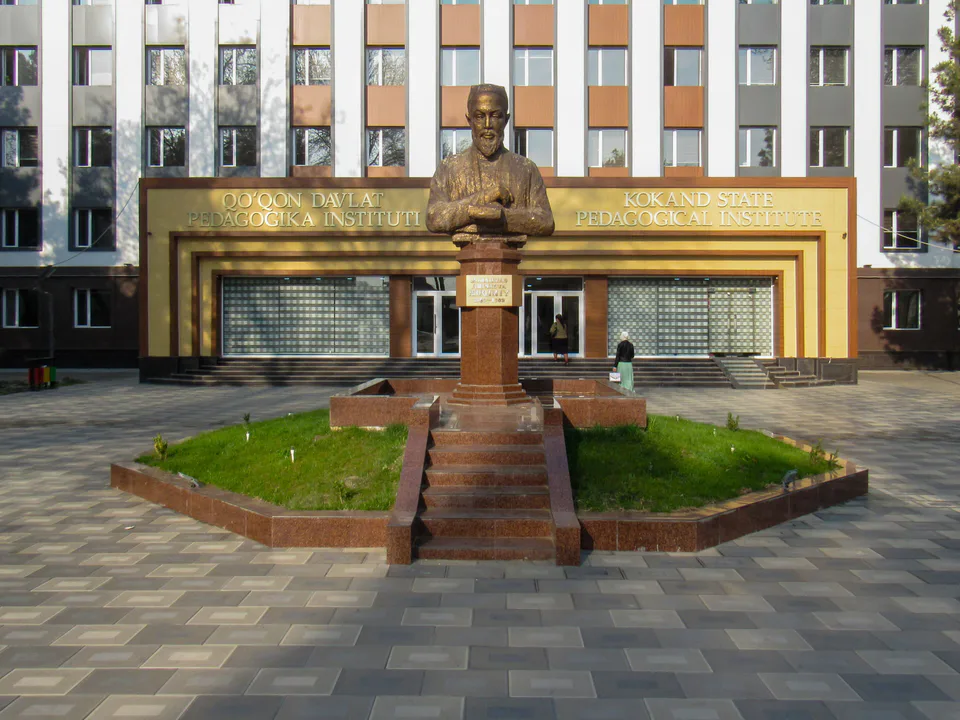
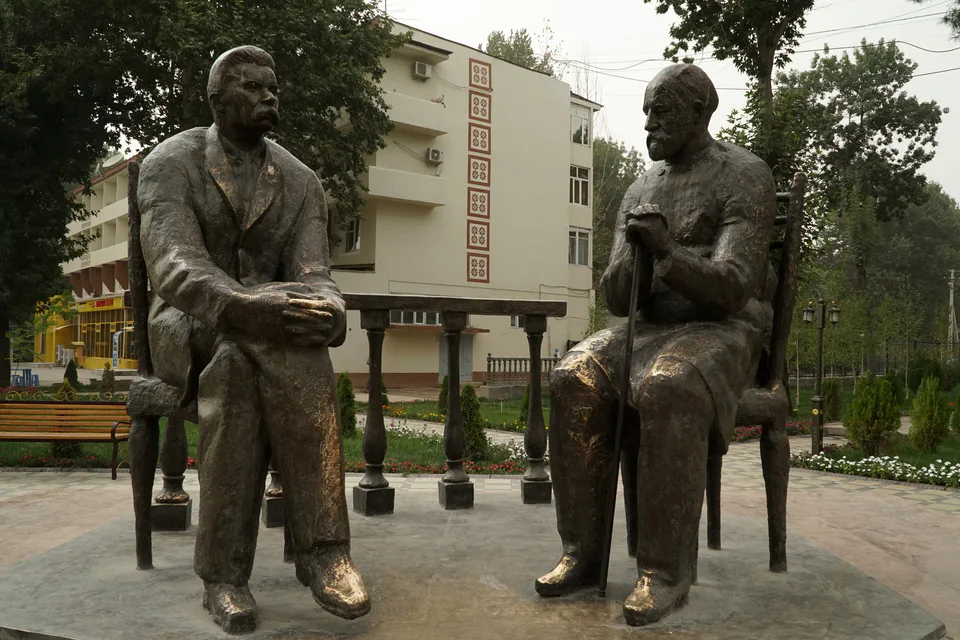
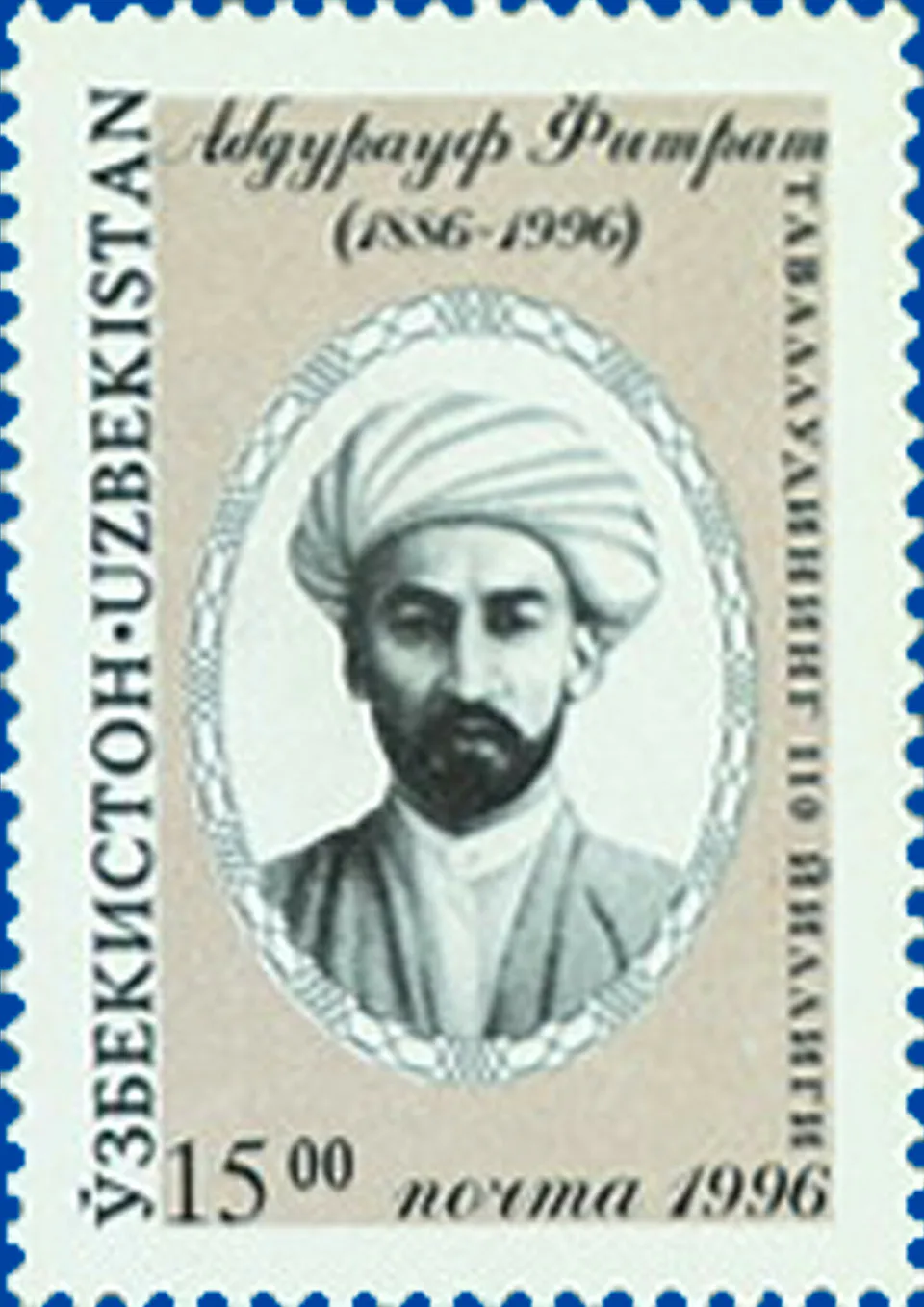
The Samarkand leader of the Jadids, author of the first Uzbek drama, “The Patricide”, and founder of the newspaper Samarqand and the journal Oyina. He was executed in Karshi in 1919; from 1926 to 1937 Karshi was named Bekbudi in his honour.
Mahmudkhoja Behbudiy was born in Samarkand in January 1875 (some sources say 1874), the son of the imam-preacher Behbudkhoja; after 1868 the family moved to the nearby village of Bakhshitepa. Educated at a madrasa, he became a qadi and later a mufti. On pilgrimage in 1899–1900 he visited Istanbul, Cairo and other cities and encountered the reform movements of the Muslim world; the ideas of the Crimean Tatar educator Ismail Gasprinsky influenced him deeply. He led the founding of new-method schools around Samarkand, wrote textbooks for them, including geography books, and in 1908 opened a library and reading room in the city.
The Patricide, Samarqand and Oyina
In 1911 Behbudiy wrote the play “The Patricide, or the Fate of an Uneducated Son” (Padarkush). This cautionary tale of an ignorant young man who kills his father appeared as a book in 1913 and was first staged in Samarkand on 15 January 1914; a month later Abdulla Avloniy's troupe performed it in Tashkent. Padarkush is regarded as the birth of the Uzbek national theatre. In 1913 Behbudiy founded the newspaper Samarqand and the journal Oyina (The Mirror), writing on education, the mother tongue, women's rights and national identity. After 1917 he was active in politics and supported the Turkestan Autonomy.
A tragic death and his legacy
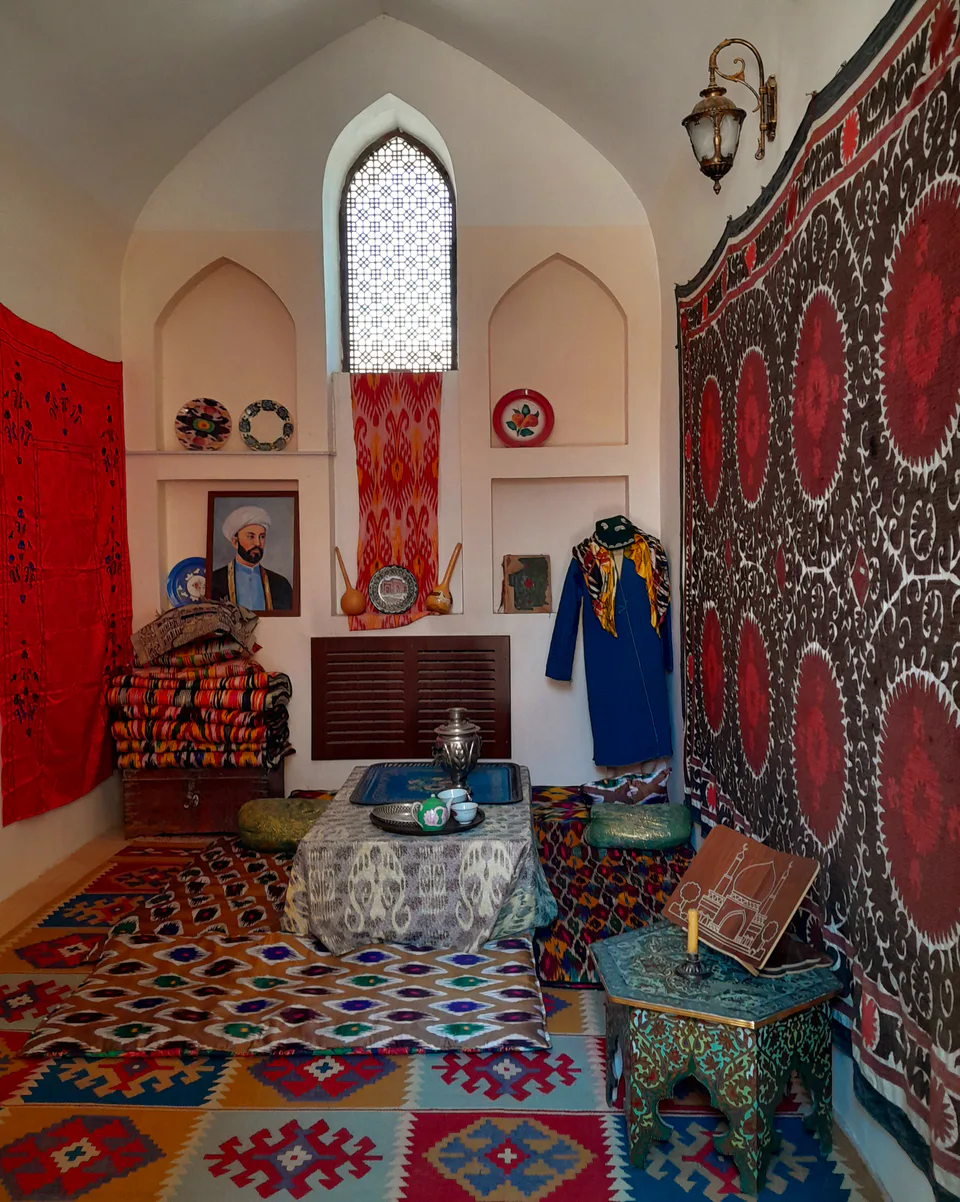
Early in 1919, while travelling, Behbudiy was seized on the territory of the Emirate of Bukhara and executed in Karshi on 25 March. Fitrat, Ayni and Cho'lpon wrote elegies for him. From 1926 to 1937 the city of Karshi was named Bekbudi in his honour, after which his name was banned for much of the Soviet era. Today Samarkand has a monument to Behbudiy and, since 2021, a house-museum. In Samarkand and Karshi travellers can trace the story of the Jadid era.
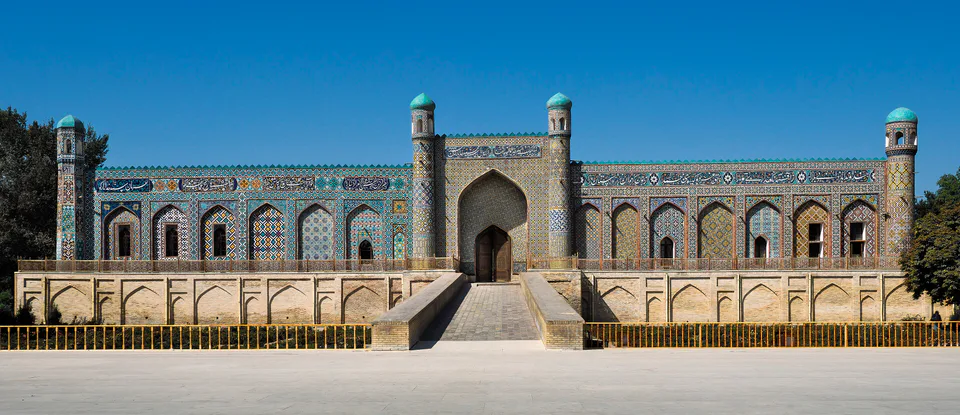
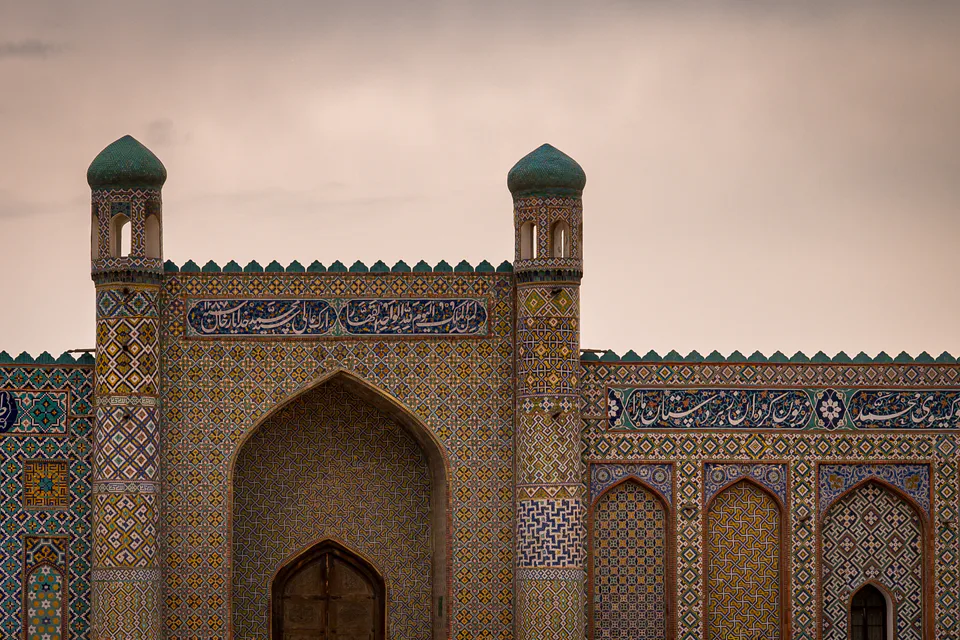
In 1873 a broad revolt against Khudayar Khan's heavy taxes swept the Fergana Valley, led by a pretender known as Pulat Khan. In 1875 Khudayar was overthrown and fled to Russian territory, and the rising turned against Russia. Troops under General Kaufman and Mikhail Skobelev occupied the valley, and in February 1876 an imperial decree abolished the khanate, replacing it with Fergana Oblast. A new administrative centre, New Margelan, was built — later renamed Skobelev and, from 1924, Fergana. Khudayar Khan's palace in Kokand now houses the regional museum.
Built eastward from the Caspian shore under General Mikhail Annenkov, the Trans-Caspian Railway reached Samarkand via Bukhara (Kagan) in 1888. Trains first crossed the Amu Darya on a wooden bridge; a permanent one was completed only in 1901. In 1898 the line was extended to Tashkent and Andijan, and the opening of the Tashkent–Orenburg railway in 1906 linked Central Asia directly with central Russia. The railway boosted cotton exports dramatically, and new settlements grew around stations such as Kagan and Khavast and in the Russian quarters of towns like Jizzakh. The old station buildings of Kagan and Samarkand recall the era.
On the night of 29 May 1898 some 1,500 armed men led by the Naqshbandi sheikh Muhammad Ali Madali, known as Dukchi Ishan, attacked the Russian army camp at Andijan. The rising fed on resentment of colonial rule, taxation and land policy, as well as on religious appeals. The troops quickly recovered and beat off the attack, and within days the revolt was crushed. Dukchi Ishan and other leaders were executed, many participants exiled and their villages punished. The episode pushed the authorities to tighten control over Muslim institutions in Turkestan.
In the late 19th and early 20th centuries a reform movement took shape in Turkestan: the Jadids, advocates of usul-i jadid, the “new method”. Inspired by the Crimean Tatar educator Ismail Gasprinsky, Mahmudkhoja Behbudiy, Munavvar Qori, Abdulla Avloniy, Is'hoqxon Ibrat, Abdurauf Fitrat and others opened schools teaching literacy by the phonetic method and wrote textbooks. From 1906 Uzbek-language newspapers such as Taraqqiy and Khurshid appeared in Tashkent, and Behbudiy's play “The Patricide” (Padarkush), staged in 1914, launched a national theatre. The Jadids sought to renew society through education, the press and reform. Many were repressed in the 1920s–1930s; their legacy is being rediscovered today.
On 25 June (8 July) 1916, at the height of the First World War, Nicholas II decreed the conscription of Turkestani men aged 19 to 43 for labour behind the front. Issued at harvest time and enforced through unfair lists, the decree provoked mass unrest. In July there were protests in Khujand, Tashkent and towns of the Fergana Valley; in Jizzakh the rising turned into armed fighting and was crushed with great brutality by punitive detachments, which left the old town badly damaged. The revolt also spread across Kazakhstan and Kyrgyzstan. Tens of thousands of labourers were eventually sent to the front zone regardless.
After the October Revolution of 1917, power in Tashkent passed to a Bolshevik-led soviet that excluded the local Muslim majority. In response, the Fourth Extraordinary Congress of Turkestan Muslims, meeting in Kokand on 27 November 1917, proclaimed a Turkestan Autonomy within a Russian federation. Its government was led by Mukhamedzhan Tynyshpaev and then Mustafa Chokay, with Jadids among its members. In February 1918 Red Guard units sent from Tashkent stormed Kokand; much of the city was destroyed and thousands of civilians were killed. Short-lived as it was, the autonomy is seen as a milestone in the region's pursuit of national statehood.