One of the leading Karakalpak poets of the 19th century, born in Moynaq district on the shore of the Aral Sea. Writing as Ziyvar, he captured the hardships of the Karakalpak people and their longing for freedom.
Ajiniyaz Qosybay uli was born in 1824 in the village of Qamysh-Bugat on the southern shore of the Aral Sea, near the mouth of the Amu Darya, in what is now Moynaq district and was then part of the Khanate of Khiva. His father Qosybay and his brothers were renowned as batyrs, and his mother Nazira was known for her sharp tongue. He studied first at the madrasa of Khojamurat Imam and then with his uncle Elmurat, earning a reputation as a copyist — at sixteen he was copying Navoi's poems by hand. He went on to the Shergazi Khan and Qutlug Murad Inaq madrasas in Khiva, learning Kazakh, Arabic, Persian, Chagatai and Turkmen.
His work
Ajiniyaz wrote philosophical lyrics in Karakalpak, centred on social injustice, the hard life of ordinary people and the hope of a better one. His poem “Bozatau” describes the Karakalpak uprising against the Khanate of Khiva in 1858–1859 and its tragic aftermath, when people were forced to leave their homeland. His poetic duel, or aytys, with the Kazakh poetess Qyz Mengesh is widely known. He was also renowned as a bakhshi, a singer-storyteller, and died in 1878.
Remembrance
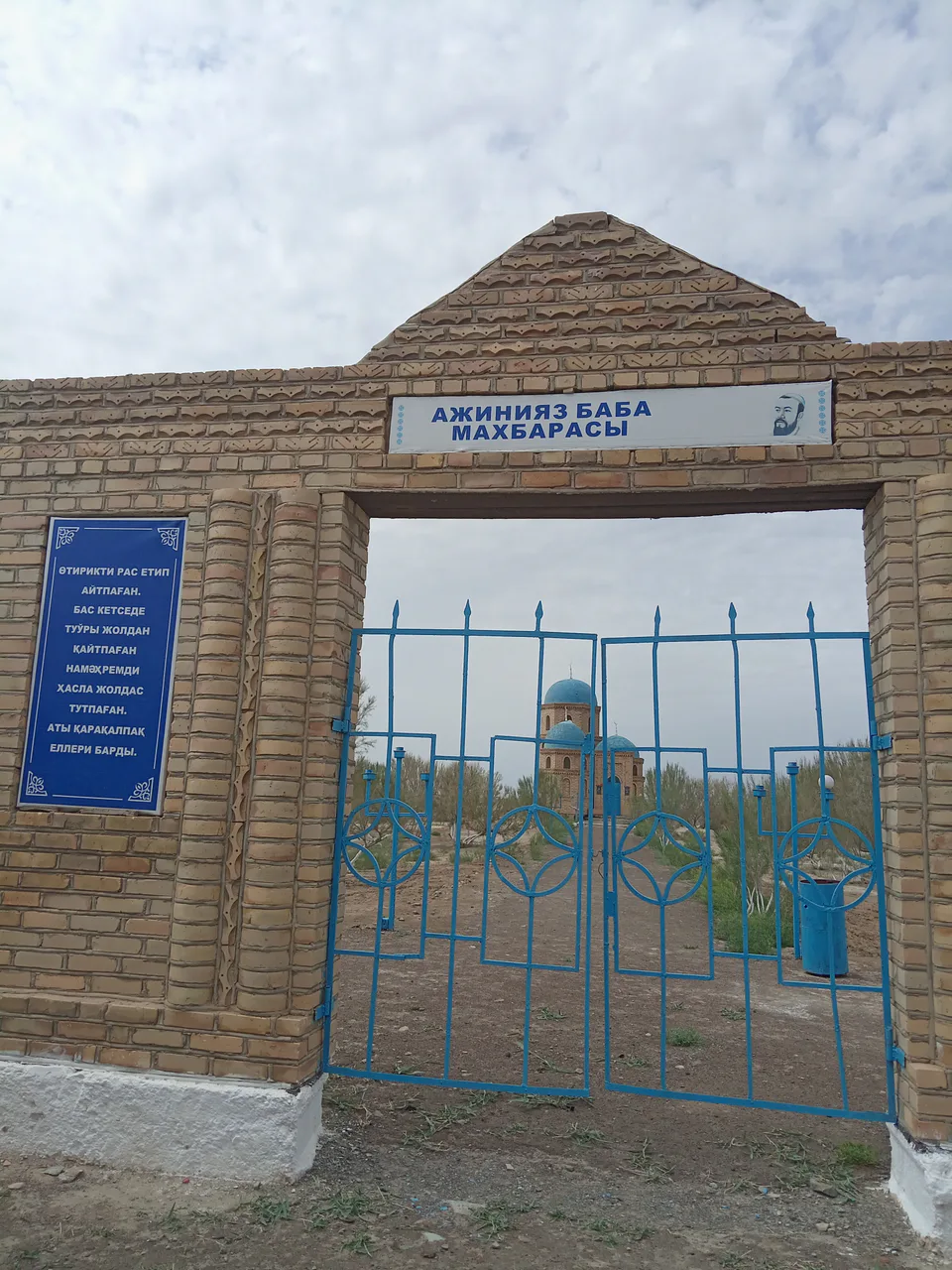
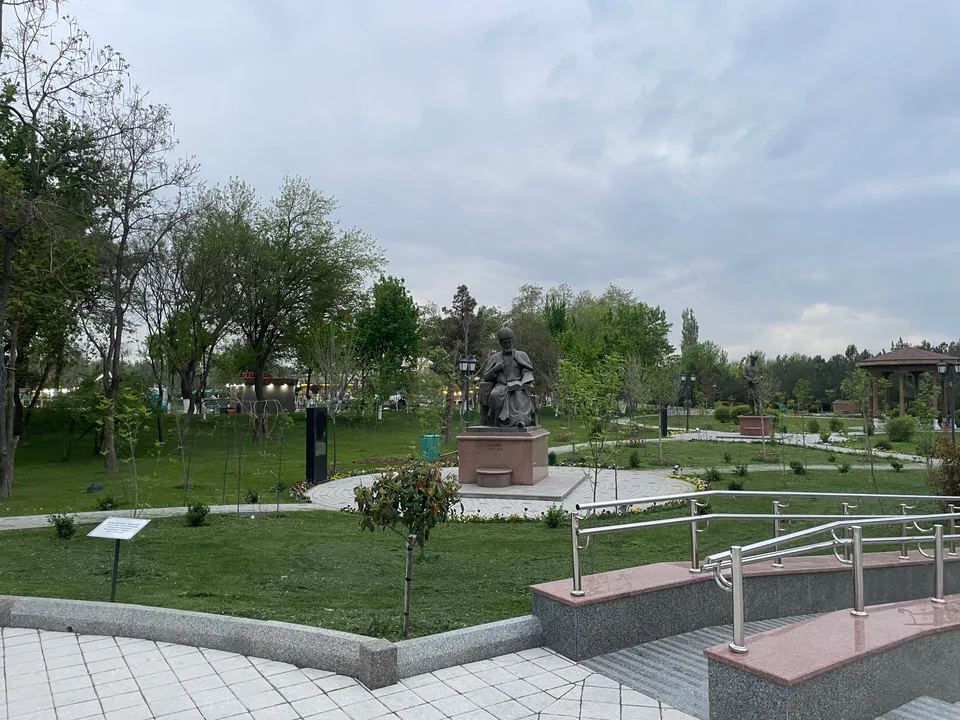
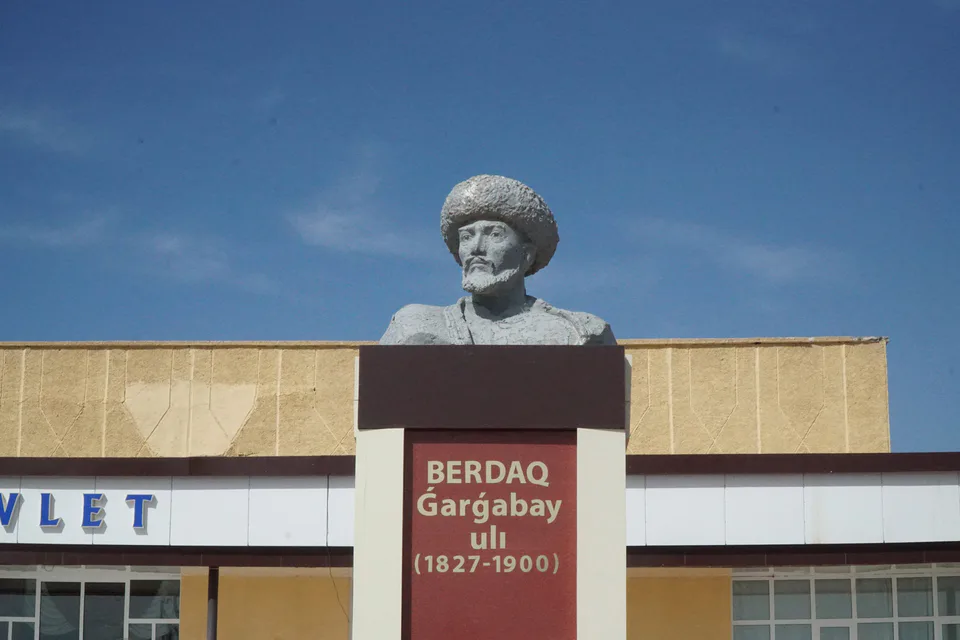
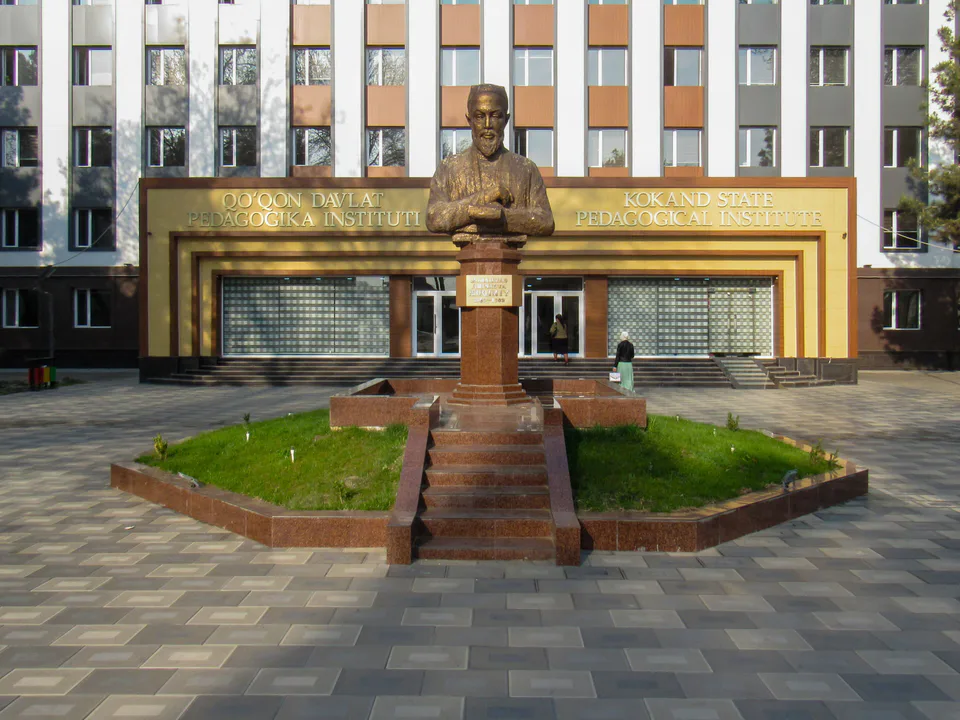
The Nukus State Pedagogical Institute, many streets and schools and a settlement in Kungrad district bear his name. His mausoleum in Moynaq district was placed under state protection in 2019, and statues of him stand in Nukus, in Kanlykul and Shumanay districts and in Gurlen district of Khorezm. Travellers heading to Moynaq, known for the Aral Sea disaster, can also discover the poet's homeland.
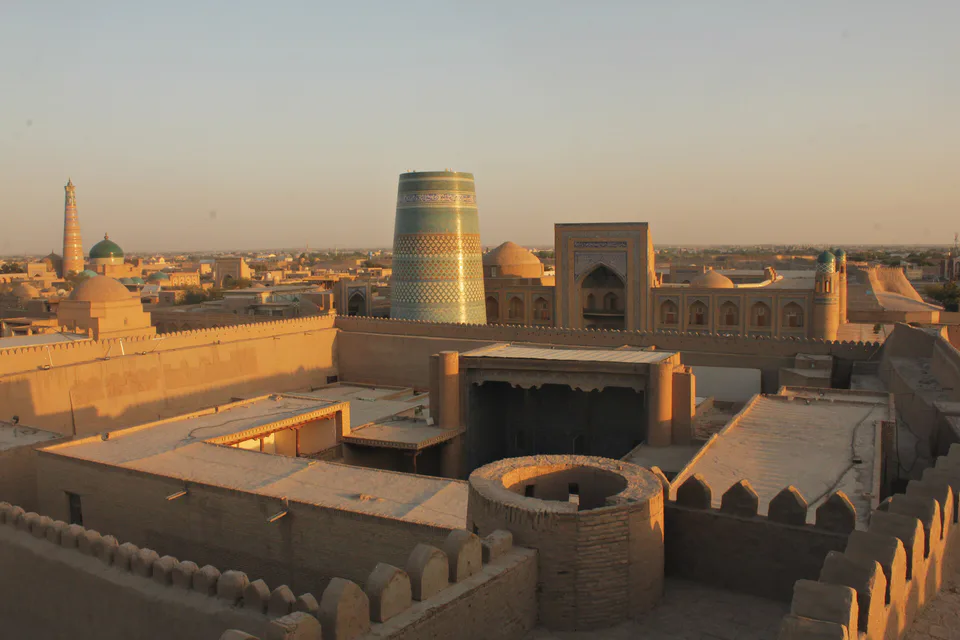
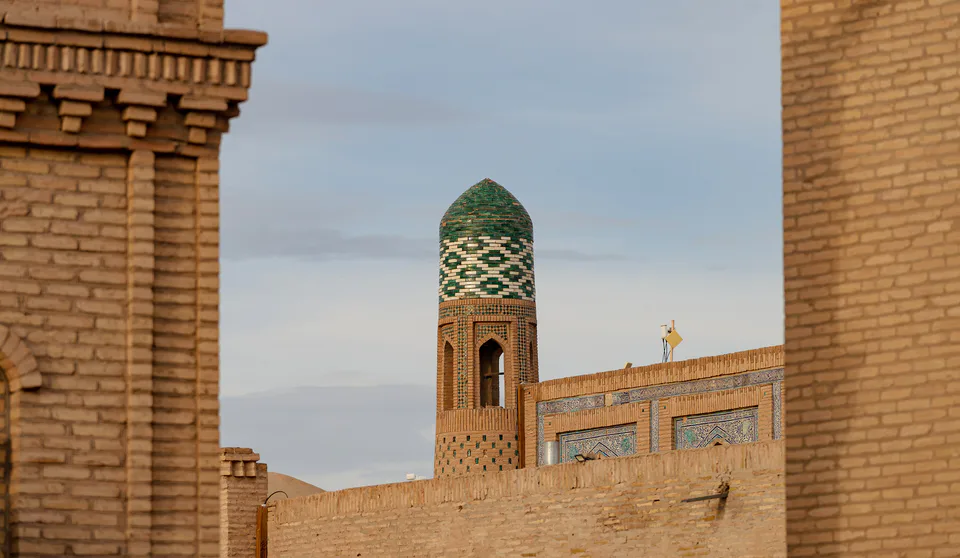
In 1804 Eltuzar of the Qungrat tribe took the title of khan, founding Khiva's last dynasty. The 19th century was Itchan Kala's great building age: under Allakuli Khan came the Tash Hauli palace (1830–1838) and his madrasa and caravanserai, and in 1842 the outer town, Dishan Kala, was walled. The Kalta Minor beside the Muhammad Amin Khan Madrasa (1851–1855) was left unfinished when the khan was killed. The madrasa of Muhammad Rahim Khan II followed in 1871 and, in 1908–1910, the Islam Khoja madrasa and Khiva's tallest minaret. Itchan Kala is thus largely 18th–19th-century architecture; it joined the UNESCO list in 1990.
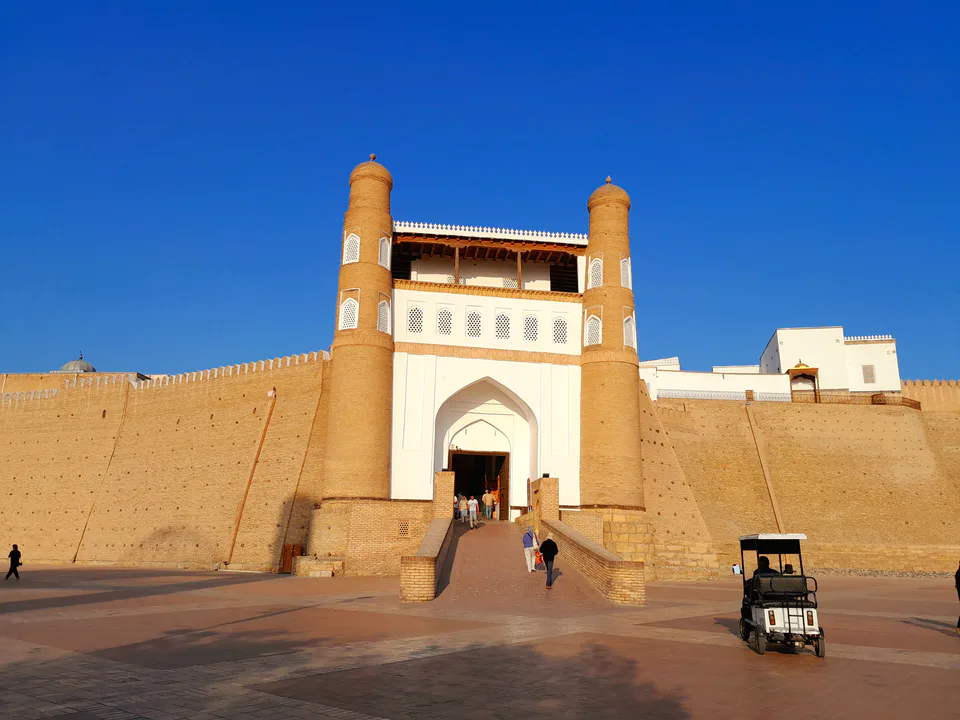
In the 19th century the British and Russian empires competed for influence in Central Asia, a rivalry known as the Great Game. In December 1838 the British officer Charles Stoddart arrived in Bukhara to negotiate with Emir Nasrullah, but was arrested and held for years in the city's prison. Arthur Conolly, who came in 1841 to secure his release, was imprisoned too. In June 1842 both were executed as spies in the square before the Ark. The missionary Joseph Wolff, who travelled to Bukhara to learn their fate, published an account in 1845 that made the story famous in Europe. Bukhara's Zindan museum shows the pit in which prisoners were kept.
From 9 May to 17 June 1865 General Mikhail Chernyayev's troops besieged Tashkent, then part of the Khanate of Kokand. Alimqul, Kokand's de facto ruler, was killed leading the defence, and the city passed to the Russian Empire. In 1866, at war with the Emirate of Bukhara, Russian forces took Khujand, Ura-Tyube and Jizzakh. In 1867 the Governorate-General of Turkestan was created with its seat in Tashkent, headed first by General Konstantin von Kaufman. A new European-style Russian town grew up beside the old city, and Tashkent became the region's administrative centre.
Samarkand falls and Bukhara becomes a protectorate
In May 1868 Kaufman's troops defeated the army of Emir Muzaffar of Bukhara on the Chupan-Ata heights and entered Samarkand. In June, while the main force crushed the emir again at Zirabulak, the small garrison left in Samarkand's citadel was besieged by townspeople and the forces of the Shakhrisabz begs; among the defenders was the painter Vasily Vereshchagin. Under the peace signed at the end of June, Samarkand and Kattakurgan passed to Russia as the Zeravshan District, and the Emirate of Bukhara became a Russian protectorate. Vereshchagin's Turkestan series, including scenes of the siege, hangs in Moscow's Tretyakov Gallery.
In spring 1873 several Russian columns under the overall command of General Kaufman crossed the deserts from different directions into Khorezm, and at the end of May Khiva surrendered without a fight. Under the Treaty of Gandimian, signed in August, Muhammad Rahim Khan II kept his throne but lost the right to conduct foreign policy without Russian consent; the slave trade and slavery were abolished and a heavy indemnity imposed. The right bank of the Amu Darya, most of today's Karakalpakstan, passed to Russia as the Amu Darya Department, administered from the fort of Petro-Alexandrovsk, now Turtkul. Khiva survived as a protectorate until 1920.
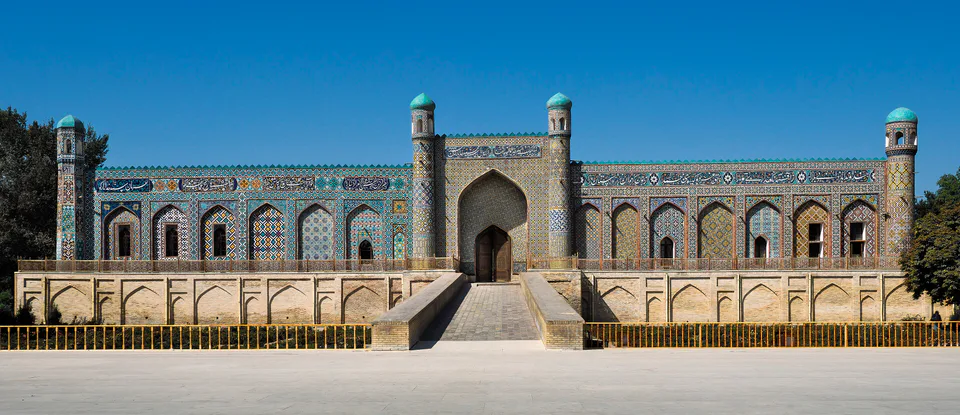
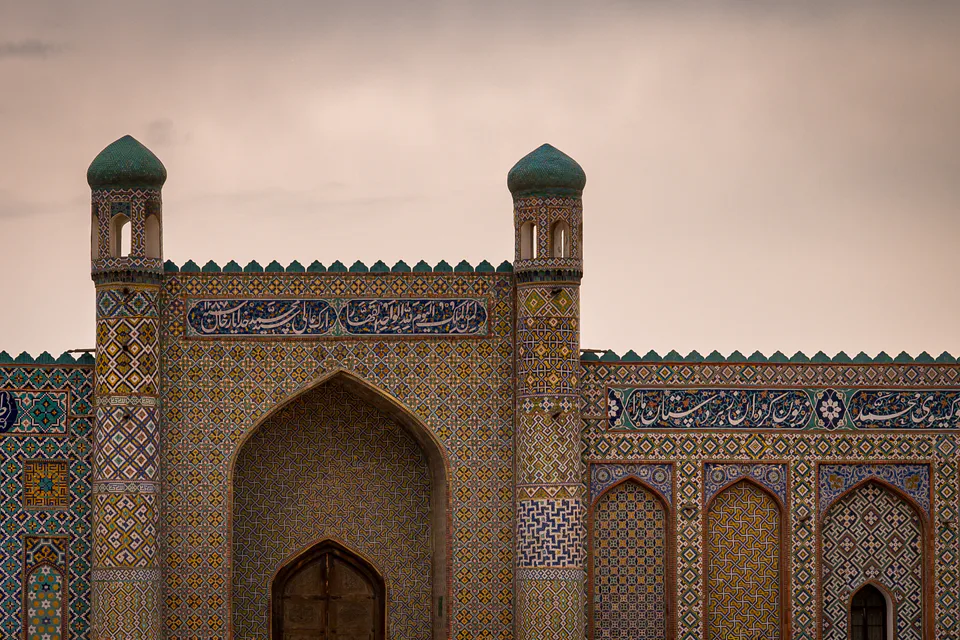
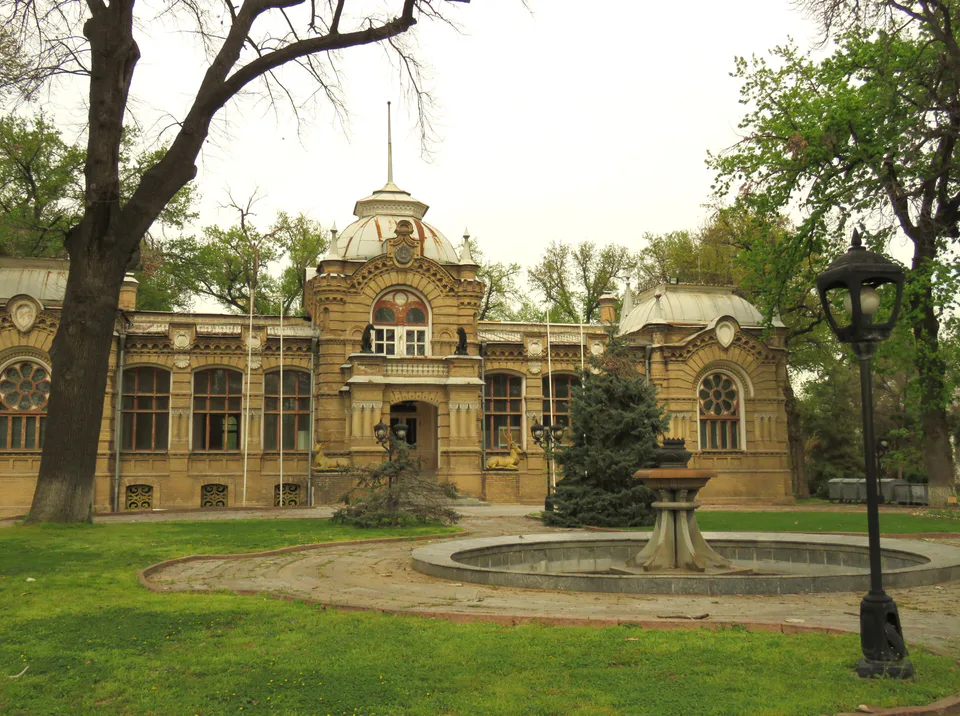
In 1873 a broad revolt against Khudayar Khan's heavy taxes swept the Fergana Valley, led by a pretender known as Pulat Khan. In 1875 Khudayar was overthrown and fled to Russian territory, and the rising turned against Russia. Troops under General Kaufman and Mikhail Skobelev occupied the valley, and in February 1876 an imperial decree abolished the khanate, replacing it with Fergana Oblast. A new administrative centre, New Margelan, was built — later renamed Skobelev and, from 1924, Fergana. Khudayar Khan's palace in Kokand now houses the regional museum.