A poet from Andijan, wife of Umar Khan of Kokand and a powerful figure in state affairs during the reign of her son Madali Khan. She was executed by Emir Nasrullah of Bukhara in 1842.
Nodira, born Mahlar-oyim, came into the world in Andijan in 1792, daughter of Rahmanquli Biy, governor of Andijan, of the Ming tribe and uncle of Kokand's ruler Alim Khan; her mother Aysha Begim was also an educated woman. In 1807 or 1808 she married Alim Khan's brother Umar Khan and lived in Margilan, where she began to write poetry, met the poet Uvaysiy and invited her to court as a teacher. When Umar Khan took the throne in 1810 they moved to Kokand. Umar Khan himself wrote verse as Amiri, and a circle of poets gathered at court.
Queen and poet
After Umar Khan's death in 1822 Nodira played a major role in governing the khanate alongside her son Muhammad Ali Khan (Madali Khan), building madrasas, mosques and caravanserais, supporting scholars and poets and helping the poor. She wrote in Uzbek under the pen names Nodira and Komila and in Persian as Maknuna, in a style deeply indebted to Navoi; her complete divan was discovered in Namangan in 1962. In 1842, when Emir Nasrullah of Bukhara captured Kokand, she was executed together with her sons and grandson. Her tragic fate has inspired many works of literature and theatre.
Remembrance
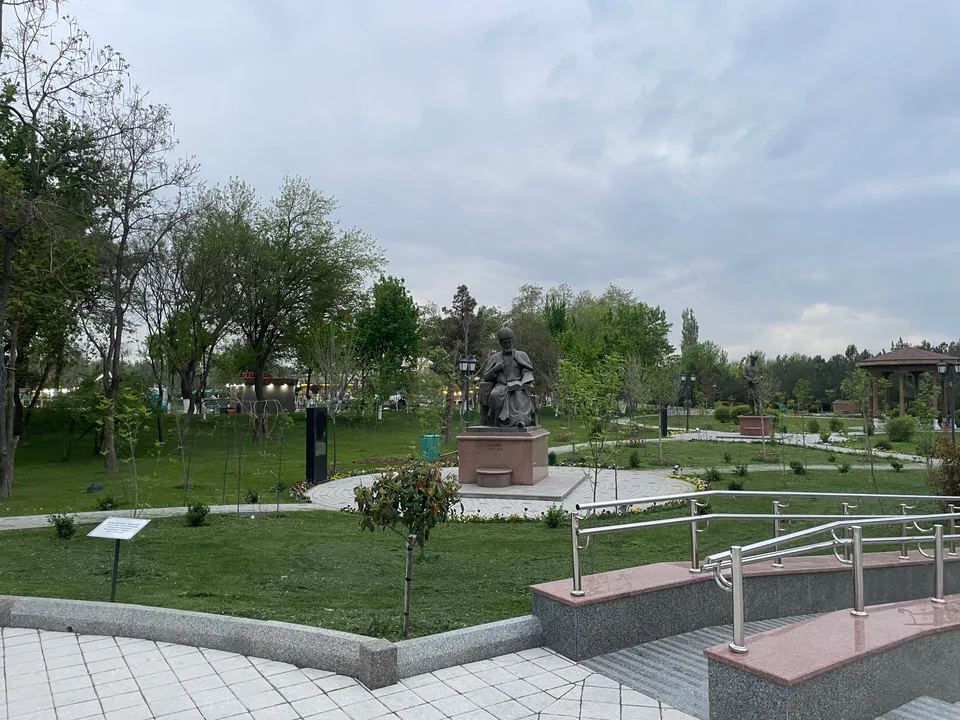
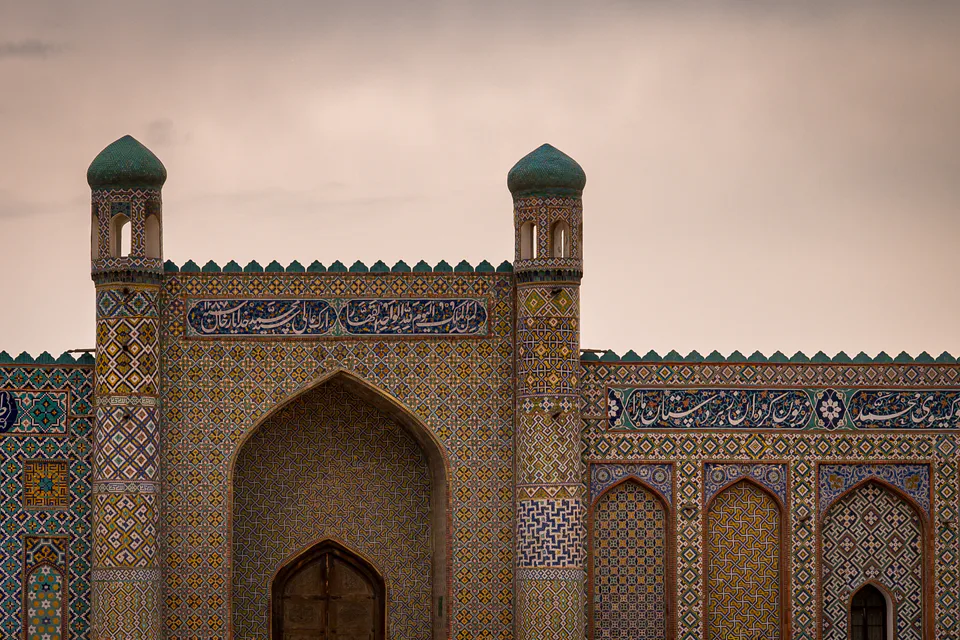
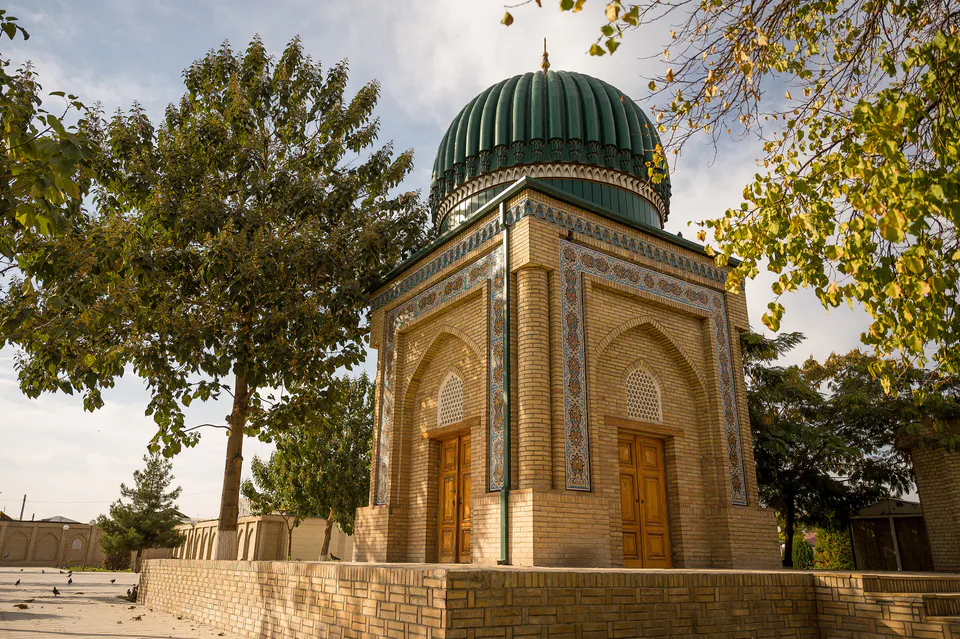
Nodira was buried in Kokand; in 1967 her remains were moved from the Modarikhan mausoleum to a new site with a monument designed by the architect R. Akhmedov. A crater on Venus was named after her in 1985, and streets and schools in Andijan and Kokand bear her name. In Kokand, alongside Khudayar Khan's palace and the Friday Mosque, visitors can see the royal necropolis of Dahmai Shohon and the Modarikhan mausoleum.
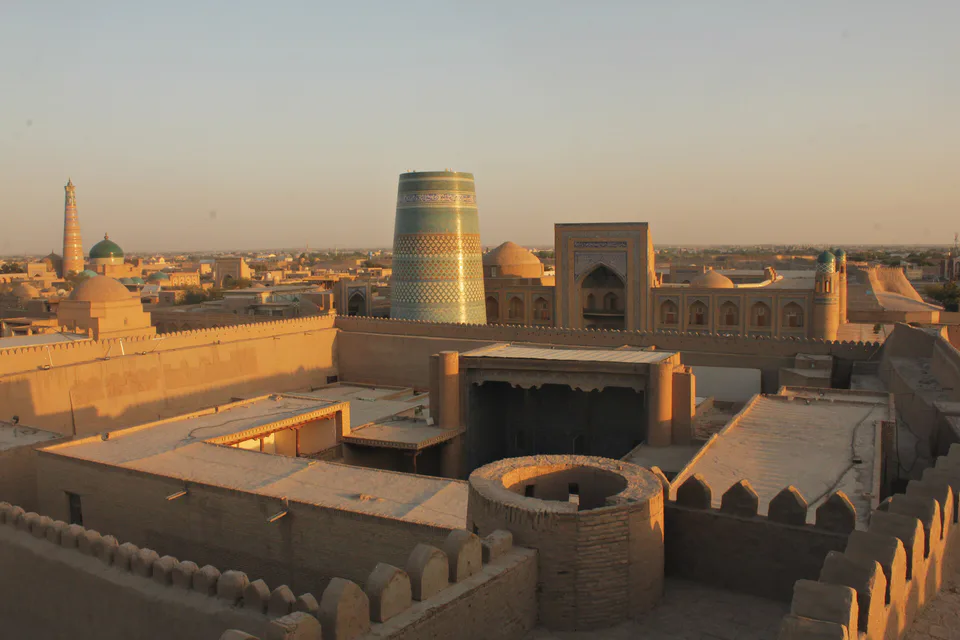
In 1804 Eltuzar of the Qungrat tribe took the title of khan, founding Khiva's last dynasty. The 19th century was Itchan Kala's great building age: under Allakuli Khan came the Tash Hauli palace (1830–1838) and his madrasa and caravanserai, and in 1842 the outer town, Dishan Kala, was walled. The Kalta Minor beside the Muhammad Amin Khan Madrasa (1851–1855) was left unfinished when the khan was killed. The madrasa of Muhammad Rahim Khan II followed in 1871 and, in 1908–1910, the Islam Khoja madrasa and Khiva's tallest minaret. Itchan Kala is thus largely 18th–19th-century architecture; it joined the UNESCO list in 1990.
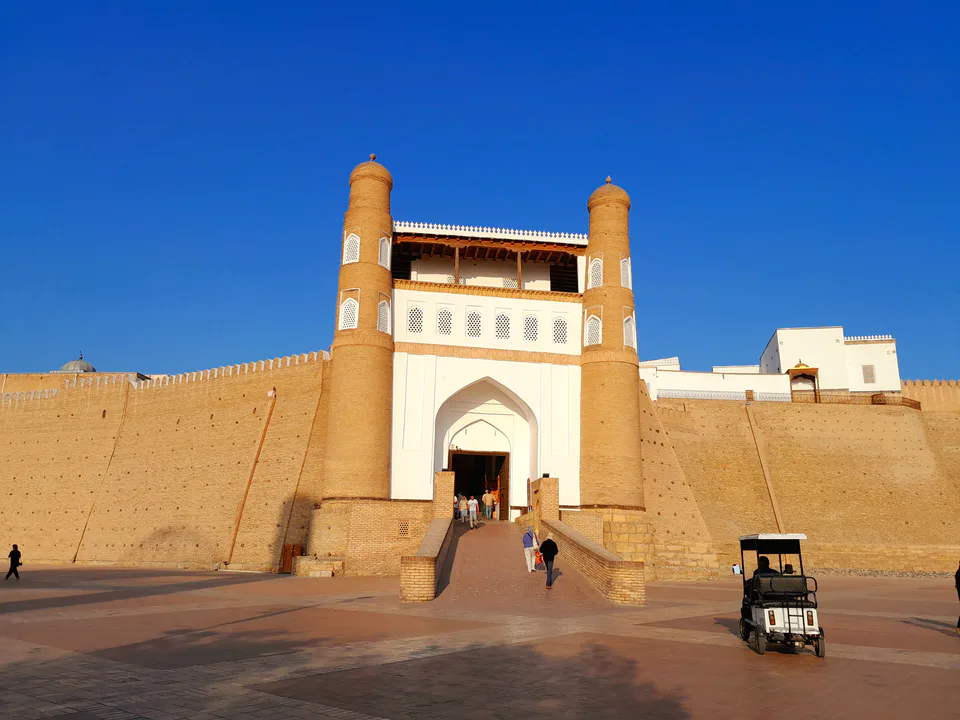
In the 19th century the British and Russian empires competed for influence in Central Asia, a rivalry known as the Great Game. In December 1838 the British officer Charles Stoddart arrived in Bukhara to negotiate with Emir Nasrullah, but was arrested and held for years in the city's prison. Arthur Conolly, who came in 1841 to secure his release, was imprisoned too. In June 1842 both were executed as spies in the square before the Ark. The missionary Joseph Wolff, who travelled to Bukhara to learn their fate, published an account in 1845 that made the story famous in Europe. Bukhara's Zindan museum shows the pit in which prisoners were kept.