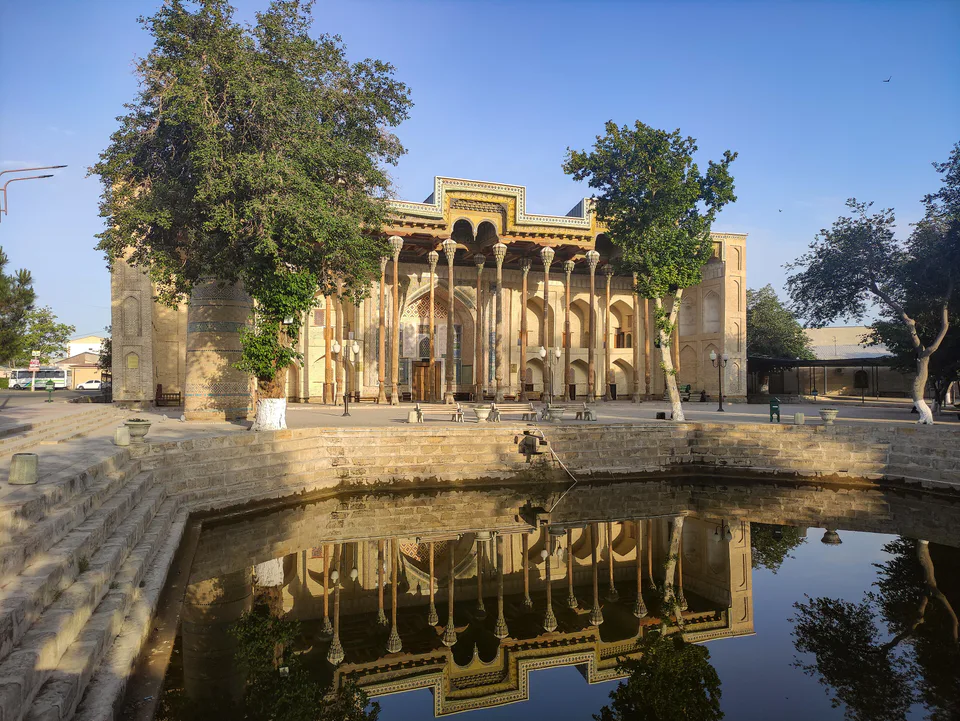
Mosque · Bukhara city
Bolo Hauz Mosque
Wooden columns mirrored in a pool
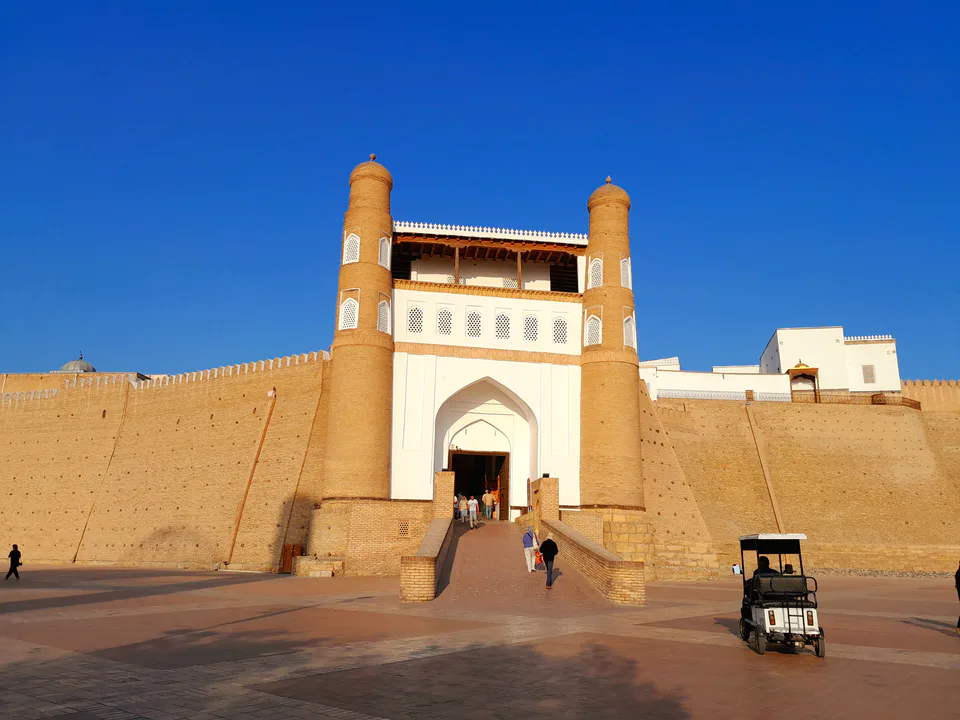
Fortress · Bukhara city
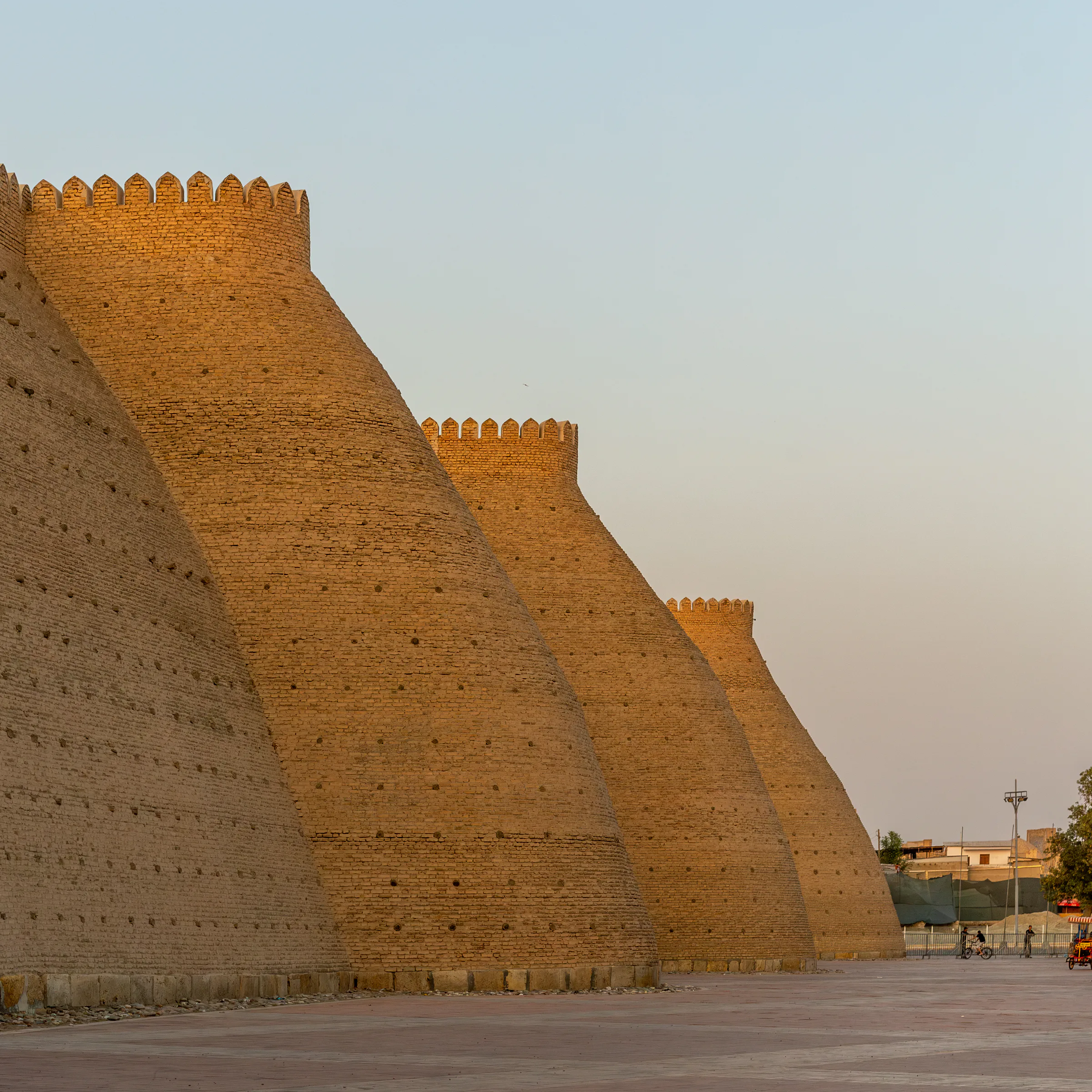
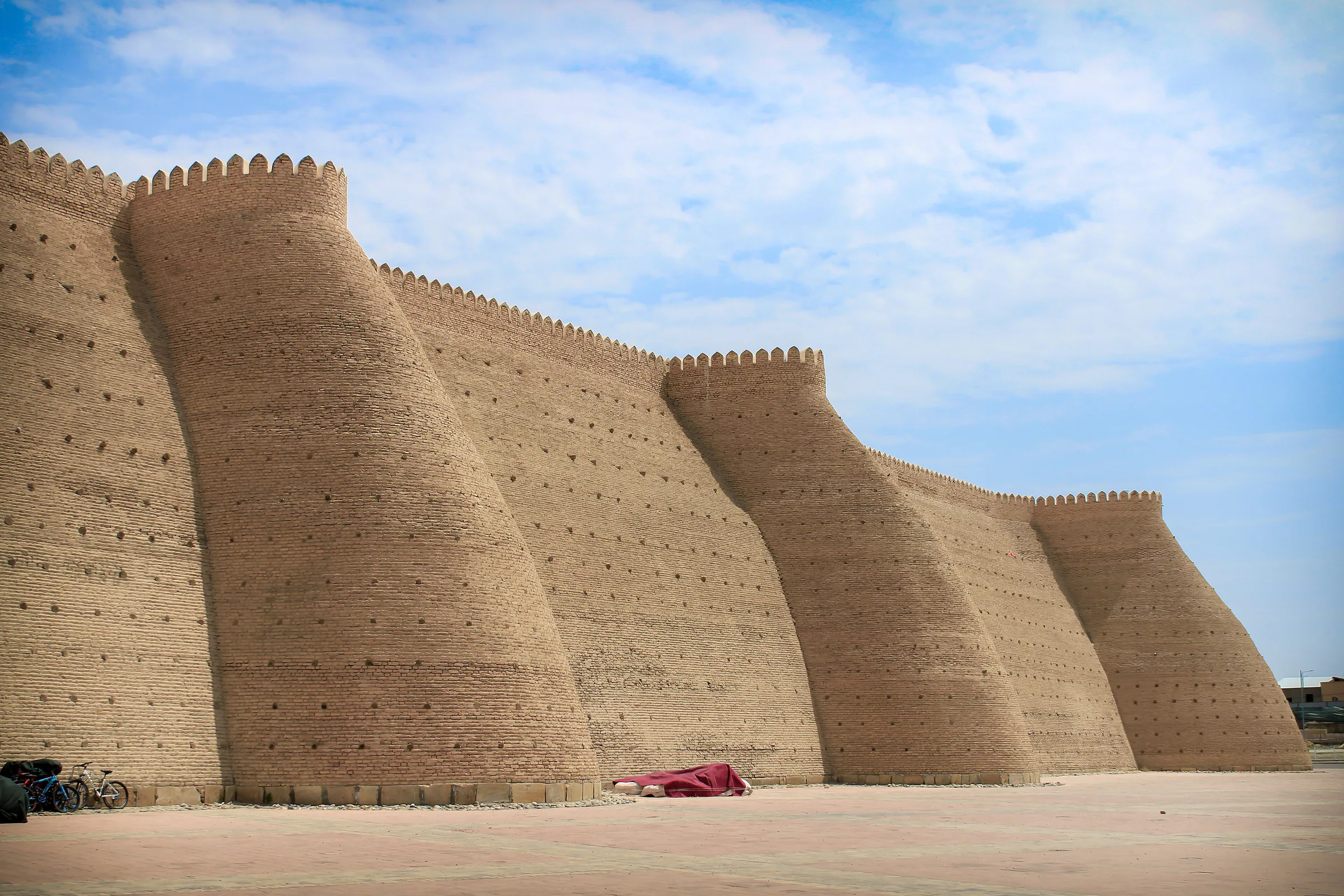
Rising 16–20 m above the city on an artificial mound, the Ark housed Bukhara's rulers for more than a millennium. Today it holds the main displays of the Bukhara State Museum-Reserve.
The Ark is the oldest part of Bukhara. Archaeologists see its mound as the build-up of fortresses destroyed and rebuilt over centuries; by the 5th–6th century AD it was already a strong citadel with two gates. The 10th-century historian Narshakhi records that the Bukhar-khudat Bidun rebuilt it, laying it out — on his sages' advice — in the shape of the Great Bear constellation.
The citadel fell again and again: to the Khwarazm-shah Atsiz in 1140 and to the Mongols in 1220. Tradition holds that the Samanid palace library, used by Ibn Sina (Avicenna), stood here. From the 16th century the Ark was the residence of the Shaybanids, then the Ashtarkhanids and the Manghits, and most of its surviving buildings date from the 17th to 20th centuries. When the Red Army stormed Bukhara in September 1920, fire and shelling wrecked much of it.
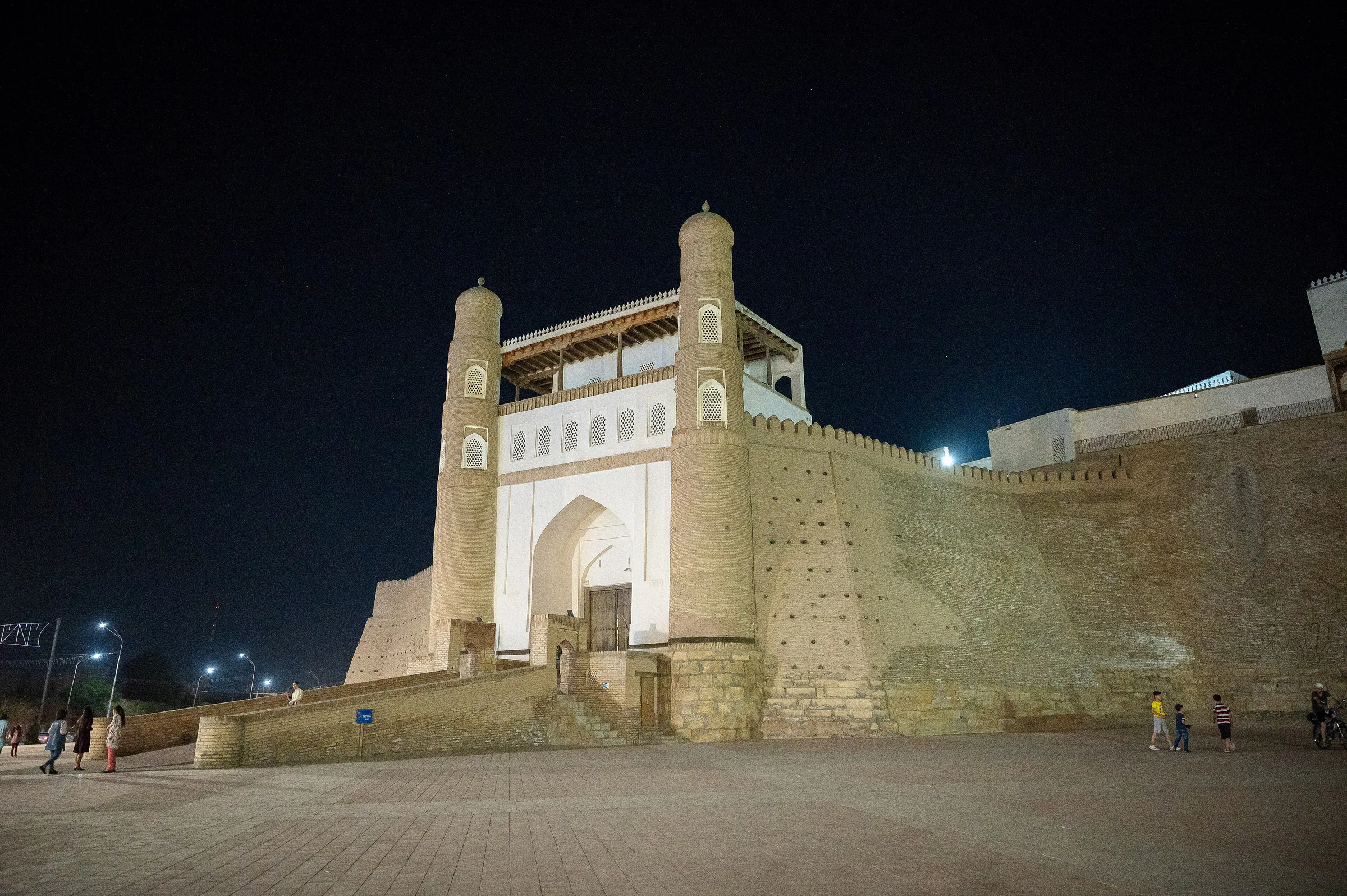
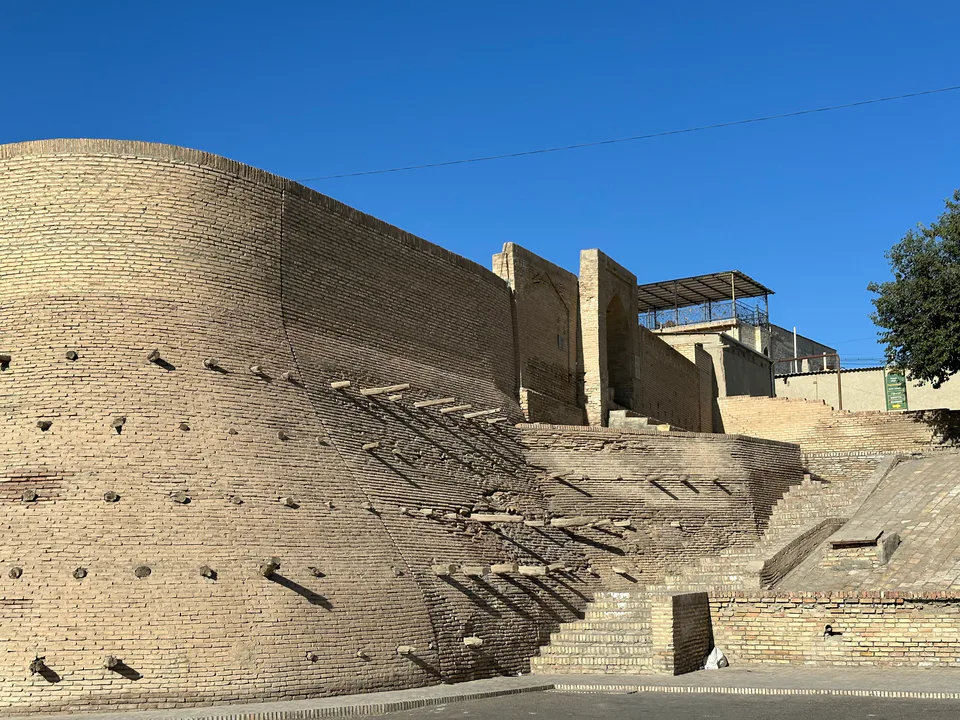
The citadel is an irregular rectangle stretched slightly east–west, its walls running for about 790 m around an area of almost 4 ha. Its only gate opens in the west wall onto the Registan, framed by two 18th-century towers linked at the top by the gallery of the Naqqorakhona, the drum house.
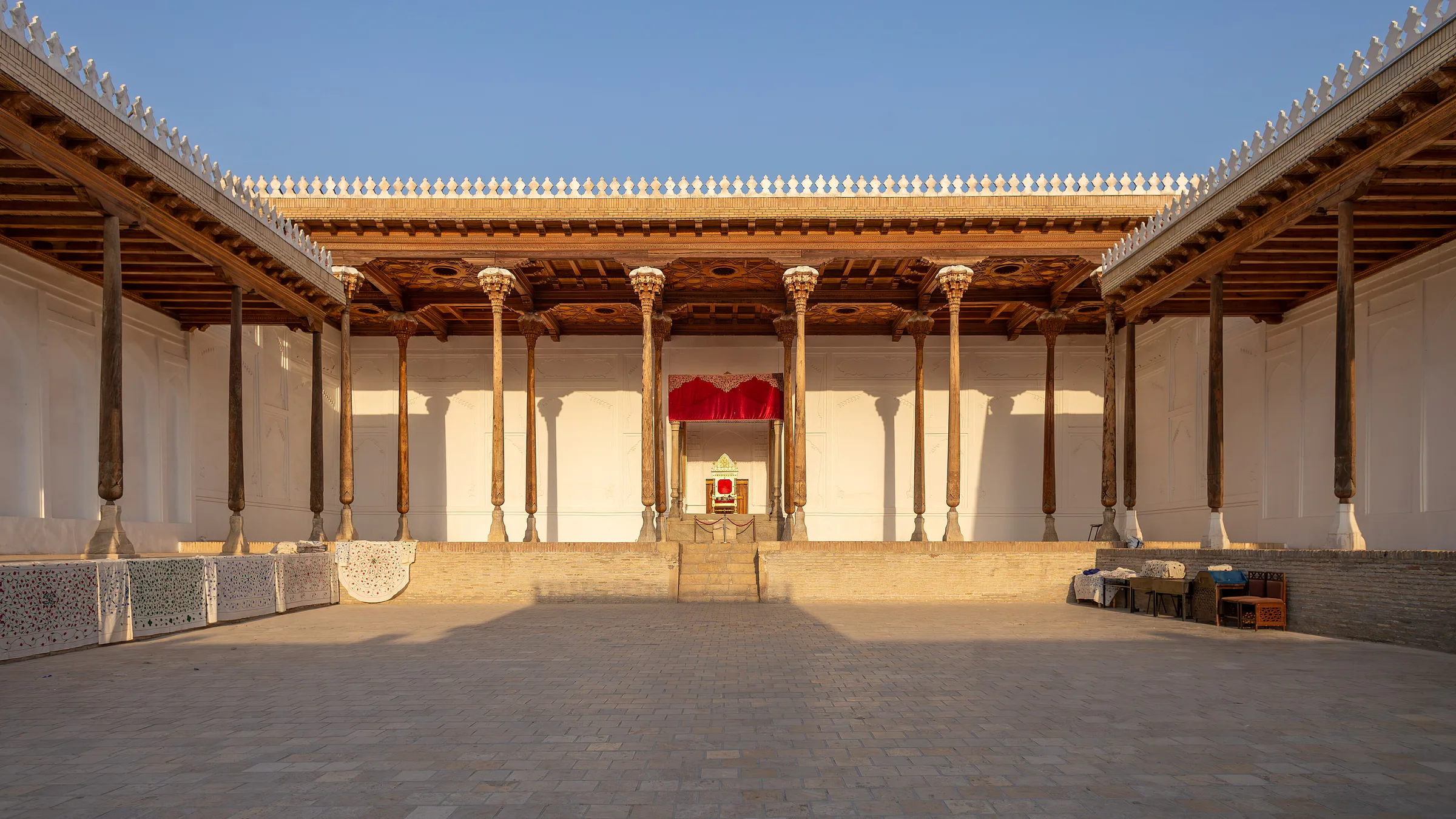
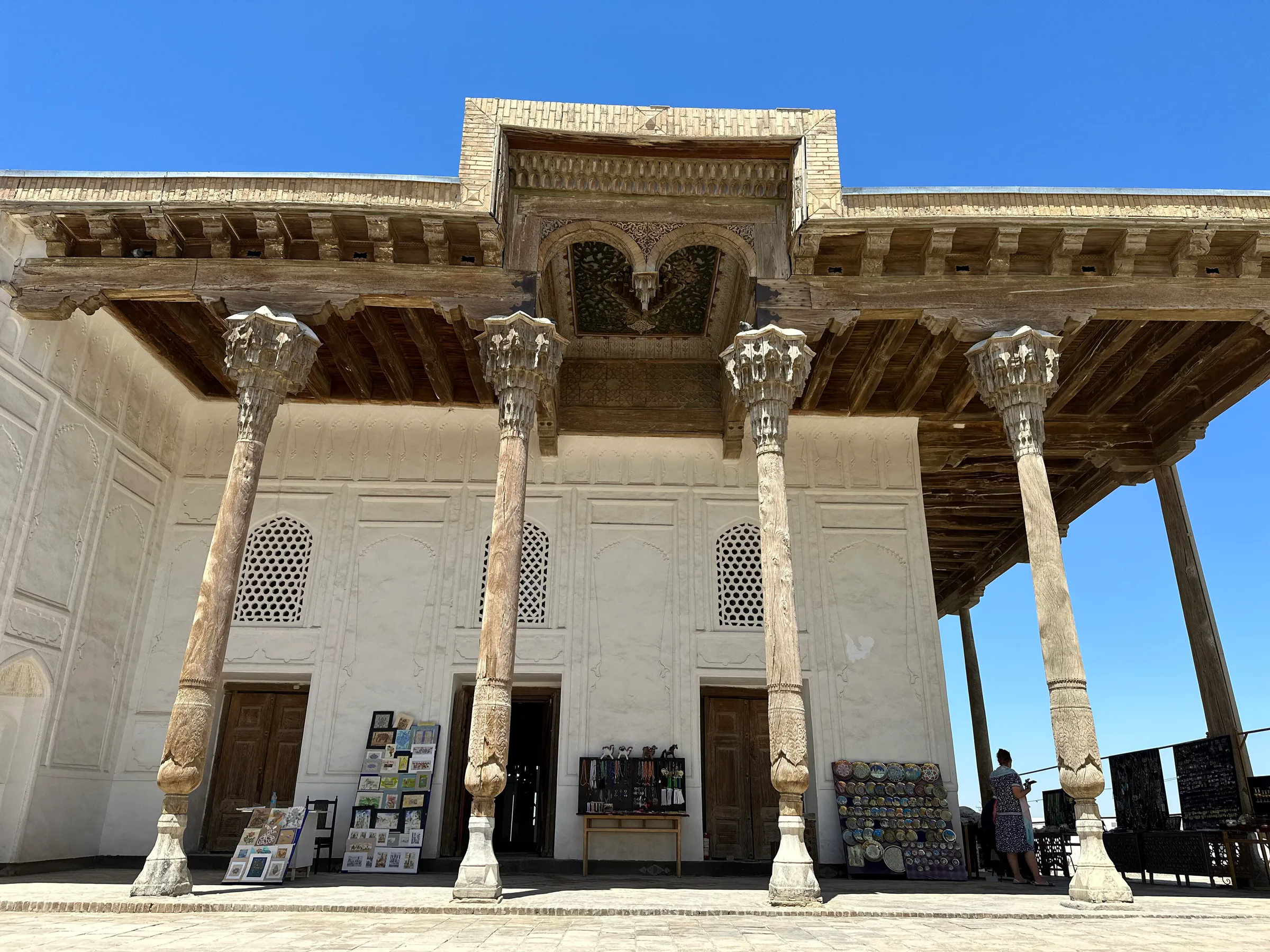
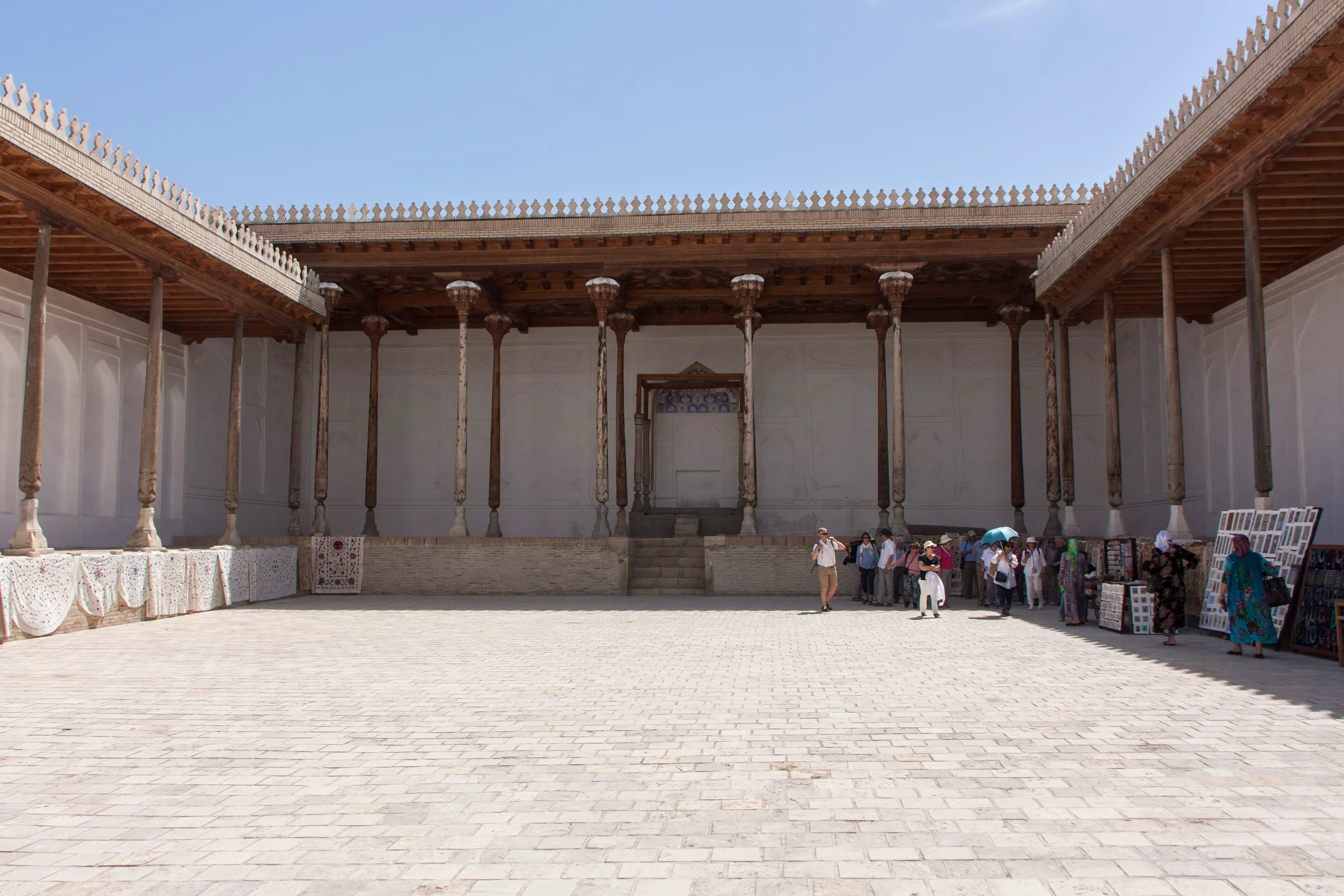
Beyond the gate a covered ramp climbs to the Friday Mosque. Inside you can still see the Kurinishkhona — the emir's throne and reception court — the Salomkhona, the remains of the qushbegi's courtyard and other buildings. Much of the interior was cleared after 1920, which is why open ground separates the surviving courtyards.
According to Tahqiqot-i Ark-i Bukhara, written in 1921 by Said Nasir, a son of Emir Muzaffar, the Naqqorakhona above the gate went up under Abdulaziz Khan (1645–1681), while the Kurinishkhona and Friday Mosque date from the reign of Subhanquli Khan (1681–1702). The Kurinishkhona was where Bukhara's rulers were enthroned and received foreign envoys.
The Ark is the headquarters of the Bukhara State Museum-Reserve. Its galleries cover archaeology, documents on Bukhara's history, manuscripts, costume and objects from the emirate.
Terraces on the walls look out over the Registan, the Bolo Hauz Mosque and, in the distance, the Kalyan Minaret.
Legend credits the Ark to Siyavush, hero of the Shahnameh: offered as much land as a bull's hide could cover, he cut the hide into thin strips and used them to enclose a large plot. Local memory also preserves a great leather whip that once hung above the gate as a symbol of the emir's power.
Mosque · Bukhara city
Wooden columns mirrored in a pool
Museum · Bukhara city
The emir's jail and its notorious pit
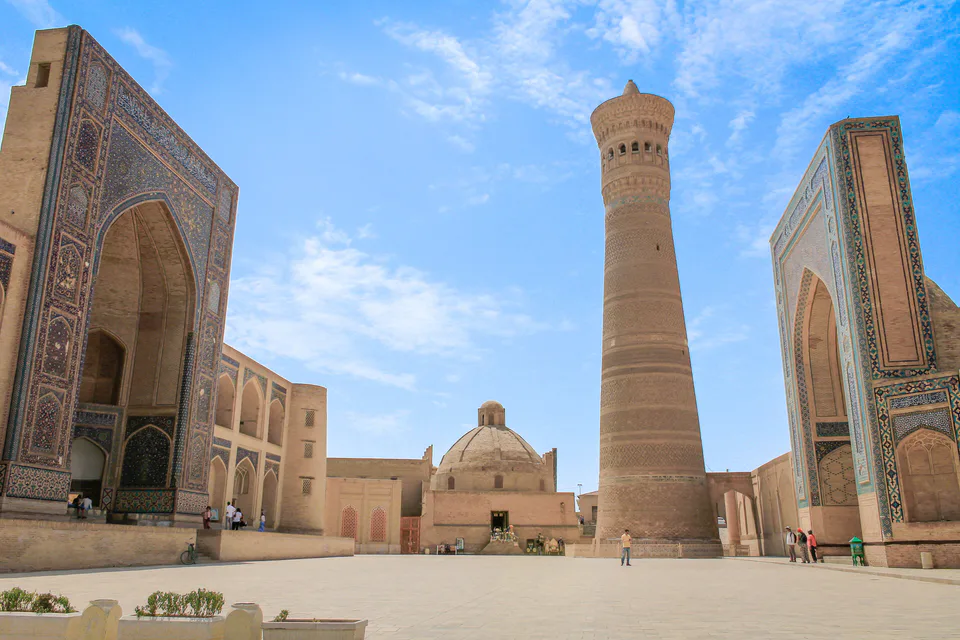
Ensemble · Bukhara city
Bukhara's great square: minaret, mosque and madrasa
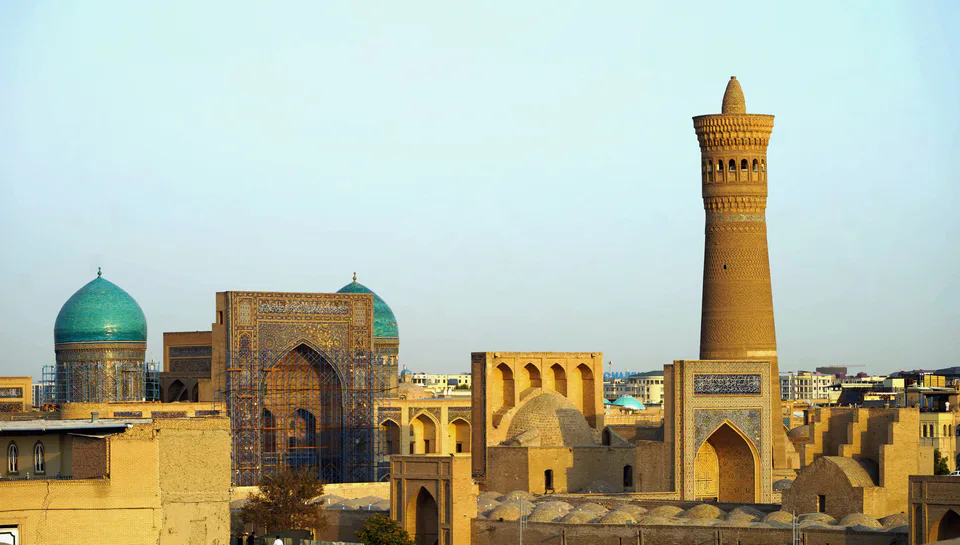
Ensemble · Bukhara city
Central Asia's most complete medieval city
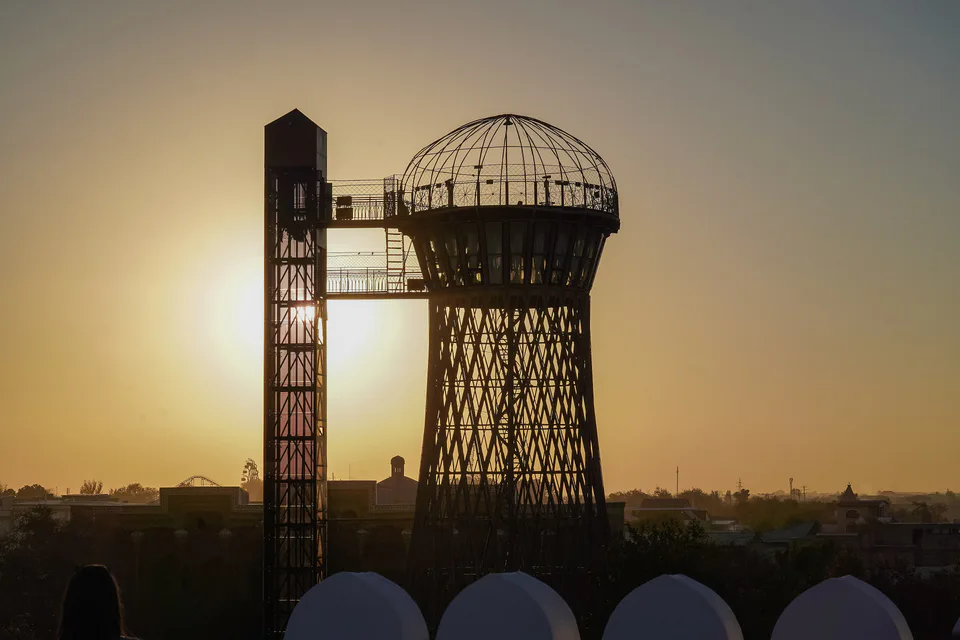
Modern · Bukhara city
A steel hyperboloid facing the Ark
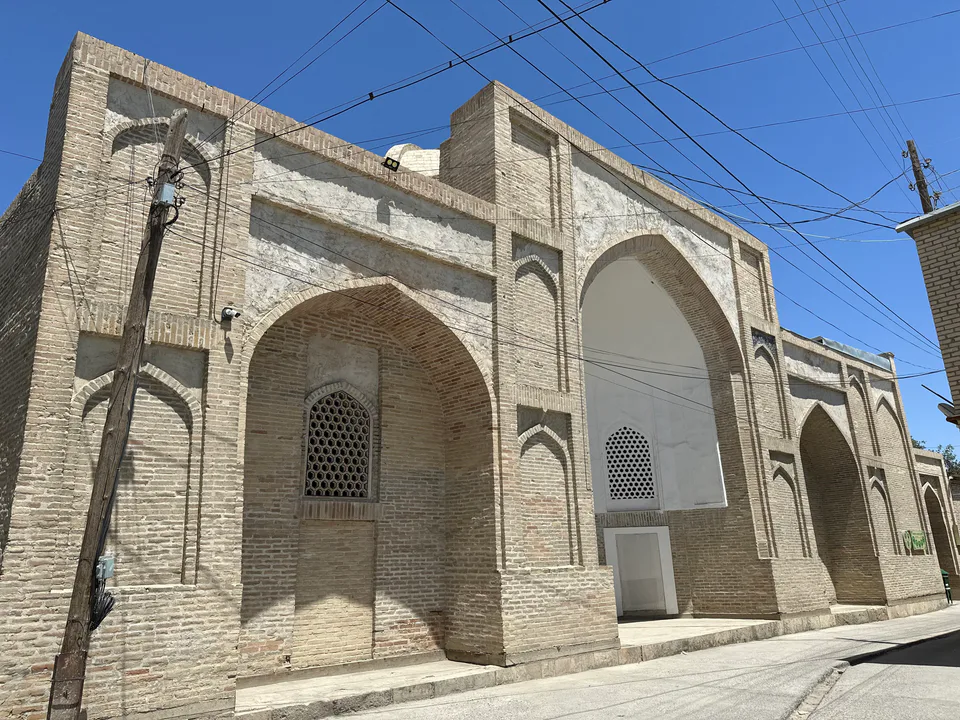
Mosque · Bukhara city
A mosque-khanqah painted in the kundal technique
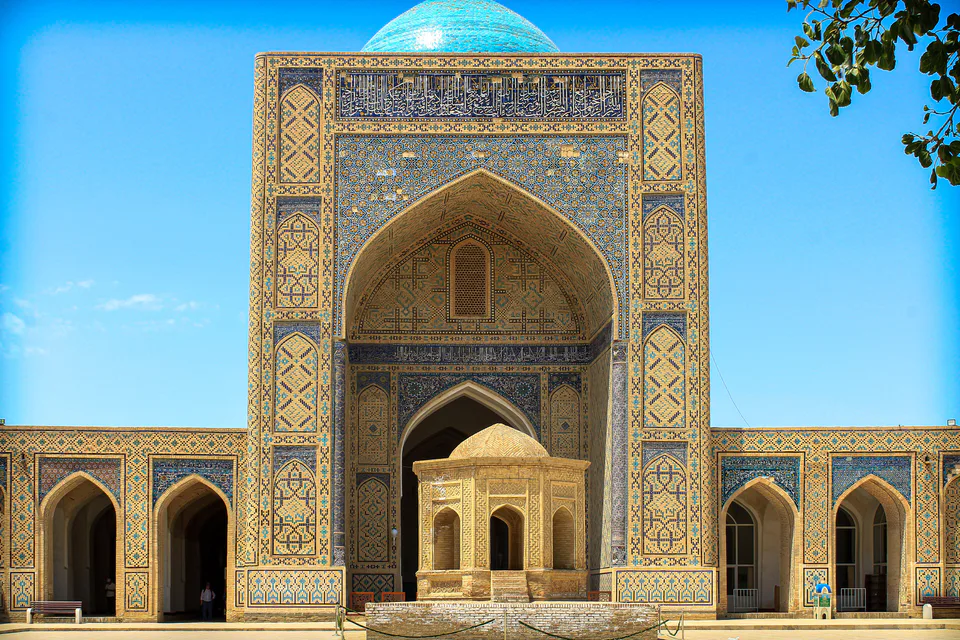
Mosque · Bukhara city
A Friday mosque for 12,000 worshippers
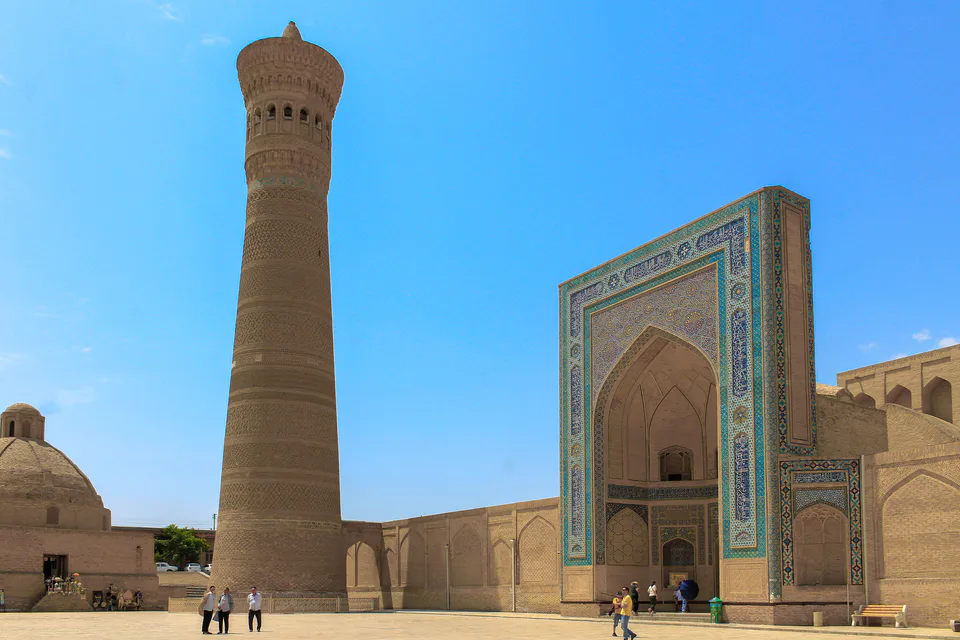
Minaret · Bukhara city
The tower Genghis Khan left standing
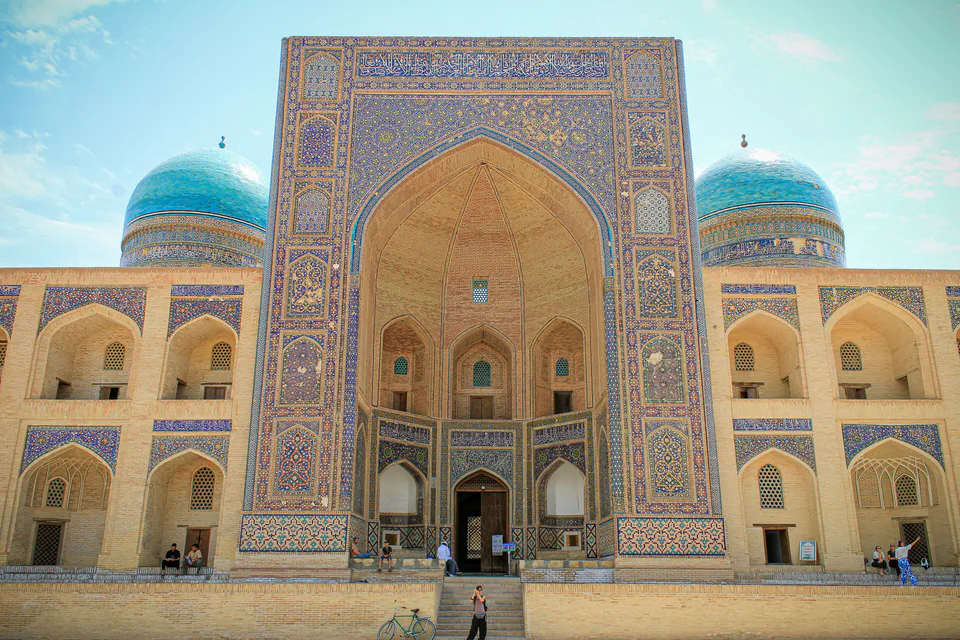
Madrasa · Bukhara city
The madrasa that stayed open under Soviet rule
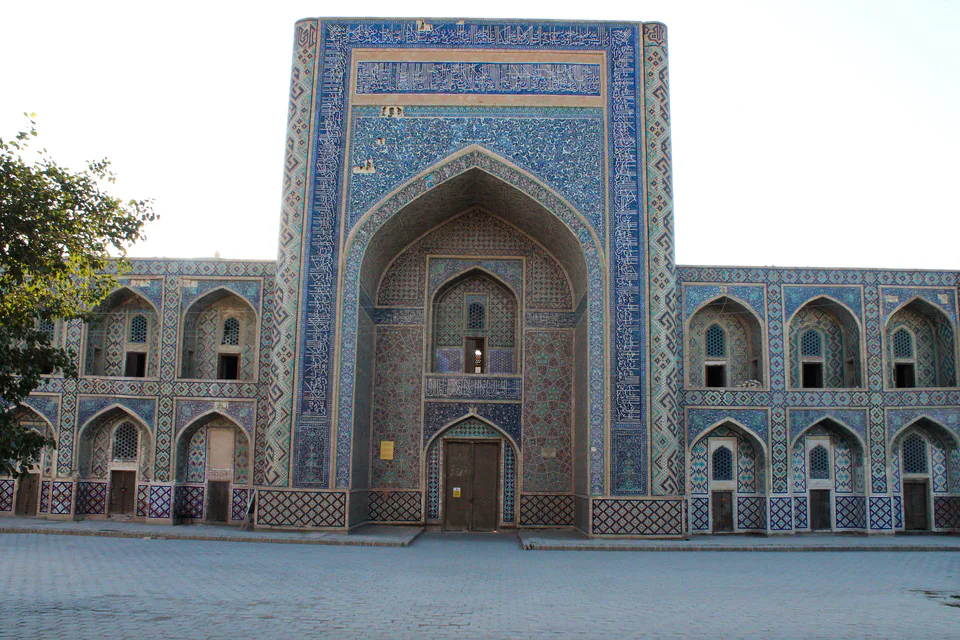
Madrasa · Bukhara city
Two madrasas — for a khan and his mother — face to face