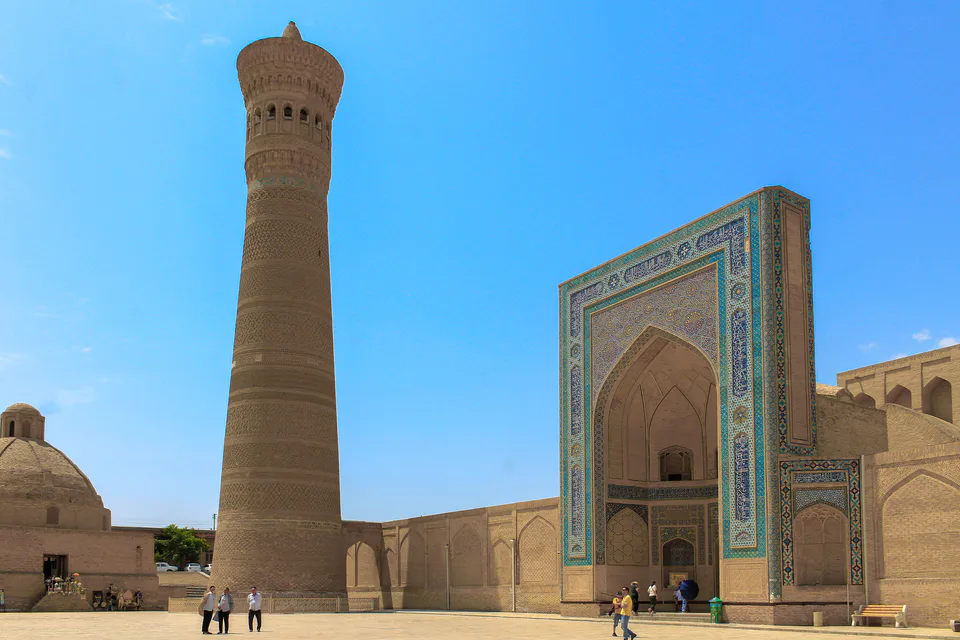
Minaret · Bukhara city
Kalyan Minaret
The tower Genghis Khan left standing
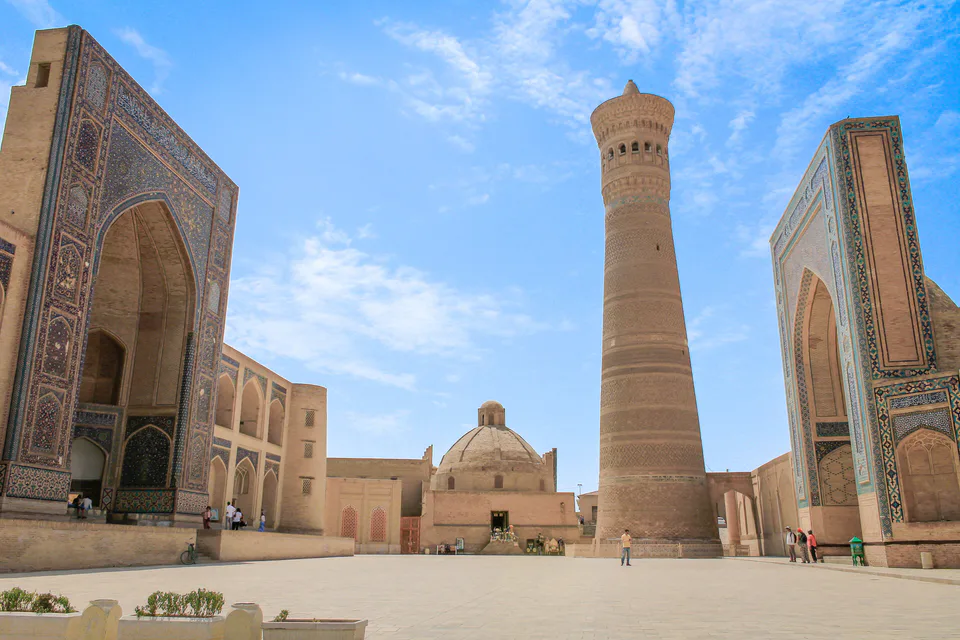
Ensemble · Bukhara city
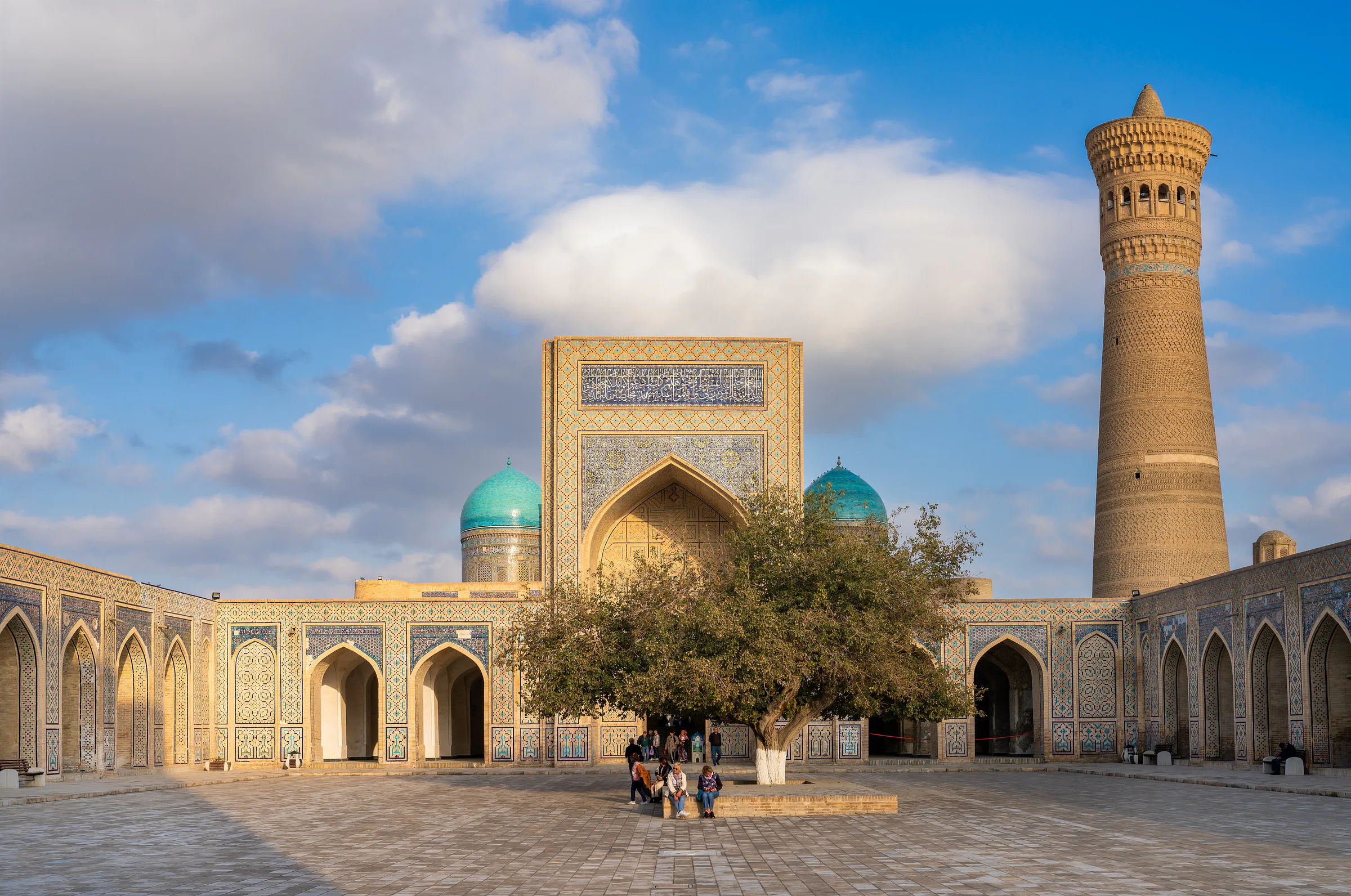
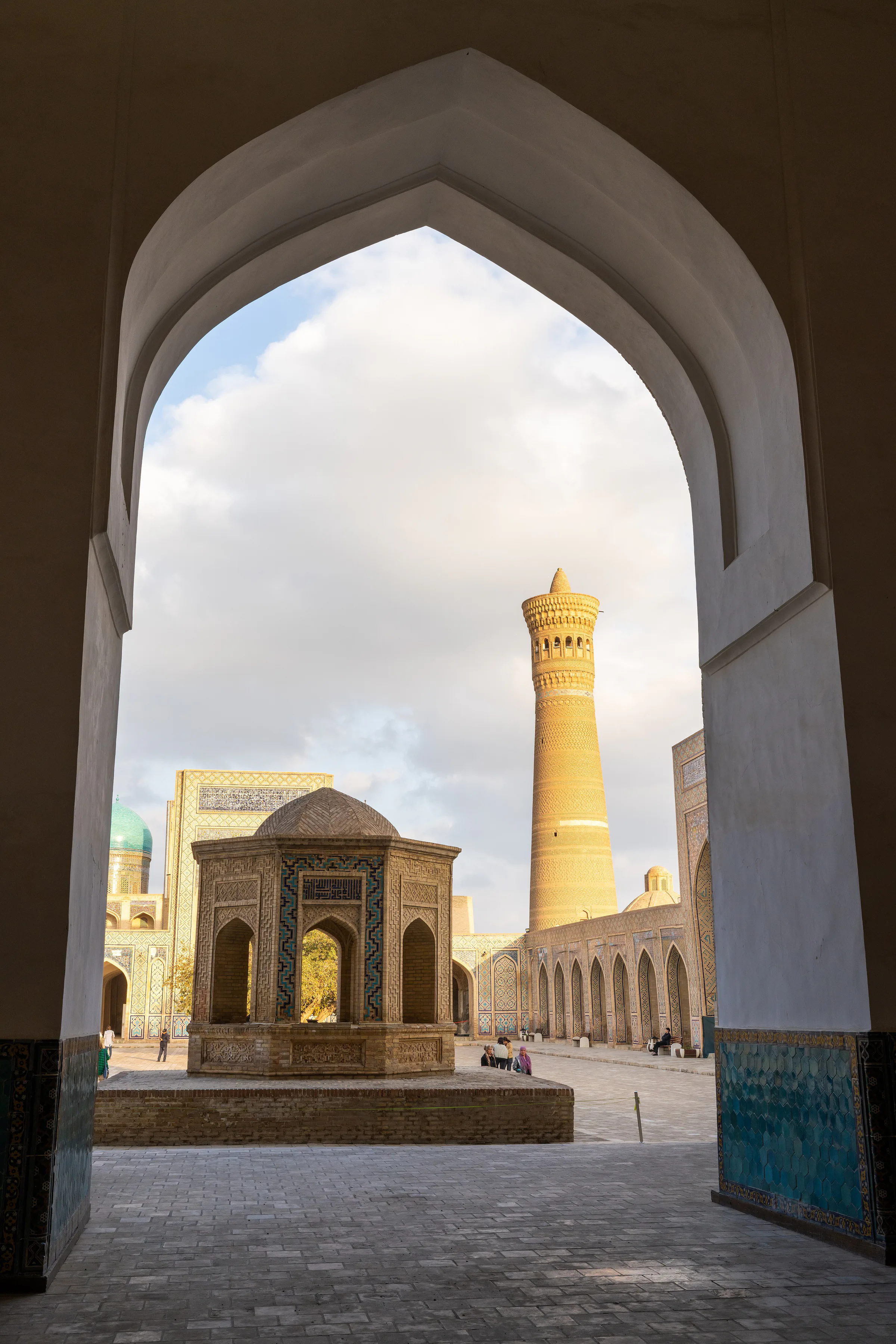
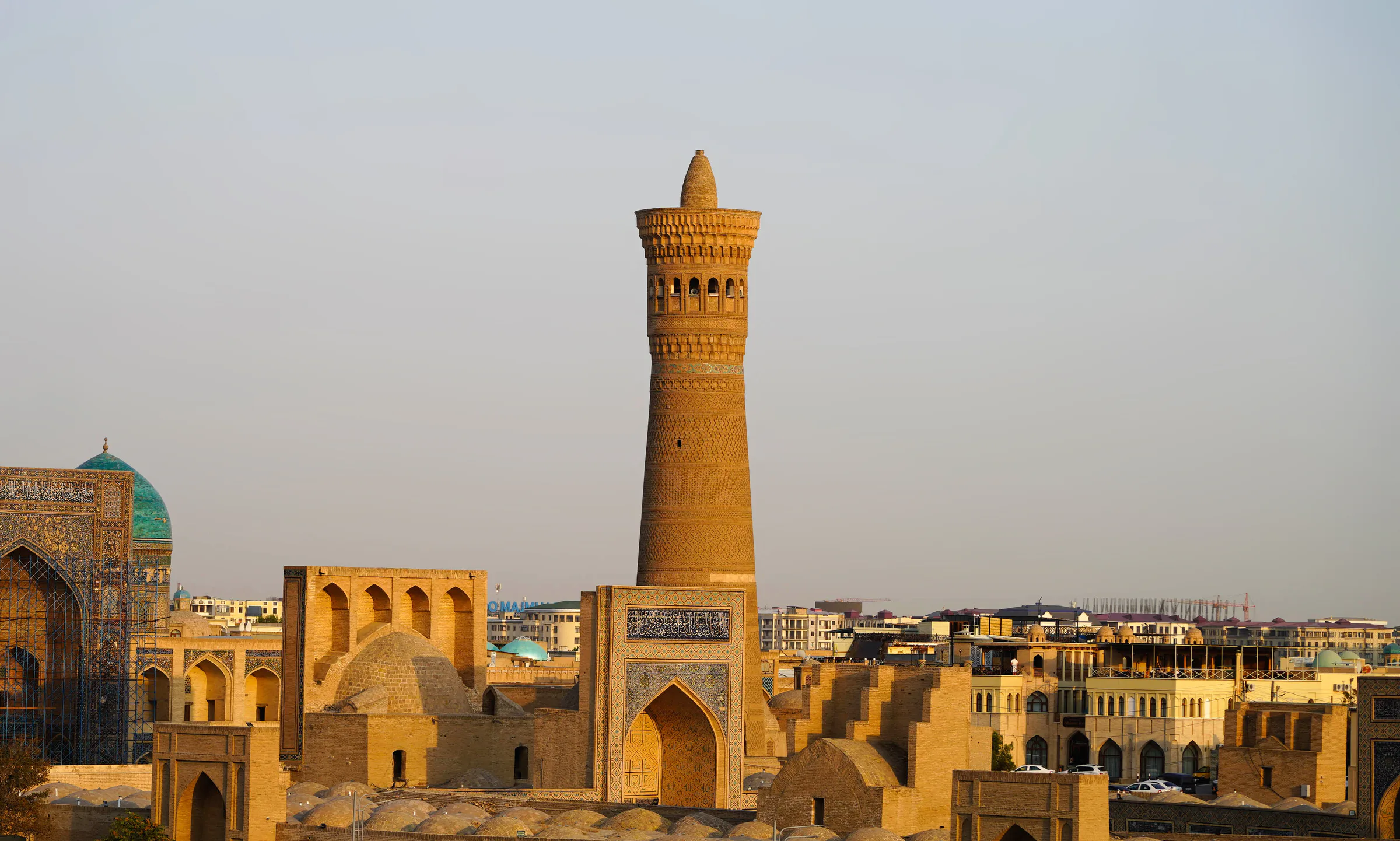
The Kalyan Minaret, Kalyan Mosque and Mir-i-Arab Madrasa make up Bukhara's central ensemble. Assembled between the 12th and 16th centuries, it has been the heart of the city's religious life for almost a millennium.
Po-i-Kalyan means 'at the foot of the Great One' in Persian — the great mosque, that is. Three buildings define the square: the Kalyan Minaret of 1127, the Kalyan Friday Mosque, whose decoration was completed in 1514, and the Mir-i-Arab Madrasa facing it. Mosque and madrasa stand portal to portal on a single axis, an arrangement Central Asian builders called a kosh.
The ensemble lies south-east of the Ark on the old commercial street, which continues south to Toqi Zargaron and the other trading domes.
After the Arab conquest Bukhara's Friday mosque stood at the foot of the Ark. In the early 12th century the Qarakhanid ruler Arslan Khan replanned the city and moved the mosque here. According to additions to Narshakhi's History of Bukhara, the first minaret collapsed as soon as it was finished, wrecking much of the mosque; the new mosque was completed in 1121 and the minaret in 1127.
The present Kalyan Mosque rose on the site of Arslan Khan's building in the 15th century, and its decoration was finished in 1514 under the Shaybanid Ubaydullah Khan. The ensemble took its final shape in the 1530s with the Mir-i-Arab Madrasa, where both its namesake, Sheikh Abdullah Yamani, and Ubaydullah Khan himself are buried.
Excavations have shown that two earlier mosques lie beneath the present one: the lowest from Arslan Khan's time, the next from the 14th century. Arslan Khan's mosque matched today's building in size and was the largest in Transoxiana until Samarkand's Bibi-Khanym Mosque was built.
The square is an open-air museum in itself. Step into the mosque courtyard to see the arcaded galleries and the blue dome over the maqsura. Mir-i-Arab is a working madrasa, so access is limited, but its portal and domes are easy to admire from the square.
The Amir Alimkhan Madrasa stands on the east side of the square, and the Ulugh Beg and Abdulaziz Khan madrasas are just to the north — all part of the same walk. Ulugh Beg's madrasa of 1417 and Abdulaziz Khan's, built some 235 years later, face each other to form a second kosh a few steps from Po-i-Kalyan — a chance to compare two eras of architecture side by side.
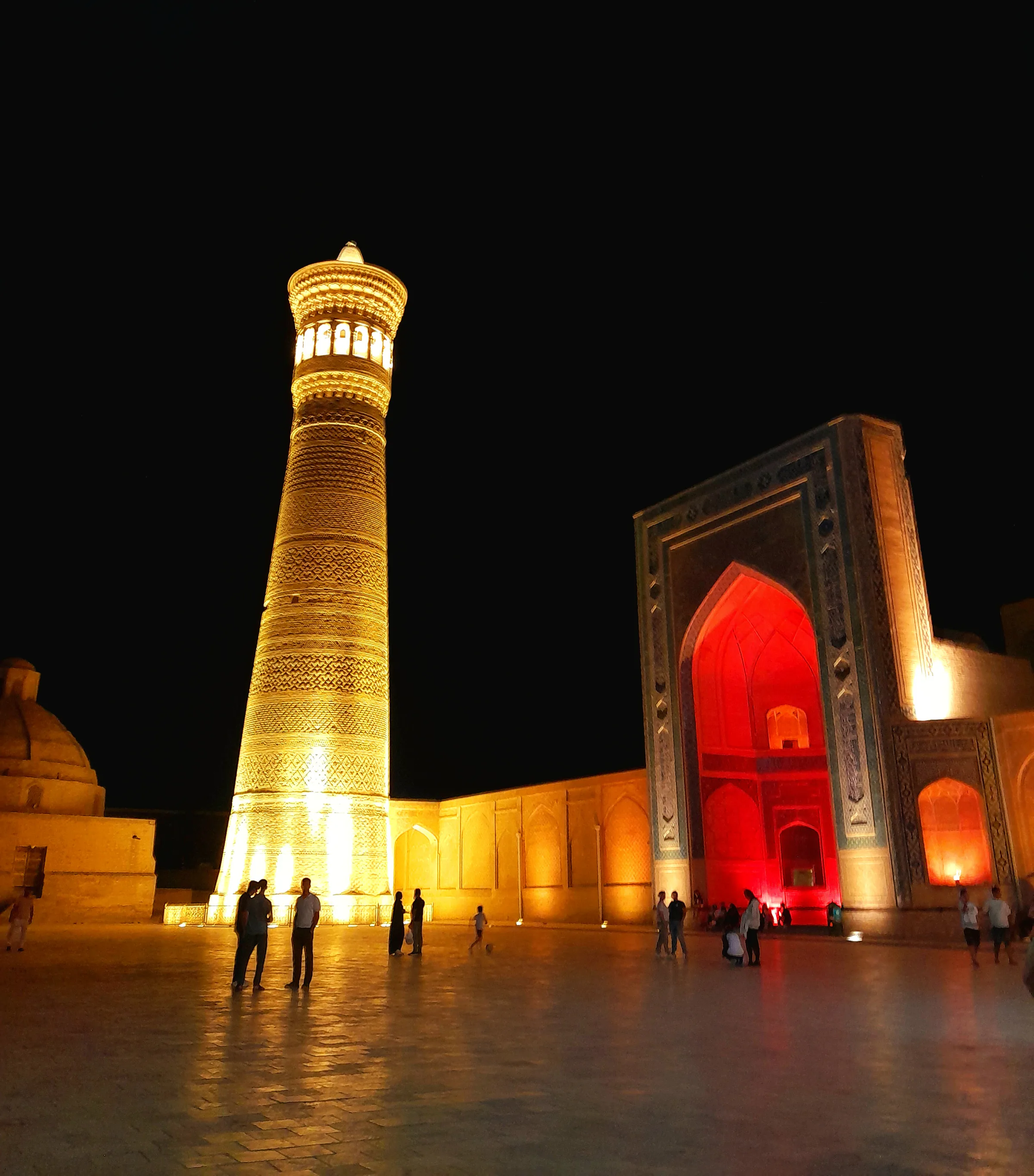
In the evening the minaret and domes are floodlit and the square becomes one of the liveliest spots in town; watching sunset from the teahouse terraces around it is a local habit.
In Soviet times, from the 1930s, the Kalyan Mosque served as a grain store; it was handed back to the Muslim Board in 1996.
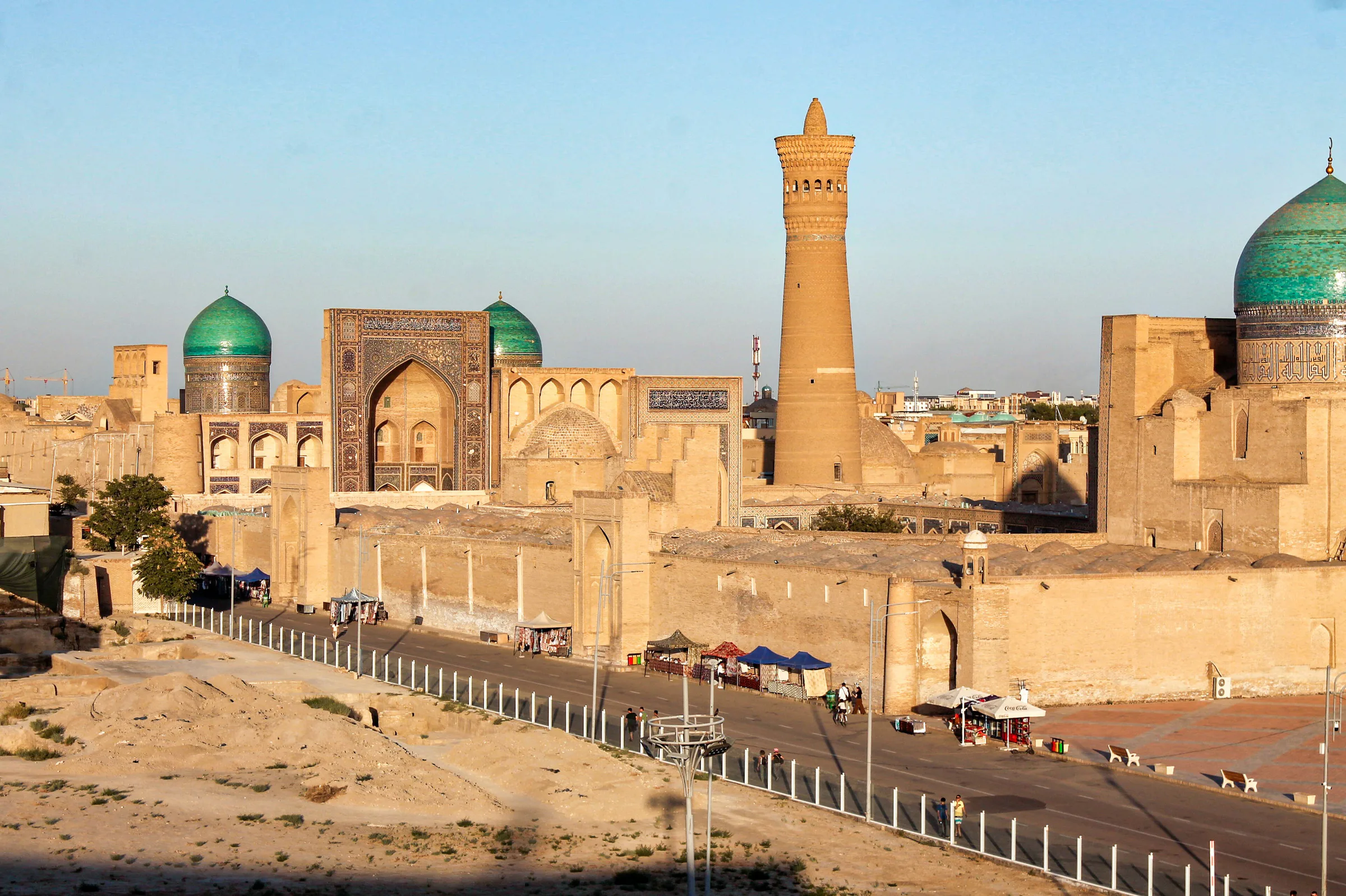
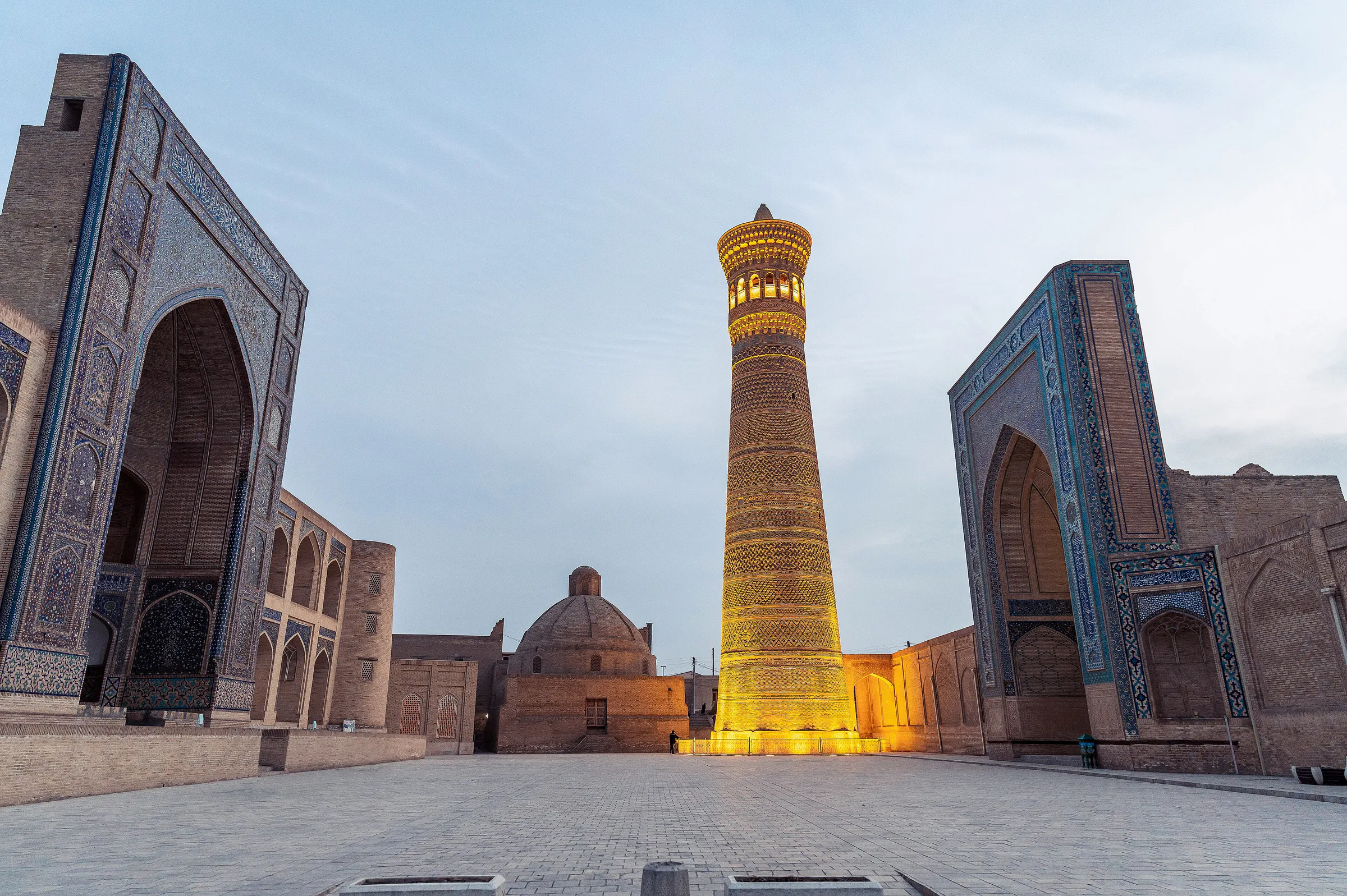
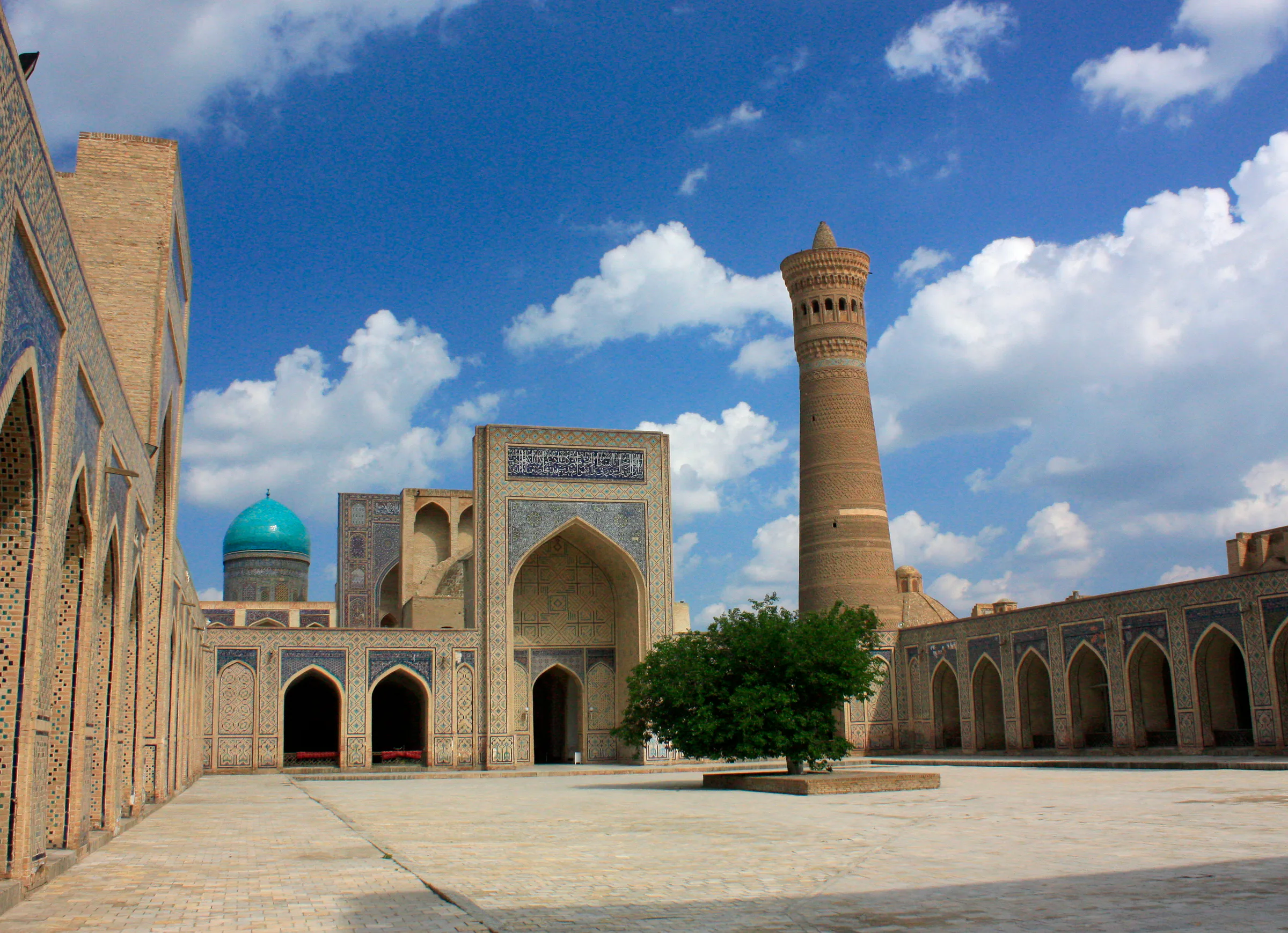
Minaret · Bukhara city
The tower Genghis Khan left standing
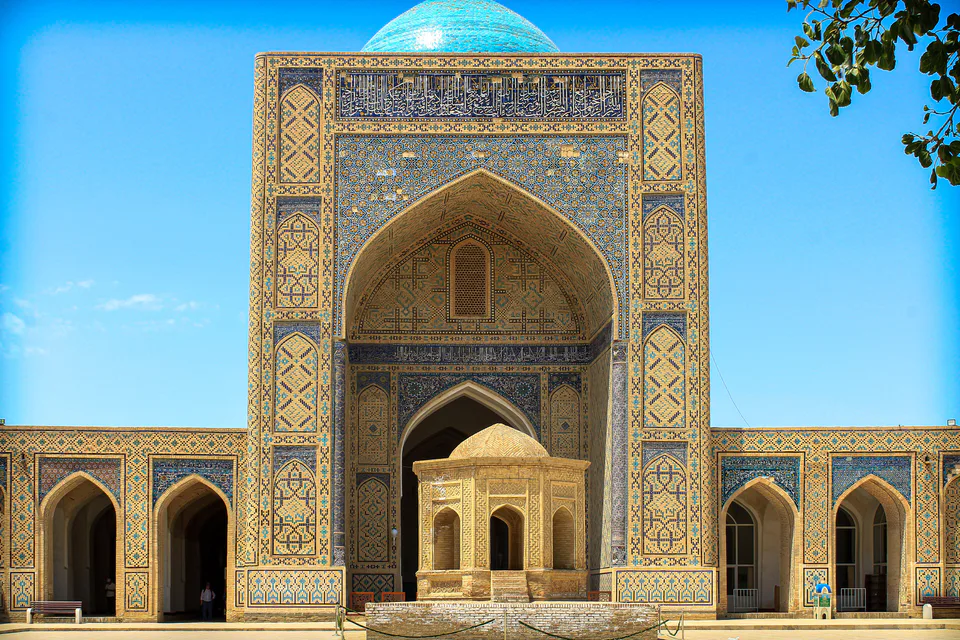
Mosque · Bukhara city
A Friday mosque for 12,000 worshippers
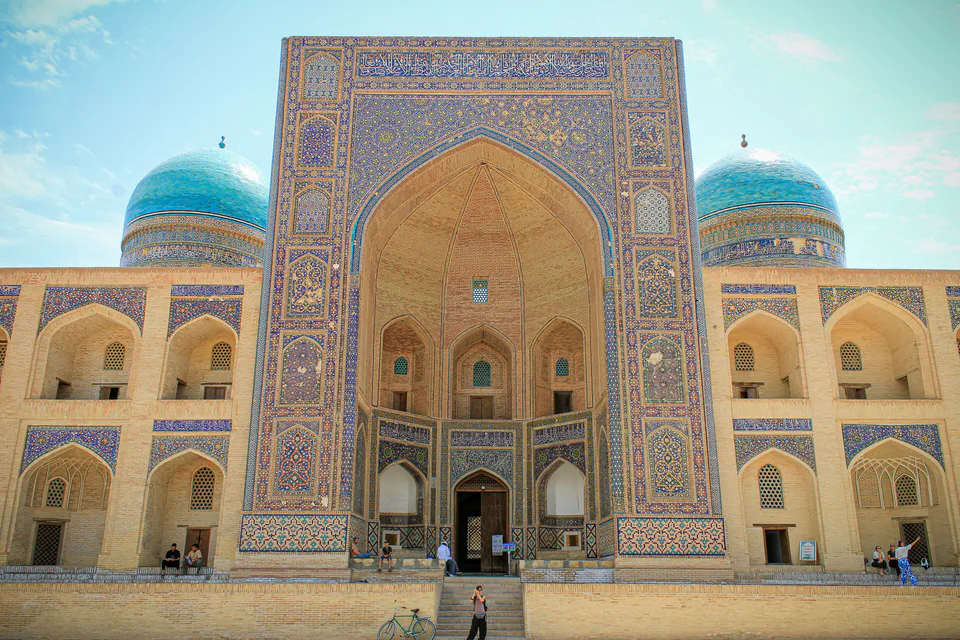
Madrasa · Bukhara city
The madrasa that stayed open under Soviet rule
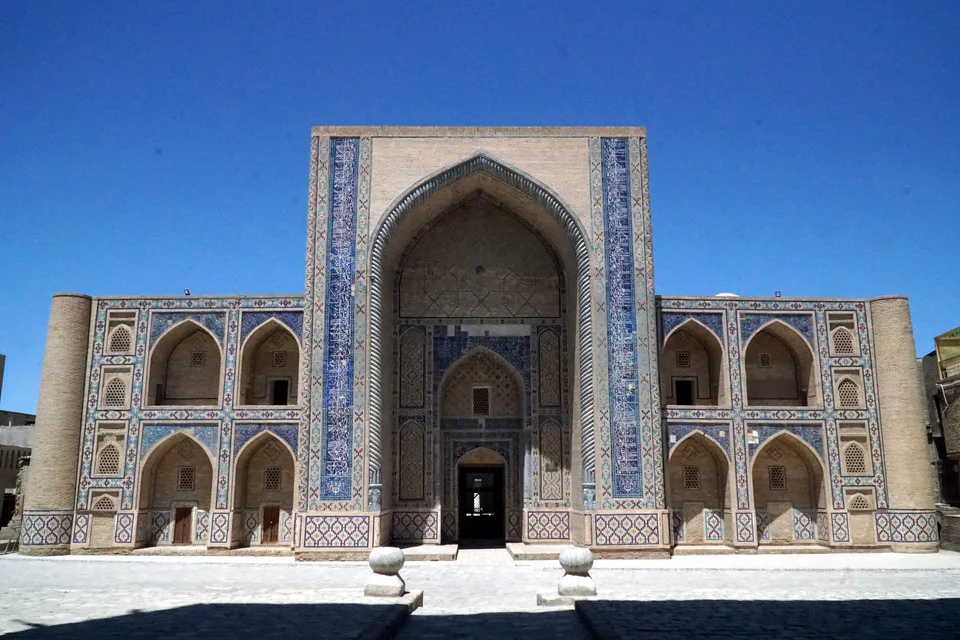
Madrasa · Bukhara city
The oldest of Ulugh Beg's three madrasas
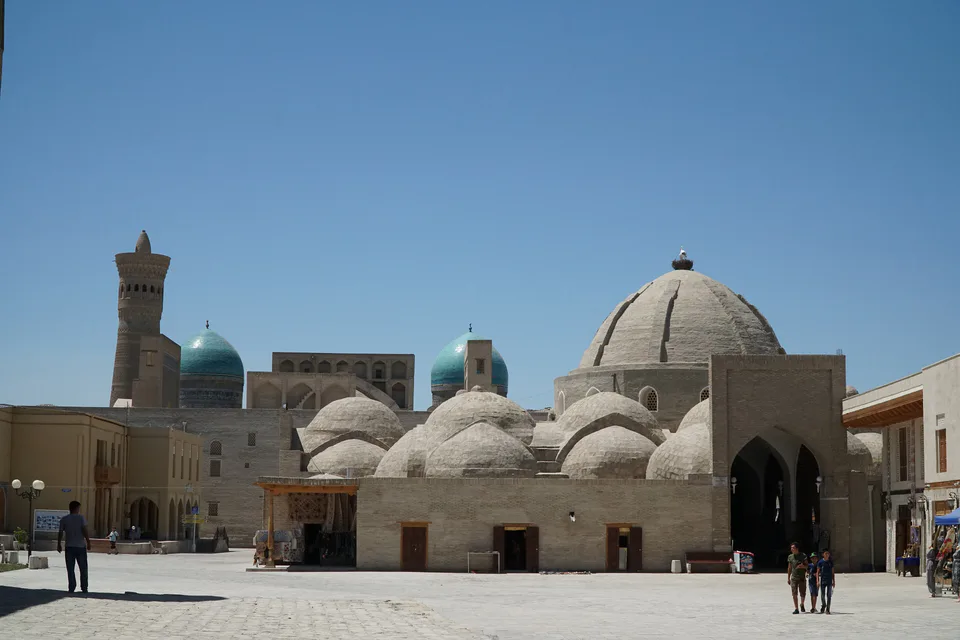
Bazaar · Bukhara city
The jewellers' dome — Bukhara's largest trading dome
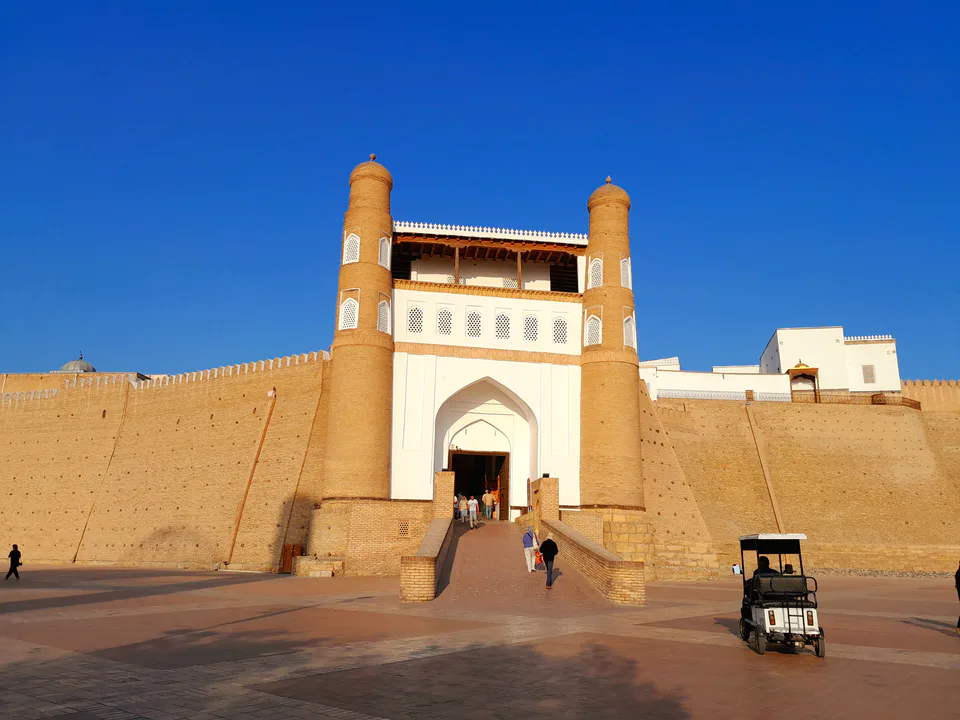
Fortress · Bukhara city
Seat of Bukhara's rulers for over a thousand years
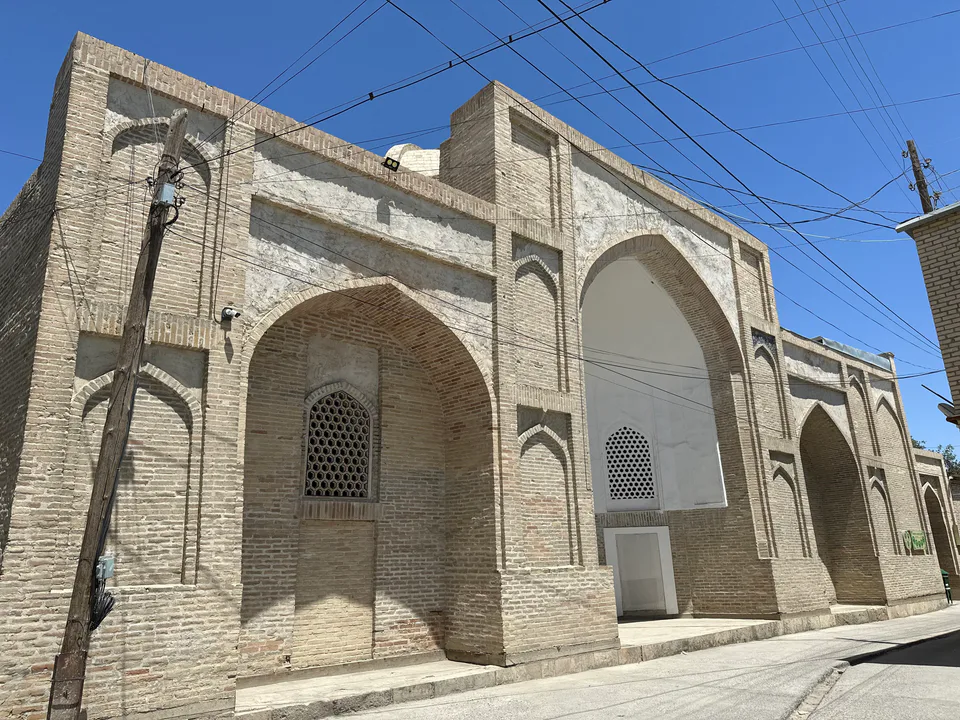
Mosque · Bukhara city
A mosque-khanqah painted in the kundal technique
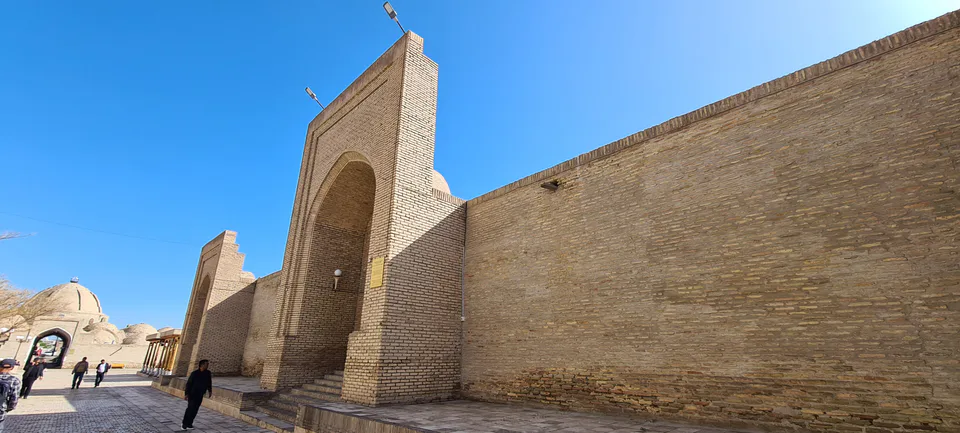
Bazaar · Bukhara city
A gated covered market for silk and carpets
Madrasa · Bukhara city
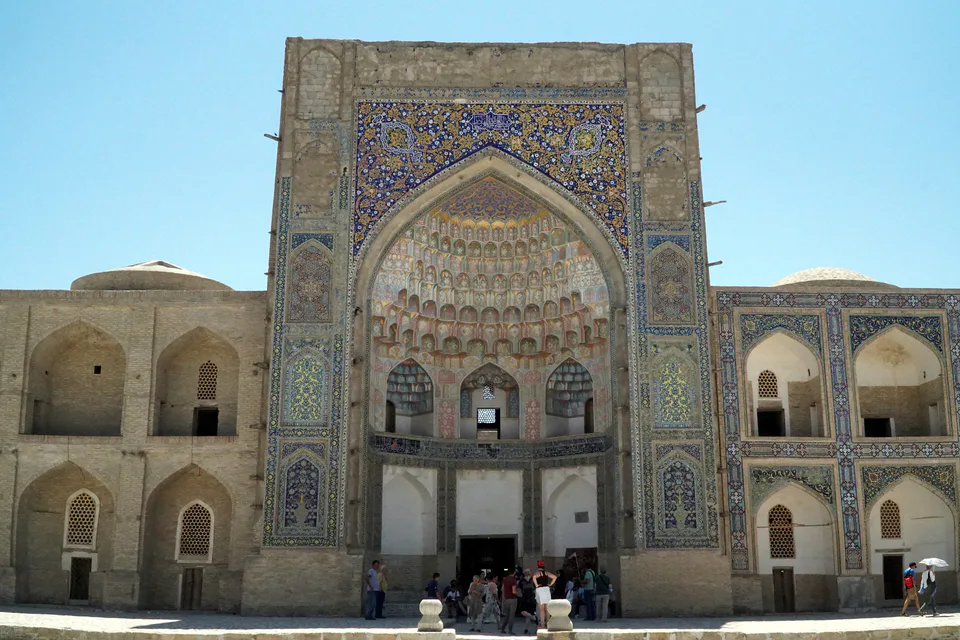
The last of Bukhara's great madrasas
Ensemble · Bukhara city
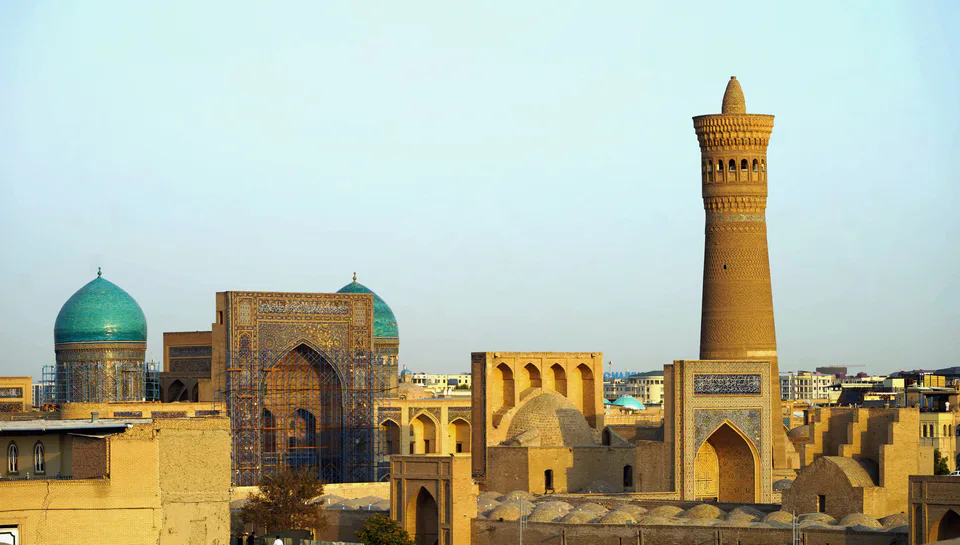
Central Asia's most complete medieval city