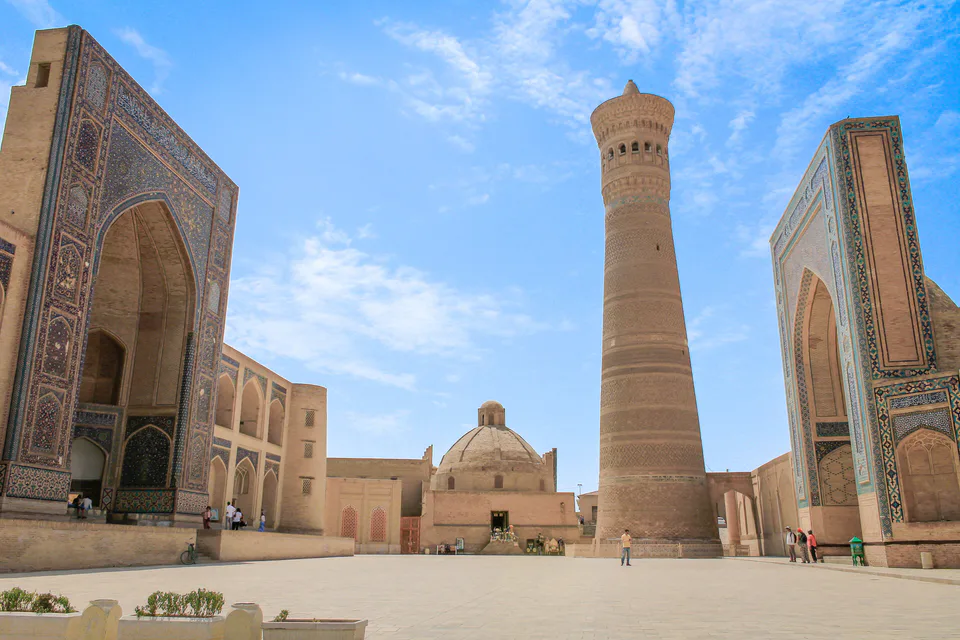
Ensemble · Bukhara city
Po-i-Kalyan Ensemble
Bukhara's great square: minaret, mosque and madrasa
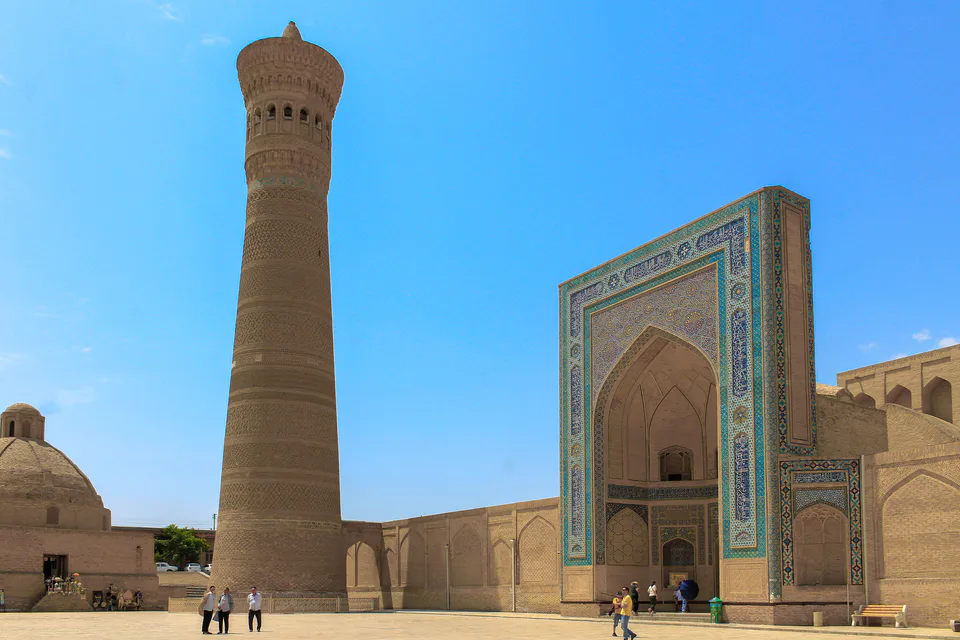
Minaret · Bukhara city
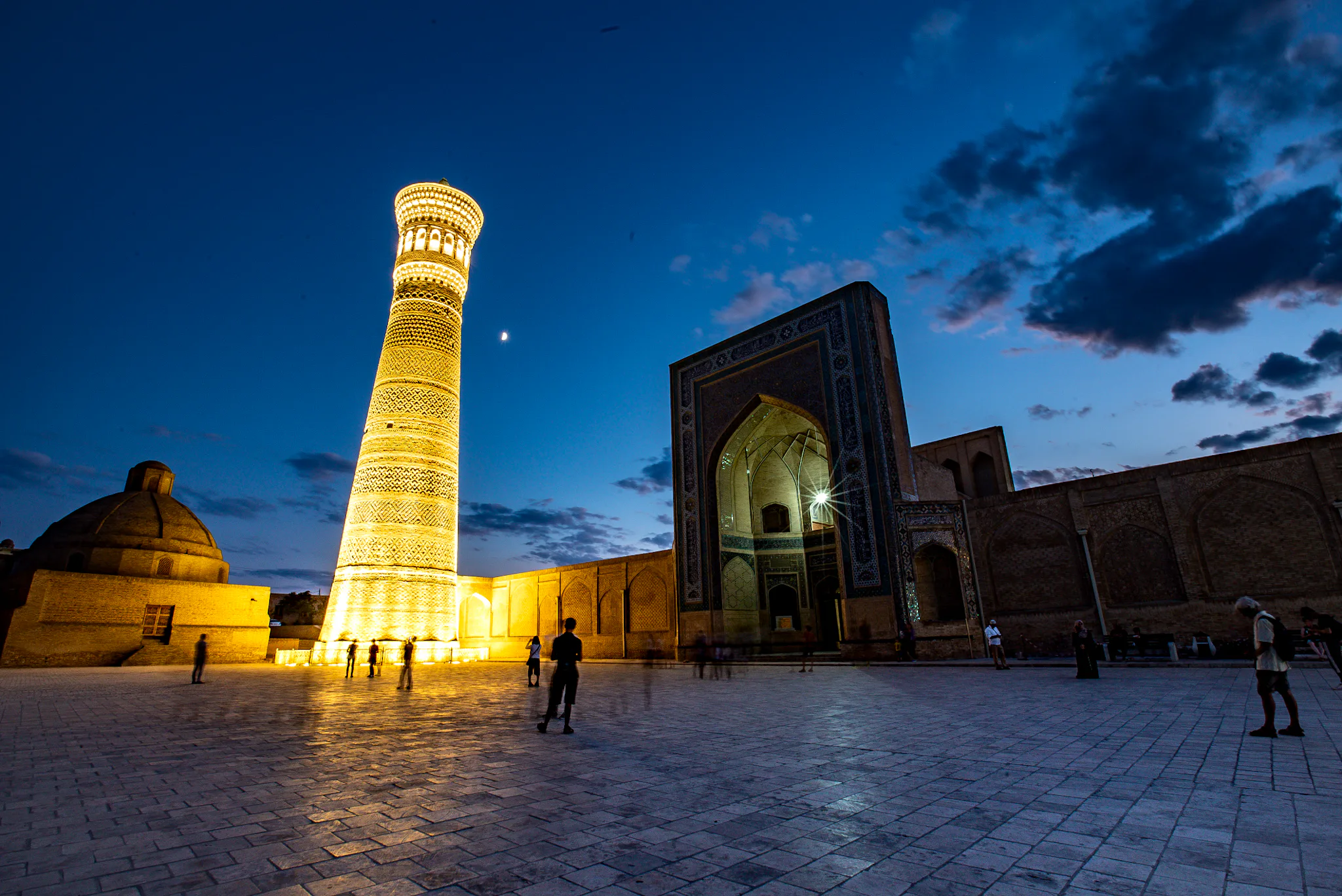
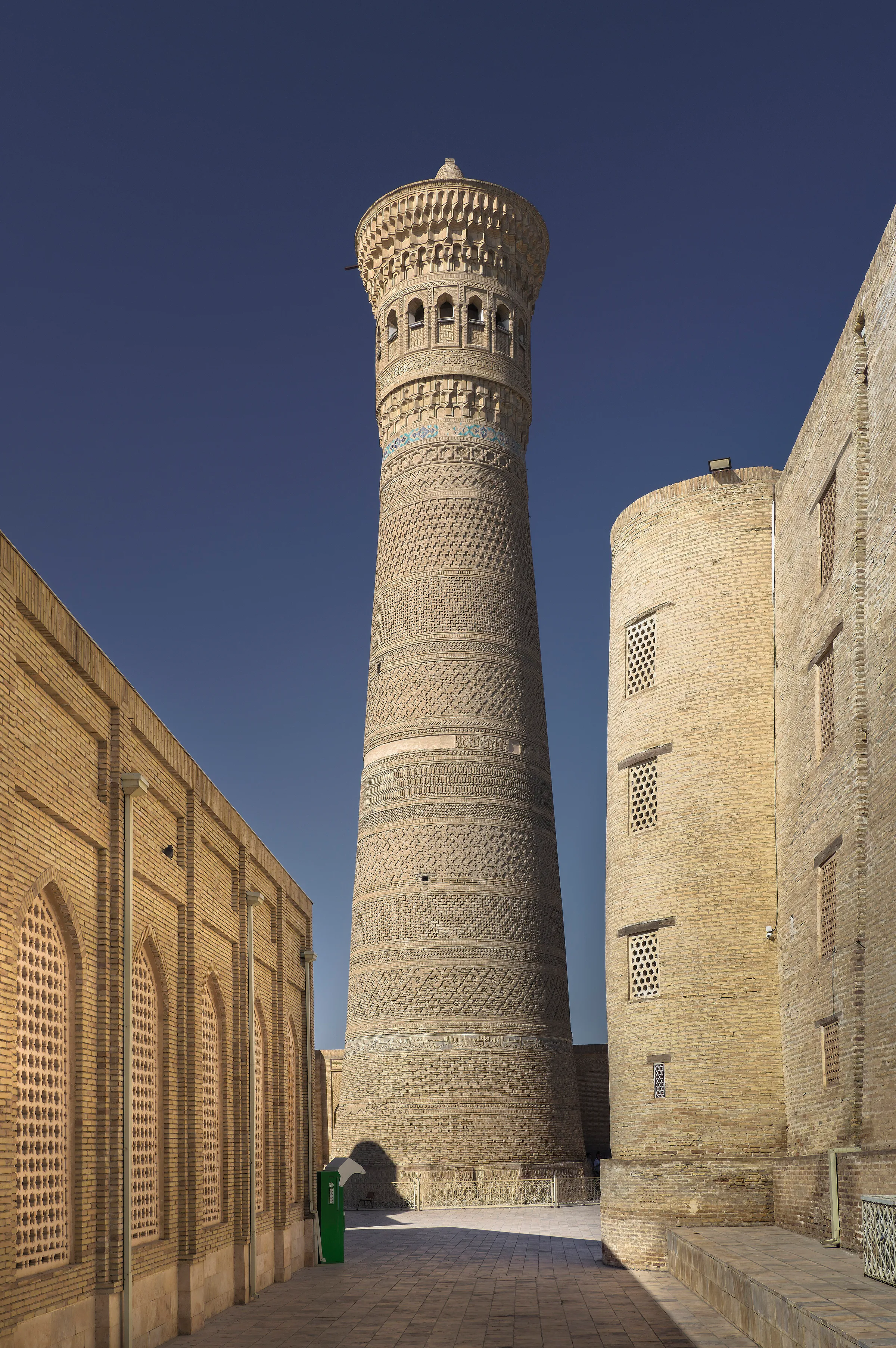
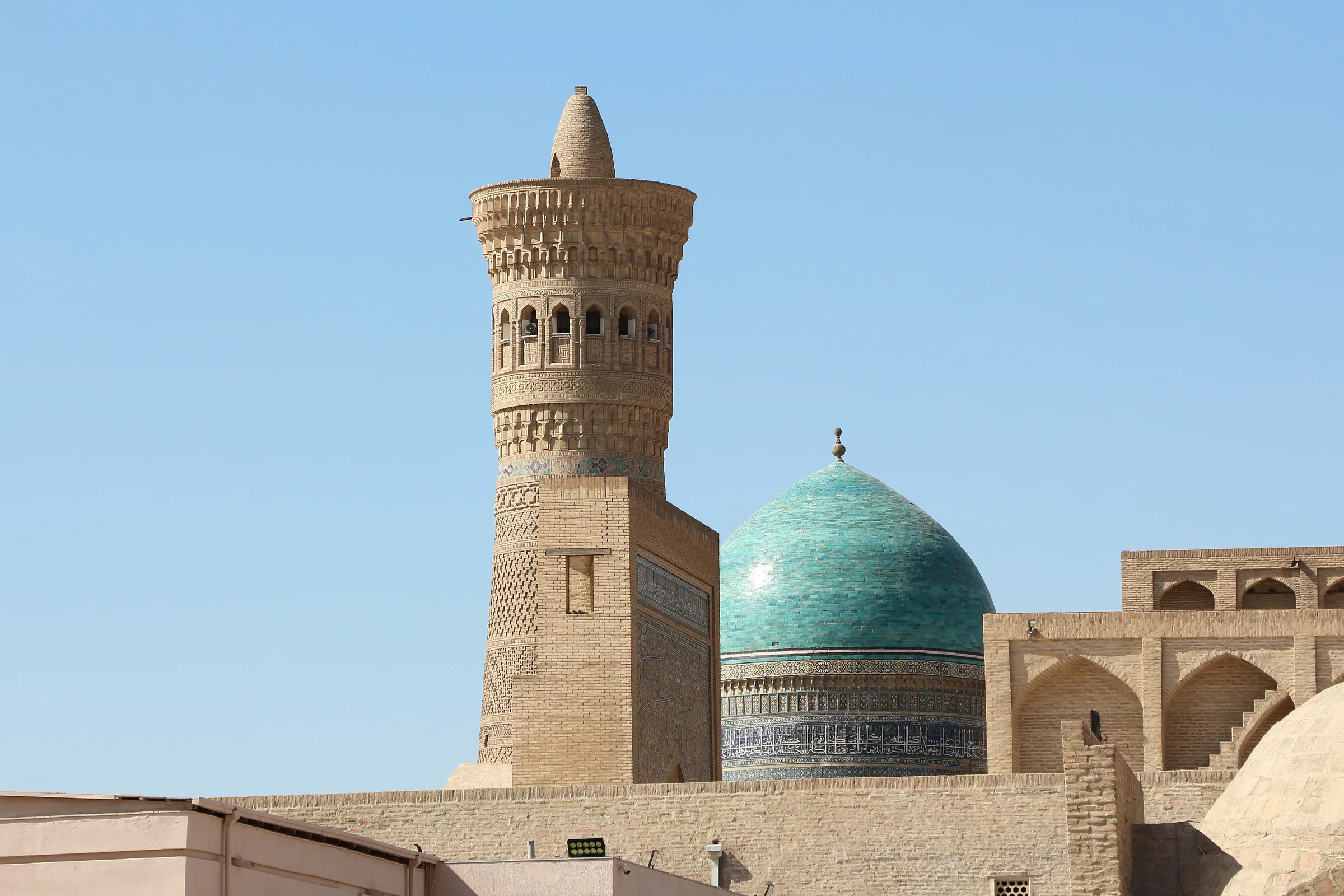
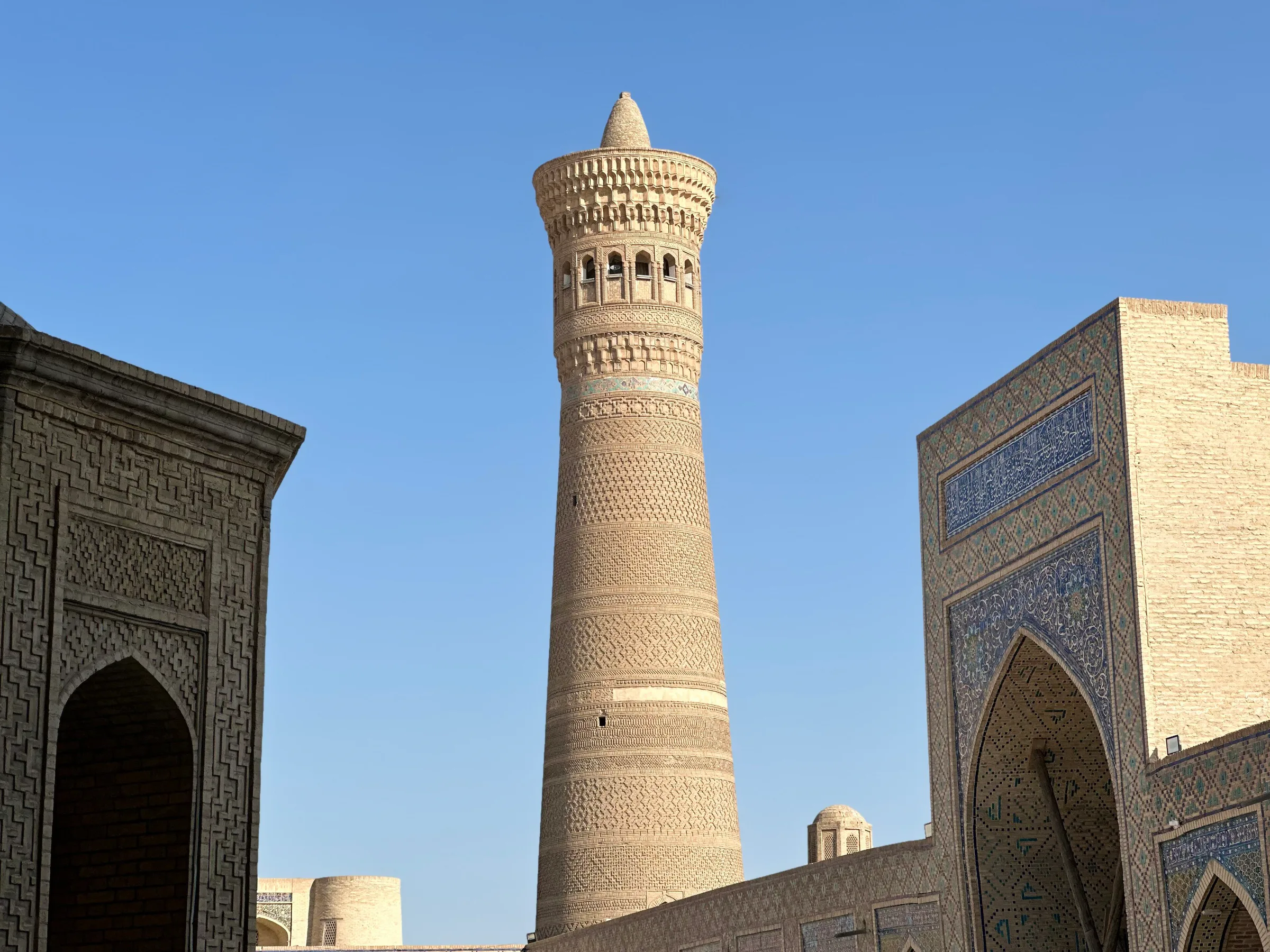
Built by the Qarakhanid ruler Arslan Khan in 1127 and standing almost 46 m tall, the Kalyan Minaret has been Bukhara's emblem for nearly 900 years — call-to-prayer tower, watchtower and beacon for caravans.
The minaret was raised beside Bukhara's main Friday mosque at the expense of the Qarakhanid ruler Arslan Khan (1102–1130). Its predecessor is said to have collapsed as soon as it was finished; the new tower of 1127 was built entirely of fired brick and has survived almost unchanged. An inscription on the shaft names Arslan Khan, while tradition calls the architect Master Bako.
During the Red Army's assault on Bukhara in 1920 artillery fire took off nearly half of the lantern. It was rebuilt; the walls and muqarnas were repaired in 1924, master Ochil Bobomurodov strengthened the foundations in 1960, and the tower was fully restored for Bukhara's 2,500th anniversary in 1997.
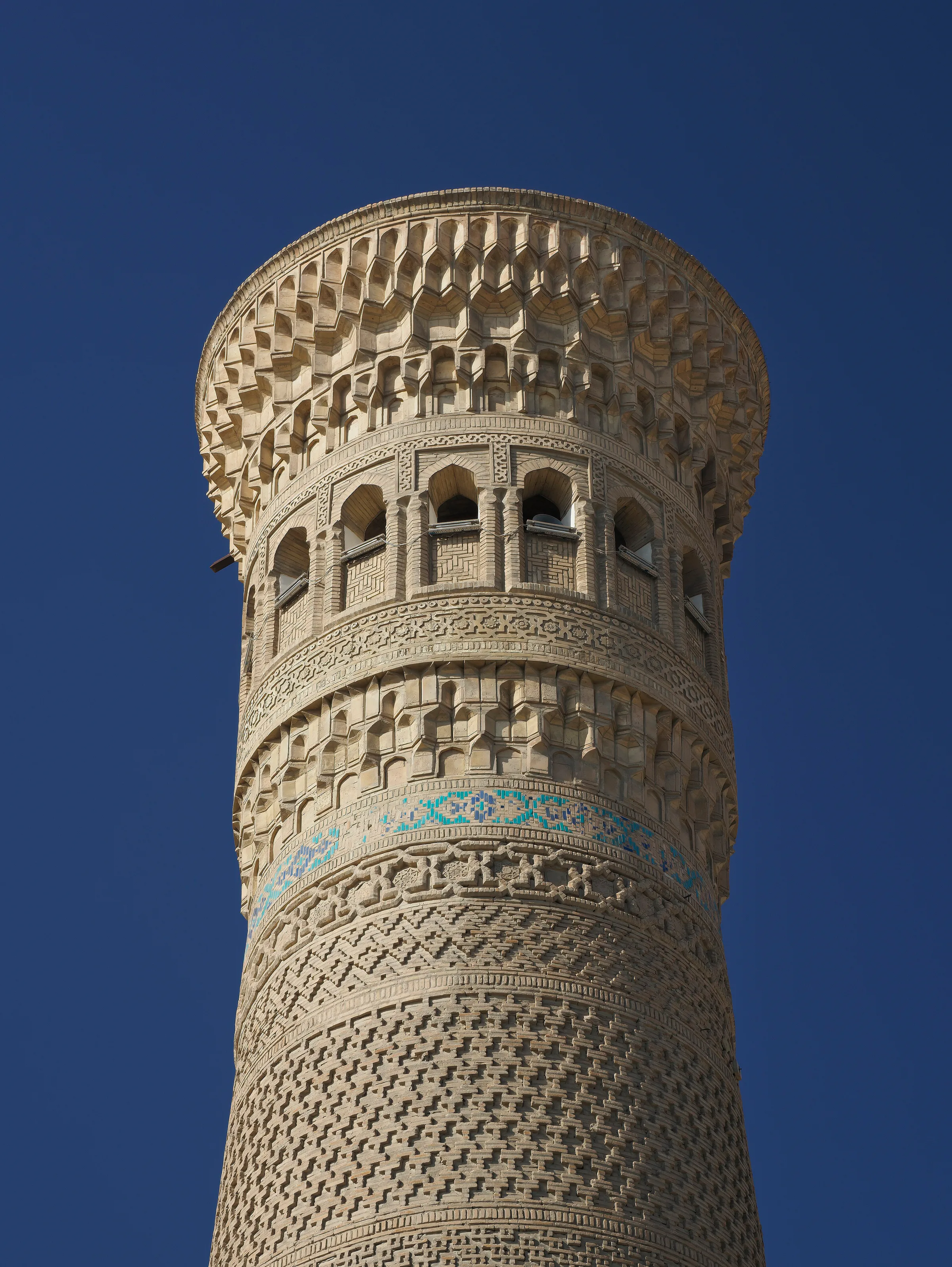
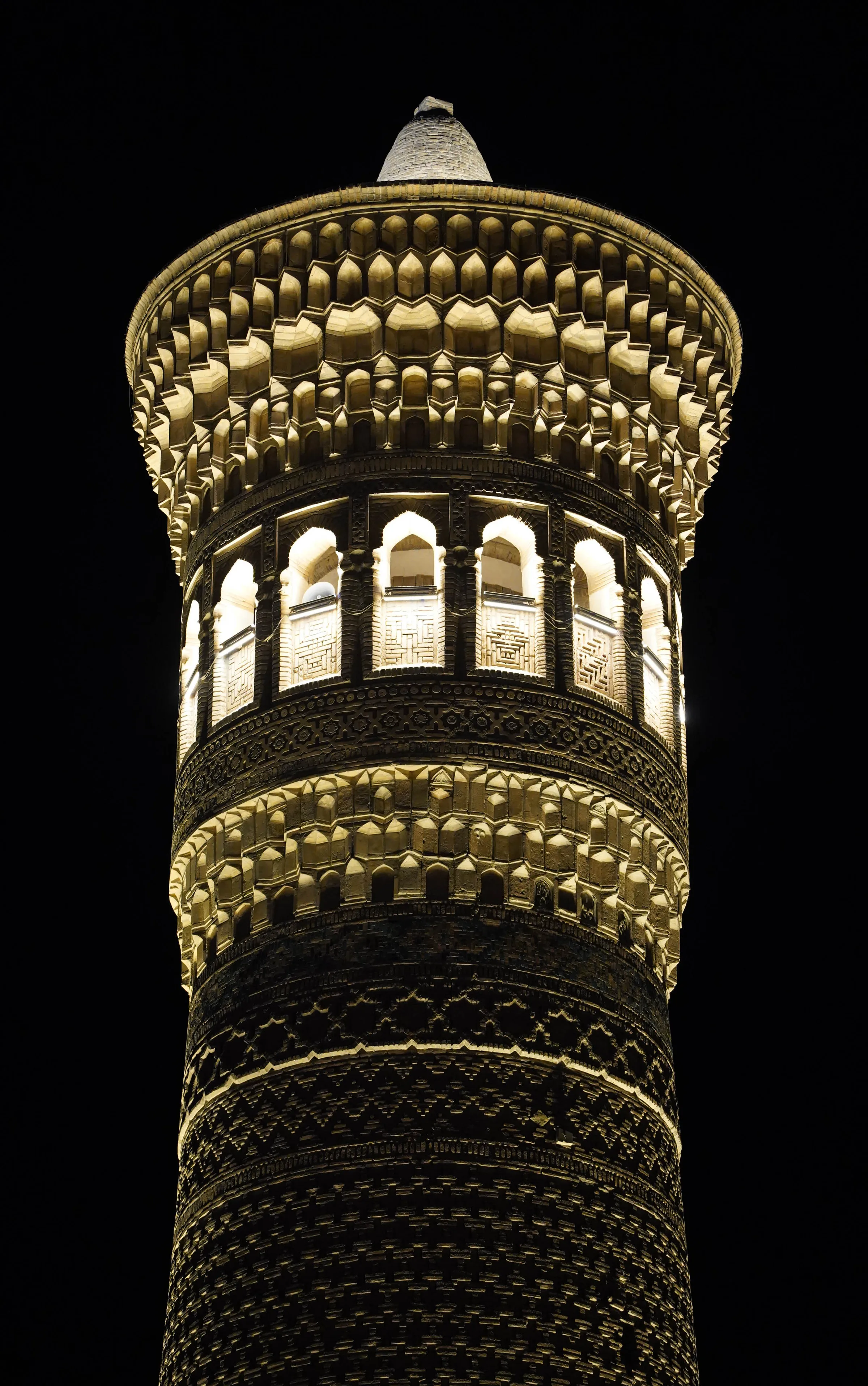
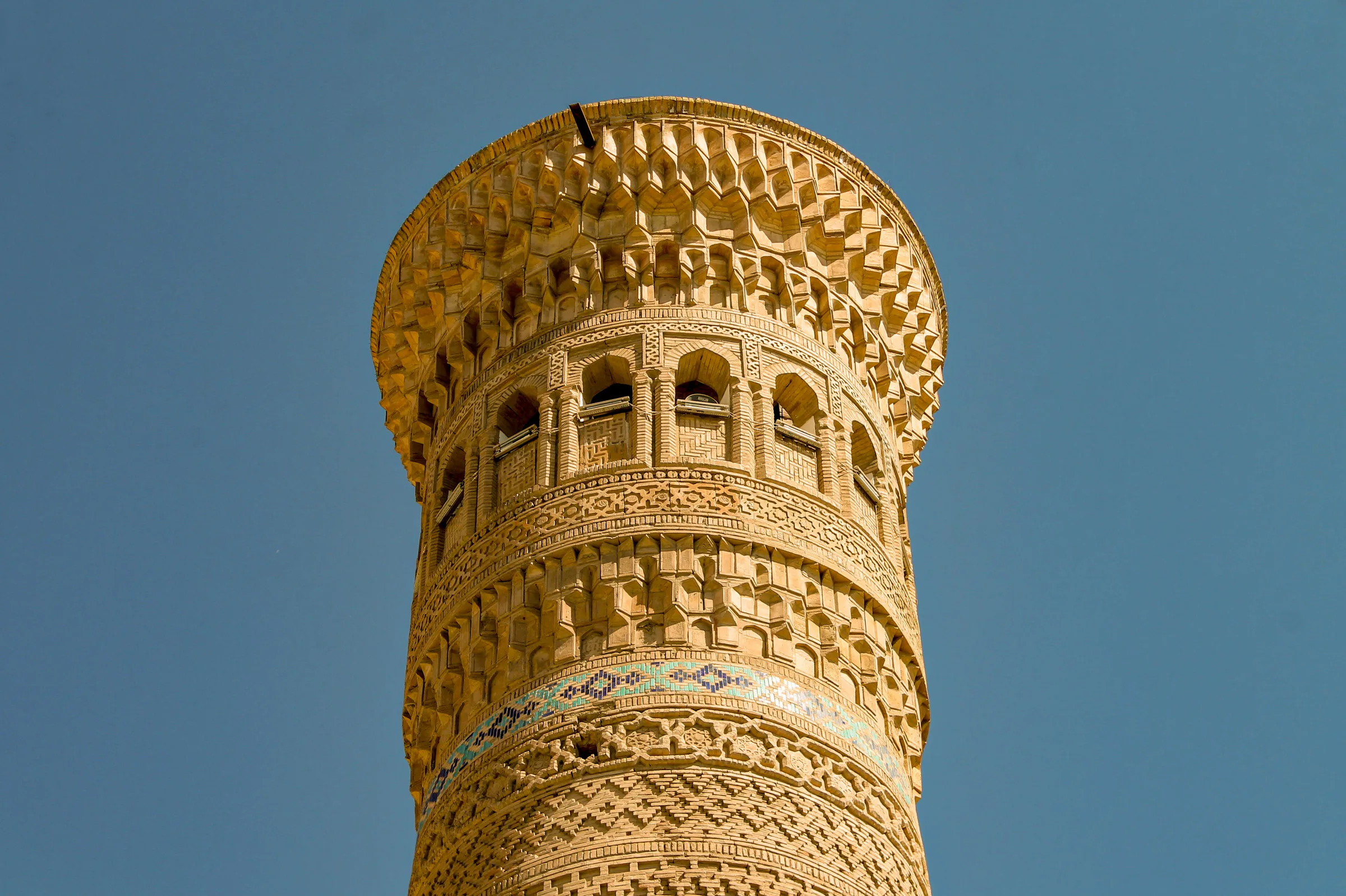
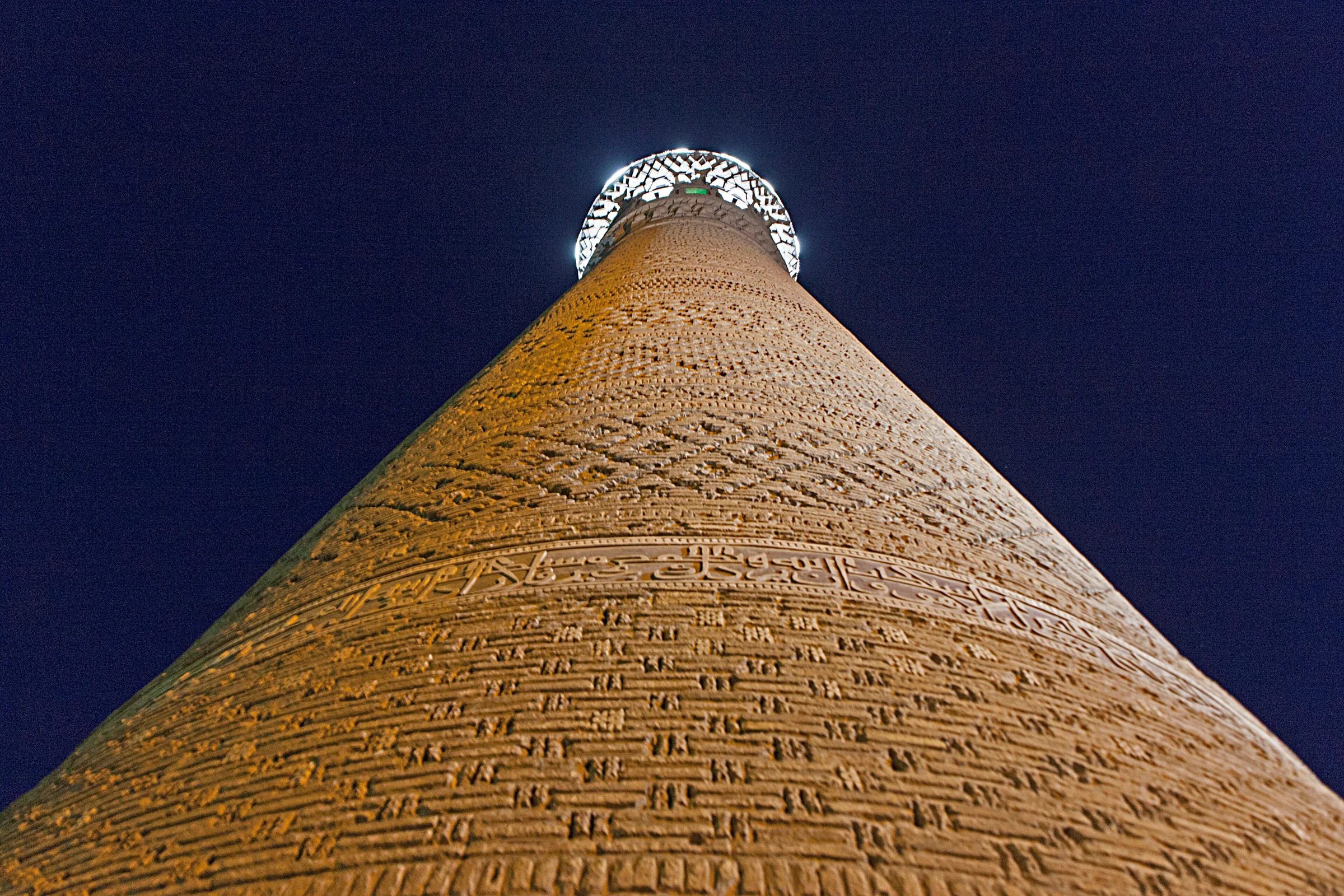
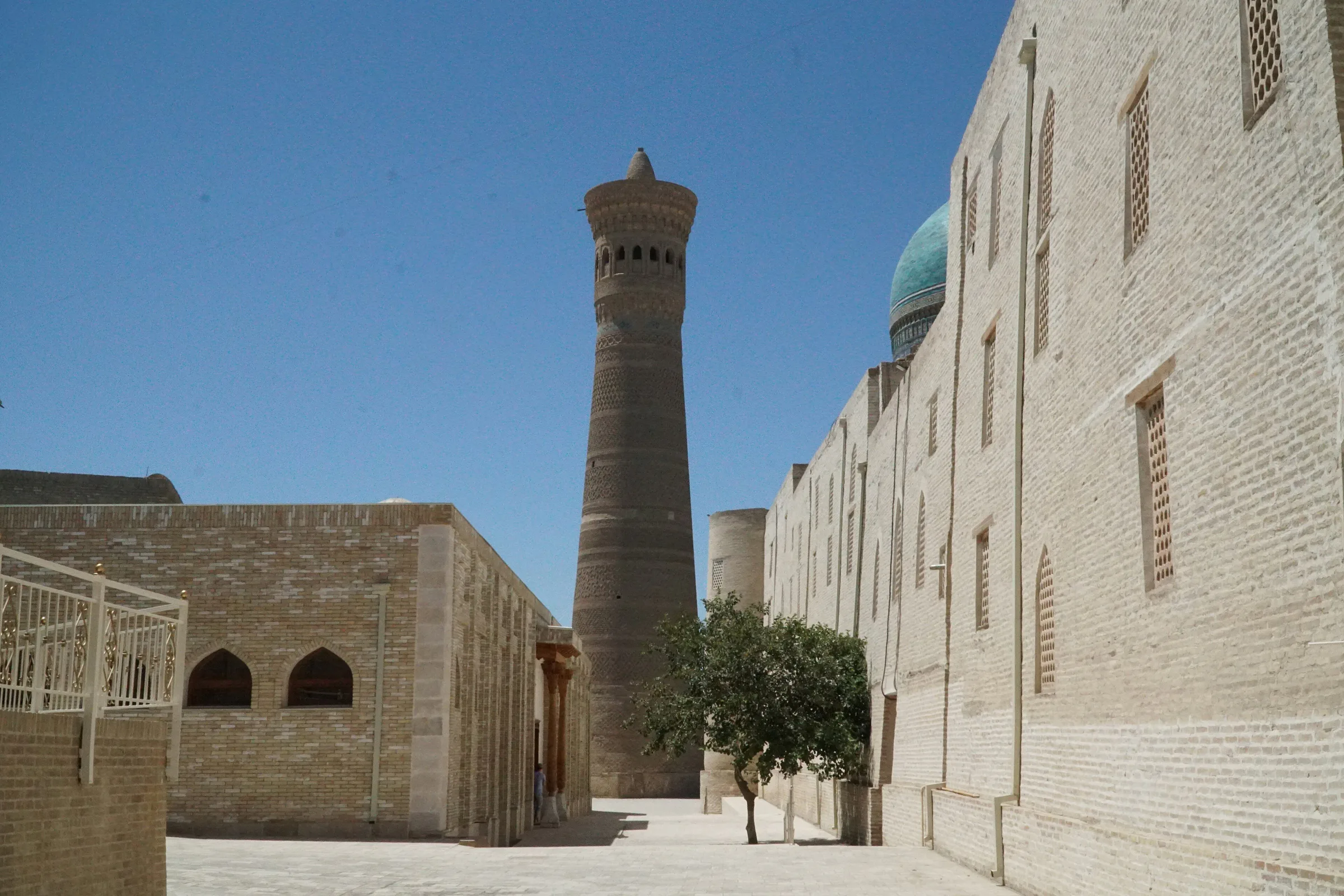
The minaret is a massive brick column tapering upwards and crowned by a cylindrical lantern with sixteen arched openings and a muqarnas cornice. Sources give its height as anywhere from 45.6 to 46.5 m; it is about 9 m across at the base and 6 m below the lantern. A brick spiral staircase winds up inside.
Every inch of the shaft is patterned brickwork, with bands that never repeat the same design, and the upper band carries an inscription in blue glaze — one of the earliest uses of glazed tile in Central Asia. An arched bridge links the minaret to the mosque roof, from which the muezzin entered.
The Kalyan was never just a place for the call to prayer. Its lofty lantern served as a watchtower and as a beacon for caravans crossing the desert. Nineteenth-century sources and travellers' memoirs describe condemned criminals being thrown from the top, which is why European writers also called it the Tower of Death.
Legend says that when Genghis Khan took Bukhara in 1220 he craned his neck to look up at the minaret and his cap fell off. Stooping to pick it up, he remarked that this was the tower that had made him bow — and ordered it spared.
Another story holds that the architect laid the foundations and then vanished for two years, returning only once they had properly settled. A third tale says Master Bako asked to be buried at a distance equal to the minaret's height, so that if it ever fell it would fall on his grave.
Ensemble · Bukhara city
Bukhara's great square: minaret, mosque and madrasa
Mosque · Bukhara city
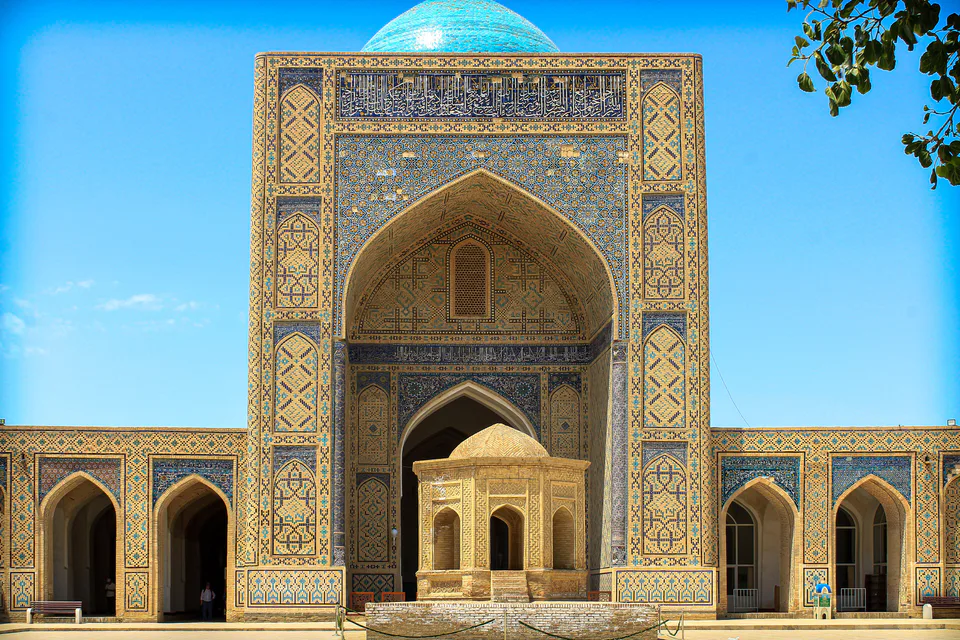
A Friday mosque for 12,000 worshippers
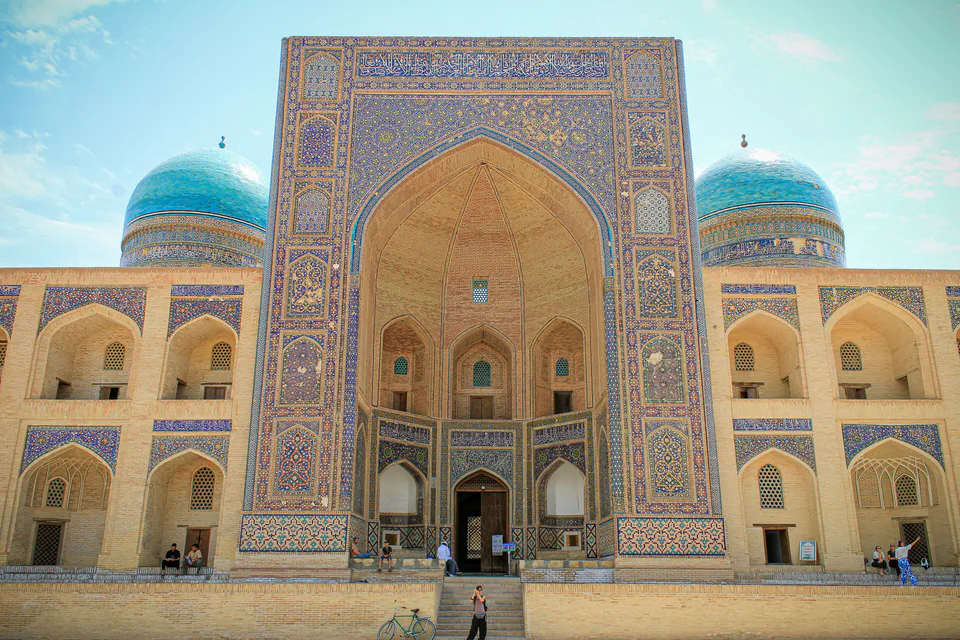
Madrasa · Bukhara city
The madrasa that stayed open under Soviet rule
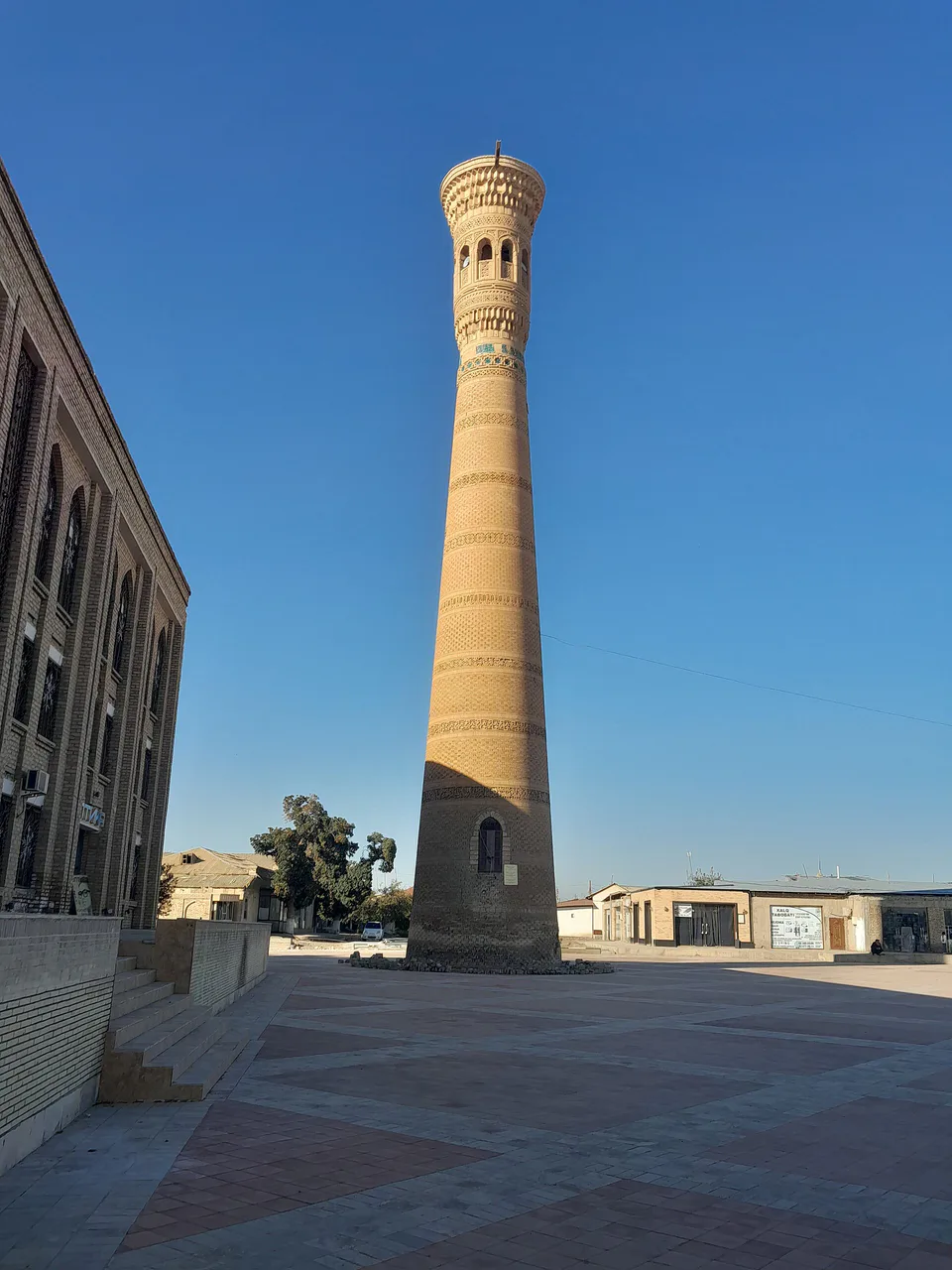
Minaret · Vobkent District
The Kalyan Minaret's 'little brother'
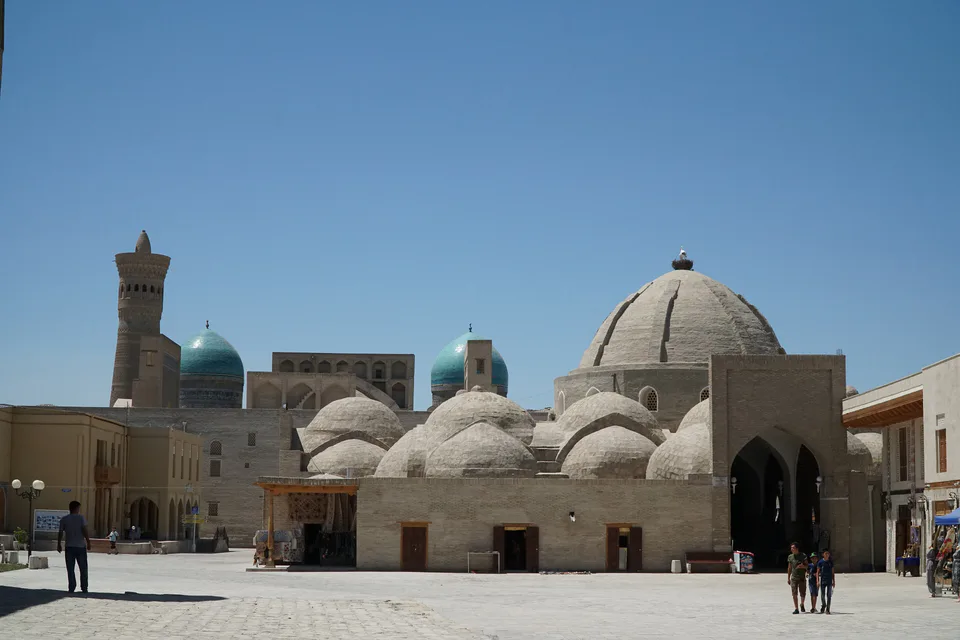
Bazaar · Bukhara city
The jewellers' dome — Bukhara's largest trading dome
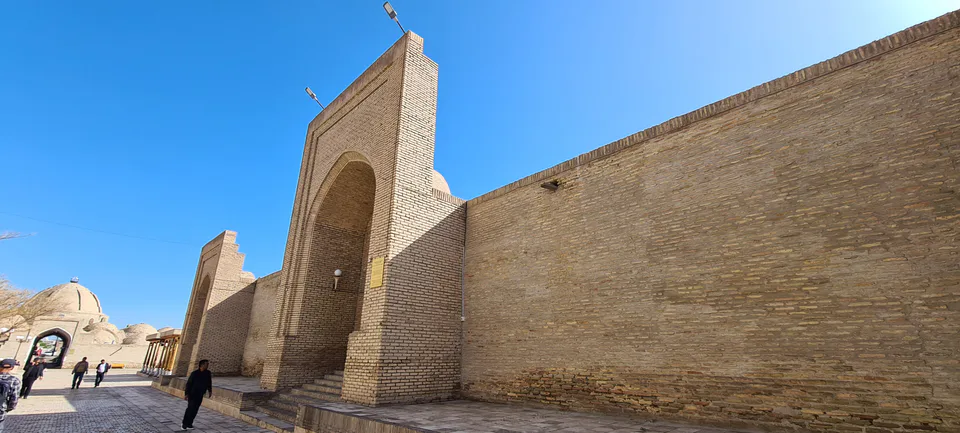
Bazaar · Bukhara city
A gated covered market for silk and carpets
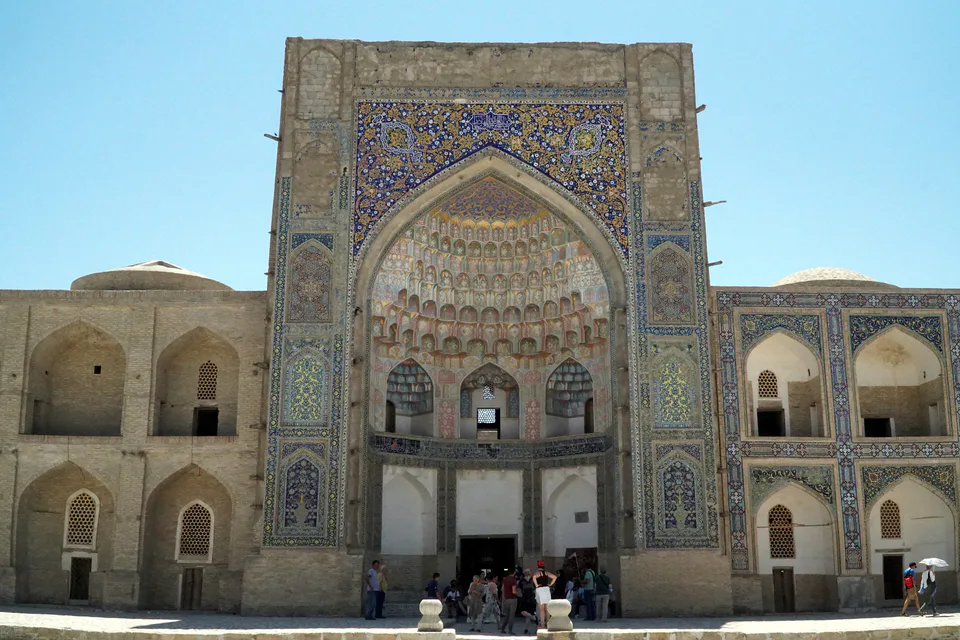
Madrasa · Bukhara city
The last of Bukhara's great madrasas
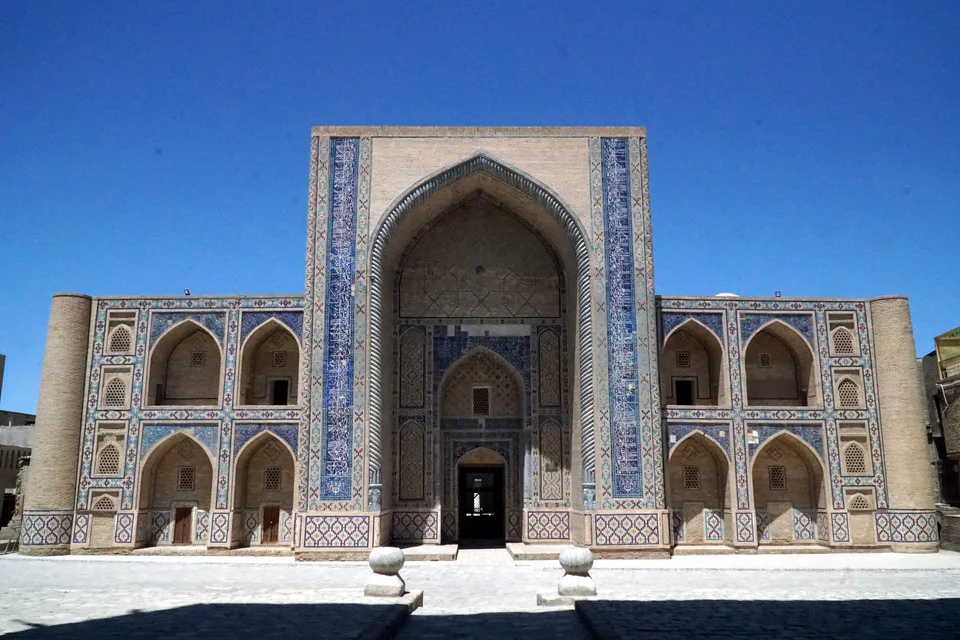
Madrasa · Bukhara city
The oldest of Ulugh Beg's three madrasas
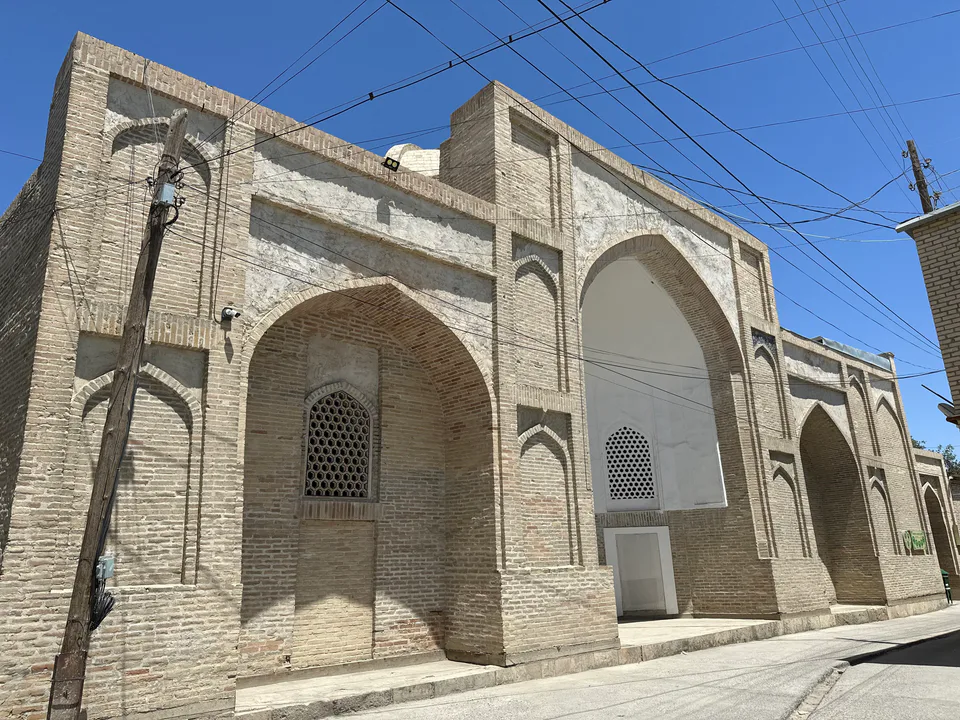
Mosque · Bukhara city
A mosque-khanqah painted in the kundal technique
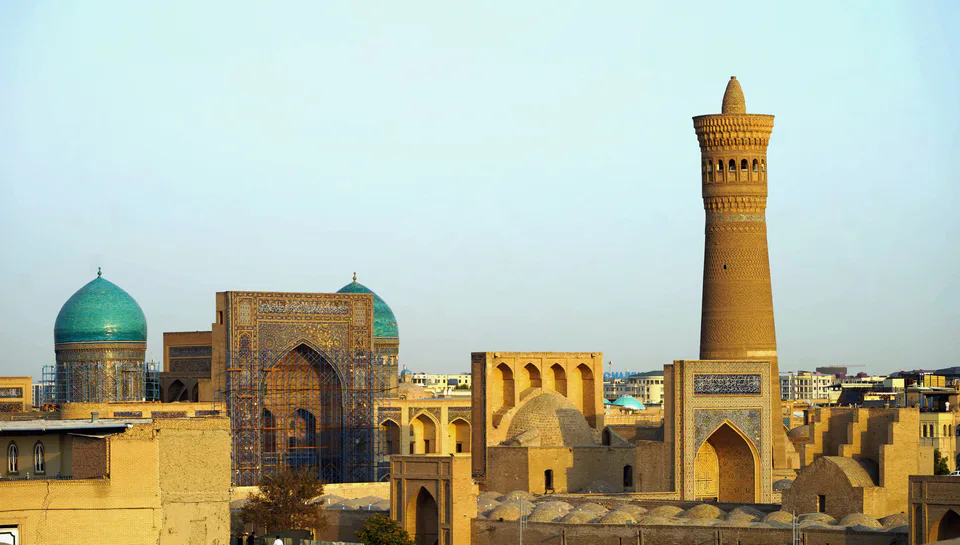
Ensemble · Bukhara city
Central Asia's most complete medieval city