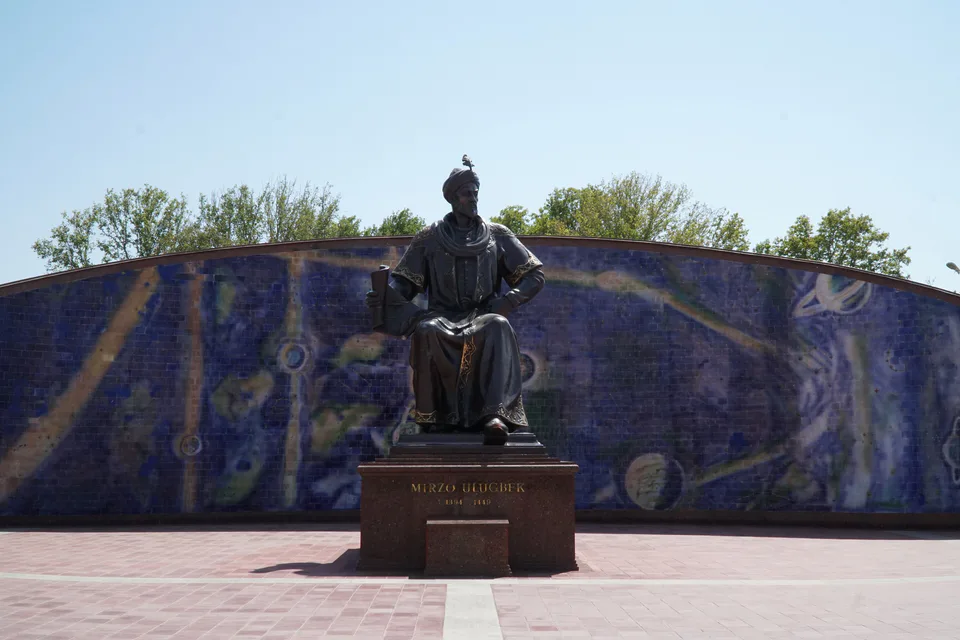
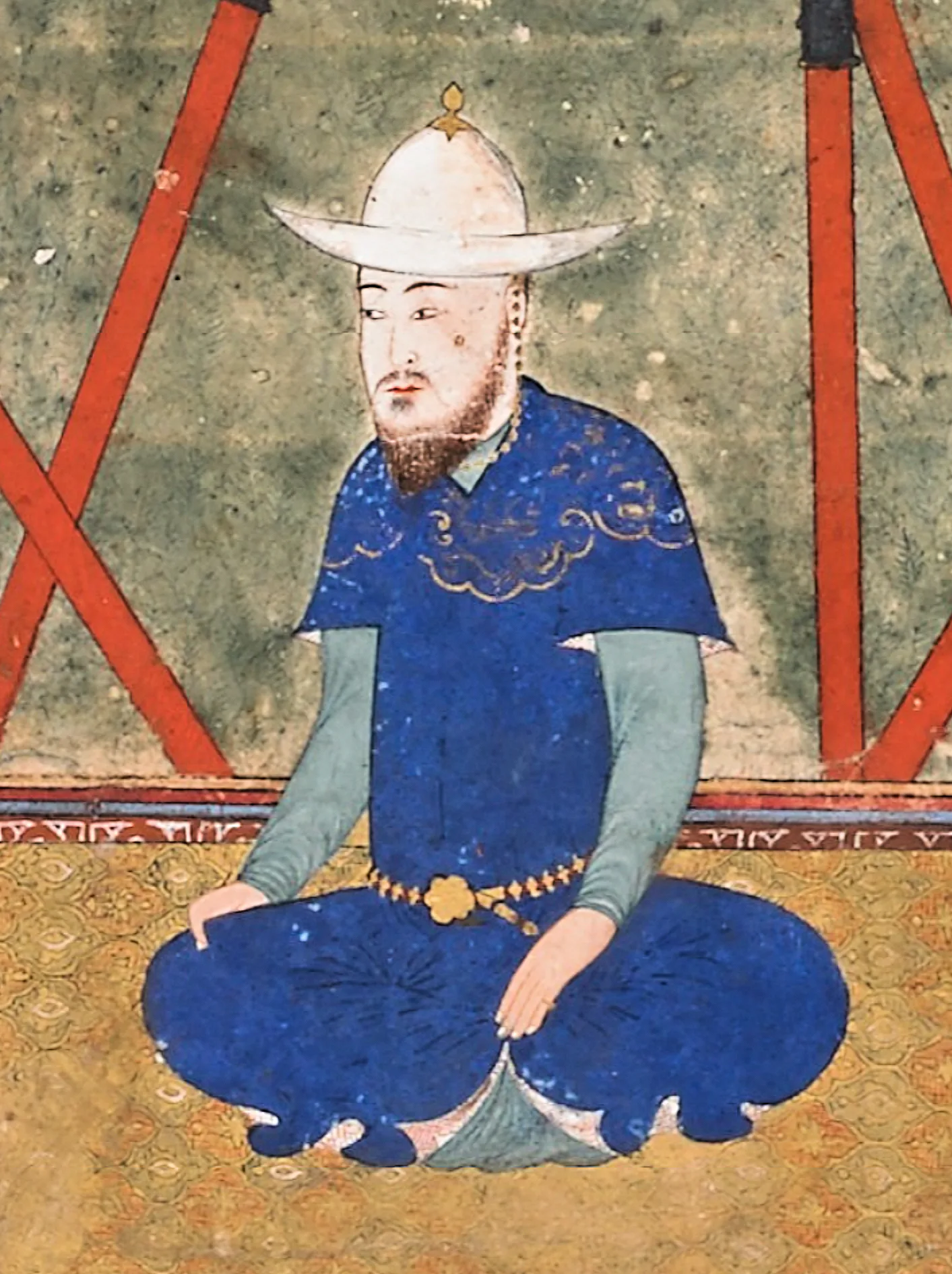
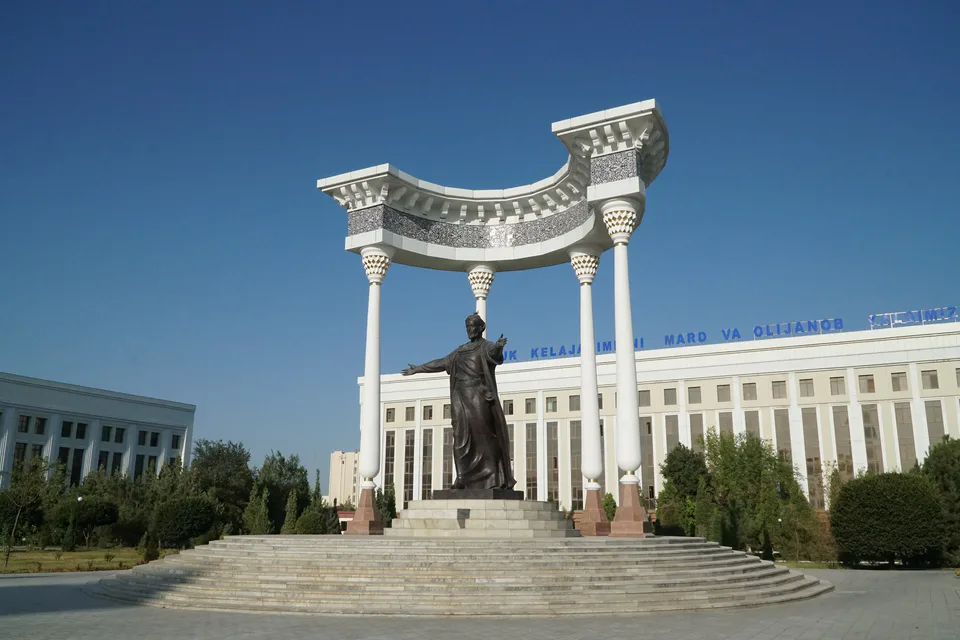
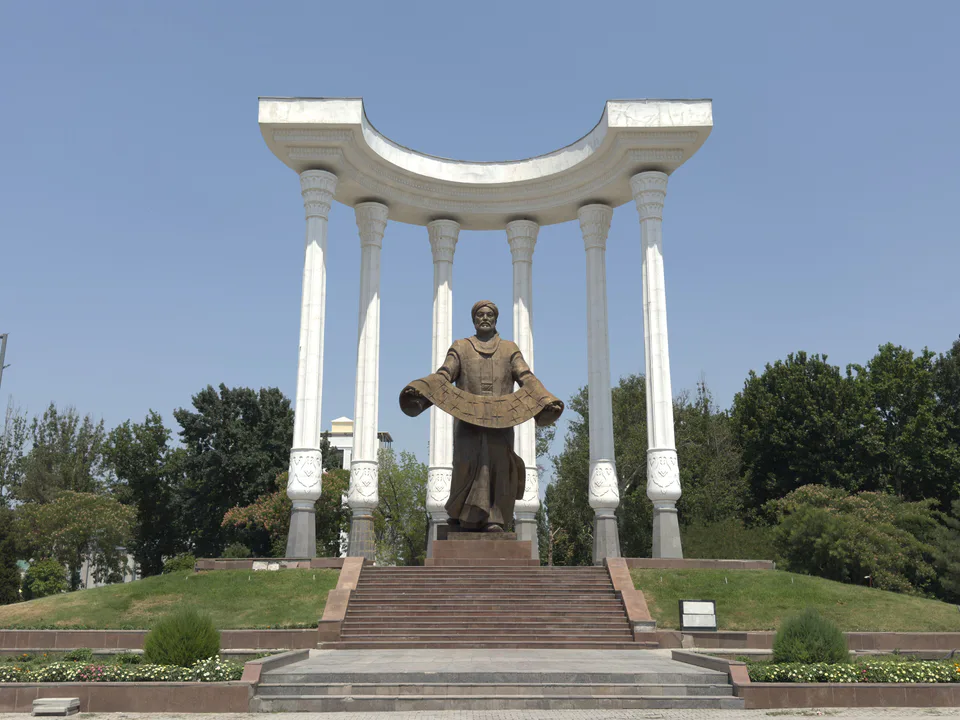
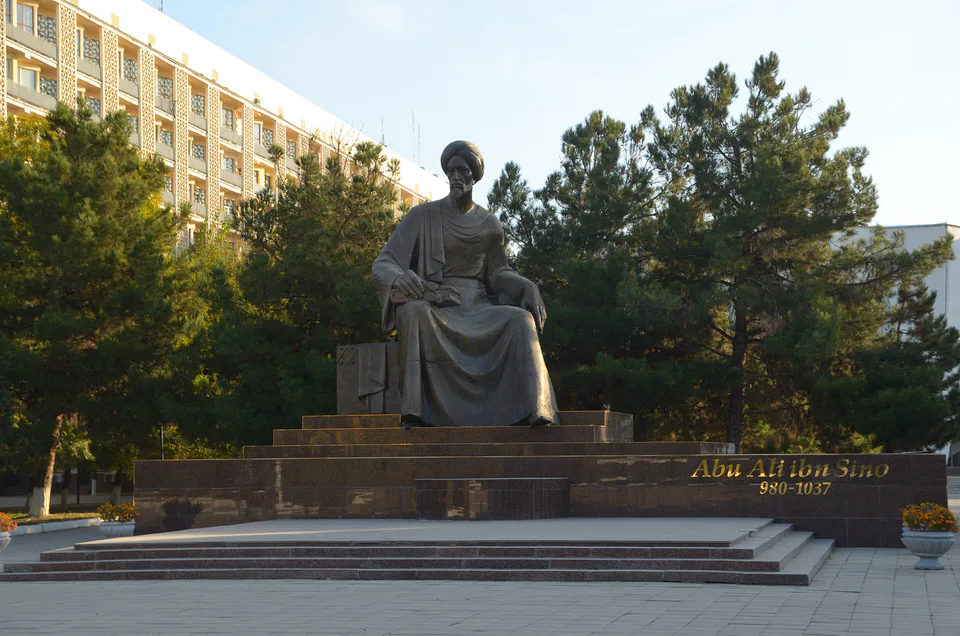
Timur's grandson, who governed Samarkand for almost forty years and was the greatest astronomer of his age. His observatory and his Zij, cataloguing 1,018 stars, secured his place in the history of science.
Muhammad Taraghay, remembered by his title Ulugh Beg (“great prince”), was born on 22 March 1394 at Sultaniyeh in Iran, during one of Timur's campaigns. His parents were Shah Rukh and Gawhar Shad, and he grew up in his grandfather's camps. After Timur's death Shah Rukh moved the capital to Herat and in 1409 made his fifteen-year-old son governor of Samarkand; from 1411 Ulugh Beg ruled all of Transoxiana. In 1425 he campaigned in Moghulistan, and on the way back had an inscription carved on a rock near Jizzakh. A “History of the Four Uluses” is also attributed to him.
Patron of science
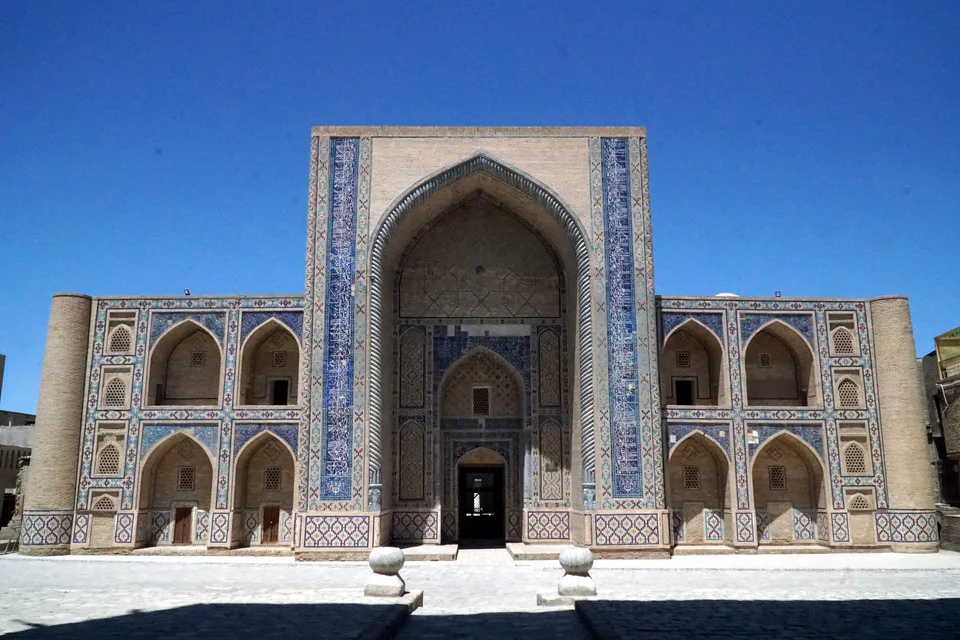
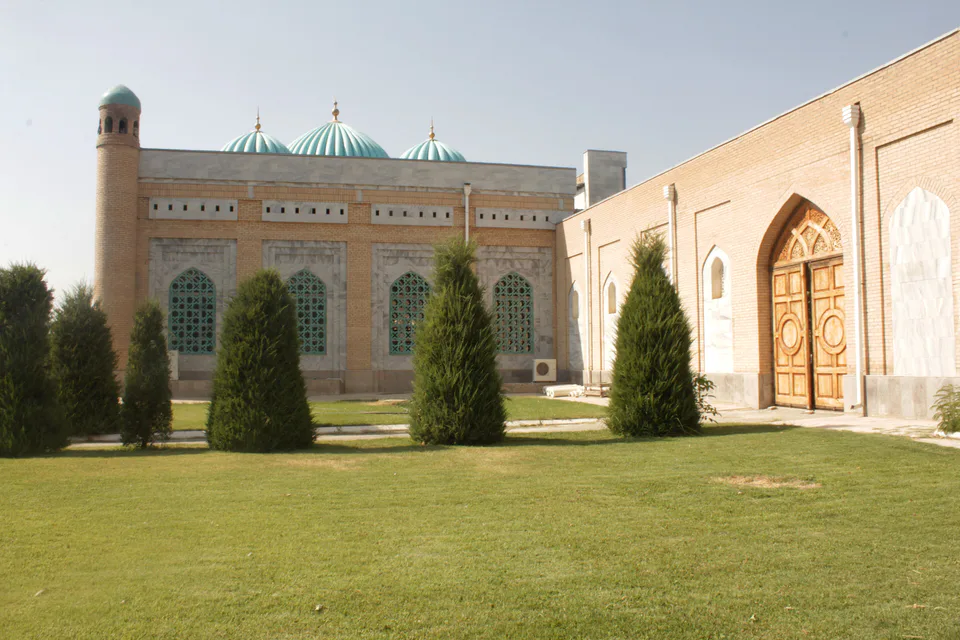
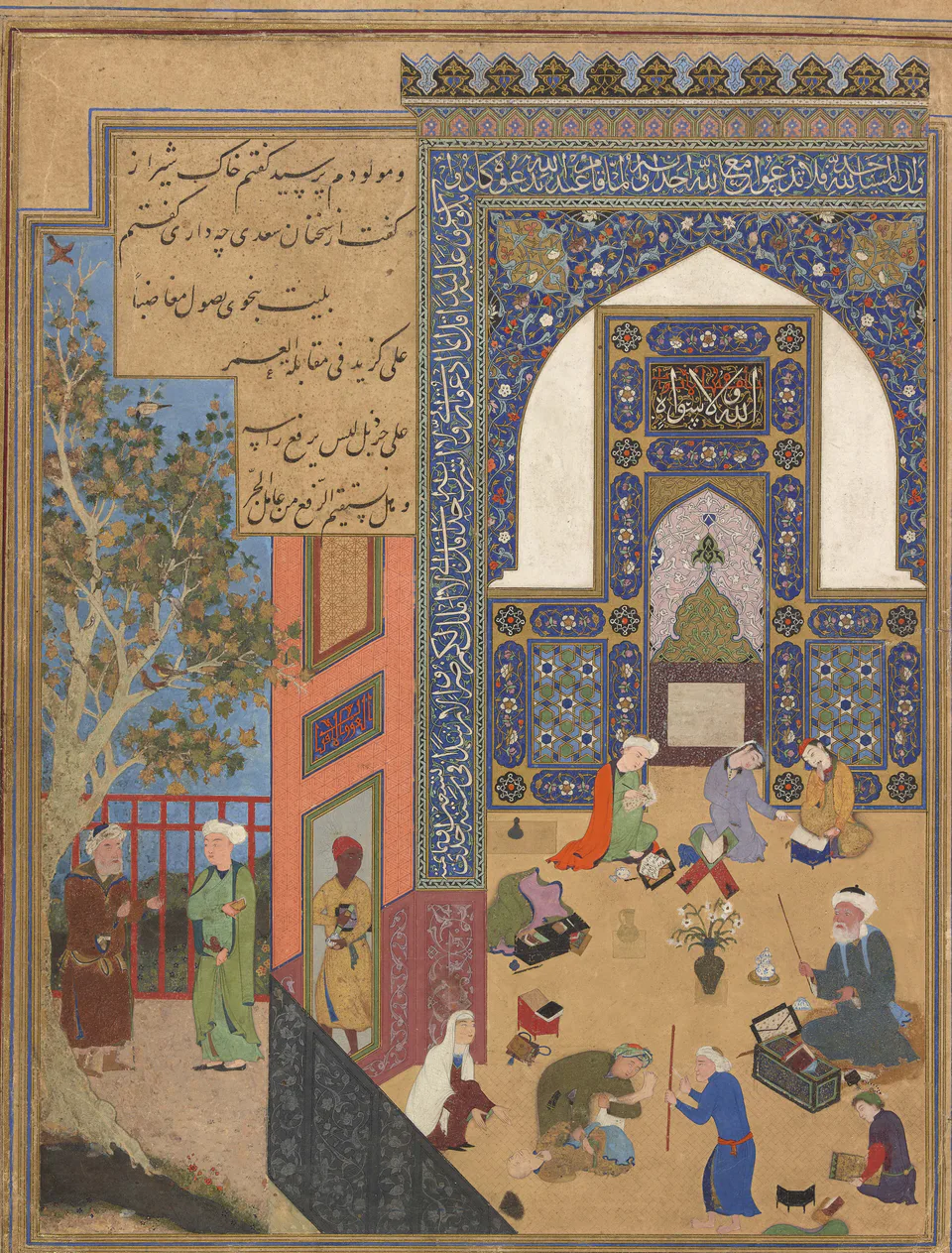
Ulugh Beg built madrasas in Bukhara (1417), Samarkand (1417–1420) and Gijduvan (1433); Jamshid al-Kashi, Qadi Zada al-Rumi and other scholars taught at the Samarkand madrasa. The centrepiece of the observatory he raised on the Kuhak hill in 1424–1428 was a giant sextant with a radius of over 40 metres. Years of observation produced the Zij-i Gurgani, which gave the positions of 1,018 stars — the most important star catalogue since Ptolemy — and measured the length of the sidereal year with great precision. It was published in Latin at Oxford in 1665. The Kok Gumbaz mosque in Shakhrisabz also dates from his reign.
A tragic end and his legacy
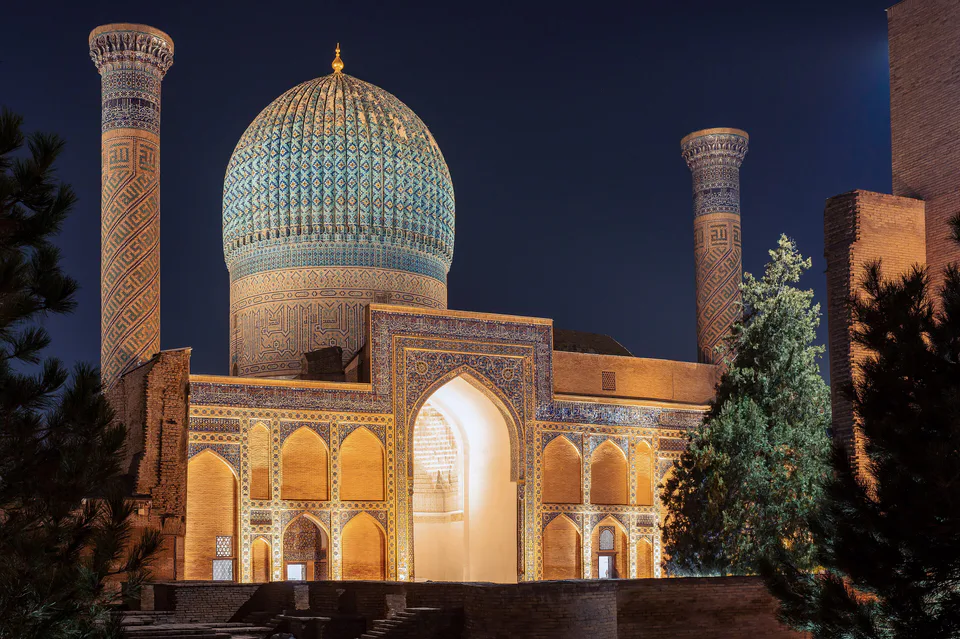
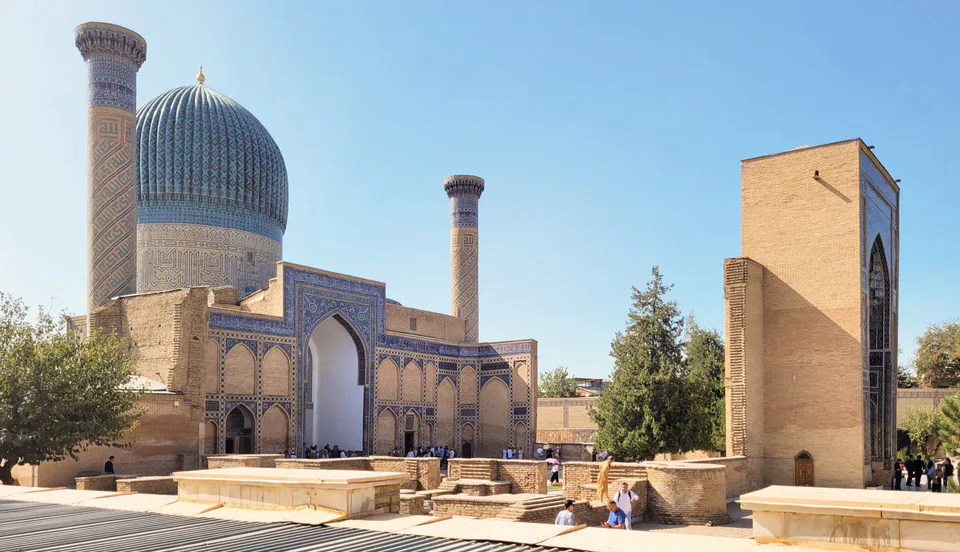
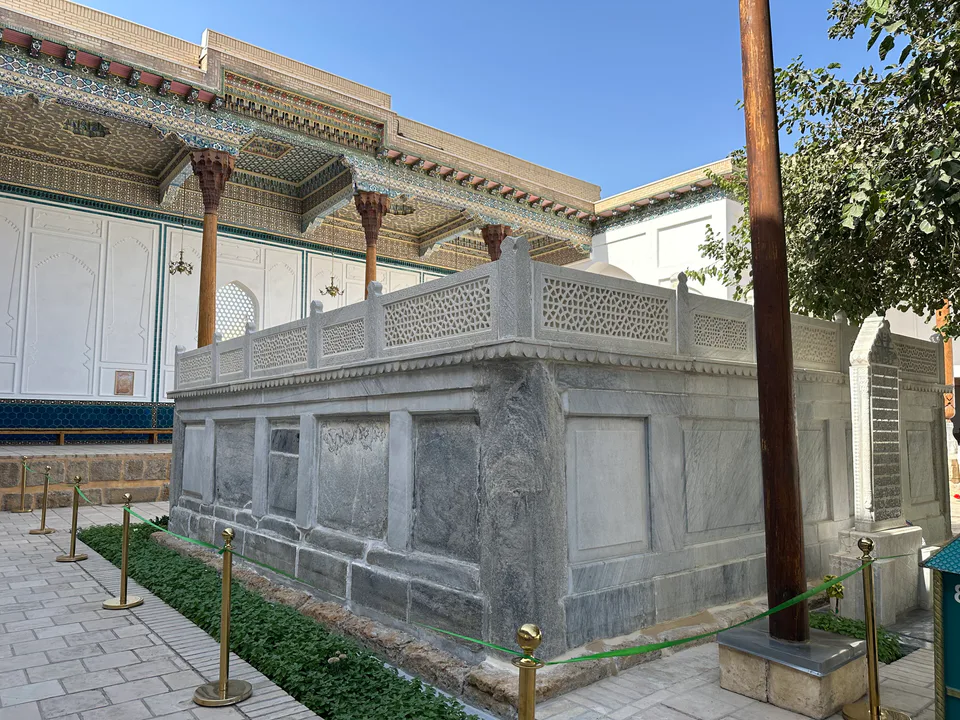
When Shah Rukh died in 1447 a struggle for the throne broke out. Ulugh Beg's son Abd al-Latif rebelled and defeated him; sent off on pilgrimage, Ulugh Beg was murdered on the road on 27 October 1449 and buried in the Gur-e Amir beside his grandfather. When the tomb was opened in 1941 it was confirmed that he had been beheaded. The observatory fell into ruin and was rediscovered only in 1908 by the archaeologist Vasily Vyatkin. His legacy is best seen at the observatory museum, his Registan madrasa and the madrasas of Bukhara and Gijduvan; a lunar crater also bears his name.
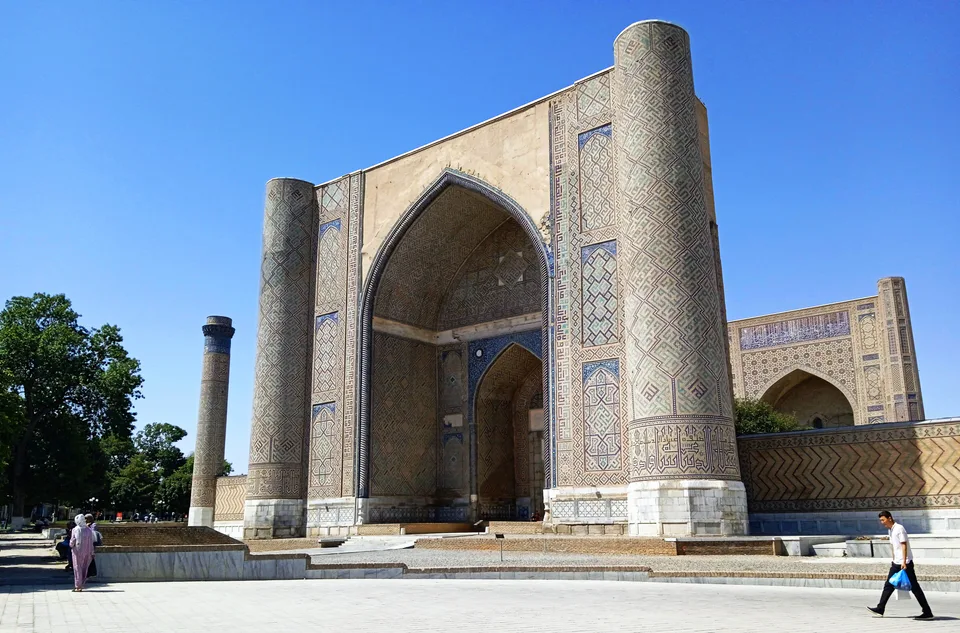
In 1404 Ruy González de Clavijo, envoy of King Henry III of Castile, travelled to the court of Timur. The embassy crossed the Amu Darya at Termez, passed through the Iron Gate gorge in the Baysun mountains and Kesh (Shakhrisabz), and reached Samarkand in September. Clavijo's journal describes receptions and feasts in the gardens around the city, its bazaars, the unfinished Ak-Saray and the Bibi-Khanym Mosque under construction. The envoys left in November; in February 1405 Timur died at Otrar. Clavijo's book remains one of the most vivid European accounts of Timurid Transoxiana.
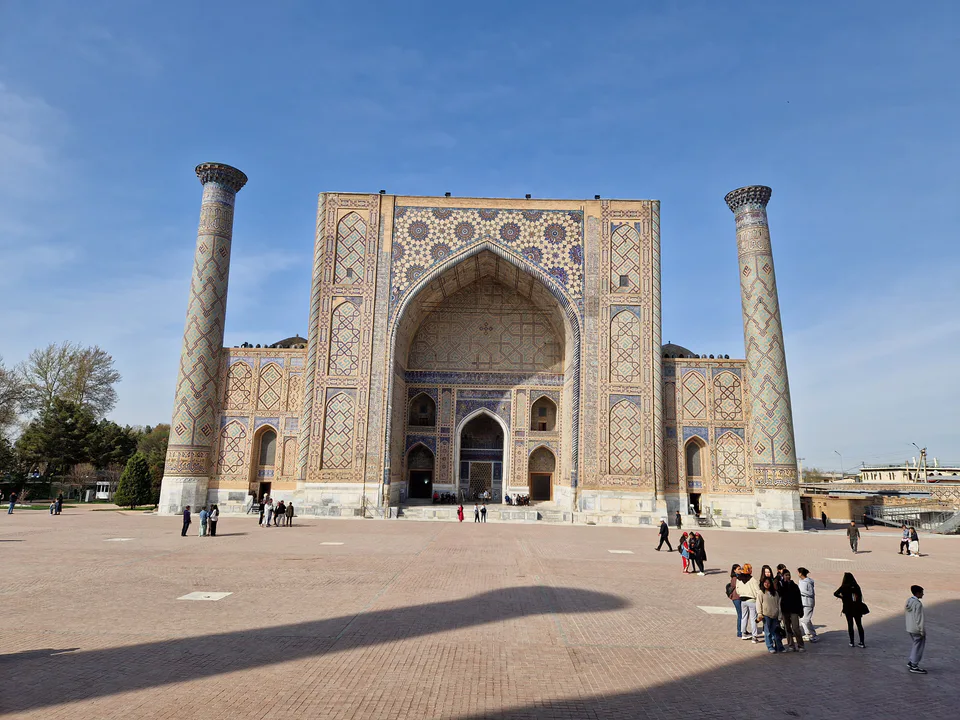
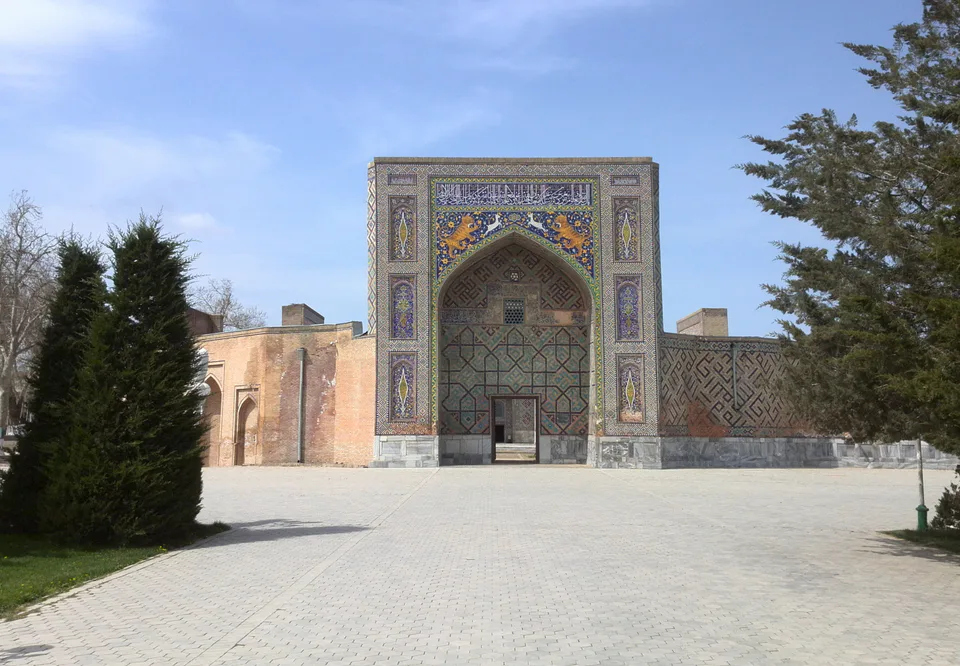
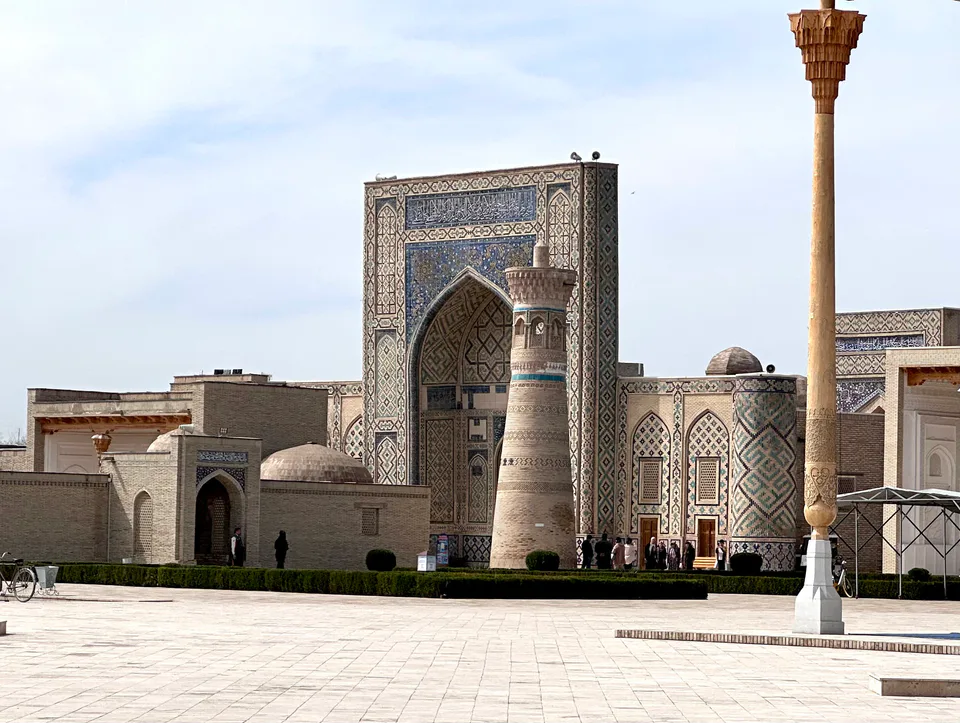
Mirzo Ulugh Beg, ruler of Samarkand, made learning a priority and founded three madrasas. The Bukhara madrasa of 1417 is among the oldest surviving in Central Asia; its door bears the hadith “The pursuit of knowledge is the duty of every Muslim man and woman.” The madrasa on Samarkand's Registan, built in 1417–1420, became a leading university of its age, teaching mathematics and astronomy alongside theology, and sources say Ulugh Beg lectured there himself. A third followed in Gijduvan in 1433. All three still stand and can be visited.
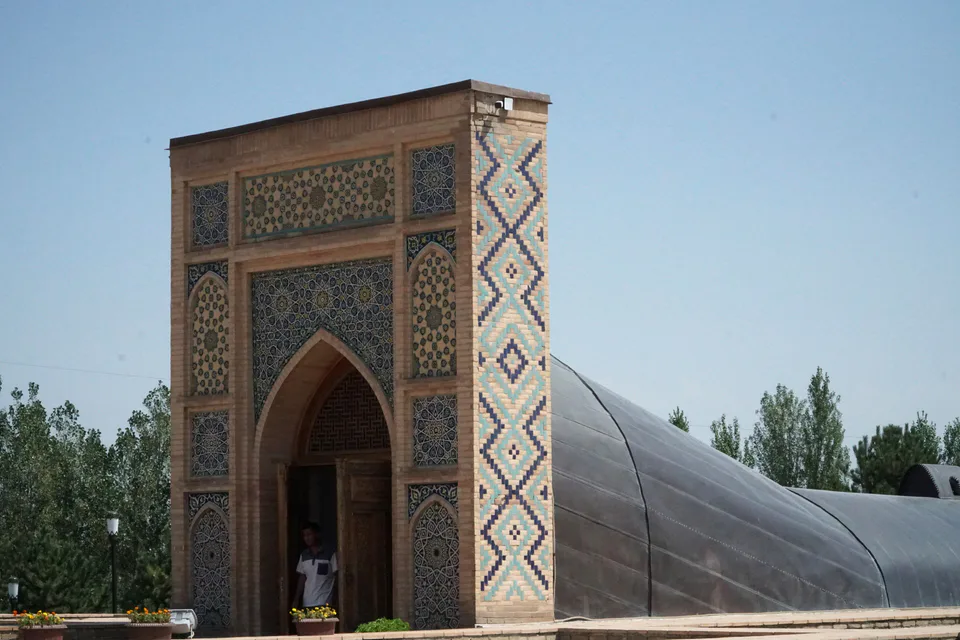
In 1424–1428 Mirzo Ulugh Beg built an observatory on the Kuhak (Chupan-Ata) hill outside Samarkand. Inside a three-storey cylindrical building about 46 metres across stood a giant sextant with a radius of over 40 metres, the largest astronomical instrument of its day. Jamshid al-Kashi, Qadi Zada al-Rumi, Ali Qushji and Ulugh Beg himself observed here, producing the Zij-i Gurgani, tables giving the positions of 1,018 stars. After Ulugh Beg's murder in 1449 the observatory was destroyed. In 1908 the archaeologist Vasily Vyatkin unearthed the underground section of the sextant, now covered by a museum.
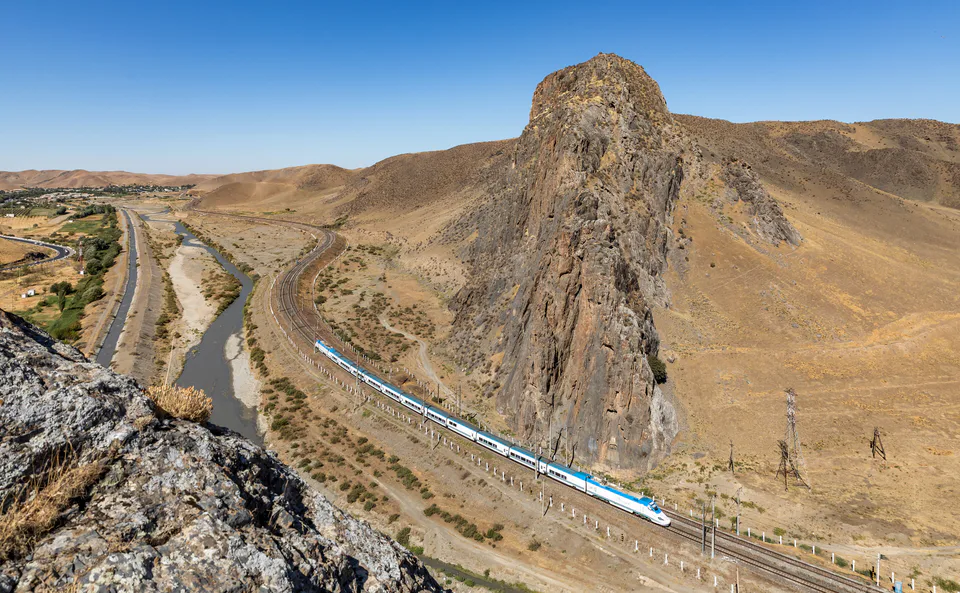
Near Jizzakh the Sanzar river cuts a narrow gorge between the Malguzar and Nuratau ranges, long the route from the Samarkand oasis to the steppe. Nineteenth-century travellers called it the Gate of Tamerlane; locally it is Ilan-Uti. One Persian inscription carved into the rock records Mirzo Ulugh Beg's safe return from a campaign to the “land of the Moghuls” in 1425. Another, of 1571–1572, claims that Abdullah Khan's army routed “400,000” men from Turkestan, Tashkent and Fergana — a figure best taken as the author's boast. Today the Tashkent–Samarkand highway and railway run through the gorge.