Ensemble · Shahrisabz City
Historic Centre of Shahrisabz
Kesh, Timur’s birthplace and a UNESCO site
Ensemble · Shahrisabz City
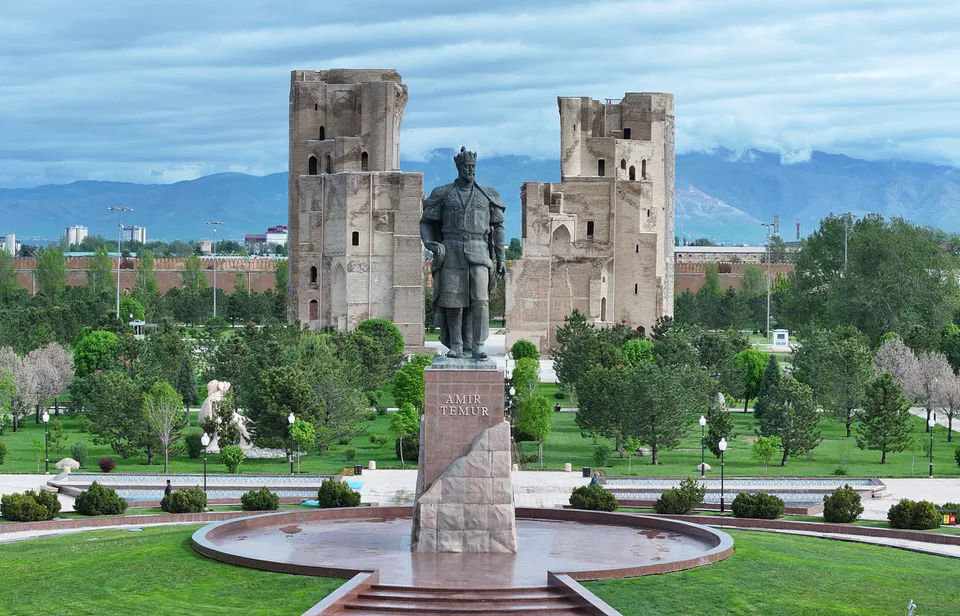
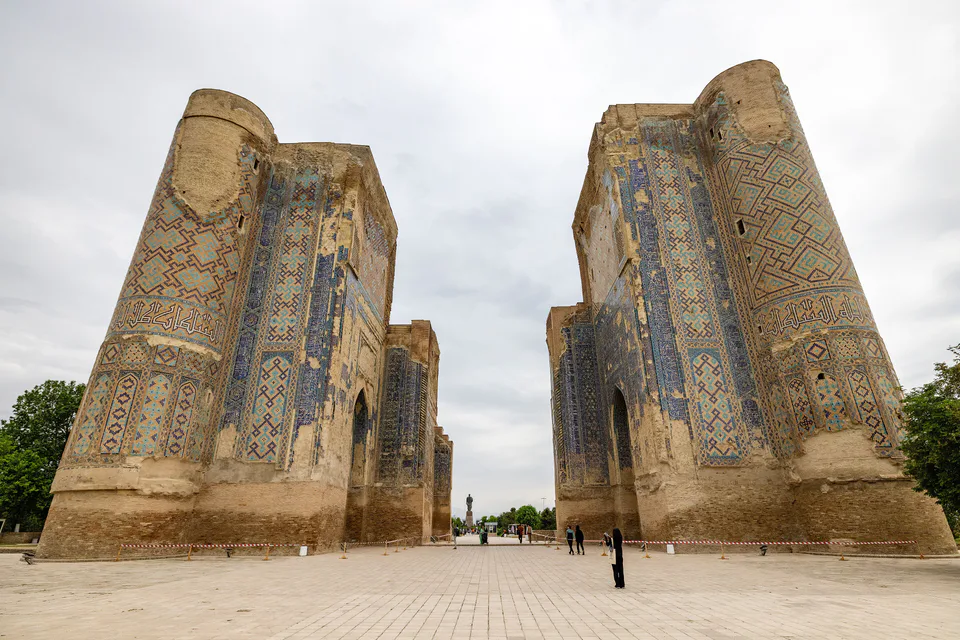
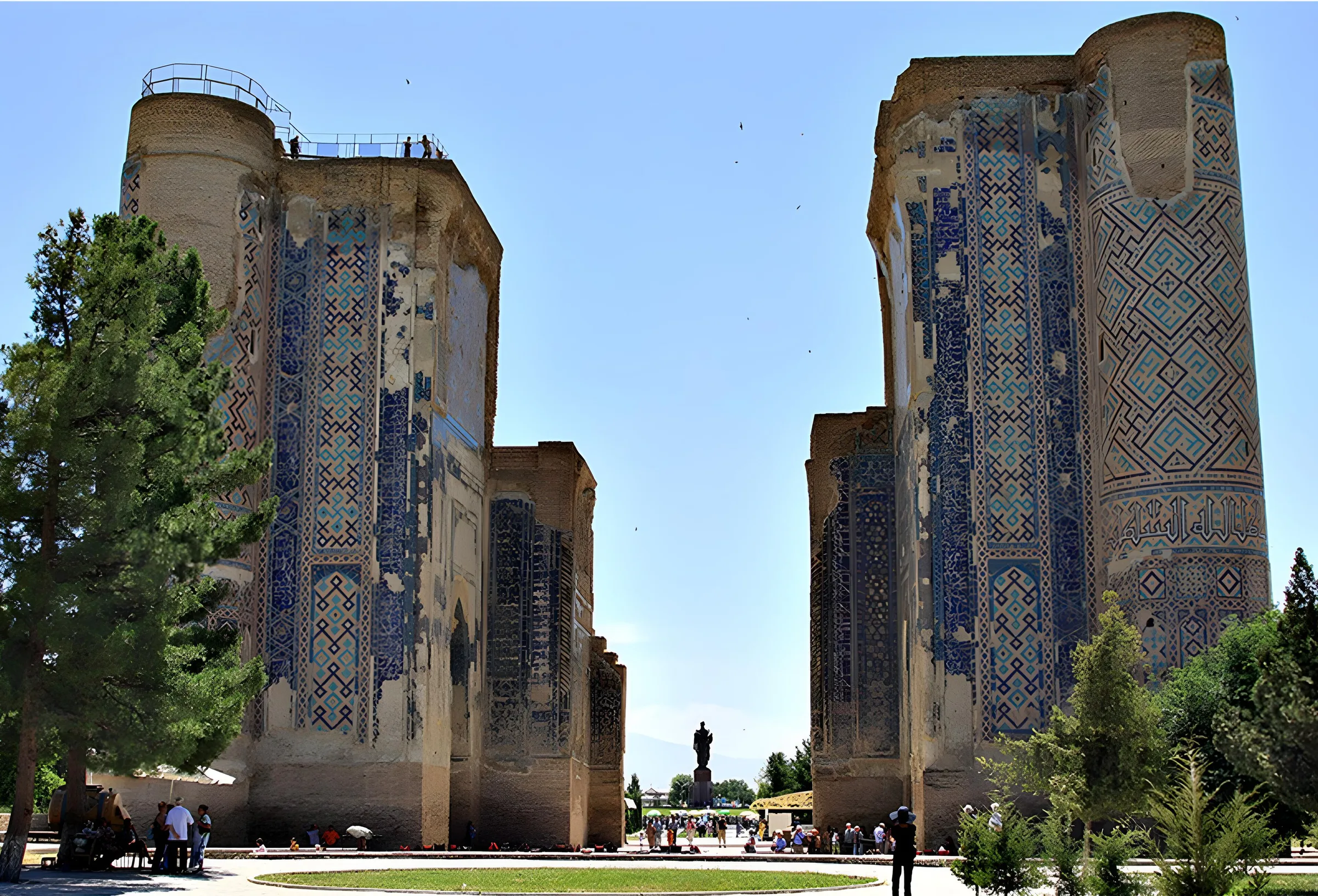
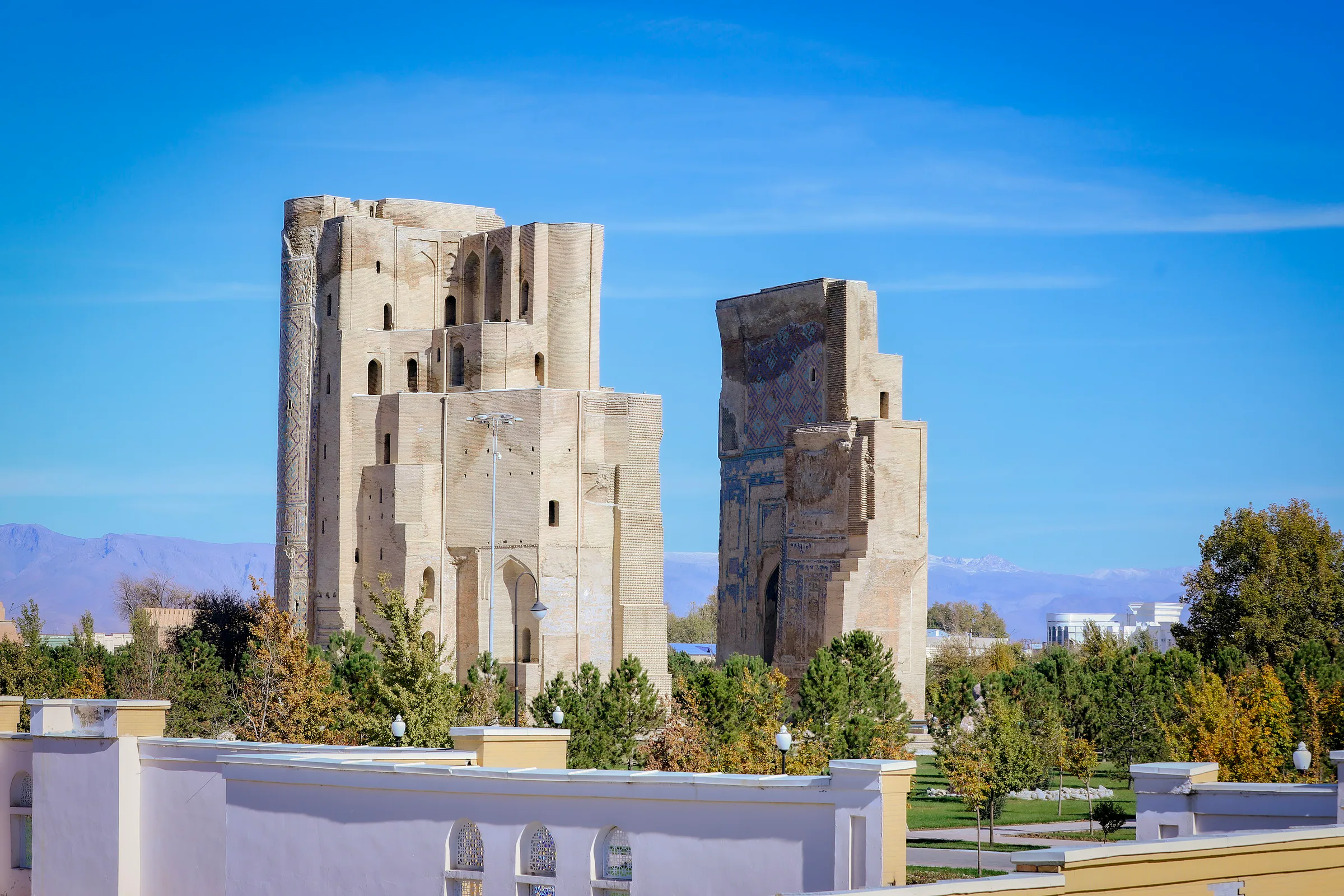
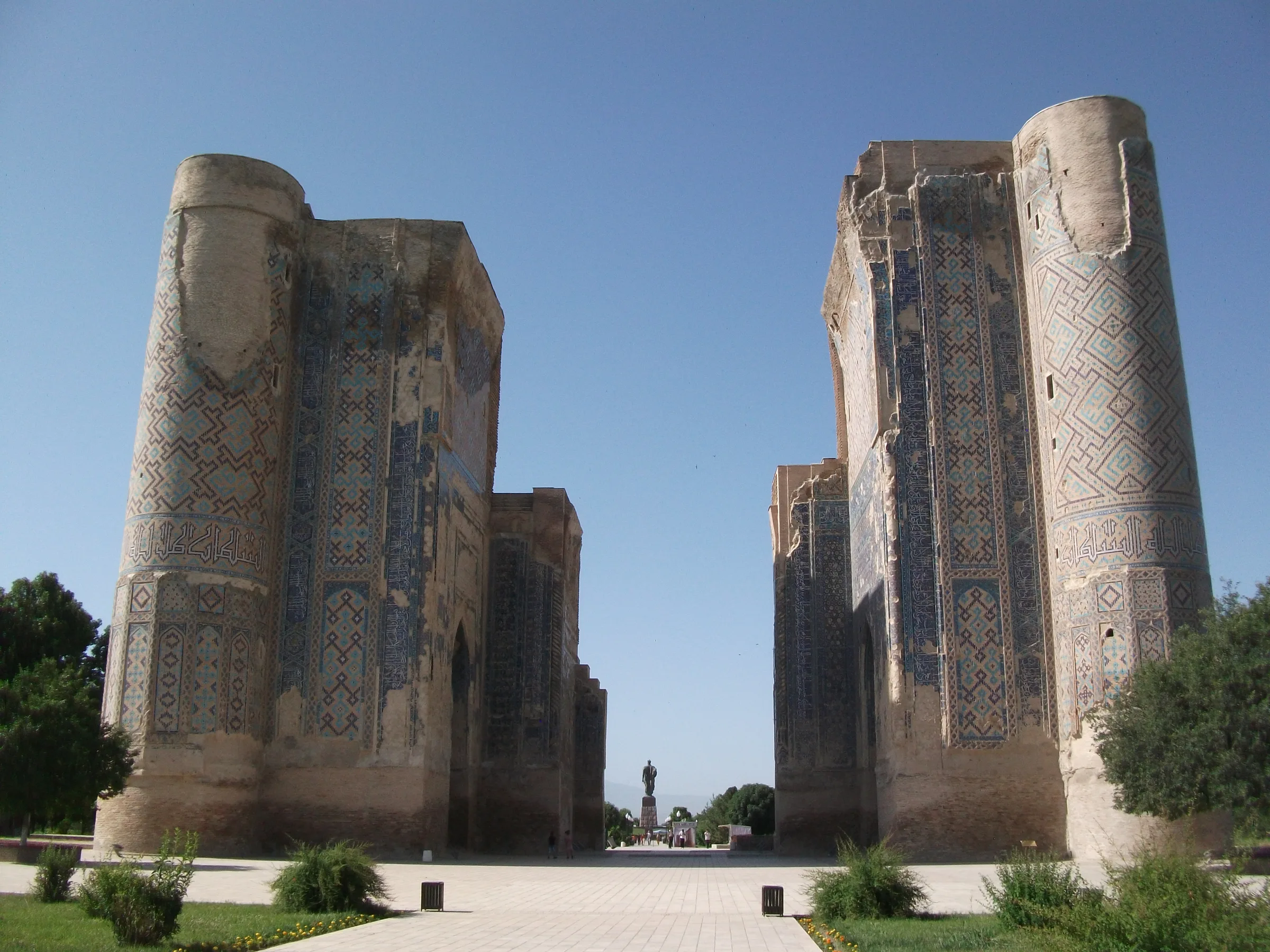
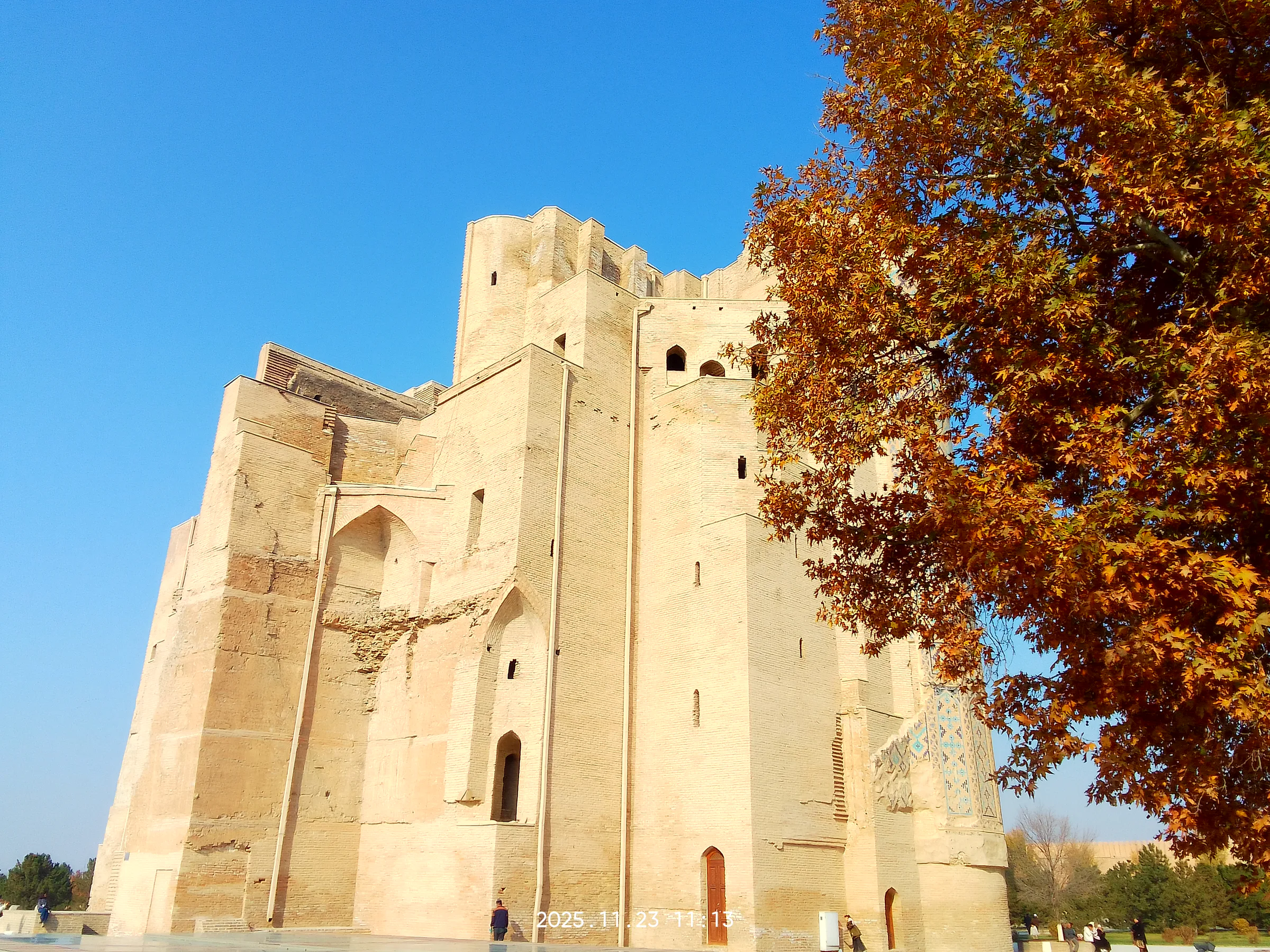
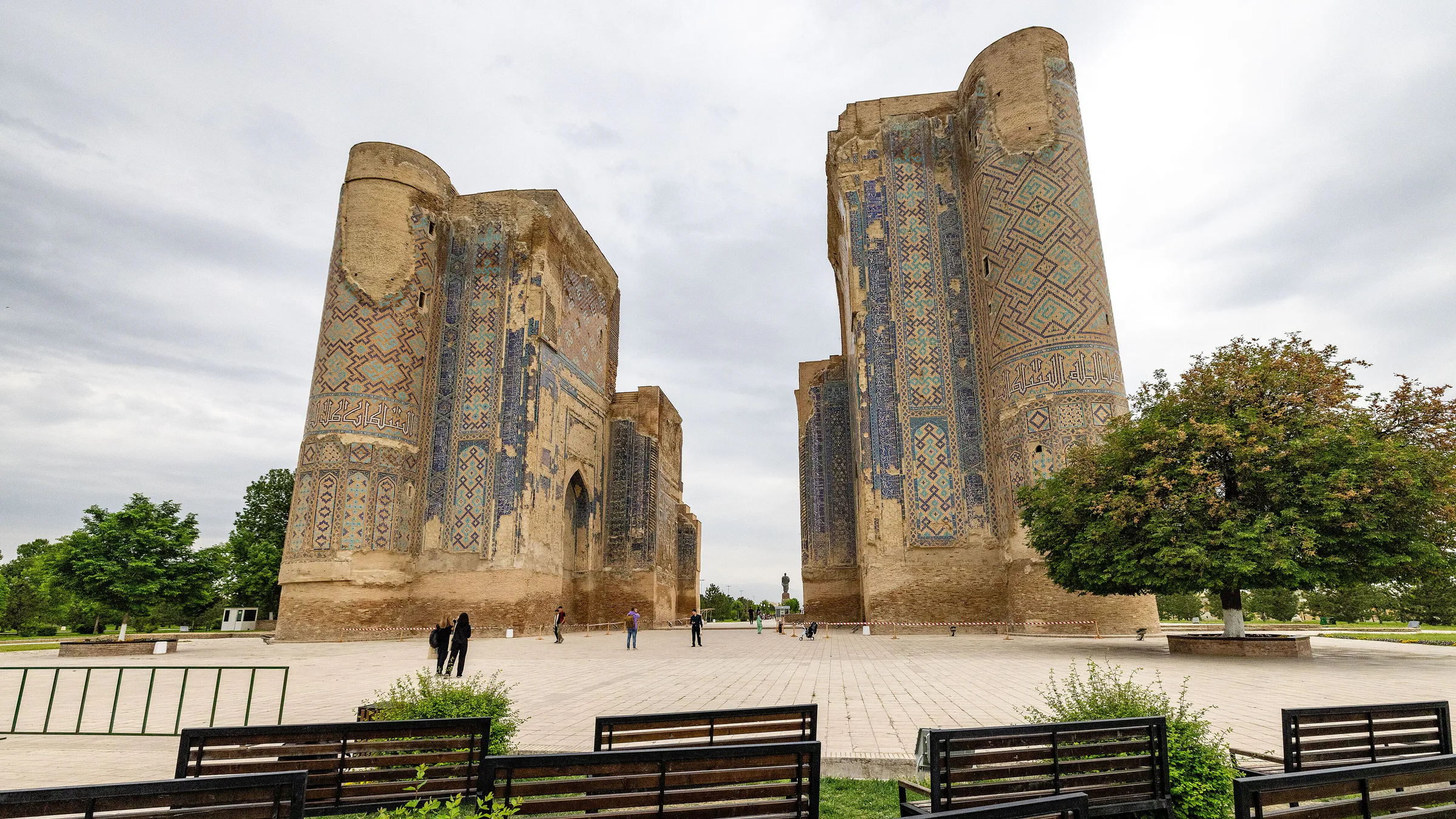
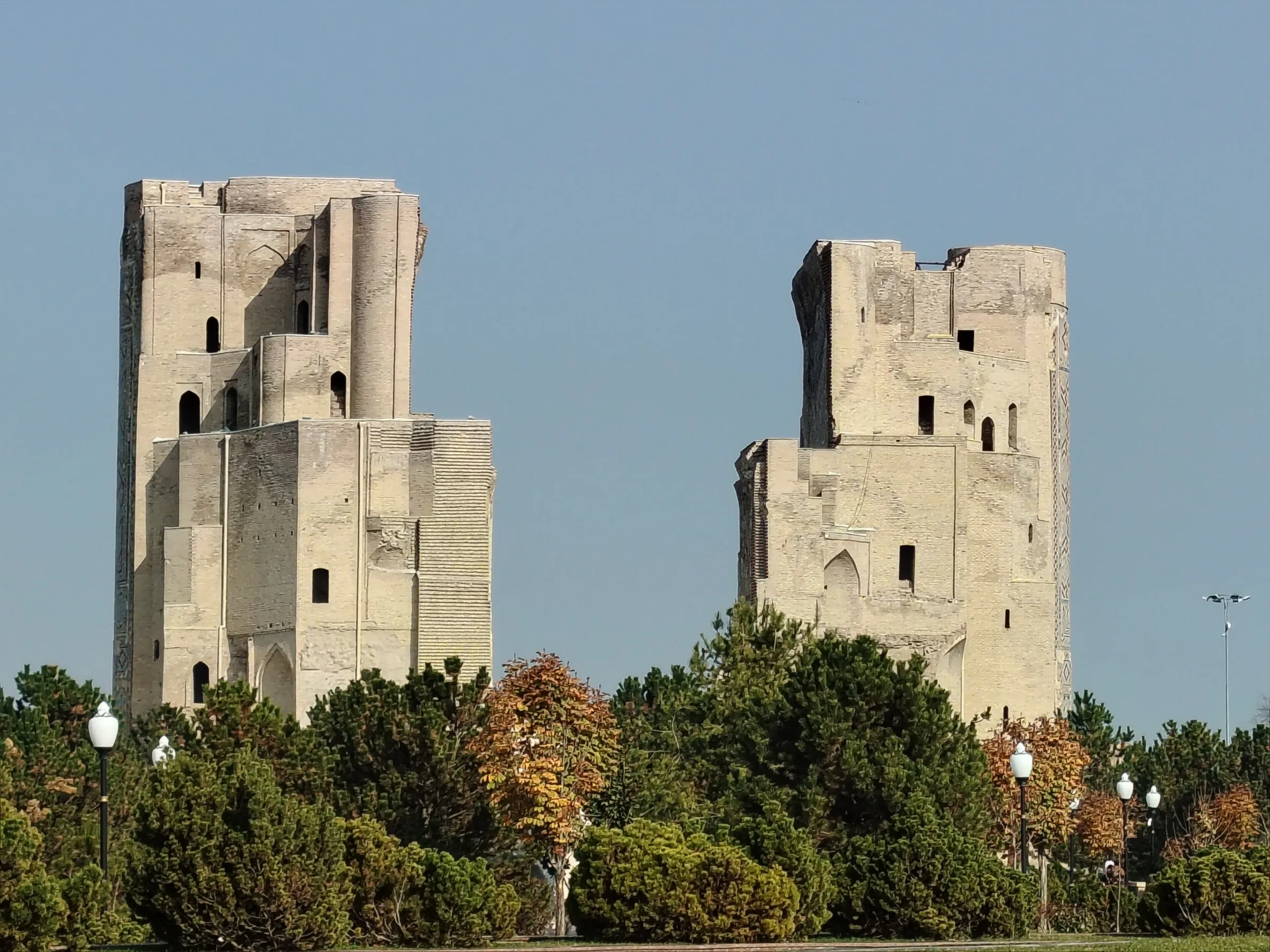
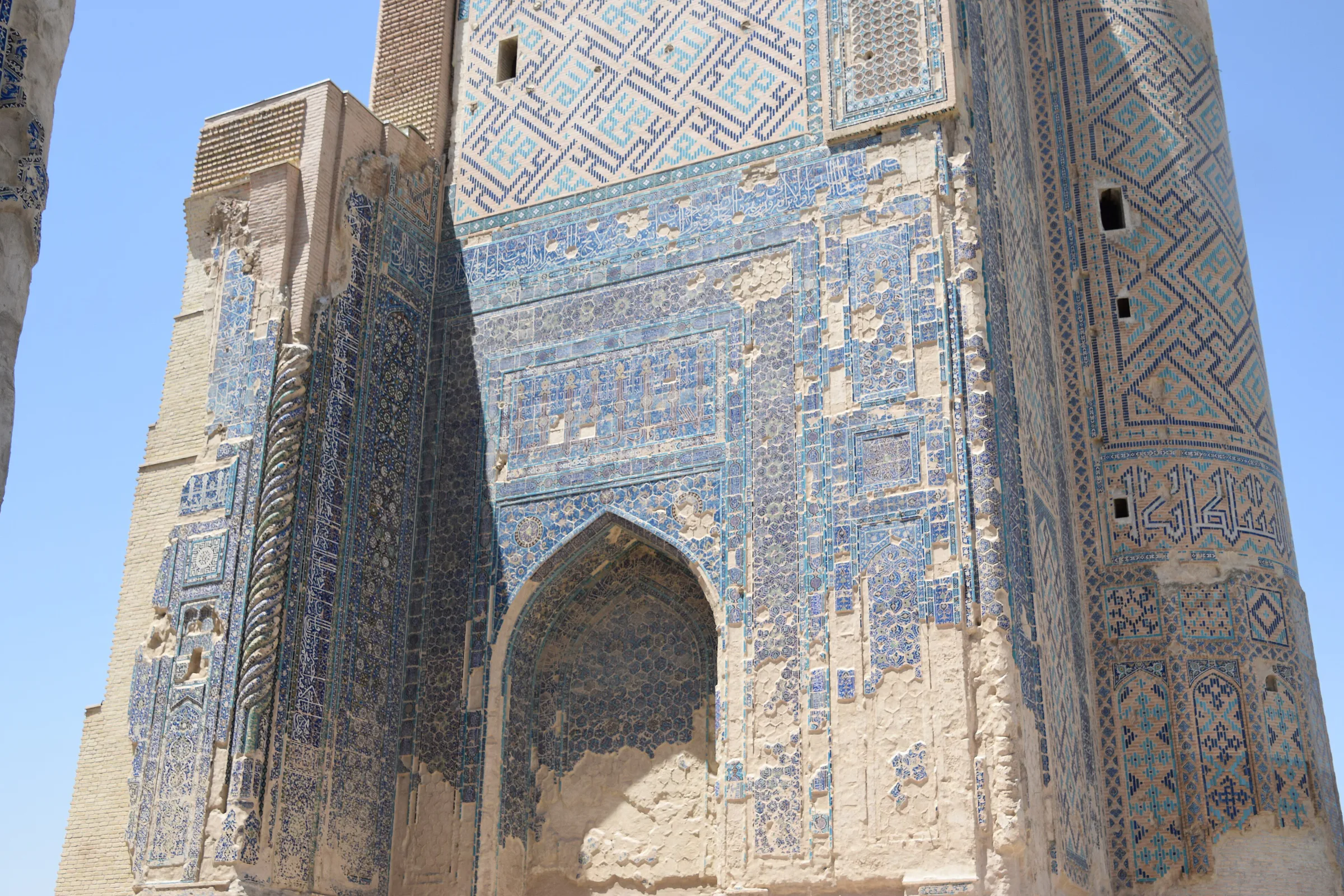
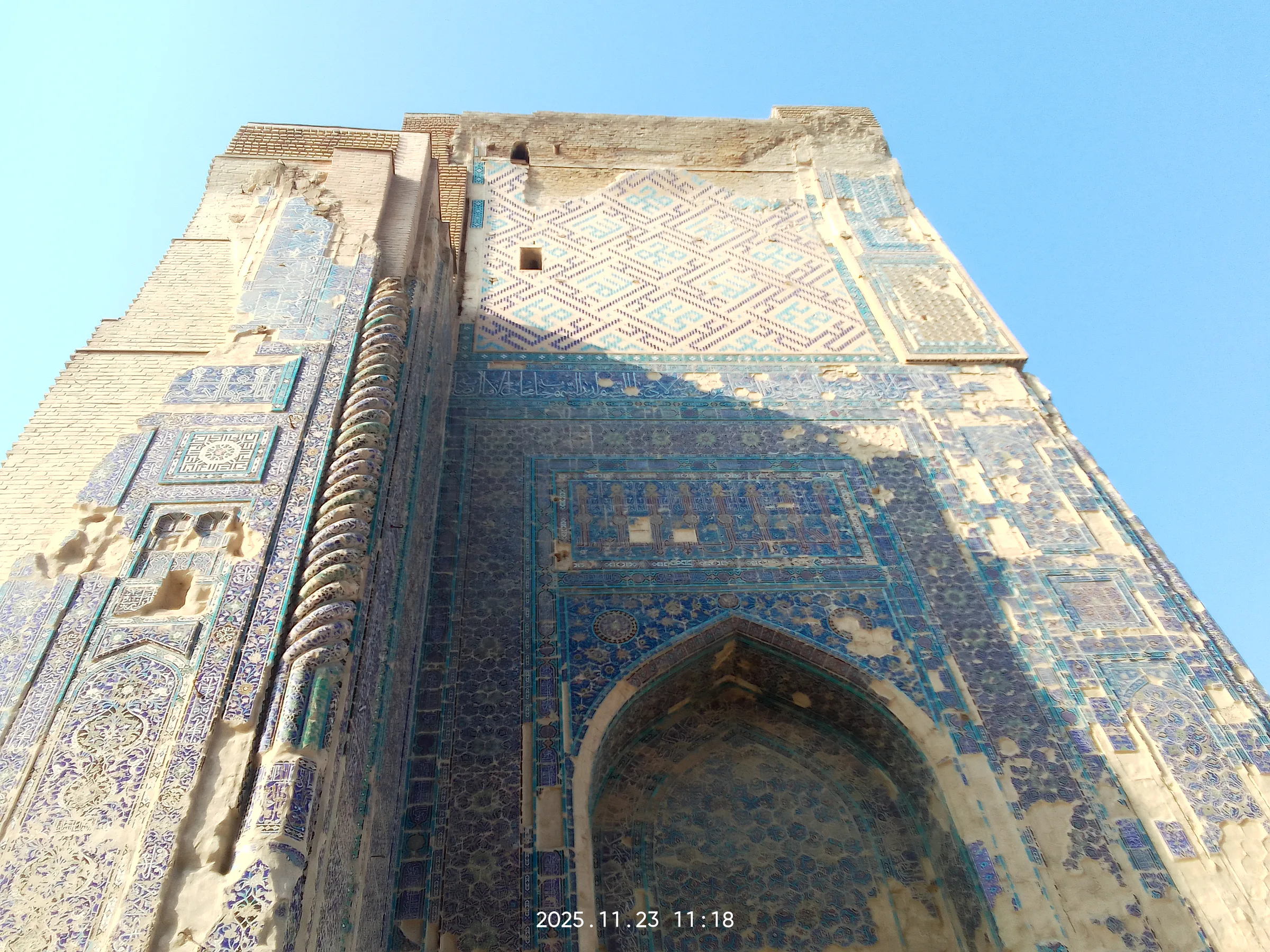
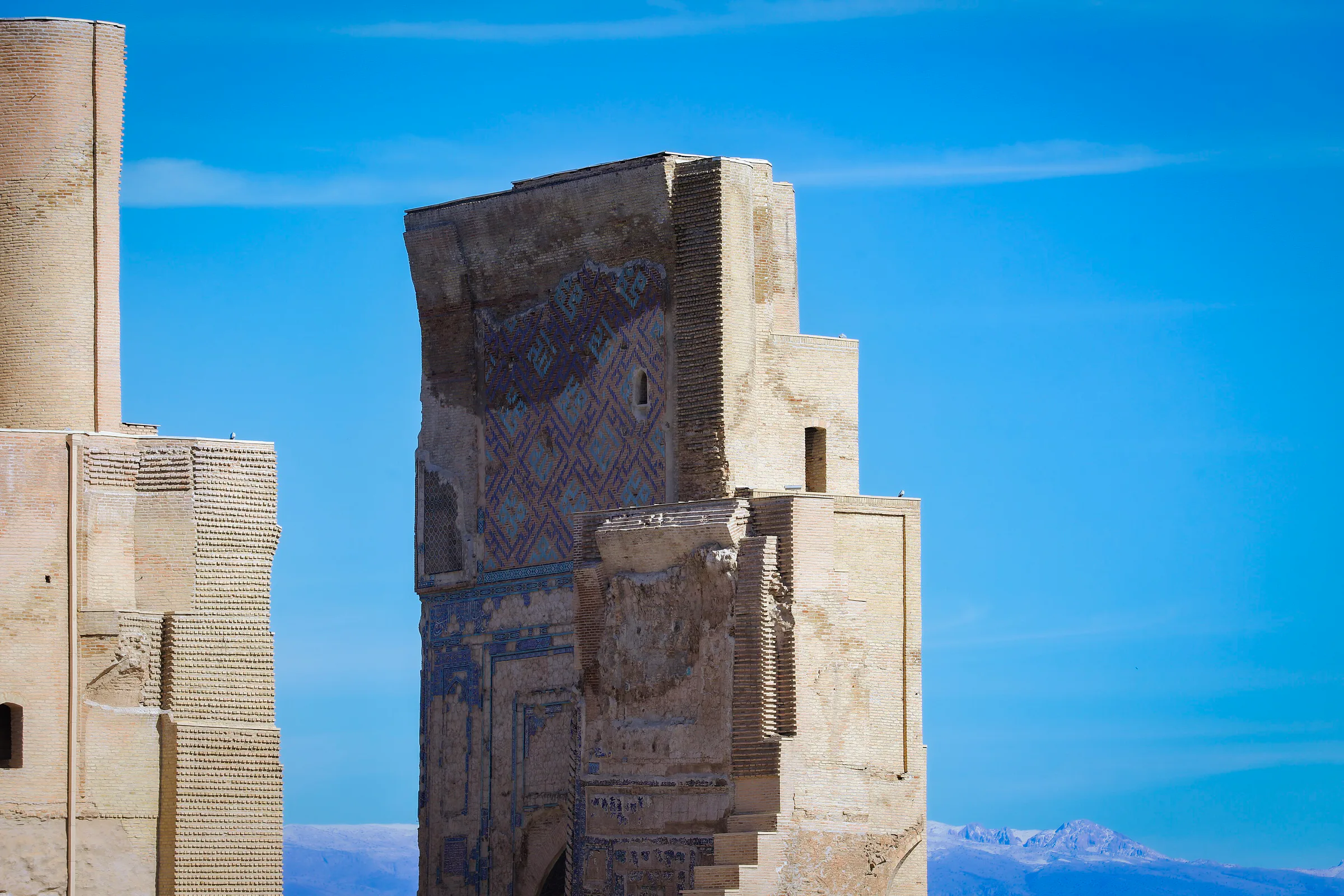
Timur’s residence in Shahrisabz, begun in 1380 and under construction for some two decades. Two pylons of its gigantic portal survive, still clad in brilliant tilework.
Once he had secured power in Mawarannahr, Timur began building a great palace in his native Kesh in 1380. According to historians, craftsmen deported from Khorezm after the campaign of 1379 worked on it, and the inscriptions on the portal also name a master builder, Muhammad Yusuf of Tabriz. Construction and decoration went on almost to the end of Timur’s life.
In August 1404 the Castilian envoy Ruy González de Clavijo, on his way to Samarkand, toured the palace. He described a long entrance, tiled arches, a great courtyard paved with white slabs around a pool, and called the decoration of the halls very skilful work, adding that it was still unfinished. Above the entrance arch was a lion against a rising sun, which Clavijo took to be the arms of the lord of Samarkand.
In the 16th century, when the troops of Abdullah Khan II of Bukhara took Shahrisabz, the palace was badly damaged. The great portal arch later collapsed and the rest of the complex all but vanished.
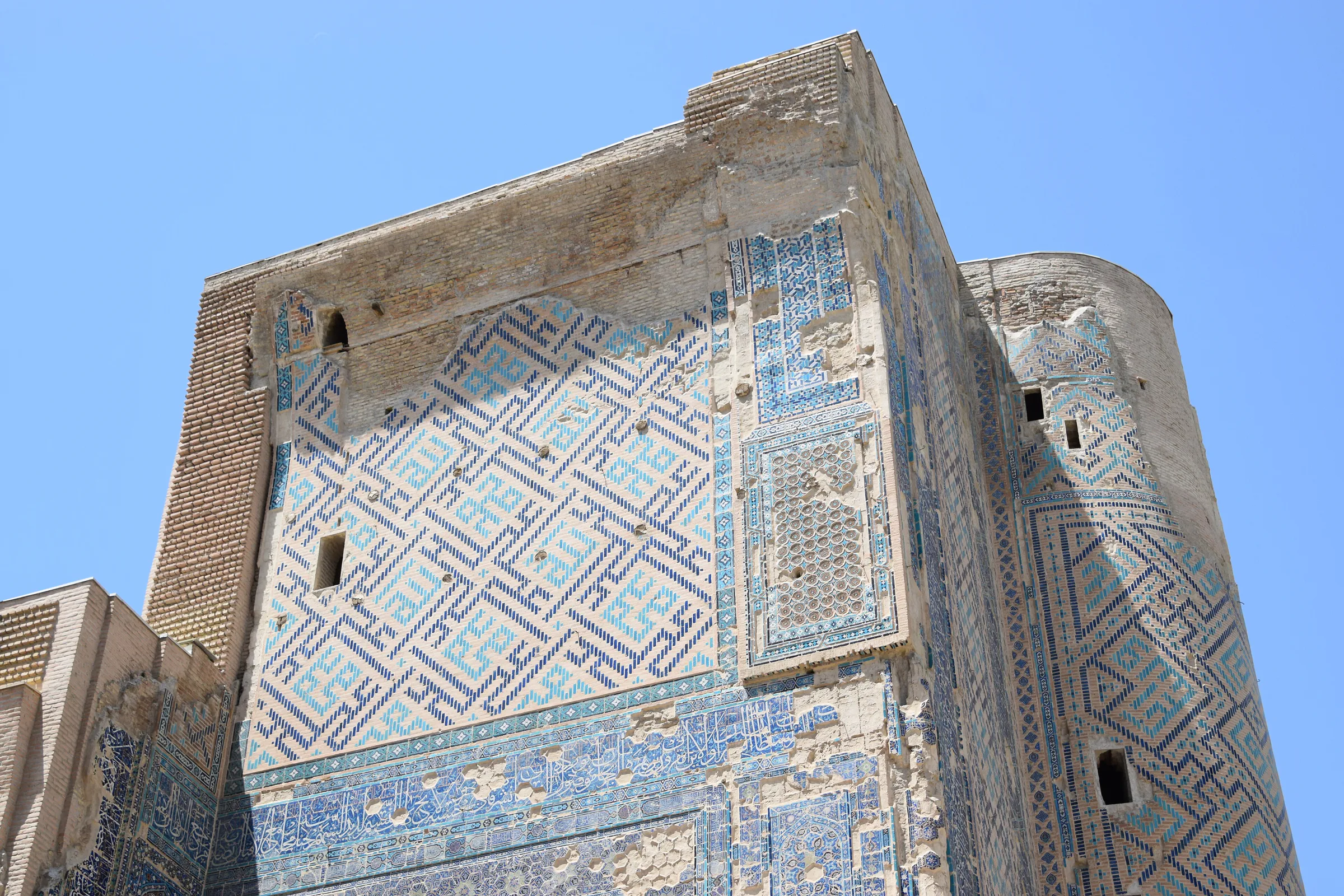
Today only the two pylons of the entrance portal and fragments of the wall between them stand. They rise about 38 m, and the arch spanned more than 22 m, one of the widest in Central Asia. Researchers calculate that the complete portal was well over 50 m tall; some suggest as much as 70 m.
The pylons are faced with glazed brick and mosaic in blue, white and gold. Kufic inscriptions and the names of God repeat among geometric girih patterns, while delicate floral designs survive on the inner faces. The layout is known from written sources and excavation: the main courtyard measured 120–125 m by 240–250 m and was ringed by an audience hall and residential wings.
The name Ak-Saray, “White Palace”, is thought to signal majesty and rank rather than the colour of the walls. Sources also mention a pool on the roof from which water cascaded down the façade, although archaeology has not confirmed this.
The ruins were restored in the 1990s, and in 1996 a statue of Timur was unveiled on the square in front. Stand at the foot of the pylons and look up, and it is easy to see why Timur meant this building to embody his power.
The ruins stand at the northern edge of the historic centre, close to the old north gate of the city wall. Opposite is the 16th-century Chubin Madrasa, now home to the Shahrisabz history museum. The avenue running south from the palace leads to the Chorsu trading dome and the Dorus-Saodat ensemble.
Ensemble · Shahrisabz City
Kesh, Timur’s birthplace and a UNESCO site
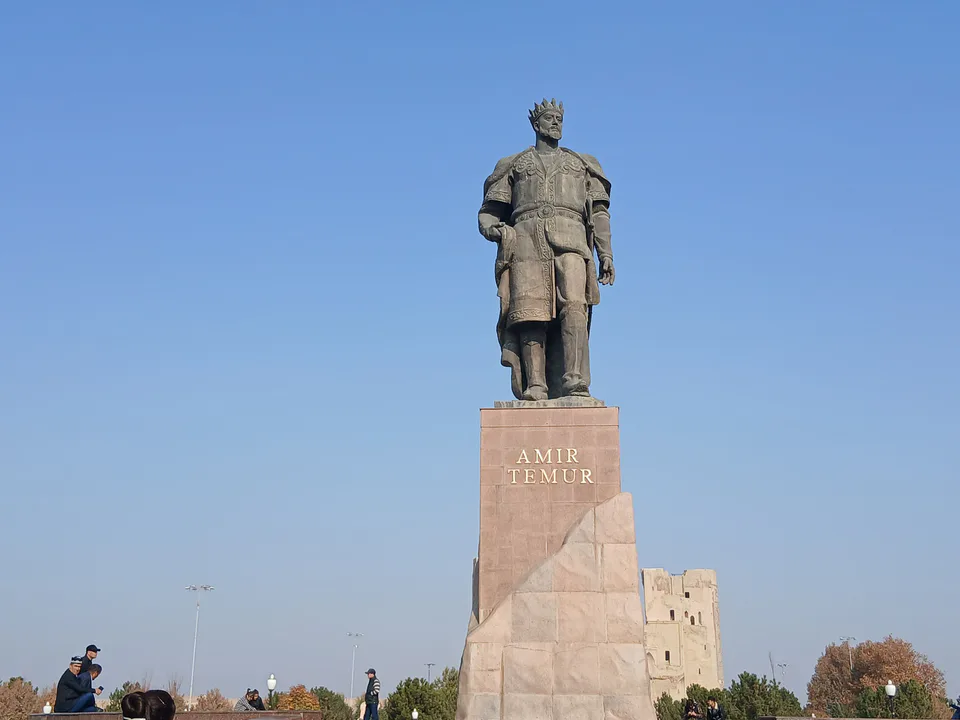
Modern · Shahrisabz City
Timur stands tall in his home town
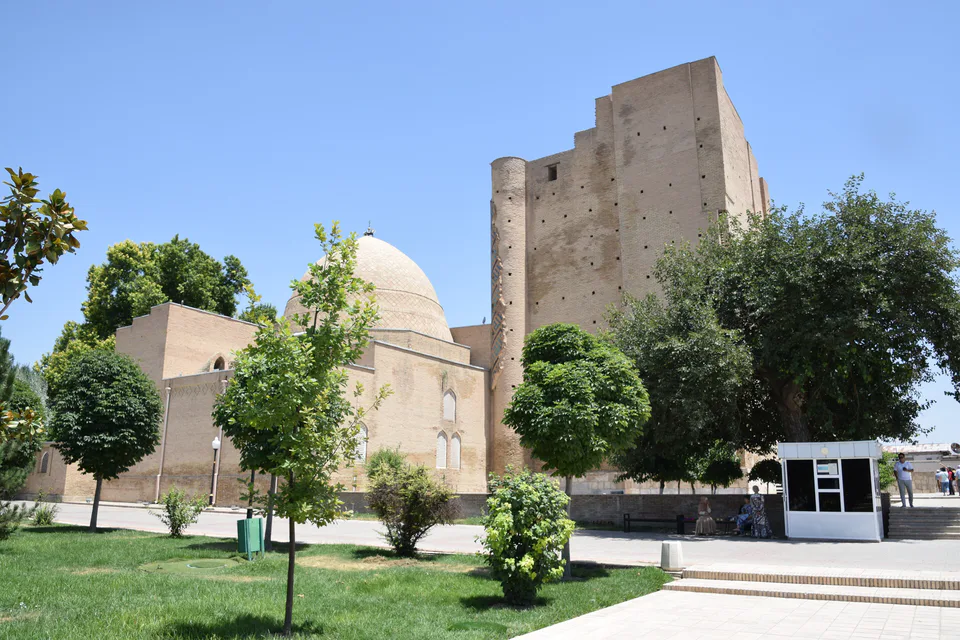
Ensemble · Shahrisabz City
The family mausoleum Timur built for himself and his sons
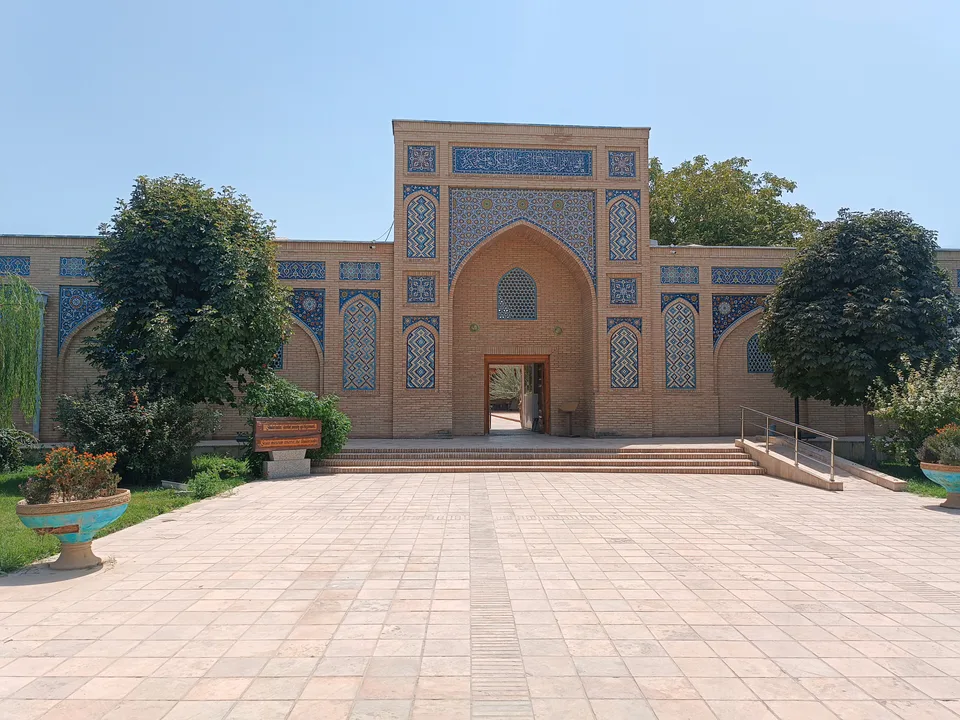
Madrasa · Shahrisabz City
The town museum in a madrasa by the old timber market
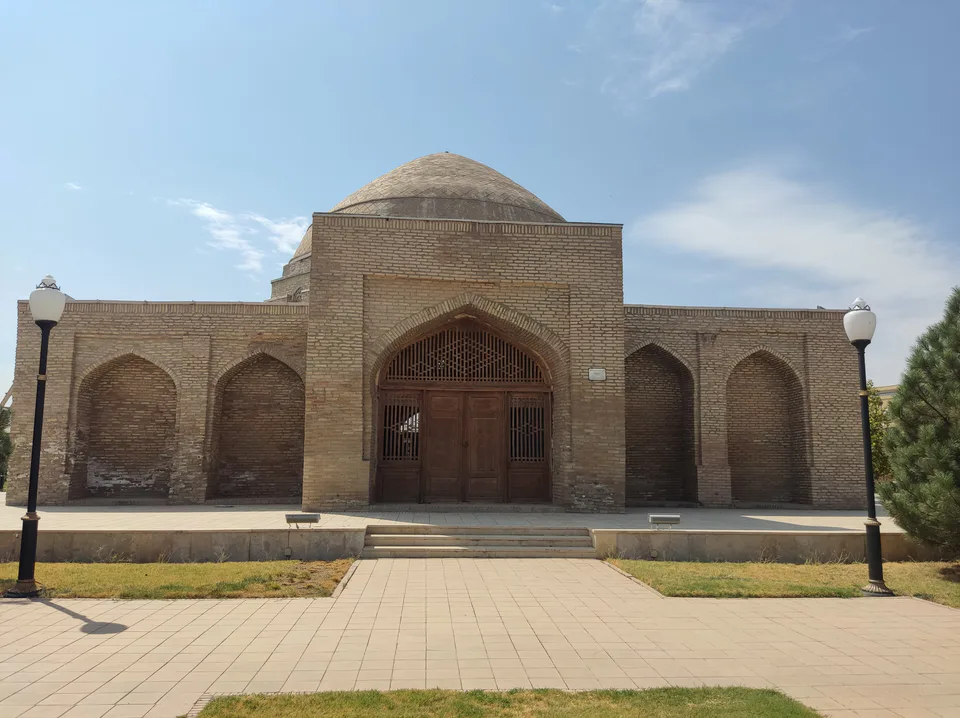
Bazaar · Shahrisabz City
A domed market where four streets meet
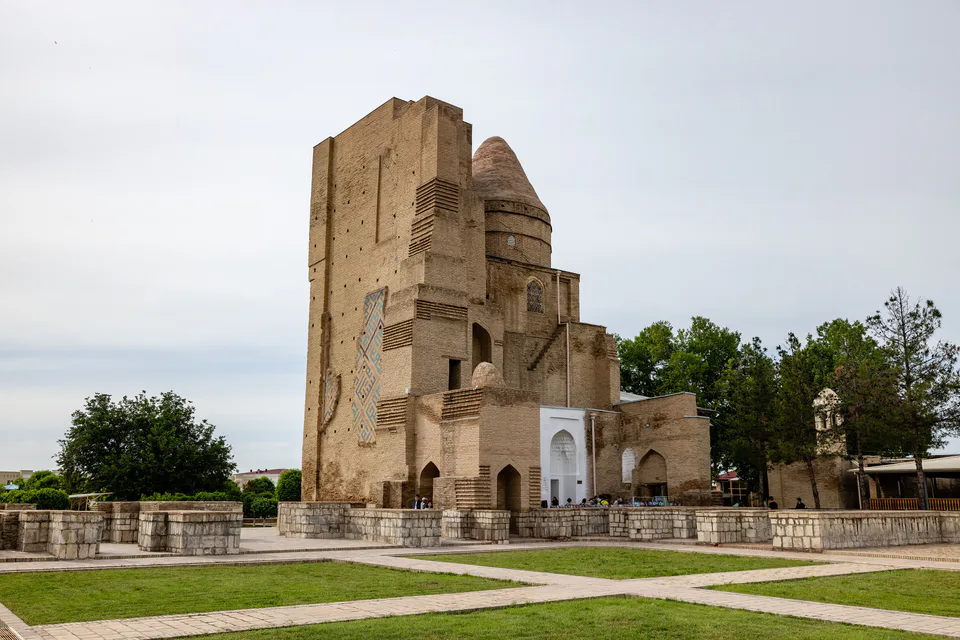
Mausoleum · Shahrisabz City
A cone-domed tomb for Timur’s favourite son
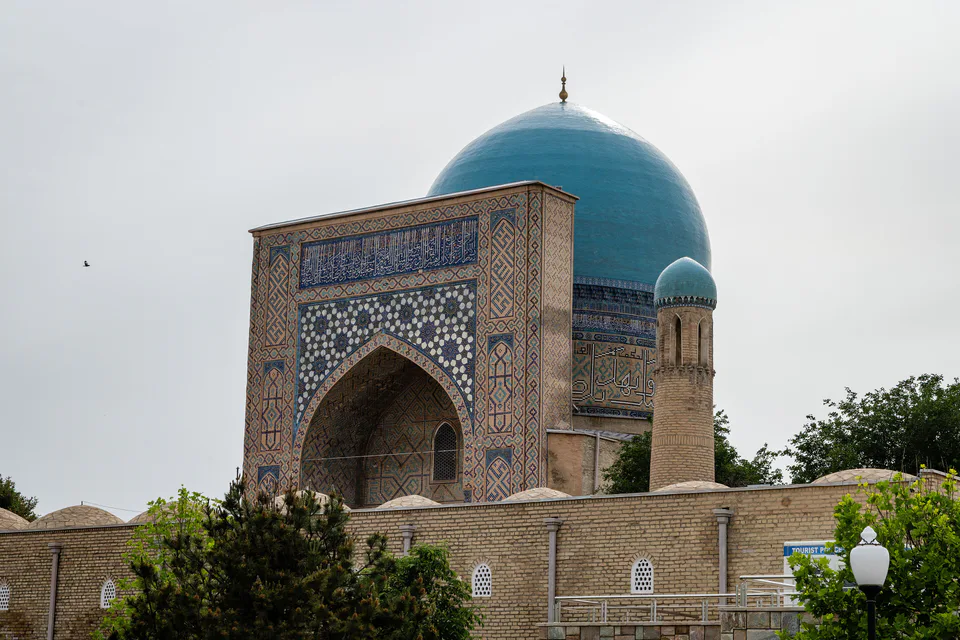
Mosque · Shahrisabz City
The Friday mosque Ulugh Beg built in his father’s name
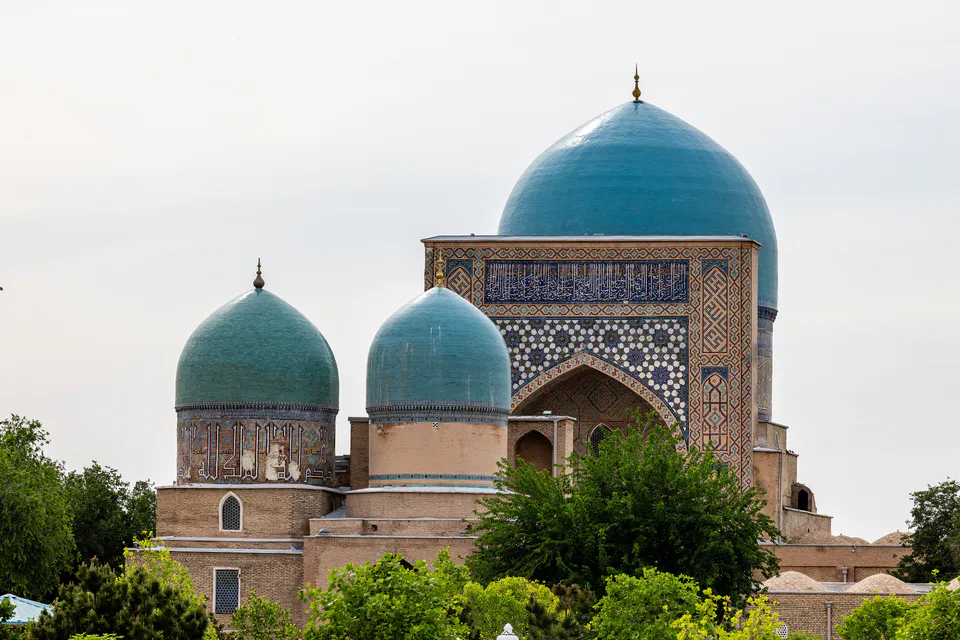
Ensemble · Shahrisabz City
A Timurid family shrine and Ulugh Beg’s Blue Dome
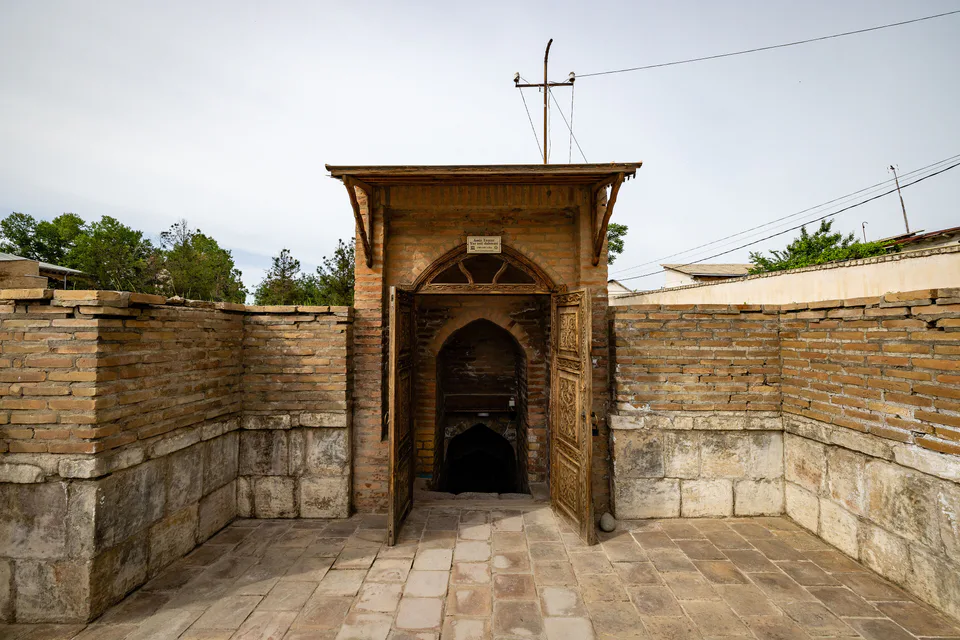
Mausoleum · Shahrisabz City
The tomb Timur prepared for himself, which stayed empty
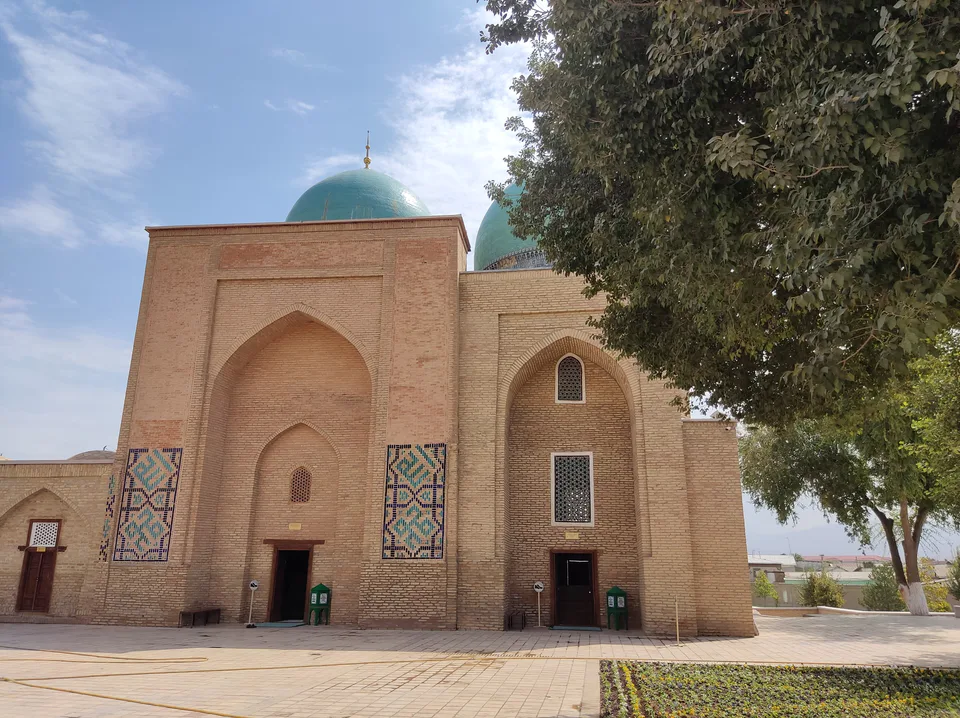
Mausoleum · Shahrisabz City
Resting place of Timur’s spiritual guide and his father