The 14th-century ruler born near Kesh (Shakhrisabz) who built an empire from Central Asia to Anatolia and made Samarkand one of the most beautiful cities in the world. In independent Uzbekistan he is a symbol of statehood.
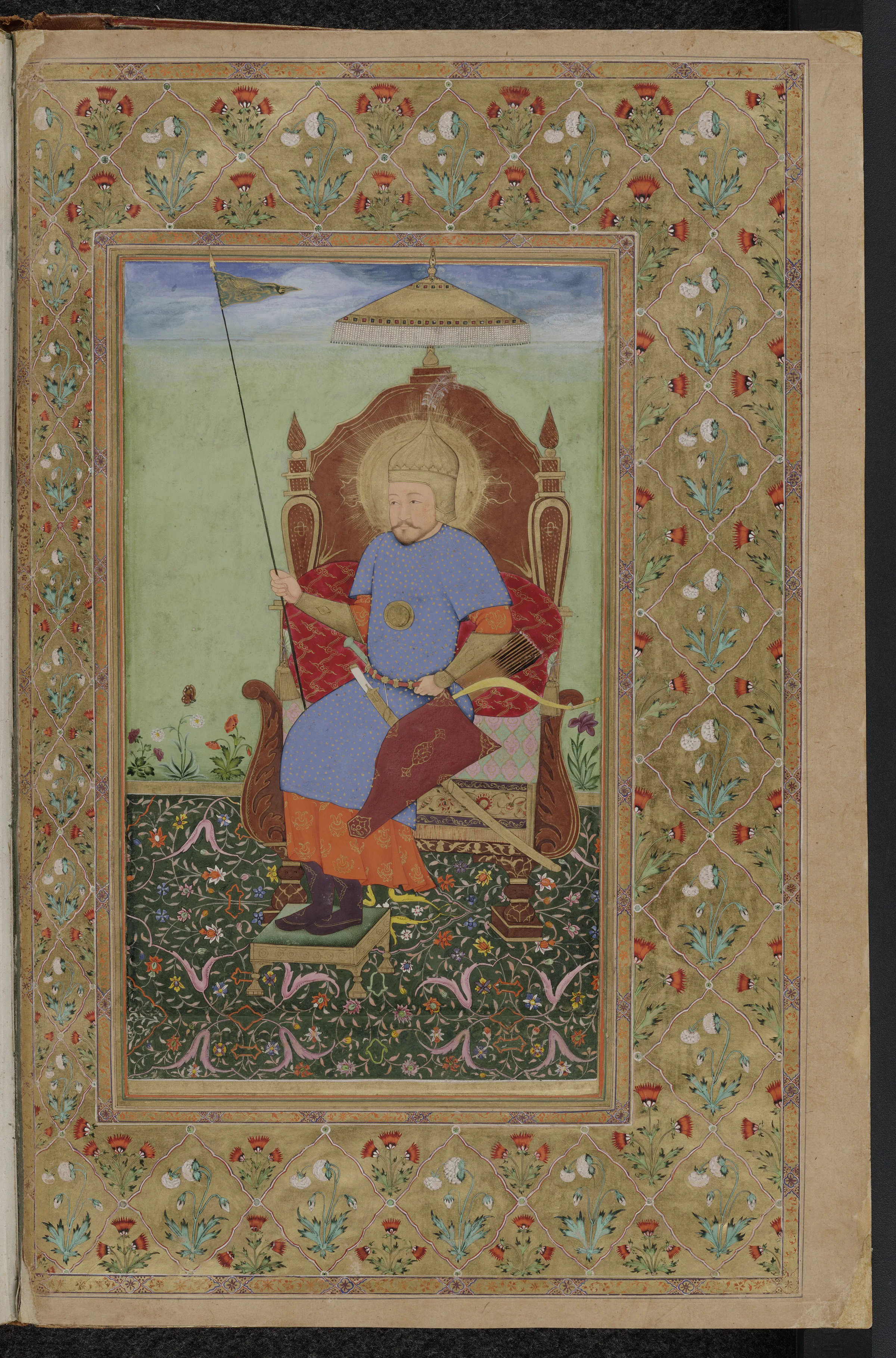
Timur, son of Taraghay of the Barlas clan, was born in the village of Khoja Ilgar near Kesh, today's Shakhrisabz. The traditional date is 9 April 1336, given by Sharaf al-Din Ali Yazdi, though some modern scholars place his birth a little earlier. Drawn young into the feuds of the Chagatai Khanate, he was wounded and left lame — the Persians called him Timur-i Lang, “Timur the Lame”, the origin of the European “Tamerlane”. In 1370, having defeated his ally and rival Amir Husayn at Balkh, he became ruler of Transoxiana and made Samarkand his capital; marriage to the Chinggisid Saray Mulk Khanum brought him the title gurkan, “royal son-in-law”.
Conquest and construction
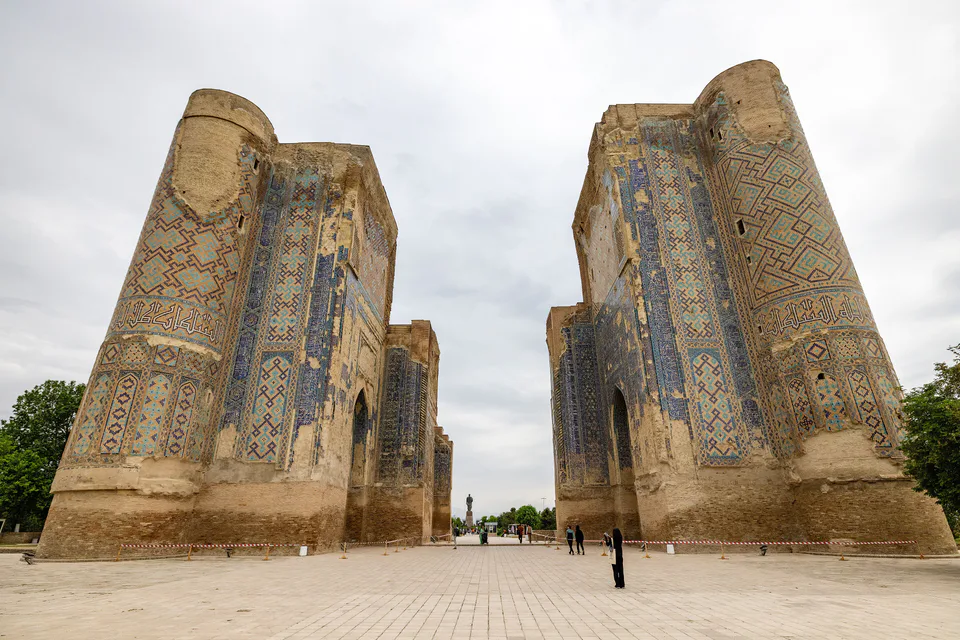
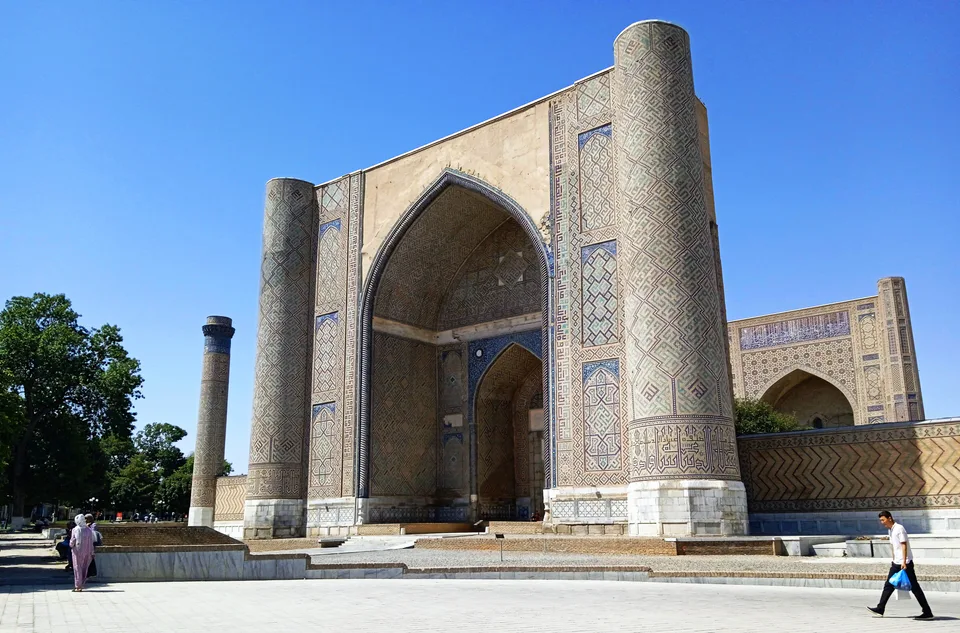
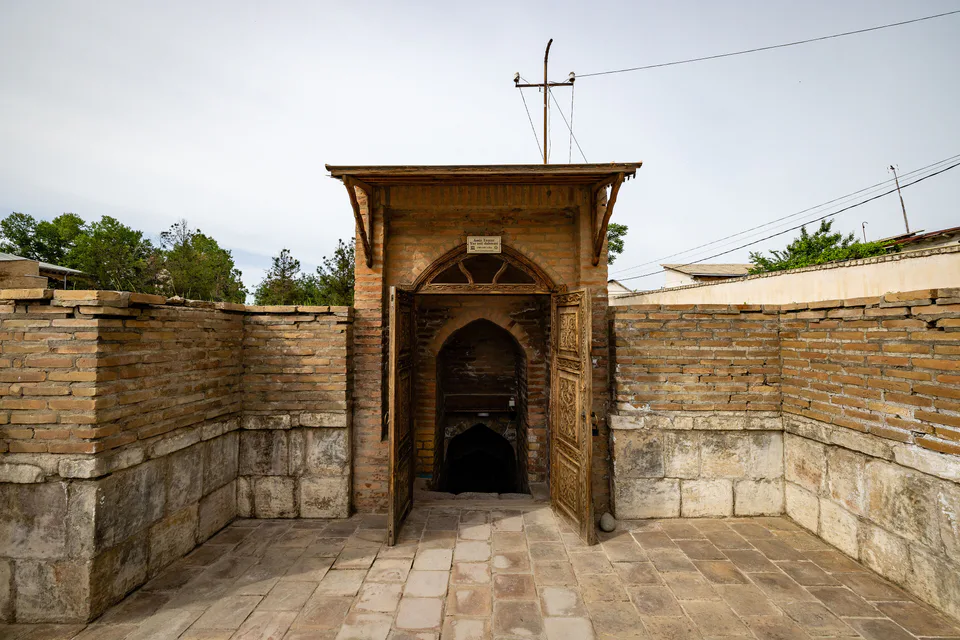
Over the next 35 years Timur campaigned in Khwarazm, Iran, the Golden Horde, northern India, Syria and Anatolia, capturing the Ottoman sultan Bayezid I at Ankara in 1402. His campaigns brought the destruction of many cities and mass killings, and judgements of him differ sharply. At the same time he brought craftsmen from conquered lands to Samarkand and Shakhrisabz and launched vast building projects: the Ak-Saray and Dorus-Saodat in Shakhrisabz, the Bibi-Khanym Mosque and the Shah-i Zinda tombs in Samarkand, and dozens of gardens around the city. The Castilian envoy Clavijo described them with wonder in 1404.
The Gur-e Amir and his legacy
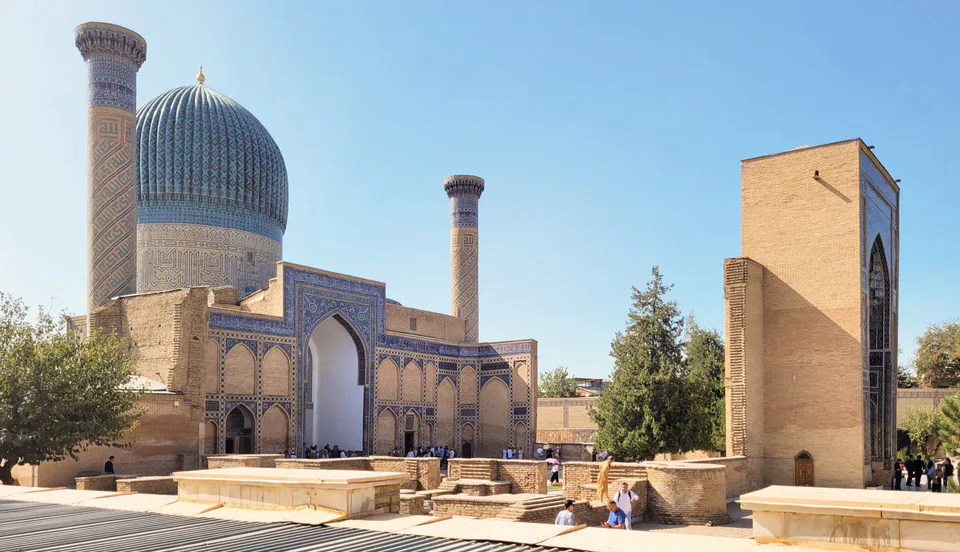
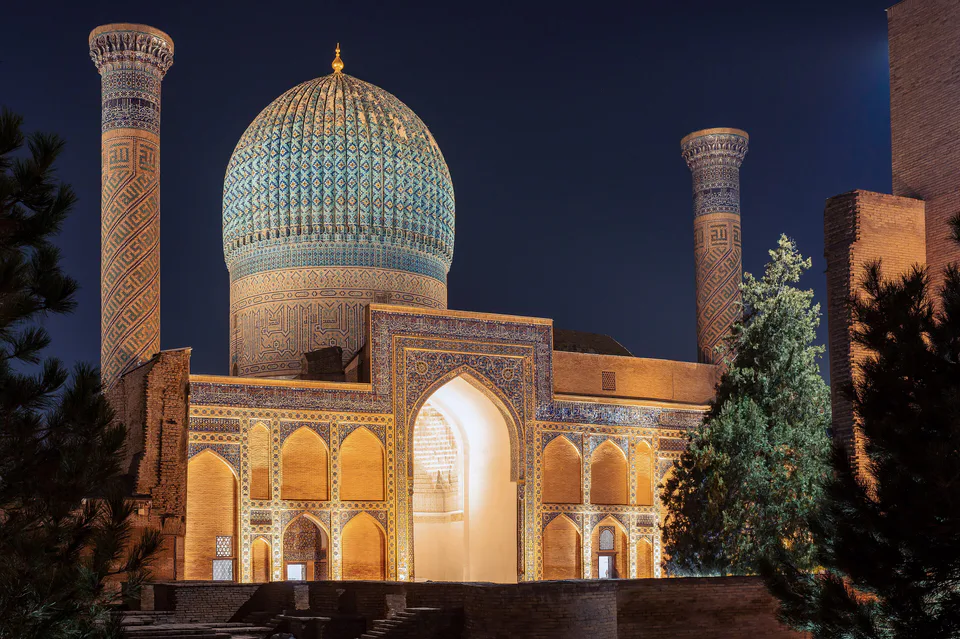
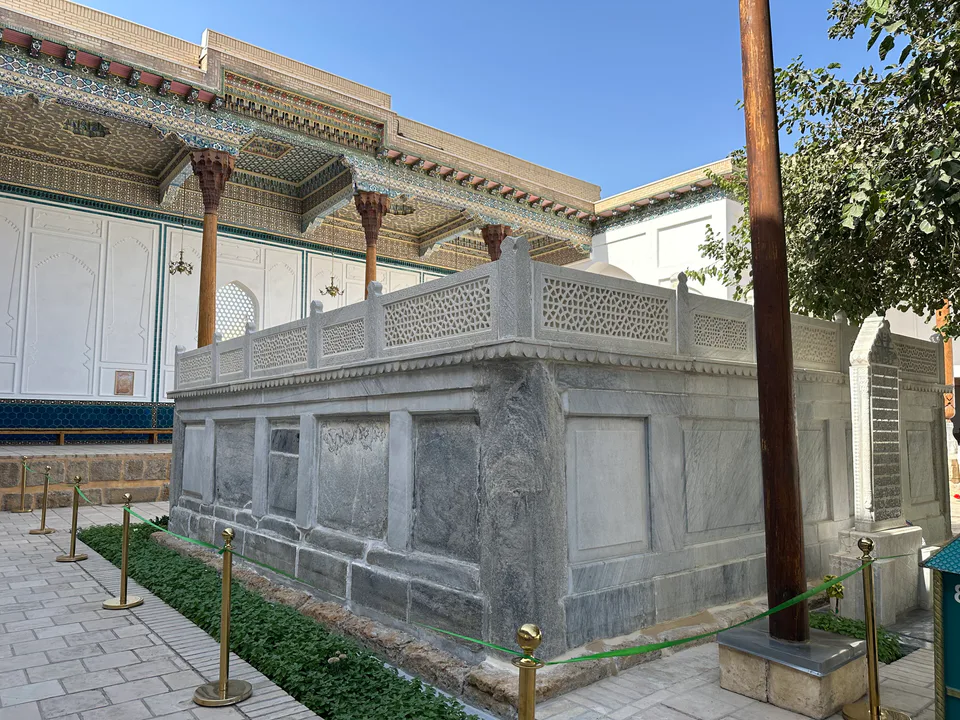
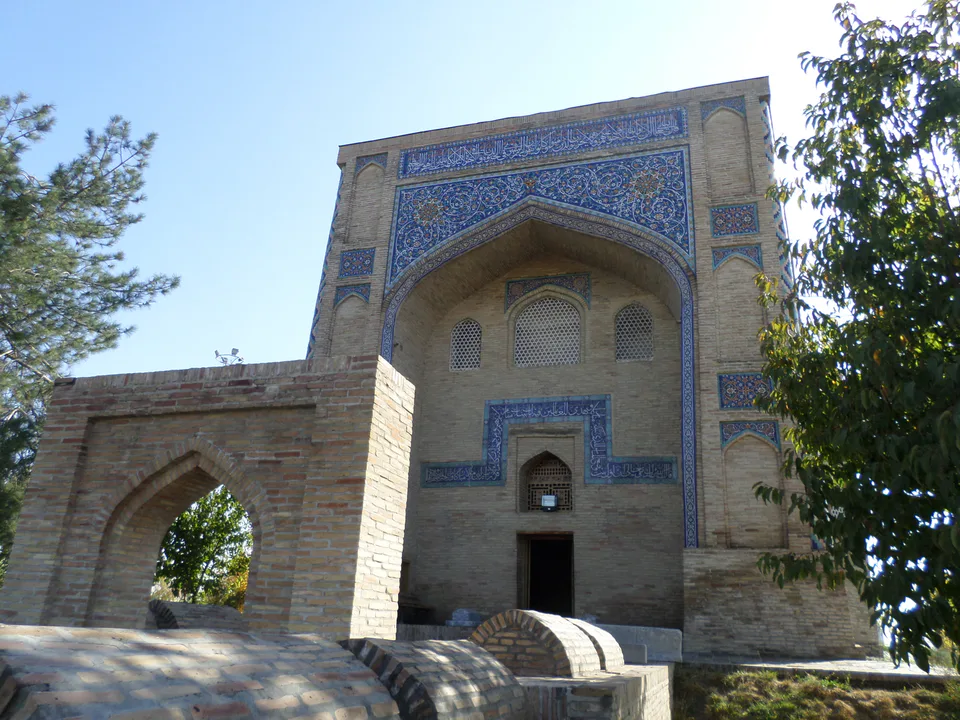
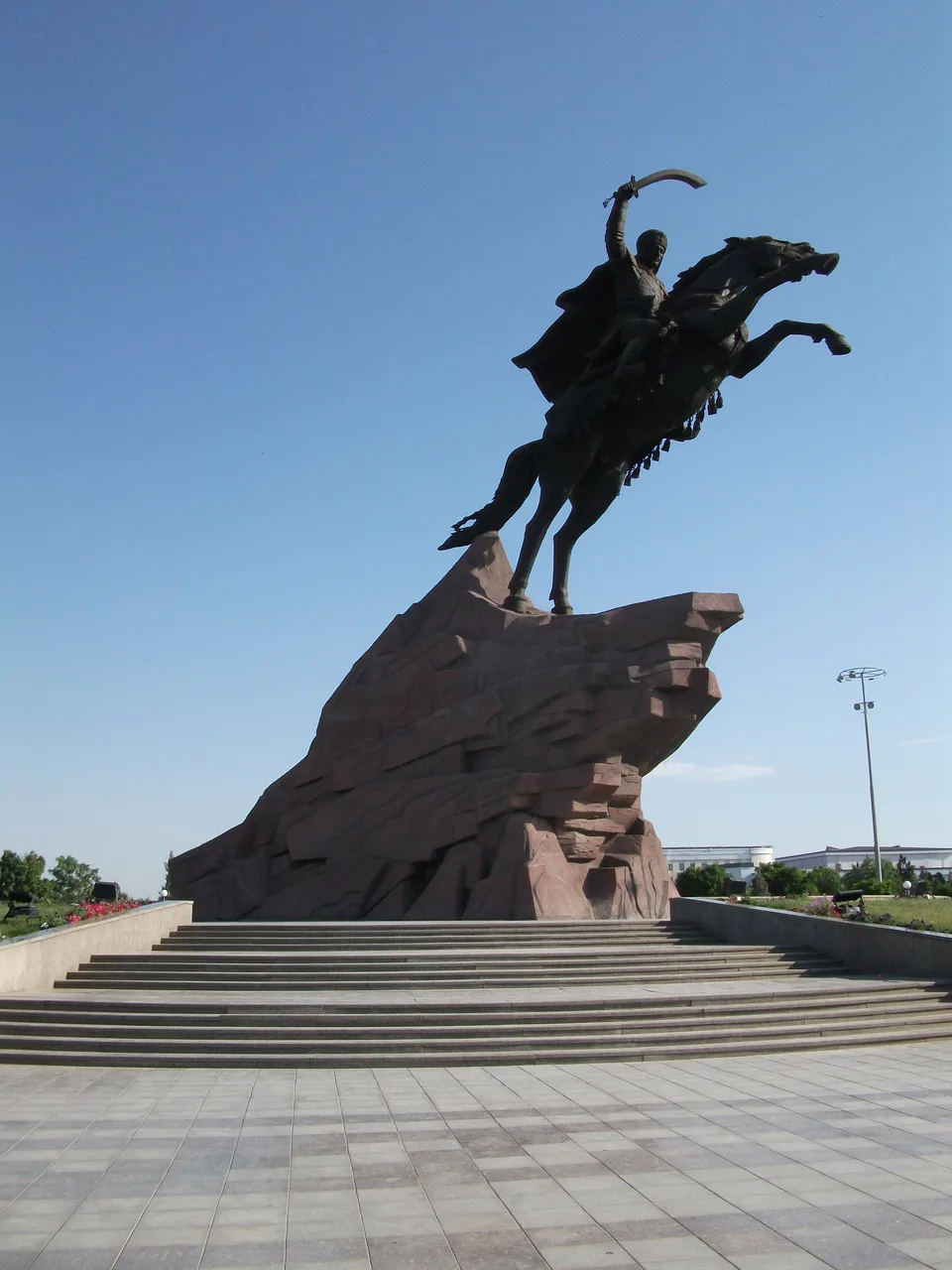
Timur died at Otrar on 18 February 1405 while setting out to invade China and was buried in the Gur-e Amir in Samarkand, where Ulugh Beg later placed a dark-green jade slab over his grave. In 1941 the anthropologist Mikhail Gerasimov opened the tomb, confirmed the accounts of Timur's injuries and reconstructed his face. Since independence Timur has become a symbol of statehood: an equestrian statue went up in Tashkent in 1993 and the State Museum of Timurid History opened in 1996, and statues also stand in Samarkand and Shakhrisabz.
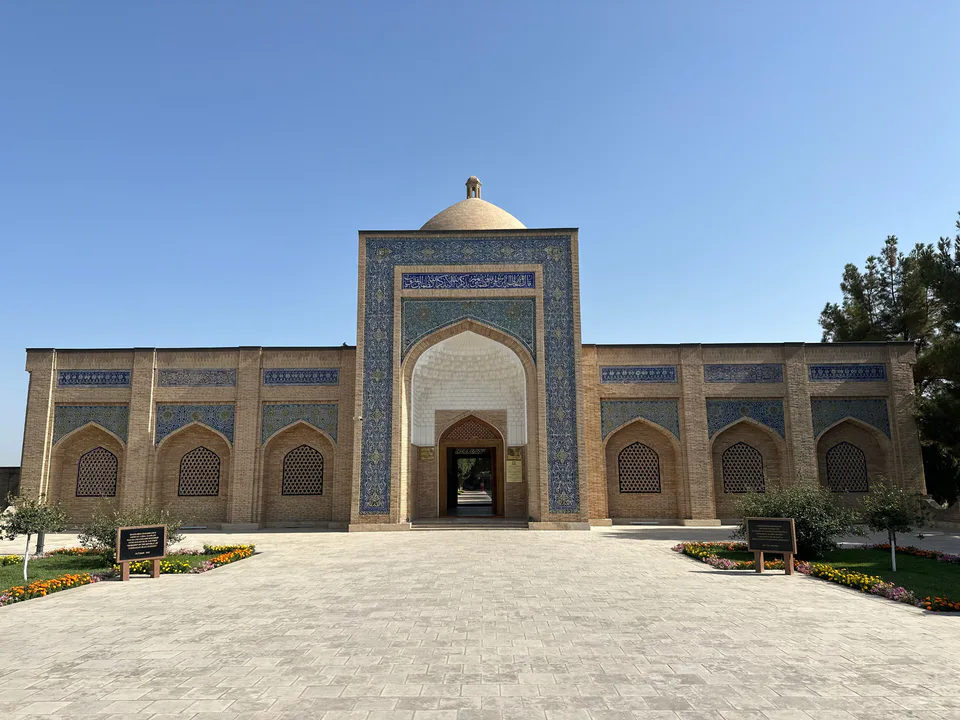
In the 14th century Baha al-Din Naqshband (1318–1389), who lived in the village of Qasr-i Hinduvan (later Qasr-i Arifan) near Bukhara, built on the Khwajagan path founded in the 12th century by Abdul Khaliq Gijduvani and gave his name to a new Sufi order. The Naqshbandiyya favoured silent remembrance of God and an upright life of work within society rather than withdrawal from it, an idea summed up in the saying “Dil ba yor, dast ba kor” — “the heart with God, the hands at work”. Under Khoja Ahrar in the 15th century the order became dominant in Transoxiana, later spreading to India, the Ottoman lands and the Caucasus. Bahauddin's memorial complex in Kagan district is one of Uzbekistan's most visited shrines.
A Barlas emir from Kesh, Timur rose through the power struggles of Transoxiana in the 1360s, and in 1370 he defeated his former ally Amir Husayn at Balkh and was proclaimed supreme ruler by a kurultai. Marrying the Chinggisid princess Saray Mulk Khanum, he took the title gurkan, “royal son-in-law”, and made Samarkand his capital. Over the next 35 years he campaigned in Khwarazm, Iran, the Golden Horde, India, Syria and Anatolia, building a vast empire at the cost of many ruined cities and enormous loss of life. At the same time craftsmen from conquered lands were brought to Samarkand, Shakhrisabz and other towns, and the masterpieces of Timurid architecture took shape.
In 1380 Timur began building a vast summer palace, the Ak-Saray or “White Palace”, in his home town of Kesh, today's Shakhrisabz. Work went on for more than two decades: the Castilian envoy Clavijo, who came here in 1404, found it still unfinished and marvelled at halls adorned with gold and blue. The palace was later destroyed, and only the two colossal piers of its entrance arch survive, their height hinting at the scale of the lost portal. With the Kok Gumbaz mosque and the Dorus-Saodat and Dorut-Tilovat complexes, Ak-Saray forms the Historic Centre of Shakhrisyabz, a UNESCO World Heritage Site since 2000.
In 1404 Ruy González de Clavijo, envoy of King Henry III of Castile, travelled to the court of Timur. The embassy crossed the Amu Darya at Termez, passed through the Iron Gate gorge in the Baysun mountains and Kesh (Shakhrisabz), and reached Samarkand in September. Clavijo's journal describes receptions and feasts in the gardens around the city, its bazaars, the unfinished Ak-Saray and the Bibi-Khanym Mosque under construction. The envoys left in November; in February 1405 Timur died at Otrar. Clavijo's book remains one of the most vivid European accounts of Timurid Transoxiana.