A 9th-century hadith scholar born in Bukhara, compiler of the Sahih al-Bukhari, regarded by Sunni Muslims as the most authoritative text after the Quran. He is buried at Khartang near Samarkand.
Abu Abdullah Muhammad ibn Ismail al-Bukhari was born in Bukhara in July 810. His father, a hadith scholar, died young, and he was raised by his mother. Tradition says he was memorising hadith by the age of ten; at sixteen he made the pilgrimage with his mother and brother and stayed on in the Hijaz to study. Over the following decades he travelled to Basra, Kufa, Baghdad, Syria, Egypt and Khurasan, hearing hadith from hundreds of teachers, Ahmad ibn Hanbal among them.
The Sahih al-Bukhari
His masterwork, al-Jami' al-Sahih, draws on hundreds of thousands of reports collected over a lifetime, from which he kept only those whose chains of transmission he judged flawless; counting repetitions it contains over 7,000 hadith. Sunni Muslims hold it to be the most reliable source after the Quran. His al-Adab al-Mufrad and al-Tarikh al-Kabir also survive. Late in life theological disputes forced him out of Nishapur, and according to tradition he was expelled from Bukhara for refusing to give private lessons to the governor's children at the palace.
The memorial complex at Khartang
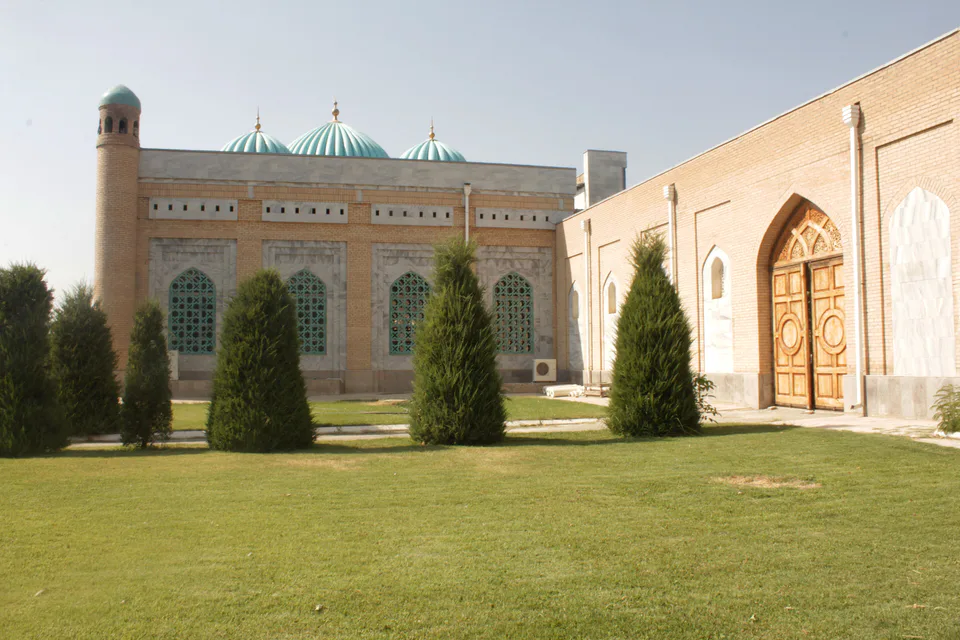
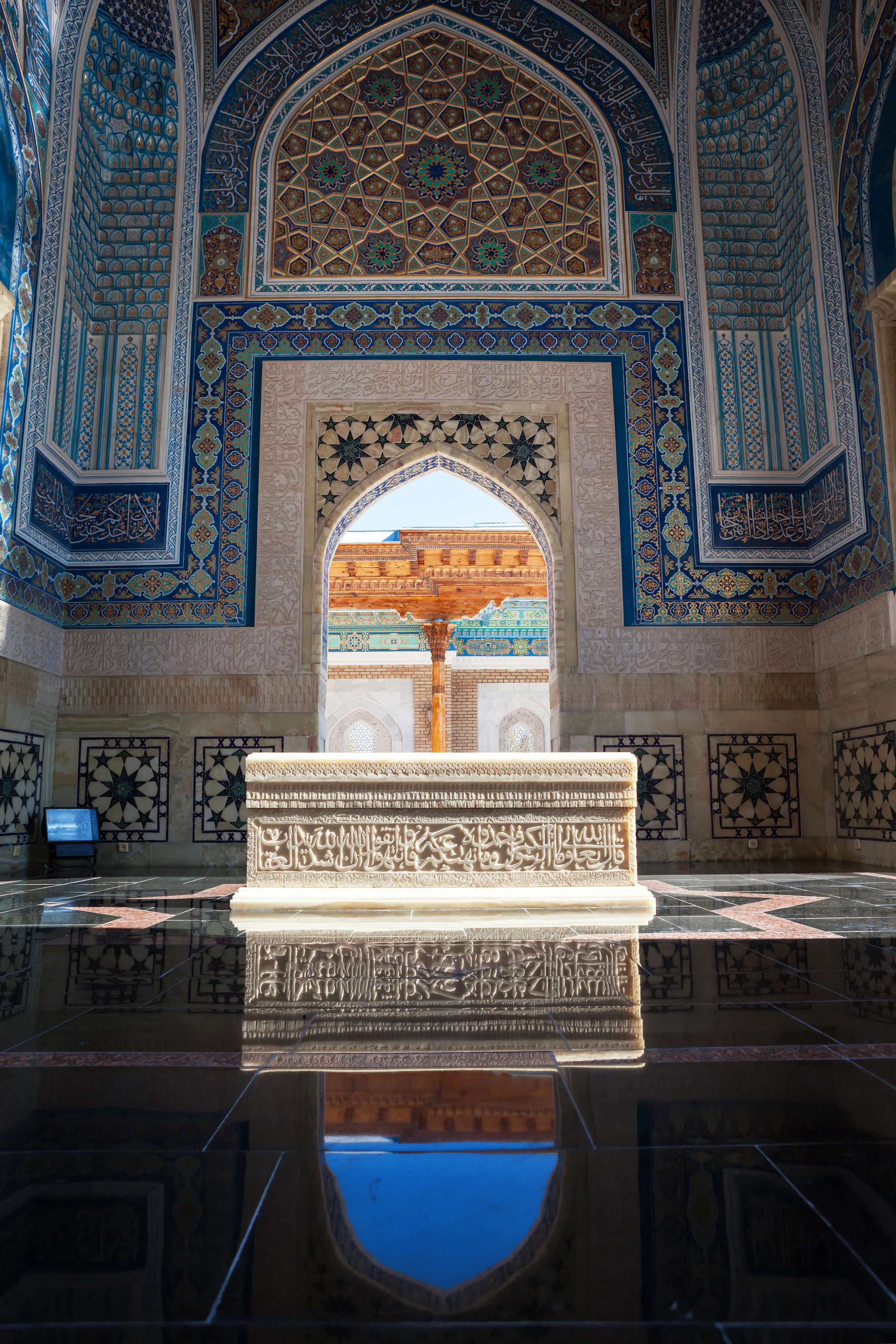
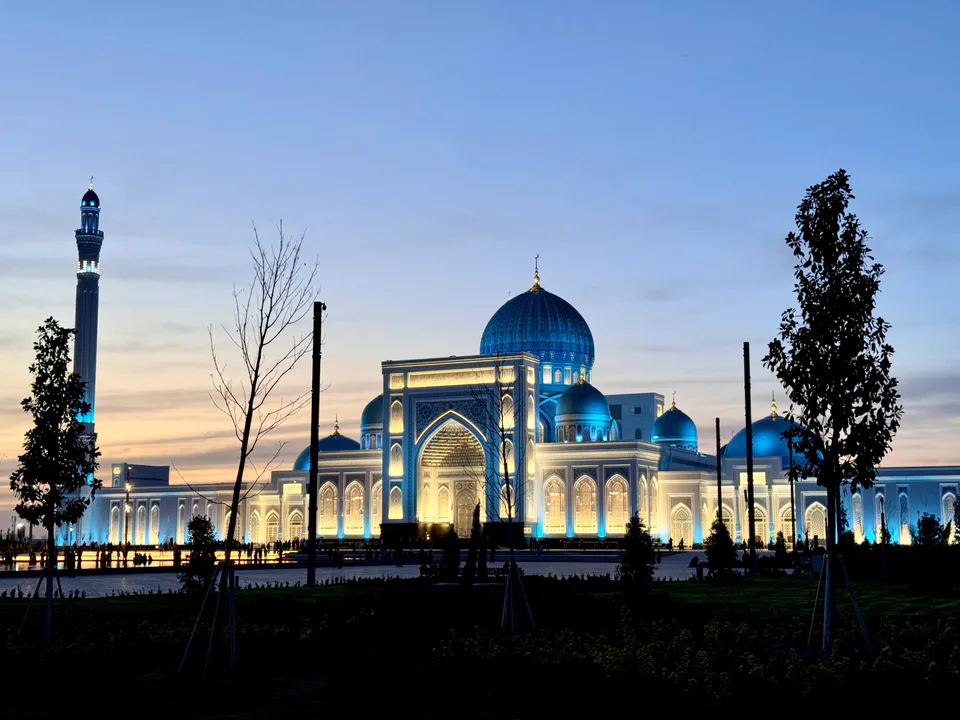
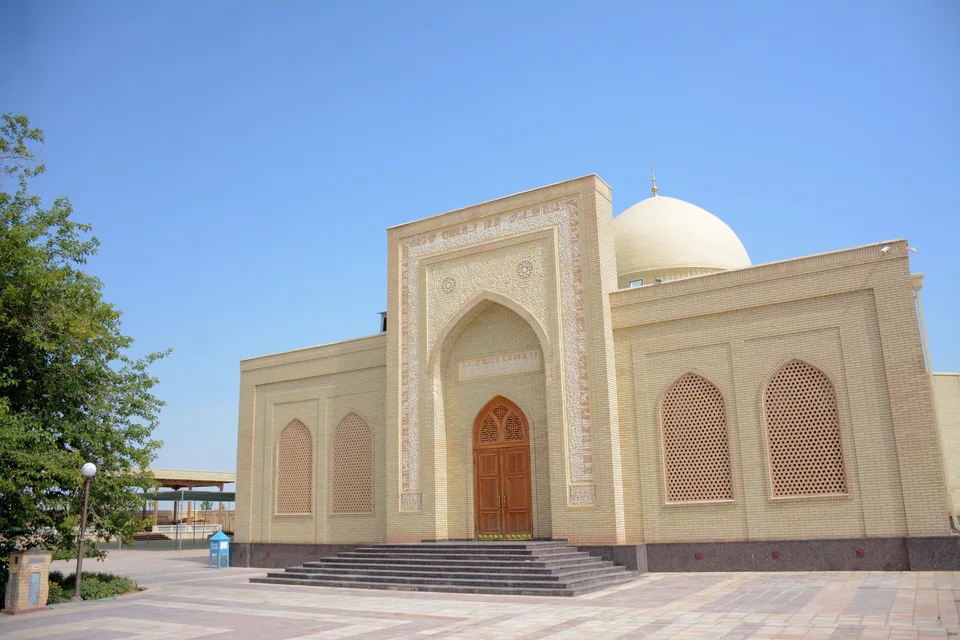
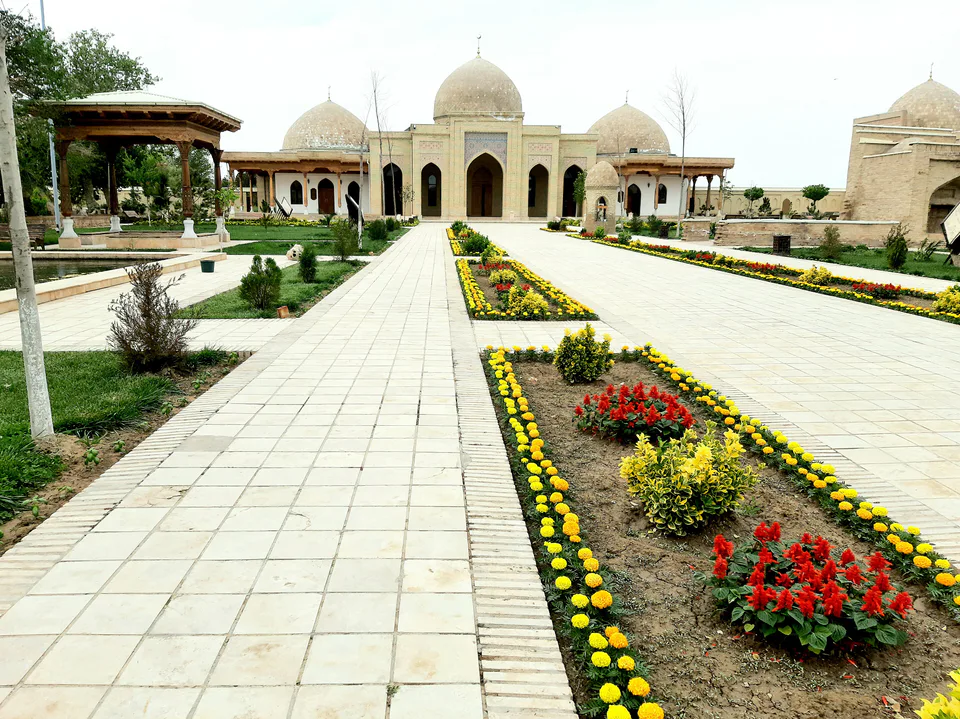
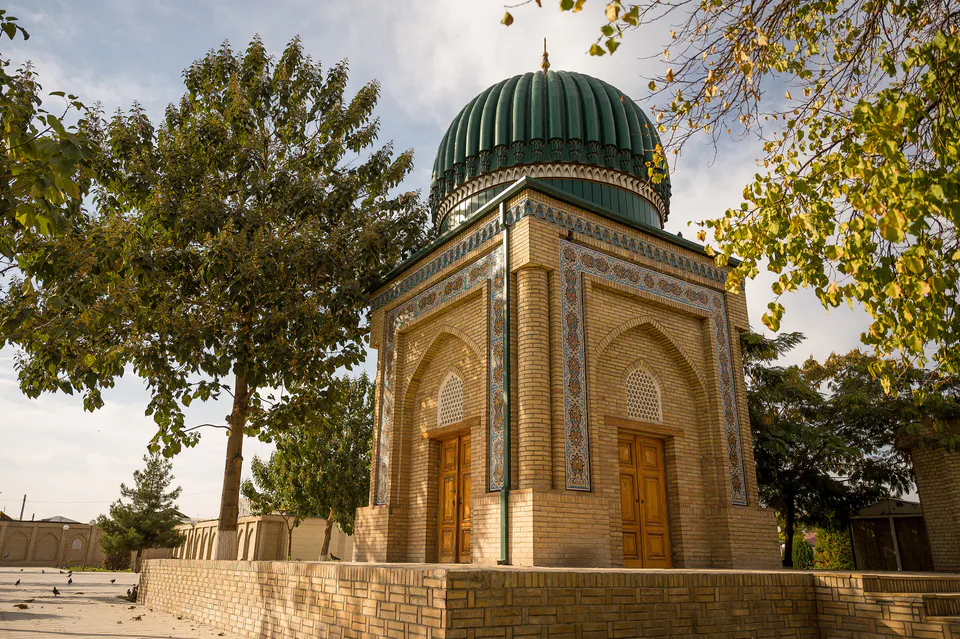
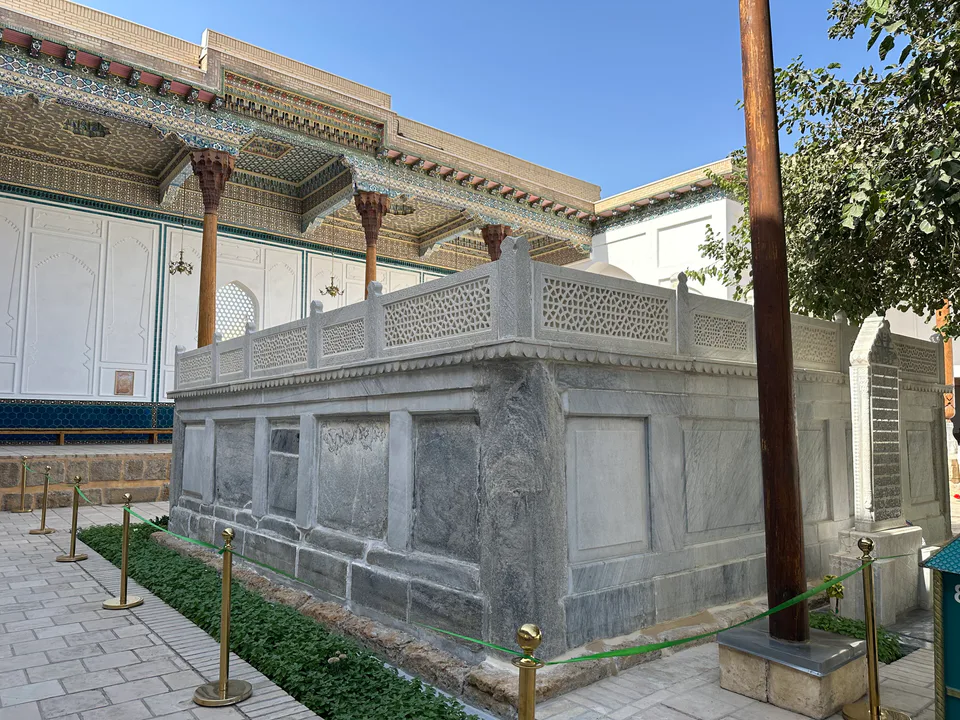
Al-Bukhari found refuge with relatives in the village of Khartang near Samarkand and died there in 870, on the eve of Eid al-Fitr. His grave has drawn pilgrims for centuries. In 1997–1998 a new memorial complex with a mausoleum, mosque, library and museum was built at Khartang in Payariq district, and it was substantially enlarged in 2025. The tombstone in the mausoleum hall is a cenotaph; the actual grave lies in a crypt beneath it. It is one of the most visited shrines in Uzbekistan.
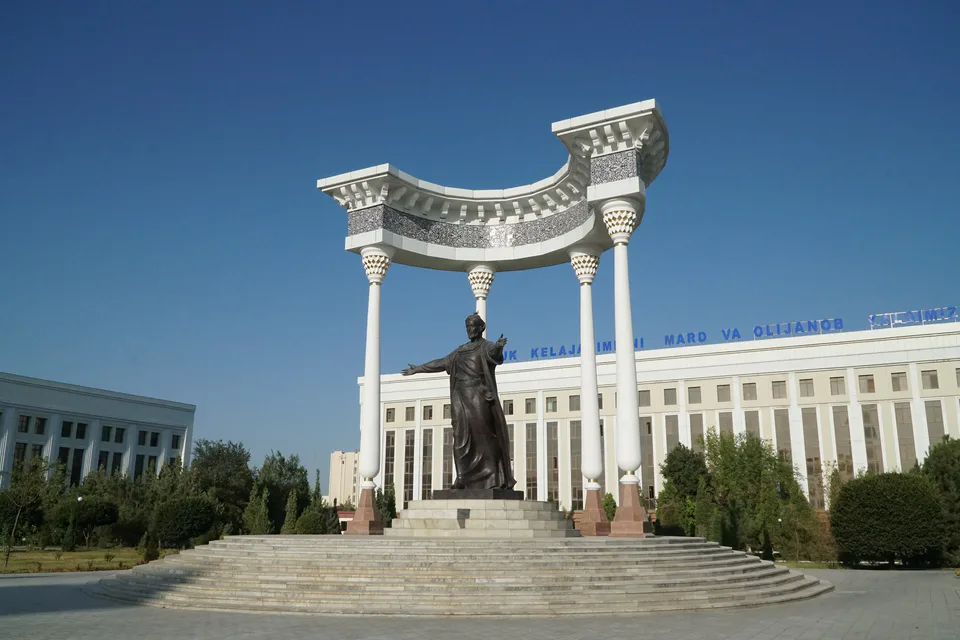
Under the caliph al-Ma'mun, the Khwarazmian scholar Muhammad ibn Musa al-Khwarizmi, working at Baghdad's House of Wisdom, wrote “The Compendious Book on Calculation by Completion and Balancing” some time between 813 and 833. It set out systematic methods for solving linear and quadratic equations, and its key term al-jabr gave its name to algebra. His treatise on Indian numerals circulated in Latin as “Algoritmi de numero Indorum”, the origin of the word “algorithm”. A statue of al-Khwarizmi stands by the gate of Itchan Kala in Khiva, and Urgench State University bears his name.