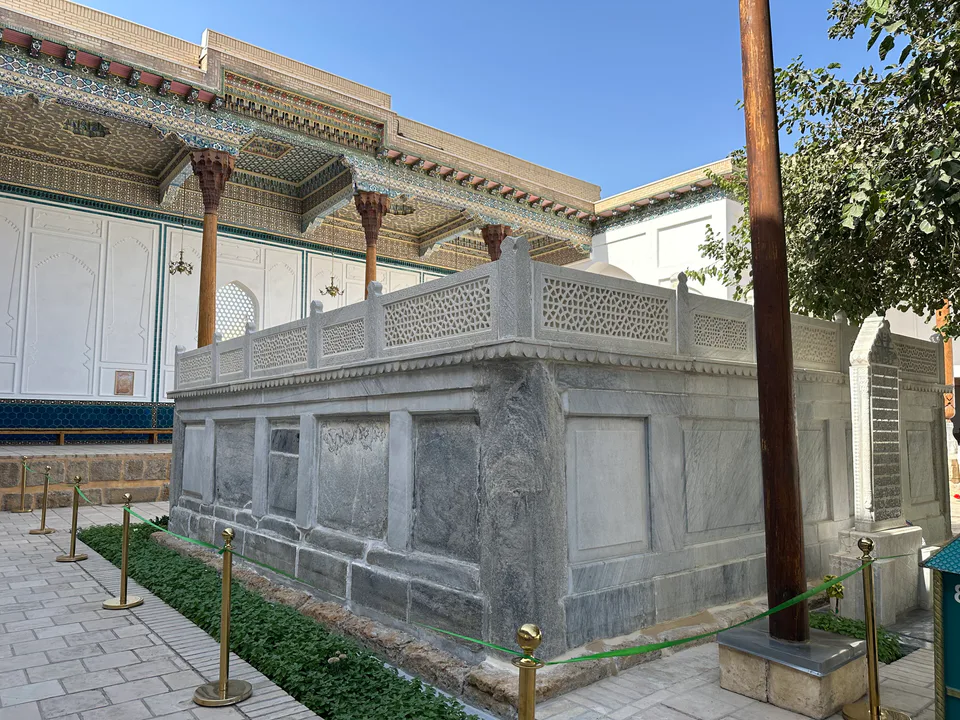
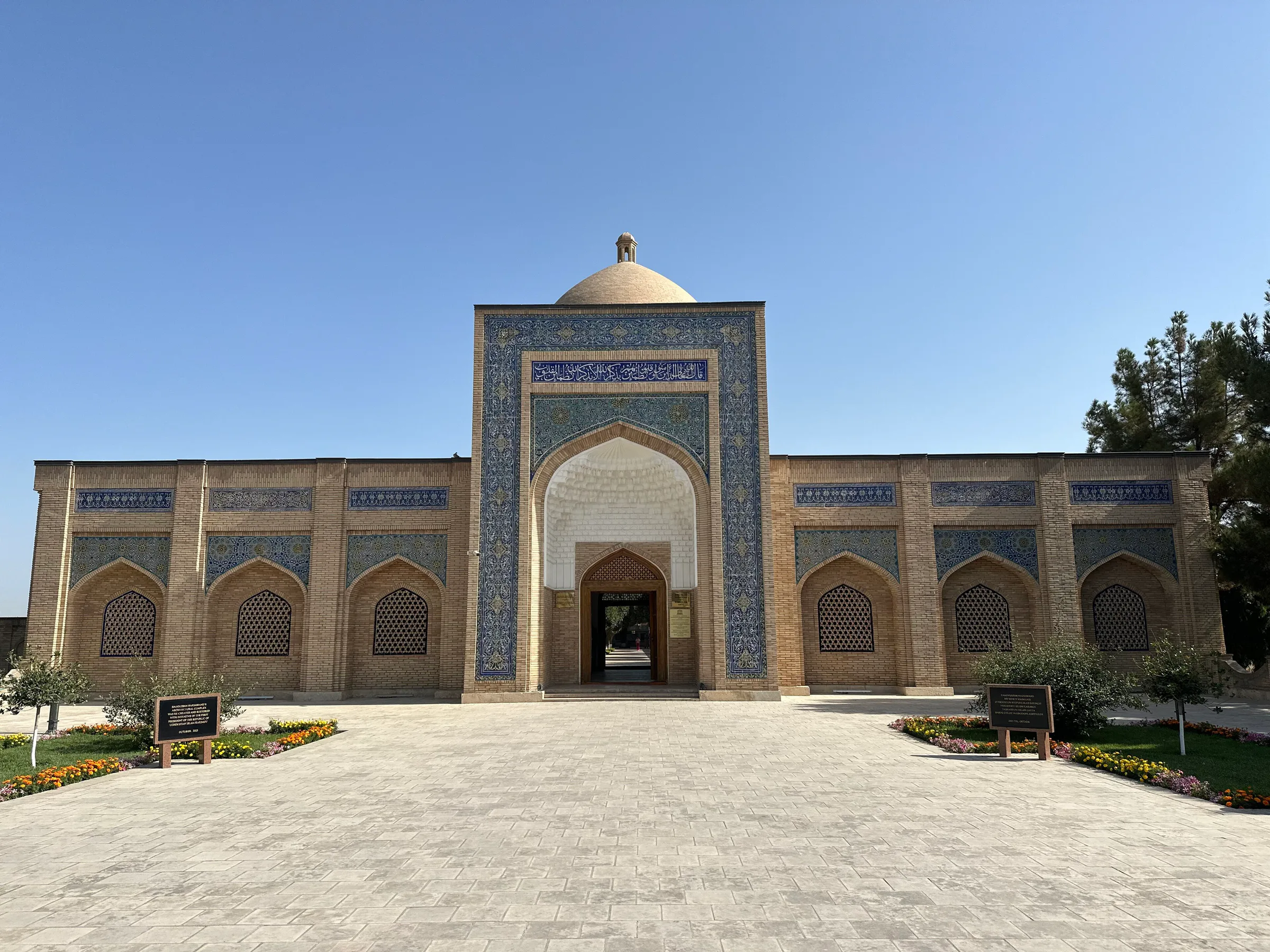
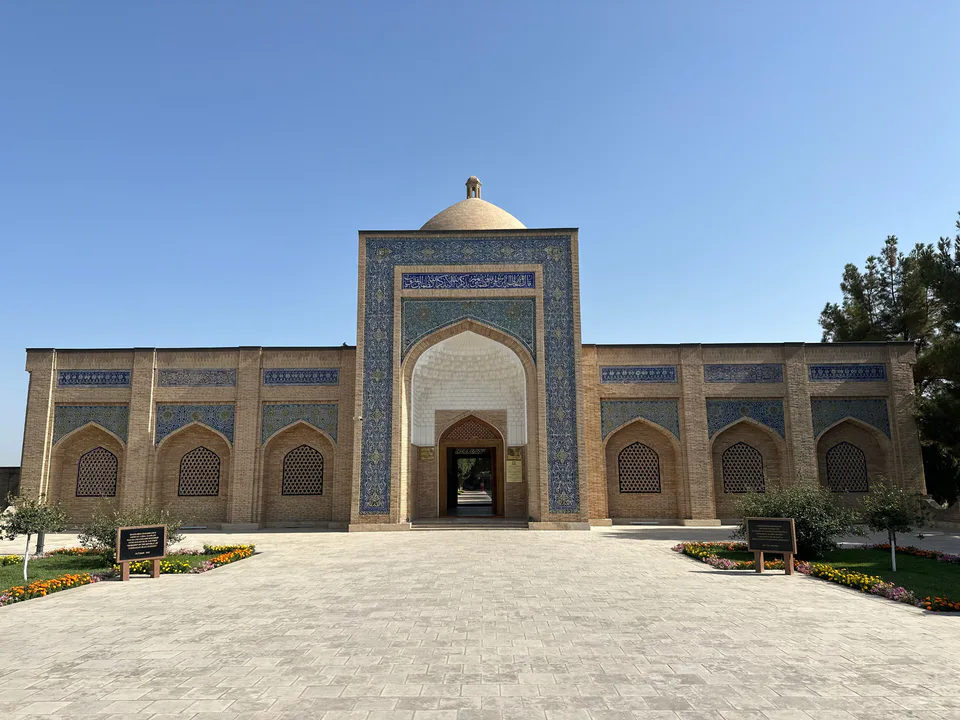
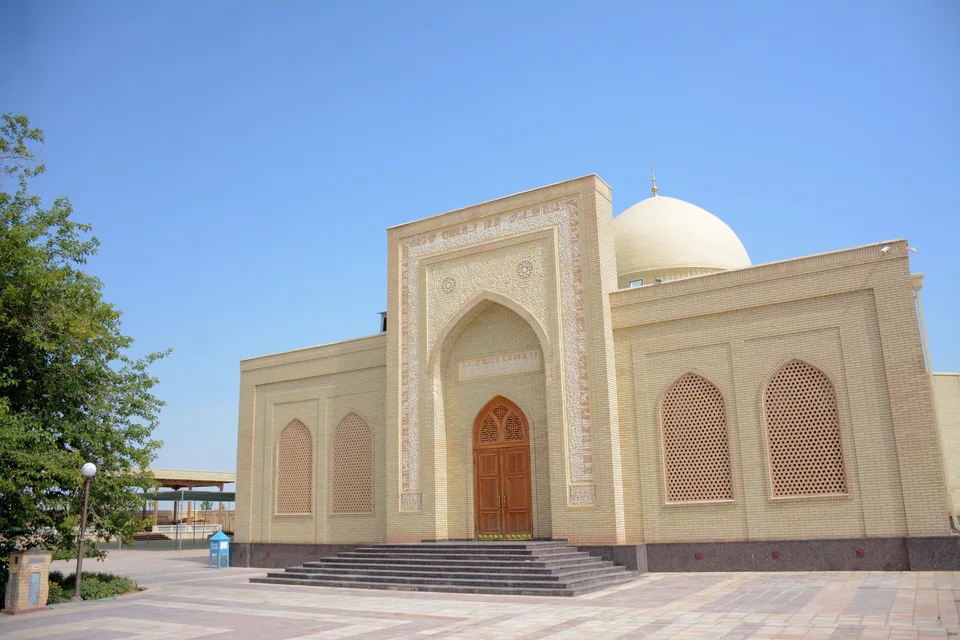
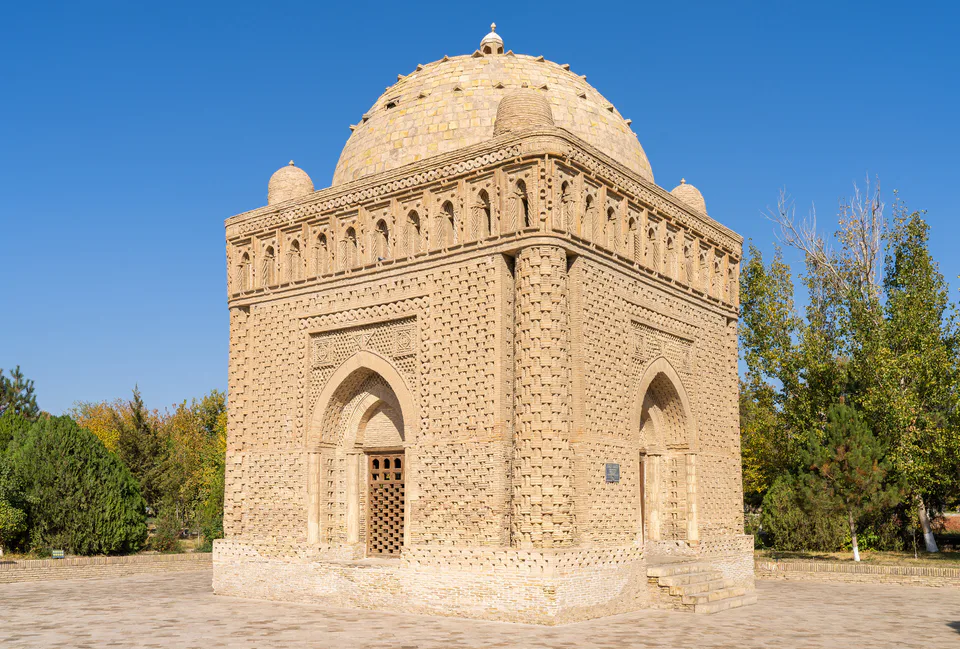
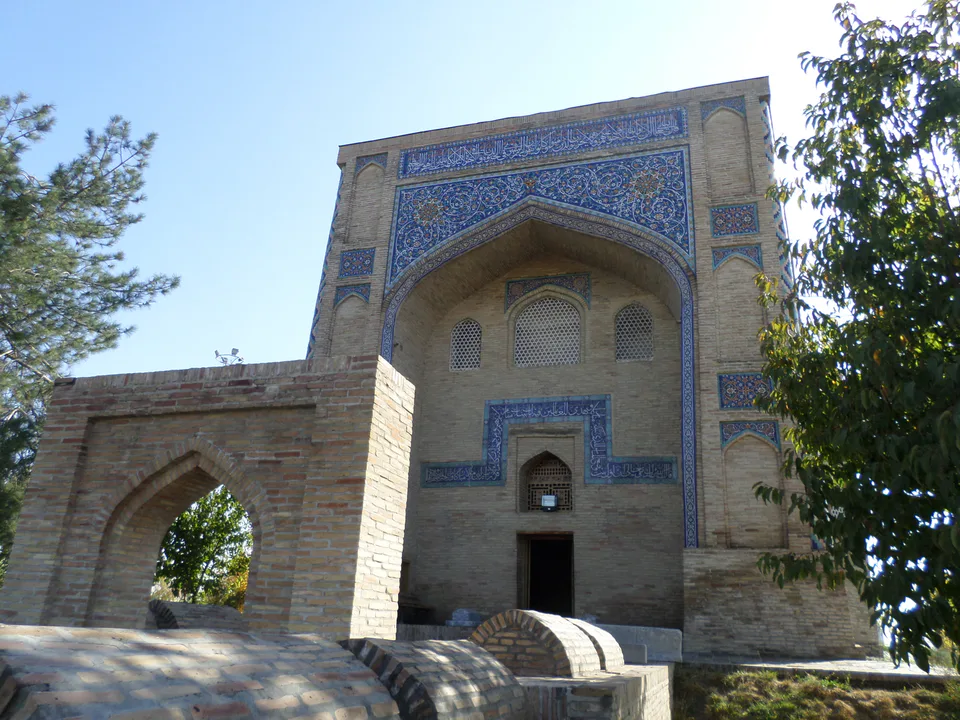
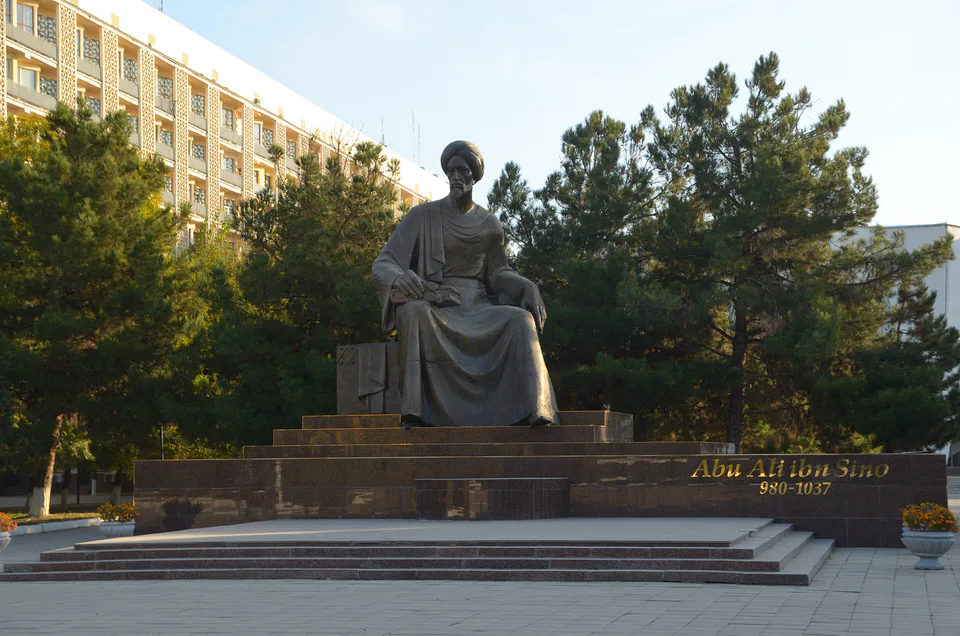
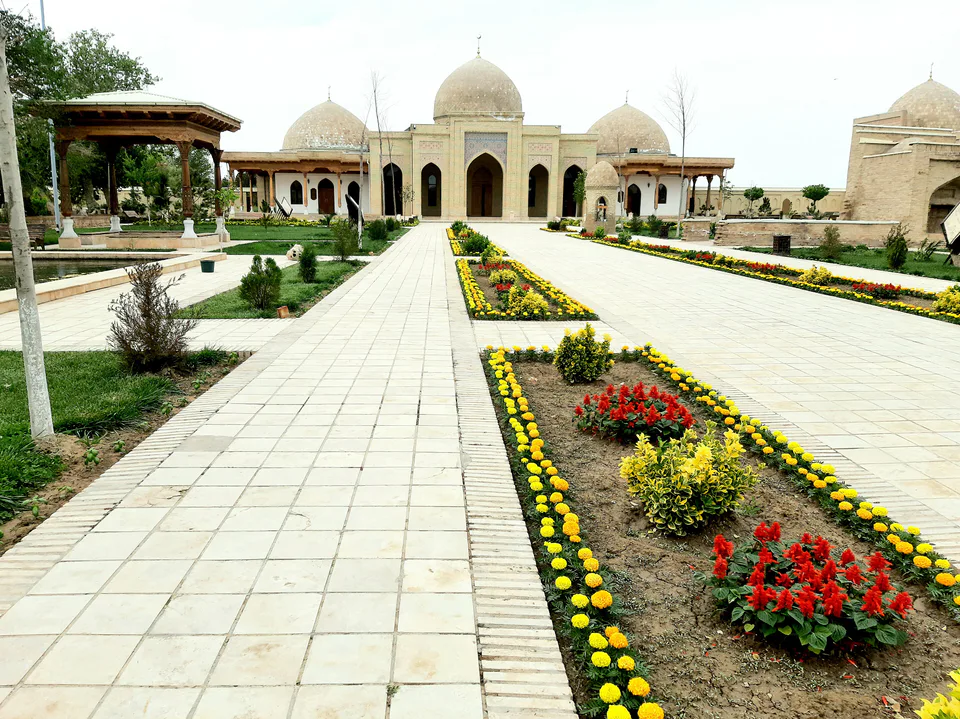
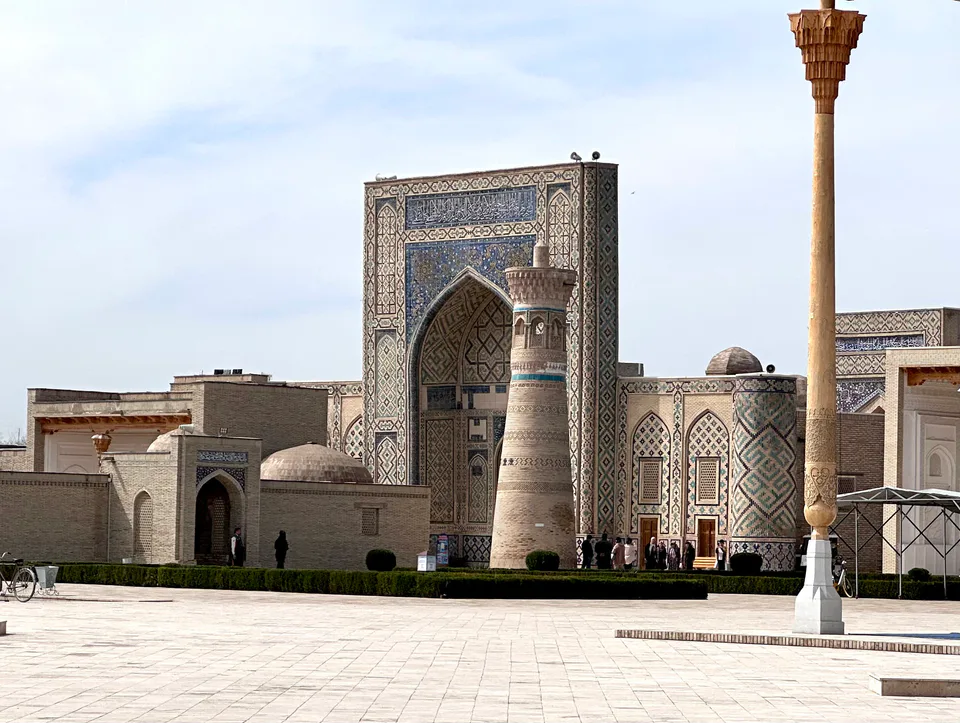
A 14th-century Sufi master who lived near Bukhara and founded the Naqshbandi order, one of the most widespread Sufi brotherhoods in the world. His complex in Kagan district is among Uzbekistan's most visited shrines.
Muhammad Baha al-Din ibn Muhammad al-Bukhari was born in 1318 in the village of Qasr-i Hinduvan near Bukhara, later renamed Qasr-i Arifan, “castle of the knowers”. His family worked in brocade weaving and pattern-making, which is one explanation of the name Naqshband, “the pattern-maker”; another reads it as “the one who engraves” God's name on the heart. As a young man he became a disciple of Sheikh Muhammad Baba Sammasi and then of his successor Sayyid Amir Kulal, while also embracing the spiritual path of Abdul Khaliq Gijduvani. He made the pilgrimage twice, spent most of his life around Bukhara and died in his native village in 1389.
“The heart with God, the hands at work”
Bahauddin carried the Khwajagan path forward and gave it new life. His teaching urges not withdrawal from the world but an honest working life among people with God always in the heart — an idea captured in the saying “Dil ba yor, dast ba kor”. He added three rules to Gijduvani's eight, made silent dhikr the central practice and opposed ostentatious ritual. The Naqshbandi order that bears his name became dominant in Transoxiana under Khoja Ahrar in the 15th century and spread to India, the Ottoman Empire, the Caucasus and as far as Indonesia.
The Bahauddin complex
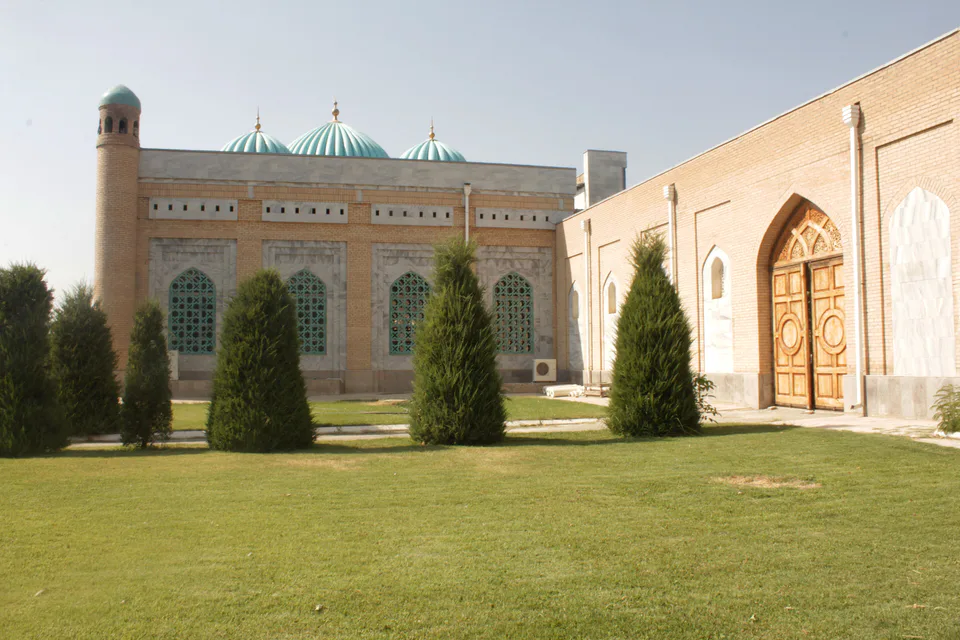
Over the centuries a shrine complex grew around his grave: the khanaqah of Abdulaziz Khan in the 16th century, later mosques, a pool and a cemetery. In 1993, for the 675th lunar anniversary of his birth, the complex was restored. It lies about 12 km north-east of Bukhara in Kagan district. Popular belief holds that repeated pilgrimages here bring great spiritual reward; visitors should dress modestly.
Around 1333 the great Moroccan traveller Ibn Battuta crossed from the Golden Horde into Khwarazm. He described Urgench as one of the largest, finest and busiest cities of the Turks. He then went on to Bukhara, still largely in ruins after the Mongol conquest, and to Samarkand, which he praised as “one of the grandest and finest cities”, while noting its ruined walls. Near Nakhshab (Karshi) he visited the Chagatai khan Tarmashirin, a convert to Islam, before travelling via Termez to Afghanistan and India. His Rihla is a precious source on Mongol-era Central Asia.
In the 14th century Baha al-Din Naqshband (1318–1389), who lived in the village of Qasr-i Hinduvan (later Qasr-i Arifan) near Bukhara, built on the Khwajagan path founded in the 12th century by Abdul Khaliq Gijduvani and gave his name to a new Sufi order. The Naqshbandiyya favoured silent remembrance of God and an upright life of work within society rather than withdrawal from it, an idea summed up in the saying “Dil ba yor, dast ba kor” — “the heart with God, the hands at work”. Under Khoja Ahrar in the 15th century the order became dominant in Transoxiana, later spreading to India, the Ottoman lands and the Caucasus. Bahauddin's memorial complex in Kagan district is one of Uzbekistan's most visited shrines.
A Barlas emir from Kesh, Timur rose through the power struggles of Transoxiana in the 1360s, and in 1370 he defeated his former ally Amir Husayn at Balkh and was proclaimed supreme ruler by a kurultai. Marrying the Chinggisid princess Saray Mulk Khanum, he took the title gurkan, “royal son-in-law”, and made Samarkand his capital. Over the next 35 years he campaigned in Khwarazm, Iran, the Golden Horde, India, Syria and Anatolia, building a vast empire at the cost of many ruined cities and enormous loss of life. At the same time craftsmen from conquered lands were brought to Samarkand, Shakhrisabz and other towns, and the masterpieces of Timurid architecture took shape.
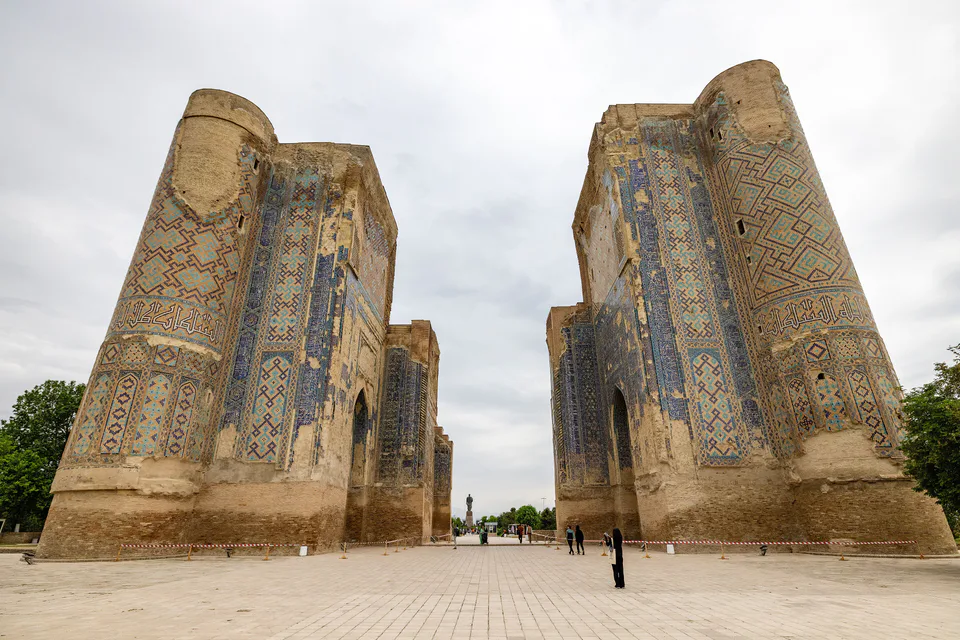
In 1380 Timur began building a vast summer palace, the Ak-Saray or “White Palace”, in his home town of Kesh, today's Shakhrisabz. Work went on for more than two decades: the Castilian envoy Clavijo, who came here in 1404, found it still unfinished and marvelled at halls adorned with gold and blue. The palace was later destroyed, and only the two colossal piers of its entrance arch survive, their height hinting at the scale of the lost portal. With the Kok Gumbaz mosque and the Dorus-Saodat and Dorut-Tilovat complexes, Ak-Saray forms the Historic Centre of Shakhrisyabz, a UNESCO World Heritage Site since 2000.