We are launching: regions, photos and timetables are being added every day.
The Timurid era

History · 05 / 09

The Timurid era

The age of Timur and his descendants — a vast empire, the architectural masterpieces of Samarkand and Shakhrisabz, Ulugh Beg's observatory, Navoi's poetry and Babur's prose: the “Timurid Renaissance”.

1370–15077 events35 sites2 min read
Photo: Bgag · CC0 · Wikimedia Commons

Timur's empire

Having become ruler of Transoxiana in 1370, Timur (1336–1405) spent the next 35 years campaigning in Khwarazm, Iran, the Golden Horde, India, Syria and Anatolia, building an empire that stretched from Central Asia to Asia Minor. His campaigns brought the destruction of many cities and enormous loss of life, and historians judge him in very different ways. At the same time he lavished attention on his capital, Samarkand: architects, painters and craftsmen were brought from conquered lands, and gardens such as Bagh-i Dilkusha and Bagh-i Chinar were laid out around the city.

Architecture: the age of blue domes

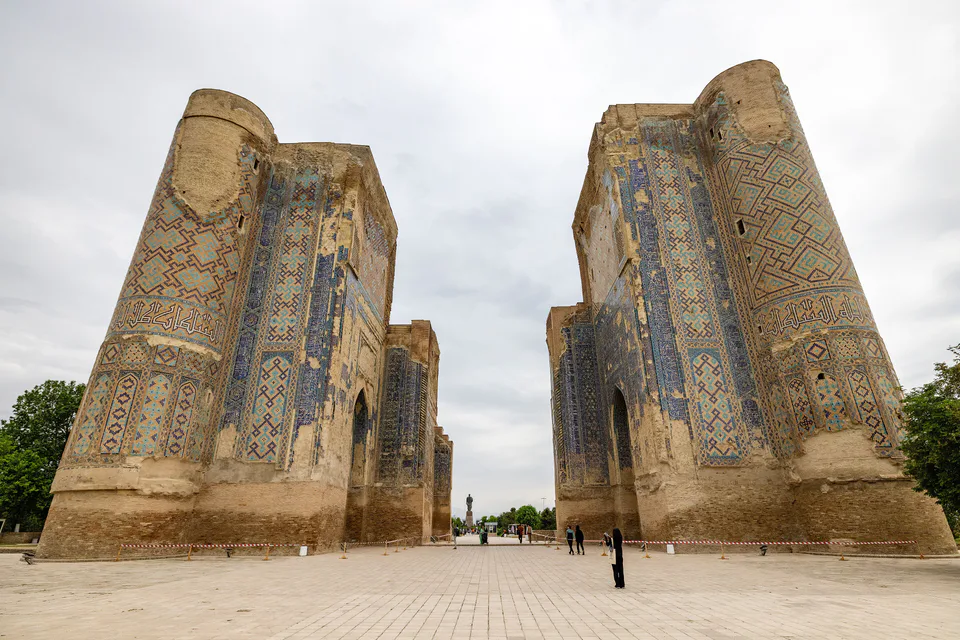
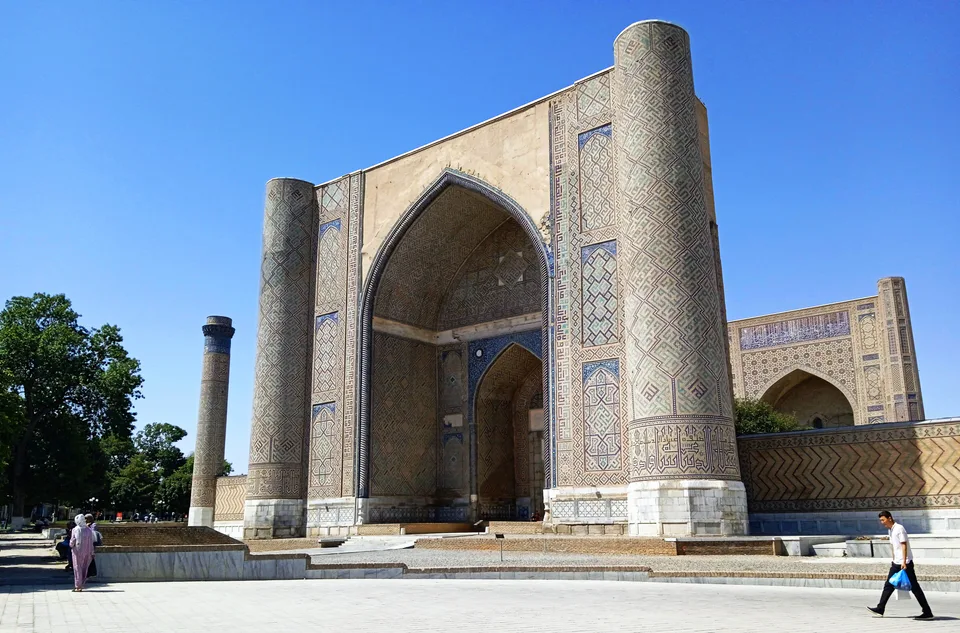
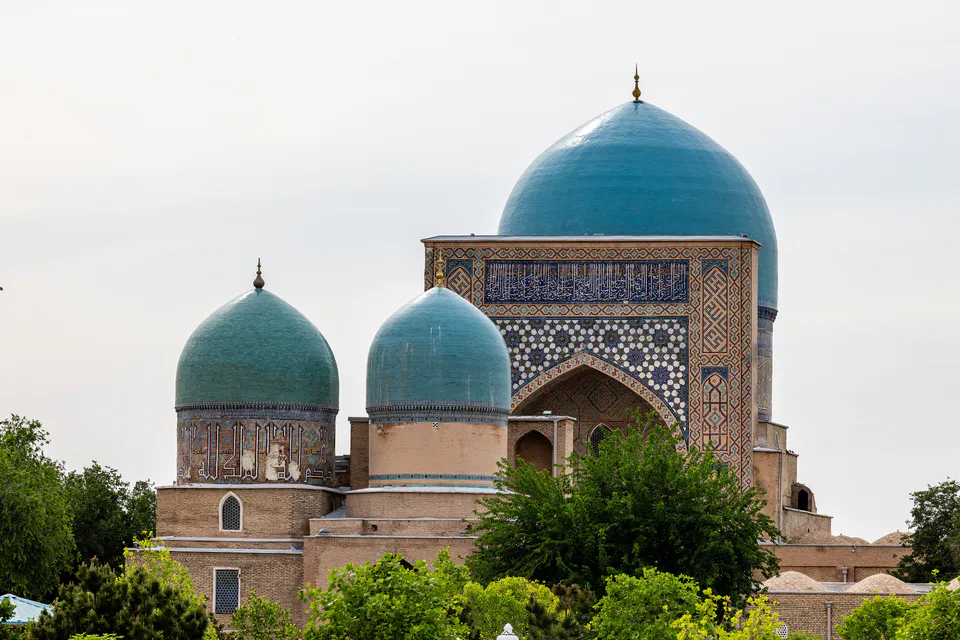
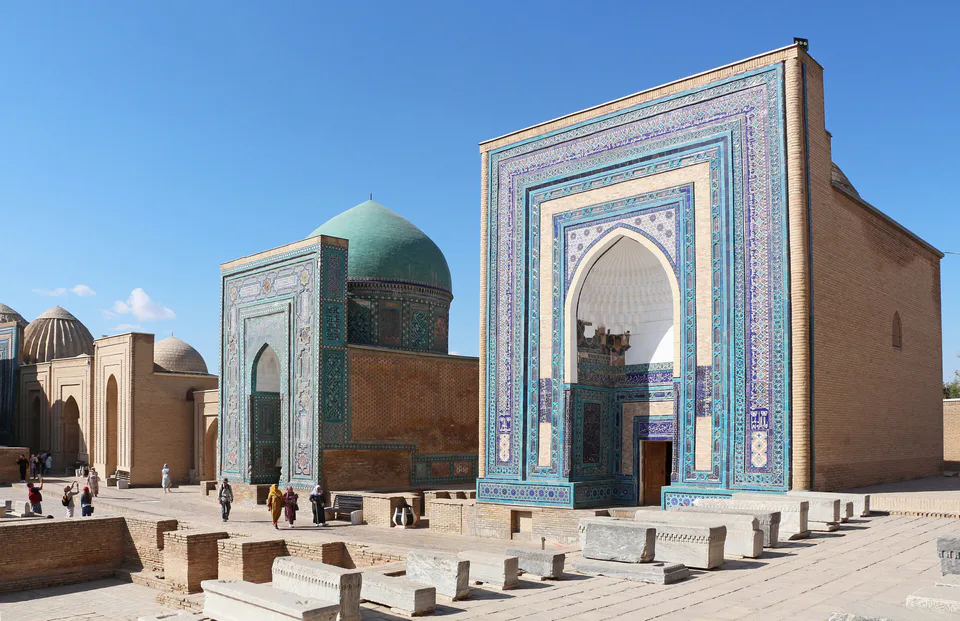
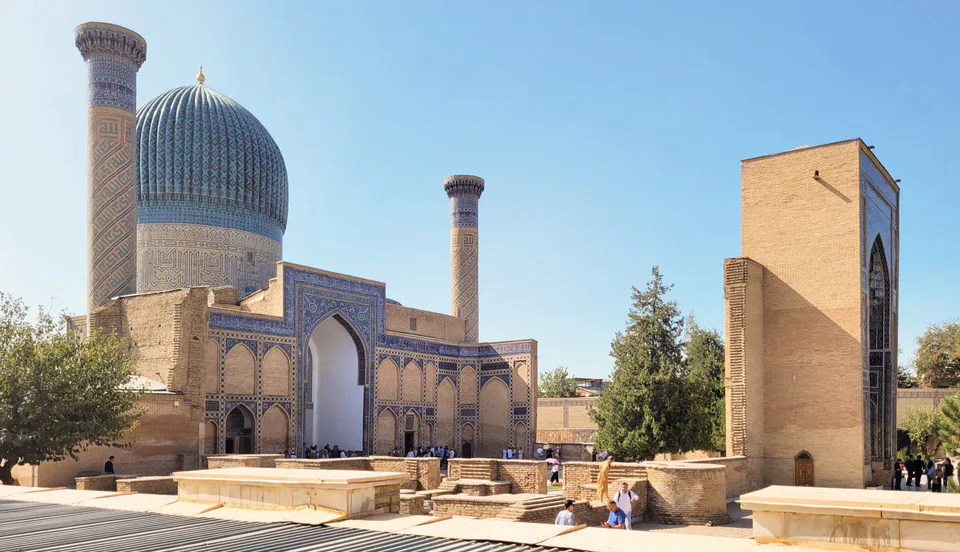
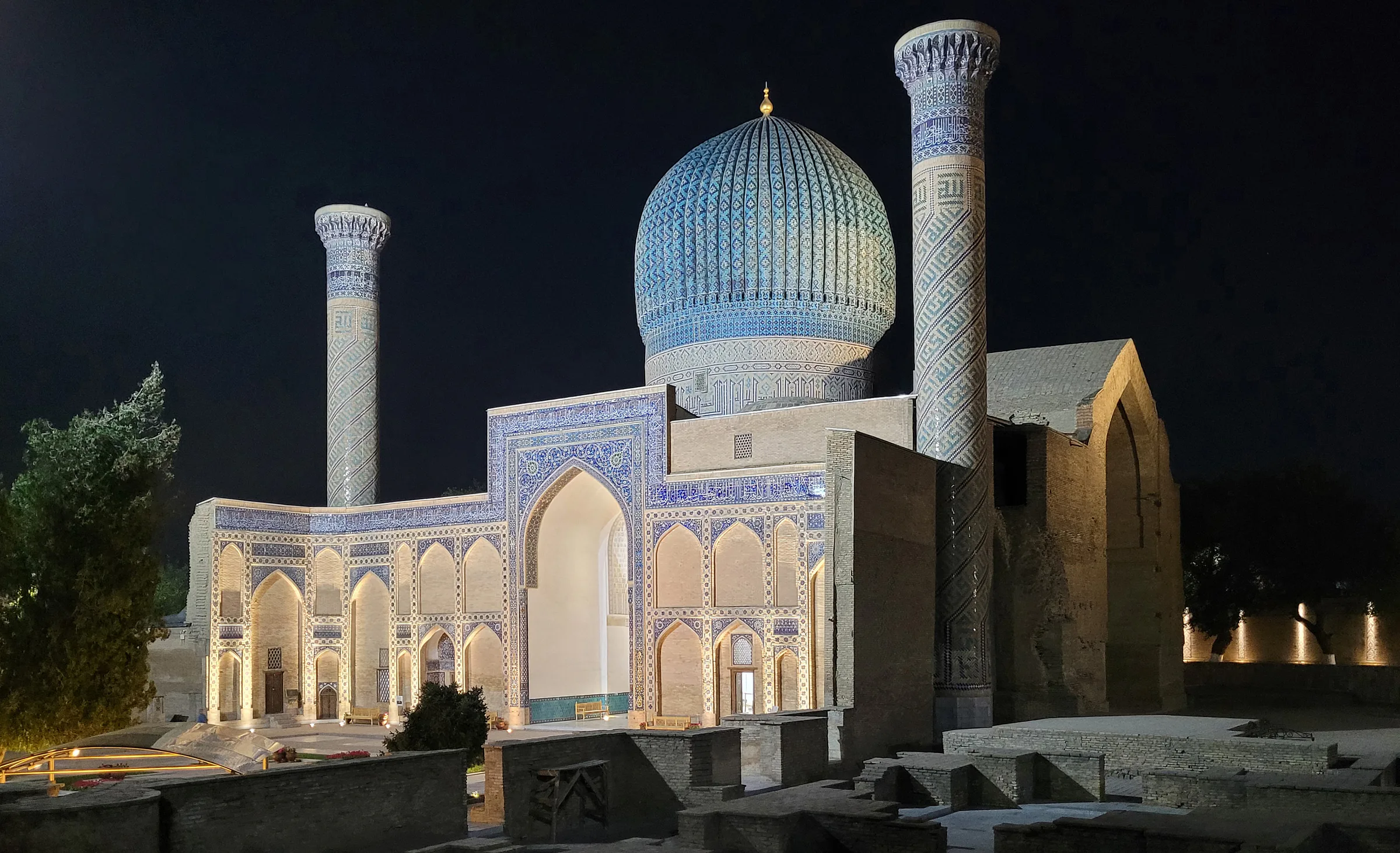
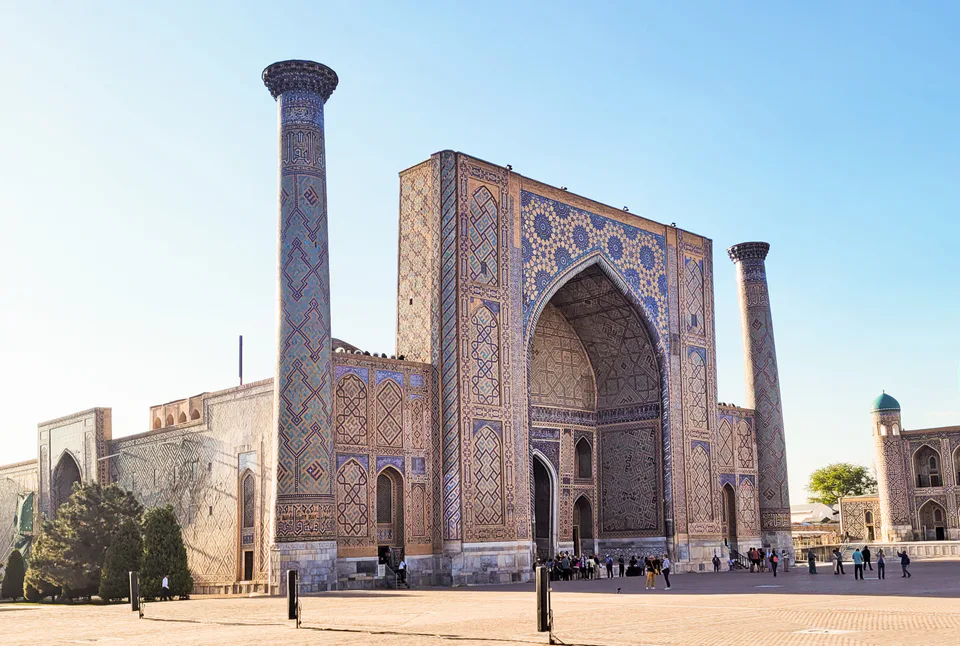
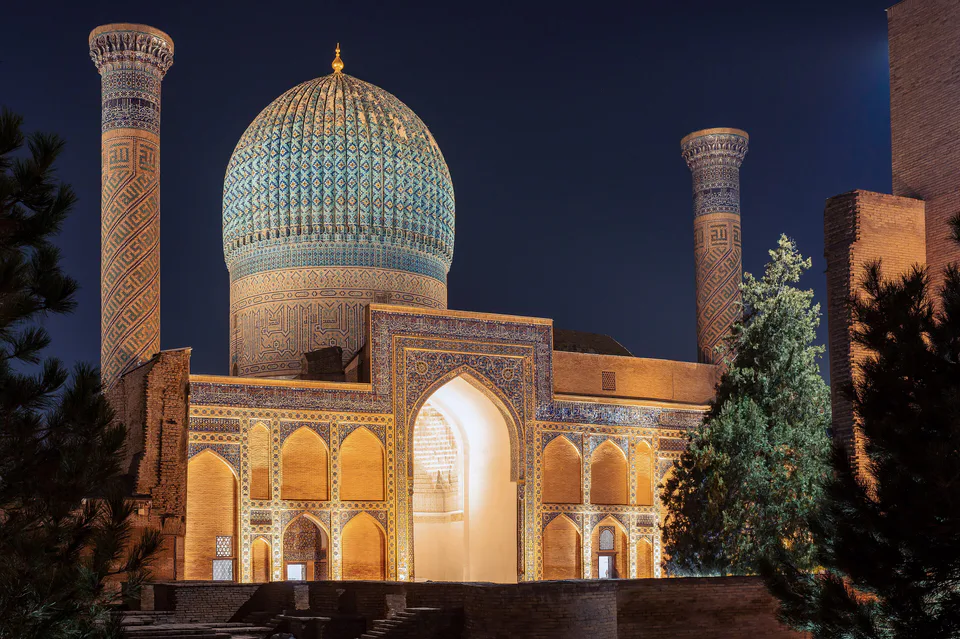
Timurid architecture is famed for colossal portals, double-shelled ribbed domes, glazed tilework and mosaic. Samarkand gained the Bibi-Khanym Mosque (1399–1404), the Gur-e Amir mausoleum and the Shah-i Zinda ensemble; Shakhrisabz the Ak-Saray palace (1380–1404) and the Dorus-Saodat complex. Timur also commissioned the mausoleum of Khoja Ahmad Yasawi in Turkestan. The style went on to shape architecture in Iran and India, including the buildings of the Mughals.

Shah Rukh and Ulugh Beg: a centre of science

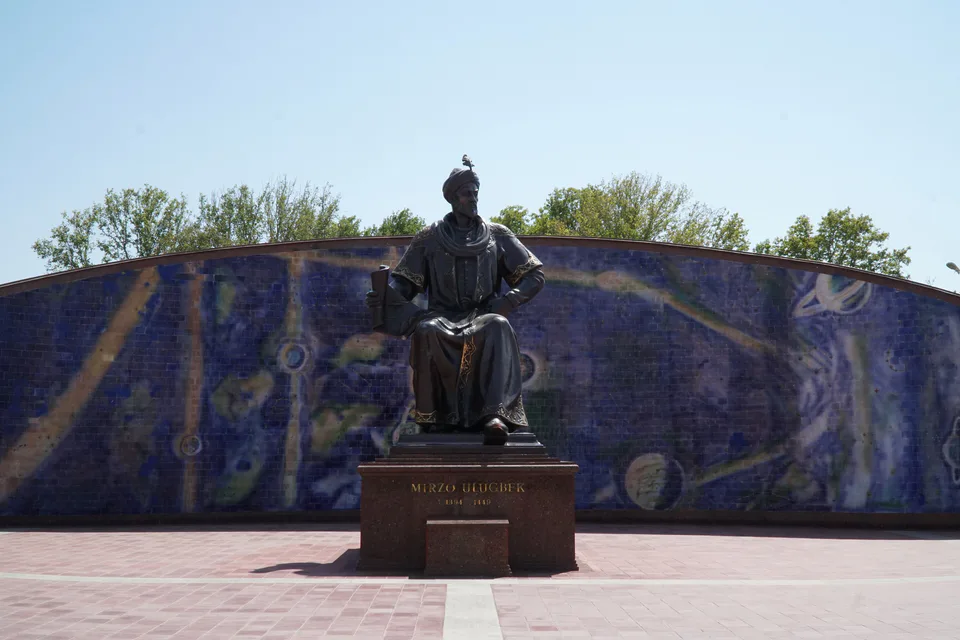
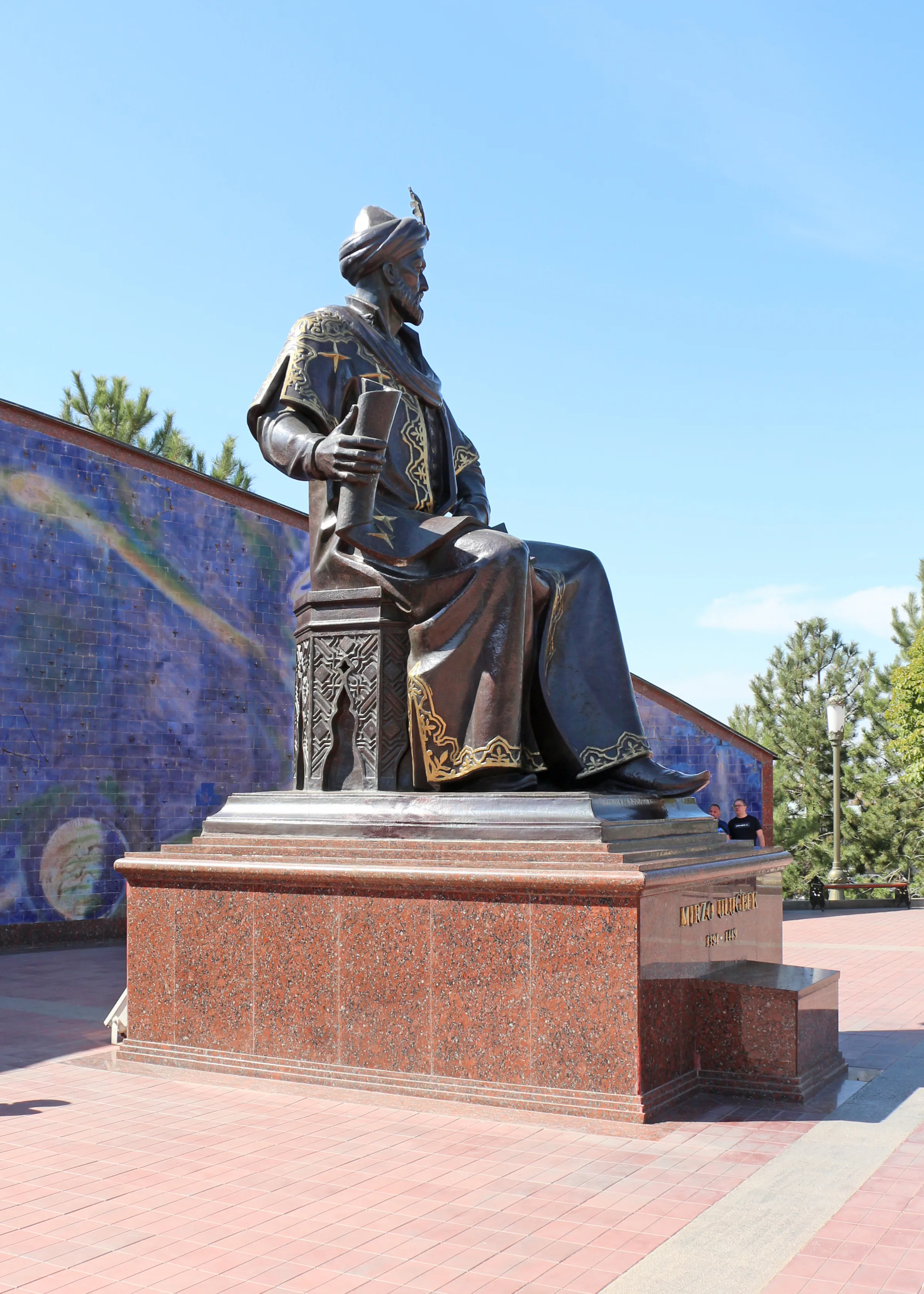
After Timur's death his son Shah Rukh (1409–1447) moved the capital to Herat, while his grandson Mirzo Ulugh Beg governed Samarkand for almost forty years. Ulugh Beg built madrasas in Bukhara (1417), Samarkand (1417–1420) and Gijduvan (1433), and in 1424–1428 an observatory, where with Jamshid al-Kashi, Qadi Zada al-Rumi and Ali Qushji he compiled his famous Zij, giving the positions of 1,018 stars. In 1449 Ulugh Beg was murdered on the orders of his son Abd al-Latif, and the observatory was destroyed.

Herat and a literary flowering

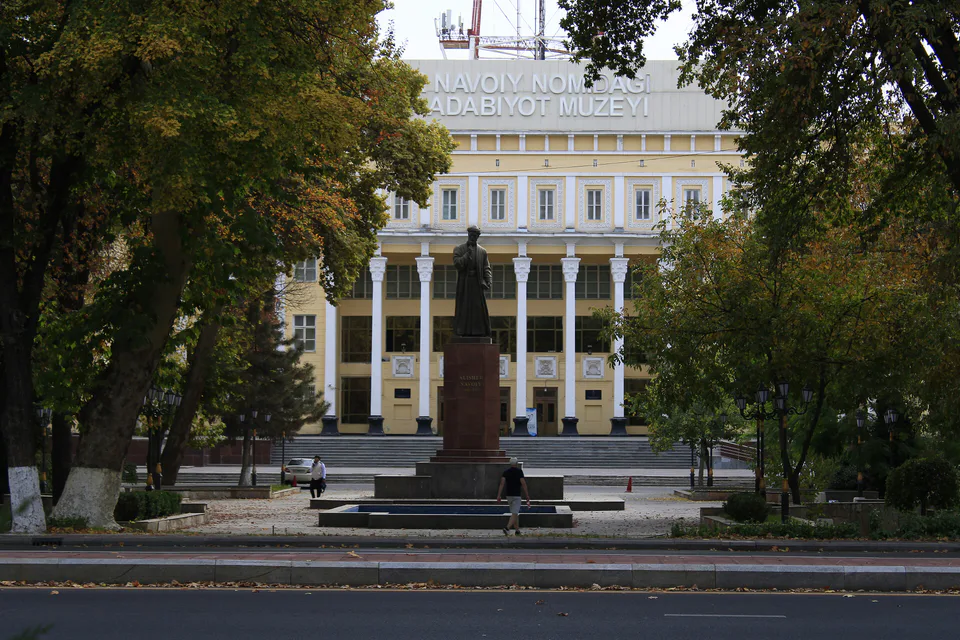
In the later 15th century the centre of Timurid culture shifted to Herat under Sultan Husayn Bayqara. There Alisher Navoi wrote his Khamsa and other works in Chagatai Turkic, proving the power of the language as a literary medium; Abd al-Rahman Jami reached the heights of Persian poetry, and Kamoliddin Behzod those of miniature painting. The Timurid prince Zahir ud-Din Muhammad Babur would later write his memoirs, the Baburnama.

The end of the Timurids

Feuds among Timurid princes weakened the state. In 1500 Muhammad Shaybani Khan, leader of the Uzbeks of the Dasht-i Kipchak, took Samarkand, and in 1507 Herat. Babur withdrew to Kabul and then India, where in 1526 he founded the Mughal Empire. The Timurid legacy lives on in the monuments of Samarkand, Shakhrisabz, Bukhara and Gijduvan, and in the State Museum of Timurid History in Tashkent.
Sources (5)
  1. en.wikipedia.org
  2. en.wikipedia.org
  3. en.wikipedia.org
  4. ru.wikipedia.org
  5. whc.unesco.org

The Timurid era

Key events

Full timeline
  1. Gur-e-Amir
    Gur-e-Amir

    1370

    Timur comes to power

    A Barlas emir from Kesh, Timur rose through the power struggles of Transoxiana in the 1360s, and in 1370 he defeated his former ally Amir Husayn at Balkh and was proclaimed supreme ruler by a kurultai. Marrying the Chinggisid princess Saray Mulk Khanum, he took the title gurkan, “royal son-in-law”, and made Samarkand his capital. Over the next 35 years he campaigned in Khwarazm, Iran, the Golden Horde, India, Syria and Anatolia, building a vast empire at the cost of many ruined cities and enormous loss of life. At the same time craftsmen from conquered lands were brought to Samarkand, Shakhrisabz and other towns, and the masterpieces of Timurid architecture took shape.

    SamarkandKashkadaryaGur-e-Amir

  2. Ak-Saray Palace
    Ak-Saray Palace

    1380–1404

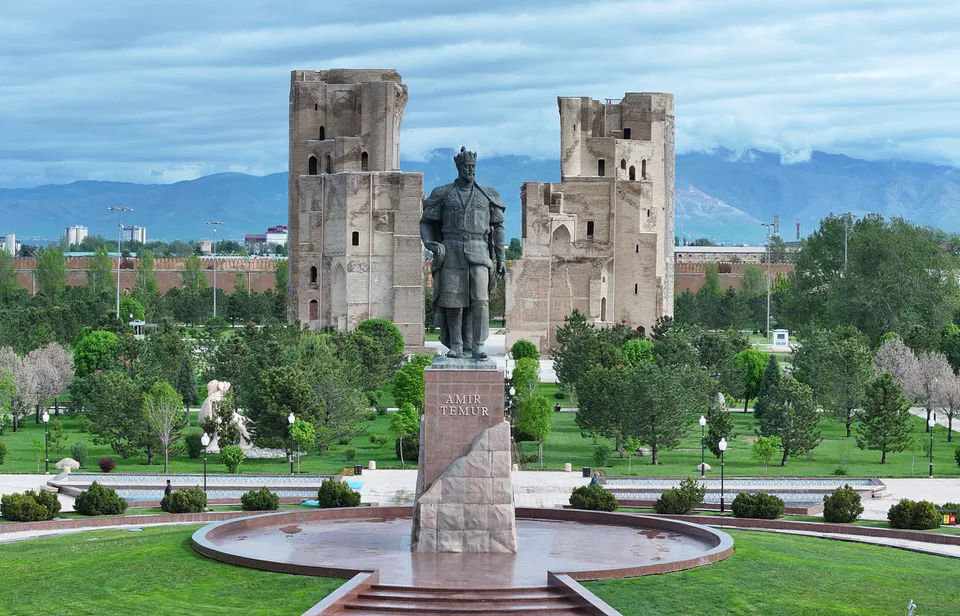
    Building the Ak-Saray in Shakhrisabz

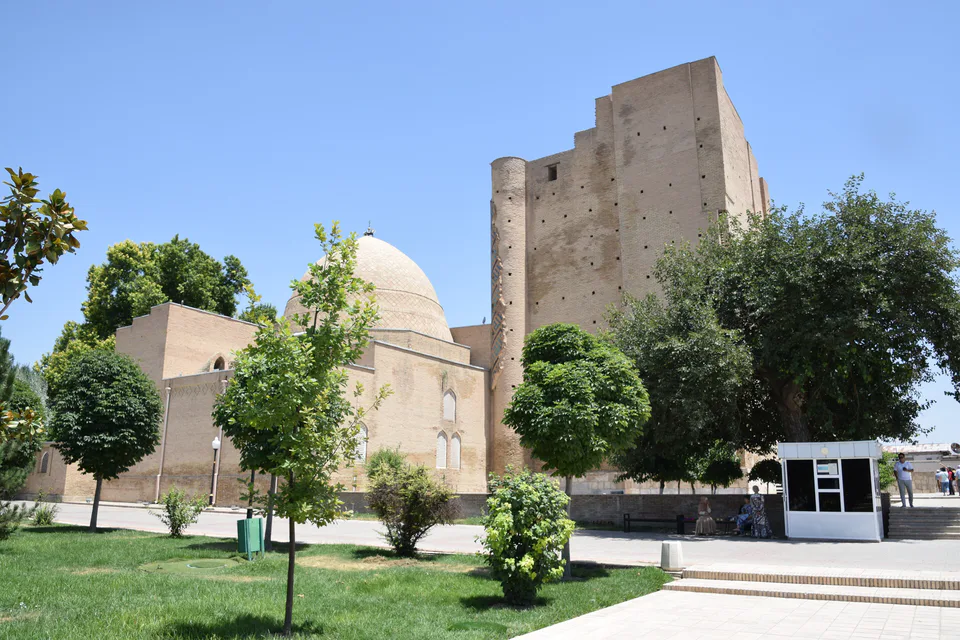
    In 1380 Timur began building a vast summer palace, the Ak-Saray or “White Palace”, in his home town of Kesh, today's Shakhrisabz. Work went on for more than two decades: the Castilian envoy Clavijo, who came here in 1404, found it still unfinished and marvelled at halls adorned with gold and blue. The palace was later destroyed, and only the two colossal piers of its entrance arch survive, their height hinting at the scale of the lost portal. With the Kok Gumbaz mosque and the Dorus-Saodat and Dorut-Tilovat complexes, Ak-Saray forms the Historic Centre of Shakhrisyabz, a UNESCO World Heritage Site since 2000.

    KashkadaryaAk-Saray Palace

  3. Bibi-Khanym Mosque
    Bibi-Khanym Mosque

    August–November 1404

    Clavijo's embassy to Timur

    In 1404 Ruy González de Clavijo, envoy of King Henry III of Castile, travelled to the court of Timur. The embassy crossed the Amu Darya at Termez, passed through the Iron Gate gorge in the Baysun mountains and Kesh (Shakhrisabz), and reached Samarkand in September. Clavijo's journal describes receptions and feasts in the gardens around the city, its bazaars, the unfinished Ak-Saray and the Bibi-Khanym Mosque under construction. The envoys left in November; in February 1405 Timur died at Otrar. Clavijo's book remains one of the most vivid European accounts of Timurid Transoxiana.

    SamarkandKashkadaryaSurkhandaryaBibi-Khanym MosqueAk-Saray Palace

  4. Ulugh Beg Madrasa
    Ulugh Beg Madrasa

    1417–1433

    Ulugh Beg's madrasas

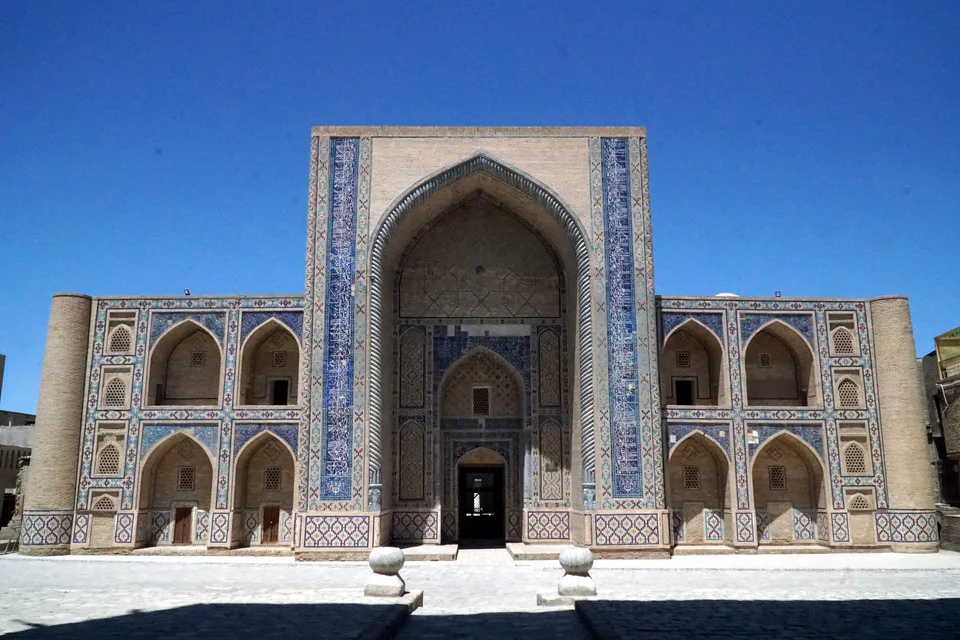
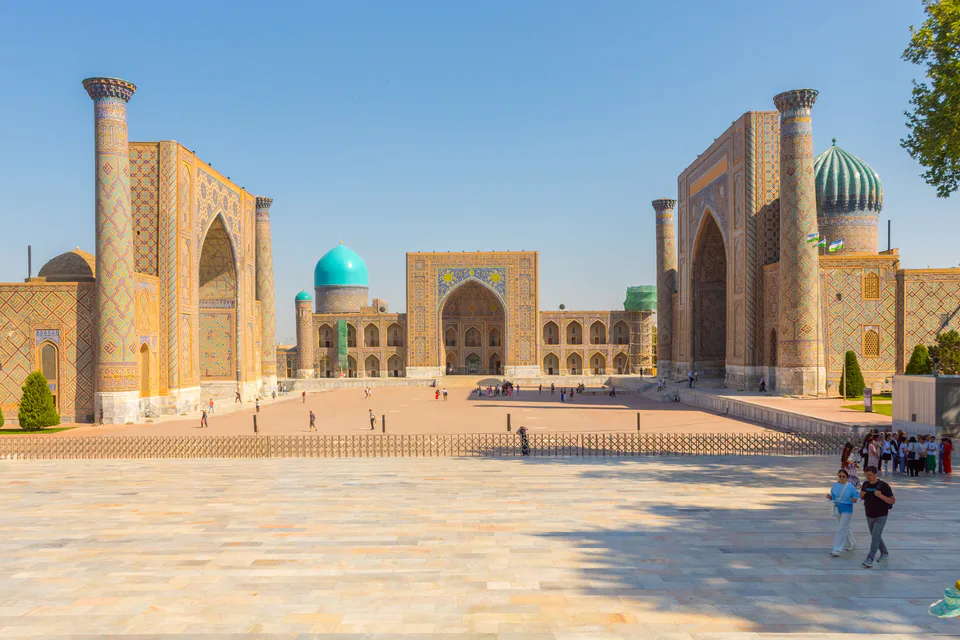
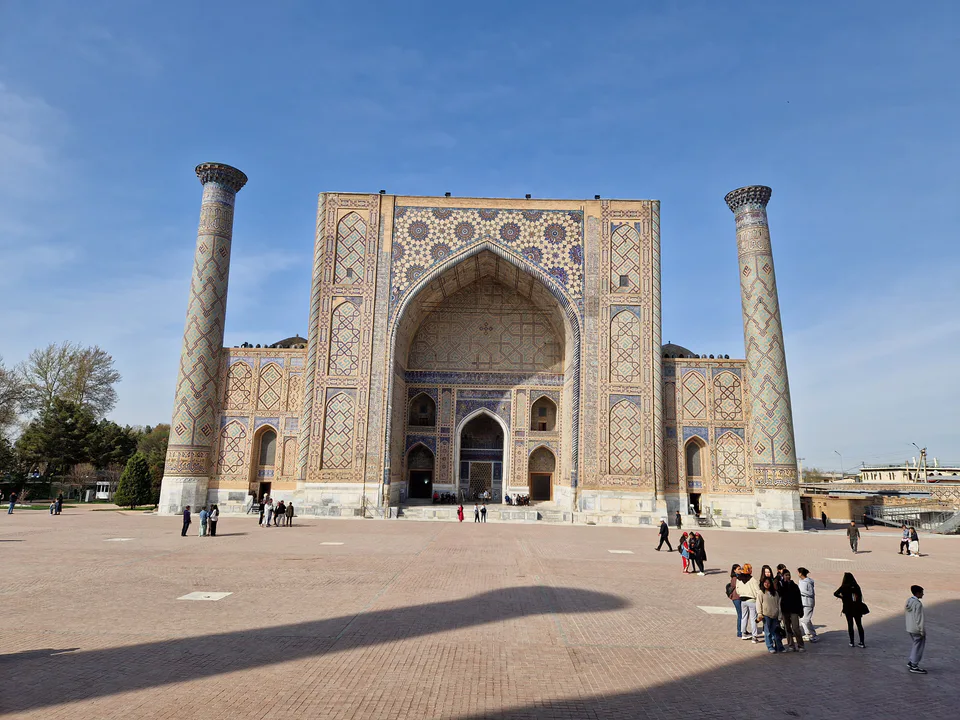
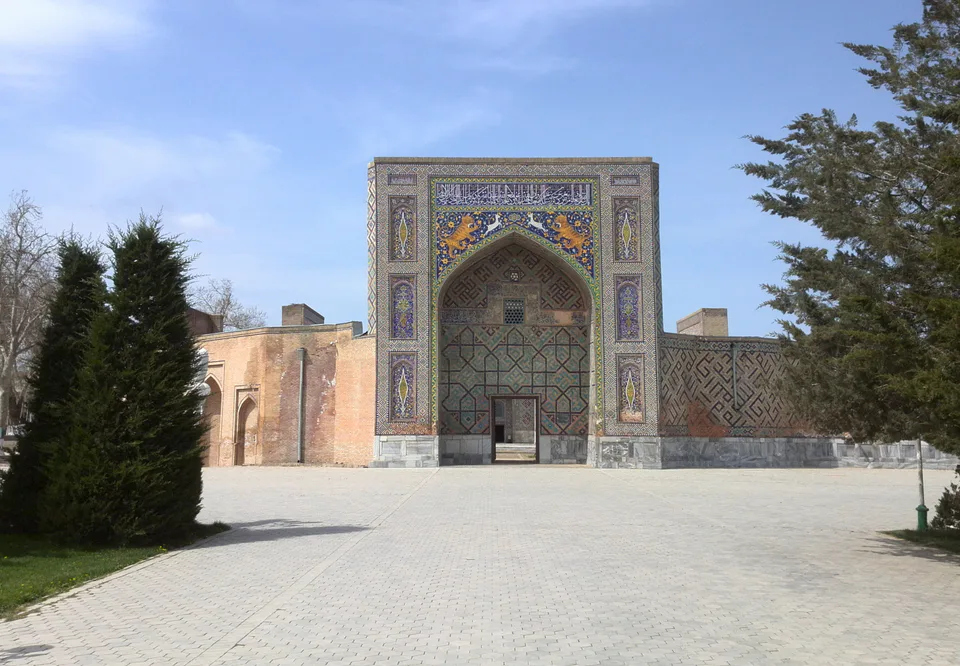
    Mirzo Ulugh Beg, ruler of Samarkand, made learning a priority and founded three madrasas. The Bukhara madrasa of 1417 is among the oldest surviving in Central Asia; its door bears the hadith “The pursuit of knowledge is the duty of every Muslim man and woman.” The madrasa on Samarkand's Registan, built in 1417–1420, became a leading university of its age, teaching mathematics and astronomy alongside theology, and sources say Ulugh Beg lectured there himself. A third followed in Gijduvan in 1433. All three still stand and can be visited.

    BukharaSamarkandUlugh Beg MadrasaUlugh Beg Madrasa

  5. Ulugh Beg Observatory
    Ulugh Beg Observatory

    1424–1428

    Ulugh Beg's observatory

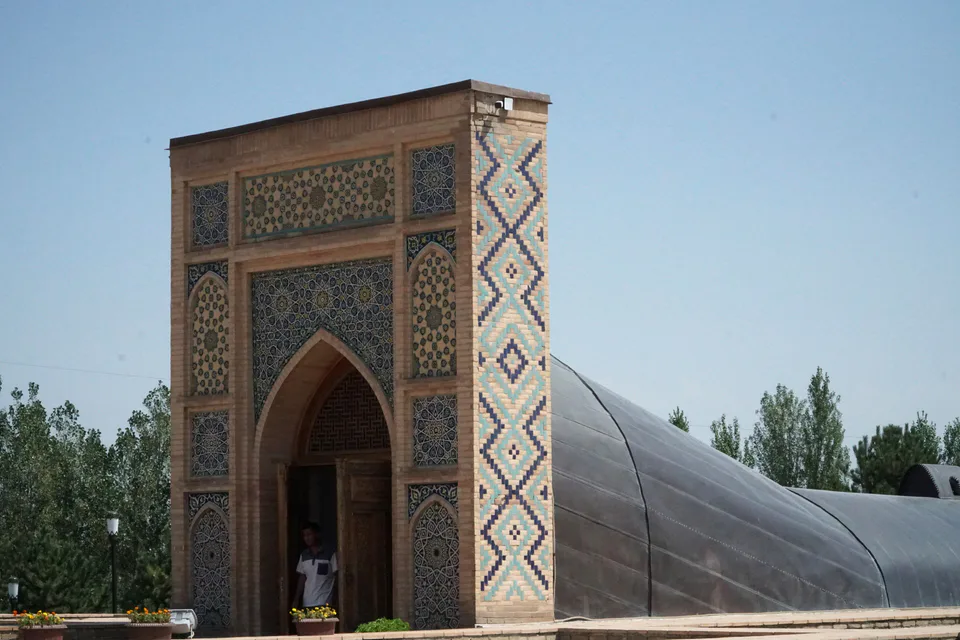
    In 1424–1428 Mirzo Ulugh Beg built an observatory on the Kuhak (Chupan-Ata) hill outside Samarkand. Inside a three-storey cylindrical building about 46 metres across stood a giant sextant with a radius of over 40 metres, the largest astronomical instrument of its day. Jamshid al-Kashi, Qadi Zada al-Rumi, Ali Qushji and Ulugh Beg himself observed here, producing the Zij-i Gurgani, tables giving the positions of 1,018 stars. After Ulugh Beg's murder in 1449 the observatory was destroyed. In 1908 the archaeologist Vasily Vyatkin unearthed the underground section of the sextant, now covered by a museum.

    SamarkandUlugh Beg Observatory

  6. Tamerlane's Gate (Jizzakh Pass)
    Tamerlane's Gate (Jizzakh Pass)

    1425 and 1571–1572 (inscriptions)

    The inscriptions of Tamerlane's Gate

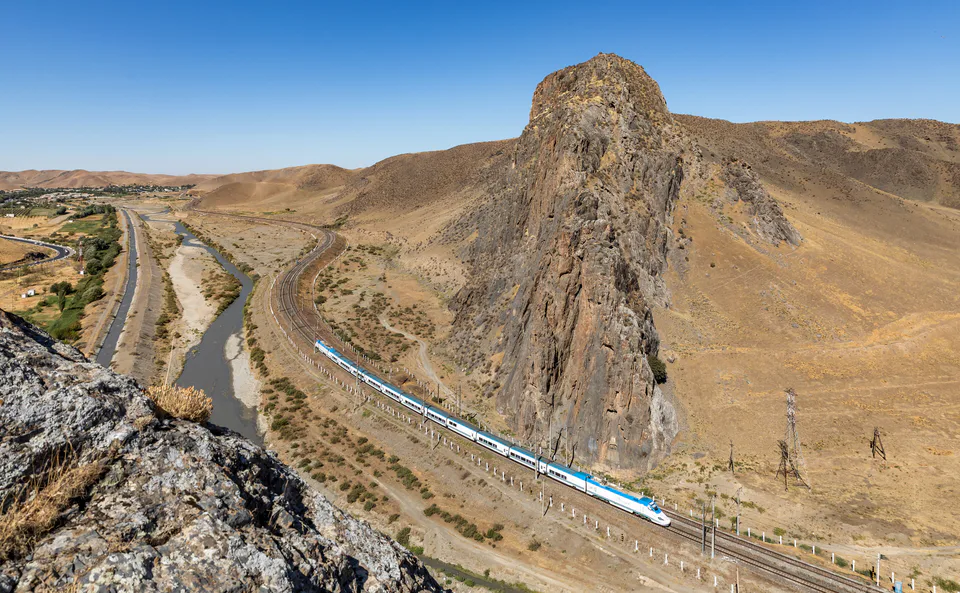
    Near Jizzakh the Sanzar river cuts a narrow gorge between the Malguzar and Nuratau ranges, long the route from the Samarkand oasis to the steppe. Nineteenth-century travellers called it the Gate of Tamerlane; locally it is Ilan-Uti. One Persian inscription carved into the rock records Mirzo Ulugh Beg's safe return from a campaign to the “land of the Moghuls” in 1425. Another, of 1571–1572, claims that Abdullah Khan's army routed “400,000” men from Turkestan, Tashkent and Fergana — a figure best taken as the author's boast. Today the Tashkent–Samarkand highway and railway run through the gorge.

    JizzakhTamerlane's Gate (Jizzakh Pass)

  7. June 1494

    Eleven-year-old Babur takes the throne in Andijan

    In June 1494 Umar Shaikh Mirza, ruler of Fergana, was killed at the fortress of Akhsi when a dovecote on the edge of a ravine collapsed beneath him. His son Zahir ud-Din Muhammad Babur, born in Andijan in 1483, became ruler in Andijan at the age of eleven — the opening scene of the Baburnama. Years of struggle for Samarkand followed: Babur twice took the city briefly but lost out to Muhammad Shaybani Khan and left for Kabul in 1504. In 1526 his victory at Panipat founded the Mughal Empire in India. Andijan's Babur National Park holds the “Babur and World Culture” museum and a symbolic mausoleum of the poet.

    AndijanFerganaNamangan

Photos

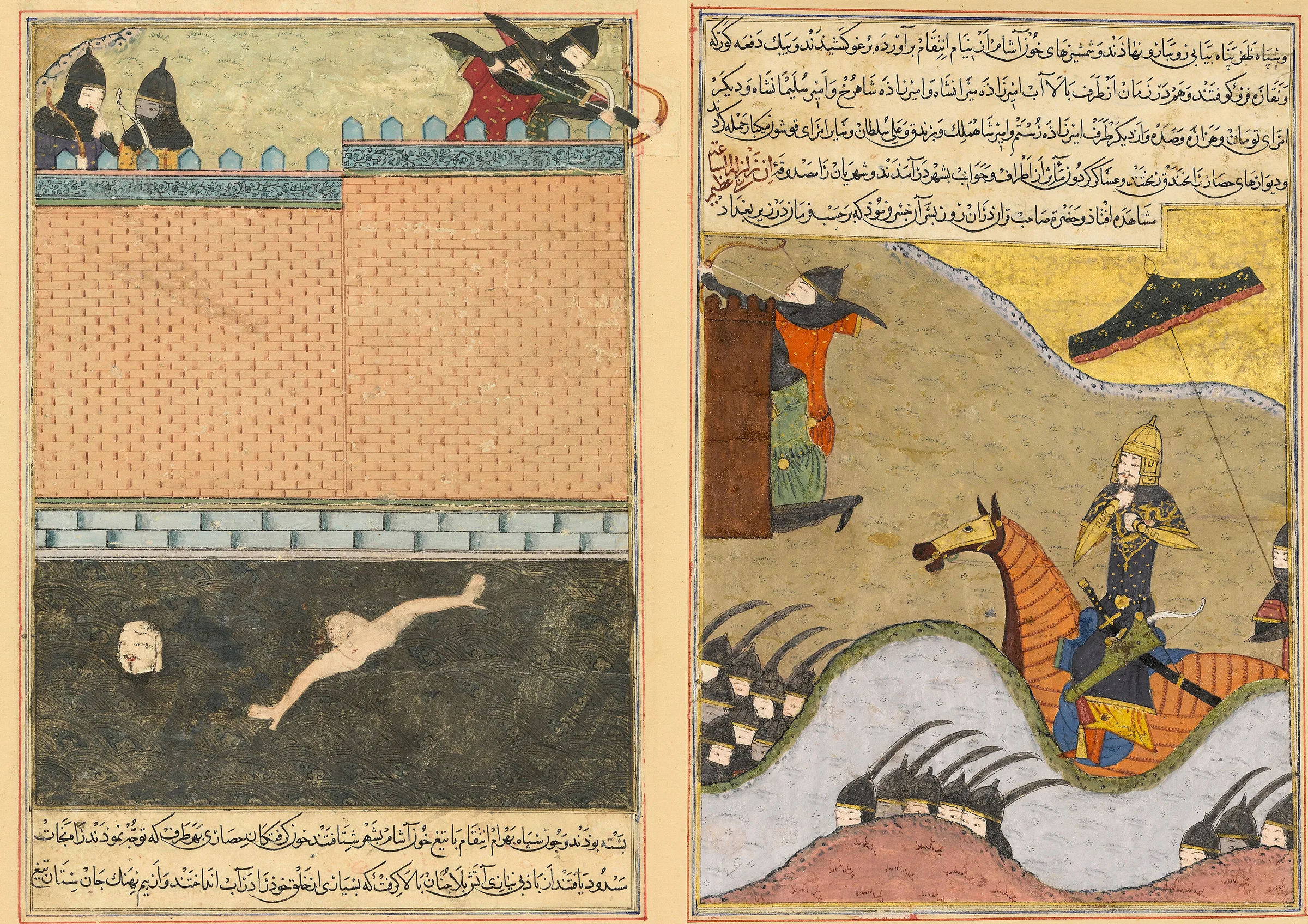
Timur takes Baghdad in August 1401. Zafarnama of 1436. Facing folios 346v (left) 345r (right) Reference: Sims, E. G. (1991): Ibrahim-Sultan's Illustrated Zafar-nameh of 839/1436. Islamic Art 4, pp. 17
Photo: 1436 artist · Public domain · Wikimedia Commons
Gur-e Amir, Samarkand, Uzbekistan
Photo: Bgag · CC0 · Wikimedia Commons
Statue of Ulugh Beg, Samarkand, Uzbekistan
Photo: Bgag · CC0 · Wikimedia Commons