We are launching: regions, photos and timetables are being added every day.
Independence

History · 09 / 09

Independence

Since 1991 Uzbekistan has been an independent state: a constitution and national symbols, the revival of historic heritage, reforms after 2016 and an opening to international tourism.

1991 – present10 events45 sites2 min read
Photo: SjRodier · CC BY-SA 4.0 · Wikimedia Commons

Building a state

Independence was proclaimed on 31 August 1991 and endorsed by referendum on 29 December, when Islam Karimov was elected president. In 1992 Uzbekistan joined the United Nations, adopted its constitution on 8 December and approved its flag, coat of arms and anthem. A Latin-based alphabet was introduced in 1993 and the national currency, the sum, in 1994. Karimov led the country until 2016: official historiography presents these as years of stability and state-building, while international organisations criticised the record on political freedoms and human rights.

Reclaiming historical memory

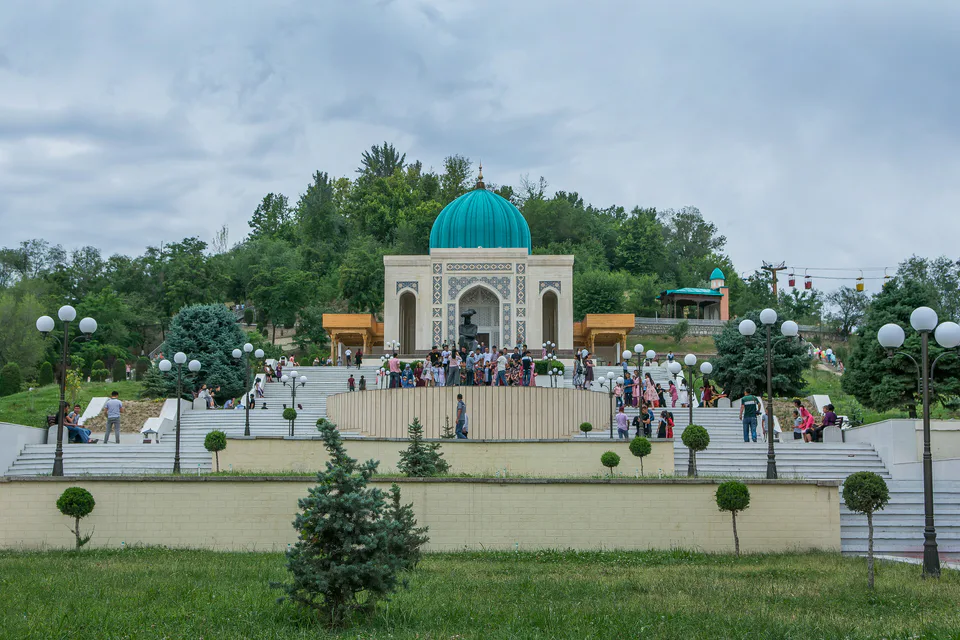
Independence changed how the nation saw its past. Amir Temur became a symbol of statehood, with statues in Tashkent, Samarkand and Shakhrisabz and a State Museum of Timurid History opened in 1996. The memorial complexes of Imam al-Bukhari, Bahauddin Naqshband and Imam al-Tirmidhi were rebuilt, and the memory of the Jadids and the victims of the purges restored. Bukhara, Khiva, Shakhrisabz, Karshi, Samarkand, Margilan and Tashkent celebrated city anniversaries. The cultural space of Boysun, Shashmaqom music, the culture of plov and the Khorezmian dance Lazgi were inscribed on UNESCO's intangible heritage lists.

Change after 2016

Shavkat Mirziyoyev was elected president in December 2016. Currency convertibility was introduced, visa-free entry and e-visas were opened to citizens of many countries, borders with neighbours reopened and forced labour in the cotton harvest was ended. A new edition of the constitution was adopted in 2023. Samarkand hosted the SCO summit in 2022 and the 43rd UNESCO General Conference in 2025. Assessments of the depth of reform and the state of political freedoms differ.

Economy and society

Since independence the economy has moved step by step towards a market system. Alongside cotton, gold, natural gas, copper and uranium became the mainstays of exports, and the car plant opened at Asaka in 1996 made Uzbekistan a producer of passenger cars. More recently, part of the cotton land has been turned over to orchards, vineyards and vegetables. The population is growing fast and remains young, and many young people work as labour migrants in Russia and Kazakhstan. To soften the Aral disaster, saxaul is being planted on the dried-up seabed. Abroad, Uzbekistan belongs to the CIS, the Shanghai Cooperation Organisation and the Organization of Turkic States, and has made better relations with its Central Asian neighbours a priority.

For travellers

Uzbekistan now has eight UNESCO World Heritage Sites, from Khiva's Itchan Kala to the modernist architecture of Tashkent. Afrosiyob high-speed trains link Tashkent, Samarkand, Bukhara and Khiva, and the Angren–Pap railway has opened an easy route into the Fergana Valley. Foreign arrivals have soared since the late 2010s, and tourism is becoming a major part of the economy.
Sources (5)
  1. en.wikipedia.org
  2. en.wikipedia.org
  3. en.wikipedia.org
  4. en.wikipedia.org
  5. ich.unesco.org

Independence

Key events

Full timeline
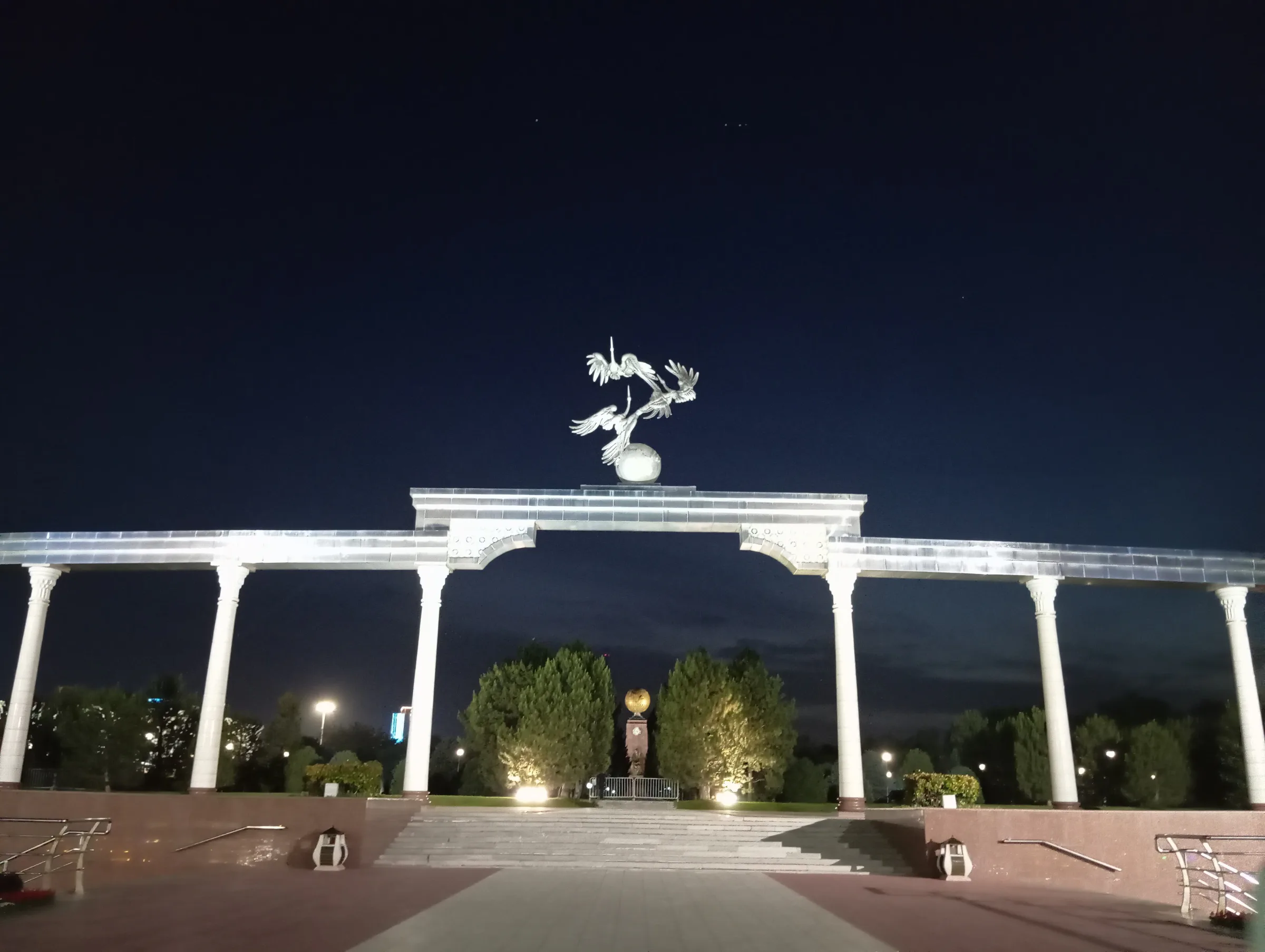
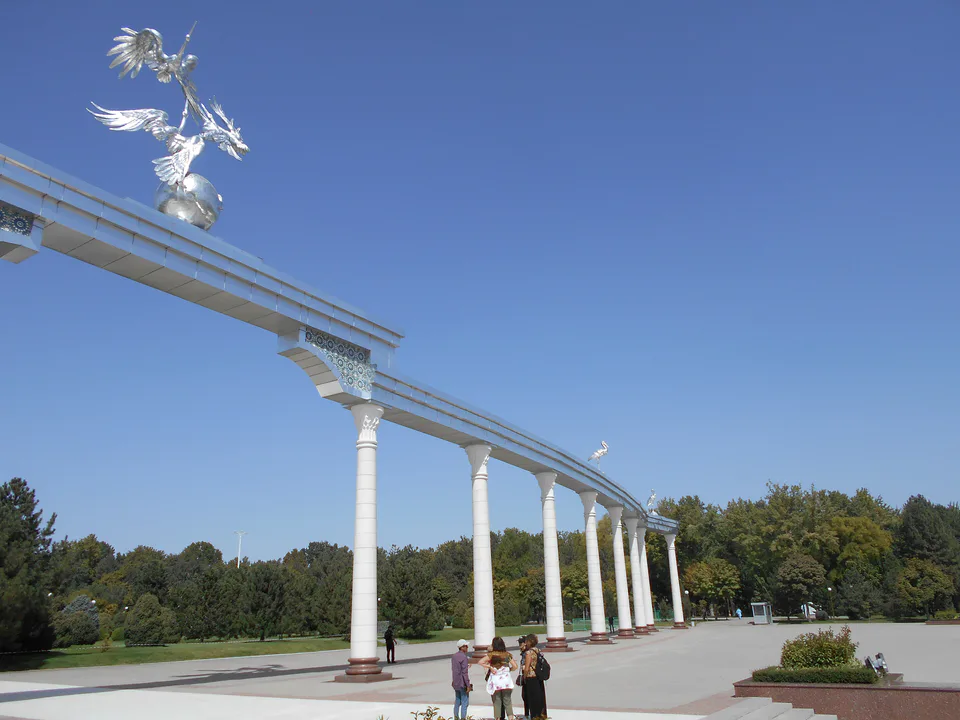
  1. Independence Square (Mustaqillik Maydoni)
    Independence Square (Mustaqillik Maydoni)

    31 August 1991

    Uzbekistan declares independence

    After the failed August coup in Moscow, on 31 August 1991 the Supreme Council of the Republic of Uzbekistan declared state independence, and 1 September became Independence Day. The national flag was adopted on 18 November 1991. In a referendum on 29 December more than 98% of voters backed independence, and Islam Karimov was elected president the same day. Uzbekistan joined the United Nations on 2 March 1992, and on 1 July 1994 the national currency, the sum, came into circulation. Tashkent's former Lenin Square became Mustaqillik (Independence) Square, the country's main square.

    Tashkent (city)Independence Square (Mustaqillik Maydoni)

  2. 8 December 1992

    Independent Uzbekistan's first constitution

    On 8 December 1992, at the eleventh session of the Supreme Council, the Constitution of the Republic of Uzbekistan was adopted. With 128 articles, it proclaimed Uzbekistan a sovereign democratic republic and enshrined the separation of powers and human rights and freedoms; 8 December is marked as Constitution Day. The national symbols were completed that year too: the coat of arms was approved on 2 July and, on 10 December, the national anthem with lyrics by Abdulla Oripov and music by Mutal Burhanov. The constitution was amended several times and adopted in a new edition in 2023.

    Tashkent (city)

  3. 2 September 1993 (revised 1995)

    The return to the Latin alphabet

    Uzbek changed its script three times in the 20th century: from Arabic to Latin in 1929 and to Cyrillic in 1940. On 2 September 1993 a law introduced a Latin-based Uzbek alphabet, revised on 6 May 1995 into its current form, with the letters oʻ and gʻ and the digraphs sh, ch and ng. Schools began teaching in Latin script in the late 1990s, and the deadline for the full transition has been extended several times. Today official documents and street and road signs are mostly in Latin script, while Cyrillic remains common in everyday life and the press.

  4. Itchan Kala
    Itchan Kala

    1990–2026

    Uzbekistan's UNESCO World Heritage Sites

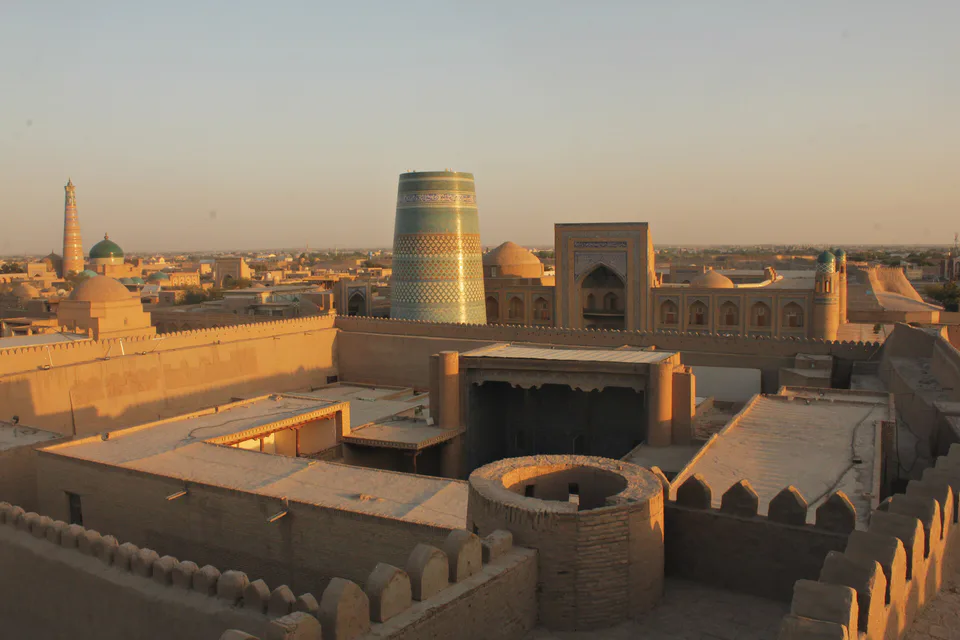
    Uzbekistan joined the World Heritage Convention in January 1993. The first site, inscribed while still in Soviet times in 1990, was Itchan Kala in Khiva. It was followed by the Historic Centre of Bukhara (1993), the Historic Centre of Shakhrisyabz (2000; on the List in Danger since 2016), Samarkand – Crossroad of Cultures (2001), Western Tien-Shan (2016, shared with Kazakhstan and Kyrgyzstan), Silk Roads: Zarafshan-Karakum Corridor (2023) and the Cold Winter Deserts of Turan (2023), with a component in Karakalpakstan. In 2026 Tashkent's modernist architecture was added, bringing the total to eight, with 37 more on the tentative list.

    KhorezmBukharaKashkadaryaSamarkandTashkent RegionNavoiyKarakalpakstanTashkent (city)Itchan Kala

  5. 1997–2009

    Ancient city anniversaries

    Since independence Uzbekistan has made a tradition of dating its cities from archaeological evidence and celebrating anniversaries with UNESCO's involvement. Bukhara and Khiva marked 2,500 years in 1997, Shakhrisabz 2,700 years in 2002, Karshi 2,700 years in 2006, Samarkand 2,750 years and Margilan 2,000 years in 2007, and Tashkent 2,200 years in 2009. Each jubilee brought restoration of monuments, makeovers of historic centres and new museums. Some restorations, however, have been criticised by specialists for altering original fabric, and debates over the cities' ages continue.

    BukharaKhorezmKashkadaryaSamarkandFerganaTashkent (city)

  6. 2011–2016

    High-speed trains and the Angren–Pap railway

    In 2011 the Afrosiyob high-speed train, built by Spain's Talgo, began running between Tashkent and Samarkand, later extended to Karshi and Bukhara. On 22 June 2016 the 123-kilometre electrified Angren–Pap railway opened. Running through a tunnel of more than 19 km beneath the Kamchik Pass, it linked the Fergana Valley directly with the rest of the country; trains had previously crossed Tajik territory. The $1.9 billion project took five years, with the tunnel built by a Chinese contractor. Passenger services began on 1 September 2016.

    Tashkent RegionNamanganFerganaAndijanTashkent (city)SamarkandBukhara

  7. from 2016

    Reforms after 2016

    After the death of Islam Karimov, Shavkat Mirziyoyev was elected president in December 2016. A 2017–2021 Action Strategy was followed by the 2022–2026 “New Uzbekistan” development strategy. Free currency conversion was introduced in September 2017; from 2018–2019 visa-free entry and e-visas were opened to citizens of dozens of countries, and border crossings with neighbouring states reopened. Forced labour in the cotton harvest was abandoned, with the International Labour Organization reporting no systemic forced labour in 2021. The changes fuelled rapid growth in tourism. Assessments of the depth of reform and of political freedoms vary.

  8. Silk Road Samarkand
    Silk Road Samarkand

    15–16 September 2022

    The SCO summit in Samarkand

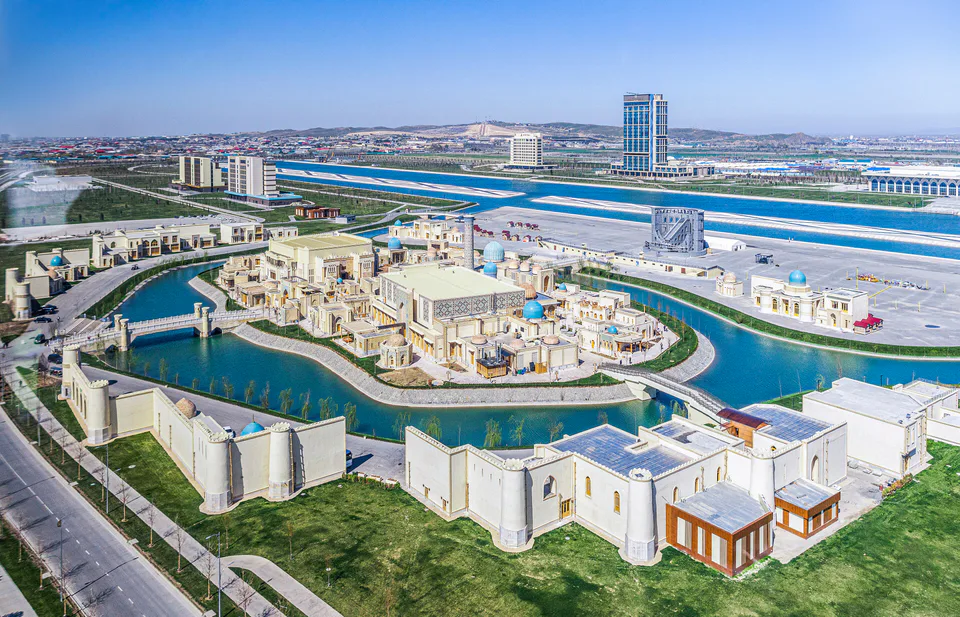
    On 15–16 September 2022 Samarkand hosted the summit of the Shanghai Cooperation Organisation's Council of Heads of State, attended by the leaders of China, Russia, India, Pakistan, Kazakhstan, Kyrgyzstan, Tajikistan and Uzbekistan as well as observer and guest states; Iran took a major step towards full membership. Shortly before, in August 2022, the Silk Road Samarkand tourist complex opened on the edge of the city, with a congress hall, hotels and the Eternal City quarter of craft workshops. Samarkand has since become a venue for major international forums.

    SamarkandSilk Road Samarkand

  9. 30 April 2023

    A new edition of the constitution

    In a nationwide referendum on 30 April 2023, Uzbekistan adopted a new edition of its constitution, which took effect on 1 May. According to official figures, more than 84% of voters took part and over 90% of them approved the changes. The number of articles rose from 128 to 155; Uzbekistan was declared a social state, the sections on human rights and social guarantees were expanded, and the presidential term was lengthened from five to seven years. Early presidential elections followed in July 2023, in which Shavkat Mirziyoyev was re-elected.

  10. Silk Road Samarkand
    Silk Road Samarkand

    30 October – 13 November 2025

    UNESCO's General Conference in Samarkand

    From 30 October to 13 November 2025 Samarkand hosted the 43rd session of the UNESCO General Conference — the first time since Sofia in 1985 that the organisation's supreme body met outside its Paris headquarters, as member states had unanimously decided in 2023. Held at the Silk Road Samarkand congress centre, the session elected Egypt's Khaled El-Enany as Director-General on 6 November. An international scholarly conference, “Samarkand: A Heritage of Three Millennia”, held alongside it, presented findings that the city's history goes back at least 3,000 years.

    SamarkandSilk Road Samarkand

Photos

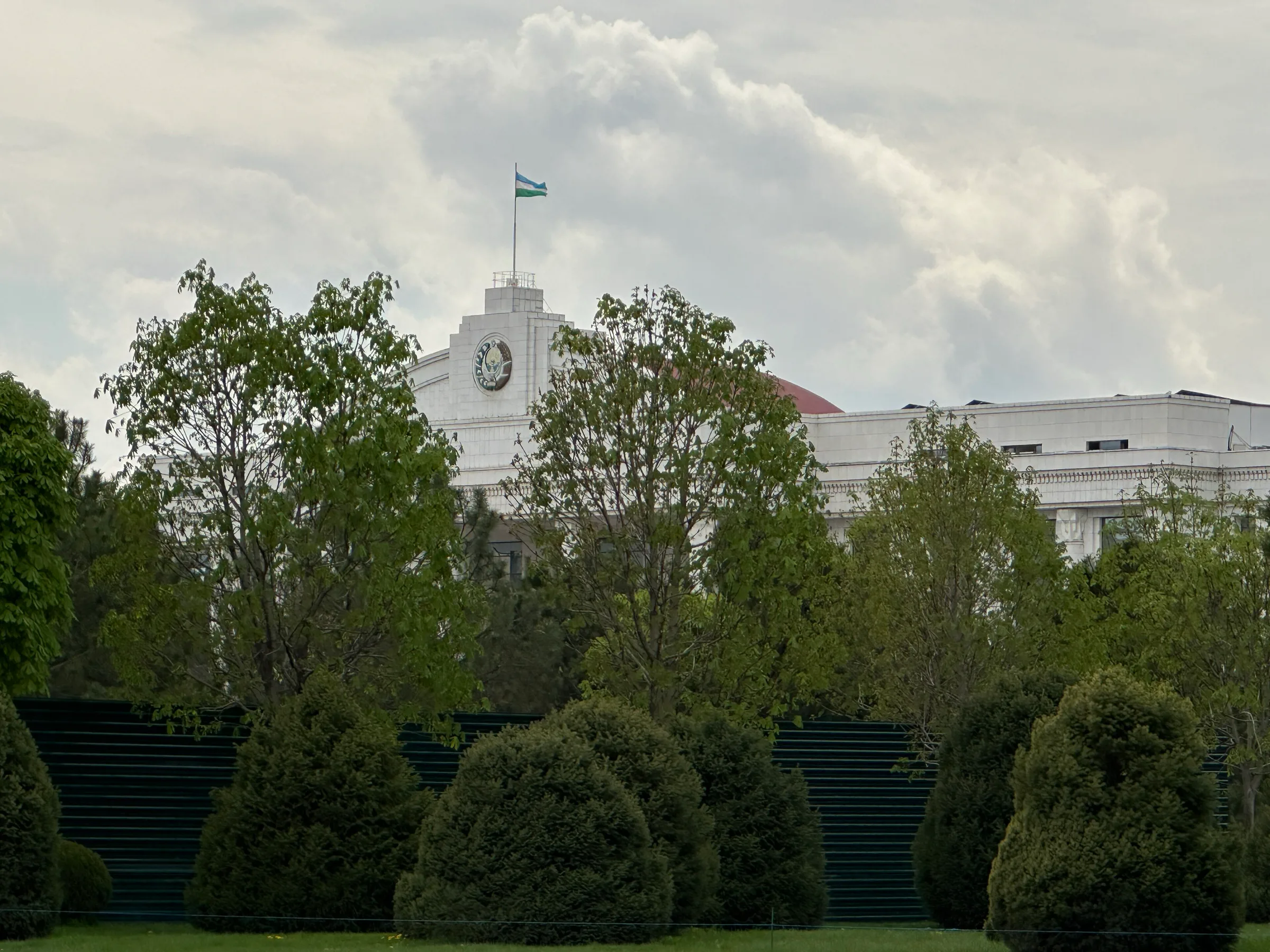
Flag of Uz
Photo: Mrshaxas · CC0 · Wikimedia Commons
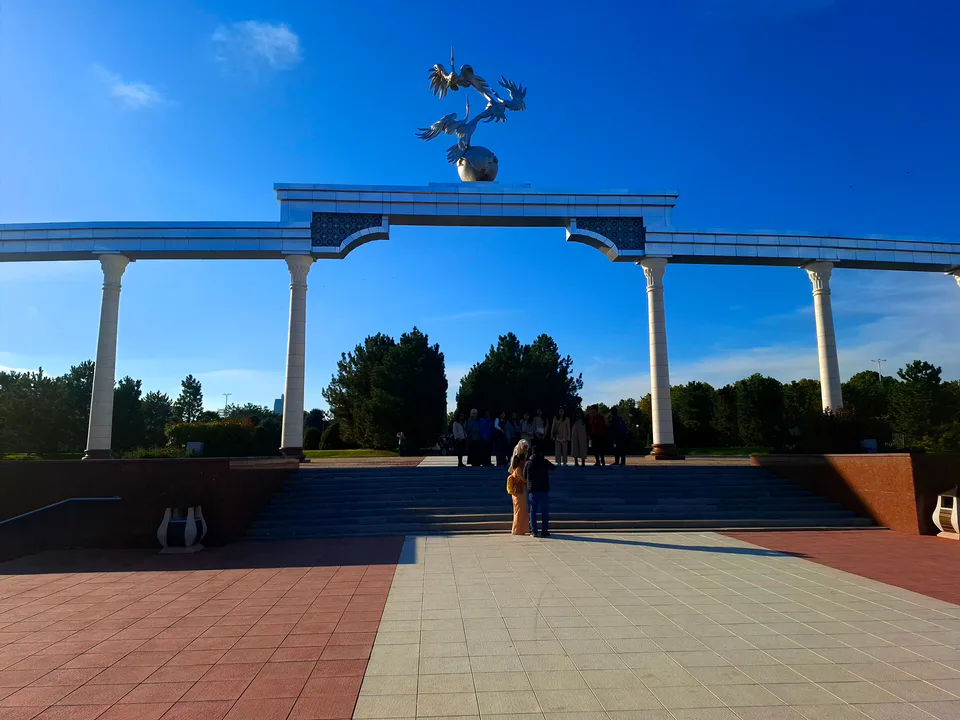
independence Square
Photo: Visola Tangirova · CC0 · Wikimedia Commons
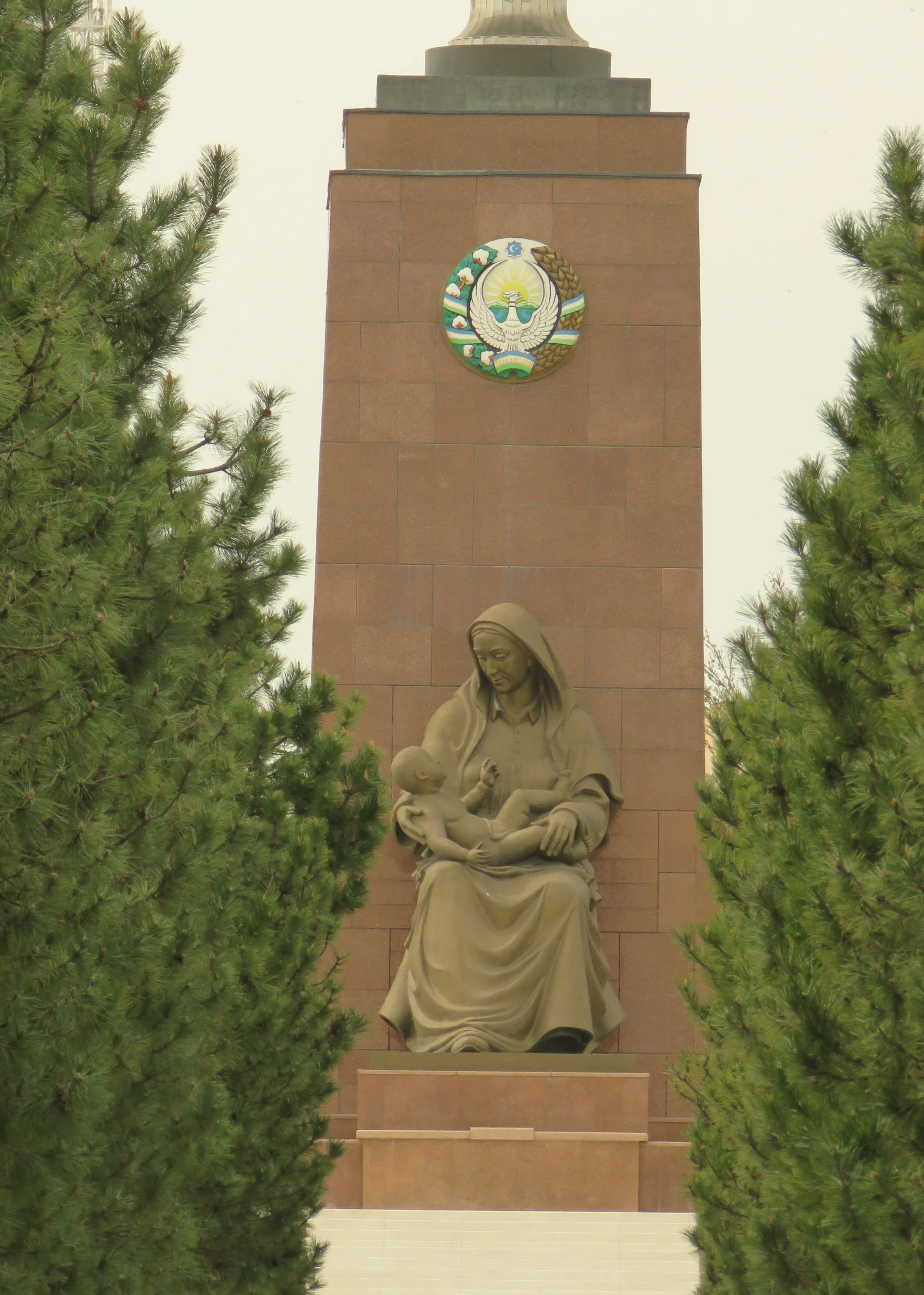
Monument to Independence and Humanism (Mother-Motherland)
Photo: BeshevI · CC BY-SA 4.0 · Wikimedia Commons