Born in Samarkand, he led Uzbekistan from 1990 to 2016 as its first president. He is buried in Samarkand beside the Hazrati Khizr mosque, and Tashkent's international airport bears his name.
Islam Abduganievich Karimov was born in Samarkand on 30 January 1938 into a family of office workers. He graduated as a mechanical engineer from the Central Asian Polytechnic Institute in 1960 and as an economist from the Tashkent Institute of National Economy in 1967. He worked as an engineer at Tashkent's agricultural machinery plant and the Chkalov aircraft factory, and from 1966 at the republic's State Planning Committee, rising to deputy chairman. In 1983 he became finance minister of the Uzbek SSR, in 1986–1989 first secretary of the Kashkadarya regional party committee, and from June 1989 First Secretary of the Communist Party of Uzbekistan. On 24 March 1990 the Supreme Soviet of the Uzbek SSR elected him president of the republic.
The independence years
Uzbekistan declared independence on 31 August 1991, and on 29 December that year Karimov was elected president by popular vote. A 1995 referendum extended his term, and he was re-elected in 2000, 2007 and 2015. His rule is judged in very different ways: official historiography presents him as the founder of independent statehood, while international human rights groups and Western governments sharply criticised the conduct of elections and the state of political freedoms and human rights. On his initiative the memorial complexes of Imam al-Bukhari and Imam al-Maturidi were built, the Sharq Taronalari music festival has been held in Samarkand since 1997, and the anniversaries of ancient cities were celebrated.
Death and memory
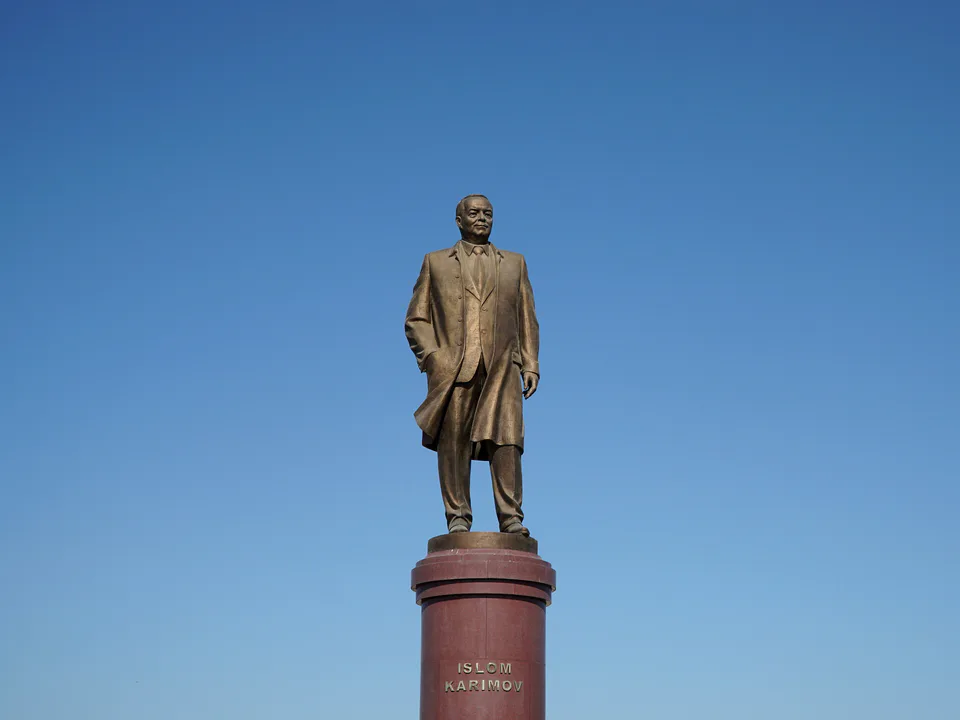
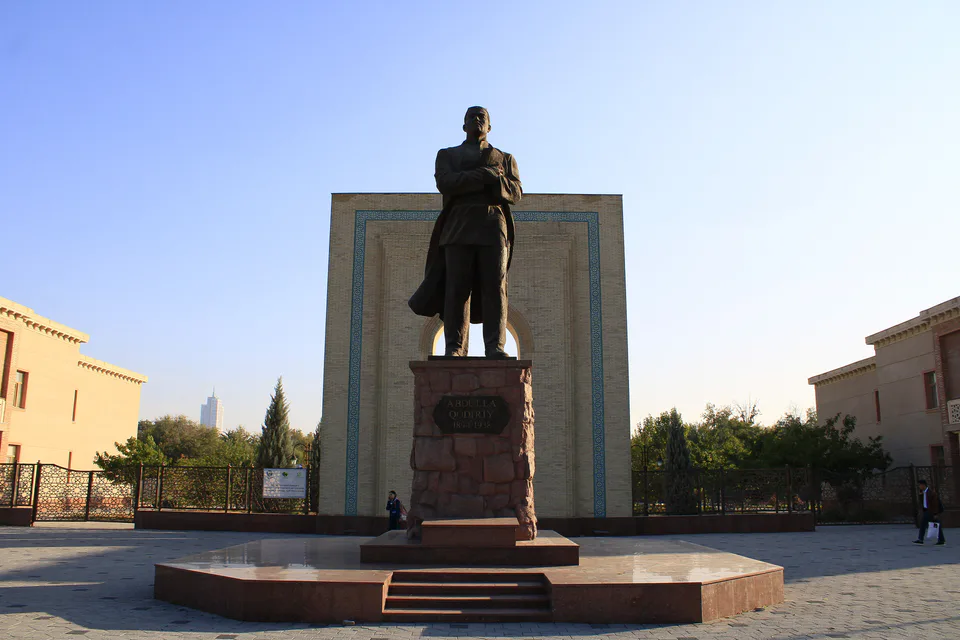
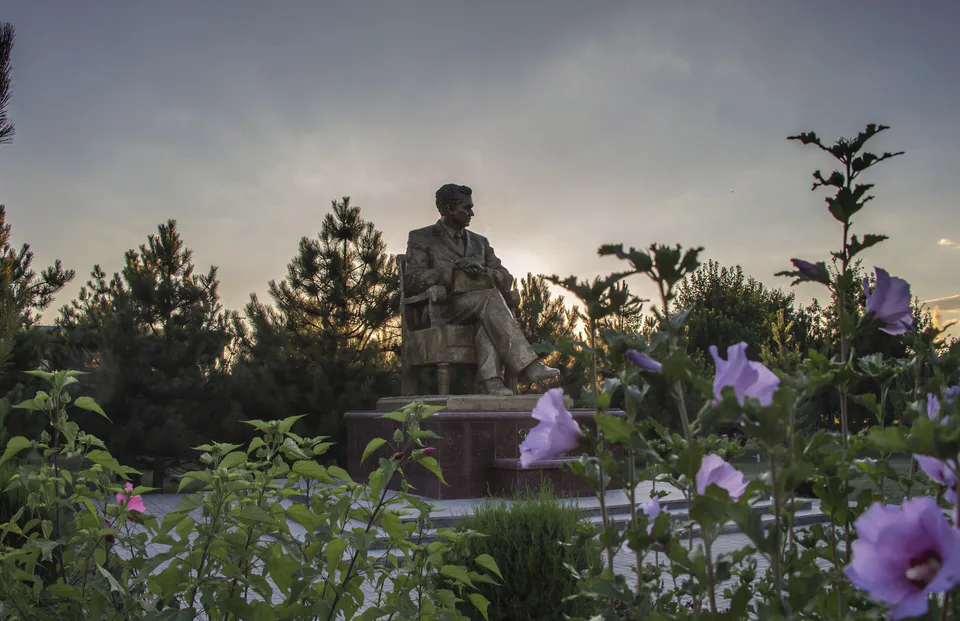
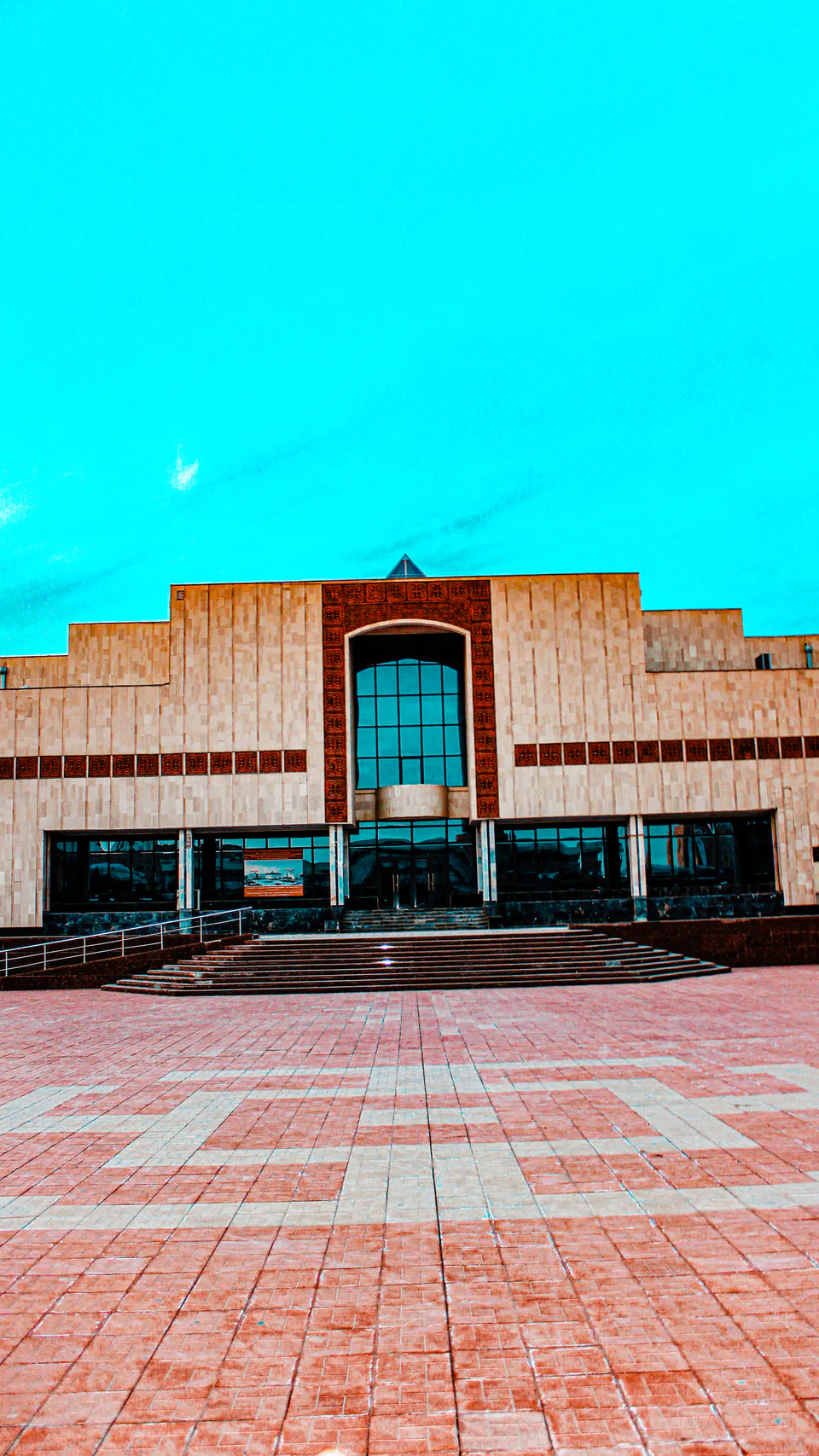
Islam Karimov died in Tashkent on 2 September 2016. After a funeral ceremony on the Registan on 3 September, he was buried in Samarkand beside the Hazrati Khizr mosque near Shah-i Zinda; on 30 January 2018 a mausoleum and memorial complex opened over his grave. Samarkand has a statue and a museum dedicated to him, Tashkent's Oqsaroy residence houses the Islam Karimov scientific and educational memorial complex, and Tashkent International Airport bears his name.
In summer 1939 work began on the 270-kilometre Great Fergana Canal. Through hashar, communal voluntary labour, some 160,000 collective farmers, mostly Uzbek and Tajik, were mobilised, and the canal was dug — largely with ketmen hoes and hand barrows — in 45 days. Carrying water from the Naryn and Kara Darya across the valley, it opened new land and expanded cotton fields, with more than a thousand hydraulic structures along its course. Soviet propaganda made it a symbol of collective effort; its pace and harsh conditions were later viewed more critically. It remains the valley's main irrigation artery.
Between 1941 and 1945, by various estimates, 1.5 to 2 million people from Uzbekistan went to the front, and more than 500,000 never returned. Over 300 natives of the republic were made Heroes of the Soviet Union. Uzbekistan became a rear base: dozens of factories, research institutes, theatres and hundreds of thousands of evacuees, many of them orphaned children, arrived from the west. The Tashkent blacksmith Shoahmad Shomahmudov and his wife Bahri became famous for adopting orphans of many nationalities — between 14 and 16, according to different sources. The war turned Tashkent into an industrial centre, while the countryside endured gruelling work and shortages.
Efforts to irrigate the waterless Hungry Steppe (Mirzachul) on the left bank of the Syr Darya began in the late 19th century: a canal named after Nicholas I opened in 1895, and Grand Duke Nikolai Konstantinovich dug channels and founded villages for Russian settlers. Large-scale development came in the 1950s and 1960s: in 1956 part of the steppe was transferred from the Kazakh SSR to Uzbekistan, the Kirov Northern canal was rebuilt and new Central and South Hungry Steppe canals were dug. Some 800,000 hectares of new cotton land appeared, along with Gulistan, Yangiyer and dozens of state-farm villages. Syrdarya Region was created in 1963. Soil salinisation later became a serious problem.
In 1958 geologists discovered a giant gold deposit in the Muruntau hills of the south-western Kyzylkum; the team won the Lenin Prize in 1966. Industrial mining began in 1969, creating one of the world's largest open-pit gold mines, some 3.5 km long and about 600 metres deep. The city of Navoiy was founded near Karmana the same year as the discovery, and desert towns such as Uchkuduk and Zarafshan grew up around the Navoi Mining and Metallurgical Combine. Navoiy Region was created in 1982 (temporarily abolished in 1988–1992) and is today one of Uzbekistan's main industrial regions.
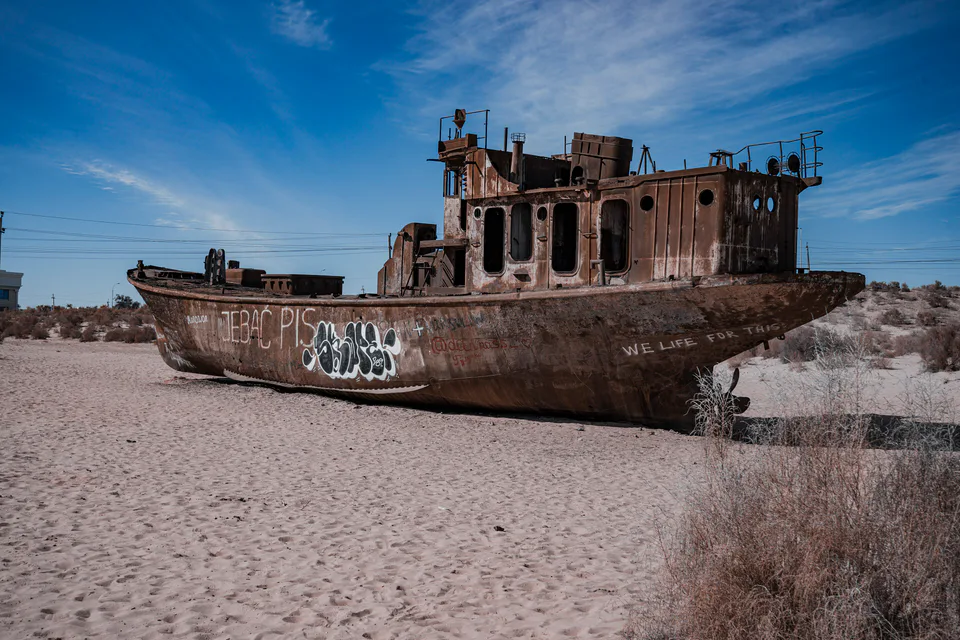
Once covering 68,000 km² and among the largest lakes on Earth, the Aral Sea began to shrink in the 1960s, when the waters of its feeder rivers, the Amu Darya and Syr Darya, were diverted to irrigate cotton. By 2007 it had fallen to about 10% of its former area and split into several lakes, leaving behind the new Aralkum desert. Moynaq, once a busy fishing port, now lies tens of kilometres from the water, with a “graveyard” of rusting ships on the sand. Salt and dust storms have seriously affected public health. UN Secretary-General Ban Ki-moon called it one of the planet's worst environmental disasters.
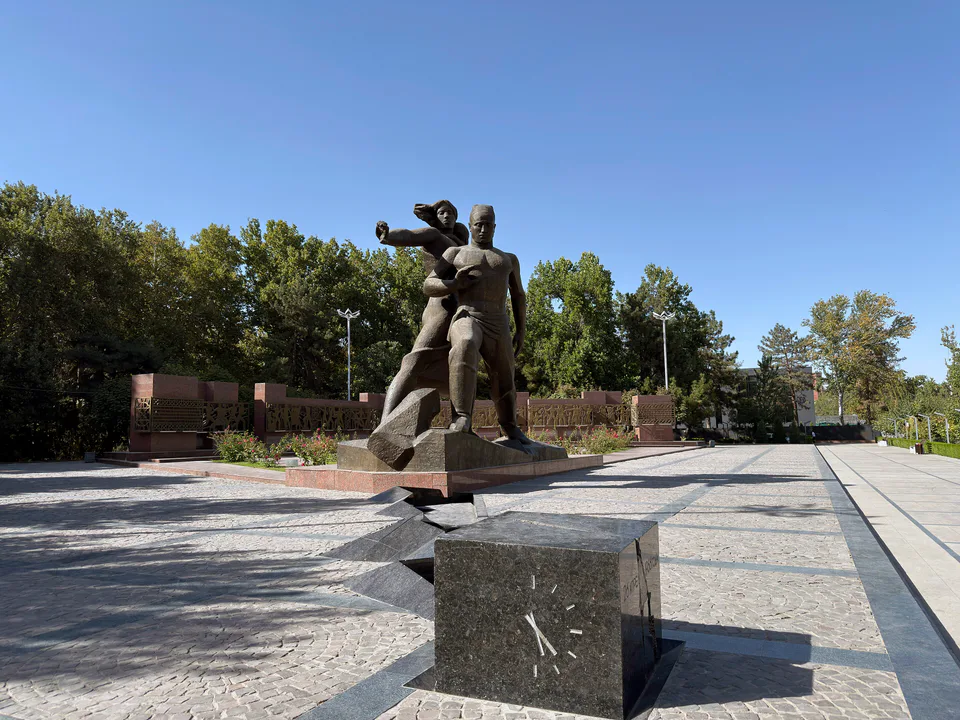
Early on 26 April 1966 a powerful earthquake of magnitude 5.2 struck directly beneath central Tashkent at a depth of only 3–8 km. It destroyed much of the old housing in the centre and left 200,000–300,000 people homeless; the official death toll was 15, though other estimates are far higher. Builders from across the Soviet Union rebuilt the city, and within a few years new housing districts and broad avenues gave Tashkent its Soviet-modernist face. In 1977 Central Asia's first metro opened. The Courage Monument has marked the epicentre since 1976.