Nature · Moynaq District
Aral Sea
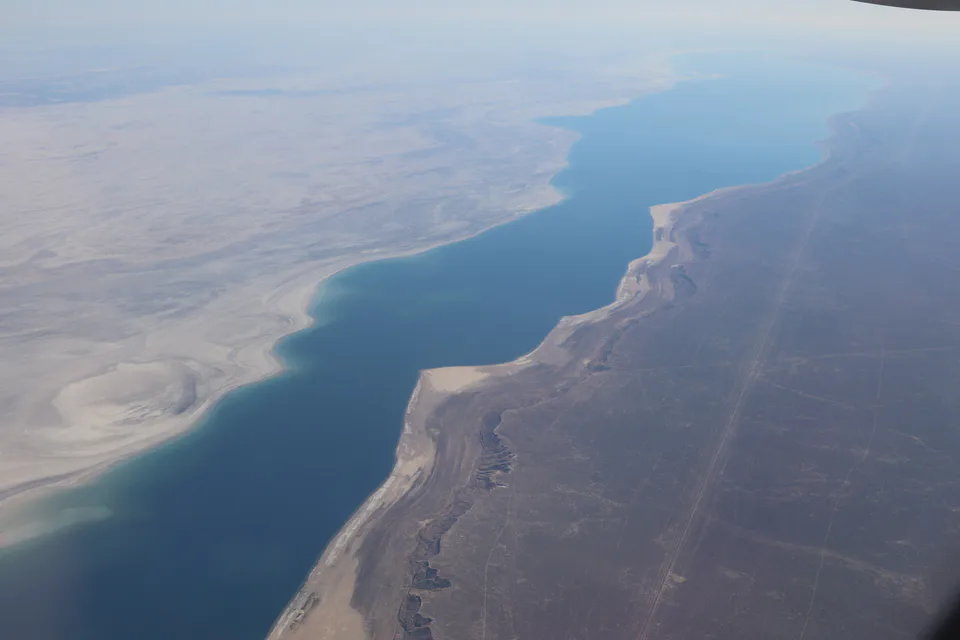
The vanishing sea
Museum · Moynaq District
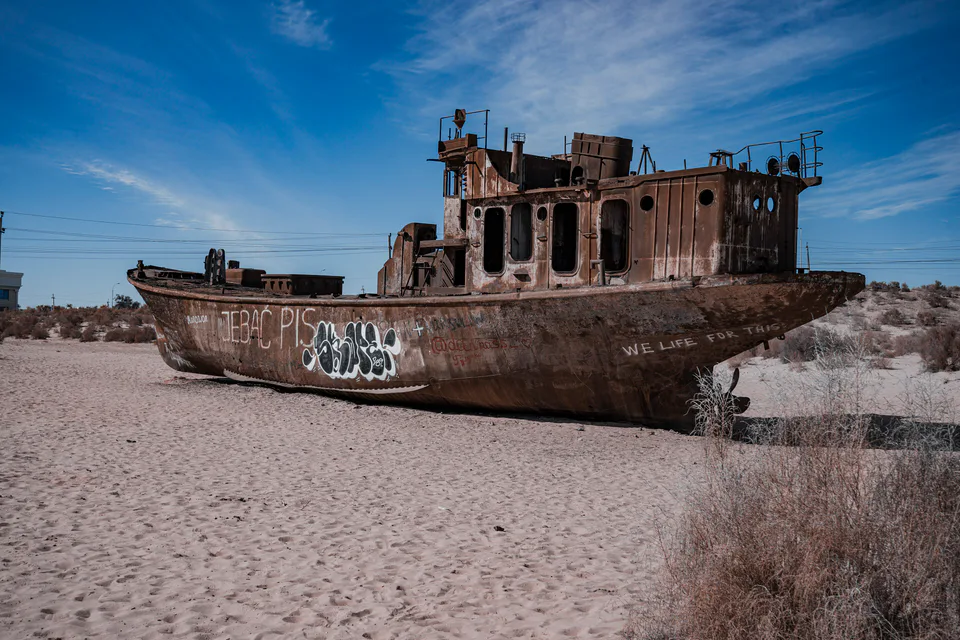
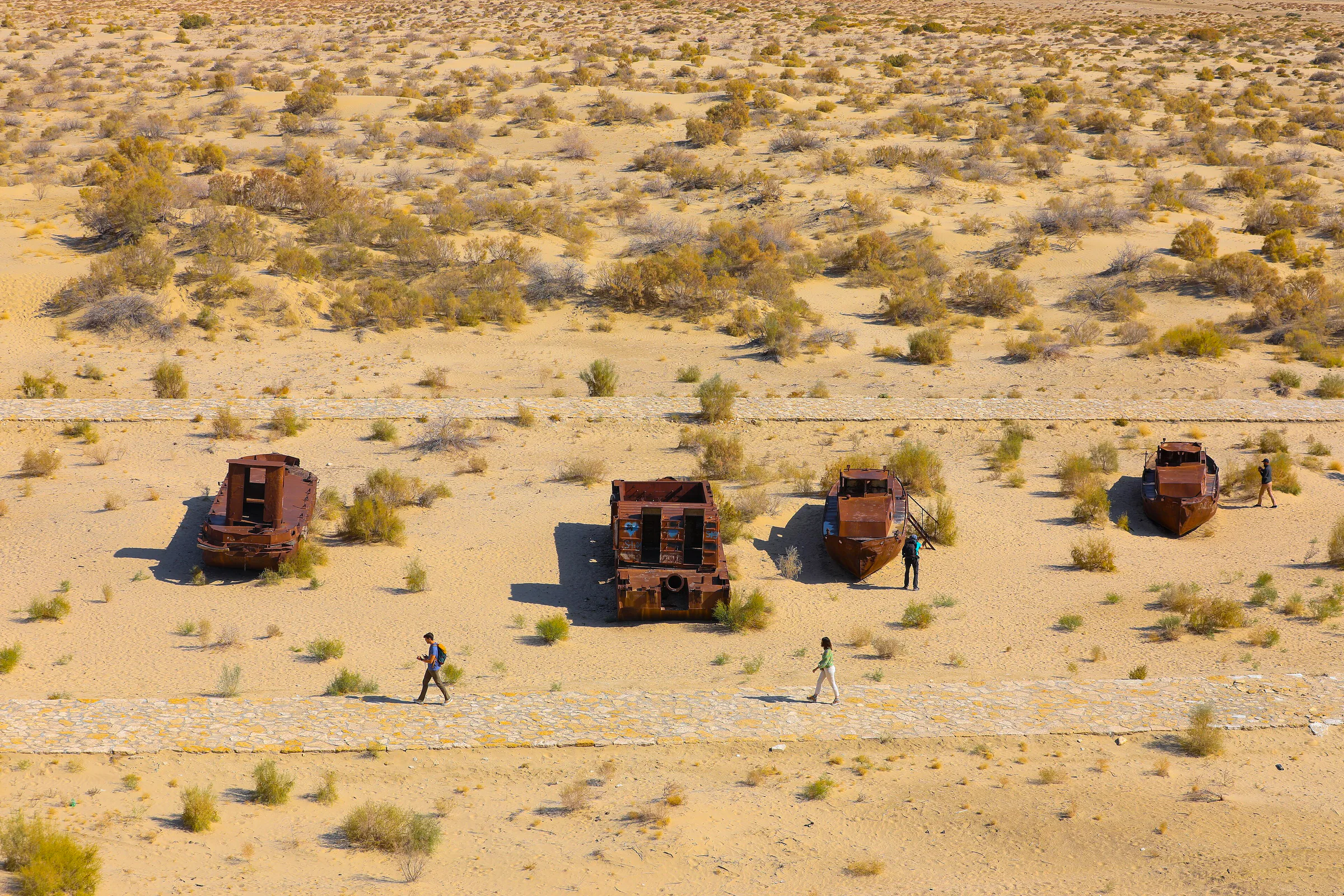
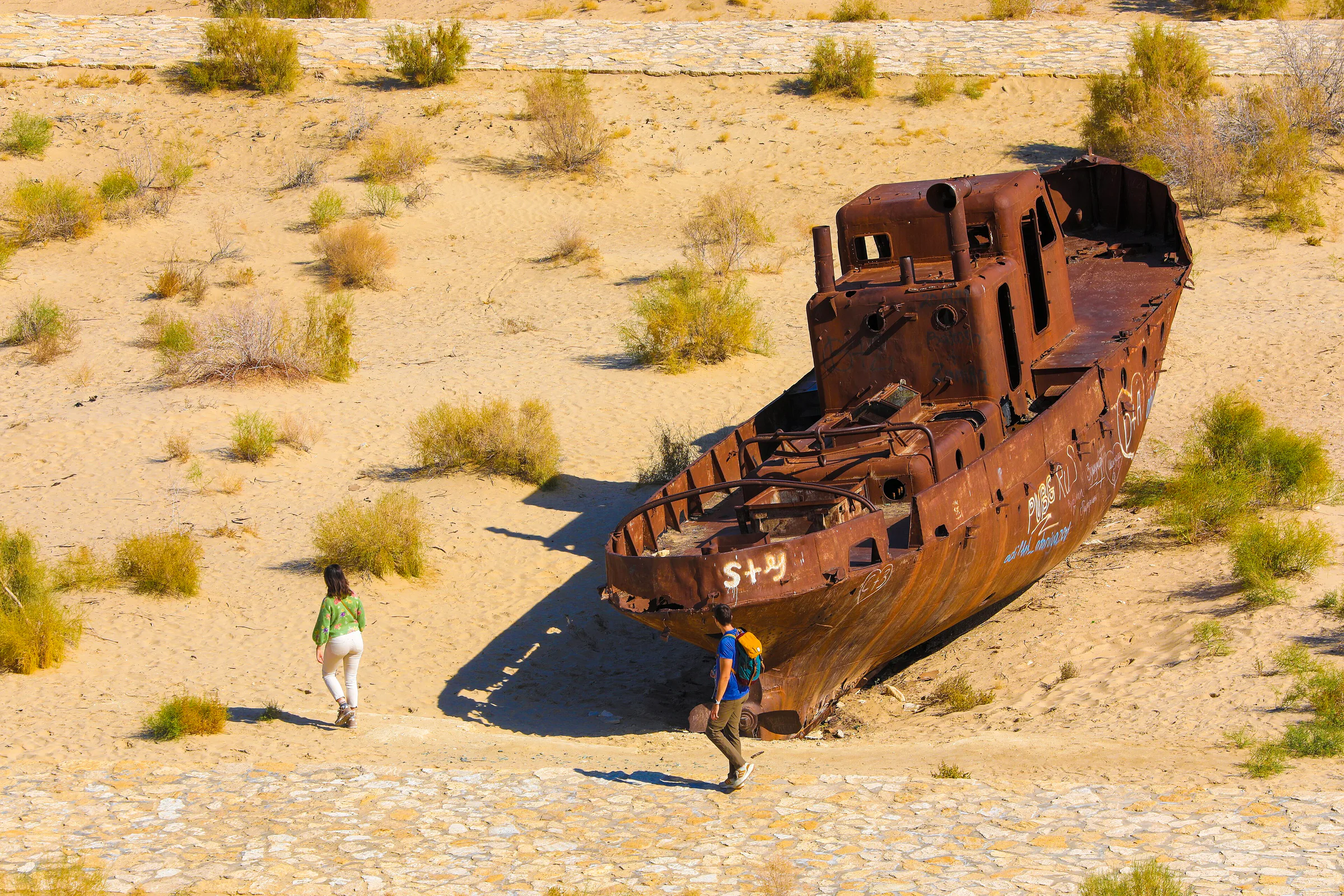
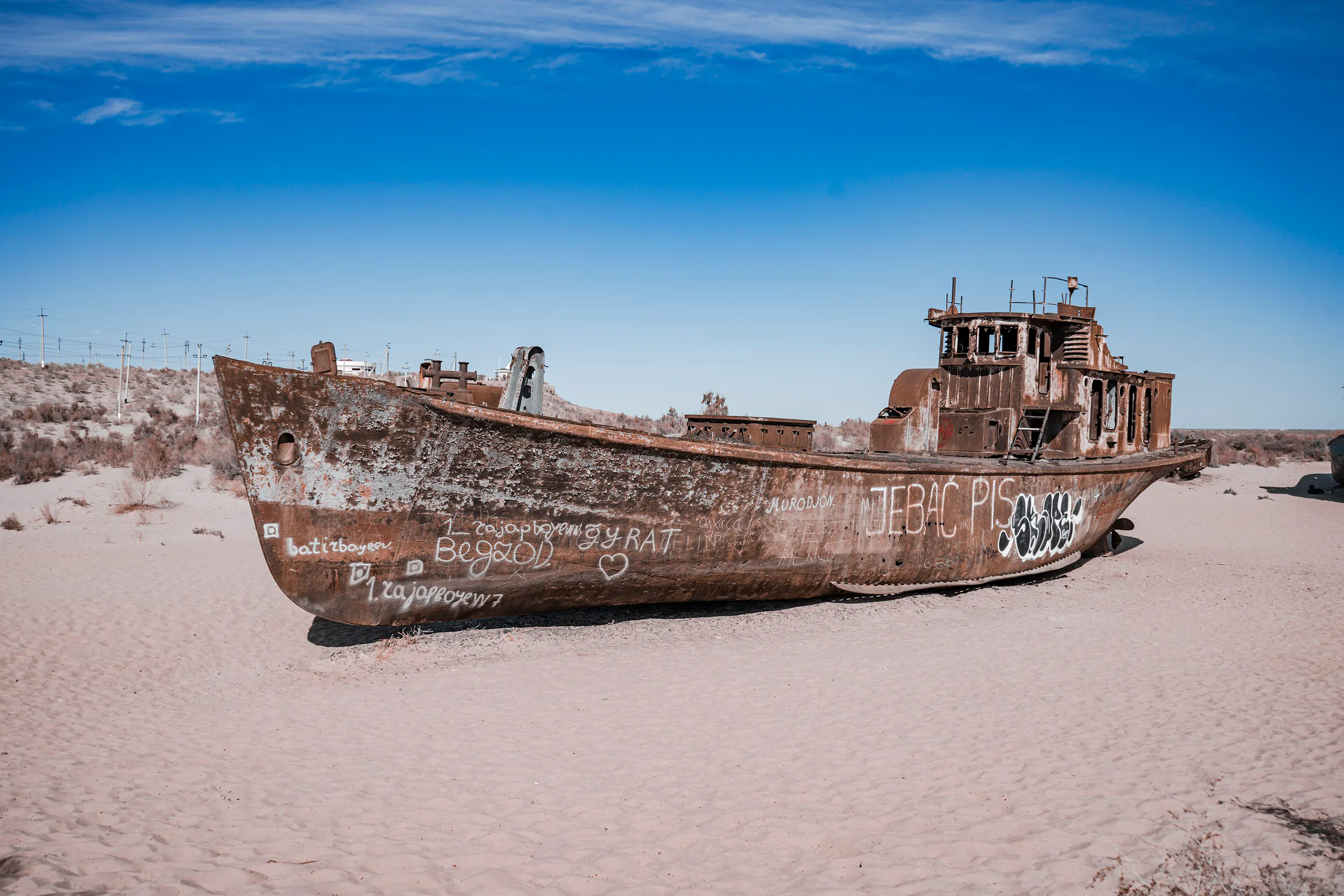
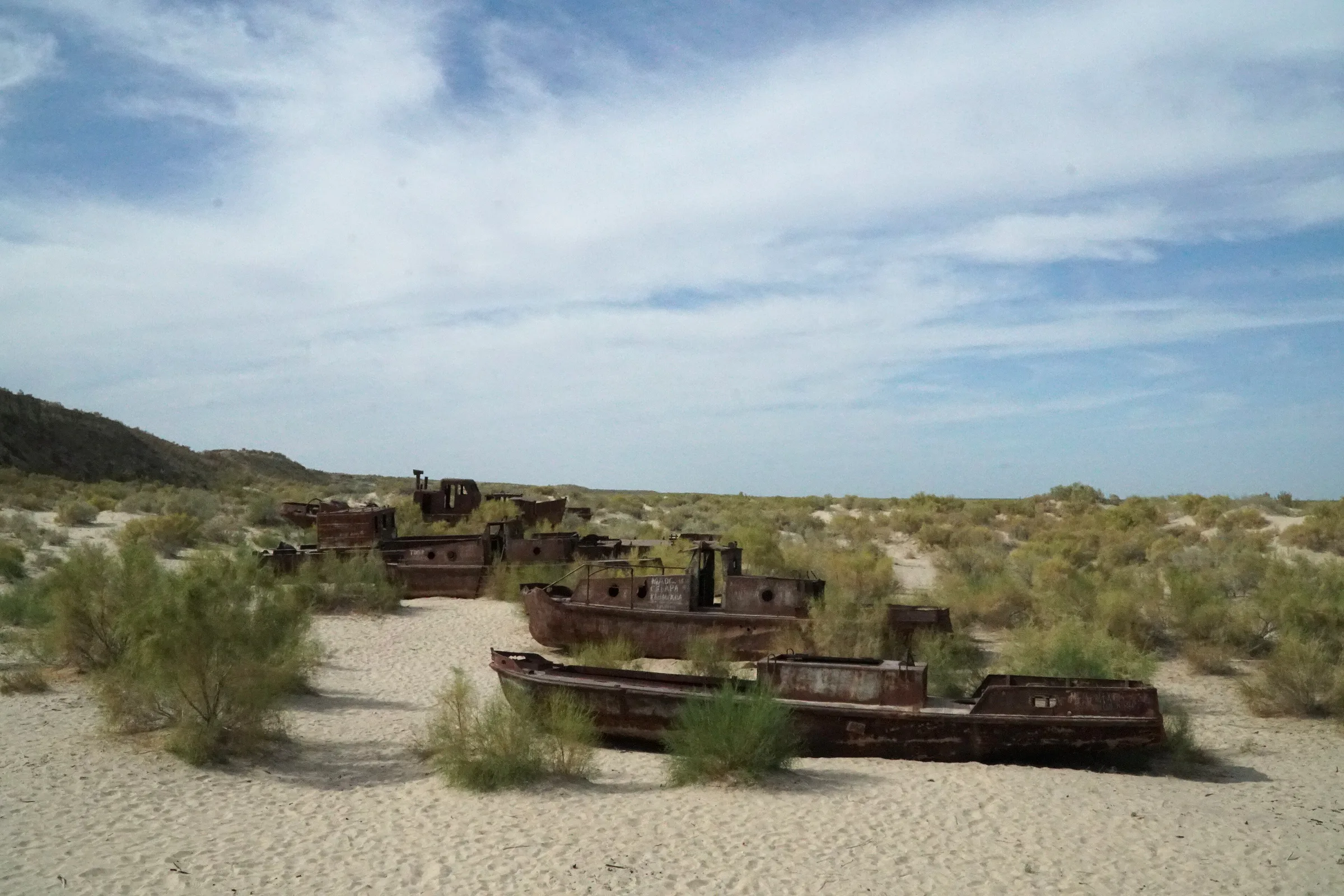
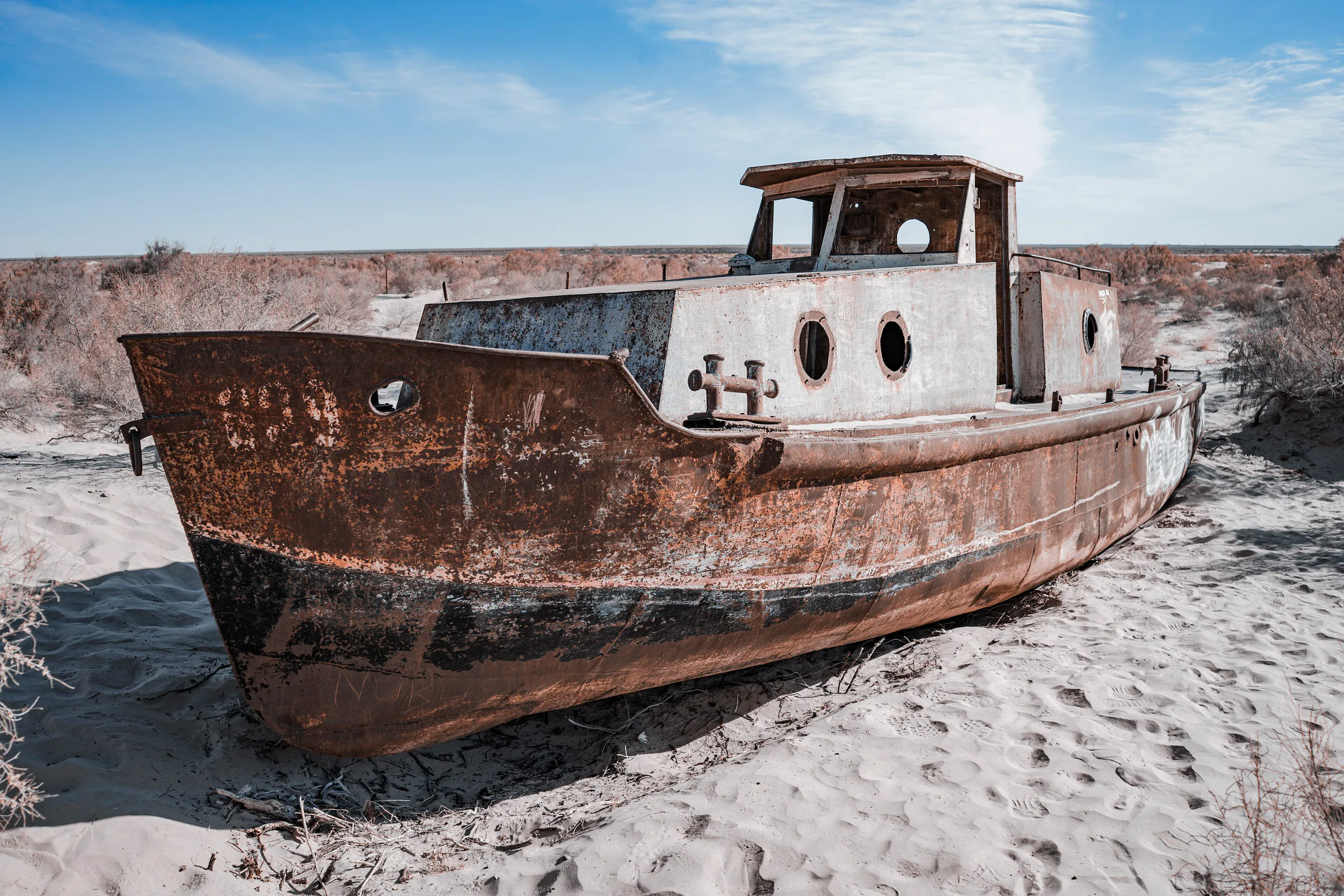
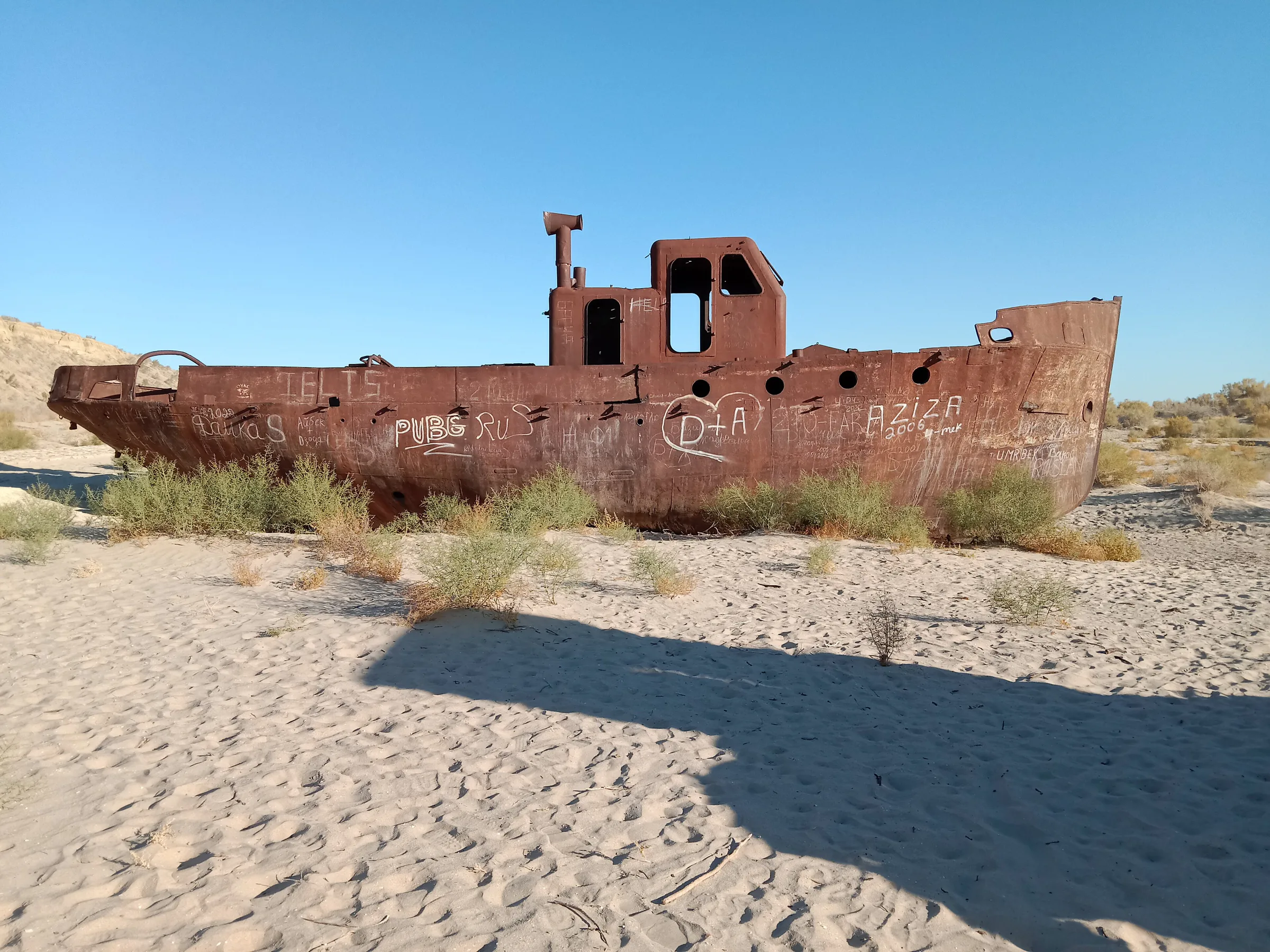
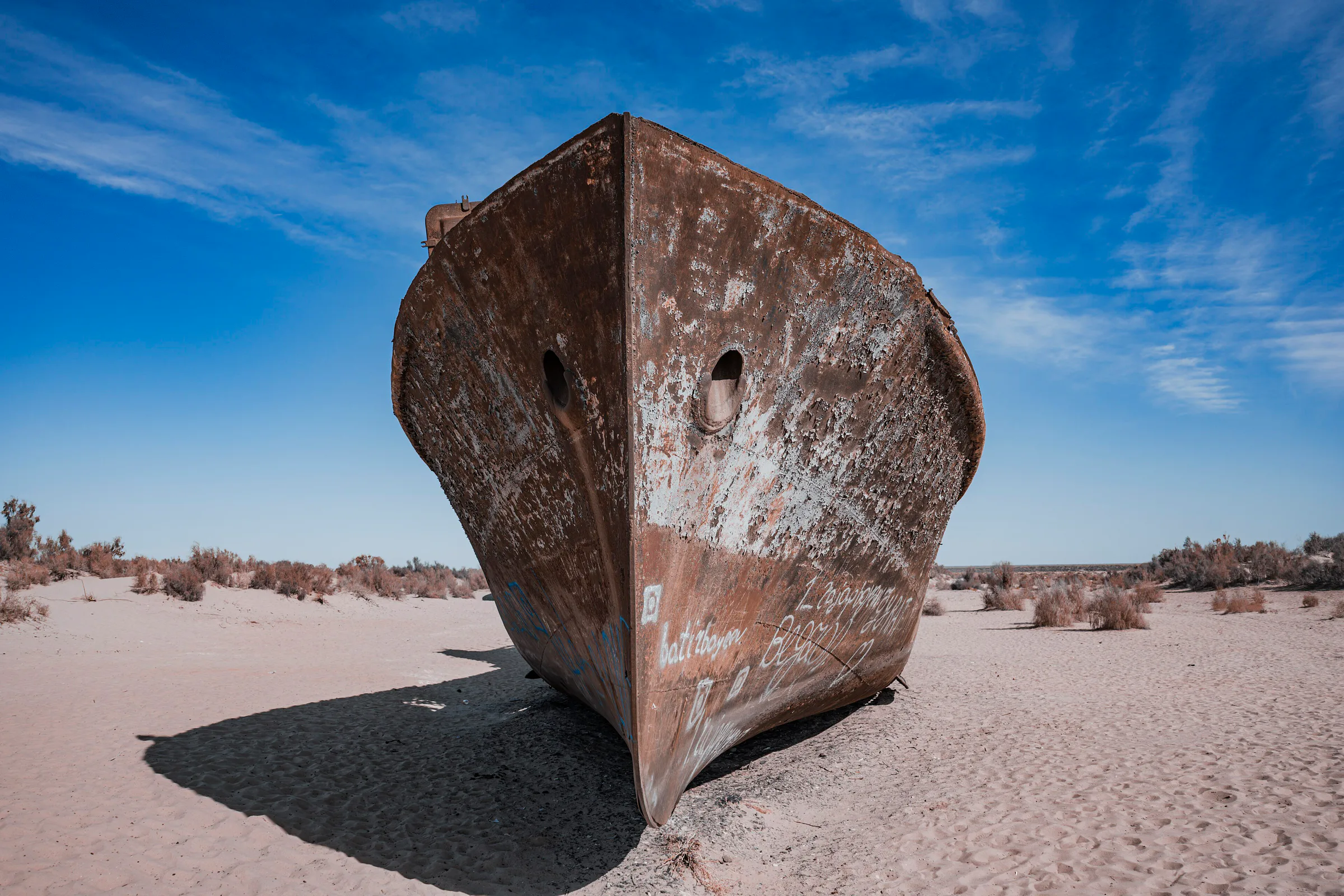
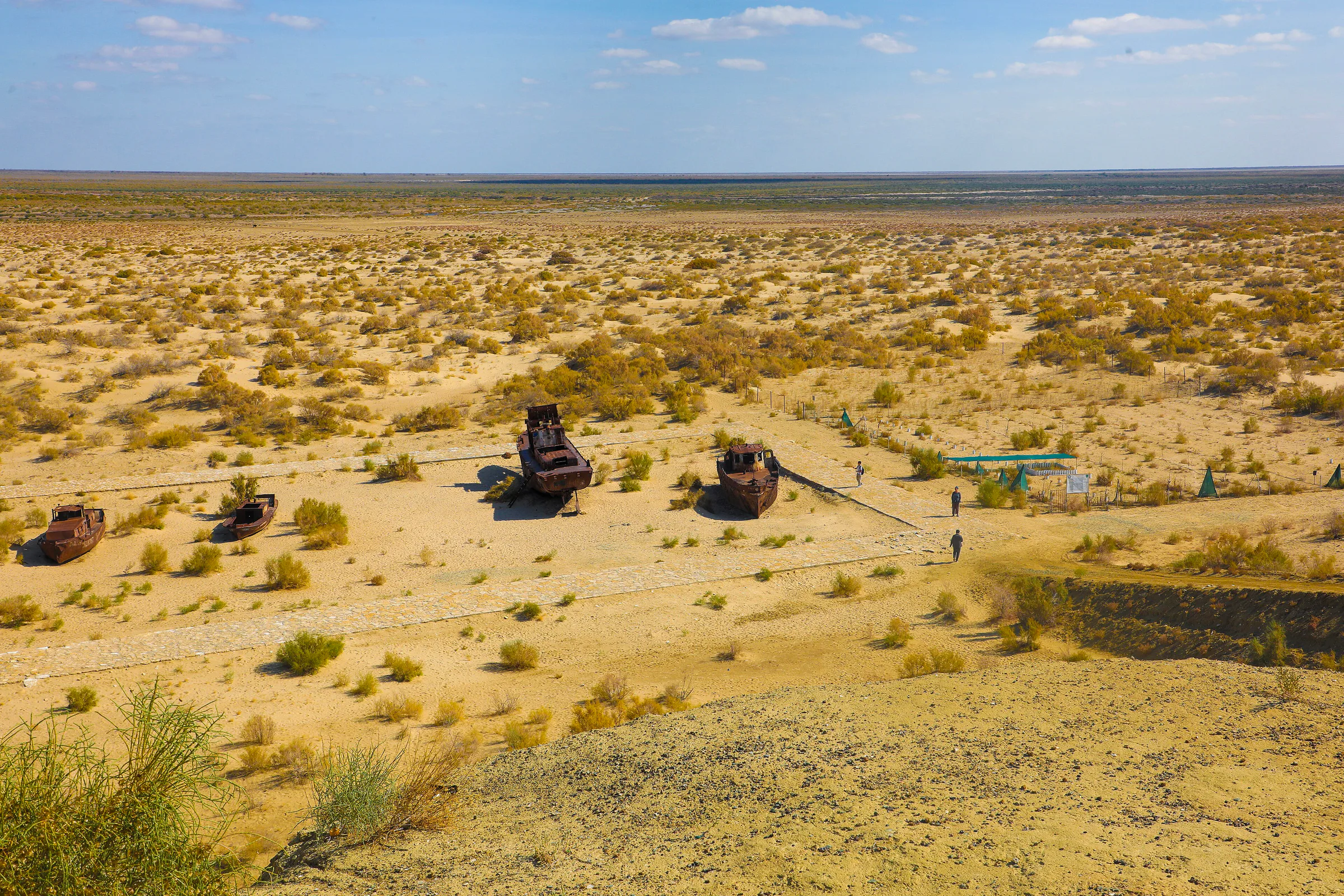
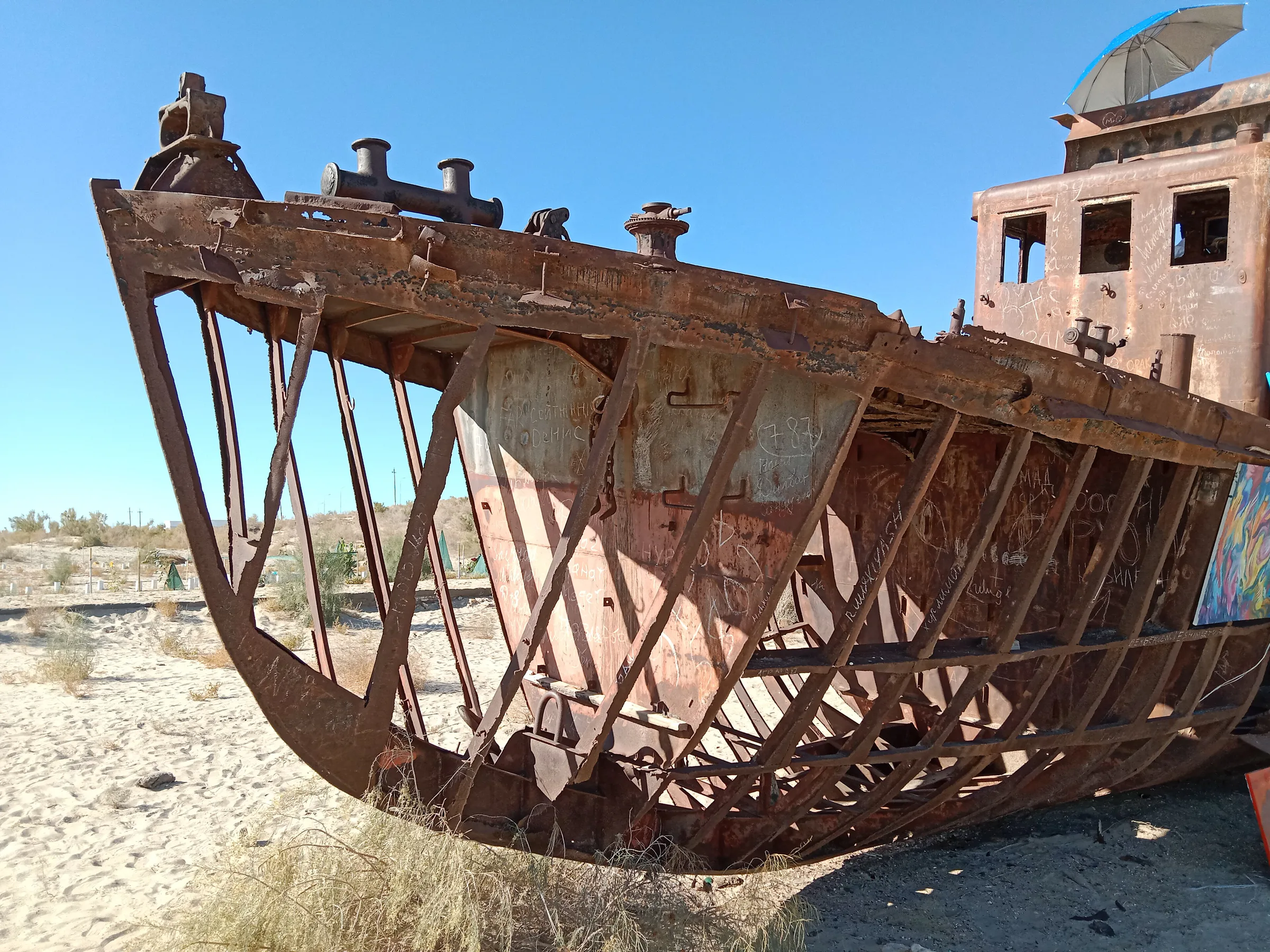
Rusting ships stranded on the sand at Moynaq, once a bustling fishing port on the Aral Sea. The water is now more than 100 km away — one of the 20th century’s great environmental disasters laid out before you.
Moynaq was a fishing town on the Aral’s southern shore; it became a town in 1963 and, with Aralsk in Kazakhstan, was one of the sea’s two lakeside towns. Until the mid-1980s it had a working harbour and one of the largest fish canneries in the Soviet Union. From the 1960s most of the Amu Darya and Syr Darya flow was diverted to irrigate cotton, and the sea began to shrink fast.
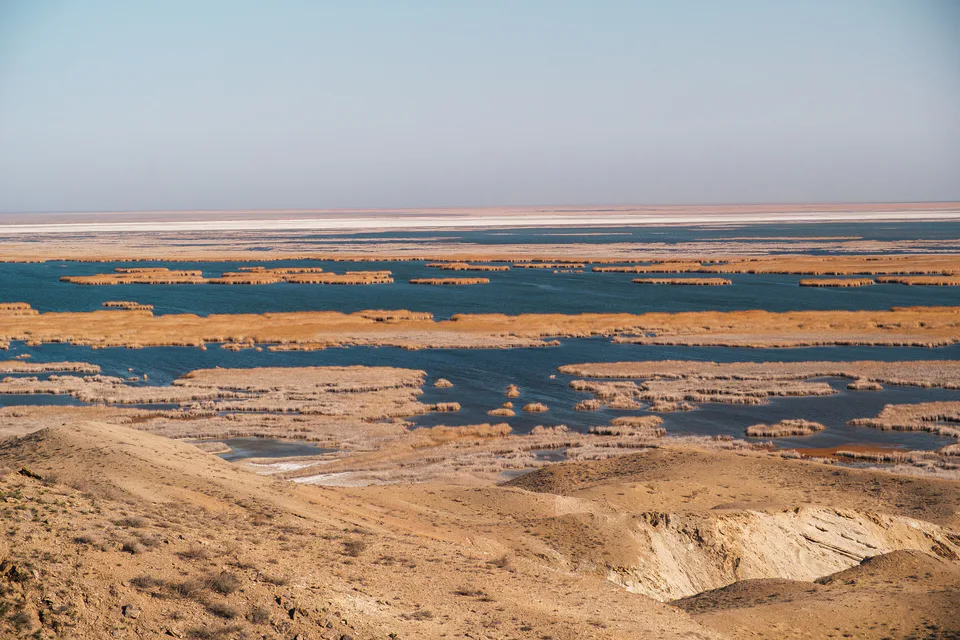
As the water retreated the port became useless. Sources put the distance from the old harbour to the sea at 45 km in 1990 and 100 km by 2000, and the shallow eastern basin had dried out completely by 2014. Frozen fish were brought in from afar in the 1980s to keep the cannery going, but it closed in the early 1990s, and many families left for Nukus, Kungrad and other towns.
Many vessels once lay scattered across the Aralkum, but most were cut up for scrap. In the 2000s the survivors were hauled together at the old shoreline, where eleven remain, slowly worn away by wind, rain and sun. A 2017 presidential decree provided for restoring them and naming them after countries that send the most tourists.
The ship cemetery was listed as national cultural heritage in 2019, and UN Secretary-General António Guterres visited in 2017. A memorial to the Aral Sea and a viewing platform on the hill above look out over the expanse where water once lay.
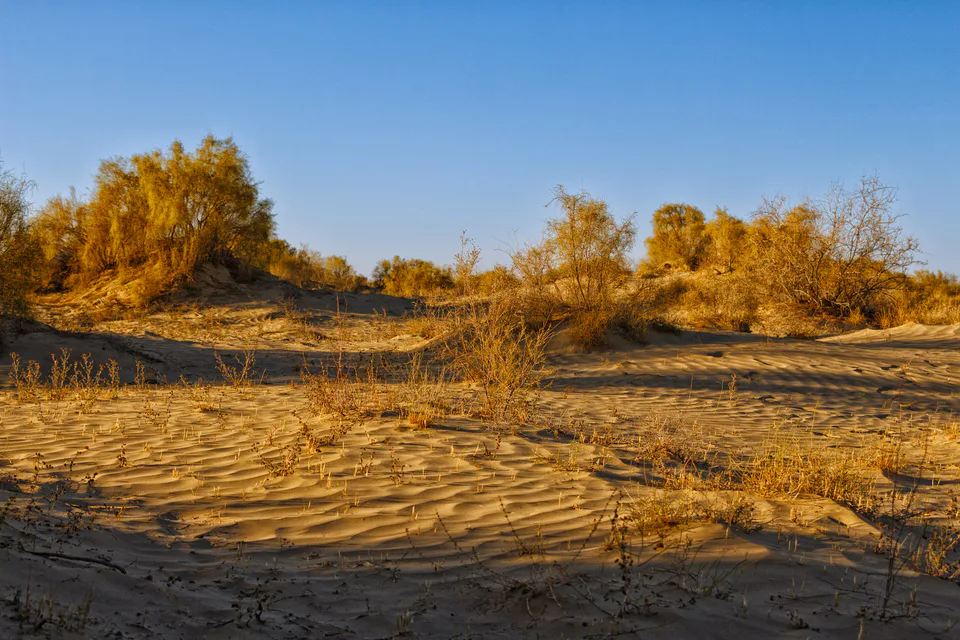
The new desert on the old seabed is called the Aralkum, and the salt and dust storms it throws up have harmed health and farming. Recent years have brought a new airport, hotels and visitor facilities, and since 2018 the Stihia electronic music festival has been held beside the ships to draw attention to the Aral crisis.
Nature · Moynaq District
The vanishing sea
Museum · Moynaq District
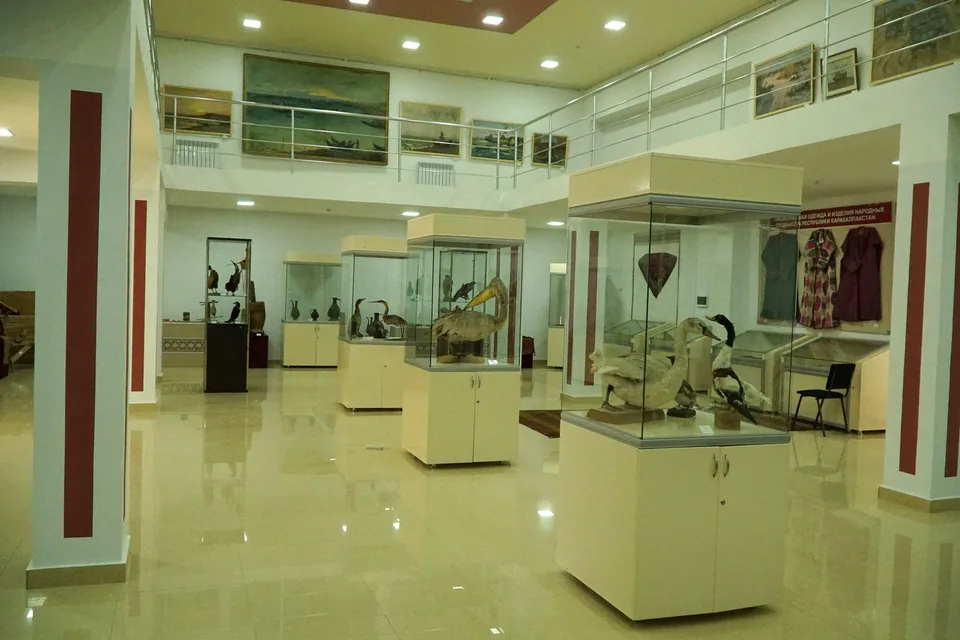
A sea that survives in paintings
Nature · Moynaq District
Protecting a desert born on a seabed
Nature · Moynaq District
Delta lakes where the flamingos returned