A painter born in Fergana and a founder of modern art in Central Asia. His “Pomegranate Teahouse” hangs in the Tretyakov Gallery, and many of his paintings are in the Savitsky Museum in Nukus.
Alexander Nikolaevich Volkov was born on 31 August (19 August Old Style) 1886 in New Margilan, today's Fergana, the son of a garrison doctor, and spent his childhood in Turkestan. After the Orenburg cadet corps he entered St Petersburg University in 1905 but soon chose painting, studying at the Higher Art School of the Academy of Arts under V. Makovsky (1908–1910), at a private school where Nicholas Roerich and Ivan Bilibin taught, and then in Kyiv. In 1916 he returned to Tashkent, where he lived for the rest of his life, teaching at the Tashkent art school from 1919 to 1946 and training many Uzbek artists.
“Pomegranate Teahouse” and the Turkestan avant-garde
Influenced by Cubo-Futurism, Volkov developed a personal style that conveys life in the East through bright colour and geometric form. His “Caravan” (1922–1923) and “Pomegranate Teahouse” (1924) are in the State Tretyakov Gallery in Moscow, while “Girls Picking Cotton” (1932), “Morning in Shakhimardan” and “The Brigade Goes to the Field” portray Uzbekistan's landscapes and people. Around him formed the circle known as the Turkestan avant-garde, including Usto Mumin and Nikolai Karakhan. In the 1930s he was accused of “formalism” and long pushed into obscurity, though he was named People's Artist of Uzbekistan in 1946. He died in Tashkent on 17 December 1957.
Where to see his work
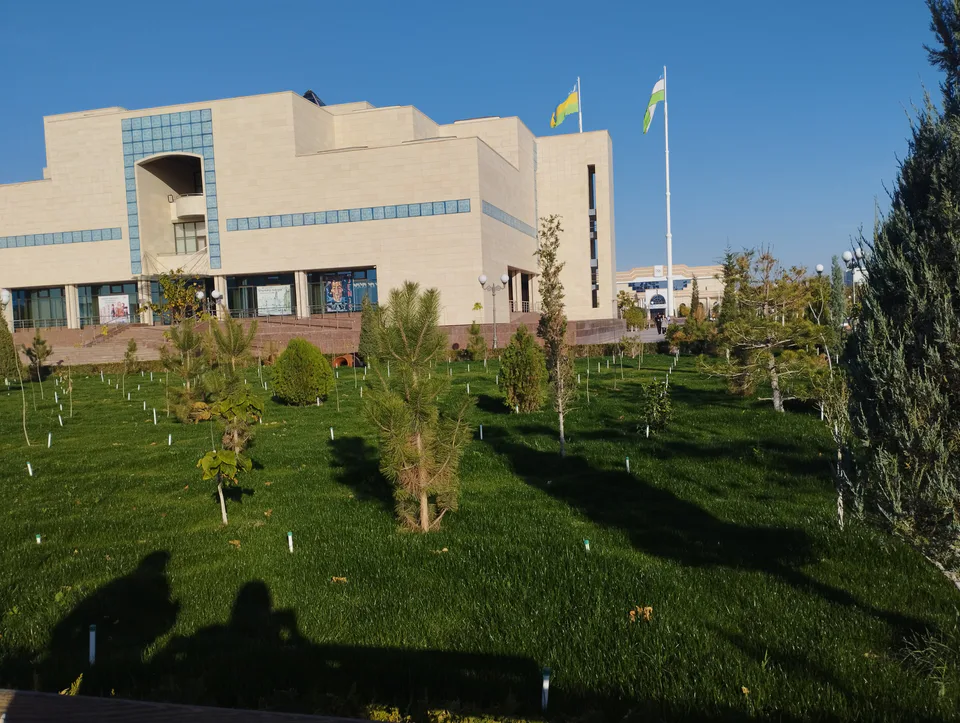
One of the richest collections of his work is in the Savitsky State Museum of Art of Karakalpakstan in Nukus — Savitsky acquired and saved many of his paintings from the artist's family — and the State Museum of Arts of Uzbekistan in Tashkent also holds his canvases. For art lovers, the Volkov room is one of the highlights of the Nukus museum.
Built eastward from the Caspian shore under General Mikhail Annenkov, the Trans-Caspian Railway reached Samarkand via Bukhara (Kagan) in 1888. Trains first crossed the Amu Darya on a wooden bridge; a permanent one was completed only in 1901. In 1898 the line was extended to Tashkent and Andijan, and the opening of the Tashkent–Orenburg railway in 1906 linked Central Asia directly with central Russia. The railway boosted cotton exports dramatically, and new settlements grew around stations such as Kagan and Khavast and in the Russian quarters of towns like Jizzakh. The old station buildings of Kagan and Samarkand recall the era.
On the night of 29 May 1898 some 1,500 armed men led by the Naqshbandi sheikh Muhammad Ali Madali, known as Dukchi Ishan, attacked the Russian army camp at Andijan. The rising fed on resentment of colonial rule, taxation and land policy, as well as on religious appeals. The troops quickly recovered and beat off the attack, and within days the revolt was crushed. Dukchi Ishan and other leaders were executed, many participants exiled and their villages punished. The episode pushed the authorities to tighten control over Muslim institutions in Turkestan.
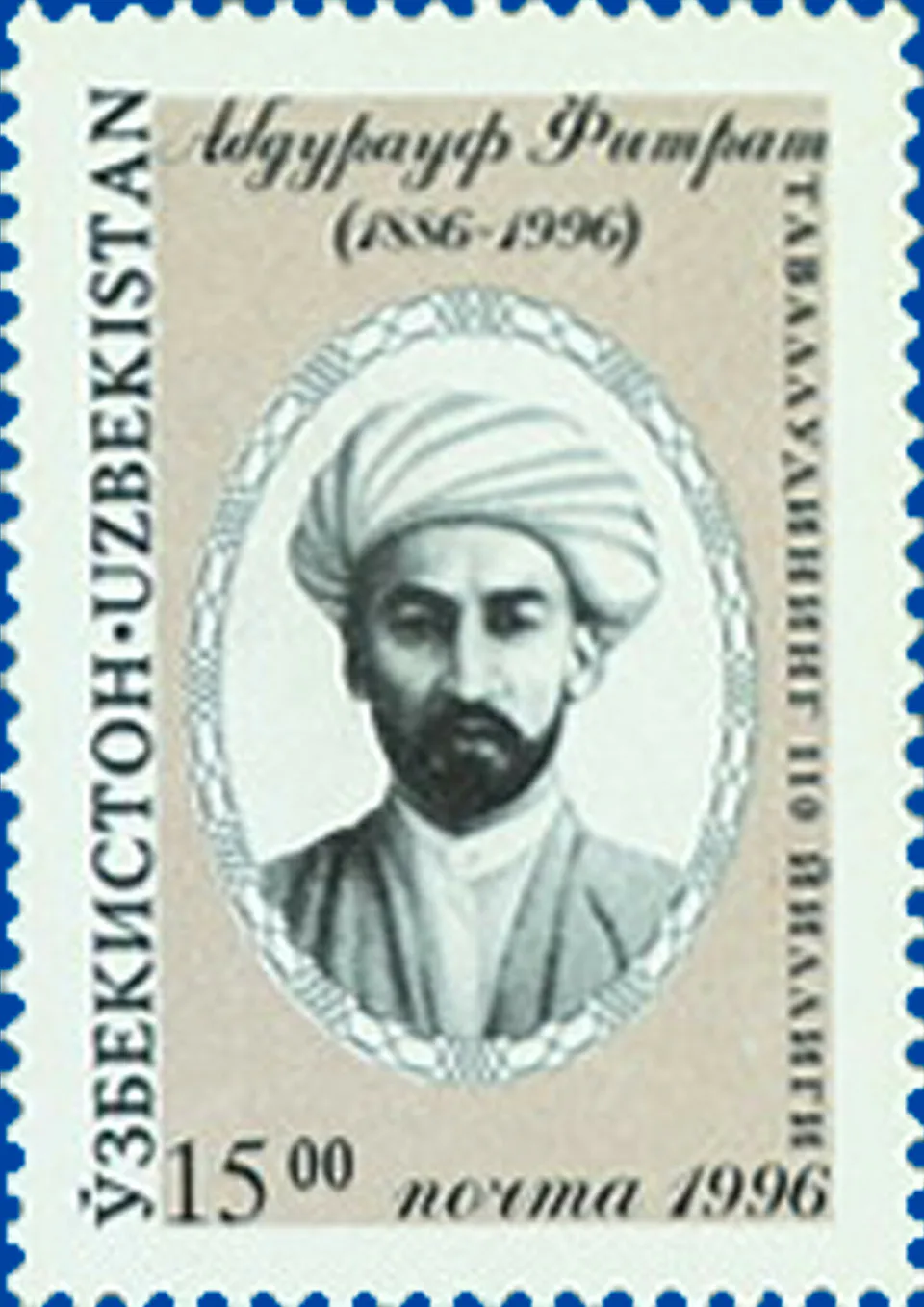
In the late 19th and early 20th centuries a reform movement took shape in Turkestan: the Jadids, advocates of usul-i jadid, the “new method”. Inspired by the Crimean Tatar educator Ismail Gasprinsky, Mahmudkhoja Behbudiy, Munavvar Qori, Abdulla Avloniy, Is'hoqxon Ibrat, Abdurauf Fitrat and others opened schools teaching literacy by the phonetic method and wrote textbooks. From 1906 Uzbek-language newspapers such as Taraqqiy and Khurshid appeared in Tashkent, and Behbudiy's play “The Patricide” (Padarkush), staged in 1914, launched a national theatre. The Jadids sought to renew society through education, the press and reform. Many were repressed in the 1920s–1930s; their legacy is being rediscovered today.
On 25 June (8 July) 1916, at the height of the First World War, Nicholas II decreed the conscription of Turkestani men aged 19 to 43 for labour behind the front. Issued at harvest time and enforced through unfair lists, the decree provoked mass unrest. In July there were protests in Khujand, Tashkent and towns of the Fergana Valley; in Jizzakh the rising turned into armed fighting and was crushed with great brutality by punitive detachments, which left the old town badly damaged. The revolt also spread across Kazakhstan and Kyrgyzstan. Tens of thousands of labourers were eventually sent to the front zone regardless.
After the October Revolution of 1917, power in Tashkent passed to a Bolshevik-led soviet that excluded the local Muslim majority. In response, the Fourth Extraordinary Congress of Turkestan Muslims, meeting in Kokand on 27 November 1917, proclaimed a Turkestan Autonomy within a Russian federation. Its government was led by Mukhamedzhan Tynyshpaev and then Mustafa Chokay, with Jadids among its members. In February 1918 Red Guard units sent from Tashkent stormed Kokand; much of the city was destroyed and thousands of civilians were killed. Short-lived as it was, the autonomy is seen as a milestone in the region's pursuit of national statehood.
After the Turkestan Autonomy was crushed, an armed movement against Soviet rule spread through the Fergana Valley from 1918. Soviet sources called it the Basmachi movement; Uzbek historians today more often describe it as a struggle for independence. It was led by local commanders, or kurbashi, such as Ergash, Madamin Bek and Shermuhammad Bek (Kurshermat). After 1920 the fighting shifted to Eastern Bukhara and the mountains of Kashkadarya and Surkhandarya, where Ibrahim Bek was a leading figure; the Ottoman general Enver Pasha joined in 1921–1922 and was killed in 1922. Large Red Army forces had largely suppressed the movement by the mid-1920s, though isolated bands held out into the early 1930s.