Nature · Ortachirchiq District
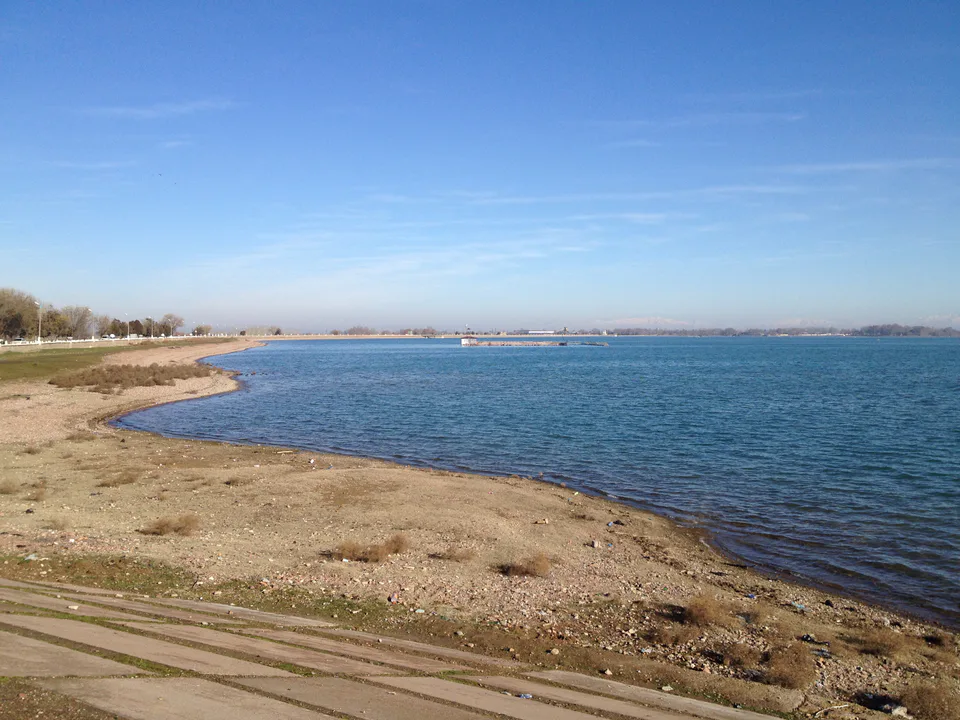
Tuyabuguz Reservoir (“Tashkent Sea”)
A “sea” on the capital’s doorstep
Ensemble · Zangiota District
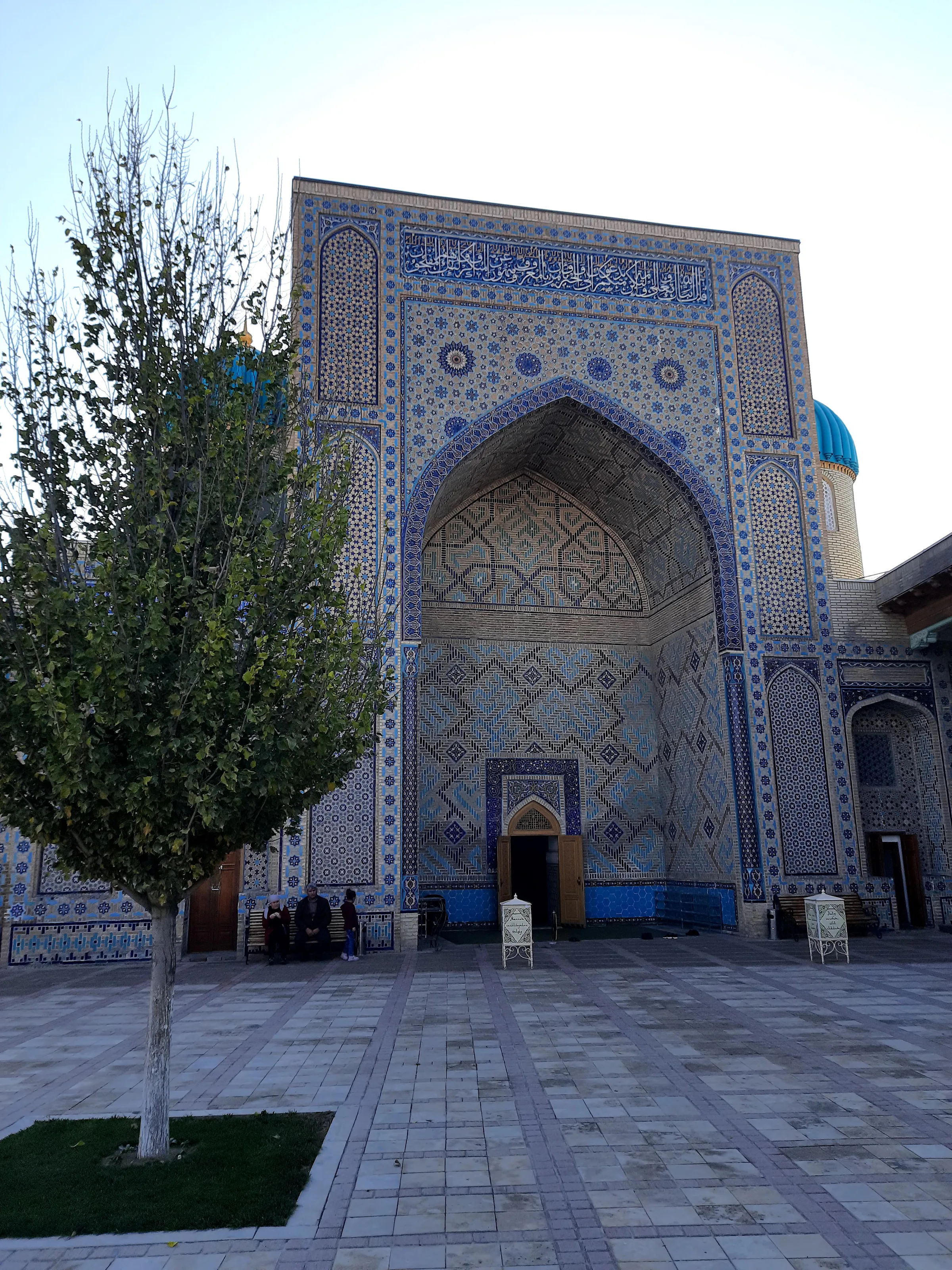
A 14th–19th-century ensemble on the edge of Tashkent, grown around the mausoleums of the Sufi sheikh Zangi Ata and his wife Anbar Ona.
Zangiata is one of the most revered shrines of the Tashkent oasis. The sheikh’s real name was Ay Khoja ibn Taj Khoja; according to the sources he lived in this village in the first half of the 13th century and belonged to the Yasawiyya Sufi order. His nickname, Zangi Ata, means “black father”. After his death his grave became a place of pilgrimage, and his wife Anbar Ona was later buried nearby.
Scholars attribute the mausoleum to Amir Timur in the late 14th century, with the decoration completed under Ulugh Beg in the 1420s. Sources differ on the exact date, some giving the 1380s and others the 1390s. The portal and domes were repaired in the 16th–17th centuries, and in 1832 a single-storey madrasa and a namazgah mosque were added. In 1870 the complex was restored again and the mosque’s veranda was built, decorated by Hajji Muhammad, a master from Kokand.
A poplar-lined avenue leads to the mausoleum. It began as a plain four-room building — a pilgrims’ hall, the tomb chamber and two small rooms — before a tall tiled portal was raised in front of it, framed with octagonal rosettes of glazed brick and tile mosaic. The white marble tombstone carries fine carving and Arabic inscriptions, the dado inside is faced with majolica, and the painting under the dome is picked out in gold leaf.
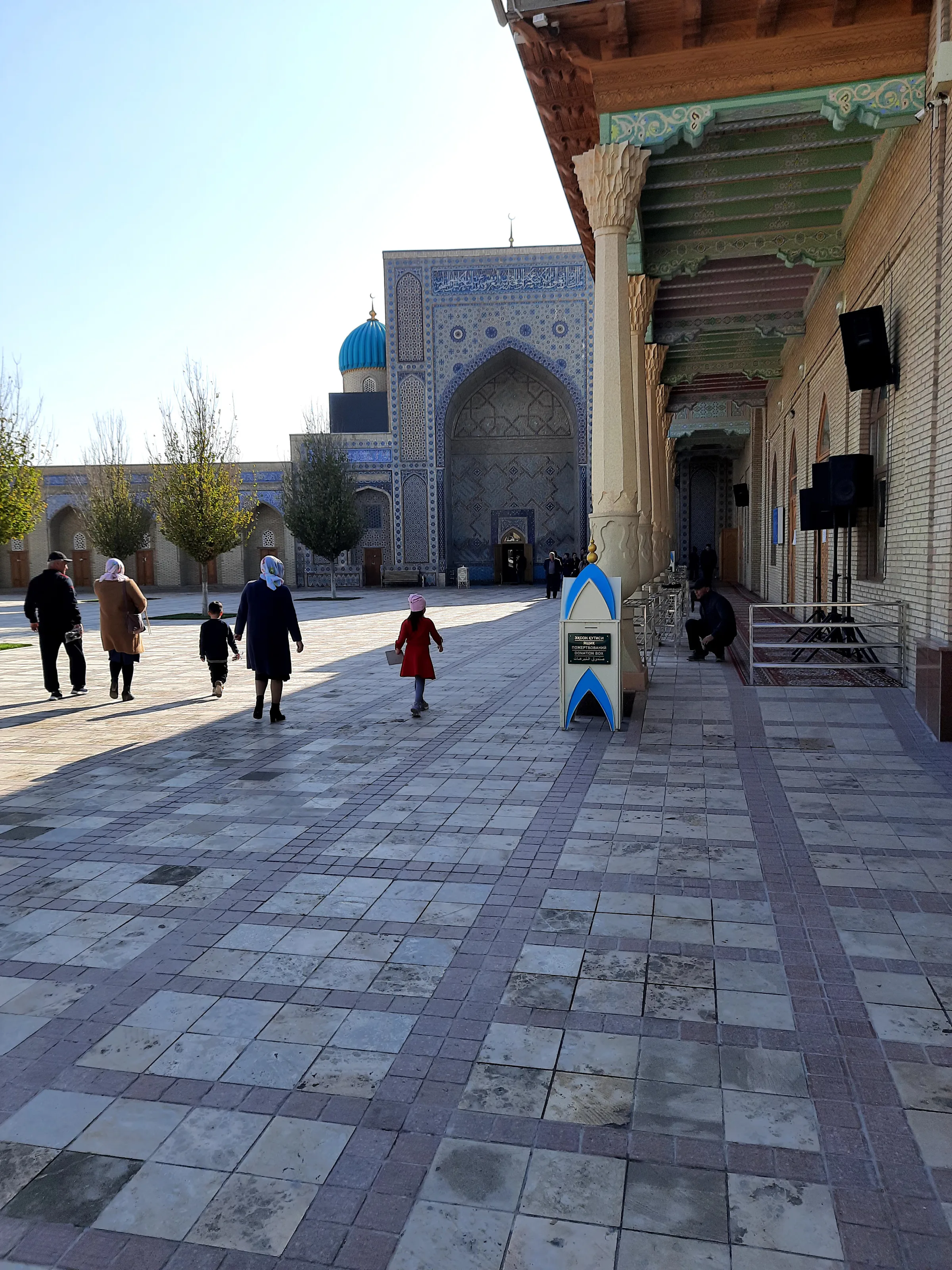
The ensemble falls into three parts: the main courtyard with the mausoleum, mosque, madrasa and minaret; the old cemetery with the tomb of Anbar Ona; and a large garden. The madrasa’s student cells line a trapezoidal courtyard.
Since the 1990s the complex has once again been a working shrine. The buildings were restored, the garden was relaid, and from 2013 the grounds were enlarged and a new wing was attached to the historic namazgah mosque. On Fridays and religious holidays pilgrims arrive from across the region, so the place is rarely quiet.
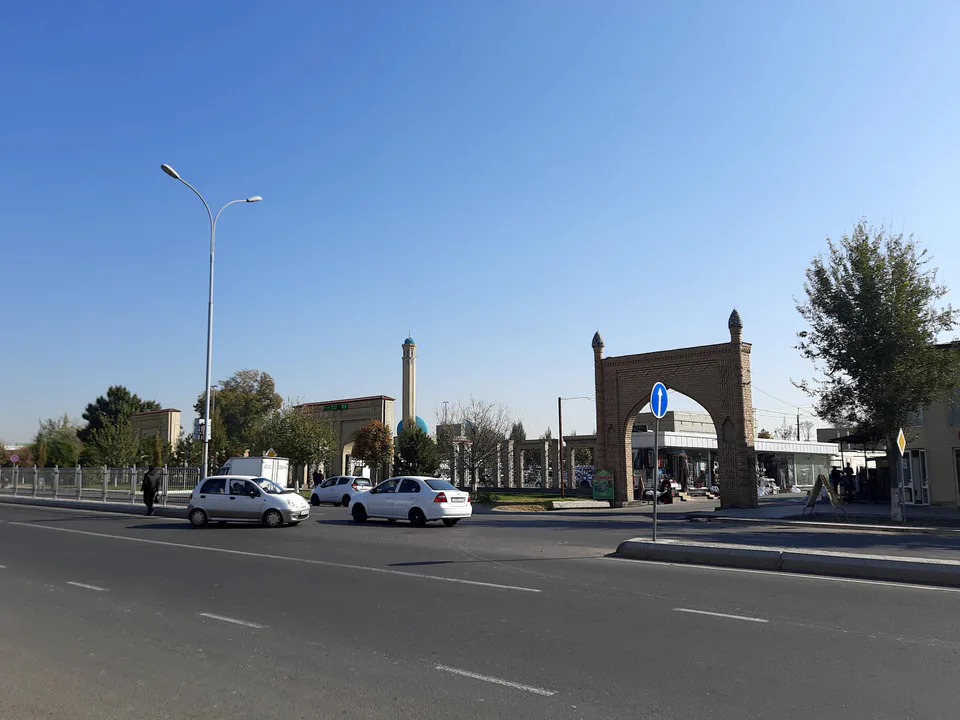
The complex stands in Zangiota village, right on the south-western edge of Tashkent, so it is easy to add to a day in the capital. A taxi or car is the simplest option, and the drive from the city centre is short when traffic allows. There is parking, a teahouse and a row of stalls by the entrance.
Until 1992 the surrounding district was called Kalinin District; it took the sheikh’s name after independence. Anbar Ona’s mausoleum stands not in the main courtyard but in the middle of the cemetery, a few minutes’ walk along the path between the graves.