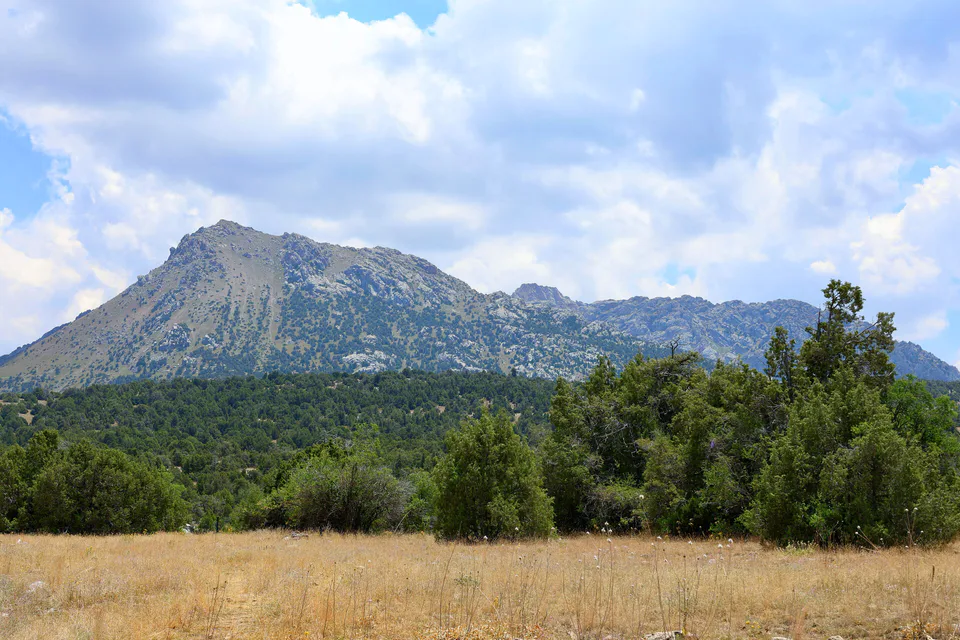
Nature · Zomin District
Zaamin National Park
The juniper forests of 'Uzbek Switzerland'
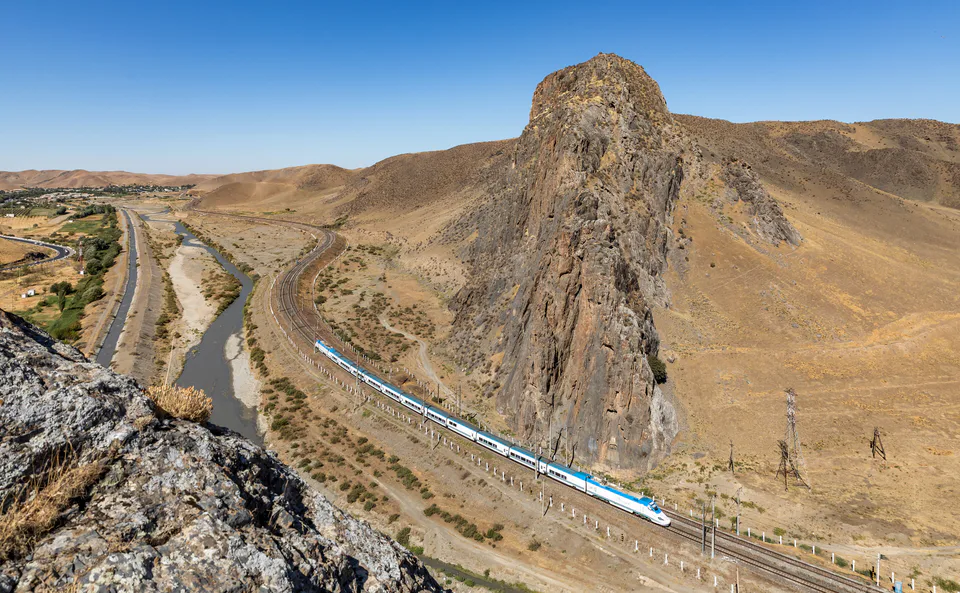
Nature · Gallaorol District
A narrow gorge 15–16 km south-west of Jizzakh where the Sanzar River cuts between the Malguzar and Nuratau ranges, its cliffs bearing inscriptions of Ulugh Beg (1425) and Abdullah Khan (1571).
Tamerlane's Gate is the narrowest part of the Sanzar River gorge, which separates the Malguzar and Nuratau ranges. Between near-vertical cliffs the passage is 120–130 metres wide, narrowing in places to 35–40 metres. Locals also call it the Ilonutdi gorge. Beyond the pass the Sanzar flows through Jizzakh and then, under the name Kly, heads for Lake Tuzkan. For centuries it was one of the easiest routes for caravans and armies travelling from Tashkent and the Fergana Valley to Samarkand.
Today the Tashkent–Samarkand highway (M39) and the railway both squeeze through, so most travellers see the gate from a car or train window. Two huge rock walls resembling the leaves of a gate gave the place its name, and legend has it that Amir Temur himself led his army this way.
The main attraction is a set of Persian inscriptions carved about 10 metres up the cliff on the right-hand side as you travel from Jizzakh towards Samarkand. The first dates from AH 828 (1425) and records that Mirza Ulugh Beg Guragan campaigned against the Jete and the Mongols and returned safe and sound.
The second was carved in AH 979 (1571) in the name of Abdullah Khan, son of Iskandar Khan. It celebrates the victory of his 30,000-strong army over Dervish Khan, Baba Khan and other princes, claims that the enemy numbered 400,000 and says the Jizzakh river ran with blood for a month, figures best read as the customary exaggeration of victory proclamations of the age.
Above both inscriptions is a brass plaque bearing the imperial Russian coat of arms, installed to mark the building of the railway in 1895–1898. The gorge was photographed in 1871–1872 for the archaeological section of the Turkestan Album, and in those pictures the cliffs and inscriptions look much as they do today.
The gorge is 15–16 km from Jizzakh along the M39 towards Samarkand, about 20 minutes by taxi. On a Tashkent–Samarkand journey it is easy to combine with the Sharof Rashidov House Museum and the Hamid Olimjon and Zulfiya Museum in Jizzakh as a half-day stop. Choose a clear, sunny day for photographs, as the inscriptions are hard to make out in shade.
Despite the name, none of the inscriptions dates from Timur's lifetime: Ulugh Beg's was carved 20 years after Timur's death, and Abdullah Khan's almost 170 years later. The result is an open-air stone chronicle in which the Timurids, the Shaybanids and the Russian Empire sit side by side.
Nature · Zomin District
The juniper forests of 'Uzbek Switzerland'
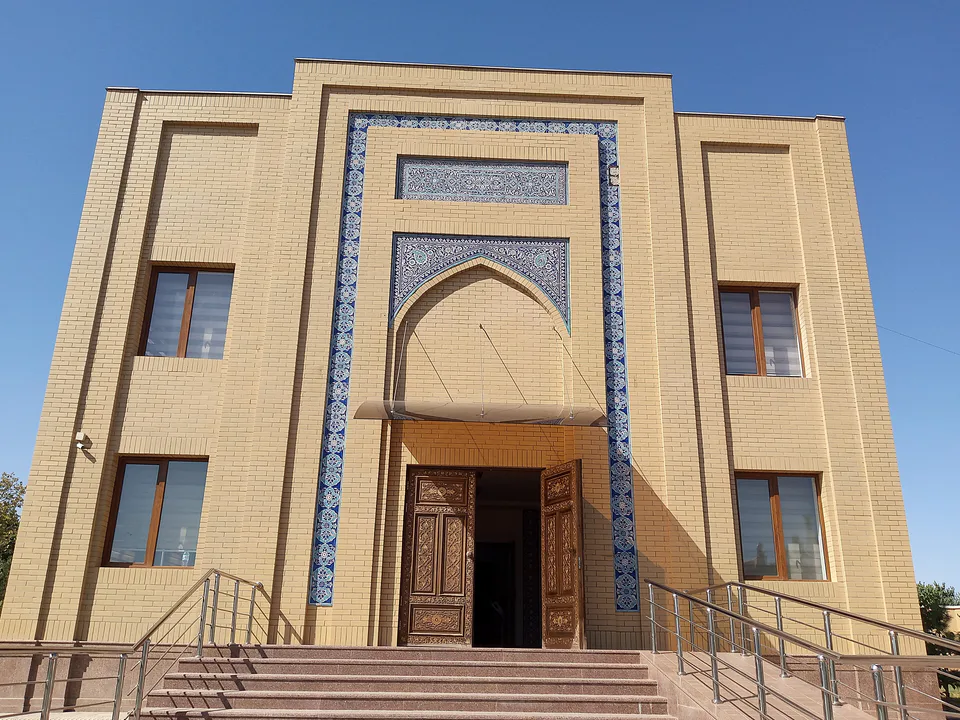
Museum · Jizzakh
The family home of a writer and Soviet-era leader
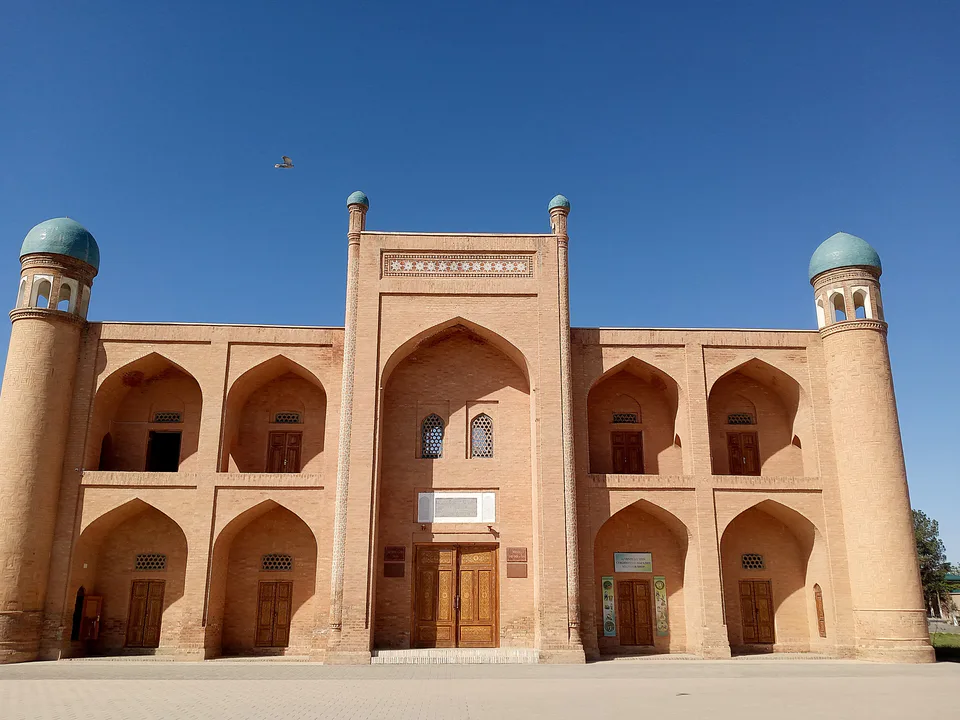
Museum · Jizzakh
A madrasa devoted to two poets
Archaeology · Jizzakh
The remains of Dizak, the 'little fortress'