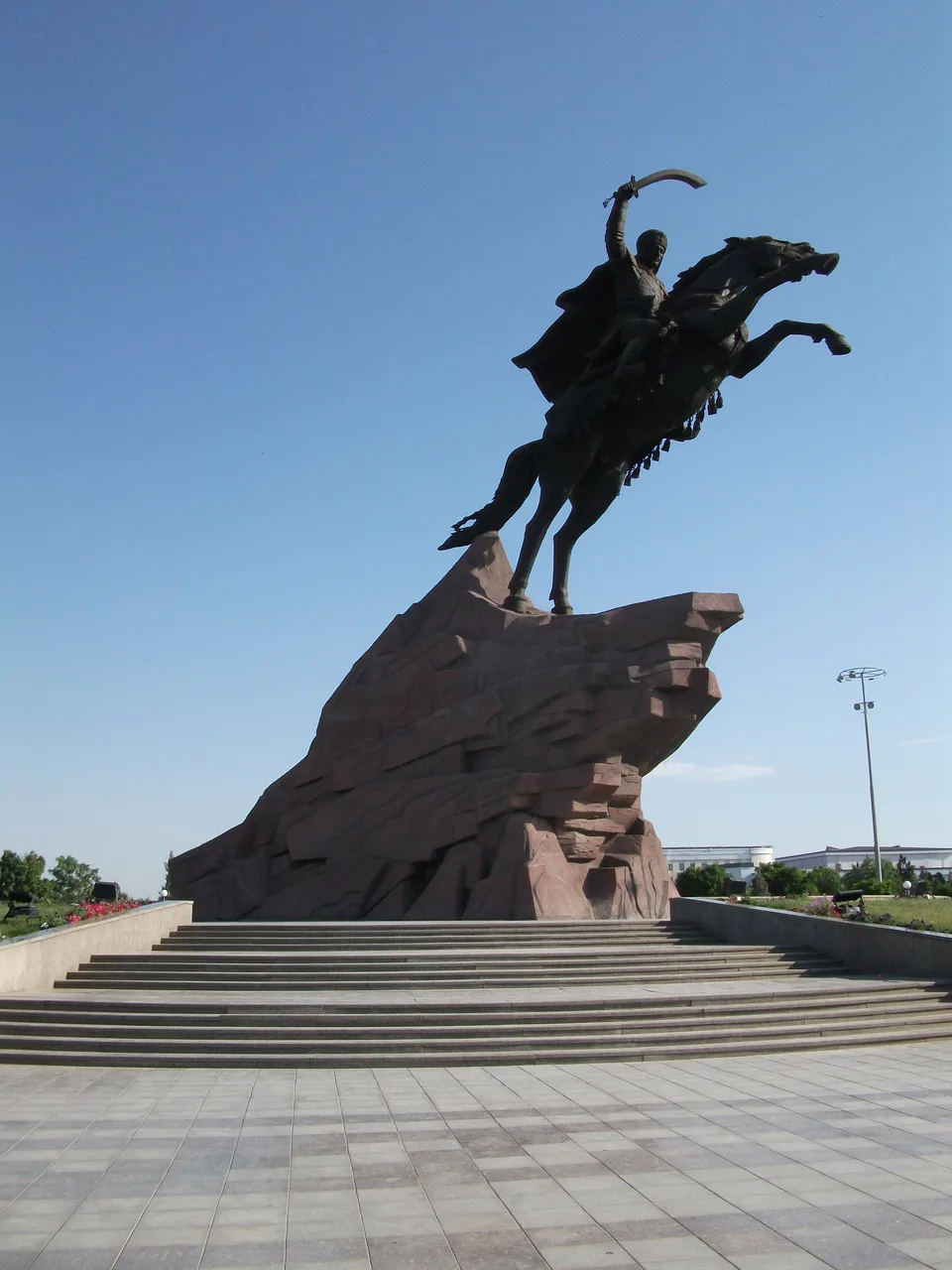
The eldest son of the Khwarazmshah Ala ad-Din Muhammad and the last Khwarazmshah, who fought the Mongols for eleven years. Uzbekistan honours him as a symbol of courage, with a memorial complex in Khorezm Region.
Jalal al-Din Mangburni was born around 1198–1199 in Gurganj, capital of the Khwarazmshahs (today Kunya-Urgench in Turkmenistan). The eldest son of Ala ad-Din Muhammad, he was not at first the heir, as his mother was a concubine; the formidable queen mother Terken Khatun backed a younger son, Uzlagh Shah. Campaigning alongside his father from a young age, Jalal al-Din made his name as a gifted commander. His secretary and biographer al-Nasawi described him as of medium height, Turkic-speaking with a command of Persian, exceptionally brave and even-tempered.
Fighting the Mongols
When the Mongols overran Transoxiana in 1220 and his father died on an island in the Caspian, Jalal al-Din was proclaimed Khwarazmshah. Palace intrigue drove him from Gurganj; he raised a large army around Ghazni and in 1221 defeated the Mongol general Shigi Qutuqu at Parwan, one of the Mongols' rare defeats of the time. A quarrel over booty then cost him part of his army, and in November 1221 Genghis Khan himself beat him on the Indus — legend has it that he escaped by leaping on horseback from a high bank into the river and swimming across. He fought on in India, Iran, Azerbaijan and Georgia, until in 1231, on the run from the Mongols, he was killed in the mountains near Diyarbakir.
Remembered in Uzbekistan
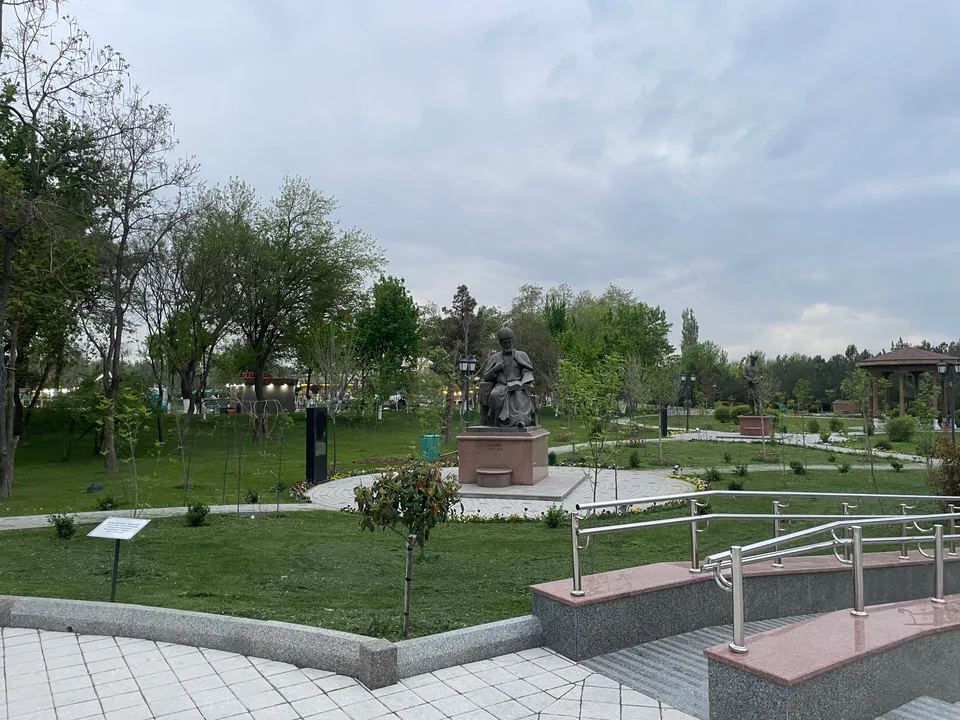
In independent Uzbekistan Jalal al-Din has become a symbol of courage and defence of the homeland: his 800th anniversary was celebrated in 1999 with a commemorative coin, and the Order of Jaloliddin Manguberdi was created on 30 August 2000. Several statues of him stand in the country, Khorezm Region has a memorial complex in his honour, and another monument was unveiled there in 2022. Streets, schools and parks in Tashkent and Khorezm bear his name, and travellers heading to Khiva and Urgench can see these memorials.
In 1218 the governor of Otrar massacred a Mongol trade caravan, and Genghis Khan's envoys were then put to death; the outrage launched his campaign against the Khwarazmian Empire. Otrar was besieged in autumn 1219, Bukhara fell in February 1220 and Samarkand in March, Termez later that year, and the capital Gurganj in 1221 after a long siege. Cities were plundered, much of their population killed or enslaved, and irrigation works wrecked; the Sufi master Najm al-Din Kubra died among Gurganj's defenders. Shah Muhammad died on an island in the Caspian, while his son Jalal ad-Din fought on for another decade. Samarkand later moved from Afrasiyab to its present site.
After Genghis Khan's death in 1227, Transoxiana passed to the realm of his second son, Chagatai. The Mongol nobility stayed on the steppe and ruled the settled towns through governors such as the Khwarazmian merchant Mahmud Yalavach and his son Mas'ud Beg, who built a madrasa in Bukhara as cities slowly recovered. Kebek Khan (1318–1326) reformed the coinage and built a palace near Nakhshab; the city name Karshi is thought to derive from the Mongol word for palace. Under Tarmashirin in the 1330s the khans embraced Islam. By the mid-14th century the khanate had split into Moghulistan and a western half run by Turco-Mongol emirs — opening the way for Timur's rise.