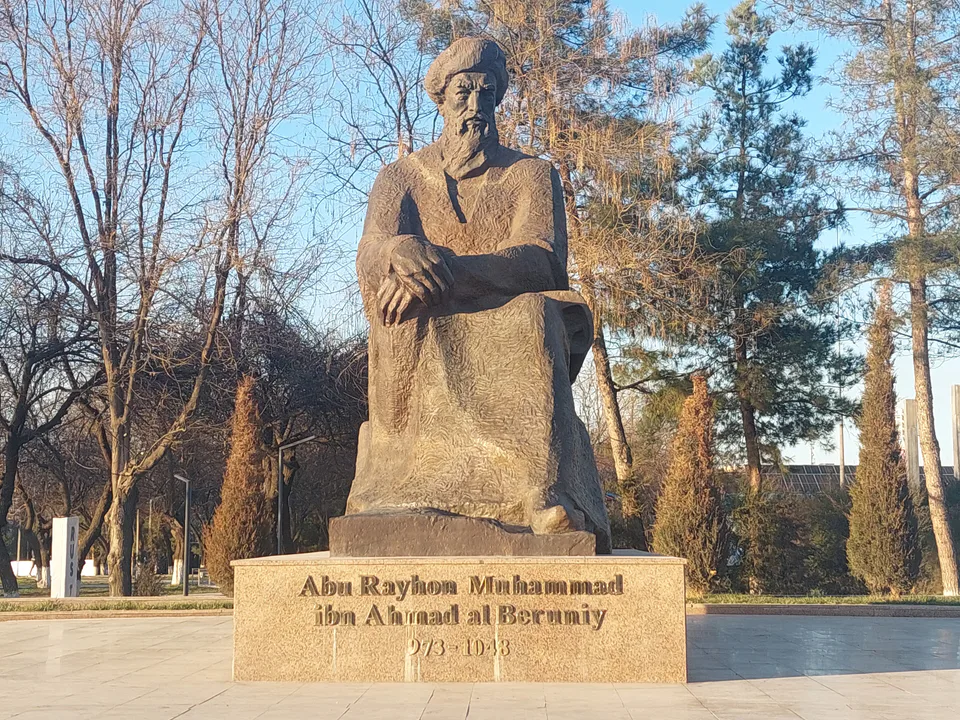
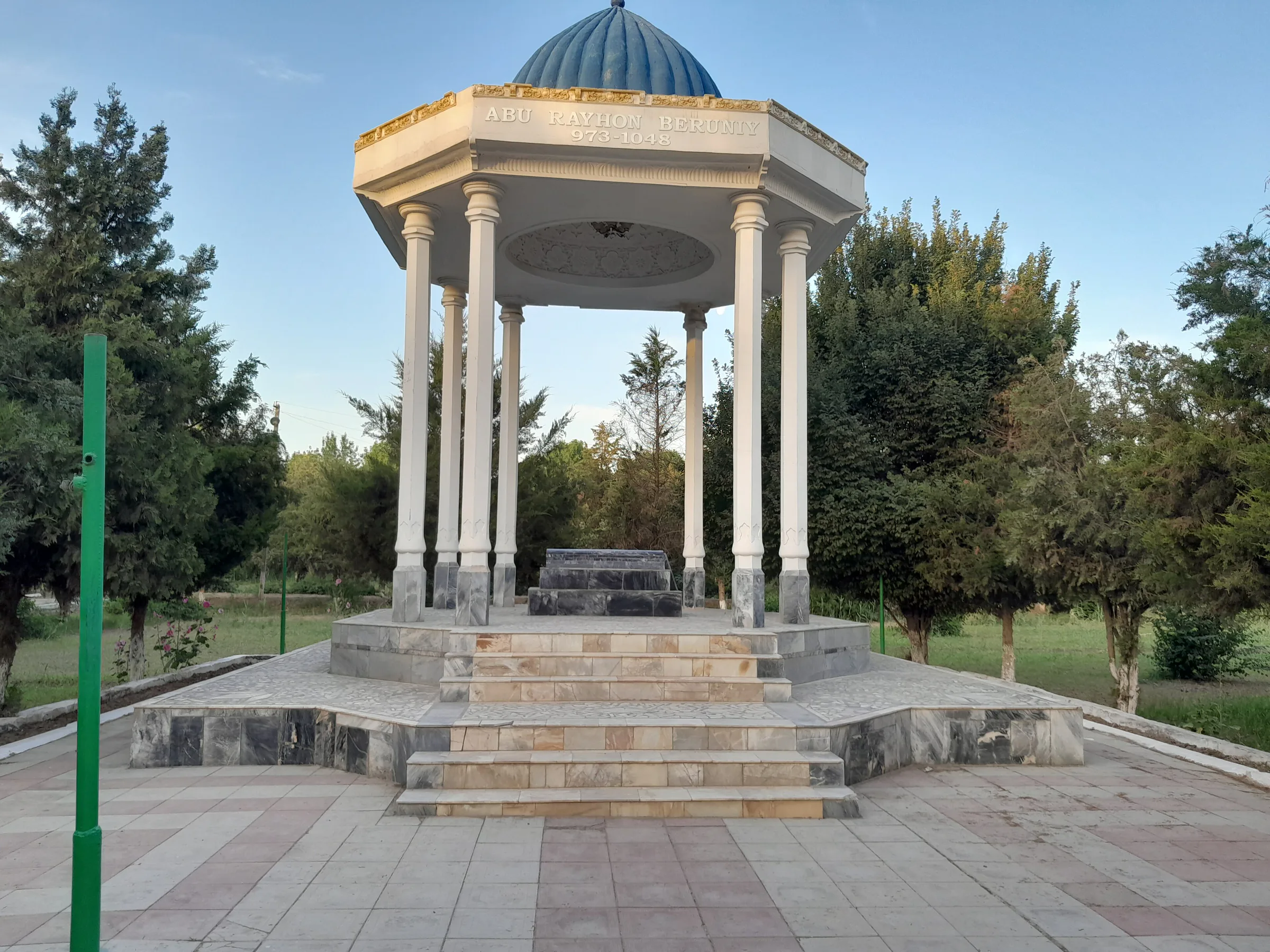
A polymath born in Kath, the ancient capital of Khorezm — today the town of Beruniy in Karakalpakstan — famed for his work in astronomy, geodesy, mineralogy and the study of India.
Abu Rayhan Muhammad ibn Ahmad al-Biruni was born on 4 September 973 in Kath, capital of Khwarazm; the town of Beruniy in the Republic of Karakalpakstan stands on the site today. His teacher was the noted mathematician Abu Nasr ibn Iraq. After the fall of the Afrighid dynasty in 995 he spent several years at the courts of Bukhara, Gurgan and elsewhere, and around 1000 wrote “The Remaining Signs of Past Centuries”, a study of the calendars and festivals of ancient peoples. He then returned to Gurganj to work among the scholars at the court of the Khwarazmshah Ma'mun.
In 1017 Mahmud of Ghazni conquered Khwarazm and carried al-Biruni off to Ghazni. Accompanying Mahmud's Indian campaigns, he learned Sanskrit and around 1030 completed his book on India. He died in Ghazni in 1048 (some sources say around 1050).
Scientific legacy
His own list of his writings runs to more than a hundred titles. Best known are the “Mas'udic Canon”, an encyclopedia of astronomy and mathematics, a book on precious stones and minerals, and the “Saydana” on medicinal plants. By observing the horizon from a mountaintop he calculated the Earth's radius with remarkable accuracy, and he discussed scientifically whether the Earth rotates on its axis. His “India” is regarded as an early model of impartial study of another culture and religion. He knew Khwarazmian, Persian, Arabic and Sanskrit, and wrote mostly in Arabic.
His legacy in Uzbekistan
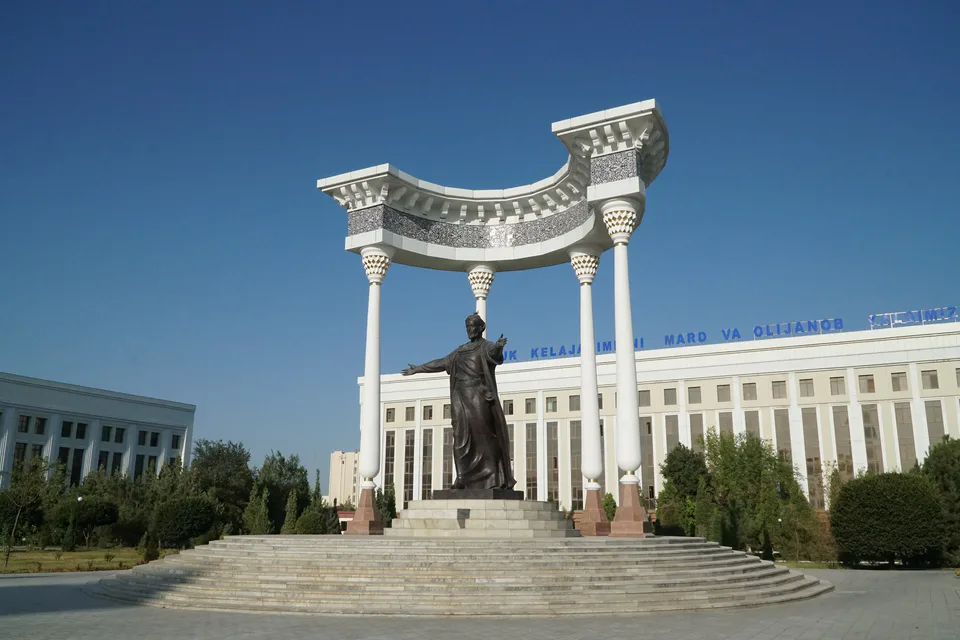
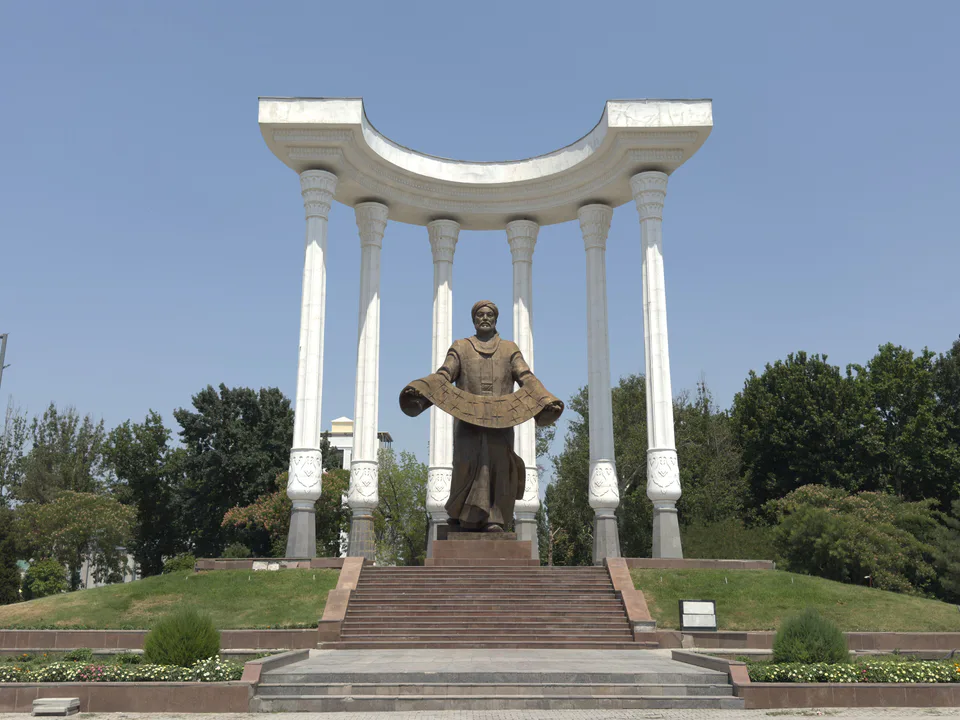
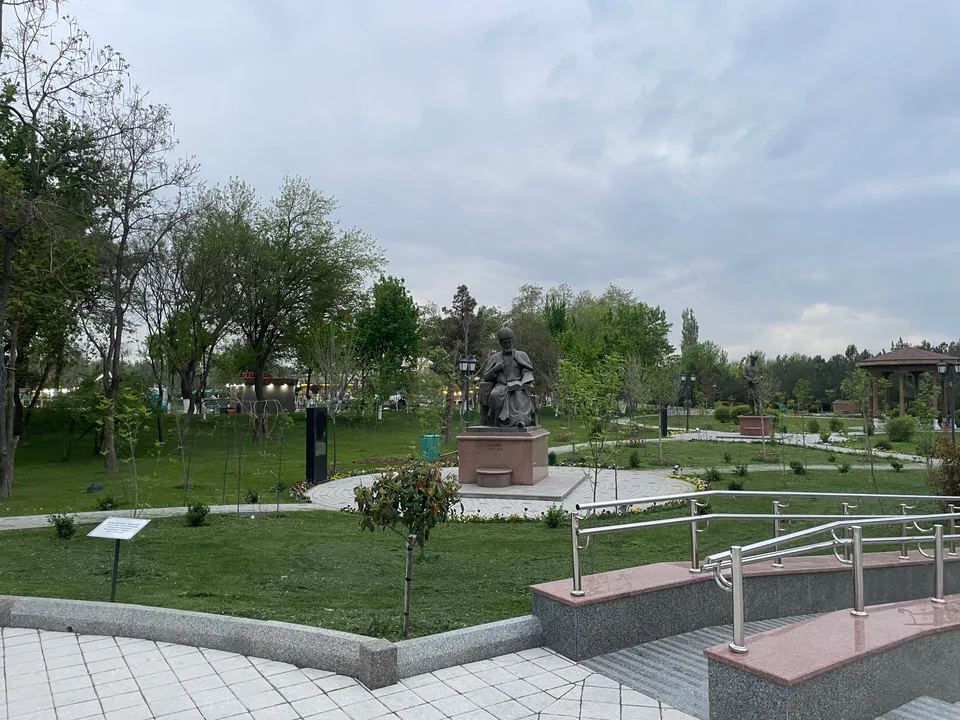
In 1957 his home town, then called Shabbaz, was renamed Beruniy in his honour, and his millennium was celebrated with UNESCO in 1973. The Institute of Oriental Studies of the Uzbek Academy of Sciences bears his name, and Tashkent has a Beruniy metro station. Travellers heading for Karakalpakstan's desert fortresses often pass through the town of Beruniy.
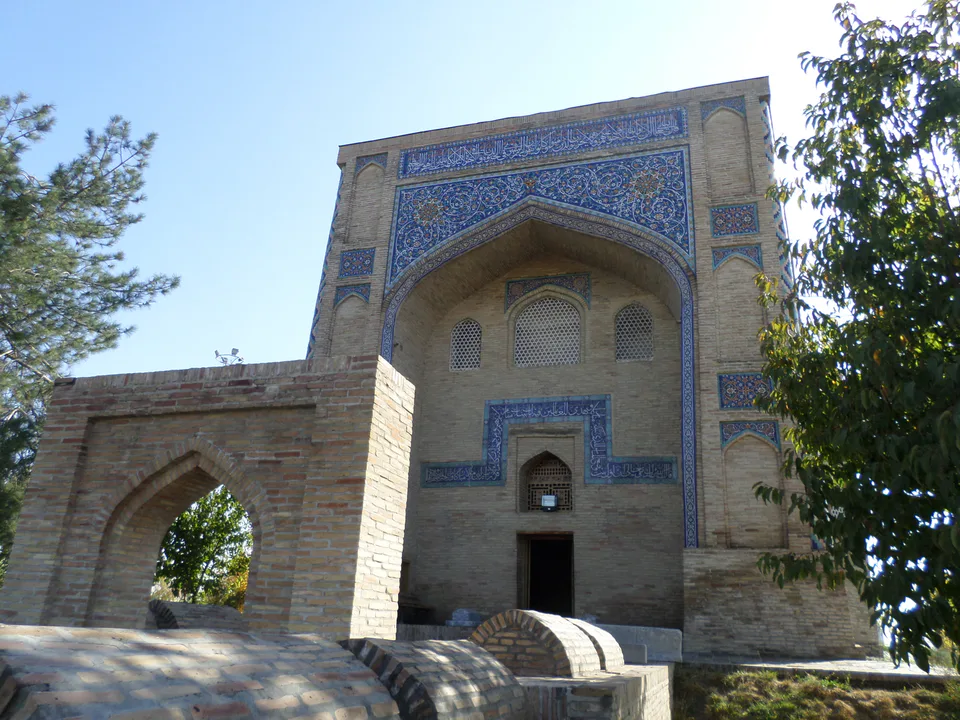
In 999 Nasr ibn Ali of the Turkic Karakhanid dynasty seized Bukhara and brought the Samanid state to an end. The Karakhanids were among the first Turkic dynasties to embrace Islam; in the mid-11th century their realm split, and Samarkand became the seat of the Western khanate. Turkic now emerged as a literary language, with Yusuf Khass Hajib's poem “Kutadgu Bilig”. The Karakhanids were great builders: the Kalyan Minaret in Bukhara, the Rabati Malik caravanserai in Navoiy Region, and the minarets of Vabkent and Jarkurgan all date from their time. In the 12th century they became vassals of the Seljuks and then the Kara-Khitai, and in 1212 the Khwarazmshah Muhammad ended the dynasty.
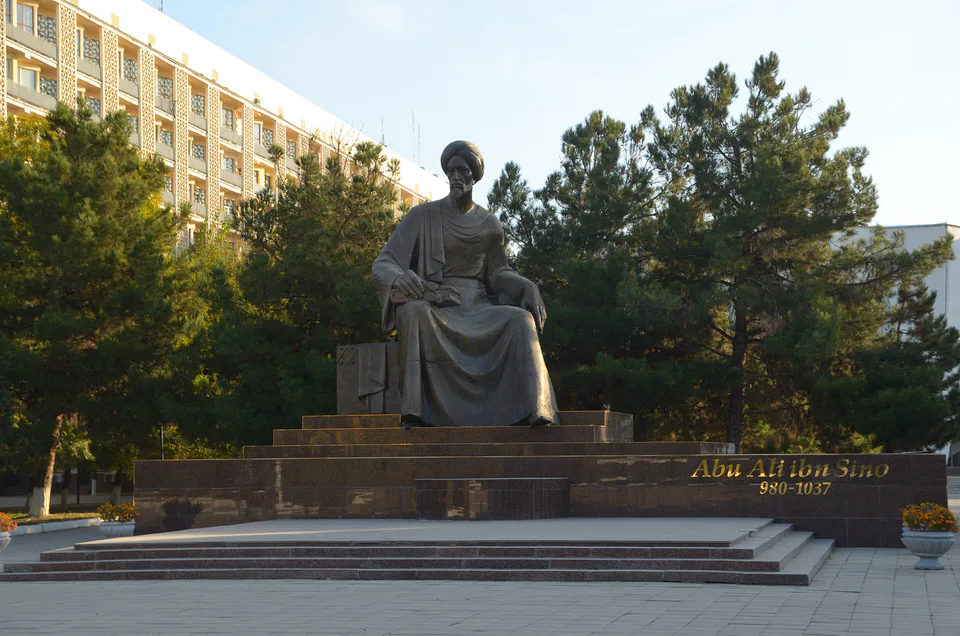
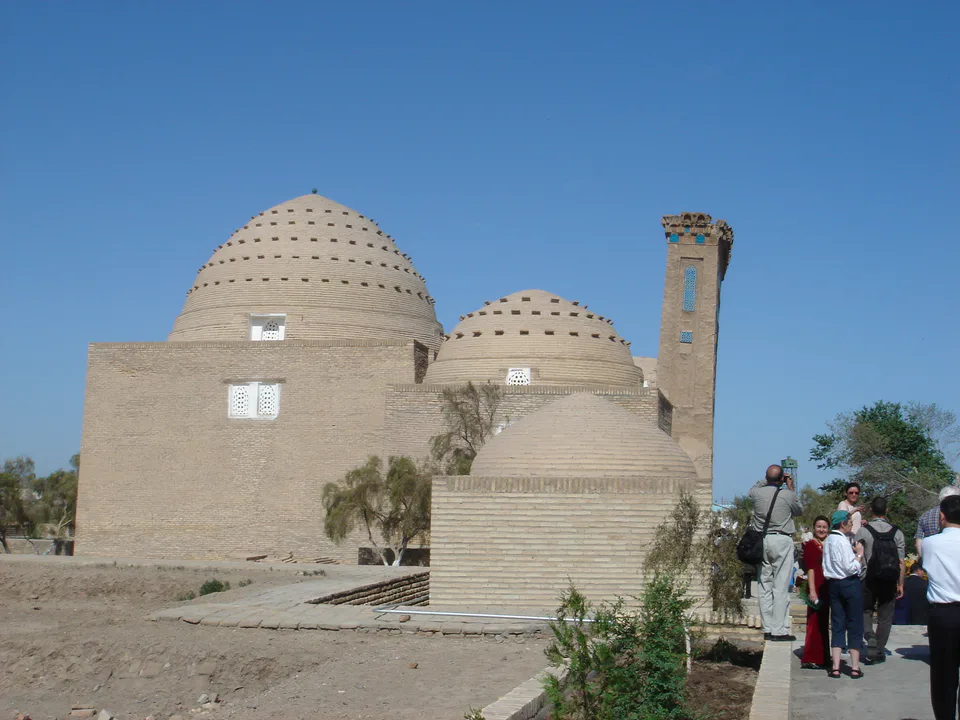
Around the turn of the 11th century a circle of outstanding scholars gathered at the court of the Khwarazmshah Ma'mun ibn Ma'mun in his capital Gurganj (today's Kunya-Urgench in Turkmenistan). Sources date its foundation to 1000 or 1004, and it is remembered as the Ma'mun Academy. Al-Biruni worked here, as did Ibn Sina for a time, the philosopher Abu Sahl al-Masihi and the mathematician Abu Nasr ibn Iraq. In 1017 Mahmud of Ghazni conquered Khwarazm and carried several scholars, al-Biruni among them, off to Ghazni. The academy was revived in Khiva in 1997, and its millennium was celebrated in 2006.