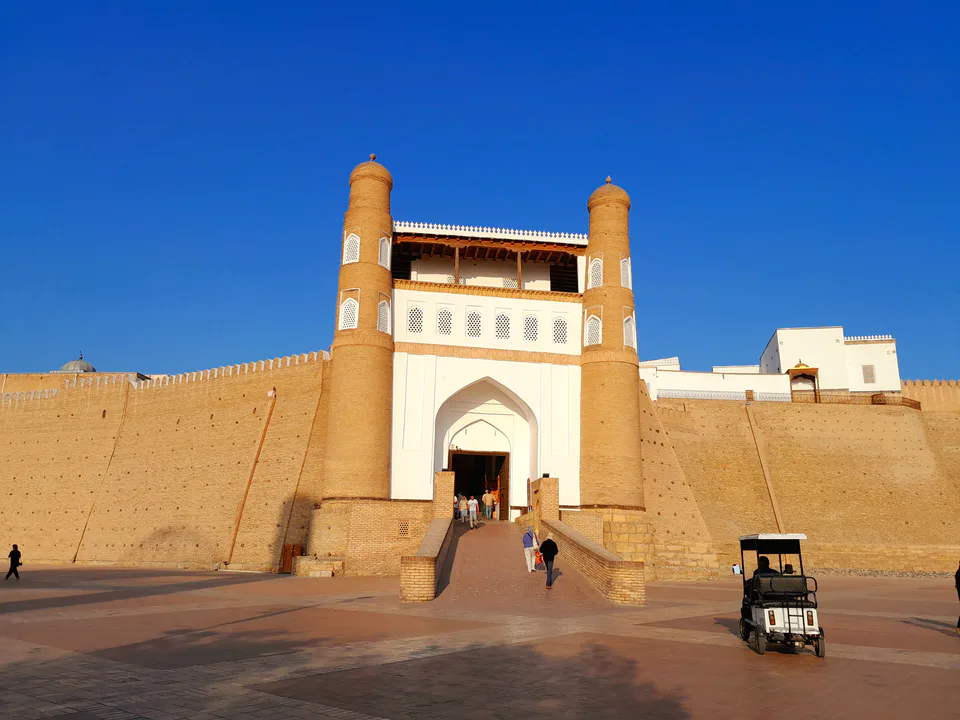
Fortress · Bukhara city
Ark of Bukhara
Seat of Bukhara's rulers for over a thousand years
Mosque · Bukhara city
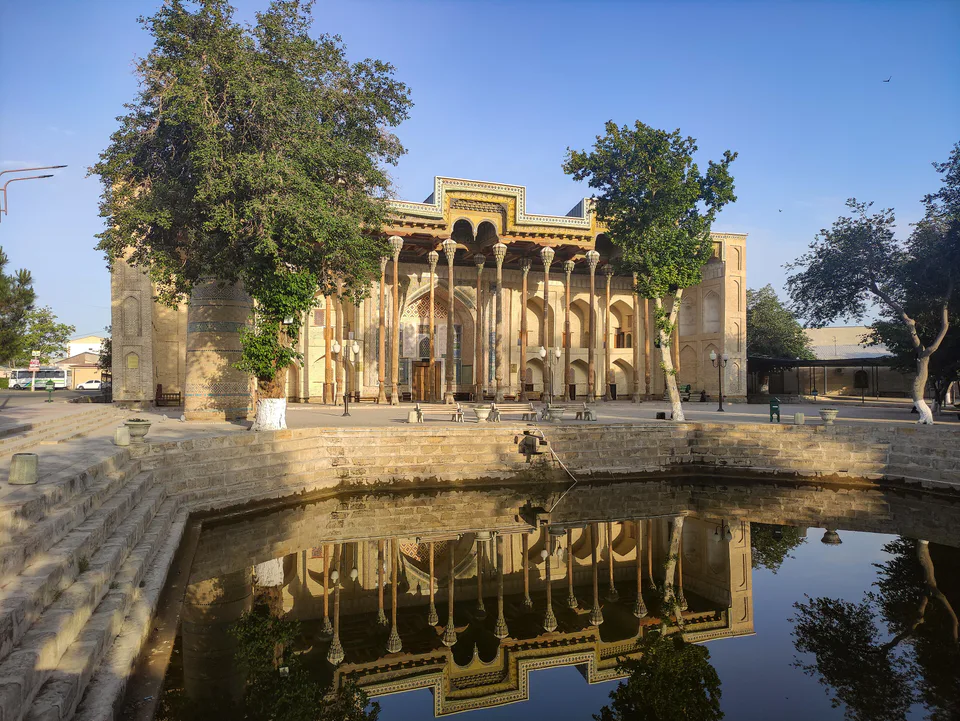
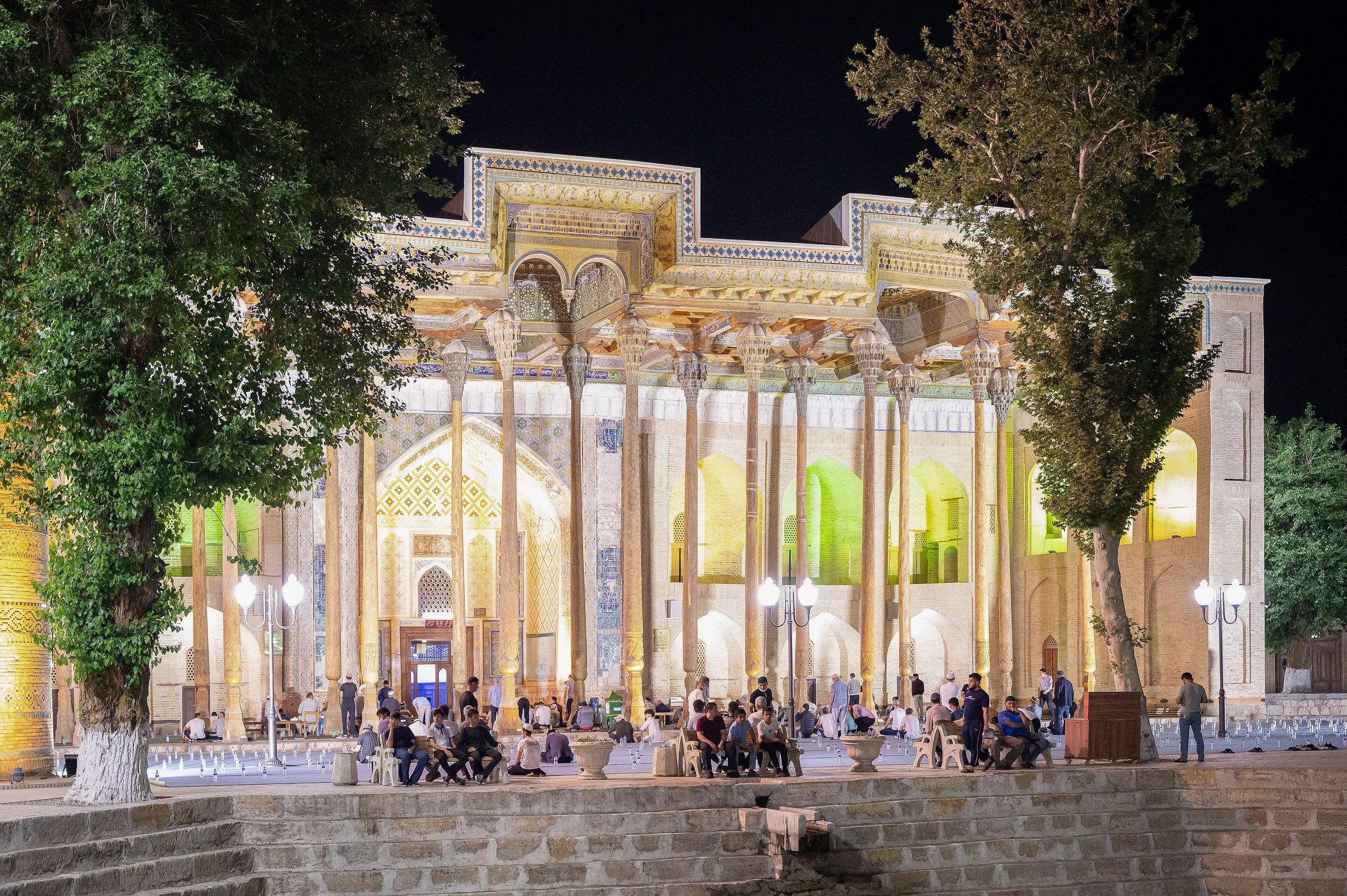
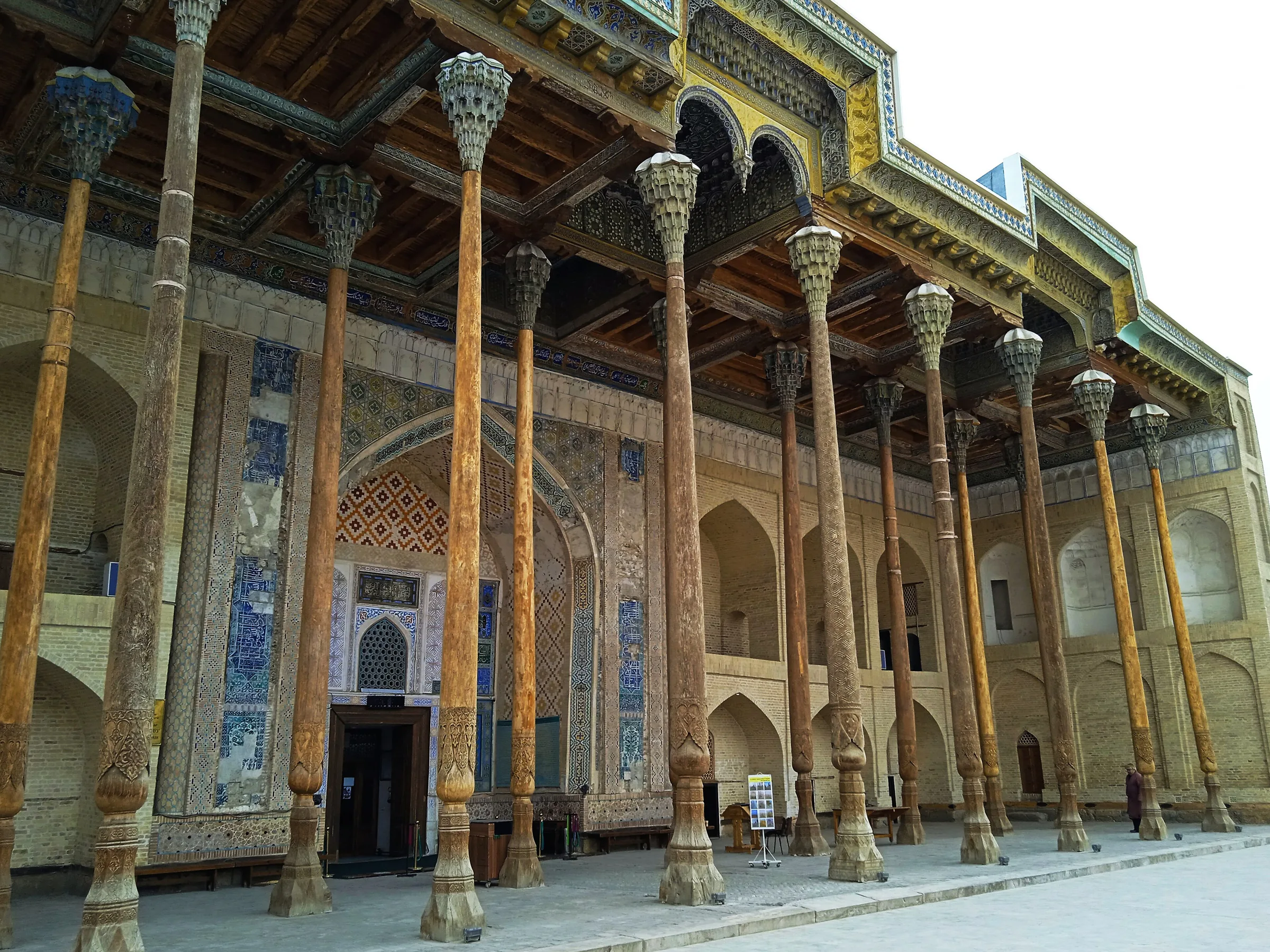
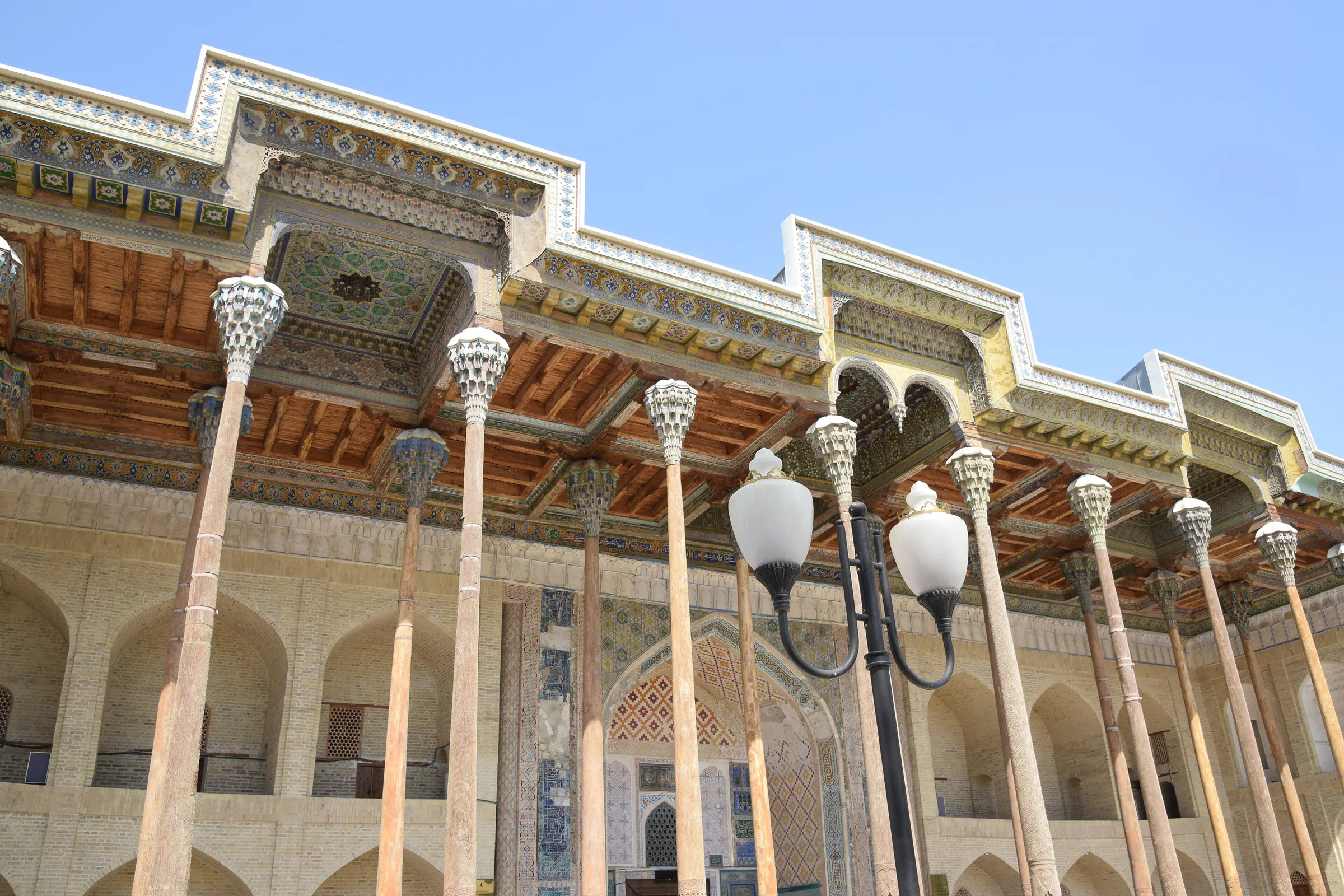
Facing the Ark, the Bolo Hauz ensemble of mosque, minaret and pool served as the Friday mosque of Bukhara's emirs. Its iwan of tall, slender carved columns is the finest example of early 20th-century Bukharan timber architecture.
The ensemble of mosque, minaret and pool stands on the Registan opposite the Ark gate. The winter mosque and pool were built in 1712 under the Ashtarkhanid ruler Abulfayz Khan. Before the revolution it was one of Bukhara's main Friday mosques, where the emir came down from the citadel to pray alongside the townspeople.
The summer iwan that now screens the winter mosque was added in the early 20th century; according to M. Yu. Saidjonov it was repaired in 1917. That same year the master builder Shirin Muradov added a small minaret beside it. Closed in Soviet times, it is once again a working mosque.
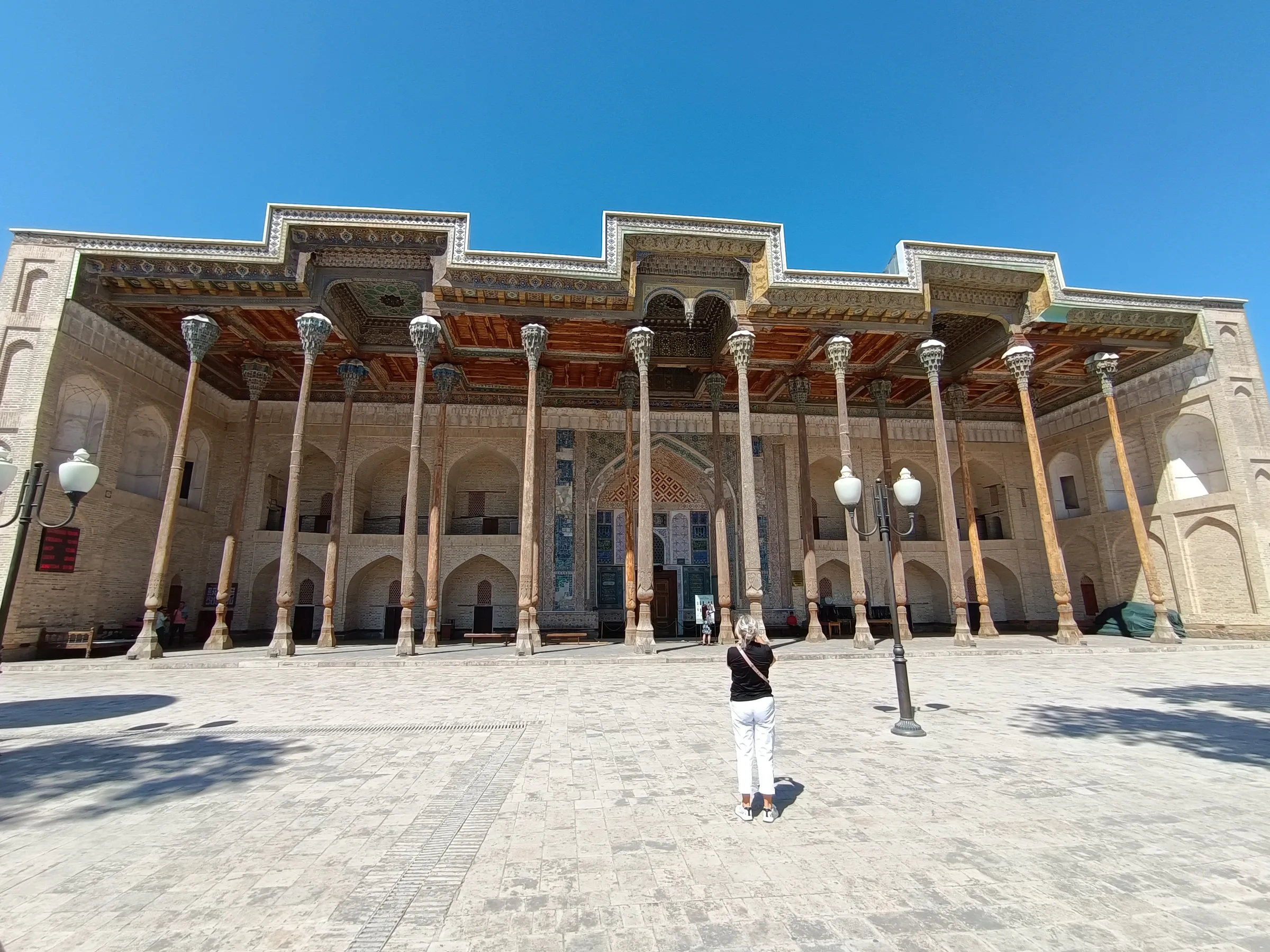
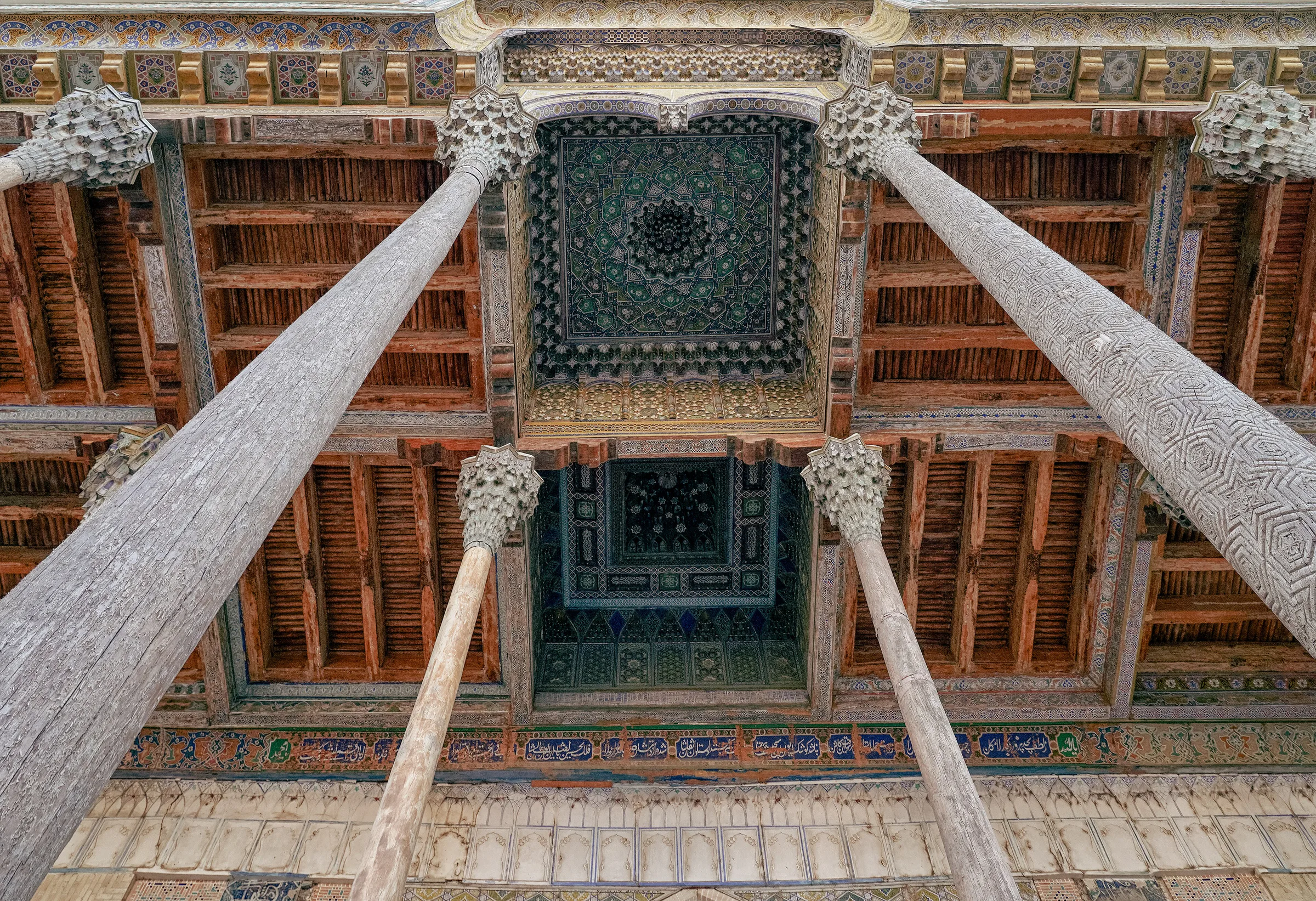
The mosque follows the plan of a large neighbourhood mosque, with winter and summer sections. The winter part is a four-column hall with several doors; the summer part is an iwan wrapping around it on three sides. The iwan's tall, slender wooden columns end in muqarnas capitals and rest on concrete bases, while the columns at the front are treated differently to form a ceremonial entrance.
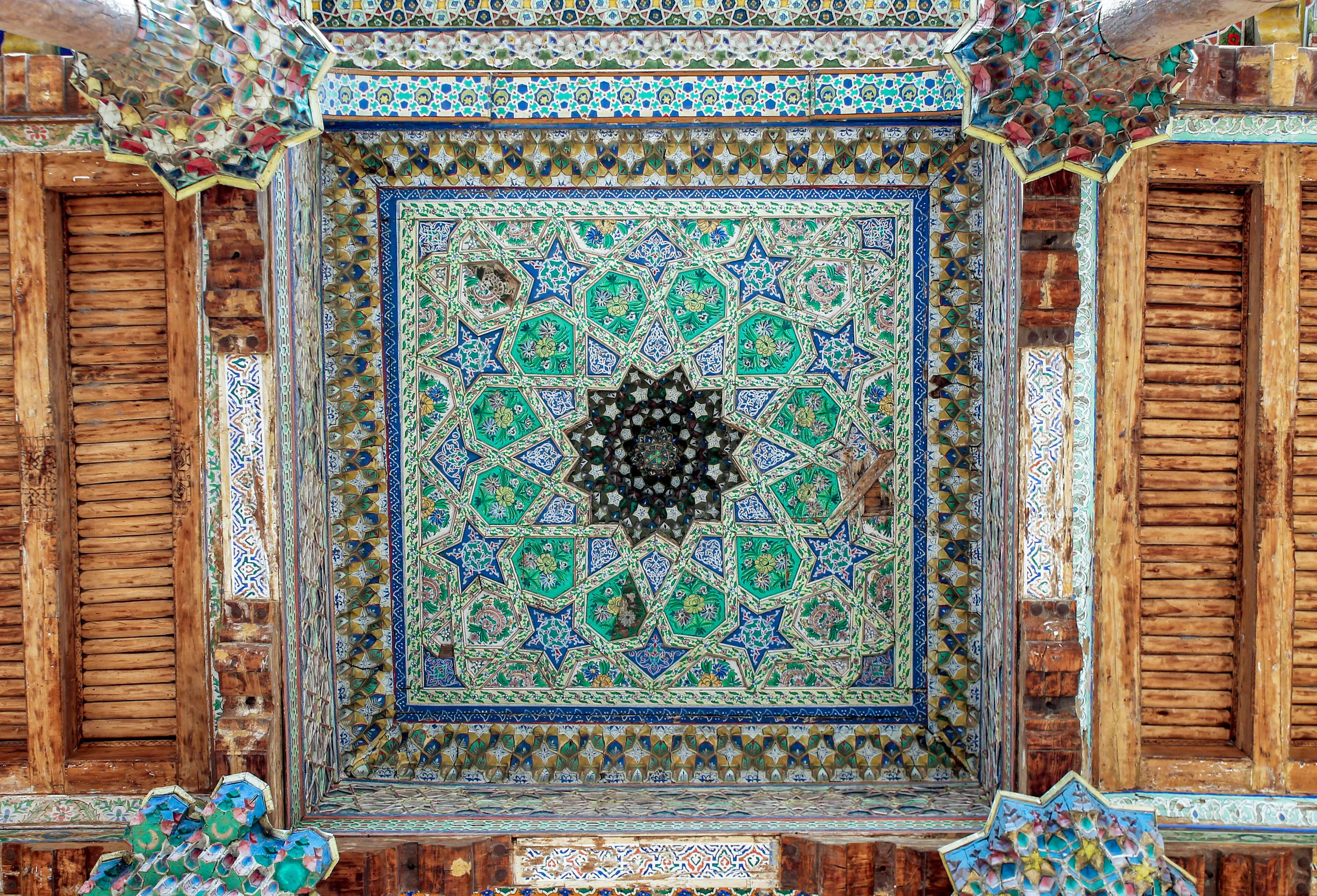
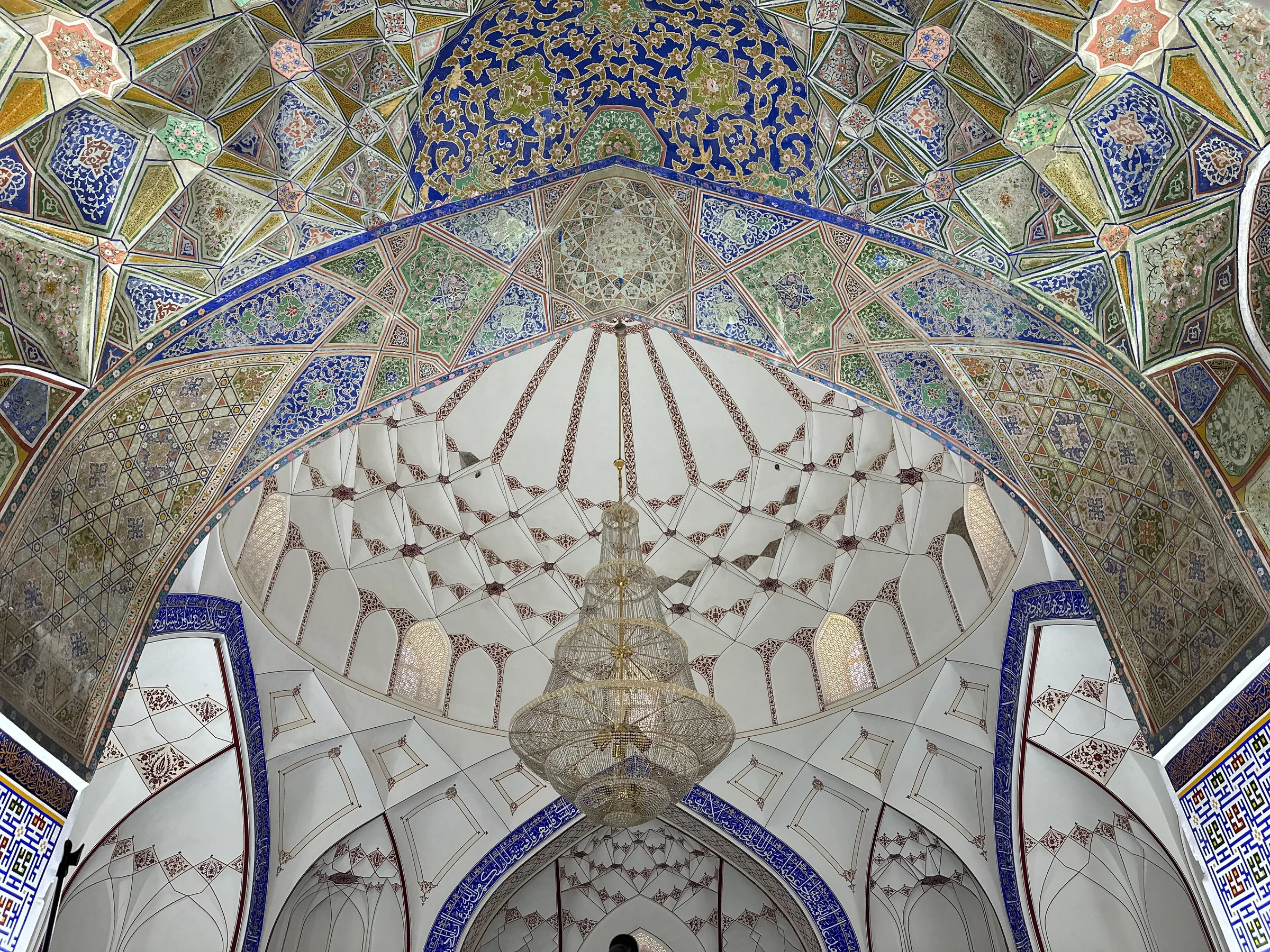
The iwan ceiling and the walls of the winter hall are covered in the bright painting, carving and stucco typical of the 19th and early 20th centuries. Stand under the iwan and look up: every coffer has its own pattern.
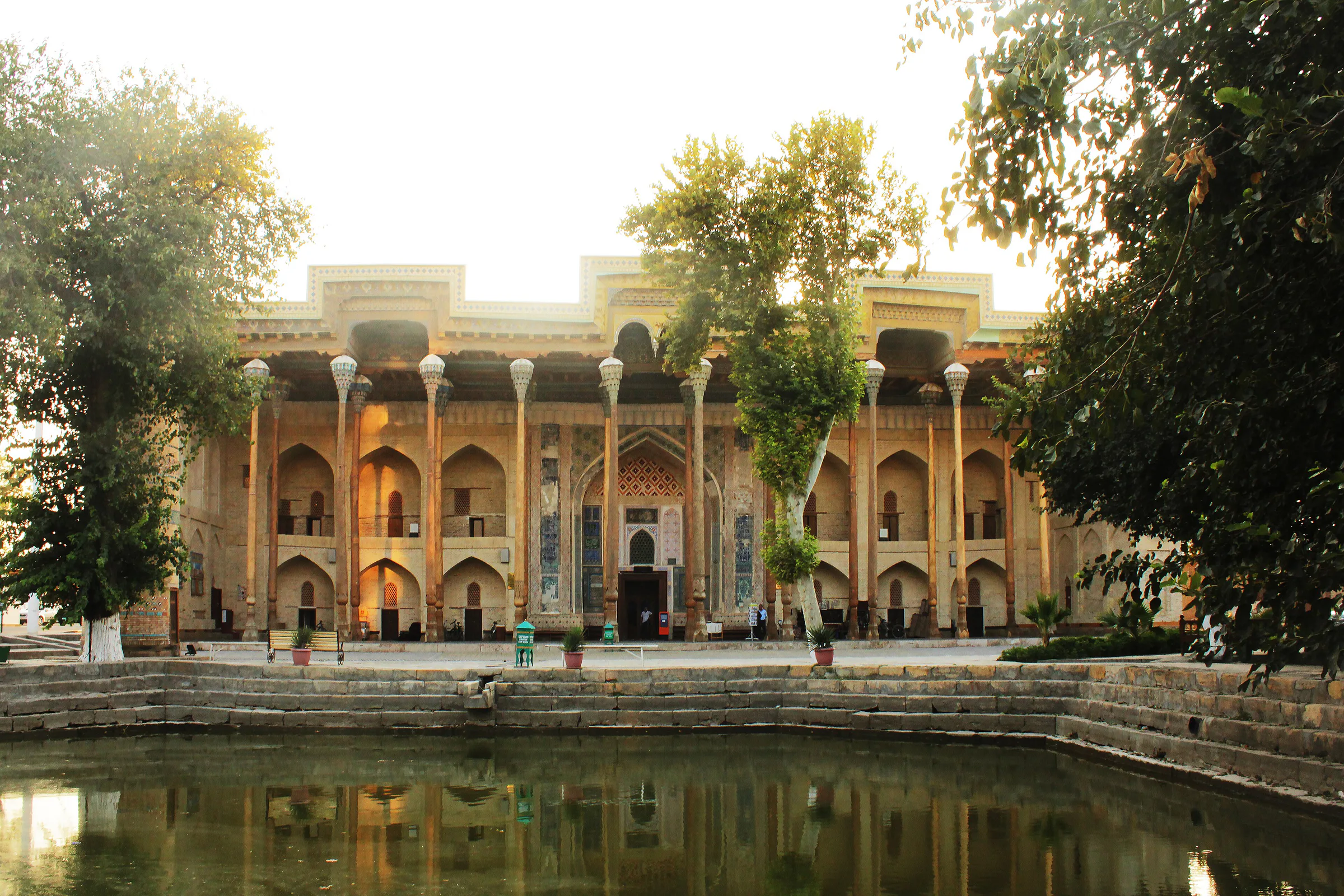
The pool in front is one of the few left in Bukhara, and the iwan's columns are reflected in it — most beautifully on a still morning.
The Ark gate is a few steps away; head south-west for Samanid Park or north for the Shukhov water tower.
The mosque stands on the western edge of the Registan, facing the Ark gate. For centuries the square was where citadel met city: it held a market, and festivals and executions took place on it. The emir's procession across the square to Friday prayers at Bolo Hauz was an important ritual of city life.
Reflected in the water, the twenty columns of the iwan become forty, which is why the mosque is sometimes called the 'forty-pillar' mosque. Bolo Hauz means 'upper pool' or 'above the pool'.
Usto Shirin Muradov was one of the best-known builders of the last emirs' era; several buildings at the Sitorai Mohi-Khosa summer palace are also linked to his name.
Fortress · Bukhara city
Seat of Bukhara's rulers for over a thousand years
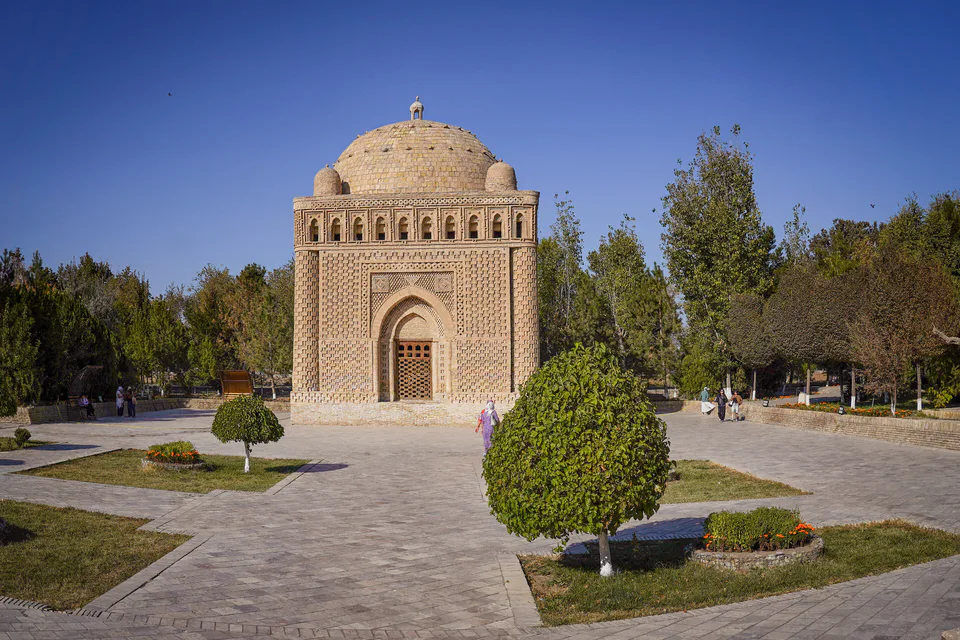
Mausoleum · Bukhara city
A brick masterpiece more than a thousand years old
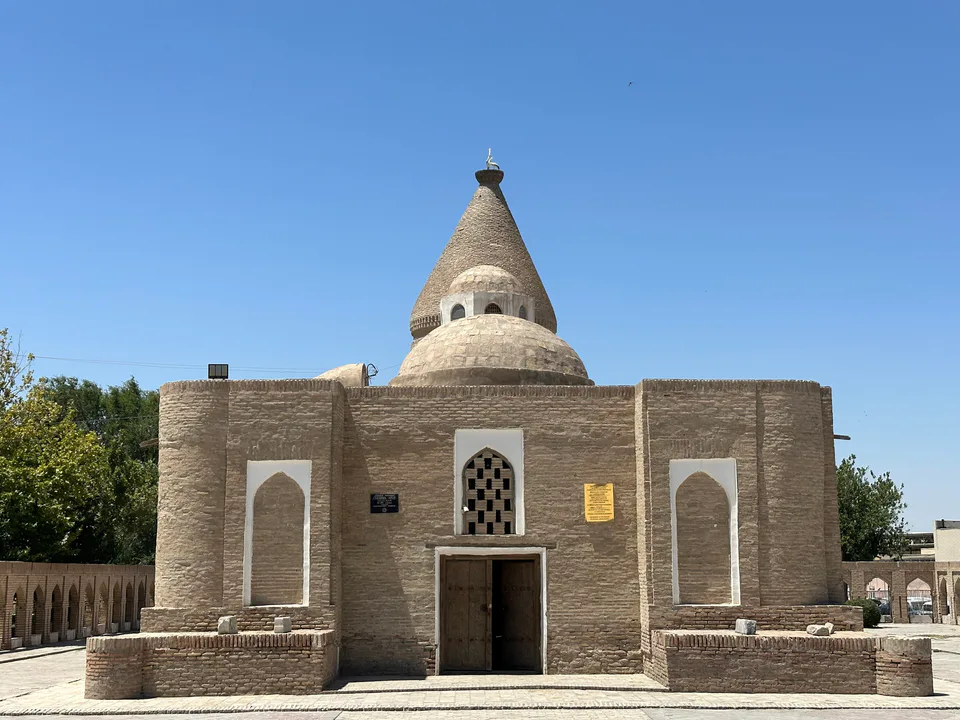
Pilgrimage site · Bukhara city
A mysterious building over the Prophet Job's spring
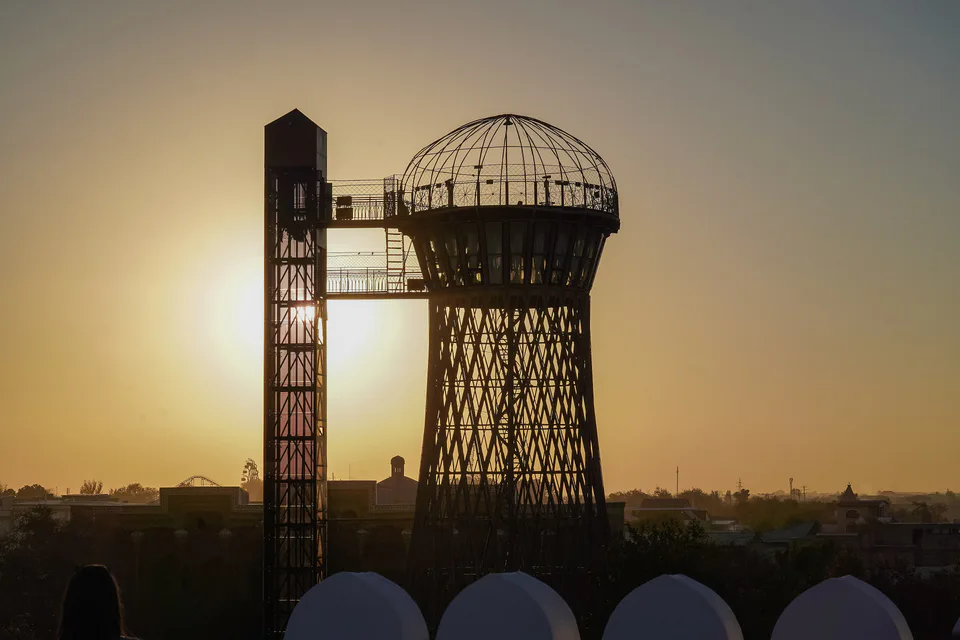
Modern · Bukhara city
A steel hyperboloid facing the Ark
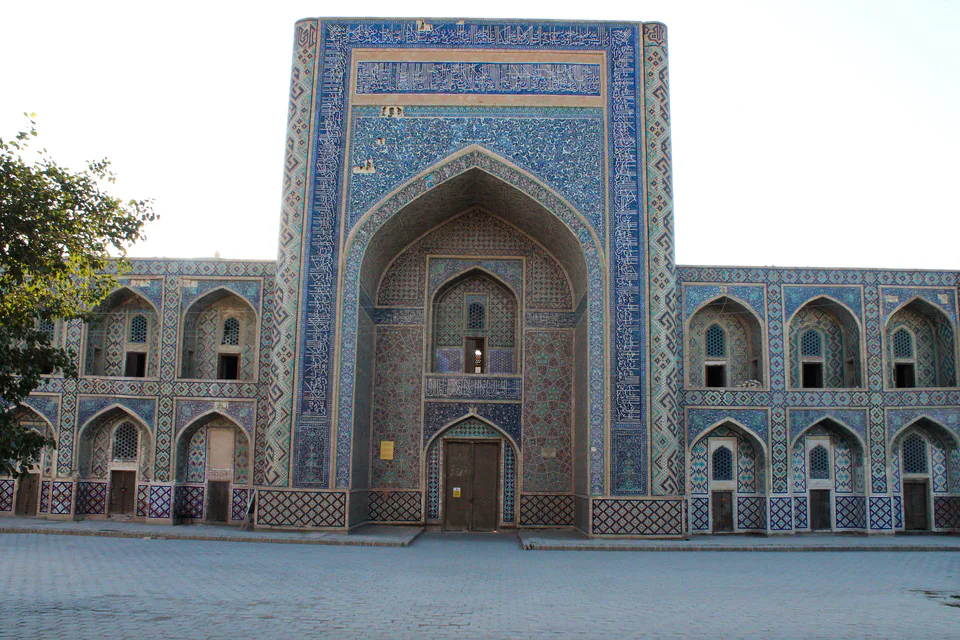
Madrasa · Bukhara city
Two madrasas — for a khan and his mother — face to face
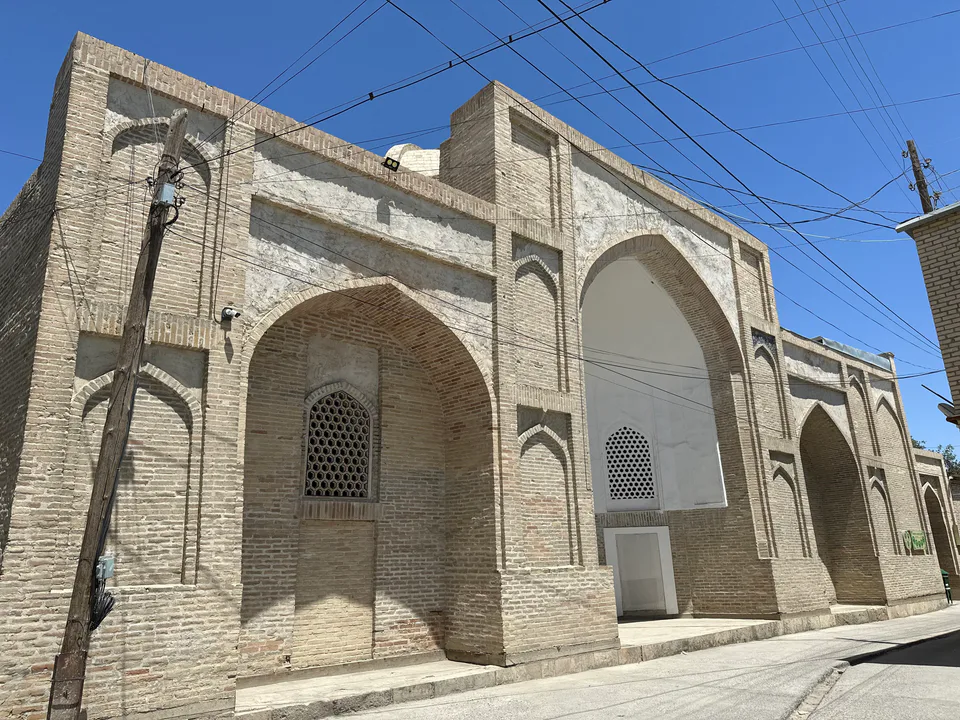
Mosque · Bukhara city
A mosque-khanqah painted in the kundal technique
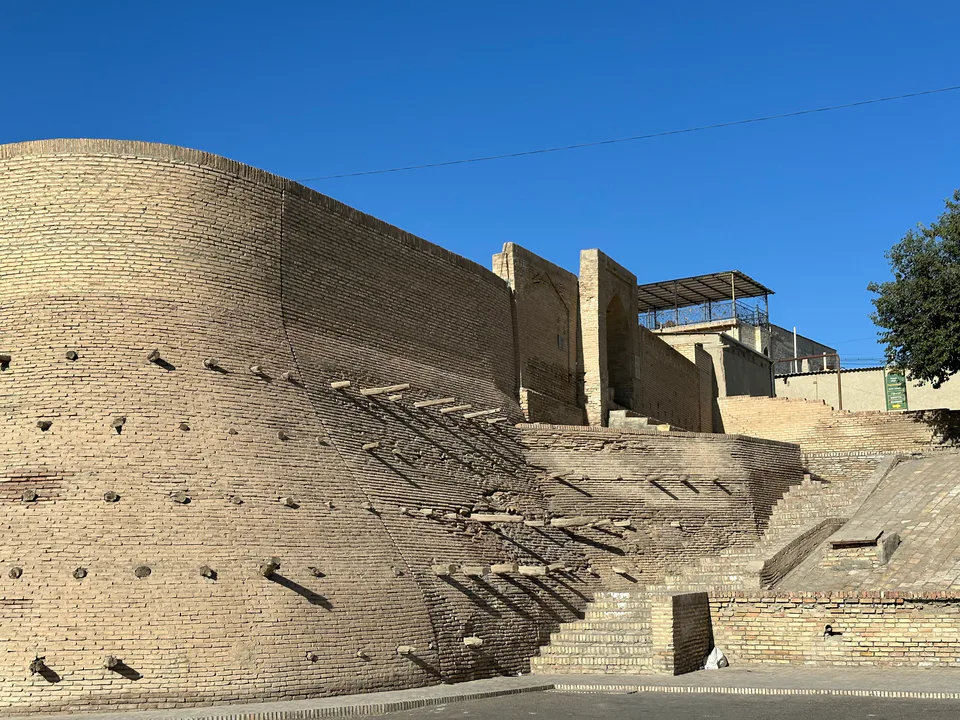
Museum · Bukhara city
The emir's jail and its notorious pit
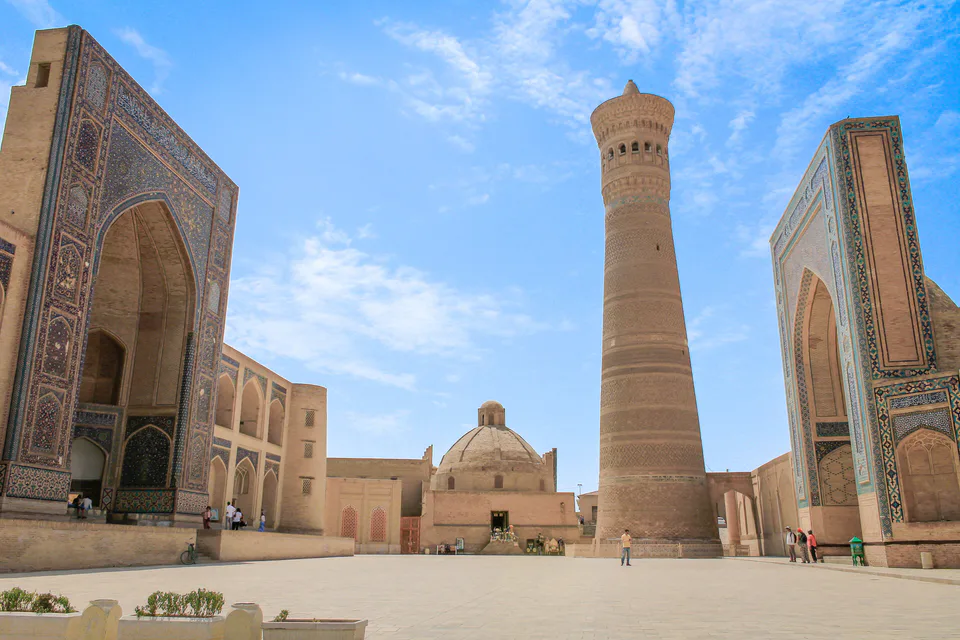
Ensemble · Bukhara city
Bukhara's great square: minaret, mosque and madrasa
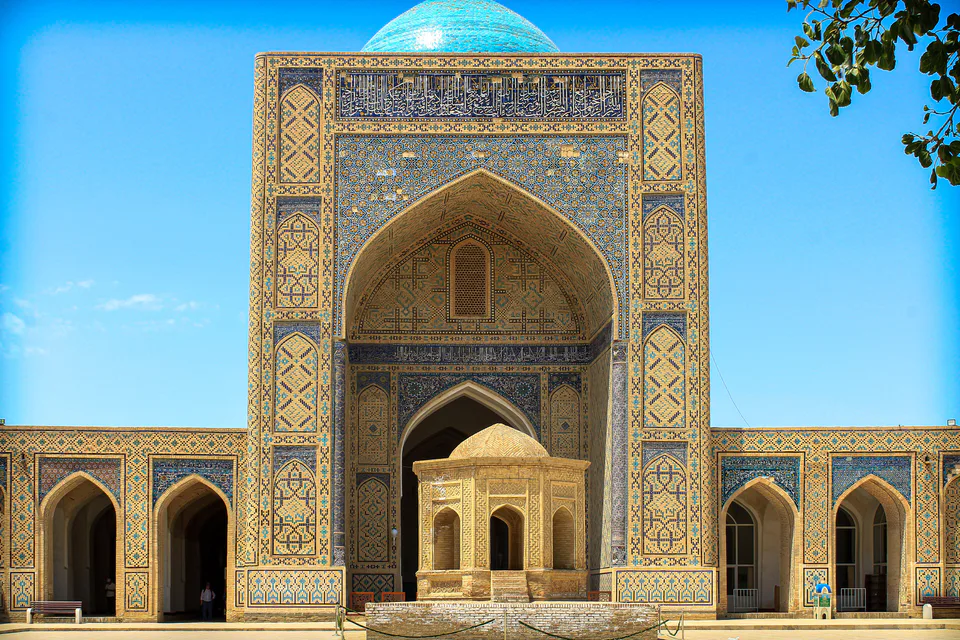
Mosque · Bukhara city
A Friday mosque for 12,000 worshippers
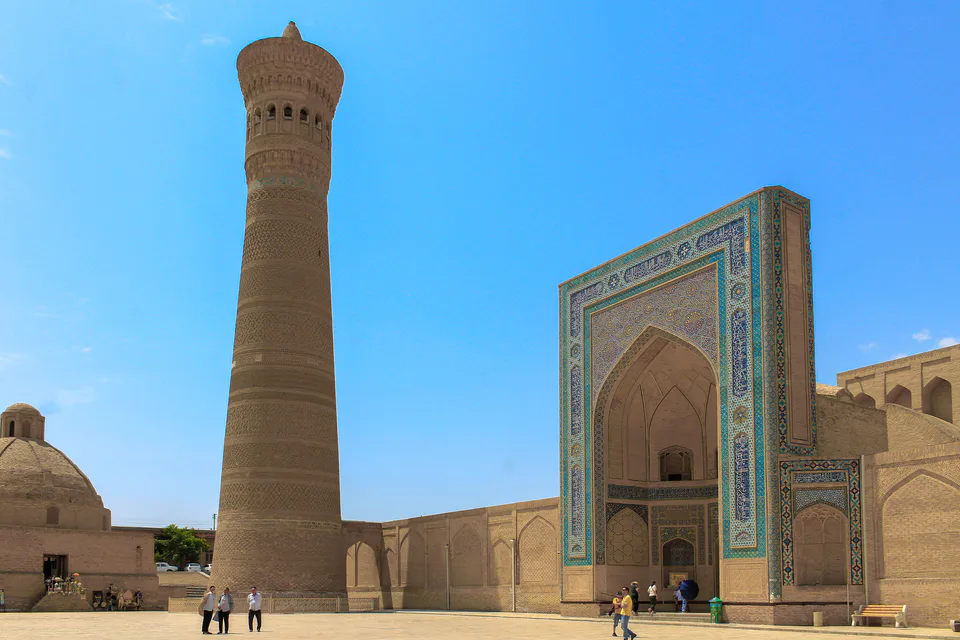
Minaret · Bukhara city
The tower Genghis Khan left standing