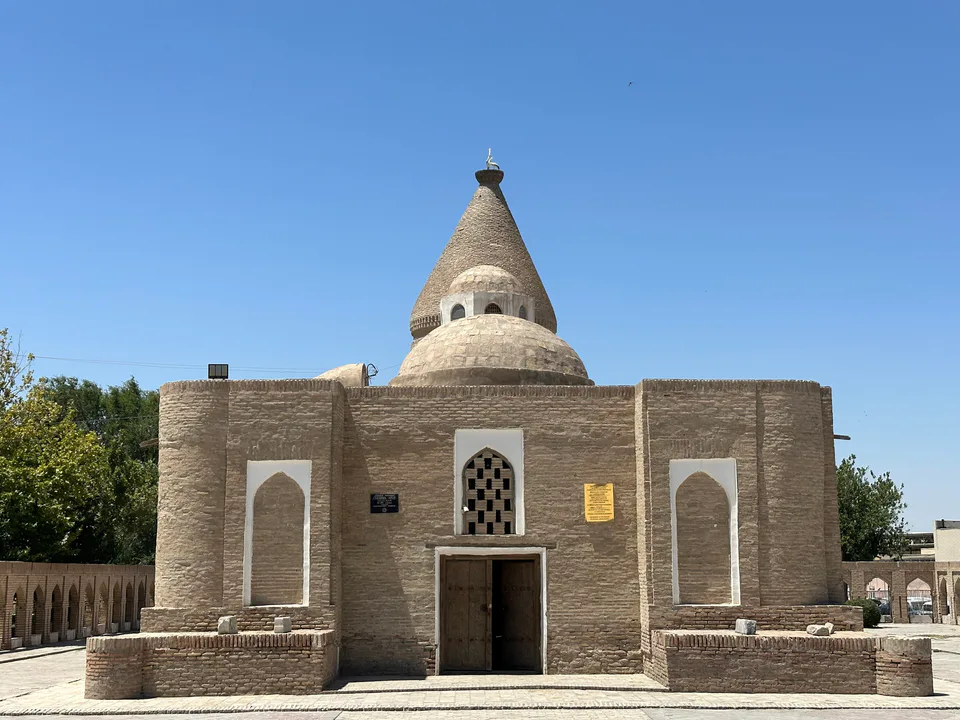
Pilgrimage site · Bukhara city
Chashma-Ayub Mausoleum
A mysterious building over the Prophet Job's spring
Mausoleum · Bukhara city
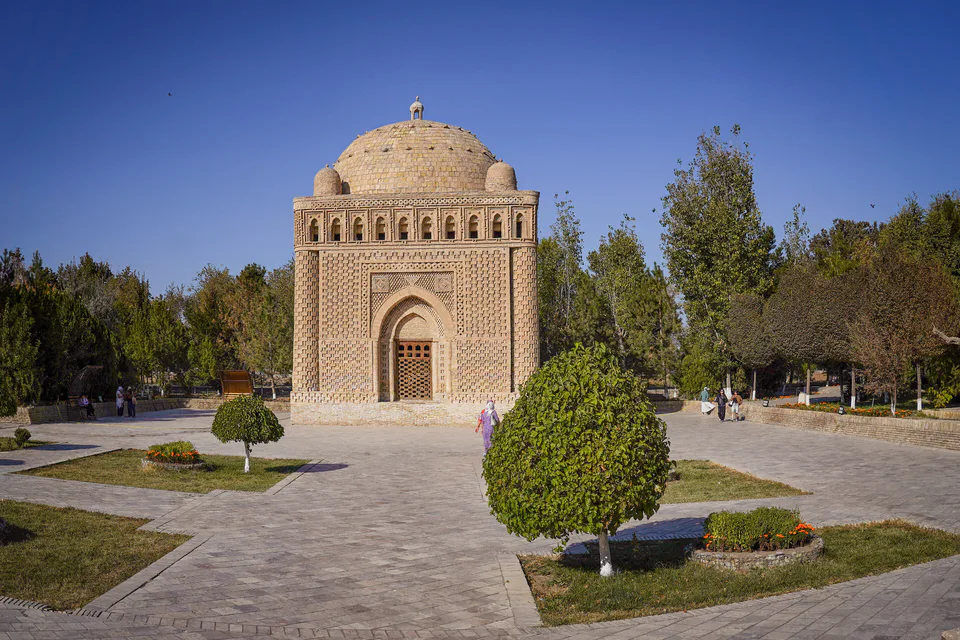
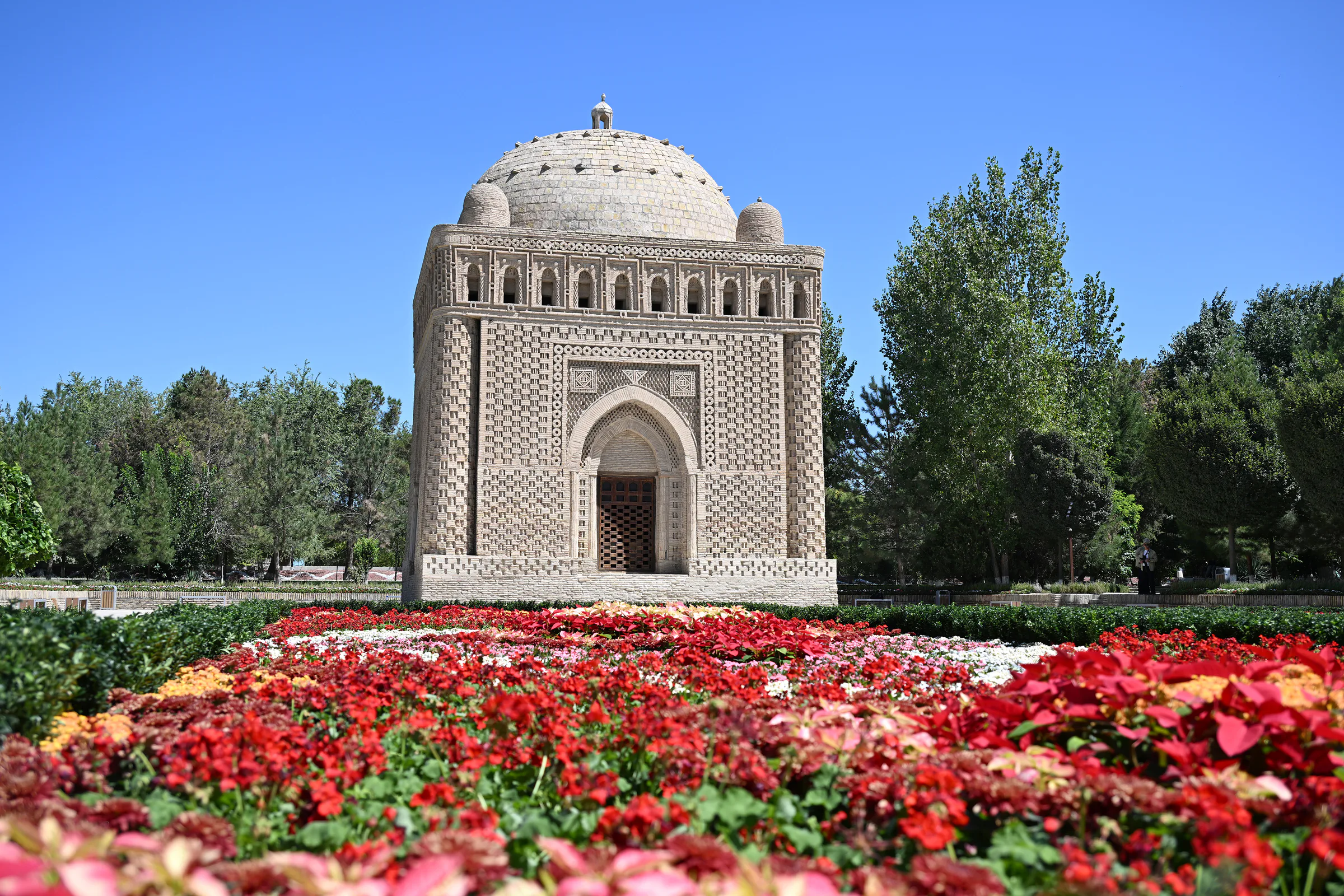
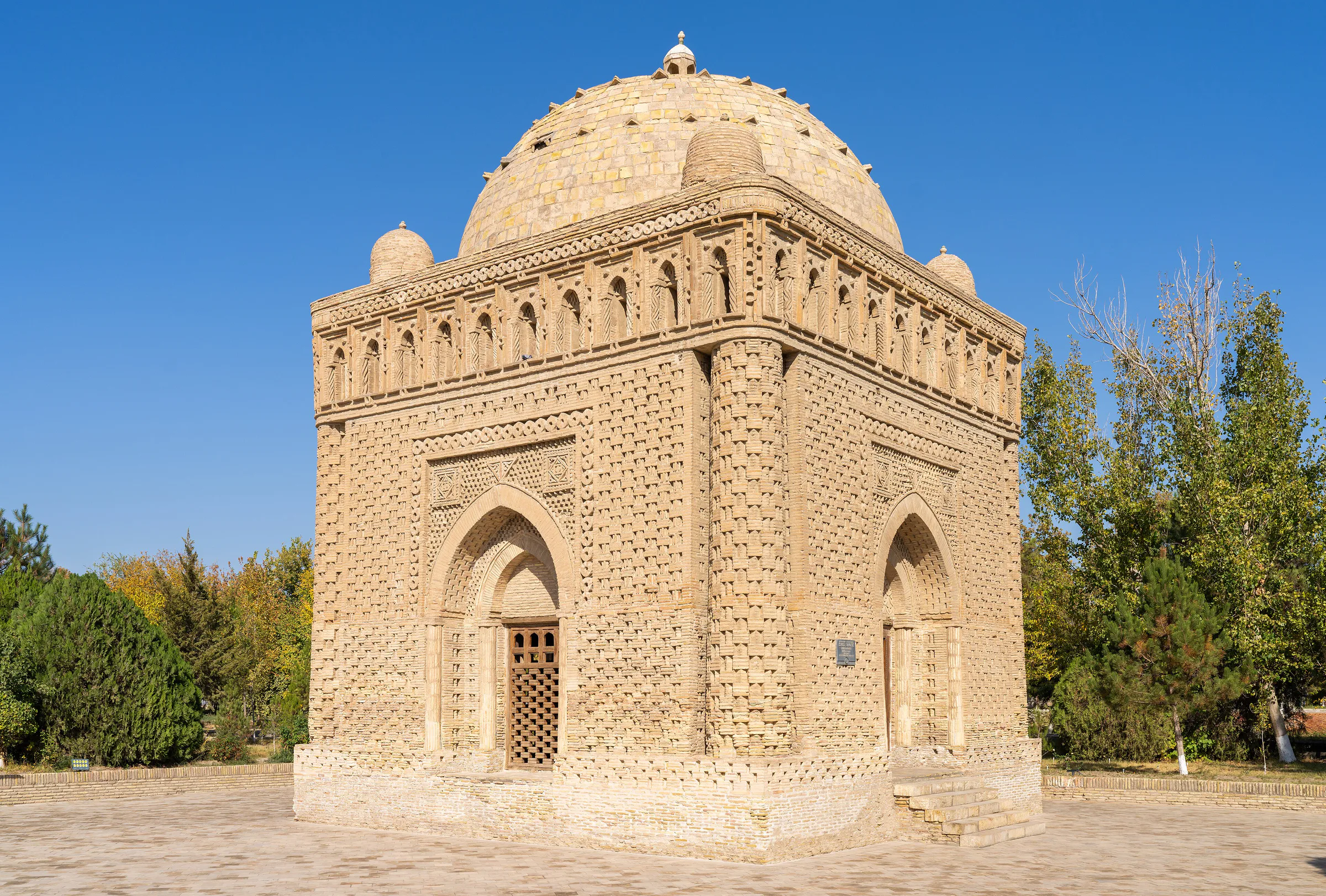
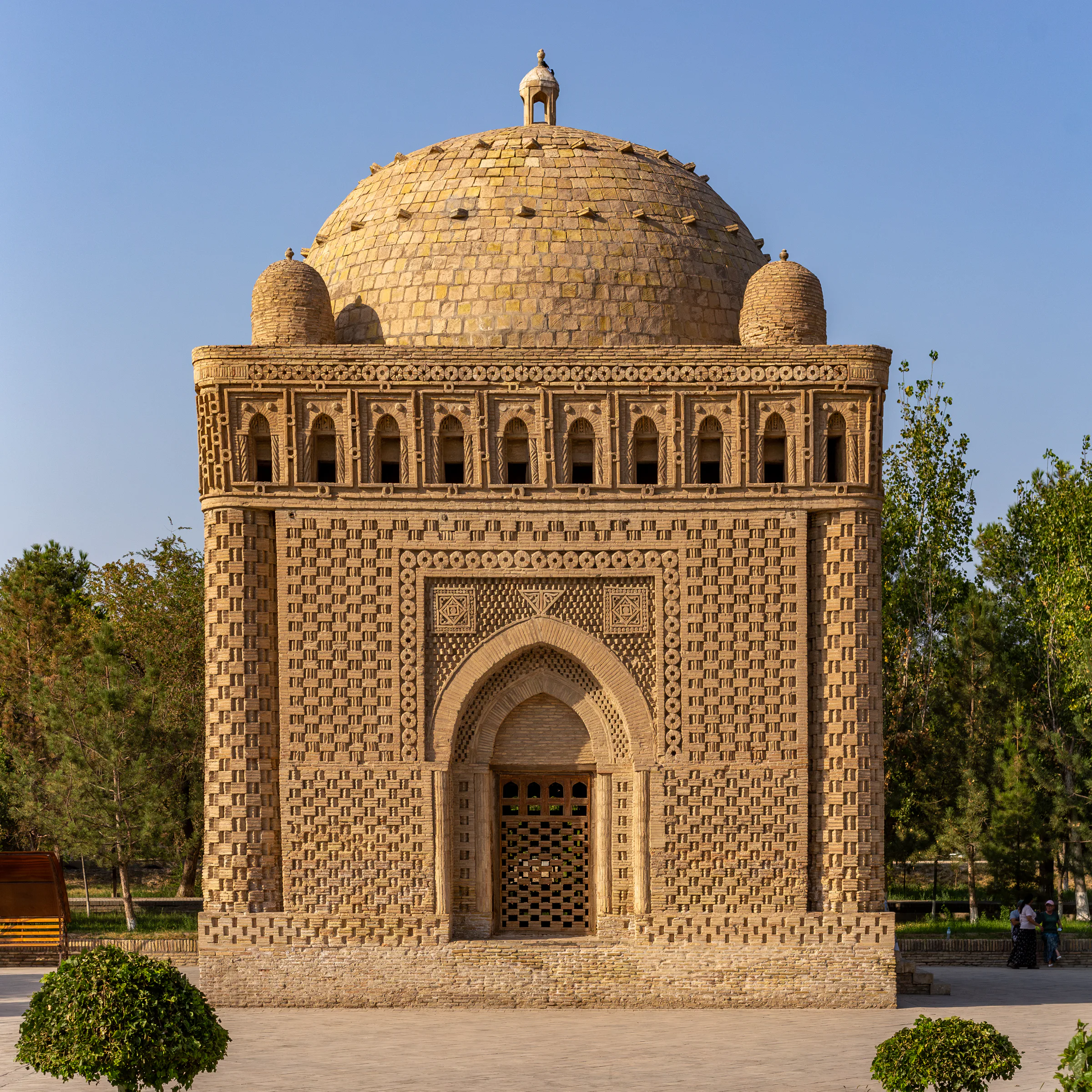
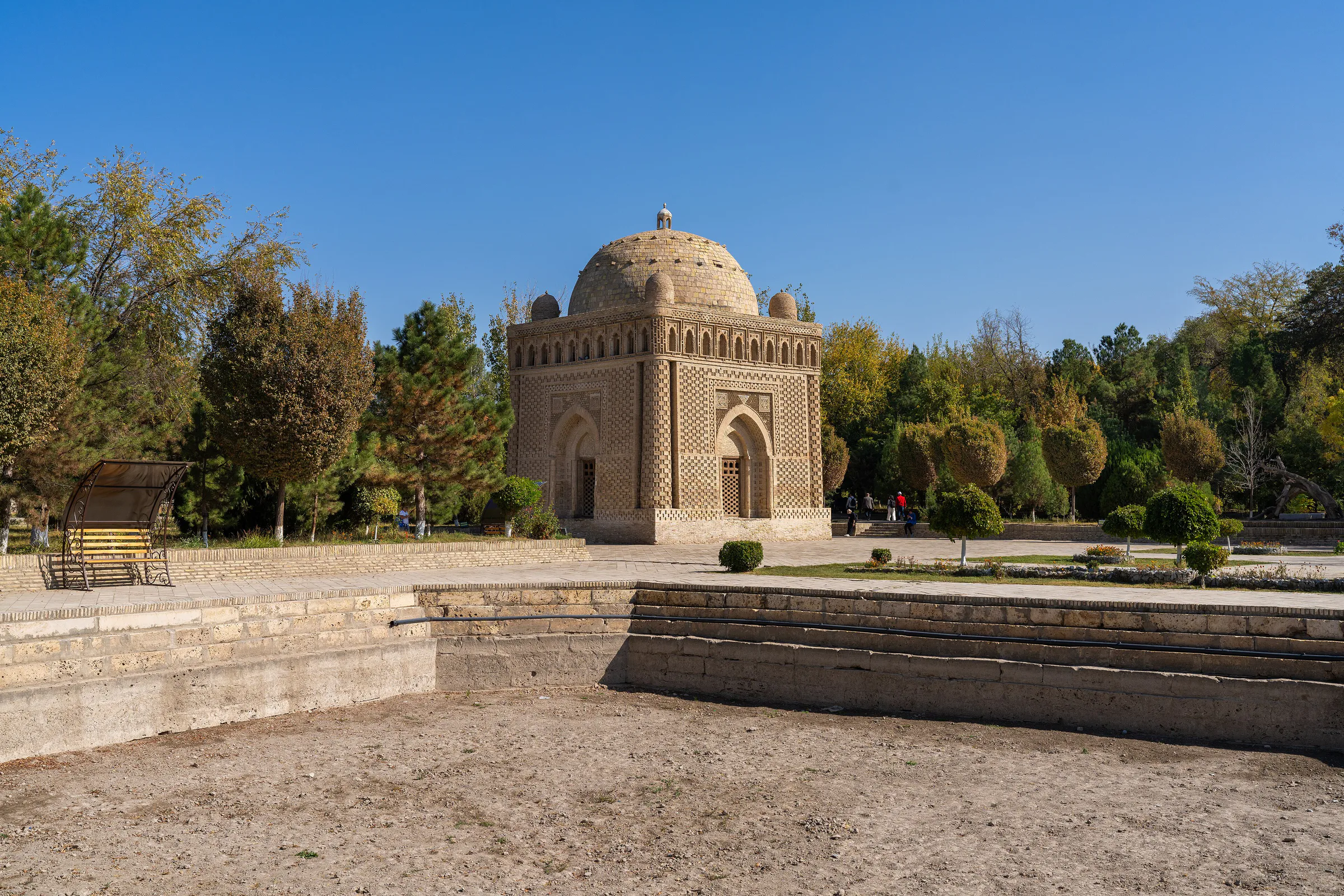
Built around the turn of the 10th century, the dynastic tomb of the Samanids is one of the oldest monuments of Central Asian architecture — a compact cube made entirely of fired brick, with every pattern laid in the brick itself.
The mausoleum stands in what was the Samanids' great cemetery, Naukanda, in their capital Bukhara. It is traditionally linked to Ismail Samani (892–907); an endowment deed copied in 1568–1569 says Ismail built it over the grave of his father, Ahmad ibn Asad. A wooden beam over the entrance carries a Kufic inscription naming Ismail's grandson, Nasr ibn Ahmad, which leads some scholars to date the building to the reign of Nasr II (914–943). Several burials were found inside, including that of Ismail Samani himself.
After the Samanids fell in 999 the cemetery shrank and the other tombs disappeared. The mausoleum itself spent centuries buried in sand and silt up to almost a third of its height. M. Ya. Ginzburg's expedition surveyed it in 1924, the dome facing was restored in 1925, and V. L. Vyatkin excavated the site in 1926–1928.
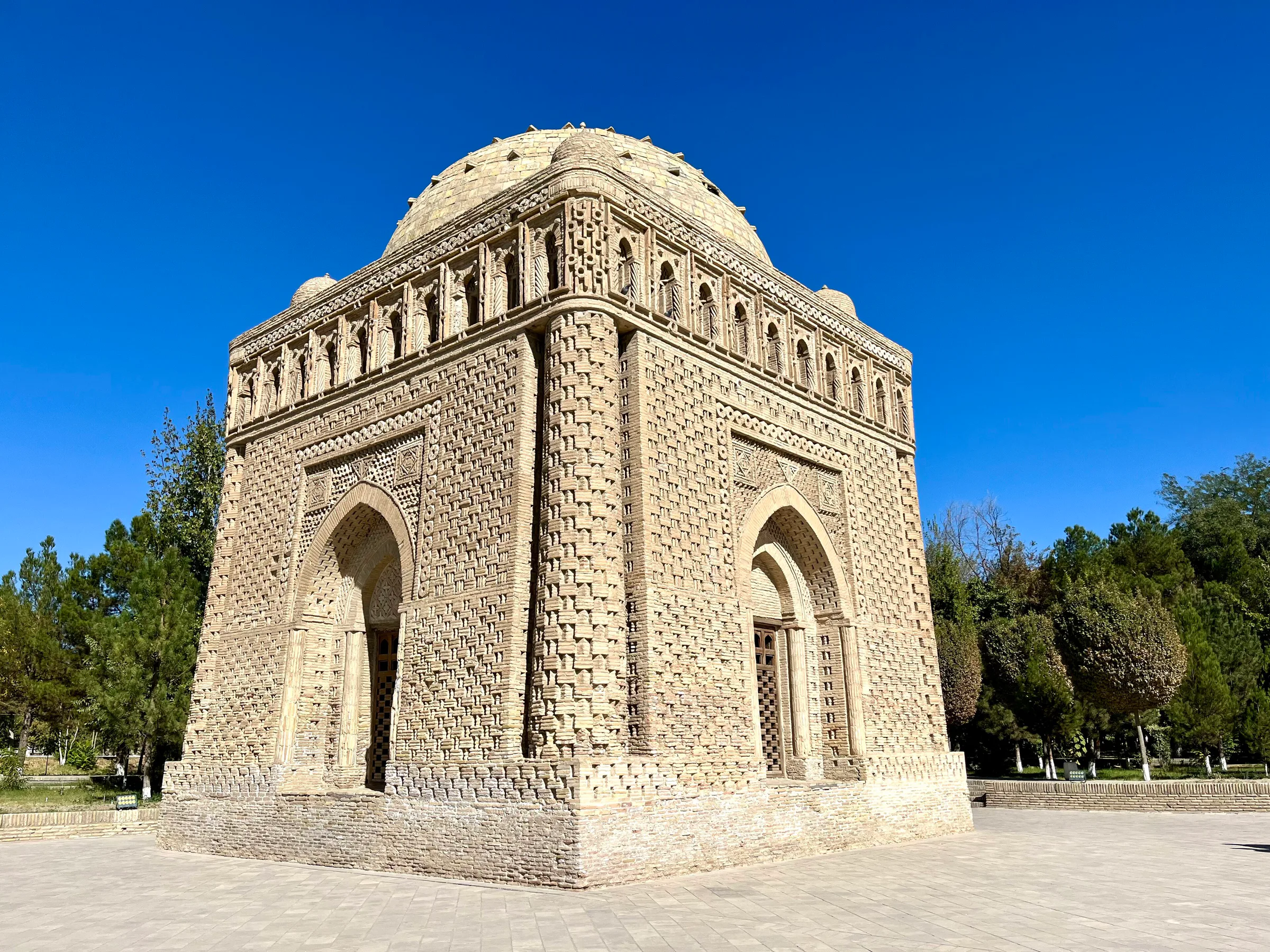
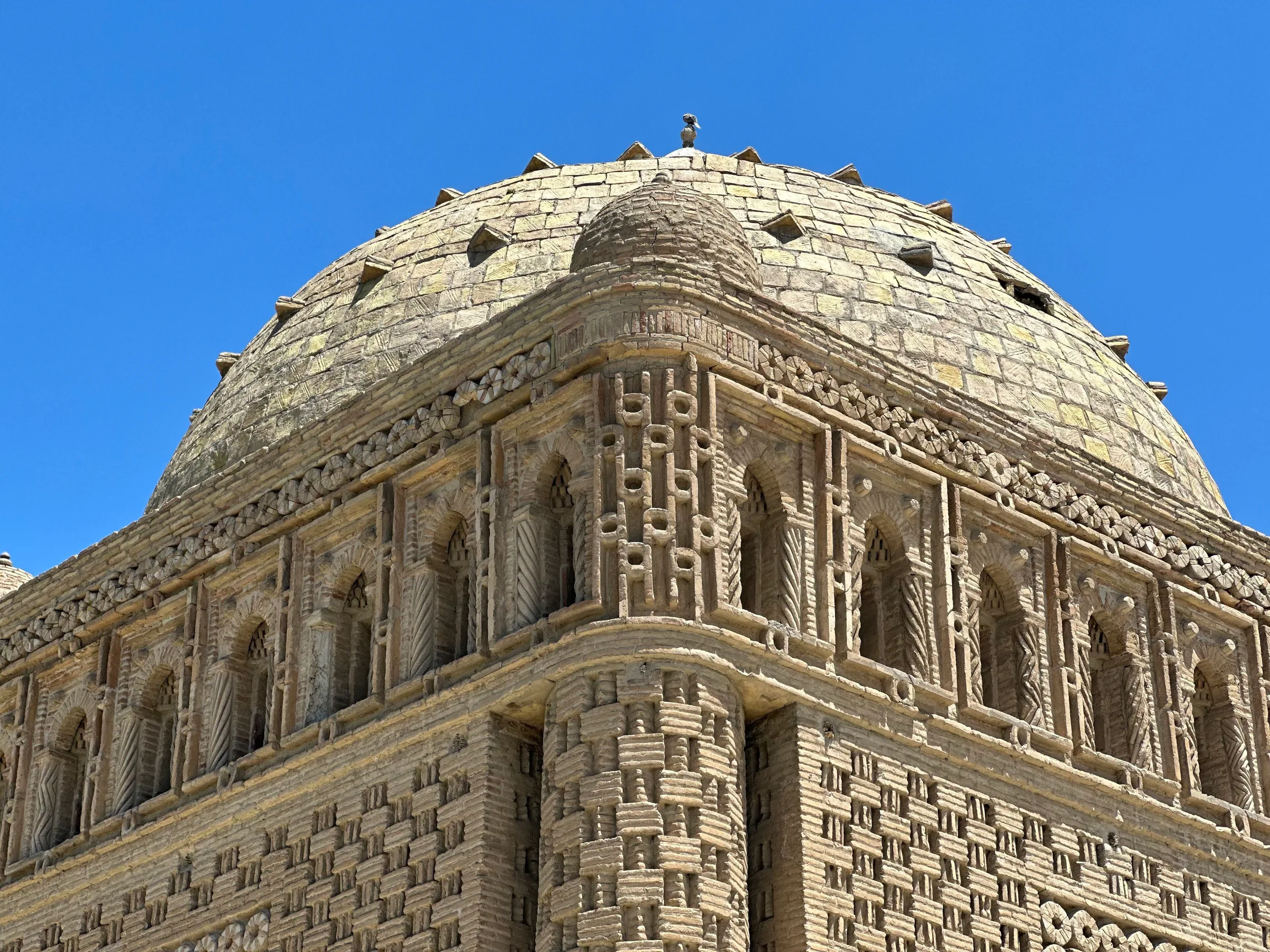
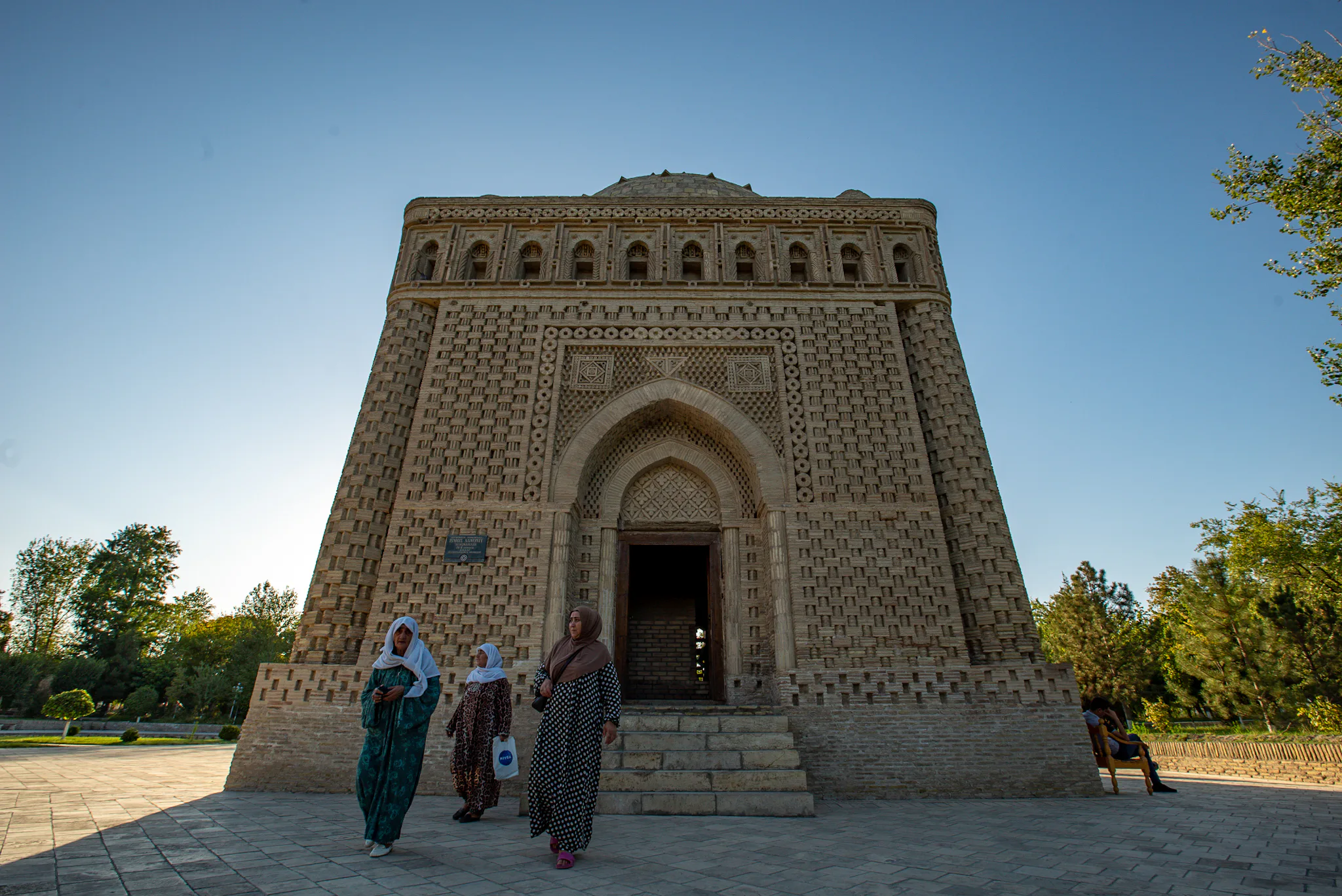
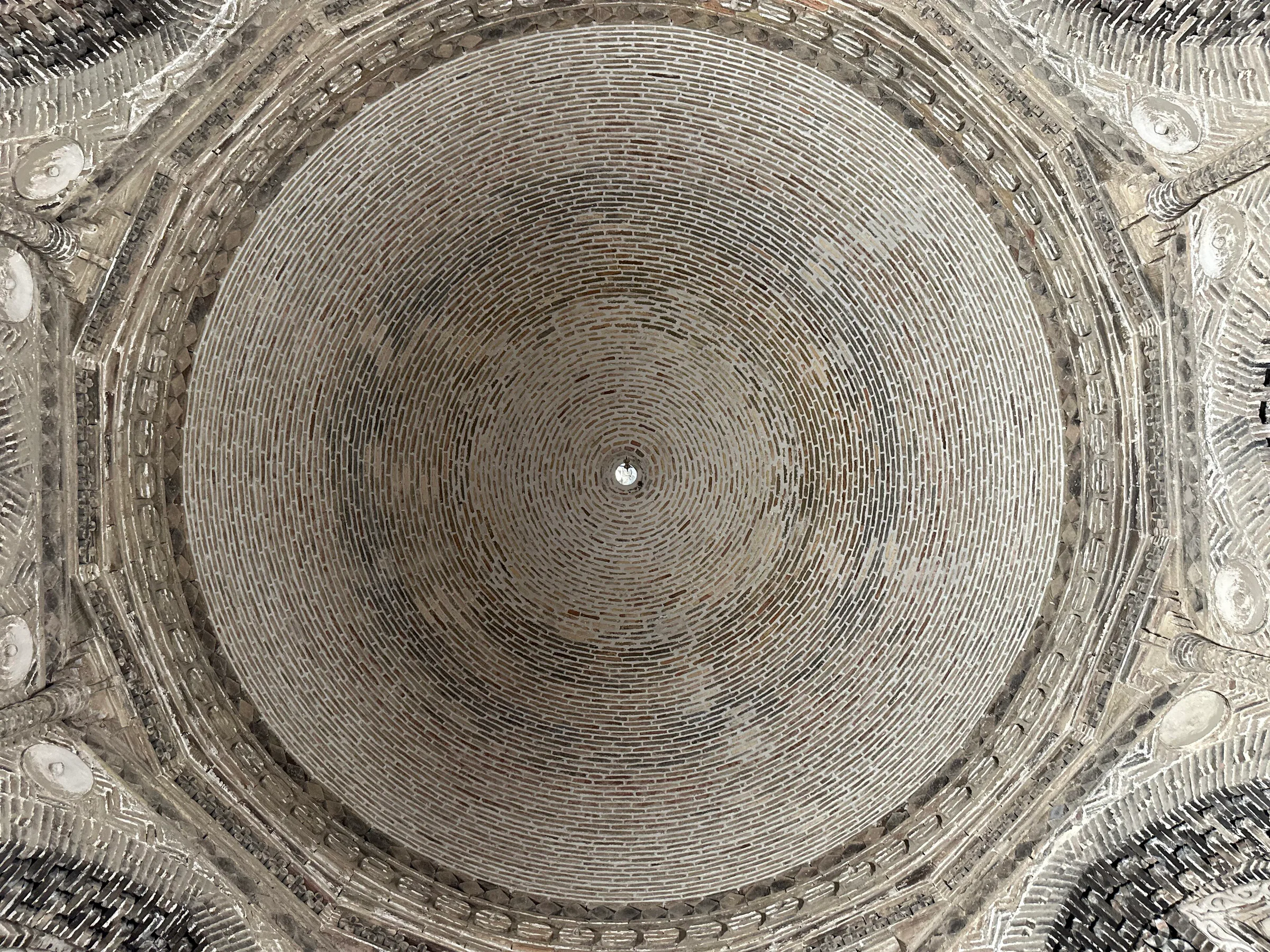
Measuring 10.8 × 10.8 m with walls 1.8 m thick, the building is a cube tapering slightly upwards beneath a hemispherical dome and four small corner cupolas. All four facades are identical, each with an arched entrance, and massive three-quarter columns are set into the corners. A gallery of small arches runs around the top of the walls.
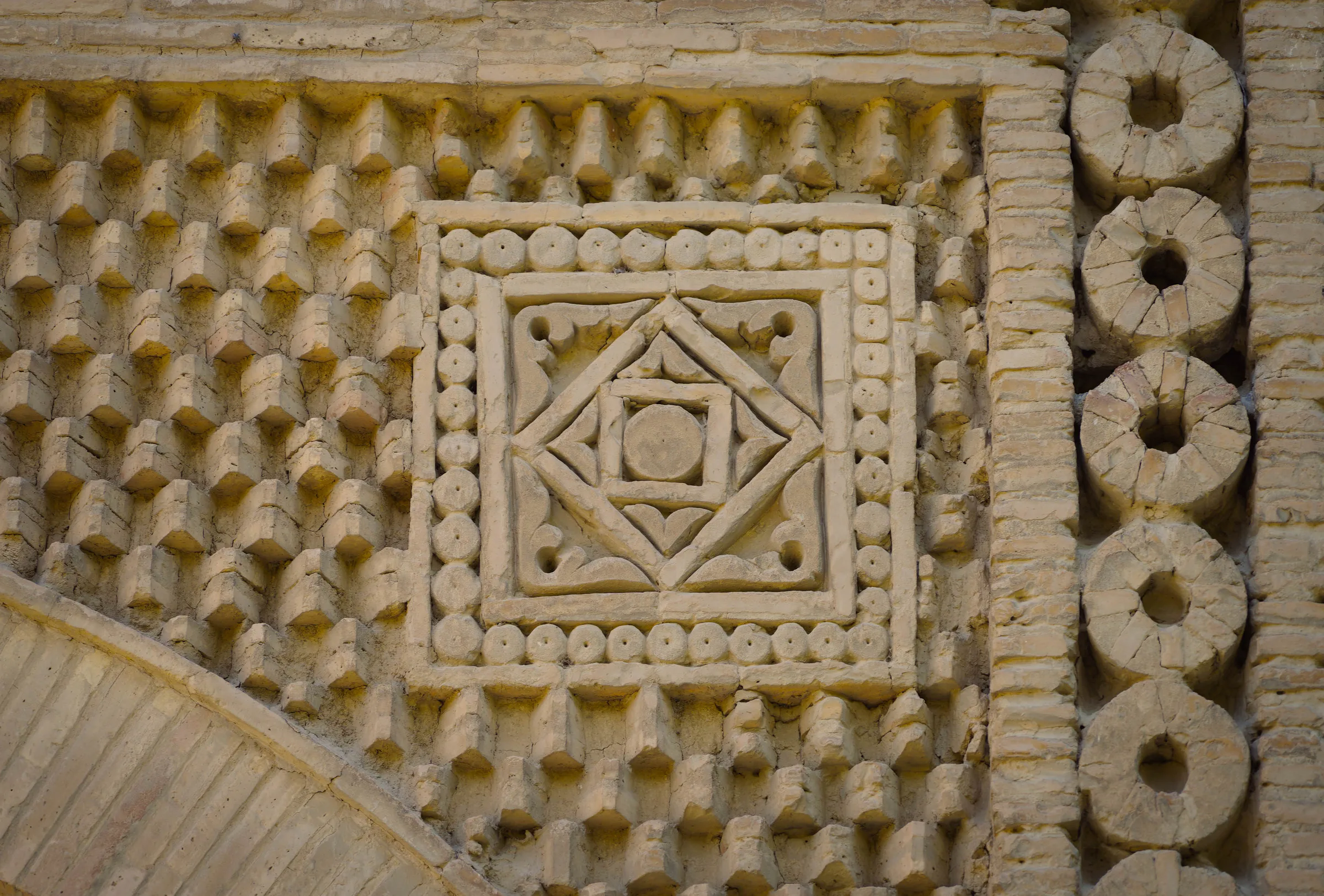
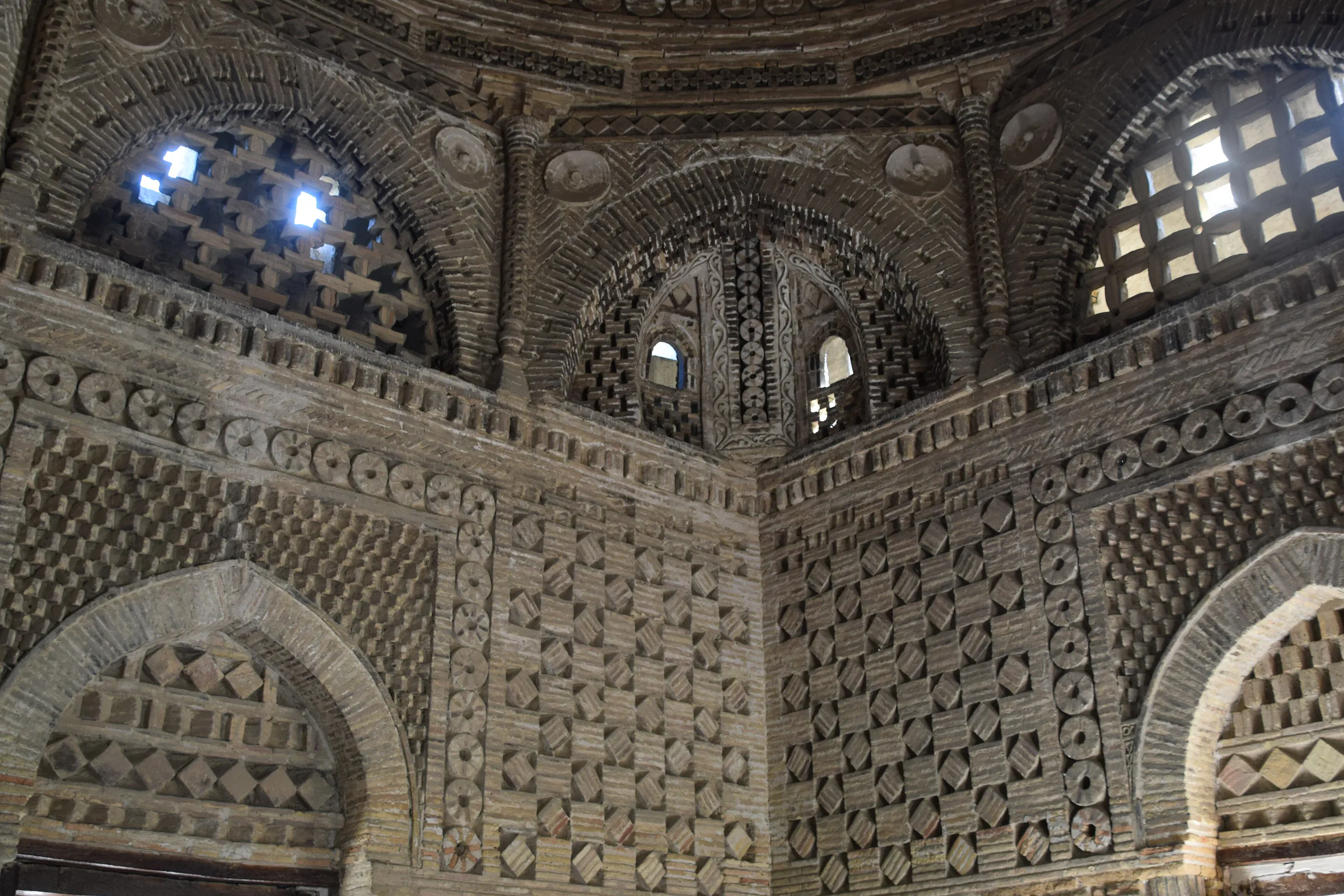
All the decoration is in the brick: laid at different angles, it creates a basket-weave pattern inside and out. Inside, corner squinches carry the dome over the square — a solution that became standard across the region. Scholars see in it a blend of Sogdian, Sasanian and early Islamic traditions.
The mausoleum stands in Samanid Park in the city centre, 200 m from the Chashma-Ayub Mausoleum. With shady avenues, a pond and fairground rides, the park is also a favourite place for Bukharans to relax.
Walk all the way round: the brick patterns change through the day as the light shifts.
Legend says that as Genghis Khan's army approached, the townspeople buried the mausoleum in sand to save it. The archaeology bears out the burial, if not the story — centuries under sand and silt are why it survives almost intact.
It is one of the earliest surviving buildings in Central Asia made entirely of fired brick, and the only monument of the Samanid era left in the Bukhara oasis.
Pilgrimage site · Bukhara city
A mysterious building over the Prophet Job's spring
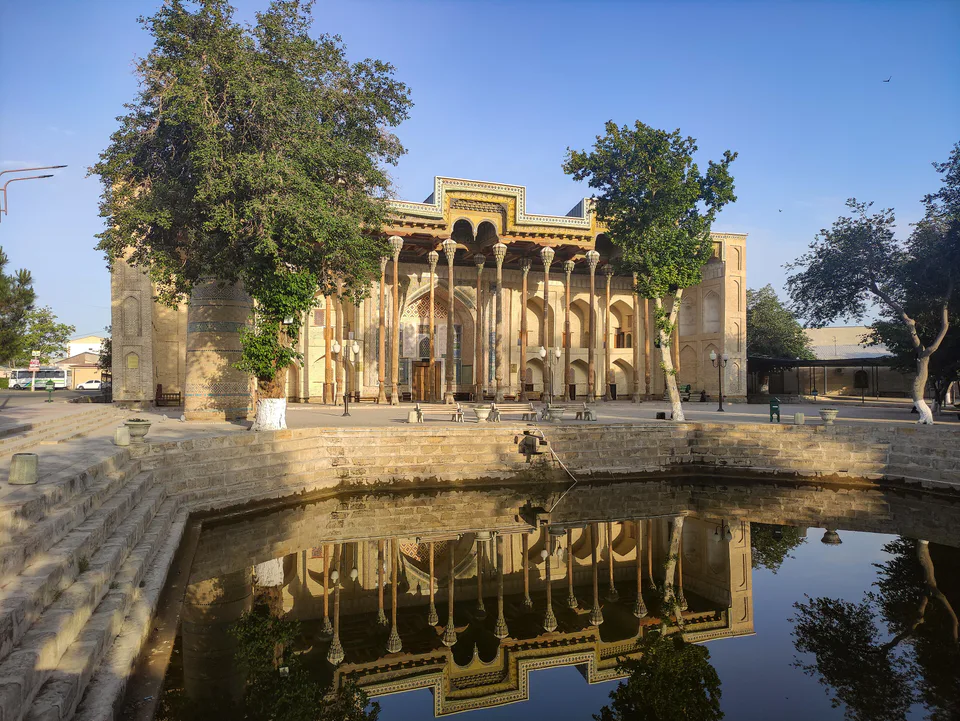
Mosque · Bukhara city
Wooden columns mirrored in a pool
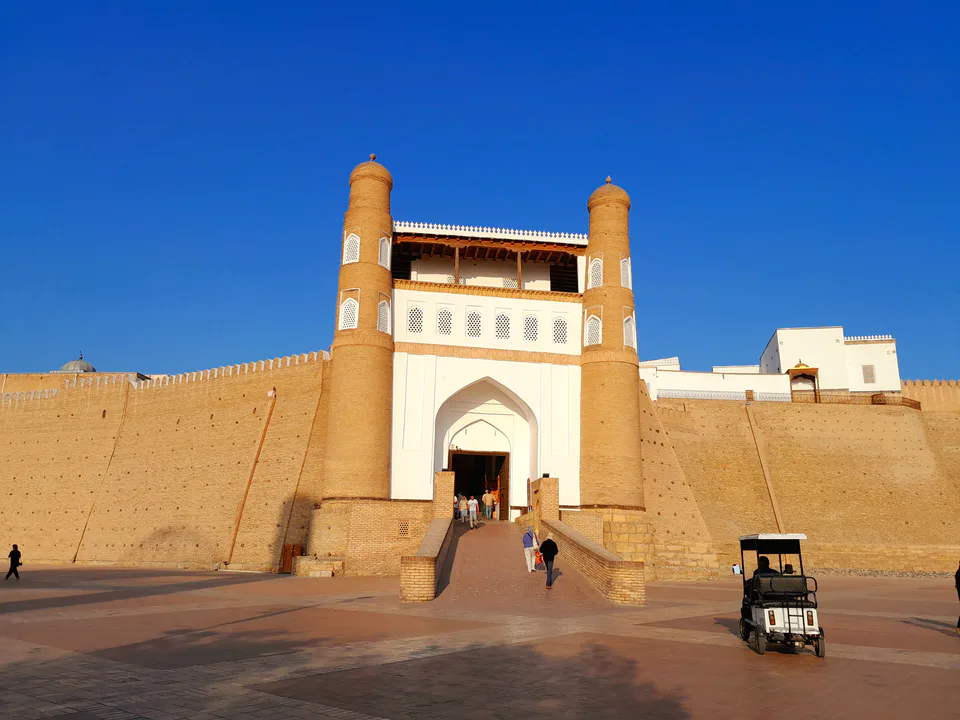
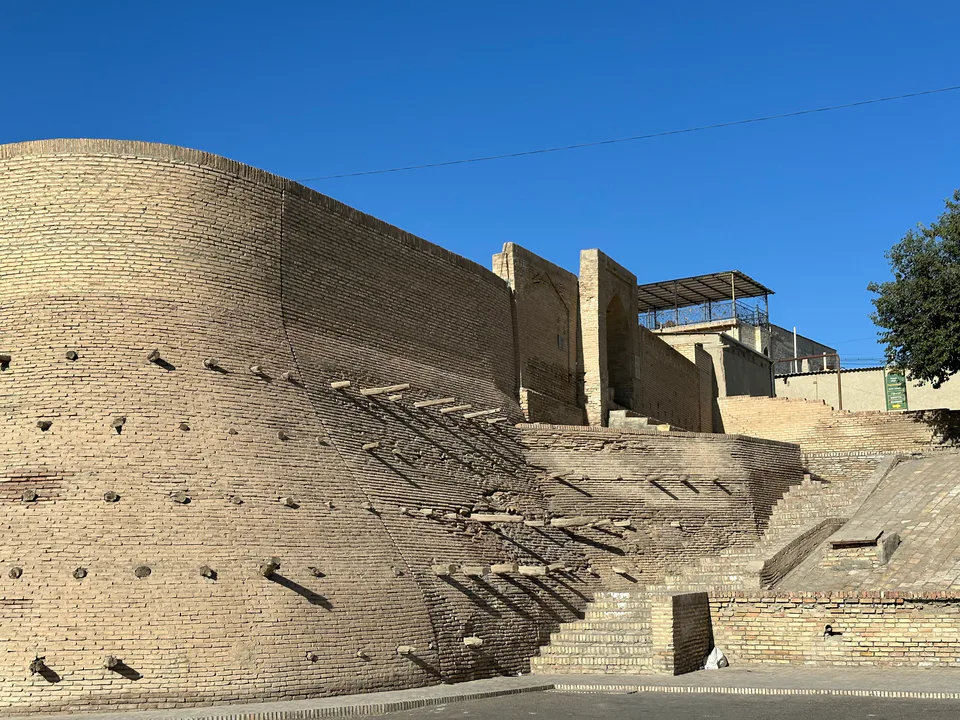
Fortress · Bukhara city
Seat of Bukhara's rulers for over a thousand years
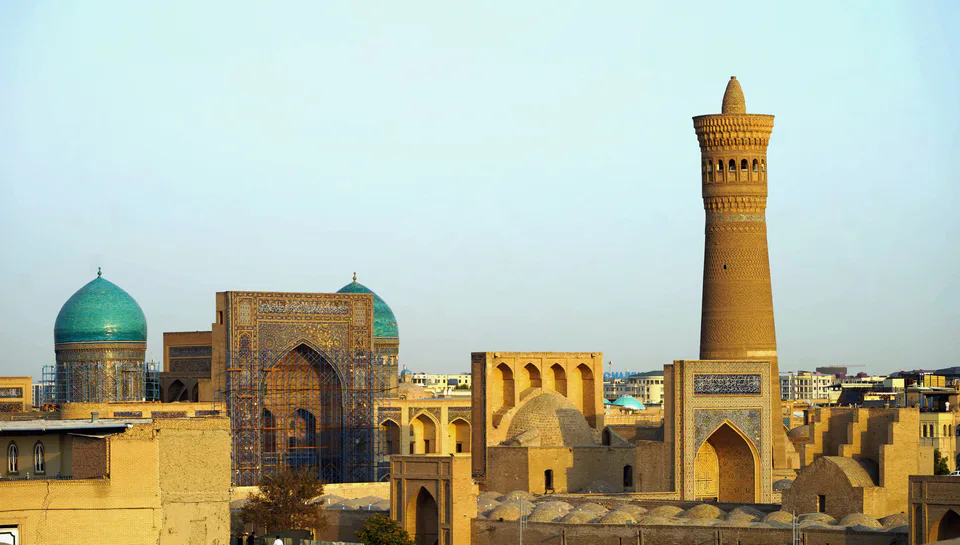
Ensemble · Bukhara city
Central Asia's most complete medieval city
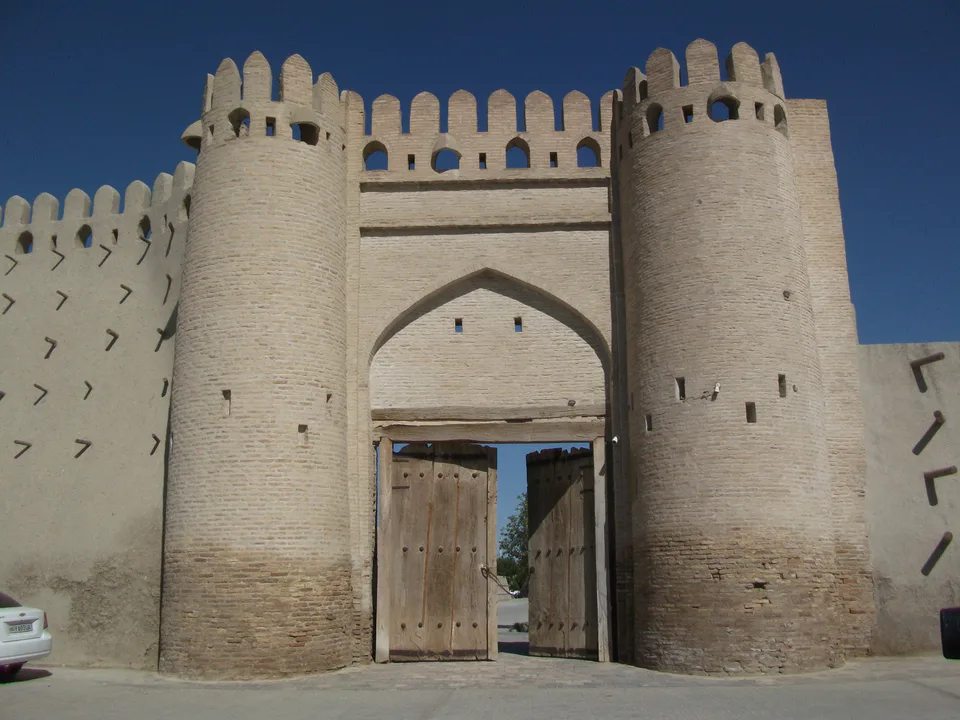
Fortress · Bukhara city
A surviving gate in Bukhara's city wall
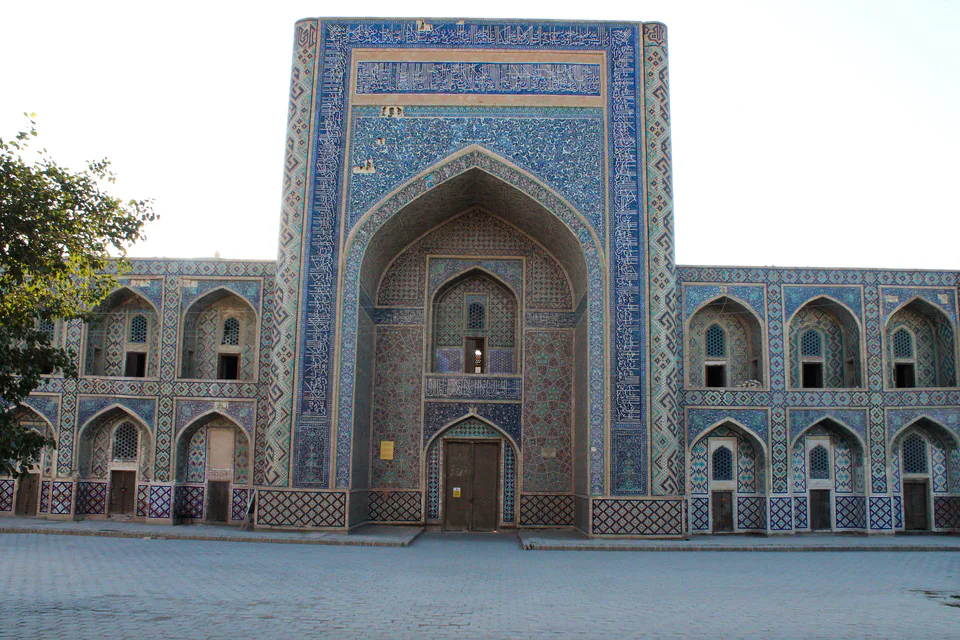
Madrasa · Bukhara city
Two madrasas — for a khan and his mother — face to face
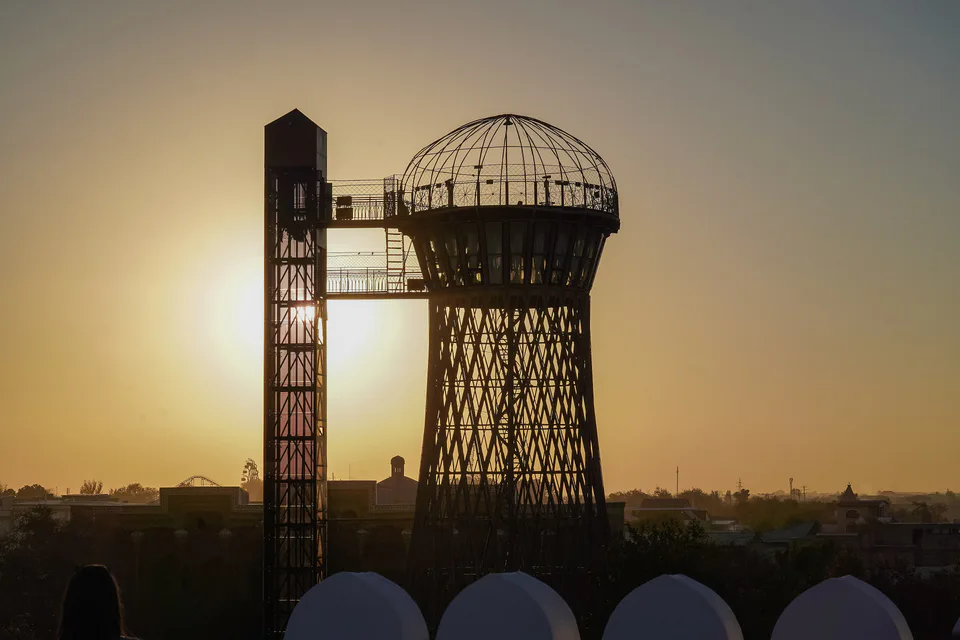
Modern · Bukhara city
A steel hyperboloid facing the Ark
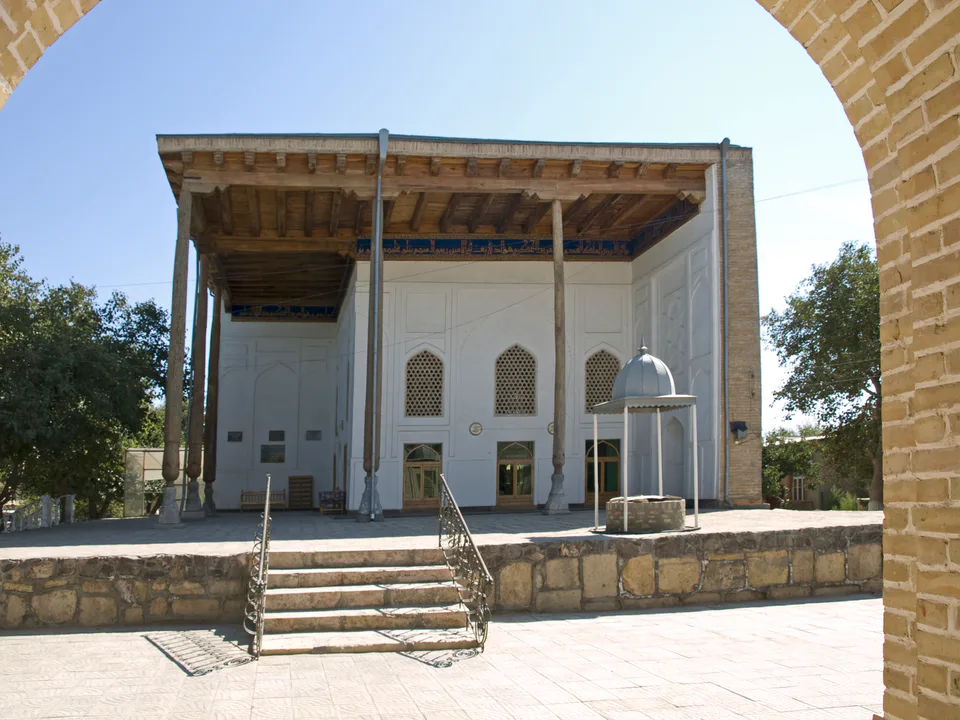
Mosque · Bukhara city
A small neighbourhood mosque with gilded paintwork
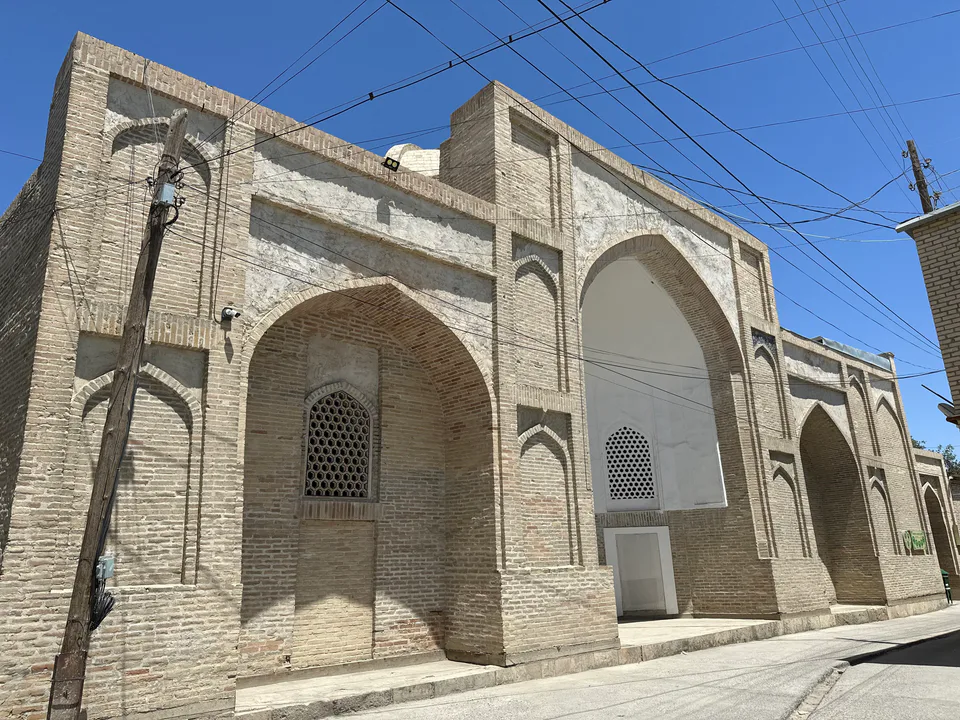
Mosque · Bukhara city
A mosque-khanqah painted in the kundal technique
Museum · Bukhara city
The emir's jail and its notorious pit