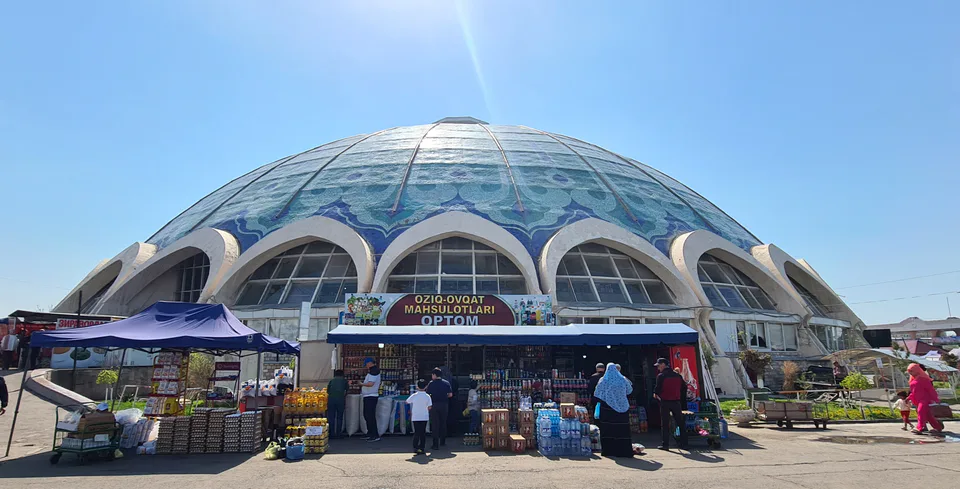
Bazaar · Shaykhantahur District
Chorsu Bazaar
The Old City market under a blue dome
Madrasa · Shaykhantahur District
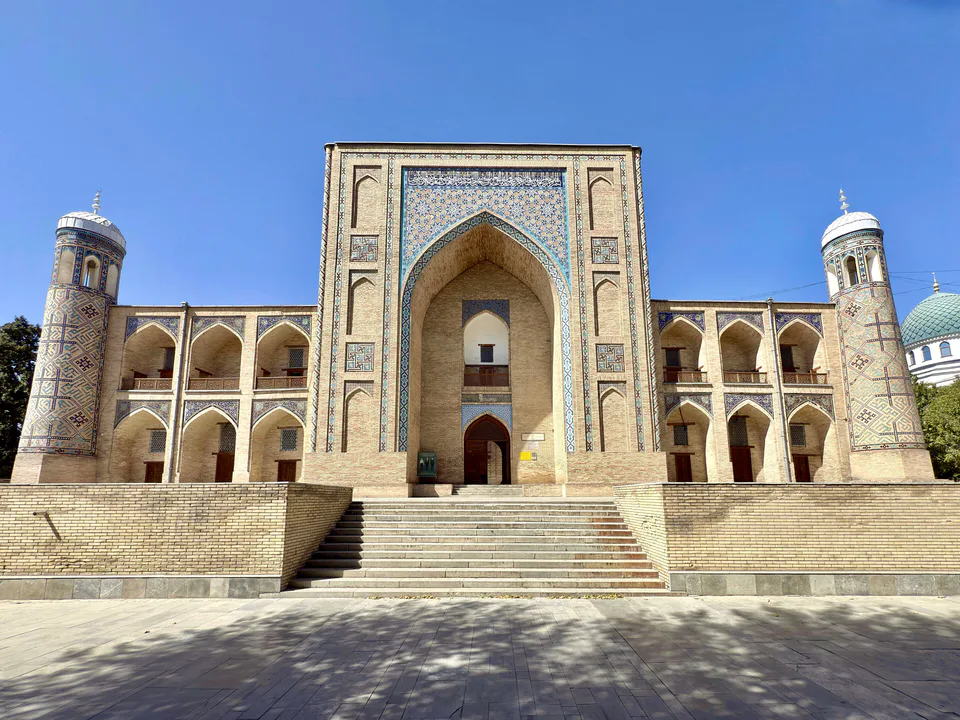
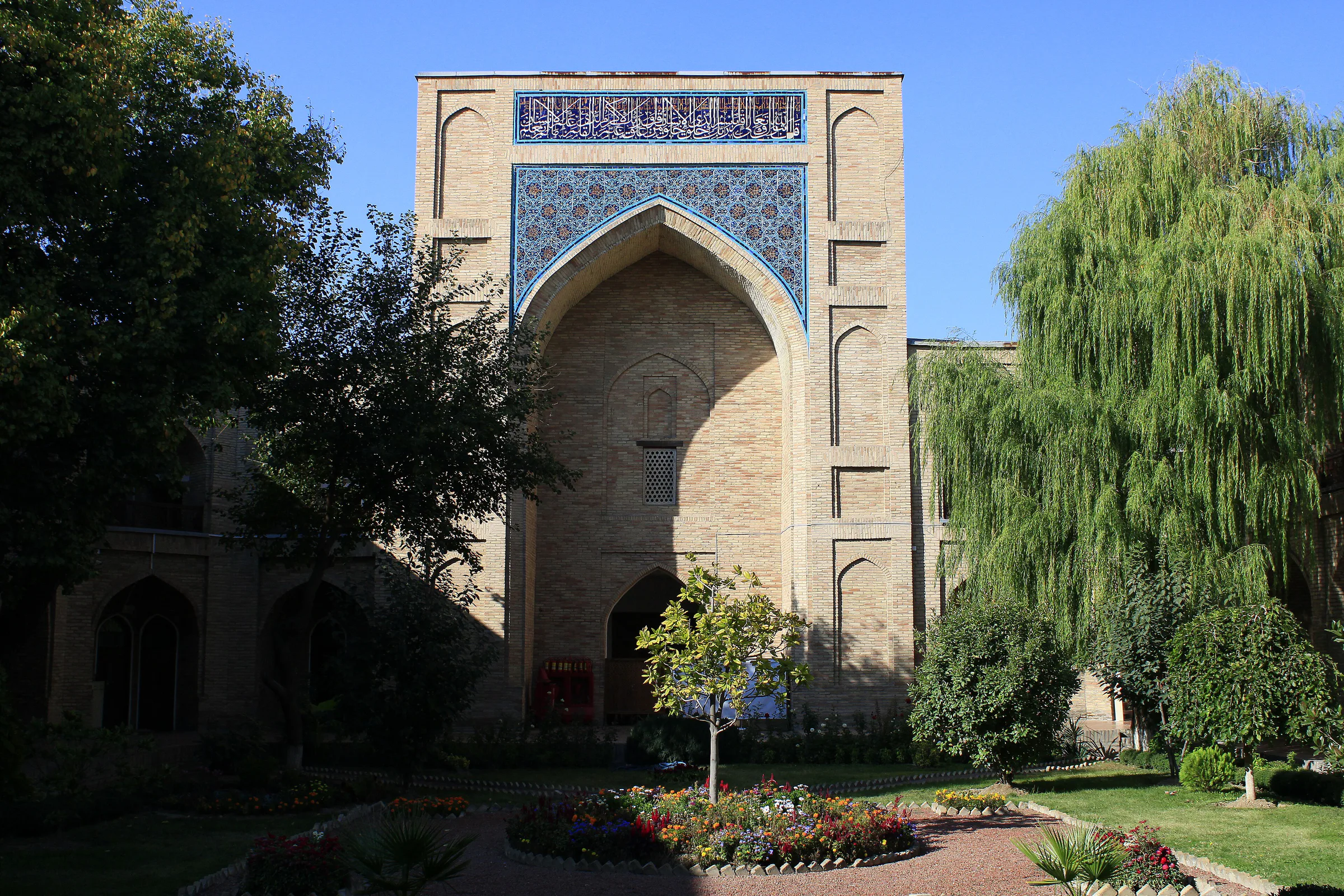
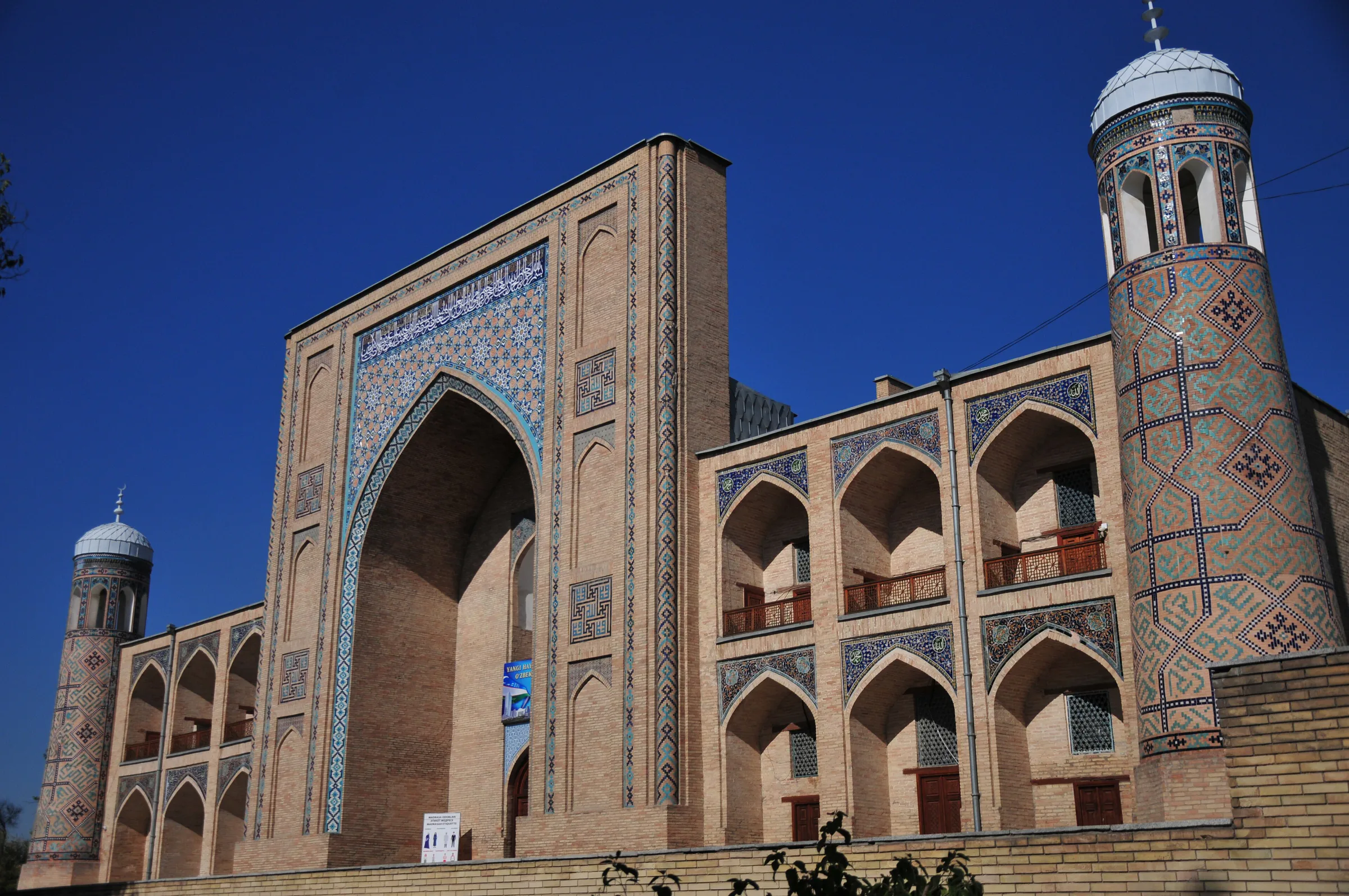
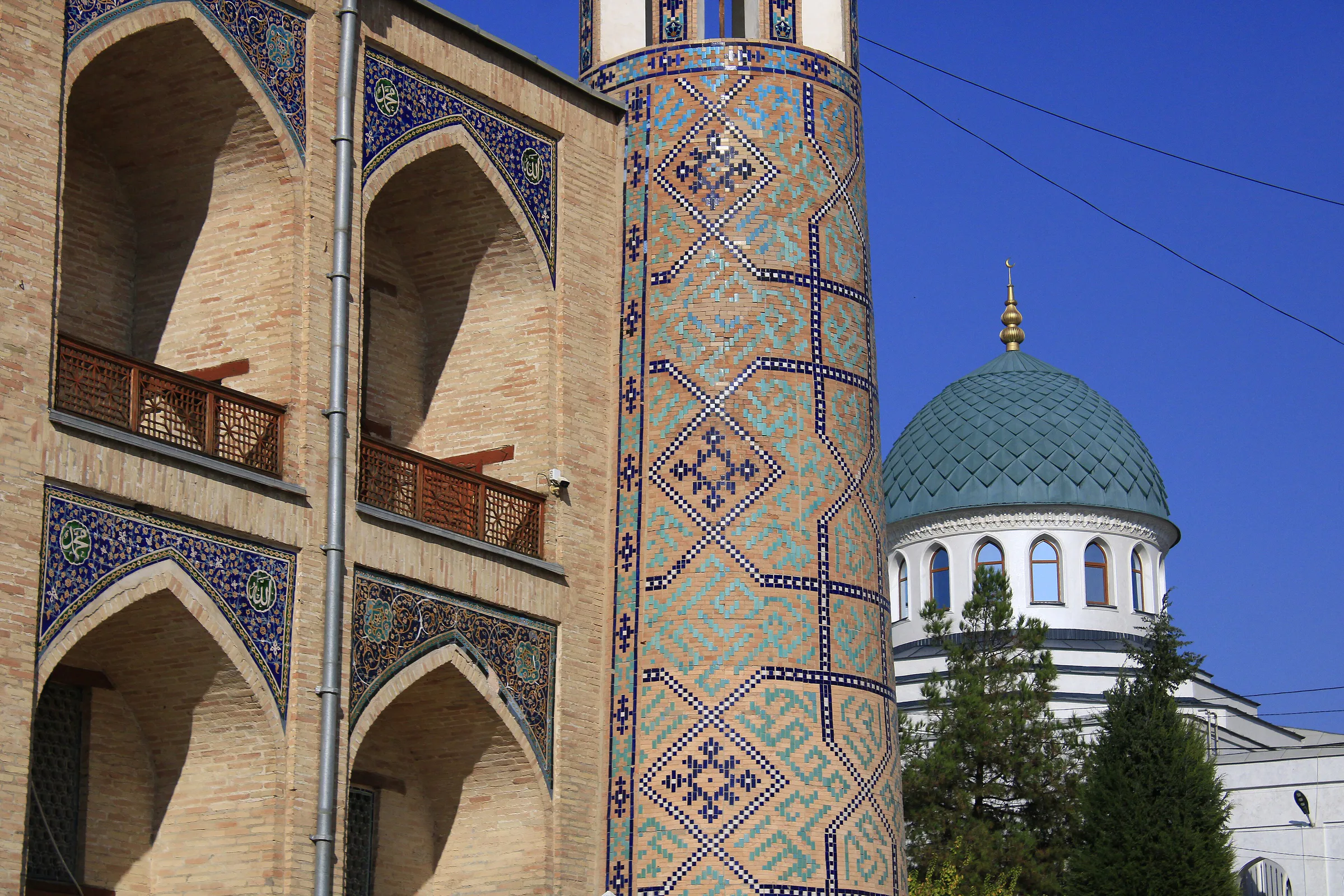
A Shaybanid-era madrasah on a rise above Chorsu Square — once the largest of old Tashkent's madrasahs and once again a working Islamic college.
The madrasah was completed by 1569 at the latest, under Tashkent's Shaybanid rulers Barak Khan and Dervish Khan. Its name comes from a vizier known as 'kukeldash' — the khan's foster brother. Sources disagree on who actually built it: popular histories credit Kulbobo Kukeldash, a powerful official of the Bukhara Khanate, while pre-revolutionary writers attribute it to Tashkent's governor Dervish Khan.
It stands on high ground, on the remains of the southern rampart of the ancient shahristan of Binkat, and was the largest of the 23 madrasahs of old Tashkent.
By the 18th century the neglected building served as a caravanserai and later as a fortress. In 1830–1831 its upper storey was dismantled and the bricks reused for the nearby Beklarbegi Madrasah. Nineteenth-century earthquakes badly damaged the portal; the madrasah was rebuilt in 1902–1903 and again in the 1950s, and it was one of the few religious buildings to survive the 1966 earthquake.
Under Soviet rule it housed a museum of atheism and later a museum of folk music. In 1991 it was handed to the Muslim Board of Uzbekistan and became a college again, and in 2008, ahead of Tashkent's 2,200th anniversary, the entrance portal and main facade were restored.
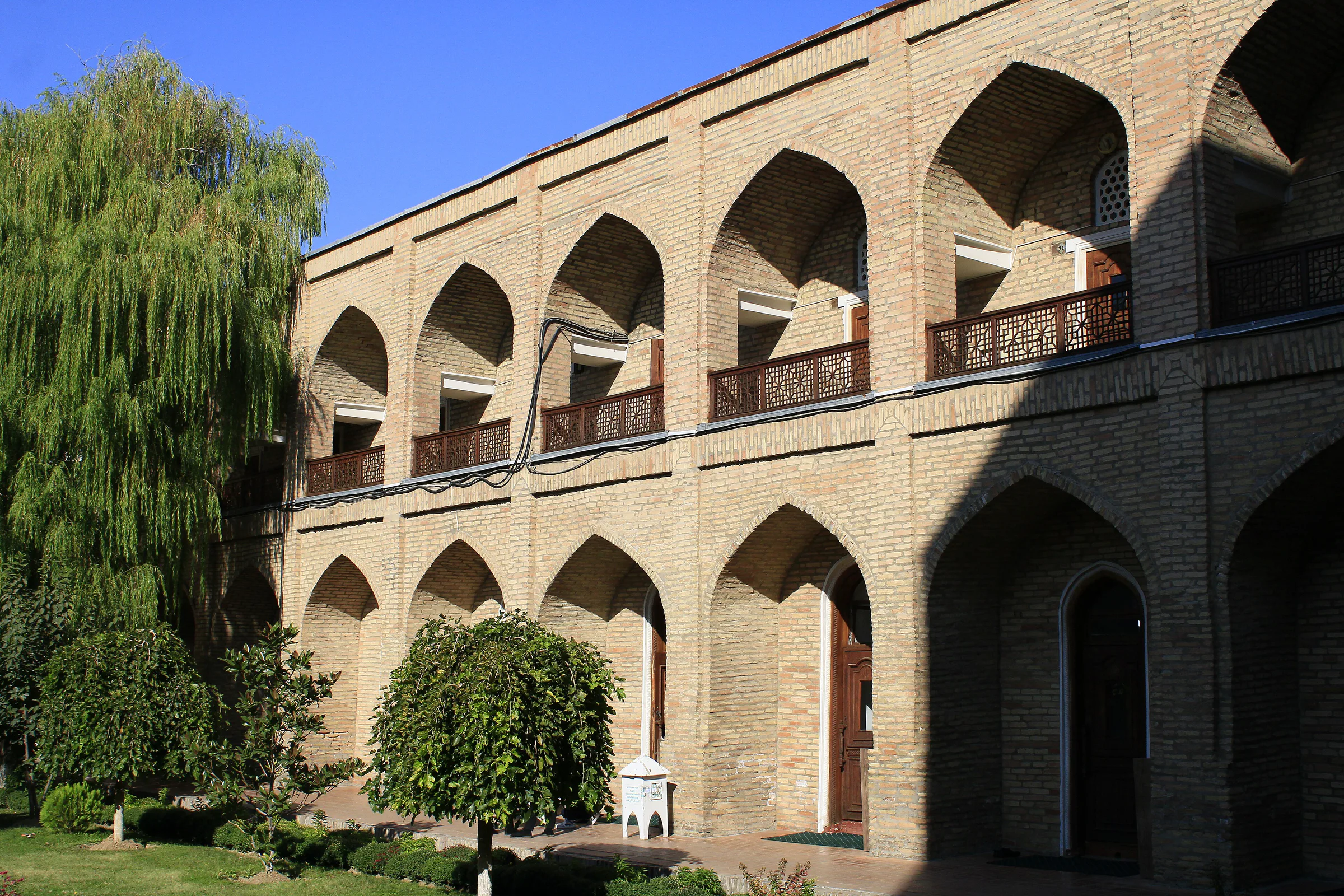
The plan is classic: a broad rectangular courtyard ringed by student cells and iwans, with a mosque on one side of the entrance and a lecture hall on the other. The building measures 62.7 by 44.9 metres, the courtyard 38 by 26.9 metres, and there were 38 cells.
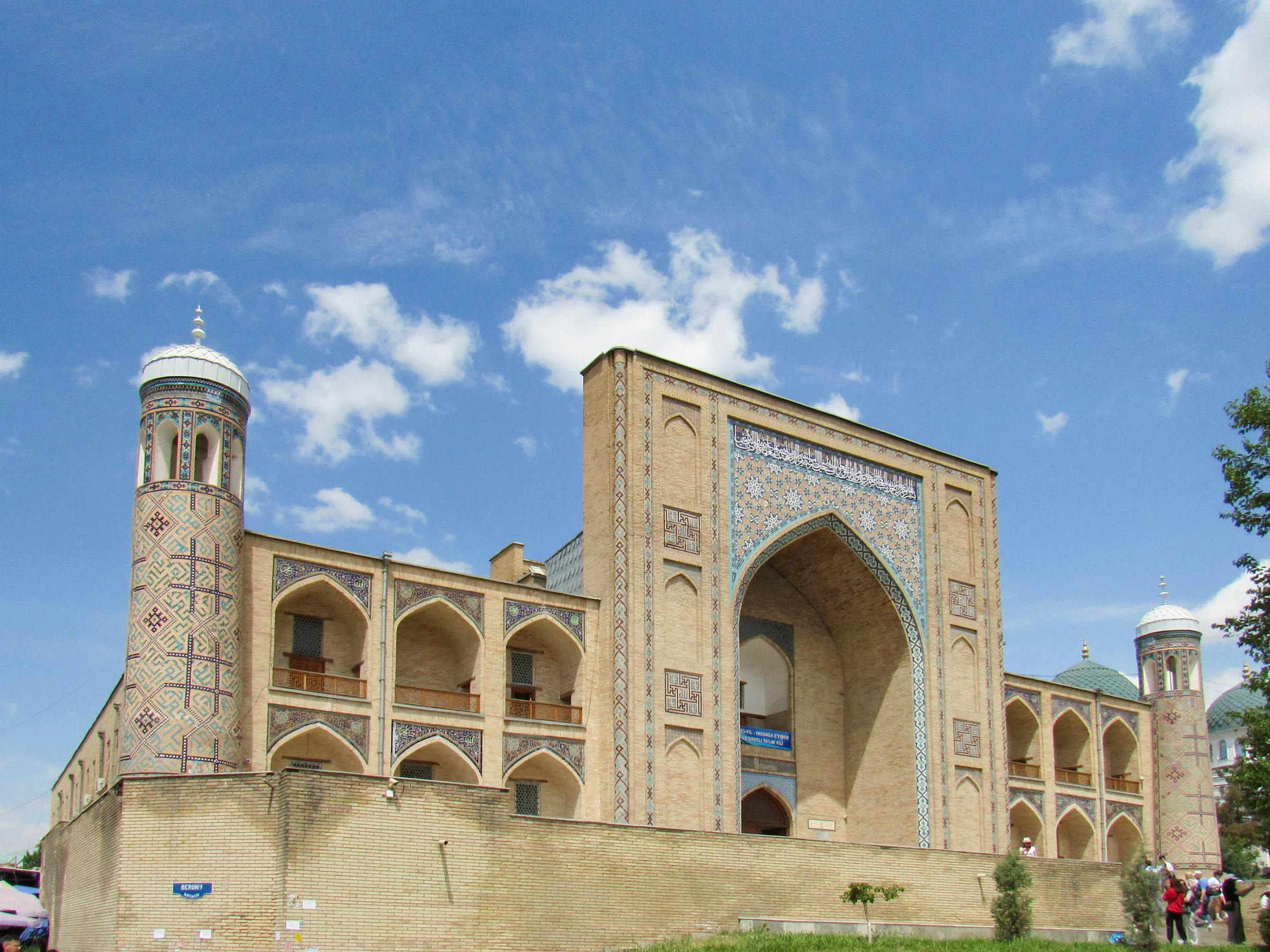
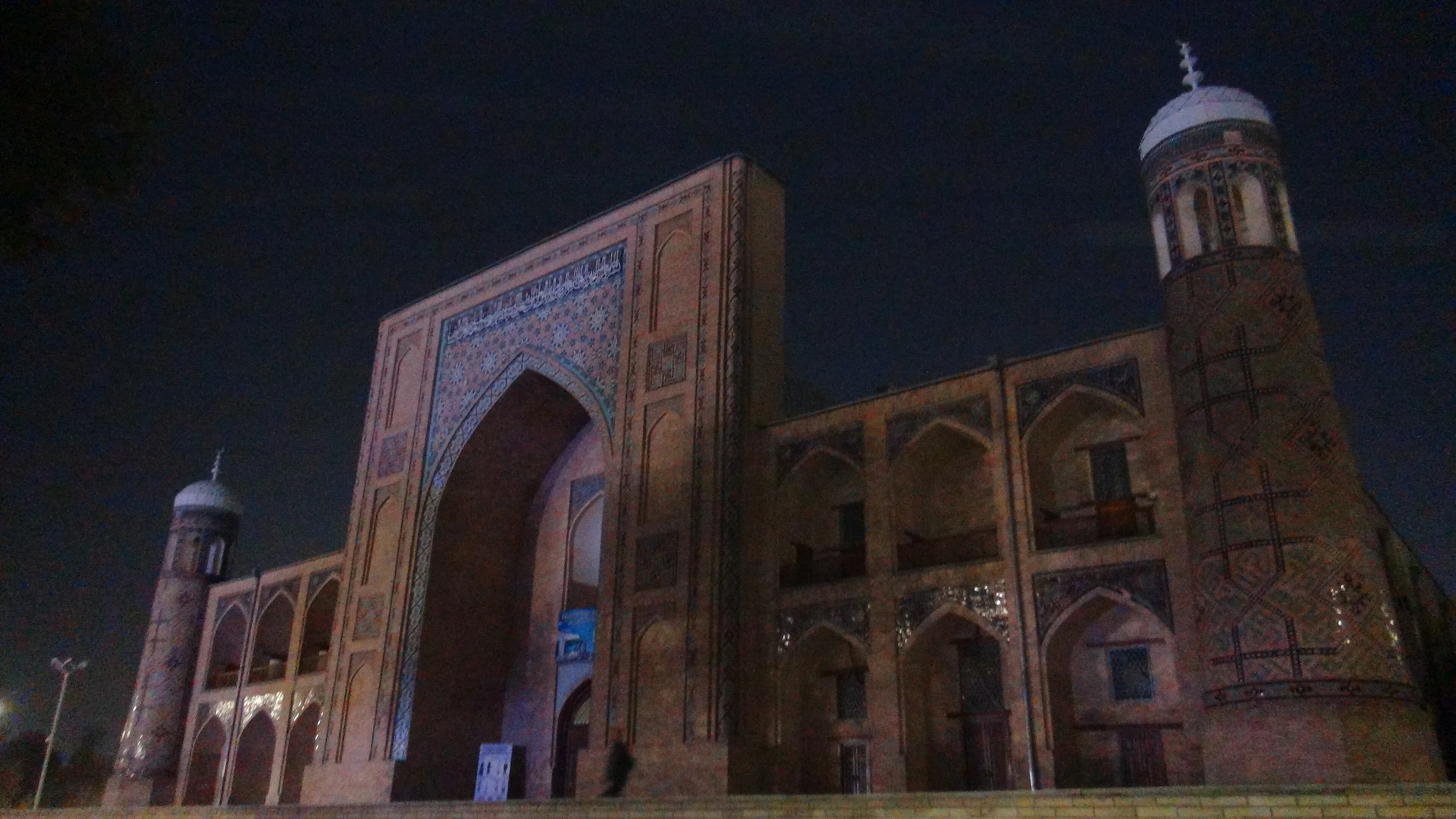
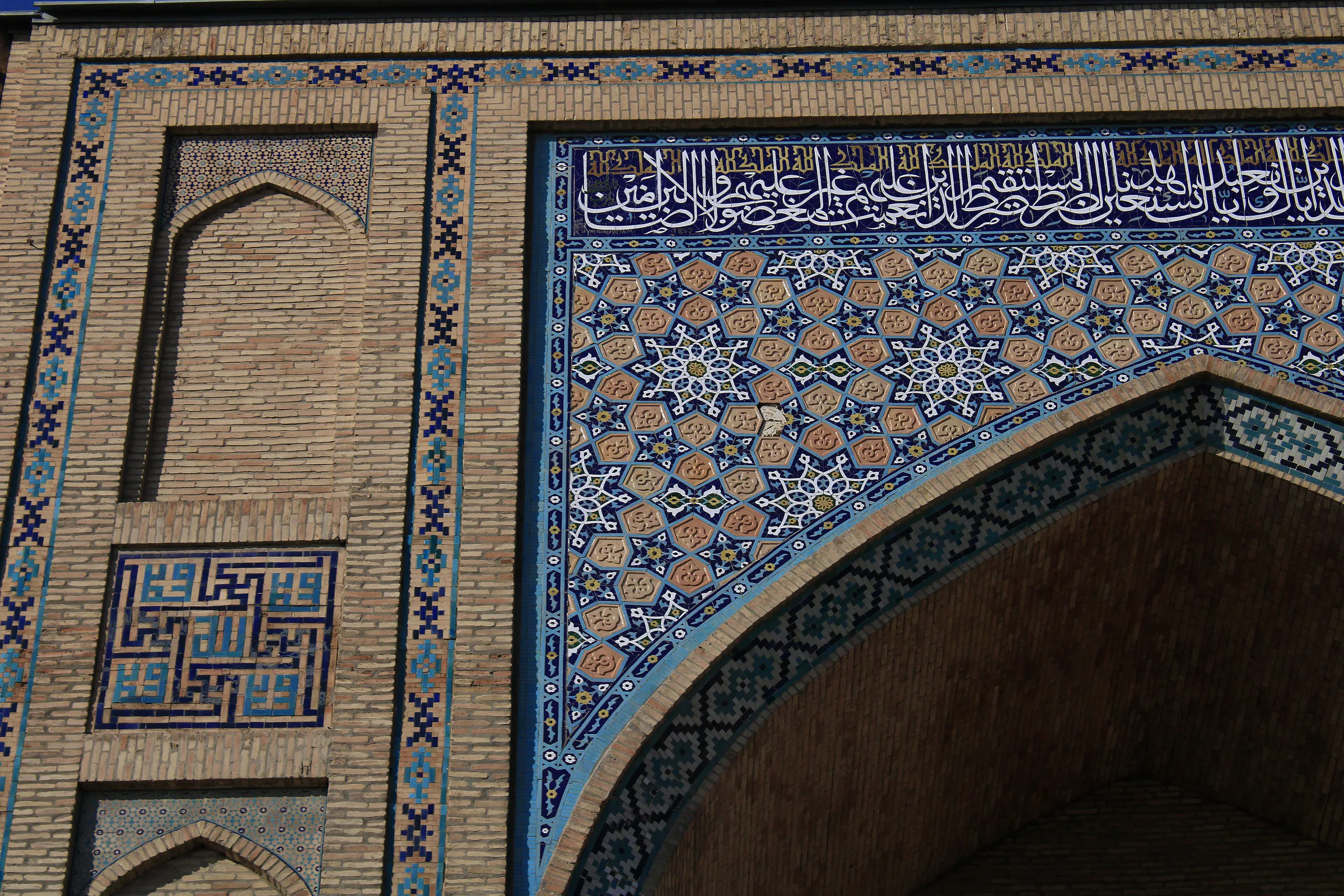
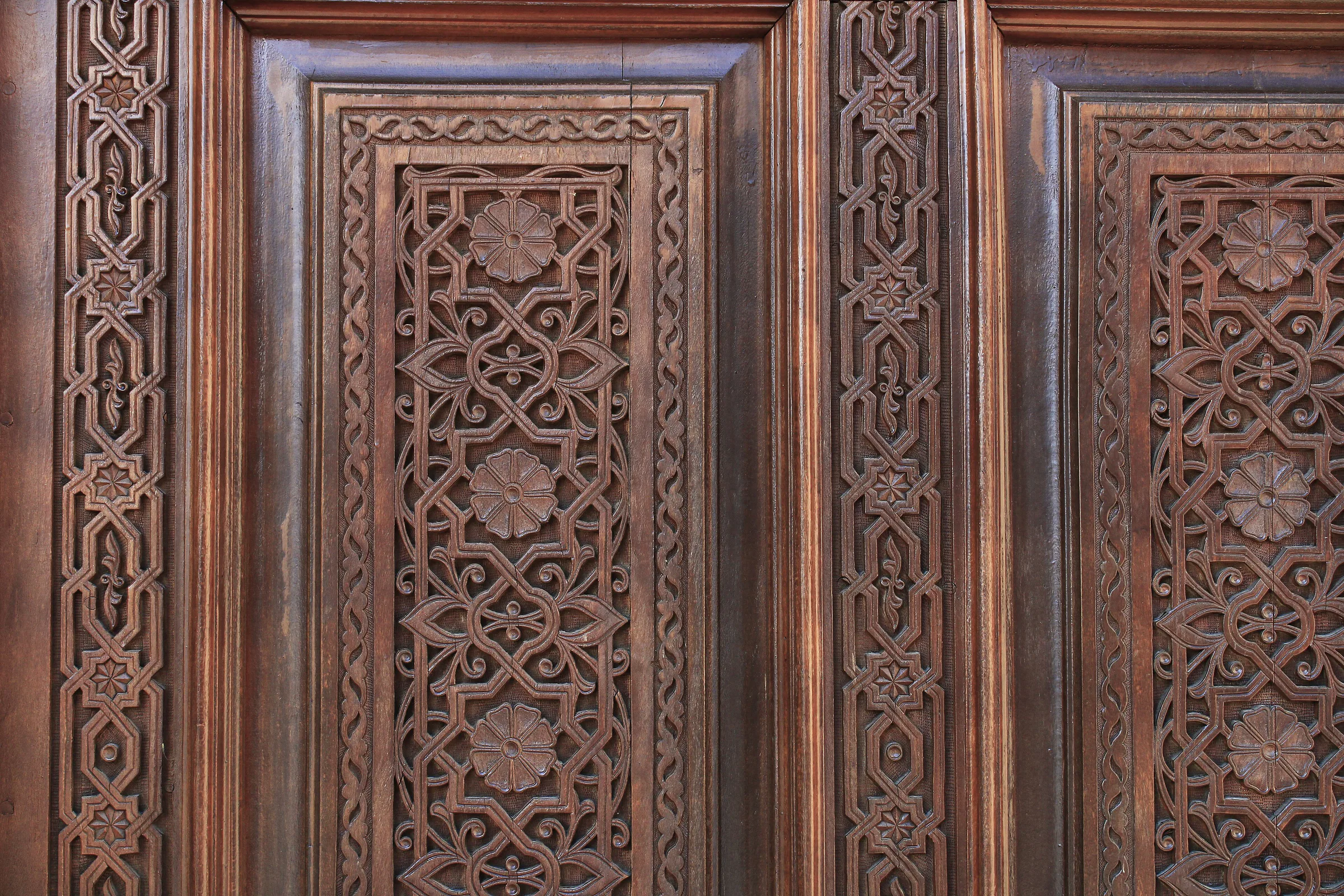
The builders lavished their attention on the main facade: a tall portal faced with glazed brick and girih geometry, flanked by two-tier arcades and corner turrets. Sources give its height variously, from 15.7 to 20 metres.
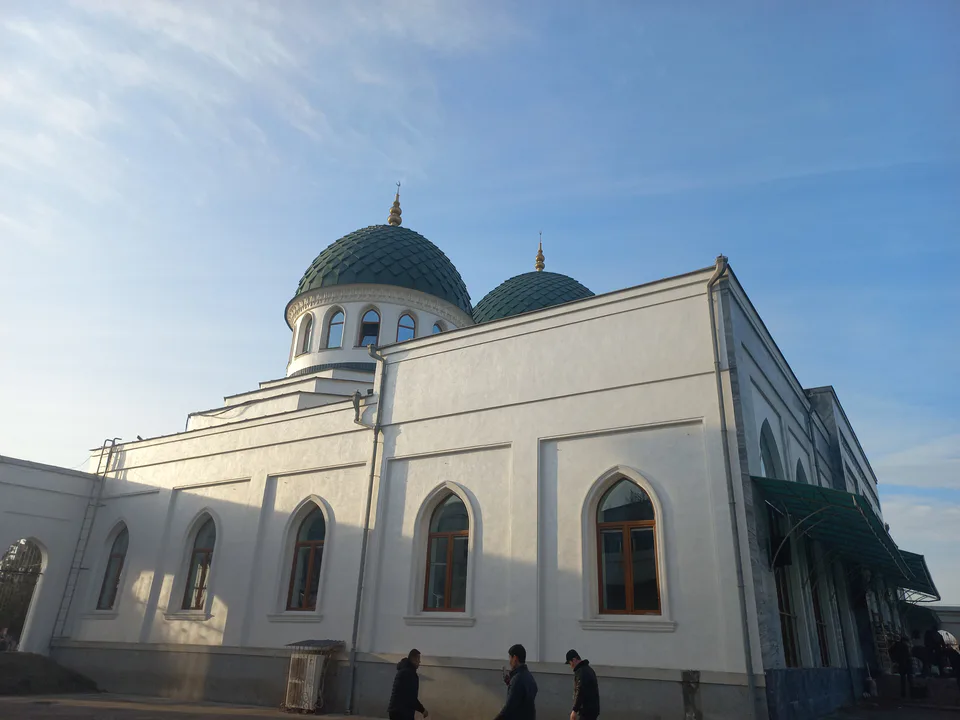
The madrasah stands on the south-western edge of Chorsu Square, for centuries the commercial heart of the Old City. Next door is Tashkent's Friday mosque, founded in the 15th century at the initiative of Khoja Ahrar Vali and rebuilt in 2003, and across the square rises the domed hall of Chorsu Bazaar. Walking north along Zarqaynar Street through the Old City mahallas brings you to the Hazrati Imam Complex, and Chorsu metro station is a few steps away — an easy starting point for exploring old Tashkent.
Poets have lived in its cells: Furqat stayed here in 1889–1891, and Hamza Hakimzade Niyazi in 1910–1911.
Bazaar · Shaykhantahur District
The Old City market under a blue dome
Mosque · Shaykhantahur District
Tashkent's Friday mosque since the 15th century
Ensemble · Almazar District
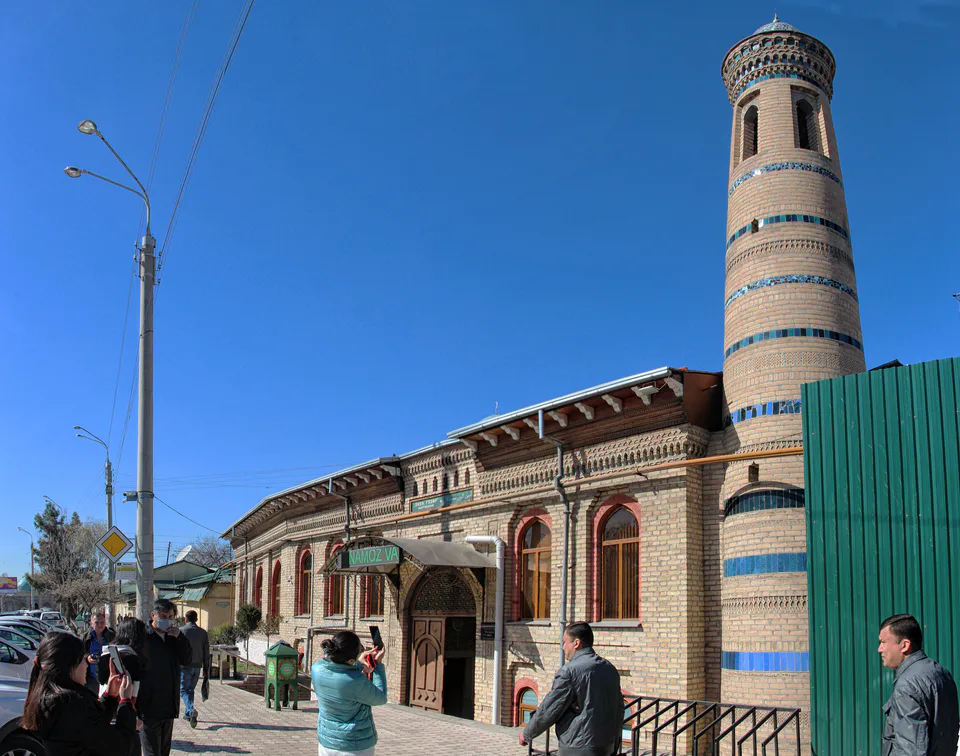
On foot from Chorsu to Hazrati Imam
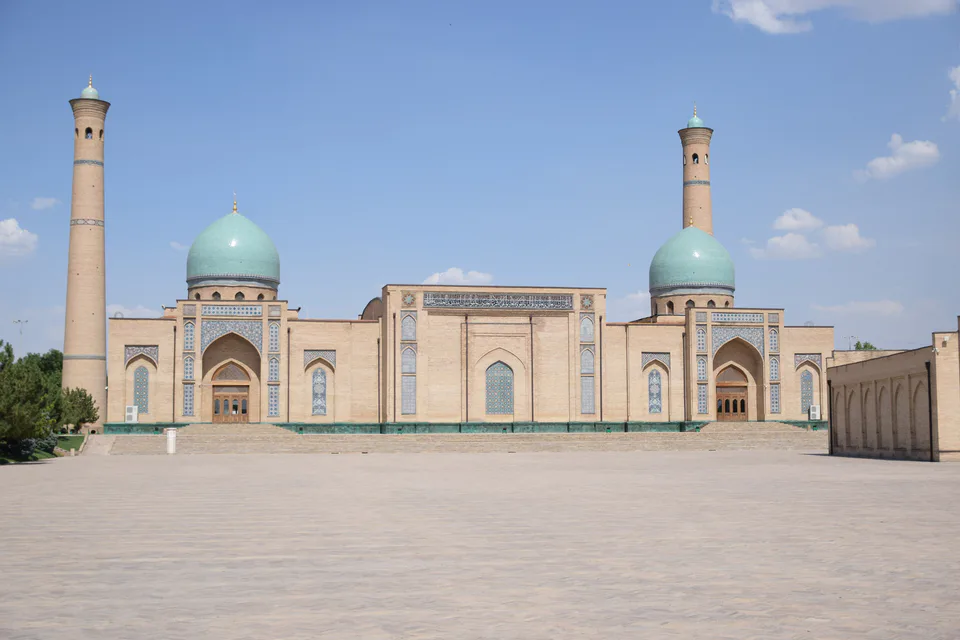
Ensemble · Almazar District
The spiritual heart of old Tashkent
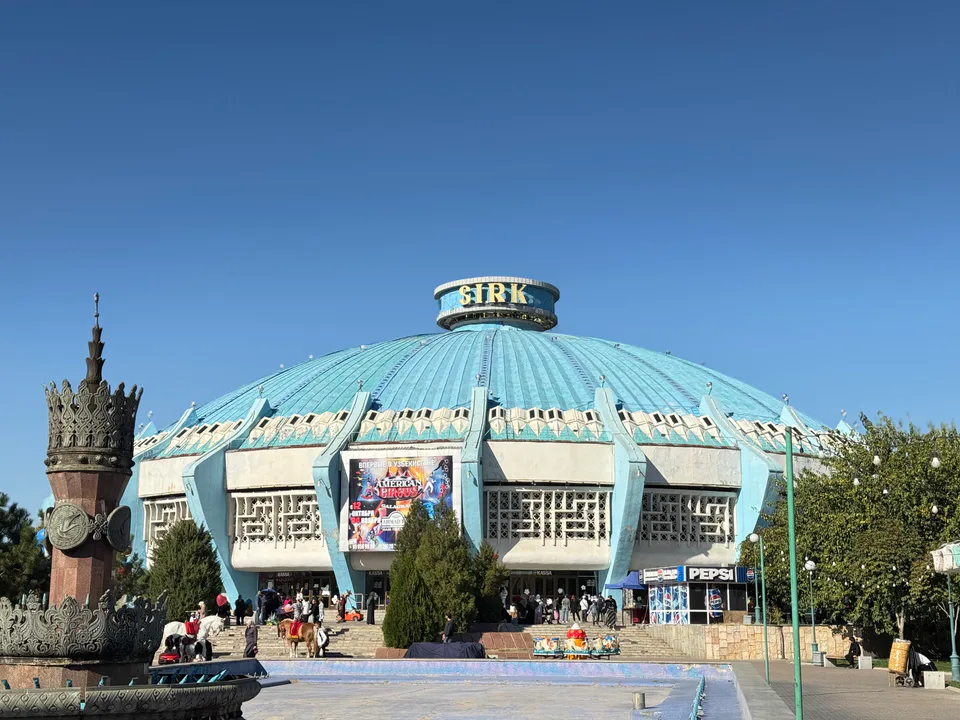
Culture & arts · Shaykhantahur District
The 'flying saucer' of Hadra Square
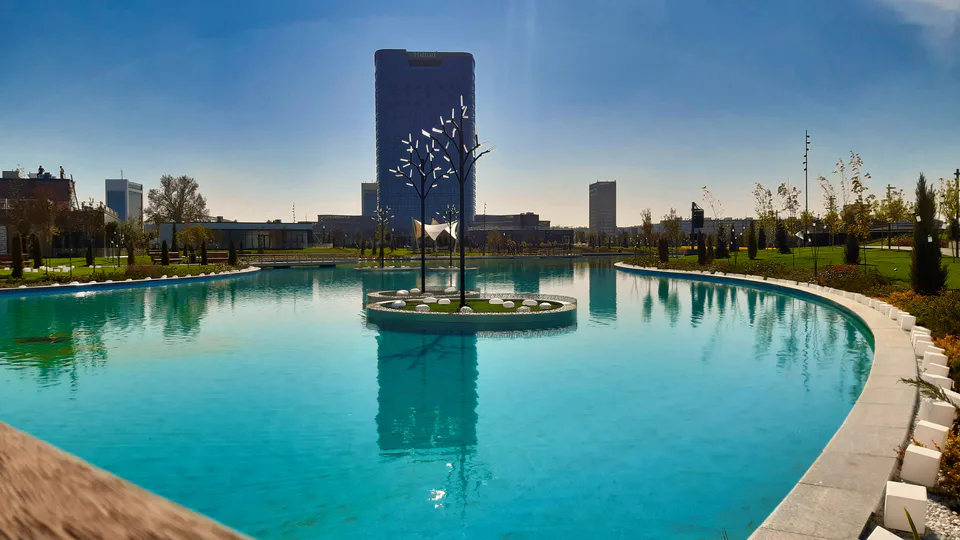
Park & garden · Shaykhantahur District
A fountain park among the skyscrapers
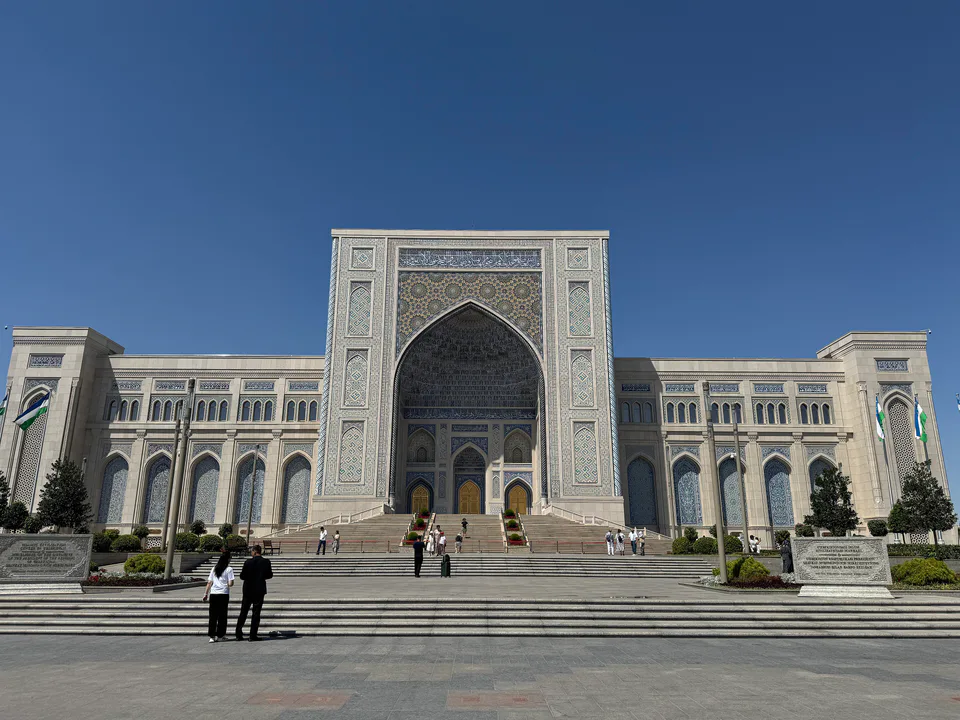
Museum · Almazar District
The new home of the Uthman Quran
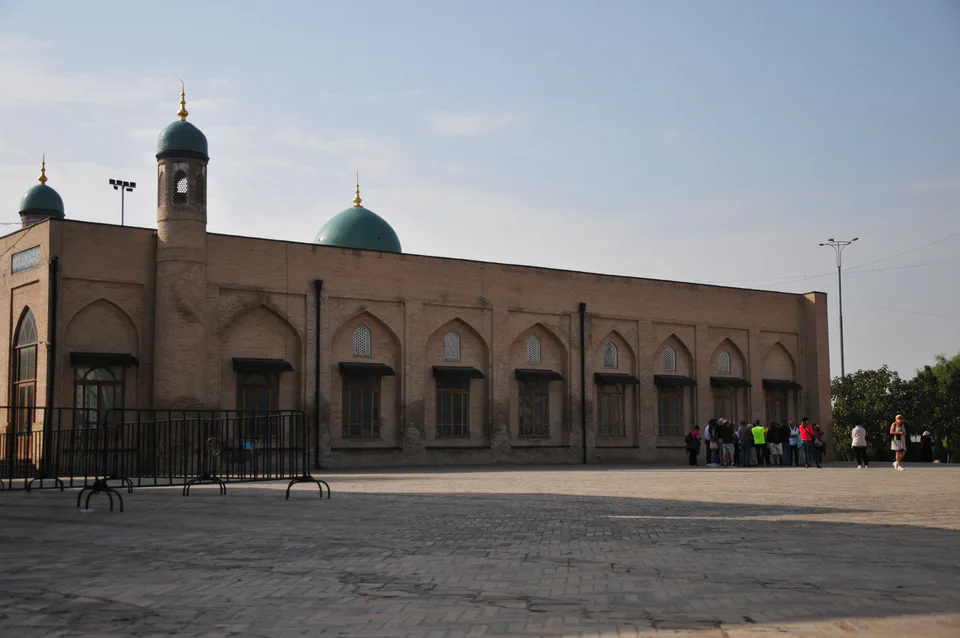
Mosque · Almazar District
Plain outside, richly carved within
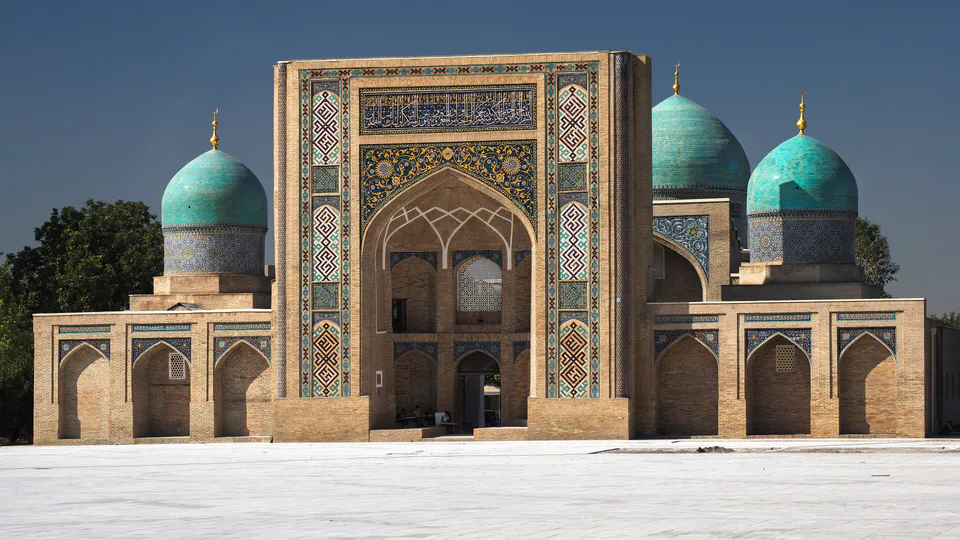
Madrasa · Almazar District
A madrasah grown from two mausoleums
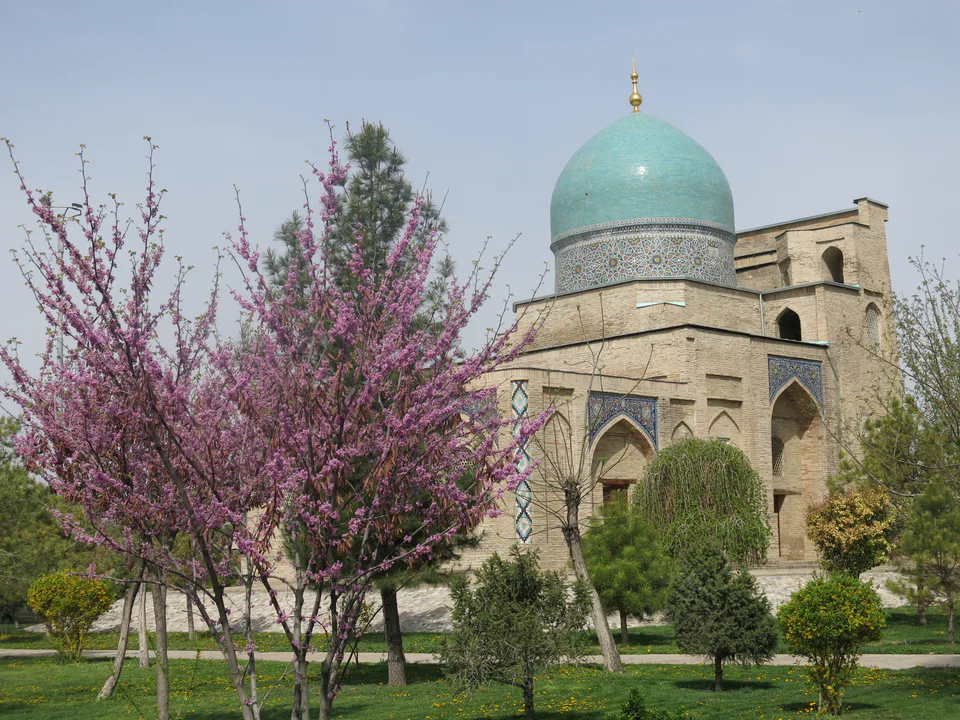
Mausoleum · Almazar District
The tomb where the Hazrati Imam Complex began