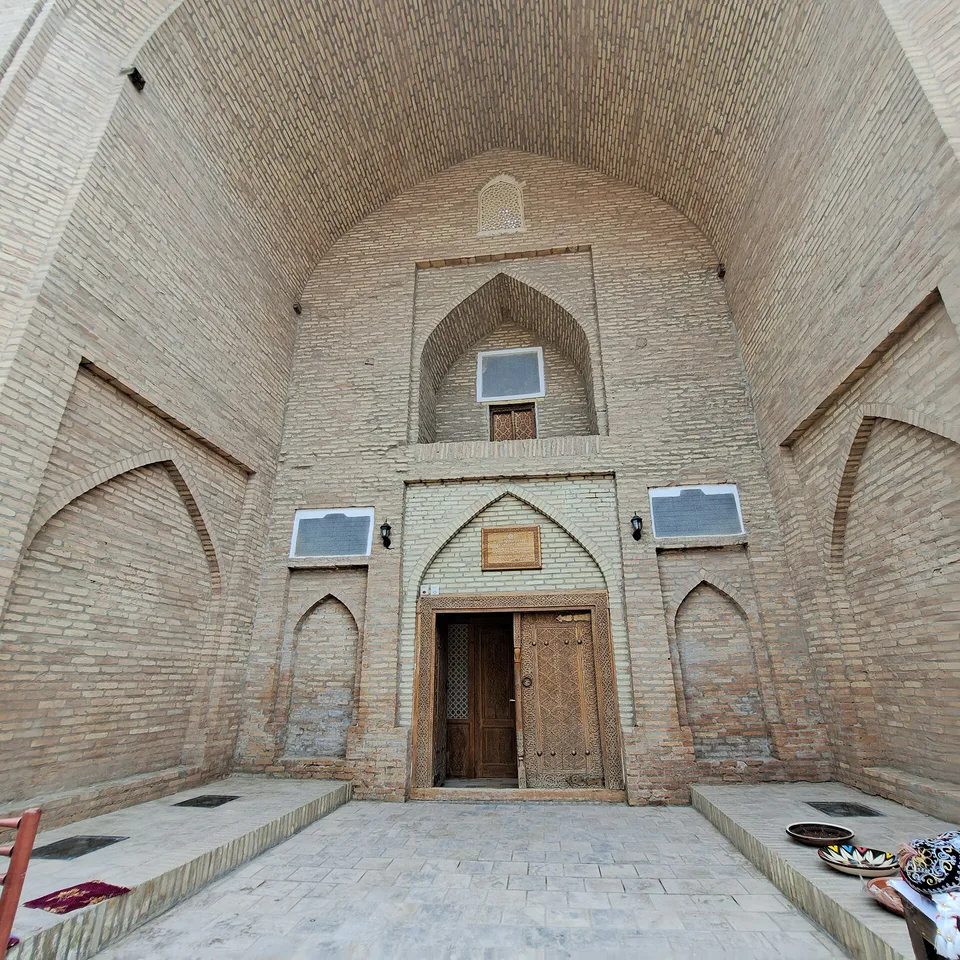
Madrasa · Khiva
Shergozikhon Madrasa
The “abode of scholars” where Magtymguly and Ajiniyaz studied
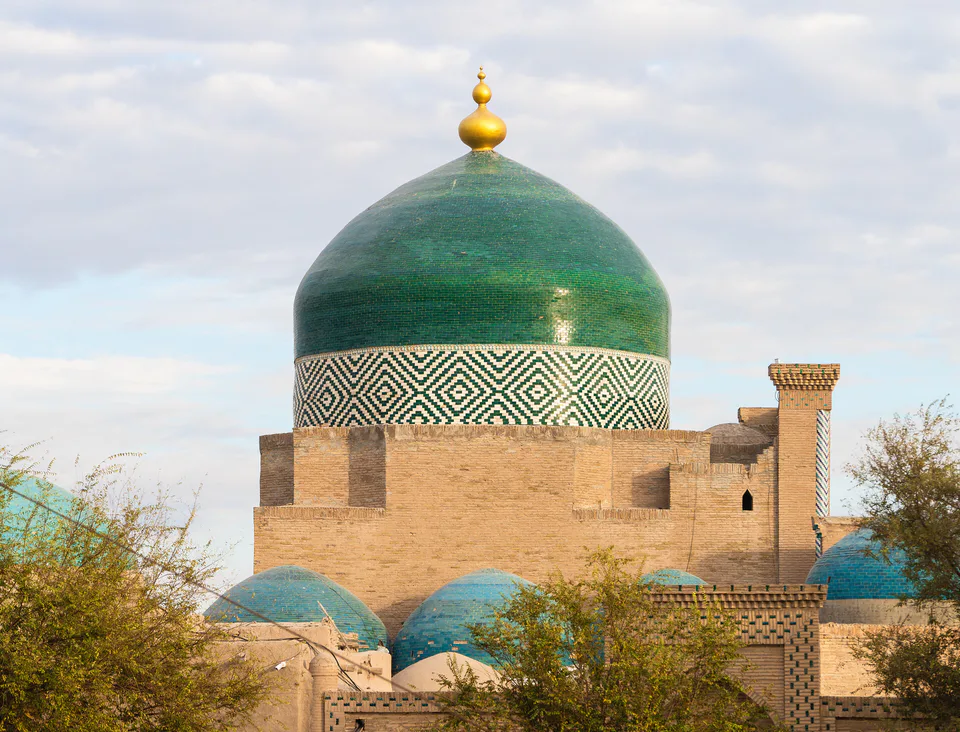
Mausoleum · Khiva
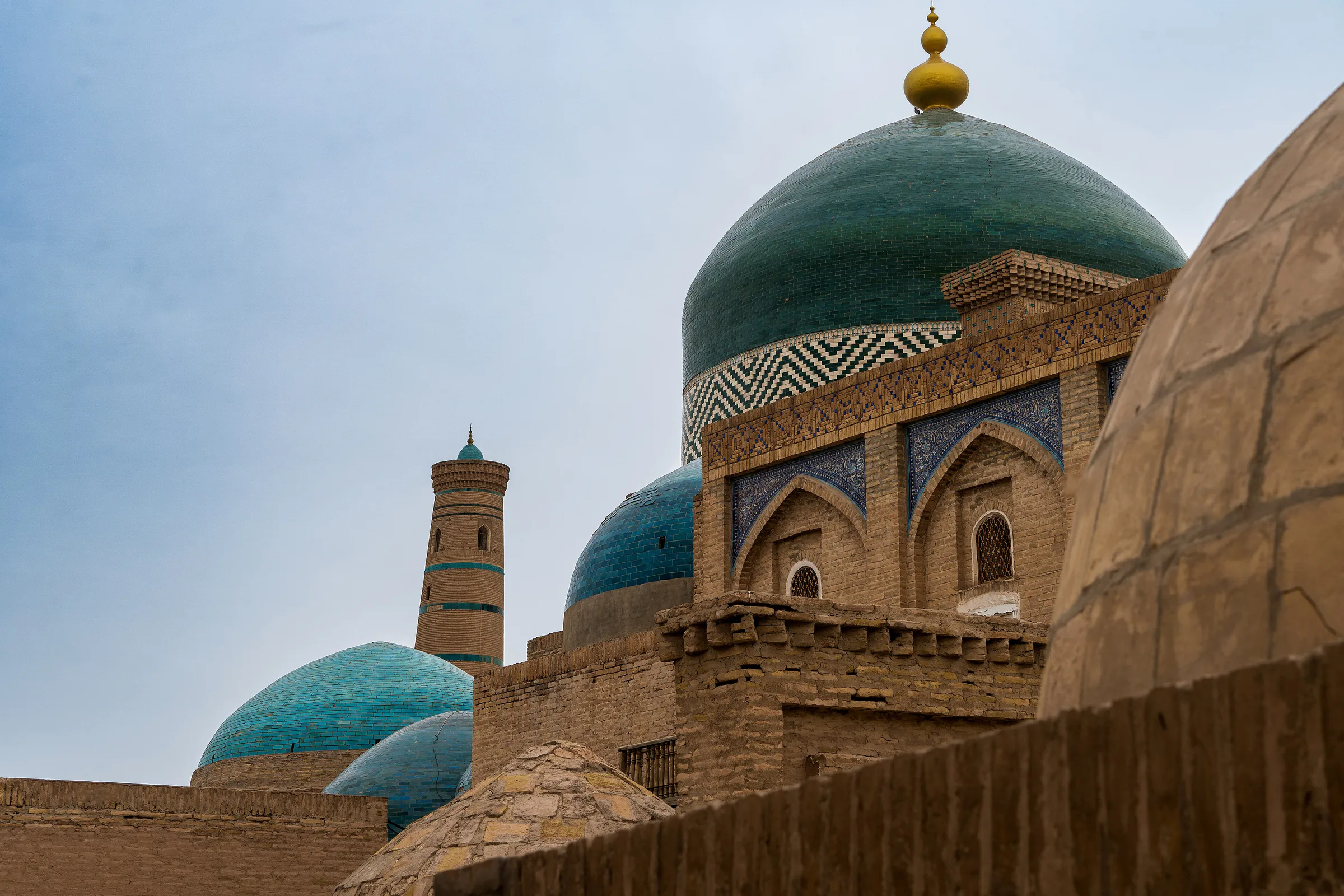
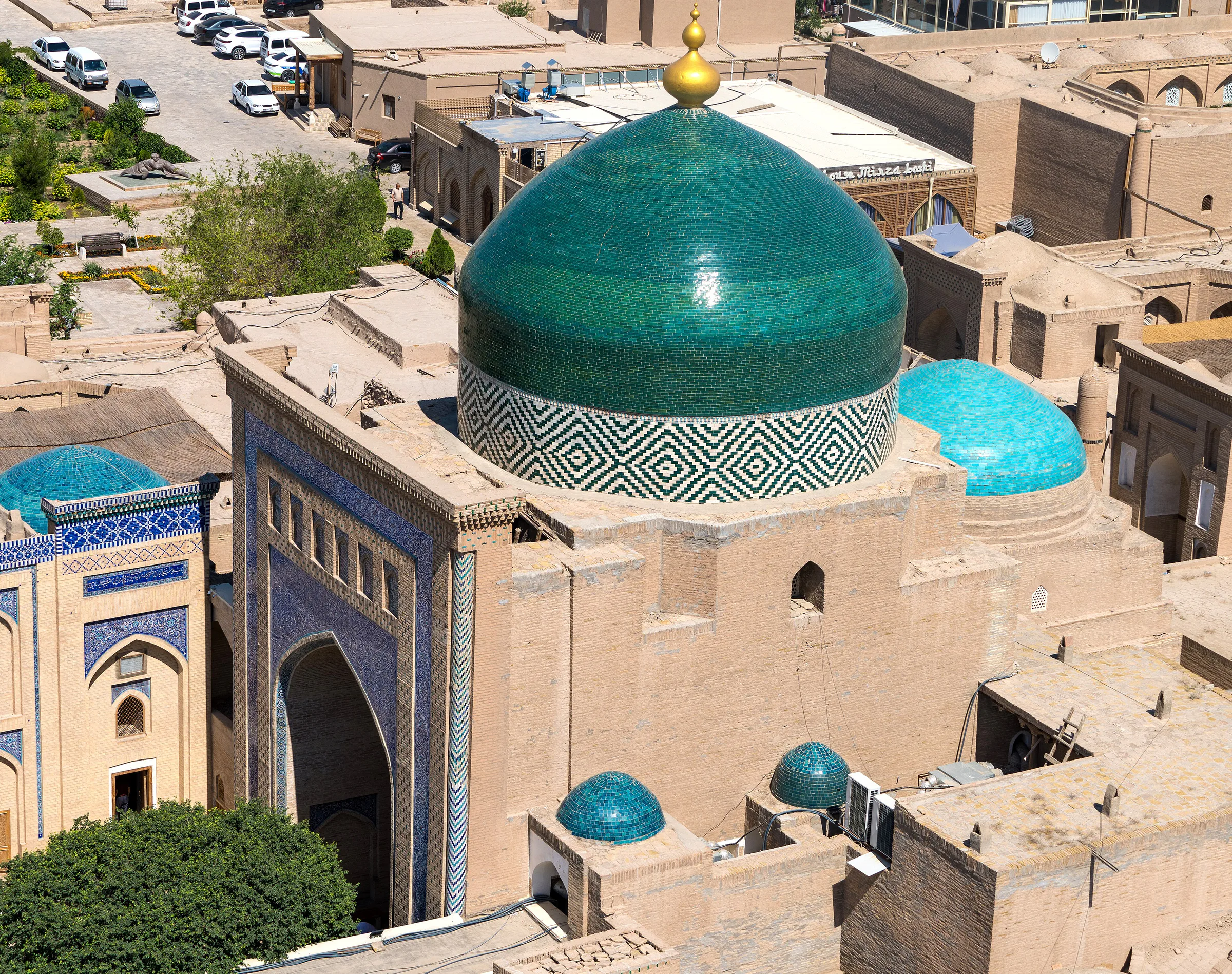
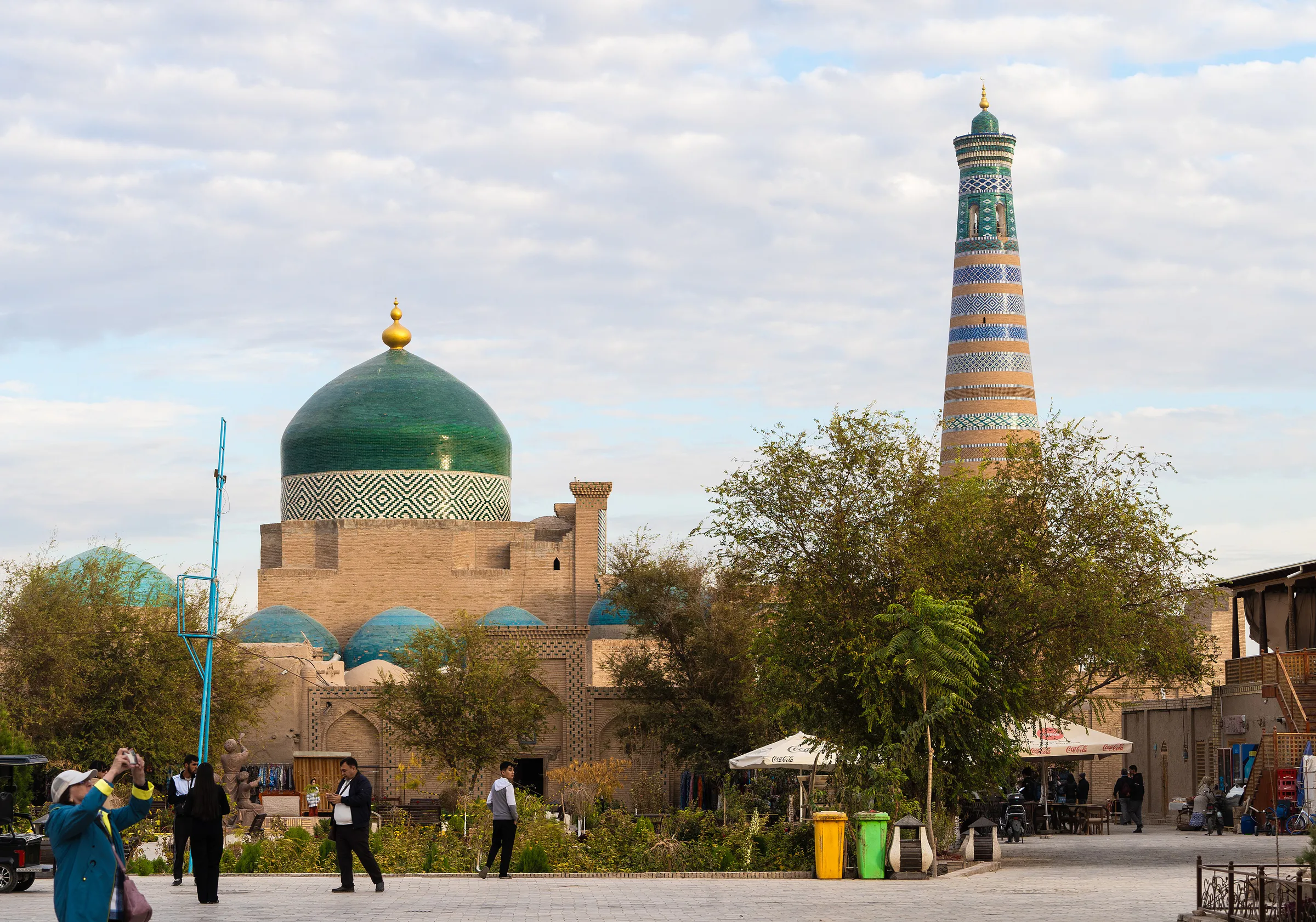
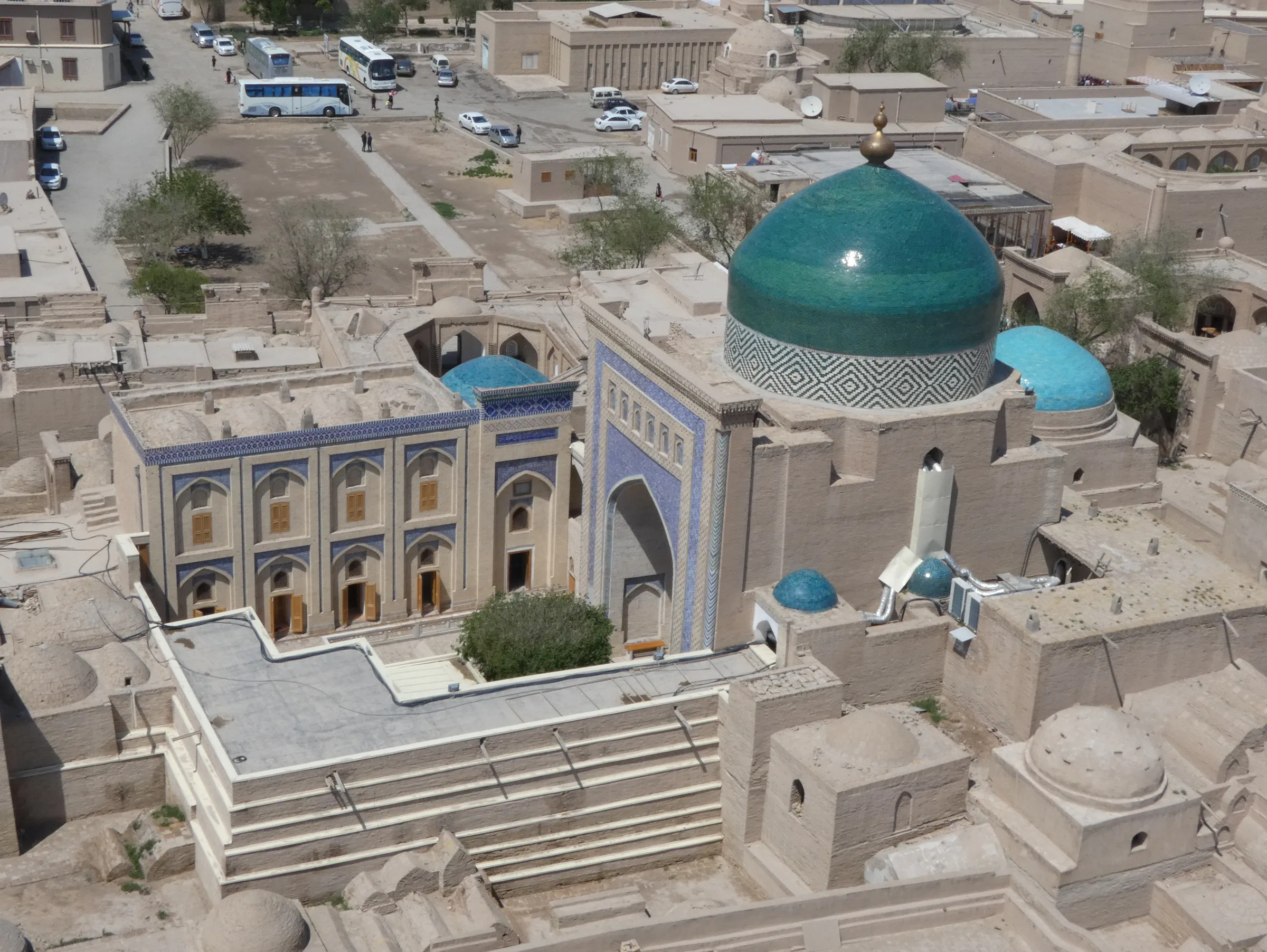
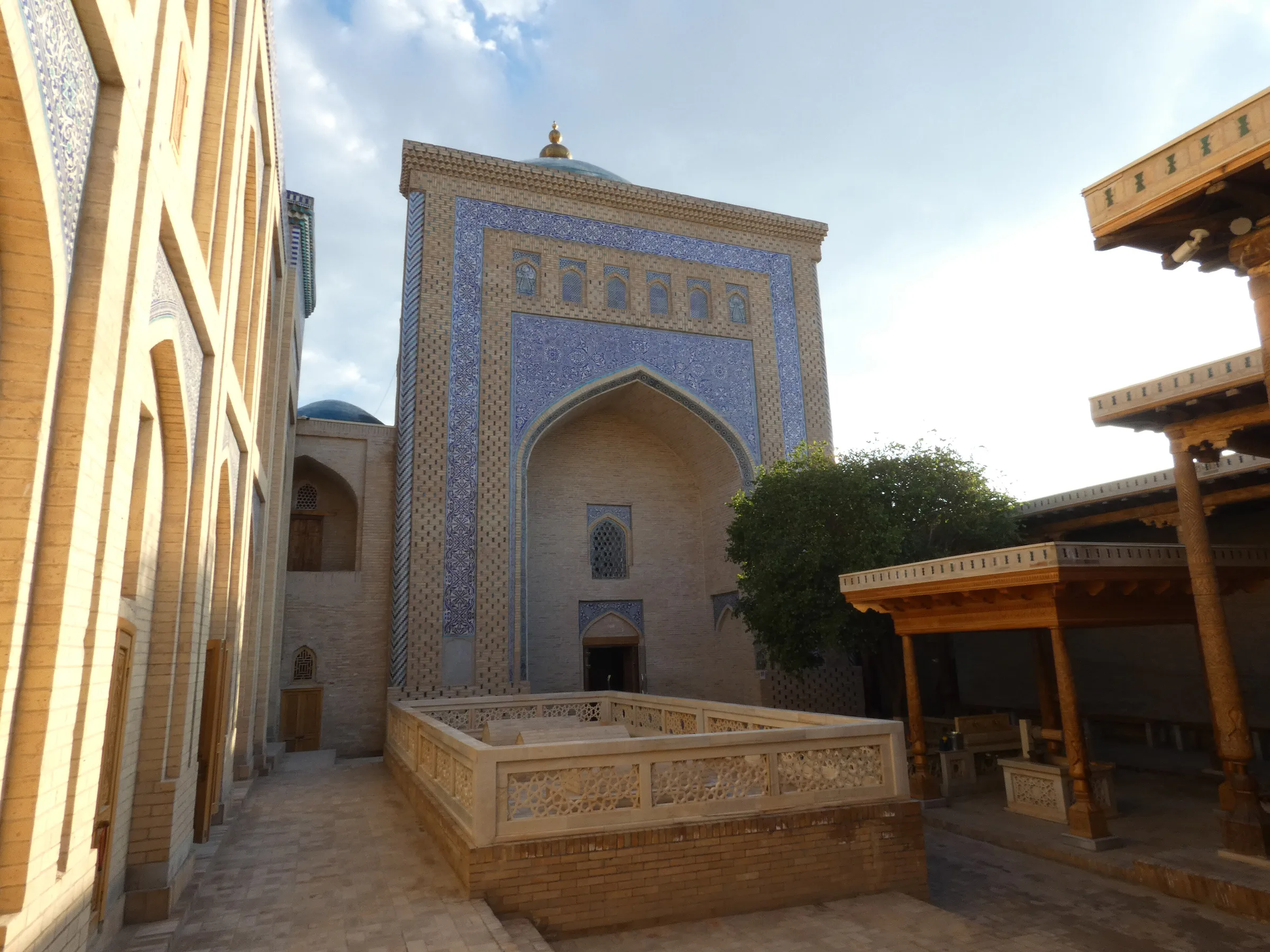
The shrine of Pahlavon Mahmud (1247–1326), poet, unbeaten wrestler and Khiva’s patron saint. Its turquoise dome, the largest in town, crowns a khanaqah where khans lie buried — one of Khorezm’s holiest places.
Pahlavon Mahmud lived in the late 13th and early 14th centuries — a Khivan craftsman, poet and wrestler. Folk memory recalls him as an undefeated strongman, a healer and the author of wise quatrains; he is sometimes called the “Omar Khayyam of Khorezm”. At his own wish he was buried in his furrier’s workshop, which became a shrine visited by Uzbeks, Turkmen, Karakalpaks and others. Khivans revere him as the town’s pir, or patron saint, and both the Polvon Gate and the Palvanyap canal that watered the city bear his name.
The ensemble around the grave took shape between 1664 and 1913 and covers about 50 by 30 metres. A small mausoleum came first, with an entrance portal added on the south in the 17th century. Inscriptions on the door date a larger building campaign to 1701 under Shahniyaz Khan, and in 1719 Shergozi Khan aligned his new madrasa to face the shrine.
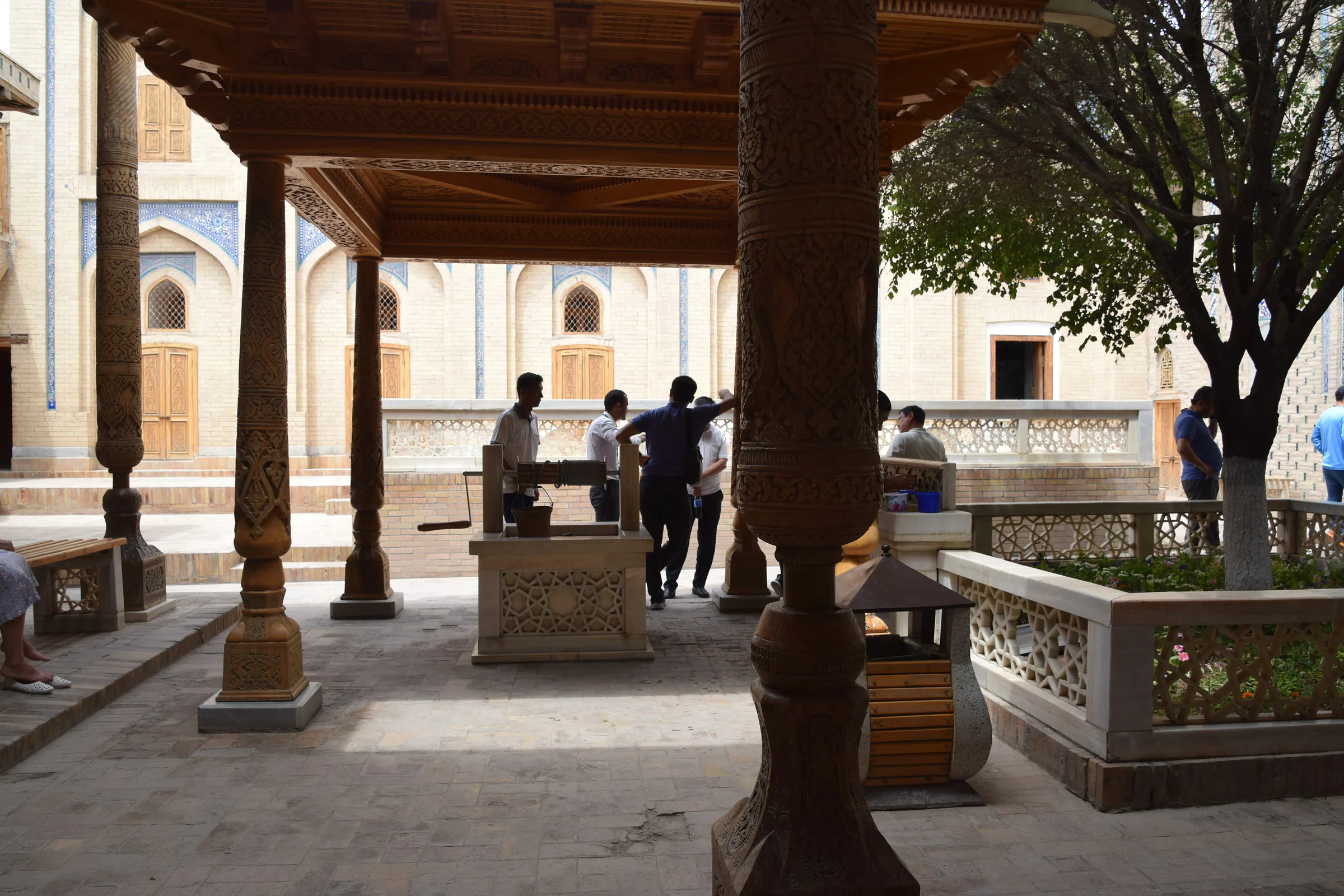
The complex took its present form in 1810–1825 under Muhammad Rahim Khan I, who after a successful campaign against Kungrad built a new hall enclosing the old tomb: a ziyaratkhana for pilgrims and a khanaqah under a tall double dome. The works were led by Odina Muhammad Murod of Hazorasp, with designs by Abdulla “Jinn”, tilework by Abdujabbor and a carved door of 1810 by master Nurmuhammad. In 1913, under Isfandiyar Khan, a two-storey hall for Quran reciters went up on the west side of the courtyard and a four-columned summer mosque on the east.
By the late 19th century the shrine had become the burial place of Khiva’s khans and their families. Abulgozi Khan, Shahniyaz Khan, Muhammad Rahim Khan I and other rulers lie here, and the marble tombstones of Abulgozi Khan (1663) and Anusha Khan (1681) were moved into the new hall. A two-storey building in the courtyard holds the tombs of Isfandiyar Khan’s mother and sons; a place was prepared for the khan himself, but he was not buried here.
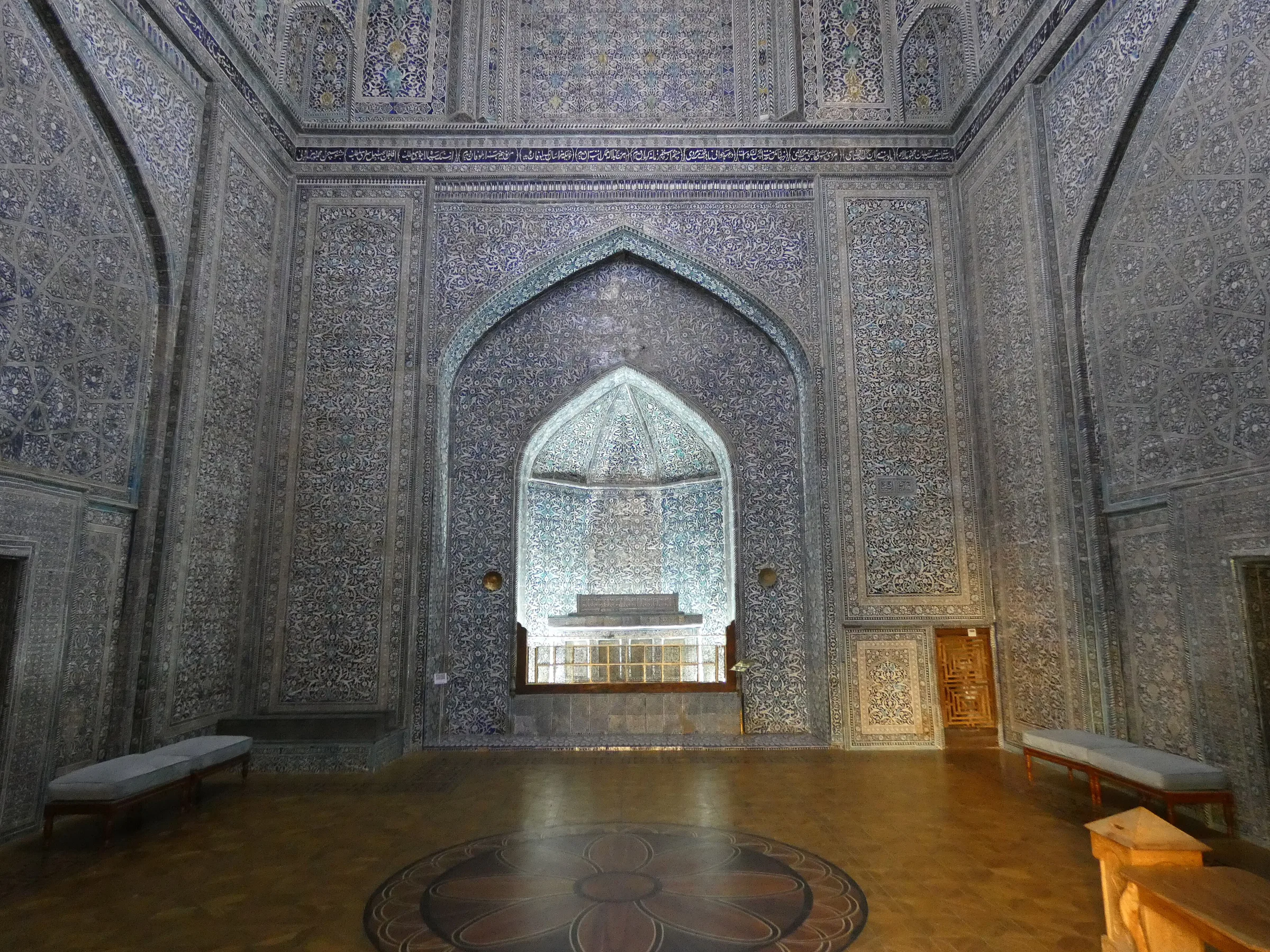
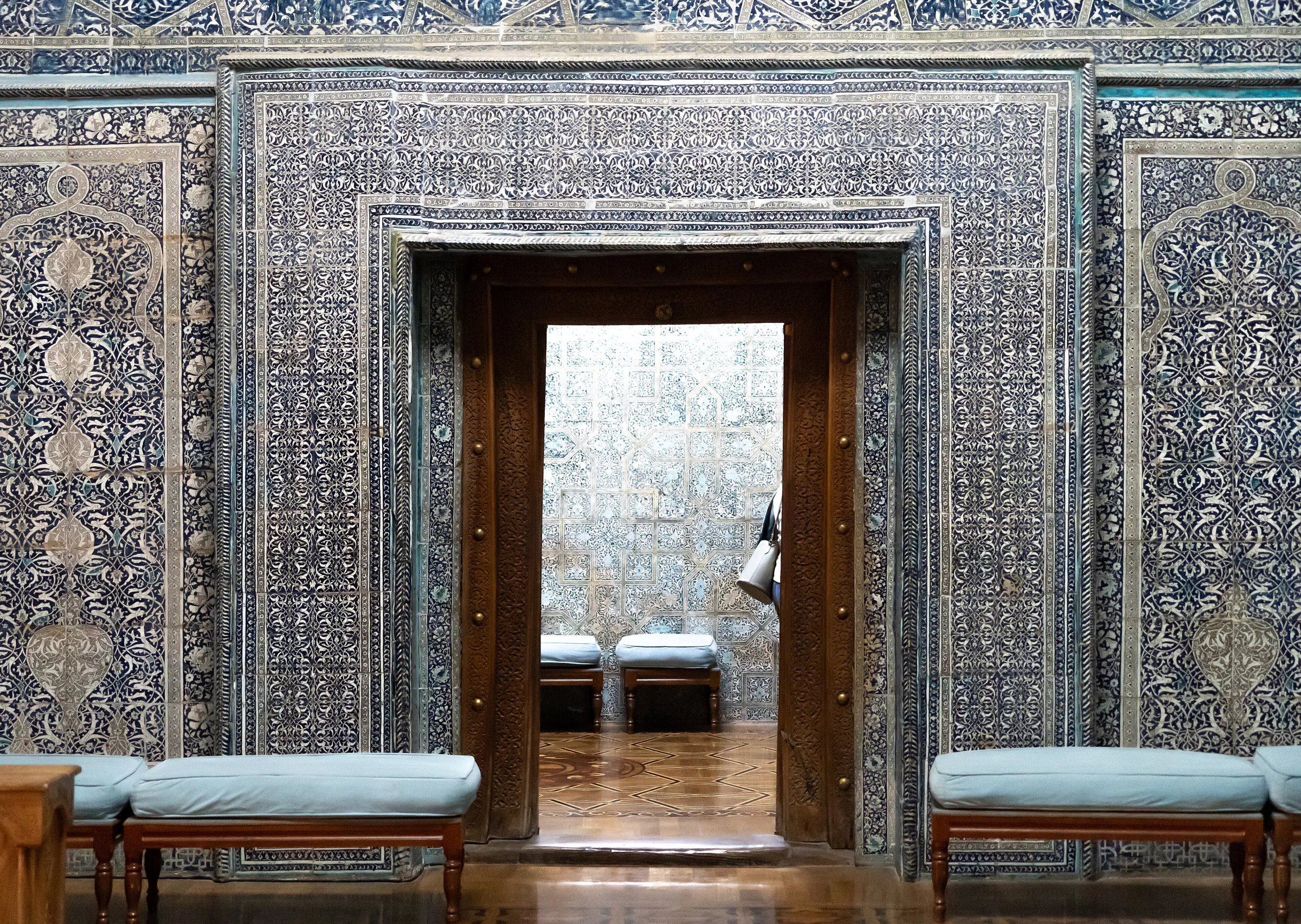
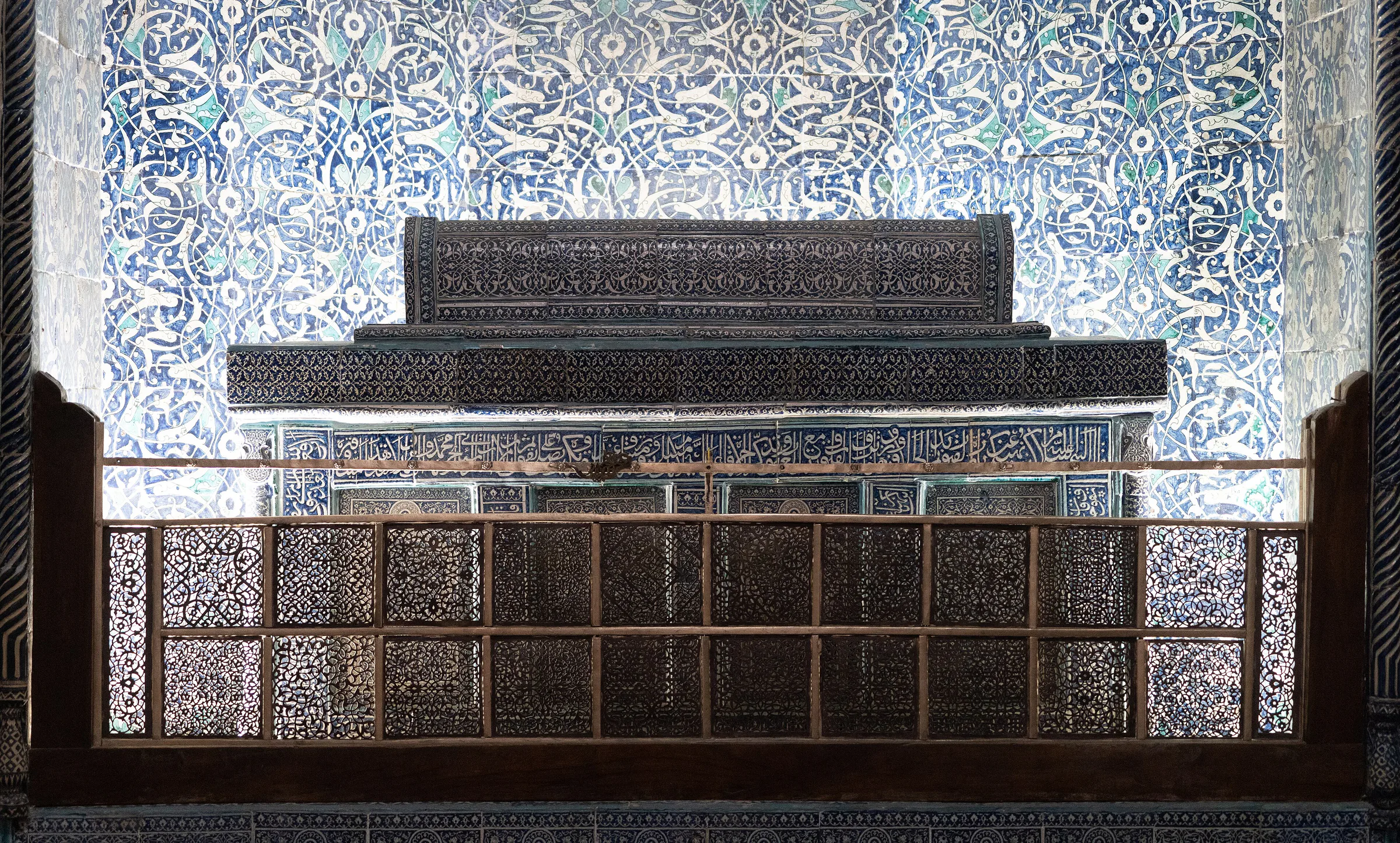
The khanaqah’s turquoise-glazed dome with its gilded finial is the largest in Khiva and the focal point of the skyline. Inside, blue-and-white patterns cover the walls from door to dome, with cartouches carrying Pahlavon Mahmud’s verses, religious sayings and the names of the craftsmen. The saint’s glazed cenotaph stands in the ziyaratkhana.
Madrasa · Khiva
The “abode of scholars” where Magtymguly and Ajiniyaz studied
Minaret · Khiva
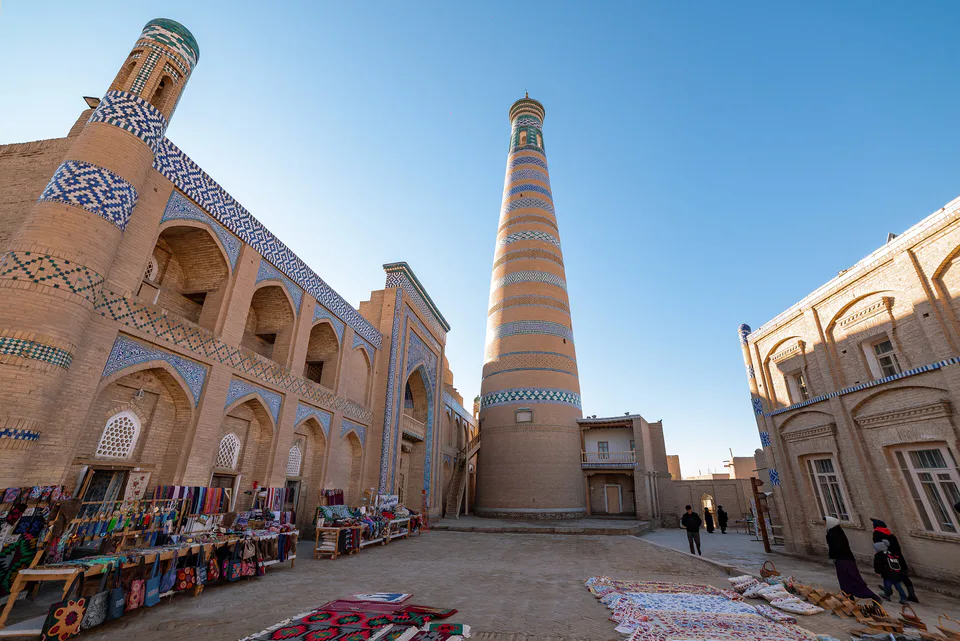
The highest point in Khiva
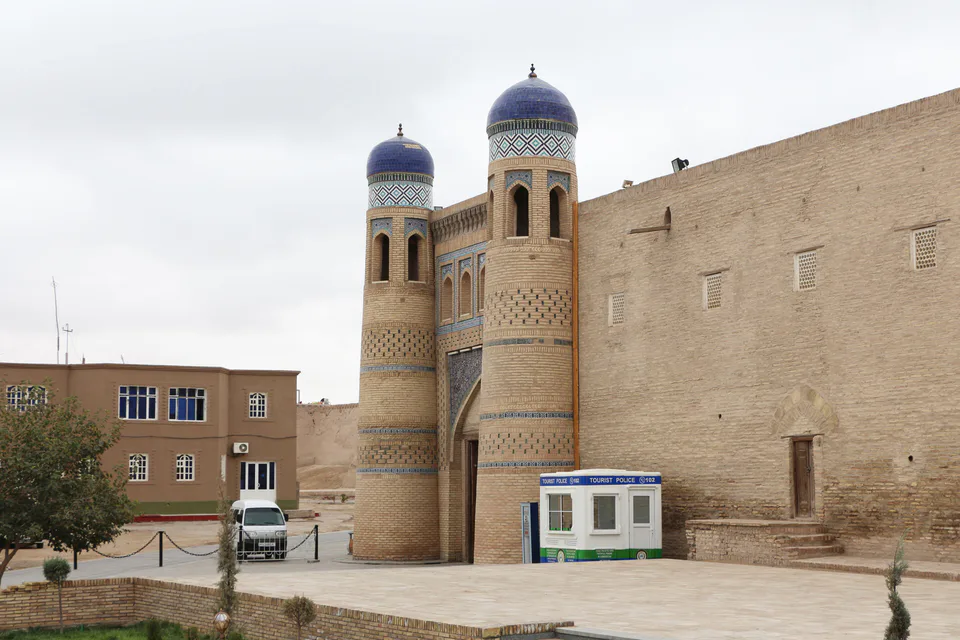
Fortress · Khiva
The eastern gate under six domes
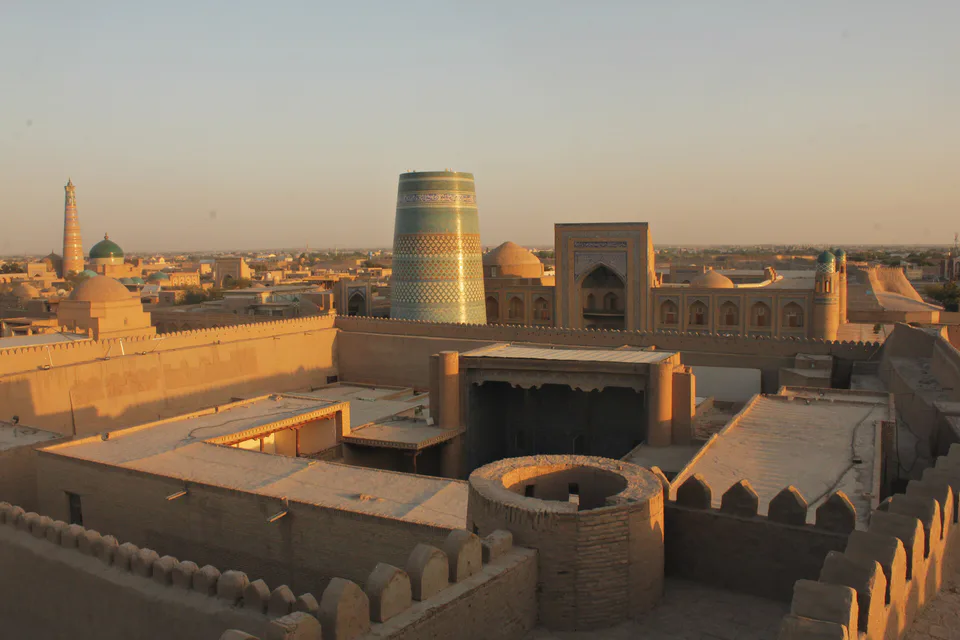
Ensemble · Khiva
A walled museum-city where people still live
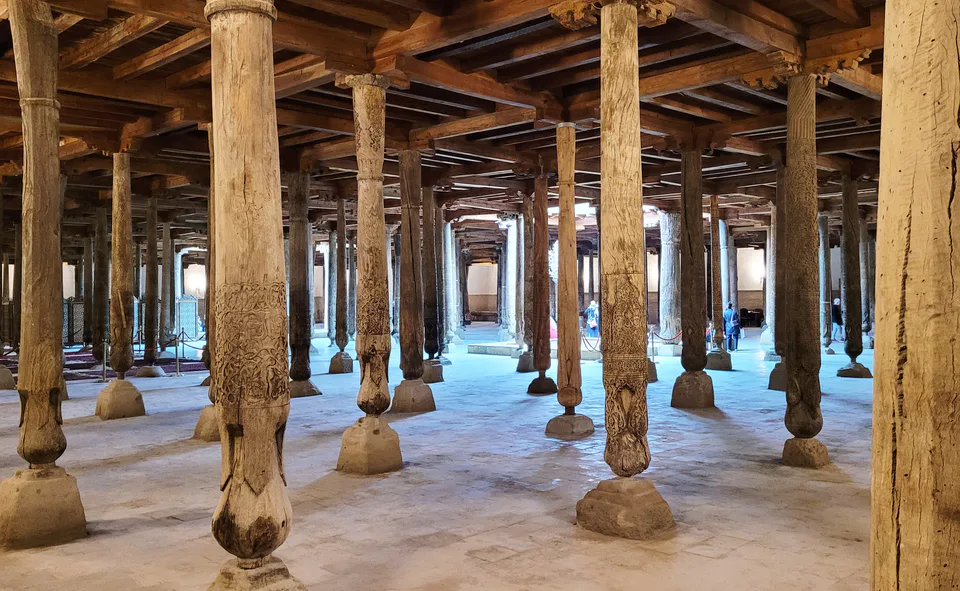
Mosque · Khiva
A forest of thousand-year-old pillars
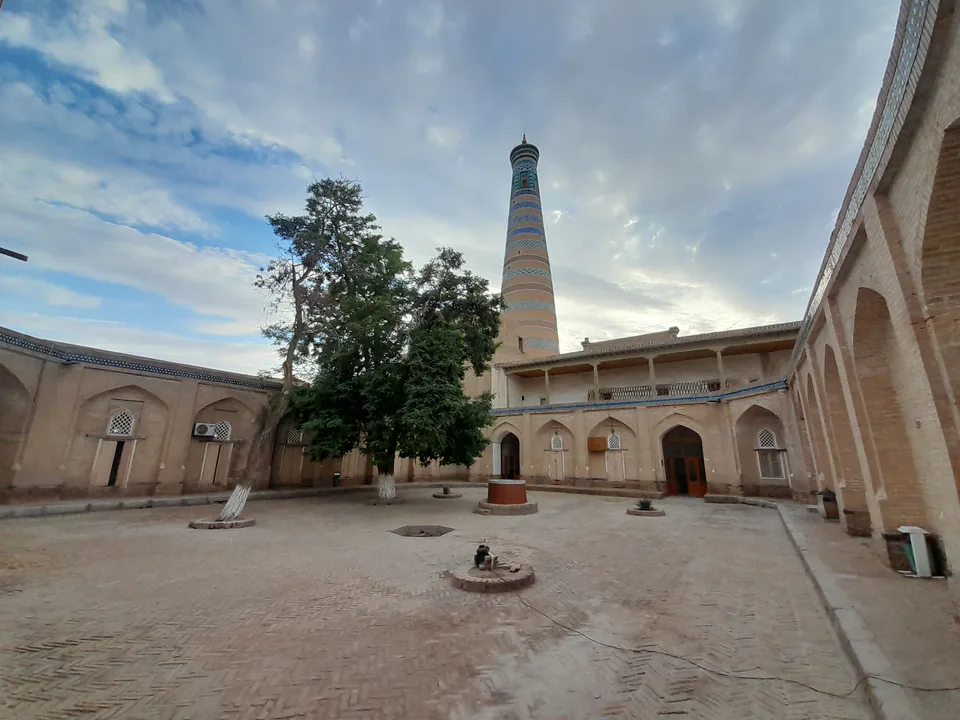
Madrasa · Khiva
Home of the Museum of Khorezm Music
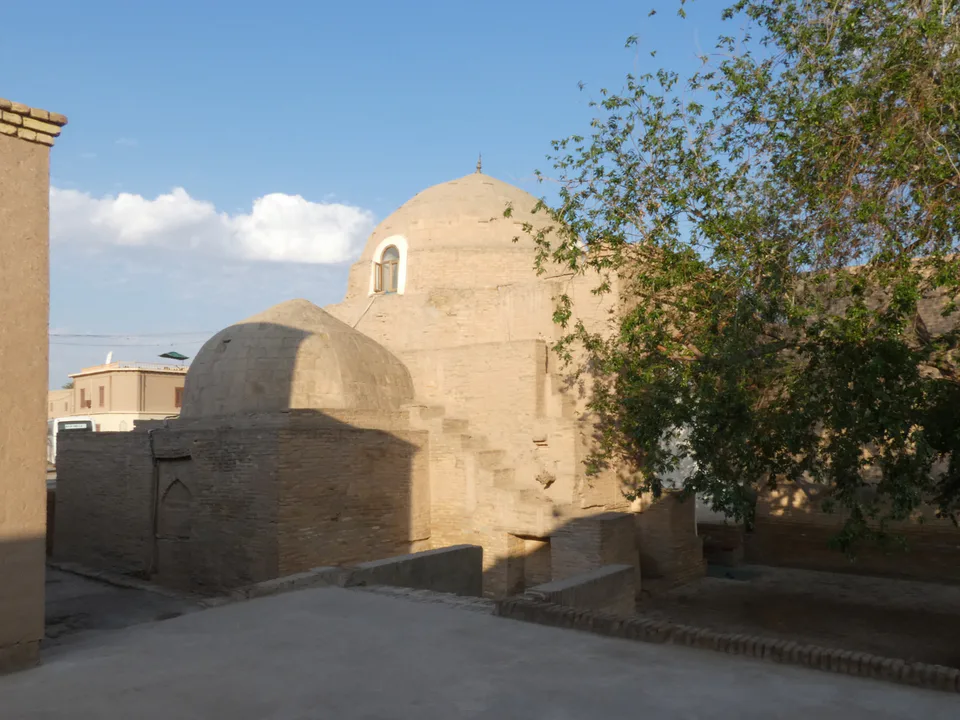
Mausoleum · Khiva
One of the oldest buildings in Itchan Kala
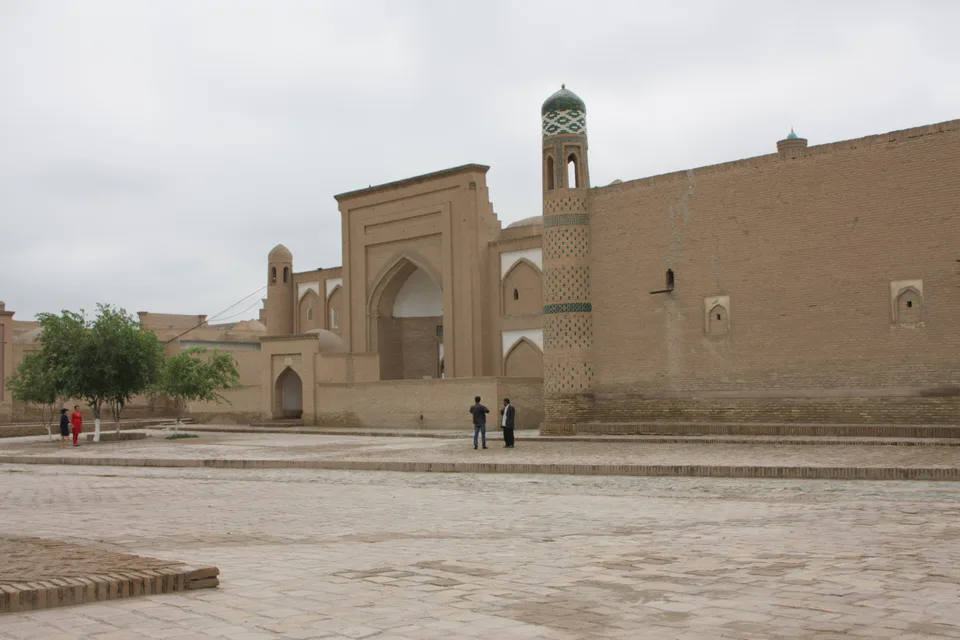
Madrasa · Khiva
The first madrasa after the capital moved to Khiva
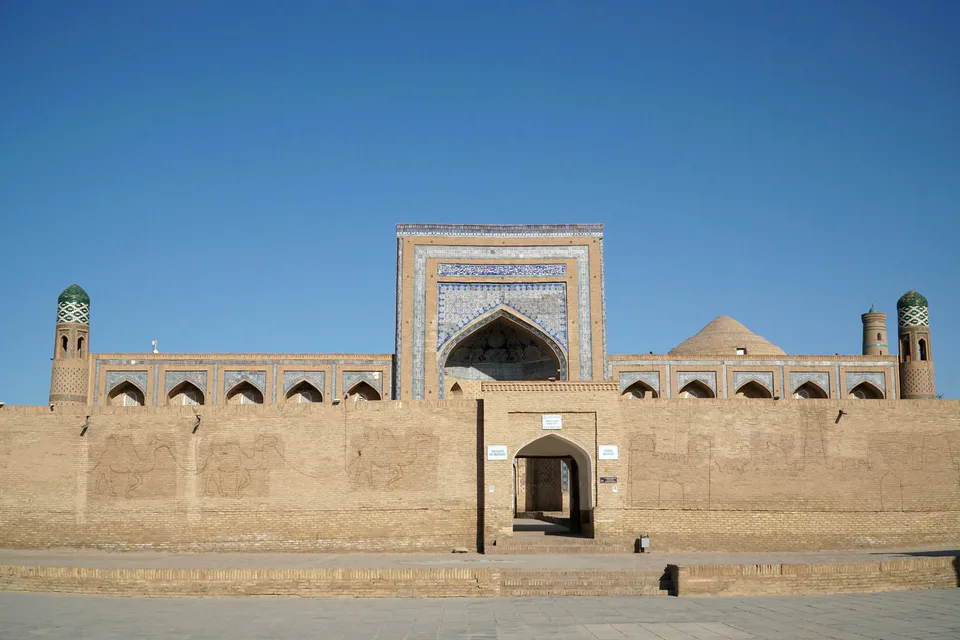
Madrasa · Khiva
The madrasa of Feruz, the poet-khan
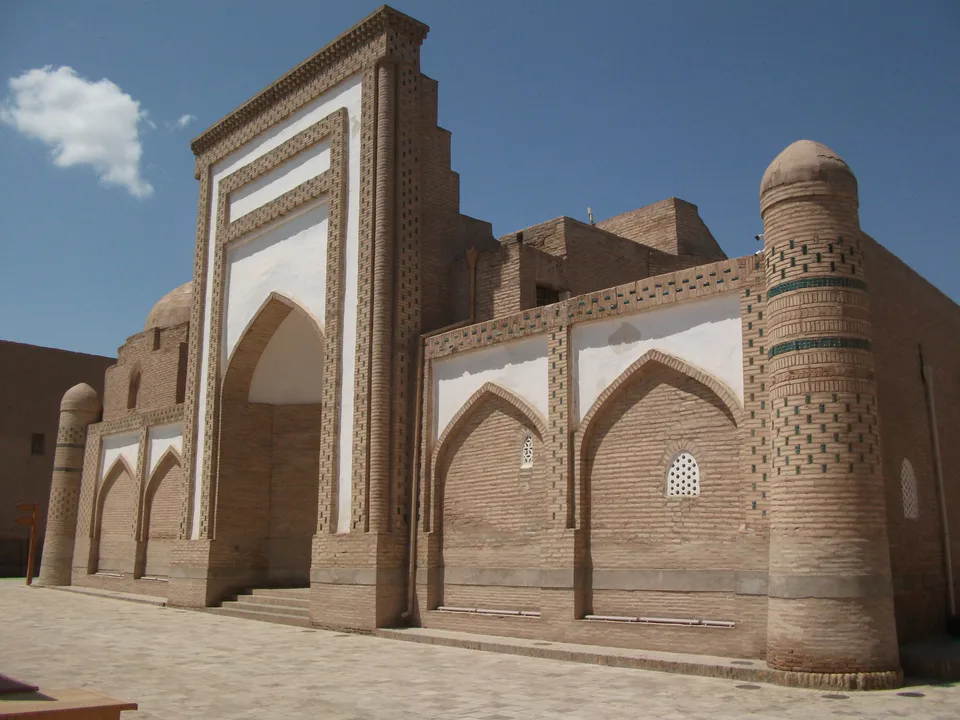
Madrasa · Khiva
Built by the founder of the Qongirat dynasty