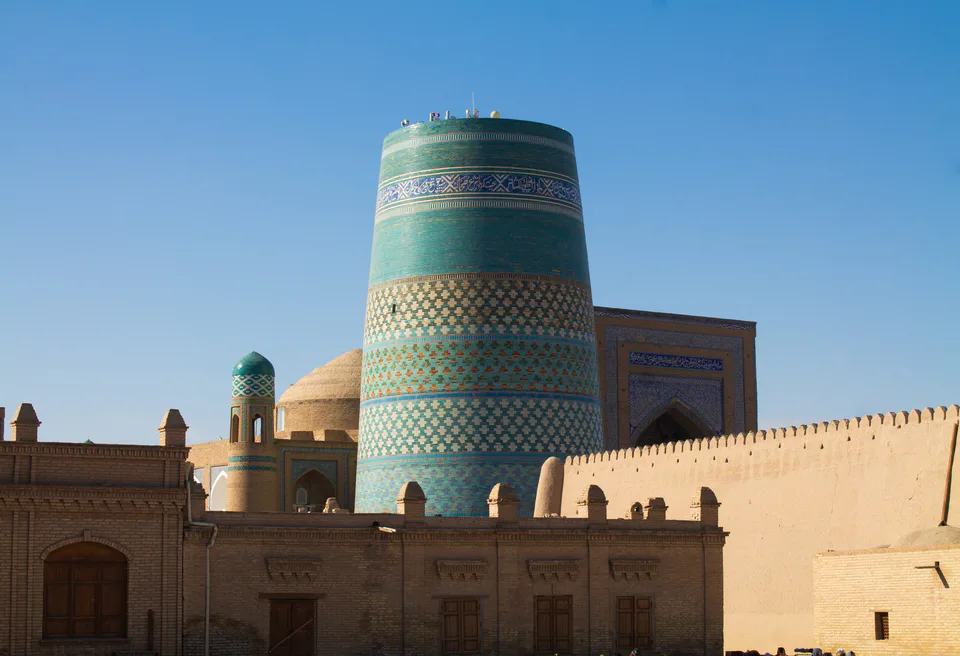
Minaret · Khiva
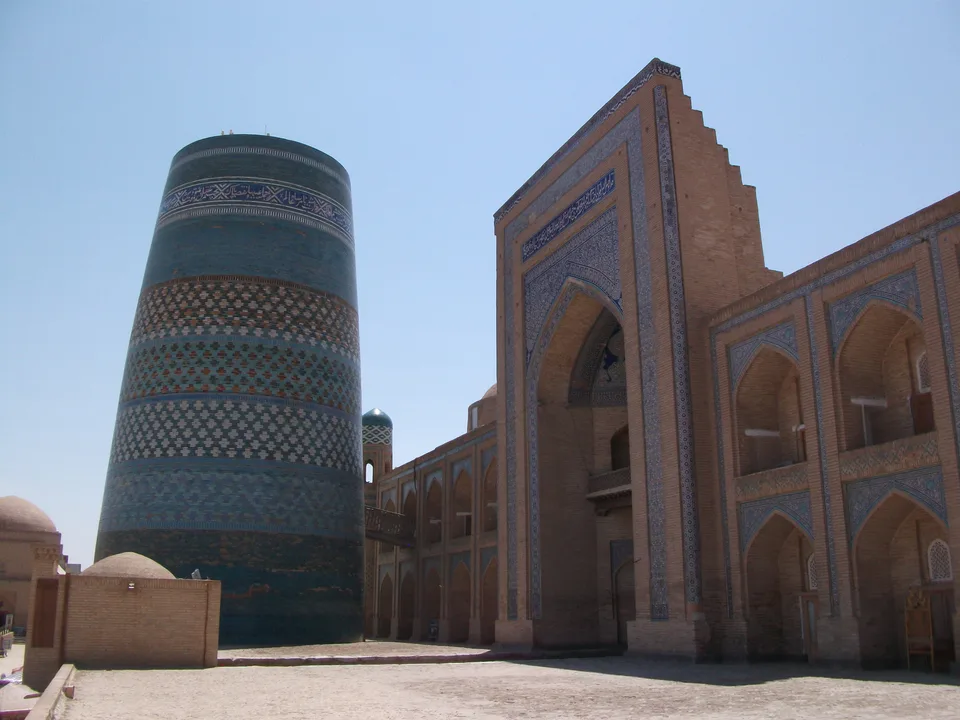
Kalta Minor
The unfinished minaret that became Khiva’s emblem
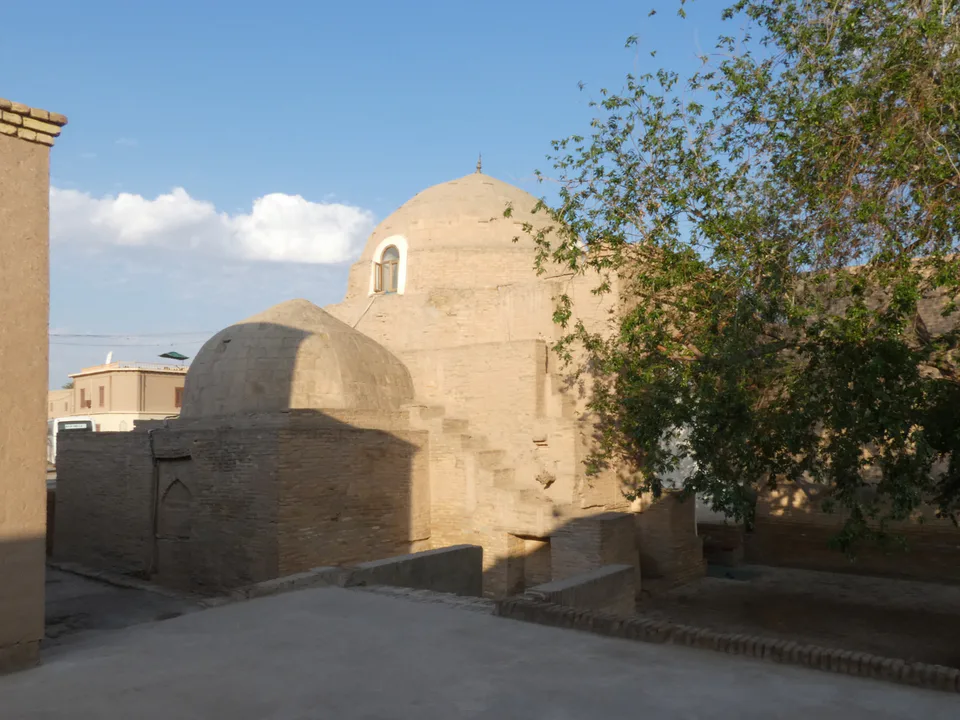
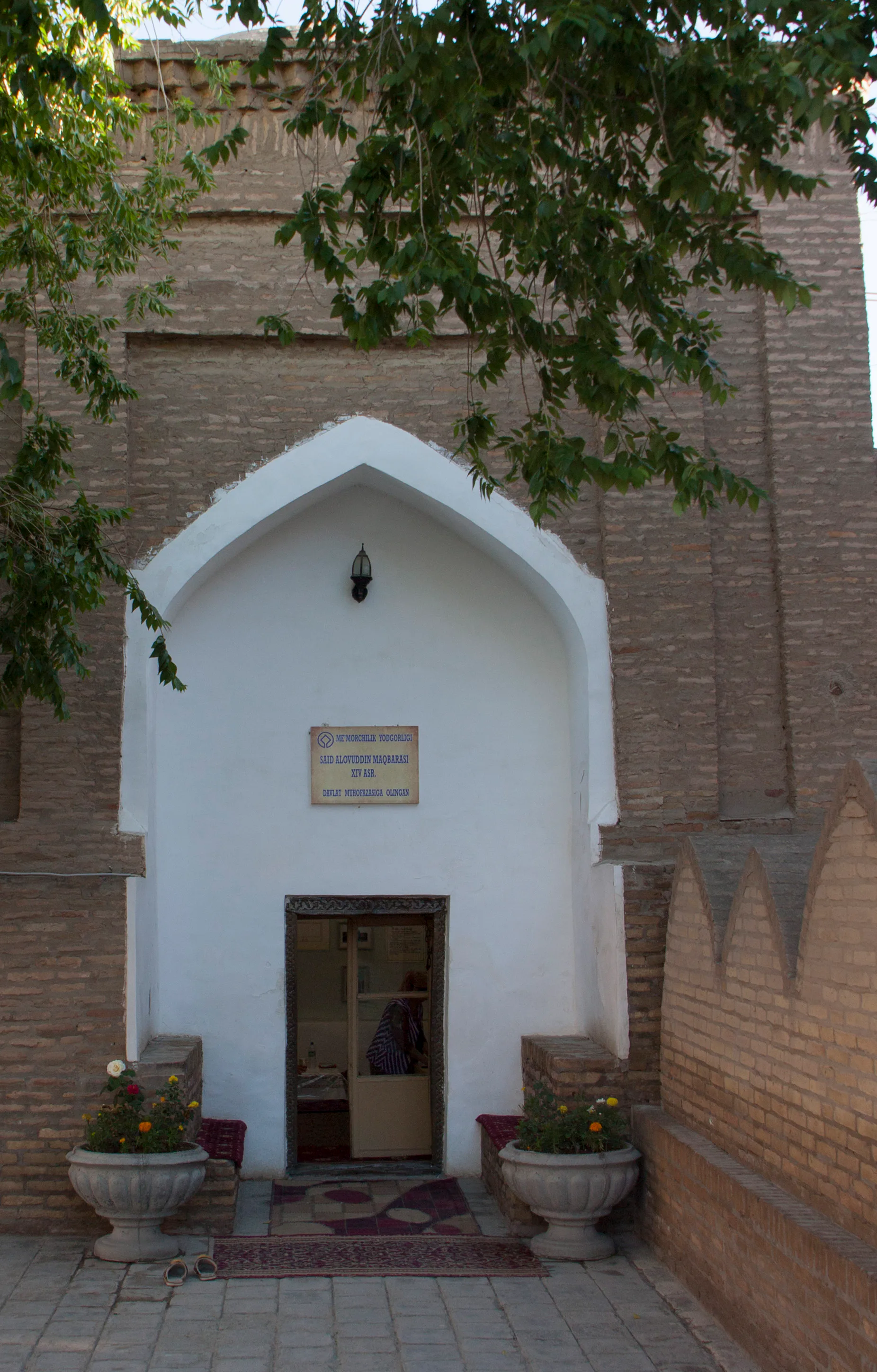
Mausoleum · Khiva
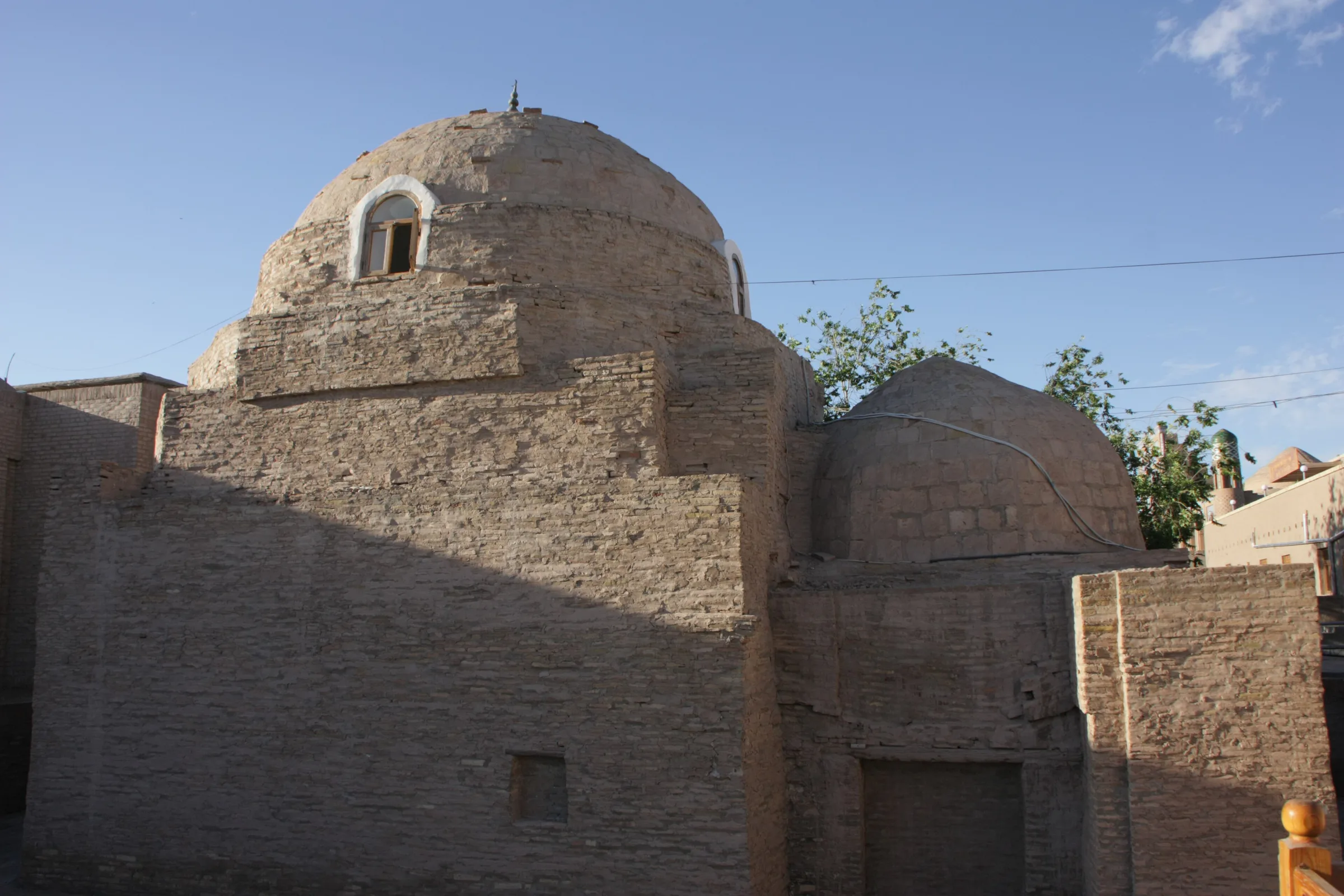
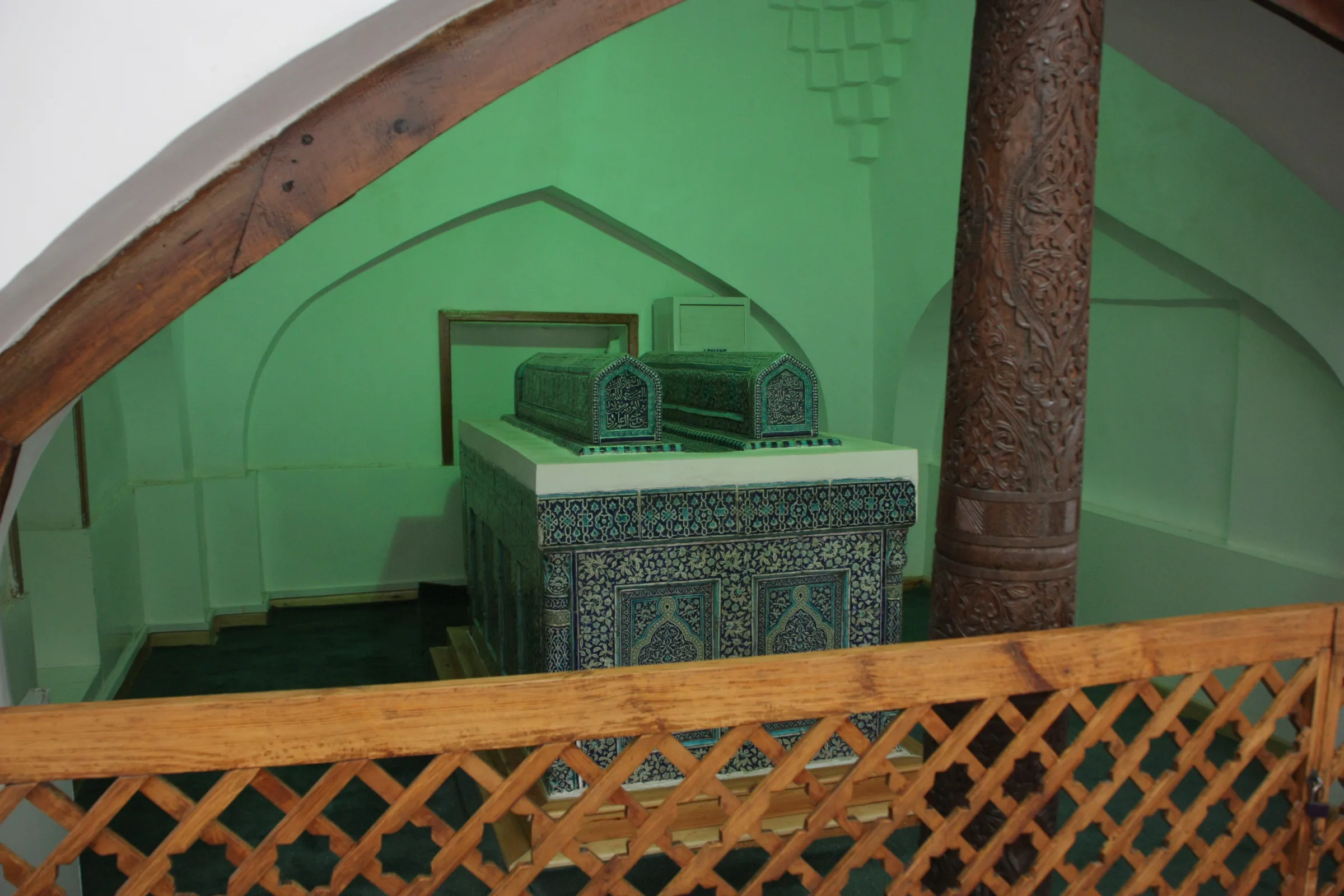
The tomb of the Sufi sheikh Sayid Alovuddin, who died in 1303. The domed chamber and its rare majolica cenotaph date from the first half of the 14th century, the era after the Mongol conquest.
Sayid Alovuddin was a Sufi sheikh revered in Khorezm who died in 1303. The domed tomb over his grave and its remarkable majolica cenotaph date from the first half of the 14th century, making this one of the few buildings in Itchan Kala to survive from the recovery after the Mongol invasion. A pilgrims’ hall was added in the 17th century, and Allakuli Khan had the monument thoroughly repaired in 1825.
The ground around it has risen over the centuries, so the mausoleum now sits below street level and you step down to enter — a telling sign of its age.
Its treasure is the cenotaph, clad in relief-moulded glazed tiles with floral and geometric designs in white, blue and turquoise. Fourteenth-century majolica is scarce in Khorezm, and this piece makes a fascinating comparison with the Khivan tilework of later centuries.
The tomb is tucked against the east wall of the Matniyoz Devonbegi Madrasa, and many visitors walking past Kalta Minor never notice it.
Minaret · Khiva
The unfinished minaret that became Khiva’s emblem
Madrasa · Khiva
Khiva’s largest madrasa
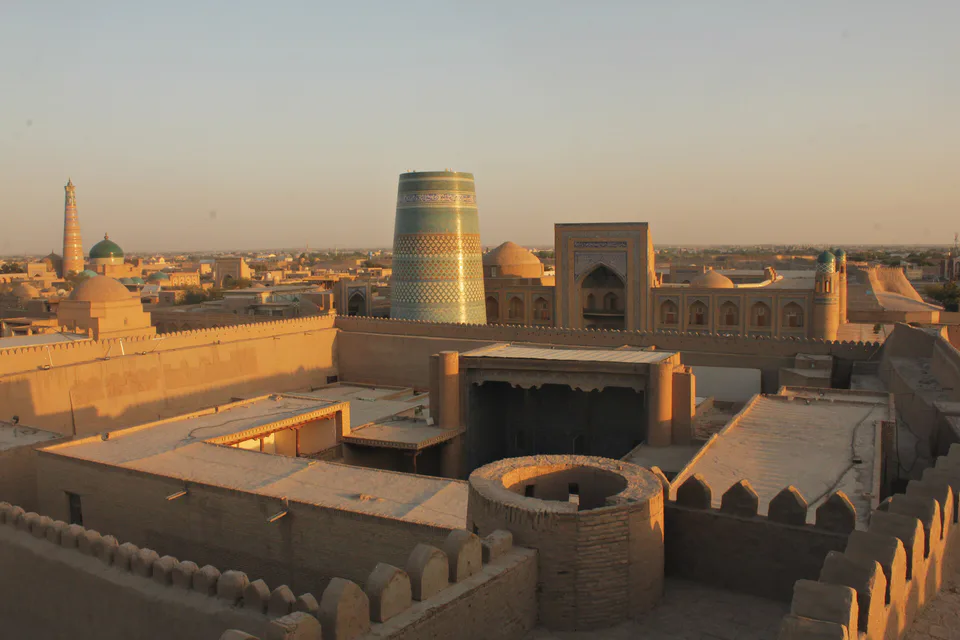
Ensemble · Khiva
A walled museum-city where people still live
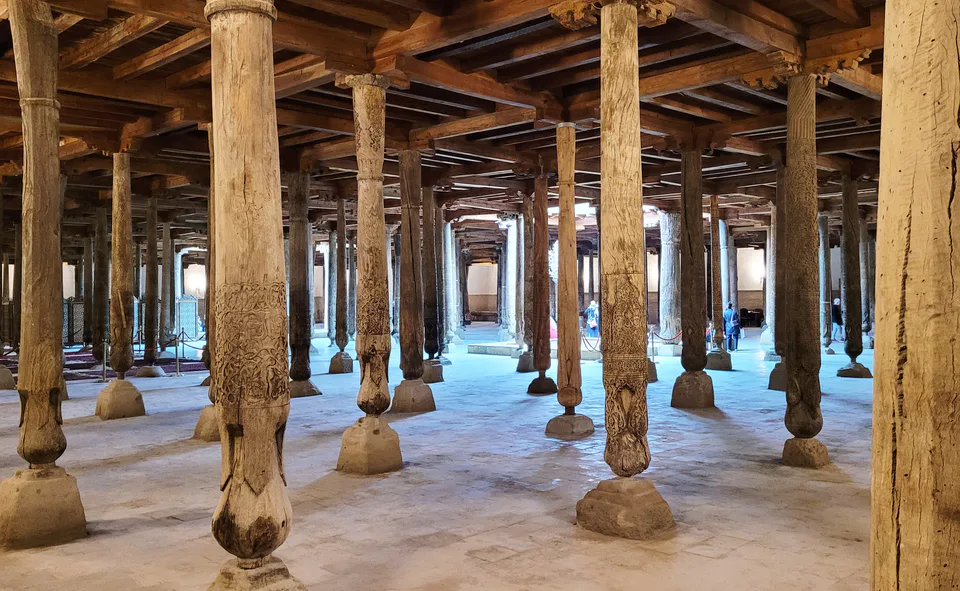
Mosque · Khiva
A forest of thousand-year-old pillars
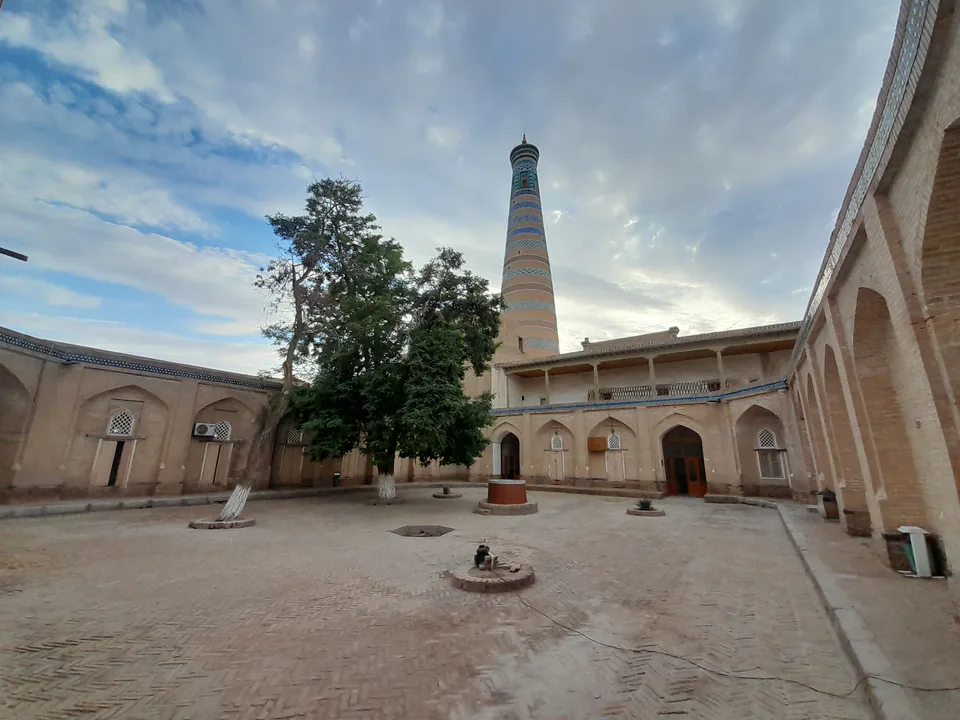
Madrasa · Khiva
Home of the Museum of Khorezm Music
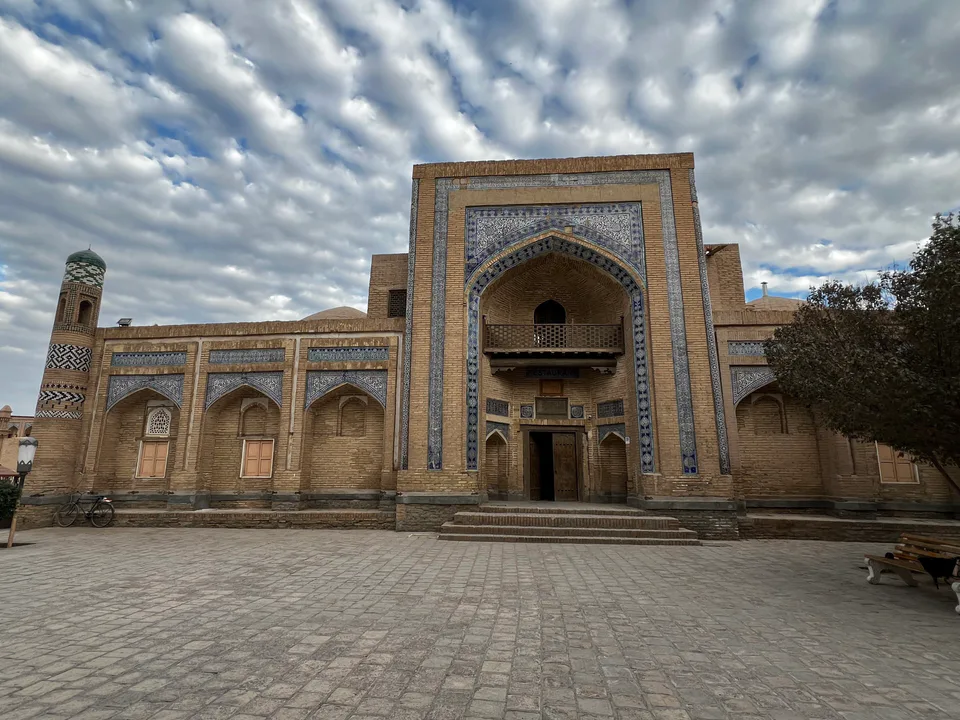
Madrasa · Khiva
A courtier’s compact madrasa
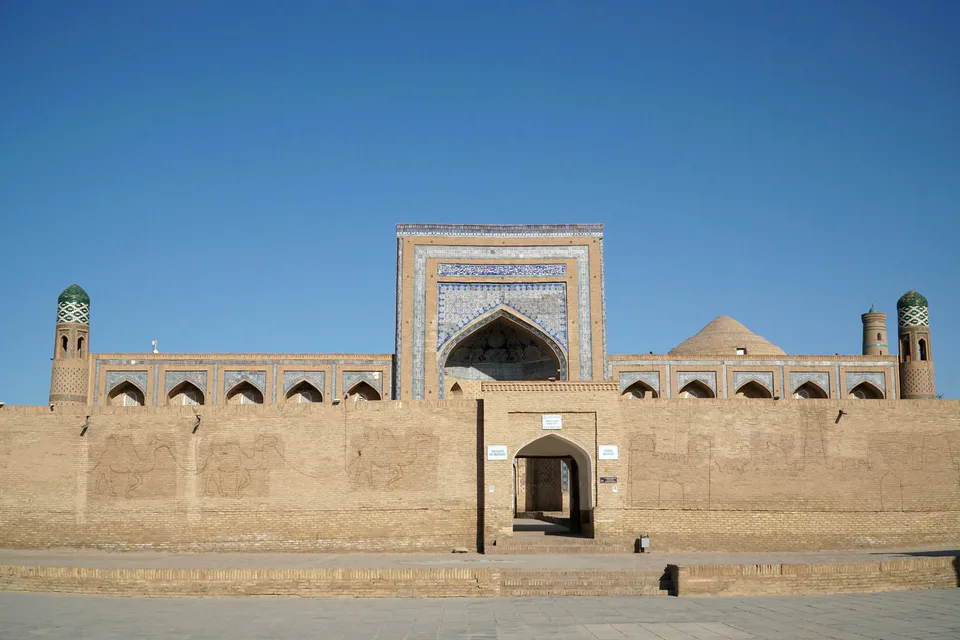
Madrasa · Khiva
The madrasa of Feruz, the poet-khan
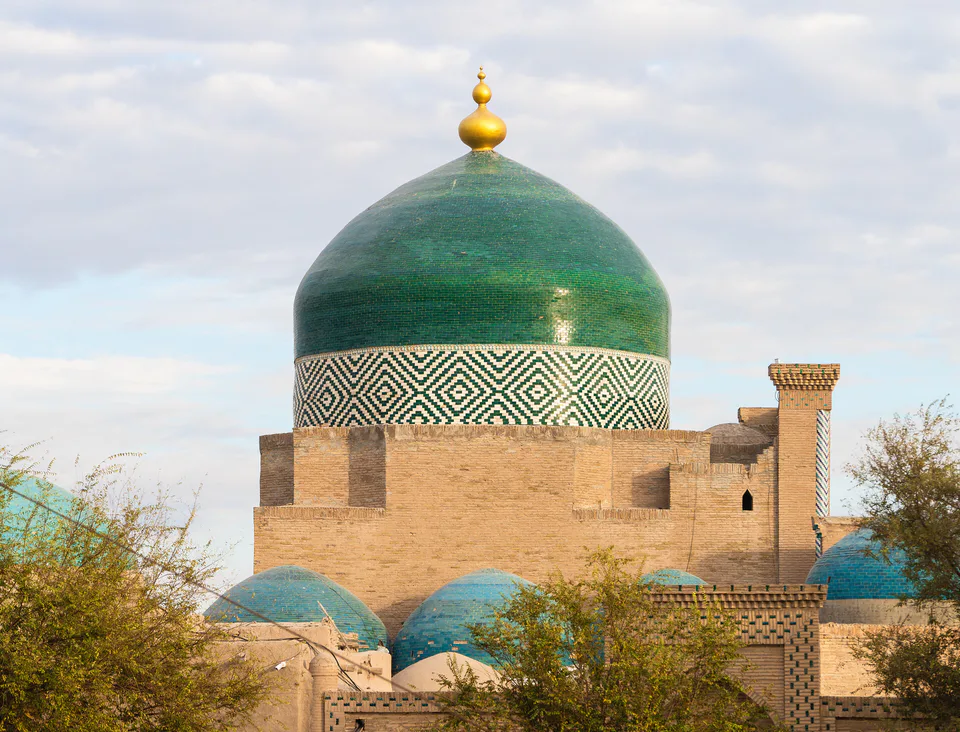
Mausoleum · Khiva
Poet, wrestler and patron saint of Khiva
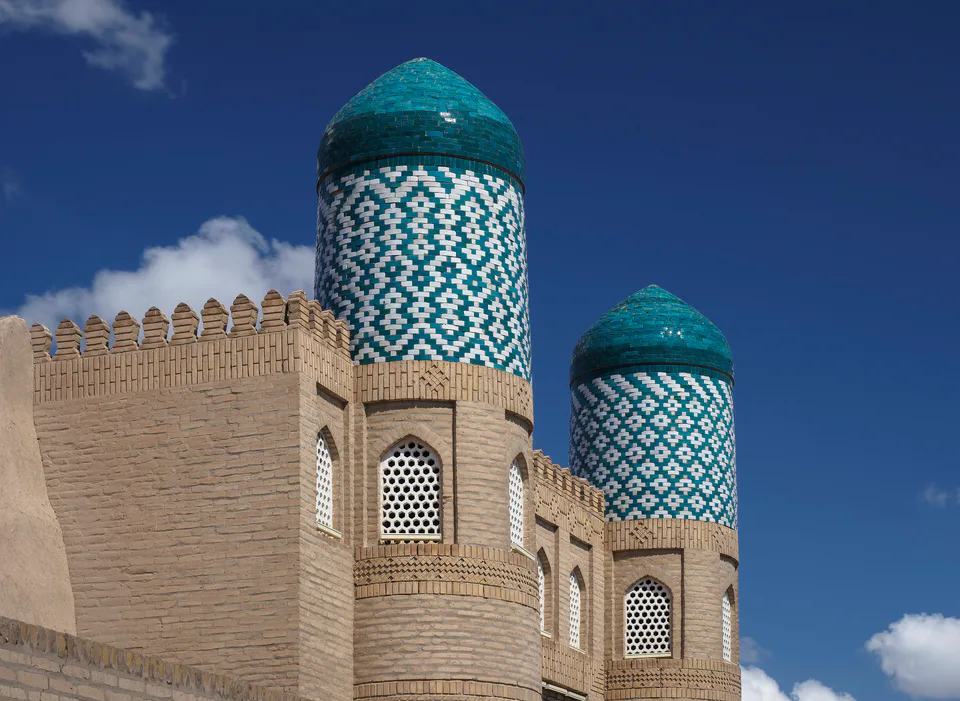
Fortress · Khiva
The khans’ fortress within the fortress
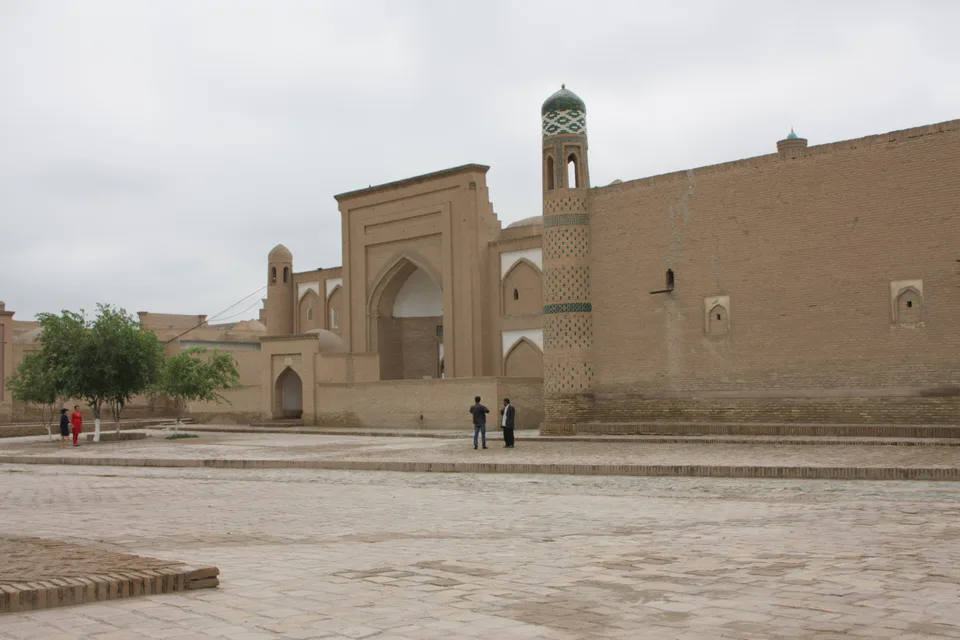
Madrasa · Khiva
The first madrasa after the capital moved to Khiva