Archaeology · Ellikqala District
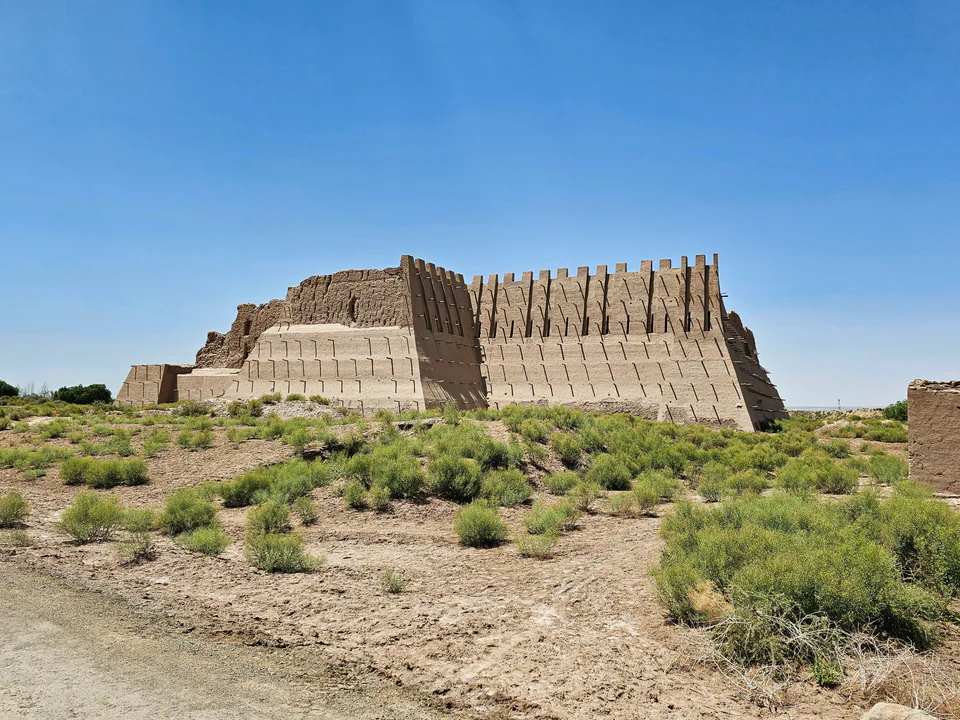
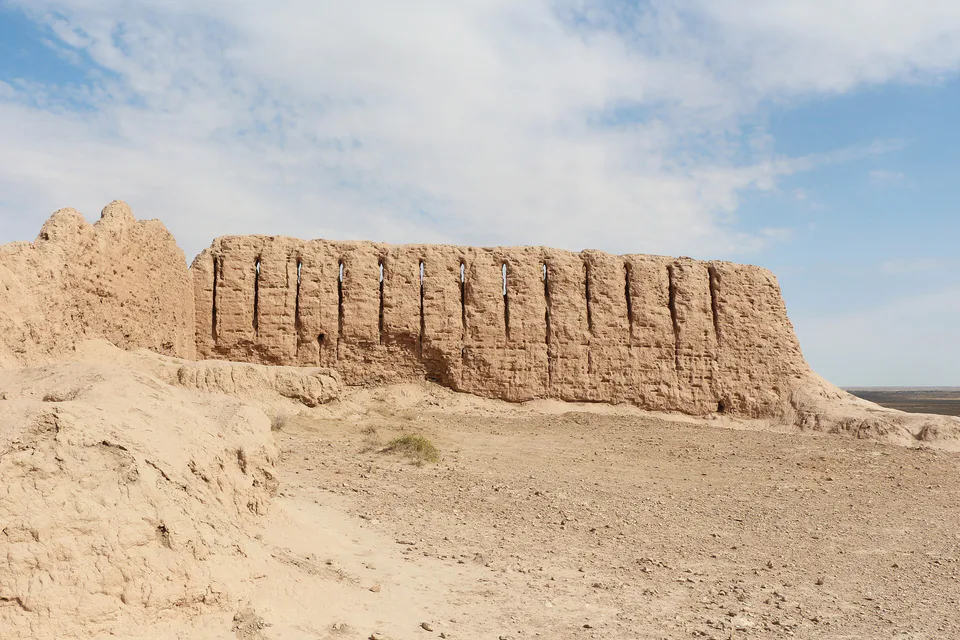
Kyzyl Kala
The “red” fort that guarded Toprak Kala
Archaeology · Ellikqala District
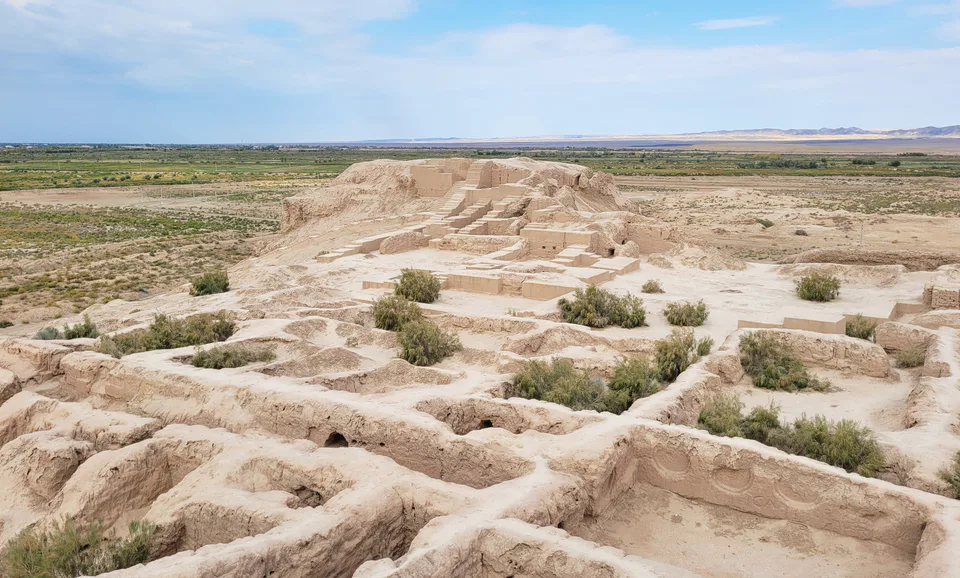
Ruins of the palace city that served as capital of Khorezm in the 2nd–3rd centuries CE. Murals, sculpture, coins and an archive in Khwarezmian script were found here — the most famous site of Ellikqala.
Toprak Kala is the best-known link in the chain of ancient fortresses on the right bank of the Amu Darya. Scholars credit its founding, in the 1st or 2nd century CE, to the Khorezmian king Artav (Artabanus); before that, Akchakhan Kala, 14 km to the southwest, had been the capital. The city’s life spans the 1st to 5th centuries CE, and in the 2nd–3rd centuries it was Khorezm’s capital. The seat of power later moved to Kath (modern Beruniy), but the town lived on for several more centuries.
Coins of the Kushan kings Vima Kadphises and Kanishka, and of the Khorezmian king Artav, helped date the palace. Some scholars read the Kushan coins as evidence that Khorezm was briefly under Kushan rule in the 2nd century; others disagree.
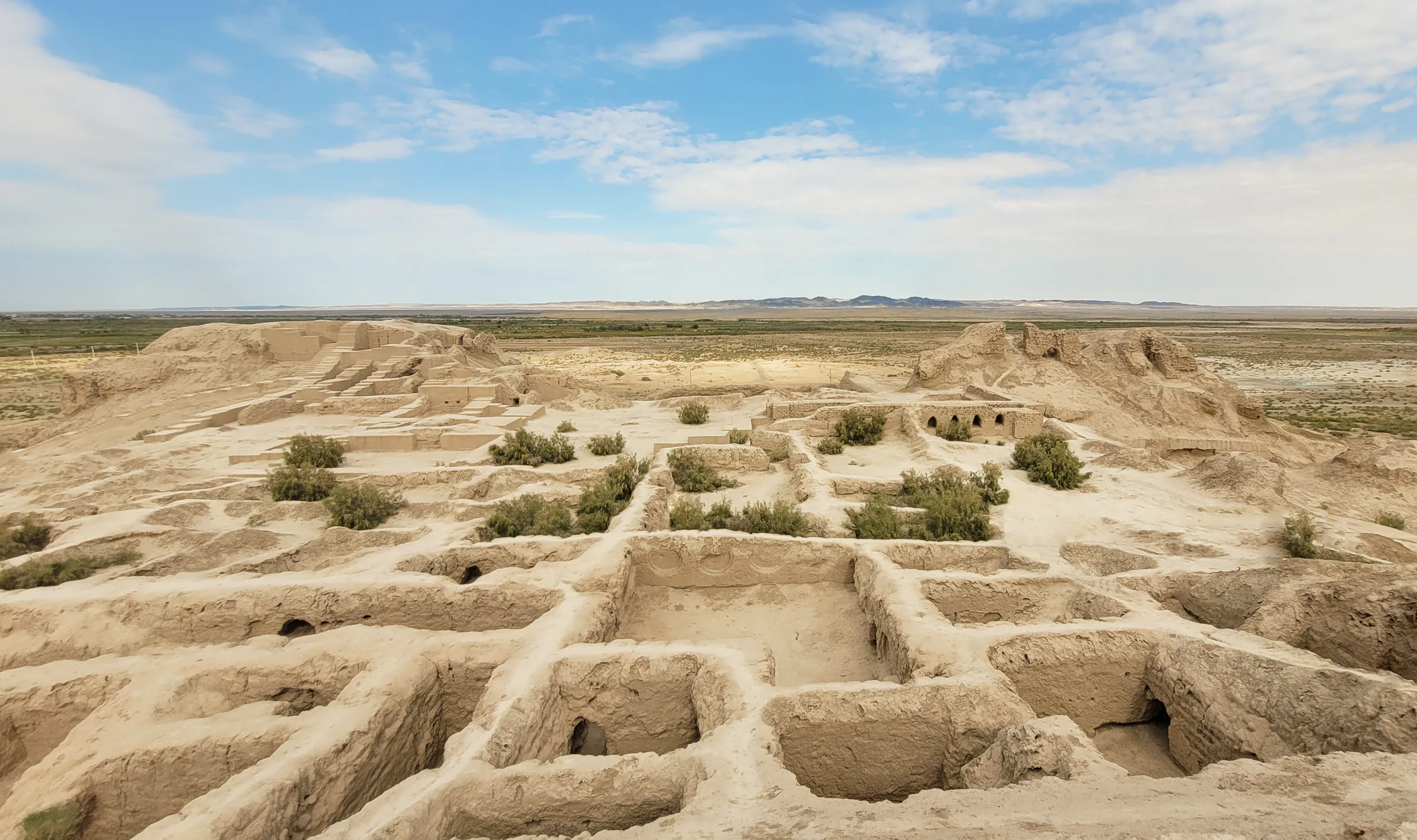
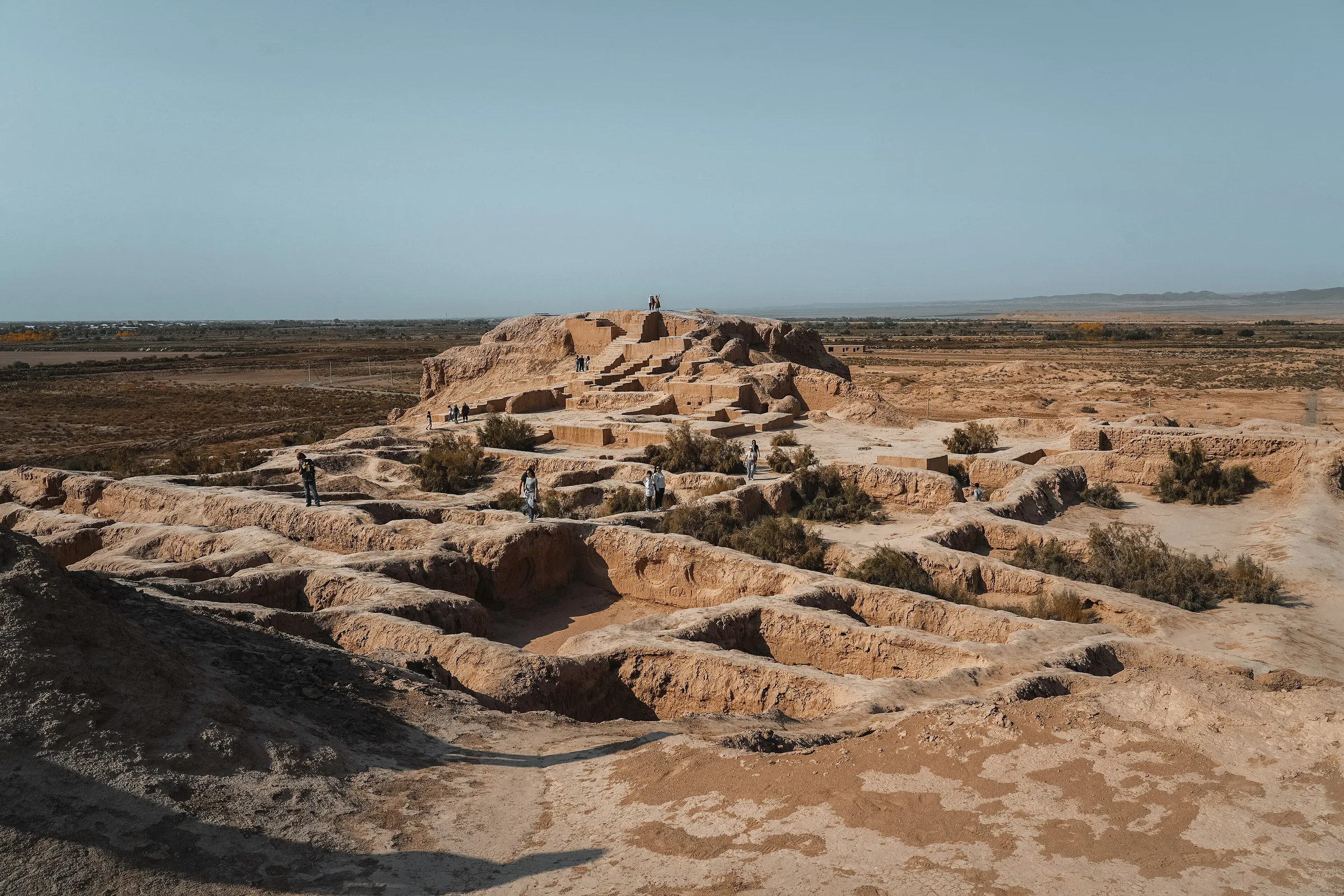
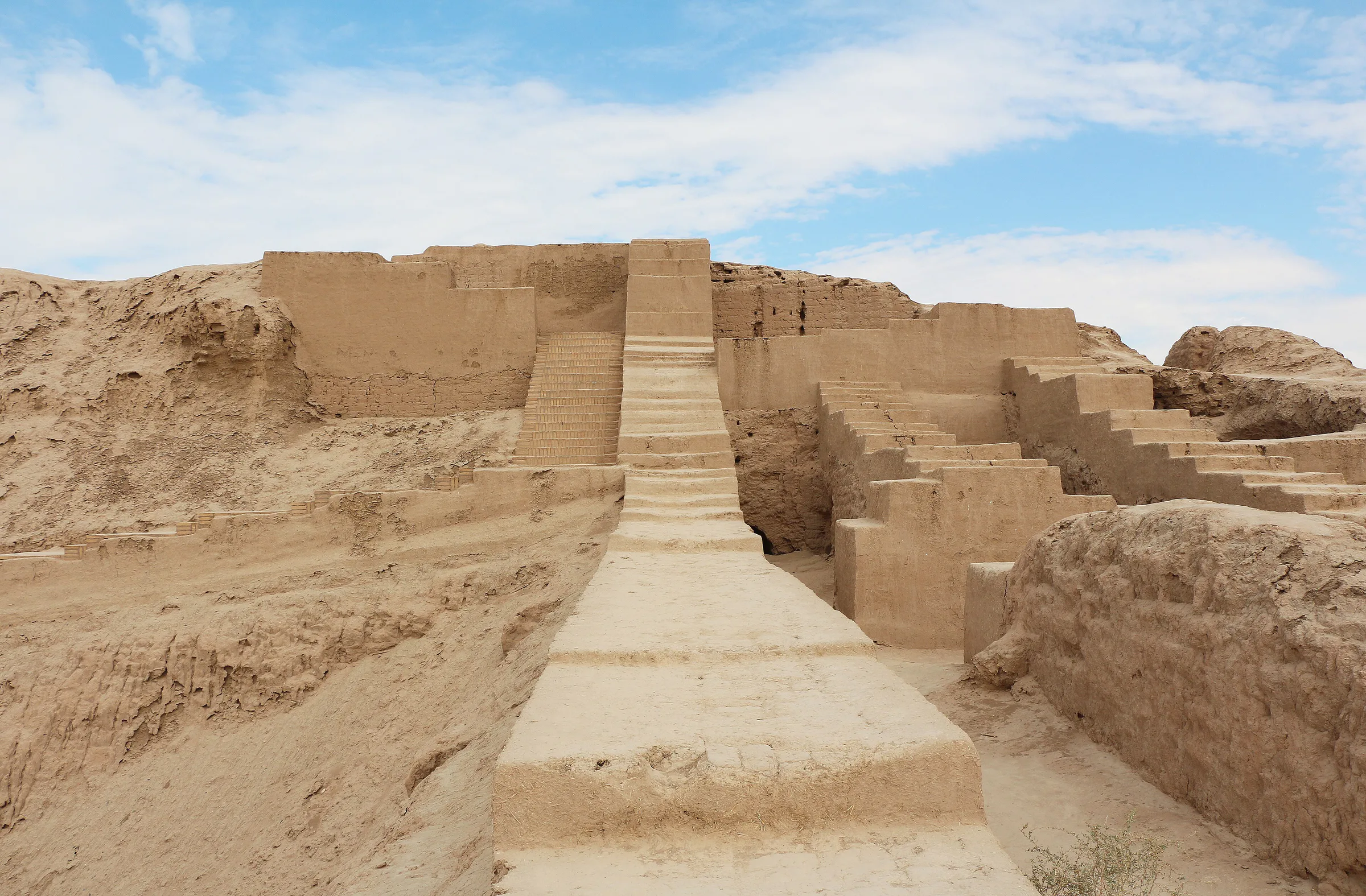
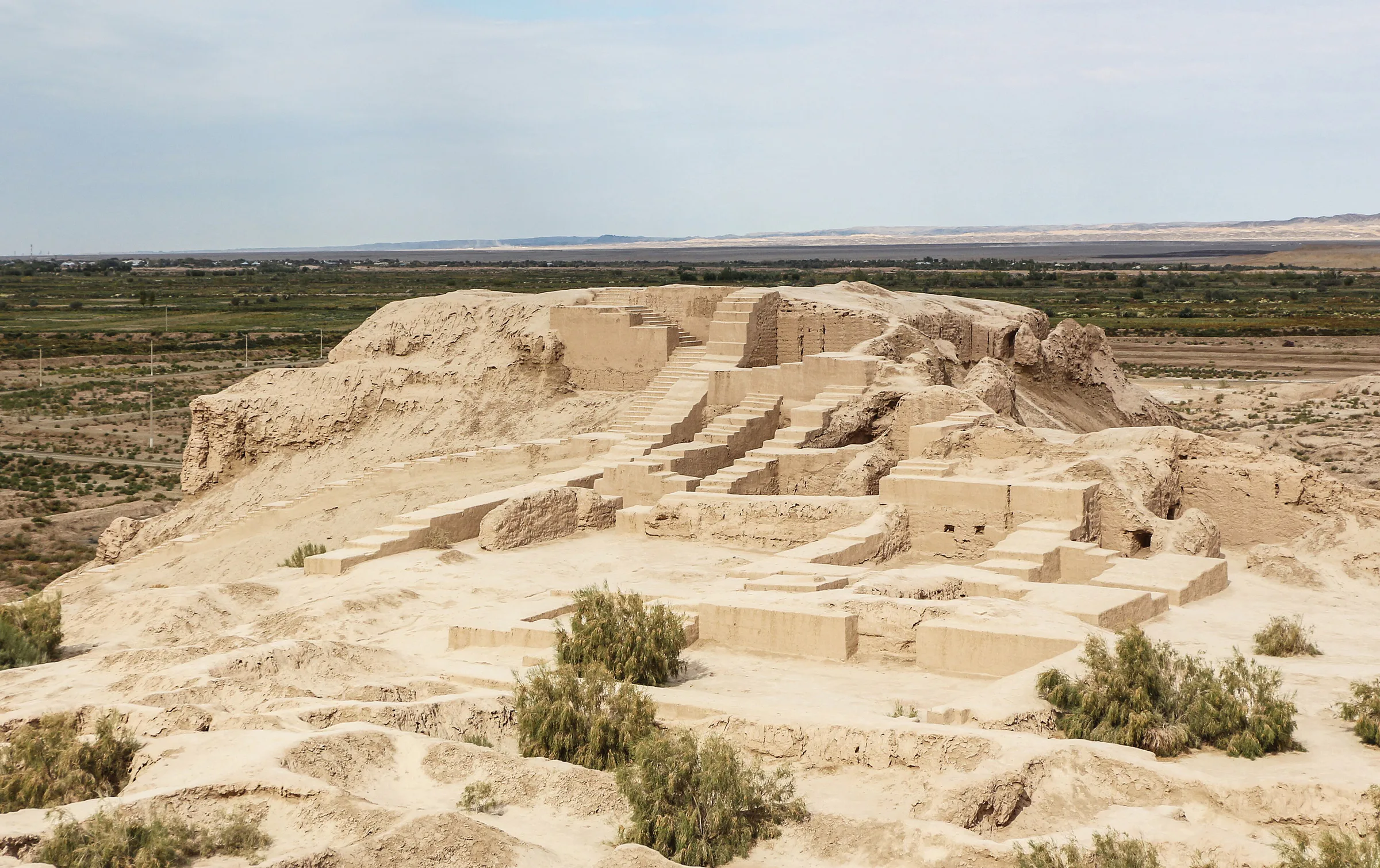
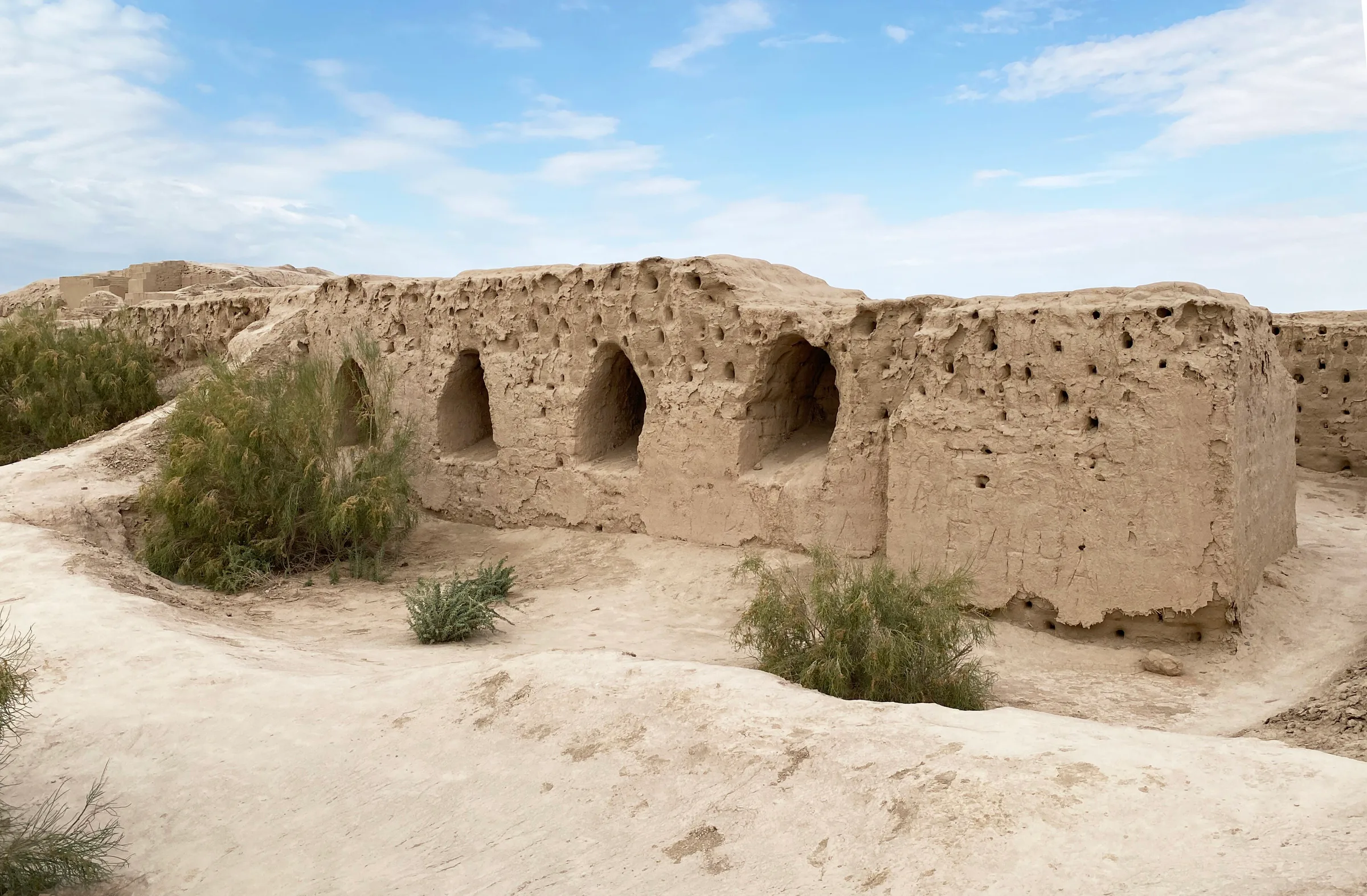
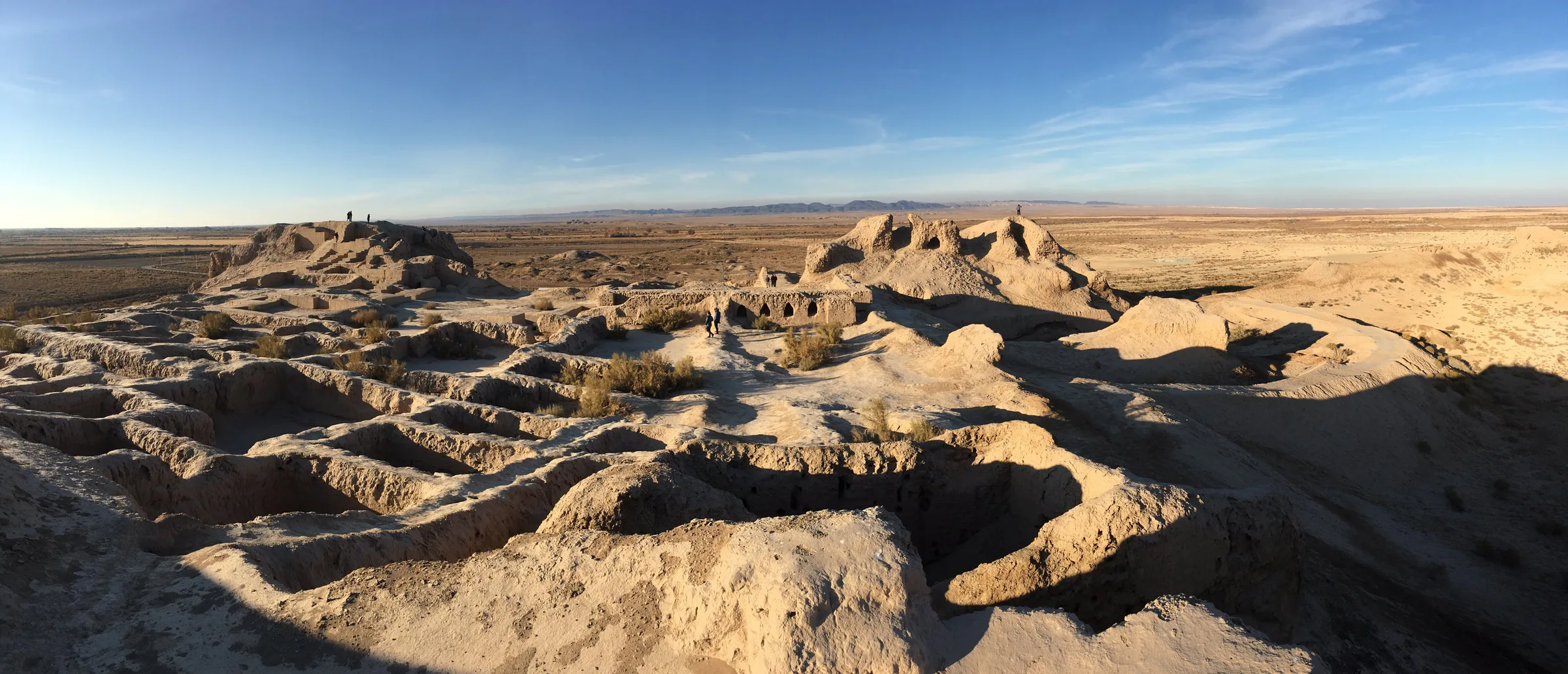
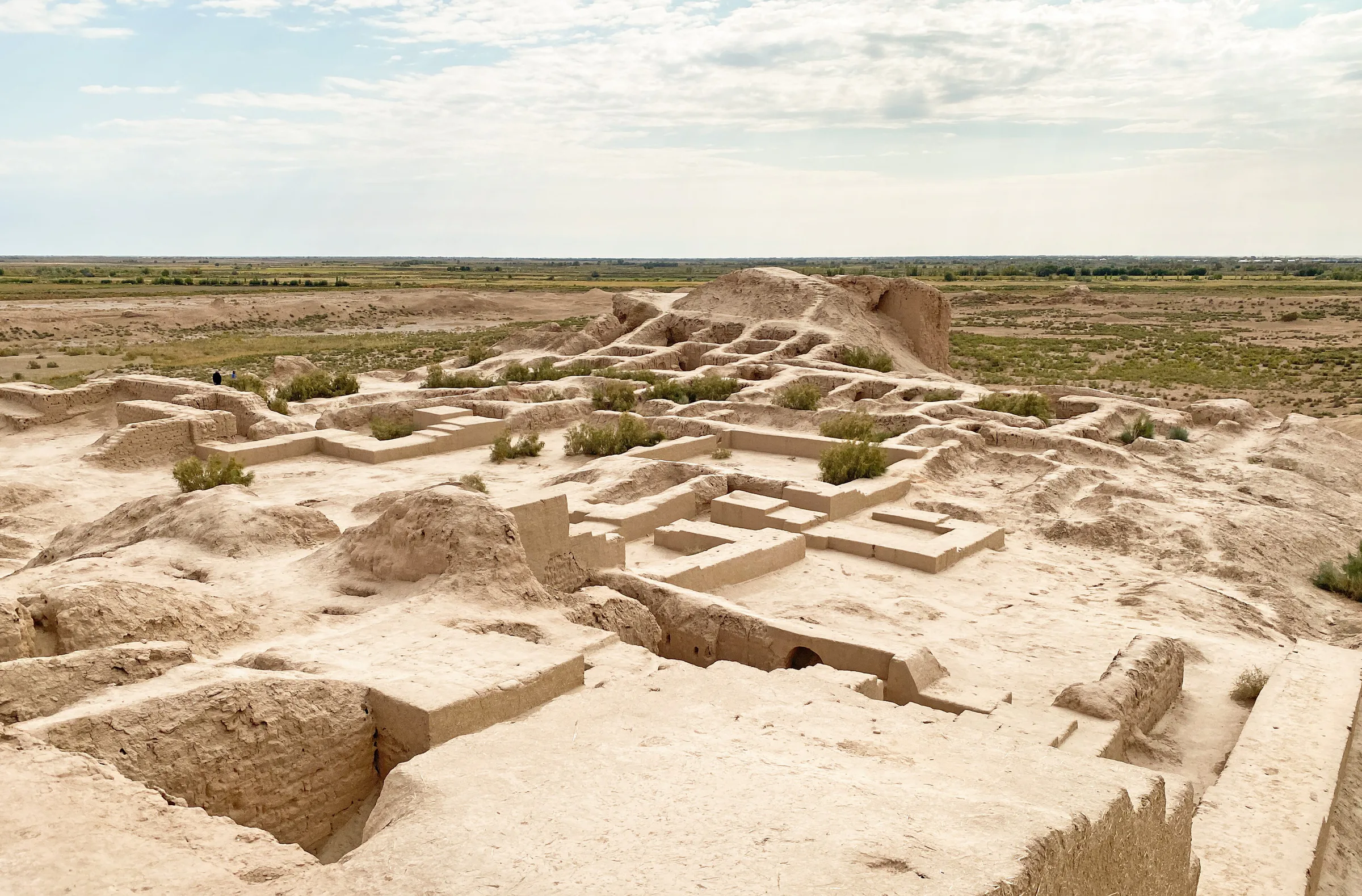
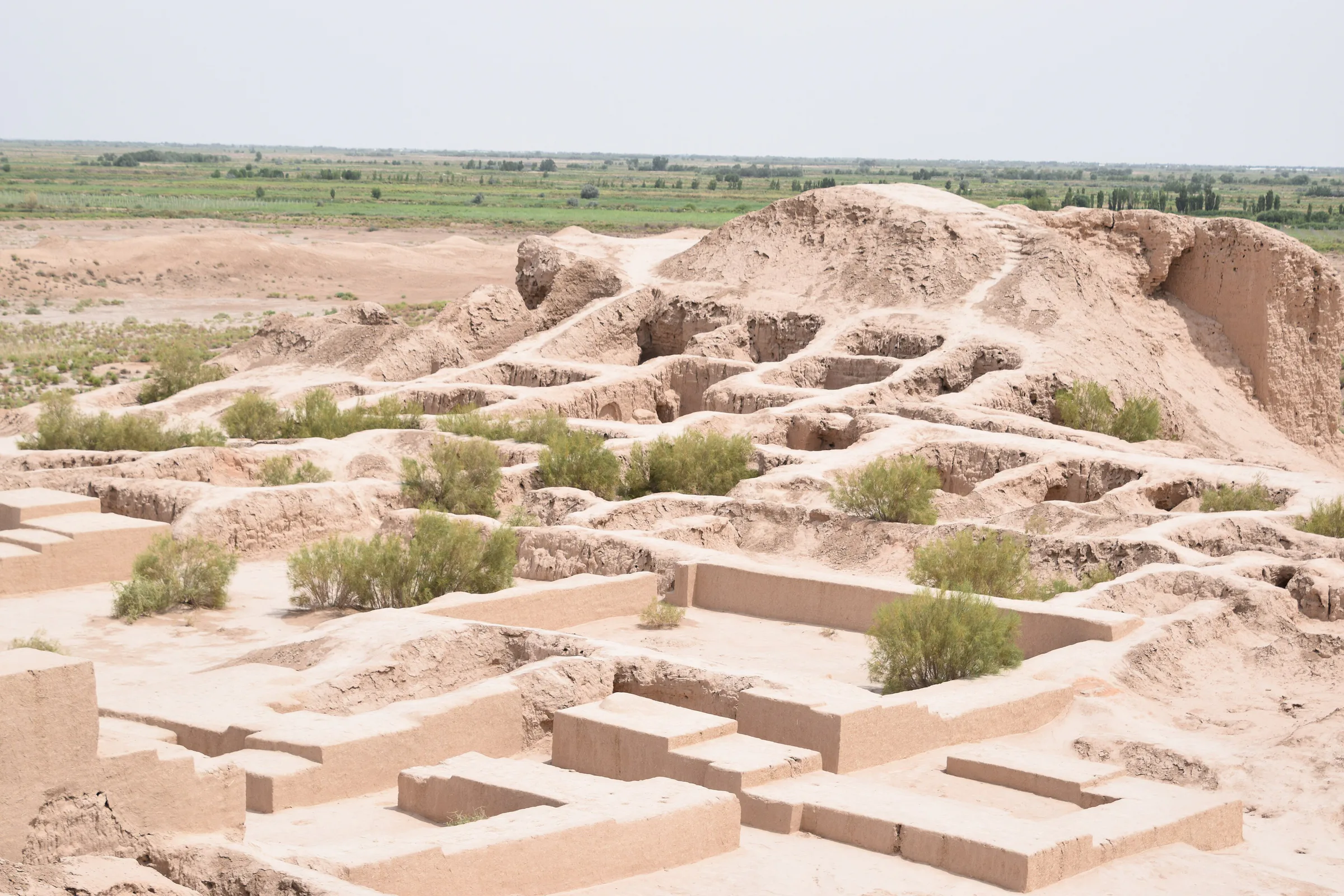
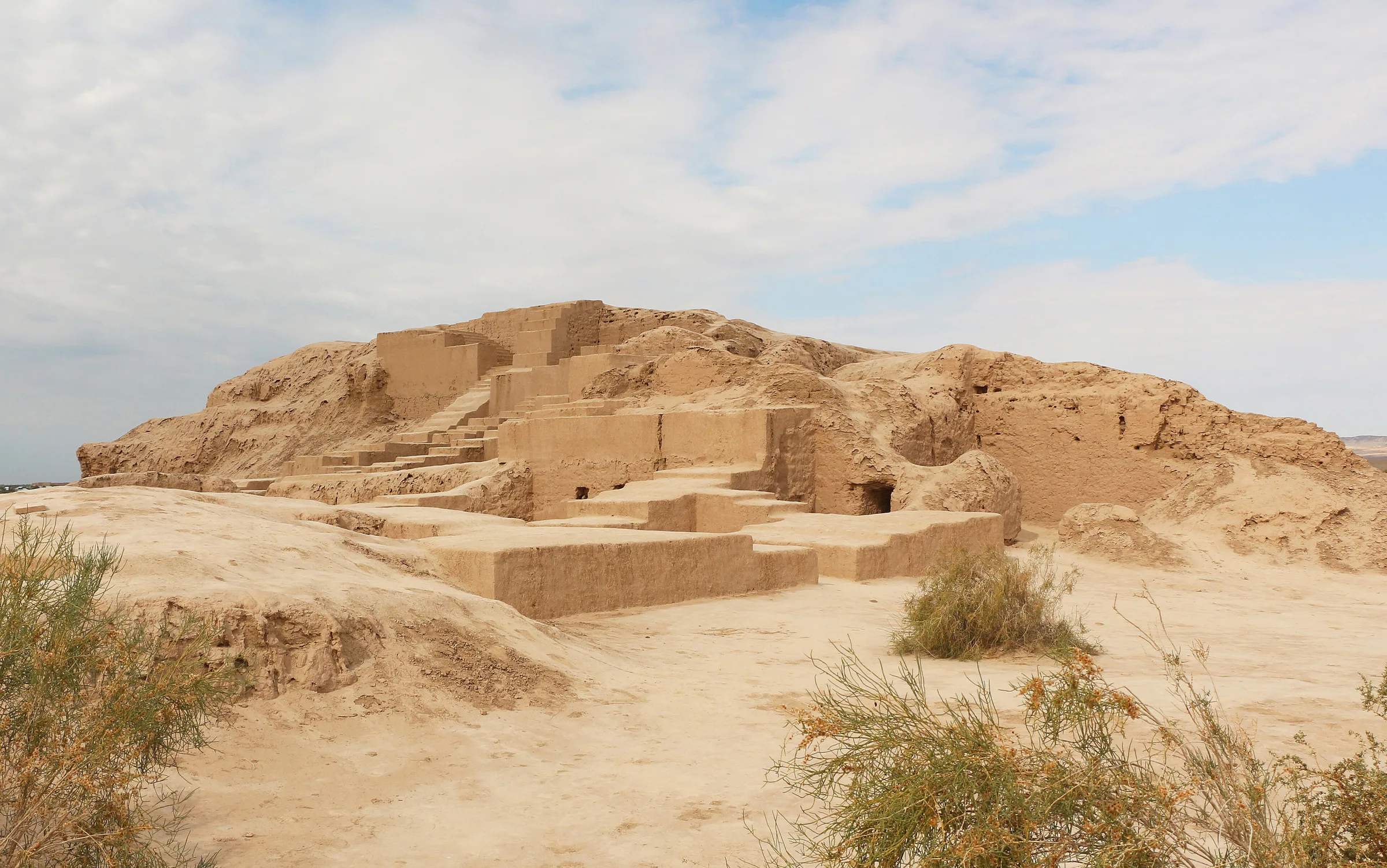
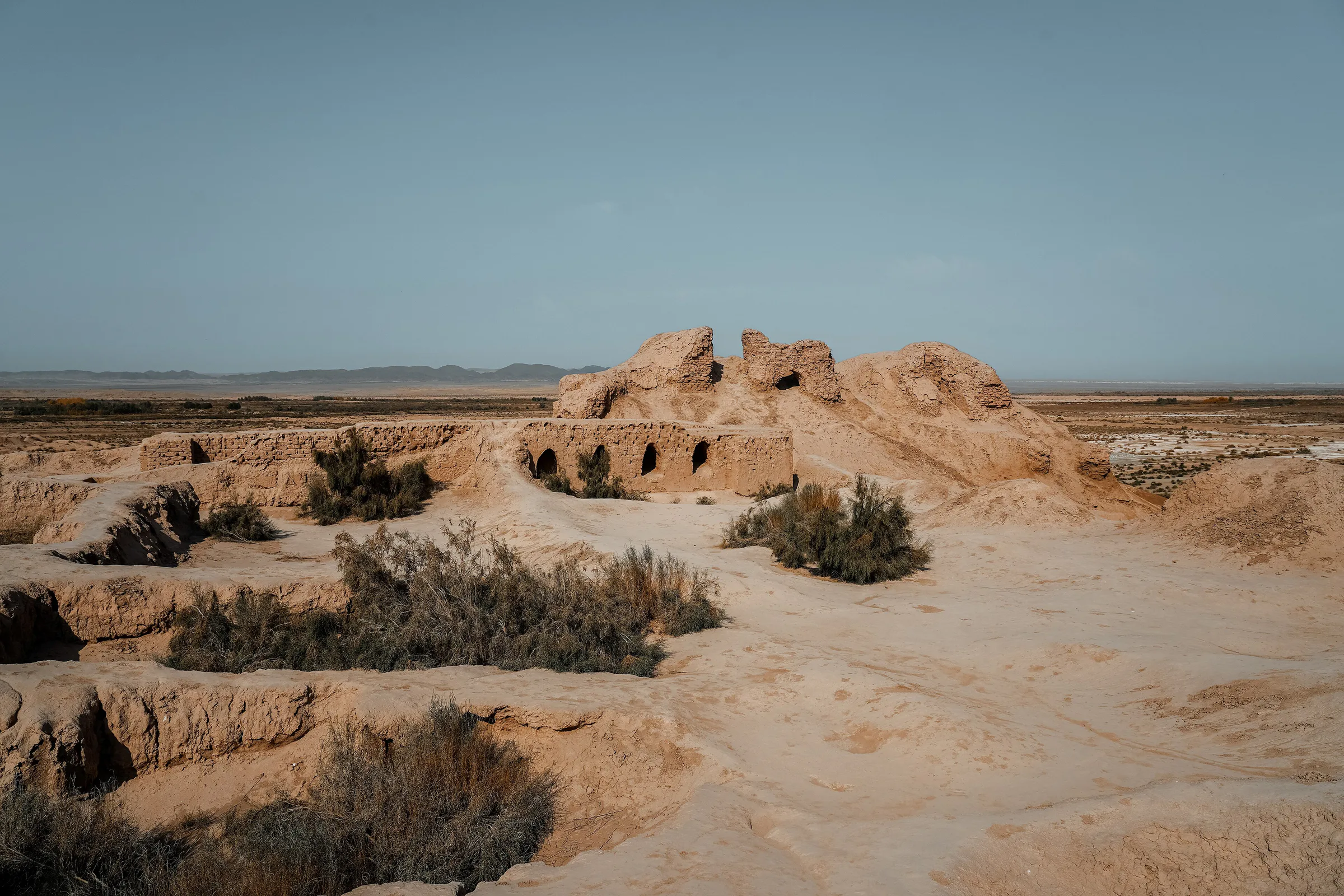
The city was a regular rectangle ringed by towered walls, divided into quarters by a main street running from the south gate, with a temple precinct to one side. In the northwest corner the High Palace rose on a lofty platform, with the Lower Palace to the north; archaeologists uncovered more than a hundred halls and rooms.
The palace was lavishly decorated with murals and clay sculpture, in rooms the excavators dubbed the Hall of Kings, Hall of Warriors, Hall of Dancing Masks and Hall of Deer. Finds include images of Zoroastrian deities and figures in Hellenistic-style drapery, some now in the Hermitage, and an archive of documents on leather and wood in the ancient Khwarezmian script — a unique source for the region’s history.
Sergey Tolstov’s Khorezm Archaeological and Ethnographic Expedition began work here in 1938 and stayed until 1991; the great palace was excavated in 1945–1950. Tolstov’s drawn reconstruction of the city still helps visitors picture it.
Toprak Kala is among the Desert Castles of Ancient Khorezm on UNESCO’s Tentative List. From the High Palace platform you can trace the main street, temple quarter and gate, with Kyzyl Kala 3 km to the west and Ayaz Kala further north.
Archaeology · Ellikqala District
The “red” fort that guarded Toprak Kala
Archaeology · Ellikqala District
Three fortresses above the Kyzylkum
Archaeology · Beruniy District
The capital before Toprak Kala
Archaeology · Turtkul District
The round temple of ancient Khorezm
Museum · Nukus
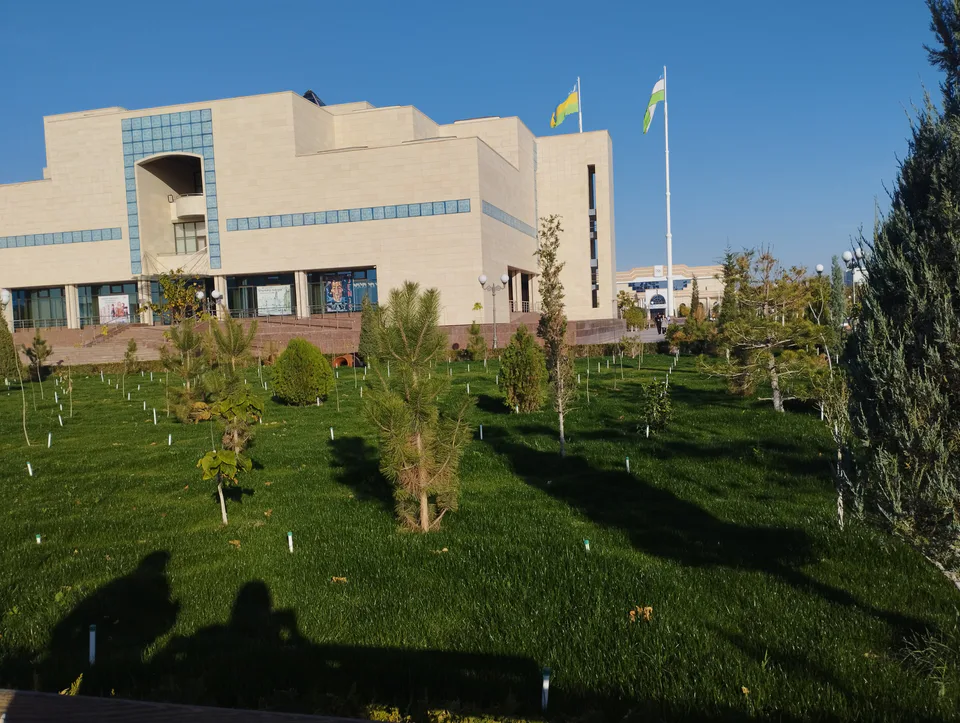
Forbidden art saved in the middle of the desert
Pilgrimage site · Beruniy District
One of Karakalpakstan’s great shrines
Archaeology · Ellikqala District
One of Khorezm’s largest fortresses — and a princess’s tale
Nature · Beruniy District
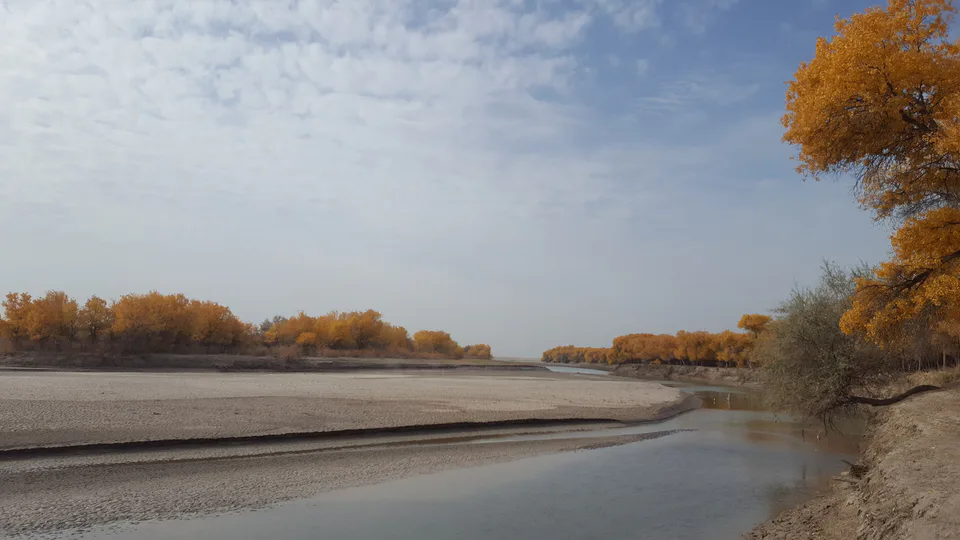
The great refuge of the Bukhara deer