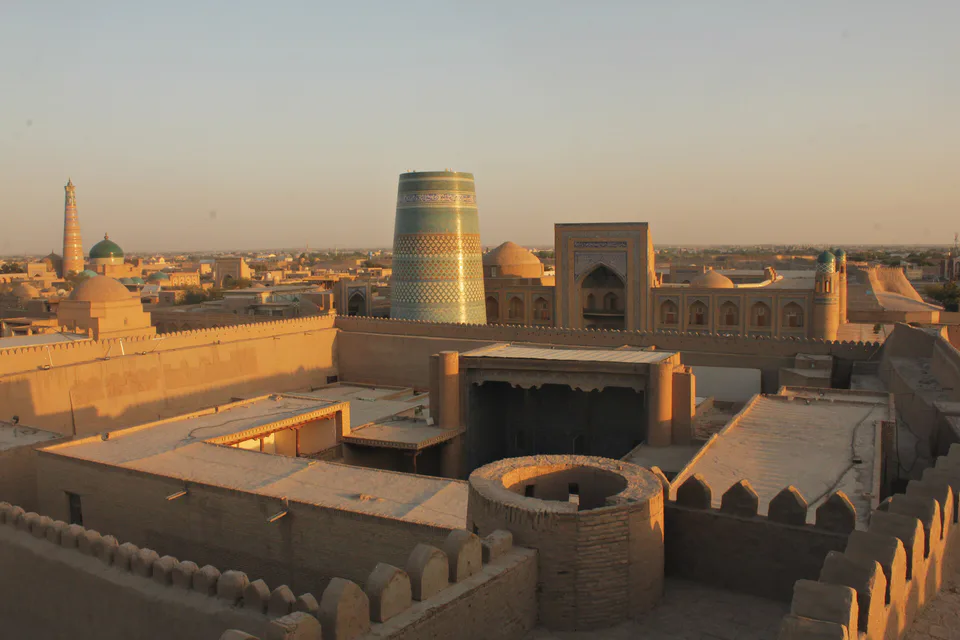
Pilgrimage site · Hazorasp District
Muzrobshoh Khorezmi Mausoleum (Shohpir)
Hazorasp’s “Shohpir” shrine
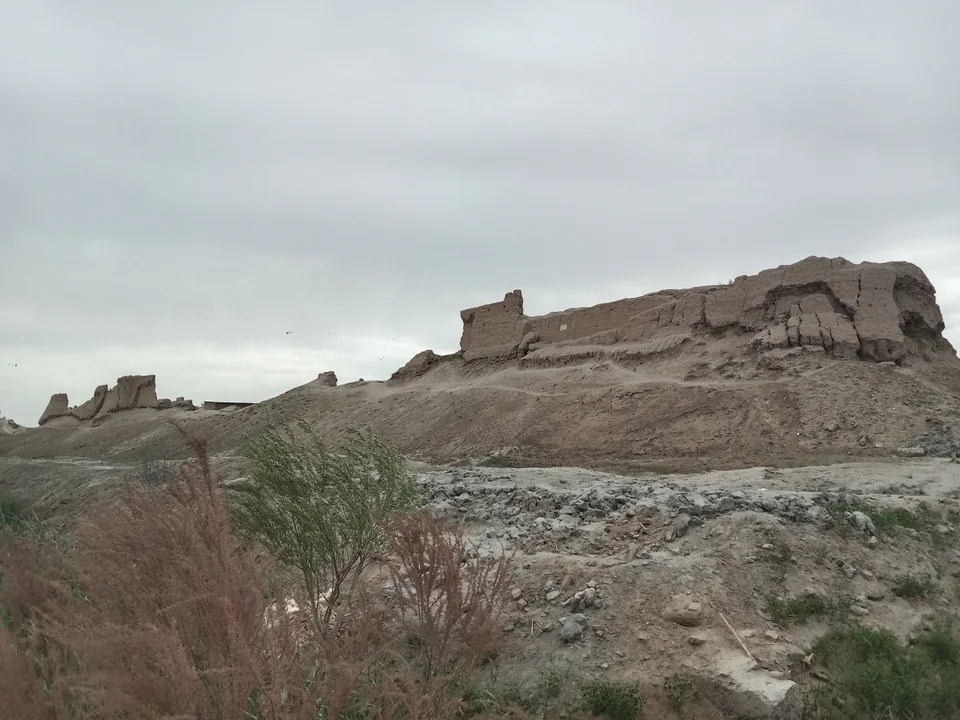
Fortress · Hazorasp District
An ancient walled town on the southern edge of the Khorezm oasis. Its earliest layers date to the first half of the 1st millennium BCE, and in the 18th–19th centuries it was the Khiva Khanate’s second city.
The name is usually explained as Persian hazar asp, “a thousand horses”, though other readings exist. Archaeologists have found pottery from the first half of the 1st millennium BCE and remains of towered walls pierced by arrow-slit loopholes and braced with pilasters. The 9th-century historian al-Tabari mentions Hazorasp, the 10th-century geographer al-Istakhri describes the great Hazorasp canal plied by large boats, and al-Muqaddasi calls it a major market town.
It saw many battles — between Mahmud of Ghazni and the Ma’munids in 1017, and between the Seljuk Sanjar and the Khorezmshah Atsiz in 1147 — before the Mongols destroyed it. Rebuilt, it became the khanate’s second town after Khiva in the 18th–19th centuries and the seat of one of the khan’s heirs, and Russian troops took it in 1873. Hazorasp joined UNESCO’s World Heritage Tentative List in 2008.
Surviving stretches of the much-rebuilt fortress walls stand in the centre of town among modern streets. It makes a handy stop on the road from Khiva to Turtkul and the desert castles of Ellikqala, and the shrine of Muzrobshoh Khorezmi, known locally as Shohpir, is in nearby Mukhomon village.