Craft · Fergana
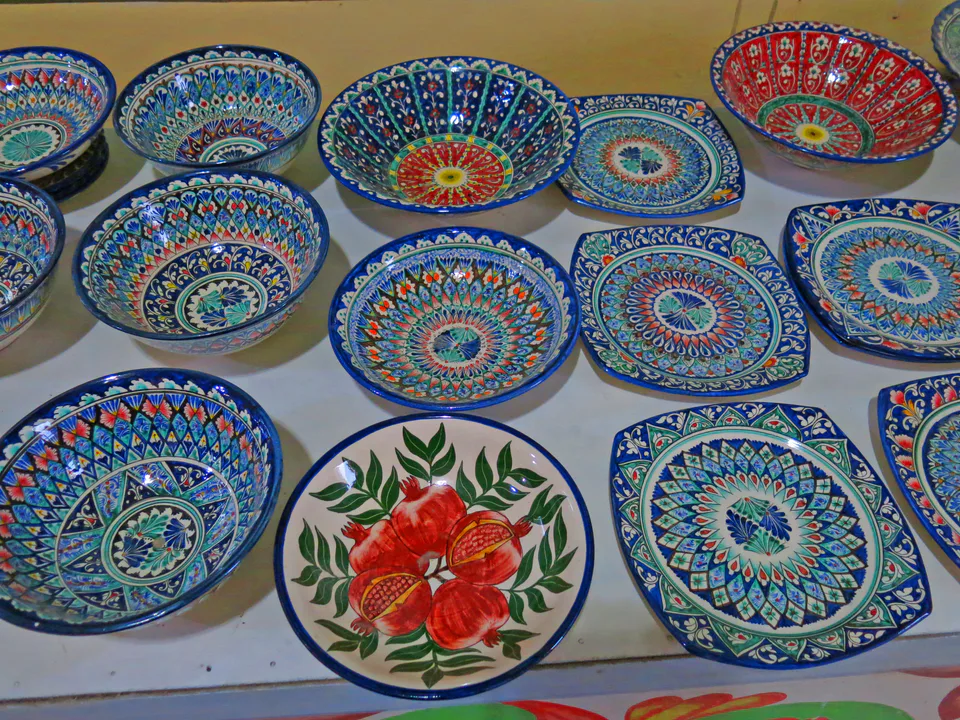
Rishtan ceramics
The blue and turquoise pottery of Rishtan in the Fergana Valley, famed for its ishkor glaze made from plant ash and its local red clay.
Craft · Navoiy
Embroideries from Nurata in Navoiy Region: realistic sprays of carnations, irises, cotton flowers and cherries on a pale ground around a central eight-pointed star.
The Nurata school is one of the most recognisable in Uzbekistan. Its style is close to Bukhara’s — many floral motifs on a light ground — but here the flowers are not stylised abstractions: they appear as bushes and bouquets drawn with real naturalism, local carnations, irises, cotton blossoms and cherries, often joined by birds or animals.
Most Nurata suzanis have an eight-pointed star at the centre, framed on four sides by floral designs. The palette is varied but calm and muted.
Many Nurata pieces contain a deliberate colour ‘mistake’ — a green flower or a red leaf — with a religious meaning: a reminder that people are imperfect and only God creates flawless colours and forms. Nurata and Bukhara embroideries are held in museums abroad as well. Nurata lies northeast of Navoiy at the foot of the Nuratau mountains and combines easily with a trip to Aydarkul lake and the mountain villages.
Craft · Fergana
The blue and turquoise pottery of Rishtan in the Fergana Valley, famed for its ishkor glaze made from plant ash and its local red clay.
Craft · Bukhara
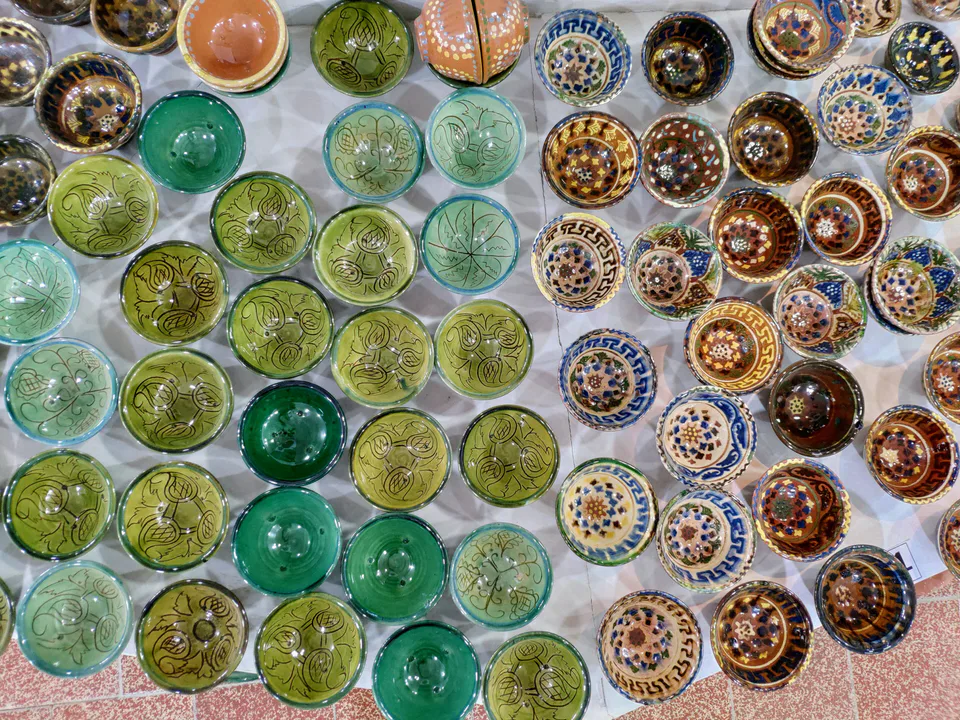
Pottery from Gijduvan near Bukhara, glazed in browns, yellows and greens — the best-known centre of the Bukhara–Samarkand school.
Craft · Fergana
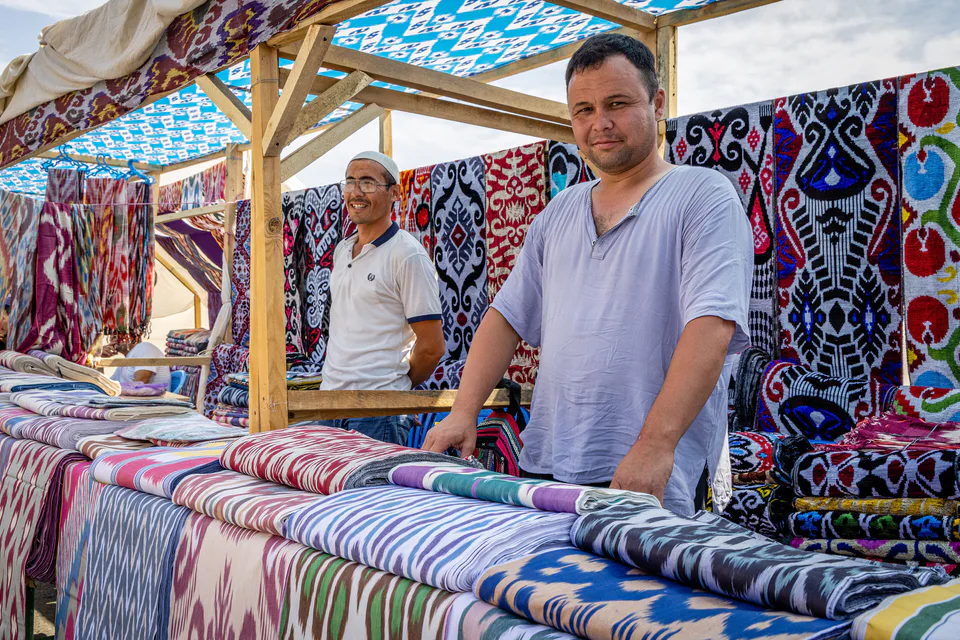
Margilan’s ikat silks: pure-silk atlas and half-silk adras. UNESCO recognises the town’s work to safeguard them as a model practice.
Craft · Bukhara
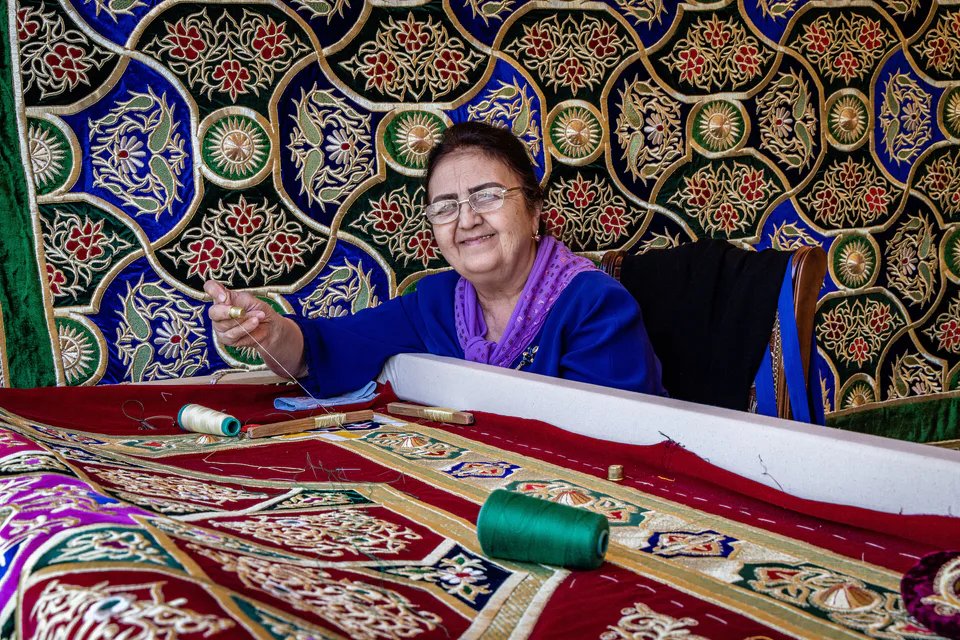
Embroidery in gold and silver thread on velvet and silk — the art of the Bukhara emirs’ court and still the city’s most precious craft.
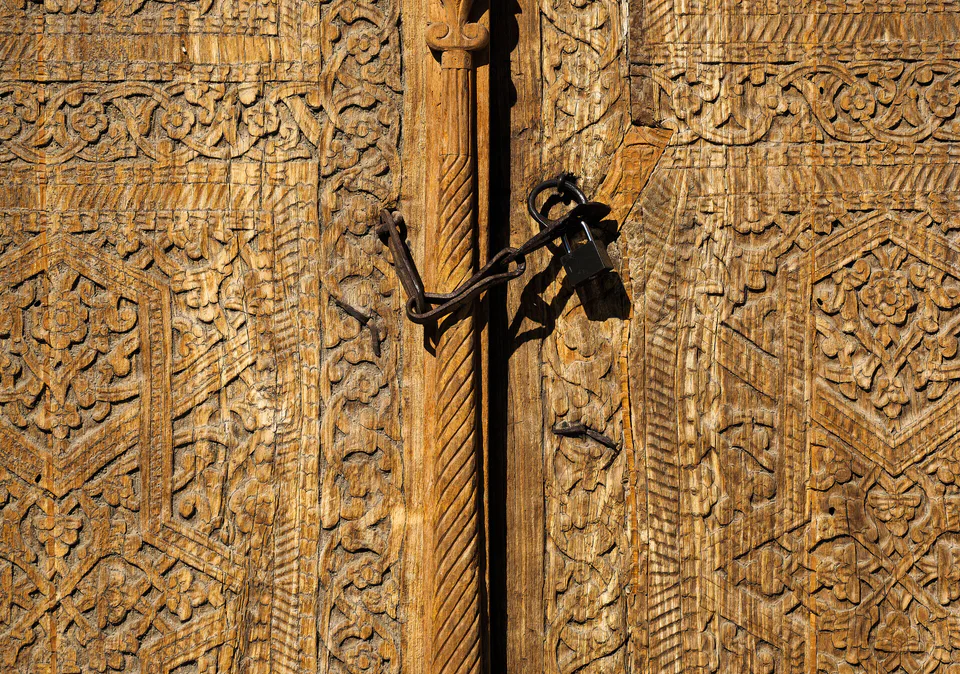
Craft · Khorezm
The carved doors and columns of Itchan Kala: Khiva’s carvers never paint the wood, finishing it only with natural oil; the Juma Mosque alone has more than 200 columns.
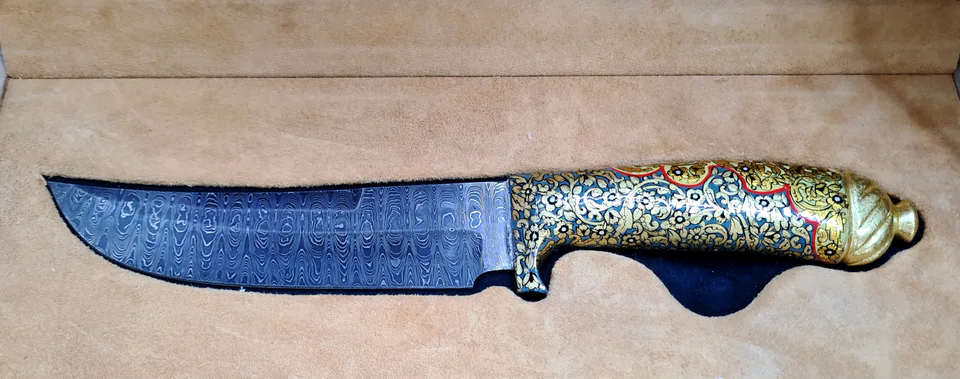
Craft · Namangan
Hand-forged knives from Chust in Namangan Region: a blade with a slightly upturned tip, the maker’s stamped ‘signature’ and a decorated sheath.
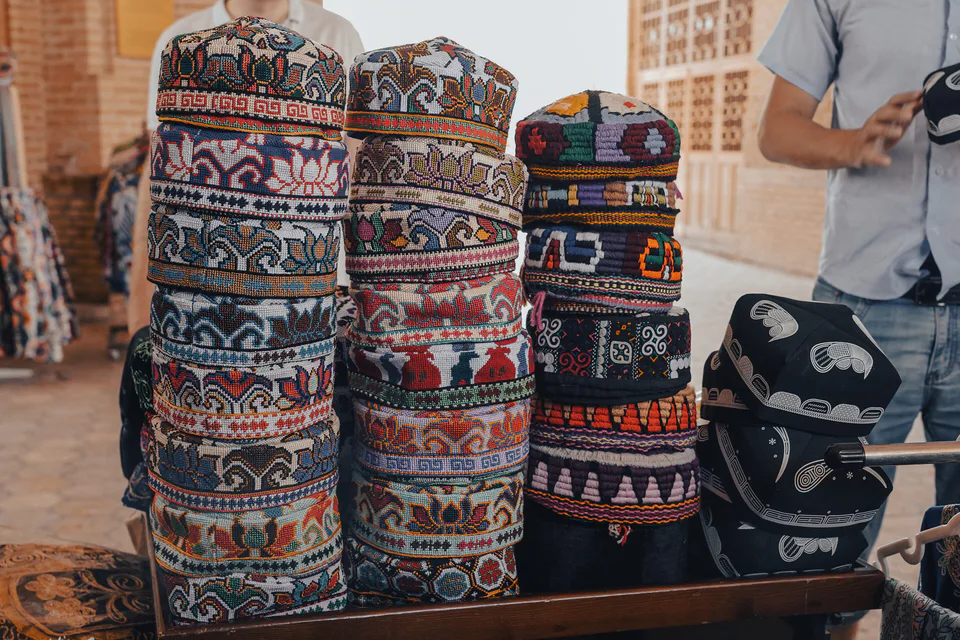
Craft · Namangan
The four-sided Chust skullcap, with white pepper-pod motifs on dark green, is the best-known emblem of Uzbek dress — and every oasis has its own doppi.
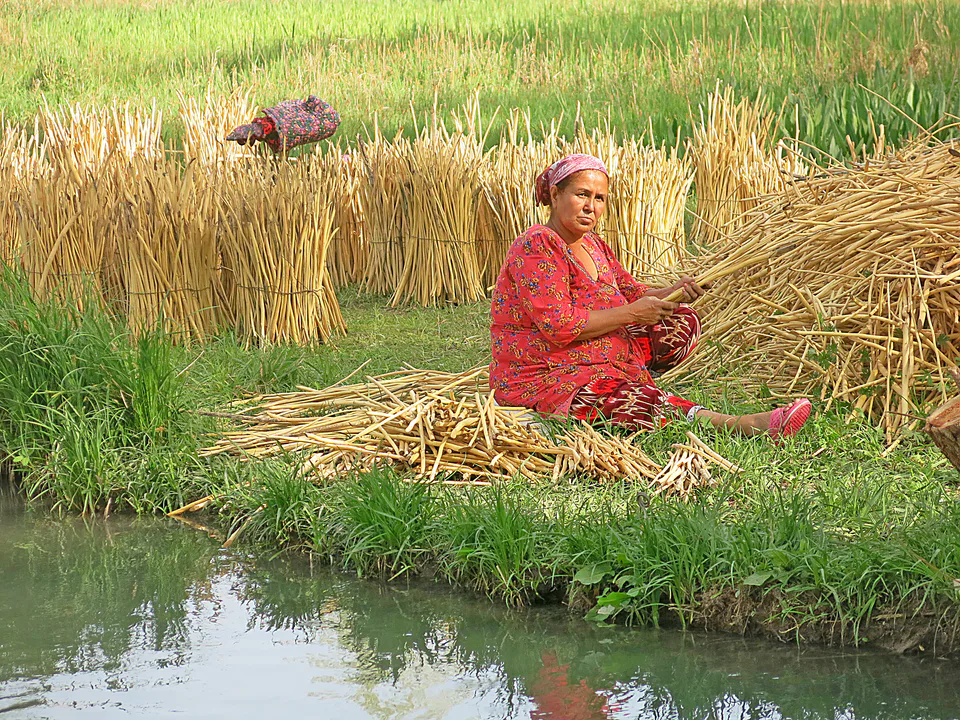
Craft · Samarkand
Paper made from mulberry bark — the finest writing material of the 9th–10th-century Islamic world, revived at Konigil at the end of the 20th century.
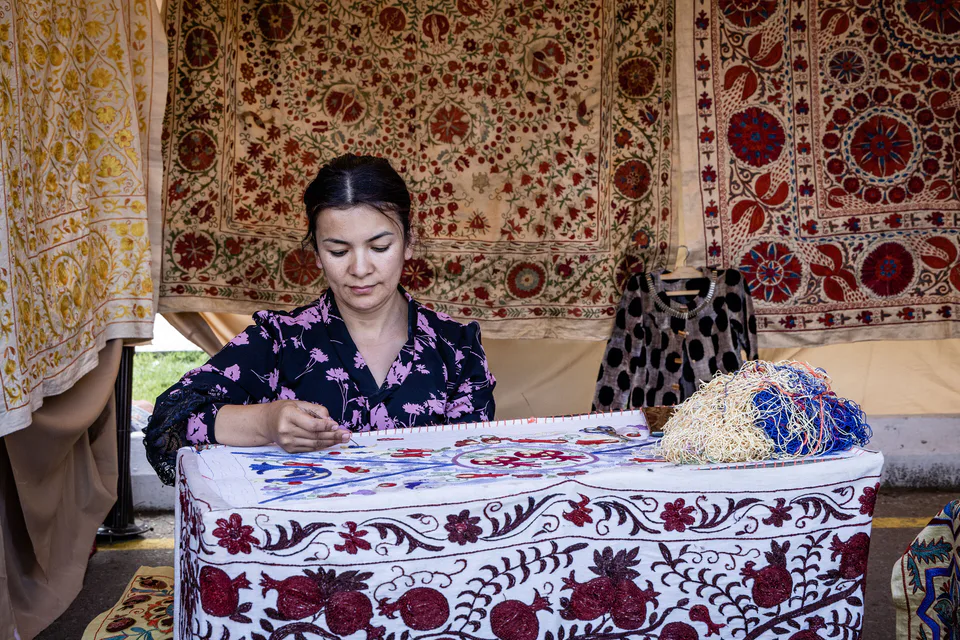
Craft · Bukhara
Large hand-embroidered hangings called suzani; the Bukhara school is known for fine designs covering almost the whole cloth in reds and greens on a pale ground.
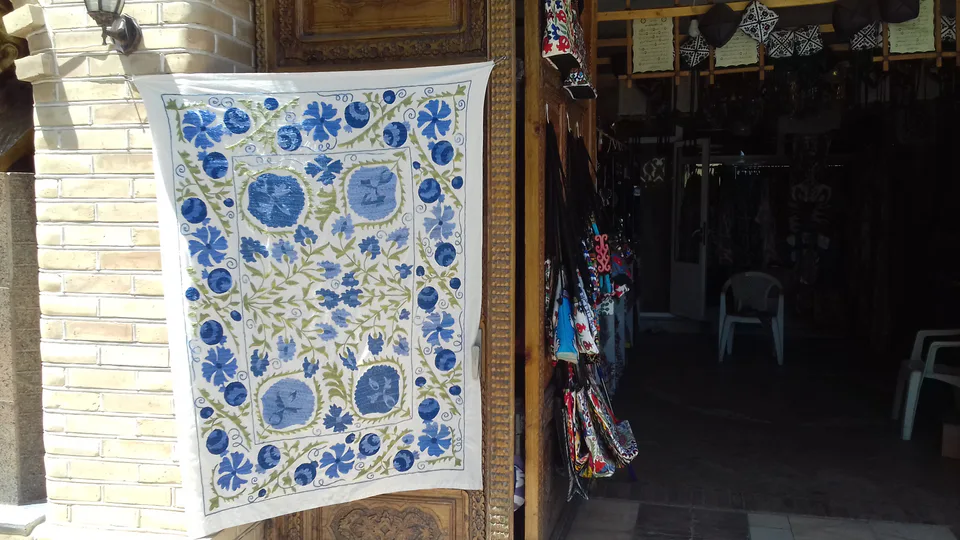
Craft · Samarkand
Big red-and-black circles and rosettes on white define the Samarkand school; Urgut is a living embroidery centre and a favourite bazaar for suzani hunters.