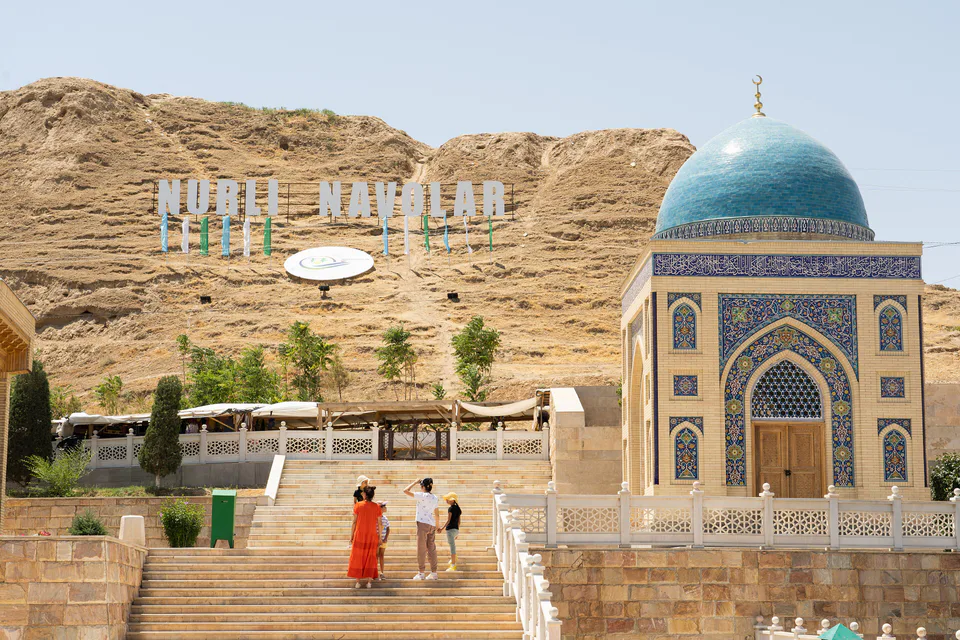
Pilgrimage site · Nurota District
Chashma Complex, Nurota
A healing spring and the 'light of Bukhara'
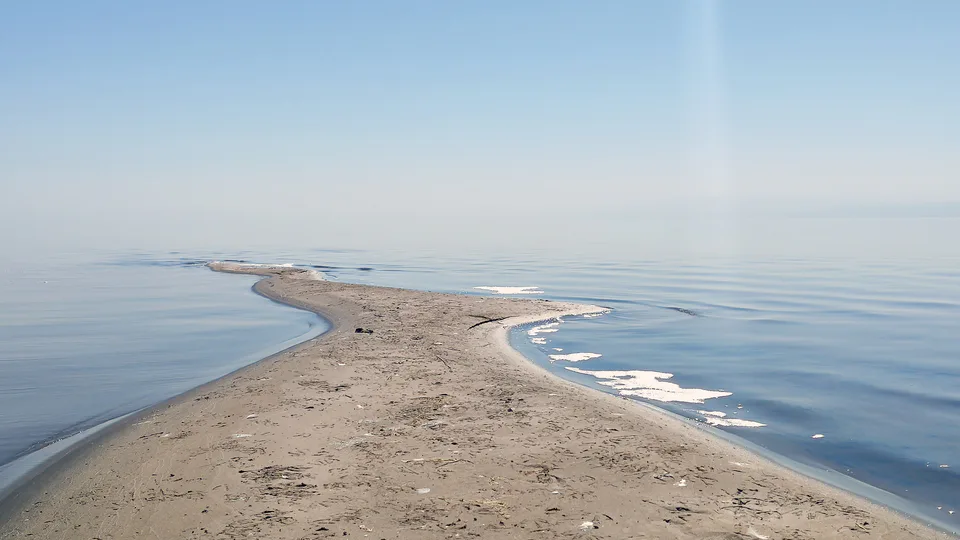
Nature · Nurota District
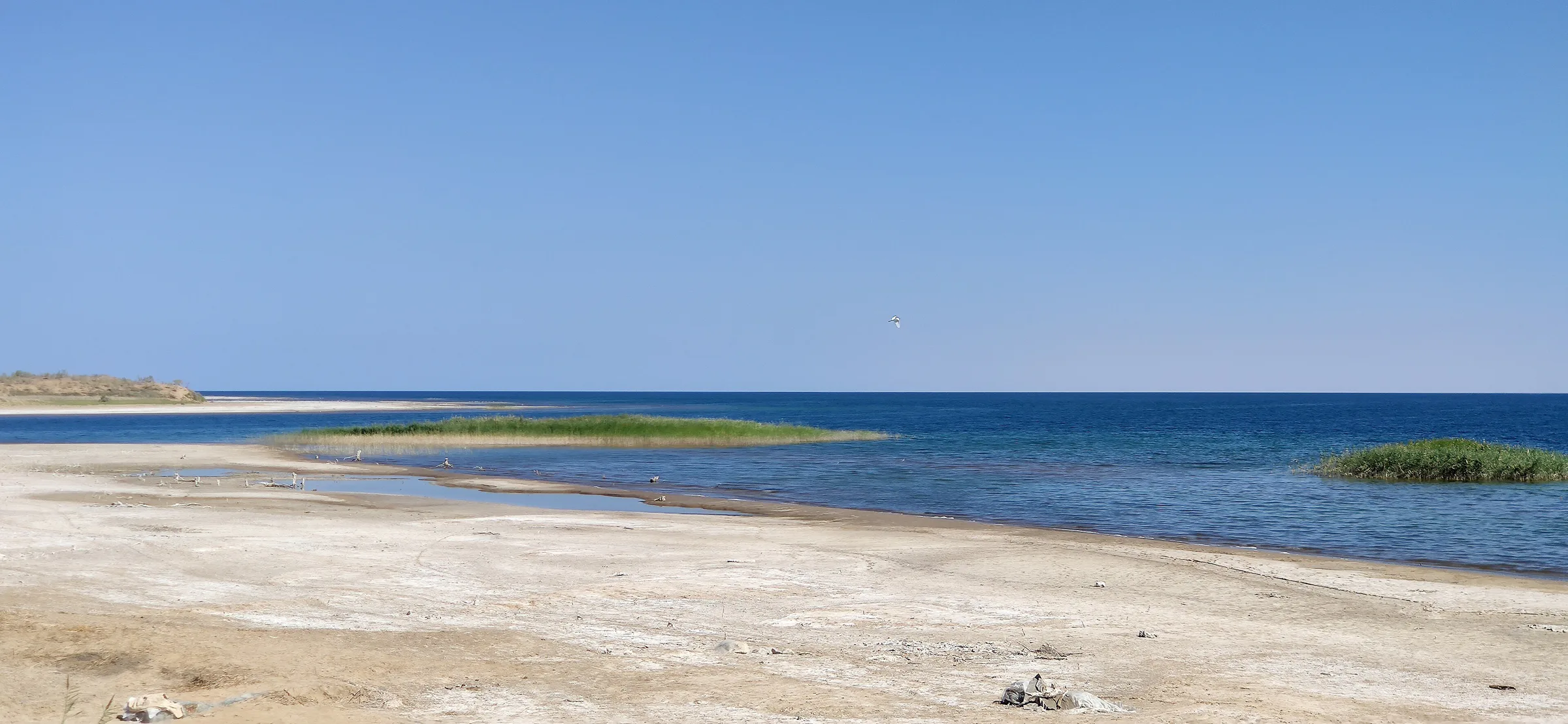
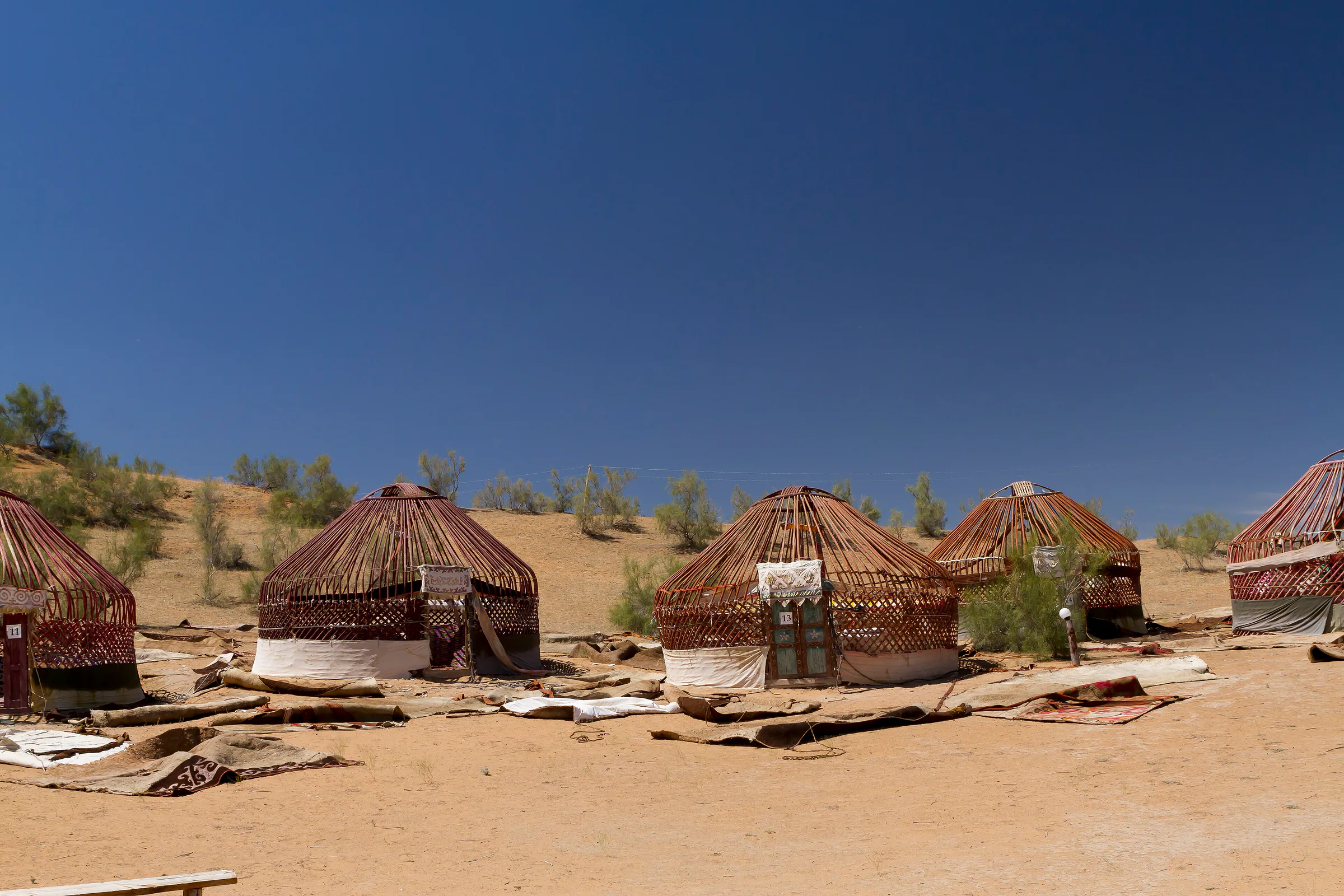
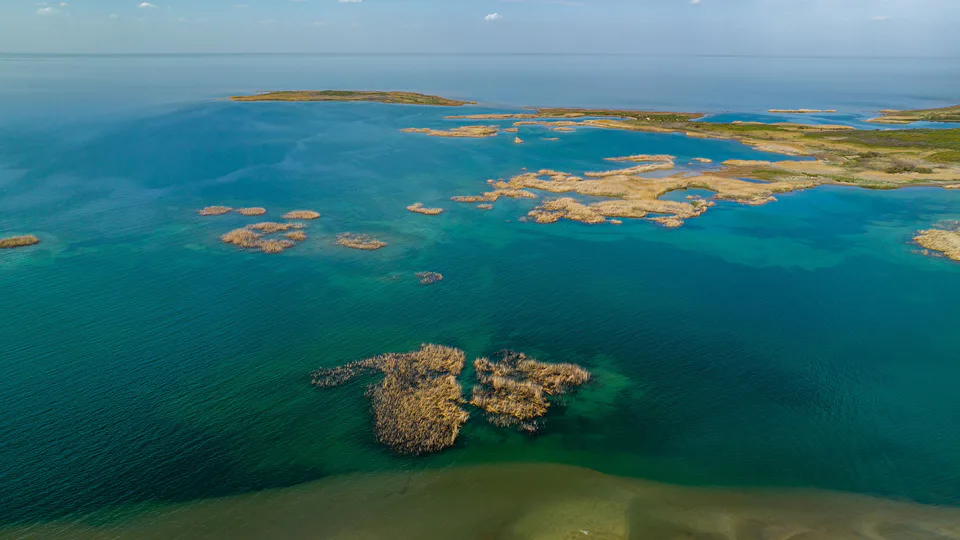
Formed in the Kyzylkum after the 1969 flood, Aydarkul is one of Uzbekistan's largest lakes. Yurt camps near its Navoiy shore offer camel rides, nights in the desert and swimming in the lake.
Until 1969 the Arnasay lowland was a dry salt flat for most of the year. In the early 1960s the Syr Darya was dammed and the Shardara reservoir built. During the huge flood of 1969 the dam could not pass enough water, so the sluices were opened: between February 1969 and February 1970 almost 60% of the Syr Darya's annual flow — 21 km³ — poured into the Arnasay depression. A chain of lakes was born, and Aydarkul kept filling in later years with overflow from Shardara.
In 2005 the lake held 44.3 km³ of water; in 2006 it covered 3,478 km² and measured 160 km by 34.8 km. Its water is brackish, with about 2 grams of salts per litre, and it does not freeze in winter. Going by OpenStreetMap boundaries, about 40% of the lake lies in Navoiy Region, mostly in Nurota District, and the rest in Jizzakh Region.
Carp, zander, bream, catfish, asp, sabrefish and snakehead were introduced and now form the basis of the fishery. Large numbers of waterbirds arriving from the remnants of the Aral Sea add to the Kyzylkum's wildlife, and the Aydar-Arnasay lake system is listed as a wetland of international importance under the Ramsar Convention.
Its northern shores run into the eastern Kyzylkum, and with its broad sandy beaches and clean brackish water it is often called a 'sea in the sand'.
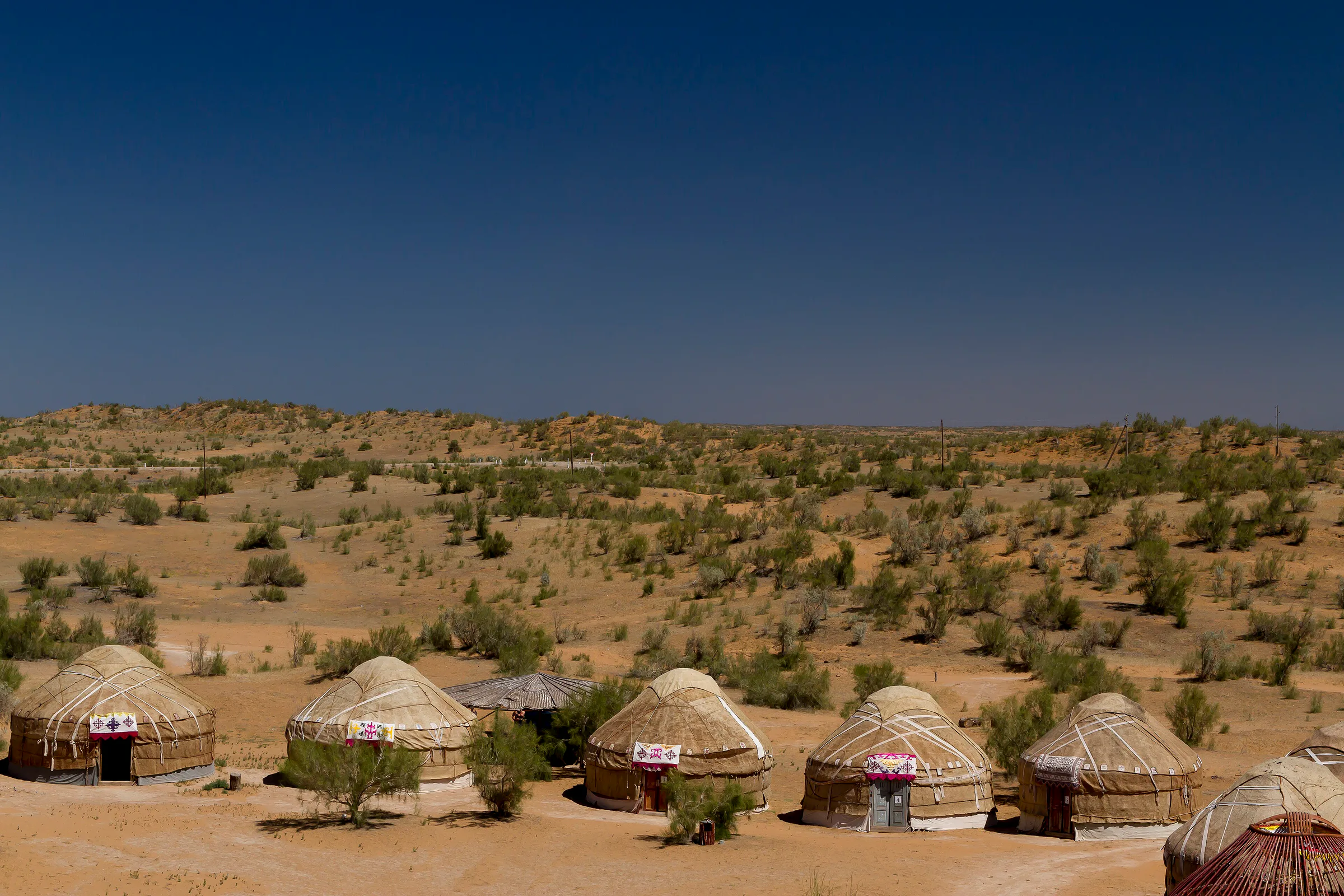
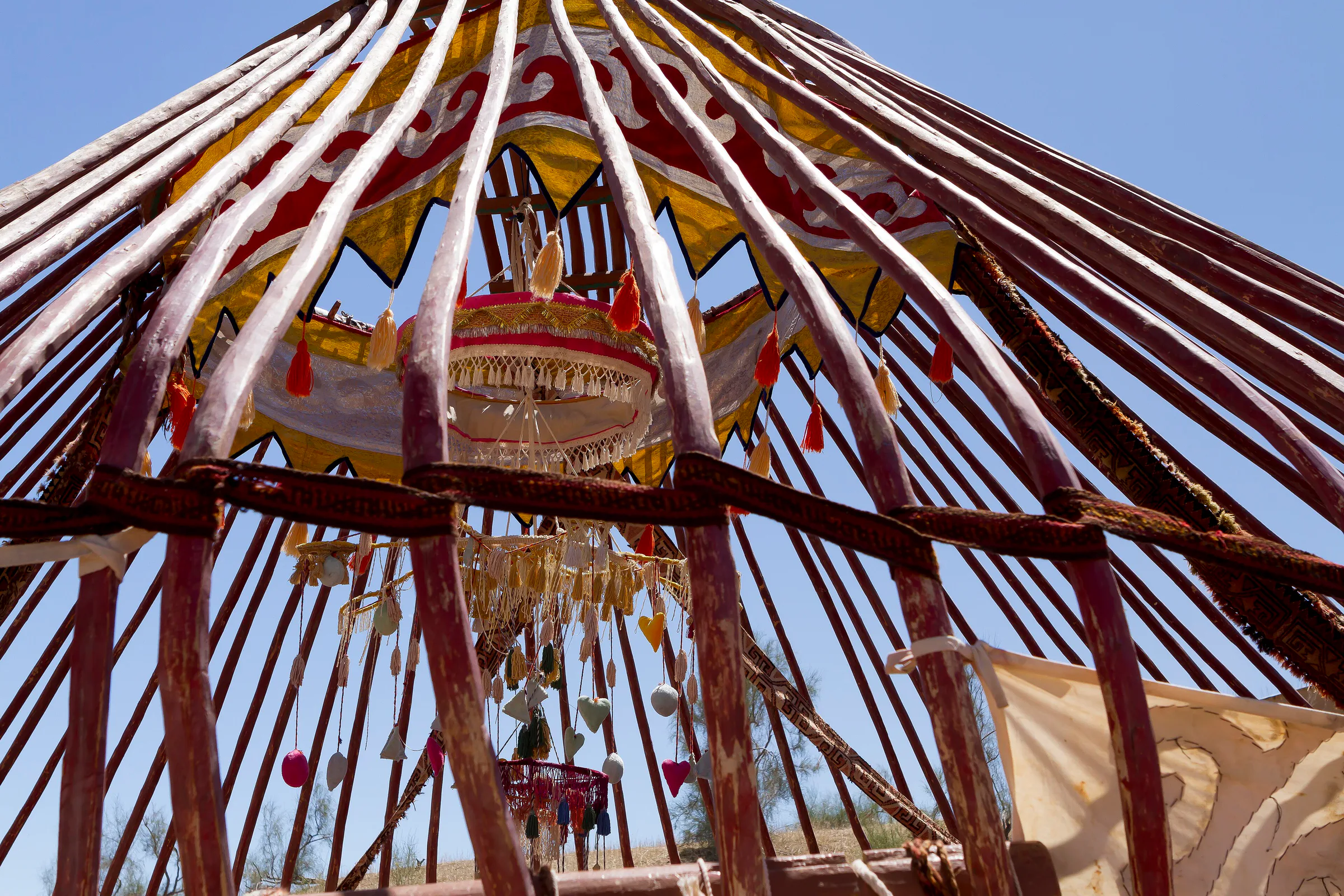
Several tourist yurt camps operate in the desert near the western part of the lake, mostly reached by the desert road running north-east from Nurota. A typical stay means a night in a yurt, a camel ride, an evening by the campfire and a trip to the lake the next day to swim or fish.
The night sky is a highlight: with no sizeable towns around, there is almost no light pollution.
Most people reach the yurt camps via Nurota on a transfer from Navoiy, Samarkand or Bukhara — there is no public transport. The Chashma complex and Nur fortress in Nurota, Sentob village and Aydarkul combine well into a two- or three-day trip. The eastern part of the lake lies in Forish District of Jizzakh Region, and roads reach the shore from that side too.
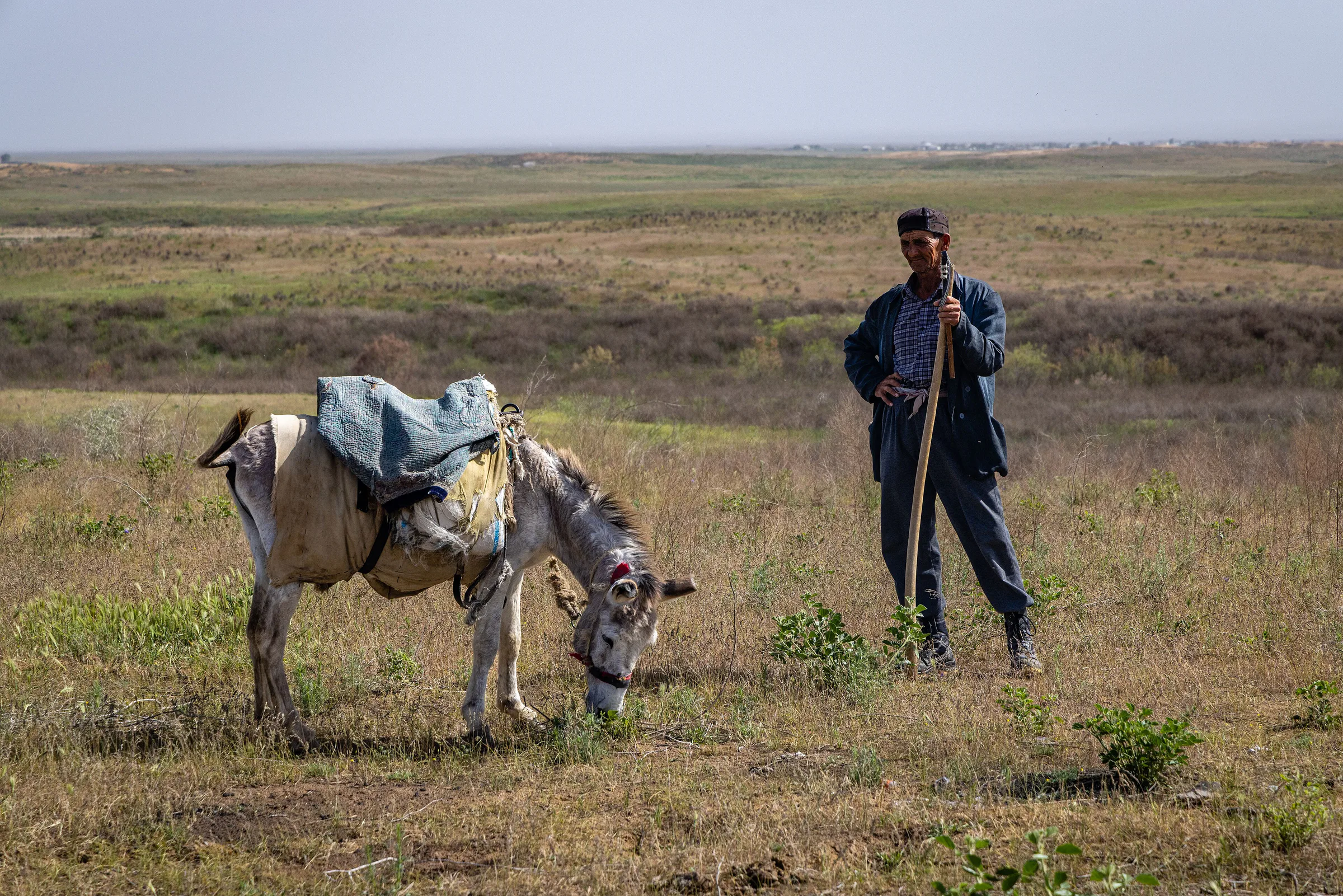
Very few people live around Aydarkul: by some accounts just 345 families, about 1,760 people, live around the lake. Your main neighbours here are shepherds, fishermen and the yurt-camp staff.
Pilgrimage site · Nurota District
A healing spring and the 'light of Bukhara'
Nature · Nurota District
Walnut groves, wild sheep and welcoming mountain villages
Nature · Tomdi District
The 'red sands' — land of gold and uranium
Nature · Forish District
A sea born in the desert