Dish · Nationwide
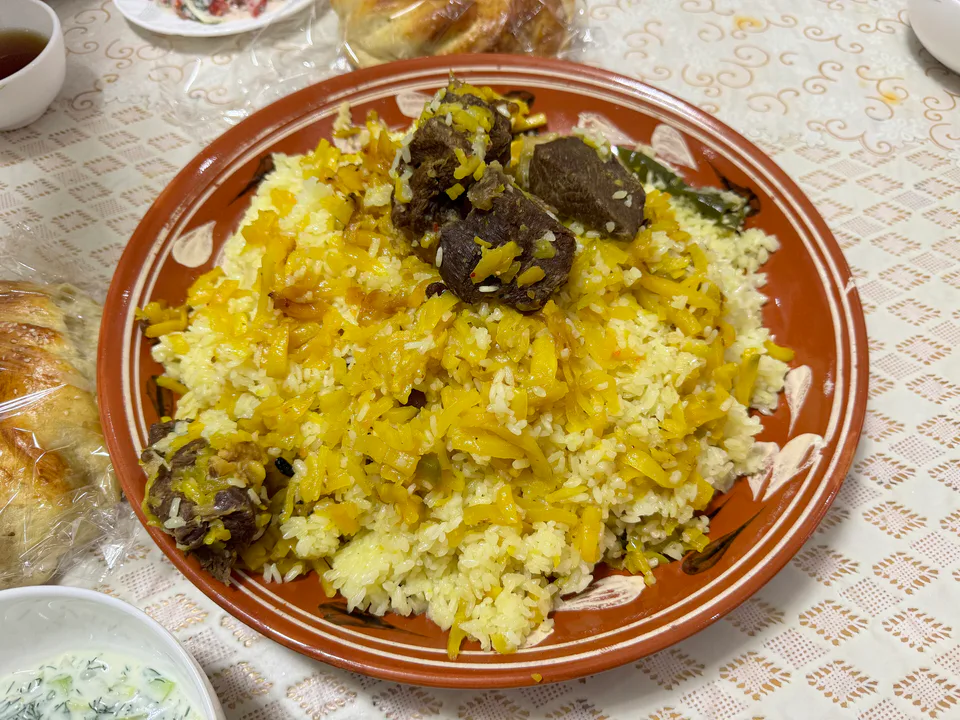
Plov (osh)
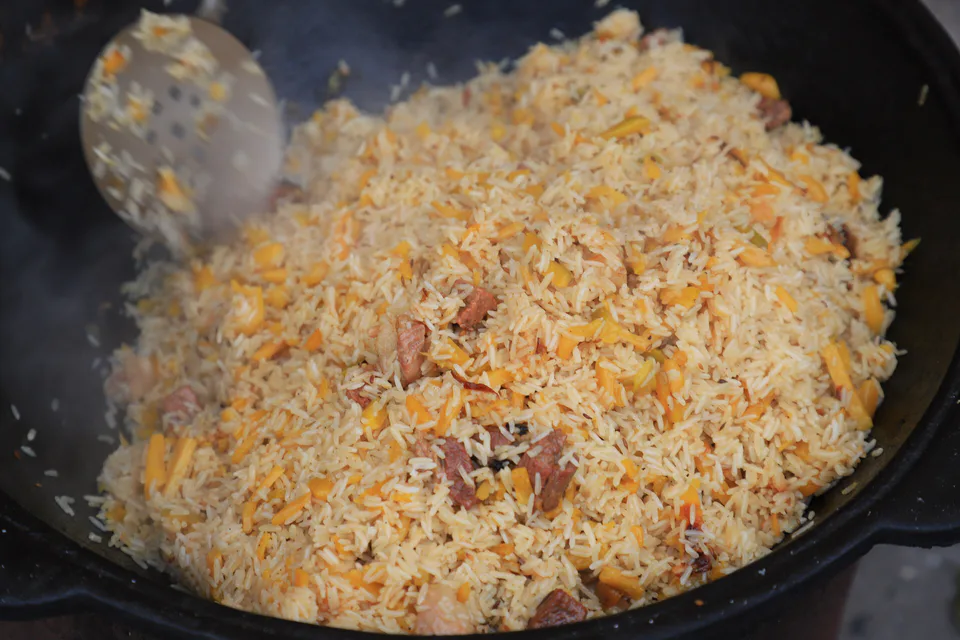
The centrepiece of any Uzbek meal: meat, onions and yellow carrots are cooked into a rich base in a kazan, then rice is steamed on top. UNESCO-listed since 2016.
Dish · Nationwide
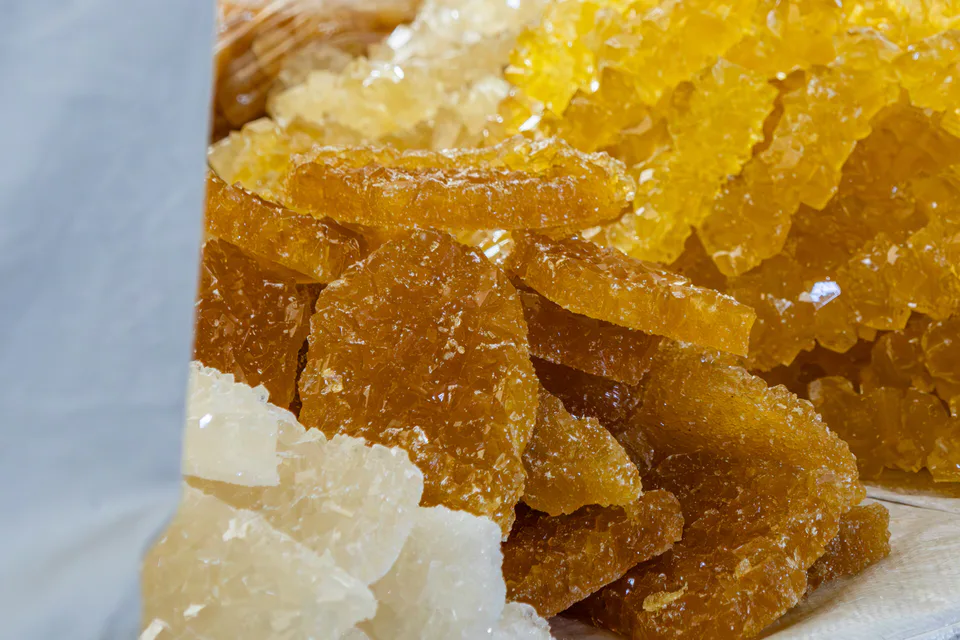
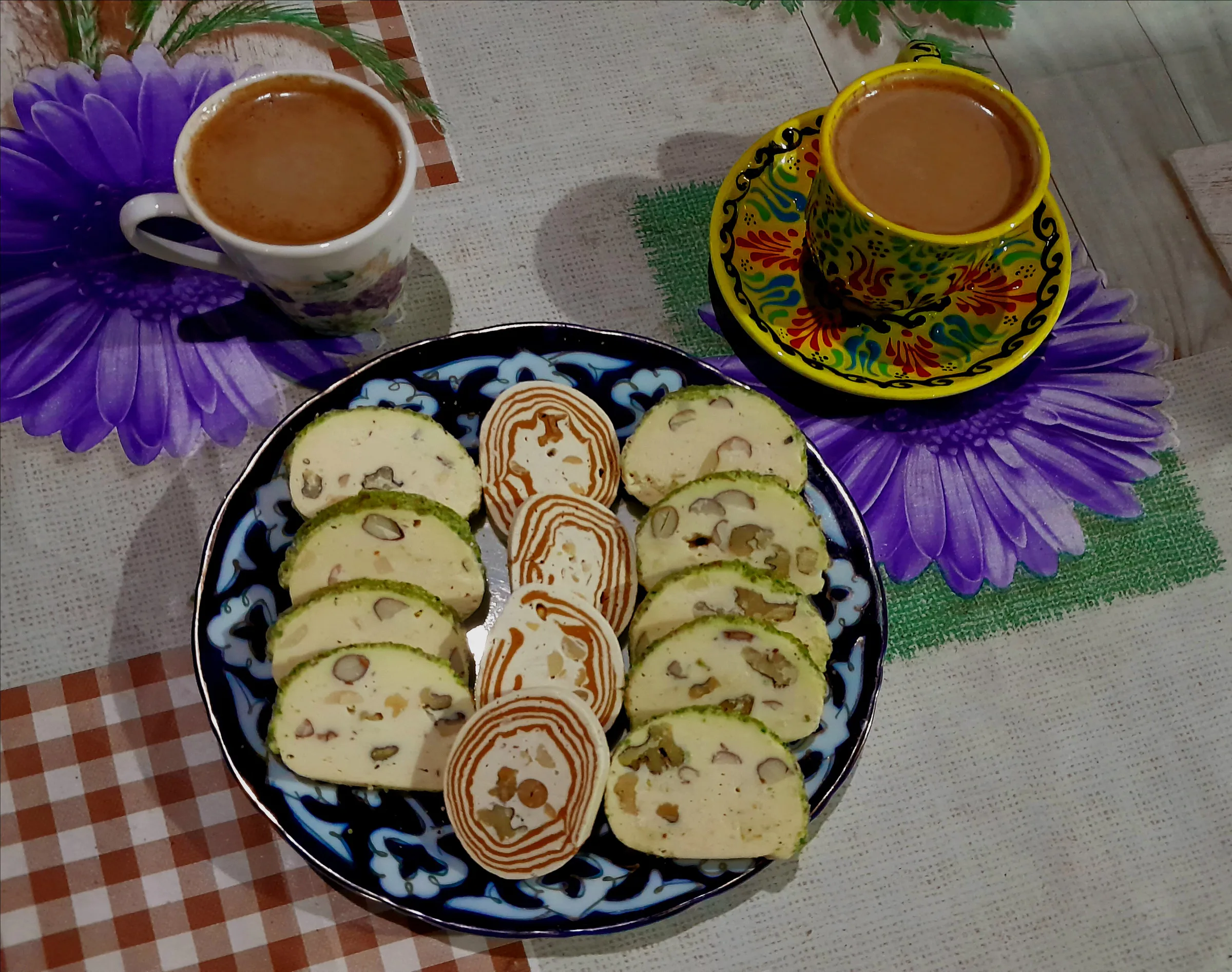
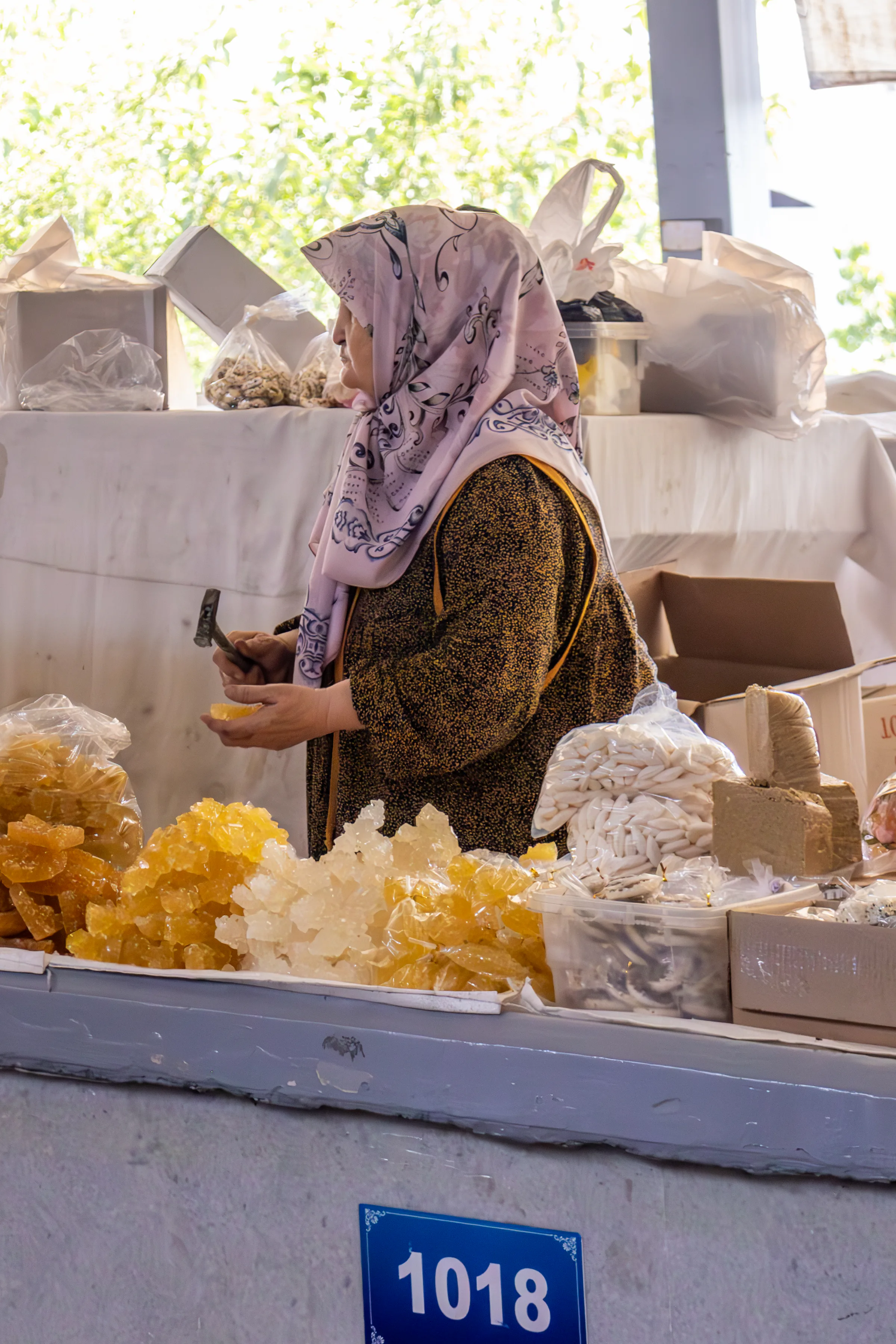
Uzbek sweets for the tea table: novvot crystals grown on threads, flour-dusted parvarda, snow-white nisholda and dozens of kinds of halva.
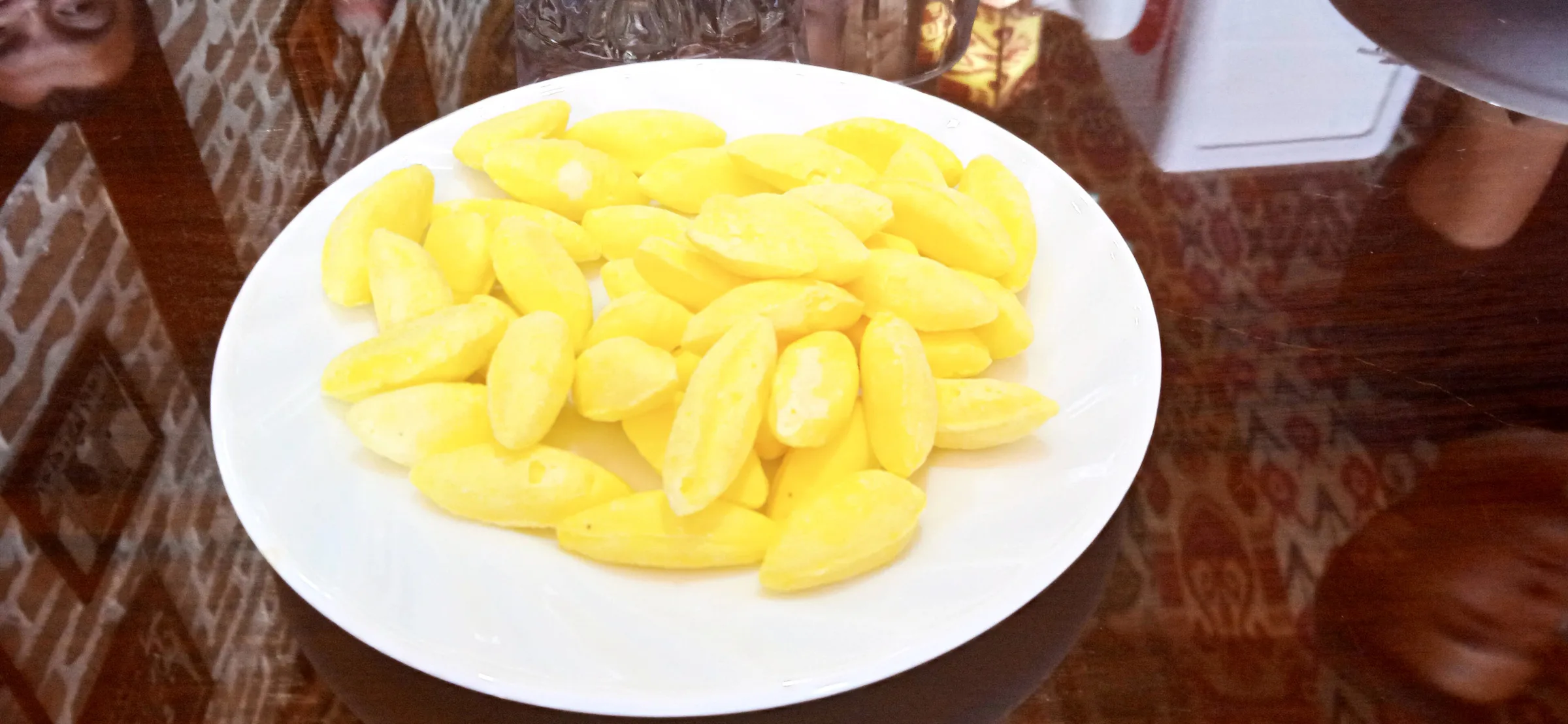
Novvot is sugar crystallised on threads, in shades from white to brown; it is dropped into tea and given with hot tea to anyone with a cold. Parvarda is a white pulled candy: sugar syrup boiled with citric acid is stretched, cut into little pillows and dusted with flour. It is eaten with tea in winter and taken as a folk remedy for coughs.
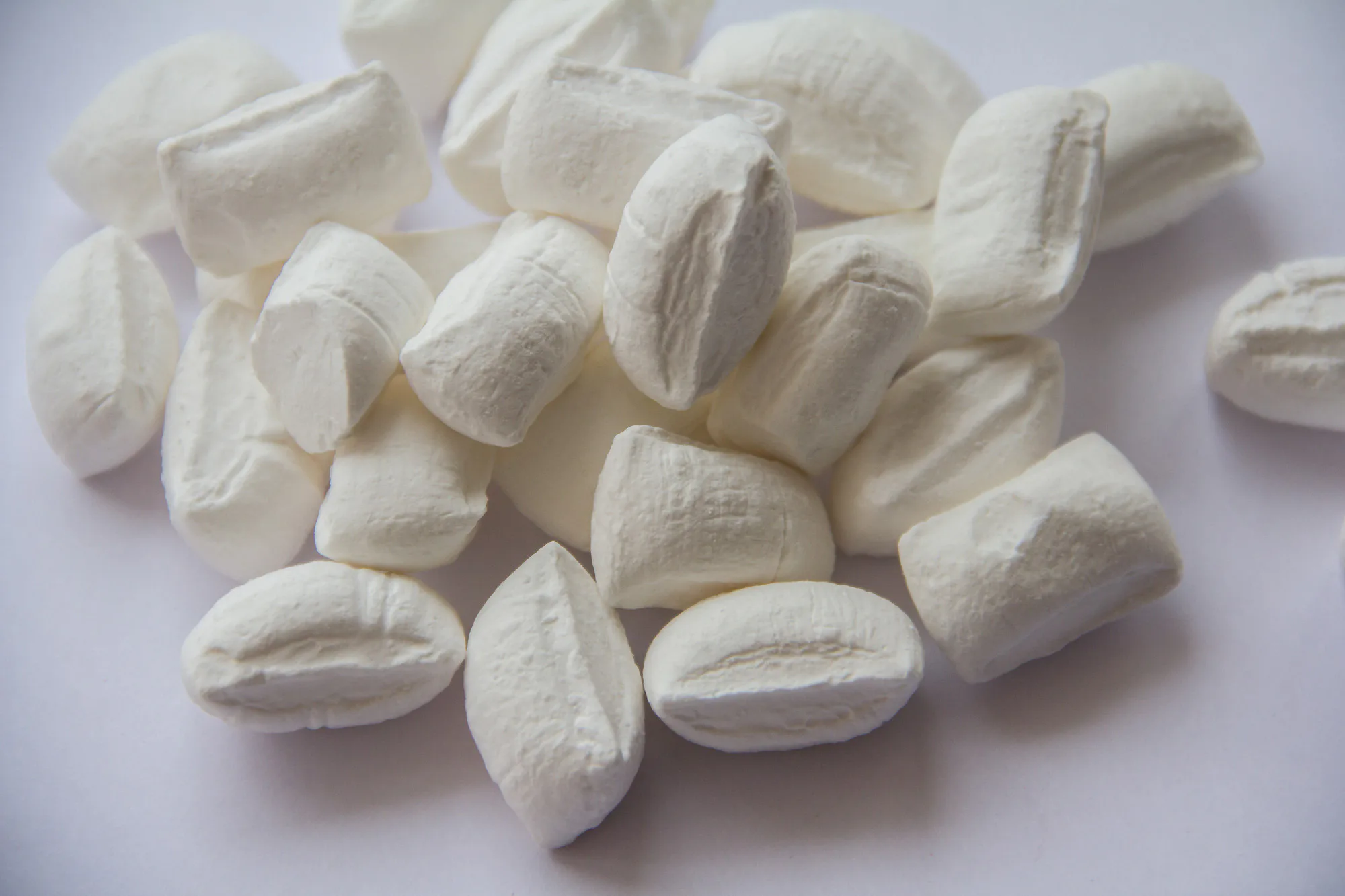
Nisholda is a snow-white, stretchy sweet made by whipping egg whites and sugar syrup for a long time with a decoction of etmak root; it is above all a Ramadan treat, set out at iftar.
Halva is made from sugar or honey syrup with fat, sesame, walnuts, almonds, flour and more: sesame, nut, sunflower and the floss-like pashmak halva are among them. Thick halvaytar, made from flour toasted in oil and finished with syrup, is cooked mainly for religious and memorial gatherings. Halva-making is an old trade in Central Asia, and Kokand and Samarkand halva are particularly well known. Try them in the sweets and dried-fruit rows of any big bazaar, where sellers will usually break off a piece to taste.
Dish · Nationwide
The centrepiece of any Uzbek meal: meat, onions and yellow carrots are cooked into a rich base in a kazan, then rice is steamed on top. UNESCO-listed since 2016.
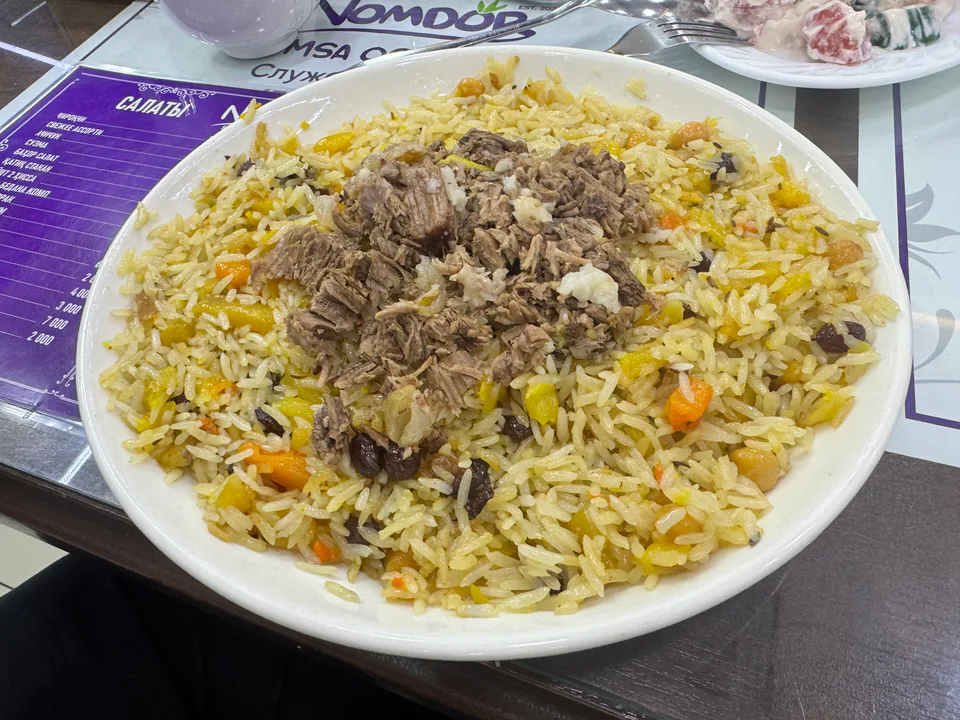
Dish · Tashkent (city), Tashkent Region
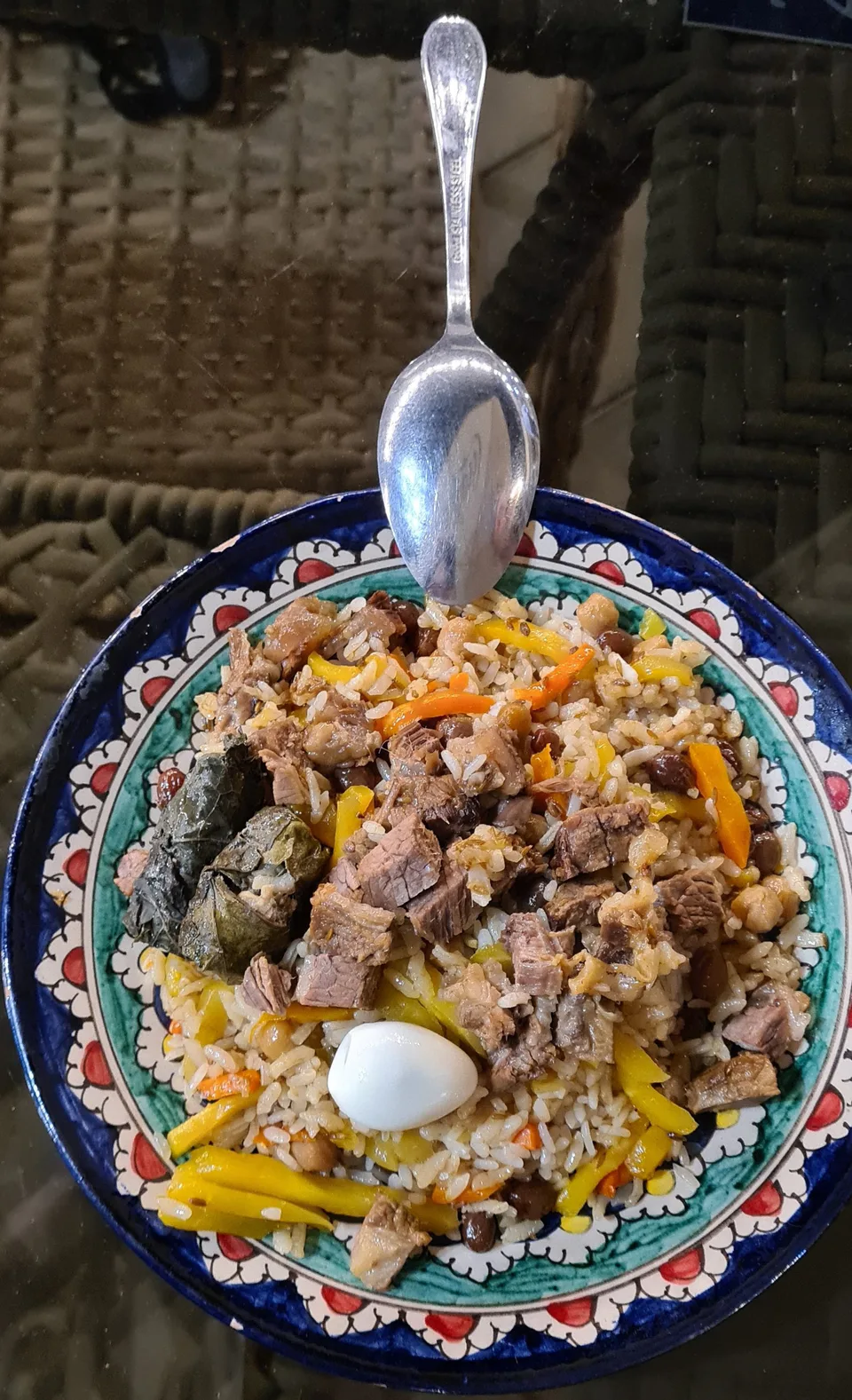
The capital’s style of plov: everything is fried first and the rice is mixed into the base; wedding plov adds kazy sausage, chickpeas, raisins and sometimes quail eggs.
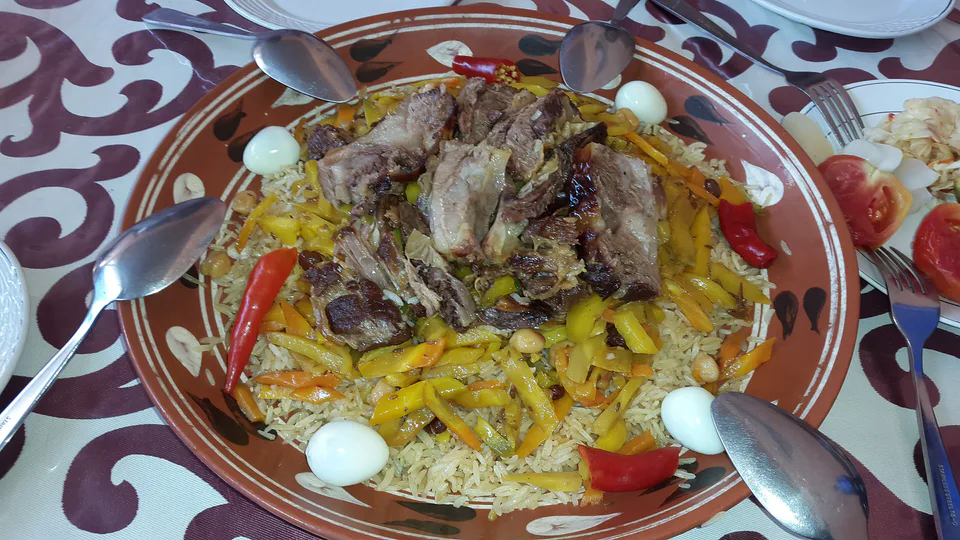
Dish · Samarkand
A layered plov in which nothing is stirred: the rice stays pale, and the carrots and meat are served on top of it.
Dish · Bukhara
Bukhara’s own plovs: oshi sofi, made with separately boiled and drained rice, and plov cooked with mung beans.
Dish · Fergana, Andijan +1
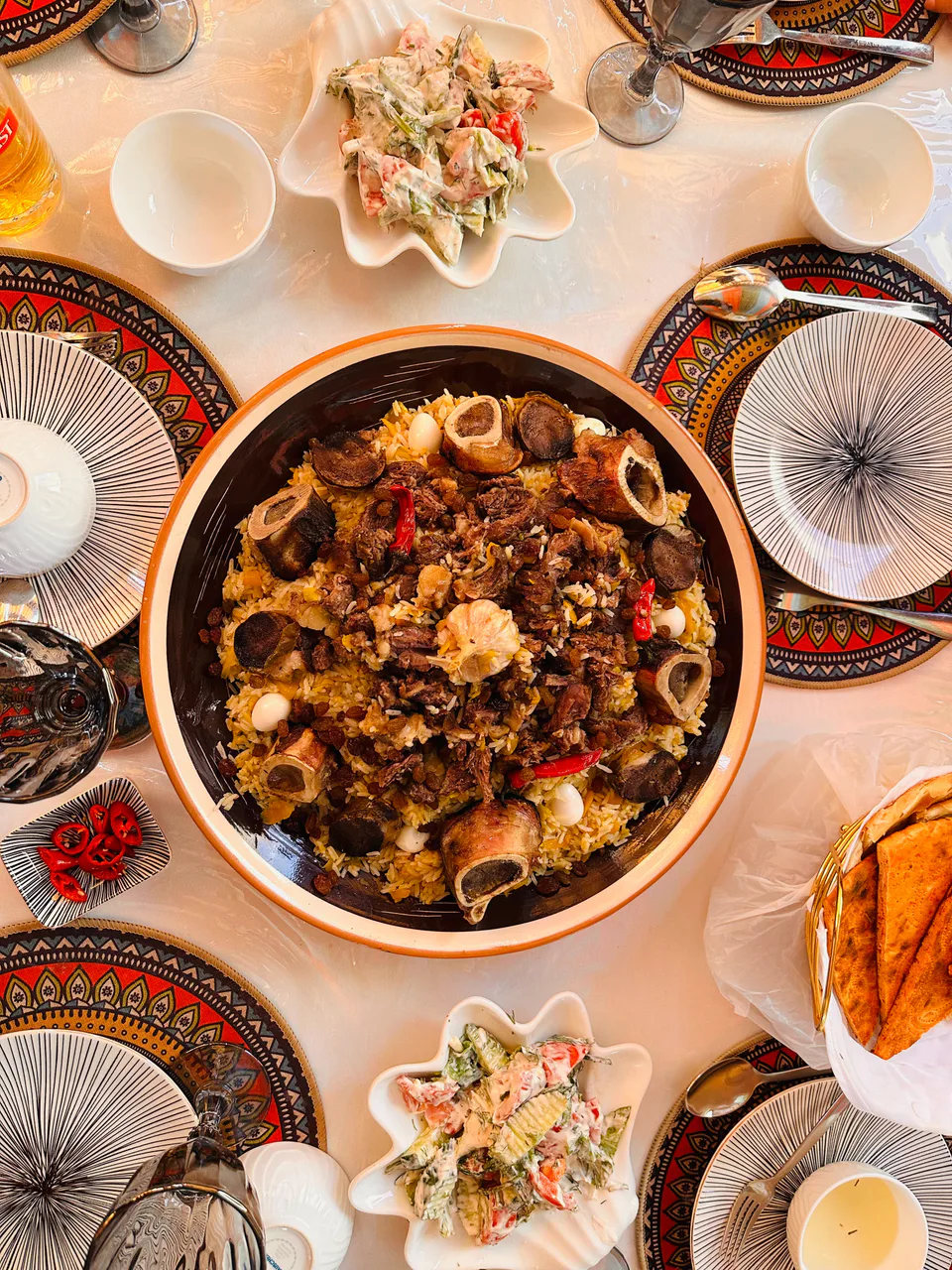
The dark plov of the Fergana Valley: a bone, meat, onions and carrots are fried long and hard until the zirvak turns deep brown.
Dish · Khorezm
Khorezm’s plov tradition, including suzma palov, in which the rice is boiled separately and drained before it meets the zirvak.
Dish · Nationwide
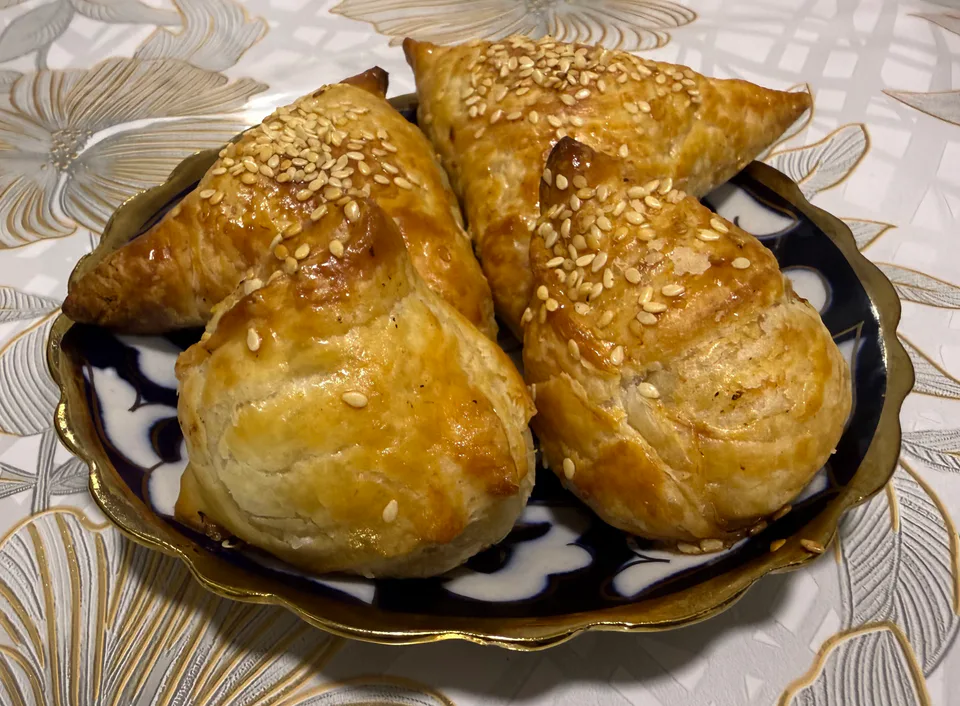
Flaky pastries baked on the inner wall of a tandoor, filled with hand-chopped lamb, tail fat and onion — or wild greens in spring and pumpkin in autumn.
Dish · Jizzakh
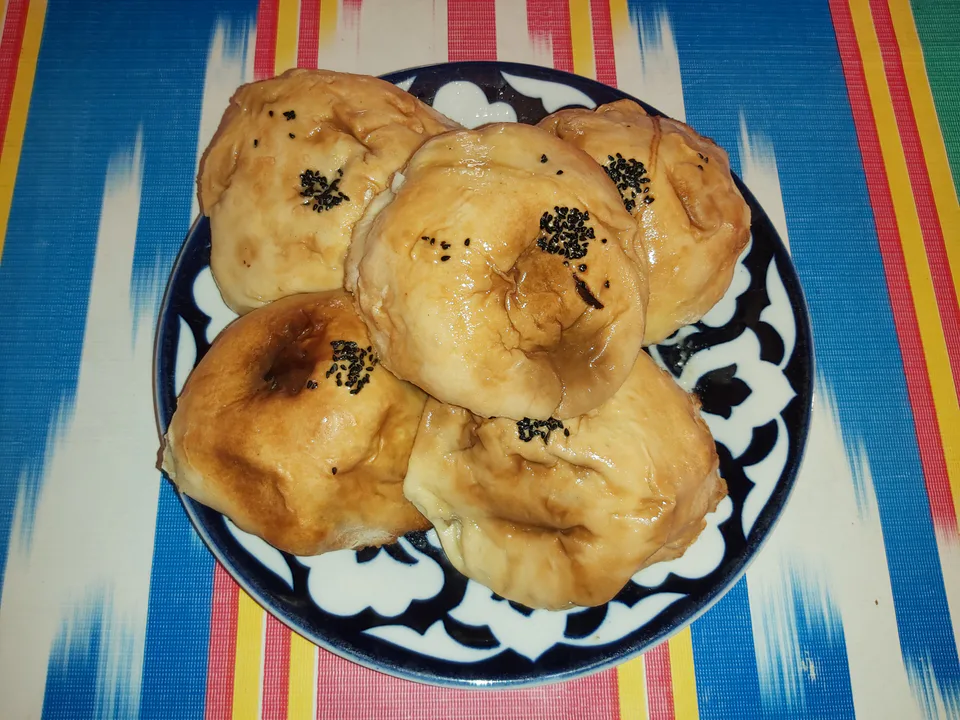
Jizzakh’s culinary calling card: a large dome-shaped samsa made from three layers of dough, packed with lamb and tail fat and dipped in sunflower oil.
Dish · Nationwide
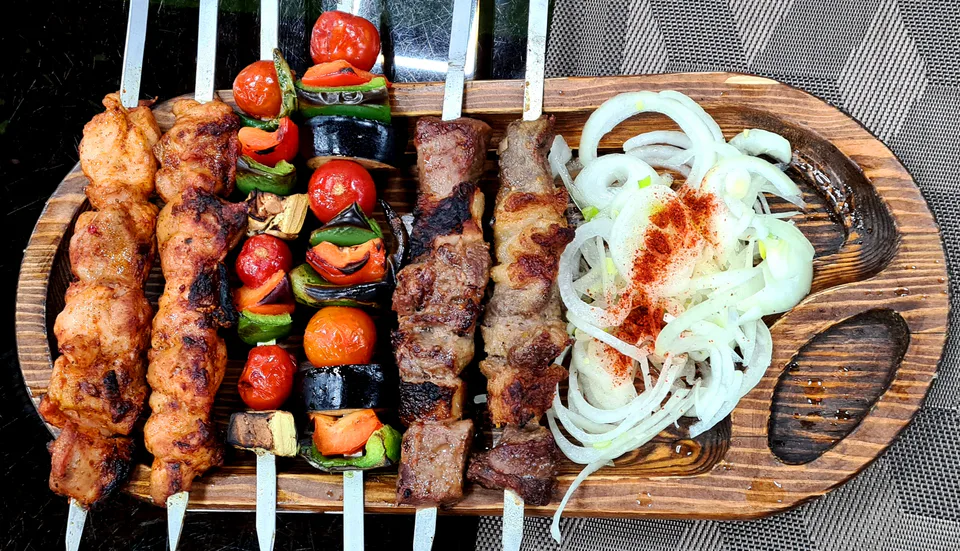
Skewered meat grilled over embers — lamb, beef, meat with tail fat, liver, minced qiyma (lula) kabob — served with onion, vinegar and hot bread.
Dish · Bukhara
The famous minced-meat kebab of Gijduvan in Bukhara Region: the meat is minced twice, frozen, chopped and pressed onto skewers.