Dish · Tashkent (city), Tashkent Region
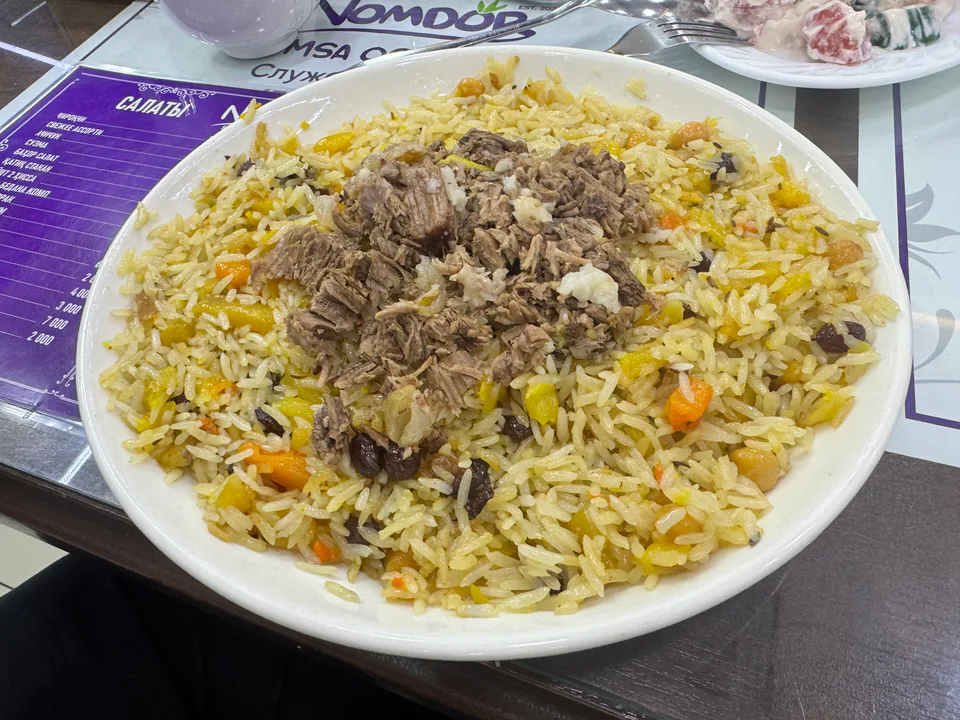
Tashkent plov
The capital’s style of plov: everything is fried first and the rice is mixed into the base; wedding plov adds kazy sausage, chickpeas, raisins and sometimes quail eggs.
Dish · Nationwide
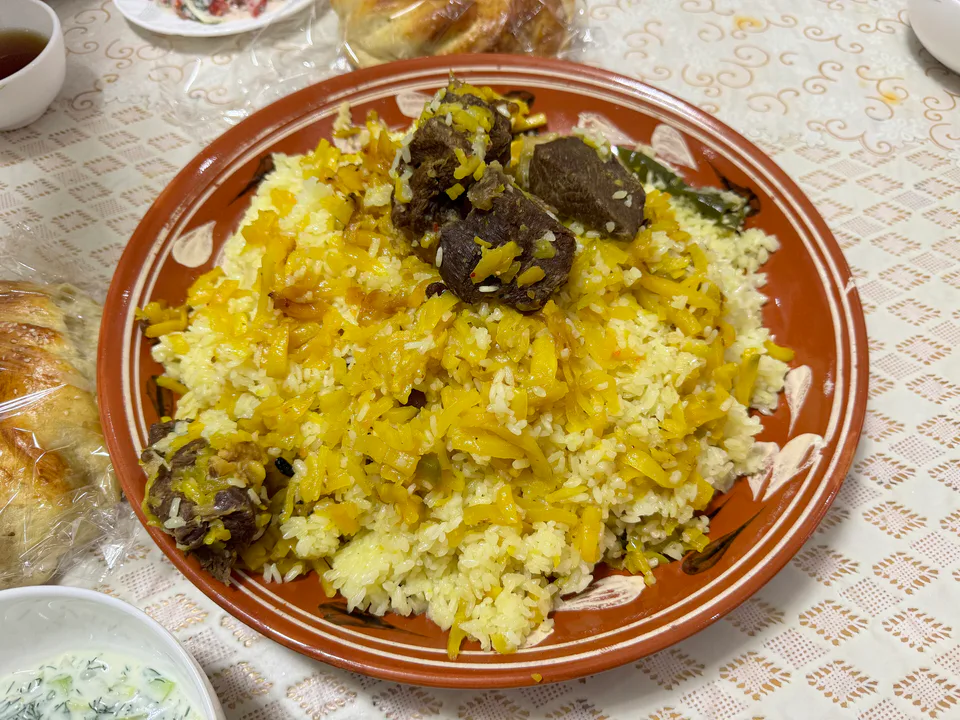
The centrepiece of any Uzbek meal: meat, onions and yellow carrots are cooked into a rich base in a kazan, then rice is steamed on top. UNESCO-listed since 2016.
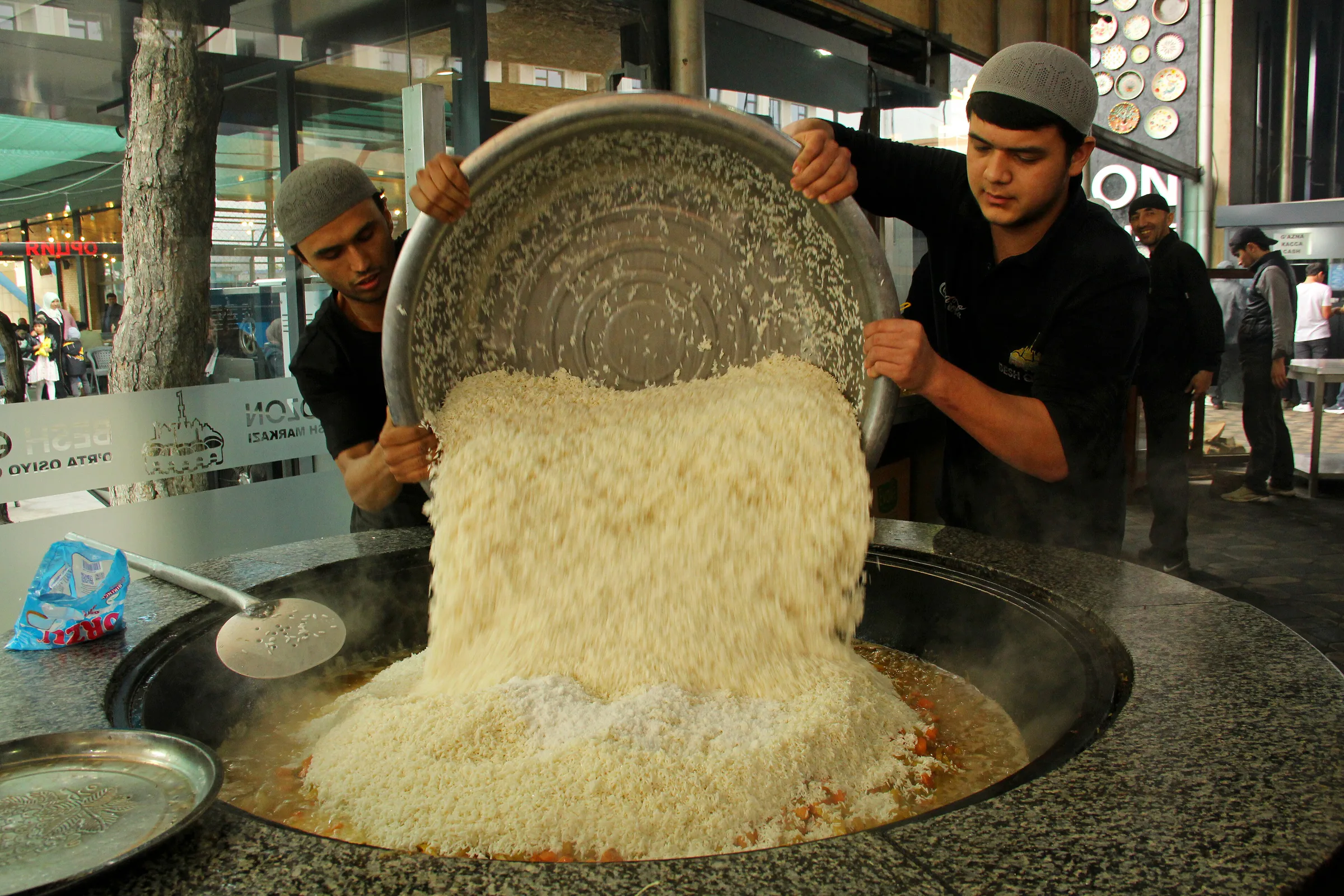
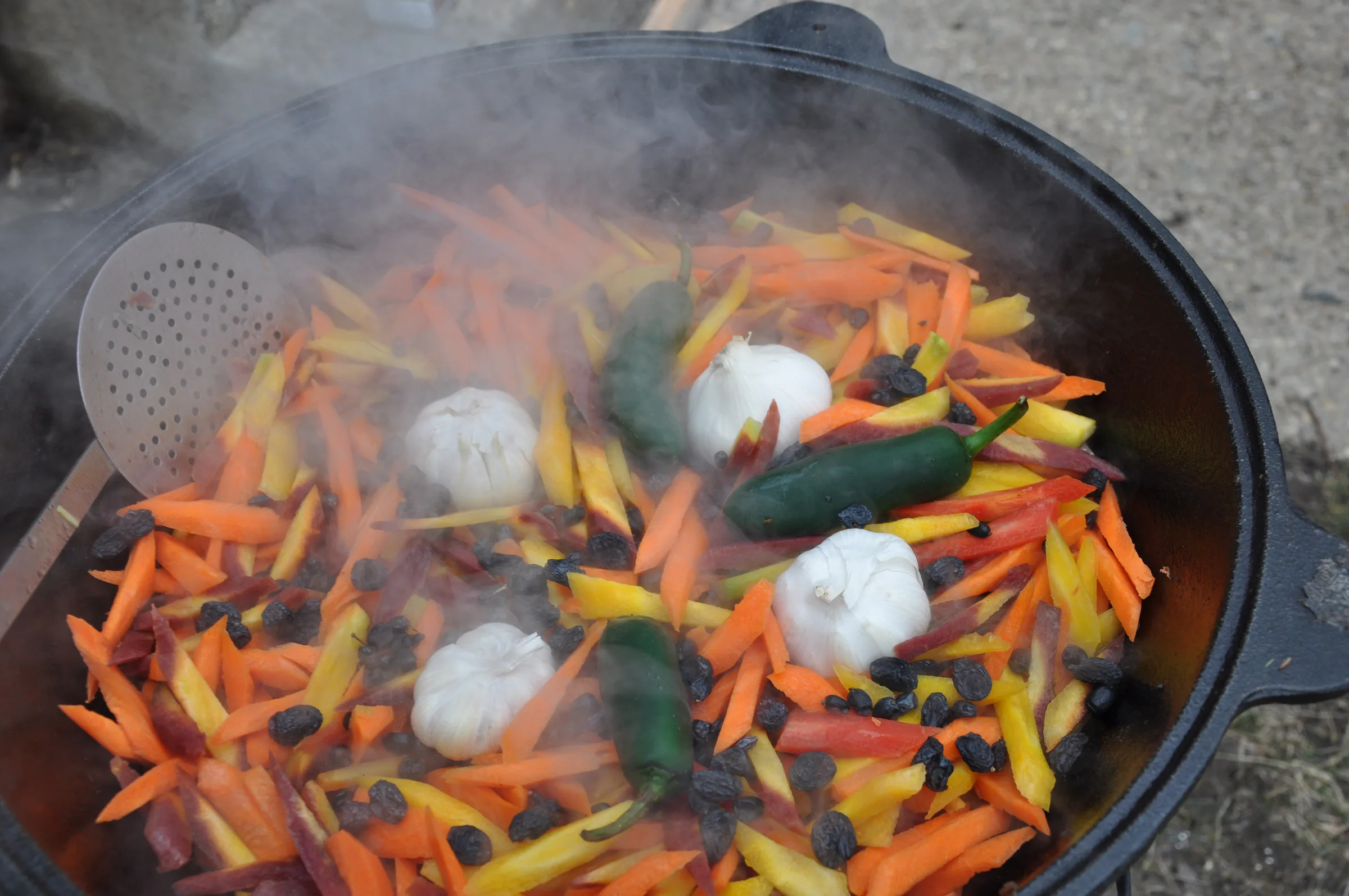
Uzbeks usually call plov simply osh. The method is straightforward: oil is heated in a cast-iron kazan, meat and onions are browned, and matchsticks of yellow carrot go in to make the zirvak, the flavourful base. Washed rice is spread on top, the water is cooked off and the dish is left to steam under a lid. Cumin and dried barberries are almost always used; chickpeas, raisins, quince, whole heads of garlic or quail eggs are common additions. Uzbek reference works list more than 40 kinds of plov, from fried qovurma plov to the festive wedding version.
Cooking plov in a large kazan is traditionally a man’s job, and an oshpaz who can feed several hundred wedding guests is a respected figure in his mahalla.
On the day of a wedding or another big family event, nahor oshi — morning plov — is served at dawn: the men gather early, eat, offer blessings and go on with their day. In 2016 Uzbekistan’s ‘Palov culture and tradition’ was inscribed on UNESCO’s Representative List of the Intangible Cultural Heritage of Humanity.
Every region swears by its own style; Tashkent, Samarkand, Bukhara, Fergana and Khorezm plov each have their own entry here. Plov comes with achichuk, a sharp tomato-and-onion salad, and green tea. City plov canteens often sell out by early afternoon, so go at lunchtime rather than later.
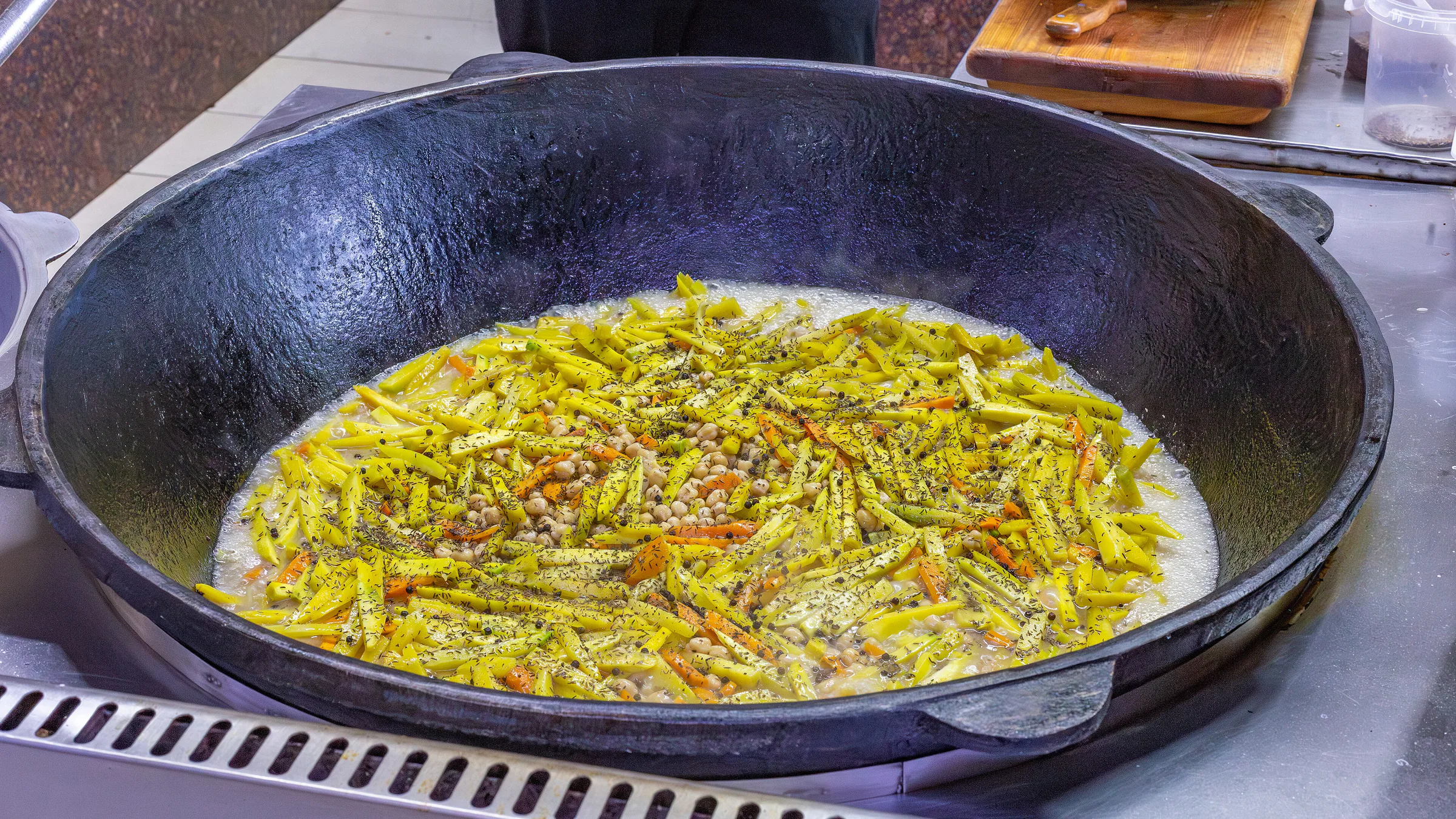
Dish · Tashkent (city), Tashkent Region
The capital’s style of plov: everything is fried first and the rice is mixed into the base; wedding plov adds kazy sausage, chickpeas, raisins and sometimes quail eggs.
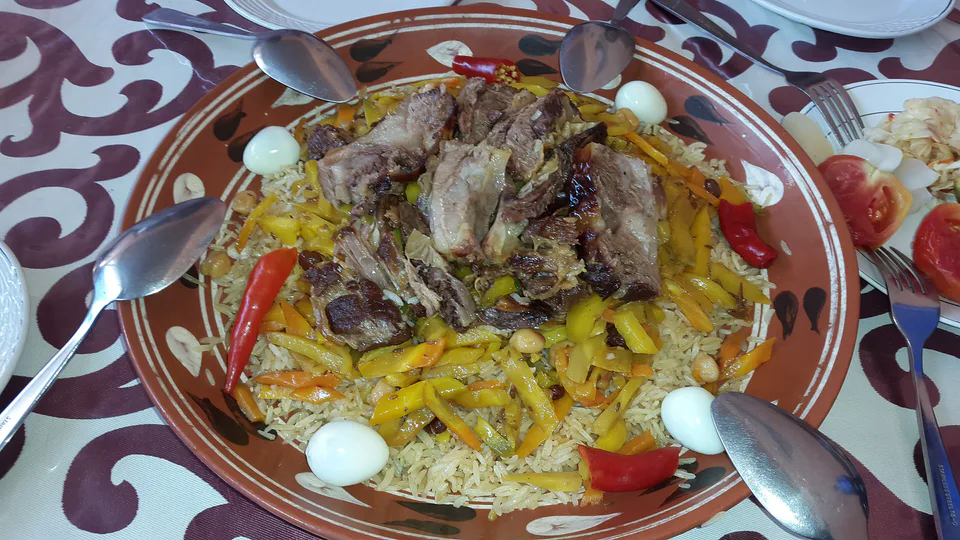
Dish · Samarkand
A layered plov in which nothing is stirred: the rice stays pale, and the carrots and meat are served on top of it.
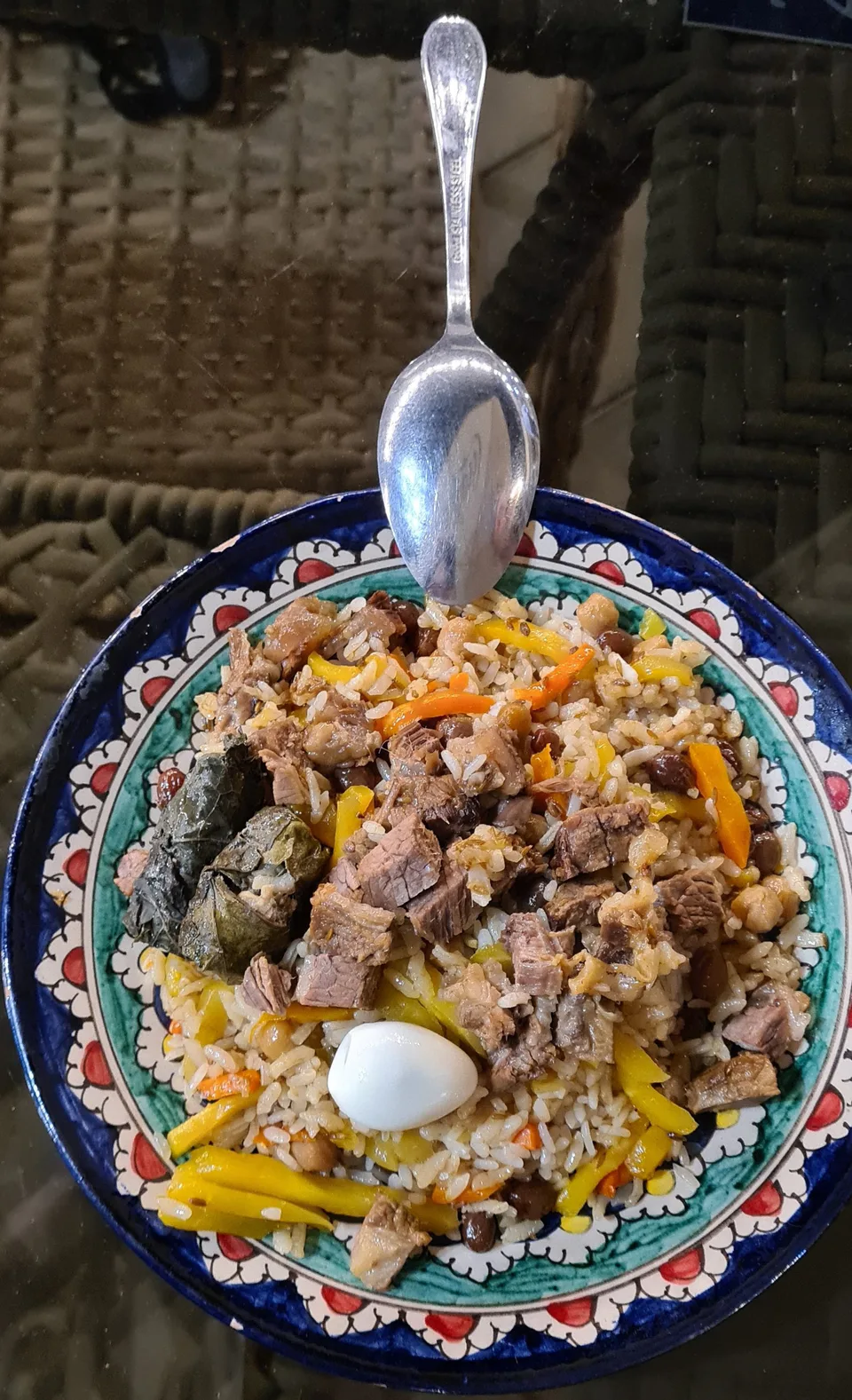
Dish · Bukhara
Bukhara’s own plovs: oshi sofi, made with separately boiled and drained rice, and plov cooked with mung beans.
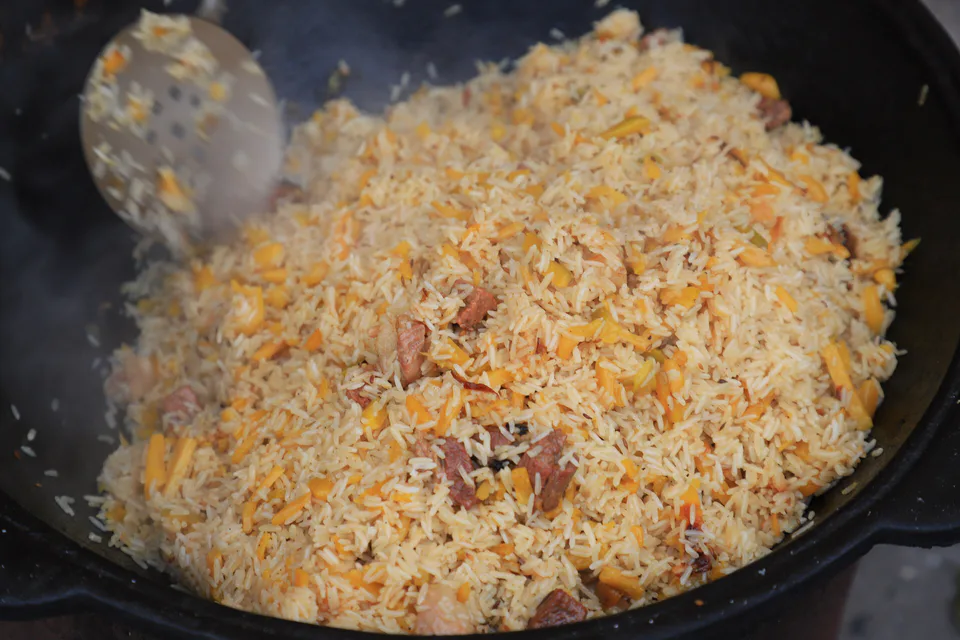
Dish · Fergana, Andijan +1
The dark plov of the Fergana Valley: a bone, meat, onions and carrots are fried long and hard until the zirvak turns deep brown.
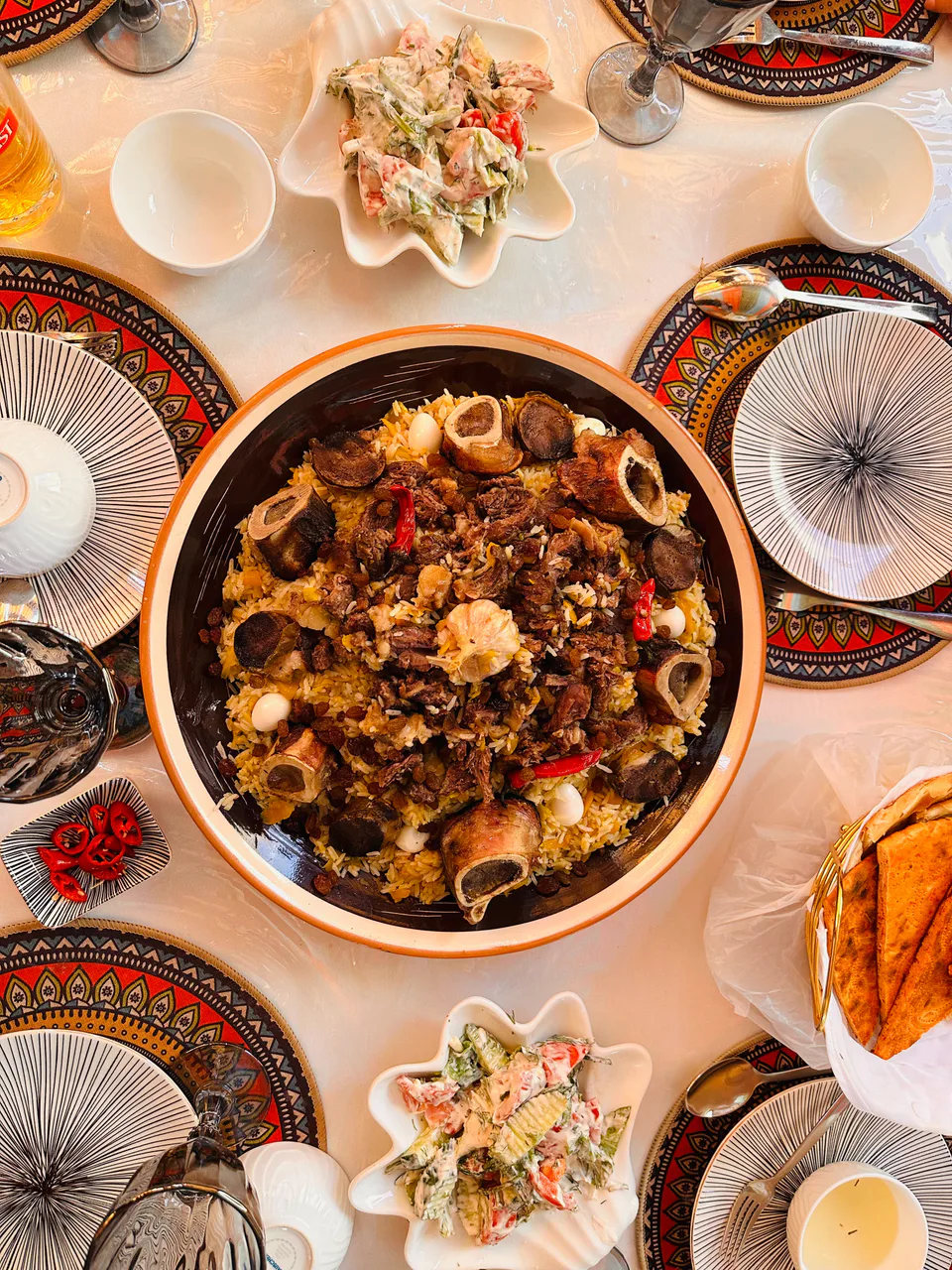
Dish · Khorezm
Khorezm’s plov tradition, including suzma palov, in which the rice is boiled separately and drained before it meets the zirvak.
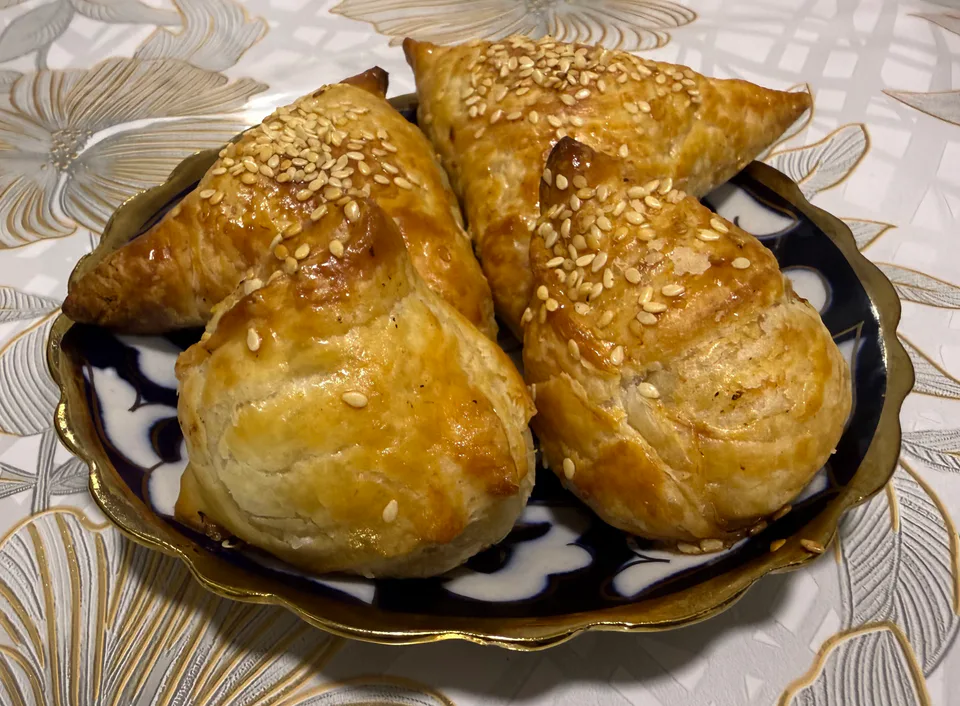
Dish · Nationwide
Flaky pastries baked on the inner wall of a tandoor, filled with hand-chopped lamb, tail fat and onion — or wild greens in spring and pumpkin in autumn.
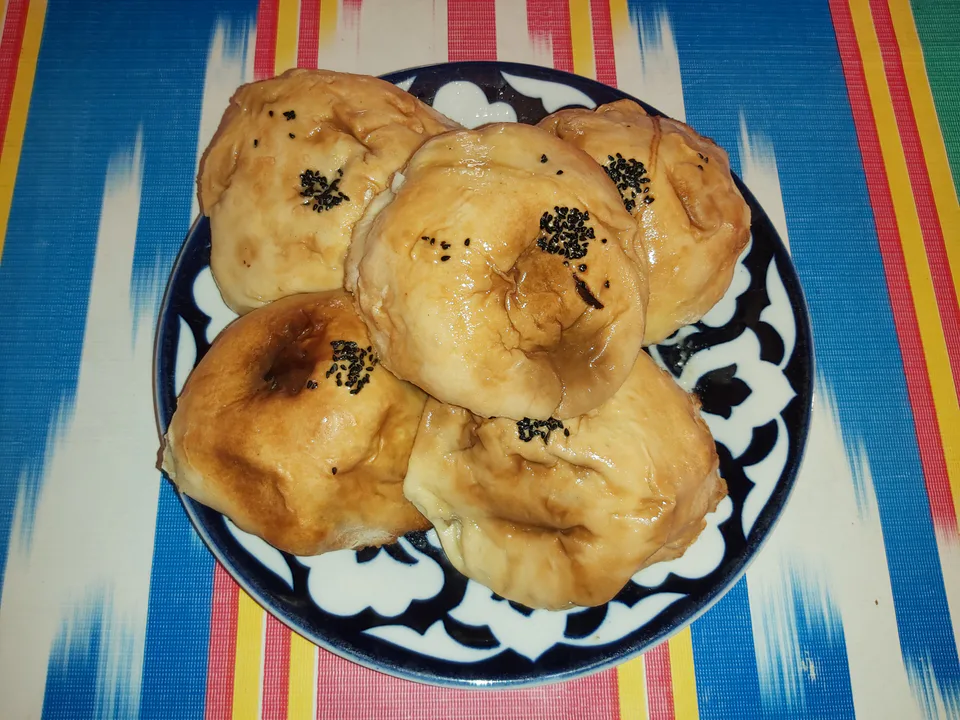
Dish · Jizzakh
Jizzakh’s culinary calling card: a large dome-shaped samsa made from three layers of dough, packed with lamb and tail fat and dipped in sunflower oil.
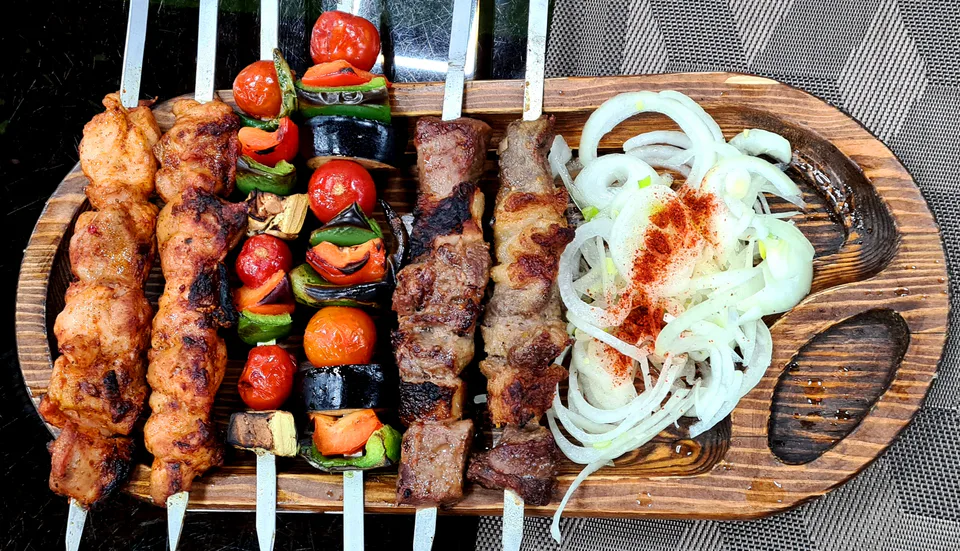
Dish · Nationwide
Skewered meat grilled over embers — lamb, beef, meat with tail fat, liver, minced qiyma (lula) kabob — served with onion, vinegar and hot bread.
Dish · Bukhara
The famous minced-meat kebab of Gijduvan in Bukhara Region: the meat is minced twice, frozen, chopped and pressed onto skewers.
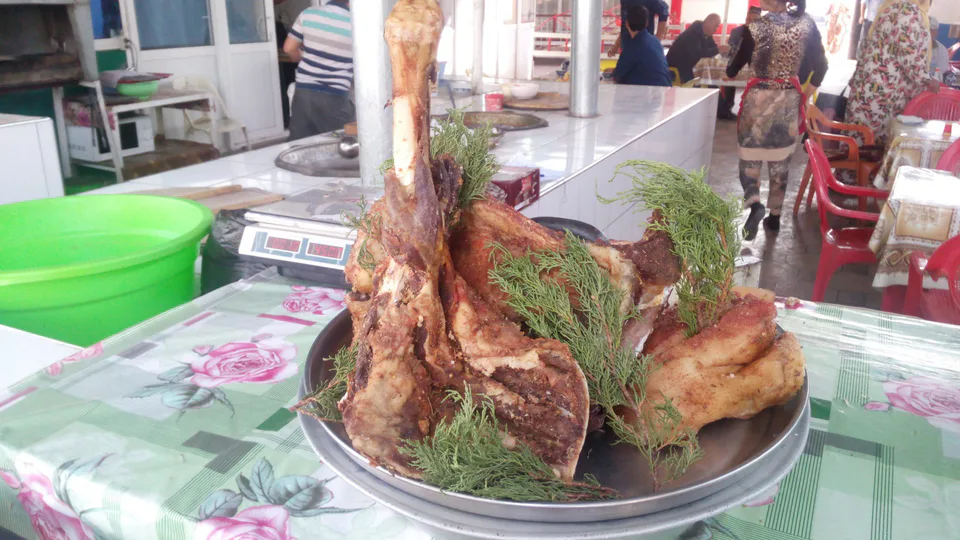
Dish · Kashkadarya, Surkhandarya +1
The pride of Kashkadarya, Surkhandarya and Jizzakh: lamb slow-cooked for hours in a sealed tandoor with juniper branches.