Craft · Fergana
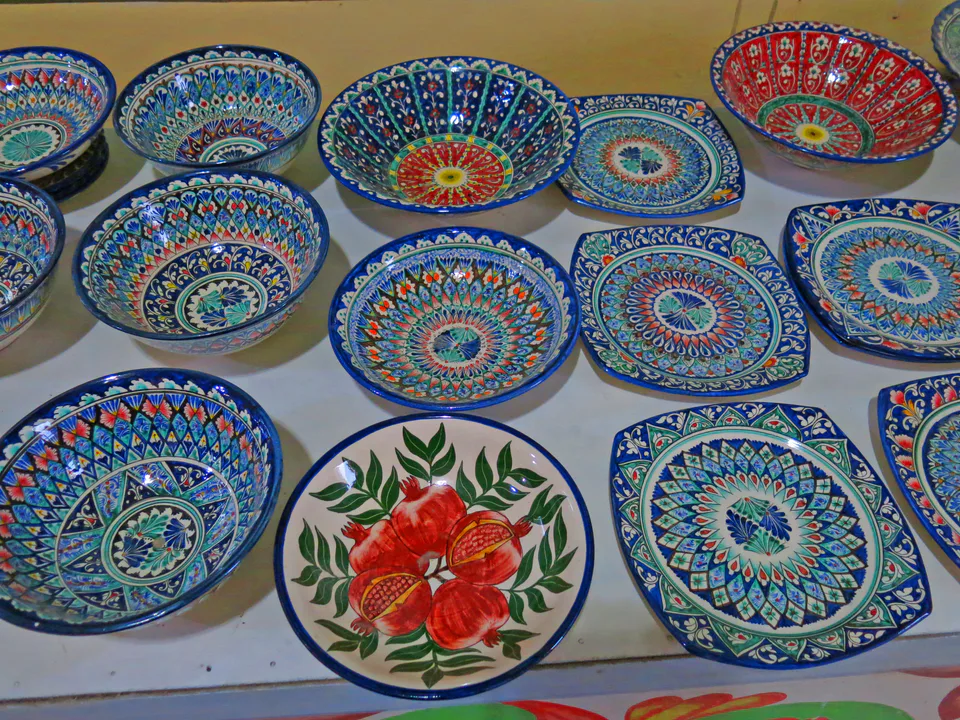
Rishtan ceramics
The blue and turquoise pottery of Rishtan in the Fergana Valley, famed for its ishkor glaze made from plant ash and its local red clay.
Craft · Nationwide
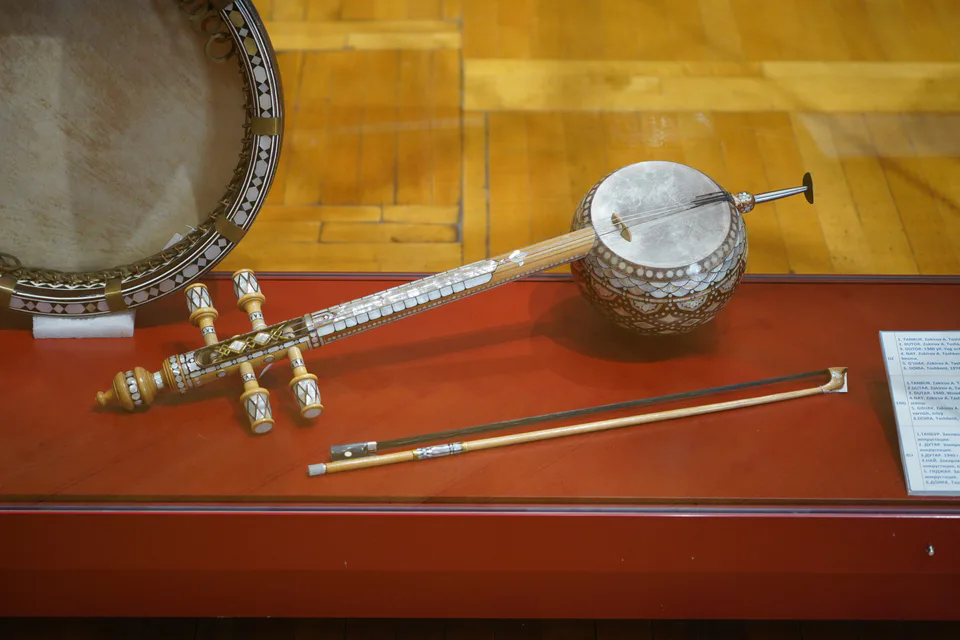
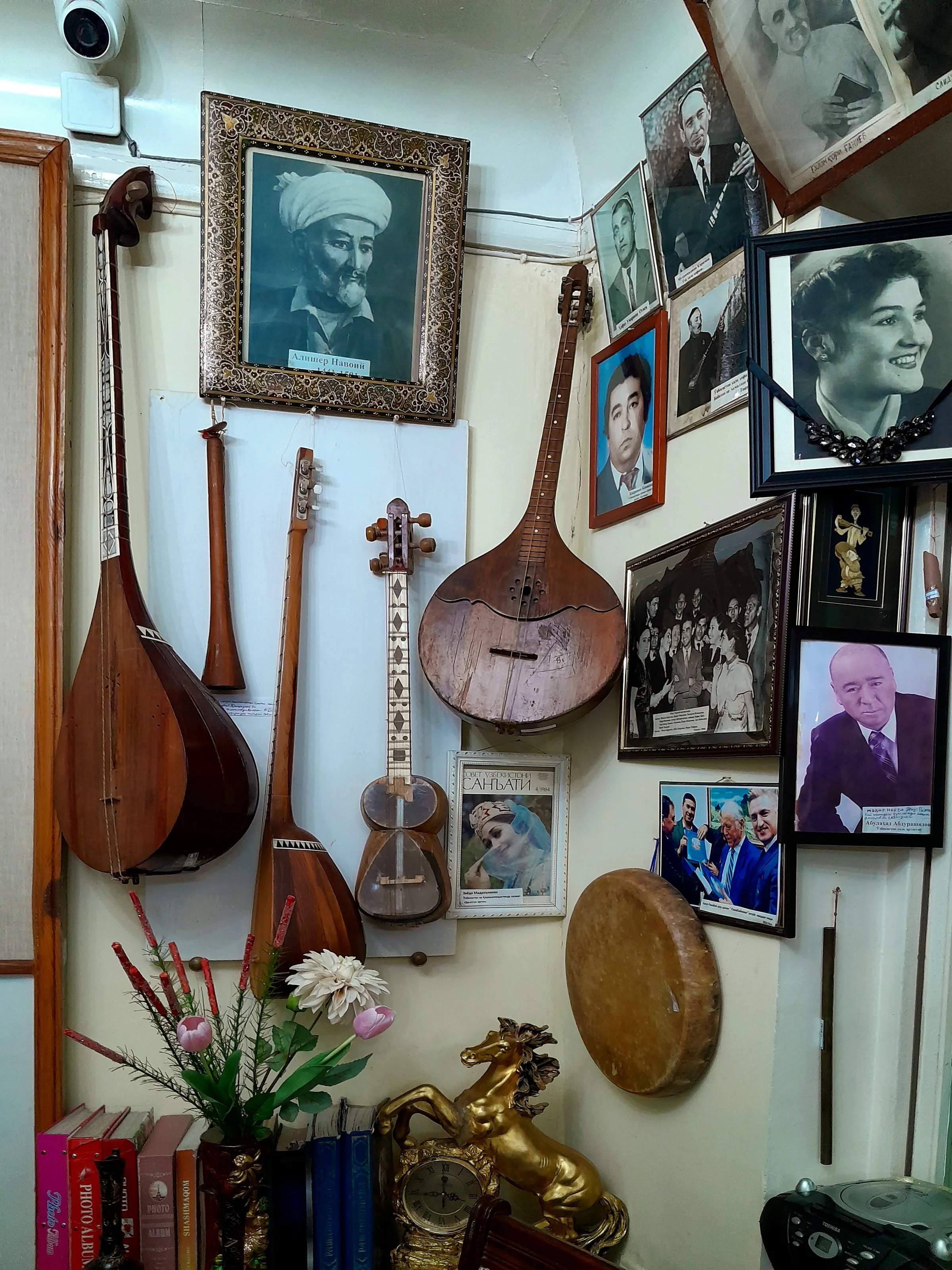
Rubabs, dutars and tanburs carved from mulberry wood, bowed g‘ijjaks and kobyz — a craft that combines joinery, carving and inlay.
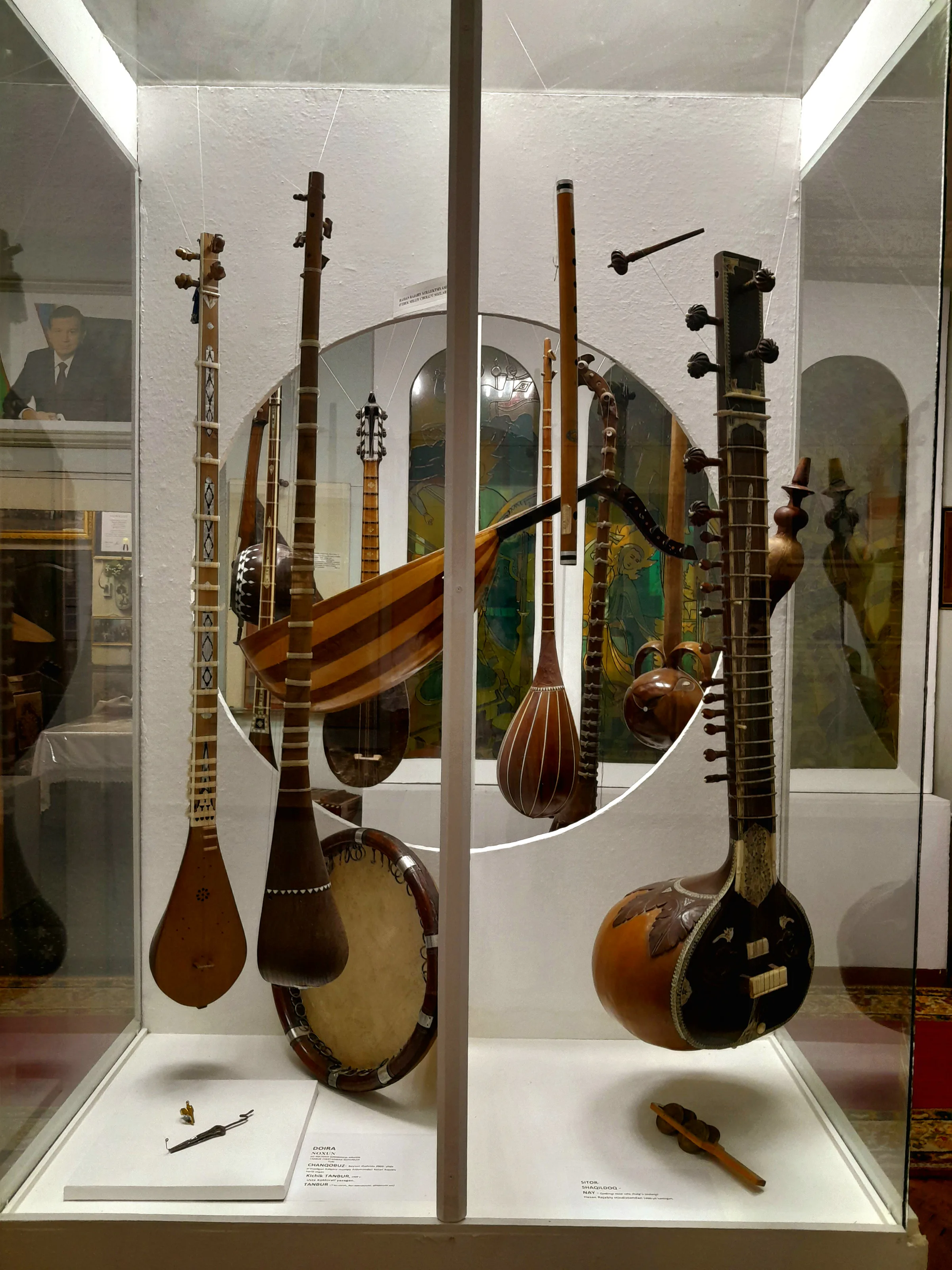
The core instruments of Uzbek music are the plucked dutar, tanbur and rubab, the bowed g‘ijjak, the doira frame drum, and the nay flute, karnay trumpet and surnay shawm. The dutar (Persian for ‘two strings’) is a long-necked lute with a soft, delicate voice, played by Uzbeks, Tajiks, Uyghurs, Turkmen and Karakalpaks. The rubab comes in Kashgar, Afghan and Pamiri forms, and the Afghan rubab is also known as the ‘Bukhara rubab’.
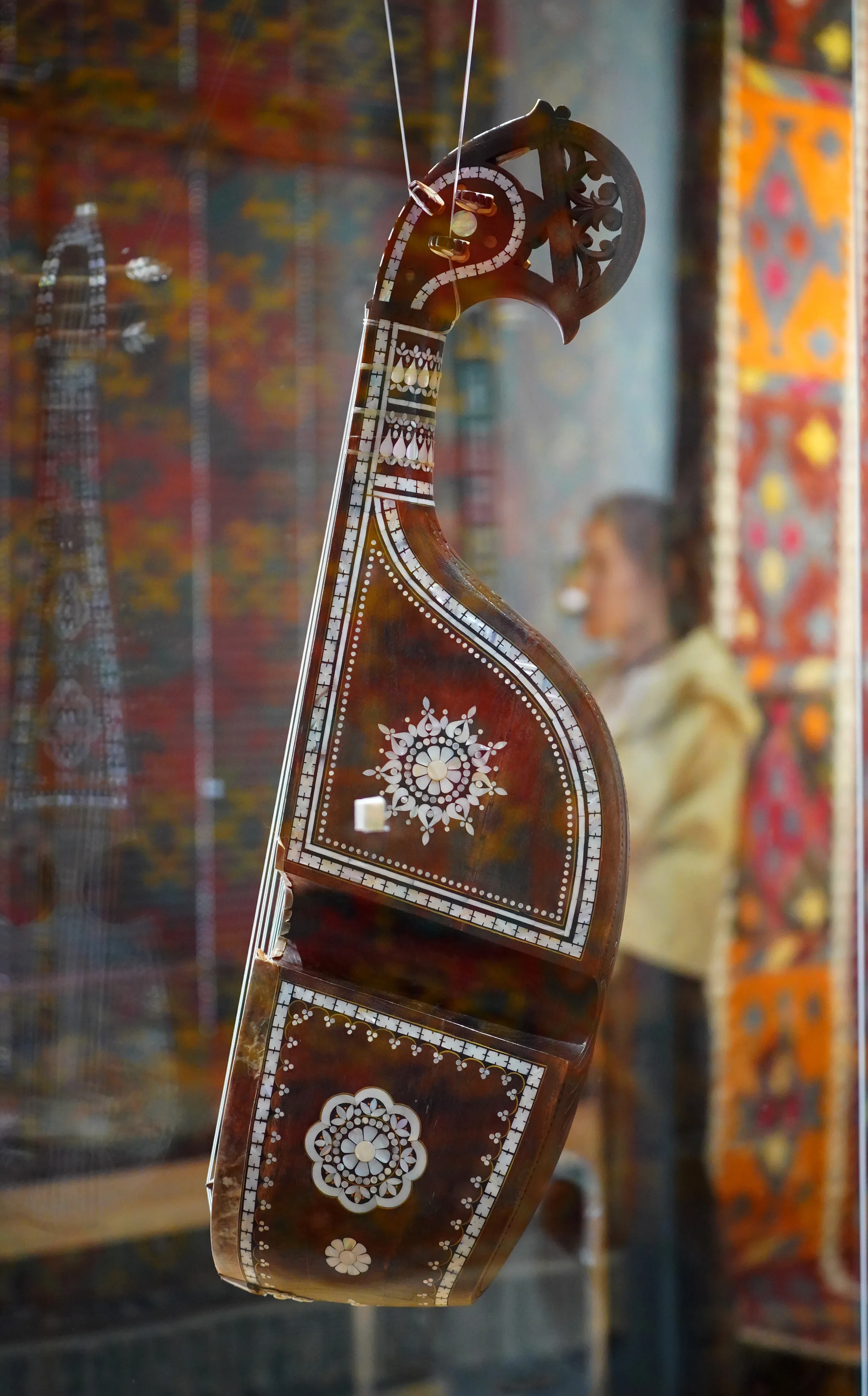
In 2024 the ‘Art of crafting and playing rubab’ was inscribed by UNESCO as a joint nomination of Afghanistan, Iran, Tajikistan and Uzbekistan. UNESCO notes that the rubab is made from dried mulberry wood and that the craft involves carpentry, woodcarving, marquetry and inlay, usually passed down in families from master to apprentice.
The art of making and playing the Karakalpaks’ ancient kobyz, a bowed instrument strung with horsehair and the traditional companion of jyrau epic singers, was added to UNESCO’s List of Intangible Cultural Heritage in Need of Urgent Safeguarding in 2025. Instrument makers work in Tashkent, Bukhara, the Fergana Valley and Nukus; their workshops let you see an instrument take shape and buy a small doira or dutar as a gift. Ask the seller for paperwork if you plan to take an instrument abroad.
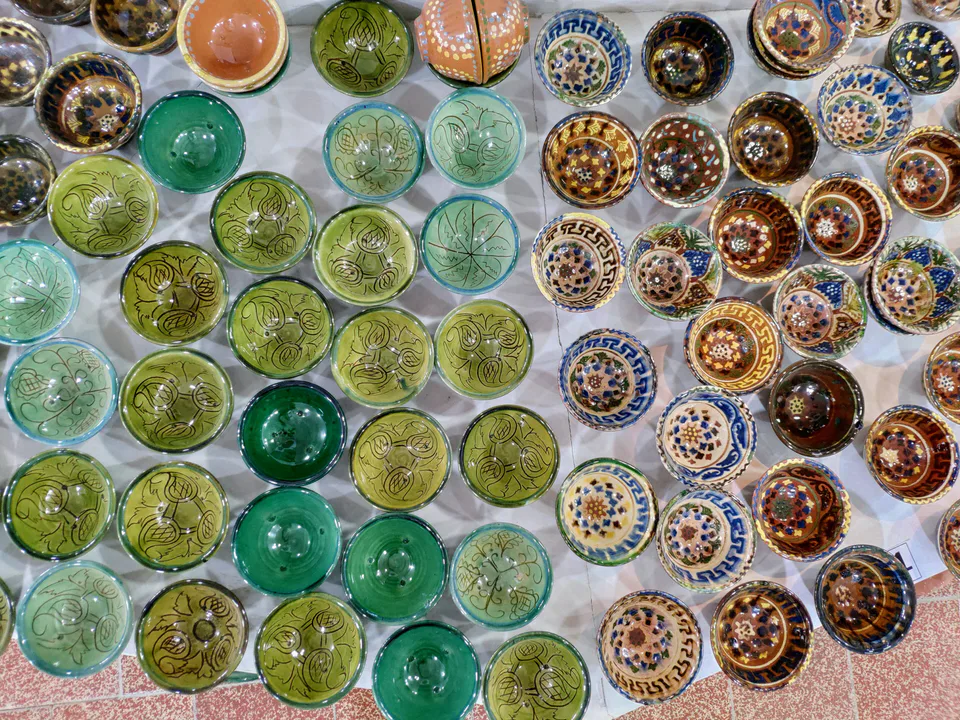
Craft · Fergana
The blue and turquoise pottery of Rishtan in the Fergana Valley, famed for its ishkor glaze made from plant ash and its local red clay.
Craft · Bukhara
Pottery from Gijduvan near Bukhara, glazed in browns, yellows and greens — the best-known centre of the Bukhara–Samarkand school.
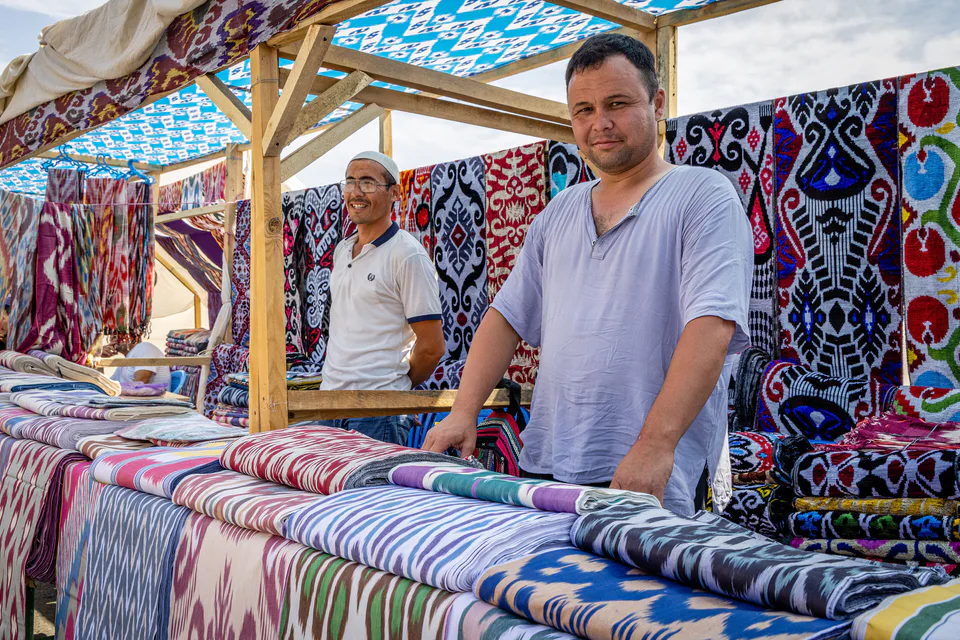
Craft · Fergana
Margilan’s ikat silks: pure-silk atlas and half-silk adras. UNESCO recognises the town’s work to safeguard them as a model practice.
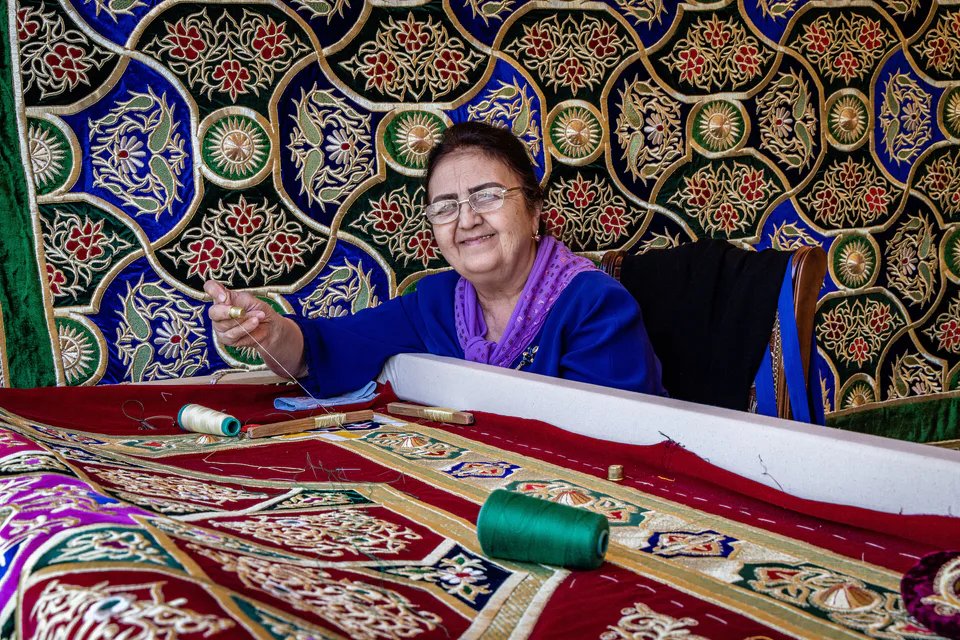
Craft · Bukhara
Embroidery in gold and silver thread on velvet and silk — the art of the Bukhara emirs’ court and still the city’s most precious craft.
Craft · Khorezm
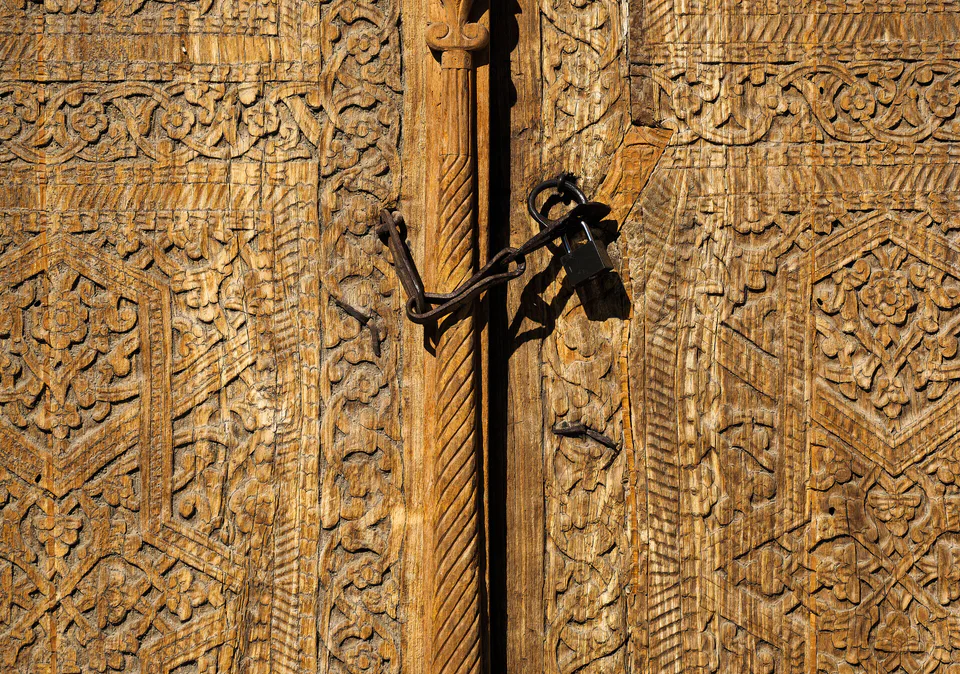
The carved doors and columns of Itchan Kala: Khiva’s carvers never paint the wood, finishing it only with natural oil; the Juma Mosque alone has more than 200 columns.
Craft · Namangan
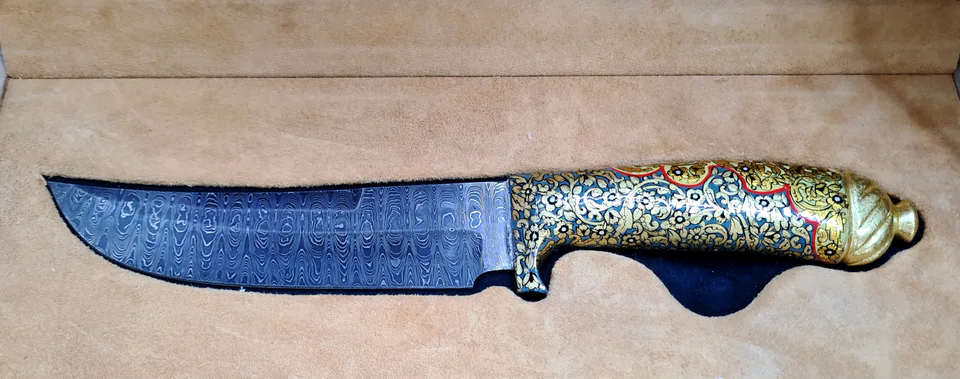
Hand-forged knives from Chust in Namangan Region: a blade with a slightly upturned tip, the maker’s stamped ‘signature’ and a decorated sheath.
Craft · Namangan
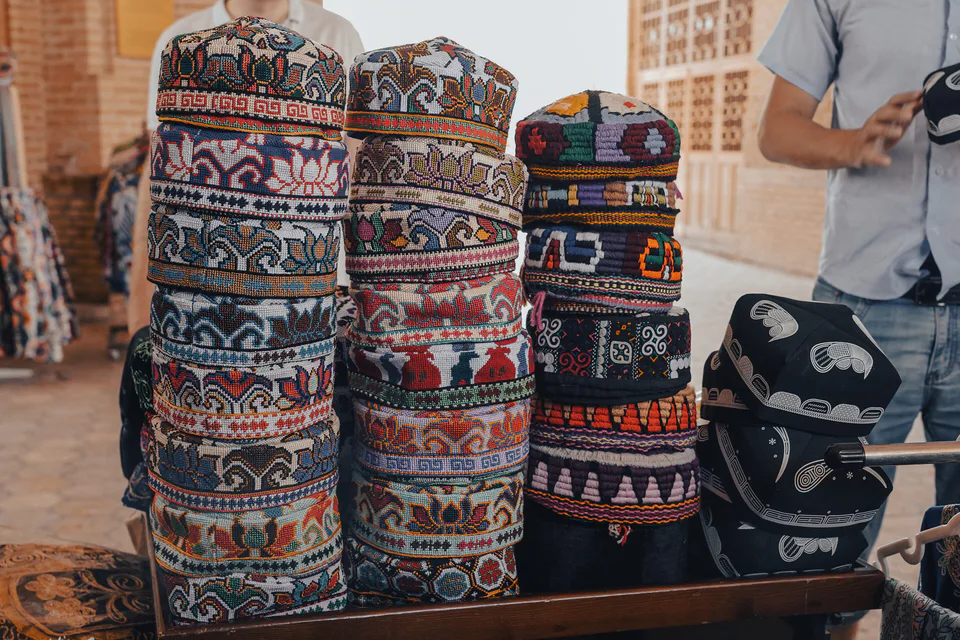
The four-sided Chust skullcap, with white pepper-pod motifs on dark green, is the best-known emblem of Uzbek dress — and every oasis has its own doppi.
Craft · Samarkand
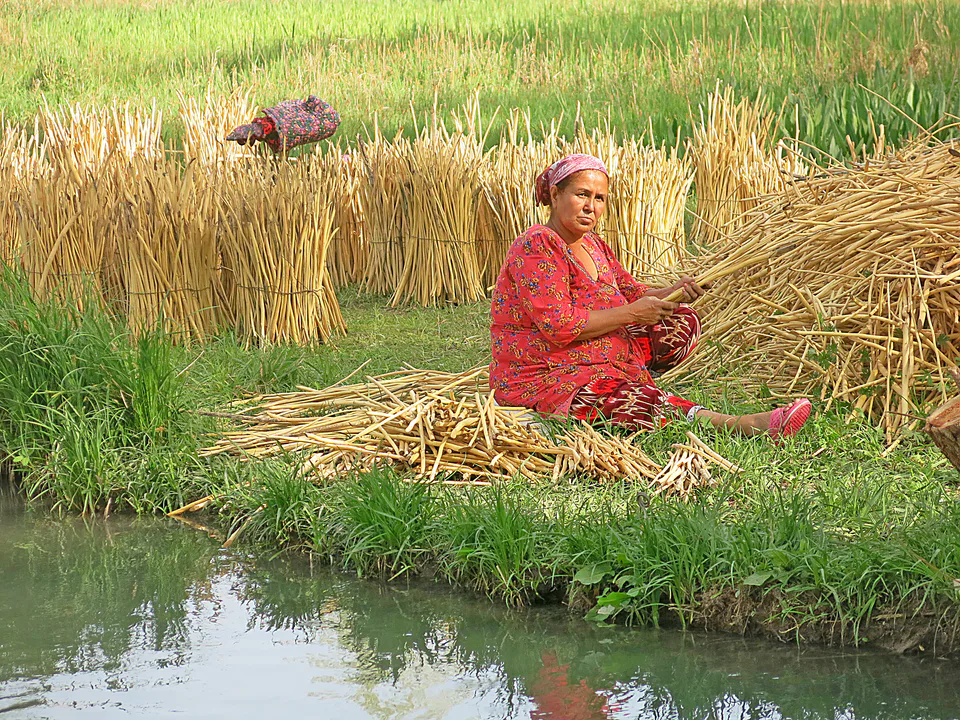
Paper made from mulberry bark — the finest writing material of the 9th–10th-century Islamic world, revived at Konigil at the end of the 20th century.
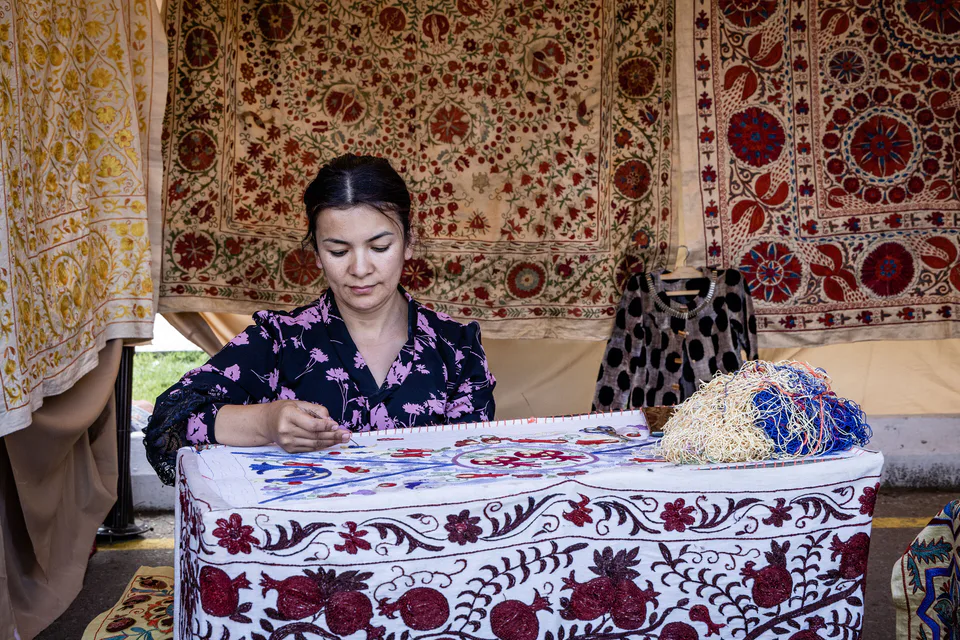
Craft · Bukhara
Large hand-embroidered hangings called suzani; the Bukhara school is known for fine designs covering almost the whole cloth in reds and greens on a pale ground.
Craft · Navoiy
Embroideries from Nurata in Navoiy Region: realistic sprays of carnations, irises, cotton flowers and cherries on a pale ground around a central eight-pointed star.