Dish · Nationwide
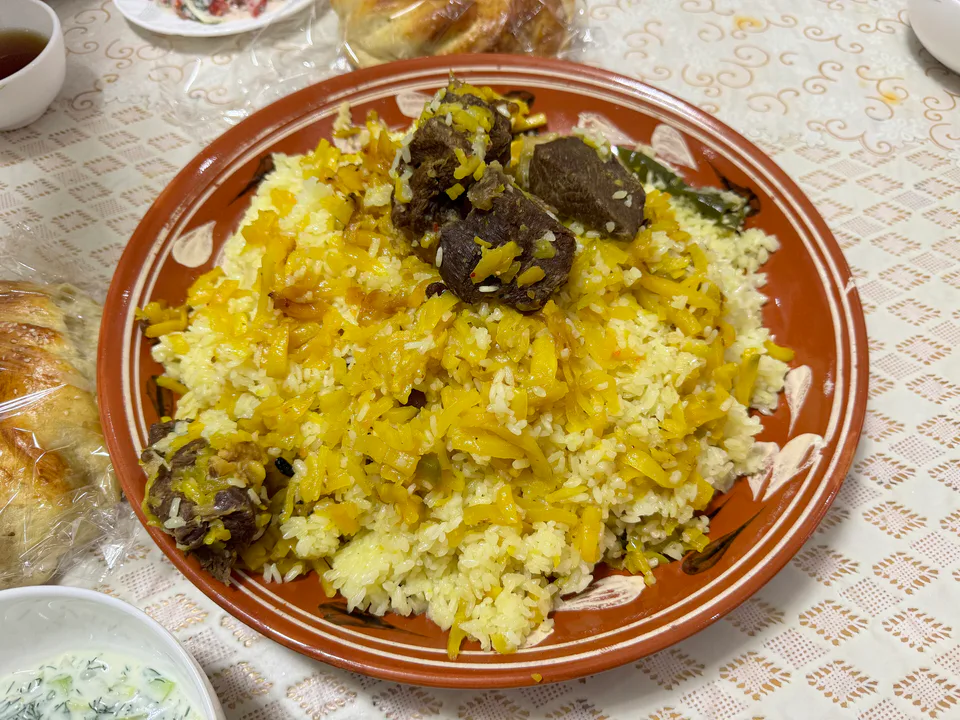
Plov (osh)
The centrepiece of any Uzbek meal: meat, onions and yellow carrots are cooked into a rich base in a kazan, then rice is steamed on top. UNESCO-listed since 2016.
Dish · Nationwide
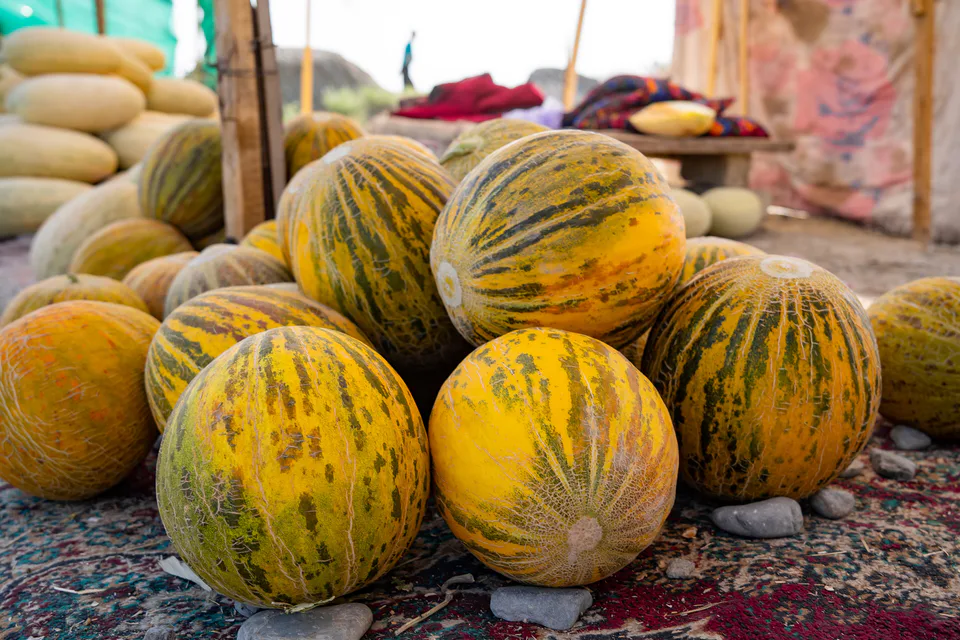
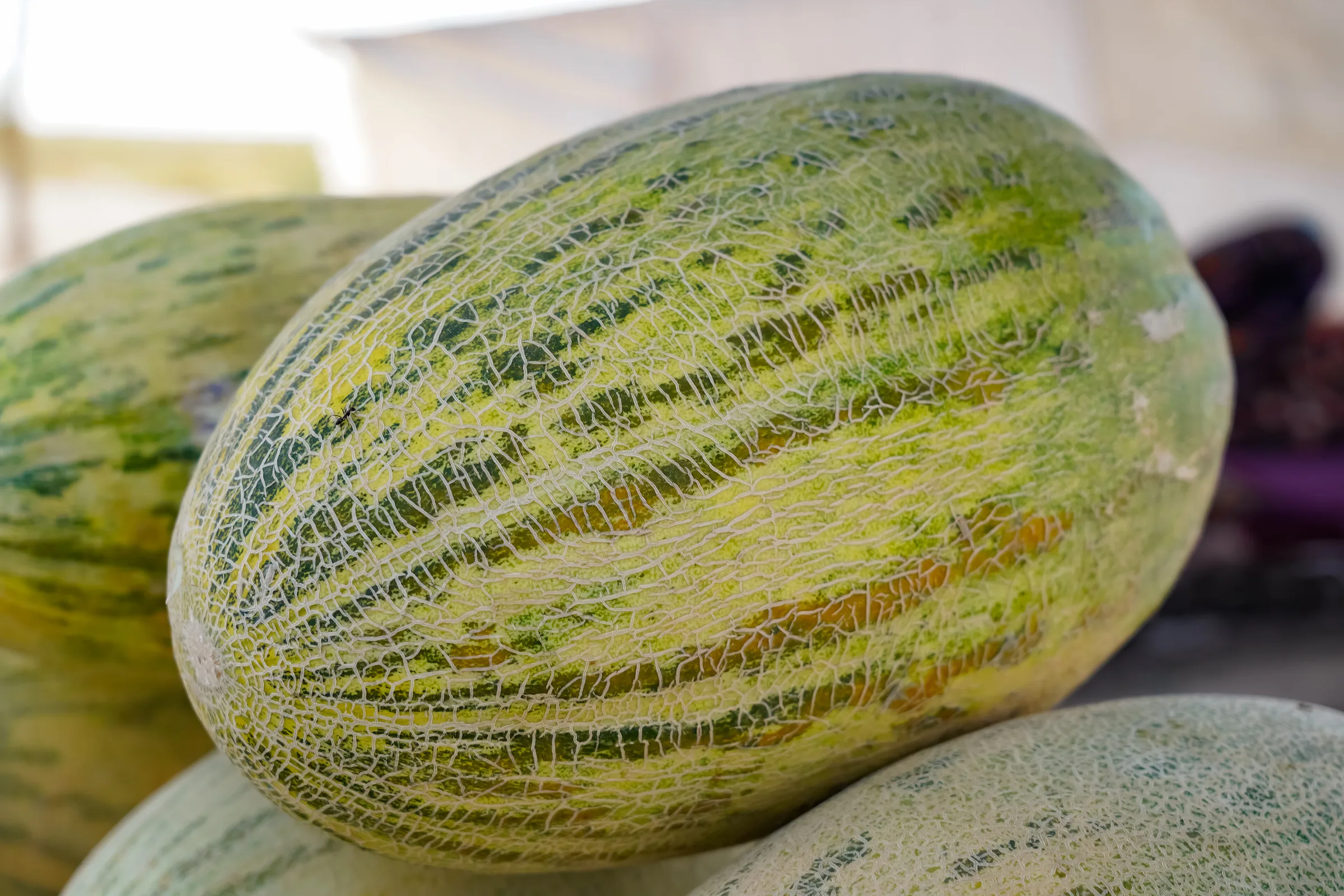
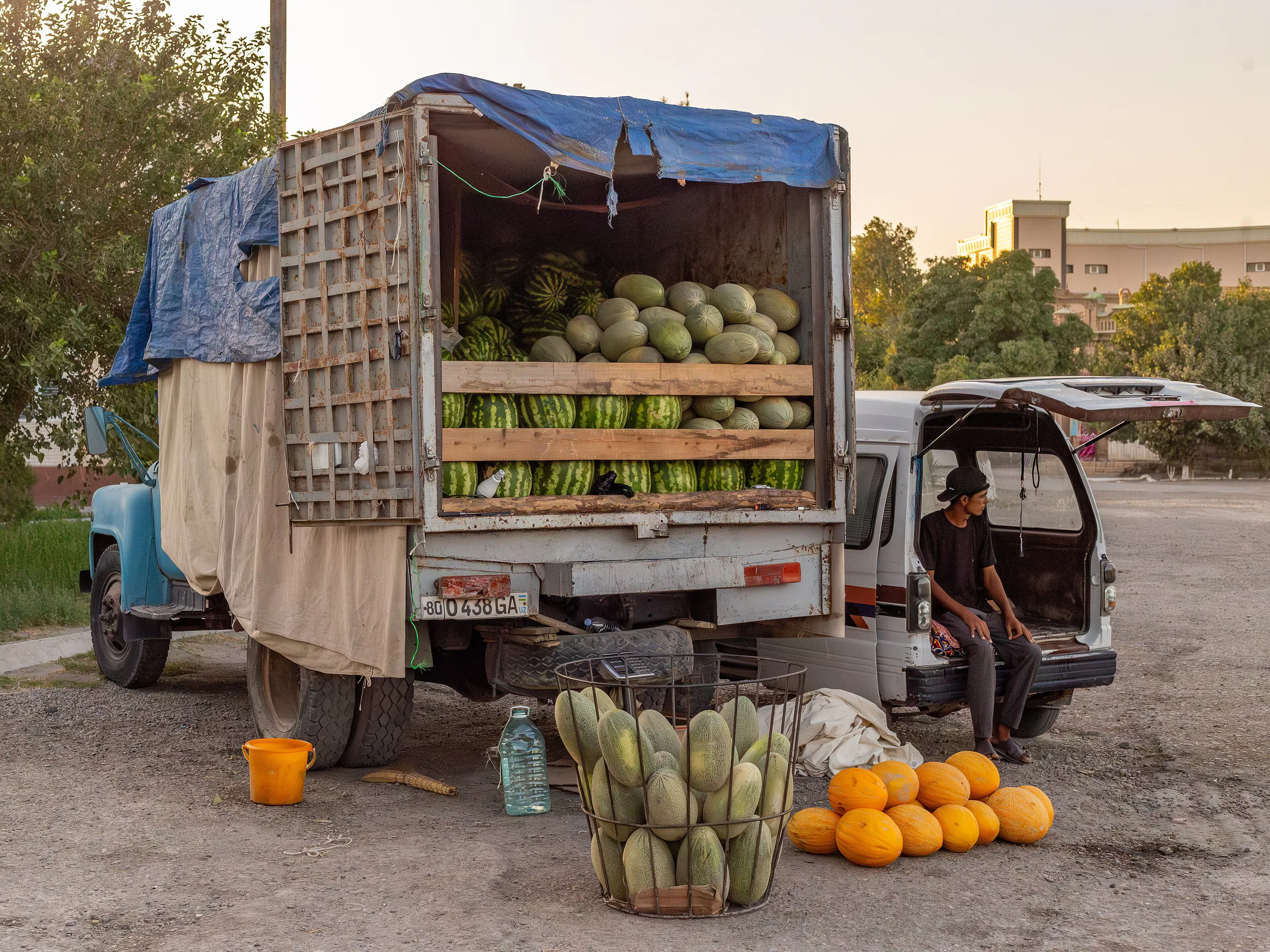
Folk breeding has produced more than 150 varieties of melon, the taste of the Uzbek summer — from early handalak to winter-keeping zard types.
Melons have been grown in Central Asia for two thousand years and cover more land than any other gourd crop. Uzbek sources say folk breeding has produced more than 150 varieties, over 50 of them officially zoned. They fall into four groups: early handalak (Ko‘kcha, Handalak, yellow handalak, Zamcha), summer amiri (Davlatboy, Toshloqi, Dahbedi), kassaba (Bo‘rikalla, Gurvak) and winter-keeping zard (Umrboqiy, Qo‘ybosh, Gulobi).
Early varieties ripen in 55–65 days and late ones in 80–90, so bazaars have melons from June until late autumn.
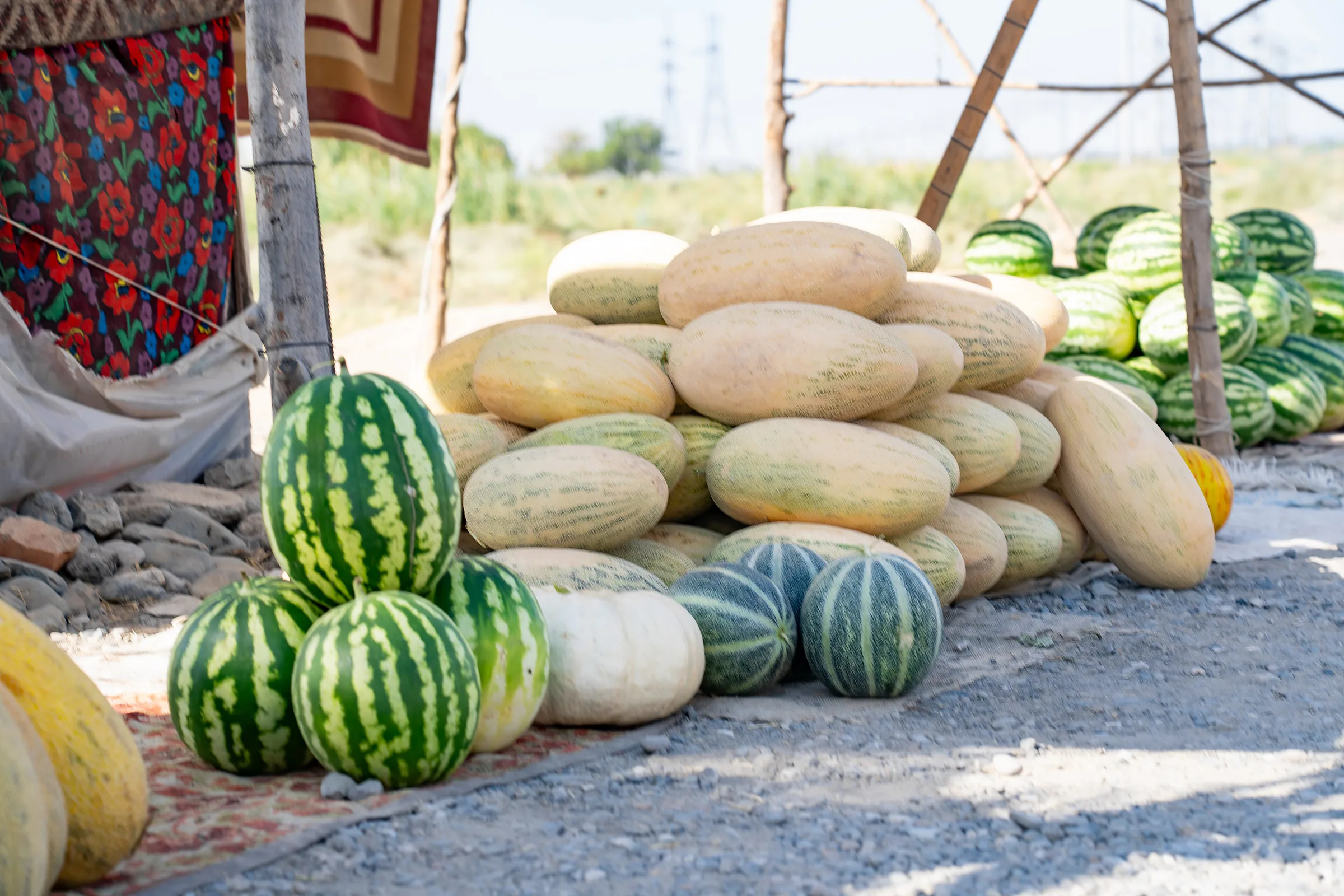
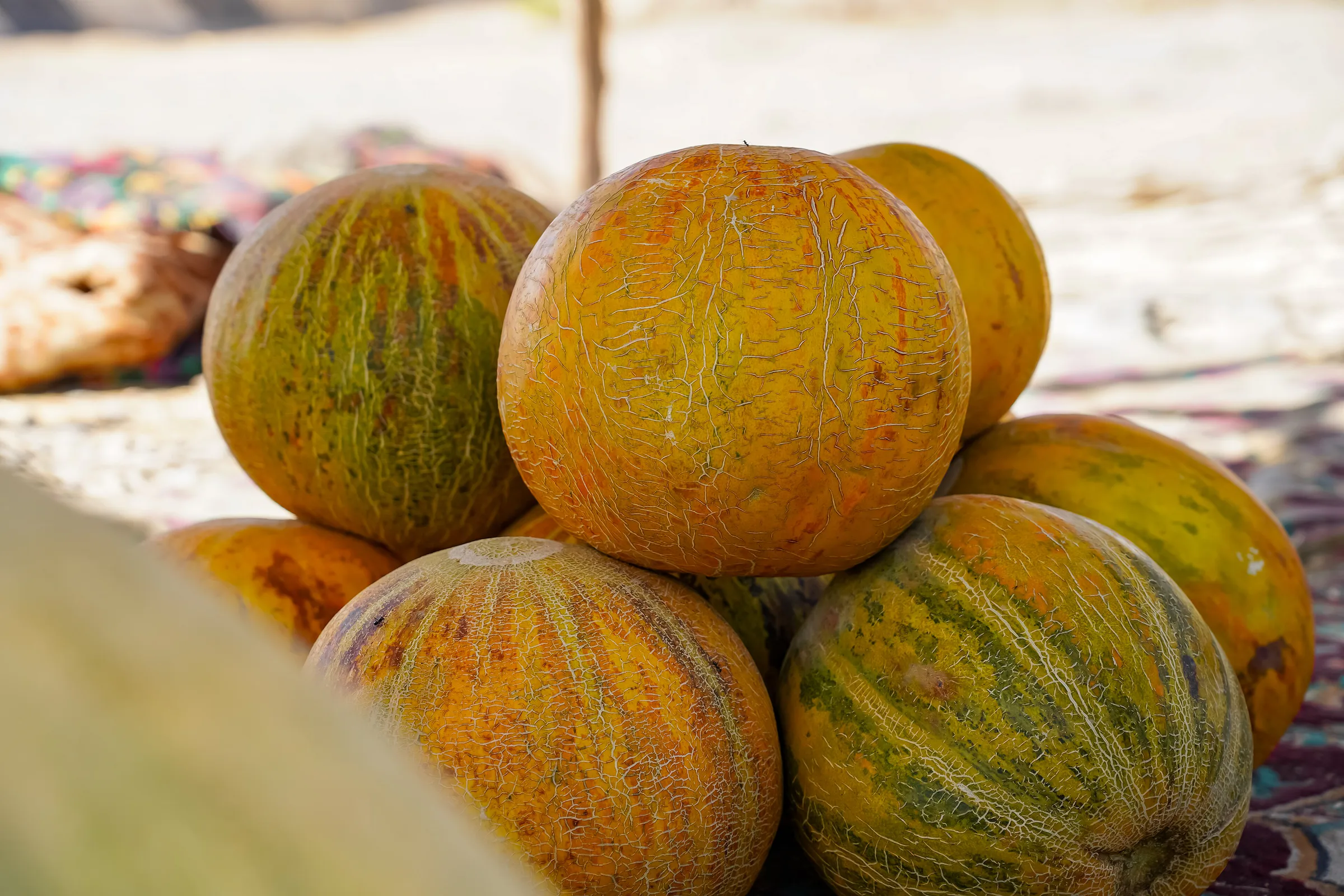
Melons are eaten fresh, dried, or boiled into shinni syrup and preserves. In summer, roadside and bazaar mountains of melons are a familiar sight, and the seller will pick one, cut it and let you taste. Khorezm melons are especially famous: Khiva holds a Melon Festival (Qovun sayli) in August — the 2026 edition was scheduled for 7–9 August at the Arda Khiva complex.
Dish · Nationwide
The centrepiece of any Uzbek meal: meat, onions and yellow carrots are cooked into a rich base in a kazan, then rice is steamed on top. UNESCO-listed since 2016.
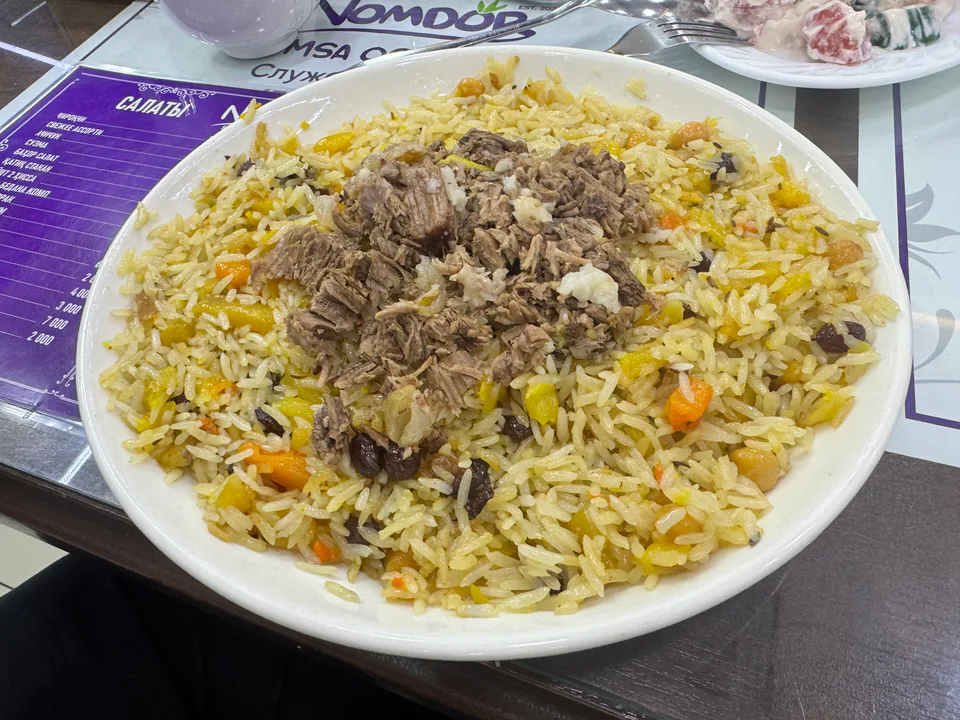
Dish · Tashkent (city), Tashkent Region
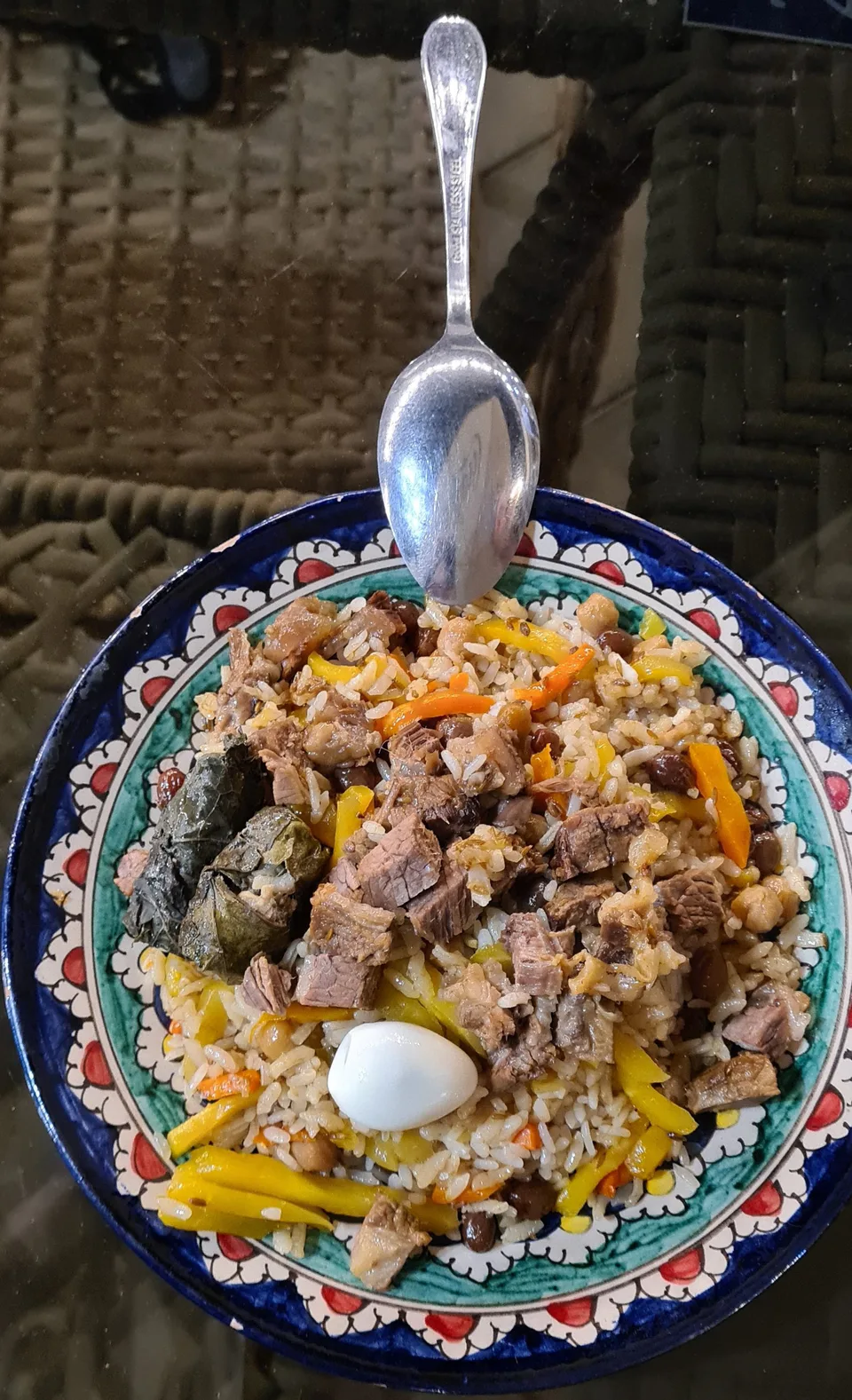
The capital’s style of plov: everything is fried first and the rice is mixed into the base; wedding plov adds kazy sausage, chickpeas, raisins and sometimes quail eggs.
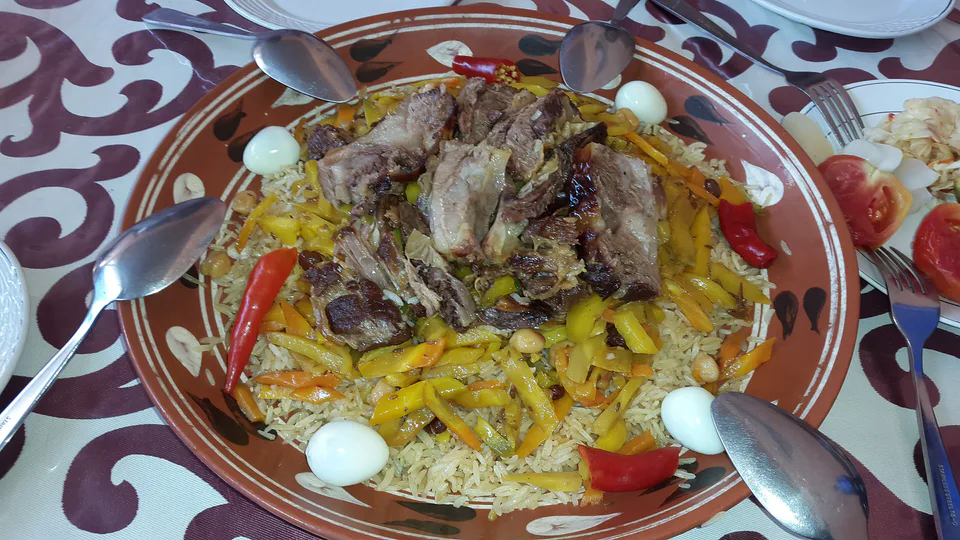
Dish · Samarkand
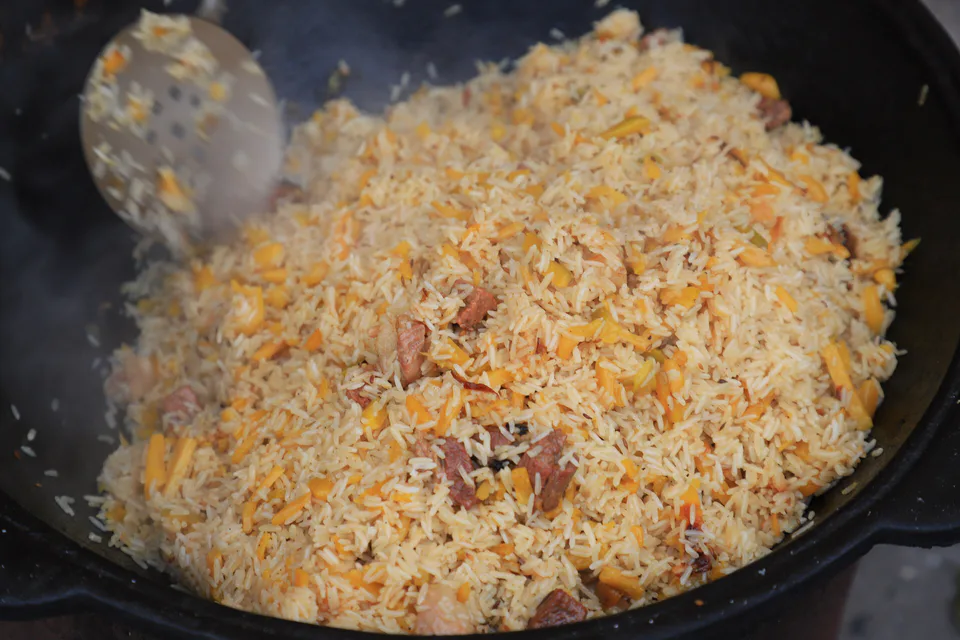
A layered plov in which nothing is stirred: the rice stays pale, and the carrots and meat are served on top of it.
Dish · Bukhara
Bukhara’s own plovs: oshi sofi, made with separately boiled and drained rice, and plov cooked with mung beans.
Dish · Fergana, Andijan +1
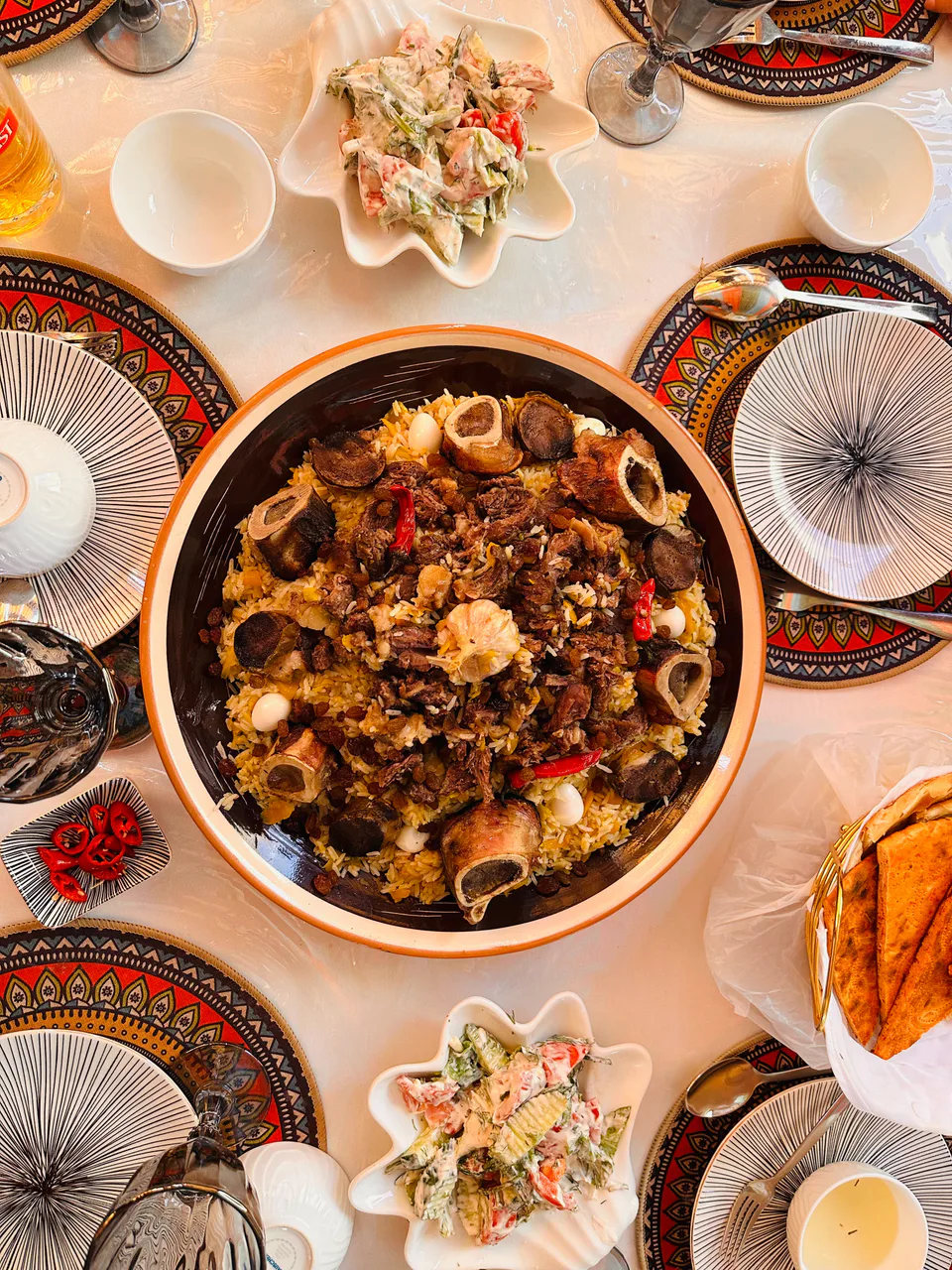
The dark plov of the Fergana Valley: a bone, meat, onions and carrots are fried long and hard until the zirvak turns deep brown.
Dish · Khorezm
Khorezm’s plov tradition, including suzma palov, in which the rice is boiled separately and drained before it meets the zirvak.
Dish · Nationwide
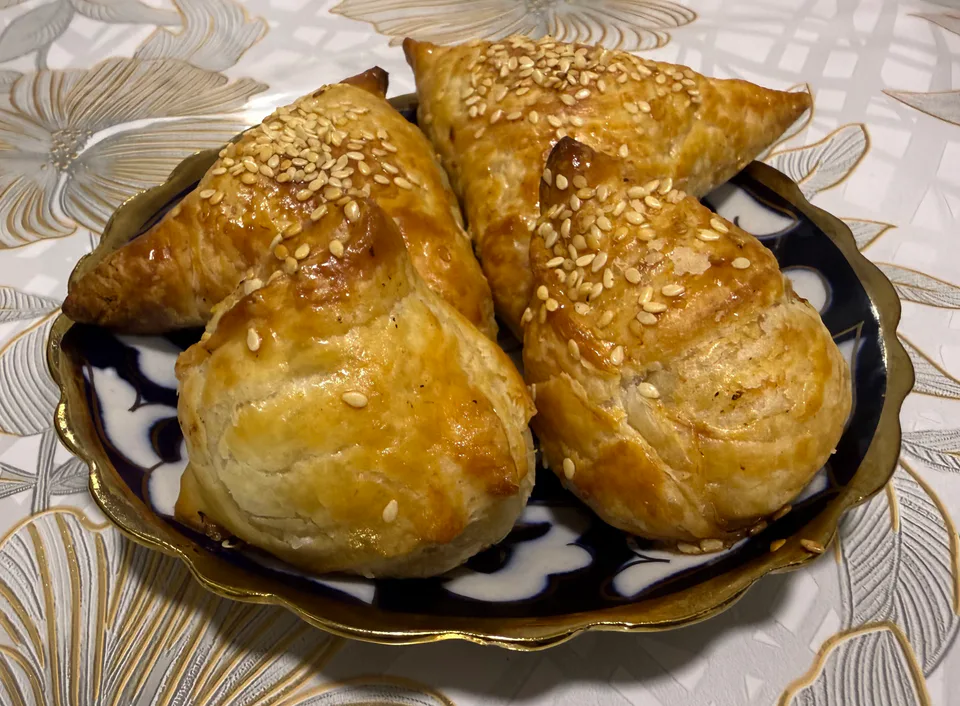
Flaky pastries baked on the inner wall of a tandoor, filled with hand-chopped lamb, tail fat and onion — or wild greens in spring and pumpkin in autumn.
Dish · Jizzakh
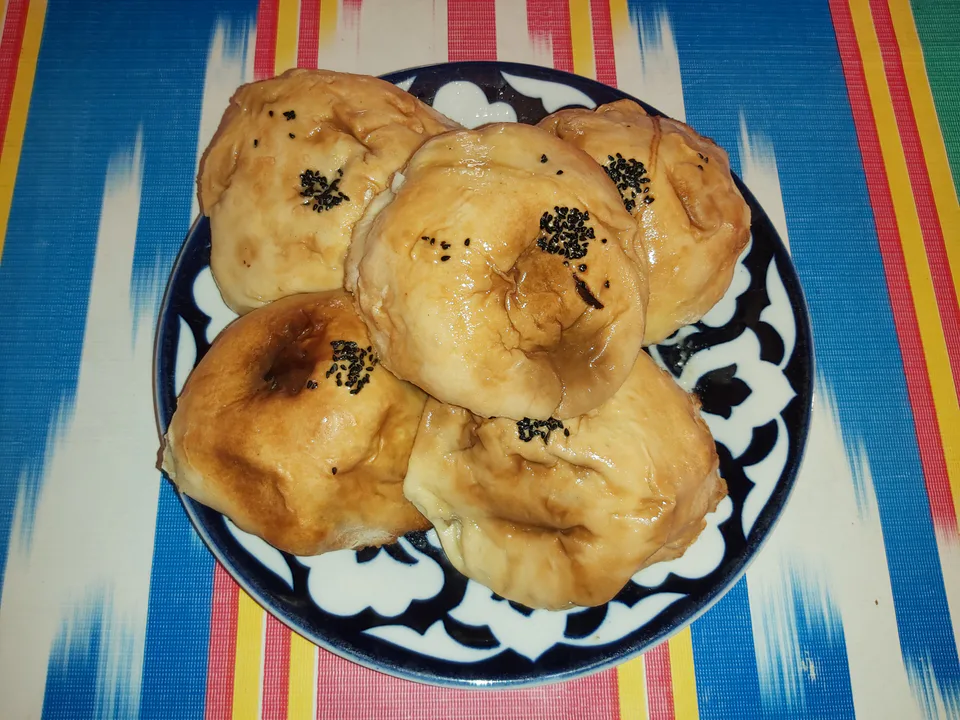
Jizzakh’s culinary calling card: a large dome-shaped samsa made from three layers of dough, packed with lamb and tail fat and dipped in sunflower oil.
Dish · Nationwide
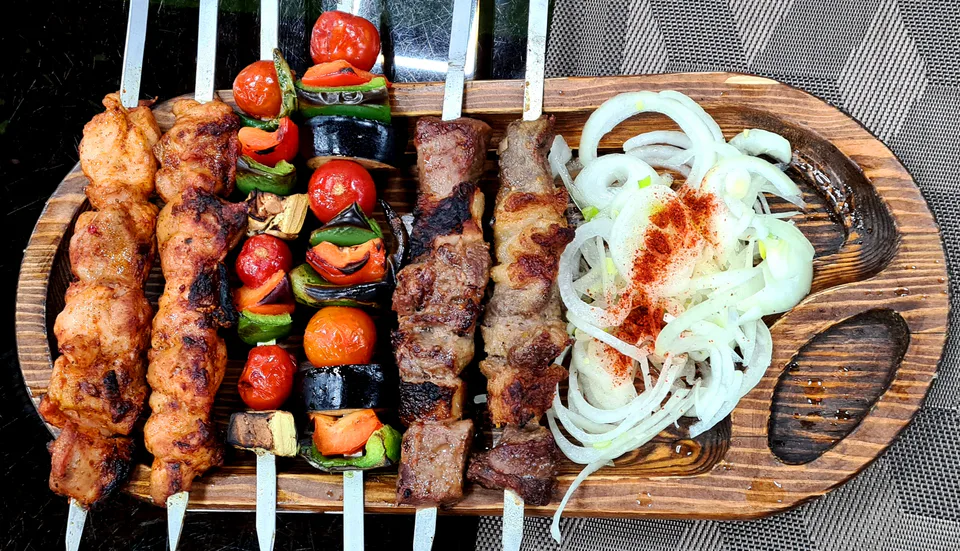
Skewered meat grilled over embers — lamb, beef, meat with tail fat, liver, minced qiyma (lula) kabob — served with onion, vinegar and hot bread.
Dish · Bukhara
The famous minced-meat kebab of Gijduvan in Bukhara Region: the meat is minced twice, frozen, chopped and pressed onto skewers.