Craft · Fergana
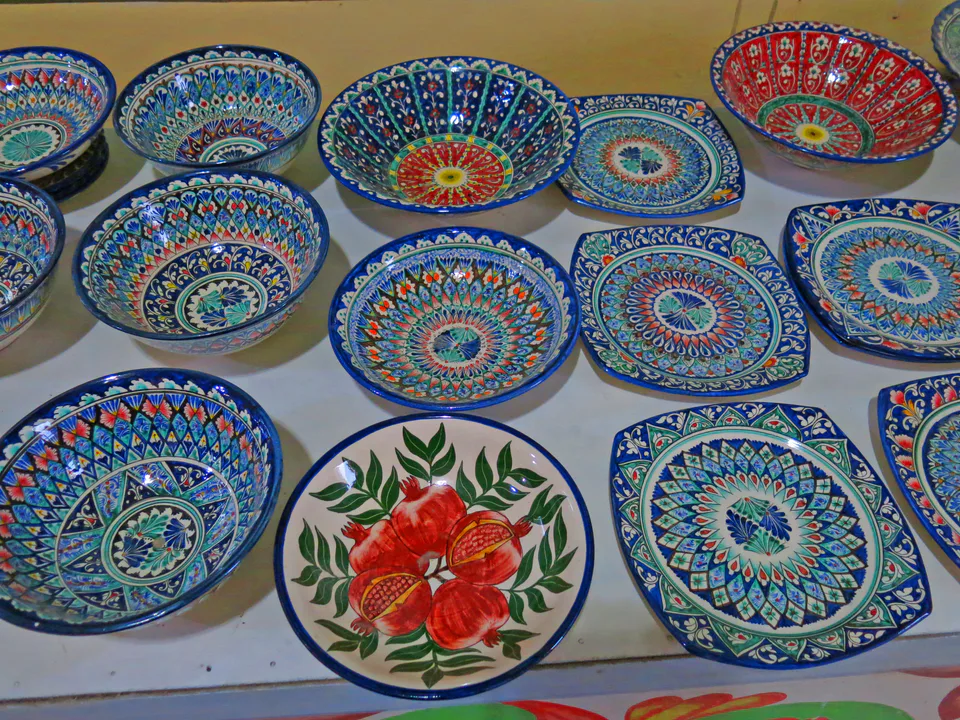
Rishtan ceramics
The blue and turquoise pottery of Rishtan in the Fergana Valley, famed for its ishkor glaze made from plant ash and its local red clay.
Craft · Kashkadarya
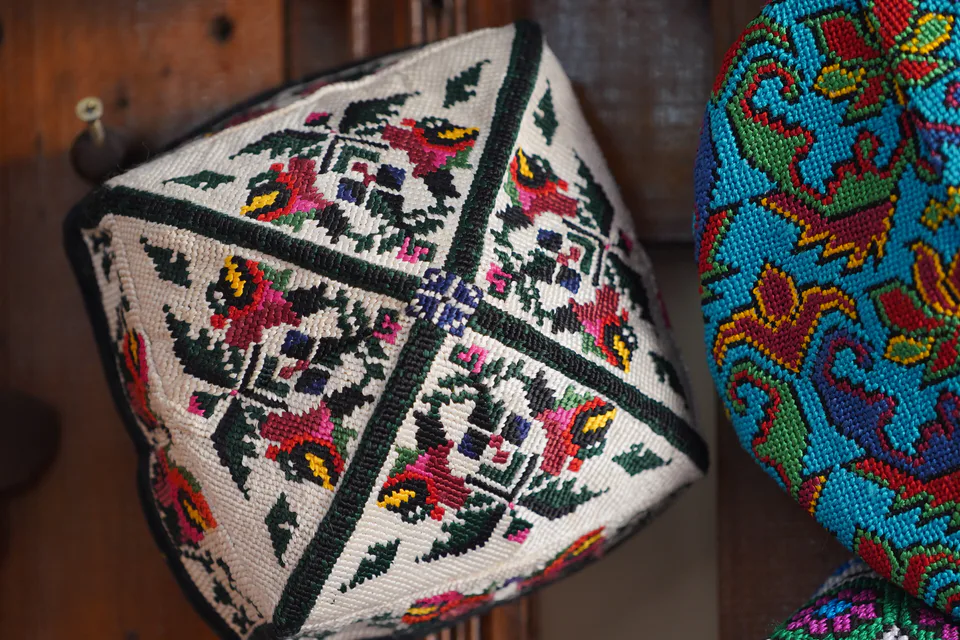
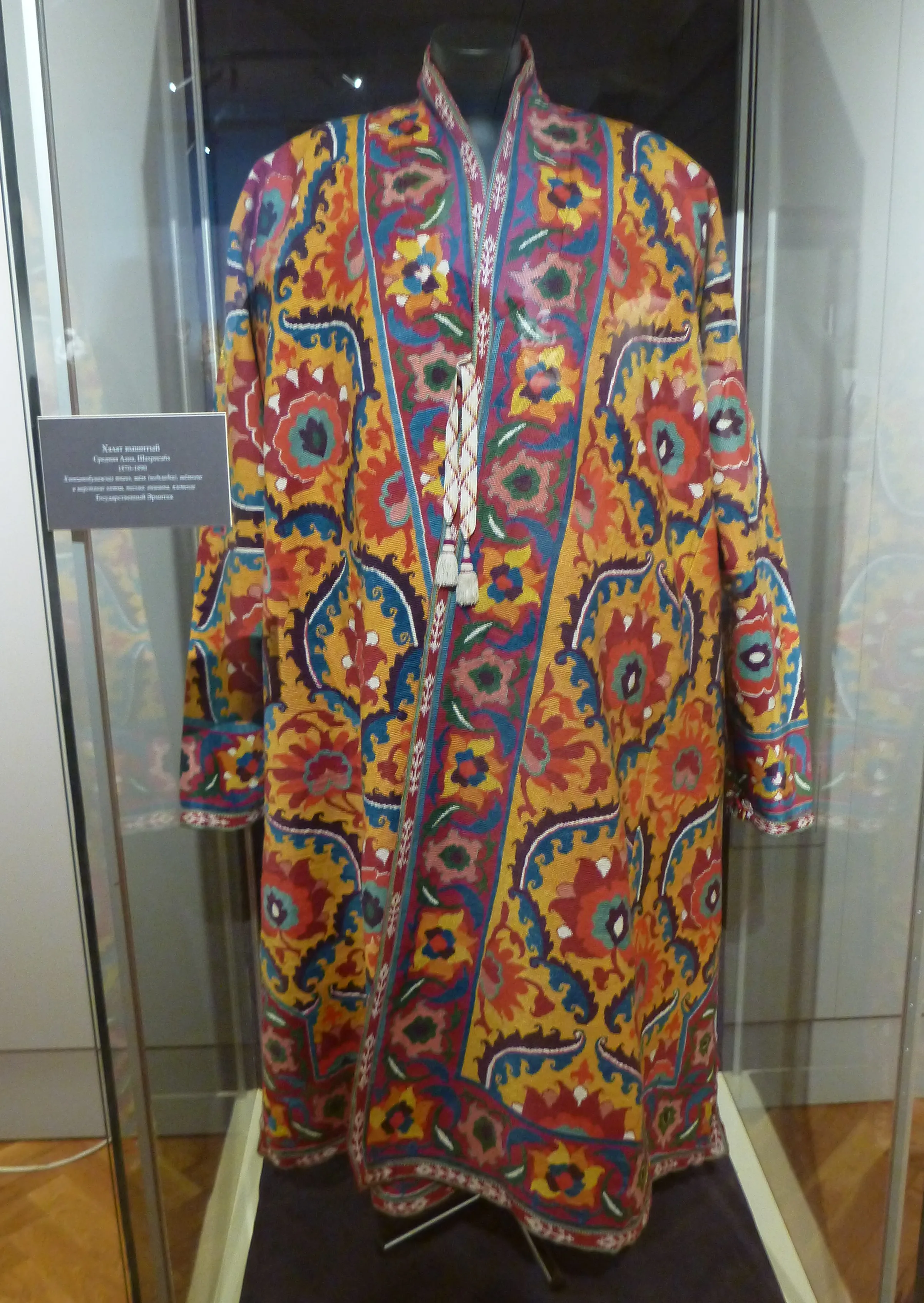
Kashkadarya’s embroidery centre: densely worked suzanis on coloured cloth and cross-stitched iroqi skullcaps, the best of them made in Shahrisabz and Kitab.
Shahrisabz embroidery reflects the city’s long history within the Emirate of Bukhara, and Bukharan influence is plain in its ornament. Its hallmark is exceptionally dense patterning that leaves almost no background visible, often on coloured grounds — purple, yellow or green. Some suzanis also carry ancient symbols, such as lamps framed by floral motifs.
Shahrisabz has long been a centre of other crafts too: metalwork historians speak of a Karshi–Shahrisabz school, and ceramicists of a Shahrisabz school.
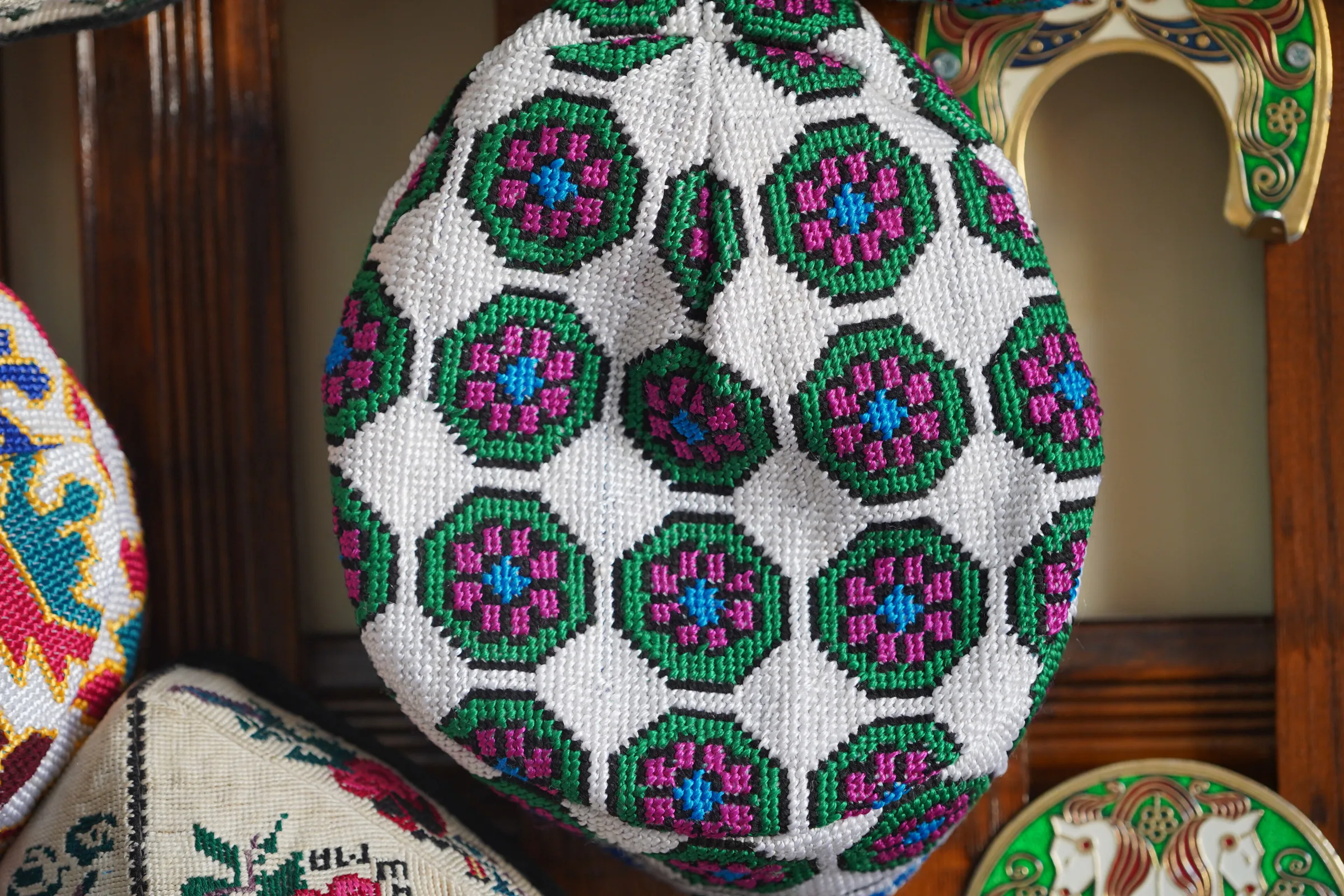
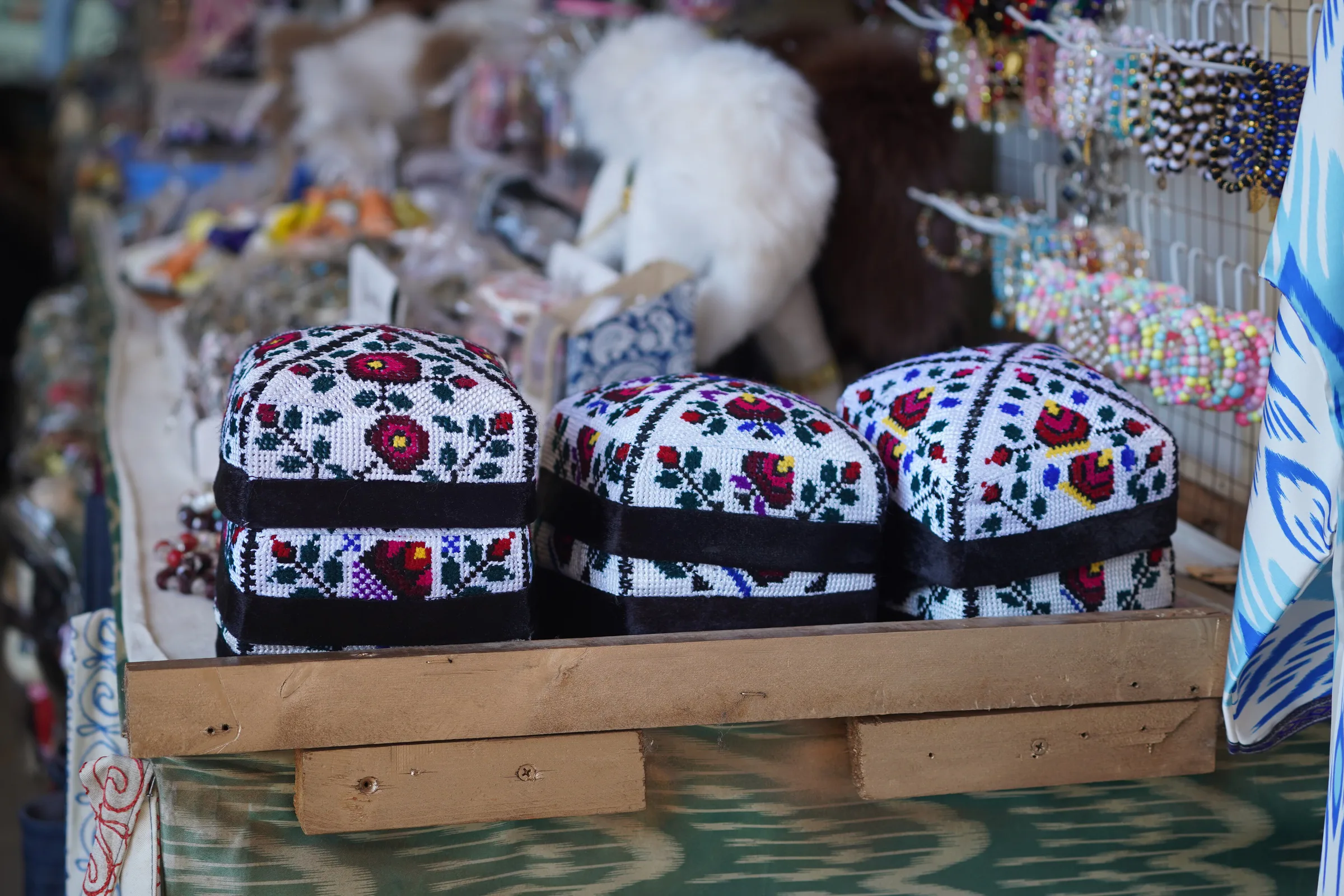
The iroqi skullcap became widespread in Shahrisabz before spreading elsewhere. It is cross-stitched (the iroqi stitch) in coloured silk or fine cotton on cloth from which threads have been drawn to form a mesh — hence the name. Uzbek sources say the finest iroqi caps are made by the skullcap makers of Shahrisabz and Kitab, and Shahrisabz is also known for its gilam do‘ppi, with crown and band woven in one piece. Look for embroidery and caps in the Shahrisabz bazaar and the shops around the Ak-Saray.
Craft · Fergana
The blue and turquoise pottery of Rishtan in the Fergana Valley, famed for its ishkor glaze made from plant ash and its local red clay.
Craft · Bukhara
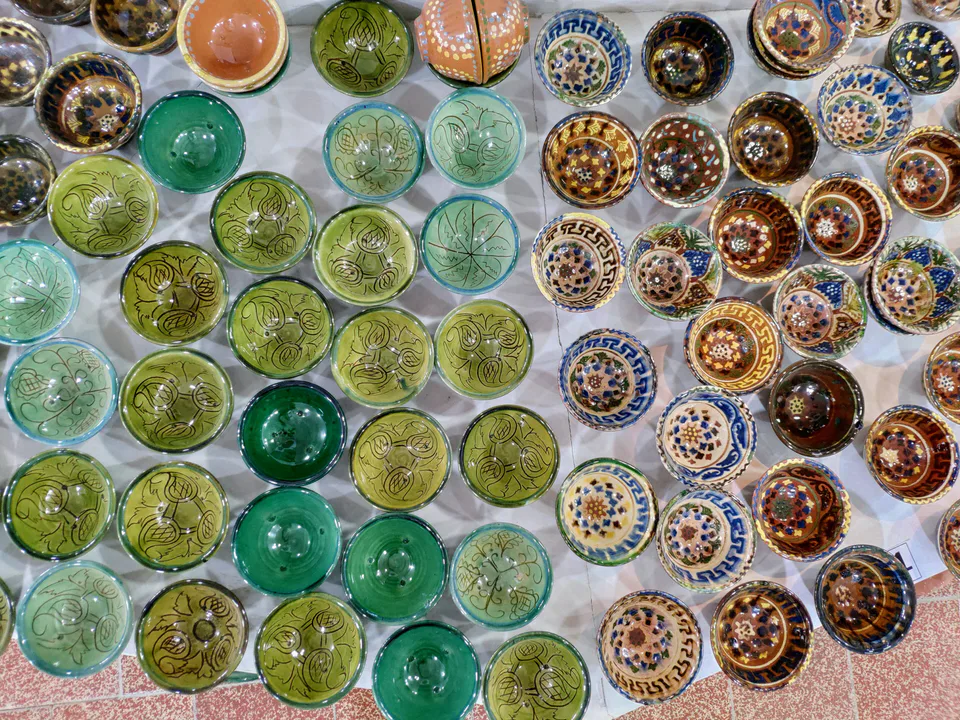
Pottery from Gijduvan near Bukhara, glazed in browns, yellows and greens — the best-known centre of the Bukhara–Samarkand school.
Craft · Fergana
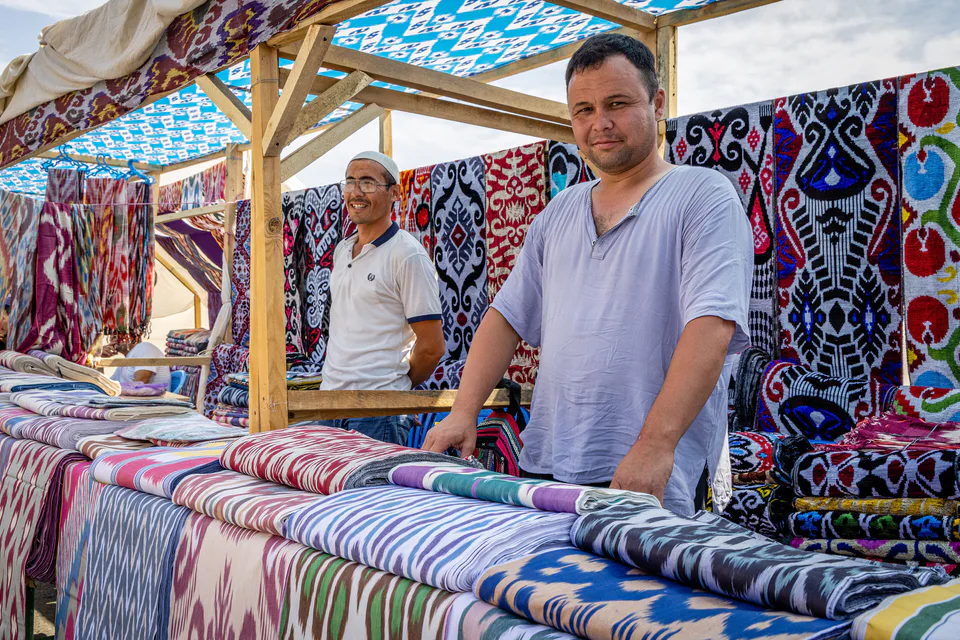
Margilan’s ikat silks: pure-silk atlas and half-silk adras. UNESCO recognises the town’s work to safeguard them as a model practice.
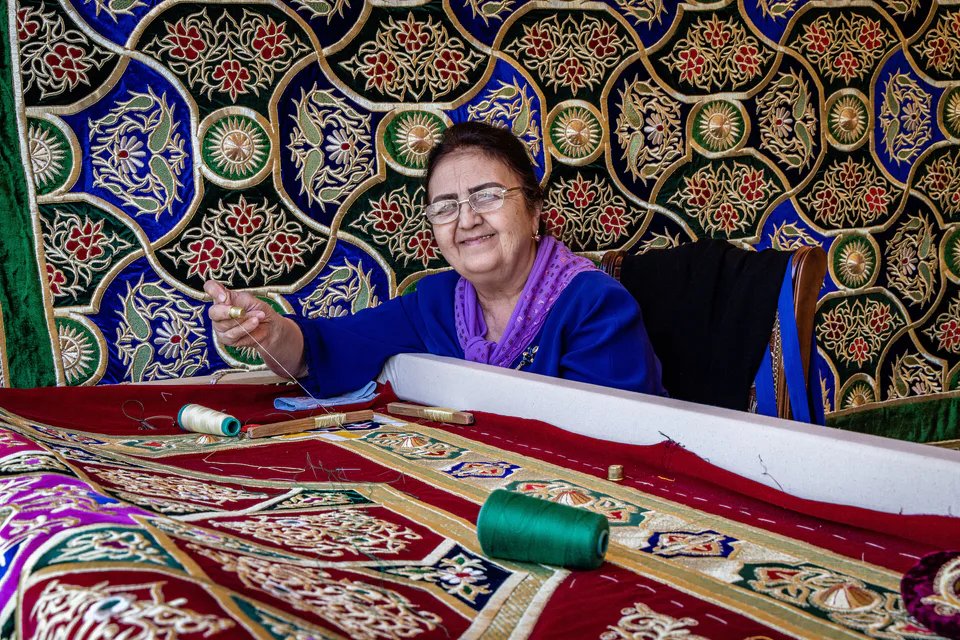
Craft · Bukhara
Embroidery in gold and silver thread on velvet and silk — the art of the Bukhara emirs’ court and still the city’s most precious craft.
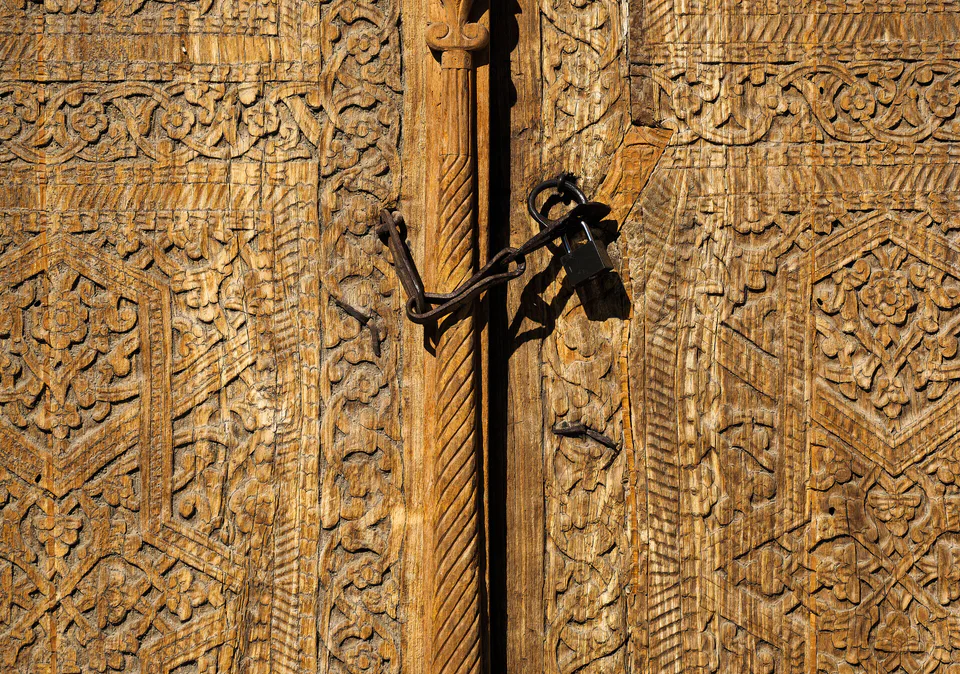
Craft · Khorezm
The carved doors and columns of Itchan Kala: Khiva’s carvers never paint the wood, finishing it only with natural oil; the Juma Mosque alone has more than 200 columns.
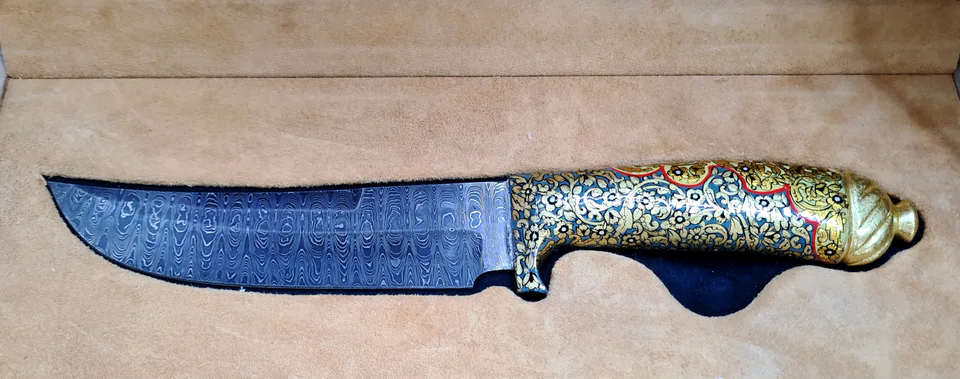
Craft · Namangan
Hand-forged knives from Chust in Namangan Region: a blade with a slightly upturned tip, the maker’s stamped ‘signature’ and a decorated sheath.
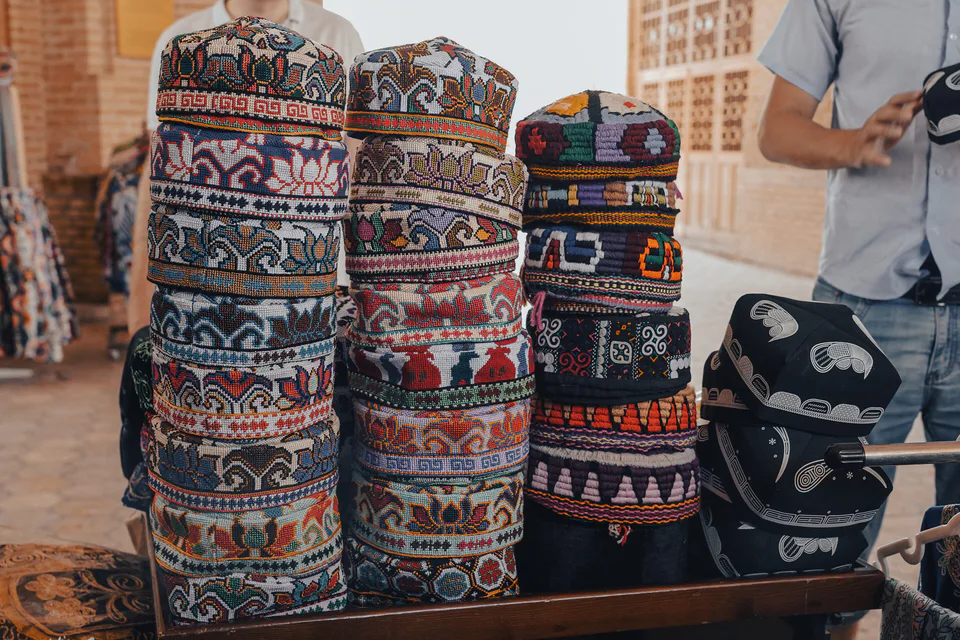
Craft · Namangan
The four-sided Chust skullcap, with white pepper-pod motifs on dark green, is the best-known emblem of Uzbek dress — and every oasis has its own doppi.
Craft · Samarkand
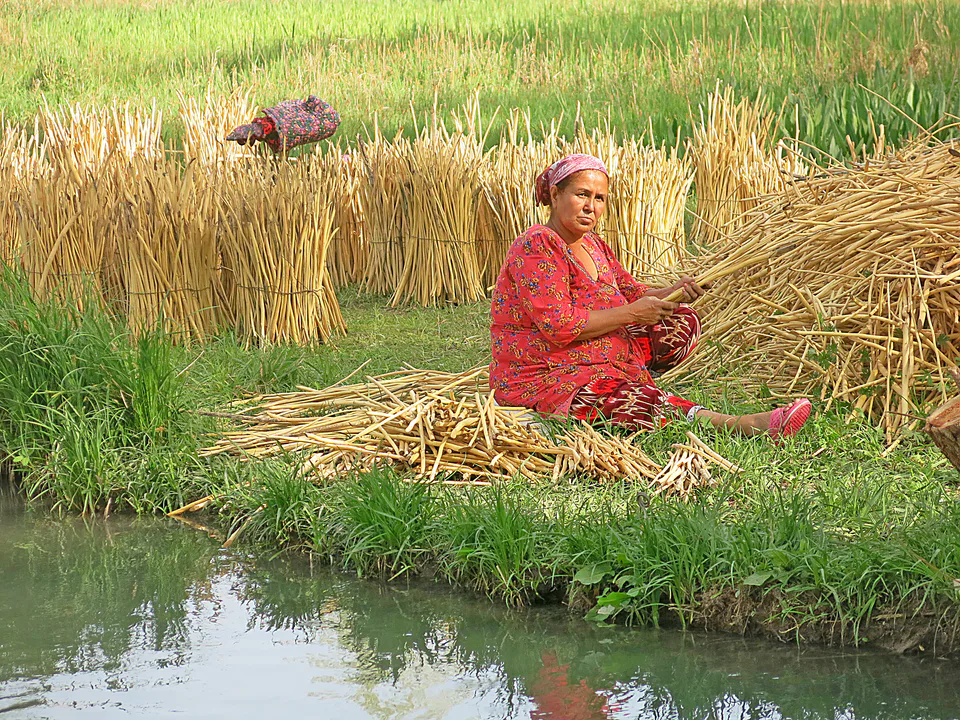
Paper made from mulberry bark — the finest writing material of the 9th–10th-century Islamic world, revived at Konigil at the end of the 20th century.
Craft · Bukhara
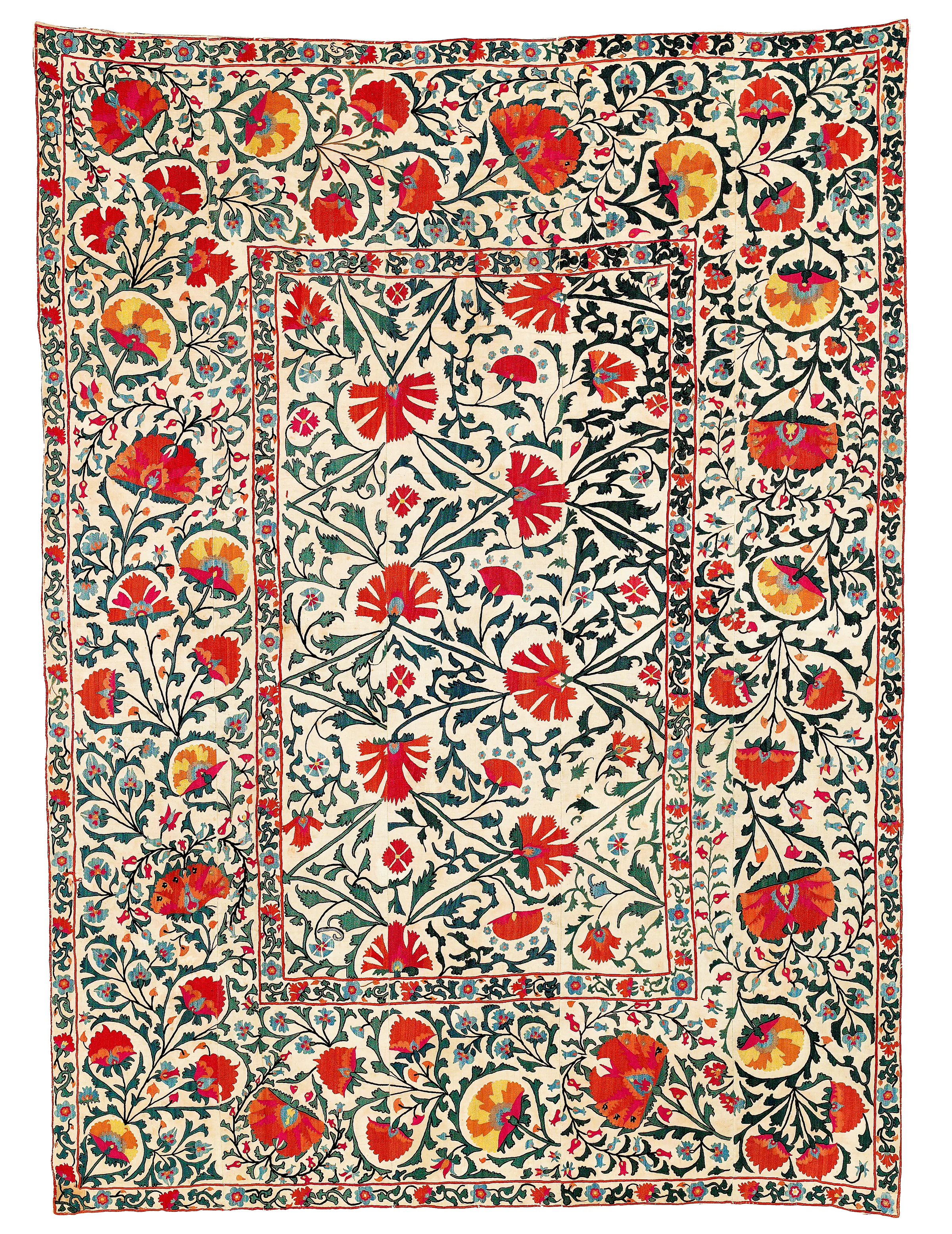
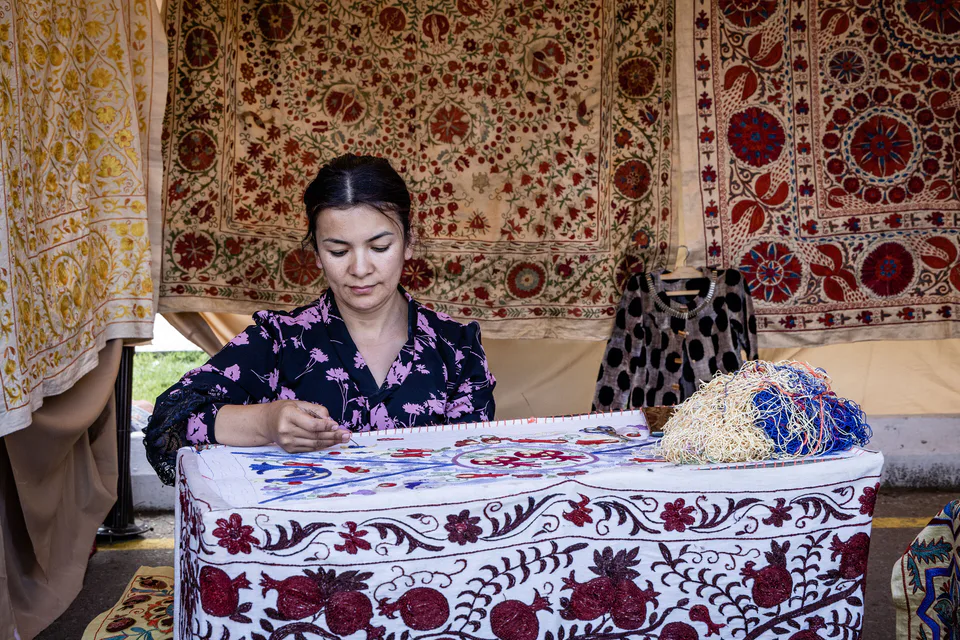
Large hand-embroidered hangings called suzani; the Bukhara school is known for fine designs covering almost the whole cloth in reds and greens on a pale ground.
Craft · Navoiy
Embroideries from Nurata in Navoiy Region: realistic sprays of carnations, irises, cotton flowers and cherries on a pale ground around a central eight-pointed star.