Craft · Fergana
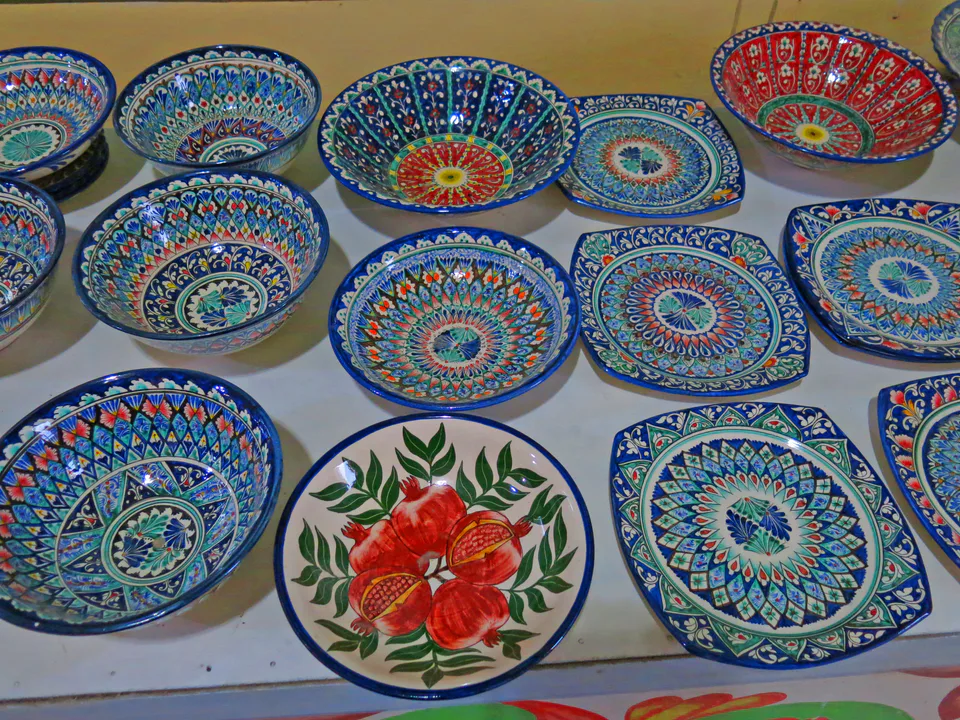
Rishtan ceramics
The blue and turquoise pottery of Rishtan in the Fergana Valley, famed for its ishkor glaze made from plant ash and its local red clay.
Craft · Nationwide
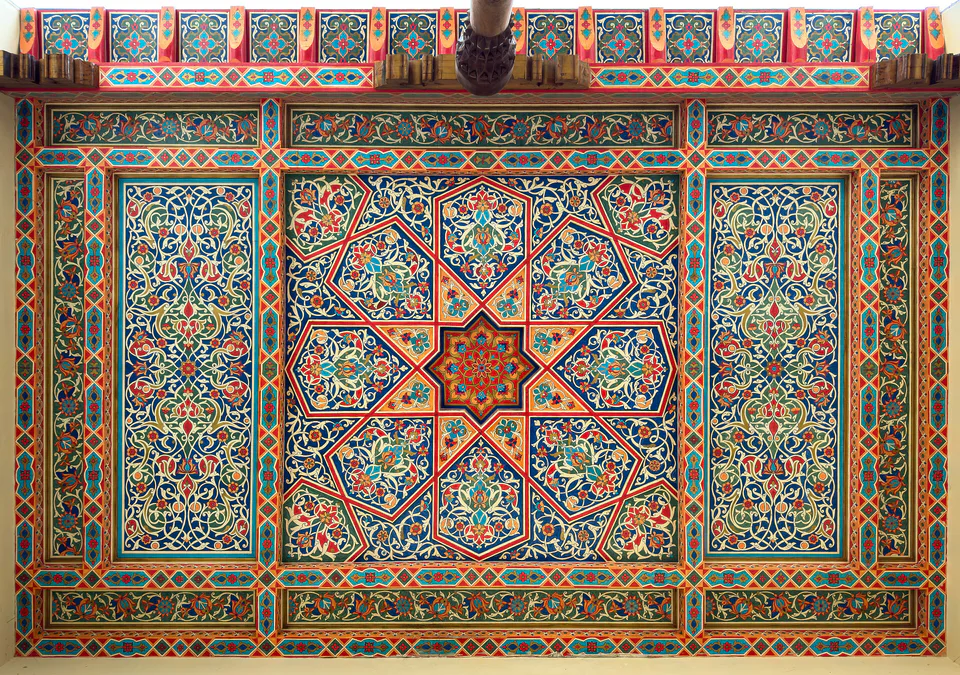
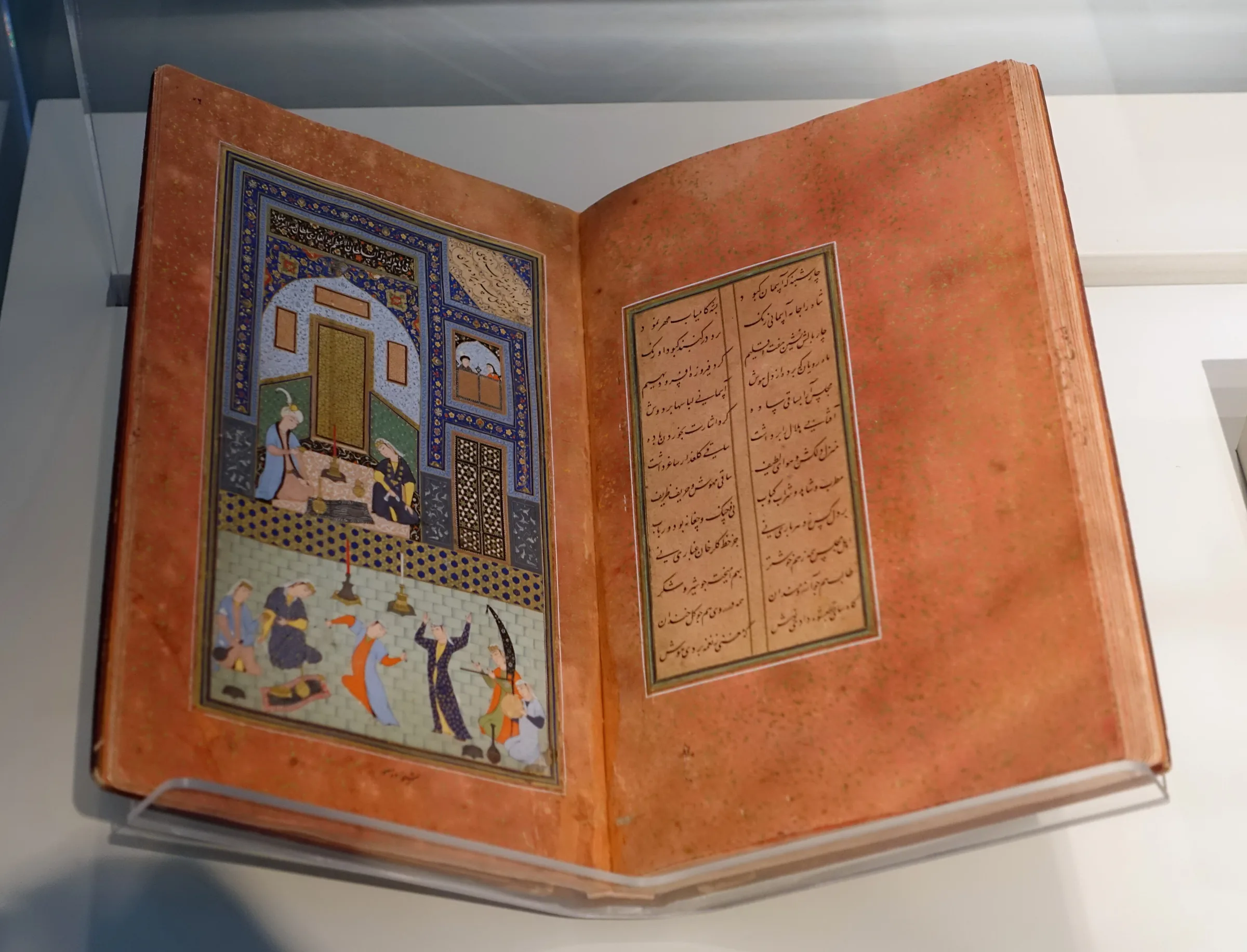
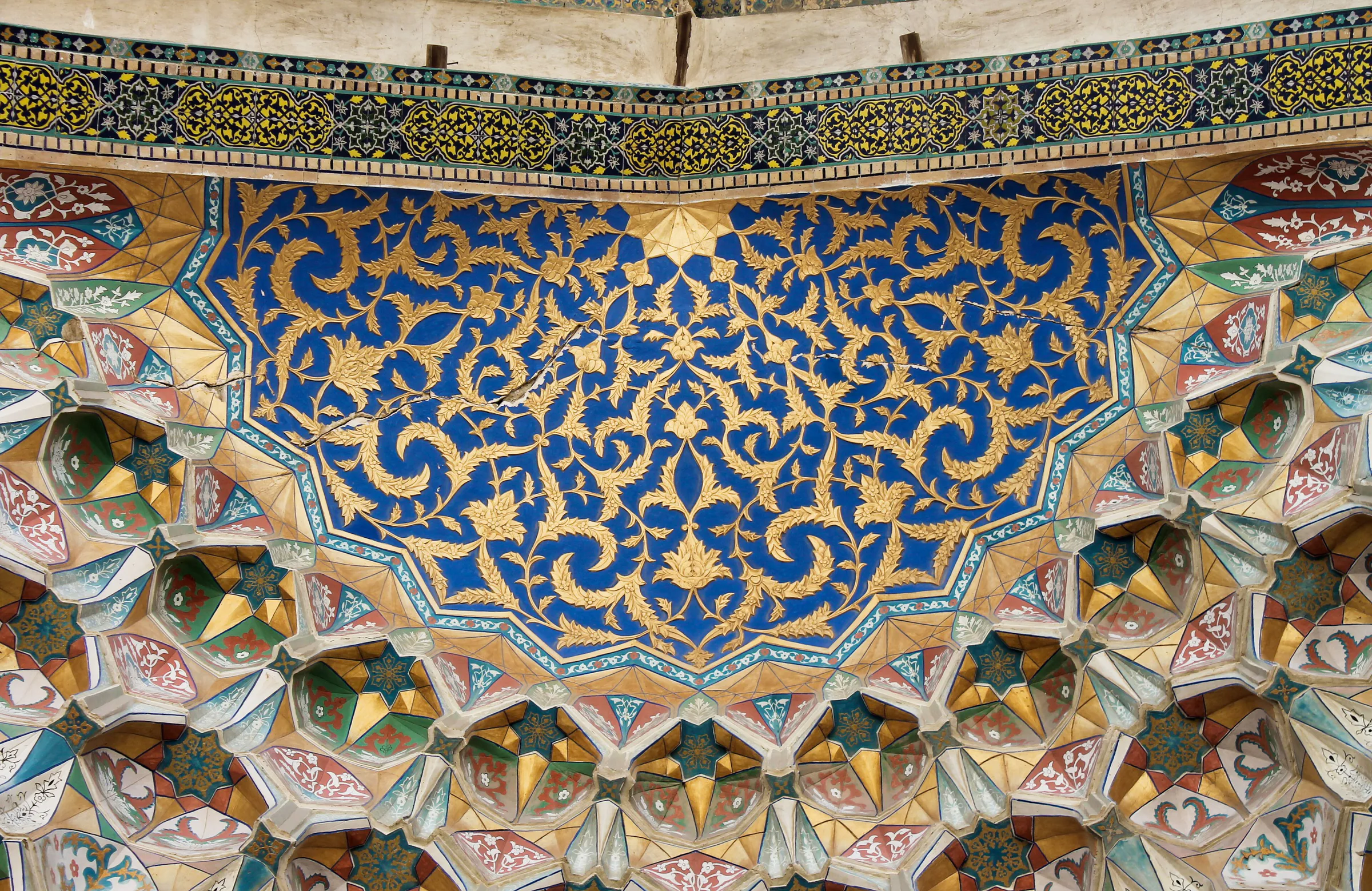
The arts of pattern design, gilded manuscript illumination and miniature painting; miniature (2020) and illumination (2023) are on UNESCO’s lists.
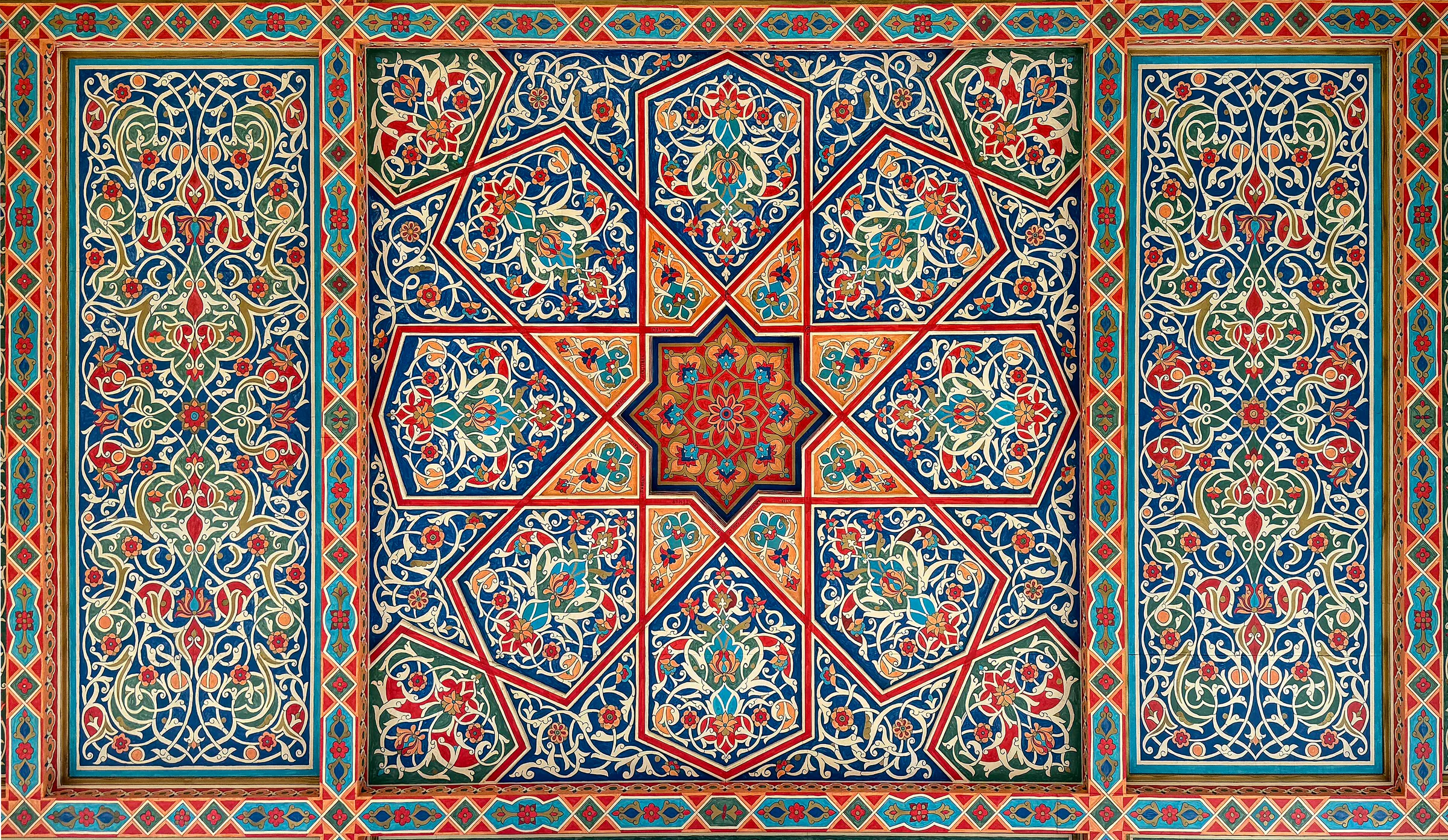
Naqqoshlik is the ancient craft of designing ornament. The naqqosh draws a pattern on paper or cloth and makes a stencil, through which complex girih and islimi designs pass into architecture, carpet weaving, embroidery, metalwork and other crafts. That is why the same motif can turn up on a mosque ceiling, a suzani and a copper tray.
Tazhib, or illumination, is the art of decorating manuscript pages, calligraphy and miniatures with gold leaf or gold paint and natural pigments; in 2023 it was inscribed by UNESCO as a joint nomination of Azerbaijan, Iran, Tajikistan, Turkey and Uzbekistan.
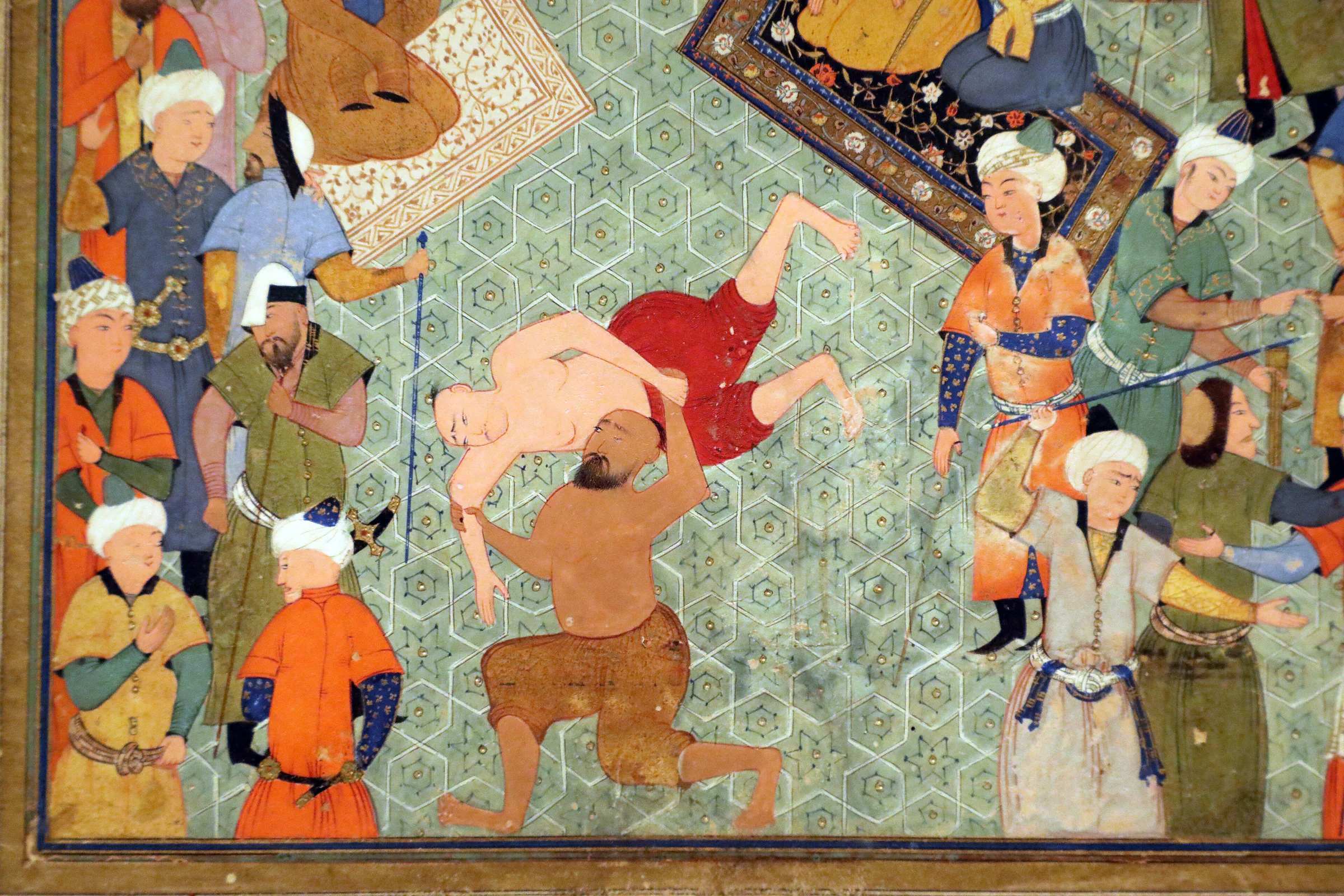
A miniature is a small painting on a book page, papier-mâché, carpet, wall or ceramic, in which the size of each figure reflects its importance. The ‘Art of miniature’ was inscribed in 2020 as a joint nomination of Azerbaijan, Iran, Turkey and Uzbekistan. In Timurid Herat, Kamal ud-Din Behzad (c. 1455/1460–1535) brought the art to its peak, and he is held in particular esteem in Uzbekistan. In the 20th century Chingiz Akhmarov painted the walls of Tashkent’s Navoi Theatre with miniature-style scenes from the poet’s works. Miniaturists keep workshops in Bukhara, Samarkand and Tashkent today.
Craft · Fergana
The blue and turquoise pottery of Rishtan in the Fergana Valley, famed for its ishkor glaze made from plant ash and its local red clay.
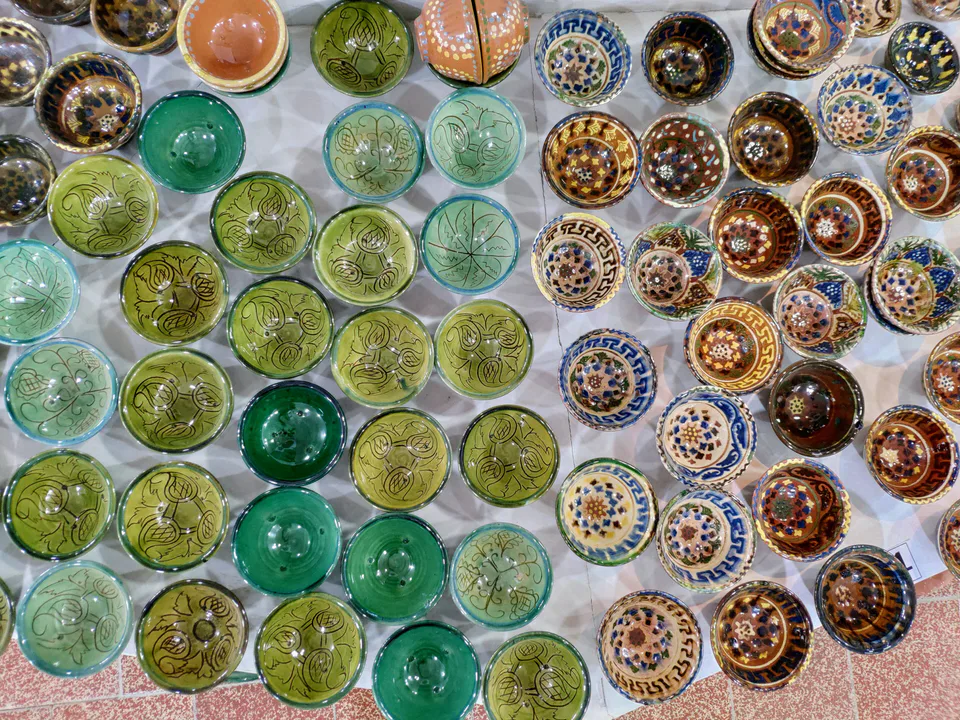
Craft · Bukhara
Pottery from Gijduvan near Bukhara, glazed in browns, yellows and greens — the best-known centre of the Bukhara–Samarkand school.
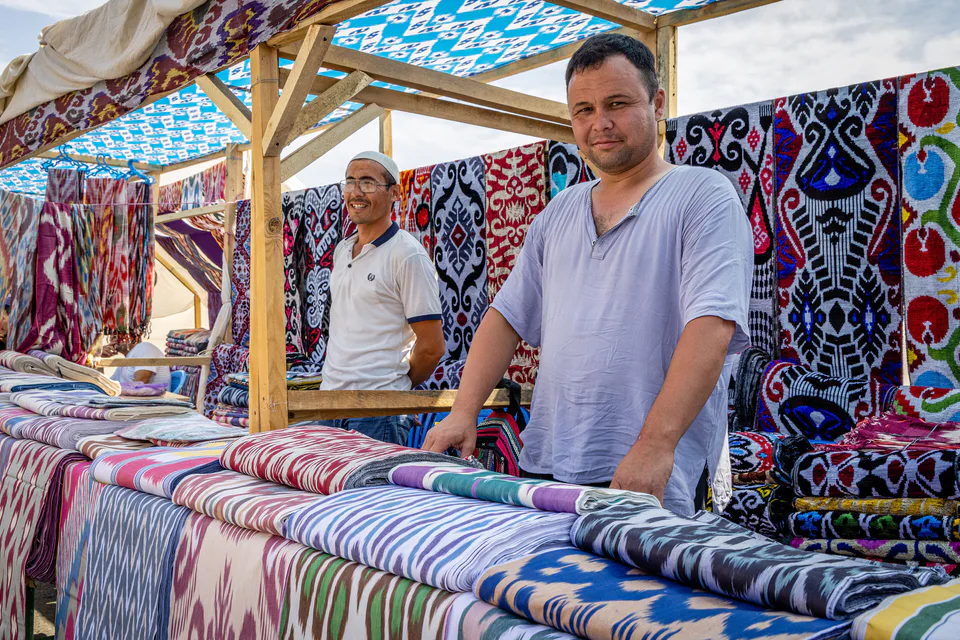
Craft · Fergana
Margilan’s ikat silks: pure-silk atlas and half-silk adras. UNESCO recognises the town’s work to safeguard them as a model practice.
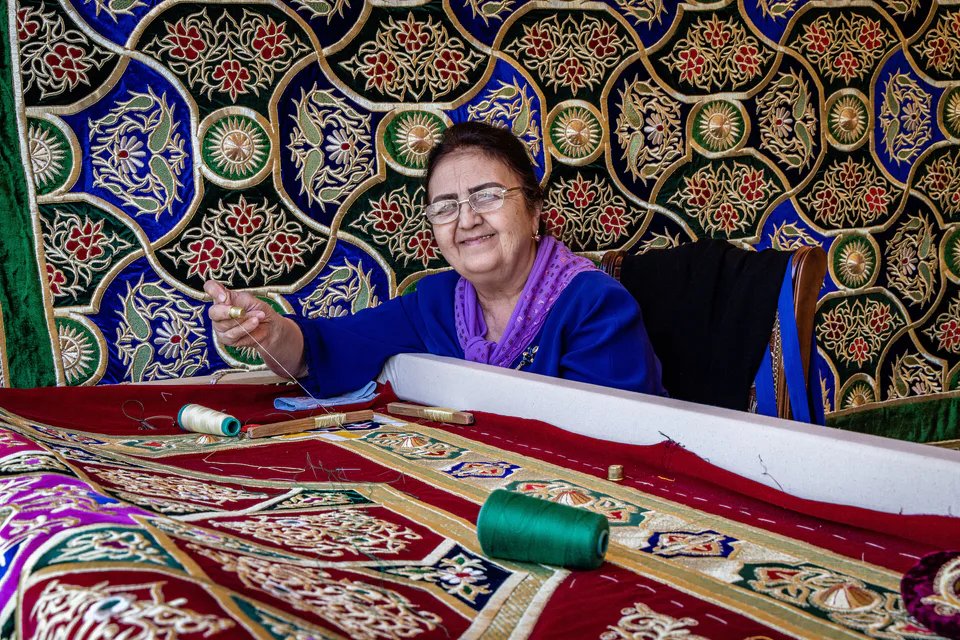
Craft · Bukhara
Embroidery in gold and silver thread on velvet and silk — the art of the Bukhara emirs’ court and still the city’s most precious craft.
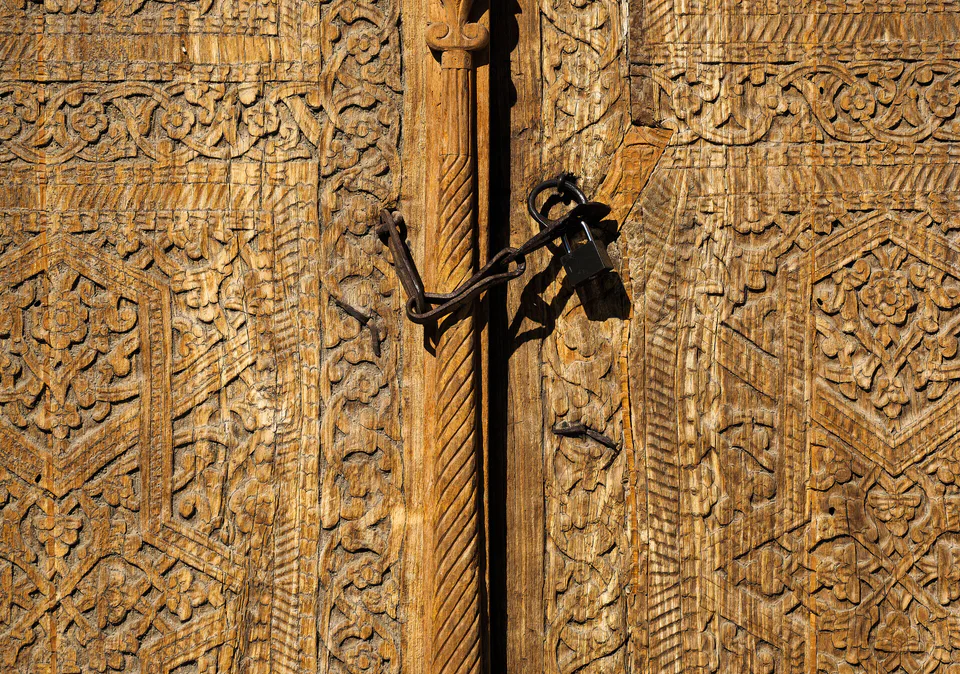
Craft · Khorezm
The carved doors and columns of Itchan Kala: Khiva’s carvers never paint the wood, finishing it only with natural oil; the Juma Mosque alone has more than 200 columns.
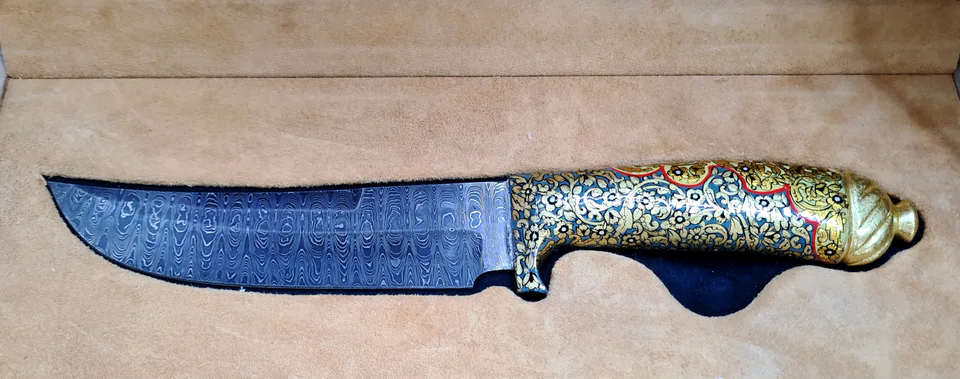
Craft · Namangan
Hand-forged knives from Chust in Namangan Region: a blade with a slightly upturned tip, the maker’s stamped ‘signature’ and a decorated sheath.
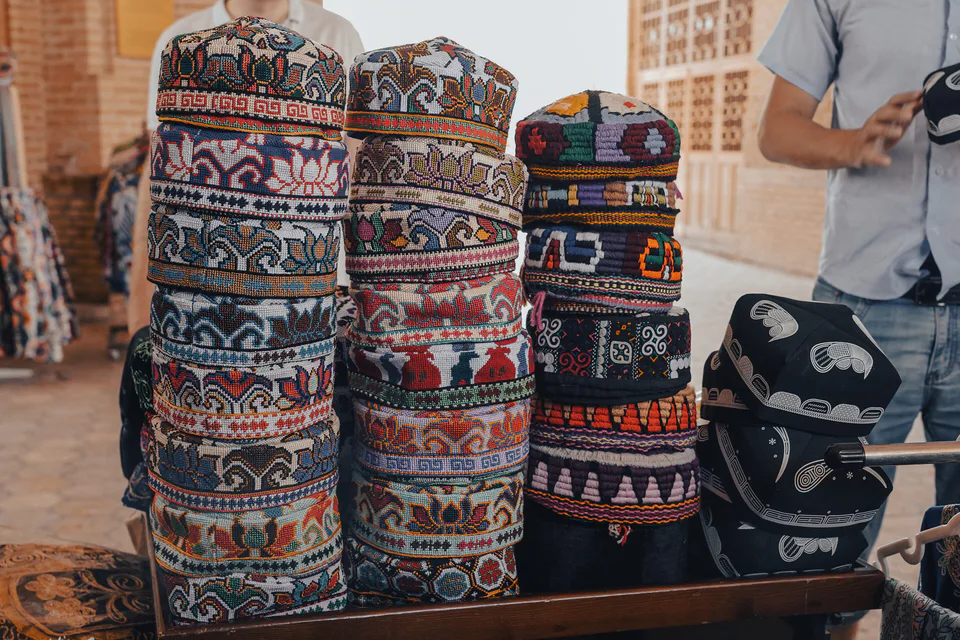
Craft · Namangan
The four-sided Chust skullcap, with white pepper-pod motifs on dark green, is the best-known emblem of Uzbek dress — and every oasis has its own doppi.
Craft · Samarkand
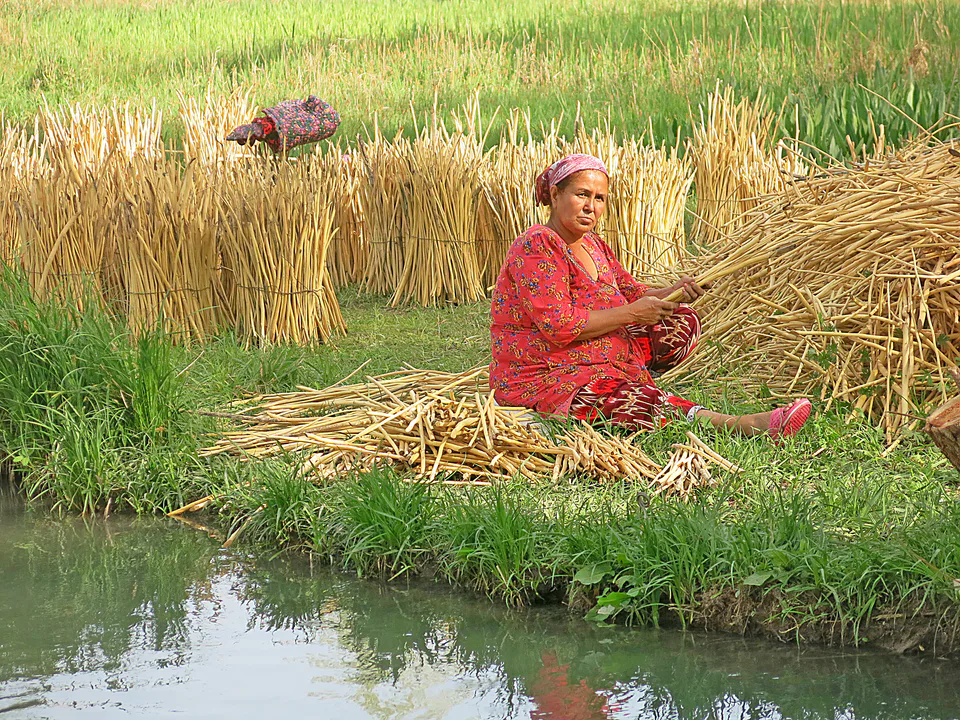
Paper made from mulberry bark — the finest writing material of the 9th–10th-century Islamic world, revived at Konigil at the end of the 20th century.
Craft · Bukhara
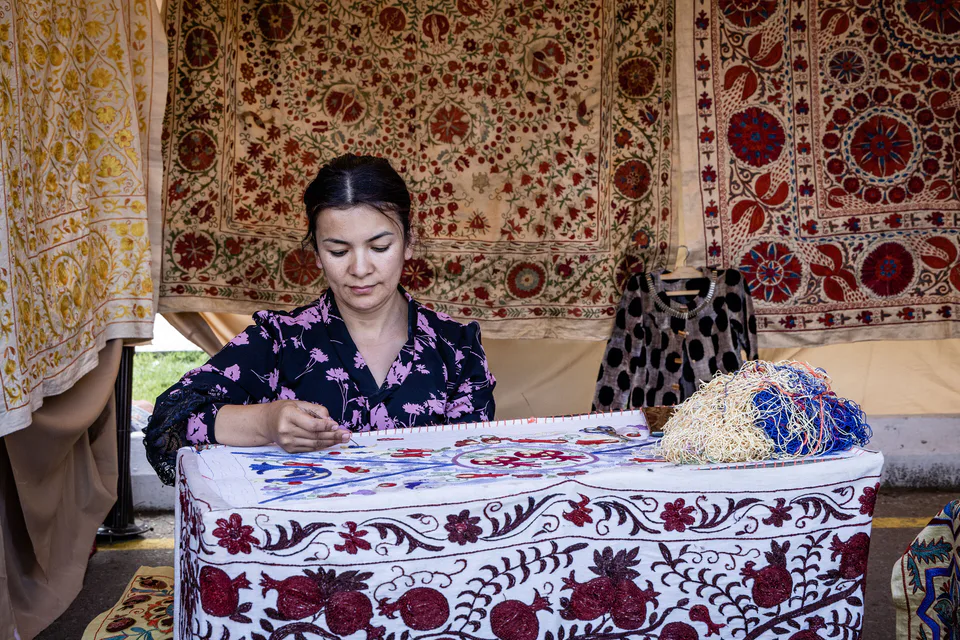
Large hand-embroidered hangings called suzani; the Bukhara school is known for fine designs covering almost the whole cloth in reds and greens on a pale ground.
Craft · Navoiy
Embroideries from Nurata in Navoiy Region: realistic sprays of carnations, irises, cotton flowers and cherries on a pale ground around a central eight-pointed star.