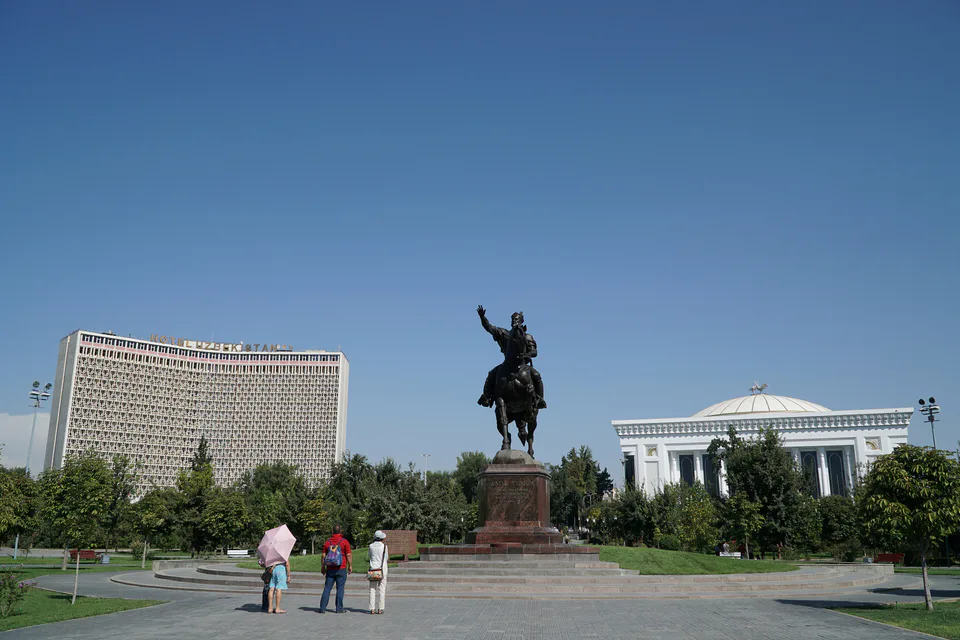
Park & garden · Yunusabad District
Amir Timur Square
The heart of Tashkent's new town
Culture & arts · Mirabad District
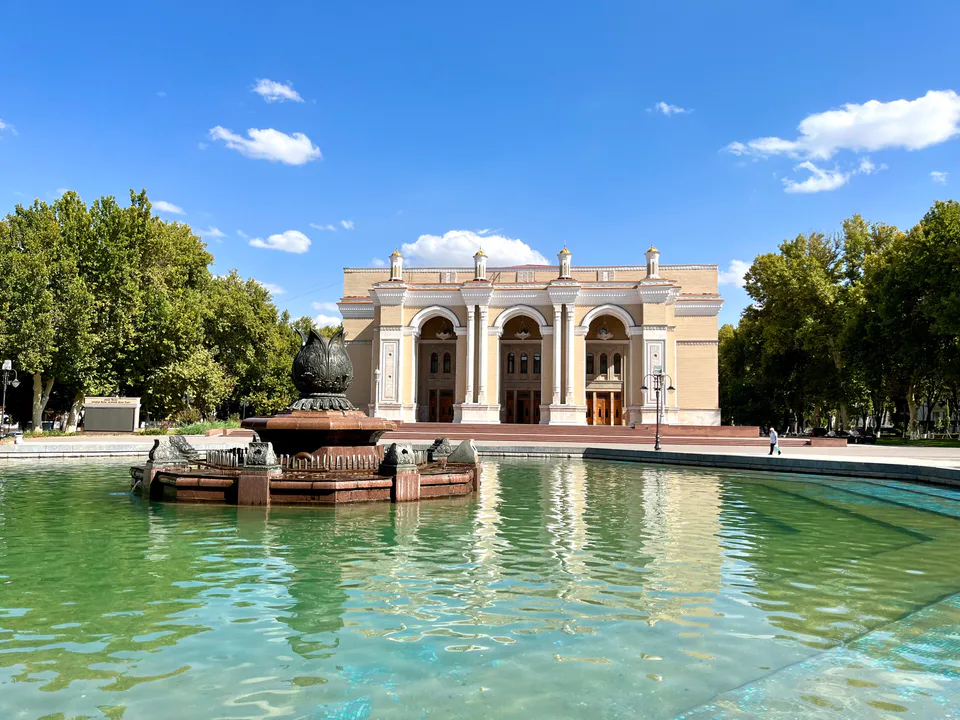
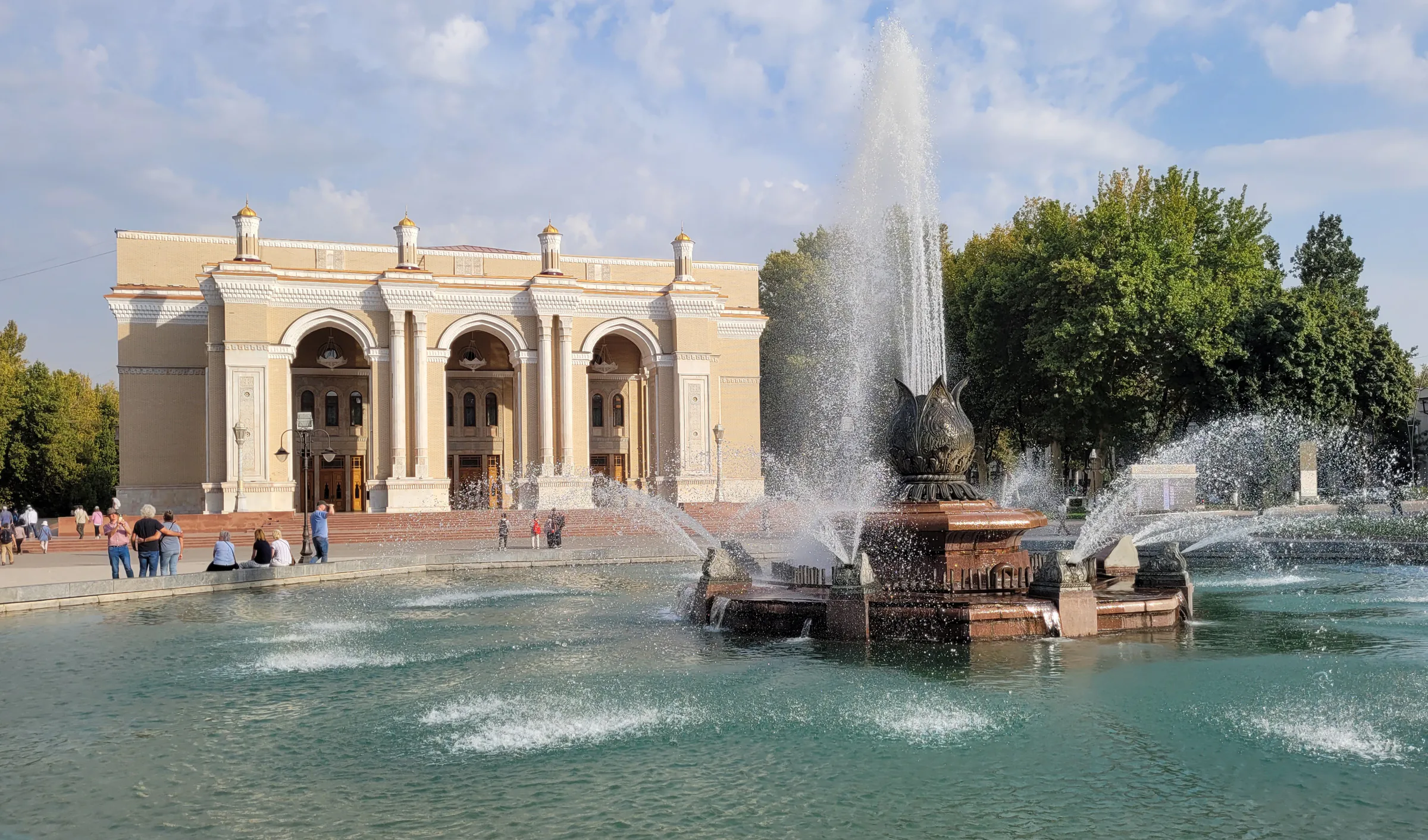
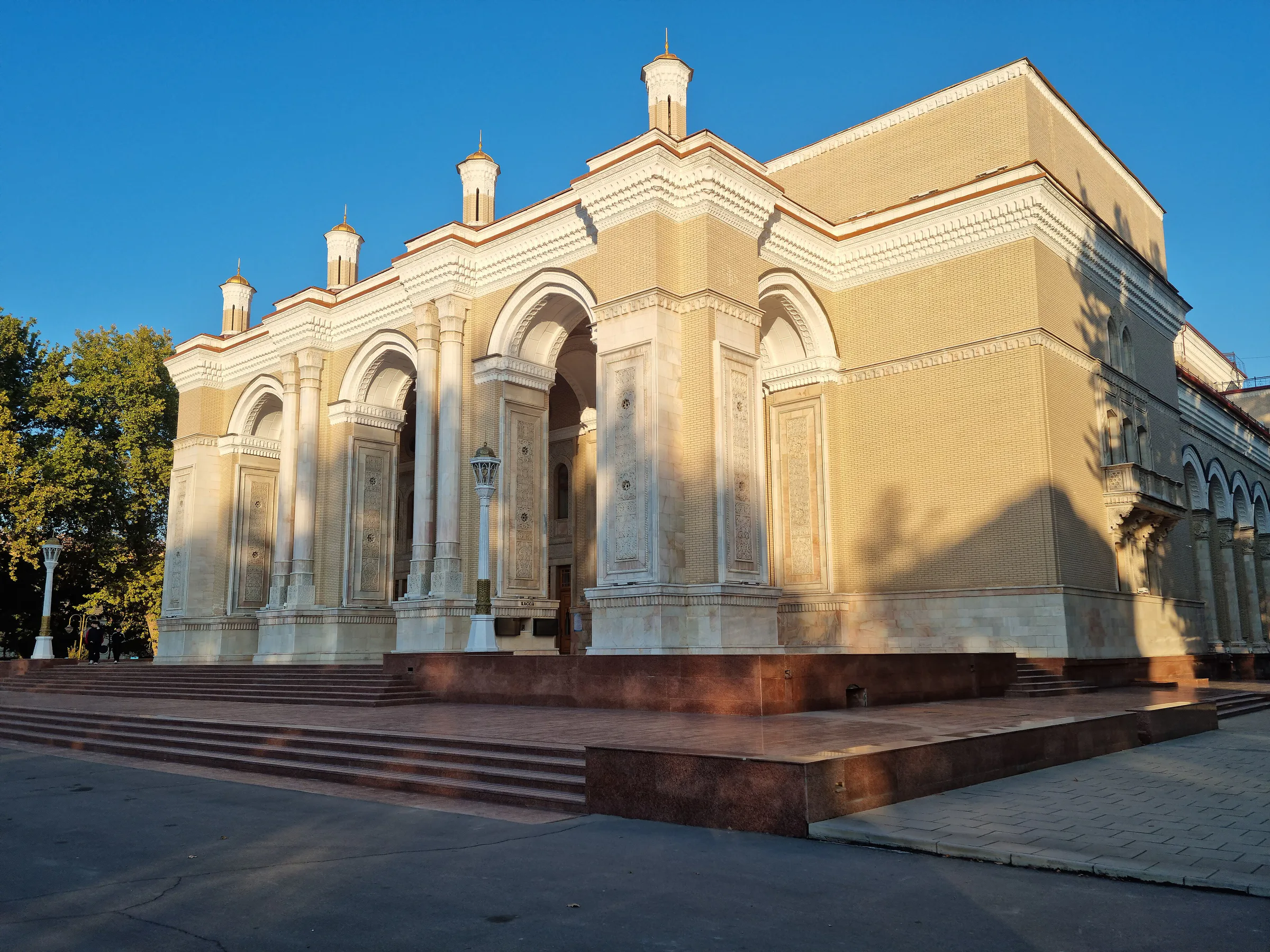
Tashkent's opera and ballet house: designed by Alexei Shchusev and opened in 1947, with halls decorated by master craftsmen from across Uzbekistan.
The theatre traces its roots to 1929, when Mukhitdin Kari-Yakubov's concert-ethnographic ensemble became a professional music theatre, with Tamara Khanum leading the dance troupe. On 11 June 1939 it premiered the first Uzbek opera, 'Buran' by S. Vasilenko and M. Ashrafi, and that year became the State Uzbek Opera and Ballet Theatre. In March 1948 it merged with Tashkent's Russian opera company and took the name of Alisher Navoi; it became an 'academic' theatre in 1959 and has held the title 'Bolshoi' since 1966.
Before the new building, the companies performed in the Colosseum theatre-circus built in the early 20th century by G. M. Tsintsadze from Tiflis; its cramped hall could not cope with large productions. The main stage of today's theatre covers 540 square metres. In the 1950s–1970s classics such as Verdi's 'Aida' and 'Rigoletto', Mussorgsky's 'Boris Godunov' and Khachaturian's 'Spartacus' shared the bill with Uzbek works like the opera 'Dilorom' (1958) and Ashrafi's ballet 'Amulet of Love' (1969); after 1990 came the operas 'Buyuk Temur' by A. Ikramov and 'Omar Khayyam' by M. Bafoyev. The decorators, including master Shirin Muradov, received the State Prize in 1948, and the miniatures based on Navoi's poems are by Chingiz Akhmarov.
Alexei Shchusev, architect of Lenin's Mausoleum, won the 1934 design competition. The theatre rose on the site of the former Voskresensky Bazaar: the foundation was laid on 1 September 1940, work stopped in 1942 because of the war and resumed in 1943. Labour-mobilised Soviet Koreans worked on site, and in the final stage Japanese prisoners of war from the Kwantung Army, brought to Tashkent in November 1945. The theatre opened in November 1947, and in 1996 a plaque honouring the Japanese builders was placed on its wall.
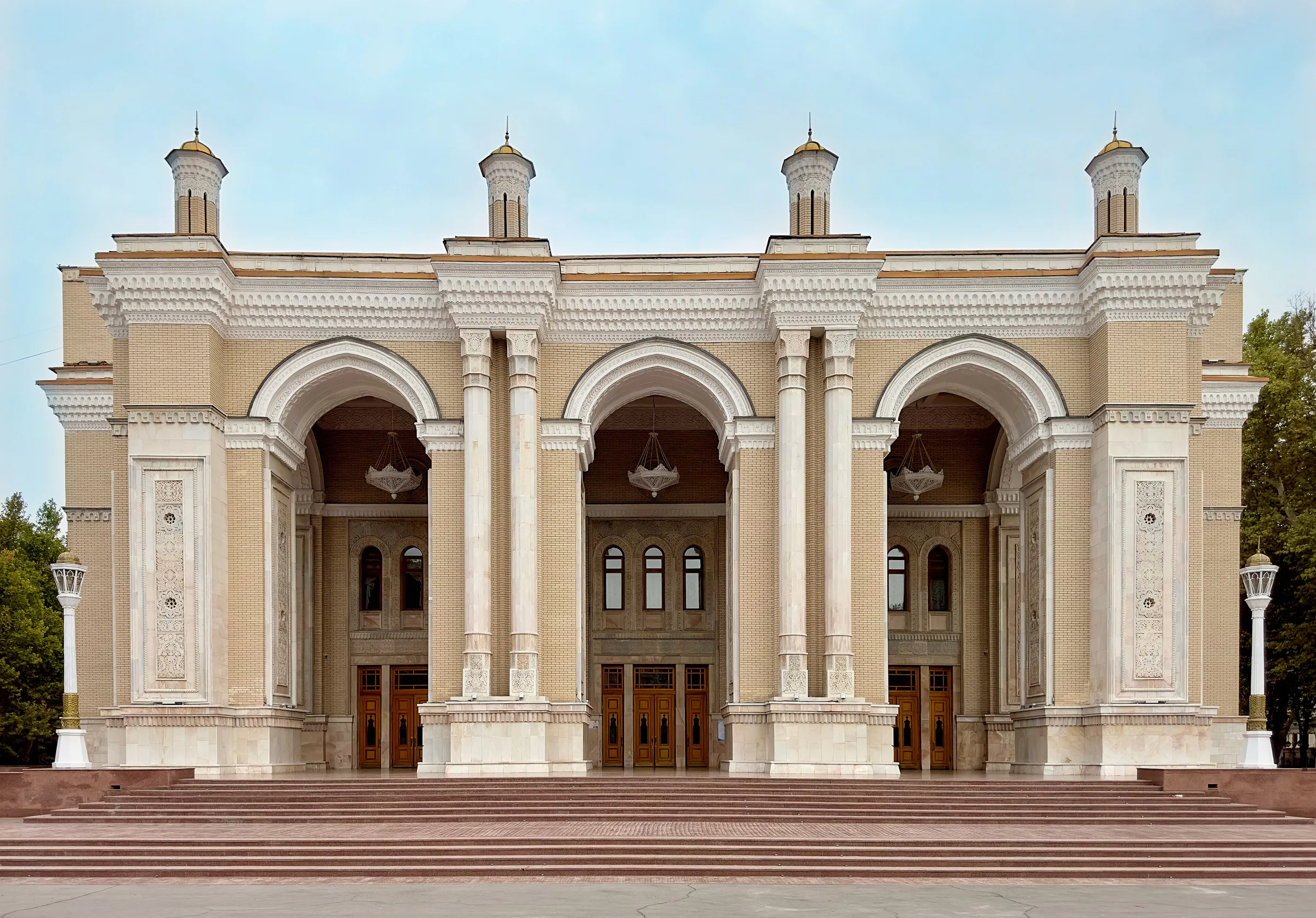
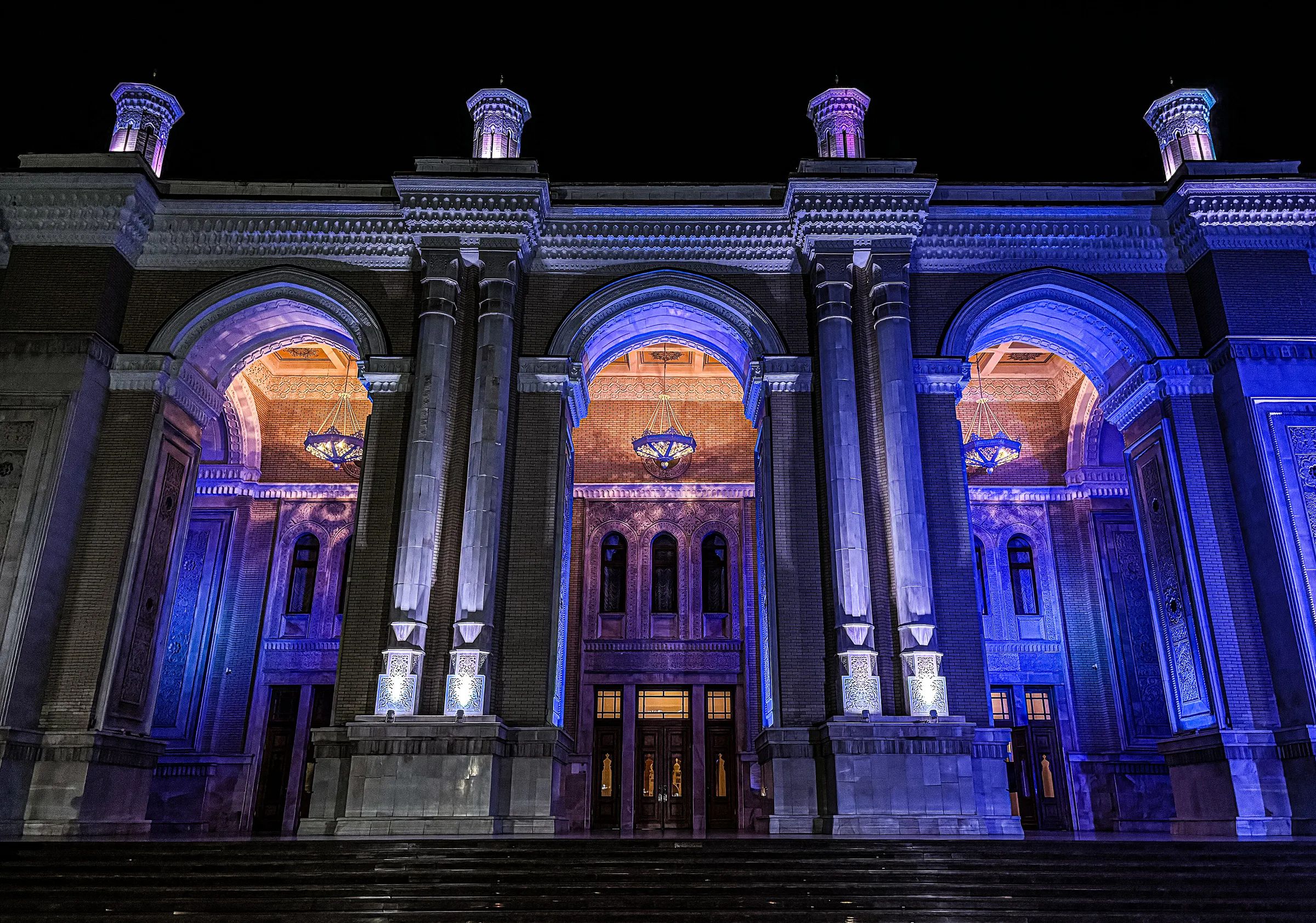
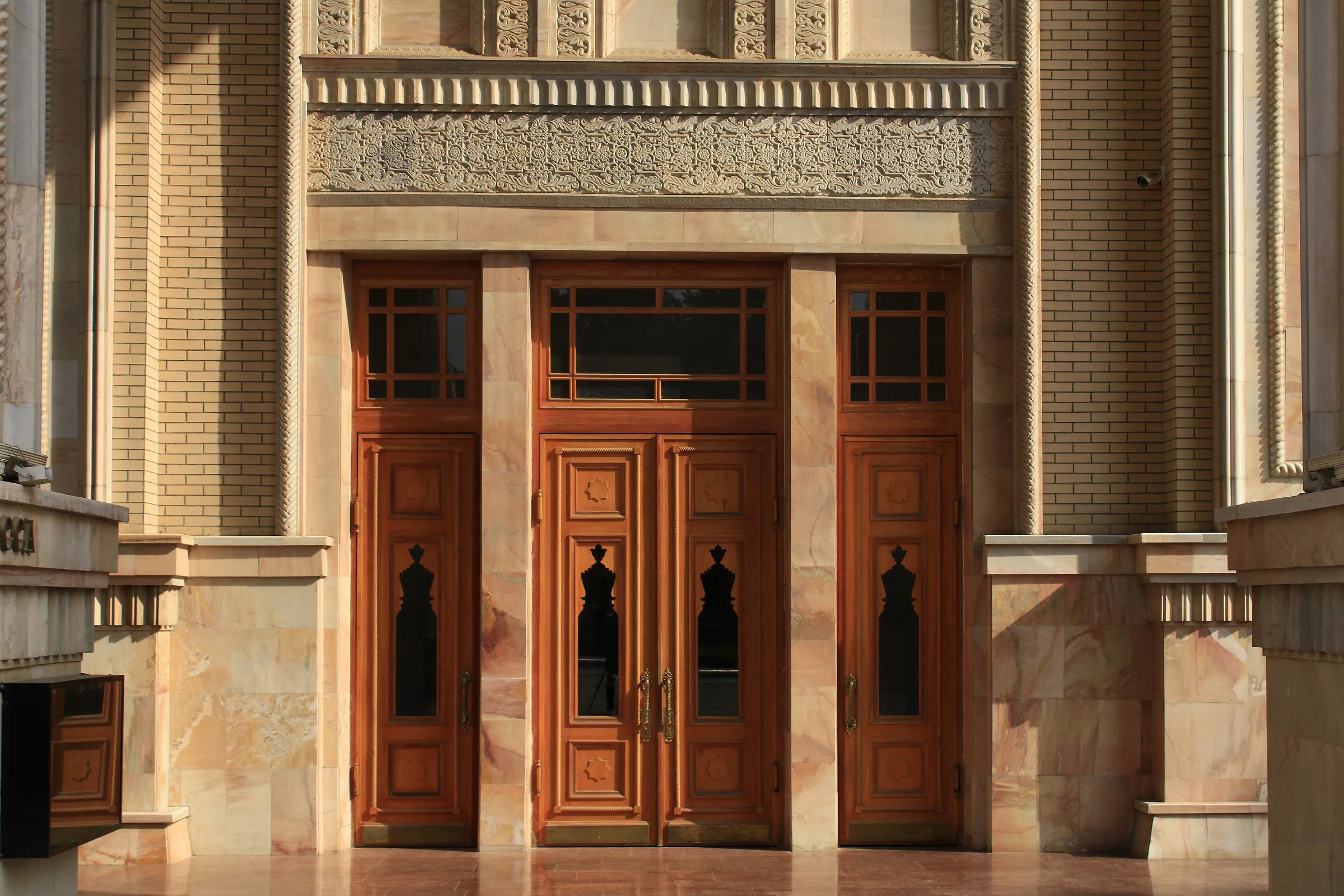
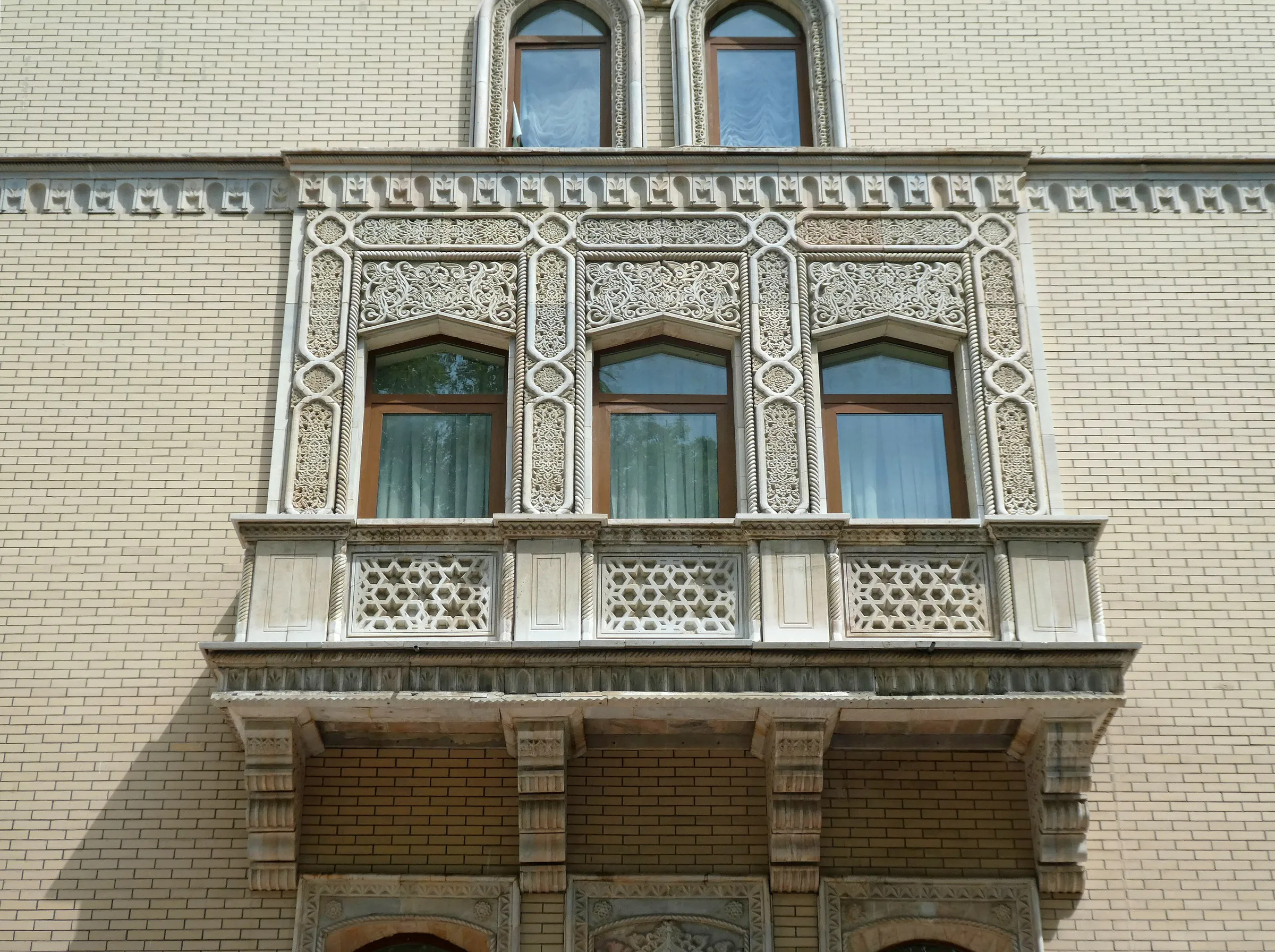
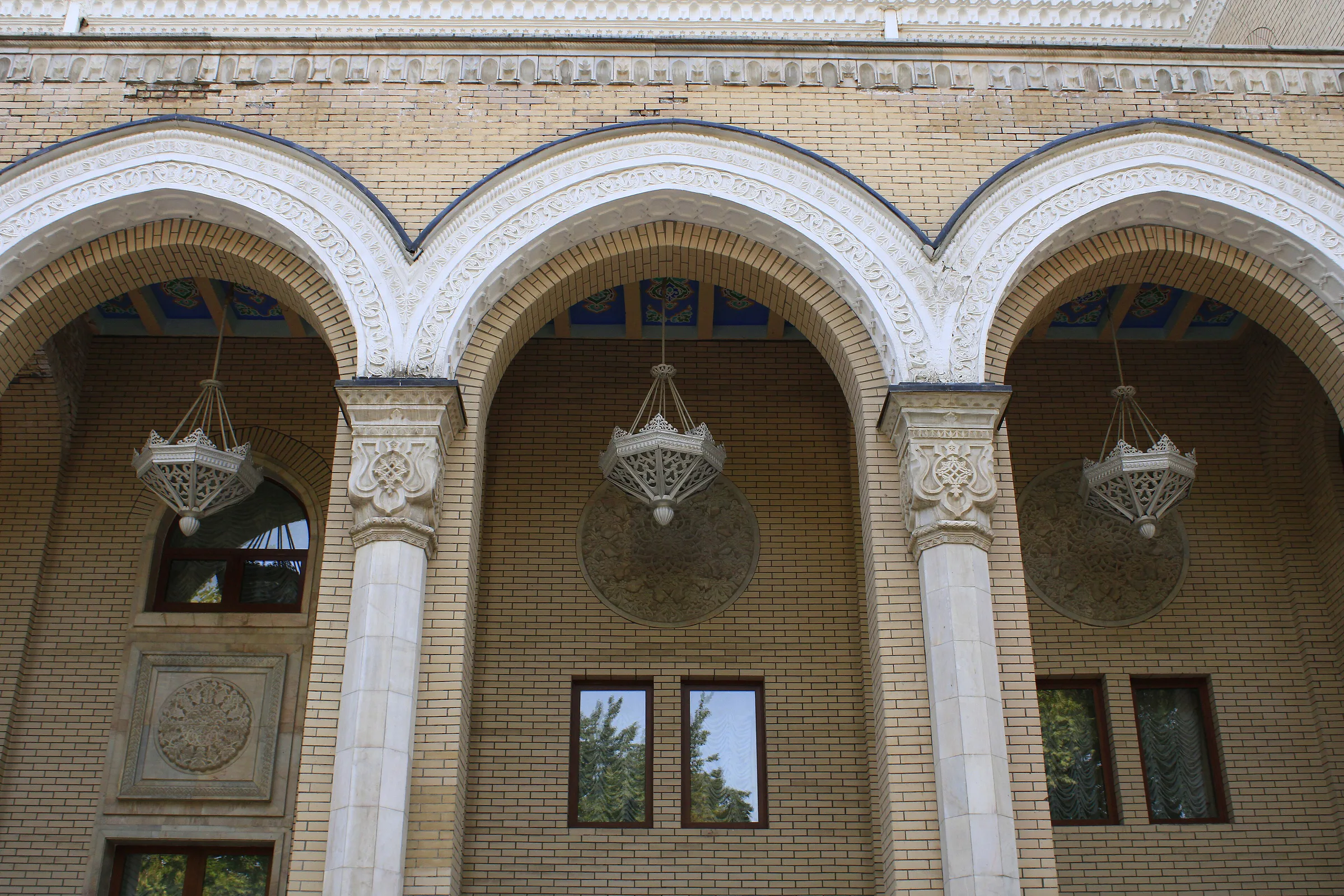
A massive three-arched entrance portal and arcades along the side facades open the building to the city. The walls are faced in polished pinkish-ochre brick, while the portico, colonnades, door and window frames and cornices are in grey marble. Shchusev set the theatre in a garden with flower beds, ornamental trees and a large fountain recalling a traditional hauz pool.
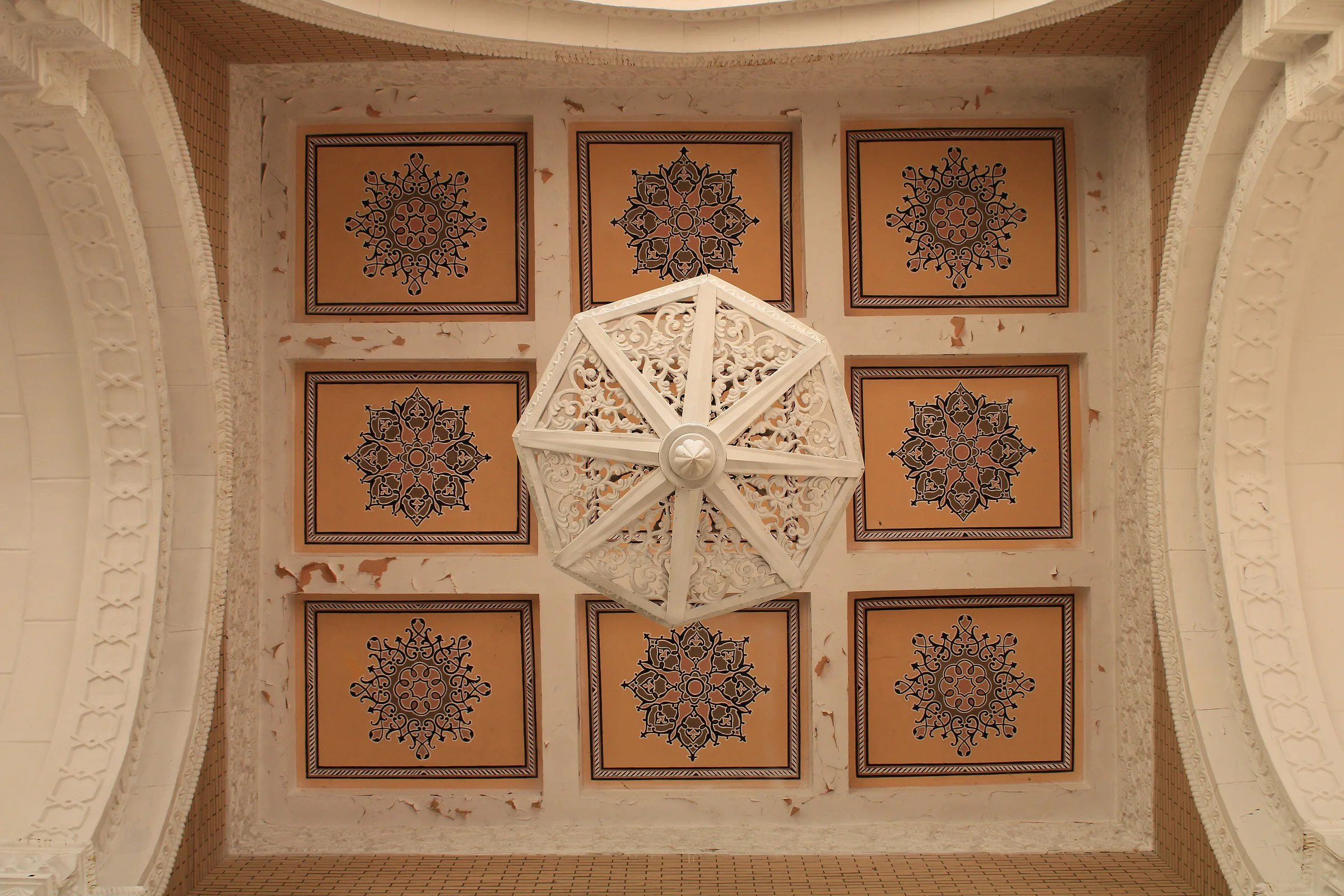
Craftsmen from different schools decorated the interiors: Bukhara carved ganch, Khivan marble and woodcarving, Samarkand panels with muqarnas, floral patterns from Fergana and a revived Termez carving style. Paintings on themes from Navoi's poems hang in the first-floor foyer. The auditorium seats about 1,400, and the stage curtains were embroidered by Bukhara gold-embroiderers to Shchusev's drawings.
Park & garden · Yunusabad District
The heart of Tashkent's new town
Modern · Yunusabad District
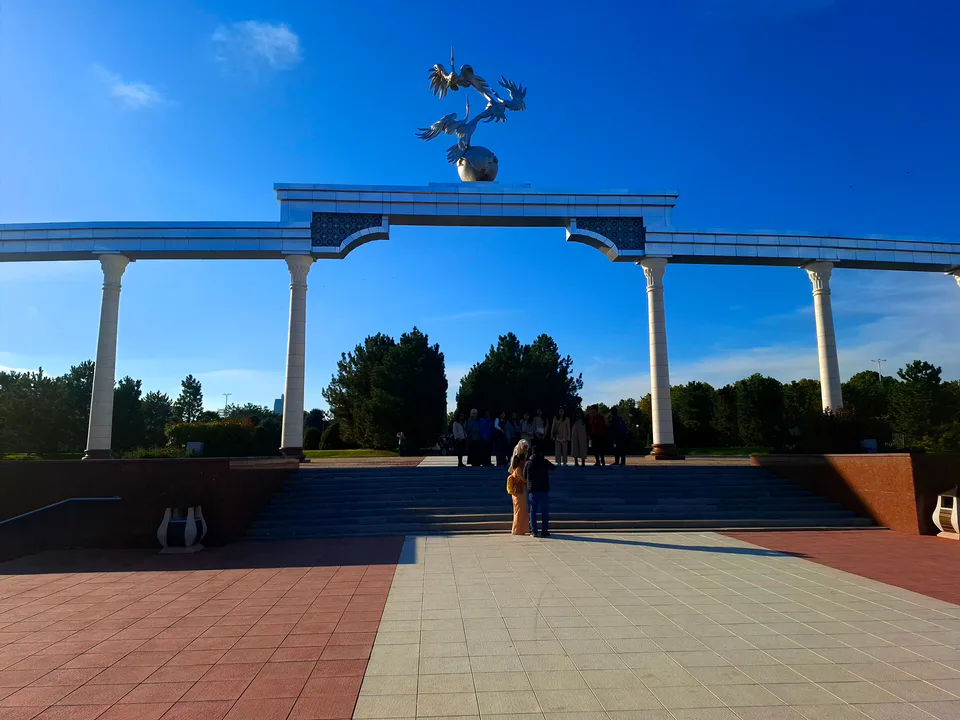
From Cathedral Square to Independence Square
Museum · Mirabad District
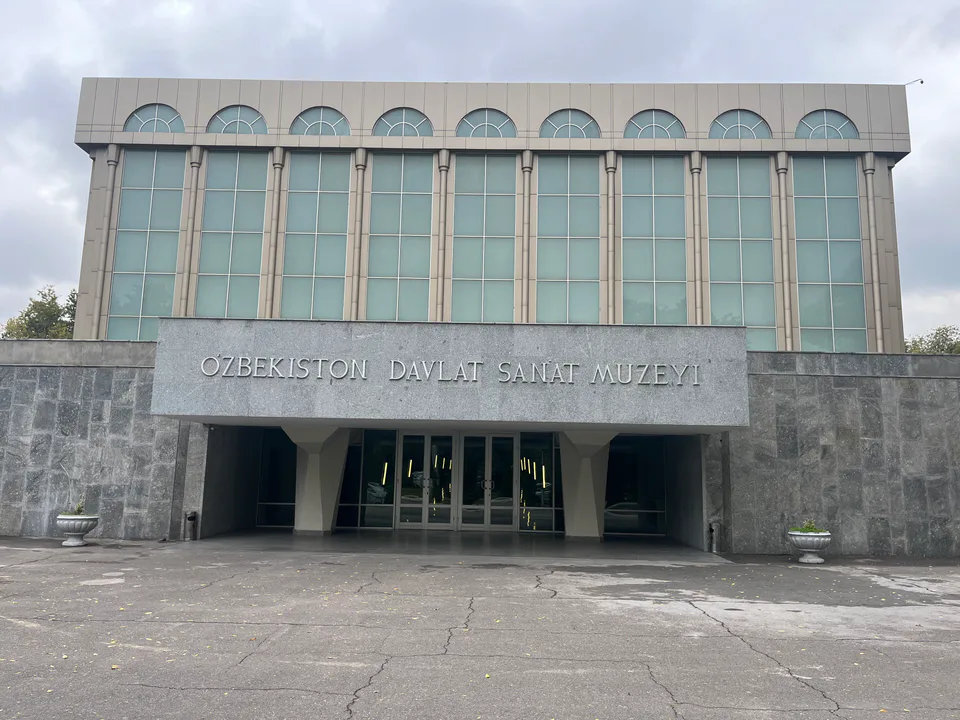
A museum born of the Romanov collection
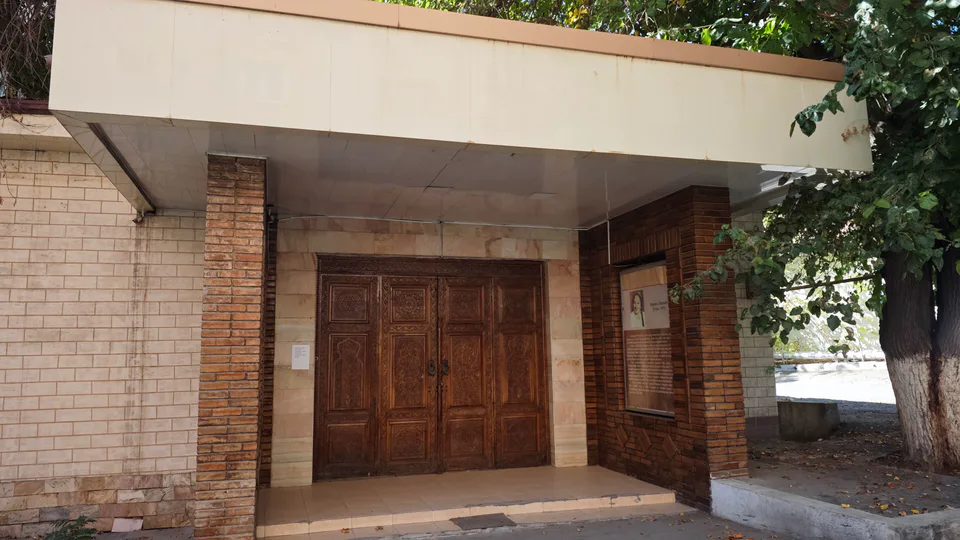
Museum · Mirzo Ulugbek District
The wardrobe of a legendary dancer
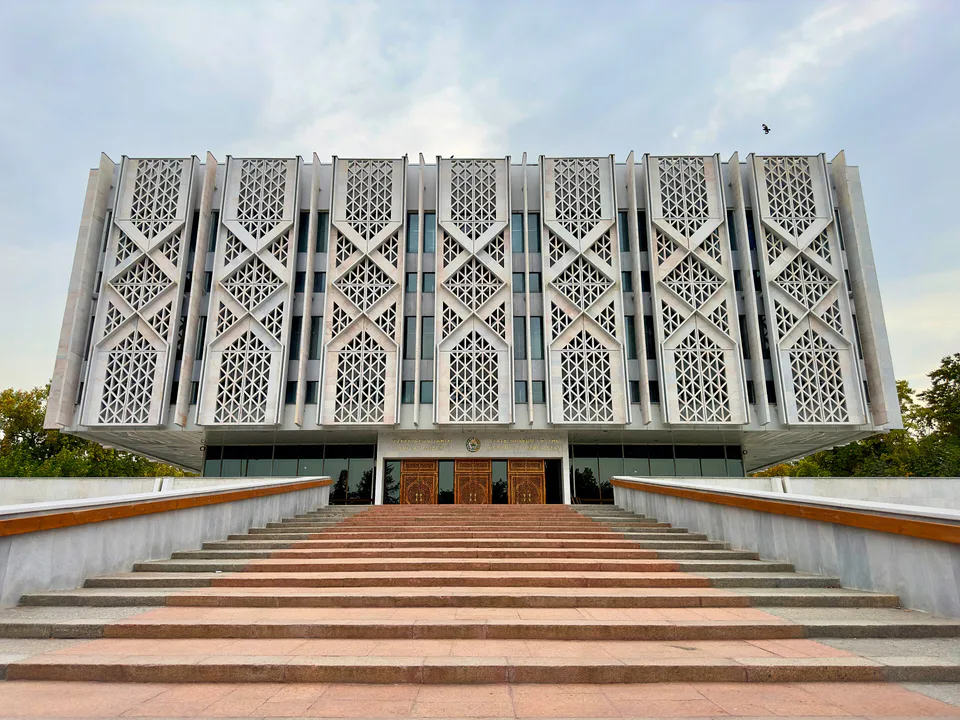
Museum · Yunusabad District
One of Central Asia's oldest museums
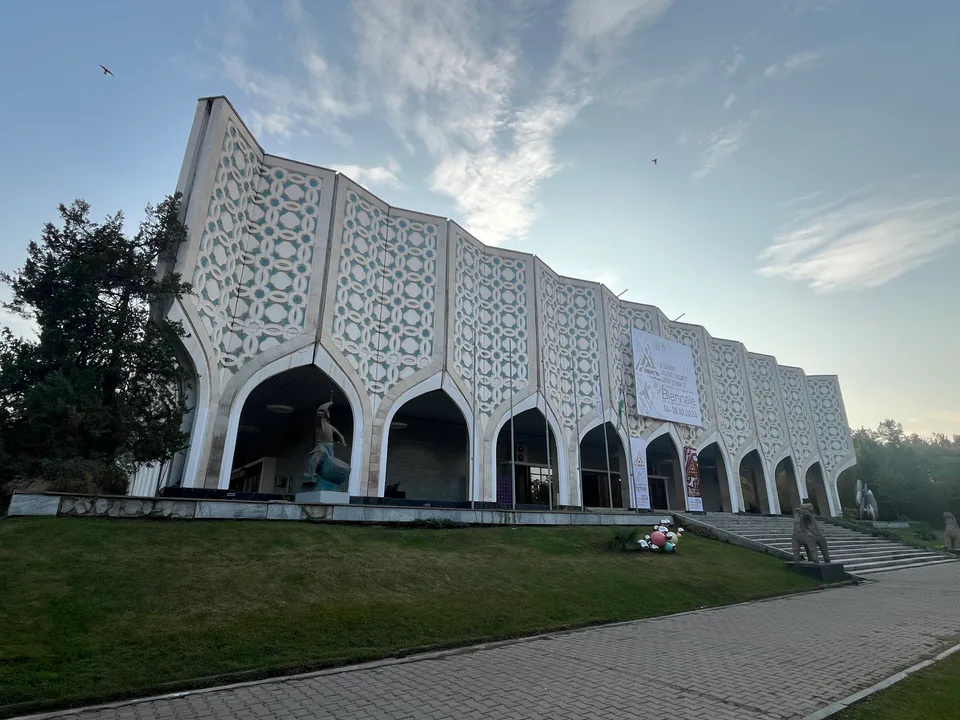
Culture & arts · Yakkasaray District
A gallery wrapped in peshtaq-style arches
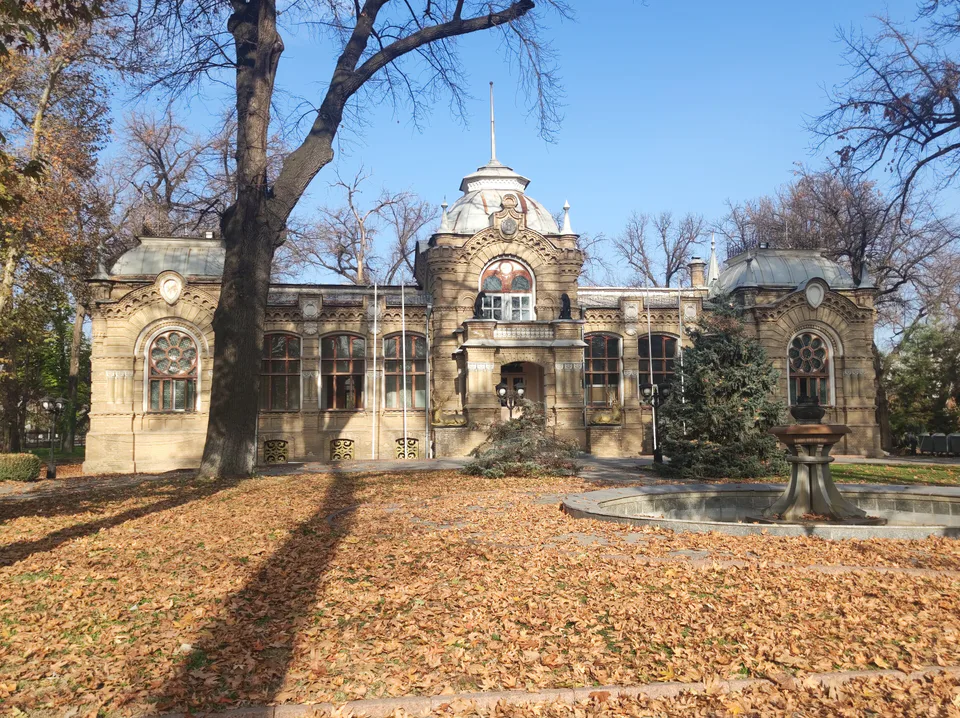
Culture & arts · Yunusabad District
The Tashkent home of an exiled grand duke
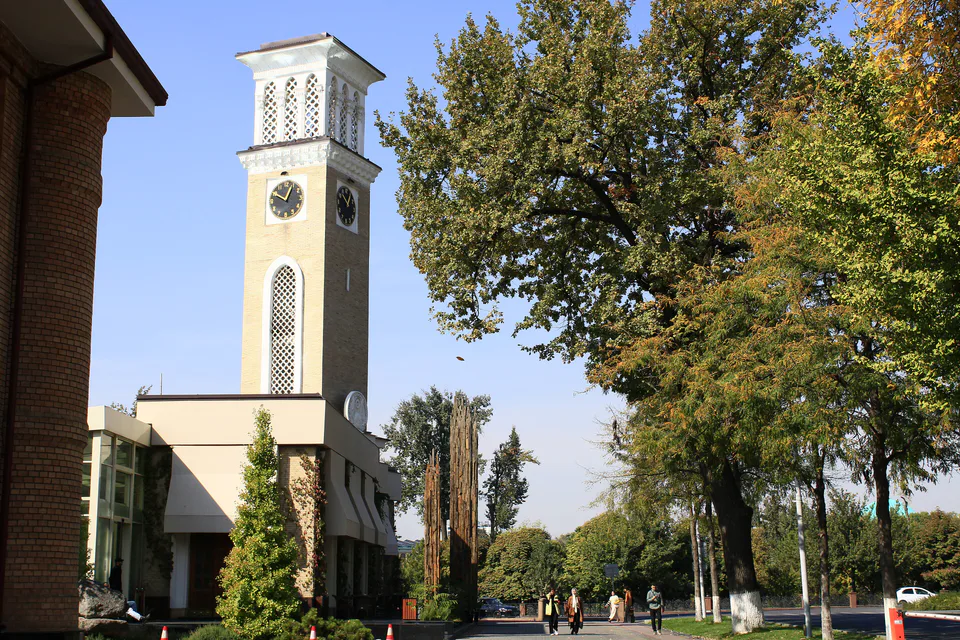
Modern · Mirabad District
Keeping the city's time since 1947
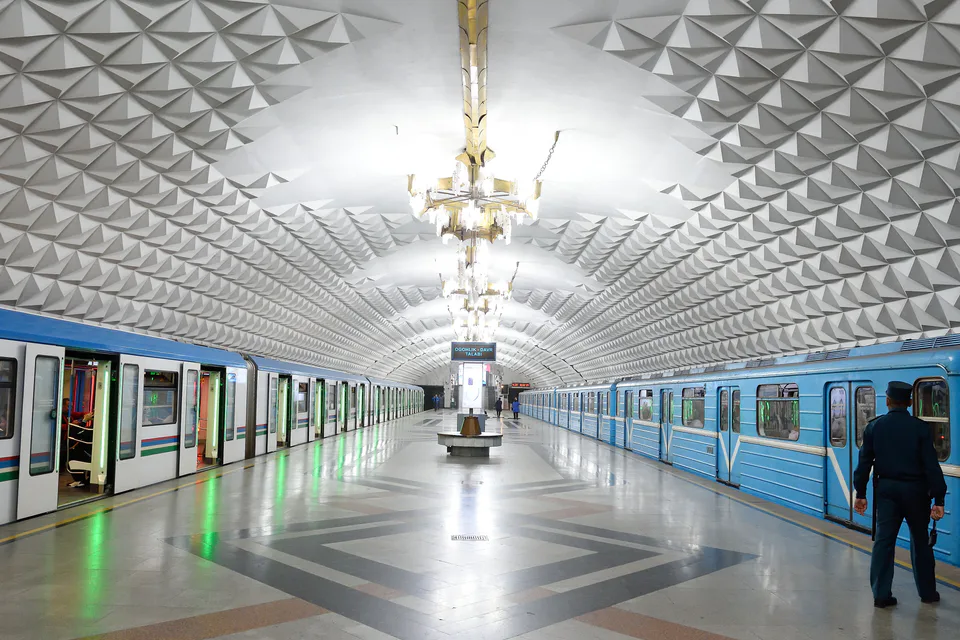
Modern · Yakkasaray District
Central Asia's first underground
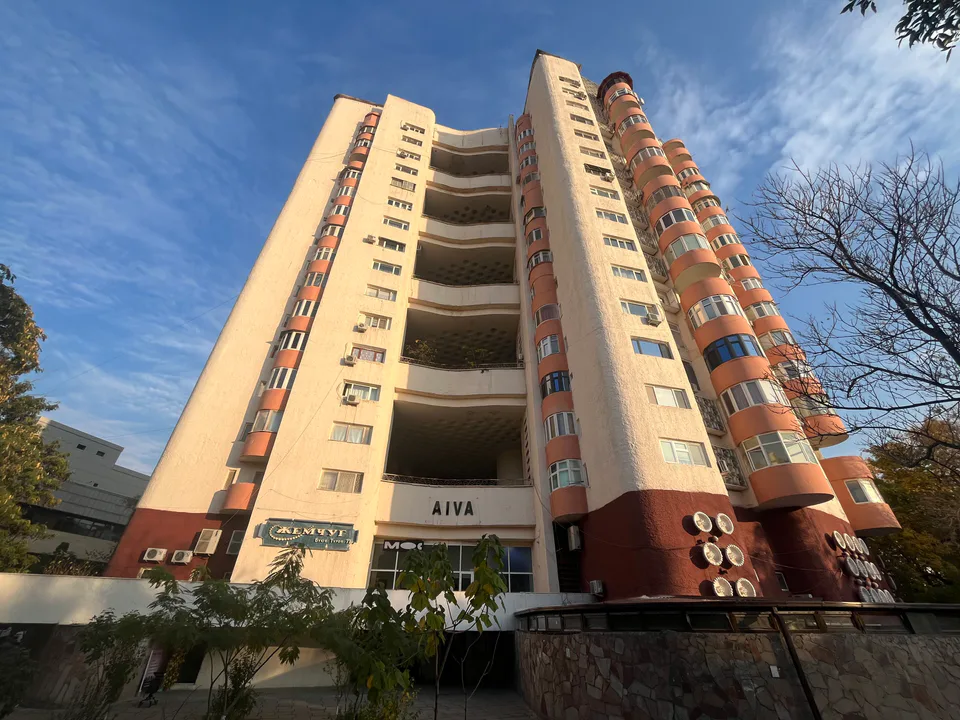
Modern · Mirabad District
An experimental 'vertical mahalla'