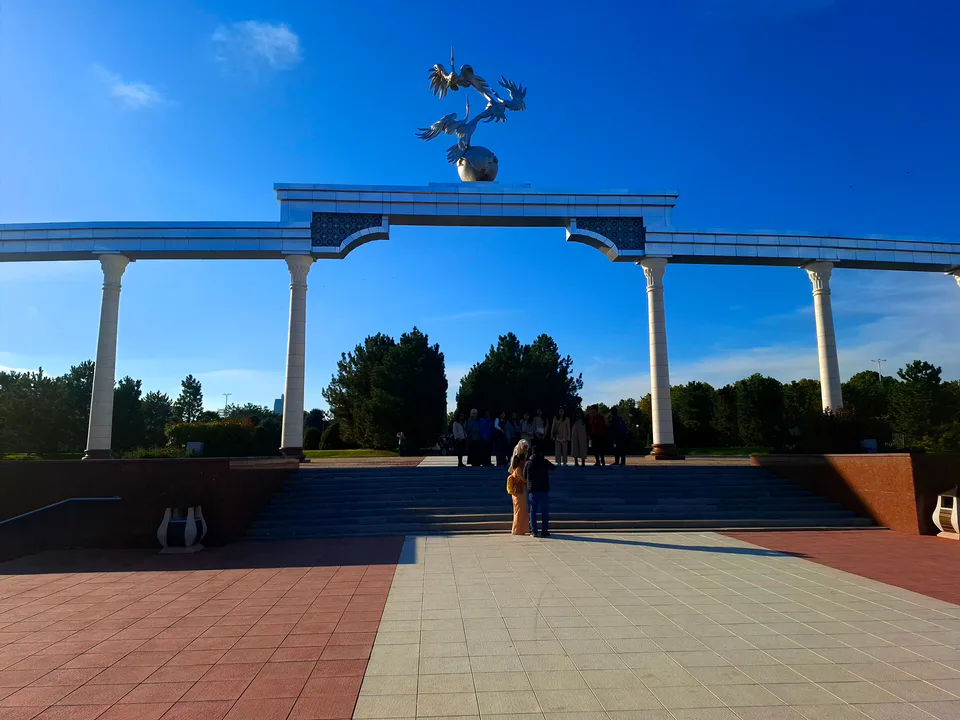
Modern · Yunusabad District
Independence Square (Mustaqillik Maydoni)
From Cathedral Square to Independence Square
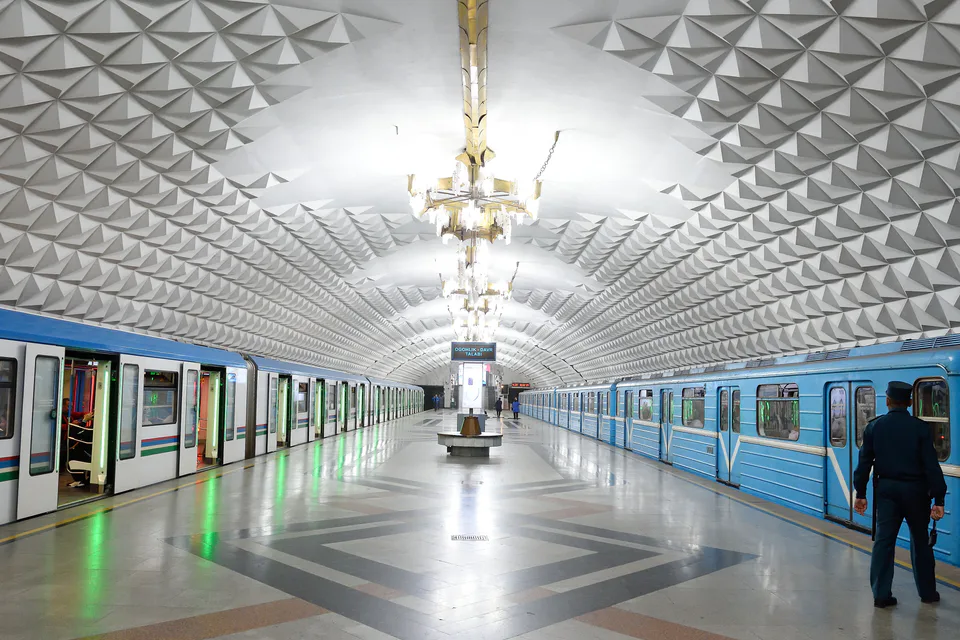
Modern · Yakkasaray District
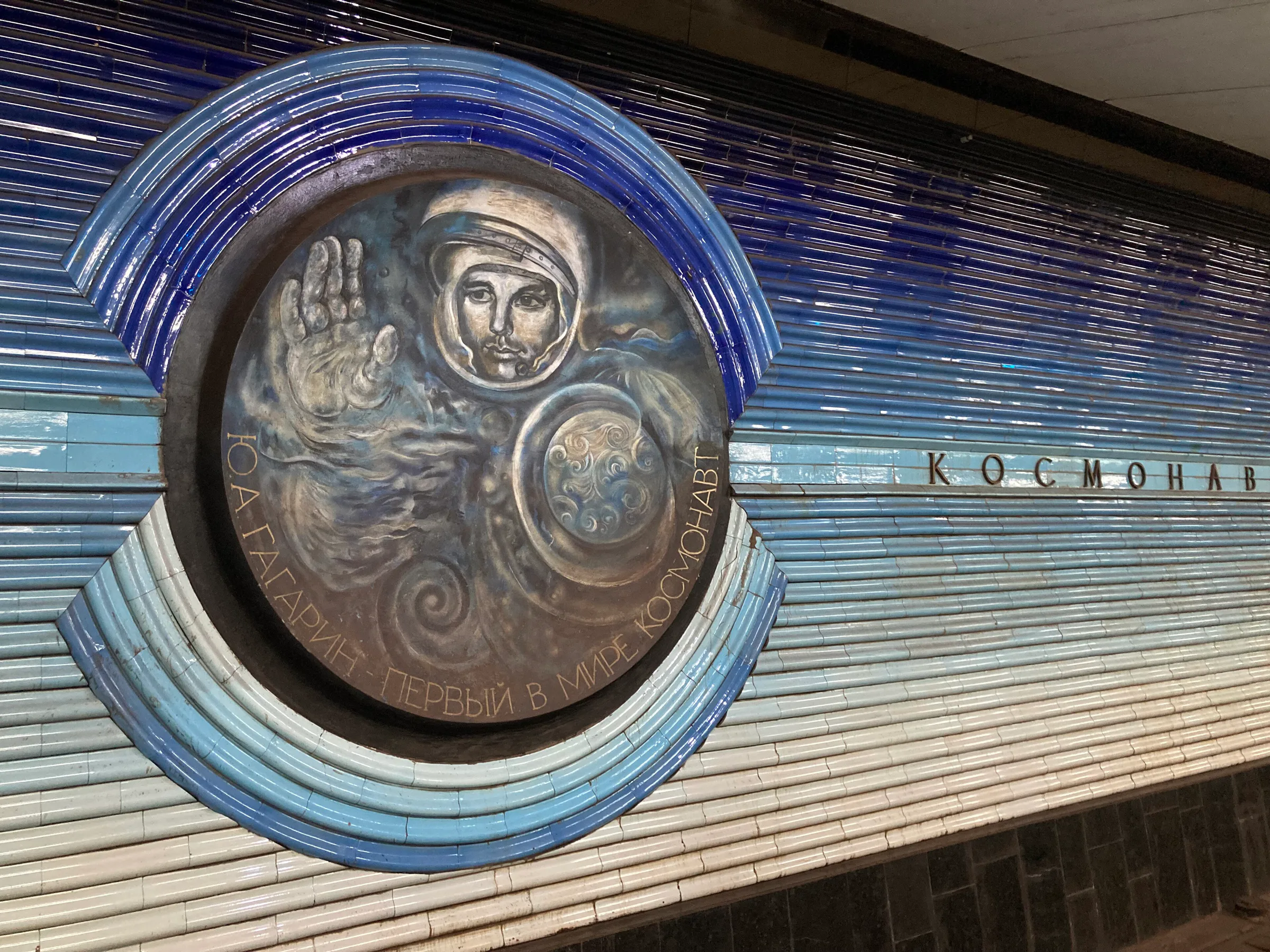
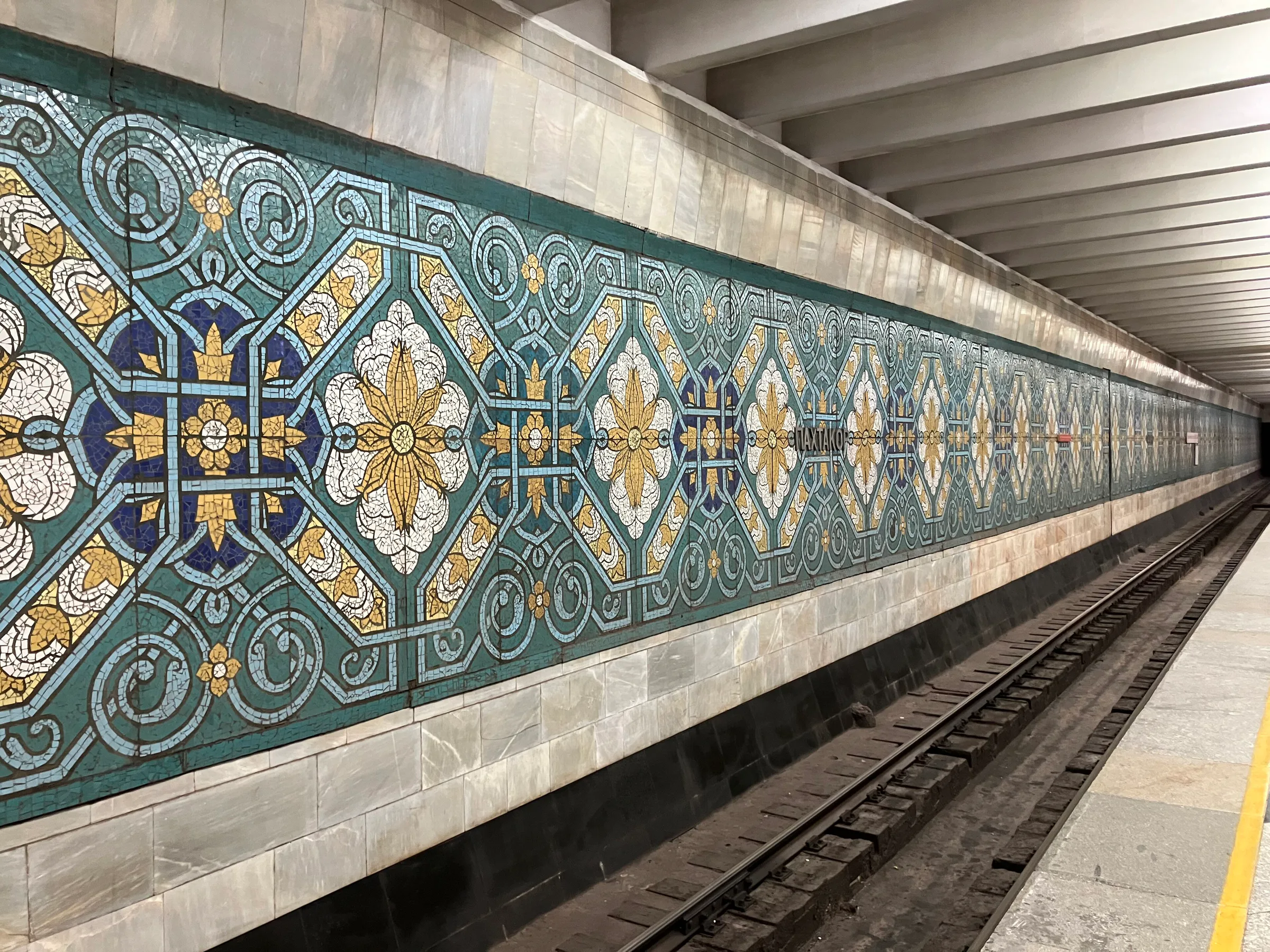
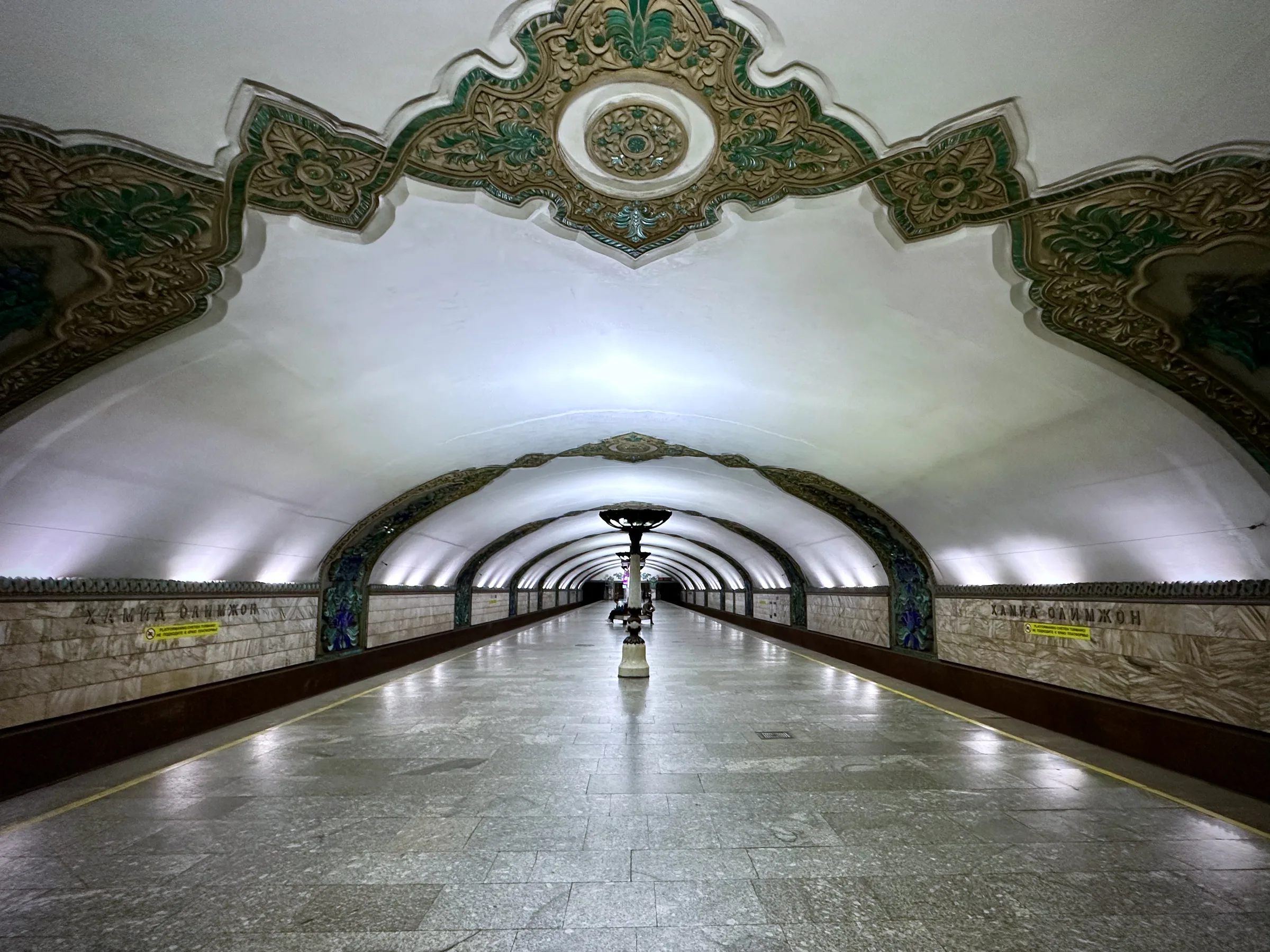
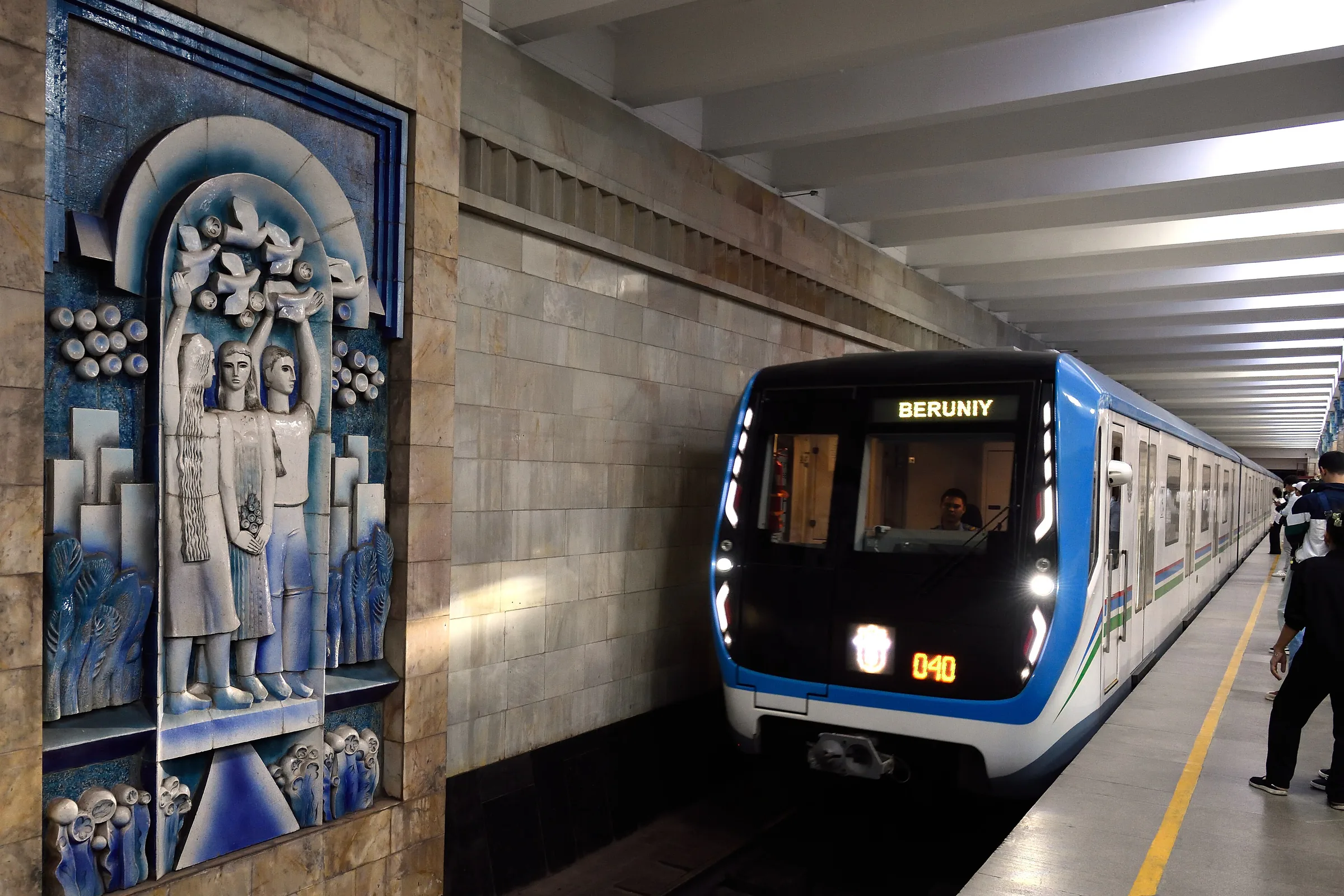
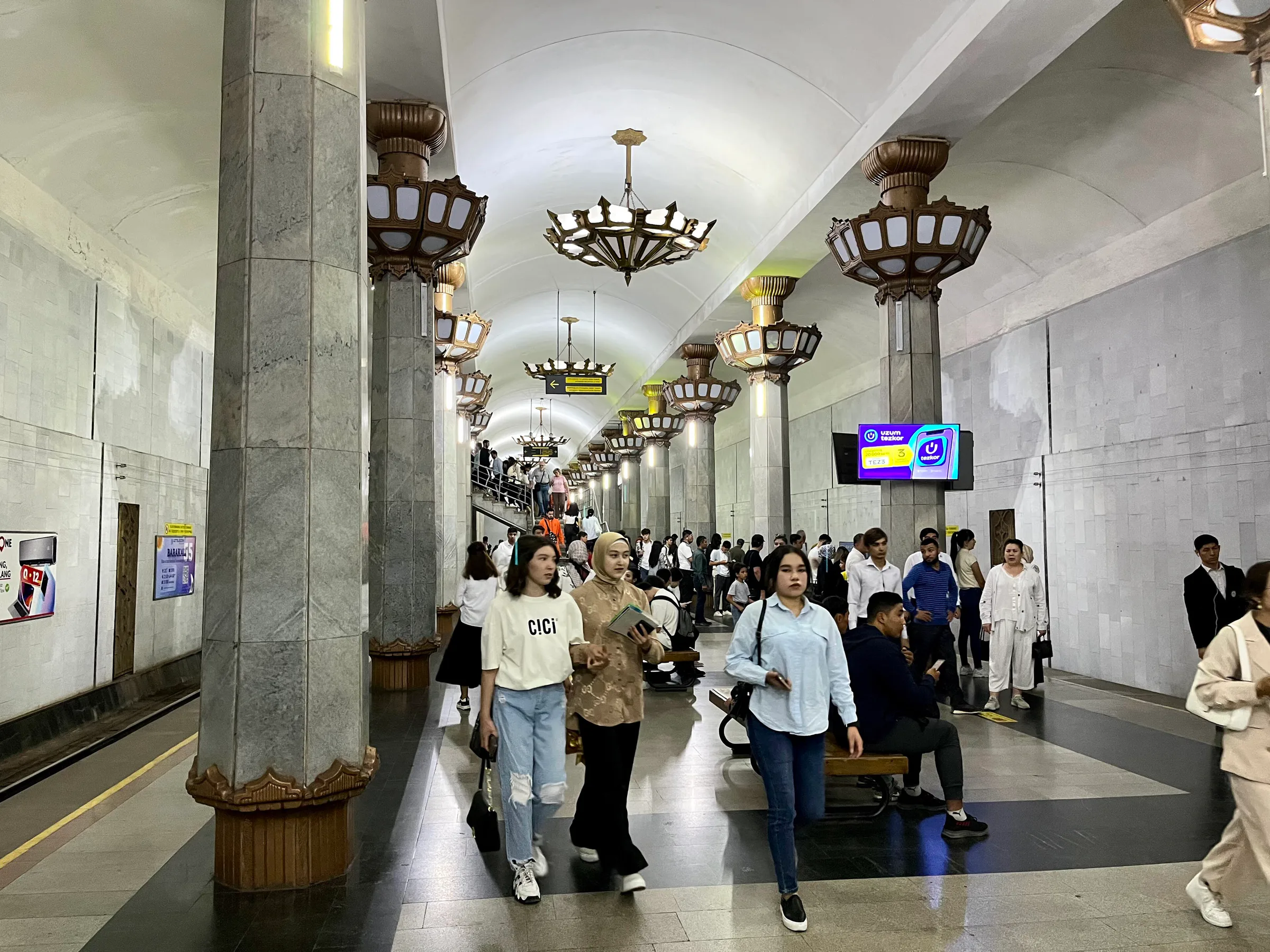
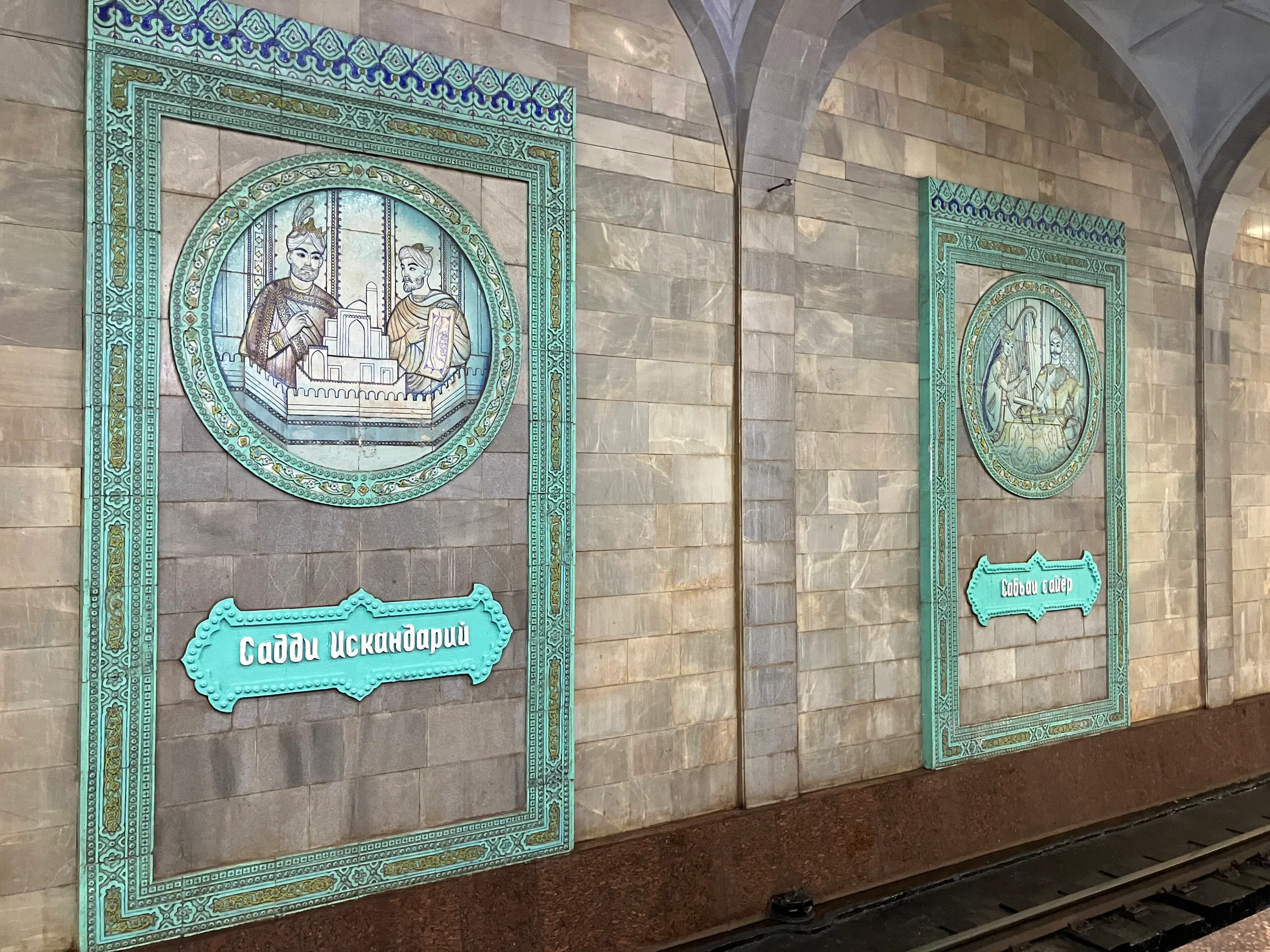
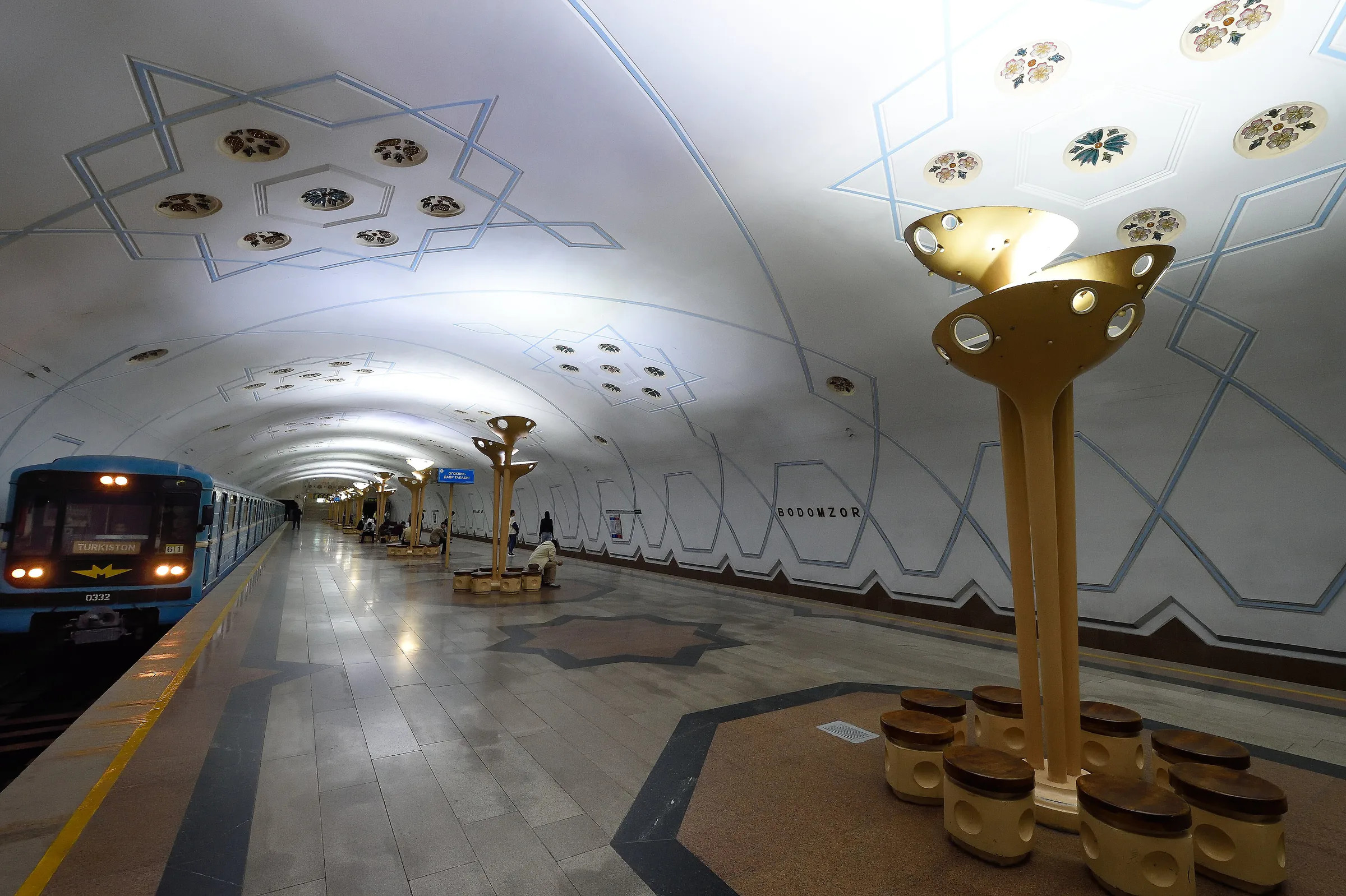
Opened in 1977, a metro where every station is decorated on its own theme: 4 lines and 50 stations; Kosmonavtlar station has been part of a UNESCO World Heritage property since 2026.
The Tashkent Metro is the only metro in Uzbekistan and the first in Central Asia. Planning began in 1968, two years after the 1966 earthquake, and the first section — 12.2 km and nine stations, today's Chilonzor line — opened on 6 November 1977, making it the seventh metro in the USSR after Moscow, Leningrad, Kyiv, Tbilisi, Baku and Kharkiv.
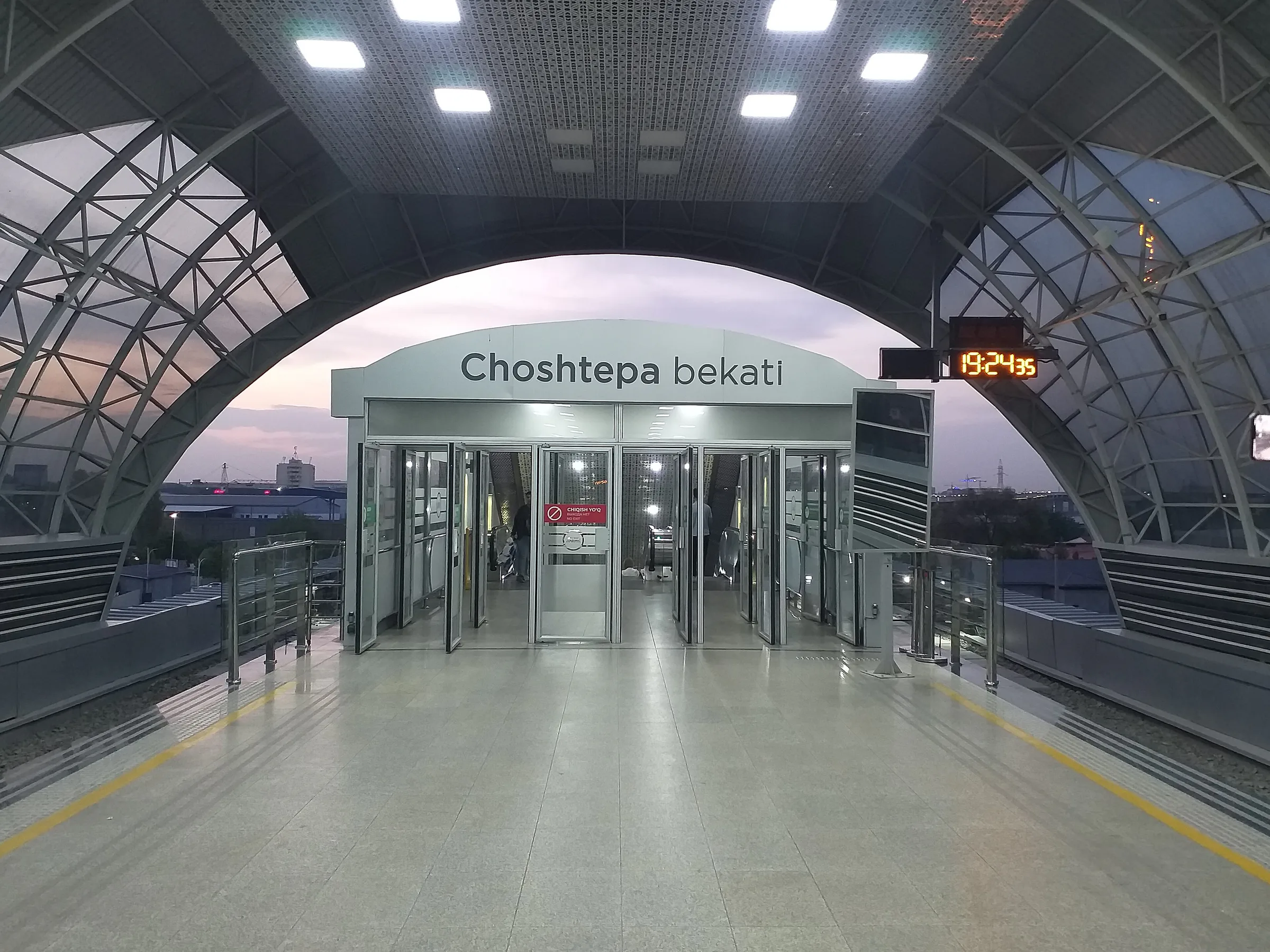
The first five stations of the Uzbekistan line — Alisher Navoiy, O'zbekiston, Kosmonavtlar, Oybek and Toshkent — opened on 7 December 1984. The Yunusobod line followed on 26 October 2001, and on 30 August 2020 the first section of a fourth, mostly elevated line opened, later named for the 30th anniversary of independence.
The system is almost entirely shallow, with tunnels 8–25 metres deep; Yunus Rajabiy is the only deep-level station. The structures are designed to withstand earthquakes of intensity up to 9 on the MSK-64 scale. Builders also battled Tashkent's loess soils: vibration from mechanised shields compacted the ground and made them sink below the design level, so most running tunnels were dug with hand-operated shields.
Today the network has four lines totalling 70.8 km and 50 stations (31 underground, 15 elevated and 4 at ground level). It carried 270 million passengers in 2024, and on 16 December that year it handled a million riders in a single day for the first time.
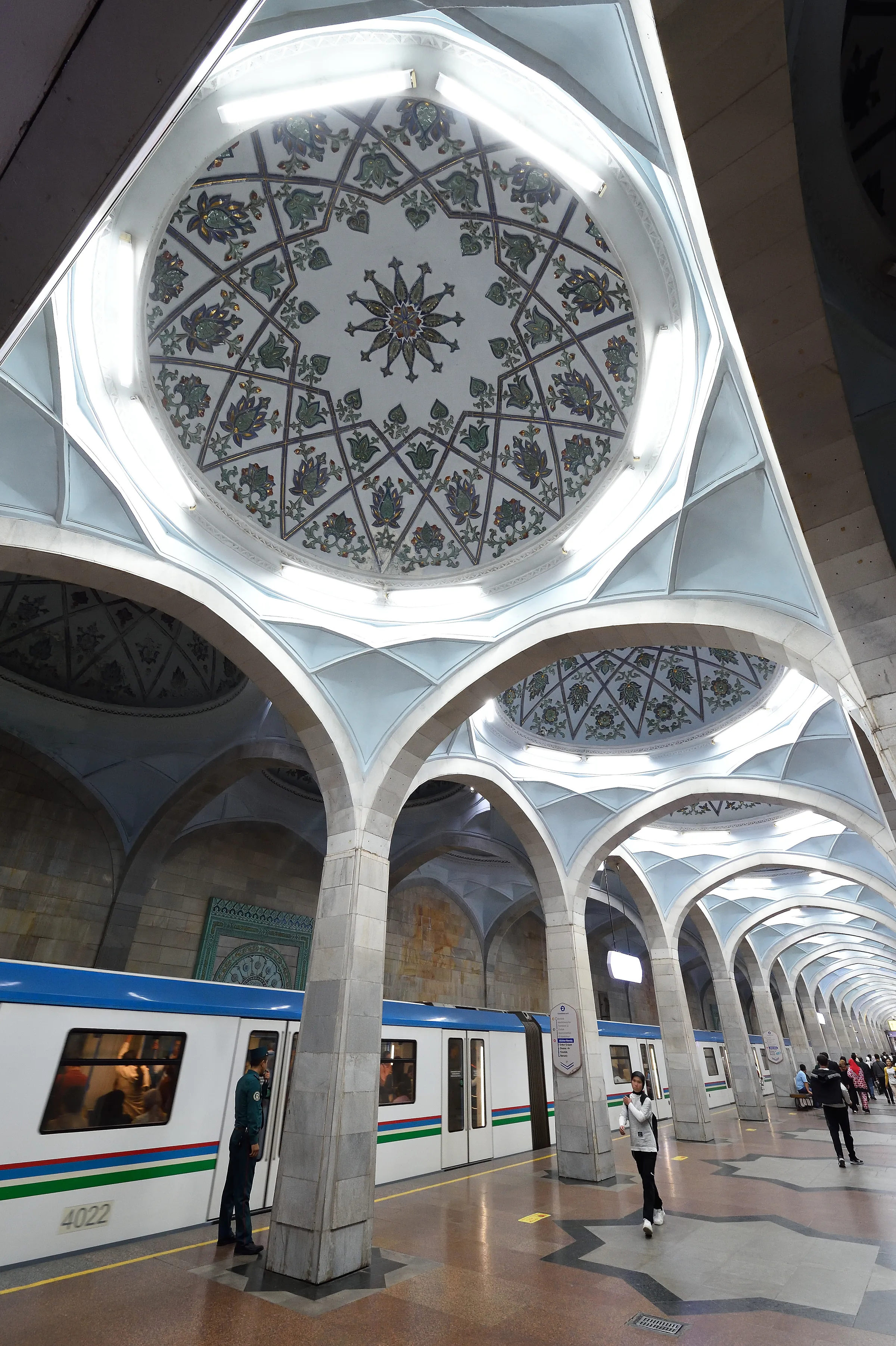
Each station's decoration reflects its name, and leading Uzbek architects and artists worked on them, using local black, red and grey granite, marble, ceramics, smalt, wood, glass and metal, often with motifs from national applied art. Kosmonavtlar station (1984) was added to Uzbekistan's national heritage list in 2024 and, in July 2026, inscribed on the UNESCO World Heritage List as part of 'Tashkent Modernist Architecture'. Photography in the metro was banned for decades and allowed only from 1 June 2018.
Plastic tokens were used from 1996 to 2020; cards replaced them on 1 November 2020. In 2025 ticket windows at many stations gave way to terminals that accept the ATTO transport card, bank cards, mobile apps and other payment methods.
Modern · Yunusabad District
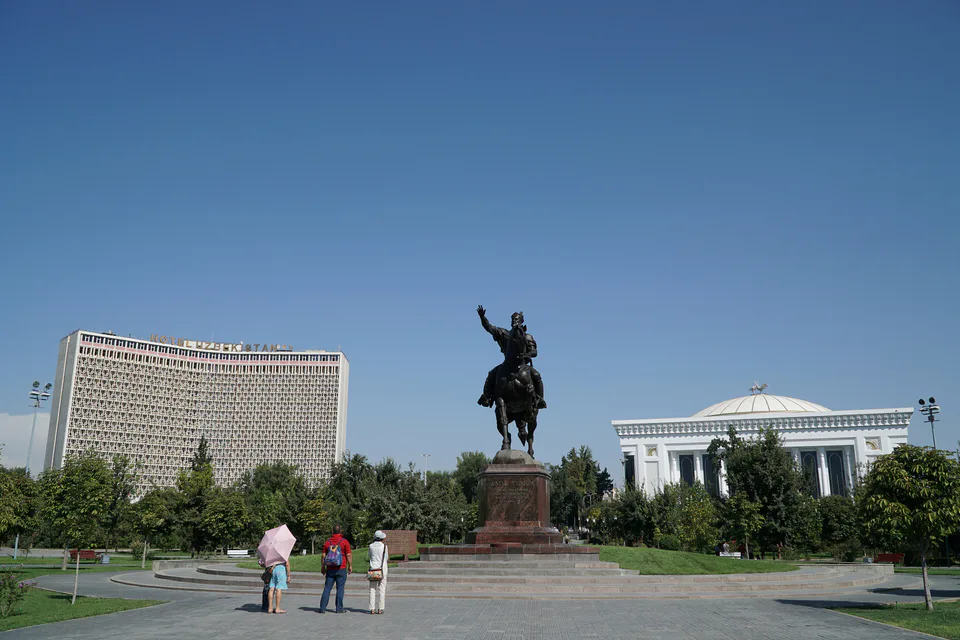
From Cathedral Square to Independence Square
Park & garden · Yunusabad District
The heart of Tashkent's new town
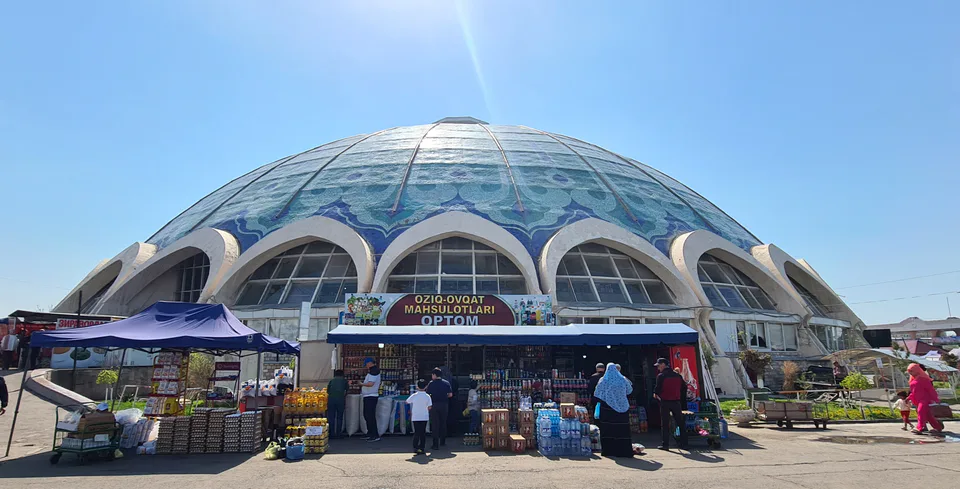
Bazaar · Shaykhantahur District
The Old City market under a blue dome
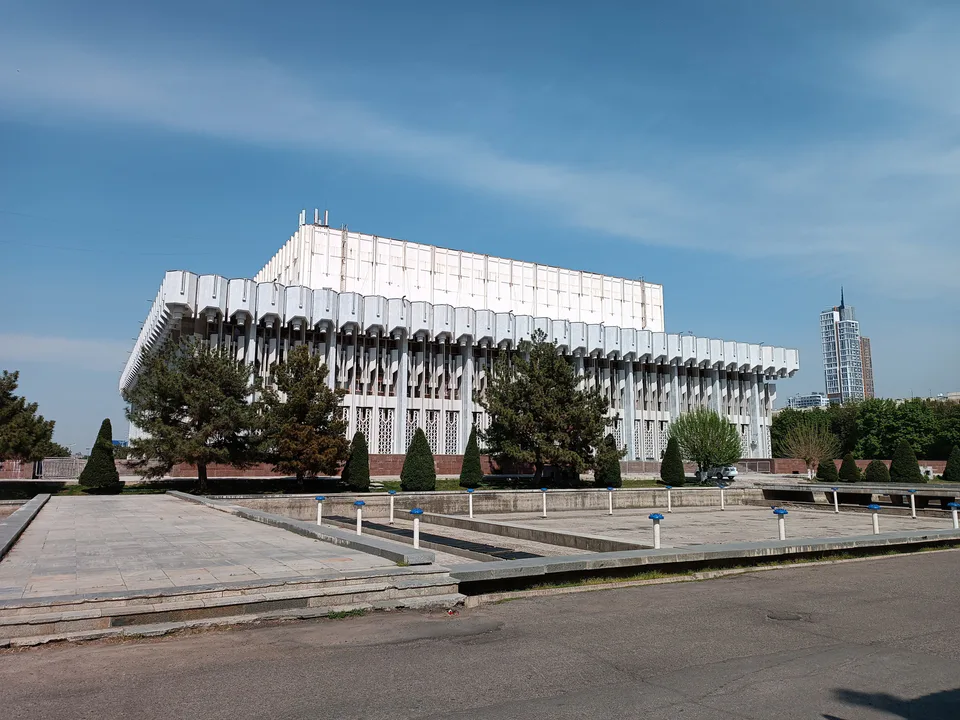
Culture & arts · Chilanzar District
Uzbekistan's main concert hall
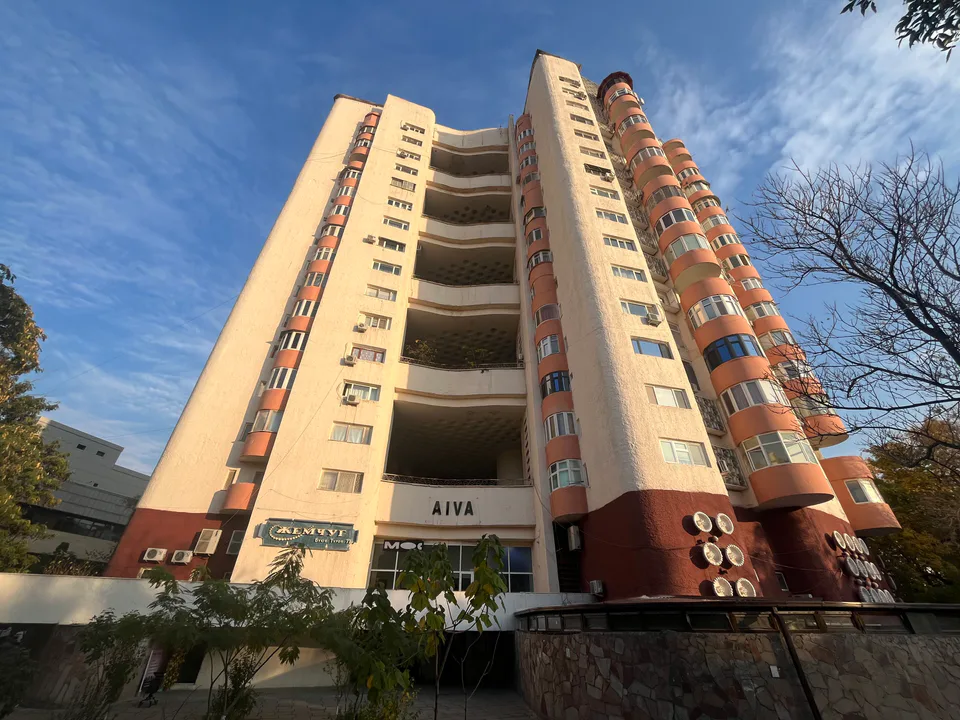
Modern · Mirabad District
An experimental 'vertical mahalla'
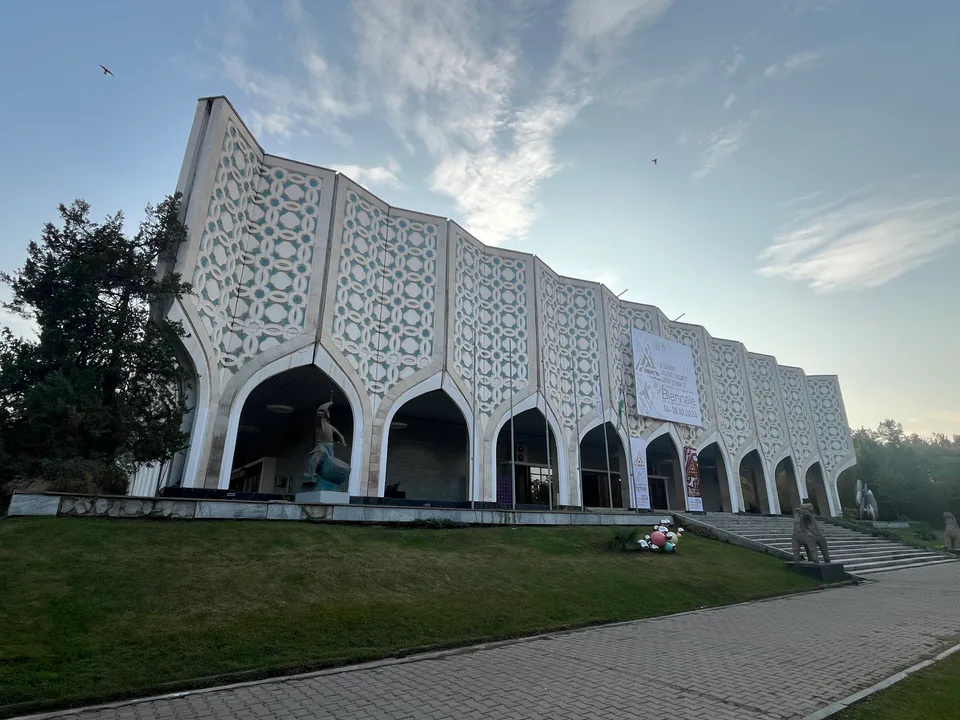
Culture & arts · Yakkasaray District
A gallery wrapped in peshtaq-style arches
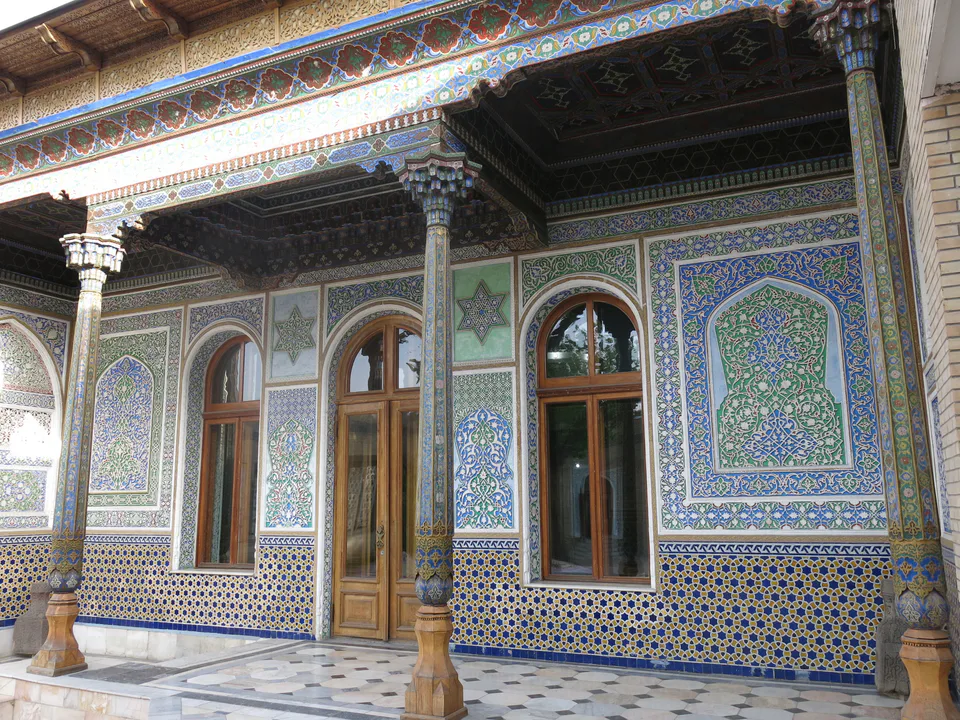
Museum · Yakkasaray District
A jewel-box house of carved plaster and tiles
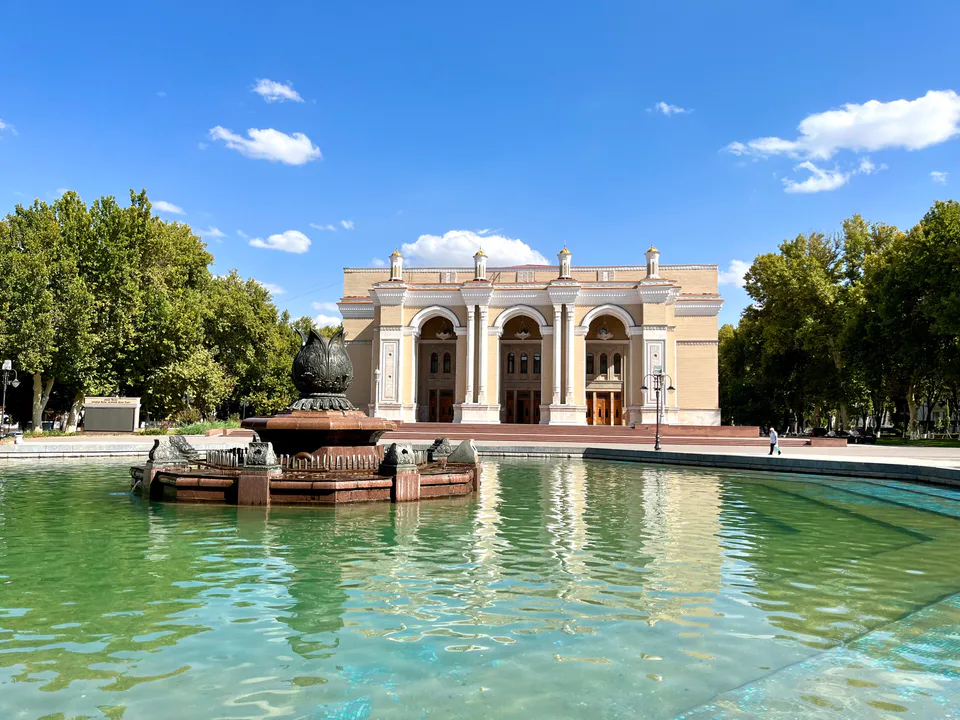
Culture & arts · Mirabad District
Shchusev's design, craftsmen from six regions
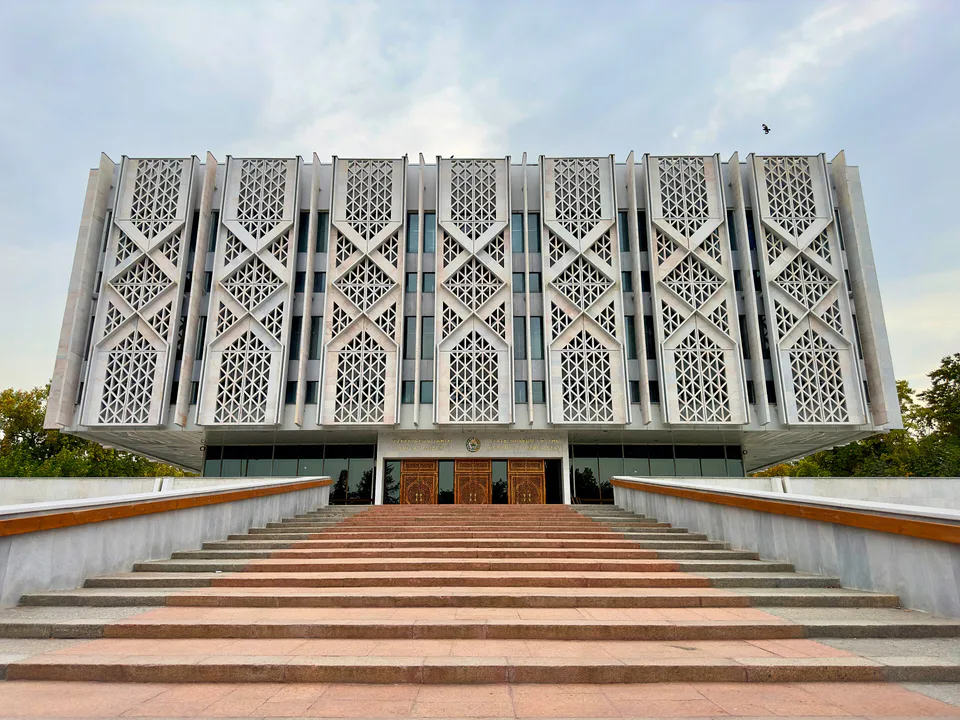
Museum · Yunusabad District
One of Central Asia's oldest museums
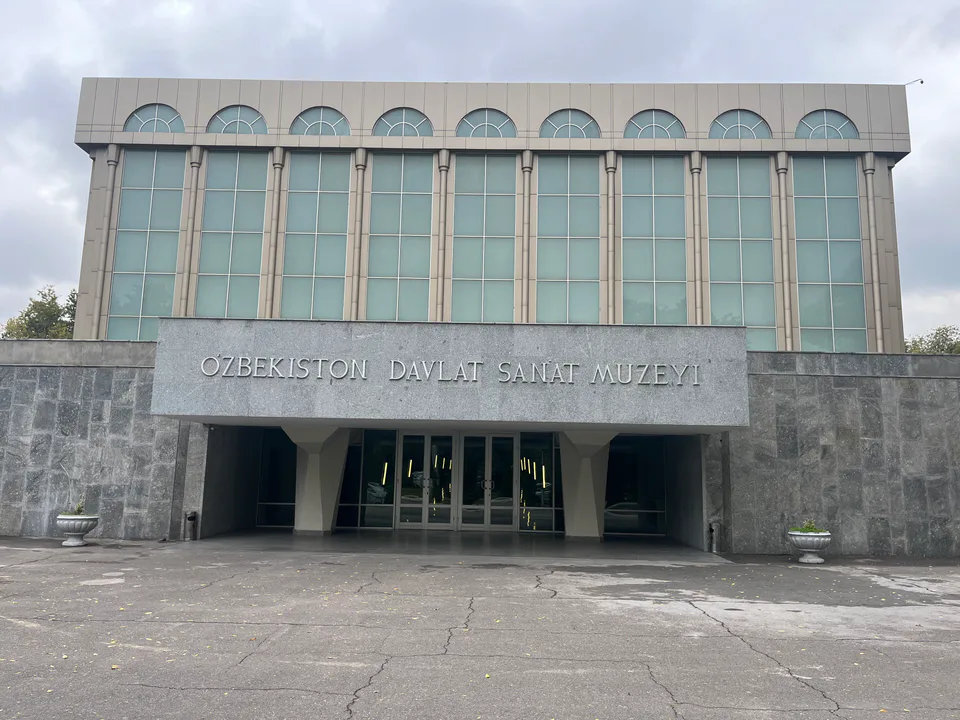
Museum · Mirabad District
A museum born of the Romanov collection